
Women’s Euro’s Continue on Fox Germany vs France Sat, Semis Tues/Wed
The games have gotten good now as Italy upset Norway and defending Euro champs England came back from 0-2 to beat Sweden in an awesome penalty kicks sequence. Germany vs France should be solid as Spain awaits the winner.
Carmel High School Soccer Camp- Boys – Murray Stadium 6:30-8:30 pm
July 21-23 $125
Questions? Please contact Coach Shane Schmidt at sschmidt@ccs.k12.in.us
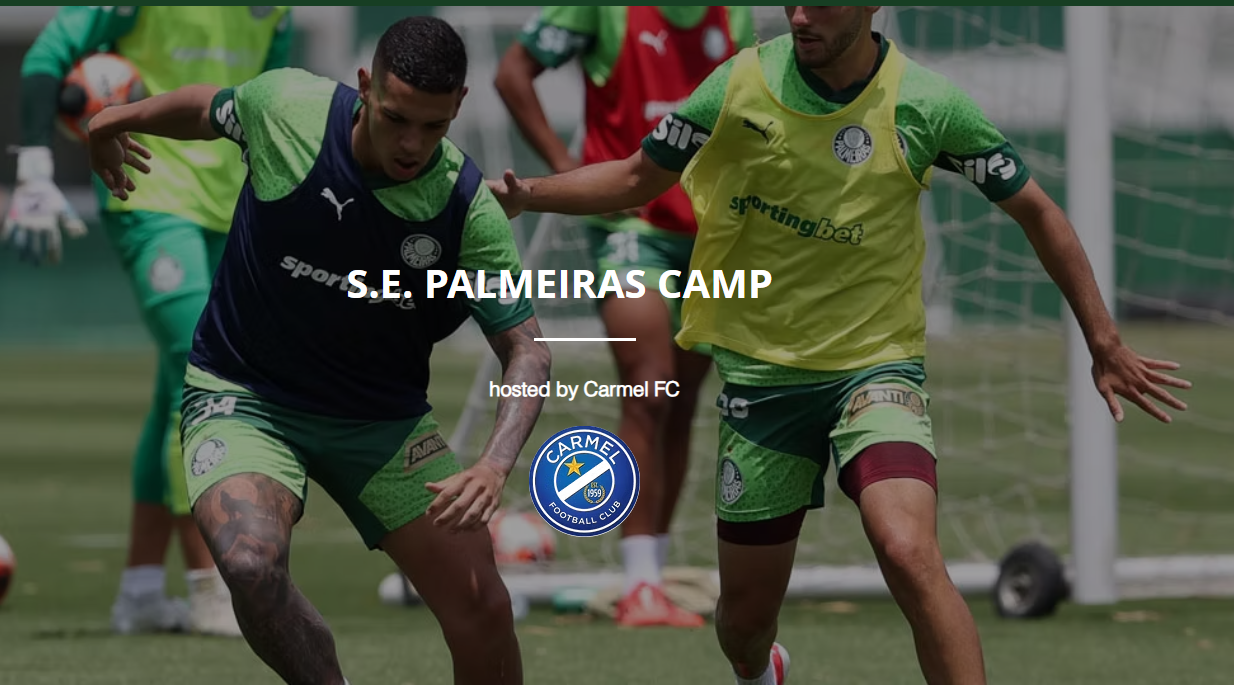
CARMEL FC & PALMEIRAS CAMP
Palmeiras Soccer Camps for players aims to let all participants develop their full technical, tactical and physical potential no matter their skill level. Day by day they will learn to enhance their strengths and will be stimulated to understand their own weaknesses. Players participating will be coached by Palmeiras Professional Coaches and may be invited to join Palmeiras Academy in Brazil for tryout. Register now!
Camp dates: July 21-25 Ages: 7-16 Location: Carmel Clay Community Soccer Complex, Home of Carmel FC: Price: $295 REGISTER
Indy 11 @ North Carolina Fri 7:30 pm on Golazo Network
Indy Eleven takes its two-game winning streak to North Carolina FC on Friday at 7:30 pm on CBS Sports Golazo Network. Local product Cam Lindley scored and the Eleven defense recorded its 4th clean sheet in the last 6 matches as Indy defeated Rhode Island FC 1-0 at home last Saturday. Indy Eleven moved up to 6th in the USLC Eastern Conference, finishing the first half of the season with 4 wins in 6 matches.
MLS vs La Liga All-Star Game Wed 9 pm / Skills Challenge Tues on Apple TV
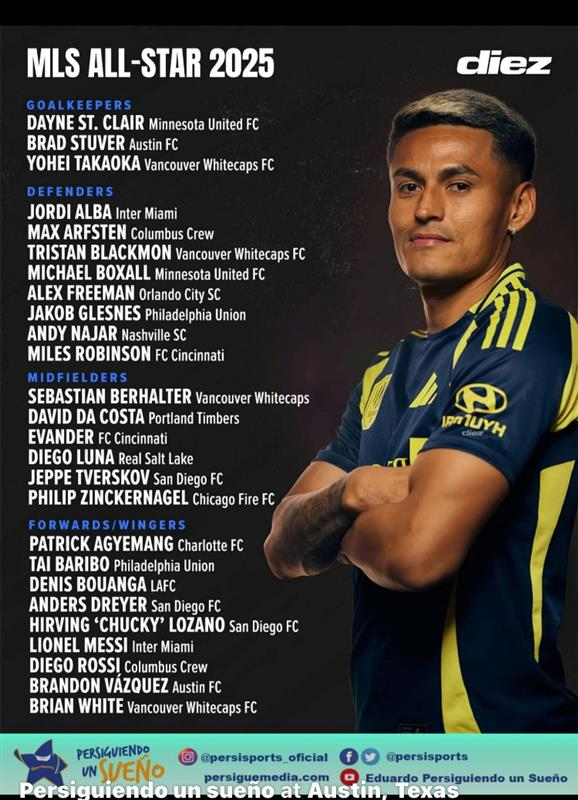
The MLS will roll out their best to face Mexico’s La Liga starts in the Skills Challenge on Tues followed by the All-Star Game on Wed at 9 pm from Austin.
TV GAME SCHEDULE
WE -Women’s Euros
Fri July 18
7:30 pm CBS Golazo NC vs Indy 11
Sat, July 19
1 am CBS Golazo Wrexham vs Wellington Phoenix
3 pm Fox France vs Germany QF
7:30 pm Apple/Sirius RBNY vs Miami MLS
7:30 pm Apple NE vs Orlando MLS
9:30 pm Apple RSL vs Cincy
10:30 pm Apple LAFC vs LA
Tues, July 22
3 pm Fox England vs Italy Semi’s
Weds, July 23
3 pm Fox Spain vs TBD? Semi’s
9 pm Apple Free MLS vs Mexico All Star Game
Sat, July 26
7 pm FS1 Inter Miami vs Cincy
7 pm TV 6, ESPN+ Indy 11 vs FC Tulsa Christmas in July
Sun, July 27
3 pm Fox TBD vs TBD? Euro Finals

USMNT Friendlies in preparation for the 2026 World Cup.
Schedule (Subject to change)
Sept. Japan / S. Korea
Oct. Argentina / Ecuador
Nov. Egypt / Morocco
March Sweden / Ukraine
June. Australia / Paraguay

== BarBQ -RackZ BAR BQ =Save 20% ==
Looking for some solid backporch BarBQ this summer? Getting Ready for a July 4th Party or summer cookout? Try out the Best BarBQ in Town right across the street (131st) from Northview Church on the corner of Hazelldell & 131st. RackZ BBQ



Save 20% on your order
(mention the ole ballcoach)
Check out the BarBQ Ribs, pulled Pork and Chicken, Brisket and more. Sweet, Tangy or Spicy sauce. Mention you heard about it from the Ole Ballcoach — and Ryan will give you 20% off your next meal. https://www.rackzbbqindy.com/ Call ahead at 317-688-7290 M-Th 11-8 pm, 11-9 Fri/Sat, 12-8 pm on Sunday. Pick some up after practice – Its good eatin! You won’t be disappointed and tell ’em the Ole Ballcoach Sent You!
=======RackZ BAR BQ ====Save 20%===
USA
Johnny Cardoso takes a leap officially joining Atletico Madrid – now he needs to step up for the USMNT
From New Jersey to Madrid via Brazil, Atlético is next big step for USMNT’s Johnny Cardoso
Weah to Marseille, Reyna to anywhere but Dortmund? Best transfer fits for USMNT stars
Tillman to Leverkusen: Can USMNT star fill void left by Wirtz?
Richards is delivering on his immense potential for the USMNT, Palace
The USMNT’s to-do list before the 2026 World Cup, ranked by urgency
Dempsey: USMNT must win friendlies to sway fans
The USMNT’s to-do list before the 2026 World Cup, ranked by urgency
Freese ‘devastated’ but hungry after Mexico loss
What’s next for the USMNT after the Gold Cup?
What could a 26-man USMNT World Cup roster look like?
USMNT to face Ecuador, Australia in October friendlies
Four things Concacaf can do to elevate the Gold Cup’s profile

Women’s Euros
England win weirdest-ever penalty shootout
Spain reach semifinals despite missing 2 penalties
Zlatan sends Holmberg support after penalty miss
Physio, striker, captain: Bronze hailed for heroics
Mead measured on England win: ‘Not good enough’
Wiegman ‘very emotional’ after ‘crazy’ England win

The USMNT’s to-do list before the 2026 World Cup, ranked by urgency
 Ryan O’HanlonJul 18, 2025, 07:00 AM ET
So, uh, 2025, huh?
If we put the U.S. men’s national team on the same August-to-July calendar as club teams, it’s been an incredibly disappointing year for the Americans.
Advertising
It started out great! After flaming out of the Copa América, the USMNT got rid of the coach most of the fans didn’t want and replaced him with, theoretically, one of the best coaches in the world. Mauricio Pochettino is the kind of coach USMNT supporters have been claiming the team deserved for a decade. He was also the kind of coach people like me said the team would never get.
He has overseen the rise of multiple athletic, successful young teams in the Premier League. He managed the most dysfunctional collection of superstar attackers ever assembled with Lionel Messi, Kylian Mbappé and Neymar at PSG. And overall, his teams have mostly done what all well-coached teams do: perform at a higher level than their collective talent suggests they should.
Well, until he got to the USMNT. Under Pochettino, the Americans struggled to create any chances against Panama in the Nations League semifinals. They played poorly in the we’re-not-sure-how-much-this-matters third-place game against Canada. They got whupped by Turkey and Switzerland in a pair of pre-Gold Cup friendlies. And in the knockout rounds of the Gold Cup, they needed penalties to beat Costa Rica, conceded 20 shots to Guatemala and were comprehensively outplayed by Mexico in the final.
Oh, and then there’s the whole thing where Pochettino and Christian Pulisic might be in a feud. Really, it’s unclear where anything stands with any of the players who didn’t play at the Gold Cup.
Editor’s Picks
- The USMNT is a mess. That’s the price of the U.S. becoming a ‘soccer country’28dRyan O’Hanlon
- If Americans don’t move in this transfer window, is the USMNT’s 2026 World Cup doomed?17dRyan O’Hanlon
- USMNT’s real test from here will be learning from Gold Cup final loss to Mexico11dJeff Carlisle
However, since games are few and far between in international soccer, it’s usually a good rule of thumb that things are never as good or as bad as they seem. Italy won Euro 2020 and then missed the 2022 men’s World Cup. Argentina lost the opening game of the 2022 World Cup to Saudi Arabia and then won the 2022 World Cup.
So, for things to get better for the USMNT before it co-hosts the World Cup next summer, what needs to happen? Here is the USMNT’s to-do list before the 2026 World Cup, ranked in order of importance.
1. Get everyone on good terms again
When asked about reintegrating all of the European players after the loss to Mexico, Pochettino was vague and a little irritated in his answer. Given the frustrating result — and the performance, and the fact that English isn’t his first language — it’s understandable that he wasn’t able to offer up the most eloquent response in the moment.
That said, the manager of the USMNT basically has three jobs as far as I’m concerned. The first: figure out what achievable style of play gets the most talent on the field. The second: actually get said talent on the field. And the third: given the number of dual nationals in the USMNT pool, expand the talent pool whenever possible.
Now, it was fun to see a bunch of new faces get significant playing time this summer. And I don’t deny that there was a different vibe with the team when it was filled with guys who felt as if their USMNT futures were on the line with every match. But vibes can only get you so far.
In the three knockout round matches at the Gold Cup, the USMNT put up the following top-line numbers:
• Non-penalty expected goals: 3.39
• Non-penalty expected goals allowed: 3.18
• Final-third possession: 44.4%
• Touches in the penalty area: 50
• Opponent touches in the penalty area: 72
This was against three teams whose average ranking in the World Football Elo ratings was 46th.
Granted, the USMNT is ranked 45th, so perhaps it makes sense that the Americans ended up about even on chances created and conceded. But the expectations are obviously way higher than that for next summer. To get anywhere near them, Pochettino needs as much talent as he can fit on the roster.
2. Stay healthy
The so-called “Golden Generation” of American soccer hasn’t worked out as expected.
Pulisic had superstar potential, and he has settled into more like a “Champions League starter” level at AC Milan. Same went for Gio Reyna, and he’s been a nonfactor at any professional level for the past three years. Tyler Adams seemed like a potential Champions League-level holding midfielder and has become more like an average Premier League player. Tim Weah probably met expectations by becoming an off-the-bench contributor at Juventus. Weston McKennie met expectations by becoming something closer to a starter at Juve. Sergiño Dest moved to Barcelona when he was 19 — now he’s playing in the Eredivisie. Chris Richards was at Bayern Munich; now he’s at Crystal Palace.
The only guy who significantly exceeded expectations was Antonee Robinson, who is genuinely one of the best left backs in the Premier League and would probably be moving to a much bigger club this summer if he were a couple of years younger.
The main reason the USMNT isn’t better is because most of these guys landed somewhere around their 50th-percentile career outcomes, or worse. There’s a reality where Dest stays at Barcelona, Adams is killing it for Atlético Madrid, Reyna made a move to Bayern Munich and Pulisic is starring opposite Mohamed Salah at Liverpool. Unfortunately, that’s not the reality in which we live.
Robson: The USMNT will struggle at the World Cup
Stewart Robson believes the USMNT might struggle at next year’s World Cup after its poor performance in the Gold Cup final.
Even accounting for the struggles under Pochettino, there’s a different, primary reason to be bearish on the USMNT’s chances for the upcoming World Cup, as compared with the last one in Qatar. Outside of Richards and Reyna, all of these guys played a lot in Qatar — as did Yunus Musah.
Nine outfield players featured in at least 270 minutes of game time in 2022: two of them were 35-year-old Tim Ream and 29-year-old Walker Zimmerman, while the other seven were Pulisic, Weah, Adams, McKennie, Musah, Robinson and Dest.
Given the injury history of some of these dudes — Pulisic, Adams and Dest, in particular — the player availability at the last World Cup was quite good. Given how many games these guys are playing in Europe and the general fallibility of the human body, I don’t know whether I’d count on as many of the stars being healthy enough to play next summer. But as long as everyone is back in the fold, this question is going to have the biggest bearing on how well the team performs next summer: who is healthy enough to play?
3. Create pace and space in the attacking third
Forget dads using ChatGPT to defend their sons. Never mind that time when the head coach said the phrase “I am not a mannequin.” No, the strangest part of Pochettino’s tenure thus far has to be the thing with Tim Weah’s eye. Here’s what Pochettino said back in November:
“We have all a dominant eye, no? And depending on your body shape, you feel comfortable or not, depending where is the line, what is the goal, what is your position when you receive the ball… Always, we try to check, because we need to understand the player.”
The biggest change from Gregg Berhalter to Pochettino from a lineup standpoint was the shifting of Weah from right wing to left wing. Given that Weah is right-footed, this might seem like Pochettino opting for another winger who can cut in and shoot, as most top teams do these days. But he claims it’s because of Weah’s eyed-ness(?), not his footed-ness.
Either way, the change has affected the way the team plays. In Europe, Weah is much more of a wing back or defensive winger than a goal threat. He has scored eight goals in the last four domestic seasons combined. He’s not really a player you want playing in front of the opposition defensive line. Instead, he stretches the field by staying wide and running behind a defense.
That’s what he did under Berhalter when he played on the right, most notably against Wales in the opening match in Qatar.
Under Berhalter, Weah received 0.27 through balls per 90 minutes — by far the most of any player who featured in at least 20 matches. Under Pochettino, the USMNT has completed 14 through balls — and none of them has been to Weah.
Instead, six were to Patrick Agyemang. And that helps explain why Pochettino likes the new Derby County striker so much.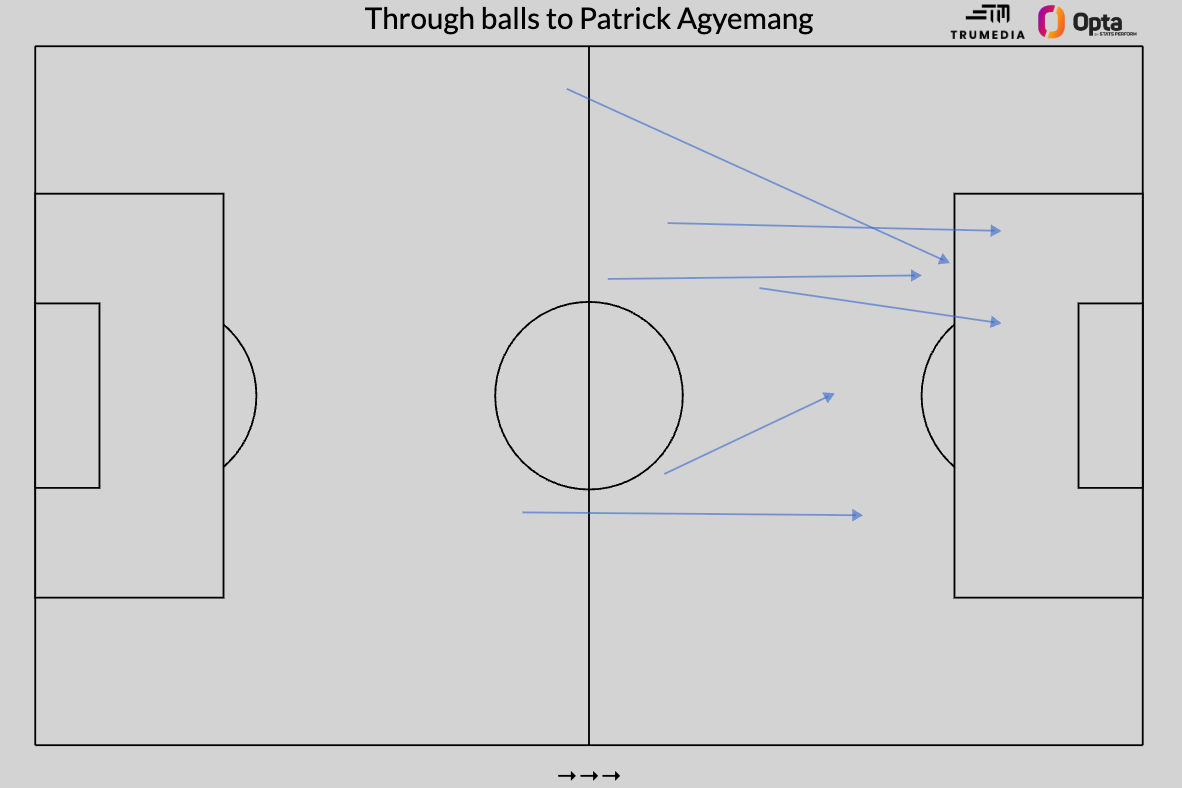
Agyemang’s ability to run behind and battle for long balls does allow the U.S. to move the ball up the field, but he’s still so below-par in front of goal and in possession that I really don’t think it’s worth it.
With a forward like Agyemang, you’re limited in how you can actually play. You can’t work more intricate buildup patterns or interchanging movements; you have to play long to Agyemang to move the ball up the field, which I think then makes his role in the team seem more important than it actually is.
Pochettino needs to figure out how to arrange his attackers in a way that lets the Americans stress opposition defenses horizontally and vertically while also allowing him to play a striker such as Folarin Balogun, who will actually get shots and score goals against tougher opposition.
4. Get Matt Turner on the field
I have no clue how good Matt Turner is at stopping shots right now. What I do know is that when he was in MLS, he was one of the best shot stoppers the league had ever seen.
What I also know is that none of the USMNT’s other potential goalkeepers in MLS have come anywhere close to Turner’s performance level in MLS. So, based on all of that, my outside assumption is that if Turner starts playing professional soccer again, he will be the team’s clear best option in goal.
Matt Freese was fine at the Gold Cup. He was lights-out in the shootout against Costa Rica — to the point that it wouldn’t be a terrible idea to bring him to the World Cup as a break-in-case-of-penalties option like the Netherlands did with Tim Krul back in 2014. But in regular play, he looked quite shaky at times, even if it didn’t result in too many extra goals being scored against the USMNT.
Adams & Tillman praise ‘unbelievable’ Freese after penalty heroics
Tyler Adams and Malik Tillman speak after the USMNT’s penalty shootout win vs. Costa Rica at the Gold Cup.
As for the other options — Zack Steffen, Patrick Schulte — we really just have no idea how well they’d perform in a jump up in level from MLS to the World Cup.
Given how much of a role goalkeepers play in whether shots turn into goals, there’s an argument that they really are among the most valuable players on the field. They don’t touch the ball much, but pretty much every time they do, it’s a high-leverage moment. That’s especially true in a limited-game tournament like the World Cup. A couple of great saves can take you from “out in the group stages” to “into the quarterfinals.”
It’s just … is Turner actually going to get playing time? He’s expected to sign with Lyon — if their financial situation gets sorted out — and that’s a massive, neon “if” that’s visible from outer space. But Lyon already have a really solid young goalkeeper in Lucas Perri, who was fantastic in Brazil and above-average in Ligue 1 last season. Unless Perri is going to move to a new team, then I don’t see how Turner signing with Lyon solves any of the problems Turner has had in England.
5. Figure out the midfield
One of the USMNT’s strengths at the last World Cup was the midfield. McKennie, Adams and Musah made up a complementary trio that could outrun basically any other team in the tournament. These three players were a big reason the U.S. was able to contest possession so well against England and also control so much of the ball against the Netherlands.
McKennie and Musah didn’t play in this summer’s Gold Cup, of course, but Adams did, and I can’t remember him ever looking worse in a USMNT shirt. After taking leads against both Costa Rica and Guatemala, the U.S. really should’ve been able to control the matches and suck the life out of the games. Instead, the Americans hung on for dear life in both, and then they just couldn’t hang against El Tri.
Now, it wasn’t just Adams. Sebastian Berhalter‘s set piece delivery led to a couple of important goals for the Americans this summer, but he just doesn’t impact the game enough otherwise. Luca de la Torre can be a nice complimentary player — making the right runs, keeping possession, occupying the necessary spaces — but he’s more someone who will help you once you’ve controlled the game rather than someone who will help you take control of it.
But Adams, really, was straight-up awful in possession. Per Stats Perform’s expected-possession-value model, he actually decreased the USMNT’s chances of scoring with his passing. He contributed a total of minus-0.09 xPV over the course of the tournament. No one else who played significant minutes was below 0.07.
On top of all that, Atlético Madrid-bound Johnny Cardoso barely played at the Gold Cup and really struggled against Turkey and Switzerland. Some other Europe-based players who have featured under Pochettino in the past — Tanner Tessmann, Aidan Morris, Gianluca Busio — weren’t on the roster.
Perhaps there’s a world where Reyna becomes a viable pro again, but he too missed the Gold Cup so he could play 12 total minutes at the Club World Cup. Malik Tillman emerged as an option — with his play this summer and his massive move to Bayer Leverkusen — but he’s more of a floating-between-the-lines tweener than a true midfielder.
The midfield three used to be one of the easiest parts of the starting 11 to predict, but now I have only a vague idea of who might be starting there come the next set of friendlies. There is plenty of talent here, though. And after all, these are the “problems” Pochettino is getting paid to figure out.
Chelsea’s positional fluidity stifled PSG, providing Maresca with a blueprint for next season

By Mark Carey
July 18, 2025 12:04 am EDT
63
Not many teams keep a clean sheet against Paris Saint-Germain.
In a long, quadruple-winning 2024-25 season, Luis Enrique’s side had failed to score on just five occasions before the Club World Cup final, but each of those shut-outs were qualitatively different from the blueprint that Enzo Maresca laid out for Chelsea on Sunday.
Advertisement
“The message was quite clear. We won the game in the first 10 minutes,” Maresca told reporters after the 3-0 victory. “The message before the game was, ‘Let them understand we are here to win the game’. It set the tone of the game.”
It was a statement that would not be out of place in a Sunday league dressing room, with players imploring their team-mates to “let them know you are there early” as an act of hostility. But Chelsea’s aggression out of possession was a crucial factor in their victory as they snapped into challenges and got tight to their Parisian opponents, particularly in the first half.What You Should Read NextHow Chelsea won the Club World Cup: Big bonuses, training-ground deals and ‘scary’ PalmerThe inside story of Chelsea’s unlikely triumph in New Jersey that was 329 days in the making
PSG’s fluid positional rotations have the capacity to twist anyone’s blood, as so many of Europe’s elite sides have found out in recent months. Luis Enrique’s side can pull your defensive shape apart to create space with their movement. However, space does not score goals.
Chelsea’s adaptable defensive performance matched the fluidity that PSG looked to implement in possession. They were aggressive with it, but it was clear that every action they did off the ball, they performed with conviction.
This was clear from the opening exchanges, when Trevoh Chalobah tracked midfielder Fabian Ruiz’s run across the pitch to receive the ball. By shutting the passing option off at source, Fabian was unable to gain possession as PSG continued to circulate the ball elsewhere.

Chelsea were not entirely man-for-man across the pitch, but it was crucial that their centre-backs tracked their runners all the way when they were getting touch-tight to their markers — even if it meant being in unnatural positions at times.
Below, you can see Ousmane Dembele dropping as far as left-back to find a pocket of space, but Chalobah follows him all the way to force him into a simple pass, while Chelsea briefly shuffle across to form a temporary back three.

There were countless other examples, with Chalobah’s centre-back partner Levi Colwill doing exactly the same in stepping out from the defensive line to stop any danger before it grew — dovetailing excellently with midfielder Moises Caicedo, who would drop into Chelsea’s back line to plug any gaps opened by his team-mate.

This was even more prominent with an example later in the first half, where you would be forgiven for thinking that it was Colwill who was playing as Chelsea’s defensive midfielder and Caicedo as left centre-back, based on this image.

With the threat that PSG are known to pose in wide areas, similar communication was needed on the flanks.
Wingers tracking their runners is a tale as old as time, but the extent to which Marc Cucurella and Pedro Neto shut down the space and stuck to their jobs will have pleased Maresca as much as any of the three goals his team scored.
Advertisement
With barely four minutes on the clock, Cucurella pushes high to track Desire Doue’s run, dropping deep. As Marquinhos winds up to play the ball over the top, the Chelsea player deepest is Neto — who has followed Achraf Hakimi’s run back to his own penalty area, nodding down the long ball for Robert Sanchez to collect.

Such was Neto’s desire to get back defensively, that Chelsea formed a back five at times to block the space. The image below shows the outcome of a strong first 20 minutes out of possession, with no PSG player properly inside Chelsea’s compact block as they look to circulate the ball once more.

It was not exactly beautiful football at times — with Chelsea comfortable playing the percentage game by whacking it upfield and starting again in the first half — but it was no less effective.
It required plenty of communication, lots of pointing and a fair share of shuttle runs, but Chelsea laid the foundation for their performance in the opening stages, just as Maresca declared.
In fairness, their out-of-possession approach was equally as impressive in their semi-final clash with Fluminense, but that was based more on high pressing from the midfield and forward line.What You Should Read NextHow Chelsea’s clever out-of-possession approach blunted Fluminense’s attackEnzo Maresca’s side reached the Club World Cup final after their effective pressing in a 4-3-3 shape left their opponents with no answer
With the fluidity of PSG’s movement, Chelsea were unable to use defensive triggers in the same way to start a coherent press across the whole team. Instead, they opted to embrace the chaos with their front-footed one-v-one battles.
As much as anything, Maresca can use Chelsea’s Club World Cup final victory as a platform to show how much he can adapt tactically and curate a game plan to beat any side in European football. Such flexibility was the order of the day across the whole tournament, with Maresca using this summer to establish new ideas and strengthen the buy-in he has within the squad.
Will they use an identical tactic next season in similar, high-profile games? That remains to be seen, but the defensive discipline that Chelsea showed is what they can carry into the new campaign.
Advertisement
“For me, the biggest achievement this season is that exactly one year ago, no one was talking about Chelsea for football (reasons), but talking about the big squad, big money,” Maresca said on the Friday before the final.
“Now, no one is talking about this, but they are talking about the way we play, and the way we win games. This is personally the biggest achievement of this season.”
With two trophies won in less than two months, you can understand why there is now greater focus on the club’s on-pitch matters.
 The Ole BallCoach