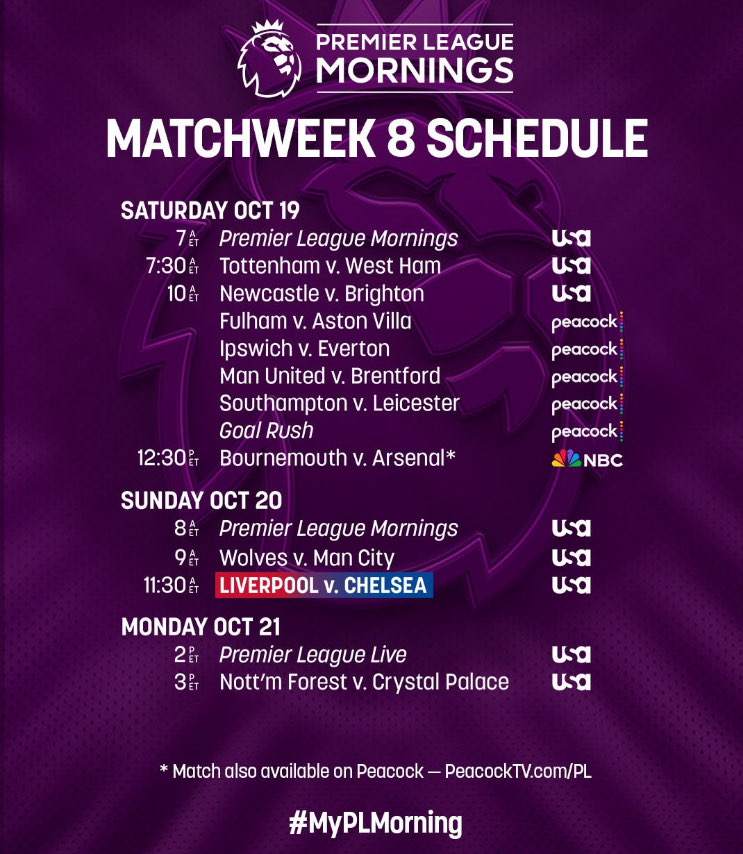
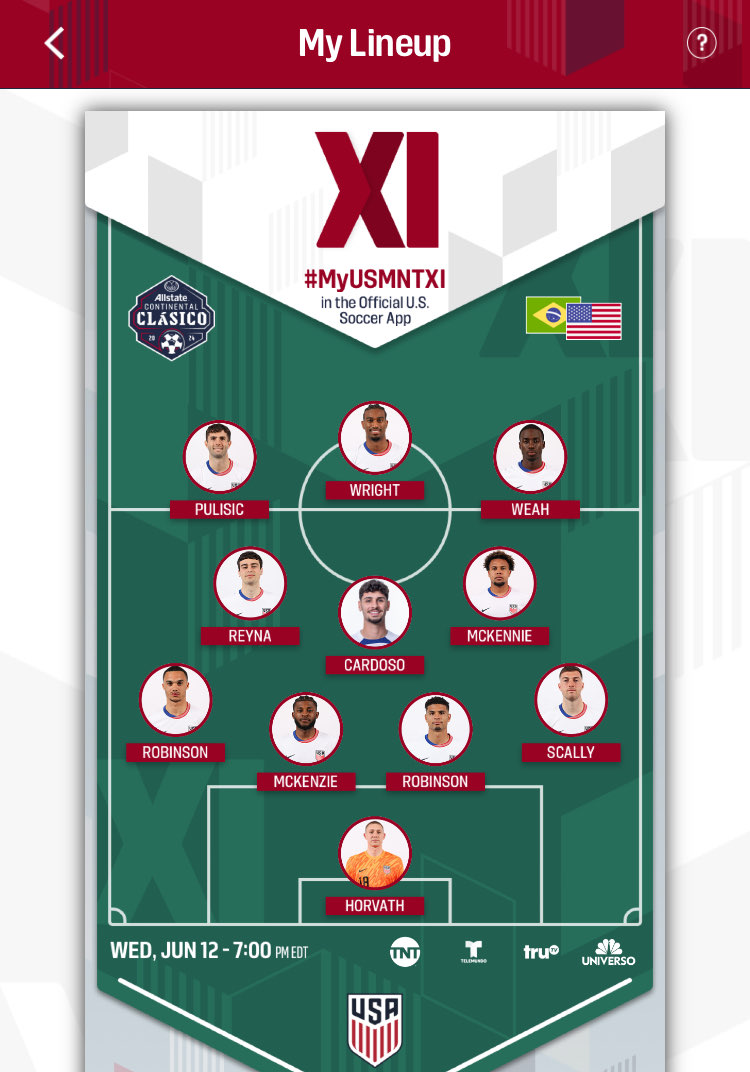
US Men Set to Play Panama Sat 9 pm TNT + Mexico Tues 10 pm TNT
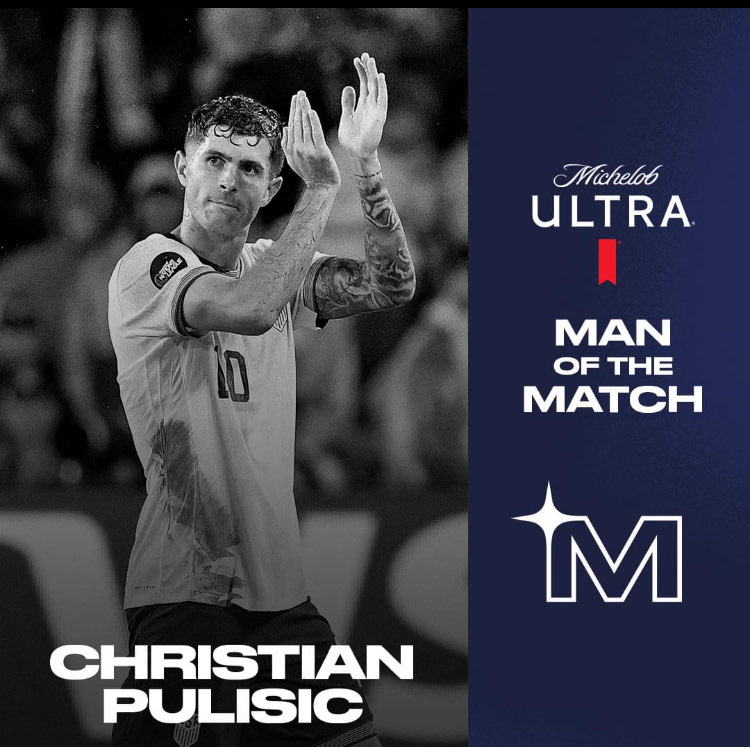
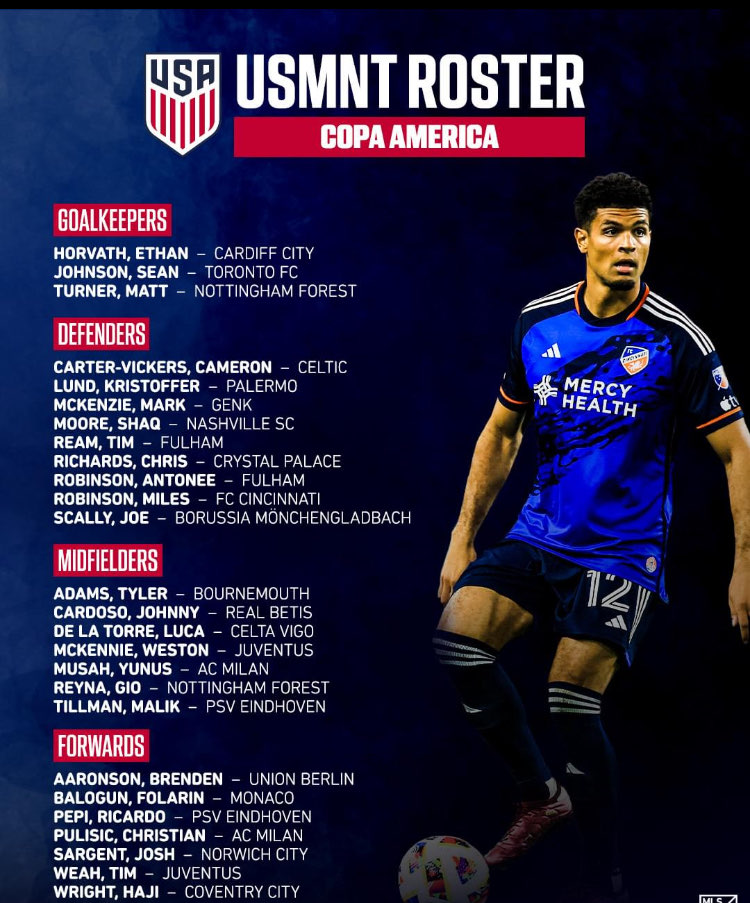
The US men prepare to play their first games under new manager Mauricio Pochettino with his complete new staff on hand for this first group of games vs Panama (who beat us last time) and @ Mexico. Of course the US will be missing a bunch of players as Tim Weah, Chris Richards, Fologan, Gio Reyna and more are all missing to injury. I will have more as we get closer to game time – including my starting line-up. (stories below) If you missed this Christian Pulisic has stayed hot in Italy with his 6th goal of the season.
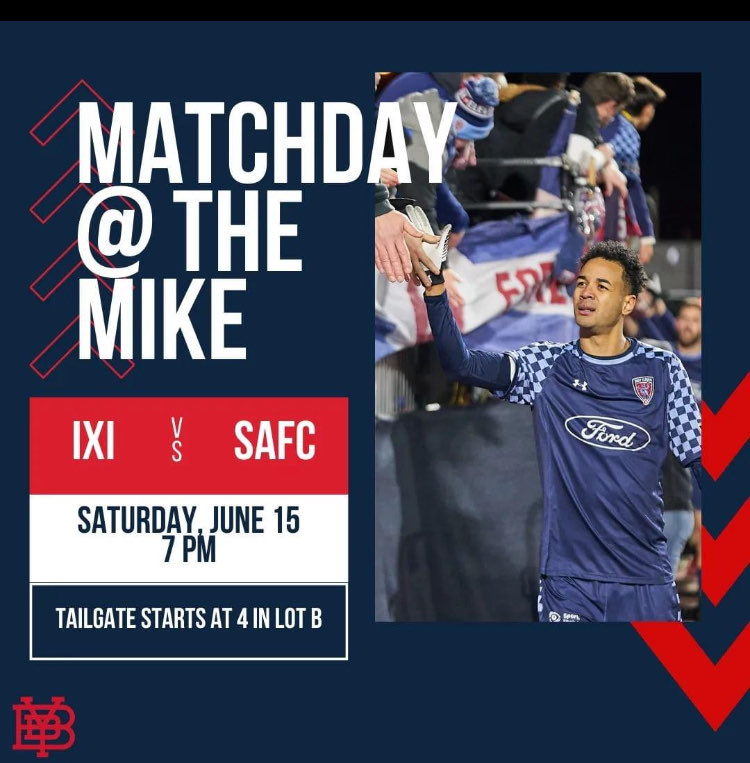
Indy 11 in 4th place @ Detroit City 4 pm on ESPN+
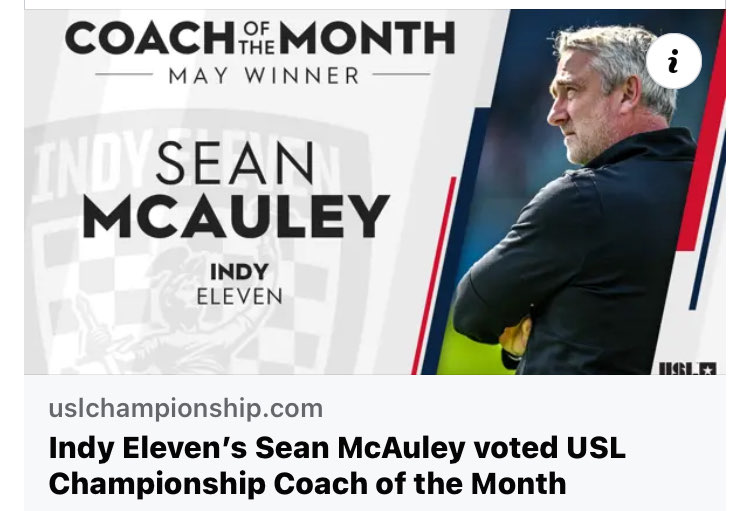
Leesburg, Va. – Indy Eleven moved up two positions to fourth place in the USL Championship Eastern Conference standings with a crucial 1-0 road victory at Loudoun United in a rare mid-week contest. Defender Aedan Stanley took a corner kick from the left side and drove it in front of the goal. Loudoun keeper Hugo Fauroux punched the ball high into the air, where defender Ben Ofeimu headed it down from the corner of the six to Musa, who, with his back to the goal, volleyed it with his left foot high over Fauroux for the game winner. It was Ofeimu’s first assist for the Boys in Blue.With three games left in the regular season, the Boys in Blue (13-10-8) are in fourth place in the Eastern Conference with 47 points. The top four teams in the East will host the first round of the playoffs the first weekend in November. Indy finishes its road week at third-place Detroit City FC on Saturday at 4 p.m. on ESPN+.
High School Sectionals this week has Carmel Boys Hosting and Carmel Girls in Zionsville
in Class 3A, the second-ranked and three-time defending champion Noblesville Millers will meet Carmel Saturday evening at Carmel’s Murray Stadium. Noblesville has won 19 consecutive state tournament matches and is five away from tying North Central of Indianapolis (1994-97) for the state record. Tix are just $7 for the games at Murray. Get on out there and watch some high school soccer.
LADIES
The 3rd ranked Carmel Girls cruised thru Sectionals in Zionsville and will face #12 Indianapolis Cathedral in the finals Sat at 2 pm at Zionsville’s beautiful new stadium.
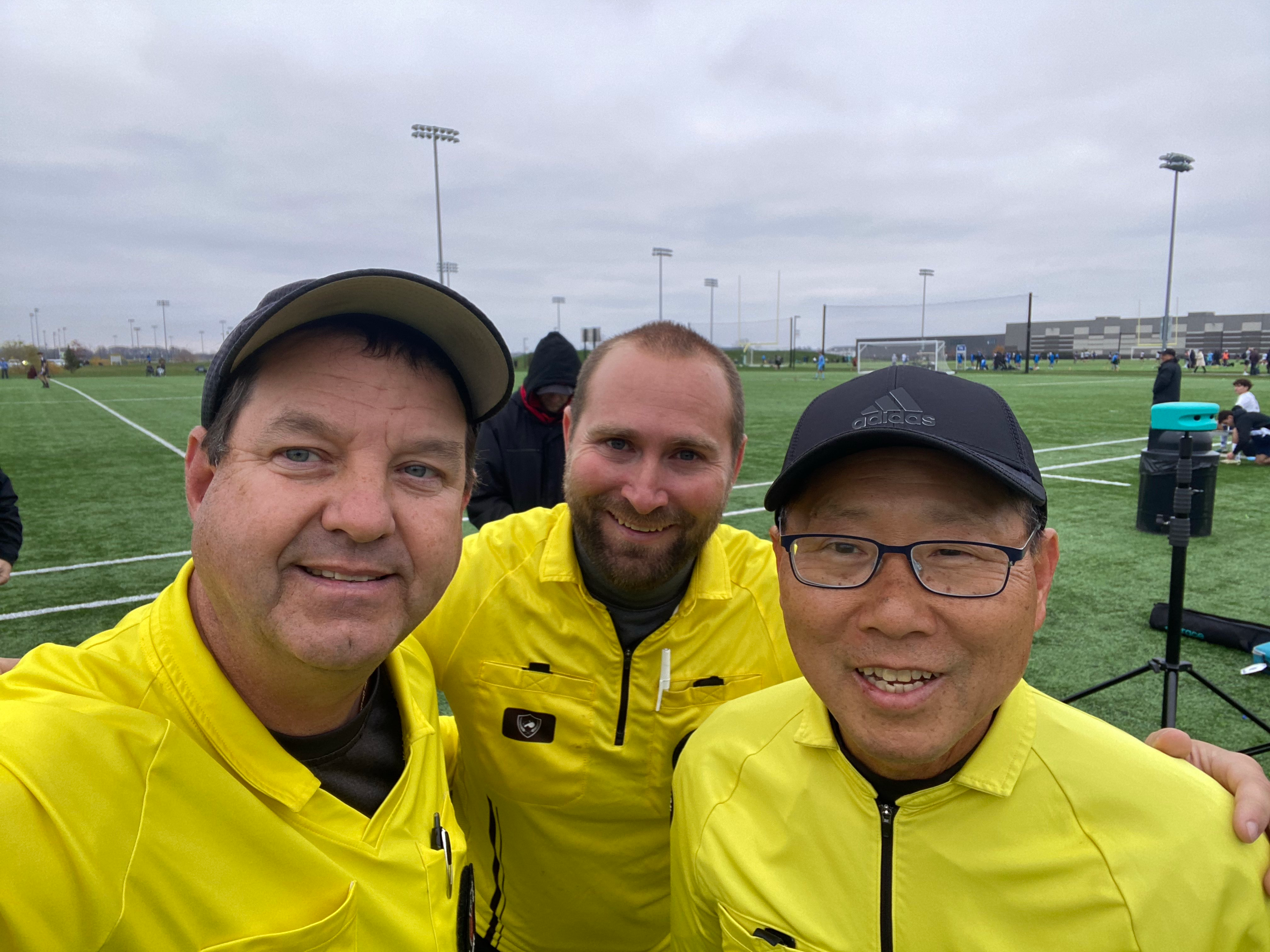
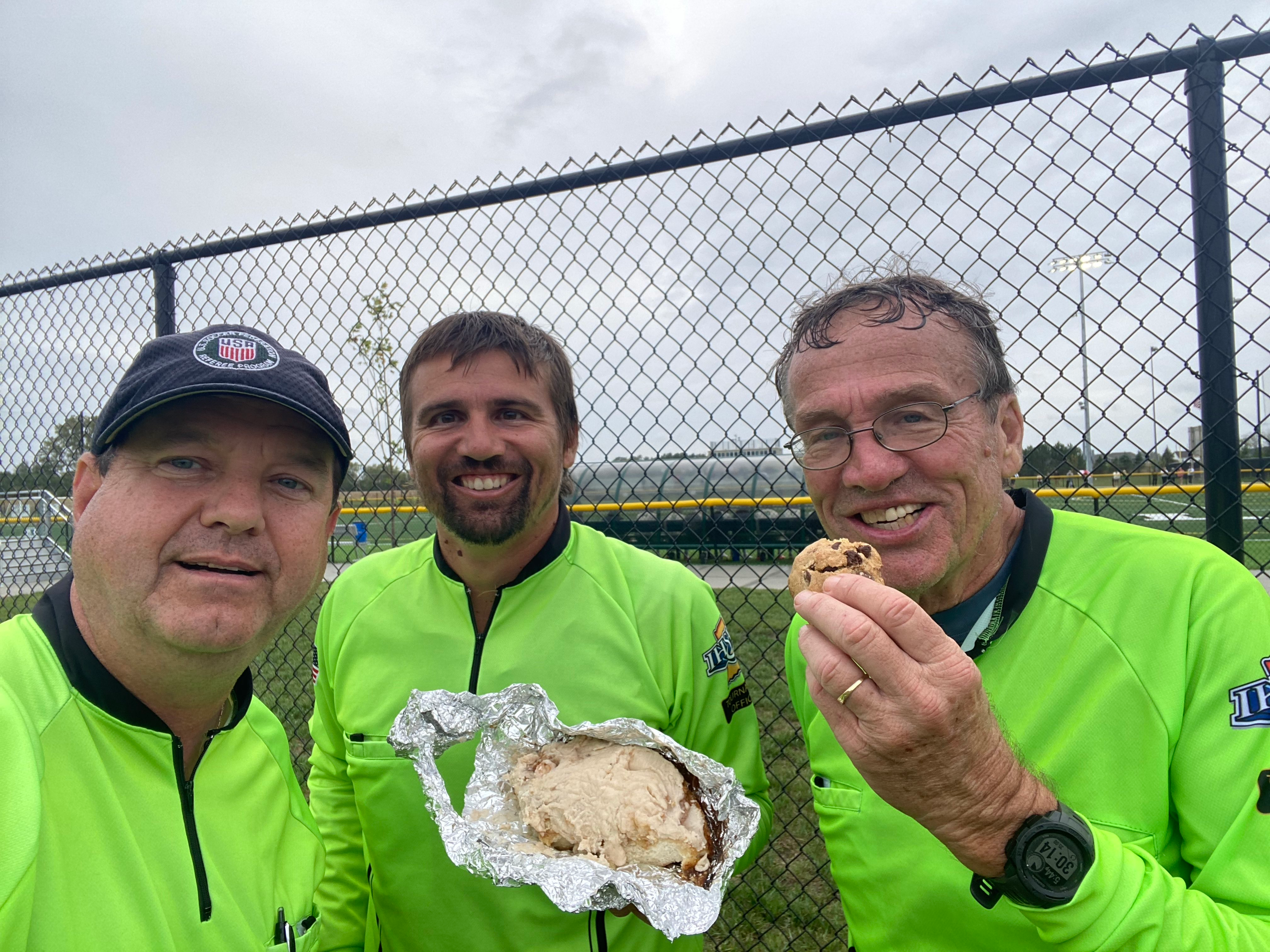
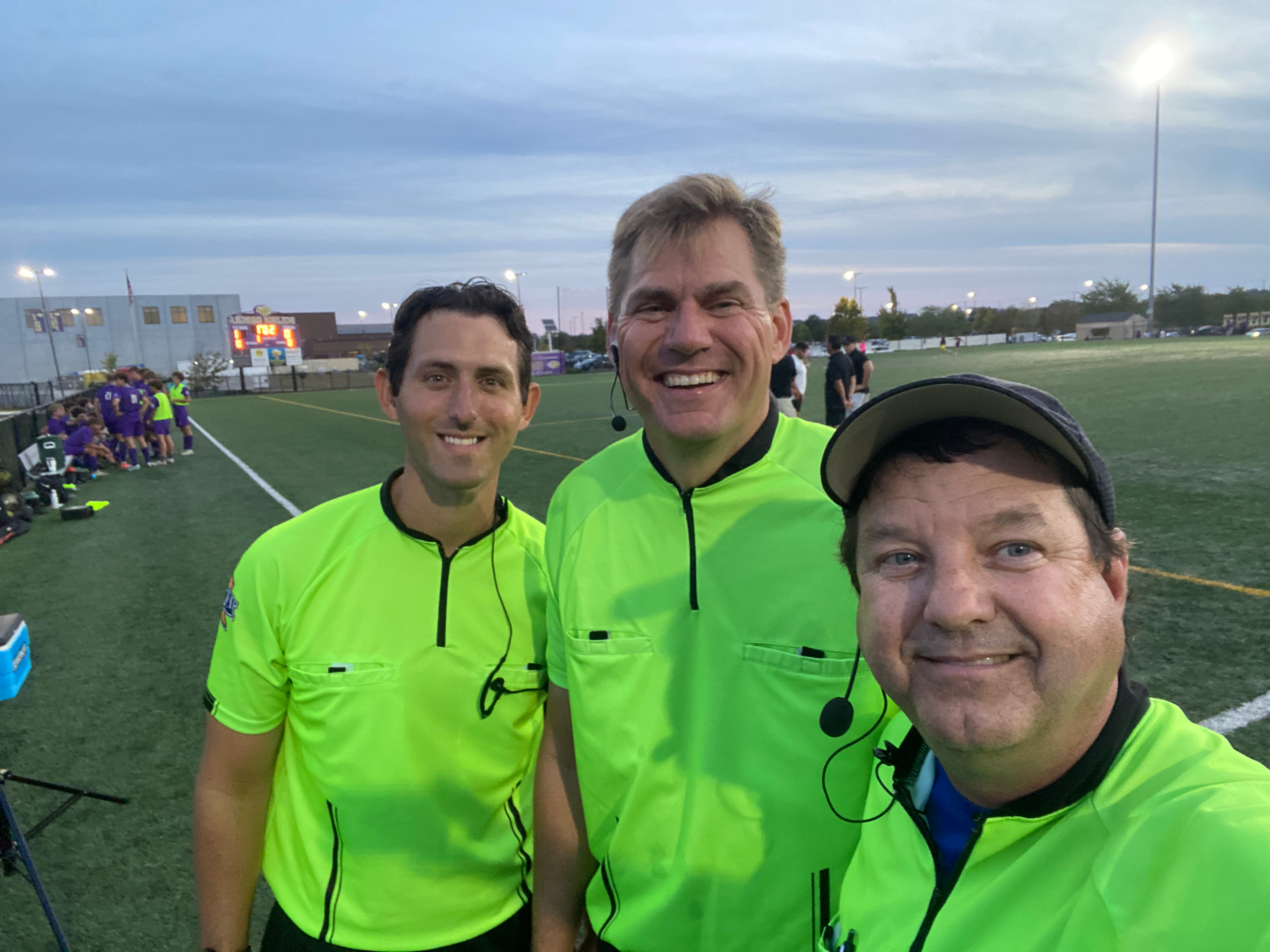
Nate Sinders (middle) bringing food for his dad Mark (right) and myself and all the folks at Zionsville High a Great Assignor, Ref and Chef – NATE the GREAT !!
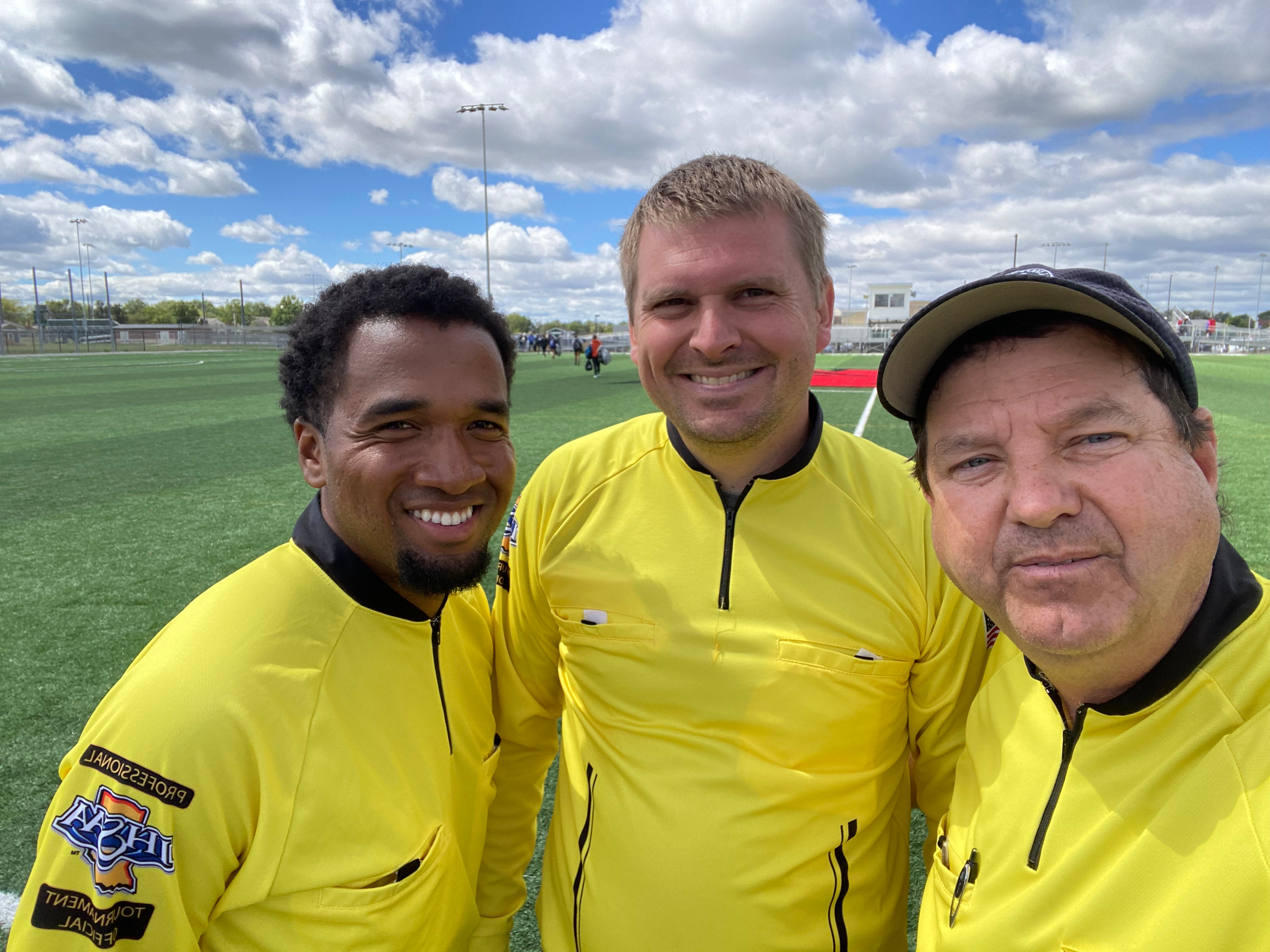
The Ole Ballcoach catching High School games down at Riverside with Marko & Terek. Finally got a CHS Girls Freshman game vs HSE with Robert Hart on Saturday before Sectionals start
GAME TV SCHEDULE
Thur, Oct 10
2:45 pm FS 2 England vs Greece
2:45 pm TUDN Israel vs France
2:45 pm fubu Italy vs Belgium
2:45 pm FS 2 England vs Greece
2:45 pm TUDN Israel vs France
2:45 pm fubu Italy vs Belgium
Fri, Oct 11
2:45 pm TUDN Iceland vs Wales
2:45 pm FS2 Germany vs Bosnia
2:45 pm fubu Italy vs Belgium
Sat, Oct 12
12 pm FS1 Croatia vs Scotland
2:45 pm FS2 Portugal vs Poland
2:45 pm fubu Italy vs Belgium
7:30 pm Telemundo Mexico vs Valencia
9 pm TNT/Univ USMNT vs Panama
Sun Oct 13
12 pm FS1 Finland vs England
2:45 pm FS2 Austria vs Norway
2:45 pm TUDN Greece vs Ireland
4 pm ESPN+ Indy 11 @ Detroit City
7:30 pm Apple Vancouver vs LAFC
Mon, Oct 14
12 pm FS1 Georgia v Albania
2:45 pm FS2 Belgium vs France
2:45 pm Fubo Germany vs Netherlands
Tues Oct 15
12 pm FS1 Finland vs England
2:45 pm FS2 Spain vs Serbia
2:45 pm TUDN Greece vs Ireland
7:30 pm FS1 Canada vs Panama
10:30 pm TNT/Univ Mexico vs USMNT
Top games to watch in October 2024 international break
The October international break commences this midweek as club soccer takes a backseat to games with the national teams. For example, fans can watch qualifiers for the 2026 World Cup. Yet, while those World Cup qualifiers are not consistent among all teams, each of the FIFA confederations has games available. Here, we picked the 10 most interesting fixtures to keep you company until Oct. 15.
Top games during October international break
USMNT v Panama (Saturday, Oct. 12, 9 p.m. ET)
Mauricio Pochettino’s tenure will start as the USMNT hosts Panama. This is a rematch of the two’s group-stage meeting from the 2024 Copa America. Panama won after Tim Weah picked up a red card. Both Weah and Folarin Balogun, who scored in that fixture, are off the Argentinian coach’s first roster due to injury. This is Panama’s first fixture since its exit from the Copa America at the quarterfinal stage.
You can watch USA vs. Panama on TNT, Telemundo, Universo, Peacock, and Fubo. For new users to Fubo, Fubo is offering a free 7-day trial.
Mexico v USMNT (Tuesday, Oct. 15, 10:30 p.m. ET)
Pochettino will also experience the heated derby against Mexico for the first time as the head coach of the Americans. Both sides crashed out of the group stage in CONMEBOL’s tournament this past summer. The game will be at Estadio Akron, one of the venues for the 2026 World Cup.It’s the first away fixture for USMNT in 2024. The United States is undefeated in this rivalry since 2019. The streak of results includes two Nations League and the 2019 Gold Cup final. It will be the first time Pochettino faces Javier Aguirre’s team since their three La Liga encounters 13 years ago. Watch the game on TNT, Univision, Sling TV, and Fubo.
England v Greece (Thursday, Oct. 10, 2:45 p.m. ET)
Lee Carsley started his spell as England’s interim head coach with a 2-0 win over the Republic of Ireland, the national team he represented in his playing days. Despite the national anthem controversy, he’s still in the job for the October International Break with the Three Lions set to play games against Greece and Finland.
It was against Greece that David Beckham scored one of the most famous free-kicks in soccer history. In a tense atmosphere at Old Trafford, his 93rd-minute strike sent England to the 2002 World Cup.
England vs Greece will be live on FS2, ViX, and Fubo.
Austria v Norway (Sunday, Oct. 13, 2:45 p.m. ET)
These two teams aren’t among the best soccer nations by any stretch of the imagination. But their contrasting fortunes showed the importance of team planning more than individual brilliance. Under Ralf Rangnick, Austria played a fantastic Euro 2024 before losing to Türkiye in one of the best games of last summer. Norway, who missed out on the tournament, revived with a 2-1 win over Austria in the reverse fixture last month thanks to Erling Haaland’s winner. Watch Austria vs Norway live on FS2, ViX, and Fubo.Germany vs Netherlands will be shown live on the Fubo Sports Network as well as ViX.
Scotland v Portugal (Tuesday, Oct. 15, 2:45 p.m. ET)
In the wake of their promotion to Nations League A and an impressive Euro 2024 qualifying campaign, Scotland endured a difficult 2024 so far. Including the humbling 5-1 defeat by Germany in the Euro 2024 opener, Scotland lost six of their nine games since the turn of the year.Portugal also had an uninspiring time in Germany, but Cristiano Ronaldo scoring his 900th career goal raised their spirit last month. The 39-year-old striker is competing with Aleksandar Mitrović and Karim Benzema to finish top of the Saudi Pro League’s scoring chart. Scotland against Portugal will stream live on ViX.
Bolivia v Colombia (Thursday, Oct. 10, 4:30 p.m. ET)
September was a historic month for Bolivia’s soccer. For only the second time in the 21st century, they won away from home courtesy of a 3-2 success in Chile. They’re now a single point behind World Cup kings Brazil nearly midpoint to the qualifiers.
Colombia also recorded a memorable victory last month in the repeat fixture of the Copa America final. Beating the world champions was a big achievement, but they’ll now have to cope with the difficulty of playing at an altitude of 4,100 meters above sea level.
Bolivia vs Colombia will be exclusively shown on Fanatiz.
Venezuela v Argentina (Thursday, Oct. 10, 5 p.m. ET)
Meanwhile, Argentina will search for a quick reaction after the defeat at Barranquilla. La Albiceleste also bid farewell to Ángel Di María in September’s eventful international window.
Three NWSL playoff spots up for grabs as season end nears
Chicago can clinch a 2024 postseason berth with a win on Saturday (Troy Taormina-Imagn Images)
With the Shield in Orlando’s hands, attention turns to the final three available playoff spots up for grabs in the NWSL.The Chicago Red Stars, currently in sixth, could become the next team to clinch a postseason berth with a win against the surging Gotham on Saturday at 4pm ET (Paramount+).Big Picture: Only Houston has been eliminated from postseason contention, but Portland and Bay FC will try to hold off those below the playoff line to better their odds at a quarterfinal appearance.Both clubs will have their work cut out for them, as Portland takes on first-place Orlando on Friday at 10pm ET (Prime), and Bay FC battles fourth-place Kansas City on Saturday at 10pm ET (ION).With only three regular season matches left, Seattle, Angel City, San Diego, and Utah will all face elimination scenarios this weekend.
Could NWSL MVP come down to Banda and Chawinga?
Banda has headlined a historic unbeaten streak by the Orlando Pride (Kelley L Cox-Imagn Images)
With KC Current forward Temwa Chawinga running away with the 2024 NWSL golden boot, is there still intrigue to be found in this year’s MVP race?Chawinga won NWSL Player of the Month for September, while forward Barbra Banda continued to excel with the unbeaten, Shield-winning Orlando Pride.Big Picture: Banda’s goal contributions are slightly off Chawinga’s pace, with 13 goals and six assists to Chawinga’s 18 goals and six assists.Chawinga leads the league in goals per 90 minutes, but Banda holds the title in goals and assists per 90 minutes, while both players comfortably lead the league in xG and npxG per 90.Bottom line: It’s been a year for blazing offense in the NWSL, personified by Chawinga and Banda’s excellence. But who will take the MVP crown?
Portland Thorns general manager Karina LeBlanc will be transitioning out of her role at the end of the 2024 season, the club announced on Wednesday.LeBlanc will join RAJ Sports, led by Thorns ownership the Bhathal family, in a role across the Portland Thorns and the newly-announced Portland WNBA team.Big picture: Joining the club in late 2021, LeBlanc oversaw the Thorns’ most recent NWSL championship in 2022, but this year the team has struggled with performances on the pitch.The Thorns’ winless streak early in the season led to head coach Mike Norris being reassigned to a new role, with assistant Rob Gale elevated to permanent manager.After appearing to right the ship, Portland has lost six of their last seven NWSL regular season games and are battling to stay above the playoff line in seventh place.
Andi Sullivan suffers torn ACL, will miss rest of the season
Sullivan suffered the injury in last weekend’s 2-0 loss to the Orlando Pride (Tim Nwachukwu/Getty Images)
The Washington Spirit announced on Wednesday that captain Andi Sullivan suffered an ACL tear in the team’s loss to the Orlando Pride on Sunday, and will miss the rest of the 2024 season.A Spirit stalwart, Sullivan started all 21 regular season matches she appeared in for the club in 2024, tallying two goals.Sulivan joins a growing number of injured Spirit contributors, including Croix Bethune (out for the season), Trinity Rodman, Casey Krueger, and Ouley Sarr.
Alyssa Thompson’s late goal contribution surge
Thompson has registered five goals and two assists in her last seven NWSL games (Harry How/Getty Images)
Angel City’s playoff hopes hang by a thread after a three-point deduction due to a salary cap violation, but forward Alyssa Thompson is keeping the dream of the postseason alive.Thompson has scored five goals and registered two assists in her last seven NWSL games, including a crucial assist in a win against the Seattle Reign last weekend.Six points off the playoff pace with three games to go in the regular season, Angel City will need Thompson at the height of her powers in their matchup against North Carolina on Saturday at 7:30pm ET (ION).
12 NWSL golden boot leader Temwa Chawinga has scored against 12 different teams during Kansas City’s 2024 campaign. Chawinga can complete the first-ever season sweep against the San Diego Wave on Oct. 19.
USMNT Player Tracker: Unlucky Balogun, Tillman has no equals – and Pulisic to step up?
Folarin Balogun’s bad luck, Christian Pulisic’s penalty puzzler and Malik Tillman’s eye-catching form all play a part of this week’s USMNT player tracker.Throughout the season, we will bring you updates on the U.S. players plying their trade in various leagues around Europe. With a World Cup on home soil on the horizon and new national team boss Mauricio Pochettino considering the options at his disposal, we’re keeping tabs on how they perform every weekend.
Issue of the weekend
After a patchy start to the season with Monaco, things were just beginning to look up for Folarin Balogun.
His goal against Rennes on Saturday ensured the visitors won 2-1 and it was his third in as many games. Having failed to find the net in Monaco’s opening four Ligue 1 fixtures (one of which saw him left on the bench), his had been a timely return to form and confidence — even more so ahead of the autumn USMNT friendlies under Pochettino, when everyone is so keen to make a good first impression.But Balogun won’t be there when the Pochettino era kicks off against Panama in Austin, Texas, on Saturday after dislocating his shoulder 64 minutes into the win at Rennes.He had to be helped off the field in obvious pain and will undergo tests to evaluate the timeframe for his recovery.
Monaco’s head coach Adi Hutter (left) comforts Balogun as he leaves the pitch in Rennes (Jean-Francois Monier/AFP via Getty Images)
Balogun, who pledged his international allegiance to the U.S. last year and has scored five goals in 17 appearances for his country, must now hope shoulder surgery is not required. If he needs an operation, that could entail an even longer lay-off, just as he was playing his way back into the type of form that earned him the move to Monaco after his season on loan from Arsenal with Reims the previous year.
Player of the weekend
Christian Pulisic’s supreme form for AC Milan continues, with yet another goal against Fiorentina. But it might be time for the USMNT main man, who is one of the leaders of the national team, to take a more assertive approach with his club team-mates. Pulisic’s fourth goal in consecutive appearances for the Rossoneri made it 1-1 on Sunday, but the visitors wasted the opportunity to win the game. In a match of three missed spot kicks, Milan saw the two they were awarded saved — and for reasons unknown, their designated taker, Pulisic, was overlooked to step up. Instead, defender Theo Hernandez failed to convert before half-time, then striker Tammy Abraham also saw an effort saved.
Fiorentina’s Luca Ranieri attempts to stop Pulisic (Giuseppe Maffia/NurPhoto via Getty Images)
Milan manager Paolo Fonseca was understandably unimpressed. “Our penalty taker is Pulisic,” he said to DAZN afterwards. “I don’t know why the players changed their minds. I spoke to him and said that it must not happen again.” Pulisic was replaced on 82 minutes and did not seem too thrilled, either, but the manager insisted he was trying to look after his star man. “It was out of caution for Pulisic — he had a problem with his flexor during the week,” he explained. “(Samuel) Chukwueze came in well and created opportunities.”
Graphic of the weekend
Quote of the weekend
“Who is better than Malik Tillman in the Eredivisie? I couldn’t name anyone.” Former Denmark international Dennis Perez, an analyst for ESPN, was very impressed by Tillman’s display in PSV Eindhoven’s 2-1 win over Sparta Rotterdam on Saturday. The American midfielder was influential as the reigning Dutch champions made it eight games and eight wins in Eredivisie this time around.
Tillman impressed against Sparta (Photo Prestige/Soccrates/Getty Images)
How did other U.S. players get on?
Name: Jonathan Gomez Club: PAOK Position: Left-back Games (in all competitions): 1
The 21-year-old was on the winning side during his full debut for Greek top-flight club PAOK Thessaloniki on Sunday. Gomez, who signed from Spanish club Real Sociedad in August, is eligible for both the U.S. and Mexico and graduated through the FC Dallas academy.
Amon has three goals so far this season in 11 appearances for his Danish Super Liga side. On Sunday he started in a front three as Lyngby, who are 10th in the table and struggling for wins, drew 1-1 at Randers FC. Amon, 25, has started all of his team’s league games so far.
A special milestone for the 18-year-old Texan who was named in the matchday senior squad for Dortmund for the first time during their defeat by Union Berlin on Saturday. Campbell signed a contract with the Germans until 2028 in the summer. After a spell in Iceland, he joined Dortmund in 2022 and became part of the U.S. program earlier this year.
His five competitive appearances to date this season have been for Dortmund’s second team in the German third tier.
Reynolds had a steady game for his Belgian club on Friday during their 2-2 draw with Beerschot. Playing at right wing-back, he helped his team stay in sixth place.
The younger Aaronsen brother is on a high at the moment after scoring his second goal in as many games for Utrecht, who have started the season strongly and are in second spot. He grabbed the second goal of a 3-2 win over RKC Waalwijk on Saturday.
What’s coming up?
(All times ET)
After the forthcoming international break, see if Campbell can get onto the pitch for Dortmund against St Pauli on Friday, October 18 in the Bundesliga (2:30pm, ESPN+).
Lennard Maloney will also try and help Heidenheim recover from their 1-0 loss to RB Leipzig last time out as they face his compatriot Joe Scally’s Borussia Monchengladbach on Saturday, October 19 (9:30am, ESPN+).
Folarin Balogun, Tim Weah and Johnny Cardoso to miss USMNT’s October fixtures due to injuries
Balogun, 23, dislocated his left shoulder during Monaco’s victory over Rennes on Saturday and will undergo further assessments in the coming days.Weah, 24, has missed Juventus’ last three games due to injury while Real Betis midfielder Cardoso has also battled injury issues in recent weeks.Lyon’s Tanner Tessman, Monterrey’s Brandon Vazquez, and Alex Zendejas, who plays for Liga MX side America, have been called up as replacements for three games this month.It is the first USMNT squad selected by Mauricio Pochettino after his appointment as head coach last month to replace Gregg Berhalter, who was dismissed after a group-stage exit at the Copa America.The 52-year-old’s first game in charge is a friendly against Panama at the Q2 Stadium in Austin, Texas, on October 13. They then face Mexico in another friendly three days later at the Akron Stadium.
Mauricio Pochettino’s first U.S. men’s national team roster looks similar to the team summoned in September, a few days before he was officially unveiled as the new coach. With limited time and several injuries to regular players, Pochettino and his staff leaned heavily on the expertise of U.S. Soccer personnel to put together this first roster.
Advertisement
The October camp is the perfect baptism for Pochettino into international management. The U.S., like most other national teams, is dealing with multiple injuries, both long- and short-term, to regular call-ups. World Cup starters Tyler Adams (back) and Sergino Dest (ACL) remain out for some time after undergoing surgeries. Two featured players over the last two years, Chris Richards and Gio Reyna, will also miss this camp with knocks which have kept them out of club action. Some depth pieces, like Luca de la Torre and Cameron Carter-Vickers, were also unavailable due to injury.Pochettino had to reach a bit deeper into the pool. In a way, it’s a blessing for a new staff to see more of the players at their disposal. For now, many of the faces have been around the program somewhat regularly: Christian Pulisic, Weston Mckennie and Yunus Musah to name a few. But, the Argentine coach noted, they have already started work on identifying players who have not been as big a part of the program.“We start to follow some very good players we think have the potential,” Pochettino said. “And maybe they are not now in the roster, but for sure, they’re going to be in the roster in the future.”
Change, in other words, is coming to the U.S. team. But Pochettino is not going to force it just yet.
Pulisic has been a mainstay and captain of the USMNT (Katie Stratman / Imagn Images)
This camp will give another chance for someone like Johnny Cardoso, who struggled in his start against Canada last month, to make an impression. It’s also a big opportunity for Aidan Morris, who has had a strong start to his tenure at Middlesbrough. Players like Marlon Fossey might also get a chance to show he should have a shout at the right back spot, while Joe Scally will have to hold off competition ahead of Dest’s return.
The list of players Pochettino wants to look at will undoubtedly start to change in the next few camps. The work to get to know the full pool has already started. Pochettino noted a staff member was in attendance at Toulouse against Lyon on Sunday to see Mark McKenzie. Another USMNT pool player started that game for Lyon: midfielder Tanner Tessmann, who wasn’t called to this camp. Pochettino was also asked specifically about Diego Luna, a player not called up to this camp, and said the midfielder is someone the staff wants to watch more of in the coming months.
Advertisement
There was one notable change in this roster: the return of Zack Steffen. The goalkeeper hasn’t played for the U.S. since 2022 and hasn’t had a great season for Colorado, but Pochettino is familiar with the former Manchester City back-up’s skillset and the goalkeeper position is problematic considering the lack of playing time for both Matt Turner and Ethan Horvath.
Steffen has not played for the U.S. since 2022 (Isaiah J. Downing / Imagn Images)
Pochettino said in a press conference this week that players who aren’t getting time on the field at their respective clubs have become a real issue with this national team. Pochettino, answering in his native Spanish, said he agreed that players not playing regularly is a big concern for a coach but part of his job will be to work to find players the best places to get minutes to be ready for the World Cup in 2026. Not calling in players who aren’t getting regular minutes is a luxury the U.S. men may not be able to afford, depending on the situation, but Pochettino was clear when he said players not playing for their club was “a handicap that I believe cannot be allowed.”
Still, this camp is less about those bigger-picture changes. Pochettino first must lay a foundation — for himself and the staff. That goes beyond just the players he’s calling in or their current form at the club level. Pochettino said he won’t overload players with tactical changes in this camp. Instead, he wants to “create a relationship inside and off the pitch” that will help the team understand what he is asking of them.“I think the most important (thing) is to be simple,” Pochettino said. “The player cannot believe that they’re going to arrive and the first thing in Austin we are going to be in the room and to start to spend two, three hours talking about tactics, about different things. I think the most important (thing is) that we need to settle a few principles, a few concepts that I start to develop with time.”Pochettino said the plan is to use two systems, the 4-2-3-1 and 4-3-3, and “from there develop our way to play.” Pochettino joked that he watches a lot of American soccer media now — “more than you believe,” he said — and he saw pundits who talked about the defensive effort the team needs.Pochettino noted that he wants to play attractive soccer that will entertain American fans. But it’s not just about playing pretty, up-tempo soccer.
Advertisement
“We are going to be very, very, very demanding. When we lose the ball, we need to be desperate to recover as soon as possible,” he said. “But we need to work like a team in this moment. We need to show that we are a real team.
“All the teams that win and won titles, you can see Argentina winning the Copa America or the World Cup, of course when they have the ball, they play really well. But when they don’t have the ball, they work like a team. They are really, really, really rough. I think we need to enjoy when we don’t have the ball and try to recover, and be very strong defensively.“We need to be very competitive. It’s not only to play nice football, it is to be very competitive. That, for me, is the objective.”The path toward that objective begins next week in Austin.
Robinson loves overlapping and underlapping and treats the left flank like the back-straight on an athletics track, tearing forward at every opportunity to add to his increasingly impressive attacking returns. He has eight assists in the Premier League since the start of last season, which is second only to Kieran Trippier when it comes to defenders.
Advertisement
As for interceptions, Robinson’s numbers are off the scale. There were 13 in one game at Anfield last season, equalling a Premier League record and keeping Mohamed Salah relatively quiet in the process.
Two years earlier, on the opening day of the Premier League season, Salah was so struck by Robinson’s performance for Fulham that he stopped to ask him his age in the middle of the match. Later, after they swapped shirts, the Liverpool forward gave him some words of encouragement that Robinson has never forgotten.
(Mike Hewitt/Getty Images)
Robinson is discussing all of this and more at his home in Surrey, on the outskirts of London, where we are scrolling through close to 100 clips of him playing for Fulham and the U.S. men’s national team. There are backflips and diving headers, own goals and crunching tackles, shoulder barges against one of the strongest players in the Premier League, and running races where there was only going to be one winner.
This is Antonee Robinson’s game in his words.
“I love it,” Robinson says, smiling.
It’s hard to imagine many modern full-backs saying the same thing, mindful that Robinson is talking about one-on-one defending. The 27-year-old feels like a bit of a throwback in that respect.
“I always go into games thinking, ‘I’m playing against a winger now and I don’t want him to get the better of me’. I feel like I can read where a player is going fairly well. But the ability to not fly in, to stand them up and then pick my time to close in on someone, I do really enjoy that,” he says.
Robinson made 80 interceptions in the Premier League last season. To put that number into perspective, it was the most across Europe’s top five leagues, 15 more than any other Premier League player (Bournemouth’s Lewis Cook was in second place) and almost twice as many as any other Premier League full-back (West Ham’s Emerson Palmieri made 43).
Advertisement
“Obviously because I’m quite fast, it helps,” Robinson says in an understated way. “I feel confident knowing that I’m gonna get to most passes when I see them.
“But it’s quite annoying to the manager at times because sometimes I’ll be convinced the pass is going somewhere and almost gamble a little bit. And then it goes the other way and he hates it when I guess. He always says, ‘You’re fast enough to get there. Just stay, let it go (to the winger), and then go’. But sometimes when you smell something, you have the urge.”
Robinson’s scent is normally reliable. His trademark interception is cutting out the short and low diagonal pass to the winger outside of him — an action that he repeated over and again last season, including on multiple occasions against Tottenham Hotspur.
“I think the way they play would suit this because they invert the full-backs, they’re really narrow, and the winger is the only wide pass (available),” Robinson explains as we watch a couple of clips against Spurs. “So when I can see that’s literally the only pass he’s going to do, even if I go here (wide to try to intercept) and he plays it here (inside), there’s nothing on, so it feels safer to go. But you can see (on the video) that I’m just eyeing him up.”
Although Robinson said he will “almost gamble a little bit”, his interceptions are calculated. Before setting off, he looks at the body orientation of the player in possession and also waits until the passer (Bruno Guimaraes in the next example) focuses on striking the ball.
“When he’s put his head down, you can kind of see the direction of the pass — he’s going to pass here (wide) and I need to go that way anyway,” Robinson says. “This line (infield) is blocked off by our midfielder, which obviously the gaffer (Marco Silva) sets us up to do. So it looks like the only pass is (wide).”
If the distance between the passer and the receiver is close, which was the case when Robinson intercepted a ball from Julian Alvarez to Phil Foden at Manchester City last season, the risk of being caught out increases.
“I can remember similar ones to this where I would get done,” Robinson says. “Obviously I’ve seen him (Alvarez) put his head down, I know he’s passing there, so I’ve gone. But I think we played Liverpool, it was the exact same situation, it’s Trent (Alexander-Arnold) on the ball and he looks like he’s gonna pass it there (to the winger) and he plays it inside me; that’s the one I said the gaffer despises. He goes mental at that. Luckily, this one I made it.”
He has a good memory. The Liverpool clip is lined up ready to show him as a rare example of when that darting run to intercept goes wrong. Alexander-Arnold disguises his intentions, reverses the pass and Luis Diaz runs in behind.
Robinson sighs. “With that, I should know a lot better who’s on the ball. But, you know, playing against good teams you get excited. So that is a prime example of the manager waiting to kick off at me. I’m already thinking, ‘He’s gonna want to speak to me about that’.”
An aggressive, front-footed defender, Robinson enjoys an old-fashioned 50/50. “Without hurting anyone, I do like being able to leave it on someone,” he says as we watch him making fully committed but fair challenges on Bournemouth’s Adam Smith and Everton’s Abdoulaye Doucoure (below).
Robinson’s biggest attribute by far when one-v-one defending, though, is his pace. A clip of him up against the Nottingham Forest attacker Anthony Elanga, who has registered the second-fastest speed in the Premier League this season, illustrates that point. Fulham have turned over possession and Robinson is running back on the outside of Elanga, which is the last place a full-back wants to be ordinarily, but he still manages to get to the ball first. Elanga is left on his hands and knees afterwards.
“I remember one of the first passages of play here — the ball broke and both me and Elanga ended up sprinting and he’s leaving me in this race, which I didn’t expect,” Robinson says. “I was like, ‘S***. If he gets the ball, he’s in’. I knew he was quick, but he’s top-level speed. After that, I was way more cautious of the threat in behind.”
Advertisement
Robinson’s speed means that throughout his career, he has been deployed as the “last man” on attacking corners, essentially as an insurance policy if the opposition counter. Liverpool’s Darwin Nunez tried and failed to win a race against Robinson from a Fulham corner last season and there was a similar scenario in the home game against Everton when Arnaut Danjuma attempted to beat him on the outside.
“He’s got to know his players there!” Robinson says, laughing. “I’d say 95 per cent of wingers, if they’re going to just try to knock it down the line and run me, I’m buzzing with that. So I was very happy when he tried that because it makes my decision so much easier.”
Robinson talks about getting tight on wingers and “not letting them breathe”. Away at Brentford last season, he was all over Bryan Mbeumo from the first minute, giving him no time on the ball. Half an hour into the game, Mbeumo let a routine pass slip under his boot by the touchline, prompting the co-commentator and former Fulham and West Ham defender Tony Gale to suggest Robinson had got inside the Brentford player’s head.
“He’s miscontrolled that because he’s looking at Robinson, thinking, ‘He’s gonna be on me sharp’. He’s taken his eye off the ball and that’s the little bit of shakiness Robinson’s put on Mbeumo early on. It’s up to Mbeumo to play a little bit of cat and mouse with him.”
Is it a game of cat and mouse with the winger?
“I suppose so,” Robinson replies, smiling. “Sometimes you end up talking to players in games, which is quite funny. I remember playing Newcastle, not this last game (this season), but a couple of games ago and Jacob Murphy was playing and he was like, ‘F****** hell, lad — stop running!’ So, little things like that — straight away they know what I’m like. And it does play a little part (in putting wingers off their game). There’s going to be players who will come at me less because they know I’m going to go the other way a lot of the time.”
Equally, there are also games where Robinson is largely defending because of the calibre of opposition. Arsenal at home last season was one of those occasions and it turned into a fascinating duel between him and Bukayo Saka in a game that Fulham won 2-1.
The first clip shows Robinson following Saka infield, shoulder-charging him and winning the ball. Robinson puffs out his cheeks after watching it. “That’s an incredibly rare occurrence because Saka is crazy strong. He’s one of the strongest players, pound for pound, that I’ve played against.”
Later in the game, Saka gets his own back in another physical duel, as if to prove Robinson’s point.
In between times, there are a couple of moments in quick succession where Robinson ends up defending one-on-one with Saka near the touchline and close to the corner flag. Robinson shows Saka down the line, forcing him onto his weaker right foot. In the first instance, Saka still manages to cross — albeit his delivery is overhit.
On the second occasion, Saka goes the same way again and Robinson blocks.
It’s tempting to think Robinson’s defending was much better the second time because he stopped the cross, but he doesn’t really see it like that.
“The first one I was still happy with,” Robinson says. “I know Saka’s very good on his left foot. If I show him down the line and he manages to get a cross in… I’d obviously like to block it, but if he’s crossing on his right foot and that’s the worst-case scenario, that’s fine. Next one you kind of know how he’s going to be shaped when he goes that way (again), so I can close it down a little bit better. But if I show him on his right every time and half of them he crosses and half of them he doesn’t, it’s a lot better than him cutting in on his left to pick a ball properly or shooting.”
(David Price/Arsenal FC via Getty Images)
An “unlucky” own goal at Villa Park in November in a 3-1 defeat. At least that was how Robinson viewed it at the time. Marco Silva thought otherwise.
Either way, that own goal represented a turning point in Robinson’s season. He went on to register assists in three successive Premier League matches (the first in the second half against Villa), scored two terrific goals for the USMNT against Trinidad & Tobago during the international break that followed, then produced one of the best performances of his career against Liverpool a couple of weeks later at Anfield.
Robinson asks to take the footage further back to explain. “Here, when we looked at this, the manager would like Calvin (Bassey) to be two yards this way (sliding to the right), being able to cover the line a bit better. If he’s there, Tim (Ream) is three yards over and then I’m inside this winger (Moussa Diaby). Obviously, it gets played (down the line to Youri Tielemans) and you’ll see when I come in.
“Realistically, you’d want me to be here (the black circle below), so just five yards inside this line. And if I’m already there, he (Diaby) is not in front of me.
“Still, after that, he (Diaby) missed the ball. So I do get unlucky. But it’s always the steps leading up to that which you can prevent in the gaffer’s mind.”
By his own admission, Robinson was lacking in confidence ahead of that Villa match. He scored an own goal against Sheffield United the previous month and talks about going into games around that period thinking, ‘Just don’t make any big mistakes. Just do your job. Simple’.”
International weeks can be viewed as disruptive by a lot of club managers, but a change of scenery was probably just what Robinson needed. He joined up with the USMNT for the CONCACAF Nations League quarter-final tie against Trinidad & Tobago and thrived. In the first leg, in Texas, Robinson assisted the opening goal and then scored the second with a superb strike that was followed by a series of backflips that were just as impressive.
“Big moment!” Robinson says, smiling. “I dyed my hair white because I thought, ‘You know what, I’m just gonna do something mad’, and then I scored a good goal, so I was very excited.”
Four days later, in the away fixture, Robinson scored a diving header. “I’m more happy with this one, to be honest. Because I remember him (Sergino Dest) getting it and me being out here (very wide), I was just like, ‘I’m going to dart in between the defenders’. It was a proper striker’s goal.”
Robinson returned to England “feeling better about myself”. He got an assist against Wolves in Fulham’s next match and then put in a man-of-the-match performance against Liverpool. The 13 interceptions made headlines and one of them (below) led to an assist for Fulham’s first goal.
Watching the game back, it’s remarkable how often Robinson seemed to be in the right place at the right time to limit Salah’s impact in a match that Fulham lost 4-3 despite leading with less than five minutes remaining.
Did Salah say anything to him afterwards? “Not this time,” Robinson replies. “He has before. We played Liverpool in the first game of the season two years ago. We drew 2-2. I remember saying to my friends, who are all big Liverpool fans and came down because it was around my birthday, ‘Lads, if Salah scores or gets an assist this game, I’ll pay for dinner tonight’, so I put a bit of added pressure on myself. And he (Salah) did (score), annoyingly.
Advertisement
“But I remember him saying to me midway through the game (Robinson says this next bit in a curious voice), ‘How old are you?’. So he didn’t really know who I was. I must have been 24, 25. He just nodded and carried on with the game. Then, after the game, I asked for his shirt, so we swapped shirts and we were just chatting and he was like, ‘You were the best player this game, keep up what you’re doing’. That was very nice of him.”
A routine question about whether Robinson has had the opportunity to speak to Mauricio Pochettino since the Argentinian took over as head coach of the USMNT delivers an unexpected answer.
“Funnily enough, I bumped into him out for dinner the other day,” Robinson says. “We had a team meal in London and he just happened to be in there. I was sat next to Harrison Reed, who used to play for him at Southampton, so he went over to speak to him and I just went over and said hello. I was chatting to him and it seems like he’s really excited about it (coaching the USMNT).”
“We obviously wanted to push as far as we could in the tournament and try to win it,” Robinson says. “We didn’t even get the chance to get out of the group, which is a big, big letdown for us, especially us being the host nation.”
The Copa America post-mortem started immediately after the final whistle against Uruguay. Christian Pulisic, the U.S. captain, spoke about the need to regroup and, more significantly, highlighted the importance of “finding an identity again”.
(Bill Barrett/ISI Photos/USSF/Getty Images for USSF)
With 46 caps to his name and six years of international experience behind him, including a World Cup in Qatar, Robinson has been around the team for long enough to know what the U.S. should look like on the pitch. What is their identity?
“Well, thinking back to teams before us, the U.S. was always gritty, hard-working, horrible to play against, a battling team,” he says. “They had good players but, on the whole, as a team, there was a lot of fight in them. And when we first came together as a team, we definitely had that a lot. I remember going into the World Cup, playing against England and feeling that we can make it extremely difficult for teams. But towards the end, it felt kind of soft and stagnant. We didn’t have that bite.
Advertisement
“I didn’t get to go to the last (international) window and obviously we had a different manager (Mikey Varas). But I was watching us play against Canada and it just felt like they were out-fighting us. I’d back us, at our best, as a better team than them comfortably. But you have to win that fight first.
“They (Canada) did the same thing in World Cup qualifying, where they were just nasty; horrible to play against. And I think that’s something we need to get a bit of because we’re not the most talented team. So that needs to be a minimum.”
On the face of it, Pochettino’s style of play feels like a good fit for Robinson’s game. “Yeah, I think so,” Robinson says. “I think it will suit a lot of the players on our team. And, regardless, just having a fresh set of eyes and a new perspective — I think every now and then, it gets to a point where a team does need that.
“You obviously see under his resume that he’s a top-level coach. It’s going to be interesting to see how that transitions from club level to international level in terms of how much control he can have on it. He’s not going to see us every day. He’s not got a lot of time to drill into us how he wants to play. But that’s where we’ve got to step up and take responsibility and say it’s not all just on him. We need to give him as much attention and commitment as possible and make it work between us.”
“I can feel the moment when I change gears,” Robinson says.
It’s quite a sight watching Robinson overlapping to receive a pass — a bit like an Olympic sprinter setting off in the relay and waiting to be handed the baton.
According to data from SkillCorner, Arsenal’s Ben White was the only Premier League full-back to make more overlapping runs than Robinson last season.
SkillCorner define a high-intensity sprint as capturing a player moving at over 20 km/h for at least 0.7 seconds. A significant number of Robinson’s overlaps start from inside his own half, last for 3-4 seconds and see him reaching much higher speeds than 20 km/h.
“I’ve done half a pitch there!” Robinson says, laughing, as we watch him overlapping against Forest (below).
The sprint for another overlap, this time against Liverpool in the Carabao Cup, starts not far outside his own penalty area. Robinson has his hand in the air as Joao Palhinha takes possession and appears to be gesturing to the midfielder where to pass next. What’s going through his mind here?
“I think, ‘Who would I rather have the ball in this situation?’ If he (Palhinha) gives it to me, Willy’s going to run and I’m going to run and we’re going to end up in the same sort of pocket. If he gives it to Willy first, Willy is already higher up and I’m going to catch up because he’s got to wait for the ball. Willy is right-footed, he can run inside, commit a defender. If the defender goes with me, Willy is going to end up shooting. So in this situation, Willy getting the ball and me coming with speed is 10 times better than me getting it.”
Advertisement
‘Willy’ is Willian, the former Chelsea and Arsenal winger and a player Robinson built up an excellent understanding with at Fulham over the course of two seasons. His departure in the summer has paved the way for Robinson and Alex Iwobi to link up on the left much more frequently than before and the signs are already promising. A Robinson overlap and low cross, after a pass from Iwobi, led to Fulham’s goal at Ipswich earlier this season.
The week before, against Leicester, it was Robinson’s first-time ball that set up Iwobi for Fulham’s winner. “The understanding is getting there,” Robinson says.
Naturally, it’s much easier to develop chemistry with team-mates at club level compared with international football because of the constant repetition on the training ground, as well as the regular cycle of matches.
That said, Robinson clearly has an excellent understanding with Pulisic when it comes to his attacking runs (the clip below shows an overlap against Bolivia in the Copa America that Ricardo Pepi should have converted) and he makes it sound as though there are a lot of parallels with playing left-back for Fulham and the USMNT.
“It’s really similar,” Robinson says. “We do have a bit more licence that I can go (forward with the U.S.). If the right-back was attacking, like Sergino, or like when (Joe) Scally was playing in Copa, I can still be high because we’d have two midfielders who would sit and do that defensive box.
“But playing with Christian is very similar. We have that same understanding of, ‘You’re our most dangerous player. I’m going to give you the ball. I’ll give you the option of sprinting behind if you want to use it. If you don’t want to use it, that means you think it’s a better option, so I trust you with that’. And we have a great relationship off the pitch anyway, so it does translate to being on the same page on it.”
(Tim Nwachukwu/Getty Images)
Playing next to the same player for club and country helps — as was the case with Tim Ream up until August when the central defender joined Charlotte FC. Robinson and Ream were always on the same wavelength and had a lot of joy with a move that would see the left-winger, or No 8, come short and narrow, leaving space for Robinson to run in behind and Ream to pick him out with a longer pass.
It’s a simple but effective pattern that pulls opponents out of position.
“Opposite movements — that’s a big thing in our game (at Fulham),” Robinson says.
The footage ends with an assist that provides another example of how hard Robinson has worked to improve the quality of his final ball. “A lot of my assists have come from low crosses, which is something we do a lot after training,” he explains. “Just kind of feeding it into that danger area along the six-yard line, like the Ipswich one.”
Advertisement
He must be happy with his numbers: eight assists since the start of last season is an excellent return for a left-back.
“I can’t complain about that, considering the two Premier League seasons before that I had one,” Robinson says, smiling. “But a couple of goals would be nice. I haven’t scored in the Premier League yet, so I’ve got my eye on that.”
The My Game In My Words series is part of a partnership with EA Sports. The Athletic maintains full editorial independence. Partners have no control over or input into the reporting or editing process and do not review stories before publication.
Man its cool to have Champions League back – the first round was fantastic – I am going to be honest and say I am not quite sure that I understand how it all works – but it looks like we are going to have better games along the way in what used to be the group stages. Man City and Inter was classic – as was Pulisic scoring the first goal for AC Milan before they fell to Liverpool 3-1. Lots of stories below.
This Week AC Milan and Pulisic face Bayern Leverkusen (German League Champs) on Tuesday at 3 pm on Para + while Dortmund and Reyna face Celtic and Aaron Trusty on CBS SN at 3 pm. Of course the big game of the week is PSG hosting Arsenal at 3 pm on Paramount+. Wed gives us Folarin Balogun and Monaco visiting Zagreb in Champions League 3pm Para+ and Weston McKennie and Juve visit Leipzig in Champions League 3 pm on Para+.
High School Season’s Mostly Wrap-up this Weekend as Regionals Start Oct 7th
The 3rd Ranked Carmel High Girls hosted senior night Wed night – a proud moment as all 9 seniors started playing at Carmel FC as kids. The Girls play their final home game at Murray on Sat at 11 am before traveling to Zionsville for Regionals. The Carmel Boys have moved tonight’s game to Monday night at Murray stadium.
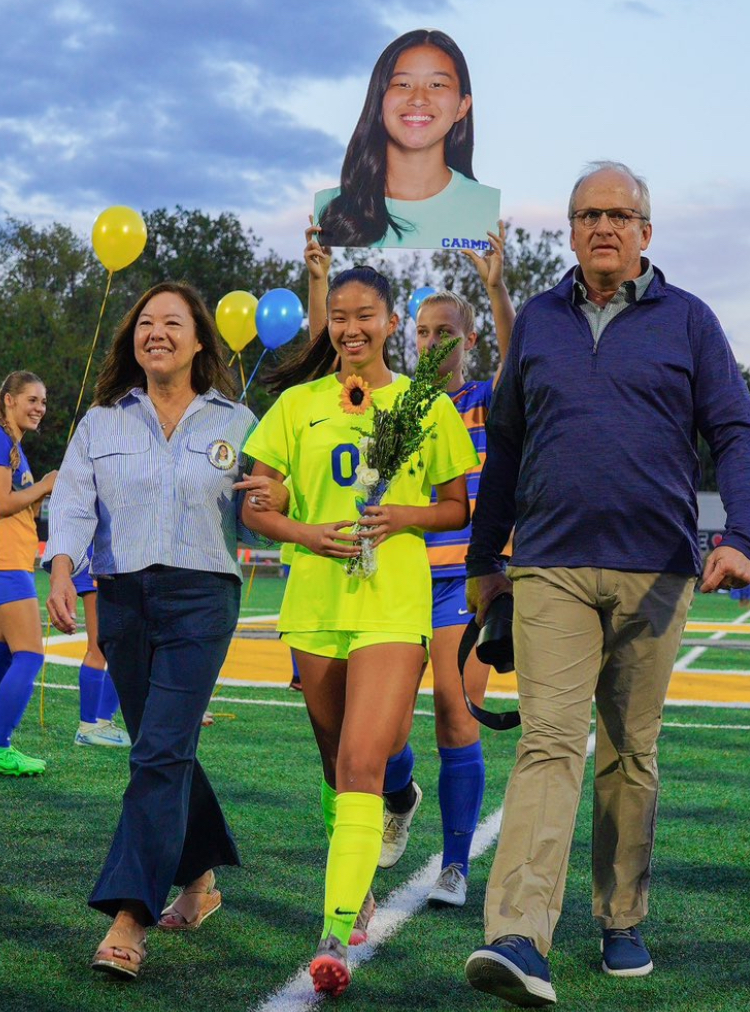
Carmel High Girls Seniors and their parents on Senior Night. All former Carmel FC players. Carmel Senior GK Mary Grace Knapp with parents. Proud former member of Carmel FCGKU.
Carmel Senior Rosie Martin with former Carmel FC Coach Andy Martin and sister and former CFC & Carmel High player Cici Martin.
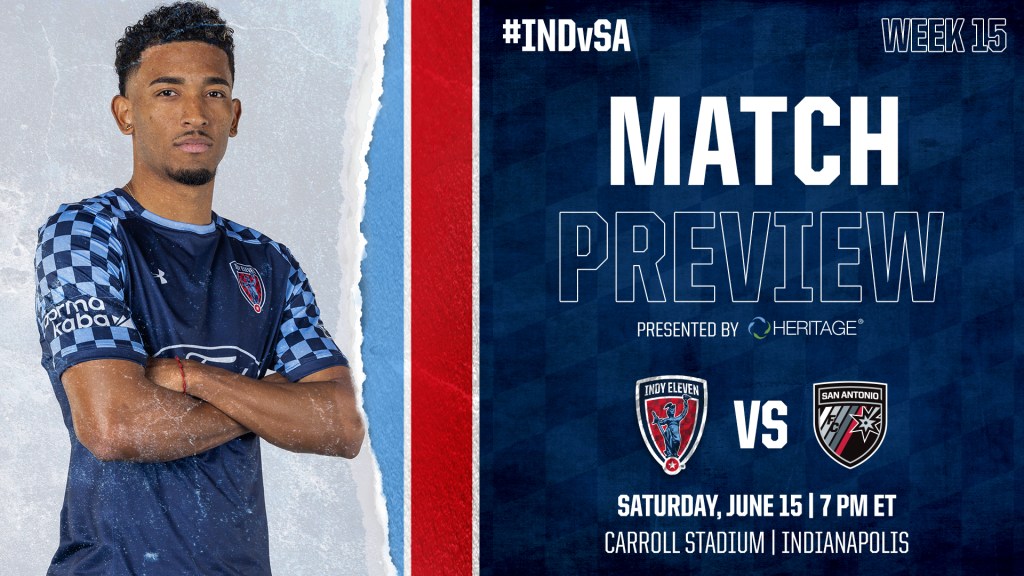
INDY 11 Home vs Miami FC Sat 7 pm
Indy Eleven opens a two-match homestand vs. Miami FC on Saturday at Carroll Stadium. The Boys in Blue enter the final six games of the regular season in sixth place in the Eastern Conference with an 11-10-7 record and 40 points. The top eight teams in the East qualify for the playoffs that begin the first weekend in November, with the top four teams hosting. For information on all ticket options visit the Indy Eleven Ticket Central. For questions, please email tickets@indyeleven.com or call (317) 685-1100.
My High School Reffing season is about to wrap up — games this weekend and a few next week.
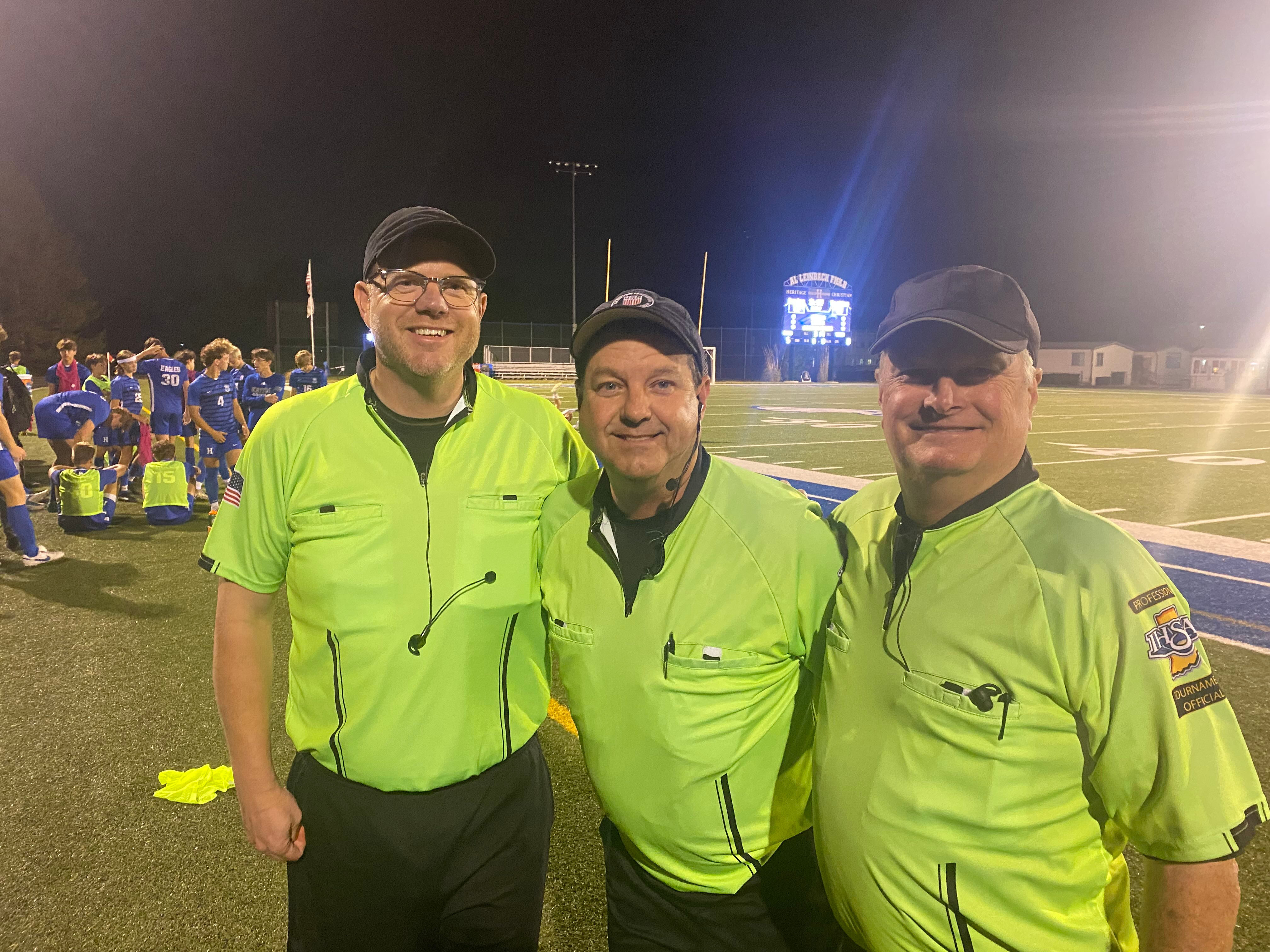
Always special to get to work with the Master Dave Howard (L) along Todd Coulter (R) with at Heritage Christian Thurs
Always fun reffing with Riley Cheatham (F) and newbie Joshua Larsh (B) at Lawrence Central
US Men Champions League & Europa League Mid Week games
Tuesday
Leverkusen vs AC Milan, 3p on Paramount+, ViX: Christian Pulisic, Yunus Musah, and Milan are on the road against Xabi Alonso’s Leverkusen in the UEFA Champions League.
PSV vs Sporting CP, 3p on Paramount+, ViX: Malik Tillman, Richy Ledezma, Ricardo Pepi, Michael Bresser, and PSV host Sporting CP in Champions League.
Also in action:
Burnley vs Plymouth, 2:45p: Luca Koleosho and Burnley are at home in the Championship.
Cardiff vs Millwall, 2:45p: Ethan Horvath has been on the bench for several of Cardiff’s recent games.
Coventry vs Blackburn, 2:45p: Haji Wright and Coventry host Blackburn, who include young dual-national fullback Leo Duru, but Duru has only played in cup competitions so far this season.
Norwich vs Leeds, 2:45p on Paramount+: Brenden Aaronson and Leeds pay a visit to Josh Sargent and the Canaries in this Championship game.
Barnsley vs Wycombe, 2:45p: Gaga Slonina, Donovan Pines, and Barnsley host Wycombe in League One play.
West Brom vs Middlesbrough, 3p on Paramount+: Aidan Morris and Boro visit West Brom, where Daryl Dike is recently back in training.
Wednesday
Dinamo Zagreb vs Monaco, 3p on Paramount+, ViX: Folarin Balogun and Monaco visit Zagreb in Champions League.
Charlotte FC vs Chicago Fire, 7:30p: Brian Gutiérrez, Chris Brady, and the Fire visit Tim Ream and Charlotte in MLS action.
NYCFC vs FC Cincinnati, 7:30p: Miles Robinson, Lucho Acosta, Roman Celentano, and FC Cincy visit Matt Freese, James Sands, and NYC.
Toronto FC vs New York Red Bulls, 7:30p: John Tolkin and the Red Bulls visit Toronto.
Columbus Crew vs Inter Miami, 7:45p on FS1, FOX Deportes, FuboTV, Sling TV: Benja Cremaschi and Miami visit Patrick Schulte, DeJuan Jones, and thew Crew.
Houston Dynamo vs New England Revolution, 8:30p: Noel Buck, Peyton Miller, and the Revs visit the Dynamo in this MLS game.
Nashville SC vs DC United, 8:30p: Walker Zimmerman, Shaq Moore, and Nashville host Ted Ku-DiPietro and DC.
Colorado Rapids vs LA Galaxy, 9:30p: Jalen Neal and the Galaxy are on the road against Cole Bassett, Djordje Mihailovic, and the Rapids.
Real Salt Lake vs Minnesota United, 9:30p: Diego Luna and RSL host Minnesota in more MLS action.
Thursday
Legia Warszawa vs Real Betis, 12:45p on Paramount+: Johnny Cardoso and Betis are on the road to kick off Europa Conference League.
Rangers vs Lyon, 3p on Paramount+, CBS Sports Network, FuboTV, ViX: Tanner Tessmann and Lyon go to Scotland for their second Europa League match this season.
Also in action:
Heidenheim vs Olimpija Ljubljana, 12:45p on Paramount+: Lennard Maloney and Heidenheim host Slovenian visitors Olimpija in their Conference League opener.
LASK Linz vs Djurgården, 3p on Paramount+: George Bello and LASK are at home to begin their Conference League season.
Friday
Augsburg vs Mönchengladbach, 2:30p on ESPN+ (free trial): Joe Scally and Gladbach visit Augsburg to kick off the Bundesliga weekend.
Hellas Verona vs Venezia, 2:45p on Paramount+; Gianluca Busio and Venezia visit Verona in Serie A.
Sunderland vs Leeds, 3p on Paramount+, CBS Sports Network, FuboTV: Brenden Aaronson and Leeds visit Sunderland in the Championship.
USMNT weekend viewing guide: Building blocks
Players look to build on their early season output.
There’s a real rollercoaster happening for USMNT fans trying to tack players across Europe to start the season. Some players are off to a hot start – Christian Pulisic continues to put up goals, Weston McKennie is inevitable – while others are already dealing with injury and some appear to already be out of favor. With so much going on we’ll try to give you the rundown of where you might be able to watch this weekend to see players performing:
Gio Reyna will not return this weekend but is progressing well and according to Nuri Sahin he could be available Tuesday for the team’s Champions League matchup against Celtic.
Saturday
Derby County v Norwich City – 7:30a on Paramount+
Josh Sargent started and went 90’ for Norwich City as they defeated Watford 4-1 last weekend. Sargent has played all but one minute across six matches for Norwich to start the season.
Wolfsburg v Stuttgart – 9:30a on ESPN+
Kevin Paredes remains out for Wolfsburg who fell to Bayer Leverkusen last weekend 4-3. Wolfsburg have just one win in their first four matches and currently sit 13th in the Bundesliga table.
Mainz v Heidenheim – 9:30a on ESPN+
Lennard Maloney started and played 71’ last weekend for Heidenheim as they fell to Freiburg 3-0. It was Heidenheim’s second straight loss by at least two goals. This weekend they face a Mainz side coming off a 3-2 win over Augsburg.
Borussia Monchengladbach v Union Berlin – 9:30a on ESPN+
Joe Scally and Borussia Monchengladbach face off against fellow USMNT member Jordan Pefok and Union Berlin this weekend. Scally has played every minute for Gladbach to start the season but the team has just one win and has suffered three defeats to start the season. On the other end of the spectrum, Union Berlin are undefeated to start the season with a pair of wins to go with a pair of draws. Pefok picked up his first goal contribution of the season last weekend with an assist in the 23’ but was removed at the half with Berlin up 2-0.
Everton v Crystal Palace – 10a on Peacock
Chris Richards was back in the starting lineup for Crystal Palace last weekend as the team held Manchester United to a scoreless draw. Richards return to the lineup came one week after he did not make it off the bench. 24 year old Maxence Lacroix has started all three matches since joining Palace and Marc Guehi (also 24 years old) is a locked in starter so it appears that Richards is in a battle with Nathaniel Clyne for playing time as the third centerback. Palace are still looking for their first win of the season and are currently sitting in sixteenth place, three spots ahead of nineteenth place Everton who picked up their first point of the season last weekend with a 1-1 draw with Leicester City.
Nottingham Forest v Fulham – 10a on Peacock
Antonee Robinson and Fulham picked up their second win of the season with a 3-1 victory over Newcastle last weekend. Robinson has played every minute to start the season for Fulham who have lost just once and currently sit in tenth place
Willem II v PSV Eindhoven – 10:30a on ESPN+
Malik Tillman picked up two goals last weekend in PSV’s 3-1 win over Fortuna Sittard while Ricardo Pepi came in for the final ten minutes of the match and Richard Ledezma was not included in the squad due to a minor injury and is expected to be available again this weekend as undefeated PSV take on a Willem II side coming off a 3-2 loss to Utrecht.
Genoa v Juventus – Noon on Paramount+
Weston McKennie has now started two straight matches for Juventus while Tim Weah has come off the bench in the past three since returning from injury. Juventus have played three straight scoreless draws in league competition but they are undefeated on the season and just two points back of the league lead as they have yet to give up a goal this season. They are facing a Genoa side that has just one win and four goals through five matches so this could be another low scoring affair.
Le Havre v Lille – 1p on beIN Sports
Emmanuel Sabbi came off the bench last weekend in Le Havre’s 3-1 loss to Monaco. Sabbi has appeared in three of his teams five matches to start the Ligue One season.
Monaco v Montpellier – 3p on beIN Sports
Folarin Balogun picked up his first goal of the season last weekend in Monaco’s 3-1 win over Le Havre. Monaco are undefeated to start the season and are in a three way tie for the Ligue One lead early in the season.
Sunday
Celta Vigo v Girona – 8a on ESPN Deportes and ESPN+
Luca de la Torre continues to be left out of the picture at Celta Vigo with the explanation being given that he continues to deal with injury. However, preseason statements that de la Torre was no longer in the clubs plans leave the situation uncertain and he may need a transfer come January. After a hot start, winning their first two matches, Celta have dropped their past two and four of their last five matches.
Toulouse v Olympique Lyon – 9a on beIN Sports
Mark McKenzie and Tanner Tessmann could square off in France if McKenzie, who missed Toulouse’s most recent match, is able to return from injury. McKenzie had started three straight before he was sidelined. Tessmann did not make it off the bench in last weekend’s 3-2 loss to Marseille but saw 22 minutes midweek in Lyon’s 2-0 win over Olympiacos in UEFA Europa League play. It was Tessmann’s longest appearance of the season to date.
Roma v Venezia – 9a on Paramount+
Gianluca Busio scored his first goal of the season and Venezia recorded their first victor last weekend in a 2-0 win over Genoa. Venezia remain in the relegation zone even with the win and they face a tough Roma side this weekend though the side also picked up their first win of the season 3-0 last weekend over Udinese.
Real Betis v Espanyol – 12:30p on ESPN Deportes and ESPN+
Johnny Cardoso returned midweek to get the start and play a full 90’ as Betis drew Las Palmas 1-1 on Thursday. Betis are in 11th place and will face 14th place Expanyol on Sunday, a side just two points back in the table early in the 2024-25 season.
Strasbourg v Olympique Marseille – 2:45p on beIN Sports
Caleb Wiley has missed two straight matches for Strasbourg, both of which ended in draws. His side remain in tenth place headed into their matchup with a Marseille side that has yet to suffer defeat and are tied with Monaco and PSG for the league lead.
Pulisic Makes History Again ; Is Gio Returning Sooner Than Expected? PLUS: Brenden Aaronson assist, Weston’s first league start
Another week, another milestone for Christian Pulisic. Last week it was scoring at the San Siro against Liverpool in the Champions League. Now he’s gone and followed that up by becoming the first American to ever score in the Derby della Madonnina, in AC Milan’s 2-1 win over city rivals Inter Milan on Saturday. And what a goal it was. A moment of tenacious, skillful, individual brilliance. Best solo act from Pennsylvania since Taylor Swift.Pulisic started the goal by impressively bodying Henrikh Mkhitaryan off the ball in midfield. Then he accelerated and hit a seam in the Inter defense, slicing his way past three defenders before sliding in for the toe poke past veteran goalkeeper Yann Sommer.The goal was one thing, but the joy and passion shown by CP11 in the immediate aftermath was truly something to behold — confidently shushing the Inter fans before having cups of beer thrown at him, and later joyously celebrating the match-winner with his teammates. We have entered a new age of an all-conquering Pulisic, with the appreciation shown by the club and fans of Milan apparently having unlocked his true greatness, as well as joy for the game.The change in Milan Pulisic compared to Chelsea Pulisic is recognized not just by fans, but by those within the game as well. Puli’s former Chelsea and AC Milan teammate, Olivier Giroud, spoke to CBS about what has changed for the USMNT star, and why he is hitting such heights at the San Siro.“I think he’s got more trust in his game. More confidence,” said Giroud. “He plays with more freedom. He’s playing every single game. He’s a very important player for Milan, at Chelsea he was in competition with so many wingers.”A smiling Pulisic also hit the interview circuit himself recently, doing a quick-fire sitdown with Goal in which he talked about: the player he wanted to be growing up (Luis Figo), the best player he’s ever played with (N’golo Kante), and the best player in the world right now (Lionel Messi).But the ultimate reward of a great goal — and moment — like this in a massive derby? Diretta Stadio bringing the hilariously awe-inspiring “Puli! Puli! Sic! Sic!” chants back to the studio show. May these days of Ameri-calcio Wonder never end.Americans Scoring From the South of France to Sittard:Pulisic wasn’t the only Gen Zeagle doing great things in Europe. Or even Italy, for that matter.Gianluca Busioscored the match-winner in Venezia’s 2-0 win over Genoa, which came just after he also won a penalty (which was saved) for the home side. Busio received a hefty 8.5 Fotmob rating for his efforts, all of this in his 100th appearance for the Canal Boys.Folarin Balogun is back in the goals. The USMNT forward scored his first of the season for Monaco in the French League side’s 3-1 win over Le Havre on Sunday. With the victory, Monaco are undefeated (4W 1D 0L) and level on points with PSG and Marseille for first place in Ligue 1. Fellow USMNT forward Emmanuel Sabbi was a 79th minute substitute for the visitors.Malik Tillman had a brace in PSV’s 3-1 win at Fortuna Sittard on Sunday, including a free kick that was so sweet it had the away fas singing his name afterwards, with one of the genuinely great player chants we’ve heard in a while. Afterwards, Tillman admitted it was his first free kick, with “hopefully more to come.” (Ricardo Pepi was an 80th minute substitute in the win, while Richy Ledezma missed the game entirely, though latest reports are that he’s suffering from a slight bruise, and should be available for the Eindhoven side this coming weekend.)Men in Blazers@MenInBlazersPITCHSIDE VIEW OF MALIK TILLMAN FREEKICK showcasing the perfect strike from 22-year-old.One of the two goals scored by the USMNT attacker on Sunday that left PSV fans singing his name at final whistle 7:08 PM • Sep 24, 2024 78 Likes 3 Retweets 0 RepliesNews and Notes:Good news out of Dortmund, as manager Nuri Sahin said that Gio Reynacould return by early October. “[Reyna] is on the right track. He might be able to play before the international break.” Brenden Aaronson had the assist on Leeds’ second goal via a lovely through ball (watch here), in the Yorkshire side’s 2-0 win at Cardiff on Saturday. After being named Player of the Month for August, Medford Messi now has two goals and one assist in six games for Leeds. Last Fulhamerican Standing Antonee Robinson may not be long for the Cottage, as latest reports have Liverpool joining Manchester United in the quest to sign the USMNT left back during the January window.Weston McKennie got his first Serie A start of the season in Juventus’ scoreless draw with Napoli. Tim Weah subbed on at halftime for the Bianconeri. Jordan Pefokhad an assist in Union Berlin’s 2-1 win over Pellegrino Matarazzo and TSG Hoffenheim. It was the 28-year-old’s first goal contribution of the season. Marlon Fossey was back in action at right wingback for Standard Liege in the Belgian side’s scoreless draw with Union St.Gilloise on Friday. The 26-year-old USMNT right back recently spoke to our own Herculez Gomez on VAMOS about his appreciation for the sport of football. “If there’s one thing these injuries have taught me over the years, it’s to be grateful to just train every day.” (Listen to the full interview here.)Excellent Americans Abroad goal out of Argentina, as Alan Sonora (26; Buenos Aires) hit the sideways volley match-winner in Huracan’s 3-0 win over Lanus.Bob Bradley has been fired by Stabaek with seven games left in the season in Norway’s second division. The club released a statement that seemed genuinely grateful for the work Bradley has put in over his two stints with the team. “Bob will forever be a special part of the club’s history — a wise football head with enormous work capacity and great commitment.” Parting Shots:Great report out of the Netherlands, as FOX Soccer’s Doug McIntyre had the chance to speak with Sergiño Dest about the PSV right back opening a mini pitch in the neighborhood in which he grew up in Almere, a small city outside of Amsterdam. In the article, Dest talks about the importance of small-field soccer in developing ball control and dribbling. “[The pitch is] small, so you can go alone or with a couple friends, and you learn how to not just punch the ball forward and run. You have to control it in tight spaces. You can run a little bit, but you need to find other solutions to beat your opponent.” Dest hopes to open one in the U.S. ahead of the 2026 World Cup, hopefully helping to create next-gen skill merchants back here on home soil as well.
NWSL
Even GOATs understand the struggle.Weekend matchups could shift the standings Gotham faces Golden Boot leader Temwa Chawinga’s Current on Saturday. (Rich Graessle/Icon Sportswire via Getty Images)With five regular-season NWSL matchdaysleft, every point counts as teams jockey for postseason seeding, with this weekend’s lineup potentially shifting the standings.After Spirit star Trinity Rodman exited last week’s match with a back spasm, the forecast for Friday’s tilt between 10th-place Angel City and second-place Washington went from fairly uneventful to fairly uncertain.If Rodman’s deemed unfit to play, ACFC could capitalize on the striker’s absence in an effort to snatch up the three points needed to catapult them over the postseason cutoff line.On Saturday, an early afternoon battle pits third-place Gotham against fourth-place Kansas City, with a second-place spot possibly on the line.And while North Carolina’s fifth-place positioning is all but guaranteed, their Saturday evening match with sixth-place Chicago will see the Red Stars looking to enhance their own playoff security.Golden Boot bigs headline MVP buzzOrlando’s Barbra Banda could claim this season’s MVP award. (Erin Chang/ISI Photos/Getty Images)Awards races are heating up going into the NWSL’s final stretch, with 2024 Golden Boot race frontrunners Temwa Chawinga and Barbra Banda leading the charge for MVP.With 16 goals, Chawinga’s on pace to lap ex-Red Star Sam Kerr’s 2019 single-season scoring record of 18.With 13 goals of her own, Banda tied Orlando teammate Marta’s 2017 franchise best, while her six game-winners put her on par with the NWSL’s single-season record.Even considering Portland’s struggles, Sophia Smith’s 11 goals and six assists on the season can’t be discounted. Despite her season-ending injury, Washington’s Croix Bethune still seems like a lock for Rookie of the Year with five goals and a league record-tying 10 assists.Meanwhile, Pride keeper Anna Moorhouse and her single-season record 12 shutouts leads the Goalkeeper of the Year campaign.West Coast clubs top NWSL valuations New valuations show California franchise Angel City FC ahead of the pack. (Harry How/Getty Images)On Wednesday, Sportico dropped their latest NWSL valuations, indicating that the league’s recent Westward expansion is paying off in droves.Despite their short tenures, all three California teams landed in the list’s top four.Led by Angel City’s $250 million valuation, San Diego clocks in third at $132 million, with 2024 newcomer Bay FC debuting at $121 million.Breaking the trend is Kansas City, up 141% over last year with a $182 million valuation alongside a 259% jump in revenue growth.Averaging $104 million per team, the league’s 14 clubs are now worth a combined $1.46 billion, representing a 57% increase over last year.
Marc-Andre ter Stegen is out for the season – so what’s Barcelona’s plan?
Barcelona will be without their captain and goalkeeper Marc-Andre ter Stegen for the rest of the season after the German suffered a serious knee ligament injury in Sunday’s 5-1 victory at Villarreal.
The Catalan club didn’t include an expected date for his recovery when announcing that he underwent surgery on Monday, but one expert consulted for this article puts the timeframe at between eight to 10 months and that view is reflected by club sources.
Losing Ter Stegen is a huge blow for Hansi Flick’s Barca, who have started the new La Liga season in impressive form with six victories from six games.
Here, our Barcelona correspondents Pol Ballús and Laia Cervelló Herrero answer some of the key questions around his injury — and detail the club’s current plan to replace him.
How bad is Ter Stegen’s injury?
Ter Stegen, 32, ruptured a patellar tendon in his right knee against Villarreal on Sunday. On Monday, Barca confirmed he had undergone a successful operation on the area.
Lluis Puig, head of the physiotherapy department at Barcelona’s Hospital de l’Esperit Sant, says the surgery will likely have involved reconstruction of the tendon — a process that would rule him out for the rest of 2024-25.
Barca and Villarreal players react to Ter Stegen’s injury (Eric Alonso/Getty Images)
“When this tendon is completely ruptured, it is reconstructed,” Puig says. “The recovery means that for the first two months you have to be very careful when it comes to gaining mobility, so as not to put too much tension on the area so that it heals well.
“As this fixation becomes more solid, you can gain more mobility. It is a slow recovery, which will require a very painstaking process — even more so for a goalkeeper who has to jump, dive and do intensive work which puts the area in jeopardy. The recovery will easily be between eight and 10 months.”
Barca sources — who, like all those cited here, preferred to speak anonymously as they did not have permission to comment — reflected a similar timescale, saying they expected Ter Stegen to be out for at least eight months.
Ter Stegen has had problems with his right knee before, having previously suffered from tendonitis. Twice he had operations to help with this. In August 2020, he underwent surgery because he had been in pain throughout the season. He returned in November.
In May 2021, he underwent what Barca described as “a therapeutic procedure on the patellar tendon in his right knee” and was back by August.
As happened last season when the German was ruled out with a back injury, his immediate replacement will be Inaki Pena.
The 25-year-old was born in Alicante and joined Barcelona’s youth ranks at the age of 13. He progressed through all levels until, in January 2022, he left on a six-month loan to Galatasaray. The deal was very successful and it included an impressive Europa League performance against his parent club.
Pena also covered for Ter Stegen last season (Jose Miguel Fernandez/NurPhoto via Getty Images)
That helped convince Barca to offer him a new contract — a deal until 2026. That extension meant Barcelona allowed another great La Masia prospect, Arnau Tenas, to leave in the summer of 2023. Tenas ended up joining Paris Saint-Germain.
Sources who worked with Pena at La Masia describe him as a goalkeeper with a very similar style to Ter Stegen — a player comfortable passing the ball out from the back and with a calm personality.
He will now have another chance to prove he has what it takes.
How did Barca do without Ter Stegen last year?
Ter Stegen has been a key player for Barca for years. He was arguably the biggest contributor to their 2023-23 La Liga title and this summer, following the departure of Sergi Roberto, he became club captain.
Last term, the German was out for three months with lower back problems that required surgery and Pena took his place. In total he played 17 games — 10 in La Liga, three in the Copa del Rey, two in the Champions League and two in the Supercopa de Espana — and conceded 32 goals, keeping three clean sheets.
There had been real worry among fans over Ter Stegen’s absence, but concerns quickly settled down and in the dressing room Barca’s players started to call Pena ‘the German’ after he came in. This was after positive early performances against Porto in the Champions League and Atletico Madrid in La Liga in November.
But Pena’s time in the team coincided with Barca’s toughest spell of the season — one that included heavy home defeats by Girona and Villarreal. The latter sparked Xavi’s decision to announce he would step down at the end of the campaign (a decision he would eventually reverse, before being sacked).
Who are the other options?
Perhaps the most interesting profile is that of United States youth international Diego Kochen.
The 18-year-old, Miami-born goalkeeper was called up for the senior U.S. national team for the first time last month, but he is yet to play at that level. He joined Barca in 2019 and signed a professional contract with the club in 2022. La Masia sources describe him as a very bright prospect — and say he is the academy goalkeeper most likely to progress into a first-team option.
There is a but, however. Kochen suffered a hamstring injury last week, which was expected to keep him out for about a month.
The opportunity afforded by Ter Stegen’s long-term absence might come just a bit too soon for Kochen, who only made his debut with Barca’s reserve side (Barcelona Atletic, who play in Spain’s third tier) last season.
Diego Kochen made the Barcelona bench for their match at Athletic Bilbao in March (Jose Breton/Pics Action/NurPhoto via Getty Images)
This term, the club’s plan was for the young American to stay with Barca Atletic so he can experience more playing time with them. Ter Stegen’s injury means we will have to keep an eye on whether that plan now changes.
With Kochen out of action for now, the back-up to Pena will be Ander Astralaga, at least initially. The 20-year-old joined Barca from Athletic Bilbao in 2018 and has played for Spain at under-18 and under-19 level. Last season he made 19 appearances for Barca Atletic. He has already been a part of first-team squads over the past year and will have a bigger role now.
We should also mention Hungarian 18-year-old Aron Yaakobishvili, known as ‘Yako’ at Barca. He was expected to be the team’s under-19 goalkeeper this season, with the plan for him to play in the UEFA Youth League, as well as offering support with Barca Atletic whenever needed. Now he might see his status upgraded and play on a more regular basis with the second team.
If Barca want to add a new goalkeeper before the January transfer window, it will have to be a free agent.
Back in February 2020, Barca were able to make an ’emergency’ signing outside the transfer window, bringing in Danish striker Martin Braithwaite from Leganes after meeting his €18million buyout clause. But La Liga rules no longer allow such ’emergency’ moves to be made.
Goalkeepers available on a free right now include 37-year-old ex-Real Madrid goalkeeper Keylor Navas, former Liverpool stopper Loris Karius, Spaniard Sergio Rico (who has not played since his life-threatening accident), Norwegian Kristoffer Klaesson (who made a handful of Premier League appearances for Leeds) and La Masia product Jordi Masip (now 35, he last played for Real Valladolid).
Barca senior executives will hold a meeting to discuss how to react to Ter Stegen’s injury. The current expectation is for them not to go after a new player now, but the situation will be reassessed before the next transfer window in January.
Barcelona have struggled to register new signings because of La Liga’s rules on salary spending, but the competition body’s rules do allow clubs to temporarily register replacements for injured players. Barca have already taken advantage of this twice this season — with Dani Olmo and Inigo Martinez (following injuries to Ronald Araujo and Andreas Christensen).
If Barca were to again find themselves struggling to register Olmo and Martinez in January (when they have to be registered again), they could theoretically seek to apply this same rule following Ter Stegen’s injury. However, club sources say they still plan to stabilise the financial situation by then, suggesting that a possible way to do this will come via a re-negotiated sponsorship deal with Nike.
(Top photo: Ivan Terron/Europa Press via Getty Images)
Gianni Infantino promises to announce FIFA Club World Cup venues by end of September
FIFA president Gianni Infantino promised global broadcasters in a video call on Friday that venues in the United States for the FIFA Club World Cup next June and July will be announced by the end of September, increasing the pressure on his organisation to finalise negotiations with stadiums and cities across the country within 10 days.The Athletic revealed on Thursday that Infantino had called the emergency briefing with broadcasters as he sought to persuade them of the merits of the tournament, with football’s world governing body FIFA seeking billions in TV revenue to fund participation and prize money for competing clubs. Broadcasters have, however, so far been reluctant to get anywhere near FIFA’s demands for the tournament.
A global streaming deal with Apple was originally reported by The New York Times to be close but that did not materialise. FIFA then launched a media rights tender in July for both the 2025 and 2029 editions of the tournament in the hope it would raise interest and competition.
The 32-team tournament will take place in the U.S. next summer but venues, training bases, sponsors and broadcasters are yet to be announced. Clubs are also increasingly impatient to learn how much they can expect to receive from the competition, with Europe’s largest sides budgeting for UEFA Champions League-style returns from competing in FIFA’s revamped tournament. It is not known at this stage where the 2029 competition will take place.
The majority of the venues next year will be on the east coast of the U.S., with the west coast largely blocked off for the CONCACAF Gold Cup which is happening also between June and July next summer.
The Athletic has previously reported that MLS side Seattle Sounders are expected to play at least one Club World Cup game at Lumen Field, a 68,000-seater stadium that is home to NFL team Seattle Seahawks, the Sounders and Seattle Reign of the NWSL, but this is expected to be the only west coast venue.We have also previously reported that a mix of NFL and MLS venues across New York, Miami, Atlanta, Chicago, Washington D.C., Philadelphia, Nashville and Cincinnati have been under consideration.
Advertisement
Certainty over the venues will provide some comfort to broadcasters amid a spate of concerns that have plagued the organisation of the tournament, but it remains to be seen whether the TV networks will show the same enthusiasm for the competition as Infantino.He was joined on the call by Paris Saint-Germain president Nasser Al-Khelaifi, who is also the chair of the European Clubs’ Association, while executives from Manchester City, Atletico Madrid, Juventus, Porto, Bayern Munich, Borussia Dortmund and Red Bull Salzburg also showed support.FIFA declined to comment but confirmed it expects to announce venues within weeks and that further announcements are hoped for ahead of the draw, which will take place in December.
The first leg of Champions League has returned with some big games on the docket Tues/Wed for Americans. Christian Pulisic and AC Milan host Liverpool at 3 pm on Tuesday on Paramount+ (he scored!!) and Aron McKinney and Juventus play at 12 noon Tuesday.
USMNT Finally Hires Pochettino
So the US have finally made the big splash hire and signed and delivered former Tottenham and PSG Coach Mauricio Pochettino to lead us thru the World Cup on home soil in 2026. While the rumors had been rampant for weeks – finally this week it was announced and today he was introduced. Honestly this is a huge get for the US – to get a coach of this quality to coach our national team is a big deal – cudos all around to US Soccer for making this happen. Will it result in the US advancing as far as we ever have in a World Cup ? We’ll see. The US Men lost to Canada and US Coach Jesse Marsch last weekend and tied #96 New Zealand 1-1 at home in Cincy on Tuesday. So lots of work to do. Still I think we got the best possible coach under the circumstances to lead us through. Tons of stories below to read all about it.
US ties New Zealand 1-1 after losing to Canada 2-1 at home
The US men were unlucky In their 1-1 tie with NZ – as they outshout and out-possessed NZ the entire game. Great to see new faces in the mix – especially Marlon Fossey at right back and Aidan Morris again at the 6. Pepi needs to finish up top – but had some chances – good to see he and Balogun in together. Not sure why we didn’t see Auston Trusty at Centerback? Lots of work to do on our defense and in goal. US Highlights vs New Zealand
INDY 11 Home vs El Paso Locomotive Sat 7 pm
Indy Eleven returns home for its final 2024 regular-season match against the Western Conference vs. El Paso Locomotive FC on Saturday at Carroll Stadium.The Boys in Blue are coming off a 0-0 draw at Hartford Athletic last Saturday. The Eleven are sixth in the Eastern Conference with a 10-9-7 record for 37 points.Saturday’s match vs. El Paso is the last regular-season match against a Western Conference opponent for the Boys in Blue.Indy finishes the regular season with seven straight matches against Eastern Conference opponents. Only six points separate teams in fourth through 10th place in the conference. The top eight teams in the East will make the playoffs, with the top four hosting first-round games the first weekend in November. Single-game tickets for all four remaining regular-season home matches are available at Ticketmaster. For information on all ticket options visit the Indy Eleven Ticket Central. For questions, please email tickets@indyeleven.com or call (317) 685-1100.
Great to be back on the high school fields Reffing after our 2 week vacation !
Great night for high school soccer at Guerin Catholic with Michael S (Center) & Stephan L (L)
Midweek USMNT action is here. MLS games are on MLS Season Pass on Apple TV, as well as any other networks listed. Let’s get into it!
Tuesday
Juventus vs PSV, 12:45p on Paramount+, TUDN USA, UniMás, FuboTV, ViX: Malik Tillman, Ricardo Pepi, Richy Ledezma, and PSV kick off UEFA Champions League action for USMNT players as they go to Turin to meet Weston McKennie, Tim Weah (who may still be injured), and Juve.
AC Milan vs Liverpool, 3p on Paramount+, ViX: Christian Pulisic, Yunus Musah, and Milan open Champions League at home, likely underdogs against Premier League heavyweight Liverpool.
Also in action:
Preston North End vs Fulham, 2:45p on Paramount+: Antonee Robinson and the Cottagers visit Duane Holmes and Preston in the Carabao Cup.
QPR vs Crystal Palace, 2:45p on Paramount+: Chris Richards and Palace visit QPR in the Carabao Cup. Reggie Cannon left QPR following a dispute going back to his time with Portuguese club Vizela, and signed with Colorado Rapids in MLS.
Club América vs Atlas, 9p on TUDN USA, Univision USA, FuboTV (free trial), ViX: Alex Zendejas and América host Atlas in Liga MX.
Wednesday
Real Betis vs Getafe, 1p on ESPN Deportes, ESPN+ (free trial), FuboTV: Johnny Cardoso and Real Betis are at home against Getafe in La Liga.
Coventry City vs Tottenham, 3p on Paramount+: Haji Wright and Coventry nearly pulled off an astonishing upset against Manchester United in last year’s FA Cup semifinal. Can they do something similar against Spurs in the Carabao Cup?
Also in action:
Celtic vs Slovan Bratislava, 3p on Paramount+, ViX: Cameron Carter-Vickers returned from a minor injury to play this past weekend, and should be available for Celtic as they begin Champions League play.
Club Brugge vs Borussia Dortmund, 3p on Paramount+, CBS Sports Network, FuboTV, ViX: Gio Reyna is likely to miss Dortmund’s Champions League opener as they go on the road in Belgium.
NYCFC vs Philadelphia Union, 7:30p: Jack McGlynn and the Union are on the road against James Sands and NYC.
Toronto FC vs Columbus Crew, 7:30p: Patrick Schulte, DeJuan Jones, and the Crew visit Toronto in MLS.
Orlando City vs Charlotte FC, 8:15p on FS1, FOX Deportes, FuboTV, Sling TV: Tim Ream and Charlotte travel to Orlando for this MLS match.
Minnesota United vs FC Cincinnati, 8:30p: Miles Robinson, Roman Celentano, Lucho Acosta, and FC Cincy visit Minnesota in MLS play.
Nashville SC vs Chicago Fire, 8:30p: Brian Gutiérrez, Chris Brady, and the Fire meet Walker Zimmerman and Nashville in this MLS game.
Chivas vs León, 9p on Telemundo, UNIVERSO, Peacock, Telemundo Deportes En Vivo, FuboTV: Cade Cowell and Chivas are at home in Liga MX.
Real Salt Lake vs FC Dallas, 9:30p: Diego Luna and RSL host Jesús Ferreira and the Huntsmen in MLS.
Portland Timbers vs LA Galaxy, 10:30p: Jalen Neal and the Galaxy visit the Timbers at Providence Park.
Monterrey vs Juárez, 11p on TUDN USA, FuboTV, ViX: Brandon Vázquez and Rayados host the Bravos of Juárez in Liga MX.
Thursday
No notable USMNT players in action (unless Barcelona have a goalkeeper crisis and Diego Kochen plays for them against Monaco).
Friday
Standard Liège vs Union St.Gilloise, 2:45p on ESPN+: Marlon Fossey and Standard host USG in Belgium’s top tier.
Also in action:
Paderborn vs Hannover 96, 12:30p: 19-year-old Colombian-American center mid Santiago Castañeda has played four straight full 90’s for Paderborn in the 2. Bundesliga.
Dordrecht vs Excelsior, 2p: Zach Booth recently joined Excelsior in the Dutch second tier. They’re on the road against Feyenoord loanee Korede Osundina and Dordrecht.
Clubs will truly be restarting their seasons this weekend after the initial phase was interrupted so quickly after it had started by the international break. While the break wasn’t kind to the USMNT, it did allow key players who weren’t called in to further integrate with their teams or recover from early season (or in some cases even preseason) injuries. It’s a very full weekend, particularly on Saturday, and here’s what we’re keeping an eye on.
Saturday
Lees United v Burnley – 7:30a on Paramount+
Brenden Aaronson and Leeds United face Burnley in an early season English League Championship match that could have end of season impact on the promotion race. Four matches in Aaronson is the top scorer for Leeds with two goals.
RB Leipzig v Union Berlin – 9:30a on ESPN+
Jordan Pefok and Union Berlin went into the break with their first win of the 2024-25 campaign. The got off to a hot start last season as well, winning their first two, before loosing nine straight league matches. They face last seasons run away winners RB Leipzig on Saturday morning.
Wolfsburg v Eintracht Frankfurt – 9:30a on ESPN+
Kevin Paredes has missed the start of the Bundesliga season but should be returning within the next week or so if early reports have held true. Wolfsburg fell to Bayern Munich in their opener but defeated Holstein Kiel heading into the international break.
Borussia Mönchengladbach v Stuttgart – 9:30a on ESPN+
Joe Scally has started Borussia Mönchengladbach’s first two matches and gone the full ninety in each as the opened their season with a 3-2 loss to Bayer Leverkusen but rebounded with a 2-0 victory over Bochum. Stuttgart are looking for their first win of the season after giving up three goals in each of their first two matches, including a 3-3 draw with Mainz just prior to the break.
Crystal Palace v Leicester City – 10a on USA Network
Chris Richards will be one to keep an eye on as Crystal Palace have a glut of centerbacks following the transfer window closing. Richards has started the first three matches for Palace but they have suffered two losses and one draw so it will be interesting to see if changes are made coming out of the break.
Fulham v West Ham – 10a on Peacock
Antonee Robinson has notched an assist in Fulham’s last two matches and gone the full ninety in all three to start the season. He was left off the US squad for the international break but it sounded like primarily a matter of rest for a player who has seen a ton of minutes over the last couple of seasons as he prepares for a crucial role yet again for his club.
Swansea City v Norwich City – 10a on Paramount+
Josh Sargent and his ankles of glass didn’t see any minutes for the US but he is reportedly available for Norwich City this weekend as they face Swansea. Sargent has two goals and an assist already this season but Norwich have just one win in four matches.
Watford v Coventry City – 10a
Haji Wright also has a pair of goals to start the season for Coventry but his team likewise has just one win to show for it as they sit in 17th place and head into a matchup with a Watfor side that has one three of their first four matches.
PSV v NEC – 10:30a on ESPN+
Ricardo Pepi saw his first extended minutes of the season as Luuk de Jong was removed with an injury. However, most match reports seemed to indicate that an extended absence isn’t likely. Richard Ledezma continues to start at rightback while Malik Tillman is racking up the minutes in the midfield for PSV who haven’t missed a beat coming into the new season.
Empoli v Juventus – Noon on Paramount+
Weston McKennie saw 23’ off the bench for Juventus in their last match before the break, his first minutes of the season. Tim Weah missed the match due to injury but is reportedly back in training and available for Juventus as they face Empoli this weekend.
AC Milan v Venezia – 2:45p on Paramount+
Christian Pulisic, Yunus Musah and AC Milan face Venezia this weekend and fellow American Gianluca Busio who has missed the start of the season following an injury in the Summer Olympics but is reportedly available this weekend. Both clubs are off to a rough campaign and looking for their first win on the season.
Sunday
Strasbourg v Angers – 11a on beIN Sports
Caleb Wiley continues to see minutes for Strasbourg, he came off the bench in their most recent match but played 45’ and picked up his first assist for the club.
Toulouse v Le Havre – 11a on beIN Sports
Mark McKenzie of Tolouse and Emmanuel Sabbi of Le Havre could face off in some American v American action in France on Sunday. McKenzie has started the last two matches for Toulouse while Sabbi was not included in the most recent Le Havre squad though he did see 21’ in their previous match.
Lens v Lyon – 2:45p on beIN Sports
Tanner Tessman made his Olympique Lyonnais debut just prior to the break, seeing three minutes off the bench in a wild 4-3 Lyon come-from-behind victory after they had been down 3-1 to Caleb Wiley’s Strasbourg. Presumably the international break will have allowed Tessman to further integrate with his new club and he should be in line for additional minutes.
What are Pochettino’s immediate priorities for the USMNT?
Jeff Carlisle, U.S. soccer correspondent ESPN Sep 13, 2024, 05:16 PM ET
NEW YORK — Amid the smiles and backslapping that took place during Mauricio Pochettino’s unveiling as the new U.S. men’s national team manager Friday, there was one, more sobering undercurrent.Pochettino has a lot of work to do.The group stage exit at this summer’s Copa América, and even some matches prior to that tournament, showed that the USMNT has regressed since the 2022 World Cup. The recently concluded September international window, which saw the U.S. beaten on home soil by Canada for the first time in 67 years and then tie New Zealand 1-1, reinforced that feeling.Granted, taking over a struggling team is usually how coaches get hired in the first place. The Sir Alex Ferguson, leave-on-your-own-terms type of exit is rare. Usually, the new manager comes in because a course correction is badly needed, and that is obviously the case here.So what, then, are Pochettino’s priorities as he begins to dig into the job? At Friday’s news conference, the Argentine seemed reluctant to get into many specifics, but he dropped enough breadcrumbs to hint at how he’ll proceed.First, a bit of healing needs to take place. For Pochettino, the results of last week weren’t surprising. The pain of the Copa América performances was still too fresh. Getting over that means getting to know the players and finding ways to maximize their strengths and minimize their weaknesses. They need to believe in themselves again.It also means connecting with them beyond just tactics and skill levels. Expect Pochettino to spend a lot of time visiting with players over the next month, pumping them up and reminding them of their talent.
“The player needs to feel that you care,” Pochettino said. “When the player feels that you care, you can get the best of them.”He added, “We are going to work and to create the right pattern to follow, to get the confidence, to recover the confidence and start to perform together. But, of course, I think it’s a very good generation of players.”That process will also require the players earning the confidence of the new coaching staff. More than once, Pochettino spoke of the need to not just “play” for a national team but to “compete” for it as well. That has been an issue during the summer, leading some players to conclude that a culture shift was needed.While there is a sense that the onus for this falls on the players, the coach sets standards. Pochettino will need to be firm in explaining what those are and then enforcing them. Doling out — or withdrawing — playing time is the ultimate card he can play.He will also need to sort out what the team’s style of play will be. In the past, he has preferred to have his teams press aggressively and then strike quickly. But he also wants his squads to be able to play out of the back when the situation calls for it, as having multiple styles in the tactical bag is a staple of good teams. That latter trait is something with which he’ll need to tread carefully, especially given the frailty displayed by the back line over the summer.Pochettino seems to realize that it won’t be only the players who will have to adapt. He and his staff will do some adjusting as well, and together they’ll need to produce a cohesive style.
“I said always we need to see the player, feel the player, see all the characteristics,” he said. “But I think we’re very flexible.” He added that he’ll need “to create this platform that when they come, the players arrive to the national team, they need to know exactly what we need to do, how we need to compete, how we need to behave like a team. And … the talent is there. It’s only to create the best platform for them to express yourself.”Pochettino promises the ‘door is open’ to every U.S. playerMauricio Pochettino says there will be no bias toward European-based players when it comes to his USMNT squad selection.
There is the question of whether Pochettino will have enough time to implement his approach. There are only nine international windows left, including the pre-World Cup period. But Pochettino doesn’t want the players using a lack of training time as an excuse if they struggle to adapt. From what he has seen, the current group of players is smart enough and has the capacity to take on new playing concepts quickly.”I see the players are so intelligent and so talented and they can, I think, play in a different way,” he said. “And for sure I think we have time. We have time and we need to really believe and think in big things. We need to believe that we can win, that we can win the World Cup. Because if not, it’s going to be so difficult to show me, and we want players that arrive in day one in the training camp and think big and that is the only way to create this philosophy or this idea altogether to perform and to really to put your talent on the service of the team.”
That isn’t to say that there won’t be any hiccups or setbacks. But Pochettino, in this moment, is thinking of what’s possible, for both players and staff.
“That is going to be a massive challenge,” he said. “We are going to be very clinical and try to transmit all the information in the same time. Players, it’s difficult to be concentrated, focused and more in this time, but I think we need to be clever enough in the way we’re approaching things to get the best from them.”
Though Pochettino was hired with an eye on the World Cup, in the short-term there are other competitions to think about. There is the Concacaf Nations League in November and March. Then comes next summer’s Concacaf Gold Cup, which will have a more familiar tournament setting with a group stage and knockout rounds.Granted, they won’t involve a World Cup competition level, but given how the U.S. has struggled against Concacaf foes lately, it’s not an event at which the team can turn up its nose. Pochettino seems willing to take things step-by-step.”For me, the priority now is improve, improve and improve and provide the team the best tools for the talent to perform as soon as possible,” he said.After a brutal summer, improvement would be a welcome development.
Mauricio Pochettino aims to bolster belief as USMNT role takes him outside his comfort zone
The question came 20 minutes into Mauricio Pochettino’s introductory press conference as U.S. men’s national team coach; the first query of the event in his native Spanish.“It’ll give me a break,” Pochettino joked at the chance to rest his English.“What was the challenge that made you want to take the U.S. job?” the journalist The question got to the root of an issue that hovered over the entire event at a glitzy high rise in New York City’s Hudson Yards development. Why would a manager with such a massive reputation see this as his next step?The 52-year-old former Tottenham, Paris Saint-Germain and Chelsea manager spoke first about the feeling he had meeting with U.S. Soccer executives, and then about the great potential of the sport in the U.S. Then he got to the task at hand: taking the USMNT to a different level. “It’s a challenge that takes us out of our comfort zone,” Pochettino said in Spanish, smiling. “For us, the easy thing to do is take on things we already know, and we already have a quick vision and an idea (of how to accomplish it). But here it is about taking on something one does not know as well; getting out of your comfort zone so that you can challenge yourself.“It is not only about a challenge to achieve things together but also about challenging yourself.”
CEO of U.S. Soccer JT Batson, technical director Matt Crocker, Pochettino and president Cindy Parlow (Luke Hales/USSF/Getty Images for USSF)
Whether knowingly or not, Pochettino put himself on a parallel path with his new team. For several cycles, the idea of “getting out of your comfort zone to grow” has been a part of the USMNT’s journey toward improvement. The idea dates back to Jurgen Klinsmann’s era, but it was also discussed often by former coach Gregg Berhalter.But the idea is about more than just going to Europe to play for the biggest clubs. It is about understanding how to find the right challenges that force you to grow. To get better.That Pochettino sees this job as a challenge for his own growth was, perhaps, the most important takeaway from Friday’s press conference. The U.S. needed a new voice to push them to take that next step, beyond potential and into results. They will now begin that journey with a coach who has a bigger reputation than anyone else in the room but who is seeking that same type of growth.Pochettino came across as charming, excited and motivated in the press conference. He spoke about how happy he was to be with the U.S., about the honor of being the first Spanish-speaking Latin American coach in the history of the program, and of his connection with U.S. women’s coach Emma Hayes and the potential influence the winning history of the USWNT can have on the men’s program. He told a story about learning the English-language term of being “over the moon” in his early days as manager of Southampton in the Premier League and said he and his family are over the moon that he has taken this new job. That he switched back and forth between English and Spanish was, in itself, a historic moment and representative of how this hire creates an unprecedented opportunity for U.S. Soccer to reach this country’s massive — and growing — Latino population. Pochettino clearly understood, though, that reaching fans, both new and old, will come down to one thing: winning.
Pochettino is presented to the media at Hudson Yards (Luke Hales/USSF/Getty Images for USSF)
Several times over the course of the morning, Pochettino returned to a simple idea that he thinks can push this team forward: belief. He said the word “believe” a dozen times over the course of the hour-long event. For a coach famous for his ability to inspire a dressing room, it hinted at the way he’ll target mentality and psychology as much as he will tactics. “’Believe’ for me is a word that is a powerful word,” Pochettino said. “You can have enormous talent and you can be clever, but in football, you need to believe. Believe that all is possible. If we find a way to believe all together, then for sure we will achieve.”
Later, he reinforced that idea with his sights set on the World Cup tournament the U.S. will co-host with Mexico and Canada in two years’ time. “We need to really believe in big things,” Pochettino said. “Believe that we can win not only a game, we can win the World Cup. … We want players that show up, day one at the training camp, and think big. That is the only way to create this philosophy or this idea all together to perform and to put your talent in the service of the team. That is going to be our massive challenge.” Bringing that belief back will be first on his to-do list as the USMNT coach. The U.S. was clearly lacking confidence in the September window, something Pochettino said was understandable considering the results in the Copa América. The performances in a loss to Canada and a draw with New Zealand only magnified the issues within the group. Pochettino, though, didn’t seem overly concerned with the overall culture of the group, alluding then to the idea of tapping into the “winning mentality” that permeates American sports and taking inspiration from the winning culture the U.S. women have long demonstrated.
“We are here because we want to win,” Pochettino said.
The video board announces Pochettino’s appointment at the friendly against New Zealand in Cincinnati (John Dorton/ISI Photos/USSF/Getty Images)
There were, of course, ideas about how to play discussed as well.
“We are in the USA,” Pochettino said. “I think to convince our fans, this is about to attract (them), and the aesthetic is really important. We want to play nice football, good football, exciting football, attacking football. And then, of course, we want to have the possession, because we are coaching staff also with a philosophy to have the ball. We need to run, we need to move, we need to give options, good angles to your team-mate. … And then when we don’t have the ball we need to run, we need to be aggressive, we need to be competitive. “The potential is there. The talent is there. It’s only to create the best platform for them to express themselves.” While Pochettino acknowledged that those are the trademarks of his team, he also said he wants first to get a feel for his players before he declares how this U.S. team will play. That process will start in the coming days, as Pochettino inevitably goes to sit and meet with members of the player pool, chief among them star winger Christian Pulisic. Pochettino said he wants to hear from members of the team individually, to get feedback on how they see things. Then he will gather the group together for the first time next month for friendlies in Austin, Texas and Guadalajara, Mexico. The process to get a deal over the line has been a long one, stretching more than two months from the beginning of recruitment to his formal introduction. Pochettino admitted it was difficult to wait it out. He was ready to get to work. Now, the clock has started. The U.S. has less than two years until the World Cup and a mountain to climb to be ready. They have a coach, though, that few would have imagined would take this group into that tournament.
A coach who now will try to inject belief into and around this team.
Inside Mauricio Pochettino’s USMNT deal: Hayes’ role, Chelsea delays and Argentine steak
U.S. Soccer sporting director Matt Crocker looked down at his phone as he stood in his home gym in Southampton, England, and saw the message from Mauricio Pochettino.Several days earlier, the U.S. had failed to progress from the group at Copa America under Gregg Berhalter. A “comprehensive review” was underway and every option was being evaluated. A list of potential coaching candidates was put together and Pochettino, the former Southampton, Tottenham Hotspur, Paris Saint-Germain and Chelsea manager, was at the top.Pochettino and Crocker had crossed paths for one year at Southampton before the Argentine moved to Spurs in 2014 but the two hadn’t spoken in some time. Crocker reached out to a mutual friend at Southampton to ask if he had a current number for the 52-year-old, then sent him a message. Would he be interested in a chat?
When the message from Pochettino came back, Crocker picked up the phone to call immediately. For 20 minutes, as Crocker stood in his home gym, the two former colleagues caught up on their families, careers and where life had taken them since they last worked together. Then, Crocker asked if Pochettino would be willing to meet in person in Barcelona, where the former Espanyol player and manager lives. He had a project he thought would be interesting, even if it would be Pochettino’s first foray into international soccer. Pochettino agreed to see him.
Matt Crocker was already close to Mauricio Pochettino (Candice Ward/Getty Images)
On July 16, two days after the Copa America final, Crocker, U.S. Soccer chief executive officer JT Batson and vice-president of sporting operations Elaine Lemos boarded planes to Barcelona. There, in a conference room attached to a hotel suite, the federation executives sat down with Pochettino and his longtime assistant Jesus Perez. They gifted a bottle of wine to Pochettino, who is known for loving his reds, and then got straight down to business.Crocker and Batson laid out the project, the good and the bad. They went over the failure at Copa America and the USMNT’s results over the previous year. They detailed the plan for the 2026 World Cup, to be played largely on home soil. They went through a player pool which some see as a golden generation, but also highlighted the struggles some of them were going through in terms of regular minutes at their respective clubs. They didn’t want to shine everything up to look perfect.
Soon, Pochettino and Perez had a laptop out to go over their own plans and ideas. Pochettino was attracted to the idea of coaching at a World Cup, and of leading one of the 2026 version’s three host countries — especially the United States, a young team with the potential to make noise at a home tournament.A meeting that was supposed to last 90 minutes stretched to two hours, then three, then four. At one point, Batson had to step into an adjacent room to attend another USSF meeting.When the sitdown with Pochettino ended, both camps walked away with a positive feeling. But Crocker and Batson knew there was still lots of work to do. The search for a new coach would take the U.S. Soccer officials through almost a dozen trips around Europe, to five different countries and into conversations with several high-profile candidates. But it was that first meeting in Barcelona that set them on a path to the next era of the U.S. men’s national team.The journey to that potentially program-changing moment, recounted to The Athletic by several people familiar with the discussions who will remain anonymous to protect relationships, was both a whirlwind and an excruciating waiting game.
The list of candidates sparkled with big names.
Pochettino. Jurgen Klopp. Pep Guardiola. Gareth Southgate. Graham Potter. Thomas Frank.
When Crocker sat down with Sam Gregory, the director of analytics for U.S. Soccer, to craft an idea of what might come next for the U.S. men’s program, it started with one major data point: winning. Crocker wanted a coach who had a reputation for winning across several environments. That list, obviously, yielded some big names. Many already had high-profile jobs. Others were available.Deep dives were done on each coach, no matter how famous, laying out their style of play at different teams and the systems they prefer. In the end, it yielded a starting point for the coaching search. The U.S. wanted to be ambitious. They were going to shoot for even the biggest names on the list.As Crocker picked up the phone and began making calls, the responses were overwhelmingly positive. The U.S. expected some polite ‘no, thank yous’ but heard ‘yes’ a lot more often. Meetings were set up with around half a dozen candidates. A plan was crafted.Crocker, Batson and other U.S. Soccer officials had sat in a conference room at the Westin Jersey City hotel ahead of a U.S. women’s national team Olympic send-off game against Mexico at the nearby Red Bull Arena on July 13 and looked over the itinerary for the next week in Europe. The trip was extensive, but the names on the list created genuine excitement.The journey didn’t always go as planned. Batson’s flight from Berlin after the men’s European Championship final later that week had to return to the airport due to smoke in the cabin, causing him to miss a meeting. On another trip, U.S. Soccer officials’ cab was pulled over by local authorities and then another taxi was held up by a protest blocking the roads, meaning the officials had to complete the journey on foot, luggage in tow, to make a meeting on time. There were multiple meetings with Klopp, who needed a break from the game having left Liverpool in May after more than eight years at the Premier League club.
U.S. Soccer officials met with Klopp multiple times (Clive Brunskill/Getty Images)
Talks with Pochettino continued to move along smoothly. Four days after their first meeting, U.S. Soccer officials returned to Barcelona to talk again with Pochettino and Perez. Whereas U.S. Soccer led the first conversation, the second was led by the two coaches. Pochettino laid out what his plans would look like for his first few months in charge of the national team.U.S. women’s national team coach Emma Hayes was also involved. Hayes and Pochettino became friends at Chelsea, when she was in charge of the women’s side last season as he led the men’s team, and Hayes called Pochettino to lobby and tell him about her experiences with U.S. Soccer. She also served as a reference for him, advocating for U.S. Soccer to prioritize her former colleague.Hayes was involved enough that, on the day of her team’s Olympic semifinal in Lyon, France, she checked in with U.S. Soccer officials at the squad hotel to see how things were advancing with Pochettino.Between that semifinal win against Germany on August 6 and the gold medal game in Paris against Brazil four days later, Crocker, Batson and U.S. Soccer president Cindy Parlow Cone took another trip to Barcelona. Parlow Cone, like Hayes, was a strong advocate pushing for Pochettino. Over Argentine steak at a hotel restaurant, Pochettino pointed out his respect for Parlow Cone as the only World Cup winner in the room.At the USWNT’s gold medal celebration party at the Nike Athlete House in Paris, Crocker and Batson took a moment in one corner of the festivities to discuss next steps. There was still plenty to be done.
From the moment U.S. Soccer decided to move on from Berhalter, Crocker was insistent that the federation would not be limited by financial constraints.“It’s a really competitive market out there, salary-wise, and we have to be competitive to get the level of coach that I believe can take the program forward in terms of achieving the results that we want on the field,” Crocker told a small group of reporters on a Zoom call on July 10.Berhalter made north of $2 million (£1.53m at current rates), including bonuses, in 2022. Hayes is being paid $1.6m, matching Berhalter’s base salary. To get Pochettino, who has been one of the world’s highest-paid coaches at some of the world’s biggest clubs, U.S. Soccer knew it would have to be on the higher end of national team compensation. How it would do that included some creative solutions.
Gregg Berhalter was paid significantly less than Pochettino will get (Michael Reaves/Getty Images)
As a 501(c)3 nonprofit organization, U.S. Soccer increased its efforts in fundraising over the last decade. That included efforts to reach higher-wealth individuals who might be able to help with efforts to donate toward the federation’s efforts to grow the game.As the men’s managerial search got underway, a donor to U.S. Soccer reached out to billionaire Ken Griffin, who has given more than $2 billion to charity and has established a civic engagement initiative called Griffin Catalyst for his personal philanthropic and community impact initiatives.Griffin has long had a connection to the sport. He played soccer growing up, his children did the same and in 2022 he joined the Ricketts family in a bid for Chelsea. Notably, Griffin has also financially supported American soccer initiatives, including donating $8 million in recent years to the U.S. Soccer Foundation to build 50 mini-pitches in Chicago and another 50 in the Miami-Dade area.The donor connected Griffin to U.S. Soccer, and Griffin agreed to donate a substantial amount toward the men’s national team program and the hire of a new coach.“Soccer is one of the most popular sports in America,” Griffin said in a statement. “I am excited to join my fellow Americans in supporting our teams’ efforts to triumph in the upcoming World Cup and beyond. When our players do well on the pitch, it expands the reach of this great sport. These athletes also have a powerful opportunity to be influential role models for millions of American children by exemplifying the values of teamwork, dedication, and perseverance.”But finding the money to pay Pochettino was not the only issue. The coach was still under contract with Chelsea, despite agreeing to part ways with the London club at the end of the 2023-24 season. He was owed a substantial amount of money, but the agreement stipulated that if he took another job, Chelsea no longer owed him anything. Pochettino’s departure terms also included a six-month prohibition from taking another leading job with one of Chelsea’s major Premier League rivals.
While U.S. Soccer’s salary was competitive on the national-team scale, it fell well short of the wage paid by one of the sport’s biggest clubs. Pochettino, then, would stand to lose money by agreeing to coach the United States team.Batson became the key middleman in the negotiation around that separation agreement. The idea was that Chelsea would pay what they owed minus the salary U.S. Soccer would pay Pochettino. In theory, everyone would be happy: the coach would receive the full compensation he was due, Chelsea would save several million dollars and U.S. Soccer would land their coach.The U.S. federation had a good relationship with the English club — which has American co-owners in private equity firm Clearlake Capital and Todd Boehly — after already dealing with Chelsea in its hiring of Hayes last year as the women’s national team coach.
Emma Hayes was an advocate for Pochettino (Patricia De Brad Smith/USSF via Getty Images)
But discussions dragged out for weeks over Pochettino.With the Premier League’s summer transfer window still open, Chelsea had to focus on getting business done and that delayed substantive talks. Pochettino was also focused on helping his footballer son Maurizio land a new club; the 23-year-old would end up signing with CD Ibiza in Spain’s fourth division. The talks were always constructive, but they were also complicated.Behind the scenes in the States, those waiting for word that the deal was done saw a finish line that kept moving. Preparations were made for an announcement on more than one occasion. The initial hope was to get Pochettino in time for the team’s September camp, but that didn’t happen. Then, the goal was to make an announcement in time for him to meet the players in Kansas City around the game there against Canada last week. Perhaps it was better he wasn’t there in person to see a listless performance against Canada, one that underlined just how badly this team is in search of inspiration.
Amid the delays, there was fresh tension over the futures of Eddie Howe at Newcastle United and Erik ten Hag at Manchester United. Pochettino was among the coaches discussed by Manchester United in the summer and also has pre-existing relationships with Newcastle sporting director Paul Mitchell and performance director James Bunce. But he resisted any temptation to hold out for a potential return to the Premier League this fall.
The Athletic has every angle covered on Mauricio Pochettino’s appointment as USMNT head coach:
With the fate of the deal in the hands of lawyers, and Batson continuing to broker things to try to get it over the line, an agreement was finally finished.
The deal protects U.S. Soccer against any risk of poaching from a European club in the two years before the World Cup — there is a material buyout in the contract — and both sides feel the partnership is solidly set through 2026.Pochettino is going into the job with eyes wide open and with real intent regarding what he can do. After stops at clubs where there were different levels of instability and power dynamics, he felt confident in his ability to lead and make an impact at U.S. Soccer; not just with the men’s national team but even beyond that into the coaching and game models throughout the federation.
Who are the biggest USMNT winners and losers as Mauricio Pochettino takes over?
In the aftermath of Gregg Berhalter’s firing, it became clear that the USMNT was looking for something different for their next appointment.Matt Crocker, the technical director for the United States Soccer Federation (USSF), identified the need for a “serial winner.” Tyler Adams, Berhalter’s captain at the 2022 World Cup, called for a “ruthless” coach to take the team forward to the 2026 World Cup being played largely on home soil — the defining tournament for this generation of American soccer players.In Mauricio Pochettino, the USSF is confident it has found the man who embodies those qualities.The Argentinian former Tottenham Hotspur, Paris Saint-Germain and Chelsea head coach has the job of turning a team that suffered an embarrassing group-stage exit as Copa America hosts this summer into one capable of going deep enough in 2026 to take soccer to another level in the United States.Here, The Athletic has analyzed the fit of the USMNT’s most prominent stars under their new boss.
Helping develop Harry Kane at Tottenham. Fitting Neymar, Lionel Messi and Kylian Mbappe into one PSG team. Facilitating the emergence of Cole Palmer at Chelsea. Pochettino loves to build the attacking parts of his sides around headline-grabbing forwards. With the USMNT, Pulisic is the most likely candidate.The 25-year-old has been involved with the senior national team since he was 17 and has become its star attacker. His tears became the symbol of the USMNT’s failure to qualify for the 2018 World Cup finals, and his importance to American success in this sport continues to grow.Pochettino is expected to hand Pulisic the keys to his attack, providing the AC Milan forward with a level of responsibility he relishes. After a defining 2023-24 season at San Siro, Pulisic is in the form of his professional career. Under Pochettino, the onus is going to be on him to carry that form into the international sphere.
Reyna has established himself in the USMNT starting line-up over the past 12 months, but Pochettino’s experience of developing No 10s suggests he could now reach another level. Across Pochettino’s five years in charge of Tottenham, he helped Christian Eriksen develop from a young talent with elite potential into one of the best midfield creators in the world. Could Reyna follow a similar path?Reyna has experienced a difficult couple of years since the World Cup in Qatar, failing to establish himself as a key player at Borussia Dortmund in the German Bundesliga. He went on loan to Nottingham Forest in the Premier League for the second half of last season but could not establish himself as they battled to avoid relegation.The 21-year-old has the talent to become a star under Pochettino, but before the new head coach entrusts him with an important role Reyna, who played only nine minutes in Dortmund’s first two games of the season, must find consistent football at the club level.
Workhorse midfielders have been central to Pochettino’s teams.Last summer, Chelsea signed Moises Caicedo for £115million ($146m) from fellow Premier League side Brighton & Hove Albion to add dynamism to his midfield engine room, alongside Enzo Fernandez. At Southampton, his first gig in English football a decade ago, former Northern Ireland international Steven Davis provided the running alongside Morgan Schneiderlin and Victor Wanyama, with the latter then being signed by Spurs after he became manager there. For the U.S., McKennie and Musah seem set to battle for that role under Pochettino.With a World Cup and Copa America cycle now behind them, Musah and McKennie are seasoned operators for the national team, and it will be up to the new manager to decide which of them best suits his preferred 4-2-3-1 formation. McKennie, 26, is more experienced, started all three group games at the Copa America, and will probably be the favorite to assume the right-sided central midfield role initially.However, Musah is younger at 21 and has considerable potential, particularly as a passer and ball-carrier. Pochettino, who has never been afraid to give young players time and opportunities to impress, is the perfect boss for him to take the next step and own that spot in midfield.
The Athletic has every angle covered on Mauricio Pochettino’s appointment as USMNT head coach:
When fit, Adams is one of the first names on the USMNT team sheet.He was at his best at the 2022 World Cup, with his finest performance at that tournament — and arguably his international career — coming in the goalless group-stage draw against England. Facing Declan Rice, Jude Bellingham and Mason Mount, Adams was crucial in the USMNT winning the midfield battle and controlling large portions of the game, earning him the player of the match award.Since then though, Adams’ career has plateaued. After suffering a season-ending hamstring injury with Leeds United in March 2023, he has endured several setbacks, causing him to miss most of last season. He made his long-awaited return to competitive USMNT action at Copa America, playing in all three matches before aggravating a back injury that caused him to miss the final part of new club Bournemouth’s league campaign. He is sidelined again for the opening months of the new season following back surgery.The 25-year-old is far from finished at club and international level, you’d imagine. He has proven his quality in the Premier League and for his nation, and Pochettino will be keen to see him back to his best, with the defensive midfield spot in his system tailor-made for Adams’ qualities.
That said, without the cushion of his strong performances under Berhalter guaranteeing his selection, Adams must prove he can still reach the physical level required from a Pochettino midfielder.
The present and future at the heart of the USMNT defense.Alongside Denmark international Joachim Andersen, Richards excelled under Oliver Glasner for Crystal Palace in the second half of last season, stepping up to prove his quality after England international Marc Guehi was injured.Throughout former Argentina international defender Pochettino’s time in management, athletic ball-playing center-backs have been important, allowing his sides to build attacking moves from defense and operate a high line. Richards, 24, suits this perfectly, and he appears set to become a nailed-on starter ahead of and during the next World Cup, provided he stays injury-free and continues to play club football consistently at a high level.
Ream was among Berhalter’s most reliable servants, but it might be time for the United States to evolve beyond him.His selection was backed by his consistent performances in an American shirt and for Fulham in the Premier League and Championship. However, Ream will be 37 next month and has now left the Premier League and is playing in MLS for Charlotte. Although Pochettino is not against relying on older center-backs — Thiago Silva remained an essential part of his Chelsea backline last season despite turning 39 last September.There is also the question mark of what comes after Ream for the States on the road to World Cup 2026, with Cameron Carter-Vickers largely unproven at the international level and Miles Robinson yet to test himself outside MLS. Without any apparent alternatives, Pochettino’s best solution might be sticking with Ream in the short term.However, any physical decline could limit Pochettino’s desire to implement his attacking style. As mentioned with Richards, the Argentinian likes to play high up the pitch with defenders who can cover the space behind him, which could expose Ream.
Balogun could be the player who benefits most from Pochettino’s arrival.
More than Palmer, Eriksen, Son or Dele Alli, the player Pochettino developed most in his Premier League years was Kane.
When Pochettino joined Spurs in 2014, the current England captain was a 21-year-old on the fringe of the first team. He had scored four goals in 19 games across competitions the previous season following several indifferent loan spells to lower-league clubs. Within five years, he had become one of the best strikers in the world, scoring 169 goals in 242 appearances under Pochettino.
It’s been a while since the USMNT had a reliable goalscorer, and Balogun’s performances at Copa America indicated he could be the player to make the No 9 shirt his own.
It’s difficult for an international coach to have a game-changing impact on an individual, considering the limited time they get with the players, but it might only take a few minor adjustments to take Balogun from a good striker to a world-class one.
At the other end of the pitch, Turner’s place in the team has never been less secure since winning the No. 1 shirt under Berhalter.Having looked set to be Nottingham Forest’s third-choice goalkeeper this season, he now seems certain to be Crystal Palace’s second-choice after securing a season-long loan to the London club on the final day of the summer transfer window.The move is unlikely to help him in his search for regular Premier League football but his case to continue as Pochettino’s No 1 is supported by the lack of competition. Ethan Horvath’s early-season form for Cardiff City in the second-tier Championship has been patchy. Gaga Slonina, the nation’s brightest young talent in his position, is playing at Barnsley in England’s third tier on loan from top-flight Chelsea, and the rest of the starting options available to Pochettino are in MLS.If Turner can break into Palace’s team and find his best form, the shirt appears his for the foreseeable future… if not, he opens the door for challengers.
Robinson and Dest have the ideal playing profiles for Pochettino’s system, in which emphasis is placed on full-backs who provide width and further cover in midfield.At Spurs, he used Kyle Walker and Danny Rose in these roles, playing them high and wide to help stretch the opposition’s defense and allow interior attackers to operate in the vacated spaces.Towards the end of last season with Chelsea, he used right-back Malo Gusto similarly but allowed Marc Cucurella to ‘invert’ from the left side, providing another body in midfield to help the team keep possession while also providing another barrier in the middle of the pitch to protect against transitions.Given Robinson’s electric pace and threat from wide positions, he appears a perfect fit. Dest could go to another level under Pochettino with his quality in possession helping to cut through opposing teams and provides the USMNT with defensive cover if their attacks break down.
(Top photos: Getty Images)
Reflecting on Alex Morgan’s career: The athlete, the fighter, the human
SAN DIEGO — Last week, I tossed out my plans to be in Washington D.C. for a different NWSL match and booked a last-minute flight to San Diego. I then stood on the field at Snapdragon Stadium, staring through my camera lens at Alex Morgan, the athlete, one more time. I watched every microexpression flicker past, every smile, every time she blinked back tears, and the times she failed to. I pressed the button every time something felt like it could somehow capture the magnitude of the moment, yards away but able to compress the distance between us simply with a twist of the lens. There was distance too — there had to be — between Alex Morgan, the image, and Alex Morgan, the human. When Morgan stepped off the pitch in her socks on Sunday, boots in hand, it had only been three days since she had announced her retirement from professional soccer at age 35.The lack of notice and Morgan’s lengthy video explaining her decision, announcing that she and husband Servando Carrasco are expecting their second child, meant there would be no long farewell tour. Fans would only have days, not months, to contemplate what women’s soccer would look like without Morgan on the field.Her abrupt retirement set off a scramble, all the emotions of sending off one of the game’s best, grappling to define a legacy — or better yet, the first act. Morgan isn’t going too far, the same way most of her generation of women’s soccer players haven’t either. They are builders. Fighters. Morgan is no different, and she is ready to invest in Act Two.
Morgan in her final game (Meg Linehan/The Athletic)
Morgan was excellent at curating what she presented, and why, for over a decade. She came into the game right as social media changed how people interacted with women’s soccer, from the then-niche #WPSChat to Twitter, then Instagram, then TikTok, allowing players to tell their own stories. A weekly online chat with topics feels quaint now women’s soccer has finally begun to crack mainstream culture (outside of World Cup bumps) over the past few years. Before all that happened, Morgan was the one who had broken through the most.Part of this was because she, in many ways, fit a stereotypical mold, a pretty, white, ‘girl next door’ who could bang in goals and sell Nikes. But what has made Morgan so fascinating to watch over the past decade was how she wielded that particular image; the way she could stockpile goodwill, recognition and power, then deploy them in pursuit of equal pay, better working conditions and player protections across country and club.Morgan wasn’t just an image or a mouthpiece for labor-related fights. She dug into policy work and organizing across both the USWNT and NWSL players’ associations. She knew the power of her platform, her image, her name, and how to extend it to others. She knew when to step back, when to step forward, when to stand side-by-side with someone. When Mana Shim and Sinead Farrelly shared their stories of abuse suffered in the NWSL, Morgan put her name on her quotes — not just because she knew that she would be unlikely to suffer retaliation, but because she knew she could help to amplify their voices.On Sunday, Shim was with Morgan’s family watching her final moments on the field. On the opposite coast only a few hours before, Gotham FC honored Farrelly for her retirement — also out of her own hands, due to the cumulative impact of head injuries sustained throughout her career.
It was fitting that these three be tied together, one more time.
“It’s just incredible what you can do when you listen to players, when you value players, when you pay players, when players have autonomy over where they want to live and what team they want to play for. The longevity of our careers grows with all of what I just named, and Sinead was a pivotal piece in that,” Morgan said in her post-game press conference on Sunday. “So to share the same retirement date with her, because although we have very different journeys, we fought for the same thing, and the league is in a better place because of her.”That’s not to say Morgan was all business all the time.Morgan was sneaky good at being online without actually being online. She knew when a post pointing out an issue could have an impact and she didn’t mind embracing a meme or two. (Did she ever fully come around on the ‘Baby Horse’ nickname? Probably not, but she also ate carrots and fed an actual baby horse on camera for U.S. Soccer content, so there was at least a begrudging acceptance.) And no one enjoyed the challenge of figuring out how many drinks could fit into a new trophy more.
(Meg Linehan/The Athletic)
But be the face of anything, and there’s bound to be consequences.In her farewell speech, Morgan thanked fans for criticizing her. For years, teams sold tickets off Morgan’s fame, and it worked — to the chagrin of fans of her opponents at times. She could kick up entire news cycles by deciding to play overseas as people questioned what it meant for the NWSL, first with Lyon in France then a brief stint with Tottenham Hotspur during the height of the pandemic. (As we found out, it meant little for NWSL, but Spurs players did wind up with better training conditions thanks to Morgan.)While Morgan wasn’t alone in getting deals and building a following, she was one of the best.Fortunately for Morgan, she was also pretty good at soccer. Some of her best memories, she said before the game on Friday, were from winning. Winning offered a respite from the weight of the work.“You’re on auto drive. Like you feel when you have the blinders on and you’re just looking forward,” Morgan said. With winning, came celebrations. With celebrations, humanity:“You get to be human again, you’re not just an athlete. That’s the best part. We’re all humans, and we all have emotions, and we all have vulnerabilities. And in sports, a lot of times you’re so shut off from that, you’re so disconnected from your emotions, from the real world, because you’re so driven.”
Advertisement
Morgan said sometimes she felt like she hadn’t smiled for weeks at a time — something she didn’t realize until after the end had come.
Those moments when she could smile and celebrate, the ticker tape parades down Broadway in New York City, were when she felt most human. Not, as she said on Friday, “this robotic thing on this platform. But I’m a sister, I’m a daughter, I’m a friend.”
On Sunday, Morgan finally had a moment for those two worlds to collide, to be an athlete and more. To have her daughter, Charlie, with her for the walkouts and anthem, and to stand with her family on the pitch and soak in all the sounds of the adoring San Diego crowd, scattered with folks who had traveled on short notice from all over the country.
“There have been so many incredible moments, but this one, this last moment I share on the field with you, I will cherish forever,” Morgan said, having mostly succeeded at keeping the tears at bay. “Thank you, from the bottom of my heart. Thank you.”
(Top photo: Jose Breton / Pics Action / NurPhoto; design: Dan Goldfarb)
Meg Linehan is a senior writer for The Athletic who covers the U.S. women’s national team, the National Women’s Soccer League and more. She also hosts the weekly podcast “Full Time with Meg Linehan.” Follow Meg on Twitter
Atlanta United parts ways with vice president, technical director Carlos Bocanegra
Atlanta United announced on Wednesday that the club has parted ways with vice president and technical director Carlos Bocanegra.
The former U.S. men’s national team captain had been in the role since 2015. Atlanta made their MLS debut in 2017.
“We are deeply appreciative of Carlos’s dedication and success over the last nine years with Atlanta United,” said club president and CEO Garth Lagerwey in a statement.
“However, I believe it’s time for our club to move in a new direction. While we will continue to fight for a playoff spot down the final stretch of the season, this gives us a clean slate and a runway to properly assess all vacancies in our sporting operation ahead of what will be an extremely important offseason for our club.”
Atlanta United currently sits ninth place in the Eastern Conference standings, which is the final automatic playoff spot. They’ve lost five of their last 10 matches under interim head coach Rob Valentino. During the most recent MLS summer transfer window, Bocanegra signed Russia international Aleksei Miranchuk to replace Thiago Almada, who was sold to Brazilian club Botafogo.
Bocanegra, alongside former team president Darren Eales, led the club’s front office during Atlanta’s 2018 MLS Cup title campaign. Eales left for Newcastle United in 2022 to become the Premier League side’s CEO. That left Bocanegra in charge of Atlanta United’s recruitment strategy, as well as overseeing the first team. Atlanta’s form and player recruiting strategy has since been under heavy scrutiny as the team has underperformed consistently since 2020.
“I want to personally thank Carlos for his many contributions to the success of Atlanta United on and off the pitch,” team owner Arthur Blank said. “He was here from the beginning and deserves much credit for our MLS Championship; other trophies we’ve won over the last nine years; and the way our team captured the heart of this city even before we launched in 2017.”
Lagerwey will take over Bocanegra’s duties moving forward. Since firing former manager Gonzalo Pineda in June, Lagerwey has personally managed the search for a new coach. He’ll now add a sporting director search to his list of duties. Because the MLS regular season is still active, qualified candidates are likely to become available in the offseason.
Atlanta United’s next match is at home against Nashville SC on September 14.
The Summer of soccer starts today in Germany. England comes in as co-favorites along with Spain. Germany have struggled in Cup play – and are looking to use their home status to get them back in. Of course Italy won the last Euro’s then didn’t qualify for the World Cup – so they will be looking for Redemption as well. Tons of stories about the games – but bottom line is we have soccer to watch at 9, 12 noon, & 3 pm for the next month. Along with Copa America starting Thurs – giving us a couple of games each night. Summer of Soccer is here – enjoy. I am going to give my official picks next week. Sorry got bogged down this week.
US Men tie Brazil 1-1 – Starts Copa America next Sun vs Bolivia 6 pm
What a difference a game makes –after a woeful showing vs Colombia last weekend – the US tightened up and played Brazil to a wonderful 1-1 tie on Orlando in front of 60K –70% Brazil fans. GK Matt Turner made 11 saves – trailing only Howard’s 15 saves in the World Cup vs Belgium for most saves in a game. Honestly though while Brazil out possessed and outshot us – the US should have won this game. Brazil’s GK Alisson saved the day when he stonewalled both Pulisic and later Aaronson in the final minutes. (full highlights) The US did hold on for the last 15 minutes – but again – the US could have won this one. The US has only beaten Brazil 1 time in 18 tries – and this is the first tie. I thought the defense really stood out as Robinson, Ream, and Scally we fantastic. Remember this group only gave up 2 goals vs Colombia – and this time Turner played very well – vs struggling vs Colombia. I thought the front line was also strong – of course Pulisic was legendary as normal and playing the entire game here’s Pulisic’s masterful Free Kick Goal – showed just how much of a difference he can make. I like Pepi up front but still think Haji Wright should be our #9 in Copa. The Berhalter bashers are going to have to wait another few weeks as the team he put out there as marvelous vs Brazil. We’ll see how he manages Copa – a tourney we really need to get to the Final 4 of. Speaking of Copa here’s the Roster for Copa with starts Thurs night with the US playing Sat at 6 pm vs Bolivia.
The 26-player Copa América roster:
GOALKEEPERS (3): Ethan Horvath (Cardiff City), Sean Johnson (Toronto FC), Matt Turner (Nottingham Forest)
DEFENDERS (9): Cameron Carter-Vickers (Celtic FC), Kristoffer Lund (Palermo), Mark McKenzie (Genk), Shaq Moore (Nashville SC), Tim Ream (Fulham FC), Chris Richards (Crystal Palace), Antonee Robinson (Fulham FC), Miles Robinson (FC Cincinnati), Joe Scally (Borussia Mönchengladbach)
MIDFIELDERS (7): Tyler Adams (Bournemouth), Johnny Cardoso (Real Betis), Luca de la Torre (Celta Vigo), Weston McKennie (Juventus), Yunus Musah (AC Milan), Gio Reyna (Nottingham Forest), Malik Tillman (PSV Eindhoven)
FORWARDS (7): Brenden Aaronson (Union Berlin), Folarin Balogun (Monaco), Ricardo Pepi (PSV Eindhoven), Christian Pulisic (AC Milan), Josh Sargent (Norwich City), Tim Weah (Juventus), Haji Wright (Coventry City)
Indy 11 Bring 11 game unbeaten streak home vs San Antonio this Sat Night at the Mike
The Boys in Blue closed out a two-match road trip Sunday night with a win against Birmingham Legion FC. Indy sits at 8-4-2 in third place in the Eastern Conference and return home to host San Antonio FC this Saturday, June 15 at the Mike. Single-game tickets are available for all matches via Ticketmaster. Great Story about Carmel Dad’s Club’s own Cam Lindley and his journey back to Indy 11.
Good luck to those players representing Indiana ODP this weekend in Cincy — especially our Goalkeeper’s
Carmel High Girls Soccer Camp July 22-25
2-4:30 pm @ Murray Stadium Register Here contact fdixon@ccs.k1.in.us for more info
Looking for a good summer meal? Try out the Best BarBQ in Town right across the street (131st) from Northview Church on the corner of Hazelldell & 131st. RackZ BBQ
Save 20% on your order
(mention the ole ballcoach)
Check out the BarBQ Ribs, pulled Pork and Chicken, Brisket and more. Sweet, Tangy or Spicy sauce. Mention you heard about it from the Ole Ballcoach — and Ryan will give you 20% off your next meal. https://www.rackzbbqindy.com/Call ahead at 317-688-7290 M-Th 11-8 pm, 11-9 Fri/Sat, 12-8 pm on Sunday. Pick some up after practice – Its good eatin! You won’t be disappointed and tell ’em the Ole Ballcoach Sent You!
Save 20% on these Succulent Ribs at Rackz BarBQ when you mention the Ole Ballcoach – Corner of 131 & Hazelldell. – Call 317-688-7290.
======================RackZ BAR BQ ====Save 20% ======================
USMNT’s Copa América prep ends with a step in the right direction
Jeff Carlisle, U.S. soccer correspondent ESPN Jun 13, 2024, 07:00 AM ET
ORLANDO, Florida — As United States men’s national team goalkeeper Matt Turner prepared to answer questions in the postmatch mixed zone Wednesday, he found himself face-to-face with United States legend Kasey Keller. The former USMNT keeper offered up his congratulations to Turner for the latter’s heroics in the 1-1 draw against Brazil.After Keller had departed, Turner remarked, “That was cool. What a guy.”It was fitting that the two should exchange a quick word, as they now share the rare distinction of avoiding defeat against Brazil. It was Keller’s stellar performance against the Seleção back in the semifinals of the 1998 Gold Cup that almost single-handedly led the U.S. to a 1-0 win. The stunned look on the face of Brazilian World Cup winner Romario, as Keller made save after save, remains etched in the memory.
On Wednesday, it was Turner’s opportunity to shine. To be clear, it wasn’t perfect. Turner’s wayward pass in the 17th minute helped set the table for Rodrygo to put Brazil in the lead. But Turner righted himself, delivering 10 saves, including a blast from Rodrygo in the 74th minute. The fact that the U.S.’s record against Brazil now stands at 1-18-1 reveals just how uncommon such a result is.Contrast this performance with that of last Saturday against Colombia, one in which the U.S. were shellacked 5-1. Turner seemed overwhelmed at times, and given the way that he has struggled for minutes and form while at Nottingham Forest this season, concern was starting to mount that he might not be the man to start in goal for the U.S. For the moment, he has quieted those doubts.
“It’s been a tough couple of months for me personally on the pitch,” he said. “So to have the opportunity to be out here again and feel the trust that my teammates have in me and my coaches have in me here, it’s huge. It speaks volumes to me. So I was grateful to be able to perform well tonight. It won’t always be like that, but I think you are only as good as the guys around you.”Turner’s performance in large part mirrored that of the team; there were blemishes, but it was a huge improvement on last Saturday, one replete with increased resolve and execution. Christian Pulisic delivered the equalizer with a powerful free kick in the 26th minute, and he came agonizingly close to winning the match in the 68th minute only to be thwarted by Brazil keeper Alisson. Brenden Aaronson suffered the same fate after being set up by Pulisic 15 minutes later. The defense, much maligned after the Colombia debacle, bent plenty in the face of attackers like Vinícius Júnior and Raphinha, but it held firm.The teamwide eagerness to do the dirty work provided the backbone to earn a most unlikely result.
“I think it was just a willingness to defend, get numbers behind the ball in transition, getting numbers back much [quicker], just a lot smarter and not losing balls in the wrong areas and just giving them easy opportunities,” Pulisic said. “And yeah, just a team spirit of willingness to also suffer at times and then find our chances. So, definitely a big step in the right direction.”
Herculez Gomez and Sebastian Salazar debate the biggest storylines and break down the best highlights that soccer in the Americas has to offer. Stream on ESPN+ (U.S. only)The U.S. also used its collective brain as well. The team, as well as manager Gregg Berhalter, has been criticized for at times wanting to play the ball out of the back at all costs, and that predictability — or stubbornness — worked against it in the Colombia match. On Wednesday, there was more of a willingness to hit long passes and fight for second balls, especially from goal kicks.”I think our biggest takeaway from the game on the weekend was that sometimes you switch up from the game plan. You can’t just be robots out there,” defender Chris Richards said. “You have to have a feel for the game. And so I think that’s what we did tonight, with mixing it up and rather than just playing out the whole time. Sometimes you had to go direct and it’s OK to reset.”International tournaments, and the friendlies that precede them, are invitations to become a prisoner of the moment. The U.S. isn’t quite as terrible as it was against Colombia. It’s also dangerous to think that a draw against Brazil means everything is sweetness and light. The U.S. midfield remains a work in progress.One should also consider the U.S. team’s rather curious history under Berhalter where it has delivered some dreadful performances ahead of major tournaments. In 2019, prior to that year’s Gold Cup, the U.S. lost preparation games to Jamaica and Venezuela, the latter by a 3-0 scoreline. Prior to the 2022 World Cup, there was a heavy 3-0 defeat to Japan, which was followed by a dour 0-0 draw against Saudi Arabia. In both cases the U.S. went on to have successful tournaments. Granted, it’s not a guarantee of anything, which might explain Berhalter’s muted reaction to this match, even as he lauded his side’s teamwork and intensity. “We feel like we made a little step. It’s not a huge step, but it’s a little step to be able to play against an amazingly talented Brazil team and bend but not break,” he said.
It would be a stretch to say the U.S. is operating at its peak, but there is certainly a sense of increased momentum about the group that wasn’t there following the Colombia result. And the manner of the result against Brazil provides some hope. There was a time when the U.S. was notoriously difficult to play against. That trait hasn’t shown itself with the same level of consistency in the last decade or so. That it did so on this evening counts as a positive development. It will be needed in the coming weeks.Now the Copa America awaits. Group C, in which the U.S. will face Bolívia, Panama and Uruguay, ought to be navigable. But the U.S. isn’t in the kind of position where it can just turn up and expect to get results. That does seem to be one of the primary takeaways from these last two friendlies. It’s a lesson that shouldn’t need reinforcing given this team’s level of experience, but better for it to happen now than in the actual Copa itself. For now, the U.S. can enjoy a rare result against one of the world’s best.As Berhalter said, “It’s a good end to preparation camp. We’re ready for Copa America.”
USMNT 2024 Copa America squad: Every player on the roster analyzed
You’re tired of hearing this by now, but it’s still true: this is a young and relatively inexperienced United States men’s national team. Of the 26 players Gregg Berhalter called in for the Copa América, only three have appeared in at least 50 senior international matches. Another trio has crested the 40 cap mark, while 12 players enter the tournament with fewer than 20 caps.
However, this isn’t the byproduct of a youth movement like Mexico’s. The program is saving plenty of promising players 23 years old or younger for the Olympics in Paris, including Kevin Paredes, Bryan Reynolds and Gianluca Busio. The U.S. also enters Copa América in relatively good health, though its one major absence, Sergiño Dest, will force Berhalter into some tough decisions.
The tune-up friendlies showed two different sides of this team: being played off the field in the opener against Colombia, then staying resolute to play Brazil to an evenly matched draw days later. We don’t quite know what to expect from this team, but that’s the beauty of a major international competition: the element of unpredictability. Playing on home soil can’t hurt, either.
Here are the 26 players who will represent the United States as they look to match or exceed their semifinal finish in the 2016 Copa América Centenario.
Players are listed in alphabetical order by position. Ages and cap totals as of June 13, 2024
A positional logjam kept Nottingham Forest from registering Horvath for the Premier League, leaving him without a place to play until a January move to Cardiff City. He immediately became the Bluebirds’ starter, performing commensurate to league average as Cardiff finished 12th in the Championship.
Although his club career has become fairly nomadic, Horvath has been steady when called upon by his national team. Among his nine appearances was a crucial shift from the bench in the 2021 Nations League final, when a handful of saves (including a stifled penalty kick in extra time) allowed the United States to win the competition’s inaugural installment. A capable deputy, Horvath won’t be daunted if called upon for a big moment this summer.
For decades, the nation’s goalkeeper pool was among its strongest. A litany of Premier League starters stole the headlines. Still, another proud tradition is that of the veteran third-stringer — an experienced netminder who provides additional wisdom even if their number is seldom called.
Like Marcus Hahnemann and Nick Rimando before him, Johnson has been Berhalter’s trusted man; this summer, he’ll reprise his role from the 2022 World Cup. It’s a spot he had to earn, fighting off the emergence of Drake Callender. Amidst a bounce-back second season with Toronto FC, the 35-year-old remains a vital part of the locker room’s leadership corps.
Matt Turner (Nottingham Forest) — 41 caps, 29 years old
What seemed like a dream move last summer for Matt Turner quickly devolved into a nightmare. Signed from Arsenal to be Forest’s starter, the club kept Turner busy early and often. The club’s frenetic nature in the transfer market took over. They signed yet another international goalkeeper, Matz Sels, following previous moves for Turner, Odysseas Vlachodimos and Keylor Navas in successive windows. By March, Forest had dropped Turner to the bench.
Turner has had some questionable missed saves, particularly a few low-likelihood shots through his legs, but he remains the USMNT’s best shot-stopper by some margin. Questions about his distribution persist, but he’s organized the defense better than anyone in the role since Tim Howard.
It can be tough to assess players on Celtic and Rangers given their dueling dominance in Scotland. Since joining Celtic in 2021, Carter-Vickers has actualized the promise that made him a hot prospect early in his career. Still, it hasn’t made him a regular starter for the USMNT. He looks good in defense and possession, but nearly everyone does with a perennial champion.
Under Brendan Rodgers and Ange Postecoglou, Celtic has been as possession-dominant as any team in Europe. Carter-Vickers plays plenty of short passes that pad his completion rate, but his line-breakers and diagonals give the attack a jolt. Those will be vital for the U.S. to progress upfield this summer, while his defending in the sky (70.6% aerial win rate) and on the ground (13% dribble-past rate, among Scotland’s best) could position him to retain a starting role for years to come.
After struggling to develop international-caliber left backs for decades, the U.S. is in a relative golden age at the spot. Having represented Denmark in youth international ranks, Lund’s 2023 commitment to the U.S. provides another option that regularly plays in a major European nation.
Lund was initially hyped as a progressive option down the flank, a threat to find space out wide, collect the ball and take off on the dribble. His first season with Serie B side Palermo saw him refine his defensive chops, too, when disrupting opponents’ progress on the ground and winning aerial duels. His future looks bright — and he could be ready for some late minutes to stretch a game this summer.
Historically, a central defender is primarily assessed for their ability to stifle progress. The job description is in the name, after all. While McKenzie isn’t exactly a slouch at defending, he’s on this squad predominantly for his work with the ball at his feet.
McKenzie is among the best ball-progressing defenders in Europe beyond the continent’s top five leagues. He averages 6.3 progressive passes per 90 minutes, ranking in the 96th percentile of fbref’s “Men’s Next 14” leagues. He averaged 5.8 passes into the final third per 90 as Genk finished 5th in Belgium’s Pro League, helping bypass a midfield block. He may not project to start often at the tournament, but if he comes on, expect some scintillating long distribution.
Even on a struggling Nashville side, Moore’s defensive work kept him in contention for this squad. Moore is a proactive tackler, averaging 6.24 “true” tackles per 1,000 opposing touches since the start of 2023. Still, he’s most likely third in this position’s depth chart, behind Scally and an out-of-position attacking alternative like Tim Weah or Weston McKennie.
One aspect of Moore’s game does lend itself well to late-match game states. He offers a dangerous long throw, with the 19th most heaves into the box of any MLS player since the start of 2023. If the U.S. needs a goal late in a game, he could be the man for the moment.
Tim Ream has become a crucial veteran presence in the USMNT’s backline. (Photo by Brad Smith, Getty Images)
In a few years, discussing Ream’s international career will be laden with “what if?” scenarios. The center back didn’t find consistency with the USMNT until 2019, having been frozen out by Jürgen Klinsmann during the 2014 World Cup cycle. In 2022, he anchored the backline at the World Cup, with his defending and passing acumen garnering praise from his teammates and Pep Guardiola alike.
Father Time remains undefeated, however, and Ream played just once after mid-February. That felt like a ceremonial sendoff in Fulham’s season finale at Craven Cottage against relegated Luton Town. The lack of recent involvement adds rust to the squad’s most senior member, though starts in both tune-up friendlies suggest he’ll be relied upon again this summer. Whatever transpires, his leadership will be vital for a youthful USMNT at this tournament, whether he’s a regular in Berhalter’s lineups or not.
Last season was a breakout year for Chris Richards, the first time he logged over 2,000 minutes for a club’s senior team. A rash of injuries and a relegation scare forced Crystal Palace to deploy Richards in midfield, only playing at his primary position for 1,266 of his 2,091 Premier League minutes. However, the time he did spend along the backline showed that he’s coming into his own as a defender.
In the 1,266 minutes, Richards was among the Premier League’s most active aerial duelists and one of the division’s most effective tacklers. Although his rate of winning aerial duels was pedestrian, he capably kept opponents from beating him on the dribble. After missing the 2022 World Cup due to injury, Richards is on track to establish himself as the program’s best defender.
There’s a case to be made that Robinson is already this program’s greatest left back. Granted, that speaks volumes about the lack of options in the role for decades, where the team’s starter was often playing out of position (see: Eddie Lewis, Carlos Bocanegra, DaMarcus Beasley and Fabian Johnson). It’s also a distinction that’s deserved on his own merit. This season, “Jedi” put forth a season that has him in the upper echelon of Premier League left backs.
Robinson is a capable one-on-one defender, leading all Premier League fullbacks, averaging 5.16 interceptions and blocked passes per 1,000 opponent touches. He also created 1.27 chances per 100 touches of the ball, 17th among the league’s 46 full-backs and wing backs who played at least 900 minutes in 2023-24. That creativity and progressive play may be even more vital this summer given Dest’s absence from the opposite flank.
Robinson was in line to start at the 2022 World Cup before a torn Achilles tendon ruled him out for the tournament. He’s worked hard to recover to his previous form, including the spring that makes him a threat in the air on both ends of the pitch.
The data suggests he isn’t quite the same defender as before that injury. He’s less likely to attempt a tackle or interception than before, and his current aerial duel win rate of 66% is his lowest since becoming a regular starter in 2019. He’s also completing fewer long passes than he had before his injury (45.3% this season). He is, however, still acclimating after switching clubs this winter. Nevertheless, he’s a favored figure of Berhalter’s and a program veteran with a point to prove.
Joe Scally (Borussia Mönchengladbach) — 11 caps, 21 years old
The projected “next man up” following Dest’s injury, Scally has been a fixture in Mönchengladbach’s lineup for three seasons. He has logged over 6,000 Bundesliga minutes before turning 22, and Scally figures to have a long career ahead of him. The question is if he’s ready to be the top option in a major international tournament — and how closely he’ll be able to replicate Dest’s role. In the USMNT’s tune-up games against Colombia and Brazil, he faced world-class challenges lining up opposite Luis Díaz and Vinicius Jr.
Scally doesn’t carry the same upfield compass that guides Dest’s every decision. Instead, he’s a more traditional full back, prone to slinging effective short passes and prioritizing his defensive responsibilities over the attacking ones. If he isn’t the first-choice option as the tournament progresses, he’s capable of playing all three defensive roles.
When healthy, Tyler Adams can impact a game like nobody else in the USMNT pool. His recovery defending is tireless, and he expertly reads an opponent’s build-up sequence to stymy it before danger strikes. The problem has been that requisite availability, as 2023-24 saw him log the fewest minutes in any season (just 121 in the league) since his professional debut in 2015.
The good news: Adams is well-versed in Berhalter’s system, easing his reassimilation. While some in the pool are better at breaking lines with their passes and others enter in better form, none can match Adams’ all-around defensive midfield skill set. For the USMNT to be at its best this summer, they’ll need him to be on the field more often than not.
While a slew of promising young Americans developed in MLS and Europe, Johnny Cardoso honed his craft in Brazil. The midfielder emerged with Internacional and was a starter in 2022 and 2023, catching eyes with impressive facilitation that fed his team’s forward line. It also drew the attention of Real Betis, who signed him in January 2024 and promptly thrust him into their starting lineup.
The trick will be combining his passing acumen with the more defensive-minded role he adopted at Betis. His defensive work rate stood out and forced ample turnovers, even as he’s adjusting to greater involvement in that phase of the game. If everything comes together, he’ll be the worthy alternative to Adams this team has long needed.
He isn’t the pool’s most athletic midfielder, nor does he rack up highlight reel actions on a regular basis. Sometimes, the greatest compliment a player can be paid is that they are easy to overlook; simply, De la Torre makes midfield work look neat and tidy with the ball at his feet.
The midfielder was a regular fixture in the Celta Vigo lineup thanks to his usefulness in build-up play. Few midfielders in all of Europe boasted a greater volume of carries and dribbles. He also improved his ability to collect the ball in the box rather than staying at the heart of the park. He’s often overlooked due to buzzier alternatives in the role, but fans shouldn’t stress if he enters a match.
Weston McKennie (Juventus) — 53 caps, 25 years old
Being versatile is a blessing and a curse. Sure, it helps keep a player in contention for playing time throughout their career. As McKennie has learned over the years, however, the frequent role changes can come at the cost of refining one’s skills as a club plugs holes. McKennie finally stayed in a consistent role for a full season in 2023-24 — to the delight of Juventus and his career alike.
McKennie is an infectious personality, a camera operator’s best friend with his every reaction. He’ll likely stay in the lens’ sight this summer with his proactive defensive work and his improved game in possession, more comfortable playing distributor on top of his established off-ball work. Tack on his prowess in dead-ball situations, and McKennie is among this team’s most important members.
Here’s a good example of how a typical club season for a 21-year-old player can have an outsized impact on such a young national team. Musah made a big leap when he left Valencia for AC Milan last summer, going from being a starter for a relegation-zone club to a rotational figure for a top-tier side. His minutes regressed and he played a myriad of roles.
It sets him up for a possible breakout in 2024-25, but doubles as a setback for a player who was among the USMNT’s most important from a young age. Musah’s transition year comes at a time when it’s clear that Gio Reyna needs to start for this team to generate consistent chances, and he projects to be the odd man out to accommodate. He may not be as involved as he was when he turned heads with his tidy and effective play at the 2022 World Cup, but fear not: Musah’s career is still decidedly on the rise.
A strong showing in Copa América could help Reyna overshadow the drama of the 2022 World Cup. (Photo by Shaun Clark, Getty Images)
Perhaps a move to Nottingham Forest isn’t in a player’s best interest as the club cycles through options like a video gamer overhauling a roster in record time. Injuries kept Reyna from featuring regularly for Dortmund, and a lack of alternatives sent him to the City Ground late in the January window. The club seldom played with an attacking midfielder, however, and 2023-24 was a lost season for a player who has already suffered a few of those since emerging in 2020-21.
Still, Reyna has an eye for creating chances that few USMNT players have had since Landon Donovan’s heyday. He’s dangerous whether his team is exploiting a transition moment or in a sustained phase of possession, and he’s made himself undroppable for his nation even as his club career has stagnated. His frustration with a lack of involvement at the 2022 World Cup will forever be part of his legacy, but a strong Copa América could help overshadow that.
Malik Tillman (PSV Eindhoven) — 11 caps, 22 years old
In most eras, Tillman would have a clear role in attacking midfield. It’s the role he occupied as PSV dominated the Eredivisie in 2023-24, scoring nine goals and assisting 10 more en route to a title-winning season. With that act following the 10 goals he scored on loan with Rangers in 2022-23, he should be a certain starter this summer, right?
Unfortunately for Tillman, he hasn’t found a clear role for the U.S. Berhalter often opts for three central midfielders, too withdrawn a spot for Tillman’s skill set — and, historically, a role that would be Reyna’s or Musah’s to occupy. His central channel preference makes him a cumbersome option on the wing. He’s an undeniable talent and an impactful player on his day; maybe this summer will see him find a home in Berhalter’s setup.
A firm Berhalter favorite, Aaronson has struggled since leaving RB Salzburg for Leeds in 2022. Following their relegation, he spent last year on loan with Union Berlin. Some late heroics helped the club avoid relegation from the Bundesliga, but he’ll return to Elland Road with a point to prove to the English club’s fanbase.
Even in the most difficult stretch of his career, his tireless work rate remains unimpeachable. Aaronson is more of a spark plug for this team as constructed than a starter, able to change a game by sheer force of will whether it’s in midfield or on the wing. Even in a rotational role, Aaronson could kick off a comeback this summer.
When Balogun committed to the United States instead of England or Nigeria, it seemed like a massive coup. Seldom has the USMNT enjoyed dependable output from a center forward, with Brian McBride and Jozy Altidore being rare exceptions in this century. Coming off of a strong season with Reims, a $43 million move to AS Monaco seemed like evidence that the USMNT finally had a top-tier striker.
At this stage, Balogun is more of a volume scorer than a pinpoint finisher. He has woefully underperformed his expected goal output since the start of 2023, and was dropped from the Monaco lineup midway through the season. His assimilation with the USMNT hasn’t been seamless either, with three goals from a dozen caps. Still, a striker’s legacy is determined by tournament performances more than friendlies. His first major competition since committing will be a timely test of his mettle.
Ricardo Pepi (PSV Eindhoven) — 25 caps, 21 years old
Alongside Malik Tillman and Dest, Pepi had some fine moments as PSV dominated the Eredivisie, scoring seven goals and adding two assists. Unfortunately, those moments largely came from the bench, limiting Pepi to just 572 minutes in league action. It’s an understandable plight for a young striker, especially when veteran Luuk de Jong scored 29 goals as the team’s starter. Still, it wasn’t the “leap” many have hoped to see since Pepi left FC Dallas in 2021.
That super-sub season may actually give the USMNT a boost entering this tournament, though. Pepi was a hard omission from Berhalter’s World Cup squad, but enters the Copa América already equipped to impact a game from the bench. Pepi’s time in the spotlight may not be far away, but he could be vital in brief spurts this summer.
It feels odd given his age and the fact that he only finally enjoyed a full season as a major European club’s starter, but Pulisic is the most capped member of this squad. The resurgence of the program has been carried on his shoulders, and he finally has a supporting cast of a similar standard. It eases the pressure on him to do it all, which could bring even more of his best to the international level.
Pulisic has proven to be more of a finisher than a creator — more of a Clint Dempsey than a Landon Donovan. He flourished playing on the right at AC Milan after years out left (and left out) with Chelsea… although Berhalter favors him on the left. When Pulisic plays with freedom, he can take over a game like nobody else on this roster.
Josh Sargent (Norwich City) — 23 caps, 24 years old
Even as 2023-24 saw Balogun struggle and Pepi toil on the bench, it wasn’t a complete dud for USMNT strikers. Following Teemu Pukki’s move to Minnesota United, Sargent finally enjoyed a full season as Norwich’s starting striker. He rewarded them handsomely, bagging 16 goals on 11.2 non-penalty xG as the club returned to the promotion playoffs.
In a perfect world, he would be neck-and-neck with Balogun for starts at this tournament. However, Sargent was a question to make the roster due to a nagging foot injury suffered late in the Canaries’ campaign. Strikers, like all soccer players, are famously dependent on their feet, and his ability to impact this tournament is an open question. The fact he made the squad does give some confidence that he could be ready.
Tim Weah (Juventus) — 39 caps, 24 years old
Weah is another versatile player in the pool whose club role changes on an annual basis. Once a striker and often still a winger, Juventus found him to be a capable wing back this past season — a revelation that could come in handy given Dest’s injury.
As a wing back, Weah’s dribbling prowess and skill at executing a give-and-go helped Juventus qualify for the Champions League and win the Coppa Italia. He was also adept at making an impact in defensive phases, a credit to his reading of a game. If he’s a winger this summer, he’ll be among the USMNT’s most important attackers. If he shifts to Dest’s role, however, he could be an X-factor for which few opponents are adequately prepared to contain.
Haji Wright (Coventry City) — 10 caps, 26 years old
When Haji Wright broke into the pool in 2022, conventional wisdom was that he was a target forward — the role that saw the 6’3” striker flourish in Turkey. One of just three United States players to score at the World Cup in Qatar, the fit up top looked suspect. As Balogun committed to the program and Pepi and Josh Sargent continued to develop, it seemed certain that Wright would be a peripheral figure in the coming years.
Credit to Coventry City for unlocking a new side of Wright’s game in his English soccer debut. Playing out wide for the first time, he managed to score 16 goals and add six assists in the league, proving his end product would translate to playing along the touchline. That revelation unlocks greater tactical flexibility and should help Wright see the field often throughout the tournament.(Photo: John Todd, Stephen Nadler/Getty; Design: John Bradford)
Euro 2024 predictions: Best player, dark horses, biggest disappointment? Our writers’ picks
We are just a day away from Euro 2024, with hosts Germany taking on Scotland in Munich on Friday night.
What can we expect? An outsider victory? A Kylian Mbappe-inspired French romp? England out in the group stages? Whatever we get, there will be drama (we hope). Let us know in the comments section what you expect to happen.
Here, six of The Athletic’s writers give their predictions…
Oliver Kay: France, because they have the strongest squad — not just in terms of talent and depth in all positions but also know-how and a proven ability to perform when the stakes are high.
Liam Tharme: France. Tournaments are won over decades of youth talent and nobody does it like Ligue 1. Didier Deschamps has found the perfect balance between system and superstars.
James Horncastle: I like how Roberto Martinez has carved out a niche as custodian of international ‘Golden Generations’. First, Belgium, and now Portugal. The balance Portugal have in midfield is encouraging and I’m waiting for Rafael Leao to deliver on his potential at this level.
Mbappe and Deschamps will be hopeful (Franck Fife/AFP via Getty Images)
Nancy Froston: France have been such a force in recent years and they do not look any weaker.
Carl Anka: Germany. Host nation, favourable side of the draw, and decent players under a clever tactical mind in Julian Nagelsmann.
Nick Miller: France are the correct answer, but Deschamps has been there so long, aren’t they due a meltdown? What about the Netherlands? They have loads of good defenders, as well as Jeremie Frimpong and Xavi Simons, while Memphis Depay seems quite cross about leaving Atletico Madrid, so he’ll have some fire in his belly.
Horncastle: It’s on home soil. These are the final games of his career. Imagine ending your career by winning the Champions League and the Euros. It’s going to be Toni Kroos.
Froston: Jude Bellingham. You build everything around players as good as him. If England can manage a good run, it’ll be thanks to him.
Anka: It’s Kroos. This sport doesn’t often grant happy endings, but Kroos is about to have a superb swansong.
Miller: Kroos. Are we all blinded by the sheer wattage of the narrative? Perhaps, but that doesn’t make us wrong.
We all want it for Kroos, don’t we? (Maja Hitij/Getty Images)
Who will be the best young player (under 23 on June 14)?
Kay: There are a few English candidates, but I’ll say Jamal Musiala. He looks ready to make a big impact at Euro 2024.
Tharme: Between Musiala and Florian Wirtz. Both should rise to the occasion on home soil.
Horncastle: Arda Guler or Kenan Yildiz. Yildiz’s dribbling has generated crazy hype and Guler scored six times for Real Madrid in 377 La Liga minutes. The kid is shy but special.
Froston: Benjamin Sesko. A ‘burns bright in the group stage’ candidate feels about right.
Anka: Lamine Yamal. The 16-year-old (16!) has all the tools to be a game-breaking forward.
Miller: Xavi Simons. If I’m sticking with my ‘the Dutch are good’ theory, he’ll be at the centre of it.
How many penalties will fail to find the back of the net — in normal time and shootouts?
Tharme: There were four shootouts in 2020, the most since Euro 1996 (also four). Let’s take an assumed average of three missed from another four shootouts, that’s twelve. Let’s go for 15 total with only three not scored in regulation time.
Horncastle: Italians would say all of Jorginho’s — which is harsh given how cool he was from the spot in the semi-final against Spain three years ago.
Froston: This is the era of the water-bottle cheat sheet, so I fancy four penalties missed in regulation time and 13 in shootouts.
Kay: Unlike Liam, I haven’t given this the slightest thought and I’m struggling to get a handle on the numbers. One? A 100? I’ll say 10.
Anka: It’s still mostly a gamble. Three misses in the groups. Two in knockout games. 12 across collected shootouts.
Miller: Well, I’ll pick a number out of the air and say 14.
Who will ‘do an Enzo Fernandez’ and get a big transfer off the back of a tournament?
Kay: These days, so many of the best young talents are already at big clubs. Maybe it’s the perfect shop window for someone like Albania’s Armando Broja, who is surplus to requirements at Chelsea.
Tharme: Ukraine and Shakhtar Donetsk’s Heorhii Sudakov. A pure No 10, two-footed, with plenty of Champions League experience at Shakhtar Donetsk, even at 21.
Horncastle: Define ‘big’. What if Albania winger Jasir Asani was good enough to earn a move back to Europe after a year in South Korea’s K League with Gwangju?
Froston: Nico Williams. It seems likely that clubs will be tempted by his €50million (£42m; $54m) release clause at Athletic Bilbao.
Anka: Belgium and PSV Eindhoven’s Johan Bakayoko is a dribble-heavy, left-footed winger who likes to cut inside and shoot from the right wing. That’s the sort of forward Premier League clubs like spending dough on.
Miller: Bakayoko, Sudakov and Williams all get another couple of thumbs up, but people love a tempo-setting central midfielder, so I’ll say that Benfica will have someone’s pants down for Turkey’s Orkun Kokcu.
Tell us one thing you really want to see happen…
Kay: I would love to see England win it. But that’s such a boring answer. Failing that, I’d really like one of the smaller nations to win it. Denmark, Croatia, even Belgium. It would be nice, wouldn’t it?
Horncastle: One of the five Italian coaches to win the thing.
Froston: Limited minutes for Cristiano Ronaldo. With every embarrassing tantrum, it gets harder to remember why he is one of the best ever.
Will he be smiling in July? (Patricia de Melo Moreira/AFP via Getty Images)
Anka: Wingers get chalk on their boots before driving at defenders. Loads of long-range efforts after the ball spills out from a corner.
Miller: Kroos strolling off into retirement having joined your Zidanes, your Xavis, your Iniestas in the ‘winning absolutely everything there is to win’ club.
Tell us one thing you really don’t want to see happen…
Kay: I really hope the tournament is trouble-free. I also hope I can walk through a market square on the day of an England game without cringing in embarrassment at fans singing dismal songs about “10 German bombers”.
Tharme: Germany out in the groups (again).
Horncastle: Please don’t judge Luciano Spalletti as if he’s been in the job for two years when he only stepped into the breach last August.
Froston: Opening ceremonies/pre-game performances from peppy Europop singers or ageing rockers that completely sap the atmosphere.
Anka: Manchester United, could you behave yourself and avoid any news announcements and massive dramas for the foreseeable future? Thanks.
Miller: I think I’m getting soft in my old age, but I used to love penalty shootouts… now I find them incredibly stressful. So as few of them as possible, please.
Which nation are the dark horses?
Kay: We’ve been calling Croatia and Denmark dark horses for so long, I don’t feel I can do it again. I’ll say Serbia.
Tharme: Hungary. They had an excellent Nations League in 2022 against some European big-hitters and have evolved tactically under Marco Rossi.
Horncastle: Austria. I do wonder: what if Ralf Rangnick hadn’t taken the caretaker job at United when he did? I think his “open heart surgery” approach would appeal to Sir Jim Ratcliffe and Sir Dave Brailsford.
Froston: Can Croatia be dark horses? Nobody is saying otherwise, so I’m choosing glory for Luka Modric.
With 175 appearances, Modric is Croatia’s most-capped player (MB Media/Getty Images)
Anka: Hi, hello, it’s me, one of the people who said Turkey would be a dark horse at Euro 2020. I am warning you that Serbia will bloody England’s noses and reach the quarters.
Miller: Ukraine. They won’t win it, but they’ve got a great collection of young, exciting players and, well, the country could do with a good news story.
Which player/team will be the biggest disappointment?
Kay: It could be England. This tournament, amid heightened expectations, feels like it could be boom or bust.
Tharme: Portugal. They have underwhelmed since scrapping their way to the Euro 2016 trophy and have a ridiculous squad, with backups better than most teams’ first choices.
Horncastle: England. Three years ago was as good an opportunity to win a tournament as any. England didn’t seize the moment.
Froston: Adam Wharton. But not the player himself. I just do not think we will see much of him in the tournament, which has the potential to be disappointing after his impressive debut.
Anka: Portugal have the pieces to make a deep run, but a lot depends on how Ronaldo is catered for.
Miller: I fear for England, but I can see Italy doing a rather lacklustre job of being defending champions.
How far will England go and predict the manner of their final match in the competition…
Kay: A semi-final defeat by France is probably the most likely outcome, but I can see it falling short of that.
Tharme: At least to the semi-finals, likely against France. Southgate’s record against teams that have previously knocked England out is good but this would be the ultimate test. Harry Kane has scored all 15 penalties since missing against France in the World Cup quarter-finals, so I’d back him to score.
Horncastle: Tharme has allowed himself to get carried away. His penance will be a tactical breakdown of England’s defeat to hosts Germany in the last 16.
Where/how will it all end? (Glyn Kirk/AFP via Getty Images)
Froston: Quarter-finals. Shirts pulled up over teary eyes, dejected players lying prostrate on the pitch after a plucky defeat.
Anka: Quarter-finals. I struggle to articulate how grateful I am to Southgate and his team for creating an England side for so many to believe in, but July 11 2021 was the chance to win silverware.
Miller: 1-1 draw with Serbia, 1-1 draw with Denmark, 3-0 win over Slovenia, finish second in the group, play Germany in the knockouts. There, England will take the lead but ultimately lose in extra time.
Give us your most outrageous prediction…
Kay: The format gives teams a safety net, where even third place in the group might get you a place in the knockout stage. But Group B is horrible. Reigning champions Italy knocked out in the first round.
Tharme: No 0-0 draws.
Horncastle: Georgia ride Khvicha Kvaratskhelia’s wings out of the group stages. If Kvara recaptures the form he showed in Napoli’s title-winning season, anything is possible.
Froston: Redemption for Rangnick with a decent run for Austria.
Anka: Mbappe scores the goal to knock Spain out.
Miller: France out in the group stage. No logic to it, but you never said we had to back any of this up.
What might make you get emotional?
Kay: Seeing one of the less-fancied teams perform the way Morocco did at the last World Cup.
Tharme: A Pascal Gross goal. A stalwart of Brighton, an everything midfielder who has got better with age and finally made his senior Germany debut aged 32 last September.
Horncastle: Croatia taking back-to-back knockout games to extra time and penalties.
Froston: Any underdog who takes a big team all the way only to lose at the death.
Anka: The first rest day.
Miller: I’m a sucker for parents in the crowd watching their kids succeed, so anything close to Mario Balotelli hugging his mum in 2012.
Euro 2024: How are England, France, Germany, Spain and the other favourites shaping up?
The European Championship begins on Friday and managers across the teams considered potential champions have had plenty of last-minute issues to deal with.
The final pre-tournament friendlies are complete and in some instances have provided more questions than answers, while injuries have led to some late rejigging.
So how are each of the eight teams considered most likely to win the competition shaping up and are they ready to hit the ground running?
How to follow Euro 2024 and Copa America on The Athletic…
Not great, really: one win, one draw and two defeats in the warm-up games and — something we haven’t been used to under Gareth Southgate — a few murmurs from within the camp about the omissions of Harry Maguire, Jordan Henderson, Jack Grealish, James Maddison and Marcus Rashford from the final squad.
From a distance, this was felt to be England’s best chance of success for a long time but the closer the tournament has got, the more doubts have begun to resurface about the strength of the squad in certain areas (defence, midfield) and the balance of the team.
Central defence, left-back, midfield. John Stones is expected to be fit to face Serbia despite a couple of injury scares, with Crystal Palace’s Marc Guehi likely to start alongside him in central defence. Luke Shaw is still on his way back from a hamstring injury, so Kieran Trippier, a right-back, is likely to deputise at left-back on Sunday — not ideal.
The question in midfield is balance and whether that means one of Trent Alexander-Arnold, Kobbie Mainoo or Conor Gallagher plays alongside Declan Rice. Alexander-Arnold looks like the favourite at this stage to start against Serbia. Southgate has experimented with him there previously, but not in a game of this magnitude.
What can we expect from them when the tournament begins?
Under Southgate, they have started tournaments well. They have enough quality in attacking areas to trouble any team — Bukayo Saka, Jude Bellingham and Phil Foden in support of Harry Kane —but they just need to make sure they have the balance right to get off to a positive start and build momentum.
If everything goes to plan, England could be on course for a semi-final with France. But that entails winning the group — with Serbia, Denmark and Slovenia, that’s not a formality — and then winning two knockout games. Do all of that and expectations would be high going into a semi-final, even against France. But… one step at a time.
In their two pre-tournament friendlies, France beat Luxembourg (ranked 87th in FIFA’s world rankings) 3-0 and drew 0-0 with Canada, ranked 49th.
Manager Didier Deschamps saw these games as dress rehearsals, an opportunity for his team to play together and get minutes under their belts.
The performance against Luxembourg was promising and their forward line showed glimpses of flair. Kylian Mbappe was involved in all three goals, but Luxembourg did not test them defensively.
France were underwhelming against Canada, who matched Les Bleus. They struggled to dictate the midfield and allowed Canada to have goalscoring opportunities.
Some niggling injuries are affecting the starting XI. France seem too top-heavy, with an array of attacking talent, but there are concerns about their back line.
Ibrahima Konate and Dayot Upamecano were the first-choice centre-back pairing against Luxembourg, but Konate started less than half of Liverpool’s league games last season, while Upamecano started just over half of Bayern Munich’s Bundesliga matches. There are calls for William Saliba, who had an impressive season for Arsenal, to start.
The two-man midfield of N’Golo Kante, now playing in Saudi Arabia and an unexpected starter, and Eduardo Camavinga did not function well against Canada. Midfielders Adrien Rabiot and Aurelien Tchouameni have been struggling with calf and foot injuries respectively, but are expected to be back this week. Meanwhile, Deschamps has used Antoine Griezmann further up the pitch, which makes him less available in the build-up area.
Mbappe also only played 15 minutes against Canada after he sustained bruising to his knee in the first friendly. Deschamps explained that no risks were to be taken.
What can we expect from them when the tournament begins?
France are still among the favourites to win the tournament. On the way to the 2022 World Cup final, they conceded one goal in every game bar one. Deschamps will want to make sure France’s defence is as efficient as their attack, which boasts some of the best individual quality on offer.
Captain Mbappe has described the Euros as “more complicated than a World Cup” given the teams’ familiarity with one another. They do not have an easy group stage, with fixtures against Austria, the Netherlands and Poland. It may be a slow burner as they ease themselves in, but equally don’t be surprised if they are the first to light up the European stage.
Two mediocre performances. One, a disappointing draw with Ukraine. The other, a come-from-behind win over Greece. That second game, in Gladbach last Friday, was really a successful failure. Germany played well in the second half, but in a way that emphasised the candidacy of the players assumed to start in reserve.
Julian Nagelsmann has built a system around a particular group and their respective abilities. While he was no doubt delighted by the impact of Leroy Sane, David Raum and Niclas Fullkrug against the Greeks, accommodating those players in the starting line-up would involve a major tactical rethink on the eve of the tournament.
Less outstanding issues, more unanswered questions. Is the midfield of Toni Kroos, Robert Andrich, Ilkay Gundogan really balanced enough? Does a team without any real width have enough precision through the middle? Should Manuel Neuer still be starting?
The Neuer issue is likely to drag. He made a bad error against Greece — among some very good saves — and there are polls running on German tabloids about whether fans would prefer Marc-Andre ter Stegen to start. Nagelsmann is already knocking back questions about Neuer’s place in the team during press conferences, so goalkeeper and head coach will need a nice, uneventful start against Scotland if that conversation is to go quiet.
What can we expect from them when the tournament begins?
They could be anything at all. Germany are much better than they were under Hansi Flick and have certainly evolved under Nagelsmann. They have a shape and a clear way of playing. However, they are still a team in recovery and all of their systems, which govern the sharp, precise football that Nagelsmann wants them to play, have only been a few months in development.
It should not be forgotten, either, that while those two wins over France and the Netherlands were enough to fire the public’s enthusiasm, Germany were hardly perfect in either and exhibited flaws (defensive vulnerability, exposure to transitions) that were tolerated in light of the bigger picture.
They could win this tournament. They have the quality and the players to do it. But it could also go badly wrong. It does also feel as if a good result is really important if they are to have the public on their side. It has been a difficult decade since the 2014 World Cup, full of failure and scandal, and while Germans do seem newly interested in their national team, it might not take too much for them to disassociate themselves again.
Initially rocked by injury. Italy lost their most experienced centre-back, Francesco Acerbi, then their most precocious one in Giorgio Scalvini. These casualties haven’t stopped coach Luciano Spalletti from continuing the experiments he made with a back three in March. Agonisingly, Nicolo Barella hasn’t featured in the warm-up games against Turkey and Bosnia & Herzegovina. The all-action Inter Milan midfielder is a doubt for this weekend’s opener against Albania in Dortmund, but at least Davide Frattesi, his Inter team-mate, has carried on his prolific form for the national team. The box-to-box midfielder has scored four goals in nine appearances under Spalletti and could be one of the revelations of the tournament.
The team is still learning to play together. Partnerships are new all over the pitch. The Nazionale finds itself in the midst of a generational transition. Spalletti hasn’t been in the job a year. He is introducing alternative systems. Italy played 4-3-3 against Turkey then 3-4-2-1 against Bosnia. Nicolo Fagioli has been thrust into the team on the back of 98 minutes for Juventus following the end of his seven-month ban for betting on football. Federico Chiesa hasn’t been able to snap out of his funk and it remains to be seen if Gianluca Scamacca, dropped from the squad in March, can be as good for his country as he has been for his club (27 goals and assists) this season.
What can we expect from them when the tournament begins?
Encouragingly, Italy began to look like a team against an admittedly depleted Bosnia. Whether it’s Federico Dimarco or Andrea Cambiaso, the left flank has creative instincts. The Fagioli and Jorginho pairing in midfield has potential and was neat and tidy in Empoli at the weekend. Scamacca and Frattesi bounce off each other well from their days in Roma’s academy and their time at Sassuolo. However, the Azzurri still look a little glitchy at the back without Giorgio Chiellini and Leonardo Bonucci. As such, it will fall on the two Alessandros, Bastoni and Buongiorno, to keep everyone on their toes and lead the defence. If Chiesa continues to struggle, Spalletti’s first big decision could be to drop him for Giacomo Raspadori, another player, like Frattesi, who is used to playing with Scamacca.
Spain have achieved some on-pitch stability under coach Luis de la Fuente after recent scandals involving the federation’s former president, Luis Rubiales.
Two resounding wins in their most recent friendlies have raised hopes about this side. Barcelona midfielder Pedri scored twice in a 5-1 rout of Northern Ireland on Saturday — his first goals for the national team after several spells out through injury — after a Mikel Oyarzabal hat-trick helped them to a 5-0 victory against Andorra. There will be tougher tests to come, but the signs are promising for La Roja.
De la Fuente has returned to a 4-3-3 system after experimenting with a 4-2-3-1 in friendlies three months ago against Brazil and Colombia. Unai Simon is their undisputed No 1 after a fine season with Athletic Bilbao, while Dani Carvajal will start at right-back following his role in Real Madrid’s record-extending 15th European Cup/Champions League triumph.
There are doubts over the centre-back partnership: naturalised Frenchmen Aymeric Laporte and Robin Le Normand have tended to start for De la Fuente but Nacho could replace Laporte. Bayer Leverkusen’s impressive left-back Alejandro Grimaldo looks set to start after Valencia’s Jose Gaya was ruled out of the tournament with injury.
Rodri, Pedri and Mikel Merino are fairly established in midfield, while exciting youngsters Nico Williams and Lamine Yamal will flank captain Alvaro Morata up front. Yamal, 16, will become the youngest player in Euros history if, as expected, he plays against Croatia on Saturday.
What are the main outstanding issues to resolve?
De la Fuente’s contract has been renewed until the 2026 World Cup, but fans still have their doubts about him and some of his decisions have been questioned.
Choosing to leave out the veteran defender Sergio Ramos and Madrid’s promising winger Brahim Diaz were seen as two controversial decisions — the latter chose to represent Morocco earlier this year after making just one senior appearance for Spain. Cutting Barca’s 17-year-old centre-back Pau Cubarsi from his final list for the Euros was also a decision that raised eyebrows after a fine breakout season for the Blaugrana.
The team’s leadership qualities will be tested in Germany. And while their style of play is still based on dominating possession, they will need to be more direct than in previous tournaments. Yamal and Williams could be key to that.
What can we expect from them when the tournament begins?
Spain are joint-record holders of this competition with three trophies and De la Fuente led them to last year’s Nations League title — their first trophy since the all-conquering generation of 2008-2012 — so they are expected to be very competitive. The players see themselves as one of the favourites and will hope to reach the latter stages after they lost in the semi-finals of Euro 2020.
But the lack of established stars in their line-up is a contrast to countries such as France, England and Germany and could count against them. They will need to find a consistent source of goals if they are to have any hope of emulating Iker Casillas, Xavi, Andres Iniesta and co.
Busy. Most nations have played two pre-tournament warm-ups, but manager Roberto Martinez wanted three for Portugal, reflecting his desire/need to fine-tune not only the starting XI but also the formation.
Results and performances have been mixed – they beat Finland 4-2 with goals from Premier League players Diogo Jota, Ruben Dias and Bruno Fernandes (two), then they lost 2-1 to Croatia (Jota again on the scoresheet) before breezing past the Republic of Ireland 3-0 on Tuesday. Cristiano Ronaldo, who like Ruben Neves joined up with the group a bit later because the Saudi Pro League season ran until May 31, got his first minutes back with the team and scored twice (Joao Felix netted the other).
The results followed a slightly worrying trend since the qualifiers – Portugal sauntered through their group with 10 wins from 10 but against pretty feeble opposition (other than Slovakia, their opponents were ranked 72nd to 202nd in the world) and in the five friendlies since, they have beaten three teams who are not at Euro 2024 (Sweden, Finland, Ireland) and lost to two teams who are (Slovenia and Croatia).
Injury-wise, they lost midfielder Otavio before the friendlies started, replacing him with Manchester City’s Matheus Nunes. Pepe, who will become the oldest player to feature at a Euros aged 41 if he gets on the pitch in Germany, hadn’t played since April but got 45 minutes against Ireland.
What are the main outstanding issues to resolve?
Martinez wanted to fine-tune and, while he may know his preferred XI/system in his head, it hasn’t been seen on the pitch yet. He made seven changes for the second friendly and then another six for the third, also switching between 4-3-3 and 3-4-1-2.
Portugal have possibly the most talented squad at the whole tournament, with an abundance of options in each position. That’s no bad thing, obviously, but only if Martinez can fashion a coherent and settled side.
The left side of attack hasn’t been nailed down because Jota often plays in the middle, Felix’s form is inconsistent and Rafael Leao looks more effective as a substitute. Issues over Pepe’s fitness don’t help either and probably dictate the formation (a three with him, a four without him).
After the Croatia defeat, Dias said the players needed to put their egos to one side and focus on a collective effort. Blimey.
What can we expect from them when the tournament begins?
More fine-tuning, but given the group they have been handed (Czech Republic, Turkey and Georgia), Portugal and Martinez can probably afford to keep calculating that formula and still have more than enough to get through.
They still have the experience of Jan Vertonghen, Axel Witsel, Romelu Lukaku and Kevin De Bruyne (502 caps between them), but this is a younger, fresher squad, free from some of the baggage and internal tensions that have dogged Belgium in the past.
The only real talking point surrounds the absence of Thibaut Courtois, who recovered from injury in time to play in the Champions League final but still hasn’t forgiven coach Domenico Tedesco for preferring Lukaku as captain for a qualifier against Austria last June.
What are the main outstanding issues to resolve?
Thomas Meunier limped out of their final warm-up game against Luxembourg on Saturday and stayed in Belgium for further medical treatment when his team-mates left for Germany on Wednesday. For the opening game against Slovakia at the very least, Fulham’s Timothy Castagne is set to revert to right-back. Maxim De Cuyper, of Club Bruges, could fill in at left-back.
In the absence of Courtois, Belgium’s first-choice goalkeeper for the tournament will be Koen Casteels, who has just signed a deal to join Saudi Arabian club Al Qadsiah on a free transfer from Wolfsburg.
What can we expect from them when the tournament begins?
Even if they are less formidable than during the peak years of their “golden generation”, Belgium have a range of creative and goalscoring options between De Bruyne, Leandro Trossard, Jeremy Doku and Lukaku, with Yannick Carrasco, Lois Openda and Johan Bakayoko in reserve. Lukaku approaches the tournament looking far sharper than he did at the last World Cup.
They are in one of the gentler-looking groups along with Slovakia, Romania and Ukraine. Win the group and they will face a third-placed team in the round of 16. Progression to the quarter-finals looks like a realistic goal. Getting any further would be a cause for celebration.
Oof. Well, if you go only by results, everything looks rosy. The Netherlands have won six of their past seven matches, the only exception being a late 2-1 loss to Germany in March. On Monday, Ronald Koeman’s side completed their preparations with a 4-0 win over Iceland and looked as stylish as they ever have under the former Barcelona manager.
But the Iceland game brought terrible news. Midfield lynchpin Frenkie de Jong, who had been racing to recover from an ankle injury, was declared unfit for the tournament. The Barcelona pivot is key to the Netherlands’ build-up play and is one of their two truly world-class players, alongside Liverpool’s Virgil van Dijk.
What are the main outstanding issues to resolve?
Exactly that, who replaces De Jong in midfield? Less than 12 hours after De Jong was ruled out, one potential replacement, Atalanta’s Teun Koopmeiners, was himself removed from the Euros squad after suffering an injury during the previous night’s warm-up.
Full-back Ian Maatsen has been called up in their stead, but Koeman is expected to name PSV Eindhoven pairing Jerdy Schouten and Joey Veerman in midfield. The pair are excellent technicians but lack De Jong’s explosiveness and ability to shine in wide as well as narrow spaces.
The other question mark is left-back. Koeman wanted to play with wing-backs, but an injury to Feyenoord’s Quilindschy Hartman meant he had to abandon that plan. This is now a problem position. Options include Manchester City’s Nathan Ake, Girona veteran Daley Blind, and now Maatsen — Ake will likely start and create a back three when in possession, with right-back Denzel Dumfries pushing higher to play as an auxiliary winger.
What can we expect from them when the tournament begins?
Teams who win the Euros tend to excel in defence rather than attack and the Netherlands have some outstanding centre-backs in the shape of Van Dijk, Ake, Matthijs de Ligt and Micky van de Ven.
However, everything in front of them is relatively untested. Xavi Simons will be this side’s main creator in attack and has been in good form in recent months, although he does his best work with structure around him. The Netherlands’ inexperienced midfield and relative paucity of top-class goalscoring options means expectations at home are relatively low.
One player arrives at Euro 2024 with the best goals-per-cap rate, and it’s not Cristiano Ronaldo.One player will break the record as the oldest men’s player in European Championship history, and it’s… not Cristiano Ronaldo.Nearly one in five players competing in Germany play their club football in one country, but which one?
Allow The Athletic to sprinkle some data-led seasoning on top of your tactical insights before the summer’s tournament, breaking down the make-up of each squad and providing some curious tidbits to fuel your excitement before the games begin.
This is your definitive data guide to the squads at Euro 2024…
How to follow Euro 2024 and Copa America on The Athletic…
A total of 218 clubs have players representing their country in Germany this summer, but some are providing plenty more than others.
Among the clubs with the most players selected for Euro 2024, it is unsurprising to see Europe’s elite leading the way. Champions League winners Real Madrid have 12 players represented in the tournament — spanned across seven countries — but it is the 2023 finalists, Manchester City and Inter Milan, who have the strongest footprint in Germany with 13 players apiece.
That is before you consider each club’s representation in the Copa America in the United States this summer, with many club managers carefully managing their pre-season plans in a summer packed with international football.
From a European perspective, Pep Guardiola and Simone Inzaghi will be the busiest men keeping a close eye on their players’ fitness across the next four weeks.
Player call-ups per league
Like many recent major tournaments, the Premier League again leads the way as the league that provides the most players — slightly ahead of Italy’s Serie A.
Unsurprisingly, the top five leagues represented are made up of… well, the so-called ‘top five European leagues’. Ligue 1 has fallen a little behind its peers, with a comparatively low 29 players playing in France’s top division.
The Premier League’s 96 players span 21 of the 24 countries at the Euros, the widest coverage of any league in the world. The English skew is unsurprising but the range of representatives — from Portugal (10) down to Turkey and Romania (both one) — underpins the global brand of the Premier League.
Across the tournament, 114 players play their football in England, with 18 in leagues below the Premier League. That 114 figure accounts for 18 per cent of the tournament’s total — nearly one in five players, for those requiring the quick maths.
Italy are just behind (17 per cent), with 104 players — 91 of them from their top division, Serie A. Similar to the Premier League, Serie A provides players for a wide selection of nations — 19 in total, the second-most of any league.
At the manager level, the representation from Italy is highly impressive, with five — Luciano Spalletti (Italy), Francesco Calzona (Slovakia), Vincenzo Montella (Turkey), Domenico Tedesco (Belgium), Marco Rossi (Hungary) — comfortably more than any other nation.
Spain (Luis de la Fuente and Roberto Martinez), France (Didier Deschamps and Willy Sagnol), and Germany (Julian Nagelsmann and Ralf Rangnick) are the only other nations with more than one manager represented, further highlighting the hotbed of elite coaches currently coming out of Italy.
As a final fun fact, the two German managers bookend delightfully as the oldest (Ralf Rangnick, 65) and the youngest (Julian Nagelsmann, 36 years) in the tournament.
Among the 24 nations, Steve Clarke’s Scotland have the oldest squad, with an average age of 28.3 years old.
Clarke has led his country to back-to-back Euros, maintaining a level of experience and consistency of selection during qualifying that has allowed his side to develop together. Within the squad, Billy Gilmour (23) and Tommy Conway (21) are the only players aged 23 or below heading into the tournament (and Conway was a late call-up) — only Romania (one) have fewer players in that age bracket.
As The Athletic’s Jordan Campbell reported in his nation guide, Scotland’s 26-man squad named for Euro 2020 had a combined caps total of 448 — of which veteran goalkeepers Marshall and Craig Gordon accounted for 99. The total is now 757, with 14 players over the quarter-century mark.
That experience will give them a fighting chance to improve upon their previous, winless campaign three years ago.
Behind Scotland are fellow Group A side — and their opening-day opponents — Germany, whose average squad age of 28.2 years old is the second-oldest in the tournament.
The experience of Manuel Neuer (38), Thomas Muller (34) and the soon-to-be-retiring Toni Kroos (34) will be crucial for the hosts this summer, but the fact a lot of their players are at their peak age suggests that they have a squad that is ready to win now.
Ironically, their creative spark is catalysed by two of their youngest players, Jamal Musiala and Florian Wirtz (both 21) — who will play as dual No 10s and be given the freedom to find pockets of space to inflict maximum damage to their opponents.
At the individual level, Portugal’s 41-year-old centre-back Pepe arrives at the tournament as the oldest player.
If he takes to the field in Germany, Pepe will break the record as the oldest player in European Championship history, currently held by Hungary’s Gabor Kiraly (40 years, 86 days).
Behind Pepe is compatriot Cristiano Ronaldo. You may have heard of him.
With a higher likelihood of scoring than Pepe, Ronaldo could become the oldest player to score a goal in Euros history, surpassing Austria’s Ivica Vastic (38 years, 257 days).
Ronaldo holds the record for the most European Championship games (25), and is the only male player to have represented his country across five editions of the tournament. Barring a disaster, the 39-year-old will extend that record to six this summer.
Who has the youngest squad?
The Czech Republic come into the tournament with the youngest average squad age, at 25.3 years old.
Manager Ivan Hasek will hope strong club connections can generate cohesive performances — 15 of the 26-man squad play for either Slavia Prague, Sparta Prague or Viktoria Plzen.
It is a young squad, too, with only two players aged 30 or over — the fewest of any nation in the tournament.
Turkey (25.8 years old) and England (26.1 years old) are not far behind as the youngest squads in the tournament, and will be hoping to blend youth and experience to go far in the competition.
Individually, England have three of the youngest players to be named in Euro 2024 squads — Kobbie Mainoo (19), Jude Bellingham (20) and Adam Wharton (20) — and no national team provides more in a table of the top 20 youngest players.
There is one player who does stand out, though. Spain’s Lamine Yamal has taken European football by storm for Barcelona this season, and if he takes to the field in Germany, he will become the youngest player in the history of the European Championship — just shy of 17 years old. His 17th birthday is the day before the final on July 14.
Having an older squad does not necessarily mean you are the most experienced on the international stage, so which nation has the most caps per player?
Croatia edge out Portugal here, but we must acknowledge the outliers dragging up the average.
No national team at this Euros has more players with 100-plus caps than Croatia, with Luka Modric (175), Ivan Perisic (131), Domagoj Vida (105) and Mateo Kovacic (101) boosting their average quite significantly.
A word must also go to Switzerland, whose average caps figure of 42.7 is the third-highest on the list. Rather than specific individuals, Switzerland have spread the experience across the squad, with 10 players aged 30 or above — the most of any nation and the only side with double figures in that age bracket.
Yes, we know what you are thinking — how is Xherdan Shaqiri still only 32?
Between Switzerland and Croatia, Portugal’s average caps are dragged up by Ronaldo (207), Pepe (137) andRui Patricio (108) in particular.
At the individual level, Ronaldo’s 207 international caps are more than any other player at the Euros. It feels like this will be the last time we see him — and Modric — in a major international tournament, but we have said that before.
What we do know is that this will be Olivier Giroud’s final tournament for France, having recently announced his impending retirement from international football.
Giroud will almost certainly bow out as France’s all-time top goalscorer as he looks to extend his record of 57 goals.
Sticking with the theme of goals, it is difficult to look beyond Ronaldo once again, with the 39-year-old holding the record for the most goals (14) of any player in European Championship history.
However, the all-time top goalscorer in men’s international football does not boast the best goals-per-cap rate among all players heading into the tournament. That honour belongs to Belgium’s Romelu Lukaku, who arrives in Germany with a rate of 0.74 goals per cap — 85 goals in 115 appearances.
After bagging two more goals against Luxembourg last week, Lukaku is now the second-highest European men’s international goalscorer behind Ronaldo — and the joint-sixth highest of all time.
Lukaku has been finding things more difficult at club level, but he looks at ease when representing his country. His 14 goals in eight games during qualifying was more than any other player and set a record as the most within a single qualification period. Impressively, only one of those goals came from the penalty spot.
Ronaldo will be coming into the tournament off the back of a prolific club season, but his 35-goal return needs to be asterisked due to the quality of the Saudi Pro League.Harry Kane (36 league goals in the 2023-24 season), Mbappe (27) and Robert Lewandowski (19) come into the tournament with strong goalscoring outputs but keep an eye on Ukraine’s Artem Dovbyk, whose 24 goals for Girona were the joint-fifth-highest of any player in the top five European leagues.Ultimately, we want the biggest names in Europe to do what they do best in an international shirt.Friday cannot come soon enough.(Top photos: Getty Images; design: Eamonn Dalton)
Christen Press’ long journey back from injury: ‘The last six months have been the best of my life’
On Tuesday, Christen Press returned to team training with Angel City FC, exactly two years to the day from when she tore her ACL in a 2022 match against Racing Louisville. While her involvement in training is still limited, with her only taking part in the warm-ups and a passing drill to start, it’s one of the many milestones Press can celebrate on the arduous journey she’s undertaken for a full return to the sport.
As she noted in a call with The Athletic, most of those milestones have been reached in private. At first, she wanted this moment to be private too — well, as private as it could be with a full team and staff around, but in a closed practice where she could evaluate how she felt. With further thought, she changed her mind: this milestone was one that could be celebrated, and with so much uncertainty still left about what milestones remain, she might as well embrace this one.
“If this is something we can all celebrate, let’s just go for it, because this journey has been really, really long,” Press said on Monday, a little more than 24 hours out from the return to training. “When you don’t play, you do have a different relationship with the fanbase, and it’s nice to see this as the re-entry point. People are going to get videos of me in team training, and I’m just going to be around.”https://www.instagram.com/reel/C8FPTUapSHV/embed/captioned/?cr=1&v=14&wp=540&rd=https%3A%2F%2Fwww.nytimes.com&rp=%2Fathletic%2F5556789%2F2024%2F06%2F11%2Fchristen-press-angel-city-uswnt-interview%2F#%7B%22ci%22%3A0%2C%22os%22%3A2460.5%2C%22ls%22%3A1449.4000000059605%2C%22le%22%3A1715.5%7D
Back in February, Press referenced her “relentless optimism” that has helped her on this wildly unpredictable recovery process, which required four surgeries and resulted in her missing out entirely for competing for a 2023 World Cup roster spot. Her fourth surgery was timed right around when the USWNT was heading to New Zealand, which released her from being tied to a recovery timeline and feeling the pressure to return.
“When I found out I had to have the fourth surgery, I was like, well, I’m not going to the World Cup because I’ll be in surgery during the World Cup,” she said in February. “So that was the moment I actually exhaled. I had to grieve that.”
The release from external timelines has extended to another tournament, the Olympics, which Press said on Monday she’s never really focused on in terms of a potential return. Despite the standard recovery timelines lining up from her fourth and final ACL surgery, last summer’s World Cup experience wasn’t something she wanted to repeat.
“There’s no way your mind can’t start doing the math, right?” Press said this week, saying she’d catch herself counting down the weeks to this summer’s tournament. She doesn’t want to turn off the part of herself still dreaming and striving for a roster spot or any accomplishment on the field, but it’s all a balance.
There’s also a delicate emotional balance in other ways through the recovery process. She’s been in with the team at their training facility, watching the rest of the players train; she’s been at games supporting Angel City, too. Injuries can be isolating, but there’s a weight to being around the team, unable to participate.
“Some of the hardest days of my week are game days when I watch my team play, and there’s a lot of nuance to that. I do feel part of the team. I’m very loyal and dedicated to my teammates and to the club, but it’s actually really hard and painful to watch,” she said.
Having her own space at her physical therapy clinic provided a healing environment. One that lives outside the specific pressures and stresses of the week-to-week grind of the NWSL season, one where the coaches turn from a Friday night result to the new outlook of Monday morning.
“It was a huge blessing to be able to be outside of that, and then the re-entry has been just so great because I have been in a bubble. I’ve been saying, I’ve been bubble-wrapped for so long and now to get in and experience the shift in moods, the shift in energy that comes with preparing for a game and dealing with the results is really important,” she said, now having been more integrated with the team over the past three months.
She’s adjusted now, but shifting from the PT clinic, where she saw the same three people every day, to the full Angel City experience was a bit of a shock.
“It was so social,” she said, laughing a little, recalling just how many people were suddenly talking to her on a daily basis. “Oh my god, I am so introverted. I can’t be around 23 people that are asking me about my life. This is wild! I kept being like, I want to wear a shirt that says, ‘Please don’t ask me about my knee today.’”
Press during her return to training on Tuesday. (Photo: Angel City)
With the integration underway and the public milestone achieved, Press has also been busy with the return of The RE-CAP Show, which she hosts with Tobin Heath. Now into their third season, they’ve already recorded with guests like former USWNT player Abby Wambach and Glennon Doyle (who both are in the Angel City investment group, too).
Press and Heath were among the first players to balance active careers with stepping into the media realm, a path shared by the likes of Sam Mewis, Becky Sauerbrunn, Lynn Williams, Midge Purce and others. But still the far more common path is for a player to retire, then start talking about soccer for a living. Press and Heath embrace the tension and perspective this provides.
“Neither Tobin nor I are retired, and neither Tobin nor I have put that chapter behind us,” she said. “We always say it’s a very unique insider/outsider perspective with the USWNT.” As she noted on Monday’s call, you can’t get cut from the national team — a player can always get left off a roster, but they’re also always in contention for the next one. “With the national team, we’re both like, ‘You never know.’ If we can play, we’re going for it right?”
Press noted that discussing the NWSL felt different to her on the show — she’s actively contracted to a team, after all. But either way, her and Heath approach the show with an “active eye” rather than two players who are looking back. But they’ve also focused on building a community along with their foray into the media space. Press has been providing videos with an intimate look into her recovery process for paying members of RE-INC, something that she didn’t think she’d want to create in a more public forum.
“We’ve been able to stay inside the women’s soccer community, having a relationship with our community and our fan base through it all,” Press said.
“We’re simply having the same conversation that we have on our living room couch. I carry a weight of being thoughtful and careful and intentional all the time, inside my own home, so it’s easy for me to translate that. So when we have our banter back and forth, we can stand in a place where we’re challenging each other, and that makes the show more of a provocation than an answer,” she continued. “It’s a question. It’s not an answer.”
Press’ reputation is built in many ways around that thoughtfulness, but it’s not an act either. And sometimes, the way she approaches the world in her “cerebral” fashion means that she wants things to make sense, like her ACL injury and all four surgeries. “I want this fairy tale story where I come back, I’m delightful — that’s actually what I want. ‘I went through all of this, and now you all find me delightful.’”
Press is also all too aware of another reputation, one earned because she’s not afraid to ask for what she wants. She’s fought for everything she wanted. She knows her value.
“Before, you called me a diva, and now I’m delightful. It’s not going to be like that; that’s not what life is. But I will say, the last year of my life — maybe even shorter, the last six months — have been the best of my life because of the space that my ACL created for me to heal as a human. I’m still on that journey, and I intend to stay on that journey.”
Press strikes the ball during training on Tuesday. (Photo: Angel City)
Press said this time has allowed her to process and work through all the things she wanted to work through when she actively took a break from the national team, following the previous Olympics. That was the last time she put on a USWNT jersey, after all, and it was and still is a big part of her identity. There have been chapters of her life since then though, and through the recovery process she has asked herself time and time again not when she wants to come back, but how.
She acknowledged there will be fear and pressure with this milestone and the ones yet to come, but the simple goal is for her to be delightful as a human being, for others to be around. Someone that can mentor or be good on the field, laugh at themselves and tease a little too. That doesn’t feel like too much to ask.
“Getting that role in the team where I can be happy and joyful and chasing excellence, really appreciating what I’m doing and what I’m able to do.” That’s what’s important, after a stretch when she did not enjoy the sport itself. “Because if I go back, and I go back and feel the same way that I did about soccer and winning and scoring, then that will feel like a bigger failure than not making it back at all.”
“The competitor in me and the perfectionist in me and the Capricorn in me and the Enneagram three in me just wants to be this delightful, great soccer player that has so much fun and scores all these goals and can totally deal with stress and is always laughing,” she said.
That’s the dream part. The real answer is simple. “With delight.” (Photo: Sean M. Haffey/Getty Images)
#INDvSA Preview
Indy Elevenvs San Antonio FC Saturday, June 15, 2024 – 7:00 p.m. ET Carroll Stadium – Indianapolis Dino Night
SETTING THE SCENE The Boys in Blue return to The Mike on Saturday to host San Antonio FC. This serves as the lone meeting between the two sides in USL Championship action this season, but the pair met up in the Lamar Hunt U.S. Open Cup Round of 32 (5.8) with Indy coming away with a 2-0 victory.
Indy is coming off a 1-0 win over Birmingham Legion FC and sits at 8-4-2 in third place in the Eastern Conference. San Antonio fell to Tulsa, 2-1, its last time out, and is 4-5-5 in the Western Conference.
IND
SA
14
Games
14
26
Goals
18
21
Goals Conceded
17
15
Assists
15
68
SOT
51
61
Shots Faced
57
2
Clean Sheets
3
SERIES VS. SAN ANTONIO Sunday marks only the third meeting all-time in USL Championship competition between the teams, but fourth meeting overall.
Indy Leads 1-0-1 | GF 4, GA 3
Recent Meetings May 8, 2024 ^ | W, 2-0 | Home Oct. 14, 2023 | D, 3-3 | Away Aug. 27, 2022 | W, 1-0 | Home ^denotes U.S. Open Cup match
GOALS The Boys in Blue have scored in 14 straight USLC matches to open the 2024 season, bringing their total to 26 goals (3rd USL). The streak is the longest to open a USLC campaign and is the longest run overall within the same season for the club. In total, Indy has scored in 17 straight regular season matches dating back to Sept. 30, 2023.
The Boys in Blue have 15 first-half goals this season, the second highest total in league play (Charleston, 16).
TOTW REGULARS Jack Blake has been named to the USL Championship Team of the Week five times in 2024, the most for any player in the league, while Aedan Stanley has three nods and a Player of the Week accolade to his name. Additionally, four players have had at least one selection in Younes Boudadi, Adrian Diz Pe, Benjamin Ofeimu and Augi Williams.
In total, six players have earned team of the week nods, while seven total have received either team or bench honors.
LAST TIME OUT BIRMINGHAM, Ala. (Sunday, June 9, 2024) – Indy Eleven went on the road and defeated Birmingham Legion FC, 1-0, on Sunday.
Indy’s leading goal scorer Jack Blake got things started for the visiting team in the 34th minute, converting on his fifth penalty kick of the season. In addition to being a perfect 5-for-5 from the spot in 2024, Blake now has eight goals this campaign (T3 USLC) and 11 total over two seasons with the Boys in Blue. His five successful PKs are also the third most all-time for an Indy player in USL Championship action.
Indy is 6-for-6 from the spot this season (Williams).
The Boys in Blue outshot Birmingham 21-14 in the match, including a 9-1 advantage in shots on target. Blake posted a season-high eight shots and four on target.
Defensively, Callum Chapman-Page won a game-high three tackles and led the match with four clearances. Hunter Sulte was forced to make one save and picked up his second clean sheet in seven matches.
Scoring Summary IND – Jack Blake (penalty) 34’
Discipline Summary IND – Bench (caution) 90+3’
STREAKING The Boys in Blue are now unbeaten in 11 straight matches across all competitions, including a club-best seven straight wins in USL Championship matches. The last loss for Indy came on April 13 against Charleston Battery, who sits just three points ahead of third-place Indy in the Eastern Conference standings entering the weekend. Indy is now only one of 12 teams in USL Championship history to make it seven straight wins.
The Boys in Blue have outscored their opponents 22-6 in those matches, while posting five clean sheets and never conceding more than one goal.
4.17 Chicago Fire FC II^ W, 1-0 4.20 at Colorado Springs Switchbacks SC D, 1-1 4.27 North Carolina FC W, 2-1 5.4 at Monterey Bay F.C. W, 1-0 5.8 San Antonio FC^ W, 2-0 5.12 at Miami FC W, 3-1 5.18 Hartford Athletic W, 4-1 5.22 Detroit City FC^ W, 3-0 5.25 Phoenix Rising FC W, 2-1 6.1 at Pittsburgh Riverhounds SC W, 2-1 6.9 at Birmingham Legion FC W, 1-0 ^denotes U.S. Open Cup match
THIS IS MAY Indy Eleven finished off the month of May going 4-0-0 in USL Championship action and 6-0-0 across all competitions. The four wins for the Boys in Blue are the most so far this season for a side in the USLC to take maximum points in a month.
TOP-10 TEAMMATES Sebastian Guenzatti (6th, 73) and Augi Williams (9th, 71) serve as the only pair of active teammates in the USL Championship’s top 10 for all-time regular season goals. Williams currently sits at five goals in 2024, while Guenzatti has three. Williams also has a pair in U.S. Open Cup action this season to lead Indy.
ALLOW ME TO ASSIST YOU Aedan Stanley has a league-best seven assists, which includes his first career multi-assist game, a two-helper performance against his old club Miami FC on May 12. He also has a team-high two in Open Cup games. Stanley has 15 career USL Championship assists, posting no more that three in a season before 2024.
2024: 7 | 2023: 3 | 2022: 3 | 2020: 2
THE [NEW] GAFFER 2024 is Indy’s first season under head coach Sean McAuley, who previously served as interim head coach/assistant at MLS-side Minnesota United FC. McAuley helped Minnesota to playoff appearances in each of his first three seasons, including a trip to the Western Conference Finals in 2020. In 2015, he hoisted the MLS Cup with Portland Timbers. McAuley opened his playing career with Manchester United and played for Portland Timbers and the U-21 Scottish National Team, among others.
McAuley got his first career win in the USL Championship on March 16, 2024, a 2-1 defeat of Memphis 901 FC.
USLC : 8-4-2 | USOC: 3-0-0 | OVERALL: 11-4-2
IN THE WIN COLUMN The Boys in Blue had 13 regular-season wins in 2023 tied for the second most during a USL Championship season (2018) and behind the 19 victories from the 2019 season. Indy currently has eight in 2024, a total not reached until August 12 a season ago.
US Men lose 5-1 to Colombia play Brazil Wednesday night at 7 pm on TNT
Ok so I watched again before writing this. On the bright side we were down 2-1 with 75 minutes to go to a team that is unbeaten in 22 straight games in South American qualifying which included wins over Brazil, England, Germany and more. The bad news – we subbed in Cameron Carter Vickers at center back and immediately gave up 3 goals. The Celtic Man Vickers should not see the field again this summer – Miles Robinson is 5 times better than him – MLS player be damned. (Heck I would prefer Miles & Zimmerman at the centerback spots there right now – at least they will fight!) Each were dumb give-aways, but 5-1 is hard to explain when 2-1 or even 2-2 looked to be the result coming with 15 minutes left. Also on the bad side – our starting keeper Matt Turner was HORRIFIC – of the 5 goals I would say 3 of them were definitely save-able balls. I am not sure Tim Howard gives up more than 1 on the night. It’s time to give Ethan Horvath a game – Turner is proving his 4 months with no games at Nottingham Forest have cost him.
On the good side right back Joe Scally was amazing – basically keeping the electric Liverpool man Luis Diaz in check – while in for Dest. Dmid Johnny Cardosa was fantastic until the 75th minute mark when his giveaway gave up the deciding 3rd goal, he’s no Adams – but he proved the #6 should be his spot when Adams is not healthy. I thought Weah was good on the right wing, (not so good at right back) and substitute Haji Wright was electric when he checked in for Pulisic. I think Haji deserves a shot up top as the #9 – Balogen seemed disconnected like he has been for months now. Of course everyone is calling for Berhalter’s head again – and while I am not pleased with the result – GB did not give-away 3 balls inside his own half leading to 3 stupid easy goals. Now – he needs to regroup this team – get them ready for Brazil and NOT lose by more than 1 goal to Brazil. We had 0ver 60% possession on the night – which is nice but Colombia outshot us 17-5. I have always thought the US should be a counter attacking team rather than trying to control the tempo – with Pulisic and Weah on the wings – Mckinney in the midfield – and Reyna quarterbacking the middle – I just love the idea of counter attacking with a vengeance. Maybe we’ll see that vs Brazil and into the Copa America. Listen lost to Brazil by 3 goals or more – not advance past the group stages of Copa and Berhalter should be fired. We’ll finish 2nd in the group on Copa but my excitement for this team going to the Semi’s is basically dead at this point. I am hoping for a 3-2 or 2-1 loss on the night? Wouldn’t a 2-2 be nice? Listen Mexico righted the ship vs Brazil why not the US?
Here’s my starters for Wed night 7 pm on TNT vs Brazil:
Indy 11 Bring 11 game unbeaten streak home vs San Antonio this Sat Night at the Mike.
The Boys in Blue closed out a two-match road trip Sunday night with a win against Birmingham Legion FC. Indy sits at 8-4-2 in third place in the Eastern Conference and return home to host San Antonio FC this Saturday, June 15 at the Mike. Single-game tickets are available for all matches via Ticketmaster. Great Story about Carmel Dad’s Club’s own Cam Lindley and his journey back to Indy 11. The 11 Ladies will host King’s Hammer FC Wed night 7 pm at Grand Park Events Center – tix just $10.
Euro’s Start Friday
The European Championships start Friday — I have included some preview stories below – I will have my full preview and predictions Friday. Copa America of course starts the following weekend as the summer of soccer 2024 on Fox gets underway.
Carmel High Girls Soccer Camp July 22-25
2-4:30 pm @ Murray Stadium Register Here contact fdixon@ccs.k1.in.us for more info
GAMES ON TV to WATCH
Wed, June 12
7 pm TNT, Tele US Men vs Brazil
Fri, June 14 Euro 2024 Begins
3 pm Fox Germany vs Scotland
8 pm Amazon Prime KC Current vs Chicago Red Stars NWSL
Heading over to the Badger Field for Training or Games? Try out the Best BarBQ in Town right across the street (131st) from Northview Church on the corner of Hazelldell & 131st. RackZ BBQ
Save 20% on your order
(mention the ole ballcoach)
Check out the BarBQ Ribs, pulled Pork and Chicken, Brisket and more. Sweet, Tangy or Spicy sauce. Mention you heard about it from the Ole Ballcoach — and Ryan will give you 20% off your next meal. https://www.rackzbbqindy.com/Call ahead at 317-688-7290 M-Th 11-8 pm, 11-9 Fri/Sat, 12-8 pm on Sunday. Pick some up after practice – Its good eatin! You won’t be disappointed and tell ’em the Ole Ballcoach Sent You!
Save 20% on these Succulent Ribs at Rackz BarBQ when you mention the Ole Ballcoach – Corner of 131 & Hazelldell. – Call 317-688-7290.
======================RackZ BAR BQ ====Save 20% ======================
The U.S. men’s national team’s game against Colombia was always meant to be a tune-up for Copa América this summer. A pair of games, ending Wednesday in Orlando against Brazil, was the last chance for the U.S. to test options before the tournament. On Saturday in Landover, Maryland, the U.S. had plenty to take away on what not to do.They were sloppy in the back and gave Colombia several chances, and Los Cafeteros did not waste them.The result was an ugly 5-1 scoreline that leaves the U.S. knowing they have plenty of work to do before the Copa América starts — especially considering Colombia is a potential knockout round opponent if the U.S. advances from the group stage.“We’re nowhere near the level we need to play at if we want to win games coming into Copa América,” U.S. winger Christian Pulisic said. “It’s better that it happened now, but we can’t be anywhere near playing like that and expect to win games.”The concern about this U.S. team was whether they could beat big opponents on big stages. This game only enhanced those questions.“We’re not framing it as a lesson learned,” U.S. head coach Gregg Berhalter said. “We’re actually framing it as a wake-up call. Really poor performance against a top team and I think if you give, or I know if you give a team like that the opportunities that we gave them, you’re going to have no chance to win. It’s never going to happen. And that’s what’s really disappointing about the game.”
Should fans worry about the U.S. defense?
Simply put, it was one of the worst performances in recent memory we’ve seen from the U.S. backline.
Part of that might be chalked up to the level of the opponent, but there were also far too many mistakes from players who are considered some of the most reliable in this U.S. pool. The U.S. made errors that gave too many chances to Colombia, and Colombia finished those looks easily and gratefully.
The issues weren’t isolated to one or two players. Center back Tim Ream wasn’t as clean as we have come to expect in a U.S. uniform. Part of that might be because he played just one Premier League game for Fulham since February 17. If Ream is going to be the starter in Copa, getting these minutes in the friendlies is vital, but the hiccups probably aren’t unexpected.
ADVERTISEMENT
Antonee Robinson, who has been one of the highest-floor players for the U.S. in the last three years, had an off day. Cameron Carter-Vickers had a poor giveaway that led directly to a goal in the second half. Johnny Cardoso struggled in midfield starting at the No. 6 in his biggest opportunity so far in a U.S. jersey. Even goalkeeper Matt Turner, who didn’t play much this year for Nottingham Forest, looked shaky in net, giving up a couple of goals at the near post.
Colombia’s third goal saw seven U.S. defenders in the box, yet none picked up the late Colombian runners for an easy finish. It was the start of a final 15 minutes that was as ugly as you’ll see.
“From the 75th minute on, it was, I think, a lack of respect for our opponent, the game of soccer, what we were doing,” Berhalter said. “And the sad thing is it overshadows how we got back into the game, how we were aggressive, how we had them on their heels, and they were struggling for a moment when it was 2-1, and we weren’t able to capitalize that on it and then the game went to pieces late in the match.”
The attacking side for the U.S. has typically been the area we’ve spent most of our time analyzing. What can the U.S. do better to find more goals? Against Colombia, however, there were just too many bad moments that gave Los Cafeteros easy looks at goal in transition and it led to a blowout loss.
The U.S. is going to have to be much better against Brazil on Wednesday, and in the Copa after that.
Did the U.S. get a necessary ‘wake-up call’?
Multiple times during the press conference, Berhalter called the performance a “wake-up call.” It better be for the U.S.There has never been this much hype around a U.S. men’s national team. The starting lineup consisted completely of players who play overseas. There were starters from AC Milan, Juventus, Monaco, Crystal Palace and Fulham, among others, on the field. The expectations going into the Copa América are to contend for a trophy. What we saw on Saturday night was far short of that.This performance puts everyone on notice. No doubt that means Berhalter, too, as he has been entrusted with taking this team from young upstarts into a group that should be peaking when the World Cup comes to these shores in two years’ time.“We take responsibility as a coaching staff, for sure,” Berhalter said. “We can’t put this all on the players. It’s our job to prepare them with a game plan, and then it’s about execution. And I think that this game will help us understand that when we don’t do things we’re supposed to do, we’ll get hurt really quickly.”
ADVERTISEMENT
The Copa is about playing big games against big opponents. That’s what these friendlies were supposed to be, too.“It’s about understanding what it takes to beat teams like this,” Berhalter said. “And when I said a wake up call, there’s some glaring things that you have to address if you’re going to compete at this level. And so we just go back to work. Our mindset the whole time is we want to improve. We want to get better. We want to use every opportunity, every game we play to keep improving. And we’ll certainly keep the same theme in this one.”It will be difficult to know where to start. As noted above, the U.S. was sloppy and disjointed defensively, even before things got truly ugly late. The bright moments in the game were never connected enough to truly threaten Colombia for extended periods.
What were the USMNT’s early errors?
The frustration for the U.S. wasn’t just about the hole they found themselves in 20 minutes into Saturday’s game against Colombia. It was how they found themselves there.
Robinson went to the ground to prevent a ball from sliding in behind him, but there was no run coming. That led to an easy first goal. Then, Tim Ream’s mistake playing out of the back eventually led to a corner kick that wasn’t cleared and was finished by Borre at the back post. Again, a preventable goal.The U.S. was lucky to avoid a third when Antonee Robinson turned it over in the 61st minute inside his own half and the counter led to Luis Diaz’s shot hitting off the inside of the post, rolling across the face of goal and out.
The U.S. is very much still the underdog against teams like Colombia and, on Wednesday in Orlando, Brazil. The U.S. was 3-13-5 all-time vs. Colombia going into the game, their second-worst record against any opponent. The worst? Brazil. The USMNT is 1-18-0 against the Seleção all-time. Considering the records, considering the opponents, the U.S. has to play a clean game. They can’t give away easy half-chances. If they do, the result is what we saw against Colombia: Two mistakes from the back line, and two goals for Colombia.he final 15 minutes was a true lesson in the level needed to compete against good teams. There was a lot of bad and a lot of blame to go around.“You can go back and check the goals,” Berhalter said, of spreading the issues around beyond one or two individuals. “It’s midfielders not recovering, it’s guys losing the ball in positions when our fullbacks are high, they got hung out to dry a number of occasions. It’s a second phase from a set piece. It’s a miscue on a ball that’s going out of bounds in the first six minutes of the game. So, it’s a collective thing and the reason why I’m so disappointed is because guys just didn’t do their job.”
Weah was a rare bright spot for the U.S. against Colombia. (Photo by Greg Fiume/USSF/Getty Images for USSF)
When we talk about core players for the U.S. men’s national team, so often the same names come up: Pulisic, Gio Reyna, Weston McKennie and Tyler Adams. Weah, though, has been one of the most consistent starters and performers for the U.S., putting in quietly dangerous outings in qualifiers, Qatar, where he scored the first goal of the tournament for the U.S., and Nations League.
So much of the damage Weah has caused for the U.S. has been through his verticality on the wing. He takes defenders on, can beat you to the end line and is also dangerous arriving in the box to finish. On Saturday, he showed a bit more of what he can do.
Weah dropped centrally to get on the ball, turned after receiving a pass from Gio Reyna and curled a pass wide to Folarin Balogun. Weah then sprinted into the box, signaling to Balogun where he wanted to get it back, then blistered a shot to the far post when Balogun laid it out to him.
With the right back spot somewhat open, there has been talk about playing Weah there considering he has played right wingback for Juventus. His goal against Colombia showed some of the attacking edge you might lose by dropping Weah deeper on the field.
Pulisic left the game at halftime due to managing his minutes. (Photo by Tim Nwachukwu/Getty Images)
How did Christian Pulisic look in 45 minutes?
Pulisic played just 45 minutes for the U.S. on Saturday, as he was pulled at halftime in a planned substitution to manage his minutes ahead of the Copa América tournament, but there were a few important takeaways from the 45 minutes .First, Pulisic wore the armband. We’ve seen Pulisic take on more of a leadership role with this U.S. team beyond just his on-field performances. He seems willing to embrace other aspects of leadership, and though this is not the first time seeing him wearing the captain’s armband, I think it’s taking on more significance for the team’s biggest star. Secondly, Pulisic was the most dangerous player for the U.S. in the first half, and that is what the USMNT is going to need to see from the winger if they want to be successful in the Copa. Pulisic was the best-attacking player for the U.S. in Qatar and tends to step up on the biggest stages. Coming off of a career club season, the U.S. will need him to carry it over. Against Colombia, he hit the post on a header and also served in a dangerous cross in the 42nd minute. One thing we didn’t see that I wonder if we will during the Copa: Pulisic and Weah switching sides during the game to unbalance opponents, especially considering Pulisic’s success playing on the right for AC Milan.
What next for USMNT?
Wednesday, June 12: Brazil (Camping World Stadium, Orlando), friendly, 7 pm ET
USMNT goalkeeper Matt Turner apologises to fans after 5-1 defeat to Colombia
United States goalkeeper Matt Turner apologised to the national team fans after their 5-1 defeat against Colombia on Saturday.Gregg Berhalter’s side suffered a heavy defeat in Maryland in their penultimate warm-up match for this summer’s Copa America, which the U.S. is hosting.Jhon Arias, Rafael Borre, Richard Rios, Jorge Carrascal and Luis Sinisterra were all on target for Colombia, with Timothy Weah’s goal just before the hour mark proving to be just a consolation for the U.S.“We didn’t have any answers for the way Colombia changed themselves, changed the way they pressed,” Turner said after the match. “They had a different intensity about them that we didn’t have for the game. “So it’s really, really disappointing in front of such a great crowd to perform like that, so I want to apologise to the fans as well, because that’s not what we’re about and we need to bounce back in a big way.”
Weah was a rare bright spot for the U.S. against Colombia. (Greg Fiume/USSF/Getty Images for USSF)
The Nottingham Forest goalkeeper said he was “obviously disappointed” with his personal performance and added that he and his team-mates “need to look in the mirror” after the result. The U.S. play Brazil on June 12 to conclude their preparation for the Copa America. They get their campaign underway against Bolivia on June 23, before taking on Panama four days later and finalising their group stage campaign against Uruguay on July 1. (John Dorton/ISI Photos/USSF/Getty Images for USSF)
USMNT international Brenden Aaronson to stay at Leeds United
U.S. international midfielder Brenden Aaronson will stay at Leeds United this season after a positive conversation with head coach Daniel Farke, sources briefed on the situation tell The Athletic.Aaronson still had an active release clause in which he could have left on a free loan again and had interest in Germany, but opted to return to Leeds. Aaronson spent the 2023/24 season on loan at Union Berlin. The player feels he has unfinished business in England and Farke plans for the American to play a key role in their promotion push, sources say.Leeds lost in the Championship playoff final against Southampton after finishing third in the table.
Aaronson, 23, had a difficult start to life in Germany, but finished strong. He appeared in 30 of the club’s 34 league games and all six Champions League games.The Yorkshire Evening Post first reported Aaronson was likely to stay at Leeds this summer.The Athletic first revealed the relegation release clause in Aaronson’s contract last summer, which meant interested clubs needed only to cover his full salary as part of the deal. That clause remains active.Aaronson appeared in 36 of the club’s 38 Premier League games in 2022-23 as they suffered relegation. He was criticized by fans for lack of goal contributions, particularly with his hefty price tag. Leeds initially signed Aaronson in the summer of 2022 for £25million ($30m) from RB Salzburg. The U.S. international is preparing for the Copa America and already has 40 caps with the national team.
Euro 2024 Group A guide: Germany’s narrow No 10s, resolute Hungary and Scotland’s set pieces
Six groups, with 24 teams in total, playing 51 games in 31 days — Euro 2024 is going to be relentless.
To help you navigate and prepare, The Athletic has compiled guides to each of the groups. They detail each team’s tactics, key players, weaknesses, stats and quirks.
Expect screengrabs to show team shapes and tactics-board GIFs demonstrating attacking rotations and pressing structures. There will be podcast clips and videos embedded for further reading/listening.
First up, it’s… Group A, where the host nation Germany are joined by Hungary, Scotland and Switzerland. All four were at the previous European Championship three years ago, though none of them went beyond the quarter-finals. It is a group of back threes, No 10s and set pieces. Let’s go.
Had they not qualified by virtue of being the hosts, Germany might not have been at this tournament. By their standards, 2023 was disastrous — six defeats from their 11 games, including three consecutive losses for the first time since 1985.
It was their most defeats in a calendar year since 2018 and also their most goals conceded (22) since 2012. Bad records to break at any time, especially in a year without a major tournament and with evidence that the problems we saw during their 2022 World Cup group-stage exit had not been solved.
Nagelsmann became the second-youngest men’s national-team head coach in Germany’s history, replacing Hansi Flick — who was sacked after just 25 games. When asked the classic football-philosophy question in his first press conference, Nagelsmann described it as “healthy aggression towards the opponent’s goal, which doesn’t only apply when in possession. We want to cause problems for our opponents.” He alluded to principles rather than patterns in attacking, saying that “it won’t be as complex as it can be in club football. It’s about giving the players something to identify with.”
Despite the limited time he’s had in the job, Nagelsmann has trialled various systems and personnel — 31 players featured in his first six games. He started with a narrow 4-4-2, followed by a 4-2-3-1 with a pure No 9, switched to a back three with Kai Havertz at wing-back, and settled on a 4-2-3-1 with Havertz as a false nine. The Arsenal forward frequently drops in to overload midfield, while central midfielder Toni Kroos rotates out to the left frequently. This pushes the left-back, Maximilian Mittelstadt, upfield.
Boldly, the attack is structured around two 21-year-olds in Jamal Musiala and Florian Wirtz — narrow No 10s who play either side of captain Ilkay Gundogan. This trio have freedom to roam and rotate.
Build-up is patient, packed with short passes trying to shift opponents so that lanes into the No 10s are opened. Expect up-back-through patterns, centre-backs trying ambitious balls into the forwards and occasional passes in behind if the opposition play a high defensive line and do not put pressure on the ball. With three (arguably four) No 10s, Germany have plenty of midfield runners to attack that space — see their second goal away against France in a March friendly.
They press aggressively, locking on man-for-man out wide. The 4-2-3-1 tends to shift to a 4-4-2, allowing them to mark and cover opposition central midfielders before stepping out, though they take risks by pushing full-backs high to press opposition full-backs. Considering Nagelsmann hasn’t been in charge for long, it is well co-ordinated.
Germany showed against France and the Netherlands, their other opponents in March, that they can disrupt the build-up of Europe’s best sides. Equally, when played through, their back line is exposed, centre-backs are pulled wide and opposition midfielders can exploit space in behind the Germany full-backs.
High risk, high reward.
Key player(s)
Kroos came out of international retirement in February at the age of 34, after nearly three years away, and says he will hang up his boots for good whenever Germany’s tournament ends.
He is ninth on Germany’s caps list, and made his return in the impressive wins at home to the Netherlands and away to France in March. He provided assists in both games — a precise chip into midfield for Wirtz’s kick-off goal away to the French, and an inswinging corner for Niclas Fullkrug’s winner against the Dutch.
Kroos joins Bastian Schweinsteiger, Lothar Matthaus and Lukas Podolski as Germans to play in four European Championships. Nagelsmann’s play-style suits, and needs, Kroos’ distribution and line-breaking abilities.
Finishing. They were the most wasteful team at the World Cup 18 months ago, scoring six goals from chances worth over 10 expected goals. In their 25 games under Flick, no player reached double digits for goals. So this problem predates Nagelsmann, and there is no straightforward solution.
Havertz suits the passing style but has been a wasteful finisher in recent seasons, whereas Nagelsmann’s goalscoring options have box forwards and target man profiles. Borussia Dortmund’s Fullkrug is the standout, with 11 goals in 16 caps — including five in 10 substitute appearances. He came off the bench in all three World Cup games, scoring twice.
Fullkrug (12 league goals), along with Deniz Undav (18) and Maximilian Beier (16), were three of the top five German scorers in Europe’s top-five leagues in 2023-24. They all play in the Bundesliga.
German strikers currently fit one of three categories: stylistically suited (Havertz), experienced (see Thomas Muller) or goalscorers (the three above).
Kai Havertz (Ina Fassbender/AFP via Getty Images)
One thing to watch out for
Germany must fight the form books to win. They reached four semi-finals and three finals in eight major tournaments between 2002 and 2016, winning the 2014 World Cup. Since a semi-final finish at Euro 2016, however, they have not won a knockout game.
Compounding that, none of the past 10 host nations have won the European Championship — France in 1984, Italy in 1968 and Spain in 1964 are the only three countries to win the competition when staging it. England (Euro 2020), France (2016) and Portugal (2004) have all lost the final on home soil more recently.
How to follow the European Championship on The Athletic…
Steve Clarke’s contract was extended until 2026 in March. It was recognition for Scotland achieving Euros qualification, and how they did it. Clarke, Scotland’s longest-serving national team manager since Craig Brown between 1993 and 2001, has evolved a squad and implemented a clear style.
He coached Scotland to and in Euro 2020, their first major tournament in 23 years. No wins and only one goal from the three group matches made for a sobering tournament, despite an excellent defensive performance to draw 0-0 against England at Wembley.
Qualification suggests they are better this time around. Scotland won their first five group games, notably beating Spain 2-0. They play a 3-4-2-1 and defend in a 5-4-1.
It is a partial truth but really an oversimplification to see their system as a way to fit Kieran Tierney and Andy Robertson, two top-level left-backs, into the same team. Tierney plays left centre-back, as Scotland’s best forward passer and with impressive range, and underlaps in attack. It allows Robertson to play a wing-back role, perfect for his athleticism and final ball.
Clarke plays two narrow No 10s behind a target-man No 9. The first-choices for that pairing are John McGinn and Ryan Christie, who both play on the opposite side to their dominant foot. This sets them up to deliver back-post crosses and hit switches when they have their back to goal. The latter is important as they are often the out-ball when the back five win duels and launch counter-attacks.
“A few years ago, we played with that deep block against the teams seeded above us and made it difficult for them and looked to counter,” said Clarke after March’s friendly defeat against Northern Ireland. Scotland are evolving beyond just underdog football, and on their good days mix build-up between playing through the thirds and hitting the forwards directly.
They defend across the pitch more, sometimes sitting deep but pressing high specifically at opposition goal kicks. This is typically man-for-man, and they drop to a mid-block quickly if the press is broken.
Key player(s)
McGinn is Scotland’s top scorer (17) under Clarke, playing in all but three of his 55 games in charge. McGinn’s role varies, sometimes crashing the box, linking play in deeper positions, providing the final ball himself and offering a long shot.
Scotland will benefit from McGinn going into the tournament on the back of his best-ever top-flight season, one in which he helped Aston Villa to fourth place in the Premier League, and a return to the European Cup/Champions League after 42 years.
“The way we play, the way the team is structured, is for that striker to help the midfield to score goals,” said Clarke. This applies to Scott McTominay, too. The Manchester United midfielder plays deeper than McGinn in build-up but attacks the box as an auxiliary striker. He scored seven of Scotland’s 17 qualifying goals “I’d be lying if I said I’d expected it,” said Clarke. “I tweaked his position a little bit, I allowed him a little bit more freedom to get forward and suddenly he was scoring goals.”
What’s their weakness?
Scotland’s recent performances against Spain and England are exceptions to the rule. Under Clarke, they have only won once in 10 games against opponents who were in the top 20 of FIFA’s world rankings. Their starting XI, individually and collectively, is better than at the previous Euros, but Clarke partly picks a consistent team because of a lack of quality depth options — especially at right wing-back beyond Nathan Patterson and Aaron Hickey, who both miss this tournament through injury.
Scotland were excellent for 70 minutes in March against the Netherlands, mixing their attacking and defensive approaches, but eventually faded and lost 4-0.
Before beating Gibraltar 2-0 last Monday, they had gone seven games without a win (19 goals conceded) for the first time since 1997-98. That run also included friendly defeats against England and France, and draws in the final two qualification matches after sealing their place in Germany, and quite crudely suggests a glass ceiling. Scotland are not a nation with great tournament history, with group-stage exits in all 11 appearances at World Cups and European Championships.
One thing to watch out for
Austin MacPhee is Scotland’s set-piece coach, working with both them and Villa at club level since the start of the 2021-22 season. Scotland have plenty of height and in playing a back three have aerial threats aplenty for both boxes — their success or not in defending crosses often determines their results against better teams.
There were identical headed goals by Lyndon Dykes (who misses these Euros through injury) from inswinging corners in the 3-0 win against Ukraine in the 2022 Nations League. James Forrest’s deliveries to the corner of the box, at the near post, resembled typical Villa inswinging corners from the left.
McGinn, who works with MacPhee at Villa, delivers fantastic deep inswingers from the right. That delivery created goals against Austria, Denmark (both 2021), Armenia (2022) and, most significantly, the winner in their 3-2 victory at home against Israel in 2022 World Cup qualification.
Switzerland: perennially decent. They have qualified from the groups at four of the past five major tournaments but only won one knockout tie, beating France on penalties at Euro 2020.
Yakin had promised the “best World Cup ever” from “the best Switzerland national team that has ever existed”, and they fell well short. Euro 2024 qualifying then did little to vindicate him, with too many draws (five) meaning Switzerland finished second behind Romania in a favourable group. The Swiss FA have publicly backed Yakin, who said he would “try a few things” in the March internationals.
He has trialled a permanent 3-4-2-1 with and without the ball, though Switzerland have attacked in that shape previously. The team is structured around three key left-footers, who are all among the nation’s four most-capped players.
Ricardo Rodriguez plays on the left of the back three, as he does for his Italian club side Torino (who play the same shape). Central midfielder Granit Xhaka is often the deepest midfielder in build-up and sometimes a box-crashing threat. Right-winger Xherdan Shaqiri has a free role. He provides back-post inswinging crosses and picks apart defences with dribbles or long shots. Switzerland often hit big switches to him and Shaqiri is supported by an overlapping central midfielder.
Against inferior opposition, their individual quality shines and they score stylish cutback goals — see Renato Steffen’s hat-trick in their 5-0 win over Belarus, where all three goals came from cutback moves from the left. When facing a superior side, expect early crosses, as Switzerland rarely get sustained possession upfield and struggle to play through a co-ordinated high press.
They had the second-highest possession average (71 per cent) in qualifying, but this is less a reflection of controlling matches and more that they faced weaker opposition. Yakin says Switzerland want to dominate the ball but they must shore up the defensive base — 11 goals conceded was the leakiest defence of any team to qualify for these Euros.
In the March internationals, they mixed between mid-block defending in a 5-4-1 or 5-2-3, and pressing man-for-man. It worked better, keeping clean sheets against Denmark and the Republic of Ireland (who also played back threes).
Key player(s)
Other players might play bigger roles in qualifying, but Shaqiri’s finals record speaks for itself. Switzerland have scored 28 goals across their past five appearances at World Cups and Euros, and 13 were either scored or assisted by Shaqiri, an ever-present at those tournaments. He is a triple threat of dribbler, passer and finisher, takes set pieces and can play as the false nine too, which he did in March’s game in Dublin.
At the other end, Switzerland will hope goalkeeper Yann Sommer can carry his club form into the Euros. He kept 19 clean sheets and only conceded 19 goals in 34 games last season as Inter Milan won the Serie A title — his international record is 34 clean sheets in 89 caps, conceding less than a goal per game (88 in total).
What’s their weakness?
Conceding late goals. Six of the 11 scored against Switzerland in qualifying came after the 80th minute and contributed greatly to them having so many draws. These goals had no repeatable pattern but a common theme of individual errors despite sound structures: the back five losing/not tracking runners in-behind (without enough pressure on the ball) in settled defence, losing first contacts at crosses and defending set pieces badly.
Such poor game-management belies their individual experience — Sommer, 35, was in goal for all six of those concessions — and is atypical for a team defending in a back five. It needs resolving.
One thing to watch out for
Burnley’s Zeki Amdouni. Vincent Kompany, his manager last season who is now in charge at Bayern Munich, has called the 23-year-old a “natural goalscorer”. He was Switzerland’s top scorer in qualifying (six), averaging a goal every 83 minutes. He is a flexible forward, equally threatening against set defences as in transition, with the ball at his feet or attacking crosses/passes in behind. He may not start, but could prove an excellent substitute.
Hungary have grown exponentially as a footballing force in the past two years.
Questions were asked of Marco Rossi after a group-stage exit at Euro 2020 and their failure to qualify for the 2022 World Cup.
The Italian, in charge since June 2018, is their longest-serving national-team boss since Lajos Baroti in the 1950s and 1960s. Hungary’s 2022-23 Nations League performance set a marker, finishing second in a group that included Euro 2020 winners Italy and runners-up England, plus Germany.
Those games showed Hungary at their best under Rossi: defensively strong, dropping into a typically-Italian 5-4-1 in their own half. They conceded just seven big chances across the six Nations League games, half as many as they created (14). Successful and sustainable.
Rossi’s favourite game of that Nations League run was not Hungary’s first win in Germany (1-0) since 2004 or in England (4-0) since 1954, but rather the 1-1 draw at home to the Germans. His explanation: because they “could only get behind us twice or three times, it was an almost perfect 90 minutes from a professional perspective”. Germany had 67 per cent possession that day but were outshot 11-6, and only managed one big chance and one shot on target (Hungary had four big chances and seven efforts on target).
The Nations League success proved no fluke, as Hungary qualified for these Euros without losing. They only conceded seven goals in their eight matches and 2023 became their first calendar year without a defeat since 1976. Hungary defend with more aggression now than at Euro 2020, where they had the least intense defensive approach based on opposition passes allowed per defensive action (25.9).
The centre-backs, especially Adam Lang on the right side, defend touch-tight. Central midfielders mark aggressively and the No 10s stay high to press centre-backs. The No 9 drops onto either the midfield pivot or a centre-back who steps out.
Hungary often lock on man-for-man when opponents play wide. All these jumps, especially from centre-backs, can leave exploitable space in-behind if the timing is not perfect. Equally, when well co-ordinated, it forces turnovers from which they can counter.
No 9s rarely have good games against Hungary. Since Euro 2020, Aleksandar Mitrovic, Harry Kane and Timo Werner have started a combined nine games against them and only scored one goal. Three very different strikers, all of which Hungary can defend. They are adaptable.
Their biggest vulnerability in settled defending is direct balls and runs inside the wing-back, especially back-post crosses delivered from their right and targeting left wing-back Milos Kerkez. Hungary defend better than they attack, but their rotational build-up approach has caused problems when they play long.
On paper, it looks like a box midfield in a 3-4-2-1, though the left No 6 regularly rotates out to the left centre-back spot, pushing that side’s centre-back and wing-back upfield.
Here’s how that looked against Italy in September 2022, where another of their typical rotations can be seen — the wing-back and No 10 trading places (see Loic Nego out wide).
Similarly against Germany three months earlier, this time with Callum Styles, of Barnsley in League One, the third tier of English football, fulfilling Andras Schafer’s role and no wing-back/No 10 rotation on the right.
All this is designed to get more bodies on the last line, especially when they are up against a back four.
Their first pass typically is short, but under pressure Hungary’s back line play direct to the No 9 rather than through midfield. Expect wing-back to wing-back switches and runs in behind, while their build-up patterns of defender to No 9 to No 10 to release the wing-back are reminiscent of Simone Inzaghi’s Inter Milan.
Hungary are strong at seeing out leads: they are unbeaten in the last 28 games when scoring first, which includes going ahead against France (once), Germany (three times) and England (three times).
Key player(s)
Dominik Szoboszlai became captain after Adam Szalai’s international retirement in September 2022. The 3-4-2-1 structure frees the Liverpool midfielder to play No 10 and rotate, maximising his passing range. Sometimes he drops into the box at goal kicks, receives from the goalkeeper and hits long balls.
Szoboszlai is Hungary’s key man against low blocks and weaker opposition, though this owes to the No 6s too.
The first-choice pairing here are Adam Nagy and Schafer. Nagy has played 57 of Rossi’s 63 games, and is often the lone pivot when Schafer rotates to left centre-back. The pair are tough tacklers, Schafer is a comfortable dribbler from the back and Nagy likes a diagonal.
What’s their weakness?
Dominating games. After all, Hungary had the fewest open-play sequences of 10-plus passes at Euro 2020. In qualifying, their possession ranged between 36 and 72 per cent, and they only managed eight goals from open play. When they have played expansively, notably at home to Serbia in qualifying, they looked vulnerable to counter-attacks.
“It could be harder against them (group opponents Montenegro, Bulgaria and Lithuania) than it was against the classy teams in the Nations League,” said Rossi before the start of qualifying. “It will almost be a completely new situation for us to have the burden of being favourites on our shoulders.”
Rossi emphasises they are a “young, developing team,” but in the group matches against Switzerland and Scotland — both likely to go with back fives themselves — Hungary will have to play more than just underdog football if they are to qualify for the knockout phase.
One thing to watch for
Set pieces. No team bettered Hungary’s six set-piece goals in qualifying. Szoboszlai takes most of these, and is also 17 out of 18 from the penalty spot in his senior career (94 per cent).
Like Scotland, playing three centre-backs and a tall No 9 means Hungary have aerial threats aplenty, and they defend corners almost exclusively man-to-man. Here’s their national-team analyst, Istvan Beregi, examining set pieces.
How will Italy set up under Luciano Spalletti? What’s the Spanish quirk we should look out for? What can we expect from Albania?
Euro 2024 is nearly upon us and The Athletic will be running in-depth tactical group guides so you know what to expect from every nation competing in Germany.
We’ll look at each team’s playing style, strengths, weaknesses and key players, and highlight things to keep an eye on during the tournament.
Expect to see screengrabs analysing tactical moments in games, embedded videos of key clips to watch, the occasional podcast clip and data visualisation to highlight patterns and trends — think of yourself as a national team head coach and this a mini opposition dossier for you to read pre-match.
This time we’re looking at Group B, which features Spain, Italy, Croatia and Albania.
If you haven’t watched Spain for a while and have only a basic idea about how they might play, you are still probably on the right track.
Under head coach Luis de la Fuente, Spain are still looking to dominate possession in a 4-3-3 shape on the ball with a focus on combinations down the flanks between the winger, the full-back and the No 8.
The prominence of Spain’s wingers, such as Lamine Yamal, has also led to more crosses into the penalty area. In Euro 2024 qualifying matches, De la Fuente’s side had the fourth-most crosses per game (26.3) of the 53 nations competing for a place in the final tournament.
This approach tallies well with the head coach’s choices for the striker position. Morata is strong in the air and Joselu has been making a positive impact off the bench, too, scoring four goals from his nine substitute appearances.
On top of that, Mikel Merino, Fabian Ruiz or whoever is playing as a No 8 constantly makes off-ball runs into the box to provide the winger or the full-back with multiple options.
Another feature of Spain’s game in possession is Morata’s tendency to drop and offer himself as a passing option in the middle of the pitch, which makes him a viable option as a false nine if he is needed to play that role.
Off the ball, Spain defend in a 4-4-2 — like the majority of the top football teams in the world — with one of the central midfielders moving up next to Morata or Joselu. When they lose possession, they focus on winning the ball back quickly to limit the opponent’s transitions.
The level Rodri has maintained in the last couple of years positions him as one of the best midfielders in the world, if not the best. He is vital to Manchester City and Spain.
Rodri’s ability to dictate the tempo, receive the ball under pressure and split the opponent’s line is only matched by his off-ball prowess. He is always in the right position when his team have the ball, which allows him to win the ball back quickly once it is lost, and his defensive presence is complemented by his smart positioning when Spain are out of possession, too.
Great players might drop a level or two on the international stage, but Rodri elevates Spain to another dimension.
(Denis Doyle/Getty Images)
Pedri has only featured twice for Spain since the 2022 World Cup, and the recurring muscle injuries meant that he only started 21 matches for Barcelona in the 2023-24 season.
His match fitness is a concern, but he is Spain’s best No 8 and his performance against Northern Ireland on Saturday should bring back some hope regarding the levels he could reach in the tournament.
What is their weakness?
Not necessarily a weakness in their playing style, but missing Gavi, one of their best midfielders, is Spain’s biggest problem entering this tournament. Gavi was the only player to feature in all of De la Fuente’s games until his injury against Georgia. His off-ball movement and intensity were crucial in Spain’s qualifiers and those qualities will be missed.
One thing to watch out for…
If Spain’s passing combinations down one side of the pitch are halted by the opponent’s defence, they look to switch the ball quickly to the other side to try to put their winger in a one-versus-one situation or create an overload using the full-back.
Looking at the number of attempted switches of play — which is defined by Opta as any pass that travels at least 60 per cent of the width of the pitch — Spain’s 7.5 per game was the second-most of all teams competing in the Euro qualifiers after Georgia (8.1). In terms of successful switches of play, their 6.5 per game topped the charts.
These switches of play are often played by Rodri, who is instrumental to a similar attacking move at City.
One example is Ferran Torres’ goal in the 3-1 victory against Georgia last November. Here, Fabian Ruiz roams towards the right wing and combines with Oihan Sancet to find Rodri…
… who switches the play to Nico Williams and Jose Gaya before Georgia’s defensive block can shift across…
… leaving their right wing-back, Otar Kakabadze, in a one-versus-two situation. Williams finds Gaya’s overlap, while on the other side, Torres starts his run to attack the back post…
… and Spain’s left-back plays the ball towards that area, for Torres to head the ball into the net.
Until last March, Luciano Spalletti looked set on playing with a back four. However, the Italy manager said that he wanted to do “something modern” before the friendlies against Venezuela and Ecuador in March.
“There is an openness now to being footballers who know how to interpret multiple systems within the same match,” said Spalletti. “Before we had little time and we only focused on one system. Even when we lost, I said we would stay in that system, but now there is more time to do something different.”
The difference was moving to a back three instead of the back four Italy implemented in Spalletti’s games in the Euro qualifiers. In his first six games, Italy’s 4-3-3 in possession depended on wing play with flexible rotations between the full-back, No 8 and the winger to break down teams in the wide areas.
In this example, against Ukraine last September, Barella’s movement drags Taras Stepanenko and creates space in midfield, which is attacked by Italy’s full-back, Federico Dimarco, after combining with Mattia Zaccagni. Complementing that movement was Giacomo Raspadori dropping from a centre-forward position to provide a passing option, but the interesting role in Italy’s wide combinations is the opposite full-back — Giovanni Di Lorenzo in this sequence.
After Dimarco plays the ball to Raspadori, and the Napoli forward combines with Davide Frattesi (Italy’s No 8 above), he finds Di Lorenzo unmarked in a narrow position after Ukraine’s left-winger Viktor Tsygankov has dropped to protect his left-back.
The time Di Lorenzo has on the ball allows him to pick his pass, but despite the move not ending in a goal, it’s an attacking sequence that Spalletti’s team has been using regularly when Italy have played in a 4-3-3.
That move resulted in their only goal against England the following month. Here, Barella’s rotation to the left-back space forces Kalvin Phillips to press Destiny Udogie as Phil Foden focuses on the Inter Milan midfielder. Italy’s left-back then combines with Stephan El Shaarawy to exploit the space in England’s midfield, before carrying the ball forward…
… and playing it wide to the left-winger. Meanwhile, Italy’s right-back, Di Lorenzo, advances on the other side…
… and is in a position to receive the switch of play, with Marcus Rashford late to the action. El Shaarawy spots Di Lorenzo, but his pass is intercepted by Declan Rice and the ball falls to Domenico Berardi (out of shot) on the right wing.
Di Lorenzo’s narrow positioning allows him to make an underlapping run behind Kieran Trippier, which is found by Berardi, before the right-back’s low cross into the penalty box is attacked by Gianluca Scamacca to give Italy the lead.
As for the back-three scenario, Italy have used different formations in possession while maintaining a solid 5-4-1 shape without the ball. Against Venezuela, Federico Chiesa’s participation meant that Spalletti’s 3-5-2 on the ball was lopsided because the Juventus forward excels in space and one-versus-one situations down the wing rather than central areas.
The 3-2-4-1 shape used against Ecuador was more fluid, and Raspadori’s link-up play helped Italy’s passing combinations in central areas.
Despite attacking in a different shape, Spalletti’s side focused on combinations between the No 10, wing-back and No 6, allowing the wide centre-backs to exchange positions with the wing-backs.
The common theme in Italy’s attacking game is their dependence on passing combinations in wide areas and rotations between the players in those spaces, regardless of the shape.
Their key player(s)
After an impressive season with Inter, Barella is entering Euro 2024 as his country’s shining light. The midfielder’s ability to win back the ball in midfield and help the team defensively strengthens Spalletti’s side without the ball, but it’s his technical ability and the options he provides in possession that make him crucial to this side.
ADVERTISEMENT
Barella constantly drops to help Italy build up the attacks, while also supporting the passing combinations out wide with his precise passing and off-ball movement. The latter is another feature of his game that allows him to be an offensive threat in the opposition penalty area with late runs from midfield.
(Adam Hunger/Getty Images)
What is their weakness?
Once Italy lose possession, they look vulnerable on defensive transitions. They leave large spaces between their defensive line and the rest of the team. Rashford’s goal in the 3-1 loss against England last October is a scene that Spalletti would preferably avoid in the upcoming tournament.
The back-three formation has provided more central cover when Italy are transitioning from attack to defence, but it’s still an area that opponents can exploit.
One thing to watch out for…
Italy’s corner threat.
Throughout the qualifying matches and in their recent friendlies, Italy’s attacking corners have been one of their main offensive solutions. In terms of expected goals (xG) per 100 corners — which allows us to level the playing field when comparing across teams — their rate of 5.7 was the sixth-best of the 53 nations that competed for a place in this summer’s tournament.
There’s not much deviation from how Croatia have been playing under Dalic in previous tournaments.
They still set up in a 4-3-3 formation, and they are still built around the midfield trio of Marcelo Brozovic, Mateo Kovacic and Luka Modric, with flying full-backs as prominent as ever down the wings. However, matches against Armenia and Latvia showed they can mix it up by playing Andrej Kramaric as a No 10 in a 4-2-3-1.
Croatia’s possession game is mainly built on the technical abilities of Brozovic, Kovacic and Modric. The experienced trio drop deep to control the game with the ball.
Their fluid movement, passing combinations and interchanging of positions allow them to play through opponents and progress the ball into the final third. In front of them, the front three usually occupy narrow positions to present themselves as passing options to the midfielders…
… and create space for the full-backs to attack. In this example, from the 2-0 victory away to Turkey in March 2023, Borna Barisic and Josip Stanisic are high up the pitch, flanking a narrow front three of Ivan Perisic, Kramaric and Mario Pasalic.
Earlier in that game, Josip Sutalo’s long pass into the advanced right-back Stanisic had led to the opener.
Here, Pasalic’s narrow positioning occupies Turkey’s left-back, and Sutalo finds Stanisic’s run behind the defence, before the right-back plays the ball into Pasalic. Meanwhile, Kovacic is making a late run into the box and the ball falls into his path after Perisic and Pasilic fail to find a shooting angle. The City midfielder doesn’t hesitate and scores to make it 1-0.
The profiles of the players playing in Croatia’s front line complement their tactical approach. When Kramaric starts as the side’s centre-forward, his movement and link-up play allow him to drop and overload the midfield.
In addition, choosing Lovro Majer or Pasalic to play as the team’s right-sided option rather than an out-and-out winger means Croatia can overload the central areas and use Majer or Pasalic to play through their opponents.
Their key player(s)
Croatia’s midfield of Kovacic, Brozovic and Modric is a trio that most nations dream of, even if they are into their thirties. Together, they provide a balance of technical ability, press resistance, ball carrying, athleticism and defensive quality.
On top of that, their experience at the international stage will be needed. Brozovic (96 caps) and Kovacic (101) are among the wiliest players at the tournament, while Modric (175) is the country’s most-capped player of all time. After guiding their team to third and second place in the two most recent World Cups, they will be hoping to emulate that success in a European Championship.
What is their weakness?
The four goals Croatia conceded in their eight qualifying matches could had been more — their non-penalty xG conceded was 6.4. At times, their back line has been porous — defenders made mistakes and Dominik Livakovic’s saves were important.
The Fenerbahce goalkeeper registered a ‘goals prevented’ figure of 2.3 in Croatia’s qualifying campaign. There are ways past this side’s defence, but the hard part is beating Livakovic.
One thing to watch out for…
In their last six penalty shootouts, Croatia lost only once (in the 2023 Nations League final against Spain). Their shootout victories helped them progress at the 2018 and 2022 World Cups, beating Denmark and Japan in the last 16 and Russia and Brazil in the quarter-finals of the two tournaments respectively.
In the last World Cup, Livakovic saved three penalties against Japan’s Takumi Minamino, Kaoru Mitoma and Maya Yoshida, before stopping Brazil’s Rodrygo in the following round. If Croatia advance to the knockout stage in Euro 2024, their continuing record in the shootouts is something to keep an eye on.
Unlike the rest of Group B, Albania favour a more direct approach on the ball. Playing out of a 4-2-3-1 shape, Sylvinho’s team play to their centre-forward with long passes to flick on to one of the wingers and fight for second balls.
Their other option for moving the ball up the pitch are direct passes to their wide players, Jasir Asani and Taulant Seferi, which come in the form of quick deliveries from the full-backs, or diagonals from the centre-backs and midfielders.
Off the ball, Albania drop into a medium-low block in their own half, with the experience of Djimsiti and Hysaj essential to their defensive organisation. However, they are a proactive side in this situation — always on the front foot and looking to win the ball back as quickly as possible in their own half to start the counter.
Once they win possession, the pace of the wide players, Nedim Bajrami’s ball-carrying ability, and the accurate passing of Kristjan Asllani and Ylber Ramadani make Albania a threat on attacking transitions.
Asllani and Ramadani’s vision and passing ability empower the forwards’ runs behind the defence, which is a feature of how this Albania side attacks the opponents.
Their key player(s)
Ramadani and Asllani, Albania’s double pivot in midfield, are the complete package. The duo’s defensive positioning supports the defensive line and allows Sylvinho’s side to retrieve possession in the middle of the pitch. Their defensive awareness is complemented by their smart positioning when Albania are in possession of the ball — constantly adjusting their positions to provide passing options for their defensive line — and their ability to receive the ball with their back to the goal. Asllani, in particular, knows how to use his body to shield the ball, which makes him harder to dispossess.Down the right wing, 29-year-old Asani, who was called up to the national team for the first time in March 2023, was one of Albania’s most impressive players in the Euro qualifiers. The winger’s dribbling ability gives him an advantage in one-versus-one situations to use his best asset, which is ball striking. Asani finds team-mates with inch-perfect passes, and his trademark finish is cutting inside before finding the far corner.is goal against Poland last September is a glimpse of what he can do when he is allowed to shoot.Normally, players of this profile are a burden on the defensive side of things, but Asani regularly tracks back to support his right-back, Hysaj. In the two games against Czech Republic last autumn, Sylvinho used Asani as a situational wing-back when Albania were in the defensive phase to prevent Czech Republic from overloading their back four.
What is their weakness?
Despite the experience of their defensive line, Albania’s front-footed defending in their own half could be vulnerable against three sides who excel on passing combinations and off-ball movement.
Albania’s 0.78 non-penalty xG conceded per game in the Euro qualifiers will be tested against stronger opponents who have the collective and individual tools to break down defences and score from difficult situations.
One thing to watch out for…
Long-range shots.
Five of Albania’s 12 goals in the Euro qualifiers came from outside the penalty area, which partly explains their xG overperformance.
In addition to Asani’s three strikes against Moldova, Poland and Czech Republic, Asllani and Bajrami also scored important goals from distance on Albania’s road to Euro 2024.
Sylvinho’s team isn’t the most complicated attacking unit, and goals from individual moments of brilliance could get Albania in the lead and let them play a favourable game state, where they can drop deeper and attack on transitions.
Welcome to your third Euro 2024 group guide: Group C.
To help you navigate and prepare for the tournament, The Athletic have compiled group guides, containing each team’s tactics, key players, weaknesses, stats and quirks.
Expect screengrabs to show team shapes and tactics board gifs demonstrating attacking rotations and pressing structures. There will be podcast clips and videos embedded for further reading/listening.
Group C features Gareth Southgate’s England, alongside Serbia, Slovenia and Denmark — England beat Denmark in the Euro 2020 semi-final. It is a group of back fives, build-up rotations and high-scoring No 9s.
Serbia (formerly part of Yugoslavia) are at their first Euros as a nation-state, after gaining independence in 2006. Head coach Dragan Stojkovic, whose contract ends after the tournament, has said qualifying from the group “would be a success”.
Those who watched them at the 2022 World Cup can expect the same setup: a back five, wing-backs and two defensive midfielders, but either two No 10s and a lone No 9 or one No 10 behind a front two.
Their attacking style is mixed, with a 62 per cent possession average in qualifying — about the same as England and Italy. Against better opposition, though, their strengths are playing direct. Aleksandar Mitrovic is the main focal point but likes to drop in, and is paired with off-the-shoulder Dusan Vlahovic or Luka Jovic.
Crosses are Serbia’s main route to goal, especially down the left and particularly from the wing-backs. They had the most headed shots in Euros qualifying, while only Spain and Portugal (seven each) had more headed goals than Serbia’s five. Look out for up-back-through attacking combinations to find the No 10 by playing into the No 9, and then releasing the wing-back.
Against a mid-block, Serbia pull one of the defensive midfielders out to create a makeshift back four, pushing the outside centre-back to the touchline and the wing-back upfield — this allows them to overload the last line.
In attack, they can be devastating. Serbia have scored in 33 out of 39 Stojkovic’s games and have scored three or more on 13 occasions. They won their 2022 Nations League group featuring Norway, Slovenia (also in this Euros group) and Sweden, with the best attack of any League B team (13 goals in six games). No wonder Stojkovic has labelled his team a “golden generation”.
Key player(s)
Mitrovic and Dusan Tadic, even with the pair moving to relatively lower-quality leagues last summer — Mitrovic from Fulham to Saudi Arabia’s Al Hilal, and Tadic from Ajax in the Netherlands to Turkey’s Fenerbahce.
Mitrovic’s international record speaks for itself: 58 goals in 91 caps, with 12 braces and three hat-tricks. When he is on it, Mitrovic is hard to stop, especially for opponents who struggle to defend aerial balls into the box.
Tadic, now 35, still puts up outstanding creative numbers. Only four players bettered his four assists in qualifying, and Serbia’s attack — particularly from central spaces — gains another gear entirely when the No 10 is on the field. He has every final pass in the book: through balls to lock-pick defences, crosses from either side for the No 9s, cutbacks and one-twos to connect with the wing-backs.
Dusan Tadic is still a key player — even at 35 (Srdjan Stevanovic/Getty Images)
What’s their weakness?
Conceding goals. Serbia have only kept four clean sheets in 15 games since the World Cup, particularly problematic as Serbia have only played two teams ranked in FIFA’s top 20 (USA and Belgium) in that time. Impressively, Serbia have only had three losses by two or more goals under Stojkovic, but this owes more to their attack than a watertight defence.
Behind Costa Rica, Serbia had the second-worst 2022 World Cup group-stage defence. They faced 50 shots worth 7.6 expected goals and conceded eight times. It cost them qualification, drawing against Cameroon and losing against Switzerland despite leading in both matches. “At this level there are no excuses. We had the talent to score goals, but it’s often not just about talent, but about organisation,” said Tadic.
Their porousness owes to build-up errors against a high press (see their friendly against Belgium in March) but mainly aggressive use of wing-backs defensively. Rather than keeping a flat back five, Serbia jump their wing-backs to opposition No 8s/No 10s, vacating space in behind and pulling centre-backs wide to cover against wingers.
When Serbia press, they push the wing-backs up to press from a 3-4-3. It often leaves them three-v-three on halfway, reliant on their defenders to win duels.
One thing to watch for
The Tadic-Mitrovic combination. One has assisted the other 21 times (unsurprisingly, 19 have been Tadic to Mitrovic) in 76 caps together. This included three goals in Euros qualification and one against Switzerland at the World Cup. No prizes for guessing the goal method — an early, near-post cross for a glancing header.
Three major tournaments for England under Gareth Southgate: one quarter-final finish (World Cup 2022), one semi-final (World Cup 2018) and one final (Euro 2020). They have gone incredibly close and vanquished certain national demons but do not yet have silverware to show for it.
Southgate has evolved England into a style more like 2008-2012 Spain than the England teams of the same era. “We’ve been more dominant in the games we’ve played. We have had complete control in pretty much every match,” said Southgate at the end of 2023.
England turning their 4-3-3 into a 3-2-5 attacking shape is synonymous with how most top Premier League sides attack. Southgate has said they are “looking at creative solutions”, having trialled Trent Alexander-Arnold in midfield and Rico Lewis in a hybrid full-back/midfield role. Expect to see short buildup with central midfield rotations to push a full-back upfield.
Southgate and England have not got the credit they deserve for such a composed qualification campaign. They were unbeaten in their first 10 games post-World Cup, with a first win in Italy since 1961, before they lost 1-0 to Brazil at Wembley in March. It meant they went unbeaten in 2023, their first calendar year without defeat since 2011.
Southgate has stressed the importance of “adaptability”, individually and collectively. England can expect back fives and mid/low-blocks in the groups, but will need to win midfield battles and show their defensive side against better teams in the knockout stages.
While the discussion will no doubt fixate on England’s attacking options, their defensive record has been excellent up to now. At the past two tournaments, England kept more clean sheets (eight) than goals conceded (six) in 12 games, and only allowed four goals against in eight Euros qualifying matches. Only Argentina (39) bettered England’s final-third regains at the World Cup (34). Even so, the absence of Harry Maguire through injury, and the lack of clarity about when Luke Shaw will be fit, means England head into Euro 2024 with more defensive questions than many expected.
Key player(s)
Harry Kane. Responsible for 12 goals and three assists at the last three major tournaments, he has been directly involved in over 40 per cent of England’s goals. Italy’s then head coach Roberto Mancini described Kane as the “complete striker” when England won in Naples in March 2023.
His creative side has grown internationally, suited to supplying England’s plethora of dribblers out wide (Bukayo Saka, Anthony Gordon, Jarrod Bowen) or as No 10s (Jude Bellingham, Phil Foden). Kane (eight goals) was fourth top scorer in qualifying and is on his best penalty streak of his career — since missing in the quarter-finals against France, he has scored all 15, including four for England. Oh, and 2023-24 was his best-ever scoring season (36, including five penalties).
Collectively, defending counter-attacks. England’s ambition to dominate games against even the best means their counter-press has to be spot on. Southgate said it was “exceptional” in the 3-1 win away to Scotland, but it was not in the Wembley defeat against Brazil. England’s high line gave too much space for Brazil’s front three to run in behind, and they duly conceded their most big chances (seven) in any game under Southgate.
One thing to watch for
Goals in the final 15 minutes before half-time. England have shown remarkable consistency in wearing teams down with possession. They scored five without conceding between 30 and 45 minutes at the World Cup, the joint-most with Argentina. It was also England’s best 15-minute period of the game in qualification for that World Cup (nine/39 goals) and this Euros (eight/22 goals).
Euro 2022 and World Cup 2022 went entirely differently for Denmark. At the last Euros, they made the semi-finals for the first time since they won the tournament in 1992. Their cross-heavy 3-4-3 was awkward to defend against, especially right-footed left wing-back Joachim Maehle.
But they flattered to deceive in Qatar. Head coach Kasper Hjulmand was consistent in his pre-tournament message, wanting to evolve beyond “underdog” football to “be proactive, dominate as much as possible, go for goals”. Tunisia cancelled out their shape in the first game (0-0) and, after losing to France (2-1) on matchday two, they switched to a 4-3-3 for the final match versus Australia.
Denmark lacked incision. Their switches to Maehle were as predictable as defendable. Australia won 1-0 with a counter-attack goal. We “haven’t played with the tempo and the rhythm,” said Hjulmand afterwards, adding that “the structures just go out of the match”. It was the only time in Hjulmand’s tenure (50 games) that Denmark have gone three games without a win.
The numbers made for stark reading: No wins and only one goal scored, from a set piece; the only team to not complete a through ball; the most switches of play per game; the lowest dribble success rate.
Against inferior teams in Euros qualification, Denmark stuck with the 4-3-3, but played a 3-4-3 in both games against Slovenia, their strongest opposition. It gives a stronger defensive base, settling into a 5-4-1 or 5-3-2, and gets midfielders closer to support Maehle, who has played off the right too.
Christian Eriksen and Pierre-Emile Hojbjerg are the first-choice midfield partnership, balancing a passer with a ball-winner. This means Hjulmand can be creative with his front three, mixing between playing a front two with one No 10, or a lone striker and two No 10s.
Expect switches of play, especially to Maehle, from Crystal Palace’s Joachim Andersen (one of five Palace players in Group C), who plays right centre-back. There will be penetrative runs from No 8s against a low block and plenty of early crosses and cutbacks — the wing-back and midfielders like to crash the box.
Key player(s)
The quality of Eriksen and Maehle is known, with Hjulmand saying Eriksen is the “best player in Denmark”. Their success at this Euros will depend on the performances of and service to Rasmus Hojlund.
Denmark’s recent issue with No 9s has been a wild variety of profiles (Jonas Wind, Martin Braithwaite, Yussuf Poulsen) and the lack of a consistent scorer. Maehle is the only player with 10+ goals under Hjulmand, and he used a different striker in each World Cup game.
Pressure, then, on Hojlund, who only made his senior debut in late 2022 and was not part of the World Cup squad. He has settled into senior international football fantastically, with seven goals in 14 caps. All of those were in qualifying and, while he has not scored in four friendly appearances since, Hojlund’s goal-scoring variety is promising: a mix of one-touch finishes from crosses/cutbacks — which Hojlund throws himself at — and angled finishes, similar to his penalty-box-based debut season at Manchester United.
What’s their weakness?
Denmark are not a strong team from losing positions, which speaks to a lack of a plan B — they might change shape but their tactics remain the same. They have lost five of their last six when conceding first, not coming from behind since they won 2-1 in France in March 2022.
Aside from Hojlund (who is likely to start), they lack a goalscorer from the bench and Denmark have not had many tactical acid tests. They were the only top 50-ranked FIFA team in their qualifying group and Hjulmand’s side have only played one team ranked higher than them (Switzerland in a 0-0 friendly draw in March) since the 2022 World Cup.
One thing to watch for
Straight corners. They played eight of these at the World Cup (from a total of 21) and nine at Euro 2020 (of 39), the most of any team at either tournament. With Eriksen’s delivery, Hojlund’s height plus three centre-backs, Denmark are stacked with set-piece quality.
Slovenia are back, at their first major tournament since the 2010 World Cup. At a glance, not a lot looks to have changed. Matjaz Kek managed them in South Africa in 2010 and is in his second stint as national team boss, having returned in November 2018. They play a 4-4-2, as they did then, though none of the 2010 squad remain.
It is a team built on structure: “I like to give players freedom, but I demand their full responsibility,” said Kek ahead of the March friendly win (2-0) at home to Portugal. “We must be able to suffer defensively, but we must also think about when we have the ball. We cannot just wait in a block,” he added.
The switch to 4-4-2 came at the end of the 2022 Nations League, when they finished third in a group featuring Sweden, Serbia and Norway, having initially played a back three. In the 19 games since the system switch, Slovenia have 13 wins, four draws and only two defeats, outscoring opponents 34-16 and keeping seven clean sheets. That form meant 2023 was their best calendar year ever for wins (seven, from 10 games) and goals-per-game (two).
Their style is devoutly risk-averse. They set up to press high at opposition goal-kicks but quickly retreat to a 4-4-2 mid-block.
When building up, expect to see the first pass or two short, but under pressure they play long to the front two, looking for flick-ons and second balls. They like wide combinations, especially one-twos, but rotations are minimal. A central midfielder occasionally plays between the centre-backs, though a common tactic is rolling the ball-side winger infield to act as an auxiliary No 8 in support of the No 9.
Slovenia are stubborn to build up against, pressing aggressively when teams pass into midfield. Of teams to make the finals, only Georgia (109) made more tackles in qualifying (Slovenia made 91).
They force teams round and into crossing. Despite Slovenia playing a back four and theoretically being vulnerable to a front-five overload against wing-back systems, they make aggressive winger and full-back pressing jumps against a back-five. This forces the outside centre-back to pass long and pins the wing-back.
Slovenia are dangerous on counter-attacks, especially as they leave their front two up when defending deep. Expect to see launched passes or dribbles from midfielders. They have repeatedly scored from opposition goal kicks too, when they punt upfield and Slovenia win the aerial duel, then quickly play in behind the high line.
Their opener at home to Portugal was a classic counter-attack, going end-to-end in 13 seconds and five passes. Second-best was Benjamin Sesko’s second goal in the 2-0 qualifying win at home to Finland. Fittingly, they sealed their place in Germany by beating Kazakhstan at home, with the winning goal coming from a counter-attack.
Slovenia might be the weakest team in the group but they keep games tight. Sixteen of their 26 wins under Kek have been by one goal, with eight of 12 losses by a single goal. In many ways, they play an ideal, disciplined tournament style — they only received 10 yellow cards in 10 qualifying games, the fewest of any nation going to Germany, and qualified automatically for the first time ever.
Key player(s)
Goalkeeper and national team captain Jan Oblak gets his “fulfilment of a childhood dream”. He made his international debut back in late 2012 but will finally represent Slovenia in a major tournament. The Atletico Madrid goalkeeper’s shot-stopping has dipped in recent years, admittedly from one of the world’s best to closer to average, but his international record is solid: Oblak has 30 clean sheets and only 53 goals conceded in 64 caps.
At the other end, Slovenia have another match-winner in Sesko. He has just turned 21, but at 6ft 4in (193cm) provides a phenomenal profile and has had an excellent debut season at RB Leipzig. “He is physically strong, technically gifted and mature,” said Kek on Sesko in 2023. “There aren’t many strikers like this in the world. I think he has steadily improved, becoming more concrete in his decisions.”
Sesko brings a lot in build-up, able to take aerial balls and bring midfielders into play, as well as chase channels. Most importantly, though, he scores goals — every type you can imagine, and at an excellent rate.
Sesko, Slovenia’s youngest player and youngest goalscorer, has 11 goals in 29 caps. There is every chance he wins the goal of the tournament, with an eye for an outrageous finish — check his volleys against Sweden and Norway in the 2022 Nations League, one scored with either foot.
Individually, a lack of major tournament experience — none of these players have featured at a Euros or World Cup before. There is a lack of depth, with only four players in Europe’s top five leagues. Slovenia need their individuals at both ends to shine. “They have the privilege to rotate, we do not,” said Kek ahead of the Portugal friendly in March. “We must take advantage of everything we have.“
One thing to watch for
Josip Ilicic, now 36, has been recalled by Kek for the tournament despite not playing international football since November 2021. He is the joint-fifth-most capped player in Slovenia’s history (91), with Samir Handanovic, and third top-scorer. Ilicic scored Slovenia’s winner in a friendly against Armenia in early June, his first international goal since November 2021.
Ilicic was released by Atalanta at the end of 2021-22, after five seasons there, now playing for NK Maribor in Slovenia’s top flight. A versatile forward, most likely to play a wide midfield role, given the established front two of Sesko and Andraz Sporar (they started six out of 10 qualifiers together). Atalanta head coach Gianpiero Gasperini once said that Ilicic was “worthy of the Ballon d’Or”. He has a chance for a fairytale career ending.
What tactics do the Netherlands employ? What should we look out for from France? And what can we expect from Ralf Rangnick’s Austria?
The 2024 European Championship finals start on Friday and The Athletic is running in-depth tactical group guides, so you know what to expect from every nation competing in Germany over the next month or so. We will examine each team’s playing style, strengths, weaknesses and key players, and highlight things to keep an eye on during the tournament.
Expect to see screengrabs analysing tactical moments in games, embedded videos of key clips to watch, the occasional podcast clip and data visualisation to highlight patterns and trends — think of yourself as a national-team head coach and this a mini opposition dossier for you to read pre-match.
Here’s Group D, which features France, the Netherlands, Austria and Poland.
Logically, France haven’t moved away from the approach that guided them to the final of the 2022 World Cup, where they lost to Argentina on penalties.
After shifting his reigning world champions to a back four on the eve of that tournament 18 months ago, Didier Deschamps has continued with that shape since then, with Antoine Griezmann playing in a midfield three after he impressed in that role at the World Cup.
France’s main attacking threat comes from the wide areas, where the focus is on finding Kylian Mbappe and Ousmane Dembele in one-v-one situations.
Mbappe and Dembele have the upper hand over most full-backs in the game because of their quick acceleration and dribbling ability in isolated situations, but the French wingers also look to combine with advancing full-backs, especially the left-sided Theo Hernandez, who regularly occupies a higher position than Jules Kounde, the right-back. When Deschamps wants more attacking power from his full-backs, Jonathan Clauss usually starts rather than Kounde.
To balance Hernandez’s forward surges down the left, Adrien Rabiot maintains a deeper position in midfield, alongside Aurelien Tchouameni and in front of the remaining defenders.
The left-back’s advanced position on that side allows France to attack multiple lanes and support captain Mbappe in wide areas, either by allowing him to move inside, combining with him or simply creating space for him to go to work.
The biggest question entering this tournament is who will lead France’s attack.
Olivier Giroud, Marcus Thuram and Randal Kolo Muani have all started as the team’s centre-forward since the World Cup. Giroud’s link-up play has been vital to Deschamps’ team for many years, but Kolo Muani’s off-ball movement and runs in behind provide a different profile, while Thuram offers a balance between both.
Off the ball, France’s defensive shape moves to a lopsided 4-4-2 with the right-winger dropping next to the flattened midfield line. This way, Deschamps frees Mbappe of any defensive responsibilities and keeps him in an advanced position to be a threat on the transition.
France’s defensive organisation is empowered by the individual quality of their defenders. From their duelling ability to their pace, the French defensive line isn’t easy to beat, and if bypassed they are usually able to recover their positions.
Their key player(s)
There is no doubting Mbappe’s star qualities or Tchouameni’s all-round skill set, but the key player for this France side is surely Griezmann. The Atletico Madrid forward has played across the front line throughout his international career, scoring 44 goals for France since his debut 10 years ago.
That switch to a No 8 role in 2022 enhanced his importance to this side. From a deeper position, Griezmann can make late runs into the box to attack crosses, or find team-mates with accurate passes in the final third.
In addition, Griezmann is aware of his positioning when France are defending in a 4-4-2 mid-block, while having a defensive impact across the pitch with his well-timed sliding tackles.
Before that game, Gareth Southgate’s assistant Steve Holland hinted at the idea of attacking France down Mbappe’s side. “There is always a plus and a minus to everyone,” Holland said. “It’s that cat-and-mouse of, ‘Yes, we have still got to try to deal with him’ but we also have to try to exploit the weakness that his super-strength delivers. Trying to adapt your team to cover for that while still trying to create your own problems is the challenge.”
Despite losing by the odd goal that day, England’s approach worked and only small details cost them.
More often than not, the now Real Madrid winger occupies a central position rather than attacking the back post when the team is attacking the wide areas. From there, Mbappe constantly offers himself as a cutback option while the centre-forward is dragging the defensive line deeper.
In this example from a Euros qualifier last October against the Netherlands, also group opponents this summer, Mbappe is ready to attack the penalty area while Kingsley Coman finds Clauss’ overlapping run down the other side.
As the right-back approaches the ball, Mbappe adjusts his movement to present himself as a cutback option with Kolo Muani’s movement forcing defenders Virgil van Dijk and Nathan Ake deeper. Clauss spots him and plays the correct pass, but Lutsharel Geertruida manages to intercept.
In the 14-0 victory against minnows Gibraltar the following month, Mbappe managed to score from a cutback from the other side.
Here, he is in a narrow position with Theo Hernandez down the left wing. The left-back makes a run behind the defence, which is found by Youssouf Fofana’s pass, before Hernandez plays the cutback into Mbappe, who holds his run to keep a distance from the defenders and finishes into the bottom corner.
Netherlands
Manager: Ronald Koeman
Captain: Virgil van Dijk
Qualifying record: P8, W6, D0, L2, GF17, GA7
Euro 2020: Round of 16
Most caps in squad: Daley Blind (107)
Top scorer in squad: Memphis Depay (45)
How do they play?
Alternating between a back three and four, Ronald Koeman’s Netherlands continuously change their shape from game to game, or within the same match — as in this example from the 1-0 away victory against Greece last October.
Despite that, the differences between the 3-2-4-1 and 4-2-3-1 on the ball are minimal. Apart from having one centre-back fewer and a more attacking profile in the front line, the Dutch still look to find their No 10s between the lines and combine to create an advantage for their widest players — whether these are wing-backs, a wide forward or an overlapping full-back.
When attacking from a back three, Koeman’s side either try to find the wing-backs directly or play through the opposition to force them into a narrow shape, before using the wide players. In this example from last September, also against Greece, Frenkie de Jong finds Cody Gakpo in between the lines, which forces Manolis Siopis to react…
… leaving Xavi Simons in a bigger space in midfield. Once Gakpo dribbles by the Greece midfielder, the positions of Simons and right wing-back Denzel Dumfries give Kostas Tsimikas a dilemma: moving inside to limit the space for Simons provides Dumfries with an advantage, and vice versa.
Tsimikas decides to hold his position to prevent Gakpo playing the ball to Simons in a dangerous situation, but in turn it creates room out wide for Dumfries to attack and the Liverpool forward finds him with a pass through the defence…
… before Dumfries crosses the ball towards Wout Weghorst, who scores to make it 3-0.
On the other hand, the 4-2-3-1 provides a different profile in the front line; rather than having two wing-backs, it’s an overlapping full-back and a winger. Often, one of the wingers would roam inside the pitch to create space for the advancing full-back.
Here against the Republic of Ireland, also last September, Donyell Malen’s movement drags James McClean inside and creates space for Dumfries to attack. The right-back’s run is found by De Jong with a chipped pass over the defence, and Dumfries heads the ball across goal for Weghorst to score the winner.
Out of possession is where the difference between their shapes is most stark, with an additional centre-back making it a back five instead of a back four.
In addition, the Netherlands are able to press higher up the pitch if needed, with their centre-backs accustomed to aggressively marking opponents in advanced positions.
Their key player(s)
Netherlands’ spine coming into the tournament was composed of Van Dijk, De Jong and Simons — and they will be weakened significantly by De Jong’s absence because of the ankle injury that has troubled him for months.
His presence in the Netherlands’ midfield has been vital to the team, on and off the ball. His ball-carrying ability helps the team evade the press, while moving them up the thirds where his precise passes are crucial. Complementing that is his superb tackling and defensive positioning when his team is out of possession.
ADVERTISEMENT
With De Jong ruled out of the tournament on Monday, Jerdy Schouten and Joey Veerman are the likely pairing for the Netherlands’ first group stage game against Poland on Sunday. Schouten was always expected to partner De Jong, but Veerman’s promotion does at least come at a moment of career-best form, with the 25-year-old impressing during the Netherlands’ 4-0 warm-up win over Iceland on Monday evening, creating Xavi Simons’ opener beautifully. Other options in midfield include Atalanta’s Teun Koopmeiners and ex-Liverpool midfielder Gini Wijnaldum.
They have strength elsewhere. Captain Van Dijk’s defensive prowess and ability to cover space are essential to this side’s defensive phases and on transitions. Meanwhile, his diagonals to the wide players and progressive passes through the lines are the base of Koeman’s attacking ideas. The Liverpool centre-back also empowers their defensive and offensive set pieces with his aerial ability.
Koeman relies on Van Dijk’s trademark diagonals (ANP via Getty Images)
Much will be expected of Simons at this tournament.
Whether as a No 10, narrow forward or a winger, he is able to receive the ball in the tightest of spaces and dribble past opponents to create chances for his team-mates. Simons’ creativity and technical ability on the ball are the catalyst to Netherlands’ passing combinations through the centre and out wide. In 2023-24, he managed double figures for both goals (10) and assists (13) at RB Leipzig, where he was on loan from Paris Saint-Germain.
What is their weakness?
The Dutch defence was solid in most of their qualifying campaign, managing five clean sheets in six games against Greece, Gibraltar (twice each) and the Republic of Ireland. But against stronger opposition, their back line has suffered. In their two group matches against France, they conceded six times.
On top of that, they let in four against Croatia and three against Italy in the 2022-23 Nations League finals last June, and two against Germany in March.
One thing to watch out for…
As the Netherlands’ wide forwards combine with their wing-backs in the final third, one feature of this attack is the wing-backs rotating positions with the forwards to be a threat inside the penalty area.
In this example, in a 2-1 loss against France last October, left wing-back Quilindschy Hartman plays a one-two with Steven Bergwijn, which allows them to cut through the French defence, as Hartman attacks the vacant space and curls the ball into the near corner.
On other occasions, the narrow positioning of the wing-backs creates space for the Dutch forwards in wide areas.
Here, Dumfries and Simons combine down the right side, but it is Daley Blind’s movement from a narrow position that is the catalyst to the goal. The left wing-back’s positioning attracts Greece’s right-back, Lazaros Rota, and frees Gakpo towards the back post. Dumfries then finds the unmarked Gakpo, who scores to double Netherlands’ lead.
Austria’s cautious and reactive football under their previous manager, Franco Foda, is a thing of the past.
Ralf Rangnick’s arrival in summer 2022 after their failure to qualify for the World Cup has transformed the team’s playing style to an energetic and proactive one, which the players have warmed to. “Maybe we’re fed up with playing a certain kind of football, like we’ve always had in previous years,” said their currently injured captain, David Alaba, after a 1-1 draw with France two years ago.
Under Rangnick, Austria operate in a 4-2-2-2 in possession with narrow No 10s behind two forwards. One of their main attacking ideas is to find this front four with direct passes on the ground, so they can combine with each other.
They access the front four through their full-backs or directly from the centre-backs, who usually position themselves wider in the build-up phase with one member of the midfield double pivot dropping to support.
In this example, against Turkey in March, Maximilian Wober and Kevin Danso split up, with Xaver Schlager dropping in between them to provide those centre-backs with better passing angles in to the No 10s or the front men.
In another example, in the 2-0 win against Slovakia three days earlier, Wober’s wider position in the build-up phase allows him to find Marcel Sabitzer between the lines, before he passes to Romano Schmid behind the defence, and the latter plays a ball across the goal for Andreas Weimann to double the lead.
When they aren’t able to play through their opponents, Austria go direct with long passes towards Michael Gregoritsch or Marko Arnautovic and look to win the second ball, which is helped by the close proximity of their front four players when in possession.
Off the ball, the team’s high-intensity approach suits their players, with many having either played within the Red Bull club network, of which Rangnick was the tactical architect, or worked with coaches influenced by him.
This high-octane style creates numerous transitional situations, which fit the profiles of their midfielders and forwards, who are adept at winning the ball back quickly and attacking space.
In terms of the high press, Rangnick’s side start with a 4-4-2 shape…
… but then adjust by dropping a midfielder to provide a safety net or mark players moving in between the lines, and one of the wide forwards moving inside.
In this example, against Germany last November, Sabitzer moves inside to mark Ilkay Gundogan as Xaver Schlager drops deeper to protect the midfield with Nicolas Seiwald pushing forward to press Leon Goretzka. Germany’s decision to start the move down their left side means that it’s Austria’s far midfielder, Sabitzer, who moves inside the pitch, with his team-mates Konrad Laimer and Christoph Baumgartner pressing down the other side.
In case Germany build their attack down the right side, the movement of the Austria players mirrors them: Gregoritsch and Sabitzer press Mats Hummels and Jonathan Tah, Schlager marks Gundogan and Laimer moves inside to keep an eye on Goretzka, with Seiwald (out of shot) dropping deeper to zonally defend the midfield.
In that March friendly against Turkey, it only took two minutes for this pressing scheme to give Austria the lead.
Kaan Ayhan playing the ball to his left-back, Cenk Ozkacar, triggers the press, with Laimer moving towards Ozkacar, Schlager marking Hakan Calhanoglu, Seiwald (again out of shot. Nothing personal, Nicolas!) defends against Turkey’s No 10, and Schmid moves inside to press Salih Ozcan.
Under pressure, and with no passing options, Turkey’s left-back returns the ball to Ayhan…
… who tries to play through the press to Ozcan, but Schmid is in the correct position to pressure the midfielder with Austria’s forwards close by.
Baumgartner manages to win the loose ball, and though his shot is saved, Schlager scores from the rebound.
Their key player(s)
Gregoritsch has scored eight times in his past 12 matches for Austria, including a hat-trick against Turkey, but it’s not only about the goals.
The tall Freiburg centre-forward is an aerial outlet to Rangnick’s side when they can’t build up the attack, and a link-up player when they are passing through the thirds. Meanwhile, his well-timed runs behind defences provide Austria with a threat on the transition.
(Robbie Jay Barratt – AMA/Getty Images)
What is their weakness?
Two major injuries will hinder Austria’s chances this summer, because missing Alaba and Xaver Schlager is more than just playing without your best players — both of them are necessary for this style to succeed.
Real Madrid defender Alaba is the captain of this side, and Austria will miss his leadership of the back line, proactive work off the ball and prowess in terms of defending the penalty area — when they play deeper, Austria’s low block isn’t as strong as their high press.
Schlager’s anterior cruciate ligament (ACL) injury playing for RB Leipzig just over a month means that Austria’s midfield will be without one of their best ball winners, who has also been essential to their build-up and switch of play from one side of the pitch to the other.
To make things worse, their first-choice goalkeeper Alexander Schlager is also out of the tournament with a knee injury.
One thing to watch out for…
Due to Austria’s approach on the ball, their full-backs have space to attack down the wings and the No 10s complement that by positioning themselves in the half-spaces. The passing combination to look out for is the out-to-in pattern, where one of the double pivot or centre-backs plays the ball to the advancing full-back…
… who then finds the No 10 between the lines or behind the defence.
In this example, Patrick Wimmer’s narrow position allows him to attack the space behind Turkey’s right-back, who moves up to face Alexander Prass, Austria’s left-back. Prass finds Wimmer’s run…
After sacking Fernando Santos, Portugal’s Euro 2016-winning coach, last September following defeats to the Czech Republic, Moldova and Albania in three of his six matches during eight months in charge, Poland decided to promote their under-21s coach, Michal Probierz, to the top job.
Under Probierz, the senior side have maintained a back-three shape which moves to a 5-3-2 when they are defending in the middle third or deeper. Aerially, it’s hard to get the better of towering centre-backs, Jan Bednarek and Jakub Kiwior, who have featured regularly alongside a third defender in the heart of the defence.
Poland’s attacking strength lies with wing-backs Nicola Zalewski and Przemyslaw Frankowski. Probierz’s team focuses exclusively on attacking wide areas by finding their wing-backs high up the pitch, or playing long passes into the channels towards their centre-forwards.
Crosses from Zalewski and Frankowski are Poland’s main threat in the final third, with left wing-back Zalewski able to cross with both feet. This ambidexterity is a useful tool, because he can dribble with his right foot and cross with the left before the opposing defender reacts.
In this example, against Latvia in November, Zalewski dribbles towards the byline with his right foot, while Frankowski moves into the penalty box to overload the back post…
… before connecting with the left wing-back’s left-footed cross to give Poland the lead.
Their key player(s)
If you are a country’s leading appearance holder and record goalscorer, it’s hard for you not to be their key player.
Lewandowski has scored for Poland in the World Cup, the European Championship, in qualifying for both, and in the Nations League. He is also able to score every type of goal: left foot, right foot, header.
But going into the tournament there are concerns about his fitness, after the Barcelona striker had to be withdrawn after half an hour of Poland’s final warm-up match, against Turkey on Monday. It will be a massive blow to Poland if he is not fit to take part in the tournament.
Poland’s crossing-based playing style complements Lewandowski’s penalty-box presence and aerial finishing. Also, playing two strikers up front lessens the load on Lewandowski, who turns 36 in August, and allows him to drop deeper to link the attack or roam to the channel, while the other centre-forward provides a central threat.
Making plenty of the chances for Lewandowski is Zalewski, on the left wing. Since a 1-1 draw with the Czech Republic in November, Zalewski has solidified his status as this team’s main creator. The left wing-back’s dribbling ability provides him an advantage in one-v-one situations, and allows him to beat the defender in front of him before crossing into the penalty area.
(Visionhaus/Getty Images)
What is their weakness?
A lack of attacking diversity — which makes Lewandowski’s involvement so important.
Poland’s attacking approach is simple and effective. However, they are over-dependent on wing-backs Zalewski and Frankowski in terms of chance creation. Their two main options for ball progression are either long passes to the centre-forwards, or circulating the ball towards their wide areas.
Opponents analysing Poland’s games will deliver a clear plan before the match: stop the wing-backs.
One thing to watch out for…
Despite only making his international debut in October, Jakub Piotrowski’s attacking skill set perfectly fits Poland’s style of play. Featuring as a No 8 in midfield, Piotrowski’s off-ball movement complements the team’s wing play by providing passing options for the wing-backs and wide centre-backs, or making late runs into the penalty area.
Piotrowski’s runs from midfield helped him score 17 goals for Bulgarian champions Ludogorets last season. In this example, against Botev Plovdiv in March, he makes a late run into the penalty area, which is found by the right-back, Aslak Witry, before the Pole heads the ball home.
Moreover, Piotrowski’s long-range shots and threat on attacking set pieces offer Poland attacking solutions they are definitely in need of.
Champions League Finals Sat 3 pm CBS & CCL Finals Sat 9 pm FS1
A little Hype Video – Don’t miss the Greatest Anthem in Sports when the teams walk out to this. Hopefully we’ll see a version of Dortmund’s famous Yellow Wall in London Sat. Excited to see if Dortmund can continue their amazing run in London in the finals of the Champion League Sat at 3 pm on CBS vs Real Madrid. Of course The Madridistas are the favorites but Dortmund has been giant killer all season as they continue to find a way. I sure would be excited if American Gio Reyna was actually playing. Either way I think Madrid just has too much firepower and will win this one 2-1. Coverage starts at 1 pm on Paramount plus before moving to CBS at 2 pm. The Concacaf Finals featuring the MLS Champion Columbus Crew traveling to Mexican Powerhouse Pachuca starts at 9:15 pm on FS1. Lots of stories below on both games.
Indy 11 Win Again
Jack Blake scored a pair of goals to lead Indy Eleven over reigning USL Champions Phoenix Rising FC, 2-1, on Saturday night at Carroll Stadium. Indy is riding a nine-match unbeaten streak including a record 7 straight wins across all competitions, including five straight in USL Championship action, and finishes the month of May 4-0-0 in league action. Indy improves to 6-4-2 on the season – good for 3rd in the East. The Boys in Blue hit the road for at two-match road swing at Pittsburgh (June 1) and Birmingham (June 9) before returning home to host San Antonio FC on June 15. Single-game tickets are available for all matches via Ticketmaster.
US Ladies Olympic Warm Up Games – Sat 5 pm TBS, Tues 8 pm TNT
New coach Emma Hayes takes over and will coach her first games on the sidelines for the US ladies as they take on Korea in an Olympics warm up series starting Sat night. She has named a handful of youngsters and I really have no idea who will start where in this Saturday’s game. Will certainly be worth the watch. American Lindsay Horan and Olympic Lyonnaise fell just short in the UEFA Champions League final loss to Barcelona (highlights) as the largest TV audience ever looked on.
US 23 Pre-Olympic Roster is Released
Interesting that Walker Zimmerman in the only overaged player in the Olympic Pre-Camp – only 18 players can go – so this 27 man roster will have to reduce by 9 players – still surprised we aren’t bringing an over-aged forward or Pepi maybe, even Reyna is the right age – why not play both for he and Pepi? I will be very interested to see what the final roster is.
Midfielders: Cole Bassett (Colorado), Gianluca Busio (Venezia, Italy), Benjamin Cremaschi (Miami), Jack McGlynn (Philadelphia), Aidan Morris (Columbus), Rokas Pukstas (Hajduk Split, Croatia), Tanner Tessmann (Venezia, Italy).
Forwards: Paxten Aaronson (Eintracht Frankfurt, Germany), Esmir Bajraktarevic (New England), Taylor Booth (Utrecht, Netherlands), Cade Cowell (Guadalajara, Mexico), Damion Downs (Cologne, Germany), Johan Gomez (Eintracht Braunschweig, Germany), Duncan McGuire (Orlando), Kevin Paredes (Wolfsburg, Germany), Griffin Yow (Westerlo, Belgium).
Good luck to all the teams playing in State/President’s & Challenge Cup finals this weekend especially our CARMEL FC Teams below at Grand Park! I will be out there reffing a few games Sat/Sun.
——————————————————————————————————————–
2024/2025 Tryout and Evaluation Information Carmel FC will be hosting tryouts for new and existing players on the following dates:
Heading over to the Badger Field for Training or Games? Try out the Best BarBQ in Town right across the street (131st) from Northview Church on the corner of Hazelldell & 131st. RackZ BBQ
Save 20% on your order
(mention the ole ballcoach)
Check out the BarBQ Ribs, pulled Pork and Chicken, Brisket and more. Sweet, Tangy or Spicy sauce. Mention you heard about it from the Ole Ballcoach — and Ryan will give you 20% off your next meal. https://www.rackzbbqindy.com/Call ahead at 317-688-7290 M-Th 11-8 pm, 11-9 Fri/Sat, 12-8 pm on Sunday. Pick some up after practice – Its good eatin! You won’t be disappointed and tell ’em the Ole Ballcoach Sent You!
Save 20% on these Succulent Ribs at Rackz BarBQ when you mention the Ole Ballcoach – Corner of 131 & Hazelldell. – Call 317-688-7290.
======================RackZ BAR BQ ====Save 20% ======================
Shane with Susie and Brett Y at Grand Park Friday night – moved inside for Weather thank goodness
CYO Final under the lights at Guerin Catholic with Mike Xanders (left) and Joe Fistrovich.
Midfield questions abound as Hayes kicks off USWNT camp – US plays Sat 5 pm TBS
The USWNT officially entered training camp ahead of their June friendlies this week, with Emma Hayes making her first in-person appearance as head coach. The camp consists of a total of 27 players (23 fully rostered plus four training players), with the training players set to depart prior to the team’s first match on June 1st. Big picture: With the addition of the training players, the midfield is becoming a particularly crowded positional area for the team. Three of the four players invited into camp to train alongside the full roster are midfielders: Portland’s Olivia Moultrie, Washington rookie Croix Bethune, and Spirit defensive midfielder Andi Sullivan. Sullivan started for the USWNT at the 2023 World Cup, but was a late inclusion to Hayes’s training camp roster after player travel from European club play was taken into consideration. In her introductionto American media,Hayes spoke to ESPN about her initial approach to managing a congested USWNT midfield.”I’ve asked to see players that weren’t in the World Cup last year,” she said. “I’ve watched Korbin [Albert] play for PSG. I was hugely impressed by Sam Coffey when Chelsea played against the Thorns in a tournament in Portland.”The US has recently favored a system featuring two defensive midfielders, which likely means a combination of Coffey, Hal Hershfelt, and Emily Sonnett in June.”I haven’t made a decision about the Olympic roster yet, so there is time,” Hayes told ESPN.
Champions League Final 2024 predicted lineups: Borussia Dortmund vs Real Madrid starting XI, analysis
NBC Sports Thu, May 30, 2024, 11:36 AM EDT·3 min read
The UEFA Champions League final between Borussia Dortmund and Real Madrid is set to be an intriguing tactical encounter at Wembley on Saturday.
Real are the heavy favorites but Dortmund have shown they can frustrate the big boys and in a head-to-head scrap there are so many individual battles to look forward to.
Below are the Borussia Dortmund vs Real Madrid predicted lineups for the final, with analysis on how Edin Terzic and Carlo Ancelotti could cause a few surprises with their team selections.
The back four is very settled for Dortmund and the experience of Hummels has been key to holding firm in this unexpected run to the final, while goalkeeper Kobel has also been exceptional amid several defensive masterclasses. Maatsen’s pace and trickery at left back could be a huge factor in shutting down Real Madrid as he will be tasked with keeping Rodrygo quiet. In midfield the experience duo of Emre Can and Marcel Sabitzer have proved their doubters wrong and keep the ball extremely well. And that is key to getting Sancho, Brandt and Adeyemi involved as much as possible as they cut inside and interchange. Having the likes of Reus, Moukoko and Malen to come off the bench also gives Dortmund plenty of options in the attacking third, with Fullkrug a brilliant focal point to their attack and his hold-up play will allow them to ease some of the considerable pressure they will be under on Saturday. Dortmund will look to sit back and not allow Real space in-behind and then spring attacks of their own quickly by hitting Fullkrug early and getting Sancho and Adeyemi high and wide up the pitch.
Ancelotti has yet to make a decision in terms of his starting goalkeeper with Lunin standing in superbly to help get them to the final but now Thibaut Courtois is back fit and given his experience and penchant for delivering in the big finals, you’d expect the Belgian to get the nod. The back four picks itself with Nacho rolling back the years and he and Rudiger will relish the challenge of trying to keep Fullkrug quiet in a similar way to how they tamed Erling Haaland. Midfield is the big issue for Real Madrid. Aurelien Tchouameni is out injured so Federico Valverde, Toni Kroos and Eduardo Camavinga are likely to start to give Real a solid defensive shield in front of their back four. But will Luka Modric start given all of his big-game experience? Jude Bellingham will start in attacking midfield, maybe drifting slightly to the left, and his driving runs forward will open up space for the duo of Rodrygo and Vinicius to peel off and cause havoc. Especially on the counter. That is how Real have been hurting teams all season long and they should have significant joy against Dortmund if they can engineer plenty of counter-attacking situations.
Paris 2024 Olympics: Messi? Pulisic? Mbappe? Could any major stars be playing at Games?
This summer will not be a quiet one. Not only is the men’s European Championship taking place in Germany but the Copa America is also happening in the United States at the same time.Both finals will be played on July 15. But the summer tournaments do not end there as, nine days later, the Olympic men’s football tournament will get underway in France. That does not leave a lot of time between tournaments and for those hoping to perform at two major competitions in a single summer.There are 16 nations who will do battle for Olympic gold, silver and bronze. Among them are France, Argentina and Egypt. But will we be seeing superstars Kylian Mbappe, Lionel Messi and Mohamed Salah at the Olympic Games?Each team can name three players over the age of 23 to their 22-player squads — the rest have to be 23 or younger. So which household names will be going for gold?
Let’s start with host nation France. They begin their golden quest on home soil in Marseille against the United States. This will be the opening game of the tournament.The biggest question surrounding Kylian Mbappe is not about the club he will play for next season — which is surprising, given he has confirmed he is leaving Paris Saint-Germain but not his destination. However, Mbappe has long been tipped to join Real Madrid once his Paris Saint-Germain contract expires at the end of June. The more pertinent question is whether Mbappe will become an Olympian in the year his home city hosts the event.Speaking in 2021, Mbappe said every athlete wants to compete at the Olympics and referred to the tournament as the “Holy Grail”.
Giroud and Griezmann could be among the overage selections for France (Franck Fife/AFP via Getty Images)
Madrid, though, will not release their players to feature in the tournament. FIFA’s rulebook states clubs must release players for the European Championship but not the Olympics. Should Mbappe join Madrid before then, it will be interesting to see whether France’s poster boy is allowed to play.Talk earlier in the year was that Antoine Griezmann and Olivier Giroud could be the two overage players in the squad alongside Mbappe. Griezmann in March said he will do everything to be there. Meanwhile, Giroud has told L’Equipe this summer’s Euros will be his last tournament with France in order to make way for the next generation — although it is unclear whether that included playing for manager Thierry Henry at the Olympics.
From one World Cup-winning legend to another.Lionel Messi taking part in the Olympics in Paris, where he lived for two years while at PSG, would be box office. But can he do it?Messi, who turns 37 in June, will captain Argentina earlier in the summer as they pursue what would be a record 16th Copa America title. Should they go the distance, the turnaround time would be nine days until the start of the Olympics, when Argentina take on Morocco. And let’s face it — the magical, mystical Messi is not getting younger.The Inter Miami captain has already achieved Olympic glory at the 2008 games in Beijing alongside current under-23s head coach Javier Mascherano, who also won gold as a player in 2004. Mascherano will surely be keen on linking up with his former team-mate but Inter Miami will have a decision to make if a Messi request comes their way. Both the Copa and the Olympics are happening right in the middle of the Major League Soccer season.Mascherano recently said the door is open for Messi to play in the Olympics. And while we know it would be a huge deal for him to be there, no decision has yet been made on whether he will take up any potential invitation.Chelsea midfielder Enzo Fernandez was 23 at the start of the season, so can be selected by Mascherano as part of the under-23s side. Whether or not he has the green light to play from his club is not yet known. He is a key player for Chelsea. Will they really want him to hardly have a rest this summer?
The big debate in Spain is whether Barcelona’s teen sensations Lamine Yamal and Pau Cubarsi could play at the Euros and Olympics or just one. Barcelona’s sporting director Deco has stated he does not approve of players being at both tournaments. This could therefore limit the opportunity not only for Yamal and Cubarsi but Gavi and Pedri too.Gavi will not return to full fitness from the anterior cruciate ligament injury he suffered last year in time to play in Germany but should he be fit in time for the Olympics a month later. This will raise the question as to whether he may or may not be called up.
Yamal could be in the Spain squad (Jorge Guerrero/AFP via Getty Images)
Barcelona, though, are surely unlikely to make the same mistake as previous summers. In 2021 they allowed Pedri to play at the Olympics after he had featured six times for Spain as they reached the semi-finals of the Euros. Pedri then played every game as Spain reached the final in Tokyo, which they lost to Brazil. Shortly after, Pedri picked up a hamstring injury which kept him out of the majority of the 2021-22 season.
A fun name in the frame is Sergio Ramos. Could he captain Spain again and be the experienced figurehead in France? Now aged 38, Ramos was left out of both tournaments in 2021, and it is looking like history will repeat itself.
United States
It is looking unlikely Christian Pulisic and Tyler Adams will represent the U.S. at the Olympics this summer. A home Copa America is the sole focus.Under-23s boss Marko Mitrovic named a provisional squad of 22 players for warm-up games in March. He named a young team and any overage players who do get the Olympic call are more likely to be among those senior players who missed the Copa cut.
Mohamed Salah missed the Olympics three years ago. It has been non-stop over the last few years for the Liverpool winger. Salah has barely had a proper rest. Will his workload be upped in July by Olympic games selection or will he be on pre-season with Liverpool?It is currently unclear whether Salah will be among the Egyptian team travelling to Nantes for an opening game against the Dominican Republic.Head coach Rogerio Micale wants Salah to play at the Games. Egypt fans will surely want Salah there too. Liverpool’s pre-season tour of the U.S. will commence around the same time, though, and the club could block Salah’s participation — just as they did in 2021.This will be one of Arne Slot’s key decisions when he officially takes over from Jurgen Klopp in June. (Top photos: Getty Images)
Olympic analysis American Soccer Now
Analysis: Mitrovic names 25 to final pre-Olympic camp
ASN’s Brian Sciaretta breaks down the U.S. Olympic team’s final camp before departing for Paris in July. ASN will be in France this summer for the Olympics and has been covering the team in detail all cycle. Here is our report.
BY BRIAN SCIARETTAPOSTED MAY 29, 202412:00 PM
ON WEDNESDAY, United States Olympic team manager Marko Mitrovic announced his roster for the June camp that will conclude with a friendly against Japan on June 11 in Kansas City. This is the team’s fourth and final camp before the start of Olympic preparations and is the last chance for Mitrovic to look at players before he names his final roster in July.
For this camp, Mitrovic named a big roster of 25 players. It also included the first overage call-up with Walker Zimmerman making the list, which is a huge indication he will make the final team.
But assuming two more overage players get named and the age-eligible players all come from this camp, that means up to nine players in this roster will be cut to make the final 18-player Olympic team. With a final roster that small, there are a lot of tough decisions and this camp will be very important in deciding who makes the final team.
Here is the roster along with some key thoughts.
The Roster
GOALKEEPERS (2): Patrick Schulte (Columbus Crew; St. Charles, Mo.), Gaga Slonina (Chelsea/ENG; Addison, Ill.)
DEFENDERS (7): Nathan Harriel (Philadelphia Union; Oldsmar, Fla.), Jalen Neal (LA Galaxy; Lakewood, Calif.), Bryan Reynolds (KVC Westerlo/BEL; Fort Worth, Texas), John Tolkin (New York Red Bulls; Chatham, N.J.), Jonathan Tomkinson (Norwich City/ENG; Plano, Texas), Caleb Wiley (Atlanta United FC; Atlanta, Ga.), Walker Zimmerman (Nashville SC; Lawrenceville, Ga.)
FORWARDS (9): Paxten Aaronson (Eintracht Frankfurt/GER; Medford, N.J.), Esmir Bajraktarevic (New England Revolution; Appleton, Wisc.), Taylor Booth (Utrecht/NED; Eden, Utah), Cade Cowell (Guadalajara/MEX; Ceres, Calif.), Damion Downs (Köln/GER; Schwebenried, Germany), Johan Gomez (Eintracht Braunschweig/GER; Keller, Texas), Duncan McGuire (Orlando City SC; Omaha, Neb.), Kevin Paredes (Wolfsburg/GER; South Riding, Va.), Griffin Yow (KVC Westerlo/BEL; Clifton, Va.)
OVERAGE FOCUS
Walker Zimmerman is the first overage player to be involved with the team and his selection is obvious now that he has returned from injury. It was always obvious that Mitrovic was going to have to bolster the team’s central defense with overage picks. The age-eligible U-23 pool is very thin in central defense in MLS or first and second divisions in Europe.
When you exclude the five players who are currently in camp with the full USMNT, the options become even more limited. As most people know now, club releases for the Olympics are voluntary. Zimmerman is a player who has a lot of USMNT experience, is familiar with just about every player at this camp, and is in a situation where Nashville will let him go.
But why is Zimmerman the only overage player selected?
It wouldn’t be surprising if the remaining two options are currently with the USMNT. In Gregg Berhalter’s recent interview with the Washington Post, it was mentioned Miles Robinson and Auston Trusty as options. Zimmerman is almost certainly going after being named to this team. Robinson is probably a stronger candidate than Trusty right now given that he has chemistry with Zimmerman, and his release is more likely. If Trusty was a very strong Olympic candidate, his absence from this camp doesn’t make sense.
In terms of what is needed, look for another overage central defender and perhaps a versatile attacker.
4 OLYMPIC DEBUTS
Four age-eligible players were called up to their first camp with the Olympic team. The fact that these players are earning looks this late in the cycle probably reflects well on their part. It’s a tough barrier to break into any team this late and this is a legit opportunity for all four. If they play well at this camp, they could be Paris bound.
Here’s a look at how they got here.
Damion Downs: The FC Koln forward battled a concussion this season which saw him miss several months. But he also scored two game-winning goals during an intense Bundesliga relegation battle. In the end, Koln were relegated but Downs emerged as the team’s top forward off the bench. The 2.Bundesliga could give him a stage to contribute more, but will Koln trust him in a promotion race? He’s talented but raw. His strength is being big and physical, but his weakness is that he can drift out of games and struggles at times to get touches. Downs is a German-American and has been called up to one USYNT in the past.
For Downs, his main competition is Duncan McGuire who is well established in this team and who is looking for a summer transfer from Orlando City. Paperwork errors saw his January move to Blackburn fall through. But Downs also faces competition from Johan Gomez who plays for Eintracht Braunschweig of the 2.Bundesliga and has been involved in every camp. There is also a high likelihood of an overage forward is also named. Downs has a lot of competition, but still has an opportunity.
Jalen Neal: Neal has long been viewed as the best of an albeit weak generation of centerbacks. Last summer, the LA Galaxy refused to release him to the U-20 World Cup. Then in late July 2023, he was sidelined due to a sports hernia and suffered setbacks in his recovery. He is now back for the Galaxy and while he has shown some rust, he is on the path to getting back to his pre-injury level. While the chances are high Mitrovic takes two overage central defenders, he will need to take at least one age-eligible centerback. With Maximillian Dietz out with an injury, Neal compares very favorably to other options like Jonathan Tomkinson or George Campbell.
Rokas Pukstas: The Hajduk Split attacking midfielder finishes his second season as a regular starter for the Croatian club. This season he had seven goals and one assist. He’s well-liked by U.S. Soccer, enough to the point where they kept a roster spot open for him at the 2023 U-20 World Cup and allowed him to arrive after the group stages of the tournament.
He’s effective but still raw as a player and doesn’t get a lot of touches. He also scores a lot of goals from headers and is a good finisher, not necessarily a great creator aside from set pieces. He deserves a look but faces tough competition from players like Paxten Aaronson, Gianluca Busio, and maybe Diego Luna (who is not at this camp). He is also very young, at 19 years old.
Gaga Slonina: This is actually his first camp but he was called up to the March camp only to withdraw because of an injury. At this point, it seems very likely that Slonina and Patrick Schulte are the top two keepers for the Olympic team. Slonina had a tough season on loan from Chelsea to Eupen. The team’s relegation wasn’t his fault, but he was part of it. Watching his confidence at this camp will be key.
LUNA AMONG TOUGH OMISSIONS
With this team having only four camps and this being the team’s final camp, this is not a camp players want to miss if they have any hope of making the Olympic team. The player pool right now is mostly healthy. Greuther Furth defender Maximillian Dietz is injured, but Neal’s return and the use of overage players made him a bubble player.
Here is a look at some notable players who are out – not including U-23 players in camp with the senior USMNT.
Diego Luna: The Real Salt Lake attacking mid/winger is by far the most notable omission. While he started off the season slowly, he has been playing very well as of late as RSL has climbed the standings of the Western Conference. He is versatile, scrappy, and a creator, and his current form make his absence surprising.
Chris Brady: The Chicago Fire goalkeeper is frankly just behind Patrick Schulte and Gaga Slonina right now.
Brian Gutierrez: The Chicago Fire attacking mid/winger just hasn’t been in the mix for Mitrovic after the first camp. Mitrovic knows Gutierrez well from his days as a Fire assistant and Gutierrez just hasn’t been part of the team’s plans.
Quinn Sullivan: The versatile Philadelphia Union attacker/midfielder has had a good start to the 2024 season and he’s made some important strides in his game. But he hasn’t been with the team at all this cycle and it just seems like Mitrovic has him behind many others.
Obed Vargas: One of the players who is attempting to play up a cycle, Vargas has been playing well for Seattle lately but looks more like an option with the U.S. U-20 team, for now.
Bernard Kamungo: The FC Dallas winger ended 2023 in great form and had a very good start to the U.S. U-23 cycle. But his form has been off to start 2024 and the winger pool is competitive.
Dan Edelman: The 2023 U.S. U-20 World Cup captain made his U.S. U-23 debut in March but is not part of this camp. He’s competing with Aidan Morris and Tanner Tessmann, which is not easy.
Josh Atencio: Another defensive midfielder, but the Seattle Sounder has a lot of competition for a spot.
CREMASCHI & BAJRAKTAREVIC PLAYING UP
Two players are on this team who are attempting to play up a cycle. This means they are also eligible for the 2025 U-20 World Cup and the 2028 Olympics in Los Angeles. It’s a tough hurdle to make a U-23 team up a cycle, but Benja Cremaschi and Esmir Bajraktarevic have been there for most of this cycle. Unsurprisingly, Mitrovic knows both players very well from his previous job as the U.S. U-19 head coach.
Here is a look at both players:
Esmir Bajraktarevic: The crafty winger is one of the top American teenagers in MLS but is stuck on a Revolution team that is off to a disastrous start amid with reports of player unhappiness. It’s been hard for him to stand out with the Revs. To make the Olympic team, he will have to beat out most of a long list that includes Cremaschi, Pardes, Yow, Aaronson, Booth, and Luna.
Benja Cremaschi: The Inter Miami attacking midfielder missed time with his club and the Olympic team due to a sports hernia operation. But he was part of the Olympic team for the first two camps. Playing alongside Messi, Suarez, and Busquets will help any player but Cremaschi is coming off a solid performance in an away win over Vancouver where Miami didn’t have its older stars. He is going to have to beat out tough players to make the team, but it looks like Mitrovic rates Cremaschi as well.
BASSETT AND BOOTH RETURN
Two players who return from the team after a period away are Cole Bassett and Taylor Booth. Both players are in position to fight for a roster spot on the Olympic team.
Taylor Booth was part of the team’s first two camps but was not part of the team in March due to a knee injury he suffered in February. He has returned to Utrecht the past month. His form hasn’t been as strong as it was preinjury (where he had five goals in two games before the injury) but this camp will give him an opportunity to compete. He’s not a lock, but he is a strong candidate.
Meanwhile, Cole Bassett is a player who was part of the November camp but then left off the USMNT January camp and March Olympic camps. But his form for Colorado has been outstanding to start the season (5 goals, 3 assists, 1347 minutes). You can’t ignore a player who enters camp red hot. We’ve seen this with Griffin Yow on this Olympic team as he is now a favorite to go to Paris.
The rosters for major youth tournaments are often about who is in the best form in the months leading into a major tournament. Bassett might have a chance if he can translate his form with Colorado into this camp.
LOTS OF COMPETITION, FEW LOCKS
In terms of this roster, there is a lot of competition. There just aren’t many locks. Some players seem very likely to go.
Tanner Tessmann, Gianluca Busio, Patrick Schulte, Aidan Morris, Gaga Slonina, Kevin Paredes, and Paxten Aaronson are as close to locks as you might expect. Even then, there are strange things that can happen. For example, if Gio Reyna is allowed to play at the Olympics, then that could change things for Aaronson or Busio.
Bryan Reynolds has a very good chance of going given his consistent involvement and Nathan Harriel has been apart of every single camp – showing a useful versatility off the bench. Unless the roster gets expanded (and in 2021, the Olympic roster was increased from 18 to 22 just three weeks before the start of the tournament), then 18 players brings an entirely different dynamic. Coaches have their starting XI but then the backups must be versatile because there is not enough roster space to have a one-for-one backup at every position. There are 25 players on this roster. There are two more overage players who will join and there are a few other age eligible players on the USMNT who might be allowed to play in the Olympics. There seems to be a lot up for grabs right now. This camp is going to decide a lot.
USWNT head coach Emma Hayes brings unique personality back to the country that ‘made’ her
Emma Hayes won her fifth consecutive Women’s Super League title with Chelsea on Saturday. On Wednesday, she arrived in Newark off her flight from Heathrow, and by Thursday morning she was awaiting a whirlwind media tour introducing her to an American audience that she, in some form, already knew.But before the car picked her up from her hotel to begin that tour, she took a walk in the morning through Central Park, early as it was.New York City is a place where anonymity and fame can happen simultaneously, where the incoming head coach of the U.S. women’s national team can take a long, meandering walk through an often-bustling park and have that moment to herself before the pressure fully sets in.In a few months, after she takes charge of the U.S. women’s national team at the Paris Olympics, Hayes might not have the leisure of taking a walk anywhere without being recognized.At her first stop on Thursday at 30 Rock to appear on the Today Show, Hayes delivered the perfect line for those watching at home, unfamiliar with her journey as a coach — a winding two decades that ended with her in the highest profile coaching role in women’s soccer.“I’m lucky to be born in England, but made in America.”For Emma Hayes, who spent many years in her early career as a coach in New York, the paths of Central Park — and the city itself — already felt like home.
Hayes previously spent time coaching in New York. (Photo by USSF/Getty Images for USSF)
Hours after her first national TV hit, and after an early summer thunderstorm blew through Manhattan, Hayes settled in at the head of a table in a conference room at the NWSL offices near Bryant Park. Behind her, a massive window showed the streets below, the sidewalks filled, sunlight filtering in between the skyscrapers.“Walking around New York, you can just imagine me getting off at Newark yesterday and thinking, ‘I remember those days,” Hayes told the small roundtable of reporters assembled for her first day on the job. Hayes lived in New York for seven years, and she remembered them well both for all of the challenges they presented a young coach, but also for the fulfillment they provide, and the lifetime friendships.She had first come to New York from England having coached a bit in some youth programs in Liverpool and London, with her playing career ended years before thanks to a skiing accident as a teenager.“(I was) fighting to stay in the country on different visas,” she recalled. “Wondering where I’m going to get enough to pay the rent in the next upcoming block. What am I going to do next?”
She coached teams in Syosset and Port Washington (both in suburban Long Island) and said she spent “many a time underneath the Throgs Neck” – referring to the Throgs Neck bridge that links the boroughs of Queens and the Bronx, which overlooks a soccer field at Little Bay Park.For a while, Hayes said, she had an apartment in Washington Heights, near the northern tip of Manhattan. She used to look out at the George Washington Bridge, take her walks then in Fort Tryon Park. It’s easy to imagine a 20-something Hayes wandering through that bucolic park’s numerous features: the heather garden, blooming with colors overlooking the Hudson River; the Cloisters, the Met’s medieval art collection housed in a castle; maybe through the Billings Arcade down below, a stone arch essentially created as a Gilded Age driveway.Hayes, in many ways, has contributed to the mythologizing of those early days.“I’ve got so many fond memories of turning up in Long Island with a backpack and a thousand dollars and working for clubs across the whole of Long Island and Westchester and New York City,” she said in her introductory Q&A with U.S. Soccer, published in November. “I’ve experienced everything from intramural soccer, recreational Sunday soccer, to the collegiate game, to USL, to the pro game, to state ODP, regionals.”On Thursday, she brought up many of those same organizations again, mentioning friends like Lisa Cole, a longtime coach and current technical advisor to the Zambia national team. Cole was visiting Hayes in London when she learned she got the USWNT job.“My journey has been bottom-up, so I have such an appreciation, not just of the landscape, but my journey,” Hayes said last week. “I’ve worked hard to get to this point. You can dream for something — we all have dreams — but it’s not often your dreams become reality.”It wasn’t a long leap from her own story to that of the American dream, but Hayes tied both to her future with the USWNT.“I always grew up with that notion of this whole American dream concept that you can come to the country, work in a certain way — and as a woman coming from England, trust me, I never felt more supported than I did when I worked in the U.S.,” she said. “To work my way up through the system, to now be the head coach for the USWNT, as far as I’m concerned, I will give it absolutely everything I’ve got to make sure I uphold the traditions of this team.”
Hayes won five consecutive WSL titles with Chelsea. (Photo by Clive Brunskill, Getty Images)
Hayes’s nostalgia-heavy trip to New York City only lasted about 48 hours before she was off to Denver for her first camp with the USWNT, but it provided a reminder of what’s changed in the time since.“As a parent, I know where the toy shops are now,” Hayes said, noting with a smile she had passed a few already on Thursday. The presence of her son, Harry, had played a role in her departure from Chelsea, as the long hours and grind of the club season proved incompatible with solo parenthood.“Everybody’s under pressure, everybody’s got to get headlines. Everybody’s got to grab content,” she said at the time earlier this year, after deleting her social media accounts following a loss to Liverpool that had put Chelsea’s title run into question. “For football managers, we’re in an impossible position. Because every day we’re in a place where, no matter what we say, it will be turned into something that gets you guys (the media) paid and at the same time puts us in a position where we’re just pieces of meat.”By Thursday, her accounts had been restored and she was posting a few behind-the-scenes looks of her arrival in the States, a photo with Chris Pratt while at the “Today Show” and a video the NWSL cooked up about watching games on their streaming platform.In an hour-long meeting with reporters that could have felt transactional, Hayes never shied away from being personal. She embraced it, just as she said she embraced the pressure of the role, despite going on record a few times about how she’d actually much prefer “a quiet life” out of the spotlight. She mentioned that she didn’t mind the long list of media appearances and interviews on Thursday, just as long as they didn’t happen every three days.The spotlight will shine much brighter with the USWNT, but Hayes seems ready for it. She danced around the question of what color medal the USWNT will bring back from Paris on the “Today Show,” instead providing an answer that focused on the process. She did the same later in the day when asked about how she wanted to approach external messaging on the goals of the team.
“I want to focus on the process and the performance,” she said. “For me, it’s absolutely essential.”
For a team that’s been at the sharp end of many bad-faith attacks following its early World Cup exit, “essential” feels too light a word. A focus on the process could mean that results won’t be tied to self-worth and that everyone can still claim their humanness at the end of the day.In one of the last questions she received, Hayes was asked what she’d bring to the USWNT as head coach that no one ever has before. She answered, fast as a New York minute, with a smile.“Oh, you’re never gonna get anybody with a personality like me!”(Top photo: Brad Smith/Getty Images for USSF)
Indy 11 host US Open Cup Game Wed 7 pm vs San Antonio @ Butler Bowl
The Boys in Blue return to action Saturday at Western Conference opponent Monterey Bay F.C. Sat at 10 pm on CBS Galazo Network. Indy is coming off a 2-1 home win over North Carolina FC to move to 2-4-2 on the season and sit at eighth in the Eastern Conference. The Indy 11 will host San Antonio in a huge midweek US Open Cup Sweet 16 game this Wed, May 8th at 7 pm at the Butler Bowl. Tix are just $10 each and can be ordered here.
Columbus Crew on to Finals of CONCACAF Champions Cup
What a huge 3-1 win at Monterrey in the Semi-Final (5-2 Aggregate) for the Columbus Crew as they will advance on to the Finals where they will play Liga MX powerhouse Pachuca – winner over Club America 2-1. Probably the biggest win in Franchise history for the defending MLS Champs. They will play for the Championship Sat June 1 in Pachuca on FS1.
Champions League Semi’s Wrap up Tues/Wed 3 pm CBS
Lets start with Champions League – man the games since the knockout stages have just been fantastic – so great that CBS has shown games from the Sweet 16 on – this week Real Madrid @ Bayern Munich was fantastic – as Bayern with Harry Kane up front scored 2 goals at home but of course Real has this magical way in Champions League to find a way and they also scored 2 goals (highlights) – the 2nd leg in Madrid promises to be a great one on Wed 3 pm on CBS. As a longtime Dortmund fan – because they are the German squad who had American’s – first Pulisic then Reyna – I couldn’t help but root for the team with the best stands (the big Yellow Wall) and their 1-0 win over PSG and Mbappe was impressive (highlights). PGS hosts the final Tues 3 pm at CBS – pregame starts at 2 pm.
News
Indiana Pacer Pascal Siakam from Cameroon has some mad soccer skills during his hoops pregame warm-ups before a recent home playoff game. Really cool story from ESPN about how Juve’s American midfielder, who some consider the best mid in Italy this season, McKinney below.
Huge news that USWNT long time right back Kelley Ohare has announced she will retire at the end of her NWSL Season. (Story below). Also in Women’s Soccer news – The US & Mexico officially dropped out of the bid to host the 2027 World Cup in favor of the 2031 one instead. (Story below and smart thinking). The biggest story in European Soccer: Bayern Levekusen has taken Germany by storm with an amazing 47 wins without a loss since the season 23-24 season started. Already securing the Bundesliga Championship over Bayern Munich by 7 pts – Javi Alonso’s squad look well on their way to a Europa League Championship as well after scoring 2 in Roma to take a commanding lead back home Thurs at 3 pm on Para+. I have watched them comeback 3 times now down in the 90th minute to win or tie the game- simply amazing the belief they have. The play Sunday 11:30 am @ 6th place Frankfort on ESPN+.
Congrats to the Carmel FC 2013 Girls Blue team for their Championship at the Mid Ohio Soccer Classic. That’s our CFCGKU member Hattie L in the middle!
Good luck to all our Carmel FC teams playing in State, President’s & Challenge Cup games this weekend at Grand Park. A reminder my CFC GK Training for U12 & below will move from Wed to Thurs at Badger 5:15 pm. The older group will be at 5:45 pm Wed at River Road still.
Good looking crew at the Girls Showcase at Grand Park last weekend. Shane Best, T Ray Phillips, Carla Baker and Mike Arrington.
GAMES ON TV
Sat, May 4
7:30 am USA Arsenal vs Bournmouth
10 am USA Shefield United (Trusty) vs Nottingham Forest (Reyna)
10 am Peacock Fulham (Jedi, Ream) vs Brentford
10 am Peacock New Castle vs Burnley (adams)
12:30 pm NBC Manchester City vs Wolbverhampton
3 pm Peacock Aston Villa vs Chelsea
3 pm ESPN+ Atletico Madrid vs Athletic Club Spain
7:30 pm Ion NY Gotham (Williams, Ohara, Mewis) vs NC Courage (Murphy, Fox) NWSL
10 pm CBS Galazo Net Indy 11 @ Monterey Bay Cal
10 pm Ion Portland Thorns (Smith) vs Washington Spirit (Rodman, Hatch, Sullivan) NWSL
Sun, Apr 28
9 am USA Brighton vs Aston Villa
11:30 am ESPN+ Frankfurt vs Bayer Leverkusen
11:30 am Tele/Peacock Liverpool vs Tottenham
12 noon Para+ AC Milan (Pulisic, Musah) vs Genoa
1 pm CBS Houston Dash (Campbell) vs KC Current NWSL
2:45 pm Para+ Roma vsJuventus (Weah, McKinney)
6:45 pm FS1 Seattle Sounders vs LA Galaxy
Tues, May7
3 pm CBS Dortmund 1 vs PSG 0 UCL
7 pm US Open Cup Games
Weds, May 8
3 pm CBS Bayern Munich 2 vs Real Madrid 2 UCL
7 pm USSoccer.com Indy 11 vs San Antonio @ Butler Field
Wettest conditions field wise I have ever Reffed in – this pass week for CYO at Max Bahr Park with Mike Zanders – yes that’s a pond in the middle of the field. LOL – kids loved it though. Shane with Mike Bertram & Matt Antisdel at the Girls Showcase at Grand Park Friday
=======RackZ BAR BQ ====Save 20% ===========
(Photo: Brad Smith/Getty Images for USSF)
Heading over to the Badger Field for Training or Games? Try out the Best BarBQ in Town right across the street (131st) from Northview Church on the corner of Hazelldell & 131st. RackZ BBQ
Save 20% on your order
(mention the ole ballcoach)
Check out the BarBQ Ribs, pulled Pork and Chicken, Brisket and more. Sweet, Tangy or Spicy sauce. Mention you heard about it from the Ole Ballcoach — and Ryan will give you 20% off your next meal. https://www.rackzbbqindy.com/Call ahead at 317-688-7290 M-Th 11-8 pm, 11-9 Fri/Sat, 12-8 pm on Sunday. Pick some up after practice – Its good eatin! You won’t be disappointed and tell ’em the Ole Ballcoach Sent You!
Save 20% on these Succulent Ribs at Rackz BarBQ when you mention the Ole Ballcoach – Corner of 131 & Hazelldell. – Call 317-688-7290.
======================RackZ BAR BQ ====Save 20% ======================
USMNT weekend viewing guide: Clinching time
Clinching titles, qualification, and safety.
Saturday
Arsenal v Bournemouth – 7:30a on USA Network
With three matches to play, Bournemouth still have a mathematical shot at a top six finish, though it would require a result with title-contending Arsenal this weekend and a collapse of beautiful proportions from Manchester United and Newcastle. With little to play for the rest of the way, it seems likely the team could shut down Tyler Adams for the remainder of the season and hope he’s able to return in the fall free from injury after what has been a lost 2023-24 season.
Birmingham City v Norwich City – 7:30a on ESPN+
Josh Sargent and Norwich City close out the regular season needing just a point to guarantee a spot in the promotion playoffs and facing a Birmingham City side that need a win to pull out of the relegation zone. Norwich could also advance with a loss if Hull City fail to win and make up a seven goal differential.
Wolfsburg v Darmstadt – 9:30a on ESPN+
Kevin Paredes was a halftime substitute last weekend as Wolfsburg overcame a one goal deficit to come back and defeat Freiburg 2-1. The win pulled Wolfsburg six points clear of the relegation zone, nearly guaranteeing their safety with three matches to play. This weekend, they will face a Darmstadt side who are sitting dead last and will be headed back to the 2. Bundesliga next season.
Werder Bremen v Borussia Mönchengladbach – 9:30a on ESPN+
Joe Scally started on the left side and played 90 minutes last weekend and Jordan Pefok came on in the final minutes as Borussia Mönchengladbach played Brenden Aaronson and Union Berlin to a scoreless draw last weekend. The point left ‘Gladbach four points out of the relegation positions with two additional teams cushioning them as they sit in 13th place. Their opponent this weekend is Werder Bremen, who are two spots and five points ahead of them in the table.
Brentford v Fulham – 10a on Peacock
Antonee Robinson continues to start, but Tim Ream hasn’t seen the field in over two months for Fulham. The team is coming off a 1-1 draw with Crystal Palace and currently sit squarely in the middle of the EPL pack heading into their match with Brentford.
Sheffield United v Nottingham Forest – 10a on USA Network
Nottingham Forest will look to fend off relegation when they take on already-relegated Sheffield United Saturday morning. Gio Reyna saw just 16 minutes off the bench last weekend in Forest’s 2-0 lost to Manchester City after having started their two previous matches. They face Sheffield United and Auston Trusty, who played every minute of last weekends 5-1 loss to Newcastle. Sheffield’s relegation has been guaranteed and they have already given up more goals than any side in a 38 match season. They are just three goals away from the 100 goals conceded record, which was set by Swindon Town in a 42 match season, with three matches to play.
Monaco v Clermont – 11a on beIN Sports
Folarin Balogun picked up an assist in the first minute, but was pulled at the half with Monaco down 2-1 in what would be an eventual 3-2 loss to Lyon. Despite the loss, Monaco remain in second place with three matches to play and a three point advantage over fourth place Lille for Champions League qualification. Monaco’s opponent this weekend is last place Clermont, who are dead last in the Ligue 1 table.
Sunday
PSV v Sparta Rotterdam – 6:15a on ESPN+
Sergiño Dest’s ACL tear has been confirmed and he will be out for the remainder of the year, but Malik Tillman continues to start and was named to the Eredivisie Team of the Month in April. Tillman had a goal and two assists last weekend in the opening 12 minutes of the win over Heerenveen. Ricardo Pepi saw 12 minutes off the bench last weekend, but was not credited with a goal contribution on any of the eight goals that were scored in the match (he came on with the team up 7-0). With a nine point advantage and three matches to play, PSV can officially clinch the Eredivisie title this weekend when they face eighth place Sparta Rotterdam.
Osasuna v Real Betis – 8a on ESPN Deportes and ESPN+
Johnny played 90 minutes last weekend as Real Betis and Sevilla played to a draw. Betis pulled within two points of Real Sociedad, who fell to Real Madrid. If Betis can close the two point gap on Sociedad over the final five matches, they will earn the Europa Conference League qualifying position. Betis face 11th place Osasuna this weekend who are comfortably middle of the pack.
Union Berlin v Bochum – 9:30a on ESPN+
Brenden Aaronson started and played 74 minutes last weekend as Union Berlin were held to a scoreless draw with Borussia Mönchengladbach to remain just two points out of the relegation playoff position. They are tied with this weekend’s opponent, Bochum, on 30 points and a win by either side would help them to draw clear of the relegation zone with three matches to play.
Celta Vigo v Villarreal – 10:15a on ESPN Deportes and ESPN+
Celta Vigo fell to Deportivo Alaves 3-0 last weekend with Luca de la Torre coming on for the final 36 minutes with his team already down 2-0. Celta are five points out of the relegation positions with five matches to play heading into their match with ninth place Villarreal.
AC Milan v Genoa – Noon on Paramount+
Christian Pulisic started yet again and Yunus Musah also got the starting nod, this time at right back, as AC Milan played Juventus to a scoreless draw last weekend. Milan remain solidly in second place heading into their match against Genoa and with four matches yet to play this season.
Roma v Juventus – 2:45p on Paramount+
Tim Weah started as the right wingback (and put the clamps on Rafael Leao) with Weston McKennie coming on as his replacement with 20 minutes to play last weekend for Juventus. The team will play a Coppa Italia final against Atalanta on Wednesday, so we may see a rotated side again this weekend for Juventus, who are looking like a look to qualify for Champions League play with a eight point advantage and four matches to play.
After Leeds disaster, USMNT’s McKennie is back to his best at Juventus
Bruce Schoenfeld
May 2, 2024, 08:41 AM ET
TURIN, Italy — One recent afternoon, Weston McKennie walked into a pizza parlor.In this part of the world, where he has emerged as one of the top midfielders in Serie A and perhaps Juventus‘ most consistent player, McKennie can rarely go out in public. La Lampara, a restaurant run by the cousin of his personal chef, is a safe haven. He even stores a bottle of Hidden Valley ranch dressing, his favorite condiment, in the refrigerator to swirl on his pizza. But in Leeds, where McKennie was chastised by fans for looking overweight, it all sounds like the start of a bad joke. McKennie spent the second half of last season on loan at Leeds United with the expectation of staying longer. Instead, his introduction to the Premier League was a disaster, marred by accusations by fans that he wasn’t fit and wasn’t making an effort. Suddenly, ranch dressing was no longer just a personality quirk. It was a symptom of the problem that was dragging down the club. “I feel like I let people down,” he says now. At the time, Leeds appeared to be building America’s Team. The investment arm of the NFL’s San Francisco 49ers was set to complete a purchase of the historic club and market it across the Atlantic. Manager Jesse Marsch — of Racine, Wisconsin, and D.C. United — had signed two of McKennie’s U.S. teammates, Tyler Adams and Brenden Aaronson. (They joined Englishman Jack Harrison, who attended high school in Massachusetts and played college soccer at Wake Forest.)
McKennie, who started his career at Schalke 04 and moved to Juventus in 2020, was seen as the missing piece, a tireless box-to-box midfielder who would provide a touch of Champions League quality.
Except … none of it happened. Marsch was fired in February 2023, after McKennie had played one game for him. The sale was postponed, though the 49ers eventually acquired the team at a reduced price. After three seasons in the Premier League, Leeds was relegated. “Because they signed half the U.S. national team, who weren’t very good,” Darragh MacAnthony, the owner of Peterborough, said in a radio interview.
Fairly or not, McKennie bore much of the blame. A player who prides himself on his work rate, he appeared sluggish. In more than 1,400 minutes over 20 games, he managed just one assist. He had broken a foot the previous February. That healed, but his form hadn’t recovered. “He wasn’t playing like himself,” Aaronson says. “He had a lot of expectations coming in, and that just took its toll on the pitch.”
When McKennie was substituted out an hour into the season’s final game, a 4-1 loss to Spurs at Elland Road that sealed the club’s return to the second division Championship, the home fans chanted at him, “You fat bastard!” Leeds’ option to make McKennie’s transfer permanent for a $38 million fee had seemed like a bargain in January 2023. Not surprisingly, the club declined to activate it. “I felt like it was the first time that I had failed,” McKennie says now. “It knocked me down completely. It put me in the situation of having to prove myself all over again.” Then, McKennie returned to Turin in July and discovered that Juventus didn’t seem to want him back. “The situation that he described to me was horrible,” USMNT head coach Gregg Berhalter says. “He went from a bad situation at Leeds to going back to Juventus, and all of a sudden you don’t have a parking spot or a locker.” At 25, McKennie’s future as an elite player was far from certain. Now, somehow, he is finishing one of the finest seasons of any American in Europe. A playmaker who can score goals, he’s also a ball-winner who is rarely dispossessed. If he maintains his form, he will greatly enhance the U.S. team’s chances of winning the Copa América this summer in its only meaningful games before the 2026 World Cup. “He’s a difference-maker in the final third, and he can also be a difference-maker in the middle third,” Adams says. “He can do so many things that other players can’t do. I think people are only beginning to see what a difference he can make when he’s playing at his best.” They’re seeing it now in Turin, where he ranks among Juventus’s most popular players. He sits in a private room at La Lampara, waiting for his pizza, both literally and figuratively in a place where not many people thought he’d be. “It was difficult for me, honestly,” he says. “But I did it to myself. And my time at Leeds, as bad as it did go, was very important. It was a big moment in my career as far as my development. I am where I am today because of everything I’ve been through. And I’m happy about it. I wouldn’t change any of it.”
During the mostly turgid “Juventus: All or Nothing” documentary series released in 2021, one of the few entertaining scenes shows McKennie with two of his teammates, club legends Giorgio Chiellini and Gianluigi Buffon, discussing food over lunch at the club’s training ground. “If I don’t eat well, it’s impossible to play,” Chiellini says, in what is probably the most Italian comment ever. McKennie urges Chiellini to consider smothering his pizza in ranch, that uniquely American, buttermilk-based invention. “What are you saying to me?” Chiellini responds in mock horror. He then asks about McKennie’s taste in coffee. McKennie makes a face and reveals, in graphic terms, that espresso sends him directly to the bathroom. Laughter ensues. Hanging out with these guys seems like fun.
McKennie’s appealingly quirky personality makes him a popular teammate everywhere he goes. “Relaxed, bubbly good vibes,” is how Glasgow Rangers’ Rabbi Matondo, who played with him at Schalke 04, describes him. “He’s just in his own world, doing his own thing.” McKennie’s father, a U.S. Air Force officer, moved his family from one base to another. McKennie learned to make friends easily. “I make myself so open and — I don’t know — goofy because I want people to feel comfortable to come talk to me,” he says. At Schalke, he spent hours mastering magic tricks he found on YouTube so he could entertain his teammates. He also tried to initiate Matondo into the Cult of Ranch. “Have you been in America?” he asked Matondo, who grew up in Wales. When Matondo told him he had, McKennie’s eyes lit up. “Did you try ranch?”McKennie also plays Fortnite relentlessly. He has a Harry Potter fascination that has led to a goal celebration in which he appears to wave a magic wand and, lately, a deal to promote the video game. “I dabble in different things,” McKennie says. “I’m just the guy who loves to be free and do what he wants.”
Even in the changing room before games, McKennie seems carefree — so much so that teammates sometimes wonder if he’s properly focused. “Then he crosses the white line [onto the pitch] and he becomes a different animal,” Matondo says. “And you see him running and running and going after the ball everywhere. It’s amazing to me.””He’s like a child,” says Adams. “Both on and off the field. And that’s what makes him great.”But McKennie’s antics mask a vulnerability. “He has so much feeling inside of him,” says Berhalter. “That’s who he is. And being receptive to that is part of getting the best out of him.”At a USMNT training camp in Orlando, Florida, in 2019, Berhalter found McKennie to be distracted. “He could tell that my head wasn’t there,” said McKennie, who was 21 at the time. “That I was a little bit off. Maybe not my happy self.” It turned out that he was having issues with his girlfriend. “I was young, I was in love,” he says. “I just went to Gregg and talked with him — not at all about soccer, but just about life. I legit cried in front of him. I sat there and cried and he hugged me, like a father who’s not a father.”
McKennie has also had to spend stretches of his career striving to gain acceptance as an elite player. “My whole career has kind of been that path where people have doubted me, labeled me as an underdog,” he says. As a teenager, he was chosen for a U17 national team residency in Florida, which set him on the path to becoming a professional. But in 2015, he was cut from the team. That motivated him to not only succeed in American soccer, but to go up against the world’s best players in Europe, where he’d been introduced to the game while his father was stationed in Germany. He turned down a scholarship offer at the University of Virginia, then declined an offer to play in MLS for FC Dallas, his hometown team. Not yet 18, he went to Schalke, where he set out to show the skeptics that an unknown young American could be a Bundesliga standout.”Weston is at his best when people count him out,” says Berhalter. His evolution came in fits and starts. At times, he questioned his decision. “Somewhere deep down, though, I knew I had the potential,” he says.In November, 2017, McKennie scored against Portugal in his USMNT debut. When Berhalter became the U.S. coach a year later, he established a leadership council, consisting of six or seven players who rotate into the traditional positions of captain and vice captain. From the beginning, McKennie was a fixture. Yet he felt uncomfortable as a role model. “I’m too free-spirited,” he says.
Given the armband for the first time at Chicago’s Soldier Field in the Concacaf Gold Cup final against Mexico in 2019, he suffered through one of his worst games as a U.S. international. Then, though the responsibilities of the captain include representing the team with the media, McKennie refused to give an interview. He still spurns official titles, but if you were a fly on the wall, he says now, you’d be surprised to see how far he has come. Invariably, he’s the USMNT member who welcomes new arrivals. If a group of established players are headed out somewhere, Aaronson says, “he’s always the one to text the new guys and make sure they know about it. I’ve seen him do it again and again. I’m really impressed by that.”McKennie also lets his U.S. teammates know that they can come to him with insecurities, competitive issues or other problems. “Maybe you’re going through the same thing that I went through,” he says, “because I’ve had my share of hiccups.” That includes getting sent home from the final round of qualifying for the 2022 World Cup for spending one night outside the club’s COVID-19 bubble at a Nashville hotel and bringing an unauthorized visitor into his hotel room during another, which earned him the disgust of former USMNT standout Landon Donovan.” And I remember the times when maybe I thought I didn’t belong,” McKennie says. “So I try to tell the players, ‘You belong. You’re here. Trust yourself. Believe in yourself.'”And then, last summer, McKennie had to convince himself of the same.
Nobody would have questioned McKennie in August if he had asked to get a fresh start somewhere else, especially when it became clear he wasn’t in Juventus’s plans. “A lot of players would have said, ‘I’m done here. I’m leaving'” Berhalter says. “And he did just the opposite. He said, ‘I’m going to prove them all wrong.'”He was included on Juventus’s preseason tour to California and Florida, both to showcase him and to provide a marquee name for American fans. Still, his determination impressed manager Max Allegri, who saw utility in a player who competed each time he stepped on the field. “Weston has this mentality that he’s able to brush things aside,” Aaronson says. “He went back to Juventus and did what he did because he’s not focused on things like other people are. It’s a source of strength for him.”
Start running now and don’t stop until the end of the season, Allegri told him, and McKennie is still running. He began the season as a substitute at right-back, then stepped in when Tim Weah strained a thigh and couldn’t play. Soon enough, he was back in the midfield, using his skill as a distributor to get the ball forward to Dusan Vlahovic and Federico Chiesa.
McKennie has operated from both the right side and in the middle, depending on Allegri’s needs. He hurt a knee in January, which necessitated a trip to see a specialist in France, then separated a shoulder in a collision with a Frosinone player in late February. Yet he still ranks among Serie A leaders this season in clearances, progressive passes and assists, an unusual trifecta that illustrates his varied skills.In late December, when the well-regarded Italian daily Tuttosport published its compilation of Juventus player ratings for the season’s first half, McKennie led the team. “Right now,” Weah says, “he’s top-tier. He’s one of the best midfielders in the world.”
Against Frosinone in February, he played one of the better games in memory by an American in Europe before hurting his shoulder in the 82nd minute. He created Juventus’ first goal by making a run down the right side without the ball, then receiving a pass he controlled with a single touch and sending the ball into the box for Vlahovic, who poked it home. Half an hour later he fed Vlahovic again, a pinpoint delivery from a step inside the box, for a second goal. Later, he moved from the right wing to a role as an inside midfielder, from which he was controlling play. Until he collided awkwardly with Kaio Jorge and was taken off, he was clearly the best player on the field. The next day, Tuttosport dubbed him the “King of Assists.”Within days, the local newspaper in Leeds, the Yorkshire Evening Post, would run a story about the interest McKennie was suddenly generating among England’s biggest clubs. The headline: “Leeds United Flop Linked with Manchester United and Arsenal.”
Unlike the vast majority of football professionals, McKennie professes to have no interest in a game unless he’s playing in it. He can’t remember the last time he watched one on television, start to finish. In fact, he may never have done it.”I used to ask him, ‘How do you play football the way you do and have no knowledge of anything going on in the sport?” Matondo says.In summer 2018, while in preseason camp with Schalke 04, McKennie went to Christian Pulisic‘s house in Dortmund with a bunch of other players to see the France-Croatia World Cup final. Except, McKennie didn’t actually see it. “Everyone was on the couch watching the game,” he says. “There were a whole bunch of TVs.” One of them was right in front of McKennie, but he had his head down playing Fortnite.
“They all just laughed at me,” he says. “Like, ‘how can you be playing that right now? This game is so good.’ And I would look up every once in a while. But it just doesn’t interest me. I’ll play soccer and give it everything I have. But that mentality when I’m not playing, I need to switch it off.”
McKennie is deeply involved in fashion and music. He has a real estate business with his brother in Dallas. When his career ends, he says, he could imagine doing something in one of those areas, or maybe becoming an agent, or even a broadcaster, though in that case he’d probably have to watch games. “I enjoy playing football. I want to go as far as I can,” he says. “But honestly, if my career ended tomorrow, I would be happy. And I wouldn’t have regrets for anything that I’ve done.”
At 25, McKennie believes he has plenty of football ahead of him. First comes this summer’s Copa América, which he believes the U.S. can win. “Maybe people don’t look at us against Argentina or Brazil and say, ‘Wow, look at the USA,'” he says. “But that’s why Gregg is so important. Because, yeah, a team can have a lot of individual talent, but when you have a team that has quality and potential and will sacrifice everything for each other, that will make a difference.”
He even fantasizes about that happening at the next level. “Do I believe that we can win the World Cup? Very slim chances,” he admits. “But it’s, what, eight games? If you can catch fire for those eight games, it can happen. The grit, the desire, a little bit of luck as well — that’s what it takes in a football game. That’s the beauty about it. Anybody can be beaten on any given day.”
McKennie’s contract with Juventus is up after next season. Negotiations are ongoing, but his constant yearning for the next challenge may lead him to agree to a transfer, especially if it involves the unfinished business of proving himself in the Premier League. At the same time, he’s more than content in Turin. He lives in a house on a hill outside the city that he rents from a wealthy doctor. He eats at La Lampara, where they nod when he covers his pizza with creamy dressing. And inside and outside the club, his stock keeps rising. The food has just arrived when a young woman approaches his table and begs for a picture. Peeking out from behind her is the manager, Fabrizio. He has a guilty look, as if he knows he should be letting McKennie eat in peace. But what can he do? She won’t be denied. Fabrizio shrugs. “Her favorite player,” he says.
USWNT two-time World Cup winner Kelley O’Hara set to retire at the end of 2024 NWSL season
U.S. women’s national team and Gotham FC defender Kelley O’Hara announced she plans to retire from soccer following the conclusion of the 2024 NWSL season. A stalwart for more than a decade, O’Hara played in four World Cups (winning two in 2015 and 2019) and three Olympics with the national team, as well as adding a WPS championship and two NWSL championships in her professional career.She announced the decision in a video created for Just Women’s Sports as part of her series Kelley on the Street.
O’Hara has played limited minutes for Gotham FC so far this season and has struggled with ankle and knee injuries. “To get injured and come back, and get injured and come back, and just keep doing it, it really takes a toll on you,” she told Claire Watkins in an interview for JWS.
O’Hara’s first cap for the USWNT came in March 2010, and, while she was named to the 2011 World Cup roster, broke out for the USWNT during the team’s gold medal run in the 2012 London Olympics, playing every minute as an outside back. She previously won the 2009 MAC Hermann Trophy as a forward at Stanford (scoring 26 goals and adding 13 assists), but it was the conversion to outside back that cemented her place on the national team for years.
(Notably, the 2012 Olympics were also the source of one of the greatest pieces of old-school USWNT content featuring O’Hara — in which she reports she “got sniped” after wiping out in the grass at a Scottish castle pretending to ride brooms).
O’Hara’s final match for the national team was against Sweden during the team’s exit from last summer’s World Cup in the round of 16. Due to injury concerns, there were doubts that O’Hara would be named to the final 23-player roster for the tournament, and when she received the call from former head coach Vlatko Andonovski, the emotions were clear.
She played over 10,000 minutes for the national team, sitting at 160 appearances, three goals and 21 assists. One of her most famous USWNT goals was the one she scored against Germany during the 2015 World Cup semifinal. It was also her first international goal.
O’Hara’s club career was also successful, starting with her rookie season in WPS with FC Gold Pride, winning the 2010 championship. When FC Gold Pride folded, O’Hara was signed by the Boston Breakers. She intended to play for the Atlanta Beat, her hometown WPS team, but the league folded. O’Hara has been with the NWSL since the beginning, starting her NWSL career with Sky Blue FC, before a stint with the first version of Utah Royals FC, then heading to the Washington Spirit — where she finally won her first NWSL championship in 2021. In January 2023, she signed with Gotham, who won last year’s final.
“It has been one of the greatest joys to represent my country and to wear the U.S. Soccer crest,” O’Hara said in the USWNT press release on Thursday. “As I close this chapter of my life, I am filled with gratitude. Looking back on my career I am so thankful for all the things I was able to accomplish but most importantly the people I was able to accomplish them with.”
As of now, neither U.S. Soccer nor Gotham has shared any intended plans to celebrate O’Hara ahead of her retirement before the end of the 2024 season, though U.S. Soccer could choose to take advantage of their July match at Red Bull Arena for a send-off. (Photo: Carmen Mandato/Getty Images)
Women’s World Cup: Why U.S./Mexico pivoted from 2027 to ‘record-breaking’ bid for 2031
In February, executives from the United States Soccer Federation and their Mexican counterparts welcomed FIFA delegates to Atlanta as official inspections began before the vote this month to decide who will host the 2027 Women’s World Cup.
The U.S. and Mexico submitted their joint bid in December, rivalling a proposal from Brazil and a combined European bid from Belgium, Germany and the Netherlands. The U.S. has hosted the tournament twice before — in 1999 and 2003 — but it would have been a first for Mexico.
“We are a very strong and compelling proposition,” said Juan Carlos Rodriguez, president of the Mexican Football Federation, in late February. “We are gonna make a good run of it.”
Behind the scenes, however, doubts had already surfaced. Was 2027 the right time for the U.S. and Mexico to host a World Cup? Would it suit football’s world governing body FIFA to take the tournament elsewhere?
The bid team had previously discussed pivoting to 2031 and, on Monday evening, a statement landed to formalise the U.S. and Mexico’s decision to do just that — only three weeks before the vote was scheduled to take place in Bangkok, Thailand, at the FIFA Congress.
“The revised bid will allow us to build on the learnings and success of the 2026 World Cup (in the U.S., Mexico and Canada), better support our host cities, expand our partnerships and media deals, and further engage with our fans so we can host a record-breaking tournament in 2031,” a joint statement read.
The U.S./Mexico revised World Cup bid has called for “equal investment” with the men’s tournament, “eliminating investment disparities to fully maximize the commercial potential of the women’s tournament”.
The bid is seeking to bring the organisation, promotion and funding for the Women’s World Cup fully in line with its male counterparts.
FIFA president Gianni Infantino claimed that the 2023 Women’s World Cup in Australia and New Zealand had broken even, generating more than $570million in revenue, even with the prize pool being 10 times higher than the 2015 edition. The 2022 men’s World Cup in Qatar, however, generated $686million in ticket sales and $243million through hospitality rights alone, with global TV rights from 2019-22 — the bulk of which was for the 2022 tournament — bringing in $3.4billion according to FIFA. The $440million prize pot for the men’s 2022 World Cup was also far more than the $152million shared by women last year.
Aitana Bonmati celebrates winning the 2023 World Cup with Spain (Marc Atkins/Getty Images)
Infantino has already provided his answer to those who question the disparity, saying: “I say to all the women, you have the power to change. Pick the right battles. Pick the right fights.”
The U.S./Mexico bid for 2031, though, would like FIFA to set out a timeline towards equal prize money and its vision is set out in the bid book submitted to FIFA for 2027.
The hope is not that FIFA should simply pluck the money out of is reserves but rather that genuine investment into the development, promotion and organisation of the tournament will bring about the revenue which may enable the governing body to eventually level up the prize money.
Now the bid has been pushed back, FIFA has four more years to bridge the gap.
Increase the golden period for international soccer in the U.S.
The 2027 bid book was, in many ways, a copied and pasted version of the men’s edition in 2026. The U.S. submitted the same host cities, while Mexico added a few additional options to Guadalajara, Monterrey and Mexico City.
The 2027 bid wanted to use 2026 as an asset; in essence replicating the relationships between cities, local government, security, transportation infrastructure and stadiums to create a back-to-back bonanza of premium international football that would then roll over into an Olympic Games in Los Angeles in 2028, cementing the United States as the global hub for major sporting events over three years. In bid talk, this was described as “leveraging the efficiencies” of 2026, and big promises were made.
The U.S./Mexico bid claimed the commercial possibilities in the two countries “will accelerate the growth of women’s football unlike any tournament before”. They pledged to bring 4.5million fans into the stadium, capture the highest TV audience for any sporting event in history and generate more than $3 billion in total revenue. For FIFA, which has established offices in Miami and is also launching a revamped men’s Club World Cup in the U.S. in 2025, the temptation was obvious.
And yet, as conversations developed, it became clear that this idea did not make much sense for anyone.
From a FIFA perspective, the imagined boom for soccer in the U.S. is better served by a six-year run-up, stretching from the Club World Cup in 2025 (there may also be a women’s edition in 2026) through to the men’s World Cup in 2026, football within the Olympic Games in 2028 and then capped off with a Women’s World Cup in 2031. This provides more space for soccer to gain further popularity and, in turn, drive up demand and revenue for the competition.
Infantino announces the venues for the 2026 men’s World Cup (Brennan Asplen – FIFA/FIFA via Getty Images)
And while the idea of back-to-back World Cups is tantalising, there were plenty of sectors that were not overly enamoured with the idea. For some host cities and stadiums, it would have meant three consecutive years satisfying FIFA’s very specific criteria for hosting soccer matches and revenue-sharing. Concerns also developed that the potential to maximise the Women’s World Cup commercially, both among broadcasters and sponsors, would be limited by sandwiching the tournament between a men’s World Cup and the Olympic Games.
FIFA is also seeking to drive sponsorship agreements for its expanded men’s Club World Cup — launching across the east coast of the U.S. in the summer of 2025 — but the tournament is struggling to hit the hugely ambitious targets set out by Infantino when the concept was devised. As such, freeing up commercial space for soccer in a saturated market within the next few years may be useful for everyone involved.
FIFA does not comment on commercially-sensitive matters but would point to a recent lucrative partnership with Saudi Arabia’s state-owned oil company Aramco as evidence of its ability to strike deals.
There is another reality to bidding processes that is usually not said aloud: sometimes, you only say you are bidding to put yourself in pole position before the next tournament — and that, increasingly, appears to be an element of the strategy here.
Brazil is a case in point, having lost out on the 2023 tournament but now primed for a coronation in Thailand in mid-May. The European bid remains on the table but multiple sources, spoken to by The Athletic this week on condition of anonymity to protect their roles, have presented Brazil’s success as a fait accompli.
For FIFA, there are plenty of reasons to run with Brazil in 2027. The planet’s most famous soccer nation has never hosted a Women’s World Cup and FIFA is obliged grow football internationally.
It has become anachronistic to think about World Cup bidding processes as a traditional vote where nations submit their bids and every member weighs up the pros and the cons before casting their votes. This is how it is supposed to work but the pattern more recently is to see a contest, a reasonable amount of lobbying, and then everyone appears to agree that bid X is most-suited and bid Y may get something else as consolation, or be rewarded down the line.
This is what happened for the 2030 men’s World Cup selection. FIFA found a way to just about please everybody by awarding it to six countries in one go.
FIFA president Infantino confirmed the opening game would be played at Estadio Centenario in Uruguay, while Argentina and Paraguay would each host a game before the tournament and then move to Morocco, Spain and Portugal. This left Saudi Arabia out in the cold — except, not really, because FIFA has something called the “confederation rotation principle” and by grouping three confederations together in 2030 — Africa, Europe and South America — it left the path clear for Asia and Oceania to host the 2034 tournament.
Once Australia’s executives dropped their interest in the 2030 World Cup, Saudi Arabia was the only bidder. They have already been congratulated by Infantino on Instagram, although FIFA insists the Saudis are undergoing a very intensive bid process — albeit one in which they are the only competitors.
What’s this all got to do with 2027? Well, FIFA would say nothing at all and every bid is considered on its merits, but there is a school of thought that CONMEBOL felt a little short-changed by the 2030 palaver. It had also been particularly kind to FIFA when Argentina stepped in to host the Under-20 World Cup in 2023 at short notice. A first Women’s World Cup for CONMEBOL would be a useful reconciliation.
None of this is to say that everyone was pretending all along for 2027. Nor is it inevitable that the US/Mexico bid will win next year.
Yet by 2031, it will have been 16 years since a Women’s World Cup in a CONCACAF country (when Canada hosted the tournament in 2015) and UEFA nation France hosted the tournament more recently in 2019. England, which had already been looking at 2035 and 2039 as options, as well as a possible joint bid with the other Home Nations, may pivot away from 2031.
Should the U.S. and Mexico be awarded the 2031 tournament, ambitious plans will take shape. The bid wants fan festivals of equivalent size to the men’s World Cup, promising beach football tournaments on the shores of Miami and Cancun, and watchalong parties in New York City’s Times Square. Most boldly, within the U.S., the bid wants to solely use multi-purpose NFL stadiums with at least 65,000 seats, rather than be more cautious with smaller soccer-specific stadiums.
Expect this to become part of the conversation, too: should the Women’s World Cup mirror the men’s by expanding to a 48-team edition? The 2023 World Cup features 32 teams instead of 24 and the competitive balance did not suffer in a way some had worried beforehand. A six-year runway between the announcement of a potential 48-team tournament and the competition itself would allow time for more nations to invest resources into their women’s games and enter the fray in 2031.
As for broadcasters, there is quiet relief at FIFA and in the U.S./Mexico bid because we are now only three years out from the 2027 tournament and FIFA would have been behind in maximising its true broadcasting potential. Some breathing space from the men’s World Cup and Olympics, it is hoped, will further free up the necessary dollars for the 2031 tournament to hit record numbers.
The US-Mexican bid may have said ‘goodbye’ to 2027, but it is ‘see you soon’ for 2031.
(Top photo: Angela Weiss/AFP via Getty Images)
Bayern Munich 2 Real Madrid 2: Advantage Ancelotti – and Kroos for Ballon d’Or?
A bout between two of Europe’s genuine heavyweights in a Champions League semi-final was never likely to disappoint – and so it proved.
Bayern Munich and Real Madrid played out an enthralling first leg in Bavaria, with the teams locked at 2-2 thanks to Vincius Junior’s late penalty ahead of next week’s second leg in Spain.
Our experts analyse the talking points.
How do Real Madrid do it?
This was another European knockout tie that appeared to be teetering on the brink of disaster for Real Madrid before they delivered another of their trademark comebacks.
When Bayern’s quickfire brace of second-half goals had swung this game in their favour, Madrid had to take stock. For a while, it seemed that 2-1 was not such a bad result ahead of the second leg at the Bernabeu.
Ancelotti’s tactical switch to 4-3-3 helped provide more cover, especially for stand-in right-back Lucas Vazquez, who was suffering badly against an inspired Jamal Musiala, and also gave his team another chance to take a breath.
The element of phoney war ended when Madrid went for a last push, with substitutes Luka Modric and Brahim Diaz adding energy and ideas. Vinicius Jr’s flick to Rodrygo then tempted Kim Min-jae into a foolish penalty concession and Vinicius Jr again showed his big-game mentality to convert from the spot.
Ancelotti’s changes worked and, as so often in recent years, Madrid had rode out the storm and found a way to turn things to their advantage. At 2-2, with the return at a fired-up Bernabeu, Los Blancos will be confident of making yet another Champions League final.
But neither of these teams are perfect and both have mixed real power with dodgy moments through the competition this season. It is all set up tantalisingly for the second leg next Wednesday.
Leroy Sane was a doubt for tonight’s game due to a pubic bone injury and when the German international was named in the starting line-up, the anticipation was that he would be on the right flank — as he has been for the majority of the season.
However, injuries elsewhere meant Thomas Tuchel shuffled the pack slightly, placing Sane on the left and Jamal Musiala on the right, with Thomas Muller playing alongside Harry Kane in a 4-2-2-2.
For long periods of the first half, the plan looked effective. Sane was put through in a one-on-one within the first minute and was regularly looking to stretch the Madrid back line with runs to receive first-time on his natural left foot.
Sane and Musiala would frequently roll inside into the respective half spaces and leave Bayern’s full-backs to keep the width. In the second half, as Bayern switched more to a 4-2-3-1, Sane assumed his typical position on the right flank and restored parity within 10 minutes.
A driving run, drop of the shoulder and a thundered finish at the near post reignited the clash — his first goal since October 28.
Sane fires in Bayern’s equaliser (Alexander Hassenstein/Getty Images)
It was a superb performance and a reminder of Sane’s versatility to play on either flank on the biggest European stage.
Mark Carey
Is Kroos a Ballon d’Or contender?
Madrid were struggling a quarter of an hour into the game as Bayern had six shots while no visiting player had come anywhere close to a chance.
Toni Kroos decided something had to be done, first with a super aggressive challenge on his old team-mate Thomas Muller, which was more about showing an example to his team-mates than actually winning the ball back.
Kroos began to get on the ball, move it around, giving his team-mates time and space to regain their composure. Then came his phenomenal assist for the opening goal, splitting the Bayern defence open completely, giving Vinicius Jr the chance to finish first time.
Kroos sees Vinicius Jr starting to make his run…
… and angles a pass between the two Bayern players in front of him…
… leaving Vinicius Jr free to break clear…
(TNT Sport)
… and score with ease.
Replays showed how he conceived the goal in his head in advance, pointing with his finger for Vinicius Jr to run behind Bayern’s out-of-position centre-back Kim Min-jae, then delaying the pass to allow the Brazilian to sprint into the space before perfectly timing and weighting the assist.
From being under the cosh due to Bayern’s fast start, Madrid were suddenly in full control of the tie. Confidence flowed through the visiting players, while belief seemed to ebb from the home side. Few individual performances have had such an effect on such a huge game.
Kroos completed all 36 of the passes he played in the first 30 minutes, making it a pretty special return to his old club, who must so rue letting him leave for Madrid on a cut-price €25m deal back in 2014. A decade later, the 34-year-old is out of contract in June but will surely renew with Madrid.
He has also recently returned to the Germany national squad in time for the Euros in his home country. Many more performances like this – he also saw a curling shot saved in the second half – and he’ll be a leading Ballon D’Or candidate. And a hugely deserving one.
Dermot Corrigan
How was Kane subdued… but still a scorer?
For a minute there, early on, it looked like tonight might be all about Harry Kane.
Just seconds into the match, Bayern ran a simple little pattern down the left-hand side that ended with Kane pulling toward the ball and redirecting it into the channel to put Leroy Sane in on goal. It was a perfect illustration of his gifts as not only Europe’s leading goalscorer but also perhaps its most creative striker.
A few minutes later, Kane did it again, this time from deeper: he received the ball in midfield and played another perfectly weighted through ball that Sane couldn’t quite figure out how to turn into a goal. Kane’s constant movement posed a problem for Real Madrid’s right centre-back, Antonio Rudiger: how far could he track the dropping striker without letting Sane slip behind him?
Yet for most of the rest of the match, Kane went strangely quiet. Lucas Vazquez stayed deep as Madrid’s right-back to help Rudiger in the Kane-Sane dilemma and Kane started drifting into other channels to look for service. When he finally got through on goal himself, in the 66th minute, Rudiger was there to knock him down with a powerful and well-timed shoulder.
Kane slams home his penalty (Alexander Hassenstein/Getty Images)
In the end, Kane turned out to be almost a non-factor, managing just two shots on target from open play and not much creativity after those opening minutes. Chalk up another victory for Rudiger, who had shut down Erling Haaland in the previous round.
But when Jamal Musiala went down for a penalty in the second half, it was Kane who stepped up to the spot, broadcast his chosen side with a deliberate glance that made Andre Lunin second-guess himself, and rolled a simple shot home for Bayern’s first goal of the tie. Even when Kane stumbles — as he did on his way to celebrate the penalty — he’s still the surest thing in Europe.
John Muller
Should Ancelotti send for Courtois?
Andriy Lunin has made some unexpected leaps forward since Madrid’s No 1 goalkeeper Thibaut Courtois sustained anterior cruciate ligament damage in training in August.
He first overcame the challenge of Kepa Arrizabalaga to become first choice and was then a hero of the penalty shootout win over Manchester City in the quarter-final.
However, Lunin has not always looked like a top-class goalkeeper. He was caught out by Bernardo Silva’s long-range free kick in the first leg against City and suffered when targeted with inswinging corners by Barcelona in the recent Clasico.
It might be harsh to blame the Ukrainian for Sane’s goal given both Ferland Mendy and Rodrygo should have got closer, the shot was unexpected, and it was hit with superb power and precision, but there is a rule that goalkeepers should not be beaten at their near post and it was a huge moment in the tie.
Courtois was a welcome presence on the Real bench (Alex Pantling/Getty Images)
Courtois had a setback in mid-March but has been back training with the team for a few weeks. Ancelotti has already said he will start Saturday’s La Liga game at home to Cadiz at the Bernabeu, a 90-minute test to see how his knee has recovered.
All being well, there will be a heavy temptation to bring Courtois back in for next Wednesday’s second leg against Bayern given how important the Belgian has been for Madrid in the Champions League in the past.
Dermot Corrigan
What happened to Kim Min-jae?
How did Bayern’s defence leave Vinicius Jr that open for Real Madrid’s first-half goal?
The most obvious culprit was Kim Min-Jae, who bit too hard on a double move and left an ocean of space behind him. When Vinicius Jr abruptly switched gears and sprinted for goal, Kim just didn’t have the wheels to catch up.
Speaking of a lack of speed, it didn’t help Kim’s cause that his centre-back partner was Eric Dier, who had wandered too far from goal to keep an eye on Jude Bellingham and made only a half-hearted, plodding recovery run to try to cover for Kim when he saw he was beaten.
Nor was Manuel Neuer particularly quick off his line to block the shot, but these sorts of things happen when you’re 38 years old and still starting Champions League semi-finals.
The real mystery is how, with so many players lacking pace at the back, Bayern allowed Kroos enough time in possession to not only pick his pass behind their back line but to point out to Vinicius where to go and then wait for the run to materialise. What happened to a team that used to have one of Europe’s most fierce high presses?
Bayern were oddly passive here, allowing Real Madrid to complete 90 per cent of their passes in the first half at the Allianz, and when you give Kroos and Vinicius Jr an inch, they’ll take a mile.
Sadly for Kim, his suffering did not end there. He was caught out by another swift Real Madrid passing exchange in the second half, only for Neuer to save well from Vinicius Jr’s shot, but had no safety net when he hauled down Rodrygo for a penalty in the 83rd minute. A night to forget.
John Muller
UK readers can view Real Madrid’s first goal here:
The Bayern Munich vs Real Madrid match dashboard, showing the threat timeline, territory, match stats, shot maps and pass networks
What was said afterwards?
Harry Kane was frustrated at Bayern’s inability to hold on to their 2-1 lead after coming back strongly in the second half.
“Once we got 2-1 ahead, we had two or three good chances,” he told TNT Sport. “This is the Champions League semi-final. We expected a tough game. Real are one of the best teams in Europe who can punish you.
“We started on the front foot and their goal came against the run of play. Second half we played with a higher intensity. We deserved our two goals and it’s a shame we couldn’t get a third.”
Real Madrid manager Carlo Ancelotti – who said he had taken off Jude Bellingham as the midfielder was suffering with cramp – was satisfied with his side’s fightback but acknowledged there was scope for improvement.
“We could play better,” he said. “We had problems in the first half with a low block, too deep. We started to put pressure and it was much better. We tried to change something in the second half. We started really well and conceded two goals when our moment was good.”
This was meant to be Kylian Mbappe’s stage. Instead it was journeyman striker Niclas Fullkrug who proved the difference to give Borussia Dortmund a slender advantage in their semi-final with Paris Saint-Germain.
The 31-year-old is in the form of his life after spending the majority of it in the second tier in Germany and is now a regular scorer for the national team.
After Bayern Munich’s thrilling 2-2 draw with Real Madrid on Tuesday night, this was a much tighter first leg, particularly in the first period. That was until Dortmund went direct to Fullkrug, who produced a brilliant first touch before firing low beyond Gianluigi Donnarumma in the 36th minute.
PSG improved after the break, with Kylian Mbappe and Achraf Hakimi hitting the post within the space of 10 seconds and Ousmane Dembele blazing over in the final 10 minutes. Fullkrug should have added a second too but it is Dortmund who will head to Paris with a vital goal.
The Athletic’s Peter Rutzler, Seb Stafford-Bloor, Thom Harris and Elias Burke analyse the action.
Just under two years ago, Niclas Fullkrug poked home his 19th goal of the season to spark wild celebrations in Bremen. It sealed a crucial final-day win, and moved the 29-year-old up to fourth place in the goalscoring standings — in the German second tier.
He has always been a proficient striker through the divisions, a functional target man and battering ram at the top of five different teams. But since Fullkrug has turned 30, he has won a Bundesliga Golden Boot, made his international debut, scored 11 international goals — including two at the World Cup — and put his new side in the driving seat for a Champions League semi-final.
Fullkrug hammers home the opening goal (Franck Fife/AFP/Getty Images)
Fullkrug is unfashionable, but undoubtedly effective. He can sometimes struggle to get into games — he touched the ball just nine times in a cagey opening half an hour here — but his emphatic ability to smash the ball on either foot can blow games apart. It was a crisp left-footed strike to open the scoring, but as his shot map below illustrates, he is a striker who can make the most of any penalty-box situation.
He should have added a second after the break but it was heartening to see a distinctly normal footballer take centre stage.
Across both legs of PSG’s quarter-final victory over Barcelona, they struggled with the long ball. PSG are one of the most aggressive pressers in this year’s Champions League — no team has regained the ball quicker (judged by the opposition passes per defensive action) — but that can leave space in behind if their first press, from those forward line, is not sharp or precise.
ADVERTISEMENT
Xavi recognised this and used Robert Lewandowski as his out ball. Marc-Andre ter Stegen, the Barcelona goalkeeper, played the majority of his passes up the field to the Poland striker, and he in turn was able to bring his wide players into play. PSG defender Lucas Beraldo had a particularly difficult game, losing five duels.
Dortmund clearly learned from those matches. Edin Terzic, the Dortmund coach, was able to use Fullkrug in a similar manner. There were early warning signs; Marcel Sabitzer made a curved run from the right to reach a long pass from Ian Maatsen, but the pass was misplaced.
Dortmund were not as precise as Barcelona in the opening stages, often wayward in their attempts to pick out Fullkrug, who in turn could not contest the aerial duel against the PSG defence. But then, Dortmund got one right. Nico Schlotterbeck sold Mbappe a dummy, and used that extra second of space to arrow a ball over the top of the PSG back line.
It was an incredibly simple goal to concede but one that proves PSG are vulnerable. They struggled with their first pressure, allowing Dortmund to play out through Julian Ryerson or allowing the time to arrow a direct pass accurately, which is exactly what happened with the opening goal.
The back line switched off and were caught flat-footed; they were not set to deal with a run in behind, expecting a pass to instead be played onto Fullkrug’s head — normally his main strength. PSG may be better pressers, but simple mistakes are still undermining that.
Peter Rutzler
Is Sancho back to his best?
Sancho’s performance was a reminder of how important environment is for footballers. He has not blazed through the Bundesliga since returning but he has seemed far less inhibited in Germany. Far away from the stifling commentary surrounding his Manchester United career, the expression has returned to his game and the timing and smart decisions that once accented his talent have returned.
They were prominent again. At his best, there is a waspishness to Sancho’s attacking play, which sees him flutter in and out of the attack and influence the game with little touches and tricks across the width of the pitch.
In the first half, he touched the ball more than any other Dortmund player, which described his appetite for the occasion and how difficult PSG found it to keep hold of him.
Sancho’s dribbling came to the fore in the first period (Franck Fife/AFP/Getty Images)
He completed seven dribbles in the first 45 minutes, too. More than any player in any Champions League game this season. More than he managed in any Manchester United game he took part in.
But on a night when Dortmund needed their crowd, the Westfalenstadion responded to his confidence and his little moments of flare. This was Sancho at his very best. It was him as a spectacle again and after what seems like a very long time, it’s nice to be able to write that again.
Seb Stafford-Bloor
How costly will PSG’s misses prove?
When Mbappe faced up his full-back a few minutes into the second half, it looked as though he would put PSG back on level terms from an acute angle.
As it transpired, his right-footed curling effort towards Gregor Kobel’s left-hand post did not curl enough and hit the post. Minutes later, Marquinhos curled a cross that dropped perfectly between Kobel and the Dortmund defensive line, with Marco Fabian ghosting in. Six yards from goal, it seemed certain he would head in from close range and put PSG on level terms. Somehow, he missed. And missed chances proved to be the story of PSG’s second half.
Mbappe was involved again in the 70th minute, receiving the ball in the same top right-hand corner of the Dortmund box that he almost scored from 20 minutes earlier. This time, he slipped in Dembele, whose tame effort was saved by Kobel. Ten minutes later, he would have the chance to redeem himself after Achraf Hakimi spotted his deep run into the box and played a pass across the box, but his right-footed shot ballooned over the crossbar.
Dembele after his miss (Oliver Hardt – UEFA/UEFA via Getty Images)
“How the French haven’t scored, I can’t believe, frankly,” said Ally McCoist, the co-commentator for TNT Sports, the UK broadcaster of the Champions League.
Fortunately for Luis Enrique, Dortmund could not make the most of several excellent second-half goalscoring opportunities. Shooting practice will surely be on the agenda ahead of next week’s second leg.
Elias Burke
Did hard-working Adeyemi silence critics?
Of all the factors expected to influence this game, Karim Adeyemi’s work without the ball was not among them. Adeyemi has suffered a bad month. From the high of his goal against Bayern Munich in March, his form has plateaued. A silly red card against Borussia Monchengladbach rightly provoked criticism and drew mutterings about his attitude. His stock has not been high.
But what a response this was. Adeyemi’s speed is typically an asset in attack. This evening it was virtue in defence, as he worked as hard as he probably ever has in Dortmund yellow to protect Ian Maatsen, his full-back, from the menacing Dembele-Hakimi threat down the PSG right.
Adeyemi was effective in defence as well as attack (ODD ANDERSEN/AFP via Getty Images)
The 70 yards he ran in the first half to chase down Hakimi and end a counter-attack was particularly stirring. He did exactly the same thing in the second half and that was typical of Adeyemi’s night. It was also emblematic of an astute and tactically aware performance in which he gave absolutely everything to prevent Dortmund’s cracks from showing.
Praise is due for Terzic, too. Adeyemi was part of a gameplan in that part of the pitch that worked really well.
Sebastian Stafford-Bloor
What did Terzic say?
“It was a well-deserved win, a good team performance,” he told DAZN. “We could have scored more goals, but so could they. That’s why the result is OK from my point of view.
“We ran a lot, but that’s necessary in a game like this. You have to earn your way to Wembley. All we need now is a draw in the second leg, but we also want to win next week. We have a small lead and a good opportunity. We don’t have fear. We know the quality of Paris.
“Sancho was extraordinary but we have seen it often training. He translates it onto the pitch. He has quality, we know his quality. It wasn’t just him, and it was important for a good match.”
What did Luis Enrique say?
“Everybody knew that this wasn’t going to be easy. This is the semi-final of the Champions League. The dressing room is a bit down, especially after hitting the post twice. But we had our supporters pushing us on throughout the match. We must recognise that this is an exceptional stadium, with fans who know how to support their team.
“We lacked incision in the final third. We didn’t create a lot more than the opponent, we looked for transitions and counter attacks. The mindset was better in the second half. It’s an opponent at a very good level and we created good chances.
“Both teams created a lot of opportunities. But they scored, and we didn’t. The result reflects how close the game was. It’s a new situation for both teams. In the last two rounds, they had the home game as their second game, whereas it was the other way round for us. We’ll now have the crowd on our side in the second leg. We’ll have to be more effective there.”
A year ago, decision-makers at Real Madrid explored the possibility of Andriy Lunin’s departure as they searched for a reinforcement in goal.The club considered signing David Soria from Getafe in June, although they preferred not to make a permanent investment in that position. When Thibaut Courtois picked up an anterior cruciate ligament (ACL) injury in August, they did not hesitate in bringing in Kepa Arrizabalagaon loan without an option to buy from Chelsea.
ADVERTISEMENT
But Arrizabalaga failed to impress after returning from an injury he suffered in November, while Lunin has emerged one of the heroes of the season. The 25-year-old produced a fine performance in the second leg of Madrid’s Champions League quarter-final against Manchester City, keeping Pep Guardiola’s side at bay in normal time before saving two penalties in the subsequent shootout.
Nobody would have expected that when Lunin started the campaign behind Arrizabalaga, knowing he could find himself as third choice when Courtois returned. He went out on three separate loans after joining Madrid in 2018 but is now close to agreeing a new deal until 2028, as reported by The Athletic on Wednesday.
The Ukrainian barely smiled in his post-match interviews after that performance against City, which gave an indication of his steely personality.So, who is Lunin? And what does the future hold for him, after stepping in so brilliantly for Courtois?
Born to a father in banking and a mother who worked as a civil servant, Lunin grew up in Krasnohrad, a town of around 20,000 inhabitants in eastern Ukraine.He started out playing futsal and excelled as a striker. His first shirt was that of Real Madrid icon Cristiano Ronaldo and it was only aged eight that he began to play as a seven-a-side goalkeeper in Kharkiv, Ukraine’s second-largest city in the country’s northeast. Iker Casillas was his new idol.Lunin had trials with three different teams — Ukrainian sides Shakhtar Donetsk and Metalist Kharkiv, along with a football school in Kharkiv. He chose Metalist as his destination, living and studying at their academy from under-12 to under-18 level.
Lunin was Madrid’s hero against City (Chris Brunskill/Fantasista/Getty Images)
From there, Lunin moved to Dnipro in 2016 and Zorya Luhansk a year later. Then, in 2018, he learned that Madrid wanted to sign him one day after training. Those close to him — who, like all those cited in this article, asked to remain anonymous to protect relationships — say he felt a mixture of happiness and vertigo. He knew the scale of the challenge ahead.
ADVERTISEMENT
He received interest from other teams but told his club he only wanted to join Madrid. The deal was done quickly, for around €8.5million ($9.1m; £7.3m at current exchange rates) plus about €4m in variables, with Lunin signing a contract until 2024.
Lunin’s arrival, like those of many other youngsters at Madrid, bore the stamp of their chief scout Juni Calafat and his staff. Calafat, who is a Brazilian-Spanish national, has helped Madrid sign South American talents including Vinicius Junior, Rodrygo and Federico Valverde in recent years. He has been one of Lunin’s key backers, too. He has always had confidence in the Ukrainian’s potential and believed he deserved a chance as No 1 after Courtois’ injury in August.
Lunin got the chance to meet Madrid president Florentino Perez on his first visit to the Spanish capital in 2018. Those close to the goalkeeper say he was impressed by Perez, who made him feel like a son.
Those sources describe Lunin as a quiet individual who rarely smiles. But, at Madrid’s Valdebebas headquarters, they have always said he is humble, polite, hard-working and methodical — sometimes even too much so.
An early example of that was when he decided to speak in Spanish at his Madrid presentation in July 2018, despite not knowing the language. He spent hours rehearsing a speech from memory, in which he thanked Madrid for “giving me the opportunity to fulfil a dream” and said he was signing for “the best club in the world”.
But his path to the starting XI was unclear. When Lunin joined, Keylor Navas was Zinedine Zidane’s first-choice goalkeeper after helping Real Madrid win three Champions League titles in a row. Courtois had also arrived from Chelsea that summer, having been named the best goalkeeper of the 2018 World Cup with Belgium.
Madrid sent Lunin on loan to Leganes, a club on the outskirts of the city who were then in La Liga. He was second-choice there and returned to the Bernabeu in the summer of 2019, expecting Navas to leave. But the Costa Rican stayed put until September, when he joined Paris Saint-Germain and Alphonse Areola went the other way on loan as a backup for Courtois. By then, Lunin had already joined another La Liga side, Real Valladolid.
That spell did not go to plan either: he was a backup to Jordi Masip and the loan was cut short in January after just two appearances in the Copa del Rey. A spell at second-division Real Oviedo in the second half of that season proved more fruitful, as he helped the team stay up in 15th place with six clean sheets.
Anastasia has often made the headlines in Spain. On several occasions, she has posted on social media or conducted interviews to warn that Lunin would look for another destination if he continued on Madrid’s bench. In February, she told a YouTube show that it would be “difficult for Courtois to return from injury and take the top spot” if her husband continued to play.
Lunin has always stayed patient and insisted on staying at Madrid even when he wasn’t trusted in goal. His contract was extended for a further season that summer until 2025 — but this was not announced publicly and only came to light in 2024. Meanwhile, he also became part of Jorge Mendes’ Gestifute agency. His father had been his agent.
Lunin believes those three loans away improved him and made him mentally stronger, which was key to his return to Madrid. He also had the support of Ukraine coach and legendary forward Andriy Shevchenko during this time, who called him up for 29 games from 2017-2020, giving him six appearances.
In July 2020, Madrid told Lunin he would be part of the squad for the following season as a reserve option, as they did not want to bring in Areola on loan again or sign another ‘keeper. But he fell out of favour with Ukraine, with Shevchenko’s successor, Oleksandr Petrakov, not selecting him from 2021-2022.
Lunin has been active in public and private in showing his support for his home country since the Russian invasion in February 2022. He has kept himself informed of the situation, donated money to the war effort and participated in initiatives to collect and send food and supplies there.
Madrid have also helped him during the conflict, giving him moral and logistical support to assist his relatives still in Ukraine. On the first day of the war, Perez went to see him in person at the club’s Valdebebas training ground to speak with him.
Lunin helped Ukraine qualify for this summer’s Euros (Mateusz Slodkowski/Getty Images)
Lunin helped Ukraine qualify for this summer’s European Championship and he started in their play-off semi-final and final against Bosnia & Herzegovina and Iceland in March — his 10th and 11th caps for the national team.
“The only difficulty is the war in my country,” he said after Madrid’s penalty win against City. “It’s not easy to go to training every day when the worst news is coming out. There is my family, my friends, all my people, my city, my school. I try to help.”
He has barely put a foot wrong this season, playing 29 times — more than the sum of his three full campaigns at Madrid before this term. But at first, he was left frustrated with Carlo Ancelotti’s rotation between him and Arrizabalaga. He felt there was a lack of communication from the coaching staff and he and the Spaniard often found out who Ancelotti had selected through what he told the press.
Errors from Arrizabalaga in the games he started allowed Lunin to take advantage and become Madrid’s undisputed first choice from mid-January. He has conceded 27 goals in 29 games and kept 12 clean sheets. The club opened talks with his agent in March over his renewal.
Ancelotti still believes Lunin has plenty of room for improvement, especially in terms of his aerial presence and footwork. But both he and his staff value the goalkeeper’s professionalism, resilience and growth, which they put down to being released from the pressure of living in Courtois’ shadow. In the dressing room, he is closest to young players such as Brahim Diaz, Valverde and summer signing Fran Gracia.
Despite his improvement, everyone at Valdebebas expects Courtois to return as Madrid’s first-choice ‘keeper once he is fully recovered. The Belgian was on the bench for the Champions League semi-final first leg against Bayern Munich on Tuesday after a separate meniscus injury suffered during his ACL recovery. He could play in Madrid’s potentially decisive La Liga game against Cadiz on Saturday, although a final choice will be made today or tomorrow.
But, for now, Lunin is the man of the moment — to the surprise of almost everyone.
(Top photo: Maria de Gracias Jimenez/Eurasia Sport Images/Getty Images)
=======RackZ BAR BQ ====Save 20% ===========
(Photo: Brad Smith/Getty Images for USSF)
Heading over to the Badger Field for Training? Try out the Best BarBQ in Town right across the street (131st) from Northview Church on the corner of Hazelldell & 131st. RackZ BBQ
Save 20% on your order
(mention the ole ballcoach)
Check out the BarBQ Ribs, pulled Pork and Chicken, Brisket and more. Sweet, Tangy or Spicy sauce. Mention you heard about it from the Ole Ballcoach — and Ryan will give you 20% off your next meal. https://www.rackzbbqindy.com/Call ahead at 317-688-7290 M-Th 11-8 pm, 11-9 Fri/Sat, 12-8 pm on Sunday. Pick some up after practice – Its good eatin! You won’t be disappointed and tell ’em the Ole Ballcoach Sent You!
Save 20% on these Succulent Ribs at Rackz BarBQ when you mention the Ole Ballcoach – Corner of 131 & Hazelldell. – Call 317-688-7290.
======================RackZ BAR BQ ====Save 20% ======================
Indy Mayor Pitches MLS and appears to cut out Indy 11 in the process. Interesting press conference by the Mayor. https://www.indystar.com/story/news/local/2024/04/25/indianapolis-plans-to-bid-for-mls-expansion-team/73458916007/ No idea what this means for Indy 11 Park and the downtown stadium? Is there a mystery potential new owner for an Indy MLS team – Confusion sets in ? I have long said the Indy 11 owner does not have MLS money and I am not sure we have the corporate support to field an MLS team along with NFL and NBA teams.
FA Cup Semi-Final leaves American offsides
Got a chance to watch the FA Cup Semi’s this weekend while in Cincy for a tourney – and man did Coventry City get robbed in their PK loss to Man United. American winger Haji Wright was dangerous all day and was (Not offsides) on the would be winning goal in ET – at Wembley Sunday. Man U won in PKs though US #9 Wright did score his PK. It will be Man U vs Man City in the FA Cup Finals again in May. Meanwhile Liverpool and Arsenal both lost last weekend leaving the door open for Man City to win the EPL again – games continue this weekend as just 1 pt separates Arsenal & Man City.
MLS – Big Win for Columbus + Big News for LAFC
The Columbus Crew took a huge home 2-1 win over Liga MX power Monterrey for the first leg in the Champions Cup. The return round is Tues night on FS1 10:15 pm on FS1. Big news for LAFC as they announced that French & AC Milan forward Olivier Giroud will be coming to LAFC after the Serie A season ends. Giroud, 37, has scored 13 goals and 8 assist this season while often starting for AC Milan.
Big Games on TV
Of course Champions League is back next week with no English teams left as Germany’s Bayern Munich will host Real Madrid Tuesday on CBS at 3 pm, while Dortmund will host PSG and Mbappe on Wed 3 pm on CBS. Sat gives us some battles of American’s with Fulham and Jedi Robinson hosting Crystal Palace and Centerback Chris Richards at 10 am on Peacock, followed by Juventus (Weah, McKinney) hosting AC Milan (Pulisic, Musah) at 12 noon on Para+. (Man this game on CBS would be cool). Sunday at 12:30 Bayern Leverkusen (German Champ) continues its quest for an unbeaten season as they host top 5 foe Stuttgart on ESPN+. (I watched their amazing comeback in stoppage time at Dortmund last Sunday). Tues night on FS 1 at 10 pm the Columbus Crew carry a 2-1 lead to Monterrey as they look to advance to the finals of the CONCACAF Championship.
Carmel FC 2010 Boys Gold Wins Kolping Cup Championship last weekend in Cincy, Ohio with a 3-0-1 mark. Head Coach Mark Stumpf (left) and Asst Shane Best (right).
Reffing done Right – always a pleasure to ref for ref assignor Nate Sinders & Dave – especially on a Bar BQ Weekend – like the Boys Showcase last weekend and Girls Showcase this weekend. Nate makes some of the best Beef Brisket in the state of Indiana. Good Eatin — thanks Nate !!
GAMES ON TV
Fri, 4/26
3 pm ESPN+ Real Sociadad vs Real Madrid
3 pm ESPN+ QPR vs Leeds United Championship
10 pm Amazon Prime Angel City vs KC Current NWSL
Sat, Apr 27
7:30 am USA West Ham vs Liverpool
9:30 am EPSN+ Bayern Munich vs Frankfurt
10 am USA Wolverhampton vs Luton Town
10 am Peacock Fulham (Jedi, Ream) vs Crystal Palace (Richards)
10 am Peacock Man United vs Burnley (adams)
10 am ESPN+ Blackburn vs Coventry City (HAji Wright) Championship
12 noon Para+ Juventus (Weah, McKinney) vs AC Milan (Pulisic, Musah)
12:30 pm NBC Everton vs Brentford
12:30 pm ESPN+ Leverkusen vs Stuttgart
1:45 pm Fox Austin vs LA Galaxy MLS
3 pm Peacock Aston Villa vs Chelsea
3 pm ESPN+ Atletico Madrid vs Athletic Club Spain
7:30 pm Ion Chicago Starts vs Portland Thorns NWSL
7 pm ESPN+ Indy 11 vs North Carolina
7:30 pm CBSSN Tampa Bay Rowdies (Jordan Farr) vs NM United USL
Sun, Apr 28
9 am USA Tottenham vs Arsenal
11:30 am USA Nottingham Forest (Reyna, Turner) vs Man City
12 noon Para+ Napoli vs Roma
Tues, Apr 30
3 pm CBS Bayern Munich vs Real Madrid UCL
Weds, May 1 Champions League
3 pm CBS Dortmund vs PSG
10:15 pm FS1 Monterrey 1 vs Columbus Crew 2 CONCACAF Champs Cup
10 pm CBSSN Bay FC vs Portland Thorns (Smith) NWSL
The USMNT defender had become a mainstay of the national team while enjoying one of the best campaigns of his club career at PSV Eindhoven on loan from Barcelona.
Now he will be forced to watch from the stands as what he helped create — an almost unbeaten league season, with PSV on course to become champions in May — unfolds without one of its main protagonists.
But even worse for the 23-year-old will be missing out on his second major tournament for the national team.
Dest has been a key performer in PSV’s outstanding campaign (ANP via Getty Images)
Dest played in each of the USMNT’s four games at the Qatar 2022 World Cup and was likely to remain one of the first names on Gregg Berhalter’s team sheet at this summer’s Copa America. Now the USMNT manager has some thinking to do.
Joe Scally, the team’s other bespoke right-back, has put together a decent season at Borussia Monchengladbach. He is 21 and, although his starting place has looked less certain in recent weeks, Scally has been in the starting XI for the Bundesliga outfit on 22 occasions, garnering big-game experience. On Saturday, he was named on the bench but contributed an assist during his 21 minutes on the pitch during Gladbach’s 4-3 defeat at Hoffenheim.
He will be in the mix to step into Dest’s boots this summer, but if Berhalter wants to try to emulate the attacking threat Dest brings, he might need to get creative — perhaps using Juventus’ Timothy Weah as a wing-back or even his club team-mate Weston McKennie.
AC Milan’s Yunus Musah could perform there and Westerlo’s 22-year-old full-back Bryan Reynolds offers another solution if Berhalter does not want to diminish his central midfield options by dragging a key man out wide.
Whatever the fix, it is a headache the national team coach could do without.
Dest competes with Mexico’s Gerardo Arteaga during the CONCACAF Nations League final in March (Stephen Nadler/ISI Photos/USSF/Getty Images for USSF)
Player of the weekend
Ever the man for the big stage, Sunday brought another show-stopping moment Haji Wright will never forget.
Wright scores from the spot (Nick Potts/PA Images via Getty Images)
City pushed the Premier League giants to the brink and almost made it to the final, only for Victor Torp’s stoppage-time strike to be ruled out for a negligible VAR offside call, made against Wright.
In the end, a penalty shootout decided the pulsating tie and Wright confidently netted his side’s first after United’s Casemiro saw his effort saved.
Yet it was not to be for the Californian and his plucky team-mates as United eventually prevailed and reached the final next month against rivals Manchester City.
Wright has been a goalscoring threat for Coventry all season, as can be seen from the variety of his shot map below.
“We get the equaliser from the penalty spot and it’s brilliantly dispatched from Wright,” said proud manager Mark Robins afterwards. “(Then) we’re back in it and, 20 seconds from the end of extra time, we get what feels like to be the winner, but it’s a toenail offside. I don’t know how unlucky we can be.
“They’ve written themselves into the history of this football club with the way they’ve come back in this football game, they have to be proud of themselves. It’s just really sad we couldn’t see it through.”
Coventry’s nervous support wait for Wright to find the back of the net (Nigel French/PA Images via Getty Images)
Quote of the weekend
Dest’s immediate future may be shrouded in doubt, but he can take solace that PSV remain keen to keep him permanently.
His Barcelona contract runs until June 2025, but with uncertainty over whether the wing-back will be part of the club’s plans next season, PSV president Marcel Brands has made it clear the Dutch club want to sign him regardless of his injury.
“We were in negotiations with him (Dest) and his agent last week,” Brands told Voetbal International. “Yes, that’s going in the right direction. We have to wait and see how or what, but we believe in Sergino and he will get fit again. We would love to keep him with PSV.
“’We had to convince him, but he became more and more enthusiastic and is having a good time. That’s why he wanted to talk to PSV about staying longer.”
Name: Zyen Jones Club: Kosice Position: Right midfield Appearances (all competitions): 11 Goals: Two
The 23-year-old created his side’s winning goal in a key fixture of the Slovakian top flight’s relegation battle on Friday. Kosice are three points clear of the drop and Jones, who joined in January, has one goal and two assists in six league appearances.
Sargent was the provider for team-mate Borja Sainz on Saturday as Norwich drew 1-1 with Bristol City to retain their position in the Championship’s final play-off place with two games remaining.
Sainz and Sargent celebrate Norwich’s equaliser (MI News/NurPhoto via Getty Images)
Name:Gianluca Busio Club: Venezia Position: Midfield Appearances: 34 Goals: Seven
The 21-year-old was the star man with his side’s second goal in their 2-1 win at Leco on Saturday, a result that kept Venezia third in Serie B and in contention for promotion. It was his seventh goal of the season.
It was a hugely successful return from injury for the USMNT international as he completed the 90 minutes of Palace’s emphatic 5-2 win against West Ham United, playing a significant role in winning back the ball in the build-up to the hosts’ second goal.
Richards had missed his side’s previous three games with a hamstring problem but slotted back into Oliver Glasner’s three-man defence as Palace edged further clear of trouble.
The Athletic FC: ‘Last Dance’ over for Klopp at Liverpool? Plus: Outrageous Mbappe nutmeg
Klopp’s ‘Last Dance’ looking unlikely at Liverpool
All good things are destined to end. Like Jurgen Klopp’s record at Goodison Park. Like Jurgen Klopp and Liverpool.
True, Liverpool aren’t finished. Not mathematically. It’s three points to the top of the Premier League table, or four if we factor in Arsenal’s goal difference.
Klopp consoles Diaz (Robbie Jay Barratt – AMA/Getty Images)
Were the title a two-horse race, he could pray for salvation. But Arsenal and Manchester City — who are a point behind Klopp’s side with two games in hand — both imploding in the few games that are left? We’re somewhere between no chance and none.
Klopp said he was resigning because he was weary. Liverpool, in tandem and as a project, have begun to look weary too. And suddenly in need of the reset that’s coming their way.
Do players ‘really want to win the league’?
Two post-match comments at Goodison jumped out at me. The first was Klopp describing Liverpool’s counter-pressing as “horrible”. That’s an indictment of one of their biggest strengths under him.
From the moment Klopp announced he would resign at the end of the season, this became his version of ‘The Last Dance’, that immense documentary about Michael Jordan and the Chicago Bulls. The month behind Klopp has been more like Netflix’s Tour De France series: an elite rider broken by a Hors Categorie climb.
Klopp’s record as he prepares to bow out: seven major trophies in just under nine years, including a Premier League and a Champions League. Understanding him as we do, he’d have wanted more.
But he had the misfortune of coming up against a Manchester City team beyond compare and despite that, he took Liverpool back to the top table. Anfield’s love has been well-earned.
Klopp and Van Dijk (Photo: Peter Byrne/PA Images via Getty Images)
How to Slot in?
Perhaps there is an upside to Liverpool’s downturn.
Klopp no longer looks like an impossible void to fill. Liverpool no longer look like they are losing a coach at his absolute peak. His expressions of fatigue sound honest, and are reflected in his body language.
Perhaps, on reflection, a new broom is just the ticket.
Until very recently, replacing Klopp resembled a hospital pass. As it is, and as James Pearce writes, a rebuild is now much easier to embrace. It’s been some ride for Liverpool. But nothing lasts forever.
WATCH: Brighton and Hove Albion vs Manchester City, 3pm ET / 8pm UK. Premier League. USA Network, Sky Sports
Mbappe’s masterful ‘megs + assist
Thoughts and prayers with Nathaniel Adjei. There he was, minding his own business with Lorient in France, when Kylian Mbappe made his name go viral.
You might remember the piece we did recently on the Chigwada spin: a mad bit of skill by Manchester City youngster David Chigwada. Watch it 10 times and you still won’t be sure exactly how he pulled it off.
Mbappe does tricks like that in his sleep and here he is destroying Adjei with a brutal nutmeg (more on the art of the nutmeg here) in Paris Saint-Germain’s 4-1 away win last night. I hate to say it but Adjei, who’s only 21, might just have experienced the most high-profile moment of his career.
From the vaults of the unexpected — Xavi is staying on as Barcelona manager next season.
Why unexpected? Because he announced that he was quitting a while back and has given the impression of being thoroughly sick of life at Camp Nou, calling it a ‘cruel job’. Ever heard of the Barca entorno?
Not only that, in the past week Barca have dropped out of the running in La Liga and the Champions League. But an emergency meeting with president Joan Laporta turned everything on its head. We’re expecting a formal announcement today.
This got me thinking. If U-turns are in vogue, any chance that Bayern Munich go into reverse gear with Thomas Tuchel?
How the USMNT could replace Sergiño Dest for the Copa America
Sergiño Dest put together the best season of his young career in 2023-24.
On loan at PSV Eindhoven from Barcelona, he eclipsed 2,000 league minutes — a clear breakthrough after a few nomadic seasons in Spain and on another loan to AC Milan. He was a fixture of PSV’s ongoing quest for an Eredivisie title, starting in all 25 of his league appearances while making another 12 appearances (11 starts) in the UEFA Champions League and the KNVB Beker.
Monday brought sobering news: The full back had suffered a knee injury in training on Saturday, with an early prognosis ruling him out for up to nine months.
That’s a big loss for PSV’s final four games, and arguably an even bigger one for the USMNT as it seeks to make a run in this summer’s Copa America. Ever since 2022 World Cup qualifying, he’s owned the right back position like few others have in any role under Gregg Berhalter.
Of course, time only moves forward. The Copa América will kick off on June 20, with the USMNT first taking the field on June 23 against Bolivia. Only two months remain for players to firm up their cases for inclusion — and, in the wake of Dest’s injury, for someone else to step up as the team’s first-choice right back.
Whoever steps up, though, the U.S. won’t find another player like Dest. His commitment to ball progression, chance creation (‘SCA’ in the table below means ‘shot-creating actions’) and the audacity to set up his shot comprise a rare blend for a fullback. Add in Dest’s press-resistant dribbling, and the USMNT has a way to break lines even when opponents are adequately stifling primary passing lanes.
The U.S. pool simply doesn’t offer a like-for-like replacement. As such, most viable alternatives will require reconfiguring how the U.S. center backs and midfielders patrol space in all phases of play.
Among those alternatives, one option immediately figures to have an inside track on the role.
A member of Berhalter’s squad for the 2022 World Cup, Scally has now cemented himself as a fixture of Borussia Mönchengladbach’s defense in the German Bundesliga. Although Gladbach’s season hasn’t gone as hoped, sitting 12th in the Bundesliga and four points above the relegation playoff place, Scally has now started 20+ games for them in three consecutive campaigns.
On the same day that Dest injured his knee, Scally came off the bench away at Hoffenheim. He provided an assist — his third of the year, a new career high — but was unable to catalyze a full comeback as Mönchengladbach lost 4-3.
Regardless of the results, though, Scally cuts an entirely different figure as a defender than Dest.
The Bundesliga’s playstyle is generally less free-flowing than the Eredivisie, which does cut into his ability to progress the ball to some extent. So too does Scally’s versatility – he is occasionally used as a left back, right midfielder and even center back.
Still, Scally doesn’t carry that same upfield compass that guides Dest’s every decision. Instead, he’s a more traditional full back. USMNT fans of a certain vintage might compare him to Steve Cherundolo: prone to slinging effective short passes and prioritizing his defensive responsibilities over the attacking stuff.
All said, his regular involvement in a league that is among the world’s best sets him apart from the rest of the pool.
The rest of the pool
Scally and Dest were two of four right backs to make Berhalter’s 26-man roster for the World Cup in Qatar. In the ensuing year and a half, however, both Shaq Moore and DeAndre Yedlin have faded from consideration for a full-strength USMNT compared to Dest and Scally.
Moore has had a rough start to the 2024 MLS season, although the same can be said for the entire team around him. Nashville’s system utilizes his long distribution frequently, but this season he’s performed just below league average in terms of tackling and allowing opposing dribblers to bypass him. Still, he’s a known entity in Berhalter’s planning and could allow for steady progress with his passing.
Yedlin has benefited greatly since being traded to FC Cincinnati from Inter Miami in March. The move from one of MLS’s most porous defenses to one of its best has allowed him to be a bit more aggressive with peace of mind that his teammates will be up to bail out any miscue. Although he’ll turn 31 in July, he’s also displayed an uptick in his upfield carrying volume, albeit not quite at the same rapid rate as when he broke out a decade ago. His crossing isn’t quite up to positional standard, but the 81-cap veteran could be a viable alternative to Scally in big games.
Reggie Cannon has been a steady on-ball defender since joining Queens Park Rangers this September. In his first season in the EFL Championship, he’s let opponents dribble past him just 15.2% of the time – one of the best marks in the league. The problem? Despite this strong run of form, manager Martí Cifuentes (appointed a month after Cannon signed) dropped the former FC Dallas defender from his lineup in February, opting to start center back Jimmy Dunne in a wide role. That lack of minutes could cost Cannon a chance at the Copa América roster, as he’ll struggle to return to peak form in time for the tournament.
The final pair of right backs who may be in contention seemed destined to make the Olympic roster before Dest’s injury. Bryan Reynolds has been a fixture of the U-23 side throughout its preparations, benefitting from earning regular starts in the Belgian Pro League with Westerlo.
Reynolds also started regularly at last summer’s Gold Cup under interim B.J. Callaghan, which could give him a leg up over Nathan Harriel. The Philadelphia Union homegrown is untested at the senior international level but is among MLS’s best one-on-one defenders. If either is picked for the Copa América, it could open the door for Jake Davis (another strong tackler who developed in central midfield) to crack the Olympic roster.
Tim Weah has been used as a right wingback with Juventus (Click Thompson/Getty Images)
The curveballs
If one of the above options doesn’t cut it for Gregg Berhalter, he may be able to find a solution by moving a versatile starter to the back four. Each has viable alternatives who could fill their place if they need to be relocated for the good of their country.
Tyler Adams’ return from a lengthy injury layoff was a sight for sore eyes at the Nations League. The Bournemouth midfielder has played just 211 minutes for club and country since his hamstring tear in March 2023, but he looked like his typically vital self during his two Nations League appearances last month. There’s some precedent for Adams at right back – he played there for the U.S. occasionally in the 2022 World Cup cycle. However, it’s a physically demanding role, and his recent injury history might not allow for it.
Weston McKennie’s best shift at the 2022 World Cup came as something of a right wingback. Against England, the midfielder lived in the right half-space to create a numerical overload that helped the United States in possession and frustrated the Three Lions’ build-up when the ball changed hands. However, he’s had a truly resurgent season for Juventus as a box-to-box midfielder, doing his usual all-around stuff while adding better pass selection and creativity in the heart of the park. While Luca de la Torre (or Gio Reyna, if he isn’t used on the wing) could take his place were he to move to right back, it may create more midfield imbalance than ideal.
Instead, the best bet among projected USMNT starters may be a few lockers down in the Juventus dressing room. This year, Massimiliano Allegri has utilized Tim Weah as a right wingback. The gambit worked wonders until recent weeks, where a poor run of form has Allegri shuffling his lineup on a weekly basis in hopes of keeping his job. At the club’s heights this fall and winter, however, Weah brought his usual direct speed into the role with great success, also showcasing impressive tackling acumen for a career forward.
Although he plays slightly more advanced for his club than he would for the U.S., his movement patterns are closer to Dest’s than a lot of the aforementioned alternatives. Weah has had a full season to get used to making downhill runs against more congested defenses than he finds on the wing, which would cut down on his learning curve tremendously. He would also benefit from having McKennie play in a similar spot as he does for Juventus, allowing for second-nature interplay between the pair as Weah builds a rapport with the center backs.
Moving Weah off of the right wing would also open that role up for Christian Pulisic. The USMNT star has been among the best wide attackers in Europe, enjoying an emphatic bounce-back campaign with AC Milan after some lean years at Chelsea. That uptick has coincided with a shift from his previous role on the left to playing on the right – the same role he played during his breakout with Borussia Dortmund.
The 25-year-old has more than held his own while sharing a forward line with Rafael Leao and Olivier Giroud, with 13 goals and 8 assists across 3,169 minutes in all competitions.
Compared to his form with Milan, Pulisic seemed to play less freely in the Nations League. At times against Jamaica and Mexico, he was caught in two minds as he navigated the final third in a role that has never quite brought out his best.
If Pulisic were to shift, the left wing has capable alternatives: Reyna for a creative spark and Haji Wright as an in-form wide forward, to name two.
If there’s a silver lining to be found around Dest’s injury, perhaps it’s the potential for a shake-up that keeps the USMNT from replicating the worryingly stale first 90 minutes against Jamaica. Not only would it put the team’s best player into his best role, but it would also make the USMNT harder to gameplan for due to a lack of previous utilization. Sometimes, those tweaks can make a major difference in a knockout format.
(Top photos: David Jensen/Getty Images; John Dorton/ISI Photos/USSF/Getty Images for USSF)
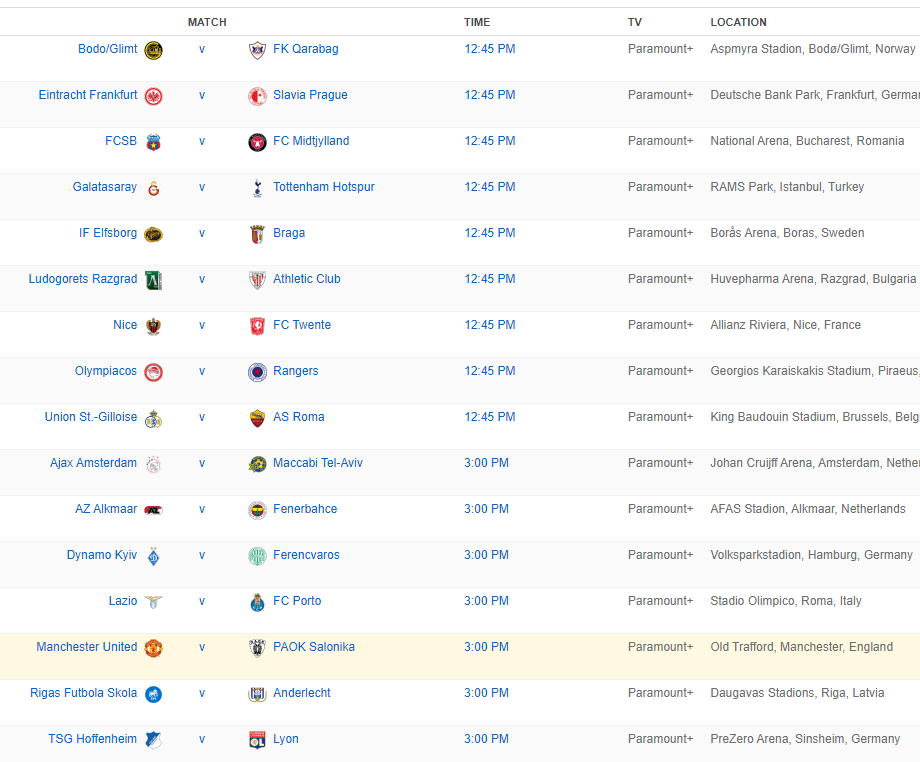
USWNT Olympic roster prediction 2.0: How things look after the SheBelieves Cup
As the interim head coach era of the U.S. women’s national team comes to a close, it’s time for a fresh round of evaluating who’s in and who’s out of Olympic roster contention. In less than four months, new head coach Emma Hayes will have to select just 18 players to take to France. Former USWNT midfielder Sam Mewis recently described the math equation she used when she was trying to figure out if she was in contention for a roster. Mewis would make her own depth chart, writing out the defenders, midfielders, and forwards in her hotel room. It’s likely the current U.S. group is doing the math now after two SheBelieves games, with both requiring comeback victories and the team needing penalties – again – to dispatch Canada.In Columbus, defender Tierna Davidson hinted at balancing the anxiety that leads to hotel room math with every athlete’s mantra about controlling the controllable. “I think for all of us, it’s just taking everything with a grain of salt and to just give everybody a little bit of space to be making the decision that they’re making, and to see different pictures on the field,” Davidson said. “We all know that nothing is guaranteed as a new coach comes in. So I think everyone (is) trying to put their best foot forward but also understanding that it is an unorthodox time for both us as players and the coaching staff, the technical staff as a whole.”As we guess at our Olympic roster 2.0 (see our first edition here), interim head coach Twila Kilgore’s summary of any roster construction provides good context.
“It’s not about young or old or less experienced or more experienced. It’s about getting the right combinations of players with the right amount of experience and different strengths and weaknesses where they can cover each other in different areas and also have some chemistry and make sure that they’re all able to highlight their strengths,” she said.
Now that SheBelieves is over, and Zambia has officially completed the USWNT’s Olympic group, it’s up to Hayes to determine the final roster — with just two international windows to do so.
Defenders (6): Naomi Girma (San Diego Wave), Tierna Davidson (Gotham FC), Abby Dahlkemper (SD Wave), Emily Fox (Arsenal), Crystal Dunn (Gotham FC), Jenna Nighswonger (Gotham FC),
Midfielders (5): Rose Lavelle (Gotham FC), Lindsey Horan (Lyon), Sam Coffey (Portland Thorns), Catarina Macario (Chelsea), Emily Sonnett (Gotham FC)
Forwards (5): Sophia Smith (Portland Thorns), Mallory Swanson (Chicago Red Stars), Alex Morgan (SD Wave), Trinity Rodman (Washington Spirit), Jaedyn Shaw (SD Wave)
Goalkeepers
Meg: I don’t think this combo will surprise anyone. Alyssa Naeher should have done a bit better on that super-quick Japan goal in Atlanta, but it was Canada’s opening goal that’s more troublesome when you’re thinking about your starting goalkeeper. Her form so far this year has been very solid — vintage, in many ways — and she reminded everyone to settle down with another absurd penalty shootout performance against Canada: three saves and a converted spot kick.
Jeff: I think we’ve all shared similar concerns about Naeher’s agility when converging on an open ball or reacting to a powerful shot. The former scenario played out Tuesday night and it cost the U.S. the opening goal. Unfortunately, there’s been very little rotation in net since the CONCACAF W Gold Cup group stage, and any alternative would need to start at least twice in June’s friendlies against South Korea to have any familiarity with the defenders. This is one area where Kilgore could have better prepared some viable alternatives in 2024.It’s also worth stressing that the chance for a player to parlay a really strong stretch with their club into a backup role — “pulling an Aubrey Kingsbury,” if you will — is lessened when the team will only bring two goalkeepers instead of three. Casey Murphy has been Naeher’s main alternative for the better part of four years, and I’d expect that to remain the case unless Hayes rates someone else.
Defenders
Here’s where we had the most debate this time around: do you bring three center backs and three outside backs? Two straight-up center backs and then maybe a defender who can slot centrally if you need them in a pinch? On the outside back front, do we need one of each, or better to have someone who can half-credibly cover both? Is it better to prioritize pure defense on these depth picks, or someone who can slot into the U.S.’s attacking patterns?
Girma is one of the few defenders from the USWNT’s World Cup roster who is still receiving regular starts. (Photo by Brad Smith, Getty Images for USSF)
Center backs
Meg: Everyone watching the opening SheBelieves Cup match was both praying and believing in the healthiest possible vibes for Naomi Girma after she was forced to exit the match in the 18th minute with what turned out to be a day-to-day thigh injury. It seems like the team is being super precautionary and not pushing it. As we discussed last time, Girma is name number one on the S-Tier mission-critical players for the Olympics. Davidson has inched closer to being that primary partner for her, but she might have some rough video review after this tournament going over two of the goals allowed.
Here’s our one shift of this Olympic roster as we move from 1.0 to 2.0: we’ve opted to add Abby Dahlkemper to the mix.
Steph: I think SheBelieves illustrated pretty neatly that you need a third center back as opposed to someone who can shift inside in a pinch. A dedicated center back is perhaps the one area where you don’t want versatility. You want a specialist who can do a few other things but is devoted primarily to being a center back. As we saw against Canada at SheBelieves, you lose a lot with Girma if you’re facing a team trying to play over your backline. Girma is exceptional in her ability to cover the long ball and to control the space to deny runners the ability to look at goal in the first place.
Jeff: Another factor playing in Dahlkemper’s favor is her familiarity with the two other center backs. Tuesday marked the 15th time that she’s partnered with Davidson, albeit the first in nearly three years. She also plays alongside Girma for San Diego, ensuring that any pairing from that trio will have established familiarity at a time when so much of the squad will be acclimating on the fly.
Meg: There is still a chance for Alana Cook to sneak in for one final look, finally returning to the Reign as a sub in an NWSL match last month, but that feels more like a chance than a definite right now.
Nighswonger earned her first USWNT cap in December 2023 (Photo by Andrea Vilchez, Getty Images for USSF)
Outside backs
Steph: Jenna Nighswonger has moved up to at least A-Tier for me, which we described last time as someone around whom to build the roster. I think Nighswonger has shown she’s a big piece of the USWNT’s ability to press, especially enabling Mal Swanson to go full Mal Swanson in their left-side progression.
Jeff: Nighswonger has provided width that was sorely lacking during the Vlatko Andonovski era, where both fullbacks tucked into the midfield rather than running the flank. While Fox is still doing that inverted wingback work on the right, having Nighswonger offer width and progression on the left gives a different element in the build-up — the U.S. sorely missed this in the first half against Canada, and moving upfield along the left was a slog.
Do we think Crystal Dunn knows what her role is moving forward? I wouldn’t be surprised if she is preferred to Nighswonger in the short term, but I still want to know if Hayes will keep her at left back or finally, mercifully, unleash her in midfield.
Meg: I really rate Casey Krueger, and think she should be on the USWNT. This 18-player roster is a killer.
Jeff: Kilgore did opt to bring Krueger in to replace Dunn on Tuesday rather than Nighswonger. It may have just been minute management at Gotham’s request, but we’ve also seen Krueger play right, center, and left in the past few months. If we’re highlighting versatility within the pool, she’s checked all the boxes.
Midfielders
Meg: Somehow, the one from the midfield I’m most on the fence about right now is Rose Lavelle, which isn’t anything Lavelle has done. She missed out on this camp due to injury. Assuming she’s healthy this summer (which, to be fair, sometimes is a greater assumption than anyone would prefer), she still has to make the trip. The USWNT has some different looks at the No. 10 now though, with Jaedyn Shaw getting the nod against Brazil. Catarina Macario could also slot there (or, as always: Dunn).
Steph: I think Olivia Moultrie is a little extraneous if a roster has to get trimmed to 18, and I say that only in the context of that trimming and not at all as a referendum on her talent or ability to play at this level. It’s just that with Macario and Shaw in the mix, and especially if Lavelle gets healthy in time, I think it pushes her down the list a bit. Even though I think she’s on track to eventually work her way deeper into this team.
Lavelle was left off the SheBelieves roster due to injury. (Photo by Omar Vega, Getty Images)
Jeff: If you were listing the 18 most talented players in the pool, or the 18 most important, I wouldn’t spare a thought at listing all three of Lavelle, Macario and Shaw before I even get to the difficult decisions. But with so many high-caliber forwards and wingers, and Horan being a two-way threat, can you afford to take three attacking midfielders and punt on depth elsewhere?
If there’s one thing I’m confident about, it’s that the roster’s biggest snub will either be an attacking midfielder (Lavelle seems most tenuous given her struggles to stay healthy since 2022) or a winger.
Meg: It feels safe enough to note that we know what we’re getting with Horan in this midfield, so let’s move to the No. 6. Sam Coffey has had a very strong start to her 2024. At this point, do we think she’s done enough to cement not just a spot on the 18-player roster for France, but as the team’s starting defensive midfielder?
Jeff: I think so. I’m not an NWSL awards voter, but I would’ve had Coffey as my MVP last season for her work with Portland. She plays with a willingness to advance into the final third only when necessary, which keeps a midfield safety net to stifle a counterattack if the U.S. turns the ball over. Her long distribution can also help unlock the team’s wingers in all phases, and she’s looked the part against high-caliber opponents.
We’ve already rattled off a lot of names we’d want to bring, but we should probably address what the past couple of weeks could mean for Korbin Albert’s hopes of inclusion. The midfield is incredibly crowded right now; we haven’t even brought up World Cup call-ups like Savannah DeMelo, Ashley Sanchez or Andi Sullivan, or the long-awaited inclusion of Jaelin Howell. Hayes’ Chelsea often plays with two midfield pivots in front of the back line, so there could be room for a non-attacking inclusion at the expense of a playmaker.
Still, Albert’s overcommitment against Brazil made her easy to bypass in the Gold Cup final, and the very real locker room chemistry concerns could make this a tournament roster too soon.
Meg: We’re not in that locker room, but those concerns are definitely heightened for an 18-player roster. I think the federation is largely satisfied with her public apology over her social media activity, but I also think that the USWNT technical staff have better options right now for soccer reasons, too.
Morgan has adapted to a new role with the young USWNT. (Photo by Carmen Mandato, Getty Images for USSF)
Forwards
Jeff: This is another area where the only real change from a month ago is an unfortunate injury. Midge Purce was at the top of my “tough omission” list after the Gold Cup, but an ACL tear has ruled her out for the Olympics and all of 2024. A player like Macario or Lavelle could be moved into a new role under Hayes and play as more of a winger, but beyond that, we’re likely talking about the same group of players with similar feelings about each.
Meg: For all the discourse on Alex Morgan, I think she’s going — and it feels like the players agree, based on this quote from Trinity Rodman in Columbus: “Alex is just a voice that we need with the experience. Being in the center, being the person that’s initiating press and attack, I think to have that voice, have that experience, have that veteran status is really good for us to build off of. And also just energy-wise, I think she sets the tone really well.” For as much as we talked about all those options at the No. 10, this team also has plenty at striker, but Morgan’s once again pulled off the return to the USWNT.
Steph: The forward group has been a historically delightful problem for coaches to solve. This team has never lacked scoring talent.
(Photo: Robin Alam/ISI Photos/Getty Images)
U.S. Soccer took a gamble waiting for Emma Hayes, leaving USWNT’s style of play in limbo
In November, U.S. Soccer gambled that it was worth sacrificing a year of continuous preparation under a permanent manager to hire Emma Hayes. For eight months following the 2023 World Cup, interim management has overseen the U.S. women’s national team. To her credit, Twila Kilgore’s tenure as placeholder helped turn over the player pool and saw her team win a pair of tune-up competitions this spring.Still, it’s been a lost year for the program at a time when it was in sore need of a clear new vision. Hayes’ first games as USWNT manager in June are still two months away, bringing the post-World Cup interlude to 10 months — and a full seven months from her appointment in November.With the CONCACAF W Gold Cup and SheBelieves Cup in the rearview, it’s time to take stock. Is the program any better prepared to contend at the Paris Olympics than it was when Sweden knocked it out of the World Cup?
The 2023 World Cup cycle (and, by association, the Vlatko Andonovski era) stands out as the low point for the USWNT on the field.The belated 2020 Olympics was a warning sign, as an aging core entered with varying levels of fitness amidst the backdrop of the COVID-19 pandemic. The team played every game in empty stadia, a far cry from the raucous support it so often enjoys in major tournaments, and the team was ultimately eliminated by Canada in the semifinal.Rather than heeding lessons from that tournament, Andonovski largely ran it back for the 2023 World Cup in Australia and New Zealand. The team’s style of play often looked languid as it failed to breach the final third. Multiple players failed to see the field for a single minute as the U.S. advanced from its group thanks in part to a friendly goalpost against Portugal. The relief was short-lived as the U.S. fell to another longtime rival, Sweden, in a round of 16 penalty shootout.Advanced metrics show that the U.S. did do some good things in its four games at the tournament. No team allowed fewer shots per 90 than the squad’s 4.6, and its average xG per 90 advantage of 2.14-0.32 certainly screams “contender” in isolation. However, the issues with build-up and chance creation were clear.The team progressed up the field quickly enough, ranking 11th in the tournament field with a direct speed of 1.71 meters advanced upfield per second of possession.
Speed isn’t everything. Tournaments are notorious for eliciting small sample size judgments, and the trendline is far from definitive. Nevertheless, none of the 10 teams that ranked higher in direct speed advanced any further in the tournament than the round of 16.Progressing the ball upfield with pace is a helpful tool in transition, but the USWNT seemed devoid of ideas once it met the opposing defense in the final third. All four teams that had a more rapid direct speed also bowed out in the round of 16. Unsurprisingly, all five teams that averaged fewer goals per 90 than the U.S. also failed to reach the quarterfinal or further.Playing direct and sharp final third decision-making shouldn’t be treated as a mutually exclusive proposition, mind you. Given the talent at the USWNT’s disposal, there’s the potential to create a near unstoppable balance in attack. With the benefit of hindsight, the federation wanted to ensure the team was better equipped to make smart decisions to score with dependability.
“There was definitely a sense that we need to be better with the ball and have more solutions,” U.S. Soccer sporting director Matt Crocker said in September. The federation polled players during the coaching search and much of the focus from the tactical feedback involved building the attack, playing through the midfield and having “creative solutions in tight spaces, having the players and the tactics to beat the low block.”After spending an entire cycle moving the ball despite its midfield — the Prayer Circle Formation, as Kim McCauley so brilliantly branded it — they wanted to make use of their engine room.Enter Hayes, a tactical chameleon who’s well-versed in the art of breaking down low blocks at the helm of her Chelsea juggernaut. She plans for the opponent rather than coaching from dogmatic principles. Each game’s instructions are curated with one aim in mind: winning, above all else.You can see the appeal at surface level, hiring a coach who habitually works to overcome the type of cynical tactics that sunk the team last summer. The catch: the team would have to wait while Hayes admitted her “full focus and attention is on what I do for Chelsea” until that season’s end.
If there’s a highlight performance over the last 10 months, it came in the Gold Cup quarterfinal against Colombia. In the preceding group stage, the USWNT was frustrated by opponents like Argentina and Mexico sitting in a low block as Kilgore maintained a possession-oriented structure perhaps too closely akin to Andonovski’s. Patterns of ball circulation slowed the team’s build-up, giving all too much time for defensive-minded opponents to get into their ideal placements.Colombia was a World Cup quarterfinalist last summer, blessed with one of the world’s great young attackers, Linda Caicedo, and a team that suited her skillset on the break. Kilgore strove to exploit those tendencies by letting her team play direct. It achieved two things: greater attacking intensity going forward, and fewer turnovers in the defensive half that would cater to Colombia’s strengths. A 3-0 win was a statement that the USWNT was back with a point to prove.
Taking a similar scoring initiative was impossible in a rain-soaked semifinal slog against Canada, and the team opted for a more controlled style of play in the final against Brazil, winning 1-0. It got results, ensuring the team won the inaugural Gold Cup.Still, the team wasn’t showcasing the type of consistent goalscoring necessary to be better prepared for the Olympics than it was in the World Cup. Fortunately, SheBelieves was right around the corner, providing another pair of games against high-level opponents to showcase Crocker’s desired “creative solutions in tight spaces.”Japan had other ideas. Kiko Seike became the first player to score against the USWNT in a game’s opening minute since 2003, putting the hosts at an early 1-0 deficit. With some savvy high-pressing the U.S. equalized 20 minutes later before a 77th-minute penalty kick sealed a 2-1 win for the U.S. It was a professional result, but not a showcase of the principles U.S. Soccer strove to install.Up next came Canada, which saw Kilgore drop one of her usual four attacking players for a second pivot at the base of midfield. Intentional or otherwise, this saw the team revert to their Prayer Circle tendencies.“Our attack is not built around one individual player and that is by design,” Kilgore said ahead of the final. “It’s important that we have the ability to score goals from a variety of different ways. And even though we have these predictable moments for us that we’re looking for, it’s important that different people are filling different roles and able to recognize when they’re the one that needs to maybe make an early run or get out ahead of the opponent for a cross.”Just over five minutes into the final against Canada, the USWNT seemed to look through its variety of chance-creation methods after a Lindsey Horan tackle sprung Sophia Smith on the counter.
Huh, that’s a let-off for Canada. Time to set up for another wave of attack.
Oh no, not the Prayer Circle.
No, no, no , no, no, no —
Over half an hour later, Canada opened the scoring after a miscommunication between goalkeeper Alyssa Naeher and her defense. Once again, the United States was forced to react to the game after allowing the opponent to establish its terms.
Ultimately, a fresh batch of Naeher shootout heroics saw the USWNT become SheBelieves champions again. The two conceded goals could be chalked up to individual errors.
Then again, the same could be said for the USWNT’s showing last summer: a team largely in control of games, but not showing enough bite to convert ball retention into goals — all while being prone to gaffes.
Is this team really better equipped to contend at these Olympics than it was last year?
If we’re looking for evidence of progress since August, we’ll need to start by looking at individual players. Alex Morgan struggled in the World Cup, but her gritty line-leading work was vital to the proactive success against Colombia. Mallory Swanson and Catarina Macario returned from injuries that limited their 2023 involvement and largely kept pace with the game around them.
The aftermath of the World Cup was always bound to see some program mainstays give way to the next generation. Julie Ertz and Megan Rapinoe both had send-off games, while captain Becky Sauerbrunn has faded from involvement. Horan has stepped up as a team leader, while Naomi Girma is already similarly impactful despite being just 23.
Young players benefited from Kilgore’s call-ups. Jenna Nighswonger has been a breath of fresh air at left back, providing sorely needed width in the build-up in a role that was previously instructed to tuck into midfield under Andonovski. Jaedyn Shaw is the latest attacking revelation, showing precocious decision-making in transition while being a capable first-time finisher. Sam Coffey seems poised to be the team’s defensive midfielder of the future, and Korbin Albert’s all-around game makes her seem like a possible successor to Horan in midfield (pending the off-field issues that could impact her locker room standing).
Having promising young players step up is essential to overcoming a bad four-year spell. But how many players like Nighswonger, Shaw and Coffey will need to reassert their readiness once Hayes comes in? It’s remained an open question just how closely Hayes is watching and assessing her upcoming pool of players. If that answer is less than “with a keen eye,” they’ll need to ace their second first impression to stay ahead of more veteran alternatives.
Ultimately, no matter who makes the 18-player Olympic roster, we don’t know how they’ll look to play in Paris. The questions that hung over the program still don’t have definitive answers.
In appointing a coach who couldn’t start her job for over half a year, the USSF gambled that her quality is so much more irresistible than any alternatives that it was worth spending half a year in purgatory.
The summer’s trio of friendlies come against South Korea and Mexico, both of which won’t partake in the Olympics, but will no doubt want to claim a win over one of the world’s most celebrated teams of any sport. They’ll provide tests at a time when Hayes will still be studying for answers.
Tuesday also saw the final member of the USWNT’s Olympic group qualify. Zambia joined the U.S., Germany and Australia in Group B. Australia was a semifinalist last summer. Germany has its point to prove after failing to advance from its group, while Zambia is riding high on the back of its first World Cup appearance. It won’t be a given that the U.S. will advance to the knockouts, to say nothing of its medal-winning ambitions.
It will be easy to spin a poor showing in Paris as a short-term sacrifice with a focus on the 2027 World Cup, which could potentially be played on home soil. That said, this isn’t a program that has ever treated any major tournament as a developmental tool. When the United States competes in a women’s soccer tournament, it’s there to win. That’s the benchmark that has been established for generations of players and one that the fans hold to account.
This summer, the players’ every performance will be scrutinized, and their future selections will hang in the balance more than Hayes’ job will (or should). If the program’s decision to spend so many months under interim leadership backfires, the blame will fall on them — and unfairly so.
(Photo: Brad Smith/Getty Images for USSF)
=======RackZ BAR BQ ====Save 20% ===========
Heading over to the Badger Field for Training? Try out the Best BarBQ in Town right across the street (131st) from Northview Church on the corner of Hazelldell & 131st. RackZ BBQ
Save 20% on your order
(mention the ole ballcoach)
Check out the BarBQ Ribs, pulled Pork and Chicken, Brisket and more. Sweet, Tangy or Spicy sauce. Mention you heard about it from the Ole Ballcoach — and Ryan will give you 20% off your next meal. https://www.rackzbbqindy.com/Call ahead at 317-688-7290 M-Th 11-8 pm, 11-9 Fri/Sat, 12-8 pm on Sunday. Pick some up after practice – Its good eatin! You won’t be disappointed and tell ’em the Ole Ballcoach Sent You!
Save 20% on these Succulent Ribs at Rackz BarBQ when you mention the Ole Ballcoach – Corner of 131 & Hazelldell. – Call 317-688-7290.
======================RackZ BAR BQ ====Save 20% ======================
Wow Dos a Cero again !! The US Men dominated Mexico from start to finish leaving little doubt who the top team in CONCACAF is as the US has now won this competition for the 3rd straight time and it gets worse for Mexico each time. The US men were got fantastic goals from Tyler Adams in his return to play for his nation in over a year – this blast from distance. (Proper Spanish) Then Pulisic worked his magic and Gio Reyna finished on the rebound making it Dos a Cero. (Full Highlights) The US has better players and they are simply playing better. After obviously looking ahead against Jamaica needing a 95th minute goal to take it to ET and win easily 2-0 It was Gio Reyna who again was darn near the man of the Match for a second straight game for the US. You could argue he’s locked down the #10 slot no matter what is happening with his club Nottingham Forest (idiots). I for one am sick and tired of hearing the Gregg Berhalter bashing – this team seems to love him, plays for him – and excels for him. Do I love GB – no but lets see how he does in Copa America this summer before making further judgement. Certainly a final 4 birth should be expected at least this summer but we’ll see. (lots of stories below)
USWNT in She Believes Cup Next Sat 4/6 vs Japan 12:30 TNT & Tues 4/9 in ColumbusMallory Swanson and Catarina Macario will make their returns to the USWNT next week as part of the 23-player roster for the She Believes Cup, U.S. Soccer announced on Tuesday. Two new names are also joining the roster and earning their first senior national team call-ups, both playing for European clubs: 21-year-old Paris Saint-Germain defender Eva Gaetino and 16-year-old Ajax midfielder Lily Yohannes. These will be the final two matches for Twila Kilgore as USWNT interim coach. Permanent head coach Emma Hayes will take over beginning with the June window, with Kilgore remaining on the staff as an assistant. The USWNT will play in a reformatted She Believes Cup that has a semifinals and final as opposed to a round robin tournament. They will play Japan in the semifinals in Atlanta on Sat April 6th at 12:30 pm on TNT, and then will face either Brazil or Canada in either the 3rd place match at 5 pm or the final at 7 pm on April 9th in Columbus, Ohio ( tixstill available- the OBC is going over) on TBS. The USWNT defeated Canada and Brazil in the knockout stage on their way to claiming the inaugural W Gold Cup title.
Indy 11 face Detroit City Sat night 7 pm at the Mike
The Boys in Blue continue their homestand Saturday, hosting the first Eastern Conference foe of the season in Detroit City FC. Kick is slated for 7 p.m. ET and will air locally on WNDY, while streaming on ESPN+. Single-game tickets are available now for all matches via Ticketmaster. Season Ticket Packages can also be purchased, as well as tickets for groups and hospitality areas. For more information on these options click here.
Huge Game Weekend
Some huge games this weekend as Germany has Bayern Munich vs Dortmund on ESPN Saturday at 1:30 pm and Sunday gives us a massive EPL battle for 1st as Man City hosts Arsenal on Peacock of course at 11:30 am. Too bad NBC doesn’t give Crap about soccer in the US – that game on USA or NBC would really grab a nice viewership on Sunday. Great to see NWSL on ESPN at 3:30 pm KC vs Angel City right after the Bayern game. Fox gives us MLS Sunday Atlanta United vs Chicago Fire at 4 pm. So hard to watch MLS these days. Of course FS has the CCL Cup games Tues/Wed night. (See schedule below). Oh and Indy 11 @ Louisville City next Sat on CBS, with Champions League next Tues/Wed on CBS as well.
Champions League Elite 8 — starts April 9th & 10th on CBS
GAMES ON TV
Sat, MAr 30
7:30 am USA New Castle United vs West Ham
10:30 am ESPN+ Borrusia Mgladbach (Scally, ) vs Frieburg
11 am USA Nottingham Forest (Turner, Gio) vs Crystal Palace (Richards)
11 am Peacock_ Bournemouth (adams) vs Everton
11 am Peacock Sheffield United (Trusty) vs Fulham (Robinson, Ream)
1 pm para+ Lazio vs Juventus (Weah, McKinney)
1:30 pm ESPN Bayern Munich vs Dortmund
1:30 pm NBC Aston Villa vs Wolverhampton
3:30 pm ESPN KC Current vs Angel FC FC NWSL
3:45 pm Para+ Fiorentina vs AC Milan (Pulisic, Musah)
6:30 pm Ion Portland Thorns vs Racing Louisville NWSL
7 pm ESPN+ Indy 11 vs Detroit
Sun, Apr 1
9 am USA Liverpool vs Brighton
11:30 am Peacock Man City vs Arsenal
3 pm ESPN+ Real Madrid vs Atletic Club
2:30 pm ESPN+ Bayer Levekusen vs Wolfsburg
4 pm Fox Atlanta United vs Chicago Fire
Tues, Apr 2
2:30 pm USA New Castle United vs Everton
2:30 pm Peacock Notthingham Forest vs Fulham (Robinson, Ream)
3 pm Para+, CBSSN? Juventus (Weah, McKinney) vs Lazio
7 pm Fox Sport 1 Columbus Crew vs Tigres CCL
9 pm FS1 New England vs America CCL
Weds, Apr 3
2:30 pm USA Arsenal vs Luton Town
3:15 pm Peacock Man Vity vs Aston Villa
3 pm CBSSN? Forentina vs Atalanta
8 pm Fox Sport 1 Inter Miami (Messi) vs Monterrey CCL
10 pm FS1 Heredino vs Pachuca CCL
Thurs, Apr 4
2:30 pm USA Liverpool vs Sheffield United
3:15 pm Peacock Chelsea vs Man United
Sat, April 6
12:30 pm TNT, Max, Telemundo USA Women vs Japan
Tues, Apr 9
3 pm CBS Champions League
5 or 7 pm TBS, Universo, Peacock USWNT vs Brazil/Can winner Columbus, OH
USMNT’s Tyler Adams and Gio Reyna went from fitness doubts to Nations League game-winners
By Jon Arnold Mar 25, 2024 The Athletic
When Tyler Adams lined up a shot from nearly 30 yards out, both United States center backs, up for a corner kick, had the same thought: “Time to run back and defend.”“Usually, when Tyler shoots, you go ahead and get back into your position,” Chris Richards said.“Row Z,” added Tim Ream. “I thought, ‘OK, there’s a goal kick coming.’”Instead, the center backs’ runs were towards Adams, celebrating a goal unlike any he had scored before in a mob with a full group of jubilant teammates. The midfielder made his first start for the U.S. since the 2022 World Cup in Sunday’s 2-0 win over Mexico in the CONCACAF Nations League final following almost a whole year out through injury, as the USMNT captured the competition’s title for the third time in a row.
Adams had never scored a goal from outside the box in his professional career and rarely even shoots from distance, but felt the time was right to change that.“When the ball came to me and I felt like I had time on the ball, it was a no-brainer,” Adams said.Adams came off at halftime due to a minutes restriction agreed between the USMNT and Bournemouth, the Premier League club that was surely hoping Adams would return to England following this international break a bit fitter and much more confident.“Now I feel like I can shoot whenever I feel like,” Adams said, sporting his medal after the match. “I’ve been practicing that in my rehab recently. It was a good feeling scoring that one.”Adams and Gio Reyna both came into the game with rust: Adams having played 20 league minutes this season and Reyna 309 between Borussia Dortmund and Nottingham Forest. They were the two core pieces of the U.S. team that had the most question marks around their match fitness. Coach Gregg Berhalter opted to start both on Sunday and enjoyed the rewards, with Reyna adding the second goal.Once Ream got over the shock of seeing Adams’ long-range effort beat goalkeeper Guillermo Ochoa, he was able to reflect more deeply on Adams’ return to the field, coming back from a pair of hamstring injuries that required surgery and putting in a solid shift in the first half of a final.“To see him rewarded after the amount of work he’s had to put in to get back to where he is, I think that’s the most impressive part,” the defender said.
Adams was mobbed after his goal (Darren Carroll/USSF/Getty Images for USSF)
That Adams and Reyna scored the goals and had a huge influence on proceedings may be a return to normal instead of a big shock for the U.S. side. The 25-year-old Adams and 21-year-old Reyna have long been seen as some of the brightest stars of a promising generation of U.S. players who have raised expectations around this squad.The surprise may be just how much they contributed — and that they did so from the opening whistle.Mexico coach Jaime Lozano said after the match he and his coaching staff expected to see Reyna from the beginning but perhaps not Adams after the midfielder’s long night against Jamaica, in which he was brought on in the second half of Thursday’s semifinal, only to be taken off again in extra time due to that minutes restriction.Still, he said, they’ve watched Adams since he was a young player and are well aware of his skills.“Today, he had a great goal, which I think changed the course of the game,” Lozano said. “We know, despite the fact that they came in (out of rhythm), that they’re totally international-quality players.”
Reyna, meanwhile, was named player of the tournament after assisting two goals in extra time in the semifinal to go with Sunday night’s insurance score. His performances merited it, but after the drama that surrounded Reyna, his family and Berhalter following the 2022 World Cup, seeing the coach run down the touchline to celebrate the title-clinching goal with Reyna last night wasn’t what many might have imagined in the aftermath of that fiasco.Other national teams might have frozen Reyna out, but since returning as U.S. manager in June 2023 after a brief hiatus following that World Cup, Berhalter has worked slowly to reintegrate Reyna into the team.“I think when I took over the team again, I talked about needing time,” Berhalter said. “The more that we worked together and the more that he believed that intentions were true and our whole staff has his best interest in mind, I think we started to gain trust.”“If we didn’t put it in the past, it would’ve been affecting the team, and I think that was most important for both of us: to put it in the past and focus on the team,” Reyna said. “I think the last few camps since we’ve been back together, they’ve been pretty successful camps.”
Reyna was named player of the tournament (Darren Carroll/USSF/Getty Images for USSF)
Increasingly, it feels that when it’s a successful camp for Reyna, it’s a successful camp for the U.S. and vice versa. After a stingy Jamaica nearly denied the U.S. any scoring opportunities in 95 minutes of the semifinal, Reyna unlocked the Reggae Boyz and lifted the U.S. into the final.On Sunday, Reyna was there to finish a move just after the hour mark, surging into the box to apply a strong finish to an attempted clearance. His hit on the half-volley beat Ochoa to the near post and doubled the lead Adams had given the U.S.“I think both of us came in ready to perform,” Reyna said. “I don’t think the outside noise of maybe not getting enough minutes really affects us. The body of work we’ve shown in the first few days of training here, and the preparation, really shows what we’ve done and I’m just super-happy for him and also pumped up for me, to be honest.”
The hope for the U.S. now is that both players not only excel upon their return to their clubs in England but that they stay healthy and gather strength. While Berhalter was thrilled to have 45 minutes from Adams and 78 from Reyna last night, he’ll hope to soon have 90 from both.That will be especially important in the Copa America on home turf this summer, which the U.S. begins June 23 against Bolivia. The matches only get more difficult from there and Berhalter must have Reyna creating and Adams patrolling the midfield
USMNT’s Nations League win over Mexico was expected – that’s what made it important
That the opening goal of the CONCACAF Nations League final happened the way it did — a blistering shot uncorked 30 yards out — felt fitting for the environment around this U.S. men’s national team this week. The pressure had been building up in the days ahead of Sunday’s game and was bound to explode — positively or negatively.The U.S. was coming off of a less-than-decisive 3-1 win over Jamaica in the semifinal on Thursday that required a last-gasp own goal to take it to extra time — a performance significantly below expectations for a U.S. team that’s believed to be capable of more than any that came before, and with a U.S.-hosted Copa America just months away. U.S. coach Gregg Berhalter chuckled to himself on Saturday when asked by a media member whether it was true that they had more pressure on them than Mexico ahead of the big occasion. Berhalter tried to deflect, pointing out that Mexico was coming off of a dominant semifinal win (3-0 against Panama) and would be expected to continue that against their bigger rival. But Berhalter’s smile was also an acknowledgment of the truth: the U.S. — and Berhalter — had more to lose. Nothing but a win on Sunday would have been enough, and Tyler Adams’ goal late in the first half brke the pressure of expectation in the U.S.’s 2-0 win. “There’s always going to be talk,” said Gio Reyna, who scored the second goal on 63 minutes and was named player of the tournament. “And I think looking into Jamaica was a bit much. It obviously wasn’t our best performance, but it’s one game. Not every team can play well every game and we responded really well tonight.”While neither team dominated the final, the U.S. never looked overwhelmed, circulating the ball and probing Mexico for weak points. They gave up very little defensively. Mexico had to chase the result in the last half-hour after Reyna doubled the lead. While El Tri had some half-chances, they never truly threatened the U.S.he postgame press conference for Mexico coach Jaime Lozano had a clear tilt to it: El Tri were chasing the U.S. now. How could they catch their biggest rivals? There was no doubt which team was favored — a sign of how far the U.S. has come since Berhalter first took over.The U.S. was smashed by Mexico in September 2019, a 3-0 loss in Berhalter’s first year that altered the course for this group. After that loss, the U.S. became a more transitional, high-pressing and physical team. They learned the intensity it would take to win those big games against their rival. That result, six meetings ago now, is the last time Mexico beat the U.S.
The U.S. was able to limit Mexico’s chances throughout the final (Shaun Clark/ISI Photos/Getty Images)
But while Sunday’s win was a requirement, it will bring little relief ahead of the Copa America. If anything, a third straight regional crown will only ramp up the hopes that the U.S. can do something special against bigger opponents in a tournament that will include the likes of Lionel Messi’s World Cup champions Argentina and world power Brazil.“I would say that, as a federation, those teams (such as Argentina and Brazil) have proven something already; they’ve won everything there is to win,” Adams said. “That’s kind of the role model, so to speak, of what the U.S. wants to become and kind of: ‘How do we get there?’.“I would say that we’re making the right steps in order to get there. Obviously, people want us to be there tomorrow and win a World Cup, but that’s not an ideal situation. We need to go through a lot of ups and downs before we get there. But steps like this tonight, playing in finals, getting that experience now, winning three in a row, this means something… We’re learning how to win in pressure situations.”The Nations League tournaments have served as markers for this group.The first win, in June 2021, was crucial in that it was a validating moment for a young team asserting itself in the region. That they battled back twice from deficits to win, 3-2 after extra time, showed the character of a group that has shined through since on multiple stages, including at the following year’s World Cup in Qatar.Last year’s dominant 3-0 semifinal win over Mexico only reinforced the U.S.’s position atop CONCACAF but, more importantly, it showed off the growth of Reyna playing in a central role. After the off-field issues in and after Qatar, Reyna came back into the group in 2023 looking to show he could be the influential playmaker the U.S. fans hoped he would be, and he then assisted on both goals in a 2-0 win over Canada in the final before being substituted for the second half due to a leg injury.
Adams celebrates his long-range goal (Omar Vega/Getty Images)
Reyna continued that impact into this year’s tournament, setting up both goals in extra time against Jamaica and then scoring in Sunday’s final. He went through the mixed zone still holding his trophy as player of the tournament.This Nations League final was never going to be the same type of marker for this group — not with the Copa America just around the corner. Instead, it served as almost a checkpoint. The U.S. was supposed to win this game. And that, in itself, spoke to the difference of this cycle.The U.S. isn’t going to be considered a young team anymore. They are expected to get results. “I think it’s something that we do respond to,” Berhalter said. “When the guys feel like we’re pressured, then we come out and we play really good performances. In the last World Cup, as soon as they got to camp, it was like, focus, focus, focus, they were on it. And the same thing in this camp as the camp went on. So I know they’re focused.“For me, it’s about really taking advantage of every single opportunity we have because, before we know it, ’26 (the World Cup being co-hosted with Canada and Mexico) is gonna be here.”(Top photo: Shaun Clark/ISI Photos/Getty Images)
UNITED STATES
Gio Reyna has been ‘killing it’ for the USMNT. Can he now do it at the club level?
Published Mar. 25, 2024 3:52 p.m. ET
ARLINGTON, Texas — The look on Gregg Berhalter’s face was the epitome of glee. In the 63rd minute of the Concacaf Nations League final, Gio Reyna perfectly positioned his body over a bouncing ball at the top of the penalty box and struck a low volley past Mexican goalkeeper Guillermo Ochoa. It was a spectacular and technical goal that gave the United States men’s national team a 2-0 lead over their rival.The score went unchanged for the remainder of the match, and the U.S. fought against a feisty and physical opponent to hold on and win its third straight CNL title.After Reyna scored — his second goal of the tournament — he ran to the right corner flag while pointing at the U.S. crest on his chest. His teammates — those on the field and on the bench — joined him in a jumping-up-and-down-in-a-circle celebration. Berhalter sprinted down the touchline to join the group with a joyous smile that took up his whole face. Despite playing outside of Dallas, the crowd was pro-Mexico and the opposing fans roared with boos after Reyna’s goal. As the American players celebrated, nearby fans threw cups of beer at them. Seeing this happen in real time, Berhalter made his way to Reyna and tried to shield him from any other flying objects.A little while later, Reyna was subbed off in the 75th minute. He was on a minutes restriction, was starting to cramp up, and the USMNT had the lead in hand, so it made sense. When he stepped off the pitch, Berhalter put his arms around the player for a second. They both seemed happy.
“[He said] something along the lines that he was proud of me,” Reyna, who was named the tournament’s best player, said after the match.
“It was a long night, a lot’s been happening since the game,” Reyna said smiling, a nod to the beer and goggles celebration the players had in the locker room after the win, “and I just couldn’t tell you word for word. But it was just something nice. It wasn’t anything too special, but it was nice.”This is all a testament to how far both Berhalter and Reyna have come since the drama that ensnared their relationship at the 2022 World Cup. After the Americans were eliminated in the round of 16 of that tournament 15 months ago, Berhalter revealed that he nearly sent an unnamed player home due to a poor attitude in training. It was eventually discovered that the player was Reyna. His parents – former USMNT captain Claudio Reyna and former USWNT player Danielle Egan – retaliated by bringing up a decades-old domestic violence incident between Berhalter and his now-wife to U.S. Soccer. Berhalter’s contract expired shortly thereafter, though he was re-hired a few months later.In the aftermath, there was a lot of interest in the relationship between Berhalter and Reyna. Would Reyna be called into camp? Would he start? How would the vibes be? How would it affect the team? Etc, etc.
Reyna was recalled to the USMNT last October, and started the final four matches of 2023. In the USMNT’s semifinal win over Jamaica on Thursday, he had two beautiful assists in extra time that helped the squad to a 3-1 win. Following that game, Reyna spoke with reporters for the first time since everything transpired after the World Cup.
“Obviously, what happened, happened,” Reyna said. “But I think both of us are so far past it, and just so focused on the group that it’s not even an issue at all anymore. We’re just so far past it.”
He essentially repeated those sentiments late Sunday night, adding that he felt like this was all water under the bridge after their first camp back together last year.
“If we didn’t put it in the past, it would have been affecting the team and I think that was most important for the both of us,” Reyna explained. “I think the last few camps that he’s been here and we’ve been back together, it’s been pretty successful. So yeah, like I said, it’s in the past. It’s pretty simple.”
Time heals. Even if it didn’t, there’s no way Berhalter could avoid Reyna, who, at just 21 years old, is establishing himself as one of the most valuable players in the team.
“The kid’s unbelievable, honestly,” said Tyler Adams, who also scored a banger of a goal to put the USMNT up 1-0 right before halftime. “So many people talk about the noise that surrounded him and everything that he went through. But at 21 years old, every single one of the players on our team has gone through a situation like that. Maybe not as extreme, of course, because it was surrounding a World Cup and we didn’t play in a World Cup at 21.
“He’s got that grit, he’s got that intensity, and when he plays like that every night, he’s gonna be playing at a big club very soon.”
Last month, Reyna joined Nottingham Forest on loan from Borussia Dortmund for the remainder of the season. Minutes have been sparse for Reyna, and there were questions about his fitness entering this camp. He played 75 minutes against Jamaica, coming on at halftime and playing through extra time; then 75 more in the final against Mexico.
“He was determined to grind through it and power through it and I thought he was doing really well,” Berhalter said.
Berhalter, who said he and Reyna “started to gain trust” and were patient in rebuilding their relationship after the World Cup fallout, gushed about the young player’s talent.
“He can unlock defenses and he just has these qualities that are really good,” Berhalter said. “I also believe, and I’ve said this before, that he can be a midfielder. I think that’s the next evolution for him because he can control the tempo so well and he can make final passes when he gets the ball in pockets in transition and he’s a good finisher.”
Berhalter and Reyna both hope that Reyna can use this momentum as a springboard to get more minutes with his club. And for the USMNT, it’s especially heartening to see a confident and healthy Reyna in form with Copa America looming this summer.
“He’s killing it here,” defender Chris Richards said of his teammate. “Hopefully he continues that form.”
Laken Litman covers college football, college basketball and soccer for FOX Sports. She previously wrote for Sports Illustrated, USA Today and The Indianapolis Star. She is the author of “Strong Like a Woman,” published in spring 2022 to mark the 50th anniversary of Title IX. Follow her at @LakenLitman.
USMNT late week viewing guide: Back to the grind
Haji Wright, perhaps Josh Sargent, and others re-start club season on Friday
Friday
Huddersfield vs Coventry, 11a: Haji Wright and Coventry (8th) meet relegation-zone Huddersfield (22nd of 24 in the Championship).
Norwich City vs Plymouth Argyle, 11a on ESPN+ (free trial): Josh Sargent and sixth-place Norwich look to maintain promotion playoff position against Plymouth (18th).
América vs San Luis, 10p: Alejandro Zendejas and América are second in the Liga MX Clausura with 12 games played; San Luis are 13th of 18.
Ukraine qualify for Euro 2024: ‘The world is going to watch and see we never give up’
More than 40 members of Ukraine’s national-team party were spread around the centre circle of Wroclaw’s Tarczynski Arena.Players, coaches and backroom staff locked their gaze on the 30,000 spectators sporting blue and yellow as they revved up their version of the Viking thunderclap. Iceland, the architects of that celebration during the 2016 European Championship, could only listen in despair having lost this Euro 2024 play-off final to a late strike from Chelsea forward Mykhailo Mudryk.Strangers embraced. Families posed for photographs draped in Ukraine flags. Others video-called, possibly home to war-torn Ukraine, sharing the moment with others unable to experience first-hand this release of emotion around 600 miles (1,000km) away in south-west Poland.kraine had done it.Ukraine’s players address the crowd (Sergei Gapon/AFP via Getty Images)
Despite enduring over two years of Russian invasion and indiscriminate bombing with millions of its citizens displaced, a weakened domestic league and home advantage for matches long since diluted, Serhiy Rebrov’s side had come through two tense play-off matches to qualify for this summer’s Euros — a mountain they had failed to climb two years ago when pursuing a World Cup spot, losing to Wales at this final stage.
As Oleksandr Zinchenko, the captain, led his team around the pitch to celebrate a second comeback victory in five days, the 2-1 win over Iceland following a similar late success by the same scoreline away against Bosnia & Herzegovina, a guttural chant reverberated around the arena.
“Z-S-U! Z-S-U! Z-S-U!”
The acronym stands for ‘Zbronyi Syly Ukrainy’ — the Armed Forces of Ukraine. These Ukrainian supporters — almost all draped in the nation’s blue and yellow flag — were reminding the world of why this victory was not just a footballing triumph.
This was not so much a lap of honour as a vignette of how conflicting it is to be Ukrainian today; jubilant at a second major finals qualification via play-offs from seven attempts, yet acutely aware of how small sport seems in the shadow of war. United in a foreign city, but separated from loved ones across the border; grateful for international support, yet fearing that their struggle is fading from the public consciousness.
“I’m all emotioned out — it’s one of the most important, if not the most important, win for Ukraine in its history,” says British-Ukrainian journalist Andrew Todos, founder of Ukrainian football website Zorya Londonsk.
“It is the context of having to make the tournament to give the country a massive important platform. People are going to see the country and hear about the war carrying on during the build-up and the weeks that they are in the tournament.”
English-born drummer Andriy Buniak (bottom) of Ukrainian folk band Cov Kozaks with Andrew Todos (third right) and Myron Huzan (right) (Jordan Campbell/The Athletic)
The Ukraine FA, drawn as the hosts, chose Wroclaw for this play-off final because they knew it would be their best chance of approximating a home advantage. The 1-1 group-phase draw with England here in September attracted a crowd of 39,000 and Wroclaw has been one of the main cities to which Ukrainians have fled over the past two years.In 2018, there were already suggestions that one in every 10 Wroclaw residents was Ukrainian. The city’s university status means family reunions have driven that number up to around a third of the population. It would have been slightly higher again on Tuesday, with the city transformed into a ‘Little Kyiv’.
Drummers dressed in traditional attire beat a rhythm for jolly sing-alongs and heartfelt rallies in the market square. Every act of joy from the Ukrainian contingent quickly felt like an expression of defiance.
The constant was a sense of unity, captured by the charity match played earlier in the day between a team of former players and the ‘potato soldiers’, a nickname coined by organiser Mykola Vasylkov for the amount of food his team have delivered to the front line thanks to fundraising assistance from national-team players.
“‘No Football Euro without Ukraine’ has been our message — now we’ve done it, ” says Vasylkov, who was part of Andriy Shevchenko’s setup during his five years as Ukraine manager.
Vasylkov helped then manager Shevchenko in the Ukraine setup (Jordan Campbell/The Athletic)
The majority of the Ukrainians in attendance at last night’s play-off had lived elsewhere in Europe for some years before the conflict. Unless they receive special dispensation, males between the ages of 18 and 60 are banned from leaving the country.
Unable to fight for the cause in the conventional sense, this was the day when the diaspora played their part. Goalscorers Viktor Tsygankov and Mudryk, who play for clubs in Spain and England, and an eclectic fanbase combined to put their country on the map at this summer’s tournament in Germany.
“There were amazing emotions and atmosphere in the dressing room — these days wearing the Ukrainian badge on our chest is something special,” says Zinchenko. “The feelings inside are so hard to describe as, today, every Ukrainian was watching our game.
“All the video messages we received before the game from Ukrainians, in the country and abroad, from the military who are staying on the front line fighting for our independence and freedom… they were all supporting us. It was extra motivation for us.”
Zinchenko applauds the fans after Ukraine’s win (Andrzej Iwanczuk/NurPhoto via Getty Images)
It was only last summer that Zinchenko used Arsenal’s pre-season tour in the United States to call for American F-15 fighter jets to be given to Ukrainian forces. He did not want the world to become fatigued and forget his compatriots’ suffering.“It (Euro 2024) will be so important,” he says. “We all understand that. All the world is going to watch this competition as it’s one of the biggest in the sport. It’s an unreal opportunity to show how good we are as a team and how good it is to be Ukrainian.“Our people are about never giving up and fighting until the end.”
Iceland’s population of 375,000 is dwarfed by Ukraine’s estimated 34million and their FIFA ranking of 73rd is well below their opponents’ 24th, so Zinchenko and his team-mates were hardly underdogs last night — but Ukraine’s players still have to cope with the mental toil of having family members enduring life in a war zone.
When Ukraine missed out on a place at the most recent World Cup in its June 2022 play-offs, winning 3-1 away to Scotland in their semi-final but then being beaten 1-0 in Cardiff by a Gareth Bale shot that took a big deflection, their domestic-based players had only been able to feature in friendlies against club sides for the previous seven months. That was not the case this time, but four of the starting XI and 11 of the 23-man squad are based in Ukraine.
The domestic league resumed in that summer of 2022 but it has dropped in quality as most of its top foreign players have left, and only in the last month have small crowds been allowed into top-flight games again. They are only able to do so with the provision of air-raid sirens, and with bunkers to shelter in readily available.
Ukrainian fans celebrate qualification (Andrzej Iwanczuk/NurPhoto via Getty Images)
During that play-off final, footage appeared of Ukrainian soldiers in the trenches watching the match on their phones. That connection to home was strong in Wrocław on Tuesday.
“I work in the army and brought a flag that Ukrainian soldiers signed,” says Artem Genne, a London-based fan, holding up the message “Keep up the good work for peace and prosperity in Ukraine”, sporting the signatures of different regiments. “We went to visit the team the day before the game and we got a picture of them with the flag to send back to the troops and boost morale.
“Some family members live near some military facilities and they have been witnessing lots of attacks. Many of my friends live in Kyiv (the capital) and they were sending me footage from their balconies of windows being smashed. It goes on every day and, even though we are not there, it still affects you knowing your friends are in underground shelters.”
Artem Genne and a friend hold up their flag signed by Ukrainian soldiers (Jordan Campbell/The Athletic)
Roman Labunski travelled from Berlin in West Germany, over 200 miles, with his wife and two sons to be at the game.
His eldest son Nathan, 13, has only ever been to Ukraine twice, but was on his father’s shoulders during the 2014 Maidan revolution. He witnessed something en route to the stadium that served as a wake-up call.
“We saw lorries carrying tanks to the border,” Roman says. “It reminded us that we’re still able to do something safe and fun. I sometimes feel guilty that I am not living it, as my cousins came to stay with us after the invasion but went back after they thought it was safe. Now they are facing rockets again.
“It is not just football that we wanted to win for, and the team know that. It is no longer that they are up here and the fans are down there. We feel together with them now. The Euros will bring everyone back home some hope and happiness.”
Aron, Natan and Roman Lanunski travelled to Wroclaw from Berlin (Jordan Campbell/The Athletic)
Although most at the game had moved away from Ukraine years earlier, there are those who only narrowly avoided life on the front line.
Serhii was a 16-year-old living in a village 5km from Kyiv when a column of Russian tanks started moving towards the capital.
“It was the last town not to be occupied. If that had happened, it would have been a big problem for Kyiv,” he says. “Once the war started, I moved west; then to Germany for seven months before going home.
“Now I have been living in Chelm (just over the border from Ukraine in eastern Poland).”
Fedir (centre) and Serhii (right) in Wroclaw’s market square (Jordan Campbell/The Athletic)
His friend Fedir is from Vinnytsia, a city south-west of Kyiv.
“The Polish people have been very kind and welcoming to us,” Fedir says. “We appreciate this support from them, but it is lower than it was two years ago. This war is making everyone tired. Ukrainians, Polish. People are starting to forget about it. We are not.”
Vitaliy is part of the select group of fighting age who has permission to cross the border, due to his work in Denmark dating back to 2010.
“I grew up with the stories of my grandparents not being able to read Ukrainian books, so it was not a surprise to me when war came,” he says.
Vitaliy (left) with his family outside the stadium (Jordan Campbell/The Athletic)
“They try to tell us that western Ukraine is not the same as the east — whether it’s language, culture, history.
“That is why football is so important. Since we got independence, we are more able, as a people, to resist and see things for ourselves. We have our own identity and this summer is our chance to show that to the world.”
(Top photo: Sergei Gapon/AFP)
=======RackZ BAR BQ ====Save 20% ===========
Heading over to the Badger Field for Training? Try out the Best BarBQ in Town right across the street (131st) from Northview Church on the corner of Hazelldell & 131st. RackZ BBQ
Save 20% on your order
(mention the ole ballcoach)
Check out the BarBQ Ribs, pulled Pork and Chicken, Brisket and more. Sweet, Tangy or Spicy sauce. Mention you heard about it from the Ole Ballcoach — and Ryan will give you 20% off your next meal. https://www.rackzbbqindy.com/Call ahead at 317-688-7290 M-Th 11-8 pm, 11-9 Fri/Sat, 12-8 pm on Sunday. Pick some up after practice – Its good eatin! You won’t be disappointed and tell ’em the Ole Ballcoach Sent You!
Save 20% on these Succulent Ribs at Rackz BarBQ when you mention the Ole Ballcoach – Corner of 131 & Hazelldell. – Call 317-688-7290.
======================RackZ BAR BQ ====Save 20% ======================
Champions League Tues/Wed Knockout Stage Begins on CBS
There is a real David and Goliath feel to Wednesday’s 3 pm battle on CBS featuring Real Sociedad and Paris Saint-Germain — the Basque team based around youngsters developed in their Zubieta academy against the Parisians, a side full of expensive individuals signed by the club’s Qatari owners — and David has a real chance of winning, too. Of course Copenhagen surprised Man United to make this round of 16 can they do similar things to Man City Tuesday on CBS at 3 pm? It all starts with Champions League today at 2 pm.
Tues, Feb 13: FC Copenhagen vs Manchester City 3 pm CBS, RB Leipzig vs Real Madrid 3 pm TUDN Para+ (return legs: Wednesday, March 6). Wed, Feb14: Lazio vs Bayern Munich, Paris Saint-Germain vs Real Sociedad CBSSN 3 pm (return legs: Tuesday, March 5). Tues, Feb 20: Inter Milan vs Atletico Madrid, PSV Eindhoven vs Borussia Dortmund (return legs: Wednesday, March 13). Wed, Feb 21: Porto vs Arsenal, Napoli vs Barcelona (return legs: Tuesday, March 12).
Indy Eleven continued preseason action with a 2-0 victory over Chicago Fire FC II at the Grand Park Events Center on Saturday evening.The teams traded chances in a physical first half, but it was Indy that struck first in the 28th minute. Augi Williams found himself on the end of a cross from Cam Lindley, took a touch around the Chicago Fire keeper and put the Boys in Blue up, 1-0. Lindley was the team’s assist leader and ranked seventh in the USL Championship in 2023, registering eight helpers.It didn’t take Indy long to double the score as Sebastian Guenzatti connected with Jack Blake for the insurance tally. Yannik Oettl and Cayden Crawford split time in goal for the Boys in Blue, helping the squad post its second shutout in as many games.
Complete Preseason Schedule Tuesday, Feb. 6 at Pittsburgh Riverhounds SC | D, 0-0 Saturday, Feb. 10 vs Chicago Fire FC II | W, 2-0 Tuesday, Feb. 13 vs. Indiana Wesleyan University | Closed to the public Sunday, Feb. 18 vs. Columbus Crew2 | 3 p.m. | Open to the public Saturday, Feb. 24 at Lexington SC Thursday, Feb. 29 vs. Detroit City FC | Closed to the public Friday, March 1 vs. Forward Madison FC | Closed to the public
Indy opens the 2024 slate on a two-match road swing beginning at non-conference foe Oakland Roots SC on March 9 before returning home to host 2023 Western Conference Champion Sacramento Republic FC at Michael A. Carroll Stadium on March 23. Single-game tickets are available now for all matches via Ticketmaster. Season Ticket Packages can also be purchased, as well as tickets for groups and hospitality areas. For more information on these options click here.
Also the USL Super League for Women has received Division 1 Sanctioning from US Soccer – and will begin play in August head to head with NWSL. The Indy 11 Women will join the league when Indy 11 Park is completed.
Games on TV –
Concacaf Champions Cup for MLS, the best teams in Mexico and the top teams from Central American, and is back – full schedule. Europa League Round of 32 on Thursday gives us American’s Pulisic & Musah and AC Milan hosting French club Rennes at 3 pm on CBSSN & TUDN, & Unimas. While also at 3 pm American Johnny Cardoso and Real Betis host Zagreb on Paramount+. Pregame show starts at 2 pm. (see full Europa League schedule below)
Champions League is back Tues/Wed – this the official ball.
2024 Summer Olympics – Men & Women, July 24 – August 10
Champions League last-16: Predictions, best ties, players to watch and what’s changed
By The Athletic UK Staff and more the Athletic
The Champions League is back on Tuesday with 16 teams still in contention for a place in the final at London’s Wembley Stadium on Saturday, June 1.
The clubs to have made it into the knockout phase include the holders Manchester City and 14-time European Cup/Champions League winners Real Madrid, along with less familiar contenders such as Real Sociedad and FC Copenhagen.
Here, a group of The Athletic writers analyse the eight two-leg ties that will be played out over the next month, pick out the key players and storylines to follow and make their predictions on who will be in the quarter-final draw on March 15.
Which is the most intriguing of the eight ties?
Carl Anka:Inter Milan vs Atletico Madrid should be a fun match-up between two clubs who think Johan Cruyff was important but believe there are also other ways to play football. Styles makes fights, goes the boxing adage. It’ll be interesting to watch two brilliant teams who use wing-backs go head-to-head.
Dermot Corrigan: There is a real David and Goliath feel to Real Sociedad and Paris Saint-Germain — the Basque team based around youngsters developed in their Zubieta academy against the Parisians, a side full of expensive individuals signed by the club’s Qatari owners — and David has a real chance of winning again, too.
Mark Carey: PSV Eindhoven vs Borussia Dortmund looks like a great tie, with both sides built upon principles of intensity and verticality. Peter Bosz’s side are flying in the Eredivisie with their high-octane style in and out of possession, while Dortmund are no strangers to punishing teams in transitional moments. Expect this one to be an entertaining slugging match.
Will things get any better at Barcelona for the exiting Xavi? (David Ramos/Getty Images)
Stuart James: Inter-Atletico is the box-office tie. PSV-Dortmund has the potential to be a wild ride. Porto vs Arsenal will have the celebration police out in force if Mikel Arteta and his players dare to do anything other than walk straight down the tunnel after getting through. But La Real-PSG is the one that intrigues: can a team of largely homegrown players give one of European football’s superpowers a bloody nose?
Sarah Shephard: Napoli vs Barcelona, simply because I’m not entirely sure what to expect from either side. Xavi’s announcement that he will step down as Barcelona coach at the end of the season revealed a man with little left to give, which could have a myriad of effects on his players, while Napoli are far from the team that invigorated Europe last season while winning the Serie A title. This one’s intriguing, but perhaps for all the worst reasons.
Round of 16 fixtures
Tuesday, February 13: FC Copenhagen vs Manchester City, RB Leipzig vs Real Madrid (return legs: Wednesday, March 6). Wednesday, February 14: Lazio vs Bayern Munich, Paris Saint-Germain vs Real Sociedad (return legs: Tuesday, March 5). Tuesday, February 20: Inter Milan vs Atletico Madrid, PSV Eindhoven vs Borussia Dortmund (return legs: Wednesday, March 13). Wednesday, February 21: Porto vs Arsenal, Napoli vs Barcelona (return legs: Tuesday, March 12).
Which player are you most looking forward to watching?
Anka: Martin Zubimendi has been talked up as a potential successor to Barcelona and Spain stalwart Sergio Busquets and as a possible replacement for Thomas Partey at Arsenal. In the here and now, the defensive midfielder is one part of a delightful Real Sociedad side taking on Paris Saint-Germain. The 25-year-old will be key to any success they have in that tie.
Corrigan: As Kylian Mbappe’s future remains such an open question, most La Liga watchers will take any chance to see the French forward playing in a big, competitive game. A match-winning performance against Real Sociedad will increase the expectation at Real Madrid that club president Florentino Perez should do everything possible to finally sign him. Multi-million euro decisions should not be made on two 40/html/container.html
Carey: Strikers are always exciting, but it will be interesting to see if RB Leipzig’s Lois Openda can punish Real Madrid. The 23-year-old Belgian has bagged 14 goals in the Bundesliga (behind only Serhou Guirassy of Stuttgart and Bayern Munich’s Harry Kane) and has been in great individual form since the turn of the year, despite some poor results from Marco Rose’s side.
Openda has been in fine form for a struggling Leipzig team (Maja Hitij/Getty Images)
James: I’ve seen a pass. You must have seen it too. Hakan Calhanoglu, reborn as a deep-lying playmaker these days, pinging a sublime 60-yard diagonal, complete with fade, to take two Juventus defenders out of the game during Inter’s 1-0 win the Sunday before last. Calhanoglu is a joy. Oh, and Xavi Simons, on loan at Leipzig from PSG, is a lot of fun to watch, too.
Anka: My answer to this will be Luis Enrique, at every single round of the tournament. Any season in which PSG don’t win is considered a failure, but misbehave in this one and you may find yourself being linked to the Chelsea job in the summer.
Corrigan: Xavi has claimed that his decision to leave this summer will take some pressure off his Barca team and give them the best chance of success over the remainder of the season. That theory could well be tested against Napoli, and I wonder if a defeat there could mean the former Camp Nou playmaker leaves the job even quicker than he has laid out.
Carey: Thomas Tuchel has had his fair share of criticism in Germany already this season, with Bayern Munich stuttering badly behind a Bundesliga-leading Bayer Leverkusen. A meeting with Lazio is among the easiest of these last-16 ties, so if they don’t win either of the legs convincingly, the heat will truly be on for the manager.
James: The simple answer is Pep Guardiola, given the trophy belongs to City at the moment and they have the easiest last-16 tie. But in the real world, City are already through to the quarter-finals. Defeat for Tuchel would surely be extremely damaging, given that the annual formality of another Bundesliga title for Bayern is, well, anything but a formality this season.
Shephard: Dortmund’s Edin Terzic faces the unenviable task of taking on a man who once sat in his chair (for half a season, at least) and is now thriving elsewhere. Given the way things ended for Bosz in Dortmund, he will be keen to prove a point, and this season has already seen Terzic under pressure thanks to a run of poor form pre-Christmas and an early exit from the DFB-Pokal (Germany’s FA Cup).
Whose fortunes have changed most since the draw in December?
Anka: Xavi sounded weary and burnt out when he announced he’d be leaving Barcelona at the end of the season. Injuries have decimated his playing options and his top striker Robert Lewandowski is 35 years old and entering a physical and goalscoring decline. This isn’t the free-wheeling Napoli of last season (they really should have found a way to beat AC Milan in the quarter-finals) but Barca are far from the favourites for this tournament right now.
Corrigan: Leipzig’s group performances — they won four games and competed admirably against City in the other two — suggested they could be tricky opponents for Madrid. But three straight Bundesliga defeats last month on returning from the winter break led to Spanish media headlines of “Leipzig in ruins”.
Carey: It’s hardly the case that City’s fortunes have “changed”, considering they are the competition’s champions and took maximum points from the group stage. It is more a case that the start of a new year often sees Guardiola’s side find another gear — and after coasting for the first half of the season, they are in serious mode now. The recent returns of Kevin De Bruyne and Erling Haaland from injuries have restored them to title-favourite status in the Premier League. In Europe, you just have to feel sorry for FC Copenhagen.
City are motoring at full speed with Haaland and De Bruyne back (Darren Staples/AFP via Getty Images)
James: Not ignoring the fact that Barcelona were in a mess even before the draw was made, it’s been quite a story since. By my GCSE Grade C-Maths calculations, Their next 12 matches after they were paired with Napoli on December 18 produced 55 goals: five of them scored by Villarreal on their league visit, four by Real Madrid in the Supercopa de Espana final in Saudi Arabia and another four by hosts Athletic Bilbao in the Copa del Rey quarter-finals. On top of that, Xavi has announced he’s stepping down as coach. That apart, it’s been quiet.
Shephard: When the draw was made, Arsenal topped the Premier League table, a point clear of Liverpool and five ahead of City. Now they sit third, two points behind leaders Liverpool and level with City (who have a game in hand). Nobody believed Arsenal had the title sewn up before Christmas, but they seemed much more in control of the situation than they do today.
Who should the neutrals be supporting?
Anka: If you’re the sort of person who likes discovering bands before they start selling our arenas, pay attention to Real Sociedad. They have a squad of talented players on the verge of being snapped up by bigger clubs. Now’s the time to learn about Zubimendi, Kubo and more.
Corrigan: Most of these teams are so well known at this point that we’ve made up our minds whether we like them or not. Atletico could perhaps buck this trend; coach Diego Simeone keeps trying to evolve their style to play more joined-up attacking football, knowing his current squad has a lot more quality in attack than defence. But will many non-Atletico fans really be rooting for them?
Carey: It was the 2018-19 season when Ajax caught the hearts and minds of the neutral fans when they charged to the semi-finals of this tournament before somehow getting knocked out by Tottenham. This season, it’s another Dutch side who could be the dark horses, with PSV not to be underestimated thanks to their exciting attacking unit.
James: “Many would have liked to see us dead. But we are very much alive.” That was Luis Enrique talking in the wake of PSG scrambling through their group (of death) in second place, behind Dortmund and after seeing off Milan and Newcastle. Nothing personal, mate, but plenty of football fans probably feel the same about your Real Sociedad tie. What a story it would be if the Basques, playing their first Champions League campaign since 2013-14 and second in 20 years, made it to the last eight. Get on the San Sebastian bandwagon.
Shephard: Not many people outside of the blue half of Manchester really want to see another City clean-sweep of the major trophies, do they? In which case, you’d have to say FC Copenhagen should be the neutrals’ choice. They were beaten 5-0 by City in Manchester in the group stage of last season’s competition so an upset feels pretty unlikely, but it wouldn’t be an upset if that weren’t the case, right?
Who do you expect the quarter-finalists to be?
Anka: Let’s follow the law of parsimony here: the simplest explanation is most likely the right one. Arsenal, Barcelona, Dortmund, PSG, Inter, Bayern, City and Madrid. The most monied tournament in club football will likely favour the richest teams in it.
Corrigan: Inter-Atletico and Napoli-Barcelona look more evenly balanced, and Atletico seem a lot better positioned than Barca to come through a tight tie at this point.
Carey: It would be great to see some surprises, but the safest bet would be the obvious ones. Arsenal, PSG, Inter, Bayern, City and Madrid look pretty nailed-on, but the games that could throw some doubt would be Napoli vs Barcelona and PSV vs Dortmund.
James: A lot of the usual suspects: City, Madrid, PSG, Bayern, PSV, Atletico, Arsenal, Napoli. Arguably, the two surprises in there are PSV and Atletico. In the case of PSV, they’re unbeaten in the Eredivisie and Sergino Dest could nutmeg a mer… no, I’m not going to say it. Anyway, there’s a lot to like about Bosz’s football ideology. As for Atletico’s progress, Inter are a terrific side but I sense a rejuvenated Alvaro Morata and some classic Simeone s***housery causing them problems.
Shephard: Arsenal, Barcelona, PSG, Atletico, PSV, Bayern, City, Madrid. Sorry, Dortmund fans, but let’s at least try to keep things interesting. (Top photos: Getty Images)
Indy 11 Beat Chicago Fire II
Indy Eleven continued preseason action with a 2-0 victory over Chicago Fire FC II at the Grand Park Events Center on Saturday evening. The teams traded chances in a physical first half, but it was Indy that struck first in the 28th minute. Augi Williams found himself on the end of a cross from Cam Lindley, took a touch around the Chicago Fire keeper and put the Boys in Blue up, 1-0. Lindley was the team’s assist leader and ranked seventh in the USL Championship in 2023, registering eight helpers.It didn’t take Indy long to double the score as Sebastian Guenzatti connected with Jack Blake for the insurance tally. Yannik Oettl and Cayden Crawford split time in goal for the Boys in Blue, helping the squad post its second shutout in as many games.
Complete Preseason Schedule Tuesday, Feb. 6 at Pittsburgh Riverhounds SC | D, 0-0 Saturday, Feb. 10 vs Chicago Fire FC II | W, 2-0 Tuesday, Feb. 13 vs. Indiana Wesleyan University | Closed to the public Sunday, Feb. 18 vs. Columbus Crew2 | 3 p.m. | Open to the public Saturday, Feb. 24 at Lexington SC Thursday, Feb. 29 vs. Detroit City FC | Closed to the public Friday, March 1 vs. Forward Madison FC | Closed to the public
USMNT midweek viewing guide: Picking up steam
Americans look to continue their momentum all across the globe in this week’s matches.
Chivas vs Forge FC, 10p on FS2, TUDN, Fubo, Sling: Cade Cowell’s 2 goals and 1 assist powered Chivas past Forge in the away leg of Concacaf Champions Cup. Cowell and Chivas hold a 3-1 aggregate lead going into the home leg, as the Canadian club makes the trip to Guadalajara.
Also in action:
Gil Vicente vs Vizela, 10:30a: Alex Méndez and Vizela visit Gil Vicente in Liga Portugal.
Norwich City vs Watford, 2:45p: Josh Sargent and the Canaries host Watford in the Championship.
West Brom vs Cardiff, 3p: Daryl Dike suffered an injury with West Brom at the weekend; Ethan Horvath joined Cardiff just recently from Nottingham Forest.
Gimnasia LP vs Hurácan, 5:15p on Paramount+, Fubo, Fanatiz, AFA Play: Alan Soñora and Hurácan are on the road in Copa de la Liga Profesional play.
Wednesday
Plymouth Argyle vs Coventry, 2:45p: Haji Wright and Coventry visit Plymouth in the Championship.
América vs Real Estelí, 10:15p on FS2, Fubo, Sling, ViX: Alejandro Zendejas and América host Nicaraguan club Real Estelí, having lost the away leg, 1-2. Las Águilas will need to make a comeback at home to advance in the Concacaf Champions Cup.
Also in action:
Preston vs Middlesbrough, 2:45p: Matthew Hoppe and Boro visit Preston (Duane Holmes is injured) in the Championship.
Stoke City vs QPR, 2:45p: Reggie Cannon and QPR visit Geoff Cameron’s old club in the Championship.
Tigres vs Vancouver Whitecaps, 8p on FS2, Fubo, Sling: Brian White and the ‘Caps visit Tigres in Concacaf Champions Cup. The Whitecaps drew 1-1 at home in the first leg.
Thursday
AC Milan vs Rennes, 3p on Paramount+, TUDN, CBS Sports Network, UniMás, Fubo (free trial), ViX: Christian Pulisic, Yunus Musah and Milan begin their Europa League campaign at home against French opposition in the round of 32.
Real Betis vs Dinamo Zagreb, 3p on Paramount+, ViX: Johnny Cardoso and Betis host Croatian powerhouse Zagreb in the Europa Conference League round of 32.
Also in action:
Inter Miami vs Newell’s Old Boys, 7:30p on MLS Season Pass: Drake Callender, Julian Gressel, Noah Allen, DeAndre Yedlin, and Inter Miami continue their preseason world tour, this time hosting Messi’s childhood club Newell’s in a Miami friendly.
Monterrey vs Comunicaciones, 10:15p on FS2, Fubo, Sling: Brandon Vázquez and Rayados dominated Comunicaciones 4-1 in the first leg of this Concacaf Champions Cup tie. The scoreline could be even more dramatic with Monterrey at home for the second leg.
Friday
PSV vs Heracles, 2p on ESPN+ (free trial): Sergiño Dest, Malik Tillman, Ricardo Pepi, and PSV host Heracles in the Eredivisie.
Also in action:
Hannover vs Greuther Fürth, 12:30p on ESPN+: US U23 defender Maxi Dietz, Julian Green, and Fürth visit Hannover in the 2. Bundesliga.
Westerlo vs Standard Liège, 2:45p: Bryan Reynolds, Griffin Yow, and Westerlo face off with Marlon Fossey and Standard in Belgium’s top division.
Mazatlán vs Chivas, 10p: Cade Cowell and Chivas visit Mazatlán in Liga MX.
Comparing the Super Bowl to the men’s World Cup final and Champions League final
Last Sunday, after a made-for-TV event revealed the 2026 World Cup match schedule, FIFA president Gianni Infantino took a subtle shot at the NFL’s Super Bowl. The next men’s World Cup will be played in the U.S., Mexico and Canada, featuring an expanded field of 48 teams and 104 total games. “This will be 104 Super Bowls being played in North America,” Infantino said on Instagram. It was no coincidence that Infantino’s claim came at the start of Super Bowl week in Las Vegas. It was also a reminder that the worlds of soccer and American football both have an eye on each other as they each try to grow their operations. While the World Cup enjoys far greater popularity worldwide, the Super Bowl has cornered the U.S. market — an area of particular focus for global soccer powers over the last several decades. Which may be why some of soccer’s most influential officials are irked by the notion that the Super Bowl could be perceived as a bigger event than the World Cup. Three years ago, CONCACAF president and FIFA vice president Victor Montagliani was asked by a local television reporter in Atlanta why the city, which has hosted the Summer Olympics, would be interested in “an international event.” Montagliani recalled an anecdote about an unnamed NFL owner who told him that 100 million people around the world watch the Super Bowl. “I said, when we have the draw for the World Cup, which is ping-pong balls in a glass bowl, and some legend of the game pulls out a ball and says ‘USA versus Poland in Group A,’ that’s two to three times (the viewership of) a Super Bowl,” Montagliani said. “That’s just to pull balls out of a glass bowl, so that’s not even for the games of the World Cup… I’m not sure how else to answer that question, I think it answers itself.”uper Bowl viewership smashes that of the World Cup final within the U.S. However, if you broaden it to the global numbers for both, it flips far in the other direction. The World Cup final is an unbeatable global behemoth and that’s the problem when comparing the men’s World Cup final with the Super Bowl. You simply cannot get past the numbers.Take last year’s Super Bowl versus the 2022 World Cup final in Qatar. The 2023 Super Bowl between the Kansas City Chiefs and the Philadelphia Eagles set a domestic viewership record with 115.1 million viewers across Fox, Fox Deportes and other digital streams. Another 56 million people outside the U.S. watched the game. Those numbers are impressive, but they’re just a spec in comparison to the “global reach” of 1.5 billion FIFA reported to have for Lionel Messi and Argentina’s defeat of defending champions France in the 2022 World Cup final. Whether that’s a massive exaggeration by FIFA or an accurate viewership figure is debatable, and something The Athletic covered in greater depth here.
A record 18,000 media credentials were issued for the World Cup in Qatar, according to FIFA. This weekend’s Super Bowl in Las Vegas will host over 6,000 credentialed members of the press. It’s the 57th edition of the Super Bowl, and because it’s in Vegas for the first time, it feels like one of the bigger NFL title games in recent memory.It features the league’s two best teams, a potential G.O.A.T. candidate in Kansas City Chiefs quarterback Patrick Mahomes, against San Francisco 49ers quarterback Brock Purdy, an unlikely hero who was the last player taken in the 2022 draft (a position dubbed “Mr. Irrelevant”). It’ll be a storybook ending in Sin City, no matter who wins the game. And yet, most of the world’s population won’t be watching. That’s why comparing the Super Bowl, a yearly title game between club teams, with the World Cup final, which is played every four years by national teams, misses the mark. The World Cup is a month-long tournament that since 1998, has featured 32 countries from around the world. The 2026 World Cup in North America will be the biggest World Cup ever in the most commercialized country on the planet. Despite Infantino’s dig and Montagliani’s ping-pong ball anecdote, FIFA can take some cues from the NFL, which has mastered the art of merging sports and entertainment. Think about why so many Americans and NFL fans around the world watch the Super Bowl. It’s a spectacle celebrated by parties and calls for it to be made an official national holiday. If the game itself falls flat, the millions watching from home (in the U.S. at least) can still debate whether the commercials were funny or innovative and watch the broadcast for the halftime show. A normal Super Bowl halftime break can run up to 30 minutes — twice as long as any other NFL halftime break — in order to allow organizers to set up and tear down an elaborate concert stage for superstar performers on the field. It’s hard to imagine FIFA extending halftime of a World Cup final for the same reason, but the tournament’s opening and closing ceremonies seem like a compromise. A Super Bowl halftime is also prime ad space, which is why advertising agencies and corporate sponsors will once again put all their eggs in one basket this Sunday, spending $7 million dollars for a 30-second chance to become part of American pop culture. Messi will star in a Super Bowl commercial for the first time this year, cementing his place in the American consciousness.Clearly FIFA hears the noise regarding the Super Bowl-World Cup comparison. The World Cup is a monster on its own, but the Super Bowl has a cool factor that any sporting event would envy. It’s the blue collar mentality of Rocky mixed with the multi-billion-dollar NFL machine. The countless celebrities that attend a Super Bowl, the national anthem before kickoff. It’s simply unique. It’s Apple pie and heavy metal. It’s American exceptionalism. The Super Bowl is Americana at its finest. World soccer’s chief decision makers would love nothing more than to emulate that appeal.Instead of the World Cup final, a fairer comparison would be to set the Super Bowl against the UEFA Champions League final. It’s by far the biggest game of the club soccer calendar. Both the Super Bowl and the Champions League final occur annually and both pit professional organizations against each other, rather than national teams. But yet again, the comparison ends with the viewership numbers. In 2023, UEFA estimated that a global audience of 450 million people would watch at least a portion of the Champions League final between Manchester City and Inter Milan. That’s still more than the Super Bowl’s viewership record. In this case, however, numbers don’t always tell the whole story. A feeling of grandeur is what has traditionally defined the Super Bowl. The build-up to Super Bowl Sunday is a week-long content circus. Nearly 24,000 fans attended this week’s media day event earlier this week at Allegiant Stadium in Las Vegas, the site of Sunday’s Super Bowl. Players from both teams walked onto the stadium’s artificial turf like prize fighters before a heavyweight fight, only to take a seat at a podium and answer questions, with pop star Taylor Swift a particular point of emphasis.
“The (Champions League) final should be bigger,” said Paris Saint Germain president Nasser Al-Khelaifi in 2022. “I can’t understand how the Super Bowl can feel bigger than the Champions League final. The Super Bowl, and the U.S. generally, have this mindset, creativity and entertainment. That’s what I have suggested, to have an opening ceremony to the Champions League, to have one match on the opening night where the winners take on a big team — maybe it is not a good idea, but at least let’s challenge the status quo. Each match needs to be an event and entertainment.”In 2015, Pepsi saw an opportunity to change the tone of the UEFA Champions League final by sponsoring the final’s Kickoff Show entertainment. Since then, international artists like Dua Lipa, Black Eyed Peas, and Camila Cabello have all featured at the start of the global broadcast. But does anyone remember those performances? Comparing the Super Bowl with soccer’s two biggest matches has become an endless debate. What should take precedence, though, are the many ways that FIFA, UEFA and the NFL are moving closer to one another. The three organizations are also gradually moving in on each other’s territories. The NFL continues to expand its brand globally, with the possibility of playing a Super Bowl in London becoming closer to reality. “It is not impossible, and it is something that has been discussed before,” NFL commissioner Roger Goodell said in 2023. Meanwhile, European soccer’s governing body has discussed holding its showpiece event in the United States.So, while the numbers tell a good portion of the story when it comes to differences in popularity and appeal, the Super Bowl, World Cup and Champions League final all have elements envied and emulated by each other.
(Top image: Martin Rickett/PA Images via Getty Images; Kohjiro Kinno/Sports Illustrated via Getty Images; Marvin Ibo Guengoer – GES; Sportfoto/Getty Images; Design: Eamonn Dalton)
The Concacaf Champions Cup is back!
Maybe you didn’t know it had gone anywhere or maybe you’re asking “What’s the Concacaf Champions Cup?” The governing body in North America, Central America and the Caribbean opted for a name change ahead of a revamped tournament.FotMob – 3 days ago
It’s the same name the continental club championship carried for many years, evoking memories of the glory days of club soccer in the Concacaf region, well before MLS existed or Liga MX clubs had started to exert their power.
What’s different besides the name?
This tournament is going to be big. Like, really big. There are 27 teams competing to be the club champion of the region and things will run from today until June 2.
After teams from outside North America played the Central American Cup and Caribbean Cup, and North American teams qualified through league play or cup competitions, the field is full of squads looking to nab Concacaf’s fourth and final place at the 2025 FIFA Club World Cup – plus secure bragging rights and start the new format off right.
Isn’t Lionel Messi in this?
Yes, Inter Miami qualified to the tournament by virtue of winning the Leagues Cup, but that also grants Miami a first-round bye.
So, will Messi play in Suriname?
Sadly, no. Well, not unless Caribbean champion Robinhood (yes, you read that right) gets to the final and so does Inter Miami. While Tata Martino’s men qualifying for the CCC sent thoughts of Messi globetrotting dancing through the heads of international soccer lovers, the most likely first game for the Herons is a Leagues Cup final rematch against Nashville SC. Win that, and it could be a trip to northern Mexico to meet Monterrey – or a U.S. Open Cup semifinal rematch against FC Cincinnati.
Of course, anything could happen. Moca, of the Dominican Republic, could spring a surprise on Nashville in the opening round, which might see Messi turn up to the DR. Stranger things –
Ivory Coast are AFCON champions: From sacking manager to lifting trophy, this is their story
Children were dancing on the pitch, kissing the turf and throwing confetti in the air while a security guard chased after them.Three hours after Ivory Coast beat Nigeria 2-1 to win the Africa Cup of Nations (AFCON) for the third time, hundreds of people were still inside the Alassane Ouattara Stadium. Volunteers wanted to go home, but supporters wanted to cling to this magical moment for as long as possible.They gatecrashed the mixed zone, where players speak to reporters, and grabbed selfies with Max Gradel or asked him to sign their shirts. Sebastien Haller and Odilon Kossounou flashed their medals for the cameras. Oumar Diakite, Christian Kouame and Jean-Philippe Krasso walked through with a speaker blasting music. The group of children running around the centre circle briefly disappeared to follow the team bus but came charging back minutes later.At the same venue three weeks ago, Ivory Coast fans were crying in the stands following a humiliating 4-0 loss to Equatorial Guinea. It was the biggest defeat they have ever suffered at home and they were dangerously close to being eliminated from the competition. With a little bit of luck and help from Morocco, the Ivory Coast survived. Now they are champions for the first time since 2015.“It’s more than a fairytale,” said Emerse Fae, who is still officially only the interim head coach. “It’s difficult for me to realise what I’m going through. When I think about all the hard times we went through, it’s great and we are lucky. We have enjoyed miracles.”Diakite had a different view of their incredible achievement.“We were like ghosts in this tournament, but it’s not possible to die twice.”
During the journey to Ebimpe, which is where the final was held, there was a van tilted sideways and stuck in a ditch with five people trying to push it out. Cars were gridlocked on the main motorway leading to the ground, forcing drivers to seek alternative routes, and the tricky terrain had claimed a victim. These tight back roads, which weaved through market stalls, were uneven, rocky and littered with large wooden logs. Kids ran around screaming and two goats appeared in the street while men smoking shisha pipes watched on nearby, unmoved.The chaotic scenes neatly mirrored Ivory Coast’s path to the final. They beat Guinea-Bissau 2-0 in their opening game but lost their next two matches. Jean-Louis Gasset was sacked as head coach before they qualified for the round of 16 as one of the best third-placed sides. Fae took charge but the Ivorian Football Federation attempted, and failed, to lure Herve Renard from France’s women’s team for the rest of the competition. Renard led the Ivory Coast to glory in the 2015 AFCON final when they beat Ghana on penalties.
Emerse Fae, middle, interim head coach and AFCON champion (Issouf Sanogo/AFP via Getty Images)
Fae had never taken charge of a senior side before and his first game was against the defending champions Senegal. When Habib Diallo converted Sadio Mane’s cross in the fourth minute, it appeared Fae was out of his depth. However, the former Reading and Nantes midfielder, who celebrated his 40th birthday on the day he replaced Gasset, tweaked his tactics and inspired a memorable victory.What happened in the quarter-final against Mali defied belief. They played the majority of the game with 10 men after Kossounou was sent off and went 1-0 down. Simon Adingra equalised before Diakite scored the winner in the 122nd minute. The 20-year-old picked up a second yellow card for over-celebrating and was suspended for the semi-final. In that game, they dominated DR Congo but only secured a 1-0 victory.
Ivory Coast smothered Nigeria during the first 30 minutes of the final only to concede first when William Troost-Ekong headed the ball past Yahia Fofana. This side does not wake up until they are faced with some kind of adversity and love the thrill of a dramatic comeback.Franck Kessie equalised and Haller, 18 months after undergoing surgery and multiple rounds of chemotherapy to remove a testicular tumour, poked Adingra’s cross past Stanley Nwabali to put Ivory Coast ahead. Apart from Kelechi Iheanacho’s shot, which was blocked, Nigeria never looked capable of pulling off the kind of freak comeback Ivory Coast have trademarked.Nigeria’s head coach Jose Peseiro said his team were “nervous”.“Our team had a fantastic tournament, but today we didn’t show our level,” Peseiro said. “It is the truth. It was not the same collective performance as we did up until now. You lose many balls, it’s not a tactical problem. I don’t know why, but I didn’t feel my players were comfortable today.Orange and green flares were popping up in different sections of the crowd as full time approached while 57,000 people started chanting Victor Osimhen’s name — Nigeria’s forward was being taunted for failing to make an impact. Osimhen played an important role for Nigeria as they reached the final, but one goal in seven appearances is a disappointing return for the men’s African Footballer of the Year.
Everybody, apart from a small pocket of Nigeria fans, danced to Coup du Marteau by Tam Sir — Ivory Coast’s unofficial anthem — when the game finished.
Haller squeezed his wife and three young children. Seko Fofana consoled his former Udinese team-mate Troost-Ekong. Diakite ran around the pitch while a group of photographers tried to keep up with him. The former Ivory Coast captain Didier Drogba and ex-Manchester City striker Wilfried Bony joined the celebrations too. Gradel lifted the trophy with the country’s 82-year-old president Alassane Ouattara, who was jumped on by all of the players.“I cannot tell you my joy,” Fae said. “I’m so happy. I’m overwhelmed. I was dreaming of winning AFCON as a player but I could not do it. Now I’ve had the opportunity to do it as a coach.“The entire competition was extraordinary. There was a lot of suspense and spectacle. Ivory Coast should be proud of its AFCON.”It is a fitting end to a thrilling tournament that the host nation, who flirted with disaster, won. The party in Abidjan is just getting started.(Top photo: Franck Fife/AFP via Getty Images)
What Asian Cup and AFCON tell us about the 2026 World Cup By Michael Cox Feb 12, 2024
On paper, the identity of the finalists for the Africa Cup of Nations and the Asian Cup points to very different competitions.In the Asian Cup, Qatar’s 3-1 victory over Jordan was a meeting of two underdogs, even if Qatar were the hosts and defending champions. To put things in perspective, those two nations have a combined population of 14million; around 10 per cent of the population of Japan and one per cent of the population of China.
On the other hand, Nigeria versus Ivory Coast was a meeting between two countries that have produced as many great footballers as any other African nation this century.
But look beyond the finalists and the competitions had a similar theme: a lack of truly dominant superpowers. That pattern was certainly more pronounced in the Asian Cup, where South Korea lost to Jordan, and Japan were eliminated by Iran. But the Africa Cup of Nations was highly unusual, in that it provided eight different quarter-finalists from the eight who reached that stage two years ago.
Jordan celebrate beating South Korea (Lintao Zhang/Getty Images) That can be considered in positive and negative ways.
Unpredictability is good. That’s the beauty of a knockout tournament: shocks are more likely to happen. And, on a wider note, it points to a recurring pattern from recent international tournaments, which was particularly pronounced at last year’s Women’s World Cup: what could broadly be considered international football’s middling nations have reduced the gap to the relatively strong nations, in part because they now have scouting tools to prepare for their upcoming challenge.
Huge thrashings barely happen at tournaments these days. The highest victory at the Asian Cup was merely 4-0, on two occasions. It was also 4-0 (twice) in the Africa Cup of Nations. The expansion of both tournaments to 24 teams brings an unsatisfactory structure, but there have been few issues in terms of minnows being out of their depth. Similarly, the European Championship could expand to 32 teams and would not noticeably drop in quality — Sweden, Norway and the Republic of Ireland haven’t even qualified for the play-offs, and would hardly be no-hopers.
But the flip side is about the ability of these continent’s top sides to challenge at the World Cup.
The bigger sides from the Asian Football Confederation have, if anything, regressed over the last 15 years. At World Cup 2006, for example, Australia travelled to Germany with a very strong XI and were unlucky to be defeated by eventual champions Italy in the round of 16. It felt as if Australia had made a significant leap forward, but what appeared the start of a period of competing with the world’s top nations was merely one golden generation. They impressively battled through to the last 16 in 2022, where they were again narrowly defeated by the eventual champions, Argentina. But it was an against-the-odds underdog success.
Australia’s Asian Cup squad didn’t feature any Premier League players, aside from goalkeeper Joe Gauci, recently signed as a backup by Aston Villa. That would have seemed unlikely in the days of Harry Kewell, Mark Viduka and Tim Cahill.
Australia’s players after exiting the Asian Cup (Lintao Zhang/Getty Images) Japan and South Korea, meanwhile, both looked seriously good at World Cup 2010 — again, both were eliminated at the last-16 stage, but they appeared the emerging forces, enjoying the World Cup 2002 legacy. But again, that seems to have faded away. Their generation of players is no better; an eight-year-old who fell in love with football in 2002 would be a veteran of 30 now.
ADVERTISEMENT
Japan made a decent run to the round of 16 of the World Cup again in 2022, defeating Germany and Spain in the group stage. But, surprisingly, they haven’t won the Asian Cup since 2011 and were deservedly beaten by Iran this time around. South Korea continue to produce a handful of players good enough for elite European competition, but nothing more. The appointment of Jurgen Klinsmann was ill-advised, and they played poorly throughout the competition, relying on four goals in second-half stoppage time to reach the semis.
go-deeper GO DEEPER
Too many smiles – and South Korea’s other issues with Klinsmann’s awful Asian Cup
In truth, the standard of play in the knockout stage of the Asian Cup has been poor, characterised by a lack of faith in technical quality, a lot of overly cautious play and a sluggish tempo. Things were better over in the Ivory Coast, although the hosts fluked their way through to the final after a group stage so dreadful that they parted company with their manager Jean-Louis Gasset. That doesn’t reflect well on everyone else.
All this means, with the next World Cup only two years away, it’s the same old nations likely to triumph. The bookmakers’ favourites are the three traditional giants from South America (Brazil, Argentina and Uruguay) and the usual western European nations (France, England, Spain, Germany, Portugal, Netherlands, Italy and Belgium). Then come the United States and Mexico, their chances boosted due to hosting the tournament. African and Asian sides are way down the list — as, for that matter, are a couple of South American sides who were on the rise a decade ago, but have since declined, such as Chile and Colombia.
And while Morocco made history by becoming the first African side to reach the semi-finals in 2022, at the end of a positive tournament overall for African nations, it’s worth remembering that the majority of their side were born in Europe, and effectively deemed not good enough to represent stronger nations. There’s nothing wrong with that, of course, and credit to Walid Regragui for turning them into a resilient team. But if others are looking for inspiration, it’s not the most easily replicable model for most.
It’s also worth considering each continent’s allocation for World Cup 2026, the first tournament to feature 48 nations. Africa are guaranteed nine places, and Asia eight — these may rise to 10 and nine because of inter-continental play-offs. There are various factors to take into account in terms of how many places each confederation should be entitled to: overall quality, breadth of quality, number of entrants, and perhaps total population.
Uzbekistan celebrate during the Asian Cup (Adam Nurkiewicz/Getty Images) On the evidence of the last couple of weeks, Africa probably deserves more than nine places, and Asia fewer than eight. The competition’s serious minnows will likely come from the Asian confederation. If the qualifiers were the same eight that reached the quarter-finals this month, it would be the relatively established quartet of Japan, South Korea, Australia and Iran, plus the two finalists Qatar and Jordan, and rank outsiders Uzbekistan and Tajikistan.
ADVERTISEMENT
To see nations such as the latter two in a World Cup tournament would feel surreal. But then look at their results against the finalists: Uzbekistan were only eliminated by Qatar on penalties, and Tajikistan only lost 1-0 to Jordan courtesy of an unfortunate own goal.
So here’s a World Cup prediction, two years out. The real outsiders, those who wouldn’t have been at the tournament if it hadn’t expanded to 48 sides, will fare much better than expected — perhaps not progressing from the groups, but not embarrassing themselves.
But the sides who should now be true continental giants from Asia and Africa — and probably North America too — won’t rival the European and South American powers any more than they did in, say, 2010. In many ways, football has become more global over the last 15 years, but not in terms of who might actually win the World Cup. (Top photo: Getty Images)
Qatar retain Asian Cup title with final victory over Jordan
Akram Afif’s hat-trick of penalties ensured Qatar have retained their Asian Cup title with victory over Jordan in the final.Qatar won the trophy for the first time in their history in 2019 and retained their title thanks to a trio of spot kicks against Jordan, who were appearing in their first ever final.Qatar — who were hosting the final in Lusail — took the lead after 22 minutes, with Al Sadd striker Afif winning and then converting a penalty after he was brought down by Abdallah Nasib.Jordan levelled after 67 minute through a powerful Yazan Al-Naimat finish after the striker found time and space inside the area.
However, six minutes later Qatar restored their lead as Afif once again netted from the penalty spot following a VAR review.
Afif completed his hat-trick in the fourth minute of added time to seal the victory.
Qatar become the first nation to win consecutive Asian Cups since Japan in 2000 and 2004.
Jordan had embarked on an unlikely route to the final after finishing third in Group E, qualifying for the knockout stages as one of four best third-place sides. They scored twice in second-half stoppage time to secure a dramatic 3-2 comeback victory over Iraq in the last-16, before edging past Tajikistan in the quarter-finals.
Jordan then stunned South Korea, a side ranked 64 places above them in the FIFA world rankings, with a 2-0 victory in the semi-finals to book their place in Saturday’s final.
It marked the first time they had reached the Asian Cup final, having only made their tournament debut in 2004 and never previously progressing past the quarter-final stage.
Hosts Qatar finished top of Group A after finishing the group stages with a 100 per cent record. They beat the Palestine national team in the last-16 and progressed past Uzbekistan on penalties in the quarter-finals before a 3-2 semi-final victory over Iran.
Qatar were crowned Asian Cup champions for the first time in 2019 after victory over Japan in the final. Prior to their 2019 victory, they had only twice made it out of the group stages in five attempts.
=======RackZ BAR BQ ====Save 20% ===========
Heading over to the Badger Field for Training? Try out the Best BarBQ in Town right across the street (131st) from Northview Church on the corner of Hazelldell & 131st. RackZ BBQ
Save 20% on your order
(mention the ole ballcoach)
Check out the BarBQ Ribs, pulled Pork and Chicken, Brisket and more. Sweet, Tangy or Spicy sauce. Mention you heard about it from the Ole Ballcoach — and Ryan will give you 20% off your next meal. https://www.rackzbbqindy.com/Call ahead at 317-688-7290 M-Th 11-8 pm, 11-9 Fri/Sat, 12-8 pm on Sunday. Pick some up after practice – Its good eatin! You won’t be disappointed and tell ’em the Ole Ballcoach Sent You!
Save 20% on these Succulent Ribs at Rackz BarBQ when you mention the Ole Ballcoach – Corner of 131 & Hazelldell. – Call 317-688-7290.
======================RackZ BAR BQ ====Save 20% ======================