
Happy New Year – The Ole Ballcoach is back! Sorry I needed a solid Holiday break. But now that the US is playing this weekend and Champions League is back I figured its time to get back to it.
US MLS Only Team faces Venezuela Sat 3 pm on TNT, Telemundo and Max
A full MSL squad of mostly youngsters on hand for Poch as they face Venezuela on Saturday during the January Camp for the US. While Europe is going full speed – this is a fine time to get the MLS players together in camp and see if 1 or 2 can make a name for themselves. I like defenders Neal in the middle and Tolkin at left back to battle for inclusion on the full team soon while Luan and Mcglynn also have a chance to show something. Worth the watch just to see the youngsters I guess. Here’s my guess on starters.

Champions League Starts back up Tues/Wed
So it certainly has been an interesting Champions League we enter game 7 and the teams fight for those top 8 valued buy slots and top 24 overall in hopes of continued playing. Champions League Standings thru 6 games full schedule below. I will update UCL Stories on Sunday.
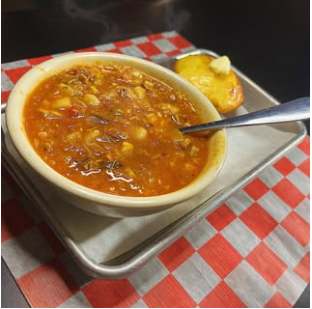
My Dinner on the Way home from Training at the Badger Indoor Facility Thursday night was a Bowl of Brunswick Stew from Racks BarBQ in Carmel on the corner of 131st Street & Hazelldell Parkway. Tell em the Ole Ballcoach Sent you and get 20% off!! Grab some Ribs and Pork and Stew on the way home from Training or Winter Indoor League at the Badger Fieldhouse. You won’t regret it !!
Huge congrats to our Carmel FC 2009 Boys coached by Jeremy Slivinski for their fine showing at the Disney Showcase in late December as they just missed the Championship round by 1pt after a 1-1-1 mark against some of the best teams in the Southeast.

Also congrats to our ODP Goalkeepers headed to Memphis in Feb Tim Paciorek 2009, Levi Simpson 2012 Boys, Olivia Aft 2012 Girls. Carmel FC Welcomes New AD of Soccer Operations Michael Caine

US Men
Can Pochettino really transform the USMNT’s mentality — and how will he do it? ESPN
The U.S. trio hoping to follow Yamal from La Masia to Barcelona stardom
USMNT defender Tolkin makes move to Bundesliga
Jesus Ferreira, Jalen Neal and John Tolkin depart USMNT January Camp
2025 USMNT Friendly: Scouting Venezuela
Pulisic ruled out of Milan-Juve clash with injury

WORLD
Could Nottingham Forest really ‘do a Leicester’ and win the Premier League? ESPN Chris Wright
Can Chelsea End Their Slump Against Wolves?
Manchester City sign Erling Haaland to record contract
Premier League predictions, odds: Week 22 of the 2024-25 season
Man City’s Premier League title defence is over: Foden
Nottingham Forest will not win title – but they can reach Champions League
AC Milan 1-1 Cagliari: Five things we learned – same issues persist as big chances go begging
CHAMPIONS LEAGUE
Champions League Standings thru 6 games
Atletico Madrid dealt injury blow ahead of Champions League return
Emerson believes Milan are ‘too strong’ to not finish in Champions
Juventus Eye Crucial Champions League Win Against Club Brugge
GK
Ex-Liverpool goalkeeper Loris Karius tries to reboot career at struggling Schalke
Good GK Stretch
Cold Weather Aide for GK
Best MLS Saves in 2024
Emmi Martinez Spec Save
Reffing
PK or no?
Bad Decision Does Not Mean you’re a Bad Ref
Yellow or Red
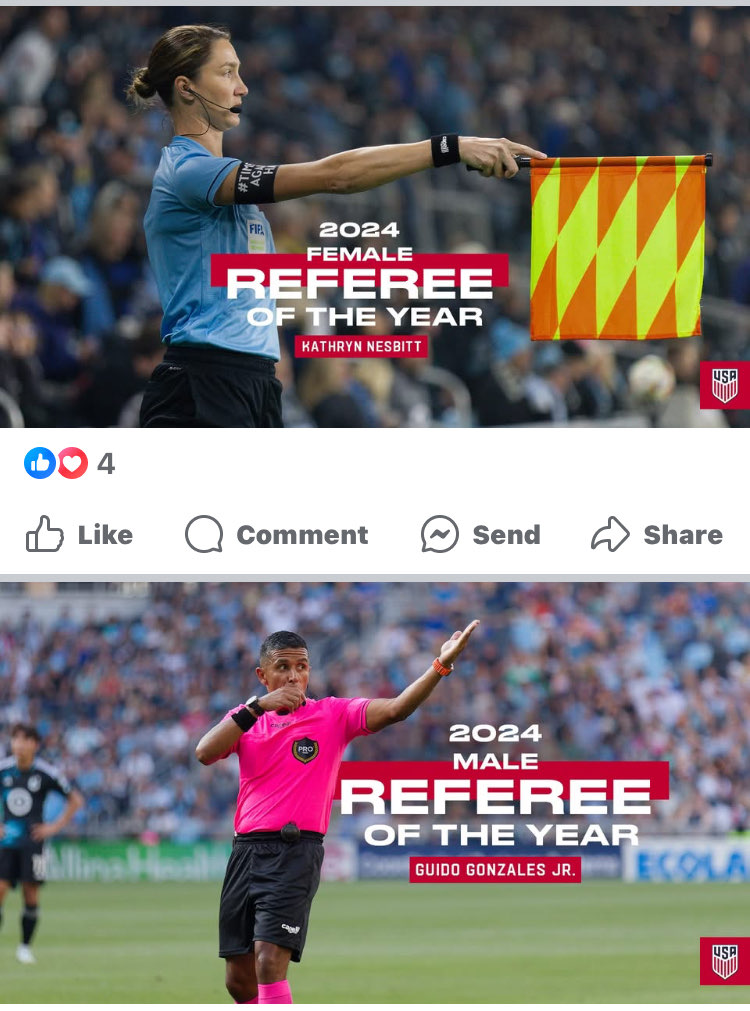
Become a Licensed Ref with Indiana Soccer – must be over 13
GAMES ON TV SCHEDULE
Sat, Jan 18
7:30 am USA New Castle vs Bournmouth (Adams)
10 am USA West Ham vs Crystal Palace (Richards, Turner)
10 am peacock Leicester City vs Fulham (Robinson)
10 am peacock Brentford vs Liverpool
11:30 am ESPN+ MGladbach vs Bremen
12 noon Para, Fox D Juventus (McKennie & Weah) vs AC Milan (Pulisic, Musah)
12:30 pm USA Arsenal vs Aston Villa
12:30 pm ESPN+ Leverkusen vs Borussia Monchengladbach (Scally)
2:45 pm CBS Galazo Atalanta vs Napoli
3 pm ESPN+ Getafe vs Barcelona
3 pm TNT. Tele USA Men vs Venezuela (Friendly)
6 pm FS1 FC Juerez vs Cruz Azul (Liga MX)
10 pm Apple ? Inter Miami vs America
Sun, Jan 19
9 am USA Everton vs Tottenham
9 am PEacock Man U vs Brighton
9 am peacock N Forest vs Southampton
10:!5 pm am ESPN+ Real Madrid vs Palmas
11:30 pm USA Ipwich Town vs Man City
2:45 pm Para+ Inter Milan vs Empoli
Mon, Jan 20
3 pm USA Chelsea vs Wolverhampton
12:45 pm Para+ Monaco vs Aston Villa
Tues, Jan 21 Champions League
12:45pm Para+ Atalanta vs Sturm Graz
3 pm Para+ Liverpool v Lille
3 pm Para+ Atletico Madrid vs Bayern Leverkusen
3 pm Para+ Bologna vs Dortmund (Reyna)
3 pm Para+ Red Star Belgrade vs PSV (Pepi, Tllman)
3 pm Para_+ Club Brugge vs Juventus (McKennie & Weah)
3 pm Para+ Benefica vs Barcelona
Wed, Jan 22 Champions League
12:45 pm Para+,TUDN RB Leipzig vs Sporting CP
12:45 pm Para+ Shakhtar vs Brest
3 pm CBSSN AC Milan (Pulisic, Musah) vs Girona
3 pm Para+ Celtic (CCV) vs Young Boys
3 pm Para+ Real Madrid vs Dortmund UCL
3 pm Para+ Arsenal vs Dinamo Zagreb UCL
3 pm Para+ Real Madrid vs RB Salzburg UCL
3 pm Para+ PSG vs Man City
7 pm TNT US Men vs Costa Rica friendly
Thur, Jan 23 Europa
12:45 pm CBSSN Porto vs olympiakos
12:45 pm Para+ offenhiem vs Tottenham
3 pm Para+ TUDN Man United vs Rangers
3 pm Para+ Fenervbahce vs Man United

=======RackZ BAR BQ ====Save 20% ===
Looking for a good summer meal? Try out the Best BarBQ in Town right across the street (131st) from Northview Church on the corner of Hazelldell & 131st. RackZ BBQ

Save 20% on your order
(mention the ole ballcoach)
Check out the BarBQ Ribs, pulled Pork and Chicken, Brisket and more. Sweet, Tangy or Spicy sauce. Mention you heard about it from the Ole Ballcoach — and Ryan will give you 20% off your next meal. https://www.rackzbbqindy.com/ Call ahead at 317-688-7290 M-Th 11-8 pm, 11-9 Fri/Sat, 12-8 pm on Sunday. Pick some up after practice – Its good eatin! You won’t be disappointed and tell ’em the Ole Ballcoach Sent You!

======================RackZ BAR BQ ====Save 20% ======================

What a Fantastic Year Jedi Robinson is having for Fulham – 3rd in the league in Assists the Fulham captain with 9 from Left Back. Rumors rampant that a January transfer might be in order – Liverpool perhaps. Only if he’s guaranteed to play for me .
USMNT’s Christian Pulisic avoids injury, scans reveal no muscle tear

By James Horncastle Jan 15, 2025
USMNT captain Christian Pulisic has avoided injury after being substituted off with muscle fatigue on Tuesday.Pulisic was substituted off at the break for Milan during their Serie A match at Como, having appeared to sustain an injury to his left calf area, but scans on Wednesday ruled out a muscle tear.The former Chelsea winger was seen clutching the back of his leg after a collision with Como defender Marc-Oliver Kempf just before half-time. The American received a kick to his left calf and immediately signaled to the bench that he needed to be substituted. He was replaced at the break by Alex Jimenez.Pulisic is having a productive season for Milan, with his 10 goals and seven assists from 23 appearances both team highs. The 26-year-old sustained an injury to his right calf in early December that kept him out for around a month and caused him to miss five games for his club.Pulisic returned on January 3 and helped his side win 2-1 against Juventus in the Italian Super Cup semi-final, scoring a penalty. He also scored in the 3-2 victory over rivals Inter in the final as Milan lifted the trophy for an eighth time.Pulisic’s international team-mate Yunus Musah was introduced as a half-time substitute during the Como game, which Milan won 2-1. That victory lifts Sergio Conceicao’s side to seventh in the Serie A table, five points behind fourth-placed Lazio.Milan’s next game comes against fifth-placed Juventus on Saturday.
USMNT vs. Venezuela January Friendly Preview
A tradition unlike any other Stars & Stripes -By Parker Cleveland@Cleveland_FC Jan 17, 2025, 6:00am
/cdn.vox-cdn.com/uploads/chorus_image/image/73852568/2193340722.0.jpg)
It’s mid-January which can only mean one thing, time for a USMNT friendly which generally has little consequence and even littler attendance. Ah yes, January camp. It will be Mauricio Pochettino’s first foray into the wild world of friendlies that the national team participates in outside of FIFA windows. Over the years there has been much said about why this is a valuable or useless exercise.
On the valuable side there’s the idea that it gives MLS players who might be in the national team picture a chance to get into shape ahead of the domestic season. There’s also the fact that it’s a chance for the manager to call in players who otherwise wouldn’t get a close of a look with the national team so he can evaluate them during their club offseason. Poch will also be able to evaluate how his tactics will work with players he typically wouldn’t call in against teams whose manager is evaluating how his tactics will work with players he typically wouldn’t call in. Plus, it’s fun [sic] to watch soccer on a sleepy January afternoon.
The useless exercise argument boils down to – basically the same points as to why it might be valuable. That got a new wrinkle this week as Jurgen Klinsmann said words about why the federation scheduled the kinda cynical cash grab camp in the first place. As for this camp, the USA finds itself taking on Venezuela in the first match. The roster includes a lot of talented and promising young players, at the very least, and a few veterans to set the tone. While it might seem that the match is something of a… whatever Klinsmann described it as, there are some players worth paying attention to.
Matko Miljevic was a surprise inclusion not only because his performance in MLS and more recently in Argentina was subpar, but also because he holds the distinction of being banned from a Canadian indoor soccer league for punching a guy while under contract with CF Montreal. MLS barely tolerates players having health conditions so his contract was terminated. He moved to Newell’s and his play there sees him now out of contract. Poch is doing him a bit of a favor by including him so it will be interesting to see if he gets any playing time as an attacker or otherwise does anything ignominious on the pitch. Attacking midfielder Diego Luna is another player to keep an eye on during this window. He’s coming off of a breakout year and took home Young Player of the Year for Real Salt Lake. Luna had 8g/12a in 2219 minutes and is a player with solid potential should he continue to improve his game.
Tactically, the USA should manage to keep a lion’s share of the possession. That means watching to see how the team might break Venezuela down could very well be the main aspect of the game to pay attention to. Otherwise, expect some new faces and a bunch of subs as the game goes on.
More From Stars and Stripes FC
- USA Soccercast, Episode 146: USMNT kick starts 2025 with January Camp
- Jesus Ferreira, Jalen Neal and John Tolkin depart USMNT January Camp
- 2025 USMNT Friendly: Scouting Venezuela
- SSFC Spotlight: Maximilian Arfsten gets first USMNT invitation
USMNT has a World Cup longshot ticket up for grabs – here are the main contenders

By Jeff Rueter Jan 15, 2025
The 2026 World Cup is 17 months away. Nations around the world are in the thick of qualification, hoping to secure a place in the expanded 48-team field. Meanwhile, as one of three automatically qualified host nations, the United States men’s national team is using this time to maximize their home advantage.
Advertisement
Since Mauricio Pochettino took the helm of the USMNT in September, he’s had two camps to size up several World Cup hopefuls. His squads in October and November had considerable overlap, with several mainstays looking like World Cup certainties, including Christian Pulisic, Weston McKennie, Folarin Balogun and Antonee Robinson.
His squad for the January camp skews far more speculatively as the Argentine surveys the depth of his player pool, with games on Saturday against Venezuela in Fort Lauderdale on Saturday and on January 22 against Costa Rica in Orlando.
More than a dozen spots are seemingly set in stone but don’t discount the chance of a late riser crashing the World Cup squad. At this point in 2013, few would have projected that Jürgen Klinsmann’s roster in Brazil the following year would include John Brooks, Julian Green or DeAndre Yedlin. Likewise, Gregg Berhalter’s squad for Qatar in 2022 included a couple of players (Joe Scally and Haji Wright) with minimal international experience.
 Julian Green’s selection in 2014 stunned many but he scored against Belgium in the round of 16. (Kevin C. Cox/Getty Images)
Internationally, Theo Walcott came from nowhere to be picked for England in 2006, Samuel Eto’o was a raw newcomer for Cameroon in 1998, and Pele was unknown to the wider world when he destroyed the field as a 17-year-old in 1958, leading Brazil to its first title.
In that spirit, here are a dozen players who haven’t debuted for the USMNT but have an outside chance of piquing Pochettino’s interest. Realistically, only one or two (if any) of these players will make the squad for the 2026 World Cup. Considering the hardship the team endured in 2024, any player who could raise the overall level can’t be discounted — and remember, things move quickly in international soccer.
It’s all an open tryout, with every action for club and country being closely assessed.
(Players participating in this year’s January camp are indicated with an asterisk (*) by their name upon first mention.)
Advertisement
Forwards
The state of the forward roles is healthier than four years ago. Pulisic and Tim Weah have cemented themselves as dependable first-choice options on the flanks. After the 2022 cycle was headlined by struggles at center forward, the striker pool now has several players starting regularly and scoring often — Balogun, Ricardo Pepi, Josh Sargent, Brandon Vazquez and Wright, who can also play out wide.
Nevertheless, the depth on both wings is concerningly thin. We can’t overlook alternatives at center forward, either. In-form strikers have previously landed on USMNT World Cup squads, including Herculez Gomez, Robbie Findley and Edson Buddle in 2010, before Chris Wondolowski made the cut in 2014.
Patrick Agyemang* is among the most intriguing members of Pochettino’s squad for January camp. The 24-year-old had led the line for Charlotte FC in 2024 with downhill determination and impressive finishing. No MLS player was more direct in possession, as 34.3% of his 338 carries made it at least five yards closer to goal. He also outperformed his expected goals (xG) by +1.74, finishing the regular season with 10 goals and five assists. He is a rung below the favoured quintet of USMNT strikers, but Agyemang has a unique skill set that works well against a low defensive block and is less reliant on accurate crossing service.
 Patrick Agyemang has intriguing potential. (Jacob Kupferman/Getty Images)
The established forward pool includes a few players who regularly look to get on the ball, including Pulisic and Gio Reyna (who will hopefully play more as a No. 10 instead of out wide). That leaves a need for confident off-ball operators who can collect long passes on the wing and allow the team’s top goalscoring options to get into dangerous areas to collect the next ball. Two uncapped options fit that profile, albeit with some differences in their approaches.
Since Balogun committed to the USMNT in 2023, few multi-national eligible players have been more coveted for this program than Luca Koleosho. The 20-year-old winger, born in Connecticut to a Nigerian father and an Italian-Canadian mother, could have four options for his senior international career. All but Nigeria have called Koleosho into a youth camp.

Koleosho is a consistent starter for Burnley in the English Championship. He has mostly been used on the right but can operate on either flank and, while his end product still requires refinement, the less glamorous parts of his job come naturally. He carries the ball well (as illustrated above), can dribble past opponents with ease and is excellent at receiving passes in danger positions. He hasn’t committed his international future but playing in a North American World Cup under Pochettino is a sweet sales pitch.
Advertisement
Griffin Yow is another capable off-ball operator, and has a bit more polish than Koleosho. Yow, 22, was a member of the 2024 Olympic squad and is regularly involved with Westerlo in the Belgian Pro League. He is a confident shooter, taking 3.2 attempts per 90 minutes over the past 12 months, and offers proactive front-line defending — vital for closing out a game.
Midfielders
McKennie, Tyler Adams and Yunus Musah are regulars for their clubs, making midfield the strongest area of Pochettino’s squad. Several alternatives have established themselves in the pool, most notably Johnny Cardoso, Luca de la Torre, Malik Tillman and Aidan Morris. However, injuries have plagued several of these options, and a more specialized alternative could come in handy.
Daniel Edelman was a surprise omission from the Olympic squad, having captained the under-20s to a 2022 CONCACAF Championship triumph that secured a place in the field. Nevertheless, 2024 was a strong year for Edelman, who came through the New York Red Bulls youth system. He became a consistent midfield anchor as the team returned to MLS Cup for the first time since 2008. Tidy in possession and tireless out of it (as illustrated in the graphic below), he could provide cover at defensive midfield.

Emeka Eneli* had a breakout second season with Real Salt Lake, finding a true home in defensive midfield after initially playing as a full back. His passing kept RSL whirring and he also provided a proactive defensive presence. At 25, he’ll need to make a strong first impression to reach the World Cup. He could emulate the mid-career breakthrough path previously taken by another RSL midfielder, Kyle Beckerman.
Few American players made more headlines in 2024 than the Philadelphia Union’s Cavan Sullivan, who broke Freddy Adu’s record as the youngest player to make an MLS appearance after signing a pre-agreement with Manchester City. He’s still a prospect, having made three MLS appearances while spending most of his time in MLS Next Pro.
 Cavan Sullivan’s youth and inexperience make him a World Cup longshot. (Caean Couto/USA Today)
Still, Sullivan has been appraised to have as high a ceiling as any player in the pool, nearing a level previously hit by Pulisic and Reyna. If — and it’s a big if — Sullivan is selected, he could be in line to make some World Cup history. He will be 16 years and 256 days old when the tournament kicks off, and any appearance would make him the first man to appear in a World Cup before their 17th birthday. The current record holder is Norman Whiteside of Northern Ireland, who scored in a victory against Spain in 1982, days after making his tournament debut at 17 years and 40 days. Last summer’s remarkable European Championship performances from Lamine Yamal, who turned 17 during the event’s final week, have put youthful excellence firmly in the spotlight.
Perhaps more likely is that Cavan’s older brother Quinn Sullivan cracks the rotation in time for the tournament. While his younger sibling commanded more attention, Quinn, 20, was among Philadelphia’s best players. He scored five goals and added 11 assists (eight from open play, illustrated below), with the latter figure leading all MLS players under 21.

He’s in direct competition with Reyna, Tillman and Brenden Aaronson, but shouldn’t be counted out if he continues to refine his approach in the final third.
Defenders
While the midfield is teeming with options, the USMNT’s defensive depth chart is concerningly lean by comparison. Ironically, only left back — the weakest position for decades — seems has a clear starter and one or two established backups.
The program’s lack of depth at right back was exposed in 2024, as Sergiño Dest’s injury left the USMNT short at the Copa America. The senior team has a few established center backs — including Chris Richards, Cameron Carter-Vickers, Tim Ream and Auston Trusty — but its dearth of young up-and-comers influenced under-23s coach Marko Mitrović to use two over-age spots in the position (Miles Robinson and Walker Zimmerman) at the Olympics.
George Campbell* will partner with new club teammate Jalen Neal (who has six caps) as part of the January camp, with Neal being acquired by CF Montréal last week. Campbell logged nearly 2,300 minutes as Montréal finished ninth in the East and was solid (35th among MLS defenders with 900 minutes or more) in the ratio of aerial duels he won. Campbell also performed above average with his tackling win rate, and his short-passing acumen could help fit into a possession-heavy game model.
Another option from MLS is Jackson Ragen, a finalist for MLS’ defender of the year award in a breakthrough season with the Seattle Sounders. Ragen is a steady bedrock, winning 67% of his aerial duels while being more difficult to dribble past than most in his position. The 26-year-old is also adept at consistently breaking lines with his passes and is a threat to win headers on set pieces.
Although uncommitted internationally, Anrie Chase could bolster the position group if he elects to represent the U.S. instead of Japan. The 20-year-old center back has broken through with Stuttgart this season, logging 734 minutes in the Bundesliga and 138 in the Champions League. Chase is a very good ball-playing defender (as illustrated below) who has performed around the league average defensively.

Although he has represented Japan at youth levels, Chase told Sportiva that he “(hasn’t) ruled out the possibility” of representing the United States.
While Antonee Robinson is arguably the best left back in this season’s Premier League and is capably backed up by Kristoffer Lund, securing Nathaniel Brown’s international future would benefit the pool. The German American has started regularly for Eintracht Frankfurt since early November, scoring three goals and registering three assists in 10 Bundesliga appearances at left wing back. He has been no defensive slouch in this (relatively small) sample, either, and could be a worthy understudy beneath Robinson.
Considering the lack of alternatives to Dest, perhaps it’s time to right historical wrongs and look at Ryan Hollingshead. Among the finest American players to never feature for the USMNT, the 33-year-old has probably been the best right back in MLS since joining LAFC in 2022. He can also provide cover on the left, and can carry the ball on either flank (below).

He’s as much of a longshot as anyone on this list (save, perhaps, for Cavan Sullivan), but a grizzled veteran finally getting his chance is the stuff of Hollywood.
goalkeepers
The age of excellent bald American goalkeepers is long behind us, with eight years having passed since Tim Howard’s international retirement. Worryingly, the better-coiffed successors to Howard have struggled to find regular action at a high level. Matt Turner has made just two appearances on loan at Crystal Palace (both in cup competition). Gabriel Slonina’s loan at third-division Barnsley was cut short due to a finger injury and he is back at Chelsea. Ethan Horvath was replaced in Cardiff City’s lineup in early September.This position feels concerningly close to being an open competition. While Patrick Schulte* will hope to add to his two caps this month, a couple of uncapped alternatives also warrant examination.
Matt Freese* was among the best goalkeepers of any nationality in the 2024 MLS season, helping New York City FC outlast Cincinnati in the playoffs, including some shootout heroics. Freese “prevented” 11.1 goals compared to the xG on target he faced, trailing only goalkeeper of the year Kristijan Kahlina. He still has some work to do to claim crosses, and his new club coach (Pascal Jansen) didn’t ask his goalkeepers to play many short passes at AZ, but he has a similar profile to Turner and has fared far better than Zack Steffen in the same league.

The successor to Slonina in Chicago, Chris Brady made strides to improve his cross-stopping approach in 2024 during another poor season for the Fire. He also refined his approach in possession playing out of the back (above), and figures to further that development under new Fire coach (and former USMNT boss) Gregg Berhalter. Brady won’t turn 21 until March, but may be closer to more regular senior international involvement than Slonina.
Other uncapped ‘keepers to watch include Roman Celentano, who is a starter for perennial contender Cincinnati and is a dependable shot-stopper, and Diego Kochen, who is now first-choice for Barcelona Atletic (the club’s B team) and among the most promising teenage ‘keepers in the world.
(Top photo: Timothy A. Clary/AFP via Getty Images)
USMNT’s next opponent Venezuela: Where sports and politics intertwine

By Felipe Cardenas Jan 16, 2025
On Saturday, the U.S. men’s national team will face Venezuela in Fort Lauderdale, Fla. The friendly is an opportunity for the United States to build positive momentum under new head coach Mauricio Pochettino. With the 2026 World Cup finals, which the U.S. will co-host with Canada and Mexico, a little over a year away, Pochettino will look to identify squad alternatives from a group of players with little fanfare.
For the visiting South Americans, the match comes amid intense political upheaval back home. Last week, Venezuela’s autocratic president Nicolas Maduro was sworn in for another six-year term, despite accusations that he stole the latest election. Opposition leaders Edmundo Gonzalez (forced into exile in Spain) and Maria Corina Machado (recently detained and then released by Maduro’s security force) have urged Venezuelans to continue to fight for their freedom.
Venezuela’s dream of qualifying for its first-ever senior World Cup is still alive. Now they must balance their ambition to play on the sport’s biggest stage with the stinging reality of the country’s future.
(Editor’s note: The story below was originally published on Oct. 8, 2024)
As Venezuela gleefully navigated their way towards the 2024 Copa America quarterfinals in the United States, playing attacking and fearless football, the players’ South American homeland was bubbling with tension amid heightened political turmoil.A democratic election was set to take place on July 28 in which Venezuela’s authoritarian President Nicolas Maduro would face a formidable challenge from the country’s opposition party. There was hope that a fair election would finally take place in Venezuela.The country has been gripped by the left-wing populist ideology that Maduro and his predecessor, the late Hugo Chavez, have used to rule since 1999.For an even longer period, the men’s national soccer team has been a source of disappointment.Venezuela has never qualified for a senior World Cup, and the Venezuelan Football Federation (FVF), which has for decades been riddled with corruption, has failed to maximize opportunities for the sport to grow there. The occasional run of good form and some positive results against South America’s giants have always been overshadowed by Venezuela’s penchant for poor performances in World Cup qualifying and Copa America.In a country where baseball is far and away the most popular sport, football/soccer has always teetered on the edge of obscurity. But recently, by way of a young and energetic team, Venezuela had gotten up off the proverbial mat.
 Venezuela’s Yordan Osorio celebrates victory against Jamaica at the Copa America (Aric Becker / AFP via Getty Images)
When the Copa America kicked off in mid-June, Venezuela were seen as a dangerous side with nothing to lose.Led by Argentine manager Fernando Batista, the side known as La Vinotinto, because of their wine-red home kit, won a group that included Mexico, Ecuador and Jamaica. Venezuelan expats in the United States followed the team feverishly, many of them crying tears of joy as Batista’s side battled their way into the knockout stage.The 2026 World Cup, to be held in the U.S., Mexico and Canada, has been expanded to 48 teams for the first time in the tournament’s history. Six of South America’s 10 nations will qualify automatically. The side finishing seventh will take part in a six-team intercontinental play-off tournament, from which two sides will earn the right to play at the World Cup.This new format has potentially opened the door for Venezuela to finally qualify for football’s biggest international competition.

Baseball is Venezuela’s national sport – but the 2024 Copa America shows why that might be changing
Venezuela began qualifying last September with a 1-0 loss against Colombia, but then earned wins over Chile (3-0) and Paraguay (1-0), and an inspired 1-1 draw with Brazil.Two more draws, at home against Ecuador (0-0) and away to Peru (1-1), temporarily placed Venezuela within the automatic qualifying berths. But ‘Mano tengo fe’ (‘Brother, I have faith’) not only became a rallying cry for Venezuelan supporters of their national team, it also gave those who yearn for political change in the country hope that their voices and votes would be heard.
 Protesters against the Maduro regime take to the streets of Venezuelan capital Caracas in July (Jesus Vargas/Getty Images)
Venezuela were knocked out of the Copa America quarterfinals by Canada on penalties on July 5. Three weeks later, violence erupted throughout Venezuela following the elections on July 28.Maduro claimed victory, and his third consecutive term, despite the Democratic Unitary Platform’s (PUD) outright negation of the results. The PUD then announced their candidate, Edmundo Gonzalez, had earned 70 per cent of the vote, a landslide win. But the Venezuelan Supreme Court ruled Maduro the winner. Before the election, Maduro had warned of a “bloodbath” if he lost. That came to fruition even as he celebrated his controversial victory, as clashes connected to protests led to the deaths of at least 23 people. Following the election, governments around the world refused to recognize Maduro’s win, urging the president to allow the democratic process to take place.Instead, Maduro made threats and jailed protestors and opposition leaders. Four journalists were detained by Venezuelan authorities and charged with terrorism. They all face up to 30 years in prison.
 Venezuela’s National Guard move in to quell protests in Caracas in July (Yuri Cortez/AFP via Getty Images)
Also arrested was Carlos Chancellor, 64, father of Venezuela national-team defender Jhon Chancellor.
The elder Chancellor is a local opposition leader who, according to reports in Venezuela, was the first political prisoner of Chavez.The arrest of Chancellor senior brought to light the close ties between football and politics in the country. In Venezuela, it was suggested by local reporters and opposition leaders that national team players were asked by the FVF to not comment on the election or Chancellor’s situation on social media. The FVF has yet to respond having been asked to confirm those reports.A scan of several of the current squad’s social media accounts lent credence to that suggestion, as players stayed away from Chancellor’s situation and merely posted support for Venezuela as a country rather than a particular political party. Jhon Chancellor, currently playing for Ecuadorean side CD Universidad Catolica, has not commented on his father’s arrest. His official presentation as Catolica’s new signing, however, was postponed when news first broke of his father’s detention.Americo De Grazia, a former government official and a close ally of Carlos Chancellor, first revealed details of the arrest on August 7. “The dictatorship maintains its repression,” De Grazia posted on X. “Maduro remains standing with bullets, not votes.”
 Jhon Chancellor (centre) warms up before the Copa America quarterfinal against Canada (Omar Vega/Getty Images)De Grazia himself was detained a day later and, after being reported missing by his family, his daughter revealed he had been taken to Venezuela’s notorious prison El Helicoide. De Grazia has not been heard from since.One Venezuela-based football reporter — who requested anonymity to protect his identity out of fear of reprisals by Maduro’s government — told The Athletic that, upon hearing of Chancellor’s arrest and disappearance, he did not post about it on social media because “doing so is like putting a knife to my throat. The police would be outside of my house 20 minutes after posting that”.Asked about the status of the elder Chancellor’s situation and the silence that followed, the same reporter said that it’s a difficult subject to broach. “That’s a question that the entire country wants answered,” the reporter said regarding Chancellor’s arrest.Venezuelan members of the press tend to avoid asking players, coaches and FVF officials questions related to Maduro to avoid any consequences.
“I don’t think a Venezuelan reporter will dare ask (Batista) or a player a question about the current situation in the country,” the reporter said. “There’s fear, but we have to continue to do our job. I was raised under Chavisimo (the Chavez regime), so I understand all of this, but I’ve never seen it like this. There has always been repression, but not like people being taken from their homes because of a tweet.”
 President Nicolas Maduro speaks to his supporters in Caracas in July (Jesus Vargas/Getty Images)
The 61-year-old Maduro has been accused by the opposition in Venezuela of ruling like a dictator since becoming president in 2013.
In 2020, he and 14 other Venezuelan government officials were charged by the U.S. government with corruption, drug trafficking, narco-terrorism and other criminal offences stemming from Maduro’s connections to Colombia’s leftist terrorist group, the Revolutionary Armed Forces of Colombia (FARC).
“Today we announce criminal charges against Nicolas Maduro Moros for running, together with his top lieutenants, a narco-terrorism partnership with the FARC for the past 20 years,” said U.S. Attorney Geoffrey S Berman in a statement at the time. Maduro responded on X by accusing the U.S. and Colombian governments of conspiring to “fill Venezuela with violence”.
However, Maduro, to those who support him, is a loyal patriot.
He is also an avid sports fan and has had allies within Venezuela’s sporting organizations for years, including the FVF. The football federation’s senior vice-president, Pedro Infante, is a former Maduro-aligned congressman and the country’s ex-minister of sport. In September, Infante was among 16 Maduro allies sanctioned by the U.S. government in response to voter fraud following the recent elections.Nevertheless, the FVF is enjoying a resurgence as the country’s political strife worsens. Federation president Jorge Gimenez, 37, whose tenure began in 2021, was re-elected in April through to 2028. He ran unopposed. Gimenez is a well-known construction entrepreneur and former president of the Venezuelan club Deportivo Lara.He is widely responsible for regaining the trust of private investors and corporate sponsors after the federation was embroiled in the 2015 FIFA corruption scandal, which resulted in the arrest and trial of former FVF president Rafael Esquivel. He pleaded guilty in U.S. federal court to seven counts of racketeering conspiracy, wire fraud conspiracy and money laundering conspiracy and was later banned for life by FIFA’s ethics committee.“We can have a debate about that private capital, but there has been a modernization of the Venezuelan Football Federation,” said Esteban Rojas, a Caracas-based journalist who covers football for AFP News Agency. “Today, there’s stability within the federation that was non-existent in years past. Before, there was an open war for control.”
Venezuela’s football setup has made significant strides since Gimenez took over. The country hosted the 2024 men’s Pre-Olympic tournament last winter, although Venezuela failed to qualify for the Olympic Games in France.
The senior team has grown younger, though, and the federation has expanded its scouting network beyond the nation’s borders by recruiting players from abroad with Venezuelan heritage. Securing Batista as manager was seen as an astute decision by Gimenez after dismissing former head coach Jose Pekerman in 2023. Batista was an assistant on Pekerman’s staff and is a respected developer of young talent.
 Fernando Batista (Juan Mabromata/AFP via Getty Images)
Still, Gimenez has his own links to Maduro — a worrying sign the FVF may not be free of the latter’s influence. Gimenez, through various businesses he owns, also has ties to the PDVSA, Venezuela’s state-owned oil and natural gas company. His allegiance to the current regime became public in 2020 when he was a passenger on a private jet that flew from Caracas, Venezuela’s capital, to its Spanish equivalent Madrid with several government officials, including Maduro’s vice-president Delcy Rodriguez, aboard. Gimenez has not commented publicly regarding his participation in that trip.
Then, last December, during an event at the Palacio de Miraflores, the headquarters of the Venezuelan government, Maduro introduced Gimenez as “the one responsible for taking us to the 2026 World Cup”.
“I always tell the national teams that you’re the silent godfather of the Vinotinto,” Gimenez replied. “You’ll become the first president to take Venezuela to a World Cup.”Late last month, Rojas asked Gimenez how the federation would be impacted following news of Infante’s sanctioning by the U.S. government. “FIFA and CONMEBOL have not taken a stance,” Gimenez replied. “Everything stays the same for us. What’s important is that we enjoy football and leave politics aside.”But football and politics are one and the same in Venezuela.
 A man walks past a mural depicting President Nicolas Maduro in Caracas (Raul Arboleda/AFP via Getty Images)
Argentina are Venezuela’s next World Cup qualifying opponents, with Thursday’s match set for the 52,000-seat Estadio Maturin, Venezuela’s largest stadium.With diplomatic relations strained between Maduro’s government and Argentina’s right-wing administration — Maduro has prohibited Argentine aircraft from flying above Venezuelan airspace — Lionel Messi and the defending world champions will train in the U.S. before the match, at MLS club Inter Miami’s facilities in Fort Lauderdale.And all of this backdrop coincides with Venezuela’s recent dip in form.The team have not scored in their last two qualifying matches, including a 4-0 defeat away to Bolivia, and are winless since defeating Jamaica 3-0 in their final group match of the Copa America. After initially rubbing shoulders with Argentina, Colombia and Uruguay in the CONMEBOL standings, Venezuela are now sixth on 10 points, just a point ahead of Paraguay and Bolivia.After facing Argentina, Venezuela will travel to Asuncion for a pivotal away match against the resurgent Paraguayans next Tuesday (early Wednesday UK time).The dream of qualifying for their first World Cup is still alive, and the faith that Venezuelans have remains strong, but their confidence is shaken.While the opposition party continues to dispute the election result, and with peace still elusive, the stakes have never been higher for the Vinotinto.
(Top photo: Charly Triballeau/AFP via Getty Images)
Emma Hayes’ priorities for a busy USWNT camp. Plus, Marta’s back in Orlando

Full Time Newsletter ⚽| This is The Athletic’s weekly women’s soccer newsletter. Sign up here to receive Full Time directly in your inbox.
Emily Olsen here with Meg Linehan. It was a difficult week for many, especially those in Los Angeles. Hopefully, we can balance the hurt with some hope — welcome to Full Time!
L.A. Wildfires
USWNT forced to move camp
Sports are not immune to the effects of the devastating wildfires impacting much of Los Angeles.
The U.S. women’s national team was set to gather this week alongside a group of under-23 prospects at Dignity Health Sports Park in Carson, Calif., roughly 30 miles south of the Pacific Palisades and Altadena neighborhoods — areas that have both seen extensive damage. Late Friday, U.S. Soccer moved the camps to Inter Miami CF’s training facility in Fort Lauderdale, Fla., where the U.S. men are currently training.
L.A.-based teams in the NHL, NBA and NFL have also made schedule adjustments or postponements amid the fires. The NFL moved the wild-card playoff game between the Los Angeles Rams and Minnesota Vikings, set for tonight at 8 p.m. ET, from SoFi Stadium to State Farm Stadium in Glendale, Ariz.
The fires have impacted individual athletes, too: Soccer stars Carlos Vela and Ali Riley are among those who shared they lost their family homes. The Los Angeles Times has a list of resources for wildfire evacuations, recovery and how to help.
Finding hope amid loss
Riley has captained Angel City FC and the New Zealand national team. I watched her play in front of a packed Eden Pack in Auckland, New Zealand, to open the 2023 World Cup and listened to her postgame speech about the meaning of the moment. She laid bare her soul with rainbow nails and tears of joy. That’s just who Riley is. She’s never shied from showing her heart — one that beats deeply for her hometown of L.A.
Last week, the 37-year-old shared something different, posting photos of the rubble that used to be her parents’ home in the Palisades.
View this post on Instagram
“This was our home,” Riley wrote in a post on X. “How is this real. It can’t be real.”
Despite the devastation, Riley also shared joy. She posted videos of her parents and, this weekend, wedding photos and videos as she married former Swedish footballer Lucas Nilsson.
“I’ve never felt love like this,” Riley wrote. “We hugged, cried, danced and laughed. My parents are incredible.”
Meg’s Corner
Marta’s not leaving!
The Orlando Pride finally finished one of their most crucial pieces of business this offseason, re-signing Marta to a two-year deal. There were no mentions of a potential retirement on the horizon for the 38-year-old, or even a last dance, when Orlando won the Shield and championship last year.So our mission — and we should all accept it — is to once again witness greatness while we can. We must appreciate everything else Marta brings to Orlando, the NWSL and the sport in general.And we can start with the contract extension announcement video. Did it have shades of Sam err’s Chelsea announcement with the fake-out of a potential departure or retirement? Sure. But Marta’s intensity is on a whole new level because her emotions for the city and club are so authentic — and because no one loves a good joke more than the captain.Now in the pantheon of images of Marta, alongside all the goals and the celebrations, I’m going to permanently have the one of her dancing in front of fireworks lit up just for her over the Inter&Co Stadium in Orlando. What an absolute legend.

🎧 The latest from the “Full Time” podcast: Gotham GM Yael Averbuch West discusses the team’s recent flurry of news.
Notables
Hayes looks to remedy a ‘lost generation’
As we’ve said before, this year is one Emma Hayes can actually use to take stock of what the U.S. player pool has to offer.
Hayes’ biggest issue? A “lost generation” of under-23 players and a gap she is “desperate” to bridge before the next World Cup.
“None of us know what the roster is going to look like in 2027, so I’m desperate to make sure that we’ve got more players that are in a better position that can help us compete for the highest level,” Hayes said last week.
In addition to the 26 players called into the senior camp this month, 24 under-23 players were named to a “Futures Camp” which will also be coached by a very busy Hayes, who will bounce between training sessions.
I also recommend this piece from the Philadelphia Inquirer’s Jonathan Tannenwald, who was in the crowded conference room where Hayes said she “loved nothing more than the rest of the world writing us off” at the Olympics.
 Orlando Ramirez / Imagn Images
Canada appoints Stoney as next head coach
Former San Diego Wave head coach Casey Stoney is Canada’s next head coach.
The Canadians have been without a permanent coach since the federation’s Olympic drone spying scandal (former head coach Bev Priestman was officially fired in November).
Stoney, 42, most recently led San Diego to a 2023 NWSL Shield and an NWSL Challenge Cup victory before a seven-game winless streak in 2024 led to her firing. Meg says Stoney’s jump to the international game is “no surprise”:
At first glance, it’s a perfect match considering Stoney’s reputation as a defensive-minded coach and Canada’s history of winning games and tournaments on gritty defending. There’s also the sheer fun of potential matchups between Canada and the USWNT with Stoney and Hayes on the touchline.
Stoney said she’s “used to derby games” and welcomes the opportunity to compete against Hayes and the U.S.
Nelson alleges abuse while playing for the Royals
Former Utah Royals goalkeeper Carly Nelson alleged she experienced “emotional and psychological abuse” during her time with the club in a post on social media Friday.
Nelson, who’s from Utah, joined the Royals after being traded from the Orlando Pride in December 2023. Nelson was regularly listed as an excused absence on game day and later took an extended mental health leave. A year after joining the club, the team announced that Nelson would not return for the 2025 season.
Nelson says there’s more to the story. Utah said it takes any allegations counter to “creating a positive and supportive experience” with the “utmost seriousness and urgency.”
Full Time First Looks
Good news: We recently shared the story of Celine Haidar, the 19-year-old Lebanese midfielder who suffered a serious head injury during an Israeli airstrike in Beirut. Haidar has since woken from a coma she was in for nearly two months.
Life after playing: In 1998, Julie Foudy was in the prime of her playing career with a potential path to medical school on her horizon. However, a chance encounter with a sports broadcast producer set her on a decades-long career in commentating. Now, the World Cup winner is helping other former and active players do the same.
On the move: USWNT forward Jaedyn Shaw is headed to the North Carolina Courage. Equalizer Soccer was first to report the move, which is expected to be announced this week. The move reportedly came at the 20-year-old’s request.
Attempting to make sense of a confusing Premier League season
Oliver Kay and Mark Carey
Jan 14, 2025
91
There is little let-up in football’s ever-expanding schedule, but its sprawling nature allows just the occasional pause for reflection.
The past week has brought some big occasions in the Carabao Cup and FA Cup. Next week offers the unfamiliarity of European competition in January. This midweek Premier League programme has crept up almost undetected, yet much has changed since the last round of fixtures: managers have come and gone at West Ham United (Julen Lopetegui out, Graham Potter in) and Everton (Sean Dyche out, David Moyes back for a second spell); the beginnings of an unusually busy winter transfer window at Manchester City; a heightened state of anxiety at Arsenal in advance of Wednesday’s north London derby.
Advertisement
Just past the halfway stage, how has the Premier League’s 2024-25 season been for you?
If you are a Liverpool fan, then the answer will likely be one of cautious excitement. Nottingham Forest? Unexpected thrills. Bournemouth, Fulham or Brentford? Fun. Newcastle United? Much better than five weeks ago. Chelsea? Much worse than five weeks ago. Manchester City? The type of nightmare you thought was in your distant past. Manchester United or Everton? The type of nightmare that has haunted your present for too long. Southampton? Chastening. Arsenal or Tottenham Hotspur? Maddening, in different ways, but ask them again after 10pm on Wednesday.
Some seasons take shape almost immediately. This one has been more peculiar. Manchester City’s nosedive in late 2024 is one reason for that, but there have been others. One team after another has looked strikingly impressive for four or five weeks before stumbling into difficulty. The only consistency — of the right type — has come from Liverpool and, to widespread amazement, Nottingham Forest.
What do we read into this? Are Liverpool really as strong as their commanding lead implies? Are Forest, who have the lowest share of possession in the top flight, as good as their run of six consecutive wins suggests? What on earth do we make of Manchester City’s struggles? And is all of this the sign of the high-quality, ultra-competitive league we demand? Or one where standards have slipped?
One consequence of Manchester City’s golden era under Pep Guardiola is that it has distorted expectations. It has normalised the abnormal.
Of the eight highest points totals recorded in the Premier League era, seven have come in the past nine seasons: Manchester City three times (including a record-breaking total of 100 points in 2017-18), Liverpool three times (only one of which yielded the league title) and Chelsea once (under Antonio Conte in 2016-17). The only previous team to have surpassed 91 points in a 38-game top-flight season was Chelsea under Jose Mourinho in 2004-05 (95 points).
Advertisement
This season has so far felt more… normal. As impressive as Liverpool have been so far under Arne Slot, they have not had quite the imperious look of their team that won 97 points under Jurgen Klopp in 2018-19 (only to finish a point behind City) and 99 points a year later. That side, with Mohamed Salah, Roberto Firmino and Sadio Mane in the forward line, was relentless. This one, with Salah joined by any two from Luis Diaz, Cody Gakpo, Diogo Jota and Darwin Nunez, looks slightly less formidable.

But that has been the way of things of late. Between 2009-10 and 2015-16, no Premier League champion reached the 90-point mark. There followed a period between 2016-17 and 2019-20 when the title was won with totals of 93, 100, 98 and 99 points. Manchester City’s subsequent four titles in a row were won with 86, 93, 89 and 91 points. The standard remained extremely high, but in points terms, not as high as Klopp suggested in 2019 when he told reporters Liverpool would have to be “perfect” if they were to be champions.

Right now, Liverpool are on course for 92 points — a tally Arsenal and Forest, their closest challengers, can only reach by winning 17 and drawing one of their final 18 matches. They have also won six games out of six in the Champions League, beating Real Madrid, Milan and Bayer Leverkusen among others.
But as Slot pointed out on Monday, it is folly to imagine the second half of a season will simply mirror the first. “There’s more at stake,” the Liverpool manager said. “That’s what sometimes you feel. That’s why you sometimes see more shocking results in the second half of the season and that’s why we need to improve.”
The chasing pack will hope that Liverpool, held to a 2-2 draw at home by Manchester United last time out, can be pegged back. Forest, already performing beyond their wildest pre-season expectations under Nuno Espirito Santo, will hope to clip the leaders’ wings at a loud, passionate City Ground on Tuesday evening.

Welcome to Nottingham – a city that is once again daring to dream
Every UK bookmaker already has Liverpool at short odds-on to be champions — a view shared by Opta’s “supercomputer” predictive model, which puts their chances at 88.9 per cent. But even their most bullish supporter might say that sounds rather presumptuous given they face away trips to eight of the 10 teams ranked immediately below them in the table at present. Both Manchester City and Arsenal can testify to the difficulty of a trip to Bournemouth. In both cases, an unexpected setback at the Vitality Stadium proved hard to shrug off.
Advertisement
Manchester City’s slump was so extreme, winning only one out of 13 matches in all competitions between late October and late December, that Opta rate their chances of a fifth consecutive league title at just 0.2 per cent. Pep Guardiola has been even less optimistic than that: “No chance”.
Mikel Arteta will not entertain talk of a regression in Arsenal’s standards, but he accepts his team have left themselves with an awful lot of work to do and that they must ensure they are ready to capitalise — “we have to continue to be like a hammer, be there every day, every day, every day”— if Liverpool stumble. So far in 2025, his own team have not looked ready to honour their side of the bargain.

Arsenal and their recurring problem of allowing defeat to turn into a slump
How strong is the Premier League right now?
The usual answer, in any given season, at just about any point in history, is that it is not as strong, as competitive or as entertaining as it used to be — an inevitable view, accompanied by the sweet smell of nostalgia, but one at odds with the reality of the league’s growing financial (and consequently on-pitch) strength.

‘Take me back to the 2000s’: Premier League nostalgia and the perils of comparing different eras
Manchester City have drastically underperformed this season, but before that two-month tailspin, they had lost just one of their previous 50 matches in all competitions (the FA Cup final against Manchester United last May). They have also won their past three games in a manner that suggests they will be a force in the second half of the season — and that, even if the damage to their Premier League title defence looks irreparable, they remain one of the strongest teams in Europe.
Last season’s European competition brought a few jolts to Premier League pride, with no English club getting beyond the quarter-finals of the Champions League or the Europa League, while Serie A and the Bundesliga claimed the highest coefficient ranking (and with it an extra ticket for this season’s Champions League).
Manchester City’s struggles apart, this season’s new-look Champions League, with Liverpool top, Arsenal third and Villa fifth in the 36-team Champions League standings, has brought a resumption of what passes for normal service these days.
Advertisement
Twenty First Group, a sports intelligence firm that advises clubs and investors, uses a machine-learning algorithm to generate a rating for every team in world football. From there, it calculates the strengths of each league.
Using its “World Super League” model, the Premier League is nearing its peak in quality this season, with a rating of 761. Only once before (the Premier League in 2022-23) has any league’s average quality been rated higher.
Some of us have a tendency to hark back to the late 2000s when the Premier League’s “Big Four” of Arsenal, Chelsea, Liverpool and Manchester United were consistently reaching the later stages of the Champions League. Twenty First Group’s model proposes that, in terms of overall strength, La Liga was stronger at that time and remained so until 2016-17 (and that the Bundesliga was second-strongest between 2009-10 and 2012-13), but that the Premier League has been strongest since 2017-18. All of that sounds reasonable to me.

To put Twenty First Group’s data into perspective, in 2008-09, only nine Premier League teams were ranked among the world’s top 50. The fact this number fell in the first half of the 2010s, to a low point of seven between 2011-12 and 2013, reinforces the feeling that competition regressed quality-wise around this time, overshadowed not just by La Liga but by the Bundesliga.
Since the late 2010s, it has risen significantly, with 14 Premier League teams currently ranked in the world’s top 50. Broadly speaking, though these rankings fluctuate from week to week, this suggests a mid-table team in the Premier League is roughly as strong as a top-five team in La Liga or a top-six team in Serie A.

So they should be given their financial advantage. Six Premier League clubs featured in the top 10 of Deloitte’s Football Money League, which ranks clubs by revenue. Extend that to the top 30 and there are no fewer than 14 Premier League clubs. Brighton & Hove Albion (23rd) made more money in 2022-23 than all bar four clubs in Italy, three in Spain, three in Germany and two in France.
When you look at the inequality that the Premier League’s financial power has brought to the transfer market across Europe, with so much talent flowing towards these shores, it is surprising English clubs are not even more dominant.

‘It’s madness’: How Premier League transfer spending is viewed in Europe
But that is another argument. What this is not, despite some localised difficulties in Manchester in particular, is a weak Premier League. The data suggests the level at the summit is not as strong as it has been in recent seasons, but that the average standard across the league is higher.
Manchester City’s struggles can be said to have undermined the quality of the league in one way but underlined it in another. The number of teams taking advantage of their struggles in late 2024 — Bournemouth, Brighton, Tottenham, Liverpool, Crystal Palace, Manchester United, Aston Villa, Everton — is evidence of a league in which every club has talent on the pitch and on the touchline. If you coast, you will be punished.
Five weeks ago, Alan Shearer wrote a column for The Athletic expressing concern for Newcastle, saying his former club now seemed to be “drifting” under their Saudi Arabian ownership and at a crossroads under Eddie Howe’s management.
He felt the initial post-takeover momentum and a sense of purpose had been lost. With Howe’s team 12th in the Premier League, after two wins in their previous 11, many supporters were privately expressing the same concerns.
Advertisement
And look at them now. They have won their past eight games across all competitions, including away to Manchester United and Tottenham in the Premier League and Arsenal in the Carabao Cup semi-final first leg. A run of four winnable games lies ahead in the Premier League — Wolverhampton Wanderers and Bournemouth at home, Southampton away, Fulham at home — and suddenly their fans are dreaming of returning to the Champions League (and, even more longingly, glory in the Carabao Cup).
Newcastle’s ups and downs reflect the unpredictability of a league in which fortunes and form seem to be fluctuating like never before.
Sometimes it seems to come down to discrepancies in the fixture list, allowing teams to capitalise on a gentle run of games before the going gets tough again. But often it is nothing of the sort; Brighton and Fulham emerged with great credit from a daunting run of games, only to stumble in a series of matches they were expected to win. Aston Villa lost just one of their first nine games, juggling domestic and European commitments impressively, but have been stop-start over the past couple of months.
By mid-December, Chelsea seemed to be emerging as the team best placed to challenge Liverpool, having won six and drawn two of their previous eight matches. Since then, they have drawn with Everton and Crystal Palace and lost to Fulham and Ipswich Town.
It is a league full of talented but flawed, imperfect teams, almost all of them potent in attack (and particularly on the counter-attack) but few of them anything like so adept when forced to play on their opponents’ terms.
That is where Forest have been so impressive. They have had, on average, the lowest share of possession of any Premier League team so far this season, but they defend in numbers and attack as incisively as anyone. As Slot said in his pre-match news conference on Monday, Nuno “has done a great job at implementing a style of play that suits their players”.
Slot admitted he was surprised in September when Forest inflicted what remains his only Premier League defeat as Liverpool manager, but said that result was no longer “such a shock to me as it was then”.
The trip to Nottingham on Tuesday looks like a serious test of Liverpool’s credentials. Should Forest beat them for a second time this season, the sense of excitement at the City Ground will develop into something more, leaving those long-suffering supporters to wonder just how far this season might take them.
Advertisement
Football has changed an awful lot since the late 1970s, when they conquered England and then Europe (twice) under Brian Clough, but the opportunity to dream is still there.
There are parallels with the 2015-16 campaign when Leicester City came from nowhere to win the Premier League title. Those parallels include the underperformance of several leading teams. Back then, Chelsea were in post-title meltdown under Mourinho; Manchester City and Manchester United were drifting in their final campaign under Manuel Pellegrini and Louis van Gaal respectively; Arsenal were doing likewise as Arsene Wenger’s tenure neared its end; Liverpool were only just getting going under Klopp; Tottenham were progressing quickly under Mauricio Pochettino but, unlike Leicester, were unable to capitalise on the opportunity.
After 20 games, Forest have the same number of points (40) as Leicester had by the same stage of their historic title-winning campaign. The difference is that Forest are six points off the top, having played one more game than the leaders, whereas at that stage in 2015-16, Leicester were only two points behind first-placed Arsenal.
 Chris Wood’s 12 Premier League goals have helped Nottingham Forest to third in the Premier League (Chris Brunskill/Fantasista/Getty Images)
That was the season that, more than any other, perpetuated the idea of the Premier League as an ultra-competitive league where anyone can beat anyone. It was also a season in which, as shown on the European stage as well as domestically, the bigger clubs fell drastically short of expectations, creating a once-in-a-generation opportunity that Leicester seized in the most wonderful style, not just winning the title, but doing it by a 10-point margin.
Could 2024-25 bring something similar to the East Midlands? So many of the ingredients are there in a competition laced with unpredictability. There is jeopardy almost everywhere, not least in the risks that so many teams take when trying to play out from the back.
Forest, as Slot pointed out on Monday, have no interest in inviting such jeopardy. They appear happy to leave the chaos to others and stick to the serious business of winning matches.
As do Liverpool, content to keep racking up the points and avoid the kind of melodramas seen elsewhere. On one hand, the “best league in the world” hype demands wild twists and unpredictability. On the other hand, it requires its top teams to demonstrate quality and supreme focus and to keep standards high.
Advertisement
So far, at least, Liverpool have only looked interested in setting standards. If it is real unpredictability you want in the second half of the campaign, someone is going to have to do what Forest did to them at Anfield back in September. On a cold January night in Nottingham and throughout the months ahead, Liverpool will hope to keep the drama to a minimum.
(Top photos: Getty Images; design: Will Tullos)
he six moments of madness that sum up a Clasico defined by disarray

Jan 13, 2025
39
You rarely see a team score directly after an opposition corner — a heavy touch somewhere along the way, a misplaced pass or defenders tracking back in numbers often result in lost momentum and missed opportunities.
The Supercopa de Espana final between Real Madrid and Barcelona on Sunday saw both teams score from the other’s corners in the first half alone.
Advertisement
That summed up a chaotic first half (extended by 10 minutes of stoppage time) and set the tone for a match that often had the feel of an exhibition. It ended in a record-extending 15th Supercopa for Barca, who put four goals past Madrid in consecutive games for the first time in Clasico history, running out 5-2 winners.
Here, The Athletic breaks down six moments that summed up a match defined by disarray.

The Briefing: Real Madrid 2 Barcelona 5 – Yamal and Co inflict a historic humiliation
It took less than five minutes for Madrid to open the scoring through some direct play from Kylian Mbappe and some slack defending from Barcelona (a consistent feature of the first half for both teams).
Hansi Flick’s side had forced two good saves from Thibaut Courtois through Lamine Yamal and Raphinha in the opening four minutes. Raphinha took the corner that was the result of the second of those stops, which Federico Valverde cleared. The ball fell in between Vinicius Junior and Marc Casado, with the Brazilian winning possession and charging forward before finding Mbappe.
Vinicius Jr’s pass put Mbappe into a one-vs-one against left-back Alejandro Balde (no offside concerns this time), who was indecisive. Mbappe feasted on that indecision, cutting inside and then out before clipping a finish over goalkeeper Wojciech Szczesny to make it 1-0.

The goal was thoroughly avoidable from a Barcelona point of view but, before the chaos, they had discovered two Madrid weaknesses. Raphinha’s shot came after Gavi ran off Eduardo Camavinga’s shoulder to get to the byline and float in a cross for the former Leeds United winger, who wandered into the space left between makeshift centre-back Aurelien Tchouameni and right-back Lucas Vazquez.
A combination of Camavinga’s slackness and that area of uncertainty between Tchouameni and Vazquez proved to be Madrid’s downfall later in the half.
Advertisement
There was some calm for the following 15 minutes, a period littered with errors from both teams and Mbappe going down with an apparent knock (the 26-year-old eventually played on), which made the game seem like an exhibition instead of an emotionally charged Clasico and final. But the tide was starting to turn, with Barca repeatedly dragging Madrid players out of position.

Hansi Flick has created an oasis of calm amid institutional chaos at Barcelona
Their reward was a Lionel Messi-esque moment of Yamal magic that levelled the scores.
The goal was made possible by Robert Lewandowski’s neat pass and Yamal filling the space created by Gavi’s off-the-ball movement to drag Camavinga out of position.

The equaliser did not bring composure to the game. As a re-energised Barcelona pressed higher, Madrid were forced to go long, resulting in another bizarre sequence two minutes later.
A throw-in, after Szczesny came out of his area to clear a long ball, saw Vinicius Jr find Jude Bellingham, who passed to Vazquez on the right. Vazquez’s shot was blocked by Balde, but Madrid worked the ball to Valverde for another try. His attempt was weak but got deflected behind for a corner.
Tchouameni outjumped Kounde from the set piece to force a save by Szczesny, with the rebound spinning away beyond the post with Vazquez lurking.

This second corner was cleared at the near post before a third one was met by Tchouameni again, this time with space for an acrobatic kick from the France international which got blocked.

All in all, a sequence that would not have been out of place in a mid-season friendly played in the Middle East.
Barcelona’s clever play, and more slack defending, led to a third chaotic moment in the 33rd minute. Throughout the opening half hour, Lewandowski dropped to receive the ball with back to goal, with Camavinga or Antonio Rudiger stepping out to close him down, leaving space in behind for Barca to exploit.

Madrid’s back line was woeful against Barca, but they won’t sign a defender. Why not?
On this occasion, a long ball from centre-back Pau Cubarsi was chased by Gavi instead of Lewandowski, with Rudiger winning the header. The tactical disorder of the game saw this fall straight to an unmarked Lewandowski, with Camavinga confused about whether to go after him or track Gavi.

As Barca recycled possession, Gavi stayed forward, with Yamal and Lewandowski occupying Camavinga’s attention. When Kounde’s cross deflected off Ferland Mendy into the box, Gavi was in position to reach the ball first and Camavinga, having failed to initially track him, lazily stuck a leg out, catching the Spain midfielder with his studs.


Having exploited that first weakness, Barca smelled blood and exploited a second less than two minutes after Lewandowski scored from the resulting penalty as Raphinha ghosted into the space between Tchouameni and Vazquez again to head home a Kounde pass.


Madrid’s desperation grew. They threw men forward, leading to yet more gaps in midfield.
These following screengrabs from the second and fourth minutes of added time in the first half emphasise just how much space Barcelona now had to dictate proceedings, and the potential pitfalls of Carlo Ancelotti playing Mbappe, Vinicius Jr, Bellingham and Rodrygo together in attack.


Madrid were not done contributing to the chaos, though.
Exhibit four from the first half arrived after Madrid worked the ball to the right, loading up on Balde. This negated Barcelona’s high line and allowed Bellingham to slip Rodrygo in. He then cut one back for Vazquez, who tried to backheel it.
Balde intercepted but mishit his clearance, with Casado beating Mbappe to the ball but heading towards his own goal. Szczesny, unsure whether to catch or clear with his feet, was caught in an awkward position. Rodrygo, who was offside, slipped and allowed the ’keeper to gather.

That was quickly followed by a fifth moment of chaos — one which seemed unavoidable by this point.
Ronald Araujo, who had replaced an injured Inigo Martinez in the 28th minute, hacked at a routine clearance from a Mendy through ball to give Madrid a corner in the ninth minute of stoppage time. Rodrygo played a one-two with Camavinga before trying to find Valverde on the edge of the box.
Advertisement
Yamal anticipated his underhit pass and intercepted just beyond the D, with Raphinha and Balde now sprinting forward alongside him. Yamal found Raphinha, who cut inside Valverde. Balde then took the ball off his Brazilian team-mate’s toes before slamming a finish into the bottom corner to make it 4-1.

That end to the first half could not have been worse for Madrid — and they did not enjoy much respite after their trip back to the dressing rooms.
On 48 minutes — 90 seconds after Rodrygo volleyed a Vinicius Jr cross behind via the woodwork — Barca had their fifth goal.
Lewandowski dropped again to drag Rudiger out of position, allowing Casado to feed the ball to Raphinha after he ghosted in behind Tchouameni — the same errors from the first half happening again. He then did what Mbappe had done to Balde for the Madrid goal, stepping inside and outside an opponent, Tchouameni in this case, before lashing home.
You would imagine making it 5-1 would be enough to kill the game, with Barcelona happy to control proceedings and Madrid defaulting to damage limitation and Ancelotti did bring on centre-back Raul Asencio to replace Vazquez — but Barca gave them a glimmer of hope with a sixth moment of chaos in the 54th minute.
Raphinha attempted a ‘trivela’ pass just as Madrid began pushing men forward after a set piece. This was blocked by Asencio and fell to Bellingham, who beat Pedri in the air and passed to Mbappe as he ran in behind. The Frenchman took the ball past an onrushing Szczesny, who caught Mbappe’s trailing foot just outside the area.
After a VAR review, referee Jesus Gil Manzano sent the Barca ‘keeper off.

The resulting free kick was not taken until a full three minutes later, with Barcelona given time to bring on Inaki Pena to play in goal.
Pena was promptly beaten by Rodrygo, who arrowed a shot in off the replacement goalkeeper’s fingertips and the inside of the post to make it 5-2.

The remaining 30 minutes, with 11 men chasing the game against Barcelona’s 10, brought the calmest period of a frenzied contest, although did still have its moments.
The football cliche that previous results do not matter seems particularly relevant to El Clasico: the last 10 matches in the rivalry going back to the start of the 2022-23 season have produced a combined 40 goals and five wins for each team.
But with two lop-sided wins in a row against their rivals in the two most recent meetings, Flick’s team seem to have thrived in that chaos.
(Top photo: Movistar Plus/Wyscout)


/cdn.vox-cdn.com/uploads/chorus_image/image/73591075/1754598826.0.jpg)
/cdn.vox-cdn.com/uploads/chorus_image/image/73583749/1677066098.0.jpg)

 CEO of U.S. Soccer JT Batson, technical director Matt Crocker, Pochettino and president Cindy Parlow (Luke Hales/USSF/Getty Images for USSF)
 Pochettino is presented to the media at Hudson Yards (Luke Hales/USSF/Getty Images for USSF)
 The video board announces Pochettino’s appointment at the friendly against New Zealand in Cincinnati (John Dorton/ISI Photos/USSF/Getty Images)
 Matt Crocker was already close to Mauricio Pochettino (Candice Ward/Getty Images)
 U.S. Soccer officials met with Klopp multiple times (Clive Brunskill/Getty Images)
 Gregg Berhalter was paid significantly less than Pochettino will get (Michael Reaves/Getty Images)
 Emma Hayes was an advocate for Pochettino (Patricia De Brad Smith/USSF via Getty Images)
 (Tim Nwachukwu/Getty Images)
 (Sam Hodde/Getty Images)
 (Aric Becker/AFP via Getty Images)
 Morgan in her final game (Meg Linehan/The Athletic)
 (Meg Linehan/The Athletic)
 The Ole BallCoach