US Men Roster Drop for Sept 6 & 9 Games – No McKennie, Musah, Wright, Turner, Scally
There are 12 players on the roster who competed in the Gold Cup this summer. However, there are some notable absences from players who were excluded due to recovering from injury, as Pochettino opted to have them remain with their teams to continue building up full fitness, even as some recently returned to the field. Those players include Antonee Robinson, Ricardo Pepi, Malik Tillman, and Patrick Agyemang.
Several regulars were not selected for the September roster, including Weston McKennie, Matt Turner, Yunus Musah, Haji Wright, Brenden Aaronson, Gio Reyna, Joe Scally, and Johnny Cardoso. Meanwhile, Alex Zendejas gets his first USMNT camp of 2025 after playing well for Club América. Making the roster is dual national Tristan Blackmon, whose call-up was accidentally leaked by new Vancouver Whitecaps teammate Thomas Müller during a press conference over the weekend. Blackmon was reportedly contacted by Canada head coach Jesse Marsch in the spring to gauge his interest in playing for Canada at the international level. He instead accepts the call-up to join the USMNT for this camp. Four other players are looking to earn their first cap for the USMNT. Dual national Noahkai Banks makes his USMNT camp debut, while Blackmon, Roman Celenatano, and Jonathan Klinsmann are in search of their first cap after returning to the national team. The USMNT take on South Korea on September 6th at Sports Illustrated Stadium in Harrison, New Jersey. They then complete the international window with a friendly against Japan on September 9th at Lower.com Field in Columbus. USMNT ROSTER GOALKEEPERS (3): Roman Celentano (FC Cincinnati), Matt Freese (New York City FC), Jonathan Klinsmann (Cesena) DEFENDERS (8): Max Arfsten (Columbus Crew), Noahkai Banks (FC Augsburg), Tristan Blackmon (Vancouver Whitecaps), Sergiño Dest (PSV Eindhoven), Alex Freeman (Orlando City), Nathan Harriel (Philadelphia Union), Tim Ream (Charlotte FC), Chris Richards (Crystal Palace) MIDFIELDERS (6): Tyler Adams (Bournemouth/ENG; 50/2), Sebastian Berhalter (Vancouver Whitecaps), Luca de la Torre (San Diego FC), Diego Luna (Real Salt Lake), Jack McGlynn (Houston Dynamo), Sean Zawadzki (Columbus Crew) FORWARDS (5): Damion Downs (Southampton), Christian Pulisic (AC Milan) Josh Sargent (Norwich City), Tim Weah (Marseille), Alex Zendejas (Club América), Folarin Balogun
So I have NO IDEA what Bochitino is Doing here? Now is not the time to be testing new Goalkeepers – these are real teams we are playing! And why so many MLS players? Are you kidding me Boch! HE HAS NO IDEA WHAT HE IS DOING. At this rate we may not make it out of the Group stage. How the heck are McKennie, Haji Wright and Joe Scally not here at least. Aaronson is also a bit of a headscratcher. I am ok with Berhalter he showed well last time – lets see if he can play now that we have REAL competition. I am hope so because I do like his grit. We’ll see on all these others.
Leagues Cup Final Dream Match-Up Messi’s Miami vs Seattle Sounders this Sun 8 pm on Apple, Univision
Miami came from behind in dramatic fashion to beat Orlando in Miami as Messi and the Suarez spurred Miami on to victory. In the late game Seattle Dominated the first half then held on for the 2-0 win over the LA Galaxy setting up the Wednesday night Leagues Cup Final on their home field Sunday at 8 pm on TUDN, Univision & Apple TV free.
Indy 11 Host Louisville City Sat 7 pm @ The Mike
Indy Eleven midfielder Jack Blake recorded his sixth career brace to lead the Boys in Blue to a 3-2 victory over Miami FC at Carroll Stadium.The victory moved the Boys in Blue into a playoff position at the 2/3 point of the 30-game regular season schedule. The Boys in Blue host Eastern Conference leader Louisville City FC next Saturday at 7 pm at Carroll Stadium for “Mystery at the Mike”. Single-game tickets for all matches are available via Ticketmaster. Flex Plan, Group, and Hospitality tickets are available here. For questions, call (317) 685-1100 during business hours or email tickets@indyeleven.com.
Carmel FC Goalkeeper Coach Erin Baker
So excited to welcome former Carmel FC & All State Carmel High School Goalkeeper Erin Baker as Carmel FC Goalkeeper Coach this fall. The former Wright State College Goalkeeper, daughter of Carmel FC Coach Tom Baker and former CFC Coach and legendary Canadian Team Goalkeeper Carla Baker (now Carmel High Asst Coach). Erin will handle coaching duties on Mon nights at Shelbourne Fields and Wednesdays at Badger Fields. Your’s truly will be on hand when I can to help (around high school reffing duties).
Carmel FC GK Coach Erin Baker was a 2 time All-State Selection at Carmel High School and State Champion before playing college ball at Wright State in Ohio. Coaching now on Mon & Wed nights. Congrats to our Carmel FC squads on a jam-packed weekend across the Midwest and a special mention to our 3 teams that picked up silverware in their respective events. Huge thanks to our players, coaches, and the parents who make the miles and memories possible. • 2012 Girls Gold — Premier Cup (Bronze) Champions • 2013 Boys Blue — Puma Cup Finalists • 2014 Girls Gold — Chicago Development ShowcaseT Ray, Mike A and Shane reffing tourney at Grand Park Sunday with Coms — aren’t we cool looking! Apple TV & Univision & TUDN Sunday 8 pm
GAMES ON TV
Fri, Aug 29 2:45 pm Para+ Lecce vs AC Milan (Pulisic) 3 pm CBSSN Leicester City vs Birmingham City Championship 8 pm Prime Orlando Pride (Marta) vs NY/NJ Gothem NWSL 10:30 pm Para+, Prime Seattle Reign vs San Diego Wave NWSL 10:30 pm Para+, Prime, Golazo Portland Thorns vs Utah Sat, Aug 30 7:30 am USA Chelsea vs Fulham (Jedi) 9:30 am ESPN+ Werder Bremen vs Leverkusen (Tillman) 9:30 am ESPN+ Stuttgart vs B M’Gladbach (Scally, Reyna) 10 am USA Sunderland vs Brentford 10 am Peacock Tottenham vs Bournemouth (Adams) 12:30 pm NBC Leeds United (Aaronson) vs Newcastle United 12:30 pm ESPN+ Ausberg vs Bayern Munich 7 pm TV 6, ESPN+ Indy 11 vs Louisville 7:30 pm Tubi KC Current vs NC Courage NWSL Sun Aug 31 7:30 am USA Nottingham Forest vs West Ham 11:30 am USA Liverpool vs Arsenal 12:30 pm CBSSN Genoa vs Juventus (McKennie) 2 pm USA Aston Villa vs Crystal Palace (Richards) 3:30 pm ESPNd+, Rayo Vallencano vs Barcelona 4 pm CBS NWSL Washington Spirit vs Chicago Red Stars 8 pm Apple, Univision Seattle Sounders vs Inter Miami Leagues Cup Final 10:30 pm FS1?, Apple Free – LAFC vs San Diego Mon, Sept 1 9 pm CBSSN Angel City (Thompson) vs Bay FC NWSL Wed, Sept 3 7 pm CBSSN Washington Spirit vs Vancouver Rise W Concacaf Cup 7:30 pm ESPN+ Hartford vs Indy 11 Thurs, Aug 4 WCQ 2:45 pm Fox Sport 2 Bulgaria vs Spain 7:30 pm Peacock Argentina vs Venezuela 8:30 pm Peacock Brazil vs Chile Fri, Aug 5 WCQ 2:45 pm FS2 Ukraine vs France 8 pm Amazon Prime Racing Louisville vs Portland NWSL
Sat, Sept 6 5 pm TNT, Tele, Max USA Men vs Korea Tues, Sept 9 7:30 pm TNT, Tele, Max USA Men vs Japan in Columbus, Ohio Fri, Oct 10 8:30 pm TNT, Max USA Men vs Ecuador Tues, Oct 14 9 pm TNT, Max USA Men vs Australia
USMNT weekend viewing guide: Summer Olympiques
Some of our most watched leagues embark on a new season. The Transfer window is nearly closed as teams and players settle in to what their club’s will look like for at least the next several months. A US player or two could still be on the move this Fall (we’re keeping our eye on you Yunus Musah) but we’re pretty close to locked in. We’re also locked in on some great matches this weekend that could see more debut’s as well as some head to head action in France. It start’s on Friday with a couple of matches:
Friday
Lecce v Milan – 2:45p on Paramount+: AC Milan opened their season with a home loss to newly promoted Cremonese with Christian Pulisic starting the match and playing the full 90’ but Yunus Musah not making it off the bench amid ongoing rumors that he is being pursued by Napoli and Atalanta. Milan dominated possession and allowed just four shot attempts by Cremonese but were unable to convert more than one of their own twenty-four shot attempts. Milan will look to bounce back against Lecce who settled for a scoreless draw with Genoa last weekend.
Saturday
Chelsea v Fulham – 7:30a on USA Network: Antonne Robinson returned from injury and played 28’ minutes off the bench last weekend as Fulham drew with Manchester United 1-1. That makes a pair of 1-1 draws to open the season for Fulham who will now face a Chelsea side who are coming off a 5-1 thumping of West Ham last weekend after opening their season with a scoreless draw against Crystal Palace.
Werder Bremen v Bayer Leverkusen – 9:30a on ESPN+: Malik Tillman missed Bayer Leverkusen’s season opening loss to Hoffenheim last weekend but is reportedly available this weekend heading into their match with Werder Bremen who fell 4-1 to Eintracht Frankfurt. Tillman will be making his debut for his new club as they look to bounce back and get on track to challenge Bayern Munich for the league title.
Stuttgart v Borussia Monchengladbach – 9:30a on ESPN+: Gio Reyna has joined good friend Joe Scally at Borussia Monchengladbach and will look to get his career back on track. Reyna, Scally and Gladbach will face Stuttgart this weekend looking for Gladbach’s first win of the season, following a 0-0 draw last weekend with Hamburg.
Tottenham v AFC Bournemouth – 10a on Peacock: Tyler Adams and Bournemouth defeated Wolverhampton last weekend, bouncing back from a season opening loss to Liverpool, but then fell to Brentford 2-0 in Carabao Cup second round action midweek with Tyler getting the match off. This weekend Bournemouth will take on a Tottenham side that have won their first two matches to start the season, including a 2-0 win over Manchester City last weekend.
Blackburn Rovers v Norwich City – 10a on Paramount+: Josh Sargent has opened the season by scoring a goal in each of Norwich’s four matches that he has appeared in (he missed Norwich’s EFL Cup match against Southampton midweek) but Norwich have won just one of their three league matches, with all ending with an identical 2-1 score line. This weekend Norwich will face a Blackburn Rovers side that just missed out on the promotion playoffs last season but have also won just one of their opening three matches this year as well.
Deportivo Alaves v Atletico Madrid – 11a on ESPN Deportes and ESPN+: Johnny Cardoso might not be in the US squad but he’s made the starting 11 for Atletico Madrid the first two matches of their season. Atletico will be looking for their first win of the season this weekend as they take on Deportivo Alaves, who fell to Real Betis 1-0 last weekend.
Leeds United v Newcastle United – 12:30p on NBC and Peacock: Brenden Aaronson has come off the bench to play roughly 25’ in each of Leeds United’s first two matches of the season. Leeds won their opener but were thumped by Arsenal last weekend 5-0 with the team already down 4-0 when Aaronson came into the match.
Augsburg v Bayern Munich – 12:30p on ESPN+: Noakhai Banks has pulled the reverse Johnny Cardoso, the 18-year-old center back has made Mauricio Pochettino’s September callup list though he has not made it off the bench for Augsburg yet this season. Unfortunately, that might say as much about the differences in depth at the midfield and center back positions for the USMNT as it does about Pochettino’s puzzling decisions. Augsburg defeated Freiburg 3-1 in their opener last weekend and will now face Bayern Munich who opened their Bundesliga campaign with 6-0 drubbing of RB Leipzig.
PSV v Telstar – 2p on ESPN+: Ricardo Pepi saw his first minutes of the Eredivisie season last Saturday, coming off the bench for the final minutes of PSV’s 4-2 win over Groningen. Sergino Dest started the match at left back, played the full 90’, and picked up his second assist of the season. Dest has had a goal contribution in each of PSV’s first three matches. PSV will face a Telstar side that are looking for their first win of the season, they snapped a two match losing streak last weekend in drawing 2-2 with FC Volendam.
Toulouse v PSG – 3:05p on beIN Sports: Mark McKenzie and Toulouse will take on perennial league favorites PSG on Sunday. Both teams have won their first two matches of the season and are tied, along with Lyon and Strasbourg, at the top of the table early in the season. McKenzie has started and gone the full 90’ in each of Toulouse’s two matches.
Sunday
Rangers v Celtic – 7a on CBSSN and Paramount+: Rangers and Celtic were both dumped from Champions League qualifying midweek in embarrassing fashion and will now look to bounce back in the latest edition of the Old Firm derby. Cameron Carter-Vickers started and played the full match plus extra time midweek as Celtic eventually fell to Kazakhstan’s Kairat Almaty in penalties after playing a home and away series, including a full 120’ in the second match, without either team scoring a goal. Celtic have won each of their first three matches though CCV was rested last weekend. Auston Trusty had come off the bench in Celtic’s first three matches of the season but was not included in the squad last weekend or midweek. Celtic’s opponent this weekend is their arch-rival Rangers who have drawn each of their first three league matches and also fell midweek in Champions League qualifying 6-0 (and 9-1 on aggregate) to Club Brugge.
Monaco v Strasbourg – 11:15a on beIN Sports: Folarin Balogun returned from injury last weekend to get the start and go the full 90’ in Monaco’s 1-0 loss to Lille. Balogun and Monaco will now face Strasbourg who have won their first to Ligue 1 matches of the season.
Genoa v Juventus – 12:30p on CBSSN and Paramount+: Weston McKennie was used as a time wasting substitute last weekend as Juventus saw out a 2-0 win over Parma to open their Serie A season. McKennie appears to once again be at an interesting point in his career as the midfielder was left out of the September window and is looking to work his way back into the squad with his club as well. It’s a bit startling but it is not the first, or second, time that McKennie has found himself in a similar position and he has bounced back well each time prior.
Aston Villa v Crystal Palace – 2p on USA Network: Chris Richards and Crystal Palace have opened their Premier League season with a pair of draws against Chelsea and Nottingham Forest with Richards playing the full 90’ in both matches. Richards also went 90 on Thursday as Palace played Norwegian side Fredrikstad FK to a scoreless draw in see out their 1-0 aggregate win in UEFA Conference League qualifiers. Palace have allowed just four goals across five matches in all competitions to start the season, including two in their win over Liverpool in the Community Shield match, and Richards is a key figure in what appears to be a solid defense. Palace will face an Aston Villa side this weekend that are looking for their first win, and first goal of the season.
Olympique Lyon v Olympique Marseille – 2:45p on beIN Sports: Tanner Tessmann and Tim Weah will face off in Ligue 1 action on Sunday afternoon before Weah heads to the States for the September window while Tessmann remains in France as he missed out on a callup. Tessmann has started and gone the full 90’ in Lyon’s first two matches while Weah came off the bench in Marseille’s first match, a 1-0 loss to Stade Rennais, but started on the left-wing in the teams 5-2 drubbing of Paris FC last weekend.
Always fun to ref games @ Carmel High – Carmel Freshman boys then girls with Omar Mon night. Good crew Sat @ Park Tudor
=====RackZ BAR BQ ====Save 20% ===
Got some Good BarBQ for your Summer Plans ? Try out the Best BarBQ in Town right across the street (131st) from Northview Church on the corner of Hazelldell & 131st. RackZ BBQ
Advertisement
Save 20% on your order
(mention the ole ballcoach)
Check out the BarBQ Ribs, pulled Pork and Chicken, Brisket and more. Sweet, Tangy or Spicy sauce. Mention you heard about it from the Ole Ballcoach — and Ryan will give you 20% off your next meal. https://www.rackzbbqindy.com/Call ahead at 317-688-7290 M-Th 11-8 pm, 11-9 Fri/Sat, 12-8 pm on Sunday. Pick some up after practice – Its good eatin! You won’t be disappointed and tell ’em the Ole Ballcoach Sent You!
Save 20% on these Succulent Ribs at Rackz BarBQ when you mention the Ole Ballcoach – Corner of 131 & Hazelldell. – Call 317-688-7290.
Advertisement
======================RackZ BAR BQ ====Save 20% ======================
It’s time for Mauricio Pochettino to stop tinkering and build a World Cup team
I spent the earlier part of this week living under the stars, in a tent deep inside Yellowstone National Park, with only a patchy cellphone signal, no internet or television. It wasn’t quite an Aaron Rodgers retreat but it was an amazing experience.
Anyone who has ever ‘disconnected’ in that manner, understands the value that it brings. You have time to break free from the constant demands of everyday life, to refocus and renew before re-emerging with fresh energy.
Advertisement
But when I came out of the retreat and saw Mauricio Pochettino’s roster for the upcoming games against South Korea and Japan, I wondered for half a second if I wasn’t now living in an alternative reality.
Almost half of Pochettino’s 23-man squad is made up of players from Major League Soccer ,as he continues to experiment with new players while the likes of Weston McKennie at Juventus, Johnny Cardoso of Atlético Madrid, Yunus Musah at AC Milan and Tanner Tessmann at Lyon have been left out.
Weston McKennie was among those left out of Mauricio Pochettino’s latest USMNT squad. (Marco Canoniero / LightRocket via Getty Images)
We are nine months away from the start of the World Cup on home soil and the coach is still experimenting, still familiarizing himself with the player pool and still ‘sending messages’ to players? Really?
At this stage, I would expect the national team coach to be focused on his core starting team and supporting cast, getting players familiar with their roles, the partnerships that are so vital across the field and the group dynamics that need to be fine tuned before competing with the world’s elite.
Of course, there is always room for bringing in a form player or two or trying out alternative options and testing the depth of his roster. And there is some validity in Pochettino’s likely goals here – broadening the pool, lighting a fire under those excluded and perhaps giving European-based players the chance to focus on their club situations for now.
But the benefits of a player being allowed to stay with a European club are limited when you remember that during the international break, large numbers of the first-team squad at clubs like Milan, Juve and Atlético, are away with their national teams anyway, weakening the significance of those training sessions, which are mainly for reserves and other non-internationals. Two things really concern me about this roster. Firstly, the U.S. is playing against Japan and South Korea, two teams with quality players and top-tier experience, who are exactly the kind of opponents that might be waiting in the World Cup itself, especially in the knockout phase.With no qualifying games, these friendlies should be treated as seriously as possible, to get the squad truly competitive encounters – to test them and help them grow. As we saw with the debacle of June’s 4-0 crushing by Switzerland in Nashville, if the opposition is high-level and comes in motivated, the outcome for an experimental team can be ugly.
There is already a worrying lack of enthusiasm bordering on apathy in the USMNT’s fan base at a time when positivity and optimism should be growing in anticipation of this huge moment in American soccer. I don’t even want to think about what the impact would be of another heavy loss at home.
Secondly, while the time for ‘sending messages’ should be over by now, I also worry about exactly what kind of message Pochettino is sending by his selection of MLS players who few people, if any, were clamoring for.
Under former USMNT coach Bob Bradley, players like Charlie Davies were incentivized to prove themselves overseas. (Chris Williams /Icon SMI / Corbis / Icon Sportswire via Getty Images)
When I played for the national team under Bob Bradley, there was an unwritten rule for emerging American MLS talent. If you want to be a national team player, you earn yourself a move abroad, you fight for your place at your club, you perform week-in, week-out and then you get your chance.
It was highly motivating. It led people like me to turn down, after college, a Generation Adidas contract with MLS and head to Europe. It was why I battled for a starting place at Hammarby in Sweden, moved to Sochaux in France and played for Randers in Denmark.Jurgen Klinsmann was another national team coach who was keen to see Americans move to Europe, pushing players to get as close to the highest level as possible. It’s why so many of our players over the last 25 years improved, became more professional and more steeled. It’s not easy as an American walking into a European locker-room, proving yourself, earning a starting place and keeping it. It’s a grind every single day. It meant the national team coach got players who had been forged by that experience, hardened and sharpened.
It also gave players in MLS something to aim for. You might be performing well enough for your club, but were you playing well enough to attract the attention of European scouts?
So what is the message the players receive when they see Pochettino’s roster?
With all due respect, have the likes of Roman Celentano, Tristan Blackmon, Nathan Harriel and Sean Zawadzki really been performing at such a consistently high-level in MLS that they simply could not be ignored? Have they really thrust themselves into contention for World Cup places?Even if you were looking to MLS-based players, it is surprising that some of these new faces are being picked ahead of the likes of Djordje Mihailovic (11 caps), DeJuan Jones (10 caps) and Chicago’s exciting talent Brian Gutierrez (two caps).But the message sent is even worse. When I see a player like Paxton Aaronson, who after trying to make it at Eintracht Frankfurt took on the challenge of a loan spell at Utrecht and earned a starting place at a top-four club in the Dutch league, take a move back to MLS, it leaves me thinking the players have understood that under Pochettino you’d actually be better off in MLS.
Paxten Aaronson made a recent return to Major League Soccer from Europe. (Seth Herald / AFP via Getty Images)That is a crazy situation. But what other conclusion could we draw from the fact that a promising player like Aidan Morris, who was rightly called up due to his excellent form with the Columbus Crew, is now ignored despite being a regular in the highly competitive Championship with Middlesbrough?
Morris won two MLS Cups with the Crew before, at the age of 22, going to play for then-Middlesbrough boss Michael Carrick, a great coach to learn from, given he played in Morris’s midfield role. That’s the kind of initiative that I would lean towards rewarding.Morris could now be forgiven for thinking that he would have been better off, from a national team perspective, staying with the Crew, never having to worry about losing his place, never having to push himself, under pressure, every week in the grind of that league. He’d probably be in this roster if he was playing in MLS – which is absurd.
There are contradictions in Pochettino’s approach, too. If the aim is to give players in new club environments space to settle, then why call up Tim Weah? He is in his first season with Marseille, adapting to a new system under Roberto De Zerbi and new teammates, and yet he is (deservedly) included in the roster.And he should be, because Weah is a vital piece of the U.S. puzzle. His speed, quickness, timing, 1-v-1 ability, two-way commitment and World Cup experience (including scoring against Wales in Qatar) make him unique in this group.The reality is that outside of him, the USMNT simply doesn’t have another wide player with that blend of qualities. His inclusion underscores just how inconsistent the logic is when other Europe-based players in similar or even stronger club situations are left behind.
At least Pochettino says this is the last window before the experimenting stops in October. That is a relief, but I think not going with a full-strength squad for these games is another missed opportunity for the coach and the team.
Hopefully the approach to the games will be less experimental than the roster call-ups suggests. If the U.S. wants to inspire belief heading into the home World Cup, now is the time to sharpen, not experiment.
The September friendlies will mark Christian Pulisic’s return to the squad. (Logan Riely / USSF / Getty Images for USSF)
Thankfully, Christian Pulisic is on the roster, and I really hope that he and everyone else can now put this summer’s unpleasant conflict behind them. The whole saga was the result of poor communication. No one blinked an eye when it was announced that Musah was missing the Gold Cup for ‘personal reasons,’ and few would have objected if Christian’s absence was put down to muscle fatigue or a minor injury.
I’ll never understand why it was instead described by U.S. Soccer sporting director Matt Crocker as the player asking to “step back” this summer due to the volume of games. The whole thing could have been avoided with different language.Christian had a new coach coming in at AC Milan and it was important for him to be at the Milanello training ground fresh and ready to go on day one of preseason and not coming in late or tired from the Gold Cup and playing catch-up ahead of the new season.The U.S. needs Pulisic to have a great season with Milan and to return in style to the national team. He’s central to World Cup hopes, and whatever people think of his decision this summer, it is time to put it behind us and get behind our best player. Just as it’s time for Pochettino to get behind his best players, period.(Top photo: Robbie Jay Barratt – AMA/Getty Images)
Looking to Get a Professional Company Headshot? Check out https://capturely.com/ Tell Rob The Ole Ballcoach sent you and he’ll give you a deal.
DISCOUNT SMALL ENGINE & BIG ENGINE REPAIRS IN CARMEL
Need your Riding Mower, Push Mower or any small engine or Car Engine Work Done by Carmel High Junior Mechanical Wizard for a bargain basement Price? Email my buddy Marc Sultanov at marc.sultanov@gmail.com
Mauricio Pochettino wants trust in his process but his USMNT is short on time
The U.S. men’s national team has 10 games until the World Cup.
The journey to that point is going to be one hell of a ride. The question for U.S. fans is whether they believe in the process.
Mauricio Pochettino’s 22-man squad for the September window included Christian Pulisic — another player will be added at a later date — but was most certainly impacted by the start of the European season. The roster is missing players still working back from injury and others who aren’t in form at their clubs or were given time to integrate into new teams or fight for a place. Based on Pochettino’s answers at his press conference on Tuesday, we will likely see names like Ricardo Pepi, Weston McKennie, Yunus Musah, Antonee Robinson and Malik Tillman, if healthy, in October and November.
Even then, Pochettino’s search for his best U.S. team still feels very much like a work in progress.
Pochettino said he is using this September window as a judging ground for players he hasn’t seen, like Sean Zawadzki, Noahkai Banks, Jonathan Klinsmann and Tristan Blackmon.
“For us, this is the last camp that we are going to add some new faces,” he said.
Fulham’s Antonee Robinson was among the high-profile absentees from the USMNT squad. (Tim Nwachukwu / Getty Images)
It’s also one more chance for players he saw at the Gold Cup, but would like to test in a more competitive setting, like Sebastian Berhalter, Jack McGlynn, Nathan Harriel, Damion Downs and Max Arfsten.
“We really believe that is the right decision,” he said. “To bring the right balance to the squad.”
Whether those auditions should still be happening at this point is a fair question.
The former Tottenham, PSG and Chelsea manager was only hired last September. The last year was spent familiarizing himself with the entirety of the pool. That evaluation process has now run right up against the final months of World Cup prep. There isn’t much time to start to put a group together that can compete next summer on the sport’s biggest stage.
Pochettino clearly still wants to see a few more options before he moves into the next phase. I don’t agree with a good chunk of the decisions on this roster. Quality-wise, there are players left out of this squad that shouldn’t have been.
But it’s clear that Pochettino is doing so with intent.
He wants to send a message — for longtime starters like McKennie, Musah and Matt Turner, but also those who are trying to fight into the picture in Europe, like Aidan Morris and Tanner Tessmann. No one’s job is guaranteed.
“I think all (players) need to feel the possibility of fighting for a place,” Pochettino said. “If we want to be a really competitive team, we cannot nominate 13, 14, 15 players (and say): ‘These guys for sure are going to arrive to the World Cup. And the rest, they need a few places to fight.’ Come on, that is not the real sport…
“When you see different national teams, national teams that won World Cups, I think you really understand what (real competition) means. Players need to feel that threat from (their) teammate, and they need to defend the place in every single (camp) that you join the national team, but also when you perform in your (club) team.”
Pochettino (left) and captain Tim Ream (center) suffered summer disappointment with a Concacaf Gold Cup final defeat. (Chandan Khanna / AFP via Getty Images)
It’s a valid message from Pochettino. There was too much of a sense of comfort in this U.S. group when he took over after the 2024 Copa América failure. There was a subset of players who believed they were, essentially, untouchable. There was a need to fight back against that mentality within the group, not just to motivate those players to work harder, but to build belief throughout the pool that every player had a chance to make the team and to compete.
Advertisement
But that task — building that competitiveness within the group, creating more of an edge — also has to be balanced against quality.
Building a team is not always about picking the best 23 or 26 players for a roster. It’s important to have the right chemistry and the right mentality top to bottom. You need glue guys. But you also need to remember that, at some point in the tournament, you might have to turn down the bench and summon the 21st or 23rd or 25th guy and put them in the game. And you better be sure that they can deliver better than the player you left at home.
Past U.S. coaches have learned that lesson the hard way before. (See: Landon Donovan in Brazil.)
It’s fine to disagree completely with the call-ups in this roster and also to give Pochettino some grace in this window. To let him try to foster a more competitive spirit within the team now in the name of a better team next summer. And to believe that the team that is summoned next June will have more than enough time to bond and build the right spirit ahead of the home tournament.
It’s fine as long as you trust that the process will land you with the best possible team in 10 months — and that Pochettino and his staff won’t get the mix of motivation, mentality and quality wrong. There has to be belief that, as Pochettino said, he’ll find the players that give the U.S. the best chance to win when the first game kicks off at SoFi Stadium.“It’s up to us to select the best players to play in the World Cup,” he said. “We have experience. We have the quality and the capacity to see and to detect and to analyze … and to create the best plan to arrive in the best condition. Now it’s up to the players. We want to have the best players to compete in the best way in the World Cup. And for sure we are going to arrive with the best roster to compete.” (Top photo: Robbie Jay Barratt / AMA / Getty Images)
Pochettino confirms no contact with Pulisic, addresses McKennie’s omission
Mauricio Pochettino said Tuesday that he “didn’t talk with” Christian Pulisic this summer, but said that the public back-and-forth between the two in June is “behind us.”Pochettino, speaking to reporters via Zoom after naming Pulisic to the U.S. men’s national team roster for September friendlies against South Korea and Japan, added: “We need to look forward. We have a plan for every single player, and the plan for Christian now is to call and to see him in this camp.”Pochettino said he hoped that Pulisic would “arrive in a good condition, fresh, [coming off a] good preseason with Milan, with his team, and ready to compete — that is the most important thing.”Pulisic will rejoin the team for the first time since March, when the U.S. lost to Panamaand Canada. In that Concacaf Nations League third-place match against Canada, Pulisic appeared to wave away a substitution, delaying Pochettino’s attempt to replace him midway through the second half.Then, in May, Pulisic chose to skip the summer’s Concacaf Gold Cup. When U.S. Soccer announced the roster, it released a statement from sporting director Matt Crocker making clear that Pulisic had initiated what was ultimately a “collective decision” after “thoughtful discussions and careful consideration.”
Pochettino, speaking to reporters that same day, called it “the best decision” for Pulisic and for the USMNT. But, in subsequent media appearances, he didn’t sound thrilled about it. Pulisic, meanwhile, drew fierce criticism from some fans and pundits, including former players. Landon Donovan said on a Fox Sports broadcast that USMNT players being “on vacation, not wanting to play in the Gold Cup,” was “pissing me off.”
That drew a response from Pulisic’s father, Mark, who implicitly told Donovan in an Instagram post to “look in the mirror + grow a pair.” A week later, Christian Pulisic went on a CBS Sports podcast to defend himself, and argued that questions about “my commitment, especially towards the national team,” were “way out of line.”
Pulisic also made the point that he “did want to be a part of at least the two friendlies” prior to the Gold Cup, against Turkey and Switzerland. “I did speak with the coaches, and I asked, and I wanted to be a part of the team in whatever capacity I could,” Pulisic said. “And they said no, they only wanted one roster [for the friendlies and the Gold Cup]. And that’s coach’s decision, I fully respect that. I didn’t understand it, but it is what it is.”
Advertisement
Pochettino, speaking two days later at a press conference on the eve of the Gold Cup, responded. Players could not pick and choose when they play for the national team, he said. “I think when I signed my contract [with] the federation,” he added, “[it said] I am the head coach. I am not a mannequin.”Pulisic also revealed that he’d only had one conversation with Pochettino about the decision. On Tuesday, Pochettino seemed to confirm, as Fox Sports reported, that the two haven’t spoken since May. There was “nothing to talk [about],” Pochettino said.Later, when asked whether he considered not calling Pulisic into the September camp, Pochettino said: “Christian had the possibility to have a good rest in the summer, and then start the season. … He’s in a condition to come. … He can add his freshness, and, of course, his quality.”
USMNT midfielder Weston McKennie won’t take part in friendlies vs. South Korea and Japan (Photo by Michael Owens/Getty Images)
Where’s Weston?
The rest of Pochettino’s September roster, though, was headlined by omissions. When asked why he left off midfielder Weston McKennie, Pochettino indicated that McKennie’s delayed offseason, and his precarious place in Juventus’ squad, were two factors.“We already know Weston,” Pochettino said. “It’s not necessary to call him to know.”McKennie’s involvement in the Club World Cup left him with a truncated preseason at the Italian club. And as the Serie A season started last weekend, he found himself on the outside looking in at the Juve starting lineup. He entered the team’s opener, a 2-0 win over Parma, in the 89th minute.“We wanted to give him the possibility to be more settled in his club,” Pochettino said of McKennie, “and the possibility to be in his best form.”Pochettino indicated that the reasoning for Johnny Cardoso’s omission was similar. Cardoso moved to Atlético Madrid last month from Real Betis. The thinking, Pochettino said, was to “give time to them to adapt in the new environment.”Pochettino also said, though, that “no one has their place sure.” That, he said, was his broader message: “everyone needs to fight.”But when asked if already had in mind the players who would return in October, he nodded his head and said, “Yes.” Later, when asked specifically about McKennie, he said that September will be “the last camp that we are going to bring some new faces.” And he hinted that McKennie will be back in October.“Weston [needs] time to prepare himself with [Juventus], and it’s important to be with his team fighting for a place,” Pochettino said. He added that he wants to give McKennie “all the tools to fight for a place to be every week, on the pitch, competing. Because that is going to put him in his best form. … We know his talent.” (Top photo: John Dorton/ISI Photos/USSF/Getty Images)
The Champions League draw’s impact on USMNT stars’ all-important season
Over the past decade, U.S. players have become increasingly relevant to the competition. Last year featured a new record for involvement, with USMNT-eligible players eclipsing 5,000 combined minutes in the 2024-25 Champions League. What looked to be a promising business end for a few of the teams with Americans involved quickly went south in the playoff round, though, with little presence in the final three rounds of the competition.
Will it be another year with many missing out on the tournament’s biggest games? Or is anyone, during this all-important season leading into a home World Cup, poised to become the second U.S. player to take the field in a Champions League final?
Let’s make sense of the draw, through an American lens:
Who are the headliners involved?
While the transfer window remains open in most of Europe’s top leagues for a few more days, there are currently seven members of the USMNT who project to prominently feature in this year’s tournament. It’s a healthy portion, enough to comprise over half of a starting XI, but down from 13 players who saw the field last season.
Four are entering the Champions League as returning members of qualifying teams. Folarin Balogun will hope the third year’s the charm, having struggled in his first two seasons since AS Monaco signed him from Arsenal for a lavish $43.4 million fee. Balogun now finds himself battling for starts with a player whom he rose through the Arsenal youth ranks, Mika Biereth, with each ex-Gunner starting one of Monaco’s first two Ligue 1 fixtures. It’s a pivotal season for the 24-year-old, who has struggled for consistency but whose commitment with the USMNT was supposed to solve the program’s striker headaches.
Ricardo Pepi and Sergiño Dest should play major roles for PSV, who fell in last year’s round of 16 in a 9-3 aggregate smashing by Arsenal. Dest is now fully recovered from his 2024 knee injury, while Pepi is recovering from his own season-ending operation. PSV has put a lot of trust in the 22-year-old striker, signing him to a fresh pact last winter amid transfer interest and handing him the No. 9 shirt following Luuk de Jong’s departure.
For now, at least, Weston McKennie remains with Juventus despite yet another window of speculation that the Serie A side is ready to let him leave if there’s credible interest. The club lists the midfielder as its vice-captain, and he donned the armband on a few occasions in last year’s Champions League. He’s the sole American on the squad, as Tim Weah joined fellow qualifier Marseille on a year-long loan this summer. Weah’s first league start came as an inverting left winger, and he could pop up with far more goals than he did as a wingback with Juventus.
Advertisement
Two players who moved for some of the largest transfer fees spent on an American player will hope to back that investment with strong Champions League showings. Malik Tillman was vital as PSV shocked Holland by snatching the Eredivisie title on the final day, and he also putting in leading shifts for Mauricio Pochettino at this summer’s Gold Cup. He’s part of a radically transformed Bayer Leverkusen, helping make up for the recent exodus of talent from the since-dismantled 2023-24 Bundesliga champion.
Johnny Cardoso will also feature in Atlético Madrid’s midfield, having started for Real Betis in last year’s UEFA Europa Conference League final. While he’s been dependable in La Liga, his USMNT performances have left much to be desired. Perhaps Diego Simeone can help provide the right tutelage to help round out his game.
A few other Americans will hope to see the field as their teams’ schedules get congested or after their advancement fates have been determined. Three U.S. eligible players serve as backup goalkeepers or youthful netminding prospects: Brandon Austin (Tottenham), Gabriel Slonina (Chelsea) and Diego Kochen (FC Barcelona).
Eintracht Frankfurt has two players who may be far from Pochettino’s pool: veteran fullback Timothy Chandler and 18-year-old attacking midfielder Marvin Dills, a promising playmaker worth tracking for the future. Borussia Dortmund may have sold Giovanni Reyna, but Cole Campbell and Mathis Albert will hope to inherit some of his (and others’) late-game cameos to impress Niko Kovač.
Christian Pulisic and AC Milan will be sitting out European competition this season (Photo by Marco Luzzani/Getty Images)
Wait … where’s Christian Pulisic?
While several crucial options for Pochettino will play in the pinnacle of the club game, the program’s most important player is entirely absent.
Last season was difficult for AC Milan, which aspired to contend on all fronts despite Stefano Pioli’s departure in the summer. Poor form necessitated another midseason coaching change, and the team struggled for consistency as well as to reach its previous heights from recent memory. Milan slumped to an eighth-place finish in Serie A, below the positions necessary to reach any of the Champions League, Europa League or Conference League.
Advertisement
Their other campaigns suffered dramatic faceplants after Sérgio Conceição took the helm in midwinter. Milan entered the final day of the UCL league phase in prime position to avoid the knockout playoff round, but a defeat against Dinamo Zagreb forced them into the extra set of games, where they were binned by Feyenoord and failed to reach the round of 16. The Rossoneri’s final hope was to reach the Europa League by winning the Coppa Italia, and they did well to overcome rival Inter in a two-leg semifinal. However, Bologna pipped them in the final 1-0, slamming the door to Europe shut.
It’s the first time since 2016 where Milan has failed to qualify for European competition. Max Allegri will hope to get the club back in short order. Barring an unexpected departure in this or the winter window, Pulisic (and fellow U.S. international Yunus Musah) will play all of his club matches this season against Italian opposition.
UCL draws for teams with USMNT players
PSV
Ricardo Pepi, Sergiño Dest
FC Bayern
Liverpool
Atlético Madrid
Bayer Leverkusen
napoli
Olympiacos
Union Saint-Gilloise
Newcastle
78.3
Bayer Leverkusen
Malik Tillman
PSG
Man City
Villarreal
Benfica
PSV
Olympiacos
Newcastle
Copenhagen
77.5
Marseille
Tim Weah
Liverpool
Real Madrid
Atlalanta
Club Brugge
Ajax
Sporting CP
Newcastle
Union Saint-Gilloise
76
Atlético Madrid
Johnny Cardoso
Inter Milan
Liverpool
Eintracht Frankfurt
Arsenal
Bodø/Glimt
PSV
Union Saint-Gilloise
Galatasaray
75.8
AS Monaco
Folarin Balogun
Man City
Real Madrid
Juventus
Club Brugge
Tottenham
Bodø/Glimt
Galatasaray
Pafos
74.5
Juventus
Weston McKennie
Borussia Dortmund
Real Madrid
Benfica
Villarreal
Sporting CP
Bodø/Glimt
Pafos
AS Monaco
72.5
So what did the draw yield?
Of the headlining U.S. lot, it’s McKennie’s Juventus that may have received the most favorable draw. The Italians managed to avoid all of the record-setting six qualifiers from the Premier League, although away days against Villarreal and Monaco could prove tricky.
According to the UEFA coefficient, which awards points based on club performances in the last five years of continental play, Pepi, Dest and PSV received the most difficult draw of any qualifier. The two-time reigning Dutch champion will have to run a difficult gauntlet, facing Bayern Munich, Liverpool, Napoli, Atlético Madrid, Leverkusen and Newcastle. That will provide the striker and fullback with some considerable challenges.
Leverkusen finds itself with a tough octet of fixtures, including perennial European powers PSG, Manchester City and Benfica, while Atlético Madrid will take on Inter, Liverpool and Arsenal as part of its league phase. Balogun will hope to spark wins for Monaco against City, Real Madrid, Juventus and Tottenham among others. Marseille has the projected toughest draw of the Ligue 1 entrants, with its list of opponents topped by Liverpool, Real Madrid and Atalanta.
While dates and times for each match won’t be sorted until Saturday, Aug. 30, we’re guaranteed a few matchups pitting two of the more marquee Americans against one another. Those matchups are (with the drawn hosts listed first):
PSV (Pepi, Dest) vs. Atlético Madrid (Cardoso)
AS Monaco (Balogun) vs. Juventus (McKennie)
Bayer Leverkusen (Tillman) vs. PSV (Pepi, Dest)
(Top photo: Dean Mouhtaropoulos/Getty Images)
Premier League Predictions: Liverpool vs Arsenal, Leeds vs Newcastle and the rest of Matchday 3
More than 3,000 miles away in the U.S. state of Rhode Island, Sunderland fan Derek was punching the air. As well as condemning Newcastle, Sunderland’s arch-rivals, to an agonising 3-2 home defeat, Ngumoha’s goal extended the subscribers’ lead at the top of our Premier League predictions table.
“When Liverpool were up 2-0 against 10 men, I thought it was a done deal,” Derek says. “How wrong I was — as was the case with my Sunderland pick.”
Wrong in the moment… and yet right when it mattered.
Each week, a different Athletic subscriber is chosen to join an algorithm, six-year-old Wilfred and me, Oli Kay, in predicting the Premier League results. We’re awarding three points for a correct scoreline and one point for getting the result right.
There’s also a bonus point for any correct “unique” prediction, so Derek got two points for being the only one to call Liverpool’s victory in Newcastle.
He got one scoreline right (Crystal Palace 1-1 Nottingham Forest) and called another five results correctly. That bonus point, thanks to Ngumoha’s stoppage-time winner, meant he equalled Vaageesh’s nine-point haul in week one, taking the subscribers three points clear at the top after two rounds.
There were two other bonus points awarded last weekend: one for me for calling Burnley’s victory over Sunderland (sorry, Derek) and one for the algorithm for being spot-on with Fulham 1-1 Manchester United.
Spare a thought for Wilf, who was on course for a massive four-pointer after 99 minutes with Newcastle and Liverpool locked at 2-2 — only to be denied by Ngumoha’s goal. A bit mean to pick on the younger kids like that, Rio.
“So close to glory,” Wilf’s dad tells us. “Gutted.”
This week’s subscriber is Katherine, a 43-year-old Chelsea fan from London, who, after Vaageesh’s and Derek’s efforts, has a lot to live up to.
Our subscriber’s match of the week
Chelsea vs Fulham, Saturday, 12.30pm UK/7.30am ET
Katherine says: “The feeling of optimism going into this season has been through the roof and scoring five goals without Cole Palmer last weekend only adds fuel to that fire. Fulham are a solid team and are difficult to beat (which we found out last season), but I’m confident we’ll have too much for them.”
Chelsea 3-1 Fulham
Oli says: Remarkably, Chelsea are starting their season with four consecutive London derbies. In fact, only one of their first eight Premier League games is outside the capital’s M25 orbital motorway. It must all feel rather parochial for the new world champions, but they seemed to enjoy themselves out east at West Ham last weekend. This might be more of a battle — like their opening game, a goalless draw at home to Crystal Palace — but although I never feel totally confident in backing this Chelsea team, I fancy a home win, even if they are again without the injured Palmer.
Chelsea 2-1 Fulham
Chelsea beat West Ham 5-1 away last week (Justin Setterfield/Getty Images)
Oli’s other predictions
Manchester United vs Burnley
Oli says: For all the excitement surrounding their new additions, it’s only one point from two games for Manchester United this season, plus that shock Carabao Cup loss to fourth-tier Grimsby Town in midweek. More glaringly, it’s just 28 points from 29 games under Ruben Amorim since his appointment last November. That early-season optimism is going to give way to gloom if they can’t get some wins on the board very quickly. With Manchester City away and Chelsea at home straight after the international break that begins on Monday, victory in this game seems essential.
Oli says: As nice as it is to see Sunderland enjoying their return to the top flight after eight years away, wouldn’t it have been nicer still if Jordan Henderson was back at his hometown club rather than potentially lining up against them this weekend? His best years are behind him, but he would have been ideal for the Granit Xhaka role — as indeed is Granit Xhaka. Henderson made a real difference to Brentford’s midfield last weekend on his first start for them, so Keith Andrews’ team shouldn’t be the soft touch they looked like in week one away to Nottingham Forest.
Sunderland 1-1 Brentford
Tottenham Hotspur vs Bournemouth
Oli says: This is all feeling quite August 2023 for Tottenham, isn’t it? New manager, new optimism, strong start and a sudden sense of: “Hey, these players are actually pretty good, you know?” Those feelings quickly faded under predecessor Ange Postecoglou — unbeaten in his first 10 Premier League games, then 34 defeats in the next 66 — but I do feel an upturn could prove more sustainable this time under Thomas Frank.
Oli says: I’m struggling to find cause for optimism for Wolves at the moment. Vitor Pereira did such a good job when he came in midway through last season, but a difficult summer has left the squad looking well short, whereas Everton will be energised by last week’s lift-off at their new home and by the additions of Jack Grealish and Tyler Dibling.
Wolves 0-1 Everton
Leeds United vs Newcastle United
Oli says: My historic references last week led subscriber Sam K to accuse me of living in the 1950s. Come on, Sam. Let’s get this right: 1980s, 1990s, even early 2000s, but not 1950s. Anyway, for me, this fixture evokes the turn-of-the-century feeling that anything was possible. (Spoiler: it wasn’t, particularly for these two clubs.) It’s Lee Bowyer, it’s Jonathan Woodgate, it’s Mark Viduka, it’s James Milner, it’s Alan Smith. It’s a Kevin Keegan meltdown in front of the TV cameras at Elland Road and it’s chairman Peter Ridsdale living the dream while feeding his tropical fish in the executive suite. It’s two clubs who, after a miserable period, are now in a happier place again. And it’s… very hard to call actually, but I’m going to go for a depleted Newcastle battling to their first win of the season.
Oli says: We all overestimated City last week. If this transition to a new-look team is going to work, it needs more of a balance between freshness and familiarity. I expect a more recognisable line-up from Pep Guardiola at Brighton — and possibly a more recognisable performance.
Brighton 1-2 City
Nottingham Forest vs West Ham United
Oli says: I really like this Forest team. I don’t like this West Ham team. I’m not talking about the club, the fans, the manager or individual players, some of whom I like; I mean the team. It lacks speed, it lacks heart and it lacks identity. I’m not sure what it’s meant to be. Their first two performances of the season have been really poor. It might get worse before it gets better.
Forest 3-0 West Ham
Liverpool vs Arsenal
Oli says: Isn’t it a bit early to have the two title favourites facing each other? I don’t like it. The transfer window is still open and teams are still finding their rhythm. Having this match now also means the return fixture is in the first week of January, right at the end of the hectic festive programme when players are running on fumes. I don’t like that either. Anyway, if I’m filibustering, it’s because I have no idea which way this is going to go — and I’m determined not to say a draw, even though I want to.
(Deep breath)… I’m going for an Arsenal win. I just don’t think Liverpool have settled yet — two wins, but two shaky performances. And if they prove me wrong, as they did by winning at Newcastle, I will absolutely reinstate them as my title favourites.
Liverpool 1-2 Arsenal
Aston Villa vs Crystal Palace
Oli says: Villa have been surprisingly slow out of the blocks — no goals scored yet, and just one point from their first two games. Palace haven’t exactly hit the ground running either, but their two draws seem more justifiable given their European commitments and an ongoing sense of disruption in the transfer market. This is a chance for Villa to kick-start their season. If they don’t, manager Unai Emery will be concerned, with PSR calculations still a concern as Monday’s transfer deadline looms.
Three of Europe’s top five leagues return on Friday, with the Premier League, La Liga, and Ligue 1 kicking off for Matchday 1; the German Bundesliga and Italian Serie A will start a week later on Aug 22/23 they both have League cup games this weekend. See La Liga (Spain) games (More) and Ligue 1 (France) fixtures (More) – full season previews below for all 3 leagues. In the EPL my Final 4 are Arsenal, Liverpool, Man City, Chelsea – hoping Crystal Palace or Fulham can make a top 6 run. Premier League Fri 3 pm USA Network Liverpool vs. Bournemouth, Liverpool haven’t lost their opening league game in any of the last 12 seasons, winning nine of them. Meanwhile, Mohamed Salah is the Premier League’s top goal scorer and leading player for goal contributions on Matchday 1. Adding to this, Bournemouth and American midfielder Tyler Adams have just one point from their eight Premier League visits to Anfield. See the full list of Premier League fixtures here.
Notes
Chelsea players will give an equal portion of their $15.5M Club World Cup bonus to the family of Diogo Jota and Andre Silva, equating to around $500,000 (More). Cute look at new Everton Stadium. Funny Wrexham Fans left too early – I have to admit I am watching these games on Para+ now that they are in the Championship – Ollie with the brace.
US Players Abroad Begins Seasons this Week – Richards Palace Wins Community Shield What a thrill to see Chris Richards and Crystal Palace win the Community Shield 3-2 in PKs over Liverpool on Sunday (Palace Hi-lights), just months after winning the FA Cup at Wembley over Man City – Crystal Palace looked the better squad vs the defending EPL Champs. Palace plays at Chelsea at 9 am on Sunday on USA, while Fulham hosts – while Complete rundown on American’s Abroad below. Man I am not sure who is advising Christian Pulisic but I wish he would just leave well enough alone on the criticism from Landon Donovan & Tim Howard here’s what was said. Not sure if he’s doing it to get more people to watch his Series on Golazo Network (see Pulisic Docuseries Trailer) or what. Tim Weah, speaking on the CBS Sports series Pulisic about criticism by former USMNT stars now working as television and podcast commentators of Christian Pulisic‘s decision not to play in the 2025 Gold Cup. (Golazo Network). At this point lets just get to early September play our friendlies – Pulisic can come score a couple of goals and we can put this all behind us. Oh by the way the US men are coming to Columbus, Ohio Lower.com Field on Tuesday night Sept 9th for a 7:30 pm match up with #17 ranked Japan. The Ole Ballcoach is going along with some buddies to the game sitting in section 129 ($50) – close to the American Outlaws who will be in the Nordic Section 127. Visit http://ussoccer.spinzo.com/CarmelFC this special link to get discounted tickets. Let me know if you plan to join – feel free to send on to friends.
LEAGUES CUPfour MLS vs. LIGA MX quarterfinals Wed Aug 20.
Quarterfinal matchups
Inter Miami CF (MLS 2) vs. Tigres UANL (LIGA MX 3) 8 pm on FS1, Apple TV Free Seattle Sounders FC (MLS 1) vs. Club Puebla (LIGA MX 4) 11 pm FS1, Apple TV Free
LA Galaxy (MLS 3) vs. CF Pachuca (LIGA MX 2) 11:45 Apple TV Free
Orlando City (MLS 4) vs. Toluca FC (LIGA MX 1) 9 pm Apple TV Free
High School Soccer Season Kicks Off!
High school soccer officially starts this weekend across the state, and Carmel FC wants to send a huge congratulations and good luck to all our current players representing their schools this season. We’re proud to see you take the field, wear your school colors, and continue to showcase the skills, hard work, and sportsmanship you’ve developed here at Carmel FC. The Carmel High Girls Come in Ranked 3rd with new head coach John Simmons and Asst Coach and former Carmel FC Coach Carla Baker in charge replacing long time coach Frank Dixon at the helm. The CHS Boys are unranked after a 7-8-3 record but reached the Regional Semi’s last year.
ISCA Class 3A girls soccer poll
Hamilton Southeastern
Noblesville
Carmel
Crown Point
Evansville Memorial
Brownsburg
Cathedral
Castle
Center Grove
Homestead
Penn
East Central
Westfield
Zionsville
FW Carroll
Northridge
Fishers
Bloomington South
Lake Central
Mt. Vernon
ISCA Class 2A girls soccer poll
Lawrenceburg
Brebeuf Jesuit
Mishawaka Marian
FW Bishop Dwenger
SB Saint Joseph
Bishop Chatard
Guerin Catholic
Evansville Mater Dei
Bellmont
Hanover Central
Heritage Hills
Highland
Washington
FW Concordia Lutheran
West Lafayette
Hamilton Heights
Roncalli
Park Tudor
Gibson Southern
Madison
ISCA Class 3A boys soccer poll
Harrison (West Lafayette)
Hamilton Southeastern
Center Grove
FW Carroll
Zionsville
Fishers
Bloomington South
Noblesville
Concord
Evansville Memorial
Brownsburg
Cathedral
Columbus North
Goshen
Warsaw
Castle
Westfield
Chesterton
Crown Point
Penn
ISCA Class 2A boys soccer poll
FW Concordia Lutheran
Park Tudor
Hammond Bishop Noll
Bishop Chatard
Illiana Christian
Heritage Hills
FW Bishop Luers
Washington
South Bend St. Joseph
West Lafayette
Cascade
Hanover Central
Leo
Bethany Christian
FW Bishop Dwenger
Speedway
Culver Academy
Charleston
Heritage Christian
West Noble
Mike S, Shane & Scott F last preseason High School Scrimmage at Bishop Chatard Thurs Night. Excited to hit the fields Saturday at @ Heritage Christian & Guerin. Had a blast training new Carmel Dad’s Club Refs Ryleigh, Fred, & Noah last weekend at Badger Field.
TV GAME SCHEDULE
Fri, Aug 15 EPL Starts 12 noon ESPN+ Grobaspach vs Bayer Leverkusen German Cup 3 pm USA Liverpool vs Bournemouth (Adams) 8 pm Amazon Prime Washington Spirit (Rodman) vs Racing Louisville NWSL 10 pm CBS Golazo Utah Royals vs Angel City (Thompsons) NWSL Sat, Aug 16 7:20 am Para+ Wrexham vs West Brom 7:30 am USA Aston Villa vs New Castle United 10 am USA Brighton vs Fulham (Robinson is hurt) 12:30 pm NBC Wolverhampton vs Man City 1:30 pm ESPN2 Mallorca vs Barcelona 2:30 pm ESPN+ Stuttgart vs Bayern Munich 4 pm CBS KC Current vs Orlando Pride (Marta) NWSL 7 pm TV6, ESPN+ Loundoun United vs Indy 11 7:30 pm Apple TV free Inter Miami (Messi) vs LA Galaxy 7:30 pm ION NC Courage vs Portland Thorns NWSL 8:30 pm FS1 Minn vs Seattle Sounders 9 pm ESPN2 Tampa Bay Rowdies vs Phoenix Rising 10 pm ION Bay FC vs San Diego Wave NWSL Sun, Aug 17 6:50 am Para+ Ipwich Town vs Southampton 9 am USA Chelsea vs Crystal Palace (Richards) 11:30 am NBC Man United vs Arsenal 3 pm Para+ AC Milan (Pulisic) vs Bari Copa Italia 3:30 pm ESPN2 Espanyol vs Athletico Madrid (Cardoso) 4 pm Para+? NY Gothem vs Houston Dash NWSL 5 pm Apple TV NYCFC vs Nashville 7 pm Apple TV San Jose vs San Diego 9 pm Apple TV Vancouver (Mueller) vs Houston Mon, Aug, 18 3 pm USA Leeds United vs Everton 10 pm CBSSN Seattle Reign vs Chicago Red Stars NWSL Weds Aug 20 Leagues Cup MLS vs Liga MX Inter Miami CF (MLS 2) vs. Tigres UANL (LIGA MX 3) 8 pm on FS1, Apple TV Free Seattle Sounders FC (MLS 1) vs. Club Puebla (LIGA MX 4) 11 pm FS1, Apple TV Free LA Galaxy (MLS 3) vs. CF Pachuca (LIGA MX 2) 11:45 Apple TV Free Orlando City (MLS 4) vs. Toluca FC (LIGA MX 1) 9 pm Apple TV Free Sat, Sept 6 5 pm TNT, Tele, Max USA Men vs Korea Tues, Sept 9 7:30 pm TNT, Tele, Max USA Men vs Japan in Columbus, Ohio Fri, Oct 10 8:30 pm TNT, Max USA Men vs Ecuador Tues, Oct 14 9 pm TNT, Max USA Men vs Australia
=====RackZ BAR BQ ====Save 20% ===
Got some Good BarBQ for your Summer Plans ? Try out the Best BarBQ in Town right across the street (131st) from Northview Church on the corner of Hazelldell & 131st. RackZ BBQ
Save 20% on your order
(mention the ole ballcoach)
Check out the BarBQ Ribs, pulled Pork and Chicken, Brisket and more. Sweet, Tangy or Spicy sauce. Mention you heard about it from the Ole Ballcoach — and Ryan will give you 20% off your next meal. https://www.rackzbbqindy.com/Call ahead at 317-688-7290 M-Th 11-8 pm, 11-9 Fri/Sat, 12-8 pm on Sunday. Pick some up after practice – Its good eatin! You won’t be disappointed and tell ’em the Ole Ballcoach Sent You!
Save 20% on these Succulent Ribs at Rackz BarBQ when you mention the Ole Ballcoach – Corner of 131 & Hazelldell. – Call 317-688-7290.
======================RackZ BAR BQ ====Save 20% ======================
Premier League referees’ chief Howard Webb has suggested that VAR could be expanded to include reviews for yellow cards and corners. The technology is currently only used to review potentially match-changing decisions such as goals, straight red cards, penalties, and mistaken identity. The case in favour argues that second yellow cards, which result in red cards, can significantly influence a match. Webb revealed that the game’s law-making body, the International Football Association Board (Ifab), is considering changes to VAR’s scope, including discussions around possible extensions for the technology. This comes after Uefa recently opposed measures to widen VAR’s powers to intervene in corner kicks and yellow cards, arguing it would increase delays. In related news, Webb said it would be “tough” for David Coote to return to top-level refereeing after being sacked for making derogatory remarks about Liverpool and then manager Jurgen Klopp. “Under the circumstances, it’s difficult [for him to return],” said Webb. “We stay in contact and care about him, but it would be tough.”
Americans abroad
Dest, Morris, Corboz, Pittman stand out, Jedi shelved, & Much More
ASN’s Brian Sciaretta writes up his thoughts from the weeekend amongst Americans abroad. Sergino Dest looked terrific, while Scott Pittman, Aidan Morris, Marlon Fossey, and Mael Corboz are also standout performers. Plenty of good and bad to go through.
BY Brian SciarettaPosted August 11, 2025 9:00 AM
SHARE THIS STORY
IT WAS A BUSY weekend for Americans in Europe, despite the top divisions in Germany, England, France, and Italy still at the tail end of preseason. Many U.S. players, in including USMNT hopefuls, were in action in both regular season and preseason games.
For now, let’s just get right into it and we will start with the Eredivisie opening weekend.
Dest shines vs. PSV
One of the big stories this weekend for American in Europe was the big statement made by defending champion PSV, who sold a lot of talent this summer (including USMNT midfielder Malik Tillman) but also spent money on new players.
Despite playing well at times this preseason, Ricardo Pepi was not deemed fit enough to be in the squad for Saturday’s opener against Sparta Rotterdam. But Sergino Dest, who mist most games this calendar year, including the Gold Cup, did start.
The news could not have been any better for Dest, who played in top form and did not show any indication of his ACL tear or subsequent injury at the end of the season. He played like the high level player he is.
Dest scored the third goal in a 6-1 win over Sparta that featured PSV having five different goal scorers. That is what makes this team difficult to beat – numerous scoring options.
Overall, Dest played 82 minutes and had three shots. He was consistently dangerous. This bodes well for both PSV and the USMNT as it heads into the fall.
Rest of Eredivisie
In the rest of the Eredivisie outside of PSV, Taylor Booth started and played all 90 minutes for Twente in a 1-0 loss to PEC Zwolle. It was a disappointing result for Twente, who is expected to be in contention for a top five finish, because Zwolle is typically in relegation battles.
Booth, 24, wasn’t one of Twente’s problems on the day and he did create a few chances. He had his own shot in the box blocked in the first few minutes and then he set up two chances later in the game with crosses.
Booth is still likely a long way off from the USMNT but a good season could put him into the picture next year, likely after the World Cup.
The younger Booth brother, Zack Booth, had a tough game in Excelsior’s opener as he came off the bench in the 71st minute in a 5-0 loss to NEC Nijmegen. The game was 4-0 when he came on. The best news for Booth, 21, is that Excelsior will likely have to make changes after such a poor result.
Championship: Morris impresses for Boro
There are a lot of Americans in the Championship this season and we could see a few involved in the promotion races.
Aidan Morris, 23, was solid in central midfield for Middlesborough in a 1-0 win over Swansea to open the season. He was good at setting the pace and helping Boro win the possession battles.
It wasn’t a flashy performances, but he is very important to the Boro midfield moving forward.
After a big 2024/25 campaign, Josh Sargent scored his first goal of the new season in Norwich’s opening day win. The 55th minute goal was an equalizer in what eventually turned out to be a 2-1 loss at home to Millwall.
The goal was all hustle as Sargent blocked a goalkeeper clearance directly back into the goal. It was more seen as a goalkeeper error, but Sargent hustled on the play.
Sargent remains an interesting player for the rest of the month. Norwich is still hopeful of selling him, as they could use the money. But for Sargent to get interest, he needs to keep scoring in any way possible. But where does Sargent want to go? Turning down Wolfsburg two weeks ago shows signs of a limited options.
Damion Downs played the final 31 minutes for Southampton and was on the field as they scored two very late goals to turn a 1-0 loss into a 2-1 win over Wrexham in the season opener. It was a good shift for Downs as he was involved in the final goal where he slightly touched a pass to Jack Stephens, who smashed in the winner from close range.
Downs, 21, is in a good spot. He will continue to get chances and he will contribute to a team that should be in contention to bounce right back up.
George Campbell came on in the dying minutes for West Brom to help see out a 1-0 victory over Blackburn. It marked his debut for the club after moving from Montreal earlier in the transfer window.
Charlton defeated Watford 1-0 on Saturday. Charlie Kelman, 23, started and played 71 minutes for Charlton. He is coming off a season where he won the third-tier League One scoring title with Leyton Orient. Caleb Wiley was out with a back injury for Watford. Kelman had a good chance to score in the 59th minute but his close-range shot was saved. Charlton found a stoppage time winner to earn all three points.
Scotland: Pittman & CCV stand out
Scott Pittman, 33, has scored goals in Livingston FC’s first two games of the Scottish Premiership season. The latest in a 3-1 win over Falkirk on Saturday.
The all-time appearance leader for Livingston opened the scoring in the 18th minute with a shot from inside the box for a 1-0 lead.
After earning promotion last season, Livingston is looking to pull away from a relegation battle early.
Celtic dominated its way to a 2-0 win over Aberdeen on Saturday. Cameron Carter-Vickers completed 139 passes in the win. Auston Trusty completed 51 passes in just 24 minutes when he came on to see out the win.
Those passing numbers reflect Celtic’s domination in possession which typically began with the central defenders.
Coincidentally enough, Aberdeen’s best chance of the game came from American midfielder Dante Polvara in the 75th minute – two minutes after he subbed on. His right footed shot from close range was saved.
Belgium: Fossey scores in big Standard win
Standard Liege defeated Genk 2-1 on Sunday to move to seven points from three games to start the Belgium First Division season. Standard captain and USMNT hopeful Marlon Fossey scored in the 54th minute to give Standard a 2-1 lead – which he then celebrated with a back flip.
On the play, Fossey, 26, moved into the attack and was able to pounce on a ball from close range and beat the keeper with a shot into the top of the net.
Will Fossey make it back into the USMNT picture? It seems difficult. With Dest now back, Alex Freeman continuing to impress in Orlando, and Joe Scally continuing to be the starter for Borussia Monchengladbach, there is a crowded field. But performances like this don’t hurt.
Also in Belgium, Westerlo dropped a 1-0 loss at home to KV Mechelen at home after conceding a goal in the 84th minute. Griffin Yow started at right wing for Westerlo but was subbed out after the first half as part of a tactical change. Despite the loss, Bryan Reynolds had a strong 90-minute shift at right back. Both Yow and Reynolds could move before the end of the month as they have likely done all they can do for a small club like Westerlo. The club could also use the money but it comes down to offers.
2.Bundesliga: Corboz impresses again
It was the second matchday in the 2.Bundesliga season where several Americans play their trade. This week, there were two games that saw multiple players involved.
Holstein Kiel dropped a 2-0 decision to Arminia Bielefeld and it was a big setback for Holstein Kiel, which has no points from the first two games in a season where they are coming back down from the Bundesliga.
John Tolkin, 23, started for Holstein Kiel but was subbed out at halftime for tactical reasons as both wingbacks were removed. The tactical shift did not help at all. Tolkin was okay in his 45 minutes, but the team overall was very poor and does not want to have a poor start to the season. Such starts only create relegations battles.
On the flip side, Arminia Bielefeld was excellent and now has a perfect six points from two games – immediately coming off promotion last year. Led by American captain Mael Corboz, Arminia Bielefeld is off to a great start. Corboz has done well to add maturity to a team that looks ready for the 2.Bundesliga. Corboz, 30, is one of the best “under the radar” stories in American soccer.
Eintracht Braunschweig defeated Greuther Furth 3-2 and Johan Gomez enjoyed one of his best performances in years when he came off the bench in the 61st minute. He was dangerous, assisted on goal that was called back, won a lot of duels, and built a case to start for the club.
For Eintracht, the club has six points from two games. This is huge after narrowly avoiding relegation last season.
On the flip side, Furth sits on three points from two games after the loss. Both Julian Green and Max Dietz both started. Green was subbed out in the 86th minute while Dietz went the whole game. Neither stood out.
On Friday, Paderborn drew Preussen Munster 1-1. Santiago Castaneda, 20, started in defensive midfield for Paderborn but did not stand out in his 78 minutes. Both of the Tampa native’s first two games have been quiet.
Richards wins Community Shield
Chris Richards can now add a Community Shield to his trophy case as played the entire game at Wembley as his Crystal Palace defeated reigning Premier League champions Liverpool on penalties after a 2-2 draw.
Richards had a “hockey assist” on his team’s second goal and saw his header off a corner saved in the 61st minute.
Richards looks to be in great shape to start the Premier League season next week. His great calendar year of 2025.
Elsewhere abroad
In Poland’s Ekstraklassa, Jagiellonia Bialystok defeated Cracovia 5-2 with Aziel Jackson making his first start for Bialystok in the win. Leon Flach also played the final 12 minutes in the win. Kahveh Zahirolelam made his debut for Cracovia when he came on in the 79th minute.
In Croatia’s HNL, Hajduk Split defeated HNK Gorica 2-0. The win was helped by a Gorica red card in the 50th minute when the score was 0-0. Rokas Pukstas returned to the starting lineup after struggling to break in recently and he was helped by injuries that made him needed. He was active in the attack, despite no goal contributions. Was it enough for him to remain in in the starting lineup? That is an open question.
In the Austrian Bundesliga, George Bello scored in the 50th minute for LASK in a 3-1 loss to WSG Tirol. Sam Adeniran started for LASK but was ineffective. It was good news for Bello to have scored but LASK is winless after two games and has work to do in the weeks ahead.
Quincy Butley, 23, meanwhile started and played well for WSG on the right side of the midfield where he won duels and passed effectively. WSG has won its first two games of the season.
In the Swiss Super League, Lausanne dropped a 2-1 decision at home to FC Zurich. Konrad de la Fuente played the final 18 minutes in the loss.
In the Danish Superliga, Matthew Hoppe started for SonderjyskE but was held in check by Viborg in a 1-0 loss. Hoppe was subbed out in the 71st minute.
In Uruguay’s Primera, Agustin Anello played 82 minutes for Boston River in a 1-1 draw with Montevideo City Torque. Anello was subbed out with his team trailing 1-0 and down to 10 men. Boston River now has four points from two games.
Preseason & Transfer updates
Robinson on the shelf
Antonee Robinson has not played at all this preseason and will not be available for Fulham to start the season. Once figured to be the subject of transfer rumors this summer to big clubs, everything with Robinson has been quiet.
Every year, McKennie is on the brink of falling out of favor with Juventus and has always pulled himself back into the mix. But eventually this will end. Perhaps now is a good time for him to make a break and Roma is still a very high landing spot. McKennie knows Serie A well and likely wouldn’t need as much adjustment.
Also in this game was Cole Campbell, who played the last 15 minutes for Borussia Dortmund. This comes after interest from VfB Stuttgart was shelved – at least temporarily as Dortmund assess its winger situation. The speedy U.S. U-20 attacker has been on the edge of BVB’s first team and has made his debut. But works remains for him to be a consistent presence.
As expected, there was no Gio Reyna for BVB and there has been no breakthrough on the transfer front.
Captain McKenzie
Toulouse played Sevilla to a 1-1 draw in a preseason friendly and the big takeaway is that USMNT central defender Mark McKenzie wore the captain’s armband for Toulouse – a sign of his growing importance to the Ligue 1 club.
Chelsea smashed AC Milan 4-1 over the weekend with Yunus Musah starting and playing 73 minutes for Milan. It was 3-1 when Musah departed the game. Musah remains a player to watch in the weeks ahead as his preseason has not gone well. Milan might opt to drop their asking price and move on.
Looking to Get a Professional Company Headshot? Check out https://capturely.com/ Tell Rob The Ole Ballcoach sent you and he’ll give you a deal.
DISCOUNT SMALL ENGINE & BIG ENGINE REPAIRS IN CARMEL
Need your Riding Mower, Push Mower or any small engine or Car Engine Work Done by Carmel High Junior Mechanical Wizard for a bargain basement Price? Email my buddy Marc Sultanov at marc.sultanov@gmail.com
Antonee Robinson’s injury timetable underscores his importance to USMNT
By Jeff RueterAug. 14, 2025Updated 12:47 pm EDT The Athletic
No doubt, Fulham will feel a bit up against it heading into the club’s Premier League opener, away at Brighton.The 2024-25 season saw Antonee Robinson cement his place as one of Marco Silva’s most vital charges, arguably the best pure left back in the Premier League. Nicknamed “Jedi,” he’s proven capable of containing Bukayo Saka and Mohamed Salah on one end before dependably squaring crosses right into his striker’s stride. He gutted out an injury to his right knee until season’s end, finishing third in the fan-voted Player of the Season pageant after a 10-assist campaign.On Thursday, 48 hours before a trip to the AmEx, Silva confirmed that Robinson would not be available for selection as he works back from an offseason surgery on that vital plant-leg knee. So, too, would Ryan Sessegnon, leaving the Portuguese manager without his two top options at left back.Mauricio Pochettino may still be envying Silva’s situation. At least the Fulham boss has a viable alternative in the role to Robinson.It’s hardly a new phenomenon that the U.S. men’s national team is dangerously thin at left back. In fact, the program went over a decade with makeshift solutions, forcing players like DaMarcus Beasley and Fabian Johnson to own the role despite spending their careers up until that point further afield. While U.S. Soccer can’t take credit for Robinson’s development, his commitment was a clear end to holding the left side of the back line together with duct tape and chewing gum.While Robinson has amassed a tidy 50 caps to date, he’s been absent for the last four camps under Pochettino, a 12-game sample from which the coach has learned plenty about his player pool. He’s had his initial trust in Diego Luna validated by a star-making turn at the Gold Cup. That same tournament gave reason to think Matt Freese could be a shot-stopping alternative to Matt Turner in goal.There have been frustrating realizations, too. Mexico is back on the ascent, although that’s a bit more of a subplot than usual as both nations will abstain from World Cup qualifying this cycle. His faith in the core that helped qualify for the 2022 installment has potentially been rocked by Christian Pulisic and others opting out or missing out on the Gold Cup. And, more relevant to today’s news via Silva: he doesn’t have a clear alternative to Robinson at left back.
USMNT manager Mauricio Pochettino doesn’t have many options behind Antonee Robinson at left back (Photo by Ronald Cortes/Getty Images)
Unlike other USMNT mainstays like Gio Reyna, Pochettino and Robinson have already logged a bit of collaboration. The left back was on Pochettino’s first squad last October, and started both legs of the Concacaf Nations Leg quarterfinal against Jamaica the following month. In the second, Robinson assisted on the second goal of a 4-2 win that sent the U.S. through to the final four. Since then, however, Pochettino has had to play alternatives to Robinson. When an ailment kept Robinson out for the Nations League’s business end in March, it became a calamity: Panama targeted out-of-position Max Arfsten and, later, Joe Scally, exploiting the latter’s lack of awareness to score a last gasp winner in a 1-0 semifinal upset. Scally went on to start the third-place game, putting in such a poor shift that he got a halftime hook.In the 12 games that have passed since Robinson’s last U.S. appearance, four players have been called upon in his absence. Arfsten has been Pochettino’s most relied-upon alternative, appearing in nine of that dozen, most often as starter. John Tolkin, of recently relegated Holstein Kiel in Germany, has made five appearances, while Scally and DeJuan Jones have each appeared twice in the role. None have made a terribly compelling case for further looks.Throughout the Gold Cup, Arfsten and Tolkin — as indicated by their higher utilization — were the two options on Pochettino’s squad.Arfsten, a winger with the possession-dominant Columbus Crew, has fared about as you’d expect for a player who usually sees the game from a vastly different perspective. His attacking contributions were that of an ideal wingback, logging assists and chipping in goals as an auxiliary threat from wide. His defensive performances were riddled with the kinds of mistakes coaches have to drill out of defenders in the youth ranks, taking the bait and making needless fouls (like one just inside the box against Costa Rica that resulted in a penalty).Tolkin, largely as a substitute, has at least spent his career in the role since debuting with his boyhood New York Red Bulls. His issues more closely mirror the struggles recently seen from young left backs George Bello, Kris Lund and Sam Vines: bona fide left backs, but unable to prove themselves at the international level.There’s a paucity of alternatives, too. Unlike other spots, there’s no alternative who hasn’t been tested and is flying under the radar. The closest to matching that mold is Caleb Wiley, the Chelsea prospect who earned three caps in 2023 and 2024 but hasn’t been in a national team camp since Pochettino took charge. While it’s impressive for a 20-year-old to have amassed 135 club appearances, mostly with Atlanta United before the club from London came calling, his first loan with Strasbourg was inconclusive. He’s at Watford now, and could very easily work into the fold in the months to come. The other alternatives to Scally are, in the program’s grand tradition, playing out of position. There’s Arfsten, still tapping into his winger’s instincts at the expense of his team’s defending. There’s Scally shifting over from right back (and Sergiño Dest before him, the first-choice option in that spot), who fancy themselves to put in a shift on the left. Even then, it weakens the right back contingent that is seemingly three players deep: Dest, Scally, Alex Freeman. If Robinson’s recovery timetable will keep him out of the next international camp spanning from Sept. 1-9 (the fifth-to-last camp before the 2026 World Cup), those speculative alternatives may get another chance to log starts and fortify their cases for inclusion. Pochettino and a fanbase starved for optimism will rightfully hope for a pleasant surprise. As it stands right now, it’s a bleak reality for the USMNT: against ideal operational standards, this is a Jedi without a worthy padawan. (Top photo: Julian Finney/Getty Images)
La Liga season preview: Our predictions on Barcelona, Real Madrid and much more
The new La Liga season gets started later on Friday, with defending champions Barcelona opening at Real Mallorca tomorrow and Real Madrid welcoming Osasuna on Tuesday.
As usual, there is no shortage of storylines, including Barca again struggling to register their new signings, Madrid once more battling against La Liga’s authorities and Atletico Madrid spending big to try to challenge the Clasico duo for the title. There’s also plenty of political intrigue, controversy, figures under pressure and the possibility for history to be made on and off the pitch.
The Athletic has taken its annual stab at predicting how things will go (which will hopefully turn out better than last year, when we predicted Barcelona would sack new manager Hansi Flick by Christmas)…
Who will win La Liga and why?
Flick had a phenomenal first season in charge at Barcelona, winning the domestic treble of La Liga, Copa del Rey and Supercopa.
His squad is arguably stronger this year. Defender Inigo Martinez has left, but on-loan Marcus Rashford brings another option in attack, and most importantly, the team’s young core should be even better — centre-back Pau Cubarsi, midfielders Pedri and Gavi, and especially emerging-superstar attacker Lamine Yamal.
Can Flick’s Barca build further on last season’s success? (Judit Cartiel/Getty Images)
Madrid also look to have significantly improved, with a rebuilt defence and fresh energy and impetus under new coach Xabi Alonso. Atletico have spent a lot again to try to mount a challenge, and Diego Simeone arguably now has the deepest squad of his 14 seasons in charge. But Alonso’s impact across the capital could be hampered by minimal pre-season preparation time after going to the final four of the Club World Cup last month, while Simeone’s new signings might take a while to settle in.
Barcelona, Madrid and Atletico have finished among the top four in Spain every year since 2012-13, and they will again this time. But the race for the fourth Champions League qualification spot looks wide open.
Athletic Bilbao and Villarreal are playing in that competition this season, so their domestic form could suffer as they juggle the extra eight games. That might open up an opportunity for Real Betis, who continue to make progress year on year under veteran coach Manuel Pellegrini. Betis’ top-four challenge will be especially strong if they can secure the return of Brazilian attacker Antony from Manchester United after his impressive loan spell in the second half of last season.
Mallorca could potentially challenge for a European spot, while Valencia improved tremendously after Carlos Corberan took over as coach in January.
Who will be the biggest underperformers?
One of the biggest questions is how Madrid’s Club World Cup exertions, tacked onto the end of last season, will affect how they start this new campaign.
Madrid’s players finally got to go on holiday on July 10, after losing 4-0 to Paris Saint-Germain in the semi-finals in the United States. They then returned for pre-season training on August 4, just 15 days before they welcome Osasuna to the Bernabeu for both sides’ opening La Liga fixture.
Managing that situation is a huge challenge for new coach Alonso, who also has to integrate three new defenders in Trent Alexander-Arnold, Dean Huijsen and Alvaro Carreras.
Alonso was appointed as Madrid coach back in May (Sara Gordon/Real Madrid via Getty Images)
Their games at the Club World Cup suggested that Alonso’s biggest issue will be how to fit both Kylian Mbappe and Vinicius Junior into his XI while implementing a version of the high-energy, high-pressing style he used at previous club Bayer Leverkusen.
Midfielder Jude Bellingham will be missing until mid-October at least, following a summer operation to fix a long-running shoulder issue, and players could also still leave in the summer transfer window, including Brazilian attacker Rodrygo.
Alonso could well end up being a success at the Bernabeu – he has the experience and nous to deal with the challenge of the job – but there might be some bumps along the way, and Madrid could be playing catch-up in the 2025-26 title race from early on.
How do you expect the promoted clubs to do?
Levante, Elche and Real Oviedo would all see a 17th-place finish in the 20-club table, so avoiding an immediate return to the second tier, as success.
The three promoted clubs are working with limited finances, having spent around €10million (£8.6m; $11.7m) between them so far on new players (for comparison, the three teams promoted to the Premier League this summer have spent over €300m combined).
Levante’s players, coach and staff played a big role in providing crucial supplies and support when the team’s home city of Valencia was badly flooded last October. Elche owner Christian Bragarnik’s CV includes experience as a striker in fifth-tier Argentine football, time spent as a video-store assistant, and working as an agent to Diego Maradona.
Who will be the best young player this season?
Yamal only turned 18 in mid-July and could already be the best player in Spain, if not the world, so he’s a good candidate for this section.
Already a senior Argentina international, Mastantuono is used to dealing with pressure and expectation. He has already played 64 senior games for River, scoring 10 goals and providing seven assists. Some of those goals were spectacular, especially the tremendous free kick scored in a 2-1 derby victory against fierce local rivals Boca Juniors in April.
Many kids have arrived at Madrid with big hype and have taken a long time to settle, or just never made it at all. But people who know Mastantuono reckon he can hit the ground running and quickly rival Yamal as the hottest teenager in La Liga.
Which under-the-radar figure have the big clubs been sleeping on?
Athletic Club’s Mikel Jauregizar had a real breakout season in 2024-25 and is fast developing into one of the top defensive midfielders in La Liga. Only 18 months on from his senior debut, the super-combative and mobile 21-year-old has established himself as a key member of coach Ernesto Valverde’s team.
Jauregizar, pictured in pre-season for Athletic (Joris Verwijst/BSR Agency/Getty Images)
He is not the biggest at 177cm (5ft 10in), but Jauregizar ranked third-highest among all midfielders for tackles in La Liga last season. That ability to regain possession and then launch attackers such as brothers Inaki and Nico Williams was key to Valverde’s team’s success in finishing fourth.
Jauregizar did not help himself with his performance in Athletic Club’s biggest game of the season, being embarrassingly dribbled past by Manchester United centre-back Harry Maguire in the Europa League semi-final first leg at San Mames. But his career so far suggests he is a very quick learner, and playing in the Champions League this season should bring plenty more experience and exposure.
For much of last season, Atletico appeared set to seriously compete on all fronts, but their season shuddered to a stop in March with a series of disappointing defeats by Barcelona and Madrid across La Liga, Copa del Rey and the Champions League.
Atletico’s subsequent summer spending of around €150million looks directly aimed at fixing issues in the squad highlighted during that tough spell. Slovakia defender David Hancko and United States international midfielder Johnny Cardoso bring more physicality, while Italian Matteo Ruggeri and Spain’s Alex Baena form an all-new left flank.
United States international Cardoso in action for Atletico in pre-season against Newcastle (Andy Buchanan/AFP via Getty Images)
On paper, they all look like excellent acquisitions. The question now is how Simeone integrates all his new players and whether he can get them to buy quickly into his trademark super-intense style of play.
If it all clicks, Atletico’s challenge could go a lot further this season.
Which club have had the worst transfer window?
Villarreal supporters had known that Spain international Baena was set to leave, and the club banking €42million from Atletico and signing Las Palmas’ Alberto Moleiro as a replacement for €16m was not such bad business. Similarly, selling inconsistent forward Thierno Barry to Everton for €30m and getting Spain Under-21 international centre-back Rafa Marin on loan from Napoli look like smart moves.
Less easy to understand is bringing in former Arsenal midfielder Thomas Partey on a free transfer.
Partey’s experience and ability could be useful on the pitch as Villarreal return to the Champions League this season, but for many, it is just unacceptable to sign a player who has been charged with five counts of rape and one count of sexual assault in England. Partey denies the charges, and club president Fernando Roig said on Tuesday: “We respect the presumption of innocence and of course we condemn any kind of violence, inside or outside football.”
Advertisement
Tell us one great storyline we might have missed…
Barcelona’s issues around registering their summer signings with La Liga are eye-catching due to the size of the club and the regular drama involved, but they are far from the only ones struggling in this area ahead of the new season.
Just days before the games kick off this weekend, more than 50 new arrivals had yet to be officially registered with La Liga. Clubs still looking to make room within their budget included the three promoted clubs, as well as Sevilla, Celta Vigo, Espanyol, Getafe, Real Sociedad, Betis and Alaves.
So some well-known names are likely to watch their new team’s opening game from the stands, while a frantic couple of weeks of wheeling and dealing are likely until the end of the transfer window.
What will be making headlines as the season progresses?
La Liga president Javier Tebas has been openly trying to stage official Spanish top-flight games in the United States since 2018, but until now has always been denied by a mix of political and practical factors.
Tebas is nothing if not dogged, however, and many of the big hurdles have now been removed — including the settlement of a U.S. legal case between world football’s governing body FIFA and promoters Relevent, and improved relations with the Spanish FA in the post-Luis Rubiales era.
The biggest opposition domestically comes from Madrid president Florentino Perez, while green lights are still required from the European game’s rulers UEFA, Concacaf (the regional federation that includes the U.S.) and the United States Soccer Federation.
Though it’s not yet fully sorted, sooner or later, Tebas’ signature project looks certain to happen.
(Top photos of Rashford, left, and Alexander-Arnold: Getty Images)
FourFourTwo Premier League Season Previews 2025-26
Our legendary previews on all 20 teams set to grace the Premier League this season is here, brought to you by expert journalists and hardcore fans at the heart of each club
When you purchase through links on our site, we may earn an affiliate commission. Here’s how it works.
Virgil van Dijk of Liverpool, lifts the Premier League trophy after his team’s victory in the 2024/25 Premier League (Image credit: Carl Recine/Getty Images)
We’re not far away from the start of the 2025/26 Premier League and all the twists, turns and drama that comes with it.
The transfer market has been going into overdrive as teams look to do battle once again, with some mouthwatering spectacles set to light up the pitch again from August to May.
Read on for FourFourTwo’s preview on all 20 Premier League teams in the 2025/26 season…You may like
Bukayo Saka celebrates with Gabriel Martinelli after scoring for Arsenal against Real Madrid (Image credit: Getty Images)
After finishing second for a third season in a row last year, Arsenal are looking to go one better and finally lift the Premier League title. Preseason has been strong, with several new signings through the door, and now, Mikel Arteta is ready to take his side over the line and lift silverware this season.
FourFourTwo has your complete season preview ahead of the new campaign, with the lowdown on star players, what to expect and predictions of what’s to come over the next few months, along with Arsenal’s full fixture list, too.
Aston Villa
Aston Villa celebrate (Image credit: Getty Images)
Unai Emery’s Aston Villa missed out on Champions League football on the final day of last season. After another impressive campaign, in which they qualified for European football, reached the quarter-final of the Champions League, and the semi-final of the FA Cup, they will be looking to continue finishing inside the top six and make a serious play for one of the cups.
FourFourTwo has everything you need for the new term with our season preview. Get the inside scoop on star players, what to look forward to, and our predictions for the coming months, along with Aston Villa’s fixtures.
Get FourFourTwo Newsletter
The best features, fun and footballing quizzes, straight to your inbox every week.Contact me with news and offers from other Future brandsReceive email from us on behalf of our trusted partners or sponsorsBy submitting your information you agree to the Terms & Conditions and Privacy Policy and are aged 16 or over.
Brentford
Nathan Collins of Brentford (Image credit: Getty Images)
Brentford are entering uncharted waters. For the first time in the Premier League they will not be led by Thomas Frank, and Bryan Mbeumo will not be in the squad. They have attempted to negate too much disruption by appointing former set-piece coach Keith Andrews, while they’ve brought in Caoimhin Kelleher and Jordan Henderson as they look to solidify their mid-table status.
Your essential guide to the new season is here. FourFourTwo brings you the full preview, including key players, team expectations, our final predictions and Brentford’s fixtures.
This will be Brighton’s eighth season in the Premier League and they enter with significant expectations. 18-year-old Charalampos Kostoulas has become their third highest transfer of all-time as they look to push for European football for the second-time in their history.
Ahead of the new campaign, FourFourTwo offers your complete season preview. We’ve got the lowdown on the biggest stars, what to expect, and a glimpse into our predictions for the next few months – plus Brighton’s full fixture list.
Burnley
Josh Brownhill of Burnley (Image credit: Getty Images)
Burnley finished second in the Championship last season with 100 points, the most ever for a team in second place, only beaten to the title on goal difference. Across the 46 games, they conceded just 16 goals, but shot-stopper James Trafford has returned to Manchester City. Scott Parker will be hoping they can build on their strong defensive performance and stay up this season.
Fresh off the back of their record points tally, Bournemouth will be looking to go one further and reach European football for the first time. Adoni Iroala’s side however, will be without much of their defence from last season, including Kepa Arrizabalaga, Dean Huijsen and Milos Kerkez making their task slightly more difficult.
FourFourTwo’snew season preview is out now. Dive into our analysis of key players and our predictions for what’s to come over the next few months – and check out Bournemouth’s fixture list, too.
Chelsea
Chelsea star Cole Palmer (Image credit: David Ramos/Getty Images)
Club World Cup champions Chelsea head into the season with lofty expectations. Their impressive performance in America this summer shows their scatter-gun transfer approach has worked and after spending north of £250 million again this summer, the Blues fans will be hoping they can make a serious bid for the title.
And the new season is almost here: FourFourTwo has your complete preview, covering everything from top players to our final predictions, and even Chelsea’s fixtures.
The mood is mixed at Selhurst Park. On the one hand, Oliver Glasner has delivered nothing that any Eagles manager has ever done before and won a trophy: the good feeling isn’t going to disappear any time soon, and Crystal Palace fans are hoping to push on up the league – but on the other, the cloud of the European football debacle and what competition they’ll be dropped into still lingers.
We’ve got everything you need to know ahead of the start of a new campaign with our comprehensive season preview, delving into what to look forward to and where Palace will be in another year’s time – plus, see Crystal Palace’s fixture list.
Everton
Everton manager David Moyes (Image credit: Alamy)
David Moyes is back at the wheel at Everton and the Toffees are under new ownership, as they look to buck the recent trend of fighting the drop and push on up the league: it’s arguably the most exciting time to be on the blue side of Merseyside for quite some time – and that’s before you factor in the small matter of a new home.
Find out what to expect from the new campaign: FourFourTwo provides a full season preview, including insights on star players and our predictions for the months ahead, along with Everton’s fixture list.
Fulham
Alex Iwobi of Fulham battles with Yegor Yarmolyuk of Brentford (Image credit: Alex Davidson/Getty Images)
Fulham are looking up in the table. Marco Silva has been in charge since 2021 now and with the Cottagers having kept key stars over the summer, now could be the time to mount a serious charge up the Premier League.
Leeds United are back in the big time – but can they remain there? Things are going to be tough for the Championship winners but after strengthening this summer, they’re in a good position to give it a whirl.
Be prepared for what’s to come: FourFourTwo offers you a full preview with the lowdown on star players and our predictions for the months to come, plus Leeds’ complete fixtures.
Liverpool
Liverpool star Mohamed Salah (Image credit: Pic Carl Recine/Getty Images)
Liverpool have refused to stand still. After winning the title last term, big money has been spent on improving Arne Slot’s side, as Florian Wirtz joins for a British record fee and two new full-backs join the side.
Are the Reds set for the new season? FourFourTwo has you covered with our complete preview, featuring key players, what’s expected, and our predictions, along with Liverpool’s fixture list.
Manchester City
Pep Guardiola instructs his players (Image credit: David Ramos/Getty Images)
Manchester City failed to win the title last year for the first time in five seasons. Now, armed with new recruits across the pitch and newfound fire to get back on top, Pep Guardiola is looking to wrestle back his crown.
FourFourTwo’scomplete season preview is here to get you hyped for the new campaign. We break down the star players, what you can expect, and our predictions for the campaign, ahead of Manchester City’s full fixtures.
Manchester United
Bryan Mbeumo trains with Manchester United (Image credit: Getty Images)
Last season was a generational low for a Manchester United side that finished 15th and lost the Europa League final. There’s certainly hope, however, that complete with a new-look frontline, the Red Devils can go again and that boss Ruben Amorim can start to get this side clicking under his system.
Before the new campaign kicks off, check out our full season preview from FourFourTwo. You’ll get the inside scoop on top players, what to anticipate, and what we think will happen over the next few months – and check out Manchester United’s complete fixture list.
Newcastle United
Newcastle head coach Eddie Howe (Image credit: Getty Images)
Newcastle United may have had a tough summer but they go into the new season having lifted a trophy last term and with Champions League to look forward to. Despite the struggles in the transfer market, Eddie Howe has built a side to be feared on the pitch: and this is a club that will be looking to go even further in their ambitions.
Ready for the new season? FourFourTwo has you covered with our in-depth preview. We give you the lowdown on the players to watch and share our predictions for the coming months, ahead of Newcastle’s fixtures.
Nottingham Forest bucked all expectations last term with a finish in the European places – and after the unexpected bonus of Europa League football to look forward to, the Tricky Trees are welcoming European football back for the first time in a generation. There’s plenty to be excited by.
The new season is just around the corner, and our complete preview is finally here. FourFourTwo gives you the essential details on star players, a rundown of expectations, and a look at our predictions, plus Forest’s fixture list.
Sunderland
Sunderland fans (Image credit: Getty Images)
Sunderland’s dramatic promotion in the play-offs sees the Black Cats returning to the Premier League and wanting to do far more than make up the numbers: if summer business has anything to go by, they could be about to spring a few surprises, too.
What’s in store for the new season? Find out with our complete preview from FourFourTwo. We’ve got the scoop on key players, what to expect, and our predictions for the months to come – and we’ve even got Sunderland’s complete fixture schedule.
Tottenham Hotspur
Tottenham boss Thomas Frank (Image credit: Copyright (c) 2025 Shutterstock Editorial. No use without permission.)
Optimism at Tottenham Hotspur is unusually high for a team that only scraped 17th in the table last season: that will be because Thomas Frank has arrived, preseason has been positive and the Europa League triumph last season means that the trophy curse has finally been banished. Now, Spurs can start looking upwards again.
The wait is over: FourFourTwo presents our comprehensive season preview, complete with a close look at the most exciting players and our predictions for the next few months., along with Tottenham’s fixture lists.
West Ham United
West Ham man Tomas Soucek (Image credit: Getty Images)
West Ham United are quietly going about their business this summer and with a highly-rated coach in Graham Potter, they’ll be hoping to cause some upsets and return to battling for Europe.
Anticipation is building, and so is our new season preview: FourFourTwo brings you all the essential info on players to watch and our bold predictions for the season – plus, West Ham’s fixtures.
Wolverhampton Wanderers
Wolves boss Vitor Pereira (Image credit: Getty Images)
Wolverhampton Wanderers enjoyed a remarkable turnaround under Vitor Pereira last season – but having lost star players Rayan Ait-Nouri and Matheus Cunha, can the Old Gold expect another campaign like last, or can they push on up the Premier League?
Get a head start on the new campaign with the FourFourTwoseason preview: we’ll give you a full rundown on the top stars and offer our predictions for the season ahead, along with Wolves’ complete fixtures.
Premier League Predictions: Liverpool vs Bournemouth, Man Utd vs Arsenal and the rest of Matchday 1
Welcome to the first edition of The Athletic’s new Premier League Predictions game.
This is where you (our lovely subscribers) have the opportunity to join a data algorithm, a six-year-old boy, and me in putting our credibility on the line on a weekly basis.
Every week, we will give score predictions for each of the 10 Premier League games, with a correct scoreline gaining three points and a correct result gaining one point. To make things more interesting, there will be a bonus point if a player is the only one to get a scoreline or result correct. You’ll be able to see the standings from next week.
We will have a different subscriber each week, chosen from those who have replied with their interest (see here for how to get involved and for other general information), but I will be a constant throughout the season until May, along with the algorithm and, of course, six-year-old Wilfred.The more I talk about this, the more convinced I am that The Athletic are setting me up for a fall here, exposing not only my inability to predict the outcome of football matches but, even worse, my blatant bias against your team.Ah, let’s brush away these pangs of insecurity. Three hundred and eighty Premier League matches lie ahead of us from now to May 24, so let’s get cracking.For the opening weekend, the subscribers will be represented by Vaageesh, a Manchester United supporter who hails from Chennai, India. Will he tip his beloved team to hit the ground running against Arsenal? Will any of us? This is already causing me more stress than I thought it would…
Our subscriber’s match of the week
Manchester United vs Arsenal, Sunday 4.30pm BST/11.30am ET
Vaageesh says: “I don’t have much time; I’m writing this moments after entrapping my battling optimistic and pessimistic selves in a bunker. Here’s the rationale: Manchester United’s ability in transition will cancel out Arsenal’s confidence when in possession and neither will quite have the fluidity required to pull ahead despite the fact that both teams seem to have improved over the summer.”
Manchester United 1-1 Arsenal
Oli says: I’m old enough to remember Arsenal, as champions, being obliterated on the opening day in 1989-90 by a new-look Manchester United team, for whom it proved a classic false dawn. United’s prospective new owner, Michael Knighton, was on the pitch beforehand, ball-juggling and blowing kisses to the crowd, and Neil Webb smashed one in from 25 yards on his debut — wild stuff, honestly (yeah, get on with it, Grandad).If I close my eyes, I can imagine a scenario where something similar happens — this new United front line looks perfect for a balmy Sunday afternoon in August — but… no, not quite. This Arsenal team strike me as too serious to be rolled over on day one. I’ll try not to sit on the fence too often, but I’m going to have to go for a very lively draw here.
Manchester United 2-2 Arsenal
Bryan Mbeumo (left), Benjamin Sesko (middle) and Matheus Cunha (Ash Donelon/Manchester United via Getty Images)
Oli’s other predictions
Liverpool vs Bournemouth
Oli says: If I describe this as an awkward start for Liverpool, it’s in part because Bournemouth are unconventional opponents. Nobody seems to have it easy against them. I’ll go for a home win, but not a comfortable one. It might be a tight, nervous one, requiring a lively cameo from Rio Ngumoha and a late winner from Mohamed Salah, that kind of thing.
Liverpool 2-1 Bournemouth
Aston Villa vs Newcastle
Oli says: They have both had challenging summers, but stylistically this is one of my favourite match-ups in the league. The past six meetings have seen four wins for Newcastle (4-0, 5-1, 3-1, 3-0) and two for Villa (3-0 and 4-1), and I could see this one swinging violently one way or the other. Which way? I’ll say Villa this time.
Aston Villa 3-1 Newcastle
Brighton vs Fulham
Oli says: Another nice match-up, another that could certainly go either way. Why am I going with Fulham to hit the ground running against a Brighton team I rate? Not sure, but perhaps because of their quiet summer in the transfer market, rather than despite it.
Brighton 1-2 Fulham
Sunderland vs West Ham
Oli says: I’ve missed having Sunderland in the Premier League — or certainly the notion of what Sunderland should or could be. The place will be rocking on Saturday and even though I like the look of a couple of West Ham’s signings, it’s a winnable opening game for Sunderland.
Sunderland 1-0 West Ham
Tottenham vs Burnley
Oli says: I don’t know what to expect from Tottenham this season, but I will at least predict a winning start. Burnley had an outstanding defensive record last season, but facing Dominic Solanke, Mohammed Kudus, etc, represents a step up in class for Scott Parker’s team.
Tottenham 2-1 Burnley
Wolves vs Man City
Oli says: The Wolves fans I know are all worried after another summer dominated by departures. As opening games go, this looks more likely to intensify the gloom rather than lift it. Manchester City always seem to hit the ground running — Erling Haaland in particular — and I expect that to continue.
Wolves 0-2 Manchester City
Chelsea vs Crystal Palace
Oli says: I don’t know how Chelsea’s Club World Cup exertions will affect them in the long run, but I fancy them to start well. Palace, incidentally, have been slow starters and excellent finishers over the past few seasons. There’s no reason to expect that pattern to continue, but Chelsea away on the opening weekend is tough.
Chelsea 2-1 Crystal Palace
Nottingham Forest vs Brentford
Oli says: Looking at how the fixtures have fallen, Forest are another team I fancy to start well — at least until the European commitments kick in, which will test their squad depth — whereas I’m slightly concerned for Brentford. I’m expecting a home win and a Morgan Gibbs-White goal, followed by a flamboyant kiss of the badge.
Nottingham Forest 2-0 Brentford
Leeds vs Everton
Oli says: For Leeds and their fans, this is the perfect opening game, particularly under the floodlights on a Monday night. They didn’t get to enjoy an occasion like this after promotion during the Covid pandemic in 2020, so I’m predicting an utterly wild atmosphere, an exuberant performance, a refereeing controversy, and, ultimately, a Leeds win to round off a lively opening weekend.
How players force a transfer, Pulisic and Weah hit back at ‘evil’ ex-USMNT stars NEWCASTLE UPON TYNE, ENGLAND – MAY 25: Alexander Isak of Newcastle United applauds the fans as he warms up prior to the Premier League match between Newcastle United FC and Everton FC at St James’ Park on May 25, 2025 in Newcastle upon Tyne, England. (Photo by George Wood/Getty Images) By Phil Hay Aug. 14, 2025 1
The Athletic FC ⚽ is The Athletic’s daily football (or soccer, if you prefer) newsletter. Sign up to receive it directly to your inbox.
Hello! Feigning injury, missing pre-season, downing tools. We’re covering the dark arts involved in convincing a club to sell you. Just don’t bother with an actual transfer request.
On the way:
How footballers force a move Pulisic beef intensifies Rooney fires back at Brady A stone-cold 50-metre lob Exit strategy: Isak wants to leave Newcastle… but how do players get their way?
Alexander Isak during pre-season training in July (Serena Taylor/Newcastle United via Getty Images) I once asked a footballer (best left nameless) why, at one of his previous clubs, he upset all and sundry by submitting a transfer request. “It wasn’t a transfer request,” he replied. “It was a perceived transfer request.”
You can guess the follow-up question: what on earth is a perceived transfer request? “They took it to be an official request, when it wasn’t,” he explained, which sounded suspiciously like semantics to me; a player actively plotting to leave, without saying so formally or quite so explicitly.
Advertisement
Written transfer requests — the unequivocal, black-and-white means by which restless pros can manipulate a move — are less common than you might think. For one thing, submitting a demand in writing risks forfeiting future bonuses or loyalty payments. For two, they’re regarded as small-time. As one agent tells The Athletic’s Stu James: “You’re handing in a letter saying you want to leave. What the hell does that do?”
Stu wrote about the art of manufacturing a transfer in 2021 but he updated his piece when trouble brewed between Newcastle United and Alexander Isak (above), and it’s relevant again in light of the sorry deterioration of that relationship. The Swedish striker has no intention of making another appearance for the Tyneside club. He would sooner sign for Liverpool. But how does he force his way out the door if Newcastle aren’t minded to trade him?
This isn’t new ground, or even close. Cerys Jones went back through the Premier League archives to analyse other high-profile names — Harry Kane, Luis Suarez and others — who effectively went on strike, hoping to be sold. Some who stamp their feet get their way. Others don’t. Stu’s feature is a window into Newcastle’s reality.
Top Stories The biggest issues facing youth sports? Greg Olsen has strong opinions NBA 2025-26 schedule release: 40 games I’m looking forward to next season The epicenter of stalking in sports? Why tennis stands apart Never get an owner angry Isak hasn’t done a bad job in employing the tactics suggested by different agents Stu talked to (all of whom spoke on condition of anonymity). Complain of minor injuries? Check. Refuse to travel on a pre-season tour? Check. Down tools, or cast doubt over your commitment to your existing employers? Check. Textbook stuff.
Here’s what those who know the drill had to say about facilitating a contentious exit from a club:
One agent warned: “What you must never do is get an owner angry. Once a billionaire says, ‘He’s not for sale’, you’re dead. You’re ain’t going nowhere because their credibility is on the line.” A manager with Premier League experience talked about trying to drop a wantaway star down to work with the club’s under-23s: “Then you’ll have the club push back on you and say, ‘He’s an asset, he needs to be involved’. You end up having friction with the club. It’s an absolute nightmare.” Another high-profile representative said, “Some agents try to force things through that are just ridiculous. And all that happens is that it causes a load of bad feeling, nobody wins. Try to find a solution for everybody.” But by far the most revealing quote came from David Sullivan, the co-owner of West Ham United. Generally speaking, Sullivan said, coaches want disruptive players out of the building because they “create a terrible atmosphere”. A sulking asset is essentially a bad apple. And in the case of Isak, it might be that fact that grants him his wish.
‘I feel like they’re evil’: Pulisic and Weah bite back on criticism of ex-USMNT players. Again. USMNT’s Tim Weah and Christian Pulisic Christian Pulisic and Tim Weah celebrate against Germany in 2023 (Alex Grimm/Getty Images) To say that current USMNT stars are at odds with certain retired U.S. internationals would be the understatement of the day. Tyler Adams tried to be diplomatic about criticism from Landon Donovan and others in an interview with The Athletic this week, but yesterday’s episode of the ‘Pulisic’ series on Paramount+ took the beef up a notch.
Advertisement
One thing to point out first: by any objective measure, the USMNT have done nothing to shield themselves from ex-pro scrutiny. The past couple of years have been miserable, and Christian Pulisic and Tim Weah (above) choosing to miss this summer’s Gold Cup wasn’t going to pass without comment. But blimey, they’re taking it all to heart. Here’s what was said on ‘Pulisic’:
Weah: “Those guys are chasing cheques. And for me, I just feel like they’re really evil. Because they’ve been players, and they know what it’s like when you’re getting bashed. Those are the same guys that’ll turn around and shake your hand, and try to be friendly with you at the end of the day.” Pulisic: “The most annoying thing, and the biggest cop-out of all time, is when all pundits want to say, ‘They didn’t want it, they didn’t have the heart. Back in our day, we would fight and die on that field’. It’s frustrating.” Pulisic’s father, Mark: “These guys want clicks. It’s social media, it’s, ‘Subscribe to my channel, listen to my podcasts’, or whatever.” Quote three is a little ironic coming from someone talking in a docuseries, but here we are. The thing is, I don’t see the former USMNT corps backing down tamely, so where this goes from here is anybody’s guess. National unity with less than a year to a home World Cup? If only.
News Round-Up A tasty spat has broken out between Birmingham City shareholder Tom Brady and the club’s former head coach, Wayne Rooney. Brady was filmed raising doubts about Rooney’s work ethic in a recent documentary. Rooney hit back on his new podcast, saying the comments were “very unfair” and that Brady didn’t “really understand football that well”. Barcelona’s board are putting millions of their own money on the line in an effort to get Marcus Rashford and others registered with La Liga. Their salary-cap stress has reached crisis point, again. The Daily Liverpool: they’re closing in on the signing of 18-year-old defender Giovanni Leoni from Parma in Italy. He’ll set them back £26m ($35.2m). The Club World Cup was a nice little earner for the squad at Chelsea. After winning the tournament, their players will share bonuses worth more than £10m. But, bless them, a portion is to be donated to the family of Diogo Jota and his brother, Andre Silva. Gimnastic de Tarragona, a Catalan club who play in Spain’s third division, have cancelled the signing of Jose Manuel Calderon…after the defender was caught on camera saying: “I sh** on all dead Catalans.” Calderon apologised, albeit too little too late. An under-21s match involving Manchester United had to be abandoned after midfielder Sekou Kone suffered a bad head injury. The 19-year-old was taken to hospital but appears to be OK. Keeping it together: Chevalier and PSG come back from 2-0 down to beat Spurs in Super Cup
TNT Sports Well, colour us shocked. Paris Saint-Germain ostracise Gianluigi Donnarumma and the first thing the goalkeeper’s replacement, Lucas Chevalier, does is mark his debut in last night’s UEFA Super Cup match by throwing one in this goal, above. That’s football being football.
The evening got better for Chevalier, who saved a penalty in a shootout as PSG picked up their fourth trophy of 2025. They were on the ropes in normal time, trailing 2-0 to Tottenham Hotspur with five minutes to go, but something woke them from their slumber.
I’d caution against reading too much into Tottenham’s display because PSG were rusty, as if they were psychologically tearing themselves away from the beaches of Saint-Tropez. That said, for much of the game, there was decent structure to Spurs and their set pieces worked. It was only as they dropped deep in defence of their lead that PSG got a sniff. No early silverware for Thomas Frank, but green shoots all the same.
It didn’t stop Sheffield United sliding out of the Carabao Cup, but I wouldn’t have you missing Gustavo Hamer’s glorious 50-yard finish against Birmingham City last night. Nottingham Forest’s Murillo should sign him up for lessons.
ITV Sport Around TAFC On the eve of the Premier League season, I’ll point you towards a rundown of all the coverage you can expect from The Athletic. It’s here and it’s epic. I like the sound of the alternative league table. There can’t have been many summers in which top-flight English teams threw more money at attacking signings, including Viktor Gyokeres and Florian Wirtz. Mark Carey and Thom Harris have taken a closer look at an expensive trend. Gyokeres, in theory, should enhance Arsenal’s chances of winning the title. Amy Lawrence sat down for an exclusive chat with their manager, Mikel Arteta. James Milner is a machine: 39 years old and still at it in the Premier League. This interview with him by Oli Kay is ace. Fantasy Premier League: once more, the code to our TAFC league for any readers who wish to be part of it. Enter using 30j0f7. We’ve got a few more last-minute tips for you. Most clicked in Wednesday’s TAFC: the PSG-Donnarumma rift. And finally…
X / @sportsru How we chuckled a few weeks back at the footballer in Brazil who re-enacted the Cristiano Ronaldo ‘Siu’ celebration routine and gave himself a gammy leg in the process.
But that self-inflicted wound looks fairly pedestrian when set aside the post-goal backflip attempted by Dynamo Barnaul’s Kirill Mogel in a Russian lower-league match at the weekend. To cut him some slack, the striker hadn’t scored for months but if the crunch was as nasty as it looked, he might not be scoring again for a good while either.
“The acrobatic trick didn’t work out for him,” lamented Dynamo Barnaul’s official website. I’ll say.
(Top photo: George Wood/Getty Images)
How players force a transfer, Pulisic and Weah hit back at ‘evil’ ex-USMNT stars
Hello! Feigning injury, missing pre-season, downing tools. We’re covering the dark arts involved in convincing a club to sell you. Just don’t bother with an actual transfer request.
Exit strategy: Isak wants to leave Newcastle… but how do players get their way?
Alexander Isak during pre-season training in July (Serena Taylor/Newcastle United via Getty Images)
I once asked a footballer (best left nameless) why, at one of his previous clubs, he upset all and sundry by submitting a transfer request. “It wasn’t a transfer request,” he replied. “It was a perceived transfer request.”
You can guess the follow-up question: what on earth is a perceived transfer request? “They took it to be an official request, when it wasn’t,” he explained, which sounded suspiciously like semantics to me; a player actively plotting to leave, without saying so formally or quite so explicitly.
Advertisement
Written transfer requests — the unequivocal, black-and-white means by which restless pros can manipulate a move — are less common than you might think. For one thing, submitting a demand in writing risks forfeiting future bonuses or loyalty payments. For two, they’re regarded as small-time. As one agent tells The Athletic’s Stu James: “You’re handing in a letter saying you want to leave. What the hell does that do?”
Stu wrote about the art of manufacturing a transfer in 2021 but he updated his piece when trouble brewed between Newcastle United and Alexander Isak (above), and it’s relevant again in light of the sorry deterioration of that relationship. The Swedish striker has no intention of making another appearance for the Tyneside club. He would sooner sign for Liverpool. But how does he force his way out the door if Newcastle aren’t minded to trade him?
This isn’t new ground, or even close. Cerys Jones went back through the Premier League archives to analyse other high-profile names — Harry Kane, Luis Suarez and others — who effectively went on strike, hoping to be sold. Some who stamp their feet get their way. Others don’t. Stu’s feature is a window into Newcastle’s reality.
Never get an owner angry
Isak hasn’t done a bad job in employing the tactics suggested by different agents Stu talked to (all of whom spoke on condition of anonymity). Complain of minor injuries? Check. Refuse to travel on a pre-season tour? Check. Down tools, or cast doubt over your commitment to your existing employers? Check. Textbook stuff.
Here’s what those who know the drill had to say about facilitating a contentious exit from a club:
One agent warned: “What you must never do is get an owner angry. Once a billionaire says, ‘He’s not for sale’, you’re dead. You’re ain’t going nowhere because their credibility is on the line.”
A manager with Premier League experience talked about trying to drop a wantaway star down to work with the club’s under-23s: “Then you’ll have the club push back on you and say, ‘He’s an asset, he needs to be involved’. You end up having friction with the club. It’s an absolute nightmare.”
Another high-profile representative said, “Some agents try to force things through that are just ridiculous. And all that happens is that it causes a load of bad feeling, nobody wins. Try to find a solution for everybody.”
But by far the most revealing quote came from David Sullivan, the co-owner of West Ham United. Generally speaking, Sullivan said, coaches want disruptive players out of the building because they “create a terrible atmosphere”. A sulking asset is essentially a bad apple. And in the case of Isak, it might be that fact that grants him his wish.
‘I feel like they’re evil’: Pulisic and Weah bite back on criticism of ex-USMNT players. Again.
Christian Pulisic and Tim Weah celebrate against Germany in 2023 (Alex Grimm/Getty Images)
To say that current USMNT stars are at odds with certain retired U.S. internationals would be the understatement of the day. Tyler Adams tried to be diplomatic about criticism from Landon Donovan and others in an interview with The Athletic this week, but yesterday’s episode of the ‘Pulisic’ series on Paramount+ took the beef up a notch.
One thing to point out first: by any objective measure, the USMNT have done nothing to shield themselves from ex-pro scrutiny. The past couple of years have been miserable, and Christian Pulisic and Tim Weah (above) choosing to miss this summer’s Gold Cup wasn’t going to pass without comment. But blimey, they’re taking it all to heart. Here’s what was said on ‘Pulisic’:
Weah: “Those guys are chasing cheques. And for me, I just feel like they’re really evil. Because they’ve been players, and they know what it’s like when you’re getting bashed. Those are the same guys that’ll turn around and shake your hand, and try to be friendly with you at the end of the day.”
Pulisic: “The most annoying thing, and the biggest cop-out of all time, is when all pundits want to say, ‘They didn’t want it, they didn’t have the heart. Back in our day, we would fight and die on that field’. It’s frustrating.”
Pulisic’s father, Mark: “These guys want clicks. It’s social media, it’s, ‘Subscribe to my channel, listen to my podcasts’, or whatever.”
Quote three is a little ironic coming from someone talking in a docuseries, but here we are. The thing is, I don’t see the former USMNT corps backing down tamely, so where this goes from here is anybody’s guess. National unity with less than a year to a home World Cup? If only.
News Round-Up
A tasty spat has broken out between Birmingham City shareholder Tom Brady and the club’s former head coach, Wayne Rooney. Brady was filmed raising doubts about Rooney’s work ethic in a recent documentary. Rooney hit back on his new podcast, saying the comments were “very unfair” and that Brady didn’t “really understand football that well”.
Barcelona’s board are putting millions of their own money on the line in an effort to get Marcus Rashford and others registered with La Liga. Their salary-cap stress has reached crisis point, again.
The Daily Liverpool: they’re closing in on the signing of 18-year-old defender Giovanni Leoni from Parma in Italy. He’ll set them back £26m ($35.2m).
Gimnastic de Tarragona, a Catalan club who play in Spain’s third division, have cancelled the signing of Jose Manuel Calderon…after the defender was caught on camera saying: “I sh** on all dead Catalans.” Calderon apologised, albeit too little too late.
An under-21s match involving Manchester United had to be abandoned after midfielder Sekou Kone suffered a bad head injury. The 19-year-old was taken to hospital but appears to be OK.
Keeping it together: Chevalier and PSG come back from 2-0 down to beat Spurs in Super Cup
TNT Sports
Well, colour us shocked. Paris Saint-Germain ostracise Gianluigi Donnarumma and the first thing the goalkeeper’s replacement, Lucas Chevalier, does is mark his debut in last night’s UEFA Super Cup match by throwing one in this goal, above. That’s football being football.
The evening got better for Chevalier, who saved a penalty in a shootout as PSG picked up their fourth trophy of 2025. They were on the ropes in normal time, trailing 2-0 to Tottenham Hotspur with five minutes to go, but something woke them from their slumber.
I’d caution against reading too much into Tottenham’s display because PSG were rusty, as if they were psychologically tearing themselves away from the beaches of Saint-Tropez. That said, for much of the game, there was decent structure to Spurs and their set pieces worked. It was only as they dropped deep in defence of their lead that PSG got a sniff. No early silverware for Thomas Frank, but green shoots all the same.
On the eve of the Premier League season, I’ll point you towards a rundown of all the coverage you can expect from The Athletic. It’s here and it’s epic. I like the sound of the alternative league table.
There can’t have been many summers in which top-flight English teams threw more money at attacking signings, including Viktor Gyokeres and Florian Wirtz. Mark Carey and Thom Harris have taken a closer look at an expensive trend.
Gyokeres, in theory, should enhance Arsenal’s chances of winning the title. Amy Lawrence sat down for an exclusive chat with their manager, Mikel Arteta.
James Milner is a machine: 39 years old and still at it in the Premier League. This interview with him by Oli Kay is ace.
Fantasy Premier League: once more, the code to our TAFC league for any readers who wish to be part of it. Enter using 30j0f7. We’ve got a few more last-minute tips for you.
How we chuckled a few weeks back at the footballer in Brazil who re-enacted the Cristiano Ronaldo ‘Siu’ celebration routine and gave himself a gammy leg in the process.
But that self-inflicted wound looks fairly pedestrian when set aside the post-goal backflip attempted by Dynamo Barnaul’s Kirill Mogel in a Russian lower-league match at the weekend. To cut him some slack, the striker hadn’t scored for months but if the crunch was as nasty as it looked, he might not be scoring again for a good while either.
“The acrobatic trick didn’t work out for him,” lamented Dynamo Barnaul’s official website. I’ll say.
Probably not, because it never really stopped. But if you were struggling, fear not, because the Premier League is back.
Three hundred and eighty matches, 282 days, 20 teams, endless grumbling about VARs, and almost certainly a new officiating debate that none of us have dreamed up yet are waiting just around the corner, all starting when reigning champions Liverpool host Bournemouth on Friday at 8pm BST/3pm EST.Leeds United, Burnley, and Sunderland are up from the Championship, there are new faces on the pitch and in the technical areas, and, as always, there are a host of minor tweaks, too.his, then, is what you need to know for the new Premier League season.
New laws
The major change (and, whisper it, possibly even a popular one) is the introduction of the eight-second rule, which will already be familiar to those who watched the Club World Cup.If goalkeepers are in control of the ball with their arms/hands for more than eight seconds, they will concede a corner from the side closest to them. This replaces the old law, which was rarely enforced, where goalkeepers could concede an indirect free kick if they held onto the ball for more than six seconds.When the rule was announced by the International Football Association Board (IFAB), it said only four corners were awarded in its trial of the rule, which consisted of hundreds of matches.It is up to the referee to decide when the ’keeper has control of the ball and start the countdown. They will visually count down the last five seconds so it is clear to the goalkeeper what is happening.
There will be no disciplinary action unless the ’keeper repeatedly commits the offence, and they are not penalised if they are starting to or about to release the ball as the countdown ends.
The referee will also not start counting if the goalkeeper is being obstructed by an opposition attacker — if, during the countdown, an opponent pressures the ’keeper, they will concede an indirect free kick.
Teams will be awarded a corner if the opposition goalkeeper holds onto the ball for too long (Julian Finney/Getty Images)
There are also new ‘only the captain’ guidelines on approaching the referee. ‘Normal interactions’ between players and the referee will be allowed, but the guidance is aimed at preventing players from surrounding or mobbing them after big incidents or decisions. Team captains are responsible for helping direct team-mates away from the referee, and anyone who approaches without permission may be booked.The referee may invite the captain over to explain a decision. The hope is that players will know there is an avenue for them to receive engagement with the referee through their captain, but also know they can expect a booking if they approach when they should not.If the captain is the goalkeeper, they can nominate an outfield team-mate before the coin toss to approach the referee instead.Finally, the rules have been tweaked for accidental ‘double-touch’ penalties. If a player scores a penalty kick but accidentally touches the ball twice, they will be allowed to retake it. If they miss, they do not get another chance.
Atletico Madrid’s Julian Alvarez was involved in a double-touch penalty in last season’s Champions League (Angel Martinez/Getty Images)
New refereeing tech: semi-automated offside technology (SAOT), announcements, and ‘Ref Cam’
Some might recall that SAOT was on our list last year and was expected to be introduced “from after one of the autumn international breaks”. It actually ended up being introduced to the Premier League in April, so we deem it new enough to make the list again, as this will be the first full season where it is used.
The technology aims to reduce the length of VAR checks by automating parts of the decision-making process. The technology won’t be used for clear offside decisions. However, the old method of ‘drawing lines’ might still be needed in some cases if the technology fails, or if players are blocking the view of the ball or the system’s cameras.
(Steve Bardens/Getty Images)
This happened in March, on the first weekend when the technology was trialled in English football. During Wolverhampton Wanderers’ FA Cup game against Bournemouth, a congested penalty area meant officials could not rely on the technology and there was an eight-minute delay.There will also be more information for fans in stadiums this season. Graphics showing the results of SAOT decisions will be shown on giant screens, and after a trial in the Carabao Cup, referees will make an announcement in the stadium explaining the outcome of all VAR reviews (except for factual offside or onside calls).The league also plans to trial referee-worn cameras, as seen at the Club World Cup. The trial is expected to begin this month and last for around six weeks.The footage can be used as an additional replay angle in broadcasts, allowing fans to see the game from the referee’s perspective. However, no confrontational or controversial moments should be shown.
A new, bigger, UK broadcast deal
More Premier League games will be shown on TV than ever before as the league’s new broadcast deal, agreed back in December 2023 and worth £6.7bn, takes effect.
All games outside the Saturday 3pm blackout will now be broadcast live in the UK. Previously, some Sunday 2pm games were not available to watch live in the UK if they had been moved to that slot due to teams competing in European competition in midweek.
At least 215 matches will be on Sky Sports, and TNT will show 52. Amazon Prime no longer shows any.
Sky will show games on a Saturday at 5:30pm, on a Sunday at 2pm and 4:30pm, Monday and Friday evening games, and the first three rounds of midweek fixtures. Sky’s coverage also includes a new ‘Multiview’ format, which will allow customers to watch up to four games at once on Sunday afternoons.
TNT will show the early kick-off games at 12:30pm on Saturdays, as well as the last two rounds of midweek fixtures.
BBC Sport has highlights rights for all 380 matches.
In the U.S., NBC will show all 380 games, with just under half of them streamed exclusively on Peacock. The remainder will be shown on a main NBC channel or USA Network.
(Naomi Baker/Getty Images)
New broadcast access — including in-game and half-time interviews
Clubs are now obligated to grant more access to broadcasters, including the potential for access to dressing rooms or interviews at half-time or during the match.
Each club will only have to agree to these extra obligations a limited number of times.
At least twice per season, each club must do one of the following:
Allow filming for at least 90 seconds in their dressing room. This could be between the end of the warm-up and start of the match, at half-time, or immediately after the match once the players are back in the dressing room. The club can request that this footage is without audio unless they approve it.
Make a player or manager available for an interview at half-time. This should be no more than three questions, all of which should be positive and related to the match. The interview must be timed so it will not delay the restart.
Make a substituted player, or the manager, available for an interview during the match. This must be by no later than the 85th minute and the interview should be no more than two questions, both of which must be related to the match and positive.
The broadcaster will request this extra access before the fixture and say which of the three options it would prefer, but the club chooses which it plans to provide.
If a club is losing when they were supposed to provide this extra access, they can choose to do it at another match instead.
(Stu Forster/Getty Images)
A new ball — and not a Nike one
Lastly, the official ball has changed. Nike’s 25-year partnership has come to an end and Puma will now supply the match ball.
The German company is already the ball supplier for Serie A, La Liga, the English Football League, and the Carabao Cup. It was in the latter competition that Arsenal head coach Mikel Arteta referred to the match ball when dissecting his side’s 2-0 loss to eventual tournament winners Newcastle United in the first leg of their semi-final.
“(The Carabao Cup ball) is very different to a Premier League ball, and you have to adapt to that because it flies differently. When you touch it, the grip is also very different, so you adapt to that.”
(Alex Pantling/Getty Images)
Check back for Arteta’s review of Puma’s Orbita Ultimate ball when the season gets underway…
=====RackZ BAR BQ ====Save 20% ===
Got some Good BarBQ for your Summer Plans ? Try out the Best BarBQ in Town right across the street (131st) from Northview Church on the corner of Hazelldell & 131st. RackZ BBQ
Save 20% on your order
(mention the ole ballcoach)
Check out the BarBQ Ribs, pulled Pork and Chicken, Brisket and more. Sweet, Tangy or Spicy sauce. Mention you heard about it from the Ole Ballcoach — and Ryan will give you 20% off your next meal. https://www.rackzbbqindy.com/Call ahead at 317-688-7290 M-Th 11-8 pm, 11-9 Fri/Sat, 12-8 pm on Sunday. Pick some up after practice – Its good eatin! You won’t be disappointed and tell ’em the Ole Ballcoach Sent You!
Save 20% on these Succulent Ribs at Rackz BarBQ when you mention the Ole Ballcoach – Corner of 131 & Hazelldell. – Call 317-688-7290.
======================RackZ BAR BQ ====Save 20% ======================
Wrexham’s revamped home: A (longer) £1.7m pitch, heated dugout seats and goal-line technology
But he’s far from alone at Wrexham in experiencing a hectic close season. Aidan Miller, the club’s strategy and projects director, has overseen a revamp of the SToK Cae Ras designed to nudge the world’s oldest international football ground into the modern era.A new £1.7million ($2.3m) pitch, complete with undersoil heating and new drainage, has been the marquee addition. No one at Wrexham’s Carabao Cup first-round victory over Hull City could have failed to notice just how lush the new surface looked in the August sunshine. Nor how well it played.
The seeding and stitching operation to make Wrexham’s surface compliant with European football’s regulations was only part of an overhaul that included moving both dugouts to the opposite side of the pitch, building a new TV gantry, reconfiguring stands to squeeze in extra seats, erecting two new giant TV screens at one end and taking down the old scoreboard at the other.
Wrexham’s new pitch, as seen before their first home match of the season (Robbie Jay Barratt/Getty Images)
There was also the dismantling of a temporary stand, plus the all-important deactivation of a live electric cable underneath the old Kop, as preparatory work continues ahead of the new 7,500-capacity stand starting to go up, on schedule, in the autumn.To squeeze all this into exactly 100 days between Wrexham staging a promotion party after last season had ended and Tuesday’s cup tie against Hull is impressive. Even more so when you consider the club did not know until beating Charlton Athletic on April 26 when the 20224-25 season would finish — or when their 2025-26 league campaign would start.“We had to do a lot of planning,” explains Miller, who joined Wrexham early in 2025 after almost seven years at Everton, primarily working on the club’s new Hill Dickinson Stadium. “The key thing with the pitch is it would take six weeks to reconstruct it. But two months to grow it.
“If we’d finished third and then not gone up, the window would have been tight. In the end, the opposite happened, where we had an extra three weeks (due to Wrexham clinching automatic promotion). But we’d had to plan for the worst and hope we got the best.”In recent years, Wrexham’s historic home has struggled to keep pace with Parkinson’s upwardly mobile team. Facilities have been improved, such as the installation of new floodlights prior to returning to the EFL in 2023. But, really, it won’t be until the new Kop stand is finished that The Racecourse Ground will truly shine.The changes — which include the installation of goal-line technology — have brought a new sheen to a venue that first hosted a Wales international in 1877.
The newly-installed cameras (Richard Sutcliffe/The Athletic)
“We’ve always said with the sporting side being so successful, then the standards get raised in terms of what is expected,” says Rob Faulkner, Wrexham’s chief business and communications officer, when giving The Athletic a tour of all the changes, including upgraded concourses and hospitality areas.
“A lot of things will go into the new Kop, particularly for the fans and players with top-class facilities, new dressing rooms and so on. But until then, we are trying to catch up as much as we can.”
At one stage this summer, six different projects were being worked on inside The Racecourse at the same time by a small army of workers.
Contractors Cleveland Land Services (CLS) worked around the clock to get the pitch ready, with seeding taking place on June 1 and the stitching in July.
The dugouts were moved across the pitch to the Mold Road Stand, where coaching staff and substitutes will benefit from heated seats in what can be a cold part of the stadium. This has allowed the old dugouts to be converted into fan seating.
Two hundred and 24 seats have been added to the Tech End behind the goal, giving a full extra row at the front of the upper section. The old electronic scoreboard at that end has also gone, so the view of those who stand on the back row will no longer be impeded.
The pitch has been extended in length to allow for rugby matches to be played in the future and also shifted a couple of metres towards the Kop. This meant the new two-level TV gantry had to be situated slightly to the side of its predecessor, to ensure the main camera position remains on halfway.
The new two-level TV gantry (Richard Sutcliffe/The Athletic)
A second gantry has also been built on the opposite side of the ground on halfway, meaning Wrexham now comply with UEFA and Championship (and Premier League) standards regarding a reverse angle camera position.
“It’s a bit like building a house, in that the plumber has to come in before the joiner,” says Miller. “As part of the work, we’ve had all the steelwork in the Wrexham Lager Stand painted. This involved someone abseiling, which meant two blocks of seats had to be taken out each time.
Advertisement
“It was the same with taking down the temporary stand. We removed one section (containing 558 seats) after the Stockport game last season (on March 22) to help with the pitch project.
“The fan zone also went at the same time, allowing us to create a pathway for the contractors to bring in mountains of gravel, soil and so on. We wanted these onsite, meaning we could start straight away the moment we got the green light.”
This also explains why the remaining blocks of the temporary stand were not taken down until late June, several weeks after the season had ended.
Miller adds: “We had work to do around the outside of the site, tidying up the drainage, laying tarmac and a few other things. Only then did we have the space to take down the temporary stand. Coordination was key, in terms of what is the priority — which for us was getting the pitch work going.”
The summer revamp is only the start. A new Kop stand will soon start to go up, with the intention to be ready for The Racecourse hosting the UEFA Under-19 Championship in June 2026.
Barriers obscure the building of the new Kop stand (Robbie Jay Barratt/Getty Images)
It will be the key building block of a stadium masterplan drawn up by Populous, the same firm that designed Arsenal and Tottenham’s new homes, as well as Dublin’s Aviva Stadium, Wembley and The Sphere in Las Vegas.
The initial plan was to house 5,500 fans with the design, then allow another 2,000 to be added. However, a new planning application went in last month for a 7,500 capacity structure and a decision will be made soon by Wrexham Borough Council.
A new electricity substation on University land adjacent to The Racecourse’s main entrance on Crispin Lane has also been constructed.
This will provide power to the three blocks of student flats that sit behind the main stand, replacing the previous substation located towards the back of The Turf pub on the footprint of where the new Kop will stand. As part of this switch, a live power cable running underneath the area was deactivated.
“Until that was done, you couldn’t even start digging,” says Miller. “So, from a big ticket perspective, that’s probably the biggest thing we did this summer.”
As Miller says proudly, this now feels like “a Championship ground”.
Women’s Euro Finals England vs Spain Sun 11 am Fox
Just amazing that all the Semifinals went to extra time with England again pulling a rabbit out of the hat to beat a game Italy in Extra time England- Italy highlights . The same for Spain as they found a way past Germany Highlights in extra time. It gives us the dream final — the rematch England vs Spain. At the beginning of the tournament, both teams were ranked first and second favorites to win the competition. England, who have become the third European team to reach the final of three consecutive major tournaments, lost 1-0 to Spain when they met in the Fifa World Cup final in 2023. I like Spain again – 2-1 in Extra time of course.
Still sad for Germany goalkeeper Ann Berger who was inspiring and added the save of year with this Amazing Save. Germany vs France Shootout Even more remarkable is her fight and win against Cancer and her story gets even more inspiring Berger’s Journey from Cancer to Shootout Hero. (in honor of my Bruz Cable who’s birthday would have been in just 5 days and lost his battle with cancer in 2023).
Indy 11 Xmas in July promo Sat night 7 pm @ The Mike
The Boys in Blue host the final round of USL Jägermeister Cup group play with “Christmas in July on Saturday, July 26 at 7 p.m. at Carroll Stadium vs. FC Tulsa. Indy 11 Christmas in July Indy Eleven leads Group 3 with a 2-0-1 record and can clinch a berth in the quarterfinals of the 38-team event with a victory. Single-game tickets for all matches are available via Ticketmaster. Flex Plan, Group, and Hospitality tickets are available here. For questions, call (317) 685-1100 during business hours or email tickets@indyeleven.com.
US Men vs #17 Japan in Columbus on Tues. Sept 9th – Discount Tix Available
The US men are coming to Columbus, Ohio Lower.com Field on Tuesday night Sept 9th for a 7:30 pm match up with #17 ranked Japan. The Ole Ballcoach is going along with some buddies to the game. Visit http://ussoccer.spinzo.com/CarmelFC this special link to get discounted tickets. We plan to sit in section 128 or 129 ($50/each) beside the American Outlaws who will be in the Nordic Section 127. Let me know if you plan to join – feel free to send on to friends. I for one was sick of seeing US fans outnumbered all summer long in our own stadiums. Let’s prove Columbus and Cincy are the HOME STADIUMS of US Soccer – this is where US Fans will not be outnumbered! Join me in the trek to Columbus to fight for our Red, White and Blue! Reach out to the Ole Ballcoach at shanebestsoccer@gmail.com if you want to coordinate travel plans.
MLS All Stars beat Mexico Liga MX – Leagues Cup between the two starts this weekend
So I tuned in to both the Skills Challenge and the MLS vs Liga MX Allstar Game this week — and you what — it wasn’t bad. Austin Texas filled the stadium for both events and it was a pretty good watch on Apple TV. Dissapointing to have no Messi or Jordi Alba on the field for MLS – but honestly the MLS were the better squad in both halves even without them. The Skills Challenge had my favorite MLS Allstar Goalie Wars Were Great & MLS Allstar Game highlights. This week the Leagues cup between Liga MX and MLS will start with games all week and weekend featuring MLS vs Mexican teams on Apple TV and FS1. (see schedule below). Lionel Messi, Jordi Alba suspended by MLS for skipping All-Star Game
Had a great time reffing some high school games with the legendary Tom Baker today. My favorite Canadian!
RIP Mike Sommer
CDC Celebration of Life for Long Time Carmel Dad’s Club Ref Mike Sommer Date: Saturday, July 26, 2025 Time: 9:00AM Location: Conference Room above Badger Field Concession Stand
My Bruz Cable Best – here in JC – best soccer player in the Family. Had a chance to make Clemson while they were top 5 in the US before getting hurt. RIP Bruz!!
TV GAMES SCHEDULE
Coverage starts at 11 game at 12 noon Sunday on Fox
Fri, July 25 8 pm FS2 Brazil vs Colombia Women Copa Sat, July 26 5 pm NBC, Peacock Everton vs Bournemouth (Adams) 7 pm FS1 Inter Miami vs Cincy 7 pm TV 6, ESPN+ Indy 11 vs FC Tulsa Christmas in July 7 pm Peacock Man United vs West Ham 9:30 pm Apple TV Salt Lake vs San Jose 10:30 pm Apple TV Vancouver vs Kansas City 11 pm Univision Necaxa vs America (Zendejas) Sun, July 27 11 am Fox Coverage Women’s Euros 12 noon Fox England vs Spain Euro Finals 2:30 pm Golazo Ajax vs Celtic (CVB, Trusty) Mon, July 28 5 pm FS2 Womens Copa America Knockout 8 pm FS1 Women’s Copa America knockout Tues, July 29 7 pm Apple Toluca vs Columbus Crew Leagues Cup Mex vs MLS 8 pm FS1 Women’s Copa America knockout 10 pm?? FS1 Pachuca vs San Diego Leagues Cup Mex vs MLS Weds, July 30 7 pm Apple Miami (Messi) vs Atlas Leagues Cup 8 pm? FS1 Orlando City vs Pumas UNAM 10 pm FS1 Portland Timbers vs Atletico San Luis Thurs, July 31 7 am Golazo Arsenal vs Tottenham (friendly) 7 pm Apple Monterey vs Cincy 10 pm FS1 Cruz Azul vs Seattle Sounders Fri, Aug 1 8 pm FS2 Women’s Copa America QF 8 pm Prime Racing Louisville vs KC Current NWSL 8 pm Apple? Columbus Crew vs Puebla 10 pm Apple? LAFC vs Pachuca 10 pm FS1? Tigres vs San Diego 10:30 pm Para+ Seattle Reign vs Angel City NWSL Sat, Aug 2 5 pm FS2 Women’s Copa America QF 7:30 pm Ion NC Courage vs San Diego Wave NWSL 8 pm Apple? Columbus Crew vs Puebla 8 pm FS1? America (Zendejas) vs Minn United 10 pm FS1? Portland Timbers vs Queretaro 10 pm ION Bay FC vs Houston Dash NWSL Sun, Aug 3 12:30 pm ABC Washington Spirit vs Portland Thorns NWSL 6 pm Para+ Orlando Pride vs Utah Royals Sat, Sept 6 5 pm TNT, Tele, Max USA Men vs Korea Tues, Sept 9 7:30 pm TNT, Tele, Max USA Men vs Japan in Columbus, Ohio Fri, Oct 10 8:30 pm TNT, Max USA Men vs Ecuador Tues, Oct 14 9 pm TNT, Max USA Men vs Australia
Got some Good BarBQ for your Summer Plans ? Try out the Best BarBQ in Town right across the street (131st) from Northview Church on the corner of Hazelldell & 131st. RackZ BBQ
Save 20% on your order
(mention the ole ballcoach)
Check out the BarBQ Ribs, pulled Pork and Chicken, Brisket and more. Sweet, Tangy or Spicy sauce. Mention you heard about it from the Ole Ballcoach — and Ryan will give you 20% off your next meal. https://www.rackzbbqindy.com/Call ahead at 317-688-7290 M-Th 11-8 pm, 11-9 Fri/Sat, 12-8 pm on Sunday. Pick some up after practice – Its good eatin! You won’t be disappointed and tell ’em the Ole Ballcoach Sent You!
Save 20% on these Succulent Ribs at Rackz BarBQ when you mention the Ole Ballcoach – Corner of 131 & Hazelldell. – Call 317-688-7290.
======================RackZ BAR BQ ====Save 20% ======================
Use promo code PLISSA and save 20% off select matchday tickets courtesy of Indiana Soccer. Get 20% Off Tickets Now!
UEFA reportedly opposes any measures to widen VAR’s powers to intervene in corner kicks and second yellow cards. The International FA Board (Ifab), football’s lawmaking body, is considering extending VAR’s powers (see previous write-up), but Uefa believes this would increase delays, negating any benefit from the extra interventions. It is also opposed to plans that would scrap rebounds on penalties, whereby the ball would be declared “dead” if the goalkeeper saves the penalty or it strikes the post or crossbar.
The European governing body was unhappy that Ifab approved changes to the laws of the game in March without consulting them. The most notable enforced change is that a goalkeeper now concedes a corner instead of an indirect free-kick for holding on to the ball for longer than eight seconds. The rule was applied for the first time at the Club World Cup–watch here.
Uefa is required to take on Ifab’s law changes. Changes approved at Ifab’s Annual General Meeting (AGM), which will next take place in March 2026, are binding and come into effect globally. While some rules can be subject to interpretation by different bodies, such as the interpretation of handball, the proposed VAR and penalty changes would not allow for that.
Aitana Bonmati’s extra-time strike sent the reigning World Cup champions to the Euros final. (Maja Hitij – UEFA/UEFA via Getty Images)
2023 World Cup champions Spain have clinched their first-ever UEFA Women’s Euro Final berth, taking Wednesday’s semifinal with a narrow 1-0 extra-time victory over eight-time title-winners Germany .
“I’m proud because we deserve it,” winning goal-scorer Aitana Bonmatí told reporters. “We had a tremendous championship. It was the first time we beat Germany, and on top of that, we reached the final.”
How it happened: Germany entered the match shorthanded, with both injuries and suspensions forcing them to start every available defender.
The squad’s famed football mentality prevailed for more than 110 minutes of a 0-0 deadlock, as Spain struggled to break down a committed German defense led by savvy goalkeeper Ann-Katrin Berger.But as the clock ticked down in extra time, Bonmatí’s audacious 113th-minute strike caught Berger off-guard, handing Las Rojas a shot at their second major tournament trophy in three years.
What’s next: The once-improbable 2023 World Cup Final rematch has become a reality, as familiar foes Spain and England gear up for another championship battle.
“I know what they can do,” said Spain and Arsenal midfielder Mariona Caldentey of the defending Euros champs. “It will be a hard game.”
Don’t miss it: The UEFA Women’s Euro 2025 Final kicks off on Sunday at 12 PM ET, live on Fox Sports.
Women’s Euro Final Confirmed
England will face Spain in the 2025 Uefa Women’s Euro final on Sunday, July 27, at 17:00 BST (12:00 ET). This comes after Spain’s first win against Germany in the semi-finals, secured by an extra-time goal from Ballon d’Or winner Aitana Bonmati—read the full match report here.
Spain are given the edge over England in the final, with Opta’s model projecting a 51.5% chance of victory. At the beginning of the tournament, both teams were ranked first and second favourites to win the competition. England, who have become the third European team to reach the final of three consecutive major tournaments, lost 1-0 to Spain when they met in the Fifa World Cup final in 2023. However, both nations secured a 1-0 win at home, respectively, when they met earlier this year in the Uefa Nations League.
Viewership numbers have been high throughout the tournament. An average of eight million people in the UK watched England’s win against Italy in the semi-final, delivering ITV’s highest viewership of the year. The peak audience reached 10.2 million, compared to 9.3 million in England’s 2022 semi-final victory over Sweden.
>Arsenal made a winning start to their preseason tour of Asia after Bukayo Saka’s 53rd-minute goal earned a 1-0 victory over AC Milan in Singapore (More) | Liverpool have officially signed Hugo Ekitike for £79m, subject to international clearance (More)
>The great-grandson of dictator Benito Mussolini, Romano Floriani Mussolini, has joined Serie A side Cremonese on loan (More)
>Kylian Mbappe will wear Real Madrid’s No. 10 shirt next season; the French forward didn’t ask to wear it, but the club is expecting record sales (More)
> Raheem Sterling is receiving interest from Juventus and Bayer Leverkusen as Chelsea look to offload the 30-year-old (More)
>Crystal Palace have submitted an appeal against their demotion from Europa League with the Court of Arbitration for Sport; decision expected on or before August 11 (More) |
MLS Match Day 24 Recap
Charlotte FC captured 6 points from the week, including a 3-2 road win over Atlanta United. Pep Biel was the orchestrator in this one, scoring once and assisting twice, including one to Wilfried Zaha. That’s Charlotte’s third straight win, and now they get Toronto at home. Save for a collapse, they should absolutely be in the playoffs. As for Atlanta, they’re winless in their last 7 and don’t seem to have any answers. Here’s an example of how clueless the attack has been.
El Trafico went as El Trafico goes; a full 97-minute affair filled with fights and plenty of goals. The Galaxy came back twice, down 2-0 and 3-1, to tie the game with a stoppage-time header from Maya Yoshida. Gabriel Pec and Denis Bouanga both had a brace, and Eddie Segura got a straight red in the 91st minute after a big scrum broke out. Here’s a wild photo of Segura choking Diego Fagundez. We got everything we asked for out of this rivalry.
FC Dallas ended their 5-game winless skid with a 3-0 victory over St. Louis City. Petar Musa had an assist and a brace and now has the most goals (27) in FC Dallas history for a player in his first two seasons. Lucho Acosta missed the game for personal reasons. We don’t know what’s going on there .
The Seattle Sounders beat San Jose 3-2 behind Pedro de la Vega’s best performance in a Seattle jersey. For the first time, Brian Schmetzer lined him up on the left wing, his natural position, and it resulted in a goal and an assist. But Seattle lost Jordan Morris in the first half, and he’ll need surgery on his AC joint. He finally got healthy and now this. So brutal.
MVP Race The MVP race is starting to heat up. We have a couple of usual suspects and a couple of new names leading the ballot. Here’s a breakdown of the four frontrunners. Lionel Messi I was lucky enough to witness Messi’s 6th brace in his last 7 games on Saturday in Harrison, New Jersey. Checking that off the bucket list . With 28 goal contributions in 18 games played, he’s blowing everyone out of the water in contributions per 90’. Every other MVP candidate has played 22 games or more. If this continues, no one will be surprised if he becomes the first player ever to repeat as MVP. Sam Surridge With Saturday’s goal, he became the 10th player in league history to score at least 18 goals in his team’s first 24 games of the season. Against the other top 5 teams in the Eastern Conference, Nashville is 3W-2L-1D, the second best behind Inter Miami’s 4W-1L-1D. Surridge has been a revelation, becoming the first player ever to score in 6 games in a row for Nashville. Evander The best player on the current Supporters Shield leaders. That’s usually enough to win it. But how about out-dueling Messi in last week’s matchup. He controlled the tempo, dictated play, and added a brace for good measure. With 23 goal contributions and counting, Evander has been the engine behind FC Cincinnati’s surge to the top of the Eastern Conference. He scored in 5 straight games, setting the record for most games in a row with a goal in Cincinnati’s history. He’s the second-best player in the league. Anders Dreyer Anders Dreyer’s first MLS season is pushing record-breaking numbers, and he just won June Player of the Month. He leads the league in assists with 15, and is just behind Messi in overall goal contributions with 25 total. He’s easily one of the best DP signings in the last 5 years. Funny enough, in the 2020–21 season at FC Midtjylland in Denmark, Anders Dreyer and Evander combined for 31 goal contributions across all competitions, forming a dynamic duo that powered both domestic success and a Champions League run.
Congrats to the 6 Indiana Soccer Teams Playing this weekend in the USYS National Championships in Orlando July 22-27. B15U – Indy Premier Elite 64 10B B15U – ZYSA 10B Green NL B19U – Alliance Eleven 06/07B G17U – FW United Elite 64 08G G19U – FW United Elite 64 06/07G NWI Lions United 2011G Yellow.
Inter Miami stars Lionel Messi and Jordi Alba have been suspended for Saturday’s match against FC Cincinnati after skipping Wednesday’s MLS All-Star Game.The league announced the sanctions on Friday afternoon.“Inter Miami CF’s Jordi Alba and Lionel Messi will be unavailable for the club’s match against FC Cincinnati on Saturday, July 26, due to their absence at this week’s Major League Soccer All-Star Game,” a statement from the league read. “Per league rules, any player who does not participate in the All-Star Game without prior approval from the league is ineligible to compete in their club’s next match.”While Alba took a knock in Miami’s last game, Messi was rested for fatigue issues.In a phone interview with The Athletic, MLS commissioner Don Garber said it was a “very, very difficult decision” to suspend Messi.“The most important thing is I know Leo Messi loves this league, and MLS is an entirely different league because of the years he’s been here helping to show the world what MLS is and what it’s capable of being,” Garber said. “One of the learnings that we have here is clearly MLS is different than other leagues around the world, and we have an approach to building events and building other activities we feel are important to help us grow interest in the league. I think it’s important — and particularly important to me — nobody has done more for Major League Soccer than Lionel Messi. Not just what he’s done off the field, but what he’s done on the field. Every game is a must-see match. I fully understand and respect and admire his commitment to Inter Miami.
“His decision [not to attend the All-Star Game] is not one that I really can argue with whatsoever and I understand it. But unfortunately we have a longstanding policy relating to player participation in the All-Star Game and we had to enforce that policy. It was a very, very difficult decision, but one I hope both [Messi] and everyone else can understand and respect. He has shown up for his club, for his teammates, for our league time and time again and I respect his decision.”Garber said the league would look to adapt the policy for future years.“We are going to take a very hard look at the rule moving forward. It is important to all of our players and all of our fans that we have a policy that reflects and involves the realities of our league and its players going forward. I am committed to working with all of our players and to start working with Leo Messi to adapt this rule so it makes sense going forward.”Prior to the ruling coming down Friday, Miami coach Javier Mascherano offered a suggestion to avoid this dilemma in the future, saying the All-Star Game should be held on a weekend and not played mid-week as a means to build in the requisite rest.He had been under the impression earlier on Friday that both players would be available for Saturday’s game, which pits two of the top teams in the league against one another.
“Well, Messi showed normal fatigue from the number of games and minutes he’s been playing,” Mascherano said. “Look, players always have discomfort, especially when they play every three days. But luckily, he is returning today. Let’s hope he can train alongside the group so we can count on both of them for tomorrow’s game.”Messi has played 90 minutes in every Inter Miami game dating back to April 30. That includes nine games since June 14, four of which came at the FIFA Club World Cup. He last missed a match on April 27, in between legs of the Concacaf Champions Cup semifinals.MLS has weighed the decision the last few days after learning on Wednesday morning that the two players would not be traveling for the game. Notably, FC Cincinnati’s star players Evander and Miles Robinson both took part in the All-Star festivities, which meant they did not get rest nor were they able to train with their teams.“I don’t know that we necessarily need clarity,” FC Cincinnati coach Pat Noonan said in his Friday press conference regarding the lingering uncertainty about Miami’s star duo. “There’s rules. I’m aware of those. We’re under the impression that we’ll prepare for the game without those two available. We just played them a week ago, we know what it looks like with them on the field. But that’s kind of how we approached it.”Noonan added that FCC never considered having Evander or Robinson sit out the exhibition. Evander took part in the Skills Challenge on Tuesday night – Alba had initially been scheduled to as well – before captaining MLS opposite Liga MX’s Sergio Ramos on Wednesday.“There was no thought of holding our guys back,” Noonan said. “That’s never been the case. Our guys have always gone to represent our club and then that won’t change. They did a great job. Miles and Evander represented the club in a really good way and it was nice to see Evander be the captain to go and do well in the skills competition, and for the stretch of the first half that I saw, he did a good job. I’m happy for those two and their performances.”This is not the first time a major star has faced this sanctioning. Former LA Galaxy star forward Zlatan Ibrahimović was also suspended one game for missing the All-Star Game in 2018. Still, suspending one of the most famous players in the world and the reigning league MVP ahead of a showdown against a first-place FC Cincinnati team is a major decision considering the implications for the audience, playoff positioning and commercial benefits. The suspension also comes in the midst of Miami and Messi negotiating a contract extension. Messi’s current deal expires at the end of the 2025 season.Messi is obviously the league’s biggest draw. On Thursday, the league announced the return of a “Player Spotlight” TikTok broadcast of Messi for four of Inter Miami’s matches, beginning on Aug. 2 in the opening round of the Leagues Cup against Liga MX side Necaxa. Last season, the spotlight event on TikTok drew “more than 6.4 million live views” across MLS and Inter Miami’s accounts, per a release from the league, setting the record for the largest live audience for a U.S. sports event on TikTok.Garber reiterated that he hopes Messi understands why the league made its decision.
“I hope he does,” Garber said. “I think it’s important to state that I respect the fact that he made this decision because he’s played more games than almost any other player — 22 of the last 23 matches, including nine in the last 35 days. We don’t have a policy that says those players who have played more games at a particular time therefore they don’t have to show up, play or attend the All-Star Game. That’s the kind of thing we need to look at going forward.
“MLS doesn’t get everything right all the time. We always need to adapt, and really look at this rule going forward. The struggle is that I know 100 percent from everything I’ve heard and everyone involved, he made this decision because he’s playing so much and he wants to focus on his team.”
(Top photo: Jeff Dean/Getty Images)
No Messi, no Alba: What’s next for the MLS All-Star Game?
Cesar HernandezJul 24, 2025, 09:38 AM ET
With a 3-1 win over the Liga MX All-Stars on Wednesday night, MLS stole back regional bragging rights through a victory in the 29th edition of the league’s All-Star Game.
Carried by goals from Sam Surridge, Brian White and match MVP Tai Baribo in front of a packed crowd at Q2 Stadium in Austin, Texas, the evening and encompassing All-Star festivities throughout the week will go down as a well-deserved success for MLS.
All of that said, in a marquee showcase that was filled with many of the best and the brightest from both leagues, there was one noteworthy omission: global superstar Lionel Messi. Earlier on Wednesday, MLS confirmed the absence of the Inter Miami CF player, as well as that of teammate Jordi Alba, despite both being selected for the match. Heading into the All-Star Game, Miami coach Javier Mascherano publicly stated that having his starters in the exhibition wasn’t ideal.
“The players are called up, I would like them to be able to rest but that is not my decision,” Mascherano said. “I know how important the All-Star [Game] is, and as far as I know, there is no decision from the club, everything is as normal.”This isn’t the first time that a high-profile player or club has said no to the event. In 2018, the LA Galaxy‘s Zlatan Ibrahimovic turned down the opportunity, and on the Liga MX side of the competition this year, 2025 didn’t feature selected players such as Leon‘s James Rodríguez or Cruz Azul‘s Erik Lira and Carlos Rotondi. The participation of Monterrey star Sergio Ramos also wasn’t officially confirmed until the night before.
Why is this an issue for the All-Star Game? And with next year’s edition taking place in a World Cup year, when plenty of eyes will be on North America, where does the high-profile exhibition go from here?
Schedule congestion
The packed schedule is the most significant factor in the subdued vibes of the 2025 event. Both MLS and Liga MX will not only have a rapid turnarounds with regular-season matches this weekend, but will then also kickoff their joint Leagues Cup tournament next week. Including Leagues Cup and MLS, Messi & Co. are currently on a nine-game stretch between July 5 and Aug. 6. If they advance in Leagues Cup, up to three additional knockout-round games would then be played next month.
With that in mind, it’s understandable that Mascherano does not want to overtax his players.
“The intensity of the games we’ve played, especially in the last month and a half, has been very, very high,” the Miami coach, who has also had to manage injuries in his roster, added recently.
Not everyone agrees with Mascherano, though. Despite having to travel to the events during his playing days, six-time MLS All-Star Brian Ching viewed his involvement as a moment to relax and connect with other important names across the country.
“I always enjoyed the All-Star Game because it allowed you to meet and play with some of the best players in the league,” he said to ESPN. “These games are a mental break from the season for everyone because the games are fun to play in. None of the players play more than a half so it is like a practice for them.
“Most players enjoyed the opportunity to do something different from their normal week with their teams.”But that still hasn’t been enough to convince all involved. When Ibrahimovic missed out in 2018, the superstar cited fatigue, and was then surprised when he was handed a one-game suspension in accordance to league rules.
“[I] think it is ridiculous, but yeah, no comments,” Ibrahimovic said at the time. “They do whatever they want. I come from a different world; I come from the real world.”
“Miami had a schedule that is unlike any other team,” he said. “Most of our teams had a 10-day break. Miami hasn’t. We had Leo playing 90 minutes in almost all the games. That’s nine games in 35 days.”
It isn’t as if facing off against Liga MX is a unique opportunity either. In the modern era of MLS, there’s been a growing number of matchups between the two leagues that have sought to collaborate as often as possible. Along with Leagues Cup, Campeones Cup and clashes in the Concacaf Champions Cup, the All-Star Game can feel lost in the list of Liga MX-vs.-MLS battles.
STREAM FUTBOL AMERICAS ON ESPN+
Herculez Gomez and Cristina Alexander debate the biggest storylines and break down the best highlights that soccer in the Americas has to offer. Stream on ESPN+ (U.S. only)
“You already have Campeones Cup and you already have Leagues Cup,” said ESPN’s Herculez Gomez, who played in both MLS and Liga MX. “How much is too much and then what are we trying to do here? Does a fan really enjoy [the All-Star Game]?”
Supporters of the league, especially those who sported a Messi jersey at Q2 Stadium, might also think twice about the All-Star Game going forward.
“It’s unfortunate because if you wanted to highlight this product or your products to the rest of the league, well, your biggest assets have to be there,” Gomez said.
Changing the competition format
Getting all players on board is something that the league will have to continue to manage in future editions, but what about the format of the competition itself that could perhaps garner more appeal for players and fans?
While the “all-star” concept itself is novel to the traditional hotbeds of the sport in Europe and Latin America, MLS could do more to stand out in an American sports landscape that has no shortage of high-profile exhibitions — let alone stand out in their own series of Liga MX-vs.-MLS events.
Making changes wouldn’t be a stretch when considering how often the league has tinkered with formats that have ranged from games against European club giants, the United States, Liga MX, and intraleague battles such as East vs. West and MLS USA vs. MLS World. And more generally, the league has demonstrated an appetite for experimenting with new rules and innovations for the global game.
The addition of the skills challenge is a step in the right direction during the All-Star week, but if MLS wants to capitalize on a younger demographic, the league could tap into the burgeoning scene of alternative tournaments such as The Soccer Tournament, Kings League and Baller League. Invited teams and celebrities from abroad, viral online moments through new rules, all on a small-sided pitch, the ingredients are there to experiment in a sport that has traditionally pushed back on new ideas that can allow players to show off a different side of their character.
Nicol backs Messi’s MLS All-Star snub
Stevie Nicol backs Lionel Messi and Jordi Alba’s decision to skip the MLS All-star game as the pair face a one-match ban for their absence.
“I [definitely] believe what lacks in normal football now is personality, in terms of players being able to be themselves,” Baller League player Josh Harrop, a former Manchester United midfielder, said to ESPN earlier this year. “I am a big football fan, but I kind of lost interest in watching it as much, because games are just so, so boring and dry.”
The argument, at least from the league’s perspective, could be made that those ideas are already being tested out within the skills challenge that has events such as goalie wars and the crossbar challenge. On Tuesday, guests such as U.S. men’s national team icon Clint Dempsey, U.S. women’s national team captain Lindsey Heaps, Liga MX Femenil star Nicki Hernandez and Liga MX icon Oribe Peralta also took part in the competition.
Ching, who has had a lengthy experience in the All-Star Game, doesn’t want to see too many changes.
“I feel this format keeps it competitive and entertaining for the fans while keeping it interesting and fun for the players,” the three-time MLS Cup champion said. “These games get competitive because of the rivalry between the two countries but both teams get to enjoy the experience of playing with the best of the best.”Either way, MLS still has plenty to ponder before a World Cup year in which lots of attention will be focused on the North American soccer landscape.
“I love the All-Star Game. You know, most leagues probably do, [but] how do you get your players to love the All-Star Game? Your partners to love the All-Star Game, and fans too,” Garber said. “Ninety-plus percent of our Leagues Cup matches are going to be MLS-vs.-Liga MX games, so maybe it is time for us to evolve the format … we’ll see how it plays out.”
England are in a major final again, and once more, their substitutes proved the difference.
Against Sweden, it was Michelle Agyemang who equalised and fellow replacement Chloe Kelly who played a key role in both of England’s goals. Against Italy, Agyemang was the hero who forced extra time again before Kelly scored the 119th-minute winner — which, incidentally, was from a penalty won by Beth Mead, another substitute.England’s strength in depth has been their superpower in Switzerland, allowing them to break down low blocks, stretch tired defences and, ultimately, pull off two great escapes. The question now is whether any of Sarina Wiegman’s so-called ‘finishers’ have earned a start for Sunday’s final in Basel against Spain.Here, The Athletic looks at each of their cases for a place.
Michelle Agyemang
In four senior caps, 19-year-old Agyemang has scored three goals — two of which were late equalisers to make England’s progress through the knockout stages possible. That is all without coming on before the 70th minute. Naturally, that begs the question of what she could do in 90 minutes instead of 20.
The map below shows how Agyemang has made the most of her minutes, taking up dangerous positions while, against Sweden, helping break down opposition attacks early.
Against Spain, those attributes — and particularly her strength in hold-up play, allowing team-mates time to get up the pitch and join a counter-attack — could be a great fit. After seeing her latch on to a long ball and lob Italy goalkeeper Laura Giuliani, only to hit the bar and let out a yell of frustration, the idea of her running in behind to exploit Spain’s high line is tantalising.
Is the time right for her to take the starting spot up top? That would feel harsh on Arsenal team-mate Alessia Russo, who has only scored once but has led the press brilliantly, run tirelessly and been a creative force too, with three assists. Russo is also adept at hold-up play and exploiting a high line (as shown for England’s first goal in the 4-0 win against the Netherlands).
Kelly is the only one of England’s super-subs from Euro 2022 who has kept that role, with Russo and Ella Toone having become starters. Had that apparent standstill been put to her two years ago, she might have been disappointed. Now, though, after the gamble of leaving Manchester City in January in search of more playing time at Arsenal, she will be delighted she has even made it to Switzerland, let alone proven to be so crucial.
Advertisement
She has been as important as Agyemang in England’s progress. Kelly was instrumental in England’s goals against Sweden before hammering home her penalty in the shootout. Against Italy, her dribbling and pace on the right wing were crucial in opening up space in the middle and creating opportunities for herself. She almost scored an iconic winner when she skipped away from four Italian defenders and bent her shot just wide of the top-left corner in extra time. In the furore, it went largely unnoticed that she almost scored directly from a corner. Instead, she would seal victory by turning in her saved penalty.She tracked back tirelessly against Italy, and made a key defensive contribution after substitute Giada Greggi had got the better of Grace Clinton. Again, she finds herself vying for a starting spot in a European final.
The Chelsea forward had a strong build-up to the Euros, planting herself firmly in Wiegman’s thinking with a hat-trick at Wembley against Portugal, but has had limited opportunities in Switzerland. Her standout moment was her first tournament goal, England’s sixth of the match against Wales — a well-taken but admittedly poorly defended header. The 21-year-old came on in the 85th minute against Italy and helped stretch their tired defence throughout extra time, coming close to turning home a couple of crosses but she could not find a way past Giuliani.Spain, her speed and dribbling on the counter-attack could be a weapon, and her adaptability to play across the front three helps provide cover. However, she is less physically imposing than Lauren Hemp (left wing) and Russo (striker), and has far less major tournament experience.Will she start the final? Beever-Jones’ competitors have the edge over her for a starting spot. She is still best used as a ‘finisher’, testing tired defenders.
Grace Clinton
Clinton faces stiff competition for a midfield role from Manchester United team-mate Toone, as well as Georgia Stanway and James. When she has got on to the pitch — which has been for no more than 16 minutes at a time — the 22-year-old has shown relentless energy but has not been at her best. Mostly employed to refresh England’s midfield and rush opponents with box-to-box running, Clinton has helped stop teams from building attacks.At her peak, Clinton balances reading of the game, movement and link-up play with defensive nous; that has not quite happened this tournament. Against Italy, when she came on in the 106th minute for Keira Walsh, she had to help prevent counter-attacks while simultaneously trying to provide a spark from deep. She looked comparatively sluggish when Greggi intercepted Kelly’s loose ball and pulled away into England’s half. Clinton has massive potential, but we have not quite seen it at this tournament.
Will she start the final? England desperately need to exercise some control over the midfield in the final and it does not feel like Clinton has shown more ability to do that than Stanway, Toone or Walsh. She will stay as a substitute.
Beth Mead
Mead’s Euros has not gone how she, or Wiegman, had planned. She started in her favoured right-wing position for England’s opening defeat against France, a performance that prompted a rethink about how England could extract the best from James. The Chelsea attacker was moved to the right, with Toone stepping in behind the forward line and Mead dropping to the bench.
Wiegman still seems to trust the Arsenal forward — she has featured in every game, and was the first port of call when James was forced off with an ankle injury against Italy. She showed versatility in that semi-final, moving into the No 10 role when Kelly was introduced, and looked dangerous in the box, not least when she won England’s penalty.
Mead was fouled for the penalty that led to England’s dramatic extra-time winner against Italy (Alexander Hassenstein/Getty Images)
However, that role change arose out of exceptional circumstances as Wiegman was trying to piece together an unusual number of attackers on the pitch, rather than providing any hints at where she could play in the final.
Will she start the final? Right now, the options ahead of her appear stronger. James did not have her best half against Italy but, if fit, would still be first in line to start on the right. Even without James, Kelly’s excellent substitute performances would put her ahead of Mead in the pecking order. Given Mead’s drop-off in minutes, no matter her experience, she is not best placed to start.
Germany 0 Spain 1: Aitana Bonmati’s strike lifts Spain to first Euros final appearance
Aitana Bonmati nearly missed the 2025 European Championship due to a bout with viral meningitis the week before the tournament began. But on Wednesday, the two-time Ballon d’Or winner found a late goal to lift Spain to their first appearance in a Euros final. They will face a familiar opponent in England — the team Spain beat in the 2023 World Cup final.
In a record fourth match that went to extra time this tournament, Spain needed a bit of magic from their star player to get past eight-time tournament winners Germany. The German side nearly ended the game in regular time with a pair of back-to-back shots in the 94th minute, but Spain goalkeeper Cata Coll made two acrobatic saves to keep the score level going into extra time.
Spain also finally broke their drought against Germany, a team they hadn’t beaten in the last eight meetings.
Despite Germany holding Spain scoreless through 90 minutes, something no other team at Euro 2025 could do, they failed to capitalise on multiple chances at the other end. Germany’s first of three shots on target came after the hour mark, despite multiple chances throughout the game.
Cerys Jones and Tamerra Griffin analyse the main talking points, setting up yet another final between Spain and England.
quarter-final
Sweden2
England2*
Norway1
Italy2
France1
Germany1*
Spain2
Switzerland0
semi-final
England2
Italy1
Germany0
Spain1
final
England
Spain
Bonmati to the rescue
Bonmati should not have scored that goal. Given how airtight Germany’s defense has been the whole game; how sharp Ann Katrin-Berger’s coverage of the goal; how underwhelming Spain have been on the attack with lofty crosses and half-hearted shots; how likely this game was to end with yet another set of penalties; and how Bonmati might still be recovering from viral meningitis; it simply did not seem possible by any stretch of the imagination.
But this is why Bonmati is a two-time Ballon d’Or winner. When the pressure is high and the chances slim, she transcends imagination and executes.
Bonmati’s extra time goal lift Spain to the Euros final (Sebastien Bozon/AFP via Getty Images)
She had fist-slamming frustrations throughout a game that saw Spain uncharacteristically frustrated over a much longer period than they’re used to against a steely Germany, but still Bonmati decided to do a dummy run that allowed her to slip past Rebecca Knaak before firing a low, driven, near-post shot at such an acute angle, you could hardly blame Berger for assuming she wouldn’t bother exploiting it. The shot was simply avant-garde in its brilliance. We will never know whether it was purposeful or a misdirected cross, but the way Bonmati pointed to her head during her celebrations suggests it just might have been.
Tamerra Griffin
Germany were their own worst enemy, again
Germany reached the final four despite doing their level best to put obstacles in their own path. Against Spain, they again have themselves to blame for their defeat.
Nobody has managed to keep a clean sheet against this Spanish side with their vast reserves of goalscorers and creators. No matter how dogged your defence, they will eventually score by hook or by crook — so opponents’ only real hope is to outscore them by exploiting their high line and being clinical in front of goal.
Germany became the latest side to fail to pull that off. Despite holding Spain scoreless for more than 100 minutes, it was through their own wayward finishing and lack of an incisive final action that they found defeat.
Germany held Spain for more than 100 minutes (Eddie Keogh/Getty Images)
Most teams have not even got as far as creating the opportunities that Germany carved out against Spain, so they deserve credit for that, but will be bitterly disappointed in their lack of end product.
Giovanna Hoffman had a particularly infuriating few moments in the first half, snatching at Sara Dabritz’s promising cross in the 28th minute and rolling a shot wide from Carlotta Wamser’s sumptuous curled pass in the 30th. She was offside for the latter, which she might well have been relieved by after failing to convert when one-on-one with Cata Coll. Before that, in the eighth minute, Klara Buhl had missed a golden opportunity to put Germany ahead when she fired wide after a perfectly timed run onto Berger’s long free kick. The ending of stoppage time summed it up: they had four shots, two of which were superbly saved by Coll and two of which were comfortably off target.
They followed the blueprint for beating Spain up until the final step. They attacked well on the counter, exploited their high line, created good chances from the wings, and did so with only 33 per cent of possession – but let themselves down in front of goal. They had ample chances to take the lead before Bonmati eventually scored deep into extra time.
Having suffered avoidable and obvious red cards for Carlotta Wamser and Kathrin Hendrich against Sweden and France, they caused their own downfall with attacking rather than defensive errors in the semi-final.
Cerys Jones
Germany goalkeeper Ann-Katrin Berger and Spain forward Esther Gonzalez are teammates at Gotham FC in NWSL (Alexander Hassenstein/Getty Images)
Familiar foes among two Gotham FC players
Some of the striker-keeper duels between Spanish striker and Euros golden boot leader Esther Gonzalez and German goalkeeper Ann-Katrin Berger could have ended differently had Berger not been so deeply familiar with her goal-hungry opponent.
That’s the kind of edge a keeper needs against a prolific, confident, and in-form striker like Esther, whose threat is at least twofold: she can score with both feet and her head; and her movement off the ball is as cerebral as it is dizzying for a defender to track.
Tamerra Griffin
A rematch waiting in the final
The final against England is Spain’s chance to lay an unequivocal claim to the title of best team in Europe.
They are already familiar with England as opponents on the biggest stage, having beaten them in the final of the 2023 World Cup. Much about England remains the same: familiar faces like Ella Toone, Alessia Russo, Lucy Bronze, and Georgia Stanway were stalwarts of that final, and their attacking identity has stayed similar. However, there are new variables: Spain were not facing England’s likely front three, crucially including an in-form Lauren James, and England did not enter that final as, arguably, underdogs.
From World Cups to Nations Leagues, Spain and England know each other well (Judit Cartiel / Getty Images)
Sarina Wiegman’s team have made life incredibly difficult for themselves at Euro 2025, falling to a concerning opening defeat against France in the group stage and twice needing Michelle Agyemang’s late equalisers to drag them through the knockouts. Several times they have looked beaten, and several times they have bounced back. That puts a different complexion on this final to Spain’s win in Australia in 2023, when it was Spain whose build-up had not gone smoothly and England who were entering on the back of a major tournament win. Those roles are now reversed.
England are beatable. France have done it once this tournament, and Sweden and Italy came remarkably close. But in spite of the noisy buildup, the early defeat, the scrappy knockout performances, here are England in a third consecutive major final. Spain face a side with proven winning credentials, but an underdog mentality – a combination which, if they cannot break England’s spirit early, could be lethal.
So the US has made the Knock out round after decent games in the first round. Up next a very winnable game vs a Costa Rica team that has been saved by legendary GK Keylor Navas – La Pantera. Navas made multiple spectacular saves — and if the US can’t find a way to slip one past him – it could be a long night. I think the US will find a way a slip away with a 1-0 win somehow.
USMNT GOLD CUP DETAILED ROSTER BY POSITION (club/country; caps/goals):
US women beat Ireland 4-0 play Again Sunday in Cincy 3 pm TNT
Rose Lavelle scored a goal and added an assist in her first international minutes in nearly seven months Thursday as the United Statesbeat Ireland 4-0 in Commerce City, Colorado. Lavelle scored in the 53rd minute, calmly redirecting a low cross from forward Ally Sentnor. It was Lavelle’s 25th goal for the United States. Three players made their USWNT debuts Thursday: goalkeeper Claudia Dickey and defenders Lilly Reale and Jordyn Bugg. Dickey and Reale played for the full 90 minutes. Twenty-two players have made their international debuts under Hayes in her 23 games in charge. Ireland and the USWNT will play again Sunday in Cincinnati (Limited Tix Still Available) — Lavelle’s hometown. The USWNT will finish the international window of friendlies Tuesday against Canada in Washington, D.C.
Indy 11 host Indy Racing night vs Bama Legion at 7 pm Sat Night at the MIKE
St. Petersburg, Fla. – Indy Eleven forward Maalique Foster scored an exquisite goal in stoppage time of the first half, but the host Tampa Bay Rowdies rallied with three second-half goals to earn a 3-1 victory on a stormy and humid night. Rev your engines for an exciting evening at Racing Indy Night with Indy Eleven on Saturday, June 28th! This special promotion celebrates the thrilling world of motorsports and honors the racing legacy of the Circle City with an action-packed soccer match against Birmingham Legion FC.
Racing T-shirt: Add-on a $15 Racing Indy Eleven Shirt at checkout. Item must be picked up on matchday.
Discounted Tickets: For the first 500 fans, tickets start at just $12 exclusively via this link!
A little Reffing the Women’s League games at Kuntz with Mr. Riley Cheatum
RIP Mike Sommer
Sad news of Mike Sommer’s passing. Mike was not only a dedicated Carmel Dad’s Club, High School and Middle School referee but also a kind and steady presence within our CDC community. He will be greatly missed by all of us who had the honor of refereeing alongside him. Man Mike is the one who got me started Reffing at CYO, Middle School and High School lower level teams on the outskirts of town before I became fully licensed for HS. I learned a lot from Mike – how important it was to treat the kids with respect and always do that extra bit of explaining the rules with a calm voice He was loved by many across the soccer World!
Fond are the Memories of driving out to Anderson to do games – always driving the back woods roads and ALWAYS stopping on the way home for dinner at some diner or small restaurant out there. Good Times indeed. I am out of town for the ceremonies – but will look forward to gathering July 26th to honor our friend Mike Sommer. Service Details: June 30, 2025 from 4:00PM to 8:00PM at St. Elizabeth Seton (10655 Haverstick Road, Carmel, IN, 46033) A Funeral Mass will be held the following morning. July 1, 2025 at 10:30AM. In addition to the family’s service, Carmel Dads Club will be hosting a Celebration of Life in Mike’s honor. This will be an opportunity for our CDC family to gather, share stories, and reflect on the many ways Mike impacted our lives and the club. A light breakfast will be served. CDC Celebration of Life for Mike Sommer Date: Saturday, July 26, 2025 Time: 9:00AM Location: Conference Room above Badger Field Concession Stand
GOLD CUP QUARTERFINALS
Panama vs. Honduras (Saturday, 7:15 p.m. ET, FS1/Univision)
Mexico vs. Saudi Arabia (Saturday, 10:15 p.m. ET, FS1/Univision)
Canada vs. Guatemala (Sunday, 4 p.m. ET, FS1/Univision)
USA vs. Costa Rica (Sunday, 7 p.m. ET, FOX)
USMNT vs. Costa Rica. Not a Must-Win. But Def, a Must-Not Lose (Sunday, 7 p.m. ET, Fox)
Gold Cup about to get serious. Eight teams enter, four teams leave. It’s quarter-final time in the world’s most prestigious tournament named after ABBA’s greatest hits collection. For our shorthanded U.S. boys it has been the best of times, worst of times. We have won three on the bounce, but it has been against some truly shoddy opponents, and our young hopefuls are yet to demonstrate cutting edge, creativity, or striking options. The knockout rounds will be our moment of truth. A fight-filled Costa Rica await in Minneapolis Sunday night. They are undermined by suspension and injury, including three-goal striker Manfred Ugalde. Despite the presence of talismanic goalkeeper Keylor Navas, who stood on his head in the goalless draw against Mexico, the U.S. should have more than enough to overcome their challenge. Here are the issues as I see them:
Who will step up and make themselves undeniable to seize this gift of an open audition for a World Cup place?
Our play has been so deferential and flaccid. These players have all worked so hard to get here. Pochettino has gifted so many MLS players an opportunity they never dreamed they would have. Won’t somebody step into the crucible with swagger and bellow back at the abyss to show they belong? What is holding them back? This is truly a once-in-a-lifetime opportunity to take fate into their own hands. Fight without fear. This is your moment boys, make us proud.
Is Patrick Agyemang gonna grab the role of third striker on the A-Squad?
Gent is the “Pineapple on Pizza” of strikers. Many have lauded his hold-up play and physical gifts. Others see a raw, uncalibrated project player who has struggled with his coordination at times against even the weakest opponents. I love him, his story, and his attitude. American Beto.
Where’s Johnny?
This was supposed to be Hot Cardoso Summer. The 23-year-old defensive midfielder has thrived in Europe to the extent that Atlético Madrid are reported to have paid $35 million for him. But what is he showing—or not showing—in training that LDLT and Sebastian Berhalter are getting minutes ahead of him?
Losing is not an option here.
Make no mistake—though, this is hard to type: This U.S. team is in a dead wind right now less than a year out from the World Cup. Drop “USMNT” into Google news—coverage of the team, the players, and the storylines is negligible. Fan engagement on social media—even of the diehard core, is a fraction of what it was in 2022. Tough tests—the possibility of Canada in the semis, and Mexico in the finals, please god, lie ahead. This U.S. team has the individual talent to win and reignite the core fan group and create the energy and joy we all cry out for.
Rogstradamus : The U.S. make heavy weather, continuing to lack pace and sharpness in the final third, but find a way to win 1-0. I see a Berhalter goal, huge celebrations on the field, and a Pochettino grimace on the sideline.
Pochettino backs Matt Freese: ‘Move on’
Matt Freese has earned four caps, all in June. (Photo: Jerome Miron-Imagn Images)
Mauricio Pochettino picked Matt Freese ahead of veteran keeper Matt Turner to start in goal at the Gold Cup, and the U.S. coach does not seem to be ready to make a change.
Not even after Freese’s howler against Haiti.
Freese earned shutouts in wins over Trinidad & Tobago (5-0) and Saudi Arabia (1-0) but committed gifted Haiti its goal in the USA’s 2-1 win.
Haiti tied the match in the 19th minute when he rolled Tim Ream’s backpass straight to Atlanta product Louicous Don Deedson, who scored from short range to Freese’s far post.
Asked after the match for his message to Freese about the mistake, Pochettino responded, “You don’t need to say nothing. That is easy. The best way to trust in a player is not to tell nothing, not to tell, ‘Be careful with this’ or ‘Be careful with that.’ No, move on.” • More:Pochettino on USMNT keepers.
Big Pat repays trust of the one person who matters
Patrick Agyemang and John Tolkin hug after they combined for the winner against Haiti. (Photo: Concacaf/Jerome Miron-Imagn Images) On social media, no member of the USA’s Gold Cup team has taken more stick than Patrick Agyemang. But the Charlotte FC striker has the support of the one person who matters: USMNT head coach Mauricio Pochettino. And Agyemang repaid him with the winning goal in the 2-1 victory over Haiti that completed a sweep of Group D and moved the USA in the quarterfinals against Costa Rica on Sunday at U.S. Bank Stadium in Minneapolis. • More:What Mauricio Pochettino likes about Patrick Agyemang
WHAT THEY’RE SAYING: TYLER ADAMS Tyler Adams celebrates with Sebastian Berhalter during the USA’s Gold Cup match with Saudi Arabia. (Photo: Robin Alam/ISI Photos) “He’s hilarious. He makes jokes about his dad all the time. It’s so funny. He’s a great person to have in and around the team. And his quality on the field speaks for itself. His IQ is incredibly high. I don’t know if that’s because his dad’s a coach, but you can just see he thinks through the game in different scenarios.” — The USA’s 2022 World Cup captain, midfielder Tyler Adams, on whether newcomer midfielder Sebastian Berhalter‘s father Gregg having been the previous head coach has created a unique dynamic. WHAT WE’RE READING • FIFA considers options for Iran at 2026 World Cup due to conflict with co-host U.S. By Paul MacInnes (The Guardian) • The USMNT is a mess. That’s the price of the U.S. becoming a ‘soccer country’ By Ryan O’Hanlon (ESPN)
CARMEL FC & PALMEIRAS CAMP Palmeiras Soccer Camps for players aims to let all participants develop their full technical, tactical and physical potential no matter their skill level. Day by day they will learn to enhance their strengths and will be stimulated to understand their own weaknesses. Players participating will be coached by Palmeiras Professional Coaches and may be invited to join Palmeiras Academy in Brazil for tryout. Register now! Camp dates: July 21-25 Ages: 7-16 Location: Carmel Clay Community Soccer Complex, Home of Carmel FC: Price: $295REGISTER
TV GAME SCHEDULE
GC=Gold Cup, WCC = World Club Cup in US WE -Women’s Euros
Sat, June 28th
4 pm DANZ Benefica vs Chelsea WCC 7:15 pm FS1 Panama vs Honduras GC 7:30 pm Apple free Montreal vs NYCFC MLS 10 pm FS1, TUDN Mexico vs Saudi Arabia GC
Sun, June 29th
12 noon TBS? PSG vs Inter Miami (Messi) wCC 12 noon CBSSN England Women vs Jamaica 3 pm TNT, Max, US Women vs Ireland 4 pm TBS Flamengo vs Bayern Munich WCC 4 pm FS1 Canada vs Guatemala GC 6 pm Apple Free Columbus Crew vs Philly Union MSL 7 pm FOX USA vs Costa Rica GC
Mon, June 30th 3 pm TNT? Inter Milan vs Fluminense WCC 9 pm TNT? Man City vs Al Hilal WCC Tues, July 1 3 pm Unimas, TBS Real Madrid vs Juventus (McKinney, Weah) 9 pm TBS/Danz Dortmund (Reyna) vs Monterrey WCC Wed, July 2 12 noon Fox Iceland vs Finland Women Euros 3 pm Fox Switzerland vs Norway Women Euros 7 pm FS1 Gold Cup Semi USA vs Honduras 10 PM FS1 Gold Cup Semi Mexico vs Guatemala Thurs, Jul 3 12 noon FS1 Belgium vs Italy W Euros 3 pm Fox Spain vs Portugal W Euros Fri, July 4th 12 noon FS1 Denmark vs Sweden WE 3 pm Fox Germany vs Poland WE 3 pm TBS Fluminense vs Al Hilal CWC QF 7:30 pm FS1 Dallas vs Minn MLS 9 pm TBS Chelsea vs Palmeiras CWC QF 10:30 pm Apple LA Galaxy vs Vancouver MLS Sat, July 5th 12 noon FS1 Wales vs Netherlands W Euros 12 noon TBS Fifa World Club Cup QF 3 pm Fox France vs England WE 4 pm TBS Fifa WCC QF 7 pm FS1 Charlotte vs Orlando MLS 8:30 pm Apple Free Austin City vs LAFC MLS Sun, July 6th 12 noon FS1 Norway vs Finland W Euros 3 pm FS1 Switzerland vs Iceland WE 5 pm Apple free Seattle Sounders vs Columbus Crew MLS Mon, July 7 th 12 noon FS1 Spain vs Belgium W Euros 3 pm Fox Portugal vs Italy WE Tues, July 8th 12 noon FS1 Germany vs Denmark W Euros Wed, July 9 12 noon FS1 England vs Netherland W Euros 3 pm Fox France vs Wales WE 3 pm TBS Fifa WCC Semis 7 pm CBSSN Philly Union vs NYRB MLS
Looking for some solid backporch BarBQ this summer? Getting Ready for a July 4th Party or summer cookout? Try out the Best BarBQ in Town right across the street (131st) from Northview Church on the corner of Hazelldell & 131st. RackZ BBQ
Save 20% on your order
(mention the ole ballcoach)
Check out the BarBQ Ribs, pulled Pork and Chicken, Brisket and more. Sweet, Tangy or Spicy sauce. Mention you heard about it from the Ole Ballcoach — and Ryan will give you 20% off your next meal. https://www.rackzbbqindy.com/Call ahead at 317-688-7290 M-Th 11-8 pm, 11-9 Fri/Sat, 12-8 pm on Sunday. Pick some up after practice – Its good eatin! You won’t be disappointed and tell ’em the Ole Ballcoach Sent You!
Save 20% on these Succulent Ribs at Rackz BarBQ when you mention the Ole Ballcoach – Corner of 131 & Hazelldell. – Call 317-688-7290.
ARLINGTON, Texas – The real test begins now.This group of U.S. players came into the Concacaf Gold Cup this summer through the door U.S. coach Mauricio Pochettino opened for them. The task was two-fold, as Pochettino himself spelled out a week ago when the Americans opened group play with a dominant win over Trinidad and Tobago.“First of all it is to win because we want to win,” Pochettino said that day in San Jose, Calif. “And at the same time, it is to help the players to perform and to knock the door and [say], ‘We also we can perform for the national team and we can be involved in the next World Cup.’ That is what I expect. We, and the players, really believe that they are having the opportunity. Take the opportunity and show me that maybe, for sure, [you] will fight for a place in the World Cup. That, for me, is the most important thing.”The Americans cruised through the Gold Cup stage. They were expected to. Beating Trinidad, Saudi Arabia and Haiti is not a gauge of success for any U.S. team, even one that is missing 10 regulars. This group still has quality in the roster. It has the presumptive starters at center back in next year’s World Cup, Tim Ream and Chris Richards, as well as the other top contenders for that job: Mark McKenzie, Miles Robinson and Walker Zimmerman. Tyler Adams captained the U.S. at the World Cup in 2022. Malik Tillman has made a claim to play in attacking midfield. Players like Diego Luna, Luca de la Torre, Alex Freeman and Patrick Agyemang have a legitimate shot to earn a ticket onto the 2026 roster.What they do in the coming days against some of the better rivals in Concacaf will go a long way towards telling us just how much they can help when the full team is together. Let’s not forget that earlier this month the U.S. lost friendlies to Turkey and Switzerland. The 4-0 defeat in the latter was especially telling about how much the quality on the field matters.Suffice it to say, playing against Costa Rica next in the quarterfinals – despite star forward Manfred Ugalde being suspended due to card accumulation – will present a bigger and more indicative challenge, and the possibility of a U.S.-Mexico final is now in play after both topped their respective groups.
The USMNT’s results in the Gold Cup group stage gave Mauricio Pochettino some reason to smile (Photo by Omar Vega/Getty Images “This was preparation. Now we’ll be playing a final, it’s all or nothing,” Pochettino said. “So we have to be prepared. We will be prepared, no matter the opponent we face. It’s our challenge: we have to compete well, to keep competing well and continue improving. We have a week to prepare for this game, so I have no doubt we’ll get there in the best possible way.”Pochettino has been clear that what he wants is open competition for the team he takes to the World Cup. If the players are going to make an impression, they will need to win some knockout games. It’s not unlike the challenge a similar U.S. group had at the 2021 Gold Cup. Coming off of an emotional 2021 Nations League victory over Mexico, U.S. coach Gregg Berhalter took a ‘B’ squad to the Gold Cup later that summer. Mexico, meanwhile, did not. It sparked debate about what the better plan was. On the one hand, Mexico got an extra month working together. On the other, Berhalter got a chance to look at a wider pool. What the U.S. did in that tournament ended any debate. It beat Haiti, Canada and Martinique in the group stage, advancing with a plus-seven goal differential — the same as this year’s team. Then it beat Jamaica, 1-0, in the quarterfinals and Qatar, 1-0, in the semifinals before meeting Mexico in the championship game. A 1-0 win in extra time helped to secure a second trophy that summer — and it announced the U.S. as being “back” as a top power in Concacaf.Before this camp started, U.S. goalkeeper Matt Turner talked about how that Gold Cup win helped him break through as a real option for Berhalter’s U.S. team. A year and a half later, Turner was starting in Qatar.That’s the opportunity for some of these U.S. players as the knockout phase begins. It feels almost like a second life after the friendly losses — especially that Switzerland result.“The steps that we’ve made, I think, are huge coming from not great results with Turkey and Switzerland,” Brenden Aaronson said. “I mean, it’s tough. You get down on yourself and stuff like that. But what I see from this group is just that bounce-back mentality. You come into the tournament, you could let it bother you, you could let negativity bother you. But I think that the biggest thing with this group is we tune everything out. We just get going.”Some players have already seized the opportunity. Tillman, who scored his third goal of the tournament in the win, has certainly made his impression on Pochettino, who praised the midfielder again in the postgame press conference. Others, like Luna and Agyemang, continue to put themselves in conversation for roles with the U.S. team. Agyemang’s game-winning goal – following a series of missed chances across the last couple games – went a long way in his argument for future inclusion. He leads the U.S. in scoring in 2025 with five goals. Now he — and the rest of the group — will get a chance to make an argument for why they can be trusted to perform when the stakes are higher. (Top photo: Omar Vega/Getty Images)
USMNT given battle, holds off Haiti to top Gold Cup group
By Paul Tenorio June 22, 2025 Updated June 23, 2025
ARLINGTON, Texas – For long stretches of Sunday night’s Gold Cup group finale against Haiti, the U.S. men’s national team had the ball but too often didn’t do anything dangerous with it.As the second half played out and with the game still tied, the U.S. started to play a bit more aggressively looking for a winner. After having two goals (correctly) called back, forward Patrick Agyemang finally got on the end of a ball from left back John Tolkin, touched it around Haiti goalkeeper Johny Placide and passed it easily into the empty net.Agyemang’s goal lifted the U.S. to a 2-1 win and into the knockout stage as the top finisher in its group.It was also a much-needed goal for Agyemang, who failed to put away his chances earlier in the game. The U.S. won all three of its group games and will now face Group A’s second-place finisher, Costa Rica, which drew Mexico 0-0 later Sunday night. Mexico heads to the other side of the knockout bracket (and will face Saudi Arabia in the quarterfinals), meaning a U.S.-Mexico clash can only happen in the final. Regardless, the narrative around this Gold Cup will truly be determined in the knockout stage. Even without many regulars, this selection of U.S. players has something to prove. Getting out of the group at the Gold Cup is a prerequisite. Getting to a final is the bare minimum bar for success. U.S. coach Mauricio Pochettino made four changes to the starting lineup trying to dig into what depth he has at this Gold Cup without suffering the type of wake-up call result that happened in the first half against Switzerland. In were Tyler Adams, John Tolkin, Quinn Sullivan and Brenden Aaronson. Two of those four had World Cup qualifying experience and were on the 2022 World Cup roster. The other two were being given a window to show their ability to impact a game in this tournament. It was a mixed bag for the U.S. in the first half. Aaronson provided an assist to Malik Tillman to give the U.S. a 1-0 lead in just the 10th minute. It was the third goal of the tournament for Tillman, who has been the breakout player of the Gold Cup so far for the U.S., showing a solid workrate and good attacking production. But this U.S. team shot itself in the foot too often to let Haiti stay in the game. Haiti equalized in the 19th minute when Tim Ream played a back pass to goalkeeper Matt Freese. The NYCFC netminder tried to play a side-footed pass inside his box under pressure, but mishit it, and Don Deedson Louicius easily collected the mistake and deposited it into the back of the net. Freese has been given a chance to win the No. 1 job for the U.S, preferred to Matt Turner for every group game. He had been mostly untested through the group stage, but it was a massive mistake for a player trying to win a job.
USMNT concedes a goal to Haiti in the Gold Cup (Photo by Omar Vega/Getty Images)
The U.S. had several other chances to score a goal, but Agyemang continued to struggle to generate or finish chances up top. He was sprung in behind multiple times by teammates but couldn’t find the back of the net, including a 1-on-1 in the 24th minute. It may have been ruled offside, but the Charlotte FC striker nonetheless should have found the back of the net.The U.S. entered knowing it had already qualified for the next round and had first place all but secured, needing just a draw against an opponent that hadn’t beaten the U.S. since 1973. Still, it was important to show consistency and keep getting results, and for long stretches, the U.S. was playing far too predictably — and too safe — in the build-up. It was rare that players looked to break lines with their passes. Often, the pass went safely backwards or out to the wide areas, then got recycled around again. It allowed Haiti to stay compact and make things difficult, and the U.S. failed to generate much of anything through the first 15 minutes of the second half. But players started to look more for vertical passes. In the 64th minute, Agyemang slipped after getting on the end of a ball over the top, but Quinn Sullivan recovered the rebound and shot. It was blocked, and a Haiti defender’s clearance hit Tillman and went into the net. The goal was ruled out because it caromed off Tillman’s arm.Four minutes later, Adams found Tillman on a vertical run and the PSV attacking midfielder scored. But the flag went up for offside.Tillman nearly scored in the 74th minute on a beautiful ball over the top by Adams, bringing the ball down brilliantly, but his chip over Placide went just wide. No matter. One minute later Agyemang scored to lift the U.S. to a third straight win. The big test comes now. Costa Rica is considered a tougher opponent than any the U.S. faced in the group stage. A team with plenty to prove will now have to show it can navigate through the knockout stage at home. The U.S.’s quarterfinal is expected to be played at U.S. Bank Stadium in Minneapolis next Sunday — though Concacaf has not yet confirmed the pairing of matchups and venues for the round.What You Should Read NextWinning fosters USMNT belief at a time when fans need a team they can trustApathy surrounding the U.S. men is evident, and with a home World Cup less than a year away, restoring support – and results – is paramount
Will USMNT’s star absentees hurt their 2026 World Cup hopes?
Jeff CarlisleCesar Hernandez
Jun 27, 2025, 07:42 AM ET ESPN
There were undoubtedly some close calls in the group stage, but the U.S. men’s national team have so far gotten the job done in the Gold Cup. Winning their group with a perfect three wins from three matches against Trinidad & Tobago, Saudi Arabia and Haiti, head coach Mauricio Pochettino and his title contenders have picked up momentum and avoided a disastrous early exit in the competition.Preparing for Sunday’s quarterfinal against Costa Rica in Minneapolis and still in the race for an eighth title as they’ve managed sweltering temperatures, there’s one scorching hot talking point that has yet to be doused in American soccer circles: Where are the Americans’ best players?For a variety of reasons ranging from injuries, rest and Club World Cup duty, the USMNT are currently without a long list of marquee names, which includes Sergiño Dest, Antonee Robinson, Weston McKennie and Christian Pulisic. Because the Gold Cup is played every other year, it’s not out of the ordinary to have alternate squads like the one the U.S. is fielding this summer, but one year out from the FIFA World Cup, it’s fair to ask if this will hurt the ongoing evolution of the national team under Pochettino. Especially considering how infrequently these big names have suited up alongside each other since last year. “You never know six months from now what players are available, who’s hurt, who’s playing at their club … I don’t think that [time] is as important as most people may think. I think that you can put the team together at the end,” Tab Ramos, who has played for the USMNT and coached within the national team structure, said to ESPN. “[But] we’re likely going to go into the World Cup, not really with Pochettino, not really understanding 100 percent what his roster can do because he hasn’t been able to utilize the roster in different situations.”
Dest, Robinson, McKennie, Pulisic and Tyler Adams (who is on the Gold Cup roster), have not all been on the field at the same time since a Concacaf Nations League final win over Mexico in March 2024. Under Pochettino, they’ve also played sparingly, with Pulisic being the sole member of the aforementioned quintet to earn more than 350 minutes under the coach since he was hired last September. Digging deeper, it’s easy to begin to feel worried when you find more examples. Fullbacks Robinson and Dest have not shared the field in the past year, and during the same time frame, midfielders Adams and McKennie have played just 294 minutes together. Will this lack of familiarity harm the team on the world’s biggest stage in one year? Ramos is unsure. “We are obviously giving ourselves less of a chance. There’s no question,” he said. “When you don’t have the team together, you give yourself less of a chance to be successful because you don’t know the reaction as a head coach. You don’t understand the reaction of players and of different combinations at a certain game against a certain opponent. That’s where you’re going to be missing.”The reality is those lessened chances could be the difference between winning or losing a knockout game. Given the USMNT’s record in such matches — just one knockout game victory in its entire World Cup history, spanning 10 tournaments — that is a factor that has to be considered, although Ramos still feels it’s more about the form of the players.”In terms of having the team together, it’s really who’s going to be playing great by May of next year,” he said. “That really matters.” Looking at the summer roster, defender Mark McKenzie didn’t show any signs of worry when asked if there’s enough time to find cohesion before the World Cup.”Chemistry is a relative thing. I think when you come into camp, I think we’re all understanding of a goal we have in mind. Each camp we get into, there’s an opportunity to continue to build on that,” he said to media during the Gold Cup group stage. “That doesn’t matter whether it’s now, whether it’s in a couple months, and each match will have its own challenges.”Hugo Perez, a former USMNT midfielder who coached players such as Pulisic, McKennie and Adams during their youth national team days, also didn’t sound the alarm.”Pochettino knows what the nucleus of players are … it’s good for Pochettino to see if the [Gold Cup] players from the MLS … [are] at that level,” the former El Salvador manager said to ESPN. “You miss [the stars] being here and maybe being with the group, but I don’t see that as a big deal in the end.”When chatting with Perez, it became clear that he was more preoccupied with finding a way to get the best out of the U.S.’s top players through a more varied tactical approach, and not about needing an extended period to jell together.
Herculez Gomez and Cristina Alexander debate the biggest storylines and break down the best highlights that soccer in the Americas has to offer. Stream on ESPN+ (U.S. only) “I still believe that the U.S. is lacking an identity in a style of play where they’re going to have to mix it [up],” he said. “We know we run, we know we attack by the flanks, but I still think that they can improve on short spaces, maintaining more of the ball and then, boom, explode the big space. I think we need to add that kind of play in order to compete.”I know these players: I coached them when they were 14 and 15. They’re capable of playing that type of soccer, but again, the coach has to make that decision. That’s, for me, more important than having them every time come to FIFA [international] dates.”However, those opportunities have been limited.In the past 12 months, the U.S. has played only nine competitive matches. In that same time frame, South American champions Argentina and European champions Spain each has played 14.With no qualifiers on the schedule for next year’s World Cup given the U.S.’s status as co-hosts, the chance to test and analyze a larger sample size just hasn’t been the same. And in the few high-pressure situations the Americans have played in, things have been bleak: a group stage exit in the 2024 Copa América and a fourth-place finish in the Concacaf Nations League.
“Developing the chemistry on the field is really, I think, the need,” Ramos said. “In order to develop that, you need to have some games where you struggle together and see how you get out of it.”And I think if you look at some of the — I don’t want to say failures because they haven’t been failures, but if you look at the times where we haven’t been as successful with this team because the expectations have been so high, we have not passed a lot of tests in which situations got difficult. That’s a little bit of a concern for me.”Does that concern also extend to some players seeming to prioritize their club careers abroad? When considering the high level of intensity of the European game, is there something to be said about scrutinizing players’ balance of club vs. country?Perez doesn’t believe so. He also doesn’t believe that it halts any sort of on-field chemistry.”These kids are playing in very competitive leagues, and when you play in leagues like the English Premier League, Serie A, in France, you are surrounded in your team by some of the best players in the world,” he said. “Second, when you’re surrounded by those players who are some of the best players in the world in your club, that’s helping you to grow as a player individually.
“When they come here, we have to be honest also. I mean, these kids have played together before … they know each other. I mean, they’re in contact with each other in Europe. I don’t think that’s the issue.”For Ramos, there’s enough time to develop a good team, but with the caveat that there will be a “disadvantage of knowing less” due to not having enough answers from in-game tests. As for Perez, he also believes there’s ample time, especially if there’s a lengthy summer camp next year, but stated that the true test lies in Pochettino’s ability to still get the best of his stars.”[That’s] the most difficult work that a coach has,” Perez said.Even with an alternate roster, things are looking promising for the USMNT at the Gold Cup. Following some wake-up calls and a four-game losing streak ahead of the tournament, they’ve since avoided a nightmare scenario in the group stage and qualified for the knockout rounds.Whether the competition helps answer some questions regarding roster depth, or highlights a need to continue relying on familiar faces, the countdown to the World Cup will truly begin in September with just five FIFA windows between then and next June. That will be the only time Pochettino has to make final adjustments through friendly matches. Is that enough runway to reintegrate the U.S.’s biggest stars? With each passing month, we’ll get a clearer idea of whether the USMNT are in fact ready for 2026. “I think there’s plenty of time before the World Cup, there’s plenty of games,” said Brenden Aaronson, who is part of the Gold Cup squad. “I think the thing that people don’t really understand: Yeah, it’s friendlies that are coming up, but friendlies still, you treat them like they’re international games. They’re going to be really good games and it’s not like something we’re [just] going to walk in there. We want to win these games. “We’re going to treat them like World Cup games.” If Aaronson & Co. are going to be ready for the World Cup in less than 12 months, they’ll have to.
5 questions the USMNT must answer in Gold Cup knockout stage
Ryan O’HanlonJun 26, 2025, 07:00 AM ET
The Gold Cup group stage is over. And with a team of mostly MLS players and fringe starters from elsewhere, the U.S. men’s national team is perfect through three matches. It has scored eight goals and conceded just one. It beat the only team that beat Argentina at the last World Cup. And a bunch of new players are getting a lot of valuable competitive experience ahead of next summer’s World Cup.
So, everyone is happy, right? Right? Yeah, not quite. Thanks to an ongoing feud between the team’s best players, the team’s former players and the team’s coach, the three wins haven’t done much to shift the conversation.Outside of the opening 5-0 drubbing of Trinidad and Tobago, the other two games weren’t leave-no-doubt affairs, either. Against Saudi Arabia, the U.S. only attempted five total shots and won with a set-piece goal from a center back a few minutes after the hour mark. Then, in the final match, they were tied with Haiti all the way up until the 75th minute, when Patrick Agyemang rounded the goalkeeper and put away the game-winner. The ranking of the USMNT’s opponents, in chronological order and according to the World Football Elo ratings: 99th, 66th and 86th.
Based on the quality of the schedule and the state of flux on the A-list roster, we really haven’t learned too much from these matches. But the USMNT’s quarterfinal opponent, Costa Rica, ranks 47th in the Elo ratings, while potential future opponents Panama (32), Canada (29), and Mexico (25) are within the top 35. With 48 teams qualifying for next summer’s tournament, these are all World Cup-quality opponents.
So, what might we learn over the next week? Here are five questions that we should get some answers to between now and the end of the Gold Cup.
Is Matt Freese the starting goalkeeper?
If you asked this question a month ago, approximately 100% of respondents would’ve answered with a “no.” But then Patrick Schulte and Zack Steffen pulled out of the Gold Cup because of injuries, and coach Mauricio Pochettino gave Freese his first cap in a pre-tournament friendly against Turkey. Matt Turner then started the final pre-tournament friendly against Switzerland, and we all expected him to keep starting from there once the Gold Cup began. After all, he’d been the starter since before the pandemic. But then Turner conceded four goals to Switzerland in the first half, and Freese has played every minute so far at the Gold Cup. Overall, he has been … fine? Across the four matches, he has faced 11 shots worth 3.16 goals (based on Stats Perform’s post-shot expected goals model), and he has conceded three goals. That’s about as close to average as you can get.
The orange dots are goals, purple are saves, and the larger the dot, the higher the post-shot xG value of the attempt:
Now, he also made an error that led to Haiti’s opening goal, but defender Tim Ream gave him a terrible, bouncing back-pass, and the goal still required a fantastic finish from a really tight angle. I don’t think these four games are enough to really judge Freese in either direction. Just look at those shots: He hasn’t even had to save anything on the left side of the goal yet. His performances haven’t been disqualifying, but they haven’t been job-winning, either. Does Pochettino give Freese a chance to stand up against stiffer competition? Does Turner become the starter now that games are toughening up? If Freese continues to start and plays well over the final however many matches, then I think we have to say that he’s the favorite to start next summer.
Is Johnny Cardoso part of this team?
This was supposed to be a big summer for the 23-year-old defensive midfielder. With Tyler Adams nursing an injury and a bunch of the other midfield options either at the Club World Cup or taking the summer off, Johnny Cardoso figured to be a mainstay in the USMNT midfield for the first time under Pochettino. Oh, and Atletico Madrid wanted to sign him. You know, the club that’s competitive in the UEFA Champions League every season and won LaLiga four short years ago? If you had to bet on these things not panning out for Cardoso, presumably what you would’ve cast doubt on is the Atletico move. Cardoso has been a solid player for Real Betis, but has he really been that good? Plus, reported transfer moves fall apart every day, for any number of reasons. Well, how does this one sound? Atletico Madrid just spent north of €30 million in transfer fees to acquire Cardoso, who at the same time seems to have fallen behind Luca de la Torre and Sebastian Berhalter on the USMNT depth chart.
Carlisle: Skepticism building over Pochettino’s USMNT leadership
On “The Football Reporters” podcast, Jeff Carlisle gauges how USMNT fans are feeling about Mauricio Pochettino’s time in charge of the team. At the Gold Cup so far, Cardoso has played a whopping 11 total minutes. He started the match against Turkey, but his error led directly to the equalizing goal and he was subbed off at halftime. He played the whole game against Switzerland and has barely played at all since the Gold Cup started. Now, he missed the opener against Trinidad and Tobago because of an illness, so maybe that put him behind the eight ball. And maybe Pochettino’s approach to the knockout matches will be different from what he has done through the group stage. We don’t really know. But as of three weeks ago, it seemed like Cardoso was a potential starter at the World Cup. As of right now, it’s unclear whether he’ll even make the roster.
Tim Ream it is, then?
Coming into this summer, it seemed like center back was the one position where the USMNT had most, and possibly all, of its potential World Cup starters on the Gold Cup roster. Crystal Palace‘s Chris Richards would be one half of the pairing, and then we’d actually get new, useful information about who was most likely to be there next to him.
Miles Robinson started the match against Turkey next to Richards, but then Mark McKenzie replaced him at halftime. McKenzie then started against Switzerland, but with Walker Zimmerman by his side, not Richards. If you were going to draw one half-conclusion from the two friendlies, it might’ve been: Tim Ream is no longer in the picture.
Instead, the 37-year-old Ream has played every minute of every match at the Gold Cup so far … and he has been pretty darn important, too.
Although he’s a center back, Ream has added more expected possession value — essentially, how much everything you do on the ball increases or decreases your team’s chances of scoring a goal — than all but three other USMNT players. Some of that is because he has played so many minutes, but a large chunk of it is that he’s still so important to how the team moves the ball up the field.
Ream has played 14 passes into the attacking third that have increased the USMNT’s chances of scoring a goal by at least half a percent; no one else has more than eight. That might seem like a nothing number, but most of what happens on a soccer field doesn’t drastically shift goal probabilities — it’s all about racking up a bunch of tiny moments that eventually add up.
Here are all of Ream’s passes worth at least 0.5% of xPV:
We’ll see how Ream holds up against the stiffer competition, though. He has been a fantastic and underappreciated player for most of his career. But I remain a little skeptical that the USMNT can afford to rely on a 38-year-old center back if it wants to make a serious run next summer.
Can any of these attacking midfielders hang against tougher competition?
Through three matches, the players replacing Christian Pulisic, Weston McKennie and Timothy Weah have been quite good. This is exactly what you would’ve wanted from this situation.Malik Tillman has played every minute of every game and leads the team in goals and possession value added. He has also been a fantastic final-third defender. After the Turkey match, Tillman told me he preferred the freedom he was given in Pochettino’s system, as opposed to the stricter positional guidelines the players were given by former coach Gregg Berhalter, and it has shown so far. Tillman is the MVP of the group stage, and this is the first time we’ve seen him come close to replicating his PSV form with the USMNT.Jack McGlynn already looks like one of the best passers in the entire player pool — and quite possibly the best. For a team that has really struggled to break down low blocks, his creativity could bring something new and important. He has completed 11 passes into the penalty area — no one else has more than six — and leads the team in expected assists.Diego Luna, meanwhile, provides the rare combination of “guy who might actually try to fight a tank with his bare hands” and “guy who never loses the ball.” There’s a place for massive amounts of energy and ball security on most national team rosters.
Does the USMNT deserve more credit at the Gold Cup?
The “Futbol Americas” crew discuss the USMNT’s 2-1 win over Haiti that granted it a place in the Gold Cup knockout stages.But how will this translate against Costa Rica and (potentially) Panama, Canada and Mexico?Tillman is still kind of a strange player: He’s an attacking midfielder who relies more on positioning and off-ball running rather than a high volume of touches and seeing-eye creativity. Those players can disappear from time to time. McGlynn did most of his damage against a really weak Trinidad and Tobago team. And will Luna be able to provide enough attacking production once the schedule gets harder?All three players have really interesting qualities that could help the USMNT next summer, but the next game (or two … or three, depending on how deep their Gold Cup run goes) should give us a better sense of how those traits will scale up against stiffer opponents.
Can Pochettino get the team moving with pace?
Before the tournament began, I wrote about how Pochettino’s team ranked dead last among the USMNT managers we have data for in the following stats:
• The speed moving the ball upfield: 1.03 meters per second • The number of possessions per match: 82.1
Through the group stages, here’s how the USMNT compares to everyone else in the competition across those two metrics:
So, the U.S. is moving slightly slower and playing games with even fewer possessions than those already-program-low rates. A lot of this has to do with the approaches of its opponents, combined with the Trinidad and Tobago game being over by halftime, but another pre-tournament favorite, Canada, still manages to embrace a lot more chaos even when it’s heavily fancied against its conservative opponents.
And then, all the way to right of the graph — moving faster than anyone else at the tournament — is the USMNT’s quarterfinal opponent, Costa Rica. Under Pochettino, the Americans’ haven’t really found a way to break down reasonably talented teams that are willing to sit back and counter-attack. And if they still haven’t figured that out, then, well, their tournament is going to be over in just a couple of days.
Clint Dempsey interview: USMNT icon on Christian Pulisic’s podcast drama and pay-to-play
For the United States men’s national team, it has been a summer of podcast outbursts forming a tetchy soundtrack one year out from a heavily anticipated home World Cup. Following Christian Pulisic’s decision not to join up with Mauricio Pochettino’s team for the Gold Cup — along with a slew of other absentees — criticism came from USMNT icons Landon Donovan and Tim Howard (on their own podcast), Pulisic issued a riposte (on a CBS podcast) and Clint Dempsey said he struggled to understand Pulisic’s decision (on the Men In Blazers podcast). In between all that, Pulisic’s father appeared to launch a broadside at Donovan via Instagram (on a post liked by his son). Pochettino also used his news conferences to assert his authority, saying players “cannot dictate the plan” after Pulisic claimed he offered to play in the two warmup friendly games but with the condition of dropping out for the Gold Cup. Dempsey also pointed out how the situation might have been averted if U.S. Soccer, the nation’s governing body, and Pulisic had aligned more closely on their messaging. During an interview with The Athletic, Dempsey said: “Why wasn’t there a way that we could have been more unified in the messaging that’s going out to the public? You have one of the best players for the national team, and if it had been England, if Harry Kane was missing a tournament or the Nations League or World Cup qualifying, there would be people asking questions. “It’s important to be unified and to have that conversation. Then there’s no back and forth looking like two people are at odds with each other, especially a year out from the World Cup. It could have been handled better. Still, the best way to solve problems — whether you get a red card in the game or you do something stupid — is to get back on the pitch and let your play do the talking for you.”
Landon Donovan’s foray into the Christian Pulisic national team debate has been one of American soccer’s stories of the summer. (Shaun Clark / ISI Photos / Getty Images)
Dempsey, who earned more than 140 senior caps, has previously revealed he once had a platelet-rich plasma (PRP) injection in his adductor to play for the USMNT. He was asked whether his locker room would have required the federation to step in or if the players would have held themselves to account.“You would like to think you have a good enough relationship with your teammates that you could put a call in and ask, ‘Hey, what’s going on? Is there something I can do for you? We need you in this tournament’. At the same time, for me, it was never a question if I was going to go into the national team and play,” Dempsey said. “Whether it was Gold Cup, World Cup qualifying, the Confederations Cup, Copa America, the World Cup, I wanted to be there because as a kid, I dreamed about representing my country. “I knew that there were a lot of kids where I am from that didn’t make it. You’re representing for them, your town, your city, your state, your country. So everybody’s going through different things. Everybody’s dealing with different injuries and different things mentally. I’m not privy to those conversations to know what’s going on. “What’s made this situation difficult is what happened with Copa America when we did not get out of the group stage, then losing to Panama and Canada in Nations League and then the four losses in a row, the worst streak we’d had in a long time. It put more pressure on this Gold Cup. There are not many opportunities left after this for meaningful games, and you want to try to get things right.”
Pulisic, who racked up more than 3,500 minutes for Milan in the 2024-25 season, told CBS his body and mind “started talking” to him towards the end of the campaign and he felt a rest was best for his fitness.
Clint Dempsey and an 18-year-old Christian Pulisic celebrate a USMNT goal against Honduras in 2017. (David Madison / Getty Images)
Does Dempsey, who spent 15 seasons playing in the English Premier League and in MLS, believe that USMNT players in Europe have a uniquely difficult task to balance club and country responsibilities?“No matter what league you’re in, it’s going to be difficult,” he said. “The things that are difficult about MLS are the travel and the time changes. When I played MLS, you weren’t flying privately. People were asking you, ‘Are you a college team? Do you play lacrosse?’. We were sitting in middle seats, sitting back next to the toilet. But then in Europe at the top teams, you’re playing in more competitions and it is a grind to go back and forth to the States.”He does, however, point out that the USMNT has recently avoided the most grueling travel because it does not need to qualify for the home World Cup.“That is the hardest traveling,” he said, “because normally you come in, you play two games, you’re going to Guatemala, Honduras, Costa Rica, Mexico, Jamaica, then you fly back to Europe on Thursday, you get there Friday morning, you have a game either Saturday or Sunday.”And what of the soap opera that has surrounded the team this summer, with former players offering strong opinions and current players hitting back?“It shows there’s a climate where people care,” Dempsey said. “I’m not trying to be a part of the drama. You’re asking me my opinion and I’m giving you how I look at things. In terms of the Christian situation, all I think is U.S. Soccer could have been more unified about how that gets out to the public.
“Playing for your country in a tournament, I tell you what my mentality was. I am not saying whether someone’s doing right or wrong. Everybody has a right to their opinion — it shows that people do care, but you never want to get in a situation where it’s tit for tat. Everybody wants the same thing: to have the U.S. playing well. We want to be excited. I’d like to focus more on the positives of the new faces. They’re gonna be in this Gold Cup, they’re gonna push to get into the lineup and get this fanbase and team back on track to being inspired because we are one year out from the greatest tournament.”Dempsey, who was speaking at the mid-point of the Gold Cup group stage, said that following the breakthrough of young USMNT players who carried the team to the knockout stage of the World Cup in 2022, the team’s development has appeared to be at “a little bit of a stand still.”He said: “You’ve had this new talent, you’ve developed it so far, but then where’s this next young talent that’s coming up and pushing these guys and having competition for spots? That would create an environment where you have to look over your shoulder and be on your game to make sure that someone’s not taking your spot.”Dempsey was talking to The Athletic as part of an initiative led by Abbott, a healthcare firm that has partnered with Real Madrid as part of the Abbott Dream Team program, which will see youngsters try out in cities across the U.S. for the opportunity to then travel to Spain to train under Real Madrid coaches and learn about sports nutrition from the club’s medical team. Dempsey says the tryouts are available to 18- and 19-year-old boys and girls. “If you have the right eyes watching you, the sky is the limit,” Dempsey said. “A buddy of mine, José Torres, he’s from Longview, Texas. He played Hispanic leagues on Sunday, but through his play in Hispanic leagues, this allowed him to get a trial in Mexico with a Liga MX team and he was able to make it.”More broadly, the program is part of Abbott’s and Real Madrid’s ongoing “Beat Malnutrition” campaign to provide nutrition education and malnutrition screening to children in 12 countries around the world.
Clint Dempsey says the example of ex-USMNT midfielder José Francisco Torres shows the value of increased developmental opportunities. (Misael Montaño / LatinContent via Getty Images)
Last weekend, during a conversation at Fanatics Fest in New York, FIFA president Gianni Infantino criticized the “pay-to-play” model for many young soccer players in the U.S., saying, “For children, it must be free to play football.” When speaking to The Athletic before Infantino’s intervention, Dempsey said there is room for improvement.“My son is in an MLS academy and you don’t have to pay to play,” Dempsey said. “If you’re good enough, it doesn’t matter where you come from, what your background is, that is covered. For the players in rural areas or inner cities that are not around MLS teams, it is a lot more difficult. It is a financial strain, and my family went into debt doing that. I didn’t have a college fund growing up. It was, ‘How bad do you want something in life? What are you willing to risk? How hard are you willing to work?’. Nothing’s perfect, things need to get better. We need to make it easier for people who are less fortunate to have the chance to go chase their dreams. Hopefully, that changes, but it’s just so difficult to fix everything. “It’s not fair. And I’m not saying that I want families to do the path I did. Everybody has a different story and a different path. There needs to be ways to figure out for the people that can’t afford it to get the better coaching and the platform to try to take their game to the next level. I’m on board with that 100 percent.”(Top photo: Omar Vega / Getty Images)
Emma Hayes’ ‘astronomical’ year as USWNT head coach – but this is only the first step
COMMERCE CITY, Colo. — On June 1, 2024, as the U.S. women’s national team prepared to take the field against South Korea in Colorado, head coach Emma Hayes stared down a stadium tunnel swirling with sound. Staff were banging on the walls to hype up the players, and fans roared with similar anticipation. The heat and humidity, combined with the mile-high altitude, were brutal — especially for an Englishwoman who hadn’t known how to properly hydrate for those conditions. It was Hayes’ first game since accepting the position in November 2023, and she was nervous. She’d spent 12 years managing Chelsea and had no idea how an American crowd would respond to someone “from the outside,” as she described it. Still healing from the disappointment of their earliest World Cup exit in USWNT history, her new side were also less than two months out from the 2024 Summer Olympics in Paris. Hayes felt “desperate to do well for the team.” They beat South Korea 4-0, with two goals each from forward Mallory Swanson and defender Tierna Davidson. Seventy days later on August 10, the USWNT became Olympic gold medalists with a 1-0 victory over Brazil. And in the year since her nerve-wracking debut, Hayes has uprooted and overhauled the women’s program in ways that feel revolutionary, inviting more new players to national team camp than any coach before her and revamping the U-23s to create a sustainable and cohesive pipeline of talent. Now, with two more years to go until the 2027 World Cup in Brazil, Hayes remains a champion of development and deliberation, choosing process over perfection as she continues to build. Thursday night offered a poetic checkpoint for what has changed and what has remained the same. Hayes and the USWNT were back at Dick’s Sporting Goods Park, and the final score was again 4-0, this time against a depleted Republic of Ireland. Swanson is pregnant and Davidson is out with an anterior cruciate ligament (ACL) injury; this match instead featured goals from defender Avery Patterson, midfielders Sam Coffey and Rose Lavelle, and forward Alyssa Thompson.Coffey and Lavelle, who just returned to USWNT camp after an ankle injury kept her away since December, are two of just four players on Hayes’ first roster as head coach who also played against Ireland. It’s a testament to Hayes’ dedication to experimenting and implementing a new standard for who receives an invitation to camp.Though Coffey earned her first USWNT call up in September 2022 under former head coach Vlatko Andonovski, she did not make the 2023 World Cup roster. Since Hayes stepped in, she has been a consistent fixture for the national team at No. 6. Thursday’s match against Ireland was her 36th cap and she scored her third goal for the United States.“She’s had such a profound impact on me as a person and a player,” Coffey said of Hayes after Thursday’s match. “I think she, in many ways, has just given me such confidence and belief in myself to know what I can do and to help the team in any way possible. I think the amount that she’s done in a year is astronomical.”
Hayes and Coffey during the former’s first game in charge of the USWNT last June. (Brad Smith/ISI Photos/USSF/Getty Images)
Coffey added that she and her teammates “still have so much that we want to do in so many ways.”“We want to grow and every camp, every game we have is just another step that we get to take together,” she added, “and so we’re loving her.”Thompson’s journey with the national team has been similarly nonlinear, even under Hayes. While she made Andonovski’s World Cup roster, she seldom played, and was not chosen by Hayes to compete for an Olympic medal in Paris. Her standout club performances since with Angel City in the NWSL earned her another invitation, and she has since solidified her spot on the USWNT.“I feel like I’ve grown so much as a player,” Thompson said after the game Thursday night of Hayes’ impact. “I’m just understanding the game more. In the beginning, there was a lot of information that I wanted to take in, and now I’m really understanding it. I feel like it comes a little bit second nature. Just being able to keep implementing things and working on my game really helped and it came from Emma coming in and just helping our team in that way.”Hayes was similarly effusive in her post-match press conference.“I know you’re probably bored of me, but I just love them all,” she said. “I said to them today, I don’t want them to think that I take for granted the trust that they place in me to coach them. I’m so grateful for how vulnerable they are to let me do that and, yeah, I just love them.”One year into the job, Hayes has called up 27 players to the senior team — which, of course, required tough decisions and frank conversations with those who lost their spots. Hayes’ first major decision came when she announced her 18-player roster for the Olympics, which did not include USWNT legend Alex Morgan. Her omission marked the first time since 2008 that Morgan would not compete with the U.S. in a major tournament.It was a ripping off of a band-aid that sent shockwaves through the world of women’s soccer and made clear the extent to which Hayes was willing to endure discomfort in order to manifest her vision. Morgan announced her second pregnancy and retirement last September, having played no part in the U.S.’s gold medal run.
Morgan’s last game for the U.S. came over a year ago and is no longer part of the picture (C. Morgan Engel/Getty Images)
And Hayes kept tinkering. Sometimes it was out of necessity as a result of injuries or pregnancies, but largely to ensure players were in the best environments for their growth. The Olympic group has not all played together since leaving France, and two of those gold medalists, Korbin Albert and Jaedyn Shaw, have recently been moved to the U-23s to continue learning.“It’s a reminder that you have to develop a playing pool that’s capable, and when you’re facing top opponents across the world that have Champions League experience, they have Nations League experience, they have cap accumulation (with the) under-20s, under-17s, we have a lot of catching up to do and to close that gap,” Hayes said. “Our program has been really clear, especially with the introduction of our under-23 program.”Hayes would have been justified in coasting after last summer’s accomplishment, at least for a little while; winning medals in major international tournaments affords you that. But if anything, she’s become more dogmatic about the changes she wants to implement, the gaps she seeks to close between starters and bench players on the senior year, and also between the senior team and U-23s.“I feel like we’re back on track, but I will urge caution with it — and I say that because I’m so respectful of what England and Spain and Germany and Brazil in particular are doing in the global game. There is no gap between one, two, three, four, five in the world,” Hayes said Wednesday.“We have to make every moment count for us to put ourselves in the best place possible to compete.”
USWNT’s Rose Lavelle records a goal and assist in first game back, helping to defeat Ireland 4-0
COMMERCE CITY, COLORADO – JUNE 26: By Meg Linehan
June 26, 2025Updated June 27, 2025 Rose Lavelle scored and provided an assist in her first game for the U.S. women’s national team in 2025, after a long injury layoff following an ankle surgery at the beginning of the year. “Firstly, we’re all delighted for Rose. There’s only one Rose Lavelle — that really is both on and off the field, as a character, as a football player, as a human being,” U.S. head coach Emma Hayes said after the game. The U.S. cruised to a 4-0 victory over Ireland in Commerce City, Colo., with two first half goals from defender Avery Patterson, which Lavelle assisted, and midfielder Sam Coffey. The final dagger came from forward Alyssa Thompson in front of a crowd of 18,504 at Dick’s Sporting Goods Park. For Lavelle, it was her 25th international goal, scored in her 111th appearance for the national team. In a twist, she scored it with her right foot, not her preferred left. “Rose’s goal was sublime, in every way, shape and form,” Hayes said. “It was exactly what we’d asked for at halftime.” The midfielder only recently returned to play for Gotham FC in the NWSL, managing a total of 71 minutes across three matches so far this season. Thursday, Hayes subbed her off in the 59th minute as she continues to return to full fitness. Euro 2025: France team guide – will drastic changes transform their fortunes? Euro 2025: Netherlands team guide – a stellar squad with injury issues and a daunting task Ranking the best and worst of the Euro 2025 away kits Lavelle wasn’t the only one shining for the U.S. in this first game of the international window. Patterson, starting at right back for her fifth cap and third start for the national team, has made a strong case for herself in this lengthy period of evaluation under Hayes in 2025. “Avery is taking steps in the right direction. She’s a threat from deep spaces, stepping into midfield, whether she’s going inside, outside,” Hayes said. “Her combinations with Michelle (Cooper) on that side, I thought were productive. Didn’t get tested enough defensively, where I think she has to grow the most, but she’s a great learner and a great listener.” While Patterson has already scored three goals for the Houston Dash, Thursday’s opener was her first on the international stage. Coffey also continued her scoring ways for the U.S., tallying her third international goal before halftime. Lavelle was also involved in the build-up of Coffey’s goal, with her pass leading to Thompson’s assist. Finally, Thompson added the fourth in the 63rd minute, cutting back across the Ireland defense and putting the ball on her right foot for a curling shot. The game also saw a continuation of debuts from Hayes, with three more Thursday night. Goalkeeper Claudia Dickey of Seattle Reign FC and left back Lilly Reale of Gotham FC earned starts in Colorado. Reign defender Jordyn Bugg also earned her first cap, subbing on late in the second half for captain Naomi Girma. Dickey was debut No. 20 for Hayes, Reale No. 21, and Bugg No. 22. Hayes and the USWNT head to Cincinnati next for a second match against Ireland, satisfied not just with their performance Thursday, but with more exploration and proof of the depth of the U.S. pool. (Photo: Ray Bahner / Getty Images)
Why every round of 16 team will, won’t win Club World Cup
Bill ConnellyJun 27, 2025, 08:31 AM ET
I’m not going to lie: I’ve really enjoyed the FIFA Club World Cup. And that’s a strange thing to say considering virtually every negative thing anyone has said about the competition has been correct. The venues have indeed been too big, making decent good crowds look paltry in cavernous environments, and one of the scourges of 21st century business, dynamic pricing, has backfired in plenty of instances.The European teams can claim both fatigue and rust at the same time, having taken a few weeks off after a grueling campaign before facing teams in midseason form (and fitness) from other continents. Stars like Paris Saint-Germain‘s Ousmane Dembélé and Real Madrid‘s Kylian Mbappé haven’t been involved. The heat and weather have been ridiculous, and the decision to have the most marketable European teams playing in the afternoon — prime time in Europe — in cities like Miami and Charlotte, is questionable at best.(This says nothing of Juventus‘ White House visit, Antonio Rüdiger‘s claims of racist abuse and all the other undercurrents weighing down virtually every pastime or aspect of society at the moment.)
We saw PSG and Chelsea fall to South American counterparts (Botafogo and Flamengo). We saw Inter Miami take down a team (Porto) that was in the UEFA Champions League knockout rounds last year. We saw some electric environments for matches like Bayern Munich vs. Boca Juniors, and we saw nonsense of the best kind as eight goals were scored in the second half of Group A’s final two matches (three in Inter Miami vs. Palmeiras, five in Al Ahly’s 4-4 draw with Porto) and after both teetering on the brink of elimination, both Palmeiras and Inter Miami advanced.
And, we’re only getting started. The knockout rounds begin on Saturday, and while European favorites could reign from here, let’s take a look at each remaining contender and why they might or might not lift the strange, golden Club World Cup trophy in a few more weeks.
Al Hilal
Title odds, per ESPN BET: +5000 (equivalent to 2.0%) | Title odds, per Opta: 0.4% How they got here: tied Real Madrid (1-1), tied RB Salzburg (0-0), def. Pachuca (2-0) Round-of-16 opponent: Manchester City (June 30, 3 p.m. ET, Orlando)
Why they will win it all: Defend and counter. A number of underdogs in this tournament have proven excellent at playing good, old-fashioned organized defense. Al-Hilal are no exception, and that shouldn’t be a surprise: They have 2022 World Cup hero Yassine Bounou in goal and former Premier Leaguers in front of him in center-back Kalidou Koulibaly and defensive midfielder Rúben Neves. All three have been outstanding thus far, with Bounou saving 87% of shots on goal, Koulibaly leading the team with 42 defensive interventions and Neves leading the team in both ball recoveries, progressive passes and progressive carries. (He has a goal and an assist, as well.)
Throw in veteran fullbacks Renan Lodi and João Cancelo, plus some relentless attacking work from Marcos Leonardo and the forever-intense Sergej Milinkovic-Savic, and you have a team that allowed only one goal in three games (first), kept at least two defenders between shot and goal on 88% of opponents’ shot attempts (first) and produced 1.5 xG (third) and one goal from counter-attacks. This veteran team knows what it’s doing.
Why they won’t: Poor shot quality. I called Al-Hilal’s attackers “relentless” and “intense” above, and that’s accurate. But you can’t really call them “accurate.” Leonardo and Milinkovic-Savic have combined for one goal from shots worth 3.3 xG; maybe they were just saving all their great strikes for the knockout rounds, but when you rank 20th in the competition in shots per possession (0.11) and you’re creating only 1.3 particularly high-value shots (0.2 xG or more) per match, you have to convert the ones you create.
Bayern Munich
Title odds, per ESPN BET: +500 (equivalent to 16.7%) | Title odds, per Opta: 11.2% How they got here: def. Auckland City (10-0), def. Boca Juniors (2-1), lost to Benfica (1-0) Round-of-16 opponent: Flamengo (June 29, 4 p.m. ET, Miami)
Why they will win it all: They take all the shots. No matter the manager, no matter the season, Bayern suffocate overwhelmed opponents. In the Champions League last season, they were second in shots per possession and first in shots allowed per possession. In the Bundesliga, they were first in both categories. They tilt the pitch, they counter-press, and they keep the ball near your goal and far away from theirs.
Three matches in, they’re doing the same thing in this competition: They’re fourth in shots per possession and first in shots allowed. Granted, they’ve benefited from playing the weakest team in the competition (Auckland City, whom they outshot, 31-1). But in more cautious and physical matches against Boca Juniors and Benfica, they still attempted twice the shots and produced more than three times the xG. They completed 351 passes in the attacking third against Boca and Benfica while allowing just 48 such completions.
Manager Vincent Kompany attempted to rest key players in scorching heat against Benfica — Harry Kane, Michael Olise, Joshua Kimmich and Jonathan Tah all played only the second half — and it backfired when they fell behind early and Benfica goalkeeper Anatoliy Trubin somehow made it hold up. But when the starters are on the pitch, Bayern is playing for keeps.
Why they won’t: We don’t know that their old defensive weaknesses are fixed yet. The high-risk ball domination that Bayern enjoy usually comes with occasional defensive breakdowns. In six draws and losses in last year’s Champions League, they still dominated in shot quantity, but looking specifically at high-quality shots (worth 0.2 xG or more), they allowed as many as they attempted.
When Boca Juniors tied Bayern in the second half in Miami last Friday, it came on a counterattack that produced a particularly high-quality shot (0.53 xG). Granted, it was a brilliant individual effort from Miguel Merentiel, but it was the exact flavor of goal Bayern tend to allow.
Inter Miami fans celebrate progression to Club World Cup knockouts
Inter Miami fans celebrate after their draw with Palmeiras to progress to the Club World Cup knockouts.
Benfica
Title odds, per ESPN BET: +4000 (equivalent to 2.4%) | Title odds, per Opta: 4.3% How they got here: drew with Boca Juniors (2-2), def. Auckland City (6-0), def. Bayern (1-0) Round-of-16 opponent: Chelsea (June 28, 4 p.m. ET, Charlotte)
Why they will win it all: Angel Di Maria and Nicolas Otamendi have turned back the clock. Or I should say, they’ve continued to do so. The club’s worldly 37-year-olds played all but 16 of Benfica’s minutes in the group stage. Di Maria scored three goals (tied for most in the competition as of Tuesday afternoon) and ranks first on the team in chances created, expected assists from completed passes, shots on goal and even total touches. He’s relentless. And did I mention he’s 37?
Otamendi, meanwhile, stifled Bayern’s Harry Kane for a half and has been one of the primary reasons Benfica enter the knockout stage having not allowed a goal for 243 minutes. He’s first on the team in defensive interventions, he has won 81% of his duels, and, oh yeah — he’s also first on the team in progressive carries and progressive passes.
Goalkeeper Anatoliy Trubin has been fantastic, too, and players like attacker Vangelis Pavlidis and defensive midfielder Leandro Barreiro have been strong. But two proud old veterans lead this proud old club into the knockouts.
Why they won’t: Their record against good teams … isn’t good. In the last 12 months, Benfica have played 10 matches against teams in the top 20 of the Opta power rankings. They lost six, drew two and won only two — and one of the two came on Tuesday against a Bayern team that tried to rest quite a few starters (and still generated far more opportunities) — with two draws and six losses. They scored more than one goal just twice. This is a nearly upset-proof outfit, but they aren’t going to be favored much, if at all, moving forward.
Borussia Dortmund
Title odds, per ESPN BET: +3300 (equivalent to 2.9%) | Title odds, per Opta: 5.6% How they got here: tied Fluminense (0-0), def. Mamelodi Sundowns (4-3), def. Ulsan HD (1-0) Round-of-16 opponent: Monterrey (July 1, 9 p.m. ET, Atlanta)
Why they will win it all: They’re playing their way into form. After Niko Kovac took over in February, BVB were basically the second-best team in the Bundesliga, tilting the pitch well, executing a high defensive line and proving capable of either counterattacking or generating danger from buildup play. In the U.S. though, they honestly haven’t really done any of those things. They’ve been passive defensively and have barely even attempted to counterattack (their 8.7 per game rank 27th out of 32 teams). Plus Serhou Guirassy, one of the streakiest finishers in the game, isn’t finishing well, with one goal from shots worth 2.2 xG.
Of course, they also went undefeated and won their group. And after a dreadful attacking performance in the opener against Fluminense, they scored four goals and generated 5.1 xG in their last two games. New addition Jobe Bellingham (one goal, one assist) is already a difference-maker in and around the box. The defense suffered breakdowns against Mamelodi Sundowns but held the fort well in the other two games, and their performance against Ulsan HD produced a +3.1 xG differential — they completely dominated, even if the final score was closer than it should have been. It seems as if they’re growing into the competition.
Why they won’t: They’ve got quite a bit of growing to do. Guirassy indeed isn’t finishing, the defensive breakdowns against Mamelodi were all-caps ALARMING, and Kovac wasn’t able to rest guys as much as he wanted in two games in oppressive midday heat. They’ve produced the results they needed, and Bellingham really has been exciting, but we’re still waiting for this team to look the part of a challenger.
Is Inter Miami up to the task vs. PSG in the Round of 16?
The “Futbol Americas” crew discusses how Inter Miami should feel after late goals from Palmeiras result in the MLS side facing off against PSG.
Botafogo
Title odds, per ESPN BET: +3300 (equivalent to 2.9%) | Title odds, per Opta: 0.4% How they got here: def. Seattle Sounders (2-1), def. PSG (1-0), lost to Atletico Madrid (0-1) Round-of-16 opponent: Palmeiras (June 28, noon ET, Philadelphia)
Why they will win it all: They sacrifice their bodies. Botafogo’s road to the round of 16 was laborious. They attempted 23 shots to opponents’ 62. They possessed the ball just 34.8% of the time — no one else under 35% has averaged even 1.0 points per game. But Fogo averaged 2.0 points per game and became the first team to beat PSG since the Parisiens became European champions. And they did it with pure effort.
Botafogo have blocked 36% of opponents’ shots (fifth most in the competition), and they’ve forced opponents to attempt 83% of their shots with at least two defenders between shot and goal (11th). They attempted 12.3 counters per game (11th), too, scoring the only goal of the match against PSG from a counter. Their attack is pretty one-dimensional, but Igor Jesus has been clinical: He scored the game winner in both wins, and from shots worth a combined 0.2 xG.
They protected that lead against PSG for 54 minutes with no breakdown, and knowing they would advance as long as they didn’t lose by three goals or more against Atletico Madrid, they made Atleti work for 87 minutes to score just one. This is some high-effort, high-degree-of-difficulty stuff.
Why they won’t: The god of xG will eventually turn on you. Their goal differential: +1. Their xG differential: minus-4.2. They’ve allowed just two goals from shots worth 6.2 xG. They are playing inspired and intense ball, and it is a delight to watch, but … you aren’t going to win four more matches while giving opponents so many more high-quality opportunities.
Chelsea
Has the stock of MLS improved since the Club World Cup?
Gab Marcotti and Herculez Gomez debate whether the Club World Cup has changed the view on MLS.
Title odds, per ESPN BET: +1000 (equivalent to 9.1%) | Title odds, per Opta: 10.5% How they got here: def. LAFC (2-0), lost to Flamengo (1-3), def. Esperance (3-0) Round-of-16 opponent: Benfica (June 28, 4 p.m. ET, Charlotte)
Why they will win it all: Depth and a strong possession game. Manager Enzo Maresca is used to dealing with a bloated squad and in this tournament, with its oppressive weather, bloat is a good thing. He has already played 25 different guys, with only right back Malo Gusto topping 195 minutes (star Cole Palmer has had to play only 166). And despite the heavy rotation, Chelsea looked strong for basically five of six halves. They wilted late against Flamengo but responded to qualify easily.
No matter who has been playing, Chelsea have checked all the proper possession boxes: They’re sixth in possession rate (63.0%), sixth in passes per possession (9.2), fourth in progressive carries (90.3 per game) and fourth in offsides drawn (3.0 per game), and all with the third-fewest possessions per game (69.0). They’ll have to beat Benfica without the suspended Nicolas Jackson, which isn’t optimal, but this is a relatively rested team playing the type of ball it wants to play.
Why they won’t: Cole Palmer is the wrong kind of cold (and the glitches remain alarming). You probably need your best player to play well to win four knockout rounds, and Palmer has been an absolute nonfactor in his two appearances thus far. In fact, going all the way back to Jan. 20, he’s played in 26 matches for club and country and has managed just one goal with five assists. Two of those assists did come in the Conference League final against Real Betis, but he’s attempted 75 shots worth 7.6 xG in this lengthy span and put just one in the net. That’s five steps beyond “finishing funk.”
Add Palmer’s struggles to a defense that glitched out for a bit against Flamengo (and had a pretty bad habit of allowing high-quality shot attempts while nursing leads in the Premier League), and you don’t have the most stable of contenders.
Flamengo
Title odds, per ESPN BET: +2800 (equivalent to 3.4%) | Title odds, per Opta: 0.5% How they got here: def. Esperance (2-0), def. Chelsea (3-1), drew with LAFC (1-1) Round-of-16 opponent: Bayern Munich (June 29, 4 p.m. ET, Miami)
Why they will win it all: They take all the good shots. Before manager Filipe Luís flipped their lineup quite a bit for their final match, having already clinched first in Group D, Flamengo allowed one goal in two matches, and it was triggered by a series of funky deflections. Meanwhile, they attempted seven shots worth at least 0.2 xG and allowed one. It’s hard to lose when you’re taking all the good shots.
Brazilian teams have been excellent in this competition, and Flamengo are Brazil‘s best team. They play the sturdy, box-filling defense we’ve seen from most of the South American teams in the Club World Cup, but they don’t spring forward into counterattacks — instead, they play sound, patient possession ball. They keep the tempo ultra-slow, and they whittle away until they create something of high quality.
STREAM ESPN FC DAILY ON ESPN+
Dan Thomas is joined by Craig Burley, Shaka Hislop and others to bring you the latest highlights and debate the biggest storylines. Stream on ESPN+ (U.S. only).
Leo Pereira leads a great defense, Giorgian de Arrascaeta (nine goals and four assists in nine Serie A matches) and Gonzalo Plata (two assists versus Chelsea) trigger a diverse attack, and now former Chelsea and Arsenal star midfielder Jorginho is linking the two together.
Why they won’t: A slow game doesn’t work as well if you’re trailing. Granted, they charged back from a 1-0 deficit to wallop Chelsea, but if they are to make a deep run in this tournament, they are only going to face better and better opponents, and they’ll probably have to come from behind again. That’s theoretically a lot harder to do when you play at such a languid pace and your entire game is based around patience. They’ve trailed for only 48 possessions in league play this season, too — we don’t really know how good their Plan B is because they’ve never had to show it.
Fluminense
Title odds, per ESPN BET: +5000 (equivalent to 2.0%) | Title odds, per Opta: 0.4% How they got here: tied Borussia Dortmund (0-0), def. Ulsan HD (4-2), tied Mamelodi Sundowns (0-0) Round-of-16 opponent: Inter Milan (Monday, 3 p.m. ET, Charlotte)
Why they will win it all: They defend their butts off. In league play, Flu haven’t created tons of great scoring opportunities, but they’ve combined quantity and quality in defense: They’re fourth in Brazil’s Serie A in shots allowed per possession, and they’re third in high-quality shots allowed (0.2 xG or higher).
Thus far in the Club World Cup … they haven’t created tons of great scoring opportunities, but they’ve combined quantity and quality in defense. Borussia Dortmund and Mamelodi Sundowns each scored four goals in their other two group-stage matches, but they combined for zero goals and 0.9 xG against Fluminense. Even at age 40, Thiago Silva can coordinate one hell of a defense in the back.
Fluminense are fifth in pass interceptions (10.0 per game), they’re sixth in duel winning percentage (54.5%). They’re taking the fight to opponents and winning. And they’re getting just enough from right winger Jhon Arias in attack — he has a goal and an assist and leads the team in chances created (eight), expected assists from pass completions (0.7), shots (nine), touches (228), progressive carries (26), fouls suffered (nine) and 1v1 attempts (15) — to tie it all together. Flu aren’t playing the most exciting ball in this tournament, but they’re not backing down from challenges either.
Why they won’t: Scoring is a good thing. They only did it in one of three games. Arias is doing his best and 37-year old German Cano, scorer of 40 goals just two seasons ago, had a lovely tiebreaking assist late against Ulsan as well. But it’s really difficult to see this attack doing enough to win four knockout games.
Inter Miami
Title odds, per ESPN BET: +8000 (equivalent to 1.2%) | Title odds, per Opta: 0.3% How they got here: drew with Al Ahly (0-0), def. Porto (2-1), drew with Palmeiras (2-2) Round-of-16 opponent: Paris Saint-Germain (June 29, noon ET, Atlanta)
Why they will win it all: Messi magic. As of Tuesday, there have been four goals from direct free kicks in the Club World Cup. They had an average pre-shot xG of about 0.07. But Leo Messi’s, from 23 meters out in the second half against Porto, felt like 1.00. The crowd buzzed as Messi was lining it up. Everyone expected it to go in, and then it went in.
Per the Opta power rankings, Inter Miami was the No. 4 team in Group A heading into the tournament, and it appeared that a Messi team was primed to exit a tournament in the group stage for the first time ever. But his free kick teed up an upset of Porto, and his work further from the goal against Palmeiras — he made 12 progressive carries, won five of seven one-on-ones and altered the defense’s center of gravity for 90 minutes. Inter overcame a rampant run of cramping to draw with Palmeiras and advance.
Beating PSG is probably too much to ask, but all it might take is a couple of moments of magic from a guy still capable of generating them.
Why they won’t: OK, fine, beating PSG is almost definitely too much to ask. It will take the aforementioned magic, plus further strain from a defense that has maxed itself out in terms of both skill and effort levels. Opta’s power rankings give Inter only a 16.4% chance of advancing and even in a game based so heavily in randomness, that feels incredibly optimistic.
Could the heat of a U.S. summer spoil the World Cup in 2026?
Gab Marcotti and Craig Burley explain the struggle to balance making Club World Cup games available for the global audience with making it safe for the players.
Inter Milan
Title odds, per ESPN BET: +1800 (equivalent to 5.3%) | Title odds, per Opta: 12.4% How they got here: tied Monterrey (1-1), def. Urawa Red Diamonds (2-1), def. River Plate (2-0) Round-of-16 opponent: Fluminense (June 30, 3 p.m. ET, Charlotte)
Why they will win it all: They have numbers on their side. At first glance, it seems like Inter really struggled to get a foothold in this competition. They gave up a goal on Monterrey’s second shot attempt and settled for a draw, then gave up a goal on Urawa Reds’ first shot and needed two late scores to prevail. They couldn’t get on top of River Plate until a red card flipped the balance of the match midway through the second half. Stars such as Lautaro Martinez, Nicolo Barella and 36-year old Henrikh Mkhitaryan all had to put in more than 210 minutes to make sure Inter advanced properly.
Only the timing of opponents’ goals made these matches interesting, however; Inter attempted shots worth 7.2 xG and allowed shots worth only 2.3, but that +4.9 xG differential (fourth-best in the competition) produced only +3 in the actual goals department. That could bode well for them moving forward. Plus, Inter avoided some of the worst heat in the tournament with two evening matches and two in Seattle. That could also bode well.
Why they won’t: This doesn’t feel like the team that reached the Champions League final. Midfielder Hakan Calhanoglu is out, as are defenders Yann Bisseck and Benjamin Pavard. Forward Marcus Thuram got hurt against Monterrey, and midfielder Davide Frattesi hasn’t seen the pitch yet. This is a banged-up and rather experimental squad, with new manager Cristian Chivu giving lots of minutes to unproven youngsters like brothers Francesco Pio Esposito and Sebastiano Esposito.
The numbers suggest they’ve been doing just fine, but this isn’t Inter Inter.
Juventus
Title odds, per ESPN BET: +3300 (equivalent to 2.9%) | Title odds, per Opta: 2.5% How they got here: def. Al-Ain (5-0), def. Wydad Casablanca (4-1), lost to Manchester City (2-5) Round-of-16 opponent: Real Madrid (July 1, 3 p.m. ET, Miami)
Why they will win it all: They’re hustling. Igor Tudor took over as manager on March 23 and safely steered Juve to a fourth-place finish with just one loss in nine league matches. They created a forcefield around their defensive box and hustled their butts off, allowing few passes per defensive action, blocking tons of shots and making the most of the ball recoveries.
Juve are hustling said butts off appropriately in the U.S., too. Even while nursing mostly comfortable leads that would theoretically allow them to ease off the throttle, they allowed just 8.5 passes per defensive action and produced 44.0 ball recoveries per match in their wins – they ranked third and sixth in those categories, respectively, heading into the match against City. They did allow a goal from a careless breakdown against Wydad Casablanca, but it was almost the only breakdown they suffered in those two matches. Meanwhile, though the City match got away from them, Teun Koopmeiners and Dusan Vlahovic both produced moments of opportunism in their goals, and Kenan Yildiz produced his third assist of the tournament.
Juve appear to be taking this competition very seriously.
Why they won’t: Hustling isn’t enough against good teams. In Tudor’s nine league matches, Juve played three solid teams (Bologna, Lazio and Roma) and drew 1-1 with all three. Combined xG differential in those three matches: minus-0.8. In attack, they couldn’t count on either dangerous counters or sturdy buildup play, and they got pinned in a bit more defensively. They weren’t dominated by any means, but they didn’t create many advantages.
Against Manchester City on Thursday, it was very much the same story, as City produced a 75% possession rate and attempted 24 shots to Juve’s five. High effort levels have made them just about upset-proof, but they probably aren’t going to be favored in any more matches moving forward.
Nicol: Nobody respects the Club World Cup
Stevie Nicol believes fans are struggling to back the Club World Cup as attendances remain relatively low.
Manchester City
Title odds, per ESPN BET: +275 (equivalent to 26.7%) | Title odds, per Opta: 20.4% How they got here: def. Wydad Casablanca (2-0), def. Al-Ain (6-0), def. Juventus (5-2) Round-of-16 opponent: Al Hilal (June 30, 9 p.m. ET, Orlando)
Why they will win it all: They’re Manchester City. While the qualification criteria for this competition was rather murky, the general idea is that the teams in this tournament accomplished something particularly noteworthy between 2021-24. City were the best team in the world for a large percentage of that span. They finished only third in the Premier League and reached the FA Cup final this year, which by City standards was apocalyptic, but both the ceiling and floor remain ridiculously high.
And they sure looked like the City of old in the group stage: They scored 13 goals (most in the competition), allowed only two and produced the best goal differential (+11) and xG differential (+7.7) with the highest pass completion rate (92.8%) and most progressive carries (337). They’re doing all the things we expect City to do, and wow, did they trounce Juventus — a team that beat them last fall in the Champions League — on Thursday.
Why they won’t: We don’t know what we need to know about the defense yet. Out of 36 Champions League teams this past season, City ranked 32nd in shots allowed per possession (0.15), 32nd in ball recoveries per game (37.9) and 36th in duel attempts; the attack was fine and hogged the ball as well as expected, but without a healthy Rodri, the back half of the City lineup was terribly passive.
Three January defensive acquisitions (defensive midfielder Nico Gonzalez, right back Abdukodir Khusanov and center back Vitor Reis) and a June acquisition (left back Rayan Aït-Nouri) are among the many guys who have seen the pitch — as is Rodri himself — but Guardiola is still experimenting, and the level of competition is about to ramp up quickly. They only allowed 22 shot attempts in the group stage, but three were worth at least 0.2 xG (two of which were scored), and seven were worth at least 0.1. Results are inconclusive thus far.
Monterrey
Title odds, per ESPN BET: +10000 (equivalent to 1.0%) | Title odds, per Opta: 0.2% How they got here: tied Inter Milan (1-1), tied River Plate (0-0), def. Urawa Red Diamonds (4-0) Round-of-16 opponent: Borussia Dortmund (Tuesday, 9 p.m. ET)
Why they will win it all: The high line is holding up. A lot of Monterrey’s relative success in Liga MX this season came from a fun combination of a high defensive line (they drew the second-most offsides) and a willingness to go mano y mano (third-most take-on attempts, most fouls drawn in the attacking third). That formula has thus far produced in the U.S. too: They drew 12 offsides calls in the first three matches (most in the Club World Cup) and suffered 42 fouls (third-most) and have generally prevented opponents from creating any rhythm whatsoever.
They scored only one goal in their first two matches — and it came from steely veteran Sergio Ramos, predictably on a corner — but allowed only one in three. Ramos (39) and Stefan Medina (33) have been note-perfect in the back, combining for 90 defensive interventions and a healthy percentage of the team’s progressive passes and carries. The attack finally contributed against Urawa Reds, too. This team knows how it wants to win games and has executed well thus far.
Why they won’t: The numbers eventually turn on you. As with Botafogo, the Rayados have done a little bit better than the underlying xG figures suggest they should have. Their draws against Inter and River Plate happened despite a combined xG differential of minus-3.1 (they allowed one goal from shots worth 4.4 xG), and while they’re about to play a Borussia Dortmund team that hasn’t been finishing particularly well either, relying on errant opposing shots to win four matches in a row is a tall ask.
Palmeiras
Title odds, per ESPN BET: +2500 (equivalent to 3.8%) | Title odds, per Opta: 0.9% How they got here: drew with Porto (0-0), def. Al Ahly (2-0), drew with Inter Miami (2-2) Round-of-16 opponent: Botafogo (June 28, noon ET, Philadelphia)
Why they will win it all: They wear opponents down. Winners of 11 trophies in the 2020s, Palmeiras nearly took down Chelsea in the 2021 Club World Cup final. Despite sending loads of high-level talent to Europe in that span, no Brazilian team feels more at home on a big, pressure-packed stage, and they showed it by winning Group A with a run of second-half brilliance.
This is a pretty retrograde attack: Palmeiras are third in the competition in cross attempts (29.0 per match), second in percentage of shots from headers (28.0%) and fourth in direct attacks (sequences starting in the defensive half and producing a shot within 20 seconds). But they’re still attempting more shots per possession than anyone not named Bayern (0.22), and they’re allowing just 0.09 per possession (eighth). In sticky, hot conditions, they keep the game wide open and wait for you to wilt. It’s working.
Why they won’t: Shot quality. Attempting almost 2.5 times more shots than your opponent will generally work out pretty well for you, but only eight of their 50 shot attempts have been worth 0.2 xG or more, and they’re 20th in the competition in xG per shot (0.14). After blowing a couple of golden opportunities in the opener against Porto, Chelsea-bound Estevao’s shot quality has regressed quickly, and Palmeiras have turned shots worth 5.3 xG into only three goals. (They scored a fourth on an own goal.)
If you aren’t taking great shots and aren’t maximizing the ones you take, you aren’t winning four knockout-round matches.
Laurens: Huge failure for River Plate to be eliminated at CWC group stage
Julien Laurens explains why he thinks River Plate’s exit from the FIFA Club World Cup is a “huge failure” for the club.
Paris Saint-Germain
Title odds, per ESPN BET: +300 (equivalent to 25.0%) | Title odds, per Opta: 20.6% How they got here: def. Atletico Madrid (4-0), lost to Botafogo (1-0), def. Seattle Sounders (2-0) Round-of-16 opponent: Inter Miami (June 29, noon ET, Atlanta)
Why they will win it all: They’re the best team in the world. They were placed in a challenging group, Ballon d’Or contender Ousmane Dembele is nursing a hamstring issue, and neither Désiré Doué nor Bradley Barcola have accomplished much so far. And yet, this deep and energetic team is doing all the things a brilliant Luis Enrique squad is supposed to do — 73.4% possession rate (first in the competition), 11.3 passes per possession (first), 104.3 progressive passes per game (first) and, on the pressing side, just 6.9 passes allowed per defensive action (first).
They still have the best fullback duo in the game with Achraf Hakimi and Nuno Mendes, Khvicha Kvaratskhelia remains a nonstop menace on the left wing, Fabián Ruiz and Vitinha have been almost flawless in midfield, and six different players have put the ball in the net. Even with the loss to Botafogo, the best team in the world for the last six months has made it to the knockout rounds with minimal stress.
Why they won’t: They need to dial back in. The blowout win over Atletico Madrid was a statement of intent to open their tournament, but their focus has waned since then.
They indeed gave up a counterattacking goal to Botafogo and never created a particularly high-quality opportunity in the hour that followed. And in what turned out to be a must-win match against Seattle, they were slow out of the gate, allowing a high-quality opportunity to Jesús Ferreira in the 19th minute and actually losing the first-half xG battle. They dominated the second half and were never in trouble, but after that fifth-gear showing they’ve cruised along in second, and it can be difficult to reestablish your best form once you’ve lost it.
Real Madrid
Title odds, per ESPN BET: +500 (equivalent to 16.7%) | Title odds, per Opta: 9.7% How they got here: tied Al-Hilal (1-1), def. Pachuca (3-1), def. RB Salzburg (3-0) Round-of-16 opponent: Juventus (July 1, 3 p.m. ET, Miami)
Why they will win it all: Talent. New manager Xabi Alonso has had about five minutes with his new squad thus far, and it shows. Real Madrid suffered a number of defensive miscues against both Al-Hilal and Pachuca and were lucky not to be punished more for them; they also had to play a man down for more than 80 minutes against Pachuca because of an early Raúl Asencio red card. Plus, Kylian Mbappé has been out with gastroenteritis. (He is supposedly going to try to be ready for the round of 16.)
They always have moments of individual brilliance to rely on, however. Jude Bellingham opened the Pachuca match up with a first-half strike, Vinícius Júnior had a goal and a beautiful assist against Salzburg, Fede Valverde scored twice, and even 21-year old Gonzalo García had two goals and an assist. Mbappe’s return should raise their ceiling even further, and it was already forever high.
Why they won’t: Defense. With center-backs Éder Militão and David Alaba and fullbacks Ferland Mendy and Dani Carvajal all still injured, Alonso has had to rely on a makeshift back line — he has thus far kept the back four the team is used to, instead of moving to the back three he prefers — and it’s been quite the chemistry experiment with newcomers Dean Huijsen and Trent Alexander-Arnold getting to know Antonio Rüdiger, Aurélien Tchouaméni, Fran García and others…
… and it hasn’t gone very well. Real Madrid currently rank 24th out of 32 teams in shots allowed per possession (0.15), ninth in xG allowed per shot (0.13) and, therefore, 21st in total xG allowed (4.7). Goalkeeper Thibaut Courtois remains awesome, but they’ve been lucky to allow only two goals, and that luck might run out as the competition levels increase. How the heatwave has affected players at the Club World Cup and what the lessons are for the 2026 World Cup
The heatwave that swept the United States in recent days caused concerns for players and fans at the Club World Cup. To try to manage the intense heat, players have covered themselves in ice-cold towels or placed their hands and feet in buckets of the stuff. Such was the heat in Charlotte on Tuesday that Harry Kane even dipped his head in.At Cincinnati’s TQL Stadium, Borussia Dortmund’s substitutes watched the first half of their game against Mamelodi Sundowns from the locker room rather than the bench to avoid the pitch-side heat. Dortmund coach Niko Kovac said he was “sweating like I’ve just come out of a sauna” after his side won that game in 32C (89.6F) conditions.After their game against Paris Saint-Germain in Pasadena, just outside Los Angeles, Atletico Madrid midfielder Marcos Llorente described the weather as “impossible. Terribly hot. My toenails were hurting”.In Philadelphia, Chelsea played in temperatures of around 36C (97F), which forecasters said felt more like 41C (106F). “It is almost impossible to train or to make a session because of the weather,” Chelsea coach Enzo Maresca told reporters on Monday. “This morning’s session has been very, very, very short.”But what exactly does heat do to an athlete’s body? And how much of a problem can it really be?Here The Athletic answers those questions and what it means for the rest of the Club World Cup — and the World Cup, which will be staged mostly by the U.S, again in June and July, with games also in the neighbouring countries of Canada and Mexico.What You Should Read NextExtreme heat at the Club World Cup: Players and fans voice concerns as temperatures soarA heatwave will hit the U.S. this week where players and fans at the Club World Cup are already concerned about the dangerous weather
How the heat is impacting players
Any physical exertion in hot conditions will cause the body’s temperature to rise. “We sit about 37C (98.6F) at resting,” says Dr Chris Tyler, an environmental physiologist from London’s University of Roehampton and an expert on heat stress in elite sports. “Most people get into trouble if they are two to three degrees warmer than that, so we don’t have much of a buffer.“It’s actually quite difficult to get the body that hot, but one of the ways to do it is to move quite quickly in hot conditions.” The most obvious consequence of that rise in temperature is an elevation in your heart rate. This happens, explains Tyler, because the body sends more blood to the skin to try to get rid of some of the excess heat (the reason why some people get very red-faced when they’re too warm).That leaves less blood in the core trunk of the body, and crucially, less blood in the heart, meaning it has to work harder to provide blood to the working muscles. That’s why doing the same exercise at the same intensity is going to be harder — and feel harder — in higher temperatures than cooler ones. The most obvious visual impact among professional footballers is their sweat response. They will start to perspire earlier and more rapidly as their body tries to cool itself down.
Kane dips his head into an ice bucket and laps water over his face (DAZN)
According to Geoff Scott, former head of medicine and sports science at Tottenham Hotspur, players lose a minimum of two litres (approaching four UK pints, over four in U.S. pints) of fluid per game playing in cooler temperatures in the Premier League. “When it gets really hot and humid, that can go up to about five litres of fluid over the course of one game,” he tells The Athletic. It’s not just water they are losing through sweat either, it’s electrolytes, too, and the depletion of essential ones such as sodium, chloride and potassium is a key concern. To combat that, Scott says that in the days before and especially on the day of a game, hydration is pushed at all opportunities to make sure players are drinking water and also sports drinks with adequate electrolytes. “It’s common now that teams will do sweat analysis on the players so they know which players sweat more and which ones lose more electrolytes in their sweat, and they can be targeted with specific drinks to make sure their electrolyte imbalances are addressed,” he says. A player who gets into the “dehydration zone” could suffer light-headedness, dizziness, fatigue and muscle cramps, but Scott says that, well before getting to that opint, there will be changes in their performance levels: “You tend to start seeing them reduce their high-intensity running, and very elevated temperatures tend to affect their technical skills too, so the quality can drop off. They start to fatigue faster, too.” While an increase in sweating can cause issues regarding dehydration, it’s also a good thing, because if it can evaporate from the skin, the perspiration will take some of the heat away with it. But, Tyler explains, in conditions where humidity is also high, a lot of that sweat won’t be able to evaporate because there is already lots of moisture in the surrounding air. “So players will be losing sweat,” he says, “but it will be dripping off them rather than evaporating, which will be dehydrating without taking any heat away.” If the rise in body temperature isn’t controlled, it can lead to heatstroke. “As the blood is all shunted to the skin, there’s less volume of blood in your cardiovascular system,” explains Scott. “And that’s the problem – your blood pressure drops. Someone out for a casual jog who is getting close to that would probably stop, but these guys can’t stop (during a match), so they’re at more risk.”
How players are adapting to the temperature
To cope with soaring temperatures, athletes adapt the way they perform. In football, the average distance covered is reduced during hot-weather games and the action becomes more possession-heavy, explains Tyler. “The good teams will adapt tactically. You see it in tennis as well, where good players will make the other players run a lot more. It’s the same here; if you’re Manchester City, you can play a very slow, possession-based game and let everyone else chase you for 90 minutes.”
Manchester City’s Erling Haaland at the Club World Cup (Patricia De Melo Moreira/AFP/Getty Images)
There is physiological adaptation, too, with the body making subtle changes to be more efficient in the heat. One of those is an expansion of the plasma volume of a person’s blood, meaning you end up with a greater volume of blood in the body than you had before. “Now you have more blood, so you can send some to the skin and maintain blood flow to the working muscles without needing the heart to pump faster,” says Tyler. “That means the heart rate won’t go so high.”As well as sweating earlier, what comes out of the players’ pores will also be different to normal, says Tyler, becoming more diluted, thus preserving essential electrolytes such as sodium chloride and potassium, which are lost through sweat.Those adaptations in blood volume and sweat composition can help decrease the strain the players are under. The only catch is that those processes take time.“How long they take is hard to say exactly,” says Tyler, “but it seems like players would need at least five to seven days to see meaningful adaptations. But even after two weeks, they are still making adaptations to that stress.”Given the short turnaround time between the end of the European season, late May for a lot of leagues, and the start of the Club World Cup on June 14, many of the teams involved won’t have had much time to acclimatise before travelling to the United States.Also of relevance is the fact a lot of the teams taking part in this tournament come from countries with typically cooler climates than their rivals from South and Central America, North Africa, and the Middle East, which makes the challenge even greater.Tyler, whose research focuses on human responses to extreme hot and cold environments, and specifically on how to minimise the performance impairments observed in such conditions, says that for an event such as the Club World Cup, athletes would ideally want at least two weeks of “heat adaptation training” before leaving for the host nation.This usually involves heat tents or heat chambers, which mimic the conditions players will face on arrival. Heat lamps can also be used inside these to recreate the feeling of the sun’s rays. Temperatures in the tents can range from 35-50C (95-122F) and the humidity rises from around 30 per cent to 80 per cent by the end of a session.It’s an approach England’s new head coach, Thomas Tuchel, used at their training camp in the recent June international window. With the side’s likely participation in next summer’s World Cup in mind, players were asked to go through fitness tests inside heated tents, allowing performance staff to analyse how each of them responds to those conditions, including analysing their sweat rate and sweat composition.“The idea,” says Tyler, “is to do their normal training (or as close to it as possible) while getting their body hot in a controlled, safe environment.” Over time, he explains, players doing this start to adapt physiologically to perform better in higher temperatures. Once they arrive in the hot climate itself, they can continue to adapt. Manchester City used their early training sessions in the States to try to speed up the adaptation, with manager Pep Guardiola holding long midday training sessions in the searing Florida heat at their base in Boca Raton, near Miami. Juventus have been scheduling training to match the kick-offs of their group matches, with their English defender Lloyd Kelly telling the media they had trained “the past 10 days in the hottest times of the day”.
Lloyd Kelly playing for Juventus at the Club World Cup (Francois Nel/Getty Images)
“Being aerobically fit is advantageous anyway,” says Tyler, “so if you’re an elite player, you probably have some more tolerance for the heat than if you were a non-athlete. “That could put teams like Auckland City (the part-timers from New Zealand) at an even bigger disadvantage, because they’re not professional athletes, so their players are less fit than some other teams.” World football governing body and Club World Cup organiser FIFA’s policy on managing the temperature for players during games is to implement cooling breaks when the wet-bulb globe temperature (WBGT; an overall thermal-strain measure achieved by combining temperature, humidity, wind speed and solar radiation) exceeds 32C (89.6F) on the pitch. FIFA also said its medical experts “have been in regular contact with the clubs to address heat management and acclimatisation”, and that it was working with local medical authorities regarding heat management. From the players’ point of view, the Club World Cup represents a dry run for the national-team version in a year — a taste of what they might expect if they are among those taking part in football’s biggest competition. The challenge has been made clear at the Club World Cup: the toughest opponent might not be the team you’re facing, but the heat. The preparation for that has to start now.
(Top photo: Porto’s Rodrigo Mora after playing Al Ahly on Monday; by Franck Fife/AFP/Getty Images)
Thank you for supporting Carmel Dads’ Club! CLICK HERE to download a Sponsorship Form.
US Loses to Turkiye 2-1 – Plays Top 20 Switzerland Tonight 8 pm on TNT
So the US got off to a great start with a Goal by Jack McGlynn just a few minutes in but some horrific play by DM Johnny Cardosa led to 2 straight goals in about 2 minutes as Turkiye took the lead and held on for the 2-1 win. (highlights) I thought the changes by Poch to sub out Johnny with Adams & CB Miles Robinson with Mark McKensie – changed the flow of the game at the half as the US dominated play in the 2nd outshooting Turkiye & out possessing them for the game.
Tonight the US takes on Switzerland – another top 20 world team that should give us a real run. I will be interested to see how seriously Poch takes this? Does he give new guys a chance – or try to build on the good things that players did last game. I would like to see Richards & McKenzie back in the middle tonight to give them a chance to grow together. It sounds like Adams is out – does Johnny get another chance to show he can play like he does in Spain rather than the pathetic display he showed Sat or every other time he puts on the Red, White & Blue? Luca De La Tore was a bright spot as one of the few players who really took us forward – into the attack. I also thought Malik Tillman played better than his average play with our US starters. Unfortunately I think Poch is an clueless – and he’ll continue to experiment with his new found MLS players and get beat again 2-1. Hopefully I am wrong.
Shane’s Starters tonight White Aaronson/Tillman//McGlynn Cardoso //De La Tore Tolkin/McKensie/Richards/Harriel Turner Diving into the controversary regarding our US starters not showing up this summer. Let me start with I am hugely disappointed our starters are not here for these European friendlies. I really thought Poch should have asked everyone to come in for these friendlies – along with the MLS Gold Cup team and we should have tried to put our best 11 on the field for 10 days and these 2 games. I have this feeling if it was set up correctly – negotiated properly with the clubs (something Poch does not do) that a lot of the guys might have showed up for a 10 day stint. Asking them all to stay for the 5 week Gold Cup is ridiculous – even this summer. Sorry Landon Donovan since you NEVER pushed yourself to play at the highest level – EUROPE for an entire season – you have NO leg to stand on calling guys out. Especially since you took off 18 months for mental issues before your last chance at a World Cup. None of those old US players played the # of games or to the level of competition that the current US players are playing. We had more players in Champions League last year than the previous 10 years combined from our old regime. It simply does not compare to the load that our current European players playing at top clubs have. If US soccer had a clue they would have brought them in for the 11 days — like Portugal and Spain did in the Nations League final. Most of our guys were here for Nations League in the Spring. The bottom line is the Gold Cup has in the last 15 years been a warm-up B team roster for us – unless it meant Confed Cup placement. Under Berhalter/BJ we had grown beyond all of Concacaf included Mexico and Canada. Not so under Poch obviously. So what’s the real issue here? Hard to say – but calling Christian Pulisic – who is the Best American Soccer Field Player to have ever lived out for missing 1 Gold Cup is short sighted in my opinion. CBS/Golazo Discussion on PulisicState of the Union Discussion on thisTyler Adams is the US Captain
USMNT GOLD CUP DETAILED ROSTER BY POSITION (club/country; caps/goals):
Euro Nations League Final Portugal beats Spain 2-2 (5-3) on PKs
Wow – the Nations League Final between Spain and Portugal was simply spectacular the 2-2 thriller in Bayern Munich was magisterial as 40 YO Christiana Ronaldo scored the tying goal to put Portugal into Extra Time before coming off. (highlights). Ronaldo & Portugal lift Trophy
Indy 11 hosts Pittsburgh Riverhounds and former Carmel High, CDC GK Eric Dick this Sat 7 pm Indy 11 Summer of Soccer is a cool promo going on with tickets and a chance to win a free trip to the Indy 11 Charleston game. Indy 11 will host the Pittsburgh Riverhounds with former Carmel High, and CDC player Eric Dick in Goal. The 2024 USL GK of the year has Pittsburgh in 6th place overall 3 notches above Indy 11. Zeke invites you to enjoy a tail-wagging good time as we welcome our furry fans to the stadium. Enjoy the match with your pup by your side, the perfect outing for dog lovers and Indy Eleven fans! Pups at the Pitch Tickets are just $29 for you and your dog – Tickets
Carmel FC Supplemental Tryouts
Carmel FC are looking for High School quality Players for its 2010 Gold Boys (mid 1st division team) and 2009 Gold Boys (Great Lakes) reach out to me shanebestsoccer@gmail.com if interested.
hum that American Coach is doing pretty well at Canada eh? Oh he added Michael Bradley to his staff
TV GAME SCHEDULE
GC=Gold Cup, WCC = World Club Cup in US Tues, June 10
2:45 pm Fox Sport2 Netherlands vs Malta 8 pm TNT, Peacock US Men vs Switzerland Fri, June 13 10:30 pm FS1 Portland Timbers vs San Jose MLS
June 13 – 29 GOLD CUP MEN June 13
10:30 pm Fox Sports1 Portland Timbers vs San Jose Earthquakes
June 14 4:30 pm Fox St. Louis City vs LA Galaxy 7 pm TV 8 & CBS Golaso Indy 11 vs Pittsburg Riverhounds (Carmel GK Eric Dick returns) 7:30 pm Apple Free Columbus vs Vancouver 8 pm Univision Al Ahly vs Inter Miami Club World Cup 9:30 pm Apple Free Colorado vs Orlando MLS 10:!5 pm FS1 Mexico vs Dominican Republic GC
Sun, June 15
12 noon DANZ Bayern Munich vs Auckland City WCC 3 pm Univision PSG Vs Atletico Madrid WCC 6 pm Fox, Uni US Men vs Trinidad Gold Cup 8:15 pm FS1 Haiti vs Saudi Arabia GC 10 pm Danz Botafogo vs Seattle Sounders WCC 11 pm FS1 Costa Rica vs Suriname GC Mon, June 16 3 pm unimas, TUDN Chelsea vs LAFC 6 pm Danz Boca Juniors vs Benefica WCC 7 pm FS1 Panama vs Guadeloupe GC 9 pm FS1 Jamaica vs Guatemala
Tues , June 17 12 noon TNT Fluminese vs Dortmund WCC 3 pm Danz River Plate vs Urawa Reds WCC 8:15 pm FS1 Curacao vs El Salvador GC 9 pm Danz Inter Milan vs Monterrey WCC 10:30 pm FS1 Canada vs Honduras GC
Wed, June 18
12 noon DANZ Man City vs Wydad Casablanca WCC 3 pm unimas Real Madrid vs Al Hilal WCC 6 pm Danz Pachuca cs Salzburg WCC 7 pm FS1 Costa Rica vs Dom Republic GC 9 pm dazn Al Ain vs Juventus (Mckinney, Weah) WCC 10 pm FS1 Mexico vs Suriname
Thur, June 19
12 noon Dazn Palmeiras vs Al Ahly WCC 3 pm Dazn Inter Miami vs Porto WCC 6 pm Dazn Seattle Sounders vs Atletico Madrid WCC 6:45 pm FS1 T&T vs Haiti GC 9 pm Dazn PSG Vs Botafogo WCC 9:15 pm FS1 US Men vs Saudi Arabia Gold Cup
Fri, June 20 2 pm TNT Flamengo vs Chelsea WCC 6 pm DANZ LAFC vs ES Tunis WCC 7:45 pm FS1 Jamaica vs Guadeloupe GC 9 pm TBS Bayern Munich vs Boca Juniors WCC 10 pm FS1 Guatemala vs Panama GC
Sat, June 21
7 pm TV8, Golazo Indy 11 vs Las Vegas Lights FC 7 pm FS1 Curacao vs Canada GC 9 pm TBS River Plate vs Monterrey WC 10 pm FS1 Honduras vs El Salvador GC
Sun, June 22
12 noon Danz Juventus vs Wydad Casablanca WCC 3 pm univision Real Madrid vs Pachuca WCC 7 pm Fox US Men vs Haiti Gold Cup 7 pm FS1 Saudi Arabia vs T&T GC 9 pm TNT Man City vs Al Ain WCC 10 pm FS1 Mexico vs Costa Rica GC
Mon, June 23 9 pm TBS Inter Miami (Messi) vs Palmeiras
Looking for some solid backporch BarBQ this summer? Getting Ready for a July 4th Party or summer cookout? Try out the Best BarBQ in Town right across the street (131st) from Northview Church on the corner of Hazelldell & 131st. RackZ BBQ
Save 20% on your order
(mention the ole ballcoach)
Check out the BarBQ Ribs, pulled Pork and Chicken, Brisket and more. Sweet, Tangy or Spicy sauce. Mention you heard about it from the Ole Ballcoach — and Ryan will give you 20% off your next meal. https://www.rackzbbqindy.com/Call ahead at 317-688-7290 M-Th 11-8 pm, 11-9 Fri/Sat, 12-8 pm on Sunday. Pick some up after practice – Its good eatin! You won’t be disappointed and tell ’em the Ole Ballcoach Sent You!
Save 20% on these Succulent Ribs at Rackz BarBQ when you mention the Ole Ballcoach – Corner of 131 & Hazelldell. – Call 317-688-7290.
=======RackZ BAR BQ ====Save 20%=== Is Mauricio Pochettino’s style too slow for the USMNT?
Ryan O’HanlonJun 10, 2025, 08:14 AM ET
If anything will stick from the USMNT’s mostly unmemorable 2-1 loss to Turkey last week, it’ll be either Jack McGlynn‘s first goal with the team, or the unfortunate moment when Johnny Cardoso flicked the ball into Arda Güler‘s shin and into his team’s own goal.
But the most illustrative moment from the exhibition match happened a few seconds before the ball was trickling past goalkeeper Matt Freese and across the goal line.
Advertising
Alex Freeman had just won the ball from Juventus‘ Kenan Yildiz right outside the USMNT’s penalty area. He shifted the ball over to Cardoso, who had the opportunity to play a quick, long, forward pass into tons of space on the left side of the field. Turkey had just lost possession, so it hadn’t yet shifted into its defensive shape. Instead, Cardoso hesitated and then played a safe pass to Chris Richards. As this happened, U.S. manager Mauricio Pochettino threw his hands into the air, jumped up, spun around and yelled something toward the bench. A couple of seconds later, Freese was scooping the ball out of his net.While the goal itself was a freak play — somewhat bad luck that the ball was deflected in the first place, entirely bad luck that it deflected in such a way to then spin into the side netting — the entire possession was a microcosm of the team’s biggest problem under Pochettino: It plays too slow. While most of the modern USMNT era has been characterized by constant, hectic overactivity, the past couple of months have flipped back too far in the other direction.
Pochettino knows this; he addressed the play postmatch, reacting in the moment, and he made similar comments after the 1-0 loss to Panama in the Nations League semifinals. But if the team is going to make a run at the World Cup next summer, he’s going to have to find a way to get his players to, well, run.
Why Pochettino’s USMNT is the slowest on record
Pochettino has managed only nine U.S. games so far, and the general rule in the club soccer world is that we should wait 10 games before drawing any conclusions. But only three of those games were competitive, while a fourth, the third-place Nations League match, was what we’ll call “partially competitive.” Throw in the fact that the rosters and lineups have been significantly different across almost every international break, and it’s still way too early to say anything remotely definitive.he biggest difference between Pochettino’s tenure and the Gregg Berhalter era that preceded it, though, seems to be the structure in possession. The latter had somewhat rigid positional guidelines for where everyone should be, while the former has given the players license to solve defensive problems on their own.
“The way we press [under Pochettino] is a lot more aggressive, especially from goal kicks,” midfielder Luca de la Torre told ESPN after the Turkey match. “There’s the intention to play in the half of the other team. And there’s probably more freedom with Pochettino in terms of the positioning of the players to find the solutions in open play.”Midfielder Malik Tillman echoed De la Torre’s final point. “He gives us offensive players a lot of freedom to move around the pitch to find the right spaces,” the PSV attacker said. “With Gregg, there was a lot more focus on being in the same spaces.”Again, it’s still way too early to say which approach is more effective, or if one is even more effective than the other. And while strict positional guidelines provide built-in fundamentals that the team can play within right away, the more relational style should theoretically take more time to develop since the players need to understand each other’s inherent tendencies. The free-flowing approach could improve with time — or it could be impossible to establish due to the ever-changing personnel and limited game time on offer in the international game. Perhaps, too, this is why the team has struggled to move the ball at speed so far under Pochettino. It’s hard to make decisions when you’re not sure where your teammates are going to be. Stats Perform has full data for USMNT matches going back to 2010. And among the managers who have been in charge for at least five games, Pochettino’s team ranks last for:
– The speed it moves the ball upfield: 1.03 meters per second – The number of possessions it has per match: 82.1
The former is pretty straightforward — literally, how quickly do you move the ball toward the opposition goal? The latter represents, roughly, how much chaos you want your matches to have. For example: Jurgen Klopp’s Liverpool played high possession games where the ball was constantly changing hands, while Pep Guardiola’s Manchester City rank last in the Premier League for possessions per game almost every season. For comparison: Berhalter’s teams moved at 1.34 meters per second and averaged 87.8 possessions per game. This isn’t to say that the slower approach can’t work; clearly, it can. Pep’s City won everything while playing slower than everyone else, while Mikel Arteta’s Arsenal play very slowly, and they’ve finished second in the Premier League for three consecutive seasons. In general, European soccer has become more methodical and less hectic with each passing season. At the same time, the three best teams in the world right now — PSG, Liverpool and Barcelona — all tend to play faster and embrace more chaos than is popular at the highest levels of the game. And most of the USMNT’s best players are better off playing that way, too.
Why the USMNT player pool wants to run
When it works, the slower approach keeps the ball away from your opponents, prevents the kind of odd-number counterattacks that Hansi Flick’s Barcelona frequently face, and creates a low volume of high-quality chances.Defensively, the team has been totally fine under Pochettino. The loss against Panama had nothing to do with a dysfunctional defense. The USMNT conceded three total shots for 0.1 expected goals — if you could guarantee that the Americans would do that at every game at the World Cup next summer, then I’d tell you to go and bet on them to win the tournament right now.No, the problem against Panama — and more broadly — was that the USMNT created a low volume of low-quality chances. If you’re not going to take more risks and attempt more shots, then you have to be able to generate better shots with the few shots you do take. In Pochettino’s nine matches, though, the U.S. has attempted 10.4 shots per game — fewer than in any managerial tenure other than Dave Sarachan’s lame-duck interim stint between Jurgen Klinsmann and Gregg Berhalter. But they’ve also generated only five total shots worth at least a third of an expected goal. For comparison, Berhalter’s teams averaged 1.6 per game.
These are all of the 94 shots attempted under Pochettino, sized by the expected-goal value of the attempt:
Ultimately, the slower approach just doesn’t really seem to fit many of the USMNT’s best players. In attack, Folarin Balogun had his breakout season while playing in a transition-heavy approach under Will Still at Reims. Both Christian Pulisic and Timothy Weah are at their best when they’re able to run at unsettled defenses. And at PSV, both Ricardo Pepi and Malik Tillman have been successful for Peter Bosz and his wide-open tactics. In midfield, all of Tyler Adams‘ best seasons have come for the embracers of chaos at Bournemouth, Leeds and RB Leipzig. Weston McKennie continues to flourish despite the relatively conservative tactics at Juventus, but I think a lot of that is because his managers all realize they need to find a way to embrace the risks he takes off the ball. And at this point in his career, Yunus Musah‘s most valuable skill is his ability to break through pressure and create transition moments for his team. Even at the back, Antonee Robinson is one of the most athletic fullbacks in the open field … in the entire world. Chris Richards plays for a former Red Bull manager in Oliver Glasner at Crystal Palace. Sergiño Dest is probably the only first-choice player who seems totally comfortable in this possession-dominant, patient approach — and he’s still yet to play a game for Pochettino.
Now, there is a potential cheat code — set pieces — here. Without them, Arsenal would be a top-four challenger and a Champions League also-ran rather than a title challenger and a European semifinalist. If you can methodically create chances from set pieces, then you can afford to play a low-risk, slower style. Plus, if you score the opening goal from a set piece, then the defense has to soften up, and that makes it easier to attack. Although the U.S. hired famed set piece coach Gianni Vio, we still haven’t seen any of this yet. For all the possession the USMNT has had under Pochettino — 60.4%, more than under any other manager — it has attempted just 1.6 set piece shots per game, the fewest under any manager.
So, through the first nine games of the Pochettino era, we seem to have a coach who says he wants his team to play faster and a group of players who thrive at a higher tempo. Yet, somehow, they’ve struggled to ever get out of first gear. Perhaps Poch’s public frustrations don’t match with what he’s telling his team to do. Maybe these players need stricter positional guidelines. Or it could just be some early-tenure growing pains.The broader challenge for this summer, with the limited roster at the Gold Cup, and next summer at the World Cup, is for the USMNT to find a way to start consistently generating higher-quality chances on goal. And barring some development on the set piece front, the way to get there is to find an answer to what seems like a simple question: How do you get all of your runners to start running again?
Turkey loss gives Poch, USMNT more questions than answers
Jeff Carlisle Cesar Hernandez ESPN Jun 7, 2025, 07:41 PM ET
EAST HARTFORD, Conn. — The U.S. men’s national team, with a squad that is far from full strength, kicked off its Gold Cup preparation with a 2-1 loss to Turkey during a friendly at Pratt & Whitney Stadium on Saturday.Initially up 1-0 thanks to a first-minute goal from Jack McGlynn, the U.S. then lost its lead with a rapid set of goals from Arda Güler and Kerem Aktürkoglu in the 24th and 27th minutes, respectively.Next up for the USMNT in its final Gold Cup preparation tuneup is a match against Switzerland in Nashville, Tennessee, on Tuesday. — Cesar Hernandez
More questions than answers for Pochettino
Outside of McGlynn, and perhaps Tyler Adams and Malik Tillman, it’s tough to find many positives from the experimental XI that had an average age of 23.8.Turkey won more duels, aerial duels and had a higher success rate of tackles against the Americans, who seemed to lose the mentality game and intensity as the match progressed — despite the fact that the home side had plenty more possessions that led to substandard half chances.The USMNT never mentally recovered after conceding those first-half goals, and looking ahead to Switzerland, it will be manager Mauricio Pochettino’s responsibility to find other members of this makeshift roster who were expected to “fight for a place” in the 2026 FIFA World Cup squad.At the moment, missing marquee members like Christian Pulisic, Weston McKennie, Antonee Robinson, Sergiño Dest and a handful of others have left large cleats that have yet to be filled. If this crop of players doesn’t show any improvements or a stronger mentality against Switzerland, it could be a sign of a long — or perhaps shorter than expected — summer ahead in the Gold Cup with no real alternates stepping up in the depth chart. — Hernandez
Race for No. 9 place remains wide-open
Patrick Agyemang was hoping for a special kind of homecoming, given that he was born and raised in East Hartford, the same city as Saturday’s venue. It wasn’t to be, even as he was given the plumb assignment of the starting striker role.Agyemang used his size to good effect at times, and in terms of physicality, gave as good as he got from Turkey’s backline. But too often his touch was lacking, especially on those occasions when Diego Luna played passes into Agyemang’s feet. Agyemang wasn’t goal dangerous, recording one shot on target in the 52nd minute that didn’t force a difficult save.The performance left Pochettino still looking for a solution at the No. 9 position.Haji Wright got on the field for 25 minutes but was deployed out wide as opposed to a more central role. He rarely was involved save for one late run when he dribbled straight into the feet of his opponent.Agyemang was subbed out in the 75th minute for Brian White, but the Vancouver Whitecaps striker barely got a sniff of the ball, recording just seven touchesWhat Pochettino does against Switzerland in three days remains uncertain, although it seems worth giving FC Cologne forward Damion Downs a shot, or shifting Wright into the middle. — Jeff Carlisle
Saturday proved to be more of the same. With the U.S. leading 1-0 and Cardoso in complete control of the ball, he attempted to pass out of his own box, only for the delivery to ricochet off of Güler and into the U.S. net. It’s the kind of play one wouldn’t expect from a Sunday league player, let alone one of LaLiga‘s more highly regarded performers.
The play shook the Americans’ confidence, and they conceded a second three minutes later.
It wasn’t the first time Cardoso has disappointed. In a friendly against Colombia prior to last year’s Copa América, Cardoso was lackadaisical in coming to the ball, allowing the Cafeteros to counter and score their fifth and final goal. Against Turkey, it was another careless play that led directly to a goal.
Cardoso is in the lineup for his composure on the ball, but if he can’t showcase that trait, it’s tough to see him getting on the field. The news surrounding the U.S. midfield wasn’t all bad. Luca de la Torre was sharp in the first half, completing 38 of 39 passes, and was a bright spot throughout. But there isn’t quite enough steel when De la Torre and Cardoso are paired together. Fortunately, Adams was available, and Pochettino duly swapped the AFC Bournemouth midfielder in for Cardoso at halftime. The U.S. looked more solid in the center of the park in the second half, although Turkey didn’t seem to be pushing forward as much. All told, it was a day when Cardoso fell a notch down the U.S. midfield depth chart. — Carlisle
Dest, Robinson replacements need to find chemistry
Some slack should be given considering the inexperience of the fullbacks in the young starting XI, but Pochettino will still likely be unhappy with the ensuing lack of cohesion in defense that rapidly emerged in the first half. At left back, Max Arfsten, who was earning his fourth cap, struggled with winning duels and wasn’t able to connect many of his crosses going forward through his pressing runs. At right back, the debut of Alex Freeman was average at best, occasionally allowing opportunities for Turkey to run into the final third with dangerous and speedy counters. Coupled with Cardoso’s questionable start in front of the backline, the defensive puzzle quickly became scrambled when Turkey had possession, leading to difficult moments for Chris Richards and Miles Robinson in the heart of it all. Recognizing early on that the U.S. defensive experiment was proving to be porous, Turkey pounced on its recoveries in the final third and set the tone for the rest of the match. Pochettino will have little time to fine-tune his approach and might need to continue trying new faces in the fullback spots that would, ideally, be led by absent starters Robinson and Dest who weren’t available for the Gold Cup roster. — Hernandez
USMNT’s Tyler Adams out vs. Switzerland; Pochettino to rotate squad
By Paul Tenorio The Athletic June 9, 2025Updated 5:59 pm EDT
U.S. men’s national team midfielder Tyler Adams will not play Tuesday night in Nashville against Switzerland due to precautions around a foot injury. U.S. coach Mauricio Pochettino said Monday in a press conference that Adams would be rested in this friendly as the U.S. eyes his involvement in the upcoming Concacaf Gold Cup.“Tyler is out for tomorrow because he suffered a small issue in his foot,” Pochettino said. “But I think it’s not a big issue. Hope it’s not a big issue. I think we can manage it in a good way and rest it for a few days, and then see if he can be ready for the Gold Cup. That is why he’s not going to be involved tomorrow.” Adams played just the second half in Saturday’s 2-1 defeat to Turkey, and after that appearance Pochettino said it had been a planned substitution due to the foot issue that Adams brought into camp from his Premier League season with Bournemouth.
Tyler Adams played the second half in Saturday’s loss to Turkey. (Photo by Williams Paul/Icon Sportswire/AP Images)
Pochettino also said the U.S. team would be heavily rotated for its second friendly in four days. The U.S. is entering the match at GEODIS Park on the heels of its first three-game losing streak under a single manager in 10 years.“Preparing for the Gold Cup, I think it’s good to make some changes now and to give the possibility to other players to play,” Pochettino said. “What I want to see tomorrow is to continue evolving the way that we started to play against Turkey. It’s a continuation of this feeling. If we will get tomorrow after 90 minutes, the same feeling, I think the progression is there and I’m going to be happy. The result also is important. But I think now, with a lot of new players, for the first time and building a team for the Gold Cup, I think the focus is more in the process to improve than maybe the result. And of course, I think the Gold Cup is going to be both progression and results.” Unused subs that could feature in this game include goalkeeper Matt Turner; center backs Walker Zimmerman and Tim Ream; fullback John Tolkin; midfielders Sebastian Berhalter, Brenden Aaronson and Paxten Aaronson; and forward Damion Downs.The U.S. lost to Turkey on Saturday in Connecticut, but Pochettino was pleased with the effort and mindset his team played with against the world’s 27th-ranked team, according to FIFA’s table. Switzerland, No. 20, will provide another tough test for the U.S., coming off a 4-2 win over Mexico in Utah on Saturday.Following the friendly, the U.S. will turn its attention to the Gold Cup, where it will open group play against Trinidad & Tobago in San Jose, Calif., on Sunday. Matches against guest nation Saudi Arabia and Haiti will follow, as the U.S. seeks to wrest back the continental title from Mexico. The two nations have alternated winning the competition for the last seven editions. (Top photo: David Butler II/Imagn Images)
USMNT’s upbeat reaction to Turkey loss a telling sign of need to restore basics
EAST HARTFORD, Conn. – U.S. men’s national team coach Mauricio Pochettino had just finished delivering a long answer about Jack McGlynn’s performance in the U.S.’s 2-1 loss to Turkey on Saturday when he paused and looked around at the room in front of him.“It’s a good thing we are talking about soccer, eh?” he asked. “That is a good thing. Fútbol.”The implication, of course, was that much of Pochettino’s ire after March’s Concacaf Nations League failure — and really, the frustration of the fanbase — centered less around the actual soccer in losses to Panama and Canada. Yes, that team also failed to impress with what it did on the field, but more concerning was the lack of effort. The absence of fight. The appearance of indifference.The inclusion of several MLS players for this camp was meant to add a bit more hunger to a team that seemed to lack some of that internal motivation. The challenge changed a bit when 10 U.S. regulars weren’t available via Club World Cup commitments, injuries, personal reasons or a desire for rest, in the case of Christian Pulisic. Almost the entire group has been filled with hopefuls now.
However, in a way, it allowed Pochettino to lean further toward the goal of the Gold Cup tournament, which starts for the U.S. against Trinidad and Tobago on June 15. He clearly wants to try to inject competition and desire into the group.So while it was odd, and certainly spoke to the negative state in which this program currently finds itself, that Pochettino and the players were mostly upbeat after a third consecutive loss, it was just as telling that they found satisfaction in hitting what had long been considered a bare minimum for the USMNT.“I think we need to be positive, because today I think only we can talk about fútbol action, soccer action,” Pochettino said. “The team showed great energy, great mentality, great attitude. And then it’s this type of game that maybe, if you make a mistake, you can lose. But you made a mistake because it’s soccer, it’s fútbol. That is why I think I am so, so happy about the way that I think we delivered the show and in the way that we tried to play.”
Malik Tillman missed a golden opportunity to score vs. Turkey. (David Butler II/Imagn Images)
It wasn’t completely unfair of Pochettino to feel as if there were positives to hold onto in the loss to a talented Turkey side. The U.S. was the better team for the first 20 minutes. Pochettino correctly pointed out that, until Johnny Cardoso made an egregious mistake in his own box and gifted Turkey a goal, the U.S. seemed in control.The inexperienced American side struggled to regain composure after Cardoso’s extra touch and attempted pass caromed off Turkey’s Arda Güler, the 20-year-old Real Madrid winger, and into the net. Only about two minutes later, a poor clearance was easily put home by Kerem Aktürkoğlu, who plays his club soccer at Benfica, to give Turkey the lead.The U.S. held on through the rest of the first half, but came out after halftime with renewed energy and much more purpose. It created chances — a weakness for this team over the past two cycles — and they probably should have had an equalizer. Malik Tillman’s point-blank header was the best opportunity, but there were a few other decent looks, as well, including two at the back post from Max Arfsten.“So many positives to take away from that game,” U.S. midfielder Tyler Adams said. “I was saying before, as we were walking off the field, I think it’s one of the first times that we’ve gone down, and we’ve created so many clear chances afterwards. So I think that’s a huge positive for us. Now, it’s just about putting the ball in the back of the net.”After five days together, Pochettino felt the soccer could be fine-tuned and fixed. There were many more details that the group would continue to add and build into how they played on Saturday. And Pochettino felt the game provided important experience for many of the players. For one, he pointed to Patrick Agyemang, 24, battling with two center backs, Çağlar Söyüncü and Merih Demiral, who have played at “the highest levels.”
Agyemang, who grew up miles from the Connecticut stadium, takes on Demiral. (Joe Buglewicz/Getty Images)
But Pochettino’s focus was on the type of effort the team showed on the field. It has been clear in the head coach’s comments the past few weeks that he was frustrated with the pool — or at least with how things played out in March — and that he was also tuned in to what people were saying about the team.This summer and the forthcoming Gold Cup seem to be about sending a message. On Saturday, Pochettino put up the first smoke signals of his intent.But there is now an odd sort of dynamic where this group, filled with debutantes and unproven national team players, can set a standard that is meant to carry through to next summer’s World Cup — and to the “golden generation” of players that carry so much expectation into that tournament.That’s not an assumption. Pochettino said as much.“If I decide in September (to call a) different roster, what I want is the same level of commitment, attitude,” the veteran coach said. “Today, who is going to tell me: ‘Oh, we have showed a lack of…’? ‘We showed lack of…’ Lack of what?“Today, I think we can all agree the team showed what it needed to show. And then if the opponent is better or had more luck or you made a mistake, it’s not a problem. But for sure, playing in this way, we are going to win most of the games.”Saturday’s “first step” in the rebuilding process was a loss. If the message is going to truly take hold, the U.S., and Pochettino, will need the results to follow, too.
Club World Cup Group A: Stylish Palmeiras should dominate but will Inter Miami make it through?
The first edition of the expanded Club World Cup will want to offer unpredictability as 32 teams from six different continents face each other.Palmeiras of Brazil, Portugal’s Porto, Al Ahly from Egypt and Major League Soccer side Inter Miami make up Group A of this year’s tournament, and beyond the Brazilian side, there is a case for any of the other teams to qualify for the straight-knockout round of 16.Miami’s defensive struggles might hinder them, despite the presence of Lionel Messi and Luis Suarez in attack. Porto are looking at the tournament as an opportunity for redemption after one of their worst seasons of recent years at domestic and European levels. Meanwhile, Al Ahly have consistently done well in the previous annual format of this tournament, finishing third on four occasions this decade.Here, The Athletic picks out the group favorites, the fun facts, and the storylines to watch.
Fixtures:
(All kick-offs ET/BST)
June 14: Al Ahly vs Inter Miami (Miami — 8pm/1am June 15)
June 15: Palmeiras vs Porto (New York/New Jersey — 6pm/11pm)
June 19: Palmeiras vs Al Ahly (New York/New Jersey — 12pm/5pm)
June 19: Inter Miami vs Porto (Atlanta — 3pm/8pm)
June23: Inter Miami vs Palmeiras (Miami — 9pm/2am June 24)
June 23: Porto vs Al Ahly (New York/New Jersey — 9pm/2am June 24)
The favorite is…
Palmeiras.
Under coach Abel Ferreira, the Sao Paulo side have won Brazil’s Serie A in 2022 and 2023, the Copa do Brasil in 2020 and two successive Copa Libertadores in 2020 and 2021.
They are currently fourth in Serie A, Brazilian football’s top division, early in its March-to-December 2025 season and will play Universitario of Peru in the round of 16 of this year’s Copa Libertadores when that competition resumes in August, with talents such as Estevao Willian and Richard Rios key to the team’s success. The signings of Facundo Torres, Paulinho and Vitor Roque have bolstered their attacking options this season, too.
Ferreira’s side are tactically flexible and able to attack and defend in different shapes, depending on the situation.
“We are not exceptional at one very specific thing, but we are good at everything,” the Portuguese head coach recently told FIFA. “We’re good and balanced when it comes to positional, attacking football. We’re good and balanced at playing counter-attacking football, we’re good at set pieces, we’re good at boxing in our opponents and making life hard for them with our defensive structure.”
Considering their consistent success in recent years, the talent in the squad and the tactical maturity they bring to the table, it’s hard to look beyond Palmeiras as Group A winners.
Estevao Willian is a rising star and will be joining Chelsea later this summer (Daniel Duarte/AFP via Getty Images)
The standout match is likely to be…
The opening match of the whole competition between Al Ahly and Miami in the latter’s hometown.
Cairo’s recently-crowned Egyptian champions, who also held the African Champions League title until earlier this month, have stepped up their game before at international level, beating Palmeiras in the Club World Cup four years ago to secure the bronze medal, and in this new format they are eager to reach the knockout rounds.
Advertisement
Miami will be hoping the same, and considering that their other two group games will be against Porto and Palmeiras, both sides are in a must-win situation in this opener. The footballing quality might not be of the highest calibre compared to other matches in the competition, but there is a case for this being an entertaining match.Al Ahly, the record 12-time African Champions League winners, know how to rise to the occasion regardless of their form. They are led by all-rounder midfielder Emam Ashour and Palestinian striker Wessam Abou Ali, who scored a combined 35 goals this season, with the recent arrivals of Egypt international forwards Ahmed Sayed Zizo and Trezeguet strengthening the squad.
On the other hand, Miami’s big names speak for themselves: Messi, Suarez, Sergio Busquets and Jordi Alba. However, the start of their 2025 season hasn’t been smooth.
New coach Javier Mascherano’s side have dropped 19 points in MLS already after 16 games and were knocked out of the Concacaf Champions Cup in the semi-finals by Vancouver Whitecaps.
Miami’s defensive fragility might make this more of an even contest than people expect.
Will Inter Miami’s underwhelming form carry over into the Club World Cup? (Rich Lam/Getty Images)
The group’s galactico
Even if they are well into their thirties, Messi, Suarez, Busquets and Alba make Miami as a team the galactico of Group A. However, if we have learnt something in football, it’s that simply having galacticos doesn’t make you a strong side.
After winning the 2024 Supporters’ Shield, the award for having the best regular-season record in MLS, the departures of less-famous players have affected Miami, especially defensively. Diego Gomez, Julian Gressel, Robert Taylor, Matias Rojas and Leo Campana had important roles to play last season, and their departures have resulted in a less functional unit.
In addition, Drake Callender’s ongoing absence because of a groin injury has kept 38-year-old Oscar Ustari in goal. Ustari hasn’t been the most solid this season, conceding 1.8 goals more than expected in the league.
Defensive set pieces are another area where Miami have been exploited, but the individual quality they have up front is still creating numerous chances and racking up the goals.
In 2025, Miami are a team whose individuals are shaping the core of the attack, but the lack of selfless players to complement that is hindering the side overall.
The player who could make a name for themselves…
Estevao.
The dazzling 18-year-old winger will join Chelsea after this tournament, with Palmeiras having reached an agreement with the Premier League club last summer. Chelsea will pay €34million (£28.6m/$38.8m) up front, with another €23m tied to performance-based incentives.
Estevao’s incredible performances at youth levels fast-tracked his career, making his debut for Palmeiras aged 16. In the 2024 season, he scored 13 goals and provided nine assists in Serie A as Palmeiras finished second behind Botafogo.
The teenager excels in one-versus-one situations, can dribble in both directions and has the pace to drive past defenders. He has a left foot that knows its way to goal regardless of the shooting angle, while also creating chances for his team-mates in open play and on set pieces.
(Christian Alvarenga/Getty Images)
So far in the 2025 season, Estevao has been featuring more as an attacking midfielder, which is where he sees himself in the long term. “I started playing as a winger towards the end of my academy days, to avoid as much physical contact and give me more one-v-ones,” he told FIFA.
“That’s how I earned my spot in the Palmeiras side, where there’s a lot of competition for places in the middle of the park, but really, I’m more of a midfielder. That’s where I’m in my element. In a few years’ time, I’d like to get back to playing in my original position.”
Whether down the wing or in central areas, keep an eye out for Estevao’s tricks.
A story to look out for is…
Porto’s attempt to save their season.
The 30-times Portuguese champions finished the 2024-25 Primeira Liga in third place for the second year in a row, and weren’t competing with Benfica and eventual winners, Sporting CP, come the run-in, finishing nine and 11 points adrift respectively.
Add in taking just 11 points from their eight league-phase matches in the revamped Europa League and then being eliminated by Roma in its first knockout round, a last-32 exit from the Taca de Portugal (Portugal’s FA Cup) against fellow top-flight side Moreirense and losing to Sporting in the semi-finals of the Taca da Liga (League Cup) and it was a season to forget for Porto fans.
A positive performance in the Club World Cup could help them save face and prove to be the reset the club need.
Martin Anselmi was only able to guide Porto to a third-place finish this season (Miguel Riopa/AFP via Getty Images)Another story is how Al Ahly will fare under manager Jose Riveiro, whose first official game in charge will be that opener against Miami. Predecessor Marcel Koller was sacked in late April following their 1-1 draw at home against Mamelodi Sundowns in the second leg of a Champions League semi-final, which led to the holders’ elimination on the away-goals rule.Despite guiding Al Ahly to two league titles (and most of a third), two Egypt Cups (the country’s domestic knockout competition) and back-to-back Champions League triumphs, Koller was under pressure during the 2024-25 season due to a reactive style of play that didn’t suit the profiles of the squad.The manager’s seat at Al Ahly is always a hot one, and Riveiro, a 49-year-old Spaniard who was previously a manager in Finland and South Africa, needs a strong start to gain the fans’ approval.
You might not know this but…
Miami’s squad includes a midfielder with almost-perfect genes.
Federico Redondo is the son of former Argentina international and Real Madrid legend Fernando Redondo, who won two Champions League titles with the Spanish club in 1998 and 2000 and another as a Milan player in 2003. The 22-year-old is also the nephew of Santiago Solari, another former Madrid player, through his mother and is currently playing alongside Busquets.
Can Federico step up and emulate his family’s achievements?
=====RackZ BAR BQ ====Save 20% === Looking for a good warm meal on the way home from practice at River Road or Badger Field? Getting Ready for a Graduation or other Party? Try out the Best BarBQ in Town right across the street (131st) from Northview Church on the corner of Hazelldell & 131st. RackZ BBQ
Save 20% on your order
(mention the ole ballcoach)
Check out the BarBQ Ribs, pulled Pork and Chicken, Brisket and more. Sweet, Tangy or Spicy sauce. Mention you heard about it from the Ole Ballcoach — and Ryan will give you 20% off your next meal. https://www.rackzbbqindy.com/Call ahead at 317-688-7290 M-Th 11-8 pm, 11-9 Fri/Sat, 12-8 pm on Sunday. Pick some up after practice – Its good eatin! You won’t be disappointed and tell ’em the Ole Ballcoach Sent You!
Save 20% on these Succulent Ribs at Rackz BarBQ when you mention the Ole Ballcoach – Corner of 131 & Hazelldell. – Call 317-688-7290.
======================RackZ BAR BQ ====Save 20% ======================
Captain America did it again as his goal vs Inter Milan help AC Milan advance to the Coppa Italia final at the Stadio Olimpico on May 14 where a win would insure a Europa League spot during this disappointing 9th place season. Word is he’ll sign on till 2029 with a new contract and a hefty raise soon. Chris Richards anchored the 3 man defense for Crystal Palace in 3-0 thumping of Aston Villa Highlights in their FA Cup Semi and will face Man City in the FA Cup Finals at Wembley Sat, May 17 with a Champions League spot on the line. Both American’s play Monday. Awesome Call on Wrexham Final Goal as they become 1st team to win back to back to back promotions. Also cool to see Eric Dick a former Carmel High, CDC, & Butler Goalkeeper will be on TV Wed night on CBS Sports Network as his Pittsburgh Riverhounds host MLS NYCFC at 7 pm in US Open Cup play. Sunday we get NWSL action Gotham FC vs Chicago Stars on CBS at 1 pm. Oh and Good Luck everyone playing in the Challenge Cup this weekend at Grand Park – I will be reffing all day Saturday on F12.
Champions League Tues/Wed, Europa Thurs
Wow do I love Champions League football – no my favorite teams are not alive, and there are no American’s in this year’s final 4 – but the excitement of the World’s Top Club competition is exhilarating! Arsenal is down 1-0 to PSG on the way to Paris Wed, while Barcelona and 17 year old Messi like Yamal will host Inter Milan Wed on Para+ after a spectacular 3-3 tie highlights in Milan on Wed. In Europa action the 3 English teams rolled at home looks to be an all English final with a Champions League spot on the line, while the lone American still playing Johnny Cordosa & Real Bettis take a 2-1 lead to Fiorentina. (see some fantastic saves in both Competitions in the GK section below) Buckle up this week folks – gonna be a doozy Tues/Wed.
Tues Champions League
Inter Milan vs Barcelona (3-3) on Para+, Univision Wed Champions League PSG vs Arsenal (1-0) on CBS & Para+ 3 pm Thurs 3 pm Europa League on Para+ Man United vs Athletic Club Bode vs Tottenham CBSSN Djurgarden vs Chelsea Fiorentina vs Real Bettis (Cordosa) (1-2)
MLS Miami falls to Vancouver in Champions Cup to face Mexico’s Cruz Azul in Final
Its was prime time MLS viewing on Wed night as Miami and Messi returned home down 2-0 to the hottest team in MLS the Vancouver Whitecaps. After scoring early everyone of course assumed Miami would come back like always and close out the series – everyone but Vancouver. Behind goals from Brian White and Sebatian Berhalter (yes GB’s son) the Caps – capped Miami 3-1 to win 5-1 on aggregate setting up the final with Mexico’s Cruz Azul on June 1st. On TV Sat struggling Atlanta will host Nashville winners of 2 straight at 2:45 pm on Fox, while you can check out San Diego’s new stadium vs Dallas at 9:15 on FS1 Sat. Meanwhile word is Man City’s Kevin DeBruyne is in talks with Chicago Fire while Paul Pogba seems to be leaning away from DC United.
Indy 11 home vs Detroit City 7 pm Mental Health Awareness Night on TV8.
The Indy Eleven made its USL Jägermeister Cup debut in impressive fashion with a 4-0 victory at Forward Madison FC to take an early lead in the Group 3 standings with three points, followed by One Knoxville SC with two. Those two teams will meet on May 24 at Knoxville in the second of four Group Stage games. Join us for a meaningful and impactful evening as Indy Eleven hosts Mental Health Awareness Night—a special event dedicated to raising awareness, reducing stigma, and supporting mental health initiatives in our community. Together, we’ll shine a light on the importance of mental well-being while the Boys in Blue take on Detroit City FC on the field. Discounted Tickets: For the first 500 fans, tickets start at just $12 exclusively via This Link! They play at the Philly Union Wed night May 7th in US Open Cup on Paramount+.
Congrats to the Carmel FC 2009 Boys Blue & Coaches for win at Terre Haute Tourney!
June 16th: 9-4 / June 17th: 8-3 12383 Cyntheanne Rd, Fishers, IN $595 Register
TV Games
Fr, May 2
2:45 pm Para+ Torino vs Venzia (Busio)
3 pm Peacock Man City vs Wolverhampton
8 pm Amazon Prime Washington Spirit vcs ACFC NWSL
10:30 pm Gola, Para Seattle vs KC NWSL
Sat, May 3
7:30 am USA Villa vs Fulham (Robinson)
10 am Peaccok Everton vs Ipswich Town
12:30 pm NBC Arsenal vs Bournmouth (Tyler Adams)
2:45 pm Golazo, Para Inter Milan vs Hellas Verona
3 pm ESPN+ Barcelona vs Real Valladolid
2:45 pm Fox Atlanta United vs Nashville SC MLS
7:30 pm Ion Portland Thorns vs Orlando Pride (Marta) NWSL
7:30 pm TV? Indy 11 vs Detroit City @ the Mike
9 pm FS1 San Diego vs Dallas MLS
10 pm Ion Utah Royals vs NC Courage NWSL
Sun, May 4
10 am CBSSN Monza vs Atalanta
11:30 pm Peacock Chelsea vs Liverpool
1 pm CBS Gothan FC vs Chicago Stars (Naher) NWSL
2:45 pm Para+, Juventus (Mckinney, Weah) vs Bologna
7 pm Apple TV Sporting KC vs LA Galaxy
8 pm Golazo, Para+ San Diego Wave vs Bay City NWSL
Mon, May 5
2:45 pm Para+, FoxD Genoa vs AC Milan (Pulisic)
3 pm USA Crystal Palace (Richards) vs Nottingham Forest
Tues, May 6 Champions League
3 pm CBS, Uni Inter Milan vs Barcelona
Weds, May 7 Champions League
3 pm CBS, Par+ PSG (1-0) vs Arsenal
7 pm CBSSN Pittsburgh Riverhounds (Dick) vs NYC USL
7:30 pm Para+ Philly Union vs Indy 11 US Open Cup
Thurs, May 8 Europa
3 pm CBSSN Bodo vs Tottenham
3 pm Para+, Uni Man United vs Athletic Club
3 pm para+ Real Bettis (Cordosa) vs Fiorentina
3 pm para+ Chelsea vs Djurgarden
Sat, May 17
ESPN+? Crystal Palace (Richards) vs Man City FA Cup Final Wed, May 21
Paramount Plus Europa League Final in Balboa, Spain
Wed, May 28
Paramount Plus Europa Conference League Final in Poland
Sat, May 31
CBS 3 pm UEFA Champions League Final in Munich, Germany
5 pm TBS US Women vs China
Sun, June 1
Fox Sport 1 Cruz Azul vs Vancouver Whitecaps CC Champions Cup Final
Tues, June 3
TNT, Max, Peacock US Women vs Jamaica
Wed, June 4
2:45 pm Fox Germany vs Portugal – Nations League Semi
Looking for a good warm meal on the way home from practice at River Road or Badger Field? Try out the Best BarBQ in Town right across the street (131st) from Northview Church on the corner of Hazelldell & 131st. RackZ BBQ
Save 20% on your order
(mention the ole ballcoach)
Check out the BarBQ Ribs, pulled Pork and Chicken, Brisket and more. Sweet, Tangy or Spicy sauce. Mention you heard about it from the Ole Ballcoach — and Ryan will give you 20% off your next meal. https://www.rackzbbqindy.com/Call ahead at 317-688-7290 M-Th 11-8 pm, 11-9 Fri/Sat, 12-8 pm on Sunday. Pick some up after practice – Its good eatin! You won’t be disappointed and tell ’em the Ole Ballcoach Sent You!
Save 20% on these Succulent Ribs at Rackz BarBQ when you mention the Ole Ballcoach – Corner of 131 & Hazelldell. – Call 317-688-7290.
======================RackZ BAR BQ ====Save 20% ======================
This Week in the NWSL Records Fall and Rookies RiseThis past game weekend was perhaps the most action-packed weekend of the season so far, with dramatic comeback winners, rookie breakthroughs, and lots and lots of goals. Week 6 introduced 8 new goal-scorers to the books, with the NWSL now nearing 500 unique goal scorers in league history. The 40 club is also growing with the Spirit’s Aubrey Kingsbury and Houston’s Jane Campbell becoming the fourth and fifth goalies to have 40 career shutouts in the last two game weekends respectively. Casey Murphy needs one more shutout to add this milestone to her career.
The search for record-breaking continues as Lynn Biyendolo is only one assist away from the most regular season assists in league history. Catch Lynn at home with the Reign as the Current joins them in a high-stakes match, where the Current seeks to extend their league record for consecutive multi-goal games.
NC Courage complete historic stoppage-time comeback to beat undefeated KC Current
The North Carolina Courage delivered the upset of last Saturday night, storming back in the final minutes to stun the 5-0-0 Kansas City Current. This made the Courage the first team since 2017 to score both a game-tying and game-winning goal in the 90th minute or later. Read More San Diego Wave’s U-17 players make history
The Wave made history on Saturday night, all coming from their youth. For the first time in NWSL history, three 17-year olds started the same regular season match, and all three were U.S U-17 Youth National Team standouts. Read More Must Watch: Gotham FC vs. Chicago Stars this Sunday
With Esther González leading the Golden Boot race, she will be a force to be reckoned with, although historically Chicago has the edge in this match up. On the Chicago side, Alyssa Naeher needs one more shutout for her 50 career shutout milestone.
Watch this Sunday on CBS at 1PM ET. Read More Esther González scores another brace
Esther González scored a first-half brace shortly after her teammate and rookie Sarah Schupansky scored within 3 minutes of kick off. This proves to be the third brace in her last four matches, making her a forward to fear this season. Read More
USMNT Player Tracker: Pulisic saves Milan (again), Richards gets real, and Paredes setback
Across the Atlantic this week, the USMNT’s overseas contingent has savored titles (and tangerines) in Scotland and enjoyed the magic of the FA Cup at Wembley. But some things don’t change: once again, Christian Pulisic gave Milan something to cling to. Elsewhere, Johnny Cardoso and Paxten Aaronson turned heads in La Liga and the Eredivisie, but Wolfsburg’s Kevin Parades suffered a blow as he continues his return from a foot injury. Read on as this week’s USMNT Player Tracker brings you all the ups and downs of the players national head coach Mauricio Pochettino will turn to this summer.
Pulisic keeps Milan’s fading hopes alive
Pulisic’s nerves of steel meant Milan clung onto their hopes of Champions League football next season.The USMNT star was unflappable when presented with an early unexpected chance to score against Venezia on Sunday, on what manager Sergio Conceicao said was a small, dry pitch that wasn’t easy for his players.An error from the hosts at the Stadio Pier Luigi Penzo, when they gave the ball away cheaply in their own half, allowed Milan’s Youssouf Fofana to seize possession and play in Pulisic at close range. Of course, the 26-year-old stayed cool and put it in the back of the net, giving the Rossoneri a major boost after just five minutes.That was it for another agonizing 91 minutes, as Milan had to fight against the relegation-battling Venetians before Santiago Gimenez made it 2-0 in stoppage time at the end. Pulisic’s big moment earned him the nod from Milan fans as man of the match, and he also put himself in elite statistical company. According to Opta, the goal meant he is now only one of the three Serie A players to have been directly involved in at least 50 goals (31 goals and 19 assists) in the last two seasons in all competitions, alongside Atalanta’s Ademola Lookman (50) and Lautaro Martinez (54) of Inter. In terms of what it means for his club, they are still eight points away from the Champions League qualifying spots with four league games remaining. It will be a tall order to drag themselves ahead of the teams above them, not least Weston McKennie’s Juventus, who are currently fourth and also won on Sunday. But after springing something of a surprise win over rivals Inter last week to reach the final of the Coppa Italia, then winning in Venice, at least Pulisic and co are developing upward momentum in the closing stages of what remains a below-par season.
Jeff Rueter’s graphic of the weekend
Champ Carter-Vickers sets Rangers record straight
It was an altogether more decisive win for Pulisic’s international team-mates in Scotland on Saturday.
But USMNT defender Cameron Carter-Vickers probably did not envisage spending a few minutes picking tangerines off the field before later celebrating his team being crowned champions. Celtic’s 5-0 thrashing of Dundee United earned the 27-year-old a fourth title medal with Celtic in a game that was interrupted during the first half when Celtic fans threw the fruit onto the field as a protest against their opponents’ ticketing prices for the game. Around the 12-minute mark, the supporters in the away section threw the tangerines and unfurled a banner reading “£njoy th£ fruits of our labour”.
Staff clear tangerines from the Tannardice turf (Ian MacNicol/Getty Images)
That aside, it was easy work for Carter-Vickers and his team, who have now won the Scottish top flight 13 times in the past 14 seasons.
Carter-Vickers was a happy man, then, but he disagreed when asked afterwards whether Celtic had to set the record straight in their next game, which happens to be against rivals Rangers, who have dented an otherwise glittering season by beating them twice.
“Yes. I mean, some people might say set the record (straight),” he told the Daily Record. “I wouldn’t personally use that kind of language because for me, it’s not just like one or two games in the season, but the whole 38.“And I think we’ve shown over the 38 games that we are the best team. But, yeah, we definitely want to win the game next weekend and put in a strong performance because, at the end of the day, we know it’s something that the fans care about and we care about also.“Of course we want to win. We want to win every game we play. And that’s no different for who it is.”It might have been a less perfect afternoon for Carter-Vickers’ U.S. team-mate Auston Trusty, who was benched and did not make it onto the field in the game that confirmed their title. Trusty, who recently became a new father, has not featured in three of his team’s four most recent games. On Saturday, manager Brendan Rodgers preferred Republic of Ireland defender Liam Scales ahead of him. But he did not let that spoil the fun for him and was on the fruit-free pitch to enjoy the post-match celebrations.
Carter-Vickers, Trusty, Jeffrey Schlupp and Arne Engels celebrate on a fruit-free field (Ian MacNicol/Getty Images)
Straight from the horse’s mouth
The Champagne wasn’t quite uncorked yet for another USMNT defender on Saturday, but it could be on ice. Chris Richards took his usual place in Crystal Palace’s indomitable back three at Wembley in their hugely impressive 3-0 FA Cup semi-final win over Aston Villa. The south London club will now face Manchester City in the final on May 17, after Pep Guardiola’s side beat Nottingham Forest 2-0 in the other semi on Sunday. Before Palace’s big win, Richards did the media rounds and chatted with Men in Blazers, who asked him about the USMNT’s woeful performances in March’s Concacaf Nations League semi-final and third-place games.
“I think the best adjective for what happened in the last camp was we got Concacaf’d,” he said. “We’re going to have to put this show pony-ness away.”
Richards and Ben Chilwell helped Palace shut out Aston Villa (Shaun Botterill/Getty Images)
Then asked why the U.S. players haven’t always been able to translate successful club form onto the international scene, he added: “One of the reasons I think that everyone has been so successful at their clubs is you’re in that environment every day. “I know it’s hard to emulate that when it comes to national team, but I think that’s why guys seemed so much more in tune or sharper — you’re playing with these guys every single day and when you’re coming to national team, these are guys you only train with, depending on flights, depending on times, maybe two days leading up to a game.
Horvath experienced the low of relegation with his Welsh club on Saturday when their 0-0 draw with U.S.-owned West Brom sealed their EFL Championship fate.
It meant Cardiff will be in League One, England’s third-tier, next term, but the 29-year-old, who joined the Bluebirds in the winter transfer window, still made some excellent saves on a difficult afternoon.
Name: Kevin Paredes Club: Wolfsburg Position: Midfielder/wing-back Appearances: 2
Paredes was so impressive on his return from long-term injury last time out, creating a goal in the 2-2 draw with Mainz, that he kept his place for Wolfsburg’s game against Freiburg on Saturday.
However, it was a difficult afternoon for Ralph Hasenhuttl’s side, who were reduced to 10 men after just 26 minutes and ended up losing 1-0. Despite the result, Paredes looked sharp again until he was forced off just past the hour with a hamstring problem.
That is believed to be a minor strain and while he is likely to miss the next game against Gio Reyna’s Borussia Dortmund, he should be back in contention for Wolfsburg’s final two fixtures of the Bundesliga campaign.
Paredes grabs Freiburg’s Patrick Osterhage (Maja Hitij/Getty Images)
Perhaps Paredes will have the words of the national coach in his mind after Pochettino said last week that the USMNT needs players to “fight for the people that would love to be in your position” and “the right characters to be really competitive”.
The 21-year-old, who fell to his knees and sobbed when his young U.S. side were knocked out of the men’s soccer tournament during last summer’s Olympics, is hoping that his will to win (and electric talent) catches Pochettino’s eye. Now he must end the season with Wolfsburg strongly and earn a chance to feature in the USMNT’s summer friendlies or Gold Cup campaign.
Name: Paxten Aaronsen Club: FC Utrecht Position: Midfielder Appearances: 35
The 21-year-old is another young prospect hoping to gain more senior USMNT exposure this summer on the back of a strong season.
He grabbed an assist as Utrecht won 4-0 away at RKC Waalwijk in the Eredivisie. They’re now fourth in the table and level on points with Feyenoord in third. Aaronson has been a key part of this push for Champions League football, with seven league goals to his name so far and having created four more.
His success means the Dutch club, who loaned him for the season from Bundesliga side Eintracht Frankfurt, want to borrow the American again next season.
“We are in talks with Frankfurt,” said Utrecht coach Ron Jans recently. “We hope we can keep him for another year. It will take a few weeks before it is clear whether it will work.”
Whether Frankfurt are inclined to oblige remains to be seen.
Een jongensdroom die uit is gekomen voor Paxten Aaronson 💭
Johnny Cardoso is having a fine old time with his club Real Betis. They’re sixth in La Liga, on course for Europa League qualification and only six points off the Champions League qualification places.
Last Thursday, they thumped Valladolid 5-1, meaning they head into their Europa Conference League semi-final against Fiorentina on Thursday in fine fettle.
Cardoso’s performances have caught the eye and he has been praised by former USMNT player Charlie Davies.
“Johnny Cardoso: we have to talk about him now, at the moment,” Davies said on CBS Sports Golazo America. “(He’s) 23 years old, killing it at Real Betis, another massive goal for him at the club, and he was near perfect on the ball (in Betis’ previous win over Girona). I think he’s really found a good role within this team and Isco is the guy that makes this team tick, but in terms of being an outlet and being able to shuttle the ball across, he has great positioning.”
Watch them in that semi-final on Thursday (3pm, Paramount+).
Cardoso is enjoying his time with Real Betis (Alex Caparros/Getty Images)
By Saturday, we will know if Antonee Robinson has recovered from the knee pain that has plagued him lately to face Aston Villa in the Premier League (7:30am, Peacock Premium).
Given the load on him this season for club and country and the possibility of further football in the summer’s Gold Cup, it will be vital that the left-back’s minutes are managed carefully to prevent his knee issue becoming worse going into the World Cup year.
Also on Saturday, Bournemouth and Tyler Adams are charged with trying to end their season on a high after their promise stalled, leaving them in mid-table. They travel to second-placed Arsenal (12:30pm, Peacock Premium).
Finally, next Monday, see if Pulisic and Milan’s belated mini-revival can keep going when they take on Genoa (2:45pm, Paramount+).(Top photos: Getty Images)
Barcelona are the world’s most fun team to watch – because they are flawed
Among all the things we learned on Wednesday night was the reassurance that Barcelona are the world’s most entertaining team — which does not mean the best.
How Lamine Yamal carried his team in a mind-blowing exhibition, the fact they scored three goals against a team that had only conceded four in 12 games in the Champions League this season, and the mentality the squad showed in coming back from a two-goal deficit, and then 3-2 down, were a treat to witness. But all of this happened because the Catalans were imperfect, as they have been throughout the whole season.
Since Hansi Flick took charge last summer, Barca’s approach in games has been enthralling but self-destructive. They are defined by a high defensive line, which they combine with a relentless counter-press. Flick’s system has been generally well adjusted during the season, and his squad’s offensive firepower has brought them to where they are right now — in sight of a remarkable treble of La Liga, Champions League and Copa del Rey (which they won in similarly ridiculous fashion last weekend).
But their football is a high-wire act, and it feels like every play in a game has only two potential outcomes: Barcelona suffocates their opponent and destroys them, or as soon as a team slides through their first line of pressure, they find a vulnerable defence to capitalise on.
That was perfectly exposed in the Inter game. Barca registered 19 shots against Inter. They scored three goals and hit the woodwork two more times. Meanwhile, Inter had seven shots, three of them on target which resulted in goals, and had a fourth one disallowed because Henrikh Mkhitaryan’s toe was somehow in an offside position.
This is the price Flick has to pay in order to play like Barca do. The most extreme example is probably Yamal, a precocious talent who makes the difference like nobody else in the offensive end. However, that attacking output is offset by the knowledge that he will be less active in off-the-ball pressing or defending.
Advertisement
Frenkie de Jong is similar. He is a luxury of a holding midfielder, a gifted technician that does not lose a ball, can split pressing lines driving the ball and is in the best form of his Barca career. However, as soon as he is not in possession, you will see him struggling to fill the gaps in defence, being as aggressive on duels as he should be and, therefore, making the team more vulnerable.
“We are not going to back down on our plan — in fact, I’d say the opposite,” said a source in Barcelona’s backroom staff — who prefers to remain anonymous in order to protect their position — in the build-up to the Inter game. “We’ll double our trust in the approach we have to the game. We’ll keep playing as radical as you’ve seen.”
Yamal is a genius on the ball but offers little protection (Lluis Gene/AFP via Getty Images)
Inter manager Simone Inzaghi went on the same line while speaking to Italian broadcasters after the game. “Barcelona’s strategy is very risky, but it pays off,” he said. “They’ve scored over 150 goals, have already won two titles, and are still competing for two more.”
What happened in the first leg of the Champions League semi-finals is not news to Barcelona. They arrived at the game after Saturday’s fascinating Copa del Rey final against Real Madrid, when they won 3-2 with a comeback sealed in extra-time.
A week earlier, they came back from 3-1 down against Celta Vigo to claim another injury-time win in La Liga. Over the last five games Barca played across all competitions, they have conceded 11 goals.
There might be an explanation behind this recent tendency, though: Barca players are exhausted, and some are injured.
Robert Lewandowski and Alejandro Balde were not available for the first leg, with backups Ferran Torres and Gerard Martin replacing them. Jules Kounde is very likely to miss the second leg through a hamstring injury suffered against Inter. Meanwhile, Pedri, arguably their most influential player, has spent so long on the pitch this season that he can hardly complete 90 minutes.
Advertisement
“It’s not easy, when you play every three days, to train things as you’d want,” said Flick during his post-match media duties. “This is the situation. Kounde’s injury is also about playing every three days. It happens.”
It all comes at a time when Barca are facing some of the best squads in Europe as they pursue the treble. But the dressing room is not worried by that.
“It’s good to see what we do because we like to play attacking football, control the game and score goals,” said De Jong after the game. “We take some risks with that, but I think we also obtain many good things, so we will keep having the same mentality.”
De Jong says Barcelona will not sacrifice their principles (Carl Recine/Getty Images)
“We wanted more,” added Yamal. “I believe we could have won the game. I’m happy to help the team but I always want to win and that’s why I ended the game a bit bitter.
“But we will go again like we did today. We are focused on the second leg, and we’ll go right after them.”
Hold on tight: next Tuesday’s decider in Milan promises to be a must-watch.
(Top photo: Jose Breton/Pics Action/NurPhoto via Getty Images)
Inter Miami has little to show for Messi, star-studded roster
Lizzy Becherano ESPN May 1, 2025, 01:40 AM ET
FORT LAUDERDALE, Fla. — Chase Stadium was vibrating just moments ahead of the first whistle as supporters filled every seat, with chants echoing throughout the stands and pink Inter Miami CF flags waving in the air. By the 72nd minute, however, the Vancouver Whitecaps managed to completely silence the once lively cauldron with a fierce attack as the large scoreboard read MIA: 1, VAN: 3. The life that once coursed through the rows of Chase Stadium in the moments prior to the goals felt like a distant memory as fans succumbed to the disappointment of an elimination in the knockout round of yet another tournament. Once the referee blew the final whistle, those still left in the stands clapped, but the players ignored those efforts, choosing to exit the pitch with haste. Lionel Messi rushed into the tunnel with his head down, stepping into the darkness of Chase Stadium’s infrastructure to leave everything about this series behind him on the pitch.
Inter Miami knew they faced an enormous challenge when entering the match with a 2-0 deficit from the Concacaf Champions Cup semifinal first leg, but no one expected the final 5-1 aggregate scoreline.
When signing the Barcelona boys, Inter Miami co-owner Mas vowed continuous success would enthrall spectators at Chase Stadium and fans all over the world. Though the club saw immediate results when winning the inaugural Leagues Cup trophy, in 2023, Inter Miami could not keep up with expectations. With each passing season, the club finds new ways to strengthen the playing squad and provide Messi with the necessary tools to thrive in the final third in a bid to keep that initial promise of trophies. But efforts continue to fall short, paving the way for the same, tired concern: where is the silverware for this star-studded roster?
Just over a year ago, on April 11, Inter Miami fell 5-2 on aggregate to CF Monterrey in the quarterfinals of the Concacaf Champions Cup. Former head coach Gerardo “Tata” Martino blamed MLS roster rules, insisting the constraints of the American system held the team back from competing against Liga MX giants who overspend on every position. Despite the initial declarations, Inter Miami vowed to come back stronger in 2025.This year felt different for supporters as the club made several changes to the roster in hopes of finding success after the 2024 disappointments. The team incorporated players like Telasco Segovia, Tadeo Allende and Maximiliano Falcón into the starting XI, while making necessary additions to the bench for depth. At the helm, Miami found new leadership to steer the club to triumph. Mesmerized by his football philosophy, Mas insisted Javier Mascherano would be the one to untap international stardom and guide the historic leap into the semifinals.”There is pressure here to win, and that pressure is going to continue. We expect it of ourselves, our coaches and players,” Mas said when introducing Mascherano as head coach in November 2024.To which the new coach reaffirmed: “I am convinced I can do it. I have no doubt.”But instead, history repeated itself as the team fell short and Inter Miami was once again eliminated just shy of the final.Inter Miami started the second leg strongly, kicking off the match with the energy of a team that needed a miracle to advance. Players chased every ball, won those 50-50 challenges that felt impossible in Canada, and connected well on the attack.By the ninth minute, Messi danced his way to the final third to find Luis Suárez and initiate the first goal-scoring play of the night. The pass from Messi to his former Barcelona teammate and current attacking partner ignited Suárez to connect with Jordi Alba — another Barça alum — for the left-back to fire truly home.
The goal made its way through the fantastic four, starting from Sergio Busquets, coming through Messi and Suarez before Alba found the net. But the magic fizzled out in the second half, after suddenly two defensive errors cost Miami two goals in the span of three minutes and ultimately the series. Those two goals dismantled the hope of a comeback for Inter Miami and, with that, the game plan Mascherano set out to complete through his players vanished.Instead, flashbacks of the 2024 Concacaf Champions Cup quarterfinals match against Monterrey began to crop up. On April 11, 2024, the team entered the second leg at a disadvantage, needing two goals or more to secure a positive result. Though players arrived at the BBVA Stadium in Nuevo Leon, Mexico, anxious to live up to the expectations that the coach, squad and team executives set for fans, efforts disappointed. When Monterrey gained the lead, the Herons took an anemic hit and began unraveling.
Herculez Gomez and Cristina Alexander debate the biggest storylines and break down the best highlights that soccer in the Americas has to offer. Stream on ESPN+ (U.S. only)
This time around, the game felt no different.
After the 53rd minute, when Brian White and Pedro Vite scored within four minutes of each other, desperation became the leading contributor to decision-making. The deep concentration and man-to-man marking that defender Maximiliano Falcon discussed during the pre-match conference could no longer be seen on the field.Players resulted to shoving and physical tactics over technique, while Mascherano made rash decisions from the sidelines. The two goals forced the Miami boss to make key changes to the line-up, incorporating Allen Obando for Segovia, and Gonzalo Luján to replace Falcon for the first time since signing those players in pre-season.On the field, those in the attack began to sporadically shoot in the direction of the goal in hope of finding the back of the net. Even Messi, who knows how to read the field with precision to perfectly plan his next move, began involving himself in every aspect of the game with angst. The player who naturally prioritizes calculated plays over impulsive actions could not hold back from attacking every opportunity with frustration. He didn’t wait for players to find him in the final third for the determining goal-scoring opportunity, instead he went out of his way to find the ball himself across the entire pitch.
With patience, smarter decisions could’ve been made to connect passes and dance through defenders to beat the goalkeeper, as the team has done countless times this season.
Gomez: More important Inter Miami win Champions Cup than MLS
Herculez Gomez speaks ahead of Inter Miami’s Concacaf Champions Cup semifinal second leg vs. Vancouver.”In the span of three to four minutes they decided the series. We wanted to play a longer game, without rushing and with calm,” said Mascherano after the match. “We were one goal away from tying the series and what we pretended to do is have a long game.”The hardest part was done, which was to score the first goal. But this is football, especially in a semifinal. Two or three errors against a good opponent, obviously good because they reached the semifinal, but they end up hurting you and end up sentencing with the series.”The game plan dissipated and no amount of star power on the roster could save the club from elimination. Inter Miami have come to know this reality all too well. Mascherano couldn’t even rely on Tata Martino’s former excuse as the team played against three MLS teams and stood as one of the highest-valued rosters on this side of the bracket.After Wednesday’s match, Busquets vowed that Miami would come back stronger, like the team did in 2024.”We keep getting further and further every year,” he said. “But with that consolation although today it’s not much. We think ahead.”The difference this time around, however, is that time is running out, and the clock continues to wind down on the careers of Miami’s fantastic four. By 2026, the Herons may look wildly different as the contracts of Suárez, Messi, Alba and Busquets run through the end of the 2025 MLS campaign.Rumors continue to swirl, and talks remain ongoing about extending the contract of Messi, but his supporting cast may choose to retire come December, or play somewhere else, and Inter Miami will have little to show for their time in South Florida.One Leagues Cup trophy and a Supporters’ Shield is not the decorated silverware that Mas promised at the presentation of these players in 2023. Breaking the MLS record for most points scored in single season will not be enough for Inter Miami at the end of this star-studded chapter.Inter Miami still have three opportunities to win a trophy this season: MLS, the Leagues Cup and the Club World Cup. Wednesday night’s elimination has never made it more clear: this side has precious few chances left to win the silverware it so desperately craves.
Sebastian Berhalter’s arrival makes for a unique North American soccer plot twist
Study Sebastian Berhalter’s rapidly burgeoning goal catalog, and the majority of any clip’s duration leaves him out of the frame entirely.A breakout star on the Vancouver Whitecaps, currently the hottest team in North America, Berhalter is a regular starter as a right-sided central midfielder. He’s a vital part of the Whitecaps’ build-up, an increasingly expert progressive passer who rates among MLS’s best in the current season. Once the ball is among the forwards, he carefully picks his moment to arrive near the box. It’s a facet of his game that he’s been relishing in this year.Minnesota United was just the latest to learn about Berhalter’s late-arriving quality to open the scoring in their Sunday matinee.It’s perhaps a fitting calling card given Berhalter’s gradual rise as a player. Just shy of his 24th birthday, he was touted as a player to watch as a future MLS contributor but was often overshadowed. He didn’t break out before turning 20, as peers like Aidan Morris and Caden Clark may have, and he wasn’t a regular starter until landing with his third team in the league, joining Vancouver ahead of the 2022 season.These days, the son of former USMNT manager Gregg Berhalter is making a name all his own, among the headliners of a Whitecaps side entering the Concacaf Champions Cup semifinal second leg against Lionel Messi and Inter Miami in pole position.
“It’s kind of been a steady incline, and I think that’s something that’s kind of been consistent in my life,” Berhalter told The Athletic. “It’s never come for me all at once. I’ve had to work really hard to be where I’m at, so it’s kind of like — I don’t want to say it’s what I’m expecting, but it’s something that I have the confidence that if I just keep doing what I’m going to do, then eventually it’s going to come.”
The 2020 season was poised to be the dawn of Berhalter’s MLS career. He had just signed a homegrown contract with the Columbus Crew and was projected to earn MLS minutes. When the COVID-19 pandemic put the country into lockdown, however, his development went in an entirely different direction.
With the world displaying an abundance of caution, the sport stood still for clubs and countries alike. There were no games, no training sessions for young players to get their reps and be ready for a return to play. Sebastian headed to Chicago, joining his father and working under Gregg to refine his game as his professional career was just kicking off.Look beyond the family ties, and this was a rare chance for a still-developing young midfielder to get one-on-one guidance from an active national team coach. Throughout his upbringing, Sebastian had been told he’d need to forge his own path to reach his professional dreams.“That’s probably, when I look back at it, one of the most important times in my life, in terms of as a soccer player and as a person,” the younger Berhalter said of those sessions at a field beside Lane Tech High School.“He knows how to kind of keep me in check, how to push my buttons. It was fun, man. Looking back on it, that’s exactly what I needed. I needed to kind of be broken down a little bit, and that’s what he did.”Admittedly, Sebastian didn’t always “love it all the time.” There was no corner to cut, no eased expectations to keep the peace at that night’s dinner. These sessions were tailored specifically to bolster the young player’s chances of enjoying a successful career.
Former USMNT manager Gregg Berhalter now runs the Chicago Fire in MLS. (Photo by Anne-Marie Sorvin/Imagn Images)
Among the most important takeaways from these sessions was helping Sebastian adjust his game to “physically, actually just grow into my body.” Speed was at the top of the list, recalibrating his stride and explosiveness to get as much from him as he could.“He did a great job, and I’m thankful for that,” Sebastian said, “because it was one of the only times in my life he’s really trained with me. He was super hands off (when I was) growing up. It was always, like, ‘You’ve got to do it by yourself.’ It kind of instilled that into me, my work ethic — ‘OK, if I want this, I’m gonna have to go get it.’”While he didn’t immediately parlay those lessons into a starting role, making nine league appearances as the Crew went on to win MLS Cup 2020, it was a vital crash course that provided a sturdy bedrock upon which to build out his technical skillset and mental acumen.When talking about those training sessions, Berhalter calls himself “one of the luckiest guys in the world.” If he feels he needs a keen observer to provide a tip or some advice, he’s able to pick the brain of the USMNT coach with the best winning percentage of anyone who has held the job on a permanent basis.There were times, however, when that status as a national team manager put Gregg and his family in a bright, if unwanted, spotlight — perhaps at no time more than after the 2022 World Cup.
Sebastian was in Qatar throughout the USMNT’s run, seeing his dad’s team advance from its group before falling to the Netherlands in the round of 16. Soon after, news broke that midfield star Gio Reyna — whose lack of utilization was a common talking point during the team’s run — had frustrated his teammates with a lack of effort in training before the opening match against Wales. Reyna apologized to the team later during the group stage, and the matter seemed resolved.
Public interest around Reyna’s situation sustained into early 2023, when Gregg Berhalter’s comments at a leadership symposium went public. He referenced the situation (omitting any player’s name) in what he said was supposed to be an off-record session. News also broke that Reyna’s parents, Claudio and Danielle, had called U.S. Soccer to bring up a domestic incident between Gregg and his now-wife, Rosalind, while the two were in college — a perceived attempt at blackmail against a coach who didn’t start their child at a World Cup.That the two families were close and had shared deep ties with each other made for, without a doubt, one of the ugliest off-field scandals in program history. Berhalter was ultimately re-hired for a second tenure after an independent investigation, and his dynamic with Gio Reyna was a frequent point of discussion through the rest of his tenure, which ended after the 2024 Copa América. While it was undeniably a difficult moment, Sebastian felt it ultimately strengthened the Berhalters’ bond.“I think it definitely brought our family closer together, everyone,” Sebastian said. “Because of that, we’re closer together than we were before, which is cool, just to see everyone have each other’s backs. Now we know that we’re a tight-knit family.”Berhalter unequivocally said he’s proud of his father’s work with the USMNT, adding that he took cues from how Gregg handled media scrutiny.“It just never affected him. It doesn’t matter what anyone says, you’re doing your job. It’s something that I definitely take with me,” he said.Given their similar ages and parents’ friendship, Sebastian and Gio (who is roughly 18 months younger) grew up as friends. When asked if he and Gio have spoken about the saga, or if their relationship is in a better place, Sebastian simply said “no,” not displaying a desire to elaborate.
Sebastian Berhalter has had plenty to celebrate in 2025. (Photo by Anne-Marie Sorvin/Imagn Images)
To further Berhalter’s development after its 2020 MLS Cup title, Columbus sent him on loan to Austin FC for their inaugural season in 2021. Coached by Josh Wolff, a former assistant of Gregg’s with the Crew and USMNT, Sebastian Berhalter admitted he “got beat down a little bit,” but quickly assessed that it was what he needed to make it at the game’s highest level.
When Austin, whose sporting director at the time was Claudio Reyna, turned down the purchase option at the end of his loan, Berhalter was traded by Columbus to Vancouver for just $50,000 of allocation money — the lowest amount MLS allows teams to trade — with an additional $50,000 of performance metrics. Even when assuming he cleared those benchmarks, it’s among the best bargain acquisitions in recent memory.
Since joining the Whitecaps, Berhalter’s minutes have increased with each successive season, and he’s on track to eclipse his 2024 ledger of 2,021 in MLS competition. He has evolved into the archetypal box-to-box midfielder, a late-arriving number 8 who can keep the team moving towards goal while having an eagerness to track back and defend if possession changes hands. He’s part of an established core that have been together for multiple seasons, making movement patterns easier as many starters can dependably trust each other’s instincts.
“I think you see that when we play,” Berhalter said. “You can see it’s a group that’s been together for three to four years, and everyone trusts each other. Everyone believes in each other. We know each other so well. It’s nice to see that everything’s coming together.”
Goals like the opener on Sunday are also a byproduct of how the Whitecaps have had to adjust in the young season. Since 2021, Scotland international Ryan Gauld has been at the heart of Vancouver’s attack, among the best playmakers in MLS. However, Gauld picked up a knee injury in the team’s third game of the regular season, leaving reason to wonder if the club could maintain its form without its most important facilitator.Berhalter has picked up some of that responsibility, also benefitting from new coach Jesper Sørensen’s field-tilt machine that keeps more of Vancouver’s touches in the final third. As of April 29, he averages 37.4 pass attempts in the opponent’s half per 90 minutes, up from roughly 26 per 90 in each of the last three seasons. Despite the massive uptick in volume, he’s also displayed career-best accuracy, completing 87.9% of his attacking half passes and 79% of those attempted in the final third.
“It’s something I think I can do as a player, and it’s been fun,” Berhalter said of his increased utilization near the box. “I like arriving. I feel like when I arrive, I can still get back, so it’s not a big issue for me. I want to score, I want to assist, I want to help the team win games. I think that’s the most important thing, whatever role it is.”
“Arriving” is a word Berhalter uses often when talking about his progression over the past year or two, using movement to unsettle a defense as it establishes itself against an attack. Two players he studies closely in regards to arriving are Newcastle midfielder Sandro Tonali and Barcelona attacking midfielder Pedri.
“I think those two are ones that are a little bit different in ways,” Berhalter said. “But they both have that almost defining characteristic of having their specialties. With Tonali, it’s just powerful, being able to arrive (despite contact). Pedri, it’s the way he can take the ball anywhere and also still being able to arrive.”
He’s also a key figure on a team that’s often overlooked in the broader MLS landscape. Vancouver props up the upper-left corner of the league’s geography, some distance from other Canadian clubs in Toronto and Montreal while being overshadowed in the Pacific Northwest by a historic rivalry between the Seattle Sounders and the Portland Timbers. This year has even more weight to it for Vancouver, as the club is actively up for sale.
Berhalter stops short of branding his team an underdog, even as it squares off with the superteam on the opposite corner of MLS’s map. He said Vancouver “doesn’t need the media attention,” and has gotten used to not getting much over the past three seasons. When bringing a 2-0 advantage from the first leg to Miami, it’s highly unlikely that the moment will phase the Whitecaps.
“Yeah, it’s one game at a time,” Berhalter said. “That’s probably been the biggest thing, because when you have that many games, you can’t look too far ahead. Especially with opponents like Miami, you can tend to look ahead and be like, ‘Oh, we’re playing this guy, playing that guy.’ It’s been good. It’s honestly been impressive with this group, how we’ve handled this. I think just internally, everyone’s been really driven, really focused, and everyone knows what they need to do to get the job done.”
Sebastian Berhalter marks Lionel Messi in the Concacaf Champions Cup semifinals. (Photo by Anne-Marie Sorvin/Imagn Images)
The Berhalter family has never been more present in MLS, with Sebastian starring for an MLS Cup contender and Gregg attempting to rebuild the Chicago Fire as head coach and director of football. And we may again see a member of the family back with the USMNT given Sebastian’s play. Few midfielders in the U.S. pool are in as fine of form, and his two-way play and emergence stand in sharp contrast to the criticism U.S. players received after a shocking showing in March’s Nations League finals.
As of April 28, Berhalter said he hasn’t heard from manager Mauricio Pochettino or his staff about whether he’s being eyed for a possible call-up at this summer’s Concacaf Gold Cup. Then again, these things move quickly — Charlotte FC striker Patrick Agyemang hadn’t heard from the federation either until just before his debut in January. While Berhalter is level-headed as always with his answer, it’s clear how much it would mean for him to represent his country.
“It’s been my dream since I’ve been a kid, but I think it’s something that I’m just taking one game at a time,” Berhalter said. “Being around the national team so much — I think I’ve watched every recent game more than probably anyone else has (laughing) — but yeah, it’s not something I’m thinking about. I just worry about winning games here and performing well.”
Those wins keep coming for Vancouver, which sits atop the MLS Supporters’ Shield standings at the end of April. Goal contributions and good team results are providing plenty of highlights and moments to bookmark. So, too, did the team’s sole defeat to date in league play.
On March 22, with the Whitecaps among many teams carrying depleted rosters during the international window, Vancouver welcomed Chicago to BC Place. For the first time, Sebastian lined up against a team coached by his father. The Fire won 3-1.
Nevertheless, it was an unforgettable instance for a player who has earned his starting spot. Regardless of whether he breaks through with the U.S. before the World Cup, or at all, his form since becoming a regular in the Whitecaps’ lineup last year has cemented his arrival.
“I went to him before the game,” Sebastian said of Gregg, “and right after everyone shook hands, he just came over and said he’s proud of me. That was probably one of the coolest moments in my career, where you have your dad on the sideline telling you he’s proud of you.
“It was a cool moment. That gave me the confidence to just go have fun and enjoy it; you know, you’ve earned this.”
The prospect of a Man Utd vs Spurs Europa League final feels wrong – but is it really a shock?
n the other side of the bracket, Tottenham Hotspur took care of business in north London, beating Norway’s Bodo/Glimt 3-1. Glimt are excellent at home, and the Arctic conditions and plastic pitch at the Aspmyra Stadion will act as a leveller in the second leg, but Spurs’ two-goal advantage makes them firm favourites to reach the final.
It won’t be the first time a Premier League club has come close to European glory in unusual circumstances — England has produced a few unlikely Europa League finalists over the years. In 2005-06, when the tournament was named the UEFA Cup, Middlesbrough reached the final while toiling in the league’s bottom half, finishing 14th. They knocked out Roma and Basel, among others, before losing 4-0 to Sevilla in the final.
Fulham’s run to the final in 2009-10 was arguably even more impressive, eliminating Italian giants Juventus 5-4 on aggregate in the last 16 despite only finishing 12th in the league.
United and Tottenham’s status and financial strength meant they were both among the strong favourites to win the tournament before it started, but if they both make it to Bilbao’s San Mames Stadium on May 21, given their domestic struggles, it will rank among the Premier League’s most prominent displays of strength on the European stage.
Ruben Amorim’s domestic struggles have been forgotten in Europe (Ander Gillenea/AFP via Getty Images)
Both sides are on course for historically poor Premier League seasons. After taking a 5-1 battering away to Liverpool on Sunday, Tottenham can no longer mathematically finish in the top half — the first time they’ll finish outside the top 10 since 2008 (also, coincidentally, the last year they won a major trophy, the League Cup).
Since breaking the top four in 2009-10, Spurs have established themselves as a near-perennial top-six club, but having already lost 19 times in the league (a club Premier League record), the prospect of restoring pride in the league is gone and winning the Europa League is the only way to save their season.Much of this narrative also applies to United, perhaps even unlikelier Europa League finalists. After a second-half collapse at Old Trafford in the quarter-final against Lyon, allowing the French club to come back from 2-0 down to lead 4-2 in extra time, United produced a fightback that was improbable even by their illustrious standards, scoring three times in seven minutes to win 5-4 on aggregate. Against all logic, both clubs, under the guidance of under-pressure head coaches, have displayed an ability to leave their weekend woes behind to step up on Thursday nights.
Should we be that surprised, though? The obvious caveat to any narrative regarding the “magic” of their European journeys, and the shock at seeing two teams who have struggled so badly in the Premier League stand on the cusp of a major trophy, is that Tottenham and United were the obvious favourites to reach this point given their financial strength.
The figures show that English top-flight clubs, particularly those in the ‘Big Six’, operate far above their Europa League competitors in terms of their transfer kitty and salary budget. Indeed, their resources dwarf many of the continent’s most prominent “legacy clubs”.
Tottenham have a vast stadium – and resources (Ryan Pierse/Getty Images)
According to the Deloitte Money League, United’s revenue in the 2023-24 season of £655million (€770million; £$870m) made them the fourth richest club in the world. Tottenham, whose revenues totalled £523m are ninth. The next club from this season’s Europa League in this table are 20th-placed Lyon, with revenues of £224m.
This is also the first season under the new 36-club format where third-placed clubs from the Champions League have not dropped to UEFA’s secondary tournament, eliminating the chance of facing clubs who started in Europe’s premier club competition and may come closer to financial parity.
Advertisement
None of that will matter to the players or their coaches, both of whom have been under intense scrutiny given their Premier League records. The prospect of reaching a European final will also not be lost on the supporters, many of whom have travelled the country watching their clubs fail on a weekly basis. Irrespective of how likely their chances of reaching the final were before the first ball was kicked in September, the fact they’re on their way to one is remarkable given the wider context of their seasons.
Those at Old Trafford for the quarter-final second leg will be reluctant to assume the final is a formality, as will the Spurs fans who watched Glimt beat Lazio 2-0 in the quarter-final first leg in freezing temperatures Ange Postecoglou’s players are not accustomed to.
But if they meet in Spain on May 21 and Chelsea join one of them in lifting a European trophy in Poland a week later, this unlikely-ish meeting will perhaps be the most convincing display yet of the depth of quality in England’s top tier.
(Top photos: Casemiro, left, and James Maddison; Getty Images)
Is Lamine Yamal already the best footballer in Europe? And if not, who is?
“Lamine is the kind of talent that comes along every 50 years,” said Simone Inzaghi after watching the 17-year-old Yamal shine against his Inter team during a breathless 3-3 Champions League semi-final first leg draw in Barcelona.
“One thing that amazes me in football is you always think that there is nobody better than Ronaldo and Messi, (Ruud) Gullit, (Diego) Maradona, a lot of people, and then Lamine Yamal arrives,” said Thierry Henry, the former Arsenal and Barcelona forward working for U.S. broadcaster CBS.
In the afterglow of a wonderful performance, in which he scored one beautiful goal, glided across the pitch, turned defenders inside out and showed off his range of tricks, there was no shortage of praise for Yamal.
Yamal bends in a beautiful Champions League goal against Inter (Joan Valls/Urbanandsport/NurPhoto via Getty Images)
The draw with Inter was his 100th appearance and brought his 22nd goal (along with 33 assists). At the same age, Cristiano Ronaldo had made 19 appearances (featuring five goals and four assists) and Lionel Messi had made nine, scoring once.
All of which makes it easy to conclude that he is already the best player in Europe. Or as the former Manchester United defender Rio Ferdinand put it: “As a pure football talent, I’m going as far as to say I think Lamine Yamal is on another level to any player playing the game in the top five leagues in world football.”
But is he already the best footballer in Europe? And if he isn’t, who is?
We asked our writers.
‘It is when, not if, he wins the Ballon d’Or’
If I could watch anyone play right now, it would be Lamine Yamal. Every time Yamal got the ball against Inter, you expected something to happen — and that something could be anything because of his incredible talent and the fact that he plays with so much freedom. His goal was breathtaking — a sinuous run and then a shot that was not just beautifully placed but executed in a way (taken early, minimal backlift) that left Yann Sommer, the Inter goalkeeper, rooted.
I actually enjoyed Yamal’s run a few minutes later even more. Poor Federico Dimcarco, who went sliding on by (totally off the pitch) as Yamal, the master of the chop, expertly dragged the ball back inside the wing-back. But for Sommer’s fingertips, we would be talking about another exceptional goal.
To say that Yamal is the best in the world right now, at the age of 17, feels like a big claim. There’s an argument that he needs to score more prolifically – he’s averaging close to one every three this season in all competitions (six goals in 30 appearances in La Liga), and for that reason, I’d put him behind someone like Mohamed Salah, whose numbers are astonishing. But Yamal is a genius and it’s a matter of when, not if, he wins the Ballon d’Or.
Stuart James
‘I’ve never seen a better 17-year-old footballer… but…’
He’s phenomenal and I love watching him. I would go so far as to say — with caveats to follow — that I’ve never seen a better 17-year-old footballer.
Lionel Messi and Cristiano Ronaldo were incredibly talented, but they were not influencing games at the highest level at 17. What Yamal is doing is almost unheard of, but a word of caution: what Ansu Fati was doing at 17 was also extraordinary. Progression is rarely linear.
The Messi/Ronaldo period has created what is an unrealistic perception of what greatness is. In the 1990s and 2000s, “best in the world” was always a fairly fluid debate; back then, it was arguably Rivaldo or (original) Ronaldo or Zinedine Zidane or Paolo Maldini or Luis Figo or Ronaldinho or Kaka or, indeed, Thierry Henry at various points.
Messi and Ronaldo shifted expectations, but Yamal is doing things beyond them at 17 (Lluis Gene/AFP via Getty Images)
I expect the post-Messi era will be similar, with “best in the world” status more transient. This season has brought arguments, at various points, for Mohamed Salah, Raphinha, Kylian Mbappe, Vinicius Junior — not forgetting Rodri, the deserving winner of last year’s Ballon d’Or. It’s wonderful to think a 17-year-old might be part of that conversation for years to come if he continues to develop.
Oliver Kay
‘I’d still put Salah ahead of him’
He’s the player I most enjoy watching at the moment and to turn a Champions League semi-final in the way that he did, against players of that calibre, clearly describes ability that should terrify everyone.
But the best? I would still put Mohamed Salah ahead of him, just on numbers and the consistency of his output. And longevity. Salah is still dominating opponents at 32, having been studied and strategised against for years, which is a hard value to quantify but clearly worth something.
It’s extremely close, though, and if you ask me again in a year, I will probably have changed my mind.
Seb Stafford-Bloor
‘Yamal is uniting generations’
My 10-year-old nephew Flynn is in his football mad era. Last year, he asked me who Steven Gerrard was, which made me feel extremely old. He never needed to ask me who Lamine Yamal was, though. If anything, he’s the one telling me all about him. This 17-year-old kid is uniting generations with his talent.
On Saturday, my nephew, who spent the afternoon watching his beloved Tranmere Rovers secure League Two status after a dismal season, asked if we could watch the Copa del Rey final. Who was the player he most wanted to watch? You guessed it. The magic.
Advertisement
When we grow up, the vividness of imagination that we enjoy during childhood fades, but when watching a player like Yamal, we are all back in time and feel capable of anything. He’s the best right now and will be high up on that list for a long time to come.
Caoimhe O’Neill
‘Mbappe is still the man’
At the top of his game, there’s no better footballer in Europe than Kylian Mbappe.
Not since Cristiano Ronaldo’s early days in Madrid have we seen a player more capable of dominating defences with an equally potent blend of skill and physicality. Whether it’s done by a shifty stepover or brute force and world-class pace, he has more tools to find a yard of space in a crowded box than anyone. Twenty-two goals in 29 league appearances in his debut La Liga season is an excellent return, but such is his quality that we expect much more in the future.
Mbappe has done it on the biggest stages (David Ramos/Getty Images)
When he inspired France to World Cup glory as a teenager, it appeared he was the immediate successor to Messi at the top. At 26, he’s yet to win a Ballon D’Or. Still, while the crown is not undisputed, Mbappe is the man in European football in my eyes.
Elias Burke
‘Clearly Barcelona’s most important player’
Yamal’s tremendous solo goal in Wednesday’s Champions League semi-final first leg between Barcelona and Inter showcased the teenager’s tremendous dribbling ability and outstanding shooting prowess.
Barca’s youngest player is already their on-pitch leader — his goal against Inter was the game’s key moment, coming with his team reeling at 2-0 down.
Over the 90 minutes, he had the most shots (6), most crosses (10), and most dribbles (6) of any player on the pitch. Only midfield colleagues Pedri and Frenkie De Jong had more interventions than his 102.
A superb fingertip save from Sommer denied him a second wonder-goal. He set up chances for team-mates Ferran Torres and Dani Olmo, his dummy distracted the defence for Raphinha’s 3-3 goal, and he hit the crossbar with a late cross-shot.
Advertisement
You keep having to remind yourself that he does not turn 18 for another few months. But he is already clearly Barcelona’s most important player, nothing seems to faze him at all, and the really scary part is that he can still get a lot better.
Dermot Corrigan
‘Let’s not forget Rodri’
Please, let’s not allow injury to make us forget Rodri’s existence. The Manchester City midfielder was Spain’s key player in their European Championship win last summer and is the reigning Ballon d’Or winner.
If we’re talking about right now with the blinkered definition of a player who has literally kicked a ball in the last 48 hours, then it’s Yamal, sure. If we extend it to a player who has graced the pitch in the past week, it’s Salah.
Rodri has been absent from the pitch and maybe our minds? (Michael Regan/Getty Images)
But if we take a step back and ask who the best player currently operating is, the understated Rodri is that man. He may not play in the most heralded of positions, slaloming through and curving shots off the post, but his job is to play the position of two men. He does that at an elite level.
Only this week, he returned to Manchester City training and could return before the end of the season. Rodri, I remember you, and look forward to seeing you soon.
Jacob Whitehead
‘Is he better than Vinicius Jr at full tilt?’
In the maelstrom around Real Madrid’s Ballon d’Or no-show and banners mocking him this season, it seems we might all have forgotten just how good Vinicius Jr really is.
When he is on top form, nobody comes close — in a very literal sense. Just look at the host of right-backs the winger has left in his wake while racking up 105 goals for Madrid.
That puts him ahead of Ronaldo Nazario as the top-scoring Brazilian in Madrid’s history and is even more impressive given how much he struggled to find the target at the start of his time in the Spanish capital.
Advertisement
Vinicius Jr was unplayable in the first half of this campaign, best summed up by his devastating hat-trick in a 5-2 Champions League comeback win against Borussia Dortmund.
It seemed the 24-year-old was on a mission to claim the Ballon d’Or, so perhaps it is no surprise he has failed to hit those heights since missing out on football’s most prestigious individual award to Manchester City and Spain midfielder Rodri in October (although he did win FIFA’s The Best award in December). The fallout did him and Madrid no favours.
Having another galactico alongside him in Mbappe has also taken some of the shine off his role for his club. Even so, there are few other players who can terrify an opposition defence in the way he does. When Vinicius Jr is at full tilt, you know something special is about to happen.
Indy 11 Win 1st, Face Lexington Tonite at 7 pm on ESPN+
Miami, Fla.- Indy Eleven scored three first-half goals off set pieces on its way to a 3-1 victory at Miami in its USL Championship season opener last weekend. Six players made their debuts for the Boys in Blue—Elvis Amoh, Hogan, Kizza, James Murphy, Bruno Rendon, and Oliver Brynéus. Rendon tied for team highs with six recoveries (with Maalique Foster) and three tackles won (with Aedan Stanley). Indy Eleven travels to Lexington SC today at 7 p.m. in a game streamed on ESPN+. The Boys in Blue host 2024 Champion Colorado Springs Switchbacks FC at Carroll Stadium to open the home slate on Saturday, March 29 at 7 pm. Single-game tickets are available for all matches via Ticketmaster. Season, Flex Plan, Group, and Hospitality tickets are available here. For questions, call (317) 685-1100.
US loses to Panama 1-0 faces Canada for 3rd Sun 6 pm on Para+, Univision
I don’t even know what to say? Horrific Management, Horrific preparation, Horrific play! Those who were dogging Gregg Berhalter and begging for a foreign manager might need to rethink things. Pochettino was clueless in this game. Yes we are missing players but that was a B- team for Panama that absorbed pressure all game and countered to win 1-0. USa vs Panama Highlights The US had zero creativity in this game despite having 90% possession and 4 shots on goal. Musah at right back? Starting 2 #6s I mean — he got nothing right in this game. Yes the players were shit on this day – no spark, no aggression – only Pulisic seemed to friggin care they couldn’t score. But his subs? No Luna or Reyna at the 10 to try to find a pass on the subs. You can see now why POCH has NEVER won a trophy at any level. Sure he talks a good game working part time for 6M a year while still living in Europe. But I am not sure he has a clue. ESPN FC Questions Everything US Soccer Now for the players – this game lacked bite, lacked hard tackles, lacked what used to make the US strong – PRIDE. Not sure these millionaires playing overseas understand what US Soccer is supposed to be about. Always play like an underdog.
Sure we are missing huge players here – no Jedi Robinson was huge (the goal came from his side) and we had no movement down the left wing. No forwards up top (Pepi + Bologan are both injured) but Agyemang couldn’t hit the ocean from the pier on his 2 golden chances where was Haji Wright? I love Ream but if he starts the World Cup next summer the US will be out in 3 games. Oh and Matt Turner – its way past time for him to be replaced – I think Horvath is our best – but Matt can’t start again until he plays more in Europe. Men in Blazers Wrap Turner’s Goal I am so upset I don’t know what else to say. The US plays Canada and the man who should be our coach on Sunday at 6 pm. No one will be there again – who would pay money to watch this US team play (I was in LA last week-nothing about the game anywhere – but the Mexican’s bought all the tickets anyway). My buddy in The American Outlaws out there said they literally got no access to tickets.
DETAILED ROSTER BY POSITION (club/country; caps/goals)
DEFENDERS (8):Cameron Carter-Vickers (Celtic/SCO; 18/0), Marlon Fossey (Standard Liege/BEL; 1/0), Mark McKenzie (Toulouse/FRA; 17/0), Tim Ream (Charlotte FC; 67/1), Chris Richards (Crystal Palace/ENG; 23/1), Antonee Robinson (Fulham/ENG; 50/4), Joe Scally (Borussia Mönchengladbach/GER; 19/0), Auston Trusty (Celtic/SCO; 4/0) MIDFIELDERS (6): Tyler Adams (Bournemouth/ENG; 42/2), Johnny Cardoso (Real Betis/ESP; 18/0), Diego Luna (Real Salt Lake; 3/0), Weston McKennie (Juventus/ITA; 58/11), Gio Reyna (Borussia Dortmund/GER; 31/8), Tanner Tessmann (Olympique Lyon/FRA; 6/0) FORWARDS (6): Patrick Agyemang (Charlotte FC; 2/2), Yunus Musah (AC Milan/ITA; 45/1), Christian Pulisic (AC Milan/ITA; 76/32), Josh Sargent (Norwich City/ENG; 27/5), Timothy Weah (Juventus/ITA; 42/7), Brian White (Vancouver Whitecaps/CAN; 3/1)
Was Turner out of spot on this one? Looked like a save-able ball during the game?
TV Schedule
Sat 3/22
1 pm Fox Sp 2 Modova vs Norway 7:30 pm Ion TV Washington Spirit (Rodman) vs KC (Chawinga) 8:30 pm Apple TV Salt Lake vs Dallas 10 pm Ion TV Bay FC vs Louisville NWSL 10:30 pm Apple TV Seattle Sounders vs Houston 10:30 pm Apple TV Vancouver vs Chicago
Sunday 3/23
3:45 pm FS2 Germany vs Italy NL 3:45 PM Fubo TV Spain vs Netherlands NL 4 pm Apple TV Austin vs San Diego 5 pm ESPN2 NY/NJ Gothem vs Orlando Pride (Marta) 6 pm Univision, Para+ USA vs Canada 3rd place NL 9:30 pm Uni, Para+ Mexico vs Panama NL FINAL
Mon, 3/24 3:46 pm FS 2 England vs Latvia WCQ Tues 3/25 3:46 pm FS 2 Israel vs Norway WCQ 8 pm Telemundo Argentina vs Brazil WCQ NWSL Schedule MLS Schedule USL Schedule
Looking for a good summer meal? Try out the Best BarBQ in Town right across the street (131st) from Northview Church on the corner of Hazelldell & 131st. RackZ BBQ
Save 20% on your order
(mention the ole ballcoach)
Check out the BarBQ Ribs, pulled Pork and Chicken, Brisket and more. Sweet, Tangy or Spicy sauce. Mention you heard about it from the Ole Ballcoach — and Ryan will give you 20% off your next meal. https://www.rackzbbqindy.com/Call ahead at 317-688-7290 M-Th 11-8 pm, 11-9 Fri/Sat, 12-8 pm on Sunday. Pick some up after practice – Its good eatin! You won’t be disappointed and tell ’em the Ole Ballcoach Sent You!
Save 20% on these Succulent Ribs at Rackz BarBQ when you mention the Ole Ballcoach – Corner of 131 & Hazelldell. – Call 317-688-7290.
======================RackZ BAR BQ ====Save 20% ======================
Early blockbusters headline NWSL
Kansas City faces 2024 NWSL runners-up Washington on Saturday. (Kyle Rivas/NWSL via Getty Images)
The NWSL’s second match weekend promises some standout matchups, as last week’s winners look to build while its losers attempt to shift the energy.
Last year’s top-four finishers square off against one another this weekend, while a pair teams searching for their first points of 2025 will do the same.
What to watch: While not a carbon copy of the 2024 playoffs, these heavyweight clashes could set the early-days tone for 2025’s championship favorites.
Washington Spirit vs. KC Current, Saturday at 7:30 PM ET (ION): Each coming off big regular-season opener wins, KC travels to DC for a game with great potential for attacking fireworks.Gotham FC vs. Orlando Pride, Sunday at 5 PM ET (ESPN2): Orlando sit atop the NWSL table after battering Chicago 6-0 last weekend, but now face a pragmatic and talented Gotham side in a game with chess match written all over it.Chicago Stars vs. Houston Dash, Sunday at 3 PM ET (Paramount+): After suffering tough losses last week, both Chicago and Houston are eager to put their first points on the board with bounce-back performances.
Bottom line: With a number of teams already looking close to mid-season form, these early NWSL matchups really could have major implications down the line.
USMNT vs. Canada: A desirable matchup with undesirable third-place stakes
INGLEWOOD, Calif. – Stephen Eustáquio began to look down at the floor in frustration before stopping to consider what lies ahead. It was less just a few hours after his Canada team came into their Concacaf Nations League semifinal against Mexico riding a wave of optimism and, they believed, preparation before a must-win match. That sense of optimism began to erode just 47 seconds after kickoff when Mexico scored the opening goal. It then disappeared completely with Mexico’s second goal to send El Tri to the final. The long-time bosses of Concacaf showed the savviness and experience Canada still lack.Canada’s midfield general knows this.“It’s experience,” he said of what Mexico has that Canada doesn’t right now. “It’s something that we will get in the future, we just have to continue to work.”
And when Eustáquio considered when the next opportunity to work, as it were, would come? That’s when his demeanor flipped.
“It’s a game against the U.S., and that motivates us a lot more,” he said of Canada’s opponent in the upcoming third-place game, following the U.S.’s stunning defeat in the other semifinal to Panama. “They’re our rivals. We beat them in (a September friendly). They want to beat us, and we want to beat them again.”U.S. vs. Canada: it’s the game so many at the Nations League – the Canadians especially – wanted. It’s just happening under wholly undesirable circumstances. The next chapter in this burgeoning rivalry will be more about avoiding catastrophe and humiliation rather than competing for a trophy. Both Canada and the U.S. should have woken up Friday morning feeling incomplete. With the World Cup a little over a year away, this third-place game offers each a chance to save face, and the opportunity to do so against an opponent equally as determined to set things back on course.
Against Panama, the U.S. couldn’t display the necessary work rate and emotion to properly influence the game, in manager Mauricio Pochettino’s estimation. A lackadaisical performance made for a wholly boring affair. Coupled with a premature Copa América exit, this group of skilled American players – many plying their trade for prominent European clubs – will aim to turn its talent into a more cohesive effort against Canada.The difference was the way they fight for the game,” Pochettino said of Panama. “They were hungry for every single ball. Every ball was the last one for Panama and, from the touchline, you feel that difference.”For the U.S., facing Canada presents a second match in which it can demonstrate the requisite enthusiasm, intensity and quality that’s been lacking, arguably dating back to the 2022 World Cup.“Just as we always do after games: We have to rest a bit, we’re going to watch back the game a little bit, see what we can improve on so we can get better and just get ourselves in the best physical and mental conditions to go again in a few days,” U.S. star Christian Pulisic said.
The Nations League semifinals made for a night of long faces for Christian Pulisic and the U.S. (Jayne Kamin-Oncea/Imagn Images)
For Canada, it can probably sleep a little easier knowing the effort was front and center against Mexico. It dominated possession, tried to act as the aggressor by winning more duels and got close to goal on occasion. But once Canada got there, it faltered mightily. The questionable finishing and lack of quality final passes were once again Canada’s tactical undoing. Canada has now been shut out in half of manager Jesse Marsch’s 14 games in charge. The time to continue relying solely on his trusted forward pair of Jonathan David and Cyle Larin may have run out.
But beyond rectifying poor play in the final third, the intangibles will matter to Canada against the U.S. Canada knows its core is lacking a truly decisive win against the U.S. in tournament play. It may not be in a final, and perhaps a third-place match won’t carry the same clout, but this is an opponent the players have been eyeing, backed with supreme motivation.
“There’s no secret there’s a bit of a political issues surrounding this game more recently,” Canada’s Jonathan Osorio said. “There’s no hiding that it is the back of our mind. But at the end of the day, we are going to prepare for this game the best way possible: to go out and win.”
That’s been easier said than done for Canada. A group with talent that can stack up against the of the U.S., must show the kind of canny and game management that is necessary in pressure-filled, tournament situations. There was no doubting Canada’s intensity against Mexico. But the Canadians still lack the experience to turn intensity into quality attacking opportunities and close games out. The latter was alarmingly true earlier this summer as Canada squandered a lead in the Copa América third-place game against Uruguay.
“Now, it’s just that little bit of savviness that the best teams have and the best players have that we’re going to continue to push (for),” Marsch said.
Canada was left to grimace after a 2-0 defeat to Mexico in the Nations League semifinals. (Kevork Djansezian/Getty Images)
As Osorio alluded to, this match could garner more attention than the average third-place game because of the wider implications.
The strained political relations between the two longstanding allies – and World Cup cohosts – serves as a backdrop. How each team channels that aspect – or elects not to – will reveal plenty. The recent Canada-U.S. games at the 4 Nations Face-Off hockey tournament provided a window into what kind of intensity an inflamed political climate can create. There were three fights in nine seconds. Fans booing opposition national anthems. A final that went down as an immediate classic.
The third-place setting zaps some of the organic aura surrounding the game, but there should still be plenty of motivation considering each’s desire to respond to disappointment – and doing so amid the external factors.
Plus, outside of this summer’s Gold Cup, which will feature less-than-full strength squads given that FIFA has allowed clubs to take priority over countries for the expanded Club World Cup, this will realistically be each team’s final opportunity to play a truly competitive game before hosting World Cup games at home.
So no, there’s no trophy at stake. It’s not a final. But it’s still a matchup that both can use to apply to the games that truly matter in 15 months.
“Every game from now on,” Canada’s Jonathan David quickly and sternly answered, when asked about the third-place game, “is preparation for the World Cup.”
Yes, USMNT fans: It’s time to worry about the 2026 World Cup
Jeff Carlisle ESPN Mar 22, 2025, 08:00 AM ET
LOS ANGELES — In the wake of the U.S. men’s national team‘s 1-0 defeat to Panama in the semifinals of the Concacaf Nations League (CNL), it’s fair to say it’s time for USMNT fans to worry about the 2026 FIFA World Cup. The U.S. has shown flashes of stellar play since manager Mauricio Pochettino took over last September, especially in the CNL quarterfinal series with Jamaica. But Thursday’s semifinal exit exposed some old troubles. The USMNT’s lack of aggression to start matches, especially when the opposition cedes possession, remains a problem. That leads to an inability to break down tightly packed defenses. And though Panama has emerged in Concacaf as a tough-to-break-down unit, if the Americans can’t consistently get past the Canaleros, who have beaten the U.S. three straight times in tournament play, how can the USMNT expect to get out of a group at the World Cup? That isn’t to say that all hope is lost for the Americans — far from it. But with just 447 days between now and the start of the World Cup, Pochettino has little time and few opportunities to turn things around. This summer’s Concacaf Gold Cup — the USMNT’s only competitive games before the World Cup — has taken on increasing importance. It will allow Pochettino an extended camp to further familiarize himself with his players. The U.S. will also host friendlies against Turkey and Switzerland before Gold Cup matches to mimic the cadence of the World Cup.
The hope — which is not guaranteed based on Thursday’s performance — is that the players will get more experience in knockout games. But on this front, Pochettino’s plans are being undermined by the Club World Cup, with the Juventus duo of Weston McKennie and Timothy Weah, along with Borussia Dortmund‘s Gio Reyna, all possibly unavailable for the Gold Cup due to their respective clubs’ participation.
After that, and with no CNL scheduled for 2026, there are just four more international windows in September, October, November of 2025 and March of 2026, plus some pre-World Cup friendlies. That is a scant amount of time to further refine things.
And there is plenty this U.S. team needs to refine, especially with the ball.
To get a sense of how toothless the American attack was against Panama: The U.S. had 811 touches, the 11th time the Americans have had more than 800 touches in a game since September 2017. But they had an expected goals, or xG, of 0.68, making it the first time in that span that the U.S. had over 800 touches but an xG below 1.00. That shows the U.S. had plenty of time with the ball, but struggled to create dangerous scoring chances.
The return of several injured players would greatly help the U.S. cause. The U.S. has badly missed right-back Sergiño Dest, who has recently returned for PSV Eindhoven after suffering an ACL tear 11 months ago. Dest is the ultimate attacking wild card who can deliver the unexpected, either off the dribble or striking at goal. Left-back Antonee Robinson and his marauding runs down the flank were also missed against Panama.
The two absences have a massive effect on the way the U.S. plays. Joe Scally is a capable, defense-first option, but isn’t one to contribute much to the attack. That’s why in Dest’s absence, Scally usually stays home and allows the opposite full-back to get forward. But Yunus Musah seems miscast as a wing-back, given his distribution limitations.
The frontline has also been beset by injuries, with Folarin Balogun and Ricardo Pepi out for long stretches. Their returns would increase the competition for places in attack that have lacked a certain spark.
All these absences lead to questions about the depth of the USMNT’s player pool. But in situations like Thursday’s loss to Panama, the U.S. would also be aided by Pochettino tilting the lineup more toward attack. Against a team bunkering in, Tanner Tessmann‘s presence in the midfield seemed redundant given that the defensively dependable Tyler Adams was back in the team. That would’ve freed a spot for a more creative player such as Reyna or Diego Luna in the middle.
Herculez Gomez calls USMNT’s performance ‘pathetic’ in loss to Panama
Herculez Gomez rips Mauricio Pochettino and the United States men’s national team in their loss to Panama.
Yet the team’s mindset might be Pochettino’s most difficult challenge. The U.S. manager pointed to a “lack of aggression” in the first half, which he described as “painful” to watch.
This was illustrated by the Americans’ touches in Panama’s box. The U.S. had 32 touches in the Panamanian penalty area. That ranks 12th in the USMNT’s past 35 games. But only nine of those touches came in the first half. When Tim Weah started occupying wider positions in the second half, the U.S. made more headway.
Pochettino needs to create competitive tension for playing time. But are the players who could take on bigger roles good enough to unseat any incumbents? Solving the aggression puzzle won’t be easy. Some players are proving not as capable as their club reputations dictated at one point.
Pochettino has attempted to bring in reinforcements, mostly from MLS clubs, and has talked up how they’ll get chances to impress. But until he gives those players more prominent roles, his words will feel empty.
Still, there are limits to how much Pochettino can do as a manager. At some point, the onus is on the players to improve, and channel the aggression required.
“You always learn more from setbacks than you do from games that, say, we would’ve won, that you’re papering over the issues that I think everybody saw in terms of getting behind and aggression and all that,” U.S. defender Tim Ream said. “There’s always teaching moments, there’s always learning moments in every game, every training, every day that you step on the field and we have to look at that and make sure that we take on board exactly what he wants, take on board exactly what he needs and that starts with the duels and the aggression and the intensity.”
The USMNT will miss a chance to defend their CNL title after winning the past three, but Sunday’s third-place game against a very motivated Canada will be an opportunity to put those lessons into practice.
With Alphonso Davies, Jonathan David and Cyle Larin available, it seems likely Canada will be more adventurous than Panama in attack. But Pochettino shouldn’t change his entire starting 11. He should continue to establish chemistry. Playing time needs to be earned, as well. But there seems to be some opportunities for players.
Zack Steffen appears to be a clear choice in goal, given Matt Turner‘s suspect positioning on Cecilio Waterman‘s game winner, when he was shaded too close to his near post. Reyna or Luna in taking Tessmann’s place seems another obvious swap. Patrick Agyemang looked active in his 22 minutes against Panama.
At minimum, USMNT fans will want progress. That bar is low after the poor showing against Panama. But with just under 15 months left to the World Cup, the U.S. needs to show signs that it’s moving forward again.
Fighters wanted: USMNT effort called into question after Nations League loss to Panama
After getting easily bounced from the Copa America in the group stage, the USMNT is out of the Nations League in the semifinal with a loss to Panama. Mauricio Pochettino’s hire did not automatically reverse fortunes. Now it’s clear there is a lot of tough work to do with the team.
BY Brian SciarettaPosted March 21, 2025 12:00 PM
SHARE THIS STORY
LAST SUMMER, US Soccer hired Mauricio Pochettino as head coach and following a poor Copa America showing, it was expected that this would advance the national team to be in its best possible position to compete at the 2026 World Cup, which it will cohost. Now, after an embarrassing 1-0 loss to Panama in California in the semifinal of the Nations League, the team and Pochettino face difficult questions and potentially even more difficult answers. With two straight ugly early eliminations in tournaments it hosted inside of a year, alarm bells should be going off. There is always the temptation to be overly harsh following a loss. This is a team sport and upsets frequently happen. But the bigger problem for the USMNT wasn’t the loss. It was the effort. After the game, the comments from Pochettino were revealing because he wasn’t focused on the loss, but the fact that the U.S team was simply out-worked by a very disciplined and well-coached Panama team that deserved to win. “They were hungry for every ball like it as the last one,” Pochettino said of Panama. “You could feel the difference on the field.” He went on.
“We are the USA, but you cannot win with your shirt. You need to come here and be better and suffer and win the duels and work hard. If not, it’s not going to be enough.”“If you don’t have aggression, it’s impossible,” Pochettino said, “because the opponent knows that we are going to play into the feet. You are going to play safe. You are not going to take risk. If you want to play football, you need to take risks, you need to go forward, you need to win duels, sometimes 50-50.”It’s actually easy to envision a scenario way down the line when we look back on this loss and realize it was a good thing. For a long time, the team’s short falls have been blamed on Gregg Berhalter or the series of interim coaches the team had after the World Cup or after the Copa America. Fans and people in the Federation seem to be under the impression that a good coach was what was separating this team from greatness.But now, there is nowhere for the players to hide. The Federation broke the bank and went through extraordinary measures to hire Pochettino. Instead, we got a performance that was either equal or worse than we have gotten in the past with a number of coaches.This does not absolve Pochettino of blame. Sure, there are questions whether he needed more playmakers in the midfield to connect to the attack. Should he have started Joe Scally on the left side? Should he have started Matt Turner in goal with his lack of playing time. Those are fair questions. But they are a drop in the bucket of the real problem in as to why this team was outworked playing at home against Panama a year out from the World Cup? You can point out the talent on this US team, but talent only matters if you have desire when you step foot on the field to begin with. When you don’t, you get France at the 2010 World Cup. At least now, everyone’s eyes (players, coaches, fans, federation officials) should be wide open to the task at hand. The team is much further behind than many expected, maybe even Pochettino himself.
When he was hired, Pochettino spoke about when he played for Argentina. He emphasized that there was no difference between playing for his country in a friendly or in a World Cup – there was always maximum desperation for the shirt. He gave the impression that it was very important to him and, more importantly, it was instinctive to the Argentinian players. The loss against Panama revealed that the US team is missing some very basic requirements Pochettino demands or expects from his teams. There is a lot to break down from this game.
Specifics of the game
The specifics of this game are not nearly as significant as the big picture problems, but they are worth discussing nonetheless because there were some serious tactical problems.The most obvious tactical mistakes was that there was no link between the midfield and the offense. The from line of Christian Pulisic, Josh Sargent, and Tim Weah were all poor. Despite it having been a front line that has played together for years, including at a World Cup, there was nothing going on with them. Sargent was a bit unlucky and was starved for service (8 touches over 68 minutes and 2 completed passes) but Weah and Pulisic were very ineffective.
Weston McKennie had a decent moment when he set up Sargent in the first half for a shot off the post. Aside from that, McKinney struggled to be that link on a consistent basis.Scally and Musah were the outside backs and were tasked with pressing forward, but the opportunities with them were few and far between.There is some talk about the players who were not here or did not get off the bench. It is fair to note that the US team was missing some key players such as Sergino Dest, Ricardo Pepi, and Antonee Robinson. But any talk of them missing this game is to ignore the bigger problems. The US team had more than enough talent to win this game, and they were outworked across the board.
Now what?
After the team departs from camp next week, there is rightfully going to be a lot of talk about how this team will use this experience as a learning lesson for the future. Pochettino is going to have to strike a fine balance between not blowing everything up, but making a significant number of changes. The challenge Pochettino faces is that you cannot coach desire or passion – that needs to be instinctive for players upon arrival in camp. What is perhaps most disappointing for fans is that after the loss to Panama, Pachino said he wanted to make such passion and hard work part of the US teams DNA. But anyone who has followed this program for a long time will tell you that it used to be the team’s leading hallmark. In the years just before and just after the millennium, that was a key reason how they used to beat teams that were considered superior. It is how they advanced to the quarterfinal of the 2002 World Cup. It’s not that Pochettino has to make this part of the team’s DNA, it’s that it has been lost and he has to reinstall it.
Starting this summer, Pochettino will need to make changes and he will need to hold some of these players accountable. It begins with scouting the entire player pool, both domestically and abroad.
There needs to be fewer lock starters and more of a need for the players to feel they need to continuously prove themselves in order to justify their selection to the team. This summer will be revealing in how Pochettino, after he has time to digest the March disappointment, how he makes changes. It would be very surprising if he makes only limited changes.
The USMNT has the same problems now that it did under Gregg Berhalter and Pochettino’s mere arrival didn’t automatically improve things. He is going to have to take active measures.
Once Pochettino can find players he trusts, then he rectify the tactical shortcomings we saw against Panama – such has better fullback setups, having a true attacking midfielders to bridge the gap between possession and chance creations. But many problems needs to be addressed before he gets to that point.
Third Place Game awaits
Before the players return to their clubs, the USMNT must play the third place game against Canada. It’s a game where participation offers only insult to injury. For Pochettino, this could very well serve as an important test and evaluation tool for players?
Any player wants to get called up for big and prestigious games, but who wants to play in a game that anything but important? The players who do could be the players that Pochettino wants in the future.
Expect Pochettino to make a lot of changes to the starting XI. He should give other players the opportunity to show what they could do. Fortunately for the USMNT, they will be playing a Canadian team that should be motivated to face the USMNT. Canada sees the USMNT as an important measuring stick and there is a growing rivalry between the two neighboring nations. Canada’s American head coach Jesse Marsch would love to kick the USMNT while it is down.
The USMNT needs a test when it is at a low point. A loss to Canada with a poor effort would be a morale killer with just 15 months to go until the World Cup. It should be a gut check moment and you can learn a lot about a team and its players at its low points just as much as the high points.
Same Berhalter-era USMNT woes linger under Pochettino in Nations League debacle
INGLEWOOD, Calif. — Two hundred and sixty-two days had passed since the last time the U.S. men’s national team players walked disappointed off of the field after a premature exit from an international ournament on home soil. Four hundred and forty-nine days remain for them to figure out why — and fix it. The USMNT’s stunning 1-0 loss to Panama on Thursday night felt like familiar territory for anyone who has followed this team over the last six years. The U.S. changed coaches after falling in the group stage of the Copa América last summer. Gregg Berhalter was out. Mauricio Pochettino was in. The players, though, remained largely the same. And some of the problems this U.S. team displayed under Berhalter remained the same.It was, perhaps, the biggest benefit of hiring Pochettino, one of the highest-profile coaches in the world, who arrived in the U.S. with a reputation for winning in Europe and coaching some of the world’s biggest clubs and players. The attention, and some of the blame, would have to start shifting onto a player pool whose reputation had been built up but now had to start delivering.The loss to Panama, the same team that sent the U.S. on its way to Copa elimination in Atlanta last summer, had some of the hallmarks and warning signs we have long seen from this team. The players struggle to break down organized teams that play in a low block. They sometimes fail to meet the moment emotionally. They too often lack a killer instinct.Pochettino’s press conference after the loss hit on all of those ideas.
“Did we control the game? Yes. Did we dominate the game? Yes. Did we play in the opposition half? Yes. Did we create some strategy to move the ball quickly and (have) good positional game in the opposite half? Yes. But you need aggression,” Pochettino said. “If you don’t have aggression, it’s impossible. Because the opponent always knows we are going to play into the feet. You are going to play safe. You are not going to take risks. If you want to play football, you need to take risks. You need to go forward. You need to win duels. Sometimes, 50-50, the ball, that is my ball. ….“We need to find a way to compete better. And that’s it. I don’t (want to say) I like this (loss), no. But it’s (worth paying) attention, because, OK, we are (the) USA, but you can’t win with your shirt. Or you cannot win if you play here (at a big club), there, or, I don’t know. You need to show (it). And you need to come here and be better and suffer and win the duels and work hard. If not, it’s not going to be enough.”
It was a stern warning for players with 15 months left until the biggest possible spotlight is on them at a home World Cup. A tournament they’ll open in this same stadium.The Americans had won several trophies in Concacaf in spite of those flaws. They took home all three previous versions of this Nations League tournament. They had a Gold Cup trophy, too. But after losing to the Netherlands in the group stage in Qatar in 2022, the U.S. didn’t seem to be growing. In the end, the federation made a coaching change to address those issues. In his first true test, though, Pochettino failed to equal what his predecessor – and even an interim stopgap – had accomplished.
USMNT manager Mauricio Pochettino endures defeat to Panama in the Concacaf Nations League. (Gary A. Vasquez/Imagn Images)
If the Copa América wasn’t a wake up call on its own, then perhaps this was an even bigger warning shot. Changing the coach isn’t going to fix things on its own. Something else has to change.The U.S. started slowly in the first half. There was an overall lack of energy, and it hardly created much in the way of chances. The second half was slightly better. Second-half substitute Patrick Agyemang had two good looks at goal. But something was missing – bite and aggression. The U.S. didn’t seem ready to assert itself as the better team.“It was a perfect opportunity to start that rebuilding process right now,” U.S. midfielder Tyler Adams said. “It’s a bit disappointing in my eyes. I don’t know what we lacked exactly, whether it was that competitive nature, that mentality, but we need to look in the mirror before anything and just realize that when we have these types of games, we can’t wait for something to happen. We need to make things happen, put games on our terms.”Pochettino said this week that he preferred to learn lessons from winning games, but that sometimes the best lessons come in losses. Wins can allow you to paper over flaws. Losses fully expose those issues. They force you, as Adams said, to look in the mirror. Sometimes, they can be a turning point.This U.S. team learned a similar lesson early in the last World Cup cycle. They went on the road to Canada in a Nations League game in 2019 and lost, 2-0, in Toronto. A month later, the U.S. rocked their northern neighbor in the return leg, 4-1. They did so in part because of how they rebuilt the team’s mentality after the loss.“I think the message from that point on was intensity is the starting point,” former U.S. midfielder Sebastian Lletget said of the loss in Canada at the time. “We took a lot of pride in how we wanted to play and how we wanted to do things attacking wise — we felt like we had all the structure all down, but I think the mentality, I think that’s where we were lacking on that day. I think Canada sort of opened up our eyes to that.”Sound familiar?That loss in Toronto pushed the U.S. to a higher level. It showed that international soccer was as much about intensity as it was tactics, that talent or potential wasn’t enough on its own.On Thursday, Panama reminded the U.S. of that.Maybe, in the end, it will be a good thing. The U.S. must find a way to make it a turning point, rather than the continuation of a backslide.
Whenever you watch a game with a group and a commentator claims that a player “wanted it more,” you’re bound to hear a few scoffs.It’s a tried-and-true axiom rolled into a Bull Durham quote. In theory, every player at a sport’s highest level wants to succeed. If one player rises above an opponent to win an aerial duel, they may be able to credit their jumping reach, their strength, their reflexive timing or their raw height before even considering their intrinsic desire.And yet, rare occasions present themselves where passion and drive are at a perceived imbalance akin to a possession battle. Take, for example, Thursday night’s Concacaf Nations League semifinal between Panama and the United States men’s national team. The game was teeming with tension, as the USMNT hoped to exorcise its demons and avenge last summer’s defeat to their regional rival in the Copa América group stage.In the wake of that match, U.S. Soccer’s brass made an expensive bet that hiring Mauricio Pochettino to replace Gregg Berhalter would help get the program back on track to win such contests. The players on the field promised they’d “learn from it” and be better prepared, against Panama and other teams defending grittily in a low block.And yet, 266 days after that shocking defeat in Atlanta, the decisive moment for Panama sure seemed to embody that old cliché: Los Canaleros sure seemed to want it more.
Pochettino was the most obvious change from last summer’s sinking, but Thursday’s lineup presented a few more alterations.
First was the team’s shape, with the USMNT lining up in a 3-4-3 with a midfield box, rather than Berhalter’s preferred base 4-3-3. The emphasis was to retain possession in the middle against Panama’s usual 5-4-1 shape, ceding the wide areas as Tim Weah was asked to patrol in the left half-space.
Another was the personnel. Still without Sergiño Dest as he works back from his torn anterior cruciate ligament, the team saw its other first-choice full back — Fulham ace Antonee Robinson — exit camp before the Panama match with an undisclosed ailment. While Joe Scally struggled throughout his three Copa América games, Pochettino asked him to deputize for Robinson on the left.
It’s a spot Scally has played before, but seldom does these days; only 179 of his 2,017 Bundesliga minutes this year have come there, with the rest spent at right back. Unfortunately, the Borussia Mönchengladbach defender was exploited in the decisive sequence.
Advertisement
The sequence begins with Christian Pulisic winning a header at the edge of the midfield third, hoping to head it down to Jack McGlynn. The ball takes a hop a yard in front of the Houston Dynamo midfielder, leaving him to swing a leg at it in vain.
Instead, it trickles towards Panama forward Cecilio Waterman. Four USMNT players immediately converge, desperate to force the ball off the striker’s foot and back into their own possession. Mark McKenzie unsettles Waterman, who prods the ball back into open terrain rather than ceding to his opponent.
Waterman’s poke rolls right into a patch with an amount of weight that puts the nearby United States players in a precarious spot. Most opt not to leave their posts, watching the loose ball as they follow conservative instincts and don’t open passing lanes. Ultimately, Scally stops his run toward the box and turns, but is beaten to it by one of the game’s final inclusions. Janpol Morales, a 26-year-old winger playing in Ecuador who debuted for Panama this month, is quicker to it and scampers to collect the ball in front of Scally. With one of his mere two pass attempts on the night, Morales gets the ball to his team’s chief string-puller, Adalberto ‘Coco’ Carrasquilla.
The standstill nature of the United States’ defending doesn’t just allow Morales to make a decisive impact. It also leaves Carrasquilla with ample time to survey his options as the game enters its final minute, allowing Waterman to leave the scene of McKenzie’s convergence almost entirely undetected, especially once Scally commits to chase the ball alongside Morales.
Even after Scally has fully committed to Morales’ run, Tim Ream fails to stick with Waterman as he backsteps toward the corner of the box. Usually, this is where Ream would expect to find Robinson, his long-time starting team-mate for the USMNT and Fulham. With Scally already playing out of position and now drawn into the heart of the park, Waterman is some distance from his nearest defender with the game on the line.
Carrasquilla might be surprised by how open Waterman is, as the midfielder decides to recollect his initial windup to ensure he gets the weight right on his pass. That proved wise, as Waterman struggled to trap the ball — although it only served to give his shot some additional momentum given the total lack of defenders nearby.
Advertisement
Waterman’s shot comes in with considerable power and expert angling, spotting goalkeeper Matt Turner hugging his near post and instead opting to send it across goal. Turner’s lack of recent match involvement is perhaps relevant here, given his conservative positioning and inability to force a difficult shooting angle once Carrasquilla had readied his eventual assist.
This was just Panama’s third shot of the match, and its first on frame. Nevertheless, miscommunication, a second-rate effort to collect a loose ball and some tired legs gave Panama all it needed to beat the USMNT in another cagey matchup.
As the Panama players rushed CBS pundit Thierry Henry to celebrate, the United States was left to appreciate the scale of this fresh failure.
Throughout the broadcast, commentators Chris Wittyngham and Tony Meola highlighted this Panama squad’s lack of experience at the highest levels of club soccer. At one point, Wittyngham cited some recent history as defender César Blackman became the first Panamanian to play in a UEFA Champions League game — although it was immediately hedged that his team, Slovan Bratislava, finished second-bottom of the league-phase table.
When compared to the over half-dozen Americans whose teams advanced to the Champions League playoff round, it seemed to suggest a talent imbalance. Of course, that only gets a national team so far.
Pochettino’s gameplan was not enough to overcome Panama’s energy and spirit. (Robin Alam / ISI Photos/Getty Images)
A year ago, there were excuses: playing a man down, alleged second-cycle syndrome causing a downturn in form under Berhalter, and an uncalled foul forcing Turner to exit at halftime.
On Thursday, all three of those factors were answered in full. At few points in the preceding 93 minutes did the hosts play with the confidence and explosiveness that should accompany a tournament’s three-time defending champion. There was little evidence that taking orders from Pochettino helped them improve after the “lessons learned” under Berhalter.
Advertisement
Handed a fresh opportunity to rectify one of the program’s worst results in recent memory, the team instead one-upped that showing with an even poorer showing. Only they can know whether they had wanted to succeed enough in this window. Still in the wake of last summer’s debacle in the Copa América, however, it’s a group running out of opportunities to provide reasons for optimism heading into a World Cup on home soil.
(Top photo: Robin Alam/ISI Photos/Getty Images) USMNT coach Mauricio Pochettino not to blame for Nations League exit, Tyler Adams says
INGLEWOOD, Calif. — Tyler Adams refused to blame head coach Mauricio Pochettino for the United States’ devastating 1-0 loss to Panama on Thursday as the squad came to terms with its sudden exit from Concacaf Nations League contention.“I’ve never blamed a coach in my entire career,” midfielder Adams said emphatically after Cecilio Waterman’s injury-time winner spurred Panama to a victory at SoFi Stadium. “I mean, the losses depend on the players unless you go out and try something completely random. … There was not a lack of communication after today. We knew exactly what we needed to do. We knew we needed to be competitive. I don’t think we were as competitive as we needed to be.”The USMNT’s exit dealt a massive blow to Pochettino’s feel-good process heading toward the 2026 World Cup. It will now face Canada in Sunday’s third-place game. The Argentine manager told reporters that the Panamanians were hungrier. At the international level, the consequences are dire.“We feel very disappointed because the way we approached the game wasn’t the right way,” he said. “In the first half, we were too comfortable on the pitch. We didn’t show aggression with the ball. We also didn’t show aggression in a defensive way. The first half was very painful to see.“This is not the way that we want to build this journey together. And moving forward, with the objective to play in the World Cup, the objective is to be competitive by seeing that this — it’s a good point to pay attention to — that this is not enough.”The Americans were sleepwalking in a poorly attended semifinal. Their lack of urgency was evident from the start, and despite perking in the second half and attacking with more purpose, Pochettino’s side always looked more timid. Panama relied on hard tackling and a commitment to defending in the low block and making the field as narrow as possible.
Weston McKennie claimed the USMNT needed more “nastiness” against Panama. (Robin Alam / ISI Photos / Getty Images)
“Knowing him, he brings a bit of that South American vibe into the group and that grittiness and makes it known to us that football isn’t always about being beautiful,” midfielder Weston McKennie said of Pochettino. “It’s always also about the grit, the desire, the nastiness that you put into the game, as well. … So I think it’s about time that our team starts doing that also.”Pochettino refused to blame the tame crowd atmosphere for the lackadaisical effort by his players. For a former player who was known as a cutthroat defender, he was perplexed by his players’ disappointing effort.“(The crowd) cannot be an excuse just because you didn’t have a full stadium with your fans,” he said. “Why weren’t we more aggressive? I think the analysis is simple. If we look at the duels won, it’s clear that we lost those to Panama. When the game is played in tight spaces, when winning duels is important, where recovering possession means you’re in a one-versus-one situation and you’re disorganizing the opponent, when possession is won consistently in the final third, that’s always going to favor a team as organized as Panama. And when you don’t show the best version of yourself, things get complicated.“Every single (duel) was the last one for every single player for Panama. We felt that from the touchline. We’re the USA, but we cannot win just because of the shirt.”
Thursday’s defeat rekindled memories of the Copa América defeat to Panama that ultimately sealed Gregg Berhalter’s fate. (Hector Vivas / Getty Images)
This isn’t a new problem for the USMNT. There were multiple occasions under former head coach Gregg Berhalter when a lack of steel and grit led to subpar performances. Pochettino’s assessment now places the spotlight directly on a group of players who are less than 15 months from taking part in a home World Cup.“It’s disappointing, of course,” winger Christian Pulisic said. “We obviously had the ball most of the game, but we just couldn’t create enough. We weren’t dangerous enough. And yeah, you know, they got one shot at the end, and that was the story.”Panama defeated the U.S. in a penalty shootout in the 2023 Gold Cup semifinals. The Central Americans then recorded a shock win over Berhalter’s side at the Copa América last summer. The defeat in Los Angeles on Thursday marked the third straight loss to Panama in a competitive match. Pochettino won his debut as U.S. head coach over Panama in a friendly last October.When a reporter reminded Pulisic of those facts, the AC Milan winger responded: “What do you want me to say? It’s tough. It’s tough. We want to win.” (Top photo of Tyler Adams: Robin Alam / ISI Photos / Getty Images)
Panama deals USMNT another deflating, exposing defeat in Nations League stunner
The goal came seemingly out of nowhere.The U.S. had actually shown a bit of life in what had been a mostly lifeless Concacaf Nations League semifinal. Patrick Agyemang, the substitute forward, had a couple of good looks at goal. Weston McKennie had just unleashed a shot from the top of the box.But Panama, which had been so disciplined defensively, pushed the ball down the field in stoppage time. On the counter, the ball found its way to the right side of the box to Panamanian forward Cecilio Waterman. He took control and picked out the far post, beating the outstretched hand of Matt Turner in the 94th minute.Waterman ripped off his shirt, jumped the boards and stood in front of Thierry Henry, pointing and screaming, “Eres mi idolo,” — “You are my idol” — into the face of the legendary French forward and CBS pundit before hugging him.A few minutes later the final whistle sounded, and just like that, the three-time defending Concacaf Nations League champions were dethroned. Panama had downed the U.S., 1-0, and secured a place in Sunday’s final against either Mexico or Canada.It was a second consecutive massive disappointment in international competition for the USMNT, which was knocked out of the Copa América last year in the group stage. Once again, Panama played a feature role in the exit. After coming up empty on his first real chance at a trophy as U.S. coach, Mauricio Pochettino now will be left to figure out a tough defeat.And instead of playing for a fourth straight title, the U.S. will play in a third-place game.“This is embarrassing,” legendary U.S. forward Clint Dempsey said in his postmatch comments on CBS’s broadcast. “You look at Copa América — hosting the tournament and not getting out of the group, and now look at this situation here on home soil, have an opportunity to win your fourth Concacaf Nations League — and Panama does it again. They are our bogey team. We weren’t good enough. We had four great chances. Of those chances you think we’d score at least one or two of those. We weren’t able to get it done tonight and it’s an embarrassment.”With just over one year left until it cohosts the 2026 World Cup, the U.S. clearly has much left to sort.Beyond the defeat, here are a couple of other thoughts on the result:
Crowd disappoints
The U.S. kicked off at 4 p.m. on a Thursday in Los Angeles. It was the start of March Madness as the NCAA tournament tipped off. Tickets were sold for the doubleheader, which meant anyone coming to see Mexico-Canada didn’t need to show up for the first game.Still, it was a bit jarring to see the swaths of open seats at SoFi Stadium at kickoff for the U.S.-Panama semifinal.The U.S. will play two of its three World Cup games at the venue in Inglewood. The hope is that they will draw a huge home crowd. And while Thursday’s crowd is likely no indication of what the World Cup atmosphere will look like, the lack of noise and excitement in the stadium contributed to a game that, at times, felt more like a friendly than it did a competitive fixture.
Robinson’s importance underscored by his absence
When left back Antonee Robinson withdrew from U.S. camp earlier this week with an injury, it was immediately clear that it would have a domino effect for the Americans.Robinson is not just the best left back in the U.S. pool, he is also one of the best players on the team — and there is no clear like-for-like replacement. Pochettino acknowledged as much with his lineup choices on Thursday against Panama. Joe Scally moved from right back to left back to replace Robinson, and Yunus Musah slid from a midfield position to right back for the U.S.Beyond the shuffling that had to occur to fill the hole on the left side, the U.S. clearly lacked the verticality and service that Robinson gives them from the left side. Without his runs on the left side, Tim Weah playing inverted was less effective. The U.S. tilted the attack to the right side through Yunus Musah, but Musah’s strength is carrying the ball forward more than looking for the final pass or cross — he ranks in the 99th percentile in progressive carries per 90 minutes and just the 48th percentile in progressive passes, per FBref.As a result, the U.S. struggled to take advantage of some of the space on the wings as Panama denied space centrally to Pulisic, Weah and McKennie.The U.S. seemed to figure it out a bit more in the second half with Weah staying a bit wider on the left side, but it wasn’t enough to find a goal.(Top photo: Michael Owens/Getty Images)
Matt Turner and the challenge of being first-choice goalkeeper for the USMNT but not his club
It is so often the way with goalkeepers — 90 minutes of relative inactivity, one big moment, then a whole lot of judgement.
For Matt Turner, that’s what came deep into added time at SoFi Stadium in Los Angeles on Thursday, when Panama took their only shot on target all game — from the right side of the penalty area, drilled to the bottom left corner; Turner, who had taken position to the right of his goal, could not get his gloves to it.
Jack McGlynn and Tim Ream are dejected as Panama celebrate their late winner (Robin Alam/ISI Photos/Getty Images)
That the USMNT won’t now win a fourth consecutive Nations League final is not solely down to Turner. Thursday’s defeat was a collective failure.
And although Panama, who also beat the United States 2-1 in a pivotal Copa America group-stage meeting last summer to set up the host nation’s early exit from that tournament, have now become their bogey team, there will be tougher tests on the horizon for Mauricio Pochettino’s side as they build towards the 2026 World Cup, also largely to be played on American soil.
That is where Turner’s status as second-choice for his club — he has made only four starts this season for Crystal Palace, all in the domestic cup competitions rather than the Premier League — but the USMNT’s No 1 for their biggest games will come under further scrutiny.
It’s something he got asked about by reporters in the build-up to Thursday’s match.
“Obviously, my club situation isn’t ideal right now,” said the 30-year-old, who is on a season-long loan at Palace from rival Premier League club Nottingham Forest. “But I’m giving every opportunity that I have to play the utmost importance and trying to put good performances together, just control what I can right now and then let the chips fall where they may.”
Not ideal then, but neither is it unprecedented.
Sergio Romero was Argentina’s first-choice goalkeeper as they got to the final of the 2014 World Cup despite being second-string at Monaco of Ligue 1, the top division of French club football, and continued in his starting role for the national team despite going on to be the backup to David de Gea at Manchester United. Romero later described it as a “difficult situation”.
Former Palace goalkeeper Wayne Hennessey also had spells as No 1 for Wales, despite hardly playing in the Premier League at the back-end of his time at Selhurst Park. Hennessey was then second-choice for Burnley and Forest while still getting games for his country, including at the 2022 World Cup.
Romero reached the 2014 World Cup final despite being second-choice at his club (Mike Egerton/PA Images via Getty Images)
For the USMNT it is not a new situation, either.
One of Turner’s current understudies, Zack Steffen of MLS side Colorado Rapids, played in the 2021 Nations League finals win against Mexico and in qualifiers for the following year’s World Cup while spending most of his two complete seasons at Manchester City of the Premier League on the bench.
“It’s come full circle,” says Matt Pyzdrowski, a coach and former goalkeeper who played professionally in the U.S. and Sweden, and is now The Athletic’s goalkeeping analyst. “Matt was playing regularly in MLS (for New England Revolution, before a July 2022 move to Europe with Arsenal) and trying to get ahead of Zack, who wasn’t playing as much as he’d like in England. Now they have kind of switched places.”
For large parts of Thursday’s game, Turner was less busy than he had been when playing 45 minutes of Palace’s 1-0 win over Norwegian side Hamarkameratene in a friendly last week.
In that practice game, part of Palace’s warm-weather training camp in Marbella, Spain during a break in their domestic schedule, he made two saves in the second half after replacing first-choice Dean Henderson at the interval. He touched the ball 17 times, only seven fewer times than in the 99 minutes, including added time, against Panama (24).
The questions come from the one decisive moment that did not go his way, meaning the U.S. will not play in Sunday’s final. But despite that setback, Turner has generally played well enough for the national team to retain his place in it, keeping high-profile errors at a bare minimum.
“It’s obviously a problem but, at the moment, I don’t think it’s a big problem because Matt has always performed for the USMNT,” says Pyzdrowski. “That’s the biggest thing you need to consider. If he was making lots of errors and not performing, then of course it would be a more pressing issue. But he has always done pretty well for his country despite not playing regularly at all for his club.”
Henderson, who is in the current England squad, and Turner warm up for Palace (Sebastian Frej/MB Media/Getty Images)
It remains to be seen whether Turner stays in the team for Sunday’s third-place play-off against Canada.
Patrick Schulte of Columbus Crew was in goal the last time the countries met, a 2-1 win for the Canadians last September in a friendly while the USMNT had Mikey Varas in interim charge. Had it been an important fixture, it is likely Turner would have been in the team that day in Kansas City and not on the bench. That means his performances for the national team are generally buoyed by the feeling of being trusted as a regular, according to Pyzdrowski.
“It doesn’t matter who you are as a player, you just want to feel valued,” he says. “Then you feel more comfortable on the field and it’s important not to overlook it. Matt has built up a lot of credit with the national team.
“In a perfect world, he’d be playing every week, regardless of what that requires — if it’s going back to MLS — because he’d naturally be sharper. But at the moment it hasn’t caused him too many issues.”
Turner has largely been Palace’s cup goalkeeper this season, starting one of the three Carabao Cup matches they played following his late-August arrival and, more significantly, all three FA Cup ties to date. He will hope to retain his place in the quarter-finals on March 29 against USMNT team-mate Antonee Robinson’s Fulham.
The only potential downside to his inactivity in the Premier League, Henderson has been an ever-present for Palace to date and Turner’s last appearance in the competition was for Forest in January last year, is a potential lack of time facing key high-level-game scenarios.
“The biggest issue of not playing regularly is just rustiness,” says Pyzdrowski. “And the relationship with your back line and reading of the play — how deep the balls come, or crosses into the box.
“I wouldn’t say that saving the ball and the speed of the ball is that much of a problem, because you get a lot of that in training. You get a ton of reps (in training) even when you’re on the bench. It’s more situations that can only arise in games.”
Those daily sessions between games are also different as a club’s backup ’keeper, though. “In training, the focus is really on the No 1, so the drills you do are suited to them,” says Pyzdrowski. “A lot of the situations Matt will be in during training won’t be with the guys who play every week (other reserves), so he’s not building those relationships.
“But then that’s the important thing with the national team: that he’s familiar with the setup and the guys there. He built that up over time and really earned his spot.”
Turner during Thursday’s defeat by Panama (Shaun Clark/ISI Photos/USSF/Getty Images for USSF)
Veteran goalkeeper Andy Lonergan had spells as a backup, and even third-choice, towards the end of his career with top clubs such as Liverpool and Everton. He feels Turner’s extra physical freshness, in contrast to a ’keeper going through the grind of playing every weekend in the Premier League, should actually be a positive.
“He’s fresh for these games, raring to go and experienced,” says the 41-year-old, now a player/coach at Wigan Athletic in League One, the third tier of English football. “I know Dean Kiely, who works with him at Palace and speaks very highly of him and says how good he is in training.
“He’s got hundreds of games behind him and has been at big teams now, so I don’t think he’ll be too concerned about the situation. He has no niggles, no injuries, and he comes to these USMNT camps champing at the bit. When you’re second-choice (at a club) but have something to work towards, like the cup games and then the international games, you have a good focus.
“Ideally you want to play all the time and keep that rhythm because it isn’t easy coming in every six weeks in the cup, and his last international camp was in November. But from his point of view, I don’t think it’ll be an issue.”
Pyzdrowski points out that, in theory at least, playing a Panama team ranked 36th in the world by FIFA (20 places below the United States) can be less taxing on a goalkeeper’s reflexes than a game in the English top flight. “International football is a little different from the Premier League,” he says. “A game against Panama will be different and have perhaps less intensity than a Premier League game, so that will also help him feel his way into it.”
Lonergan playing for Everton against Western Sydney Wanderers in a 2022 friendly (Brett Hemmings/Getty Images for Bursty)
Like Pyzdrowski, Lonergan’s only concern would be whether players in Turner’s situation can stay sharp for in-game situations.
“Speaking from experience, the only fear when I wasn’t playing (regularly) but was a cup ’keeper with a game in six weeks’ time is that, in training, you’re doing small-side games so your reactions are bang-on,” he says. “But it’s your distances with the back four, balls over the top and through balls where you could be a little bit out of sync.
“That was always my concern, because training and 11-a-side on full pitches are different. In training, you’re on autopilot, flying around, but in games those decisions are vital.
“Through balls, distances and balls over the top are the hardest to practice as a ’keeper. You can do it in training but there are no consequences, whereas in a match if you decide to come (for a ball) and don’t get there, you’re in trouble. In training, you can keep doing it until you get it right.”
With the World Cup 15 months away, it could be that Turner — who made only seven appearances in his year with Arsenal before joining Forest, where he made 17 league starts last season — looks for a new team where he is more likely to be first choice. His loan at Palace expires in June and he has another two years to go on his contract with Forest, where Belgium international Matz Sels has established himself as a key player in goal as they make a surprise push for Champions League qualification.
“It’s not an unworkable situation as it is,” adds Pyzdrowski, who recently started a new role coaching the goalkeepers at Swedish top-flight side Malmo. “But the challenge it creates is because the goalkeeping position is so delicate, with so many small details. You really can only work on a lot of them in games.
“Goalkeeper training has evolved a lot in the last 10 years, in terms of the different repetitions and exercises you do compared to just lots of shots and volleys.
Turner catches a cross during Palace’s recent FA Cup win against Millwall (Rob Newell – CameraSport via Getty Images)
“Now it’s more match relevant, but even if you have one or two goalkeeper coaches and they’re taking shots at you, it’s not the same as a top-class striker coming at you, with the speed and accuracy. Yes, you’ll do some exercises with the team, but training just isn’t built around the number two or number three.
“You’re important and you have a role, but the coach needs guys on the team (the starters) working together to build those relationships.”
With the national team, those bonds seem as strong as ever. But to face the game’s very best at a World Cup just over a year away, Turner may decide he needs to increase his weekly workload.
Panama defeat conjures memories of USMNT’s most devastating losses
The U.S. men’s national team’s 1-0 loss to Panama in the Concacaf Nations League semifinals was unquestionably a humiliating one. The USMNT, replete with stars playing abroad and coached by the reputable Mauricio Pochettino, looked listless against the Panamanians. Despite the fact that Panama has now beaten the Americans three times in the last 20 months, the result still felt like a gut-punch to the U.S. – the program and its fans.
Advertisement
Not that many of them watched the match in person. Just before the anthems on Thursday, U.S. star Christian Pulisic was spotted grimacing at the large swaths of empty seats around SoFi Stadium. The dour atmosphere – it didn’t help that it was a 4 p.m. local time kickoff outside Los Angeles – only added to the heartburn surrounding the result. A significantly larger crowd turned up for the second match of the day, between Mexico and Canada.
Pochettino spent much of the run-up to the game doing media, offering bold predictions that the USMNT were real contenders to win the World Cup in 2026, which is a little over a year away. In other interviews, he spoke of returning to the EPL some day and yearned for a conversation with U.S. President Donald Trump. The Argentine is charming, for certain, but his guile will mean nothing if he can’t accomplish his stated goals. He was brought in in large part to motivate this “golden generation” of U.S. players, but very few of them looked committed or golden on Thursday night.
The loss is unquestionably the poorest result of Pochettino’s seven-match tenure to date, and the U.S. still has a chance to save a bit of face against Canada in the third-place game. A loss in that match, which certainly feels possible, would only add to the misery surrounding the USMNT’s recent performances, and with time running short when it comes to galvanizing the country around the sport and program, results like Thursday’s come with some added layers.
Perspective is important, though, and even a fourth-place finish in a Concacaf Nations League wouldn’t hold a candle to some of the U.S. men’s most devastating previous failures, ones that had massive consequences. If you’re the kind of fan that likes to lean into your grief, then keep reading.
Costa Rica 1, USMNT 0; May 31, 1985
By the time the USMNT’s final qualifier of the 1986 World Cup cycle rolled around, the whole of American soccer was in a tailspin. The North American Soccer League (NASL) — the first real, top-flight league in U.S. history — had closed up shop permanently just two months earlier. The national team was largely made up of players from the Major Indoor Soccer League, and they rarely played the outdoor game, outside of national team call-ups. Some team members even played in semi-professional leagues and held part-time jobs.
Mexico, the dominant team in the region for decades, had already qualified for the 1986 World Cup as the host nation. In an era where only two teams from Concacaf qualified, the USMNT was looked upon as a favorite to advance. It needed only a draw against Costa Rica to advance to the next round of qualifying and take a step closer to a first World Cup berth since 1950.
The NASL’s collapse and public apathy toward the sport put the U.S. Soccer Federation in a bind and made ticket sales an essential revenue stream. Consequential matches in the U.S, even World Cup qualifiers, frequently felt like away games, with crowds full of immigrants from Latin American countries. Such was the case against Costa Rica.
“There was an agent that represented some of the (Costa Rican) players,” remembered USMNT’s Perry Van der Beck. “The federation sold this game to him. The stadium was just full of Costa Ricans — the halftime show, even, was just full of Costa Rican music, all aimed at the Costa Rican fans.”
The U.S. was led by head coach Alkis Panagoulias. Born in Greece, Panagoulias was a “token offering,” remembers former USMNT defender Alan Merrick, “who truly believed that the so-called ‘American spirit’ would carry us alone.” He was short of technical acumen and long on inspirational quotes.
“In this country, somewhere out there, maybe in Harlem or Los Angeles, there is the next Pelé,” Panagoulias once said. “And not just one — maybe 20 or 30.”
None of them was present against Costa Rica. The U.S. had the lion’s share of possession that day and played a bright opening half hour, yet the Costa Ricans pulled ahead on a lucky strike. USMNT forward Ricky Davis, along with fellow upstart Hugo Pérez, had a half-dozen decent chances for the U.S., all of which missed the mark.
Then, in the 73rd minute, a ray of hope: Defender Dan Canter fired in a shot that appeared to go in. The referee signaled for a goal, which was later waved off. It had hit the side netting, and 20 minutes later, the match ended. So did the U.S.’s hopes of qualification.
“I don’t know where we go from there,” Davis told reporters after the match. “There was our best chance to make it to the World Cup. We won’t have another chance until 1990. Who knows where soccer in America will be by then?”
The defeat is among the darkest moments in U.S. soccer history, but it also marks a beginning. Panagoulias and a host of players would be shown the door, replaced by a generation of talent that would eventually lead the U.S. to its first World Cup qualification in 40 years.
Among the only players to survive that transition was Paul Caligiuri. Not only did the USMNT legend take place in one of the program’s darkest moments, he scored the famed “shot heard ‘round the world” against Trinidad and Tobago that qualified the U.S. for the 1990 World Cup in Italy.
Iran 2, USMNT 1; June 21, 1998
The USMNT entered the 1998 World Cup in France riding a wave of hype. It followed a respectable showing at the 1994 World Cup on home soil with a series of wonderful results: a shocking run to the semifinals of the 1995 Copa America, the country’s first (and still only) victory over Brazil a few years later and a host of other respectable encounters against legitimately good teams across the globe.
Under the surface, though, cracks had begun to show. Some of the squad’s veterans, many of whom were part of the ‘94 cycle, had butted heads with head coach Steve Sampson over roster decisions and their dwindling roles. Sampson added fuel to the fire when he brought in a series of foreign-born players, much to the chagrin of the team’s veterans.
And infamously, Sampson excluded U.S. legend John Harkes from the final roster after learning that Harkes had been engaged in an affair with the wife of teammate Eric Wynalda. A difficult draw made the U.S.’s task in 1998 even more difficult, and after losing the opening match to Germany and with Yugoslavia looming, the USMNT’s second match against Iran became a must-win.
The game was framed by decades-old turmoil between Iran and the United States, and as matchday approached, things grew tense. SWAT teams and snipers were present in the stadium and FIFA had mandated strict protocols for how both teams interacted before the match. The U.S. and Iran, seeking to make a statement, took a team photograph together, with the Iranians presenting the U.S. players with white flowers.
USMNT and Iran pose together at the 1998 World Cup. (Photo by Nader Davoodi ATPImages/Getty Images)
For his part, Sampson made a half-dozen changes to his starting XI from the Germany loss and altered his formation, as well. The U.S. started the game on the front foot, nearly pulling ahead on a Brian McBride header, which hit the post. But the Iranians were opportunistic, and they grabbed a pair of goals on the counterattack. The 2-1 loss, combined with other results, eliminated the USMNT from the World Cup after two games.
The writing was on the wall for Sampson, who’d be dismissed not long after the tournament’s conclusion. Many of the club’s senior players, most notably veteran defender Alexi Lalas, sealed Sampson’s fate by publicly criticizing him in the press. The 1998 debacle marked the end of an era for U.S. Soccer, with many of the team’s highest-profile players, those who’d taken part in the 1994 World Cup, moving on for good.
Czech Republic 3, USMNT 0; June 12, 2006
It’s nearly impossible to overstate the hype surrounding the USMNT in the run-up to the 2006 World Cup. The U.S. had shocked the world with a deep run in 2002 and stormed through qualifying for the ‘06 tournament, booking a ticket to Germany with three matches remaining. The U.S. roster was a who’s who of American soccer royalty, maybe the most talented collection of American players ever sent to a World Cup.
The qualifying run had pushed the U.S. up to fifth in FIFA’s (deeply flawed) world ranking, which was uncharted territory for the lowly Americans. They’d done something even more improbable — cracked the consciousness of the general public in the U.S., the most elusive of challenges in American soccer. U.S. Soccer and Nike only intensified the buzz, plastering the team all over American airwaves and even deputizing one of the team’s young stars, Clint Dempsey, as U.S. Soccer’s official rapper.
Even a truly difficult draw couldn’t dampen the spirits of the American faithful. Italy and Ghana were both respectable opponents but both seemed beatable. Rounding out the U.S. group was the Czech Republic, then one of the best teams in the world.
Any and all hype surrounding the U.S. evaporated within moments of their group stage opener against the Czechs. It was not the first time the two countries had met in a World Cup. In 1990, the U.S. played their first World Cup match in 40 years against what was then called Czechoslovakia, losing in a 5-1 bloodbath. Many considered it a miracle the U.S. had even qualified for that tournament and few paid the result any mind. Even fewer considered it any form of a humiliation.
But 2006 was a different story. The U.S. was comprehensively dismantled by a Czech side featuring names like Jan Koller, Petr Čech and Tomáš Rosický. After their showing at the ‘02 World Cup and despite the hype surrounding the squad, the USMNT managed just one shot in the drubbing.
Few words in the language of American soccer carry as much weight as “dos a cero.”
The USMNT’s rivalry with Mexico is the stuff of legend, with the Mexicans holding a historical edge on their northern neighbors. Mexico was essentially unbeatable at the Azteca in Mexico City and El Tri often got the better of the U.S. in the states, as well. It wasn’t until the USMNT started playing matches of consequence against Mexico in Columbus, Ohio, that the U.S. had a true home-field advantage.
For a 15-year stretch, the U.S. were undefeated at Crew Stadium, going 8-0-3 and compiling a 6-0-2 in World Cup qualifiers at the venue. The greatest results came against Mexico. The U.S. won every match they played against the Mexicans by that 2-0, dos-a-cero scoreline during that stretch, creating a deeply important psychological edge that grew with every successive result.
By 2016, the thought that the U.S. would lose a match to Mexico in Columbus — even allow a goal there — felt borderline unthinkable. Yet something felt different ahead of the U.S.’s qualifier against the Mexicans that November, in no small part because of the presidential election only days earlier. Trump’s dangerous rhetoric about Mexican immigrants in the United States forced both teams to put sports aside for the moment. By the time the two sides posed together for a team photo as a sign of unity just before the match, the aura surrounding the match changed. By the end of the game, the mystique of Crew Stadium was gone.
Rafa Márquez gave Mexico its first World Cup qualifying win in Columbus in 2016. (Paul Vernon/AFP/Getty Images)
Mexican defender Miguel Layún gave El Tri their first goal in Columbus 20 minutes in before the U.S. equalized early in the second half through Bobby Wood. Mexico did not let up, though, and found the winner just a minute from full time. It came courtesy of a glancing header by Rafa Márquez, perhaps the most villainous player in the history of the rivalry to U.S. fans. It felt fitting. Four days later, the U.S. lost 4-0 in Costa Rica, and five days after that, manager Jurgen Klinsmann was fired, with qualification for the 2018 World Cup put in peril.
By the time the 2022 qualification cycle rolled around, Crew Stadium had been replaced with a gleaming new venue. It probably wouldn’t have mattered anyways — the USMNT chose to play their home qualifier against Mexico in Cincinnati instead, leaving Columbus and all of its accompanying magic in the rearview.
Trinidad and Tobago 2, USMNT 1; October 10, 2017
Few U.S. fans had heard of Couva (population 45,000) before the USMNT played a decisive World Cup qualifier there in the fall of 2017. Now, the little town in Trinidad is seared into the collective consciousness of every USMNT fan. The name alone is a trigger word.
It was there that a shocking result eliminated the U.S. from qualification for the 2018 World Cup, ending a stretch during which the U.S. had played in every World Cup since 1990.
The seeds of the defeat in Couva were planted by Klinsmann, who led the USMNT through a miserable qualification cycle. After losing to Mexico and Costa Rica in the opening matches of the final stage of qualification, Klinsmann was sacked and replaced by Bruce Arena.
Arena, by most metrics the most successful coach in USMNT history, set about trying to repair the damage. The U.S. breezed through a few games but stuttered late in the qualification cycle. Even still, it seemed in excellent shape entering the match in Couva, needing just a draw to book a trip to Russia.
Trinidad and Tobago entered the match with little to play for, having already been eliminated. But games between these two opponents are always tinged with that famous 1989 win, the one where Caligiuri put a dagger in the heart of the Caribbean nation. The U.S. did little to help its cause by posting video on social media of the field conditions in Trinidad, a jab many viewed as belittling and insensitive given the resources available to the tiny nation.
In turn, the Soca Warriors came to play. They scored first through an own goal by U.S. defender Omar Gonzalez. Things went from bad to worse after T&T right back Alvin Jones ripped a 35-yard curler by U.S. goalkeeper Tim Howard. Pulisic, then 19, handed his team a lifeline with a goal early in the second half, but the U.S. never found an equalizer. Dempsey, reduced to a substitute, hit the post on the closest call.
Elsewhere in the region, other teams had pulled off their own upsets. Panama and Honduras had beaten Costa Rica and Mexico, respectively. and earned the right to advance. The unthinkable, to many, had happened: the USMNT was eliminated. To this day, the loss remains the worst loss in USMNT history, based on ELO rating.
Arena resigned almost immediately. USMNT fans, who had long grown accustomed to qualifying in every World Cup cycle, called for widespread change. The match marked the end of the line for a generation of U.S. legends — Michael Bradley, Dempsey, Howard and Jozy Altidore among them – and ushered in the new.
(Editor’s note: A portion of this piece was repurposed from a previous Athletic article from this writer detailing past significant USMNT defeats)
US Ladies Win 2-0 over Colombia, Play Australia Sun 5 pm on TBS, Wed 10:30 pm vs Japan It was nice to see the US look good vs Colombia with a whole lot of new faces on the field. A 2-0 SheBelieves Cup win over Colombia in Houston on Thursday night. Chelsea midfielder Cat Macario (back after 3 years from a torn MCL) and Utah Royals’ Ally Sentnor were the difference for the U.S., the latter scoring in her first start with the senior national team. US vs Colombia Highlights. I thought the whole team looked good – hard getting used to Captain Lindsay Horan being called her new married name of Heaps. The US really dominated play – Gothem’s Ashley Ryan had a couple of nice shots and an assist on the night playing in Rose’s role. Playing as the chief line-breaker behind Sentnor, Lindsey Heaps, and Ryan, 17 year old Lilly Yohannes continually slotted the ball between Colombian midfielders and defenders leading to the first goal. The D lead by Sonnet, Nighswonger were solid and Campbell was really not tested in goal. The US next plays Sunday at 5 pm with a match against Australia in Glendale on TBS. The final day of the competition is Wed vs Japan at 10:30 pm on TBS @ Snapdragon Stadium in San Diego, Calif.
Champions League see’s Most American’s Eliminated First it was AC Milan with Pulisic and Musah with a devastating loss at home to Feynord 2-1 knocking them out before the round of 16. Then Celtic with American centerbacks Cameron Carter Vickers and Aaron Trusty showing their quality but still barely losing at Bayern in the closing seconds. And of course the final had my precious Juventus losing a heartbreaking game at home to PSV 3-1 despite a goal from American Tim Weah and a full 120 for McKinney. Of course PSV has 4 American’s but only 1 is playing in RB Ledezma as the others are lost for the season (although Dest might return soon). Either way it was a heartbreaking 2 days leading into the Round of 16 as their were more Americans in the knock-out stages than ever before. As many as 9 American’s started in the knockout rounds and only a couple are moving thru.. 😦
MLS Season Kicks off 30th Season Friday night on Apple
So MLS is back underway in what is Messi’s 3rd year of a 3 yr contract with Inter-Miami. While Messi has sold out stadiums nationwide – MLS refusal to allow his games to be played on normal TV – in my opinion has drastically limited his impact. Yes you still need Apple TV and a $100 MLS Season pass to see MLS regular season games — and most of them are all played at the same time on Saturday nights. Absolutely clueless! I can’t say I am excited for the season — as honestly I watch about 1/10th the # of games I used to watch before Apple. I still love Seattle and try to follow Cincy, Miami and Atlanta United – but its so much easier to watch EPL – lets be honest. Anyway I have included a bunch of stories about MLS, season predictions and more. I will say Champions Cup games are on weeknights on Fox Sports 2 which many people have-I have included them on the TV schedule. Also rumor has it the Sunday night Games might be Free on Apple TV – trying to establish Sunday night Futbol by MLS.
Big Games this Weekend Liverpool @ Man City on Sun 11:30 am leads the big games this weekend, along with New Castle vs Forest on USA at 9 am. American’s will face off Sat at 10 am on Peacock as Fulham & Robinson hosts Crystal Palace and Chris Richards. AC Milan w/Pulisic & Musah travel to Torino at Sat at 12 on Para+ in a must win, while Juve with Weah/Mckinney play Cagliari on CBS Golazo/Para+ at 2:45 pm on Sunday. MLS has LA vs Minn United on Fox at 4:30 pm Sat along with Miami vs NYCFC at 7:30 pm free on Apple TV.
Here’s a bullet-point rundown of the USMNT players whose clubs were in action this week (Monday through Thursday). Well, there were 13 Americans alive in Champions League on Monday, and now it’s down to just 6 (Dest, Tillman, Pepi, Ledezma, Reyna, and Cole Campbell). And of those six, Dest, Tillman, and Pepi are out injured, and Campbell hasn’t been involved with Dortmund’s first team squad in a while. So, it’s basically Reyna and Ledezma now.
I divided players by position groups (for me personally, that helps my depth-chart-oriented brain to process this information most usefully). Within position groups, players are listed in order of when their games took place.
Strikers
19-year-old Kristian Fletcher is on loan at Nottingham Forest from DC United. Fletcher scored for Forest’s U21s on Monday, making it three straight games with a goal.
Kristian Fletcher’s goal for Nottingham Forest’s U21s on Monday. Would prove to be the winner in a 1-0 win over Stoke.
Brenden Aaronson started and played 78 minutes for Leeds United in a 2-1 win over Sunderland at Elland Park on Monday. The game was 1-1 when Brenden came off the field, Leeds got the winning goal in the fifth minute of stoppage time.
Christian Pulisic started for AC Milan and played 63 minutes in their 1-1 draw with Feyenoord on Tuesday. Pulisic sent in a near-perfect cross to set up Milan’s only goal. Milan lost 1-2 on aggregate, and are eliminated from Champions League.
DREAM START AT THE SAN SIRO!
Santi Giménez stays hot for Milan with a scrappy goal inside the first minute against his former club pic.twitter.com/q2tzmpq9go— CBS Sports Golazo ⚽️ (@CBSSportsGolazo) February 18, 2025
Djordje Mihailovic played the full 90 in the Colorado Rapids’ 2-1 Concacaf Champions Cup win over LAFC on Tuesday, scoring both Colorado goals. First, a penalty, to open the scoring, and then an 80th-minute free kick that curled into the top corner to give the Rapids a 2-1 lead heading into the second leg (highlights).
Gio Reyna played 21 minutes off the bench for Borussia Dortmund in a 0-0 draw with Sporting CP on Wednesday. BVB advanced 3-0 on aggregate, and will continue their Champions League journey.
Cole Campbell was an unused sub for Dortmund against Sporting CP on Wednesday.
Tim Weah played all 120 minutes for Juventus in the 1-3 loss to PSV on Wednesday. Weah scored Juve’s only goal. The goal was initially ruled offside before eventually being given.
Taylor Booth subbed on in the 106th minute to play 15 minutes for Twente in a 2-5 loss to Bodø/Glimt on Thursday. Twente lost 4-6 on aggregate, and are out of Europa League.
Center mids
Gianluca Busio played 33 minutes off the bench for Venezia in their 0-2 loss at Genoa on Monday.
Yunus Musah started and played 83 minutes for AC Milan in their 1-1 draw with Feyenoord on Tuesday. Milan lost 1-2 on aggregate, and are knocked out of Champions League.
Weston McKennie played the full 120 minutes for Juventus in the 1-3 loss to PSV on Wednesday, as Juve bowed out of Champions League.
Benja Cremaschi played 11 minutes off the bench for Inter Miami in a 1-0 win over Sporting on Wednesday.
Johnny Cardoso played 31 minutes off the bench for Real Betis in a 0-1 loss to Gent. Betis won the tie 3-1 on aggregate, and are moving on to the next round of Conference League.
Fullbacks
Reggie Cannon started for the Colorado Rapids and was subbed out in the 90th minute of their 2-1 win over LAFC in Concacaf Champions Cup on Tuesday (highlights).
Sergiño Dest was not in PSV’s squad for their 3-1 win over Juventus on Wednesday, but he is back in training!
Richy Ledezma started for PSV and played 78 minutes in the 3-1 win over Juve on Wednesday. A report on X claimed that USMNT staff was at the match, primarily to scout Ledezma.
Center-backs
Cameron Carter-Vickers played the full 90 for Celtic in their 1-1 draw away to Bayern Munich. Alphonso Davies’ goal in the fourth minute of second-half stoppage time was enough to eke out a 3-2 aggregate win for Bayern, knocking Celtic out of Champions League.
Auston Trusty also played the full 90 for Celtic in the 1-1 draw with Bayern.
Jackson Ragen played the full 90 for the Seattle Sounders in the 3-1 away win over Antigua GFC on Wednesday.
Miles Robinson played the full 90 for FC Cincinnati in a 4-1 win over Motagua on Wednesday in Concacaf Champions Cup.
Matt Miazga tore his ACL in October, he missed the Motagua game. FotMob lists him as expected to return in late June.
Goalkeepers
Diego Kochen was an unused sub for FC Barcelona in their 1-0 win over Rayo Vallecano at home on Monday.
Drake Callender was not in Inter Miami’s squad for their 1-0 win over Sporting KC on Wednesday. The club stated that he wasn’t 100% fit, making him unavailable for this match, but he appeared to be fully participating in training. Miami signed 38-year-old Argentine ‘keeper Oscar Ustari in September; Ustari got the start against SKC and kept a clean sheet.
Roman Celentano played the full 90 for FC Cincinnati in the 4-1 win over Motagua on Wednesday, making 4 saves (and conceding the one goal, obviously).
What were your takeaways from this weekend? What changes would you make to the format of these articles? Hit the comments to discuss.
MLS Predictions from Around the Web
American’s Tim Weah (who scored) and Weston McKinney were rated the best players in Juve’s loss.
Promising Champions League for USMNT stars turns dire in a flash
A once-promising UEFA Champions League campaign for Americans took a gruesome turn in the playoff knockout phase of the new-look competition after AC Milan, Juventus and Celtic’s eliminations took out a half dozen U.S. internationals in the process.
Although Borussia Dortmund have two U.S. players on their squad and PSV have four, both Dortmund players are late-game options at best, while PSV’s three-high profile Americans are all injured. The fourth at PSV, Richy Ledezma, started again at right back in Wednesday’s extra-time ouster of Juventus, but the 24-year-old earned his only call-up to the senior national team in 2020 and maintains eligibility for Mexico.In the meantime, high-profile core stars Christian Pulisic, Yunus Musah, Tim Weah and Weston McKennie are done with European competition this season, while Celtic center backs and U.S. hopefuls Cameron Carter-Vickers and Auston Trusty also won’t be tested by the continent’s finest anymore following last-gasp elimination at the hands of Bayern Munich (and Canadian goal-scoring hero Alphonso Davies).The final blow came Wednesday, when PSV outlasted Juventus, 4-3 on aggregate. This was the second consecutive day in which an Eredivisie side knocked off a team from Serie A in dramatic fashion, following Feyenoord’s surprising triumph over Milan.
It appeared Juventus were on their way through in the 63rd minute, when Weah, playing as a right back as he often does for the club, ran onto a cleared corner kick and connected with power and precision from 25 yards out. The linesman initially called the sequence off, spotting an offside Juventus teammate on the initial corner kick, but VAR intervened and left the center official to deem that Kelly did not influence the play in any phase. The awarded goal allowed Weah to become the fifth USMNT player to score in this season’s Champions League.
Weah was impactful throughout his shift, but a 74th-minute goal from Ismael Saibari forced extra time, while Ryan Flamingo put the tie away in the 98th minute on a scramble in front of goal following a well-executed free kick. The result sees PSV through to the round of 16 instead of Juve and another abrupt ending for Americans in Europe following a largely prolific run through the league phase.
With comparatively little laying ahead for marquee USMNT members in the Champions League now – Dortmund’s Gio Reyna and Cole Campbell join the PSV quartet in the last 16 – it’s worth examining how the full contingent fared up until the playoff round, digging into the numbers and finding a relative standing.
Through Wednesday’s knockout playoff second legs, USMNT-eligible players have logged 5,009 minutes across 82 games, with 53 of those shifts coming as starts. When they played, every American player had a record of at least .500 – meaning their teams won at least as many games as they lost when they were involved.Entering the round of 16, USMNT-eligible players’ involvement ranged from Trusty, who logged 815 minutes with Celtic, to Dortmund’s latest Yankee youngster, Cole Campbell, who made one 13-minute cameo. Extra time in Eindhoven helped the group exceed 5,000 minutes of play, comfortably eclipsing the previous high of 3,985 minutes logged in 2021-22. A year earlier, Pulisic became the first American man to play in a Champions League final, helping Chelsea beat Manchester City in Porto. Barring a surprising run to the final by either PSV or Dortmund, he’s likely to retain that distinction into 2025-26.
Understandably, an uptick in playing time helped the group set another record for goals scored in the Champions League by Americans (13; Pulisic led all U.S. scorers with four), an impressive feat reached well before the competition’s final four rounds. For context, American players scored 12 Champions League goals in the previous four editions – combined.
This season’s efforts ehaven’t been garbage-time scoreline-padders, either. Three goals proved to be game-winners, with Pepi swinging matches for PSV with both of his successful strikes and McKennie making the difference for Juventus on one occasion. Tillman, who keyed a comeback vs. Shakhtar Donetsk that Pepi finished off, also swung a result, playing a needed assist to Flamingo during the league phase. Weah’s strike on Wednesday was undoubtedly meaningful, even if its impact was short-lived.
So where does that baker’s dozen place the U.S. in the national golden boot race? Unfortunately, quite far from the podium places — but in impressive standing when given proper context.
Through the tournament’s playoff round, players from the U.S. are tied for the 13th-highest goal return, at level standing with Norway. Ten contingents above them are UEFA-affiliated nations, while the other two (Brazil and Argentina) have long been assimilated into the European game’s highest levels. As such, the U.S. has provided the third-most goals to this year’s Champions League of any non-UEFA nation, while they’ve chipped in more than any country outside of Europe and South America. Japan is next with 12 goals, while Guinea, Nigeria and Morocco are tied at 10.The fellow 2026 World Cup cohosts are a little further down the hierarchy. Canada is tied for 22nd with nine, most recently Davies’ late decider against Celtic, while all six of Mexico’s goals came from Santiago Giménez. The only other goal scored by a Concacaf player came from César Blackman, with the Panama right back scoring once for ŠK Slovan Bratislava.Some rationale for the Americans’ success this year is the inevitable result of the game’s globalization – an increase in opportunities from players who hail from beyond UEFA’s nations.
The new Champions League format also increases the number of paths into the competition. Teams operating a rung below their nation’s title favorites can still claim one of a healthy number of berths into the tournament field — teams of Dortmund, Juventus and Milan’s caliber at present. There is also more consistent access to the tournament for the best teams of perceived second-tier competitions, like the ones often dominated by Celtic and PSV. Any team that reaches the league phase is guaranteed more games than they enjoyed in the old group-stage format, with every participant playing eight games before the first wave of elimination.Still, none of this makes this week’s trio of eliminations any easier to digest. Milan will feel especially disappointed, having nearly finished high enough in the league phase standings to skip the playoff altogether. Ultimately, a tumultuous season that necessitated a December coaching change extended into Europe. Juventus will also rue its missed chances on Wednesday, having been just over a quarter of an hour away from reaching the round of 16. And while Celtic was a mighty underdog in its clash with Bayern, the Scottish giant performed admirably and nearly forced extra time at the Allianz Arena on Tuesday.As such, the USMNT’s best player (Pulisic), one of its most consistent attackers (Weah), two vital midfielders (McKennie and Musah) and two World Cup hopefuls at center back (Carter-Vickers and Trusty) are all left to watch the knockout bracket transpire like the rest of us.Perhaps Reyna has one last star contribution to make for Dortmund. Maybe Ledezma’s shifts at right back will work him into Mauricio Pochettino’s plans. After a week like this, however, those silver linings are hard to spot. The U.S.’s best chances to have another prominent player reach the Champions League final have all failed to materialize.(Top photo: Marco Luzzani/Getty Images)
USMNT’s Christian Pulisic denies rift with Milan head coach Sergio Conceicao
Christian Pulisic has denied any fallout with Milan head coach Sergio Conceicao and described such suggestions as “unacceptable lies”.Conceicao replaced Paulo Fonseca as Milan head coach on December 30 and oversaw a busy January transfer window, when five players — including Mexican striker Santiago Gimenez and loan arrivals of Joao Felix and Kyle Walker — joined the club.
USMNT captain Pulisic has not started the club’s last two Serie A games against Hellas Verona and Empoli, but did play from the start in both of the side’s Champions League play-off games against Feyenoord — which the Italian side lost 2-1 on aggregate.Following suggestions in the Italian media that he had asked to leave the club at the end of the season after a supposed rift with the 50-year-old head coach after last month’s Champions League loss at Dinamo Zagreb, Pulisic has responded via Milan’s social media.“I have never argued with the coach and I have never asked to leave,” Pulisic, 26, said.“I am very happy at Milan and I want to continue wearing this shirt. Reading these lies is unacceptable, but let’s all continue to remain united and fight together on the pitch, for the club and for our fans.”Pulisic has made 33 appearances in total in all competitions this season, scoring 12 goals and adding nine assists.Milan, who are seventh in Serie A, are back in action on Saturday with a league match away at Torino (Alessandro Sabattini/Getty Images)
USWNT 2, Colombia 0: Macario scores in her return, Sentnor stuns with first goal
The U.S. women’s national team’s 2025 opened up with a 2-0 SheBelieves Cup win over Colombia in Houston on Thursday night. Chelsea midfielder Cat Macario and Utah Royals’ Ally Sentnor were the difference for the U.S., the latter scoring in her first start with the senior national team. With plenty of rotation and debuts expected across the friendly tournament from head coach Emma Hayes, and a starting XI that was missing some of the team’s biggest names, the victory was a promising start to what should prove to be a year of evaluation.
Advertisement
Beyond the two goalscorers, midfielder Lily Yohannes had a statement performance, making her first start for the team. Her passing game out of the midfield directly led to Macario’s opening goal, and she proved her mettle defensively against a tough Colombia team. In the waning moments of stoppage time, she nearly connected with Lynn Biyendolo with a pass off the outside of her foot that had a solid chance of being the third goal.
While Hayes has promised that she will allow Yohannes to develop on her own schedule, the 17-year-old’s performance showed she’s perfectly capable of fighting for a more consistent starting role on the USWNT.
Catarina Macario marks her return to the USWNT with a goal against Colombia. (Jack Gorman / Getty Images)
Welcome back Catarina Macario
This has been Macario’s third reintroduction to the USWNT pool, and she took full advantage of the moment. It wasn’t a shock that the European-based players looked a little sharper from the jump on Thursday, but Macario’s connection with Yohannes was immediately promising for the U.S.Her first-half goal was the final touch on a well-worked sequence that started with Yohannes, who sent a ball to Yazmeen Ryan. Streaking in off the right wing to a more central position, Ryan only needed to square it to Macario, who smashed it home from close range. The goal was her first with the national team since April 12, 2022, a whopping 1,045 days.“I just felt like it was a big weight off my shoulders,” Macario told the TBS broadcast after the game. “Just so happy, so thrilled to be scoring for the national team again, to be playing again. … It means the whole world.”It was Macario’s first goal in three years. She missed the 2023 World Cup and 2024 Olympics recovering from an ACL tear.
Macario offers so much more than goal scoring though. Colombia’s physicality didn’t throw her — a promising sign for Macario, who has grappled with injuries for so long — but it did limit her ability to create with the ball at her feet. As Just Women’s Sports reporter Claire Watkins pointed out during the game, Macario’s service on set pieces and corner kicks is something the USWNT could certainly benefit from. It could also potentially free up someone like Mal Swanson. With Megan Rapinoe’s retirement, the team could use a new dedicated set piece maestro, and Macario makes a compelling case.Macario exited in the 64th minute as Hayes continues to evaluate her pool of players. Is the Chelsea midfielder set for a repeat of her 2022 SheBelieves MVP performance? It’s probably going to come down to how many minutes she gets over the next week — but Thursday was a solid start for her 2025 campaign.
— Meg Linehan
Ally Sentnor celebrates scoring her first goal for the U.S. women’s national team. (Brad Smith / Getty Images)
Who is Ally Sentnor?
In a camp full of players looking to work into Hayes’ plans for the coming years, it’s important to make a lasting impression. Sentnor, 21, certainly made her mark on Tuesday, scoring a golazo early in the second half to put the U.S. ahead 2-0.
This year has hardly started, but she arguably submitted the highlight of her budding career in the 60th minute against Colombia on Thursday. Collecting a pass through the midfield from Tara McKeown, Sentnor beat one opponent on her dribble, then a second, as she cut from the left half-space into the central channel. From there, she looked up and saw an opening, uncorking a knuckling shot from over 25 yards out that caught Colombia goalkeeper Katherine Tapia flat-footed as it curled into the far upper corner.
The versatile attacking midfielder, who was Sports Illustrated’s SportsKid of the Year in 2019, a year before USC basketball star JuJu Watkins, played collegiately with the vaunted North Carolina Tar Heels, overcoming a torn ACL in her freshman year to earn first-team All-ACC honors in her two seasons before going pro. She became the final player taken first overall in the NWSL’s draft before it was eliminated in the most recent collective bargaining agreement, landing with the Utah Royals.In 2024, Sentnor kept on shooting. Utah needed her to step up from the opening whistle of its first match, as the club thrust her into a starring role. She relished the responsibility, tapping into the bag of tricks she worked to refine as a youth player. As she told the TBS broadcast, her diminutive size forced her to hone in on her technique, both in terms of dribbling and shooting quickly with power before her opposing mark could contain her.Sentnor kept busy as a rookie, finishing ninth among all NWSL players by attempting 68 shots in 1,866 minutes. She also played a key role for the United States at the U-20 World Cup, scoring three goals en route to a bronze medal finish last year, the nation’s best showing at the tournament since 2012. She was a deserving winner of U.S. Soccer’s Young Female Player of the Year award and earned two senior team appearances late in the year to cap a memorable year.
It was only her first start for Hayes’ side, but with her unpredictable ingenuity, Sentnor is bound to get a few more looks in this tournament and beyond. Two days after celebrating her birthday, it was a performance she and fans won’t soon forget.
— Jeff Rueter
Lily Yohannes earns her first start for the U.S. against Colombia. (Alex Slitz / Getty Images)
The Lily Yohannes era begins
Last year, Yohannes made history, becoming the third-youngest goalscorer in USWNT history. The then-16-year-old midfielder, playing against South Korea in a June friendly, calmly slotted the ball through a congested penalty box and into the net at Allianz Field. Although she didn’t score again on Thursday, her composure on the ball made her an undeniable standout.
The Ajax midfielder made her first start for Hayes in the SheBelieves Cup, donning the number 11 shirt in Sophia Wilson’s absence. It was Yohannes who sparked the sequence leading to Macario’s opening goal, spraying an inch-perfect lobbed pass into Ryan’s path.
Throughout the rest of her shift, she played with control and poise beyond her 17 years. Playing as the chief line-breaker behind Sentnor, Lindsey Heaps, and Ryan, Yohannes continually slotted the ball between Colombian midfielders and defenders. It wasn’t a case of an opponent being oblivious to one repeated trick, either. There were more lobbed balls over the back line and into the wings, as well as through balls rolling up the half-space hit with the outside of her foot and swift first-touch passes to pry the ball off an opponent’s boot.
For the fans who toughed out a brisk night in Houston, it was a display that radiated plenty of promise.
— Rueter
Tara McKeown makes her USWNT debut against Colombia in the SheBelieves Cup. (Maria Lysaker / Getty Images)
Trying out new players
Center backs aren’t often expected to rack up assists from the run of play. Their passing is often limited to short-range circulation, while a healthy portion of their passes are speculative launches that, statistically more often than not, miss their intended target.
As one veteran defender told me years ago: “I’m well aware I’m the last player fans pay to see on the ball.” Making her USWNT debut, Tara McKeown provided a compelling counterargument to that point.
Advertisement
Earning her first senior cap as part of the starting lineup, McKeown played the ball that let Sentnor wreak havoc through Colombia’s midfield en route to her long-range goal. In the hour preceding that sequence, the Washington Spirit defender was tested often by Colombia, with Linda Caicedo and Mayra Ramirez looking particularly eager to test the 25-year-old. The United States’ clean sheet speaks for itself, with McKeown and center back partner Emily Sonnett also keeping possession moving whenever the ball went their way. It was a fine showing that warrants subsequent looks.
Also making her debut, Gisele Thompson came on in the 76th minute. The Angel City left back made her club debut last year, joining her older sister (United States winger Alyssa) to kick off her professional career. By the time she joined the action, the scoreline was already 2-0 with neither team showing the same attacking verve that typified the game’s middle half-hour. With new Arsenal signing Jenna Nighswonger getting the start, we could see Thompson make one of Hayes’ two remaining starting lineups at the SheBelieves Cup.
— Rueter
What’s next?
In the first match of the SheBelieves Cup, Japan throttled Australia with a 4-0 victory. Royals forward Mina Tanaka was a standout, scoring a brace and adding an assist in the win. Thanks to the goal differential, Japan is currently atop the table for the tournament, followed by the U.S.
HOUSTON—For Catarina Macario, the euphoria she felt makes the moment hard to remember.Seventeen-year-old Lily Yohannes had just floated the ball to fellow striker Yazmeen Ryan, who only needed a simple touch to put the ball exactly where Macario knew she needed to be. In one swift motion, Macario shot the ball past Colombia’s goalkeeper, finding the back of the net like she’d done countless times before. This time, though, was special.Macario’s return to the pitch is, of course, a significant milestone. The team’s overall performance against Colombia is also another, as Hayes continues to emphasize player development and experimenting with their roster.The sequence between Yohannes, Ryan and Macario was the first time the trio had played together in a competitive setting. Despite their limited experiences during practice, their chemistry offered a promising glimpse into the possibilities that lay ahead for the national team and its growing player pipeline.“That’s what I was most proud of tonight,” Hayes said. “The team kept really good structure considering they haven’t played together before. What I’ve learned from coaching is, the better structured your teams are, especially at the higher level, the better they feel about expressing themselves within it – but you have to give them that foundation.”
Hayes was happy with the performance (Jack Gorman/Getty Images)
That foundation appears to be bubbling.
Macario’s goal in the 33rd minute came just as the U.S. was finding its footing on the pitch against Colombia. This momentum continued into the second half, punctuated by Ally Sentnor scoring the team’s second goal in the 60th minute. This marked her first international goal, from an assist by Tara McKeown, who also enjoyed her national team debut that night.
“I felt it was a really important goal to really help us finish off the game,” said captain Emily Sonnett, who was honored for her 100th cap ahead of the game. “But I think that just really speaks to the younger players who are coming in, coming off the bench, but also how deep the pool is right now.”
Advertisement
When Sentnor scored from outside the box, universal joy was evident on the players’ faces. The stadium erupted as players embraced the 21-year-old. Macario’s smile was so wide it was as if she had just scored another goal, too.
“That’s such a big moment,” Macario said. “Whenever anyone scores the first goal for the national team, that’s unforgettable.”
Macario exited the match four minutes later, with an emotional Hayes embracing her for her own unforgettable moment.
Hayes recalled telling her: “Everybody is super happy, super proud, and I’m sure everybody back in Chelsea is, too.”
Happy New Year – The Ole Ballcoach is back! Sorry I needed a solid Holiday break. But now that the US is playing this weekend and Champions League is back I figured its time to get back to it.
US MLS Only Team faces Venezuela Sat 3 pm on TNT, Telemundo and Max
A full MSL squad of mostly youngsters on hand for Poch as they face Venezuela on Saturday during the January Camp for the US. While Europe is going full speed – this is a fine time to get the MLS players together in camp and see if 1 or 2 can make a name for themselves. I like defenders Neal in the middle and Tolkin at left back to battle for inclusion on the full team soon while Luan and Mcglynn also have a chance to show something. Worth the watch just to see the youngsters I guess. Here’s my guess on starters.
Champions League Starts back up Tues/Wed
So it certainly has been an interesting Champions League we enter game 7 and the teams fight for those top 8 valued buy slots and top 24 overall in hopes of continued playing. Champions League Standings thru 6 games full schedule below. I will update UCL Stories on Sunday.
My Dinner on the Way home from Training at the Badger Indoor Facility Thursday night was a Bowl of Brunswick Stew from Racks BarBQ in Carmel on the corner of 131st Street & Hazelldell Parkway. Tell em the Ole Ballcoach Sent you and get 20% off!! Grab some Ribs and Pork and Stew on the way home from Training or Winter Indoor League at the Badger Fieldhouse. You won’t regret it !!
Brunswick Stew from Racks BBQ in Carmel
Huge congrats to our Carmel FC 2009 Boys coached by Jeremy Slivinski for their fine showing at the Disney Showcase in late December as they just missed the Championship round by 1pt after a 1-1-1 mark against some of the best teams in the Southeast.
10 am USA West Ham vs Crystal Palace (Richards, Turner)
10 am peacock Leicester City vs Fulham (Robinson)
10 am peacock Brentford vs Liverpool
11:30 am ESPN+ MGladbach vs Bremen
12 noon Para, Fox D Juventus (McKennie & Weah) vs AC Milan (Pulisic, Musah)
12:30 pm USA Arsenal vs Aston Villa
12:30 pm ESPN+ Leverkusen vs Borussia Monchengladbach (Scally)
2:45 pm CBS Galazo Atalanta vs Napoli
3 pm ESPN+ Getafe vs Barcelona
3 pm TNT. Tele USA Men vs Venezuela (Friendly)
6 pm FS1 FC Juerez vs Cruz Azul (Liga MX)
10 pm Apple ? Inter Miami vs America
Sun, Jan 19
9 am USA Everton vs Tottenham
9 am PEacock Man U vs Brighton
9 am peacock N Forest vs Southampton
10:!5 pm am ESPN+ Real Madrid vs Palmas
11:30 pm USA Ipwich Town vs Man City
2:45 pm Para+ Inter Milan vs Empoli
Mon, Jan 20
3 pm USA Chelsea vs Wolverhampton
12:45 pm Para+ Monaco vs Aston Villa
Tues, Jan 21 Champions League
12:45pm Para+ Atalanta vs Sturm Graz
3 pm Para+Liverpool v Lille
3 pm Para+ Atletico Madrid vs Bayern Leverkusen
3 pm Para+ Bologna vs Dortmund (Reyna)
3 pm Para+ Red Star Belgrade vs PSV (Pepi, Tllman)
3 pm Para_+ Club Brugge vs Juventus (McKennie & Weah)
3 pm Para+ Benefica vs Barcelona
Wed, Jan 22 Champions League
12:45 pm Para+,TUDN RB Leipzig vs Sporting CP
12:45 pm Para+ Shakhtar vs Brest
3 pm CBSSN AC Milan (Pulisic, Musah) vs Girona
3 pm Para+ Celtic (CCV) vs Young Boys
3 pm Para+ Real Madrid vs Dortmund UCL
3 pm Para+ Arsenal vs Dinamo Zagreb UCL
3 pm Para+ Real Madrid vs RB Salzburg UCL
3 pm Para+ PSG vs Man City
7 pm TNT US Men vs Costa Rica friendly
Thur, Jan 23 Europa
12:45 pm CBSSN Porto vs olympiakos
12:45 pm Para+ offenhiem vs Tottenham
3 pm Para+ TUDN Man United vs Rangers
3 pm Para+ Fenervbahce vs Man United
=======RackZ BAR BQ ====Save 20% ===
Looking for a good summer meal? Try out the Best BarBQ in Town right across the street (131st) from Northview Church on the corner of Hazelldell & 131st. RackZ BBQ
Save 20% on your order
(mention the ole ballcoach)
Check out the BarBQ Ribs, pulled Pork and Chicken, Brisket and more. Sweet, Tangy or Spicy sauce. Mention you heard about it from the Ole Ballcoach — and Ryan will give you 20% off your next meal. https://www.rackzbbqindy.com/Call ahead at 317-688-7290 M-Th 11-8 pm, 11-9 Fri/Sat, 12-8 pm on Sunday. Pick some up after practice – Its good eatin! You won’t be disappointed and tell ’em the Ole Ballcoach Sent You!
Save 20% on these Succulent Ribs at Rackz BarBQ when you mention the Ole Ballcoach – Corner of 131 & Hazelldell. – Call 317-688-7290.
======================RackZ BAR BQ ====Save 20% ======================
What a Fantastic Year Jedi Robinson is having for Fulham – 3rd in the league in Assists the Fulham captain with 9 from Left Back. Rumors rampant that a January transfer might be in order – Liverpool perhaps. Only if he’s guaranteed to play for me .
USMNT’s Christian Pulisic avoids injury, scans reveal no muscle tear
USMNT captain Christian Pulisic has avoided injury after being substituted off with muscle fatigue on Tuesday.Pulisic was substituted off at the break for Milan during their Serie A match at Como, having appeared to sustain an injury to his left calf area, but scans on Wednesday ruled out a muscle tear.The former Chelsea winger was seen clutching the back of his leg after a collision with Como defender Marc-Oliver Kempf just before half-time. The American received a kick to his left calf and immediately signaled to the bench that he needed to be substituted. He was replaced at the break by Alex Jimenez.Pulisic is having a productive season for Milan, with his 10 goals and seven assists from 23 appearances both team highs. The 26-year-old sustained an injury to his right calf in early December that kept him out for around a month and caused him to miss five games for his club.Pulisic returned on January 3 and helped his side win 2-1 against Juventus in the Italian Super Cup semi-final, scoring a penalty. He also scored in the 3-2 victory over rivals Inter in the final as Milan lifted the trophy for an eighth time.Pulisic’s international team-mate Yunus Musah was introduced as a half-time substitute during the Como game, which Milan won 2-1. That victory lifts Sergio Conceicao’s side to seventh in the Serie A table, five points behind fourth-placed Lazio.Milan’s next game comes against fifth-placed Juventus on Saturday.
It’s mid-January which can only mean one thing, time for a USMNT friendly which generally has little consequence and even littler attendance. Ah yes, January camp. It will be Mauricio Pochettino’s first foray into the wild world of friendlies that the national team participates in outside of FIFA windows. Over the years there has been much said about why this is a valuable or useless exercise.
On the valuable side there’s the idea that it gives MLS players who might be in the national team picture a chance to get into shape ahead of the domestic season. There’s also the fact that it’s a chance for the manager to call in players who otherwise wouldn’t get a close of a look with the national team so he can evaluate them during their club offseason. Poch will also be able to evaluate how his tactics will work with players he typically wouldn’t call in against teams whose manager is evaluating how his tactics will work with players he typically wouldn’t call in. Plus, it’s fun [sic] to watch soccer on a sleepy January afternoon.
The useless exercise argument boils down to – basically the same points as to why it might be valuable. That got a new wrinkle this week as Jurgen Klinsmann said words about why the federation scheduled the kinda cynical cash grab camp in the first place. As for this camp, the USA finds itself taking on Venezuela in the first match. The roster includes a lot of talented and promising young players, at the very least, and a few veterans to set the tone. While it might seem that the match is something of a… whatever Klinsmann described it as, there are some players worth paying attention to.
Matko Miljevic was a surprise inclusion not only because his performance in MLS and more recently in Argentina was subpar, but also because he holds the distinction of being banned from a Canadian indoor soccer league for punching a guy while under contract with CF Montreal. MLS barely tolerates players having health conditions so his contract was terminated. He moved to Newell’s and his play there sees him now out of contract. Poch is doing him a bit of a favor by including him so it will be interesting to see if he gets any playing time as an attacker or otherwise does anything ignominious on the pitch. Attacking midfielder Diego Luna is another player to keep an eye on during this window. He’s coming off of a breakout year and took home Young Player of the Year for Real Salt Lake. Luna had 8g/12a in 2219 minutes and is a player with solid potential should he continue to improve his game.
Tactically, the USA should manage to keep a lion’s share of the possession. That means watching to see how the team might break Venezuela down could very well be the main aspect of the game to pay attention to. Otherwise, expect some new faces and a bunch of subs as the game goes on.
The 2026 World Cup is 17 months away. Nations around the world are in the thick of qualification, hoping to secure a place in the expanded 48-team field. Meanwhile, as one of three automatically qualified host nations, the United States men’s national team is using this time to maximize their home advantage.
Advertisement
Since Mauricio Pochettino took the helm of the USMNT in September, he’s had two camps to size up several World Cup hopefuls. His squads in October and November had considerable overlap, with several mainstays looking like World Cup certainties, including Christian Pulisic, Weston McKennie, Folarin Balogun and Antonee Robinson.
His squad for the January camp skews far more speculatively as the Argentine surveys the depth of his player pool, with games on Saturday against Venezuela in Fort Lauderdale on Saturday and on January 22 against Costa Rica in Orlando.
More than a dozen spots are seemingly set in stone but don’t discount the chance of a late riser crashing the World Cup squad. At this point in 2013, few would have projected that Jürgen Klinsmann’s roster in Brazil the following year would include John Brooks, Julian Green or DeAndre Yedlin. Likewise, Gregg Berhalter’s squad for Qatar in 2022 included a couple of players (Joe Scally and Haji Wright) with minimal international experience.
Julian Green’s selection in 2014 stunned many but he scored against Belgium in the round of 16. (Kevin C. Cox/Getty Images)
Internationally, Theo Walcott came from nowhere to be picked for England in 2006, Samuel Eto’o was a raw newcomer for Cameroon in 1998, and Pele was unknown to the wider world when he destroyed the field as a 17-year-old in 1958, leading Brazil to its first title.
In that spirit, here are a dozen players who haven’t debuted for the USMNT but have an outside chance of piquing Pochettino’s interest. Realistically, only one or two (if any) of these players will make the squad for the 2026 World Cup. Considering the hardship the team endured in 2024, any player who could raise the overall level can’t be discounted — and remember, things move quickly in international soccer.
It’s all an open tryout, with every action for club and country being closely assessed.
(Players participating in this year’s January camp are indicated with an asterisk (*) by their name upon first mention.)
Advertisement
Forwards
The state of the forward roles is healthier than four years ago. Pulisic and Tim Weah have cemented themselves as dependable first-choice options on the flanks. After the 2022 cycle was headlined by struggles at center forward, the striker pool now has several players starting regularly and scoring often — Balogun, Ricardo Pepi, Josh Sargent, Brandon Vazquez and Wright, who can also play out wide.
Nevertheless, the depth on both wings is concerningly thin. We can’t overlook alternatives at center forward, either. In-form strikers have previously landed on USMNT World Cup squads, including Herculez Gomez, Robbie Findley and Edson Buddle in 2010, before Chris Wondolowski made the cut in 2014.
Patrick Agyemang* is among the most intriguing members of Pochettino’s squad for January camp. The 24-year-old had led the line for Charlotte FC in 2024 with downhill determination and impressive finishing. No MLS player was more direct in possession, as 34.3% of his 338 carries made it at least five yards closer to goal. He also outperformed his expected goals (xG) by +1.74, finishing the regular season with 10 goals and five assists. He is a rung below the favoured quintet of USMNT strikers, but Agyemang has a unique skill set that works well against a low defensive block and is less reliant on accurate crossing service.
Patrick Agyemang has intriguing potential. (Jacob Kupferman/Getty Images)
The established forward pool includes a few players who regularly look to get on the ball, including Pulisic and Gio Reyna (who will hopefully play more as a No. 10 instead of out wide). That leaves a need for confident off-ball operators who can collect long passes on the wing and allow the team’s top goalscoring options to get into dangerous areas to collect the next ball. Two uncapped options fit that profile, albeit with some differences in their approaches.
Since Balogun committed to the USMNT in 2023, few multi-national eligible players have been more coveted for this program than Luca Koleosho. The 20-year-old winger, born in Connecticut to a Nigerian father and an Italian-Canadian mother, could have four options for his senior international career. All but Nigeria have called Koleosho into a youth camp.
Koleosho is a consistent starter for Burnley in the English Championship. He has mostly been used on the right but can operate on either flank and, while his end product still requires refinement, the less glamorous parts of his job come naturally. He carries the ball well (as illustrated above), can dribble past opponents with ease and is excellent at receiving passes in danger positions. He hasn’t committed his international future but playing in a North American World Cup under Pochettino is a sweet sales pitch.
Advertisement
Griffin Yow is another capable off-ball operator, and has a bit more polish than Koleosho. Yow, 22, was a member of the 2024 Olympic squad and is regularly involved with Westerlo in the Belgian Pro League. He is a confident shooter, taking 3.2 attempts per 90 minutes over the past 12 months, and offers proactive front-line defending — vital for closing out a game.
Midfielders
McKennie, Tyler Adams and Yunus Musah are regulars for their clubs, making midfield the strongest area of Pochettino’s squad. Several alternatives have established themselves in the pool, most notably Johnny Cardoso, Luca de la Torre, Malik Tillman and Aidan Morris. However, injuries have plagued several of these options, and a more specialized alternative could come in handy.
Daniel Edelmanwas a surprise omission from the Olympic squad, having captained the under-20s to a 2022 CONCACAF Championship triumph that secured a place in the field. Nevertheless, 2024 was a strong year for Edelman, who came through the New York Red Bulls youth system. He became a consistent midfield anchor as the team returned to MLS Cup for the first time since 2008. Tidy in possession and tireless out of it (as illustrated in the graphic below), he could provide cover at defensive midfield.
Emeka Eneli* had a breakout second season with Real Salt Lake, finding a true home in defensive midfield after initially playing as a full back. His passing kept RSL whirring and he also provided a proactive defensive presence. At 25, he’ll need to make a strong first impression to reach the World Cup. He could emulate the mid-career breakthrough path previously taken by another RSL midfielder, Kyle Beckerman.
Few American players made more headlines in 2024 than the Philadelphia Union’s Cavan Sullivan, who broke Freddy Adu’s record as the youngest player to make an MLS appearance after signing a pre-agreement with Manchester City. He’s still a prospect, having made three MLS appearances while spending most of his time in MLS Next Pro.
Cavan Sullivan’s youth and inexperience make him a World Cup longshot. (Caean Couto/USA Today)
Still, Sullivan has been appraised to have as high a ceiling as any player in the pool, nearing a level previously hit by Pulisic and Reyna. If — and it’s a big if — Sullivan is selected, he could be in line to make some World Cup history. He will be 16 years and 256 days old when the tournament kicks off, and any appearance would make him the first man to appear in a World Cup before their 17th birthday. The current record holder is Norman Whiteside of Northern Ireland, who scored in a victory against Spain in 1982, days after making his tournament debut at 17 years and 40 days. Last summer’s remarkable European Championship performances from Lamine Yamal, who turned 17 during the event’s final week, have put youthful excellence firmly in the spotlight.
Perhaps more likely is that Cavan’s older brother Quinn Sullivan cracks the rotation in time for the tournament. While his younger sibling commanded more attention, Quinn, 20, was among Philadelphia’s best players. He scored five goals and added 11 assists (eight from open play, illustrated below), with the latter figure leading all MLS players under 21.
He’s in direct competition with Reyna, Tillman and Brenden Aaronson, but shouldn’t be counted out if he continues to refine his approach in the final third.
Defenders
While the midfield is teeming with options, the USMNT’s defensive depth chart is concerningly lean by comparison. Ironically, only left back — the weakest position for decades — seems has a clear starter and one or two established backups.
The program’s lack of depth at right back was exposed in 2024, as Sergiño Dest’s injury left the USMNT short at the Copa America. The senior team has a few established center backs — including Chris Richards, Cameron Carter-Vickers, Tim Ream and Auston Trusty — but its dearth of young up-and-comers influenced under-23s coach Marko Mitrović to use two over-age spots in the position (Miles Robinson and Walker Zimmerman) at the Olympics.
George Campbell* will partner with new club teammate Jalen Neal (who has six caps) as part of the January camp, with Neal being acquired by CF Montréal last week. Campbell logged nearly 2,300 minutes as Montréal finished ninth in the East and was solid (35th among MLS defenders with 900 minutes or more) in the ratio of aerial duels he won. Campbell also performed above average with his tackling win rate, and his short-passing acumen could help fit into a possession-heavy game model.
Another option from MLS is Jackson Ragen, a finalist for MLS’ defender of the year award in a breakthrough season with the Seattle Sounders. Ragen is a steady bedrock, winning 67% of his aerial duels while being more difficult to dribble past than most in his position. The 26-year-old is also adept at consistently breaking lines with his passes and is a threat to win headers on set pieces.
Although uncommitted internationally, Anrie Chase could bolster the position group if he elects to represent the U.S. instead of Japan. The 20-year-old center back has broken through with Stuttgart this season, logging 734 minutes in the Bundesliga and 138 in the Champions League. Chase is a very good ball-playing defender (as illustrated below) who has performed around the league average defensively.
Although he has represented Japan at youth levels, Chase told Sportiva that he “(hasn’t) ruled out the possibility” of representing the United States.
While Antonee Robinson is arguably the best left back in this season’s Premier League and is capably backed up by Kristoffer Lund, securing Nathaniel Brown’s international future would benefit the pool. The German American has started regularly for Eintracht Frankfurt since early November, scoring three goals and registering three assists in 10 Bundesliga appearances at left wing back. He has been no defensive slouch in this (relatively small) sample, either, and could be a worthy understudy beneath Robinson.
Considering the lack of alternatives to Dest, perhaps it’s time to right historical wrongs and look at Ryan Hollingshead. Among the finest American players to never feature for the USMNT, the 33-year-old has probably been the best right back in MLS since joining LAFC in 2022. He can also provide cover on the left, and can carry the ball on either flank (below).
He’s as much of a longshot as anyone on this list (save, perhaps, for Cavan Sullivan), but a grizzled veteran finally getting his chance is the stuff of Hollywood.
goalkeepers
The age of excellent bald American goalkeepers is long behind us, with eight years having passed since Tim Howard’s international retirement. Worryingly, the better-coiffed successors to Howard have struggled to find regular action at a high level. Matt Turner has made just two appearances on loan at Crystal Palace (both in cup competition). Gabriel Slonina’s loan at third-division Barnsley was cut short due to a finger injury and he is back at Chelsea. Ethan Horvath was replaced in Cardiff City’s lineup in early September.This position feels concerningly close to being an open competition. While Patrick Schulte* will hope to add to his two caps this month, a couple of uncapped alternatives also warrant examination.
Matt Freese* was among the best goalkeepers of any nationality in the 2024 MLS season, helping New York City FC outlast Cincinnati in the playoffs, including some shootout heroics. Freese “prevented” 11.1 goals compared to the xG on target he faced, trailing only goalkeeper of the year Kristijan Kahlina. He still has some work to do to claim crosses, and his new club coach (Pascal Jansen) didn’t ask his goalkeepers to play many short passes at AZ, but he has a similar profile to Turner and has fared far better than Zack Steffen in the same league.
The successor to Slonina in Chicago, Chris Brady made strides to improve his cross-stopping approach in 2024 during another poor season for the Fire. He also refined his approach in possession playing out of the back (above), and figures to further that development under new Fire coach (and former USMNT boss) Gregg Berhalter. Brady won’t turn 21 until March, but may be closer to more regular senior international involvement than Slonina.
Other uncapped ‘keepers to watch include Roman Celentano, who is a starter for perennial contender Cincinnati and is a dependable shot-stopper, and Diego Kochen, who is now first-choice for Barcelona Atletic (the club’s B team) and among the most promising teenage ‘keepers in the world.
(Top photo: Timothy A. Clary/AFP via Getty Images)
USMNT’s next opponent Venezuela: Where sports and politics intertwine
On Saturday, the U.S. men’s national team will face Venezuela in Fort Lauderdale, Fla. The friendly is an opportunity for the United States to build positive momentum under new head coach Mauricio Pochettino. With the 2026 World Cup finals, which the U.S. will co-host with Canada and Mexico, a little over a year away, Pochettino will look to identify squad alternatives from a group of players with little fanfare.
For the visiting South Americans, the match comes amid intense political upheaval back home. Last week, Venezuela’s autocratic president Nicolas Maduro was sworn in for another six-year term, despite accusations that he stole the latest election. Opposition leaders Edmundo Gonzalez (forced into exile in Spain) and Maria Corina Machado (recently detained and then released by Maduro’s security force) have urged Venezuelans to continue to fight for their freedom.
Venezuela’s dream of qualifying for its first-ever senior World Cup is still alive. Now they must balance their ambition to play on the sport’s biggest stage with the stinging reality of the country’s future.
(Editor’s note: The story below was originally published on Oct. 8, 2024)
As Venezuela gleefully navigated their way towards the 2024 Copa America quarterfinals in the United States, playing attacking and fearless football, the players’ South American homeland was bubbling with tension amid heightened political turmoil.A democratic election was set to take place on July 28 in which Venezuela’s authoritarian President Nicolas Maduro would face a formidable challenge from the country’s opposition party. There was hope that a fair election would finally take place in Venezuela.The country has been gripped by the left-wing populist ideology that Maduro and his predecessor, the late Hugo Chavez, have used to rule since 1999.For an even longer period, the men’s national soccer team has been a source of disappointment.Venezuela has never qualified for a senior World Cup, and the Venezuelan Football Federation (FVF), which has for decades been riddled with corruption, has failed to maximize opportunities for the sport to grow there. The occasional run of good form and some positive results against South America’s giants have always been overshadowed by Venezuela’s penchant for poor performances in World Cup qualifying and Copa America.In a country where baseball is far and away the most popular sport, football/soccer has always teetered on the edge of obscurity. But recently, by way of a young and energetic team, Venezuela had gotten up off the proverbial mat.
Venezuela’s Yordan Osorio celebrates victory against Jamaica at the Copa America (Aric Becker / AFP via Getty Images)
When the Copa America kicked off in mid-June, Venezuela were seen as a dangerous side with nothing to lose.Led by Argentine manager Fernando Batista, the side known as La Vinotinto, because of their wine-red home kit, won a group that included Mexico, Ecuador and Jamaica. Venezuelan expats in the United States followed the team feverishly, many of them crying tears of joy as Batista’s side battled their way into the knockout stage.The 2026 World Cup, to be held in the U.S., Mexico and Canada, has been expanded to 48 teams for the first time in the tournament’s history. Six of South America’s 10 nations will qualify automatically. The side finishing seventh will take part in a six-team intercontinental play-off tournament, from which two sides will earn the right to play at the World Cup.This new format has potentially opened the door for Venezuela to finally qualify for football’s biggest international competition.
Venezuela began qualifying last September with a 1-0 loss against Colombia, but then earned wins over Chile (3-0) and Paraguay (1-0), and an inspired 1-1 draw with Brazil.Two more draws, at home against Ecuador (0-0) and away to Peru (1-1), temporarily placed Venezuela within the automatic qualifying berths. But ‘Mano tengo fe’ (‘Brother, I have faith’) not only became a rallying cry for Venezuelan supporters of their national team, it also gave those who yearn for political change in the country hope that their voices and votes would be heard.
Protesters against the Maduro regime take to the streets of Venezuelan capital Caracas in July (Jesus Vargas/Getty Images)
Venezuela were knocked out of the Copa America quarterfinals by Canada on penalties on July 5. Three weeks later, violence erupted throughout Venezuela following the elections on July 28.Maduro claimed victory, and his third consecutive term, despite the Democratic Unitary Platform’s (PUD) outright negation of the results. The PUD then announced their candidate, Edmundo Gonzalez, had earned 70 per cent of the vote, a landslide win. But the Venezuelan Supreme Court ruled Maduro the winner. Before the election, Maduro had warned of a “bloodbath” if he lost. That came to fruition even as he celebrated his controversial victory, as clashes connected to protests led to the deaths of at least 23 people. Following the election, governments around the world refused to recognize Maduro’s win, urging the president to allow the democratic process to take place.Instead, Maduro made threats and jailed protestors and opposition leaders. Four journalists were detained by Venezuelan authorities and charged with terrorism. They all face up to 30 years in prison.
Venezuela’s National Guard move in to quell protests in Caracas in July (Yuri Cortez/AFP via Getty Images)
Also arrested was Carlos Chancellor, 64, father of Venezuela national-team defender Jhon Chancellor.
The elder Chancellor is a local opposition leader who, according to reports in Venezuela, was the first political prisoner of Chavez.The arrest of Chancellor senior brought to light the close ties between football and politics in the country. In Venezuela, it was suggested by local reporters and opposition leaders that national team players were asked by the FVF to not comment on the election or Chancellor’s situation on social media. The FVF has yet to respond having been asked to confirm those reports.A scan of several of the current squad’s social media accounts lent credence to that suggestion, as players stayed away from Chancellor’s situation and merely posted support for Venezuela as a country rather than a particular political party. Jhon Chancellor, currently playing for Ecuadorean side CD Universidad Catolica, has not commented on his father’s arrest. His official presentation as Catolica’s new signing, however, was postponed when news first broke of his father’s detention.Americo De Grazia, a former government official and a close ally of Carlos Chancellor, first revealed details of the arrest on August 7. “The dictatorship maintains its repression,” De Grazia posted on X. “Maduro remains standing with bullets, not votes.”
Jhon Chancellor (centre) warms up before the Copa America quarterfinal against Canada (Omar Vega/Getty Images)De Grazia himself was detained a day later and, after being reported missing by his family, his daughter revealed he had been taken to Venezuela’s notorious prison El Helicoide. De Grazia has not been heard from since.One Venezuela-based football reporter — who requested anonymity to protect his identity out of fear of reprisals by Maduro’s government — told The Athletic that, upon hearing of Chancellor’s arrest and disappearance, he did not post about it on social media because “doing so is like putting a knife to my throat. The police would be outside of my house 20 minutes after posting that”.Asked about the status of the elder Chancellor’s situation and the silence that followed, the same reporter said that it’s a difficult subject to broach. “That’s a question that the entire country wants answered,” the reporter said regarding Chancellor’s arrest.Venezuelan members of the press tend to avoid asking players, coaches and FVF officials questions related to Maduro to avoid any consequences.
“I don’t think a Venezuelan reporter will dare ask (Batista) or a player a question about the current situation in the country,” the reporter said. “There’s fear, but we have to continue to do our job. I was raised under Chavisimo (the Chavez regime), so I understand all of this, but I’ve never seen it like this. There has always been repression, but not like people being taken from their homes because of a tweet.”
President Nicolas Maduro speaks to his supporters in Caracas in July (Jesus Vargas/Getty Images)
The 61-year-old Maduro has been accused by the opposition in Venezuela of ruling like a dictator since becoming president in 2013.
In 2020, he and 14 other Venezuelan government officials were charged by the U.S. government with corruption, drug trafficking, narco-terrorism and other criminal offences stemming from Maduro’s connections to Colombia’s leftist terrorist group, the Revolutionary Armed Forces of Colombia (FARC).
“Today we announce criminal charges against Nicolas Maduro Moros for running, together with his top lieutenants, a narco-terrorism partnership with the FARC for the past 20 years,” said U.S. Attorney Geoffrey S Berman in a statement at the time. Maduro responded on X by accusing the U.S. and Colombian governments of conspiring to “fill Venezuela with violence”.
However, Maduro, to those who support him, is a loyal patriot.
He is also an avid sports fan and has had allies within Venezuela’s sporting organizations for years, including the FVF. The football federation’s senior vice-president, Pedro Infante, is a former Maduro-aligned congressman and the country’s ex-minister of sport. In September, Infante was among 16 Maduro allies sanctioned by the U.S. government in response to voter fraud following the recent elections.Nevertheless, the FVF is enjoying a resurgence as the country’s political strife worsens. Federation president Jorge Gimenez, 37, whose tenure began in 2021, was re-elected in April through to 2028. He ran unopposed. Gimenez is a well-known construction entrepreneur and former president of the Venezuelan club Deportivo Lara.He is widely responsible for regaining the trust of private investors and corporate sponsors after the federation was embroiled in the 2015 FIFA corruption scandal, which resulted in the arrest and trial of former FVF president Rafael Esquivel. He pleaded guilty in U.S. federal court to seven counts of racketeering conspiracy, wire fraud conspiracy and money laundering conspiracy and was later banned for life by FIFA’s ethics committee.“We can have a debate about that private capital, but there has been a modernization of the Venezuelan Football Federation,” said Esteban Rojas, a Caracas-based journalist who covers football for AFP News Agency. “Today, there’s stability within the federation that was non-existent in years past. Before, there was an open war for control.”
Venezuela’s football setup has made significant strides since Gimenez took over. The country hosted the 2024 men’s Pre-Olympic tournament last winter, although Venezuela failed to qualify for the Olympic Games in France.
The senior team has grown younger, though, and the federation has expanded its scouting network beyond the nation’s borders by recruiting players from abroad with Venezuelan heritage. Securing Batista as manager was seen as an astute decision by Gimenez after dismissing former head coach Jose Pekerman in 2023. Batista was an assistant on Pekerman’s staff and is a respected developer of young talent.
Fernando Batista (Juan Mabromata/AFP via Getty Images)
Still, Gimenez has his own links to Maduro — a worrying sign the FVF may not be free of the latter’s influence. Gimenez, through various businesses he owns, also has ties to the PDVSA, Venezuela’s state-owned oil and natural gas company. His allegiance to the current regime became public in 2020 when he was a passenger on a private jet that flew from Caracas, Venezuela’s capital, to its Spanish equivalent Madrid with several government officials, including Maduro’s vice-president Delcy Rodriguez, aboard. Gimenez has not commented publicly regarding his participation in that trip.
Then, last December, during an event at the Palacio de Miraflores, the headquarters of the Venezuelan government, Maduro introduced Gimenez as “the one responsible for taking us to the 2026 World Cup”.
“I always tell the national teams that you’re the silent godfather of the Vinotinto,” Gimenez replied. “You’ll become the first president to take Venezuela to a World Cup.”Late last month, Rojas asked Gimenez how the federation would be impacted following news of Infante’s sanctioning by the U.S. government. “FIFA and CONMEBOL have not taken a stance,” Gimenez replied. “Everything stays the same for us. What’s important is that we enjoy football and leave politics aside.”But football and politics are one and the same in Venezuela.
A man walks past a mural depicting President Nicolas Maduro in Caracas (Raul Arboleda/AFP via Getty Images)
Argentina are Venezuela’s next World Cup qualifying opponents, with Thursday’s match set for the 52,000-seat Estadio Maturin, Venezuela’s largest stadium.With diplomatic relations strained between Maduro’s government and Argentina’s right-wing administration — Maduro has prohibited Argentine aircraft from flying above Venezuelan airspace — Lionel Messi and the defending world champions will train in the U.S. before the match, at MLS club Inter Miami’s facilities in Fort Lauderdale.And all of this backdrop coincides with Venezuela’s recent dip in form.The team have not scored in their last two qualifying matches, including a 4-0 defeat away to Bolivia, and are winless since defeating Jamaica 3-0 in their final group match of the Copa America. After initially rubbing shoulders with Argentina, Colombia and Uruguay in the CONMEBOL standings, Venezuela are now sixth on 10 points, just a point ahead of Paraguay and Bolivia.After facing Argentina, Venezuela will travel to Asuncion for a pivotal away match against the resurgent Paraguayans next Tuesday (early Wednesday UK time).The dream of qualifying for their first World Cup is still alive, and the faith that Venezuelans have remains strong, but their confidence is shaken.While the opposition party continues to dispute the election result, and with peace still elusive, the stakes have never been higher for the Vinotinto.
(Top photo: Charly Triballeau/AFP via Getty Images)
Emma Hayes’ priorities for a busy USWNT camp. Plus, Marta’s back in Orlando
Full Time Newsletter ⚽| This is The Athletic’s weekly women’s soccer newsletter. Sign up here to receive Full Time directly in your inbox.
Emily Olsen here with Meg Linehan. It was a difficult week for many, especially those in Los Angeles. Hopefully, we can balance the hurt with some hope — welcome to Full Time!
L.A. Wildfires
USWNT forced to move camp
Sports are not immune to the effects of the devastating wildfires impacting much of Los Angeles.
The U.S. women’s national team was set to gather this week alongside a group of under-23 prospects at Dignity Health Sports Park in Carson, Calif., roughly 30 miles south of the Pacific Palisades and Altadena neighborhoods — areas that have both seen extensive damage. Late Friday, U.S. Soccer moved the camps to Inter Miami CF’s training facility in Fort Lauderdale, Fla., where the U.S. men are currently training.
L.A.-based teams in the NHL, NBA and NFL have also made schedule adjustments or postponements amid the fires. The NFL moved the wild-card playoff game between the Los Angeles Rams and Minnesota Vikings, set for tonight at 8 p.m. ET, from SoFi Stadium to State Farm Stadium in Glendale, Ariz.
Riley has captained Angel City FC and the New Zealand national team. I watched her play in front of a packed Eden Pack in Auckland, New Zealand, to open the 2023 World Cup and listened to her postgame speech about the meaning of the moment. She laid bare her soul with rainbow nails and tears of joy. That’s just who Riley is. She’s never shied from showing her heart — one that beats deeply for her hometown of L.A.
Last week, the 37-year-old shared something different, posting photos of the rubble that used to be her parents’ home in the Palisades.
Despite the devastation, Riley also shared joy. She posted videos of her parents and, this weekend, wedding photos and videos as she married former Swedish footballer Lucas Nilsson.
“I’ve never felt love like this,” Riley wrote. “We hugged, cried, danced and laughed. My parents are incredible.”
The Orlando Pride finally finished one of their most crucial pieces of business this offseason, re-signing Marta to a two-year deal. There were no mentions of a potential retirement on the horizon for the 38-year-old, or even a last dance, when Orlando won the Shield and championship last year.So our mission — and we should all accept it — is to once again witness greatness while we can. We must appreciate everything else Marta brings to Orlando, the NWSL and the sport in general.And we can start with the contract extension announcement video. Did it have shades of Sam err’s Chelsea announcement with the fake-out of a potential departure or retirement? Sure. But Marta’s intensity is on a whole new level because her emotions for the city and club are so authentic — and because no one loves a good joke more than the captain.Now in the pantheon of images of Marta, alongside all the goals and the celebrations, I’m going to permanently have the one of her dancing in front of fireworks lit up just for her over the Inter&Co Stadium in Orlando. What an absolute legend.
🎧 The latest from the “Full Time” podcast: Gotham GM Yael Averbuch West discusses the team’s recent flurry of news.
Notables
Hayes looks to remedy a ‘lost generation’
As we’ve said before, this year is one Emma Hayes can actually use to take stock of what the U.S. player pool has to offer.
“None of us know what the roster is going to look like in 2027, so I’m desperate to make sure that we’ve got more players that are in a better position that can help us compete for the highest level,” Hayes said last week.
In addition to the 26 players called into the senior camp this month, 24 under-23 players were named to a “Futures Camp” which will also be coached by a very busy Hayes, who will bounce between training sessions.
The Canadians have been without a permanent coach since the federation’s Olympic drone spying scandal (former head coach Bev Priestman was officially fired in November).
Stoney, 42, most recently led San Diego to a 2023 NWSL Shield and an NWSL Challenge Cup victory before a seven-game winless streak in 2024 led to her firing. Meg says Stoney’s jump to the international game is “no surprise”:
At first glance, it’s a perfect match considering Stoney’s reputation as a defensive-minded coach and Canada’s history of winning games and tournaments on gritty defending. There’s also the sheer fun of potential matchups between Canada and the USWNT with Stoney and Hayes on the touchline.
Stoney said she’s “used to derby games” and welcomes the opportunity to compete against Hayes and the U.S.
Former Utah Royals goalkeeper Carly Nelson alleged she experienced “emotional and psychological abuse” during her time with the club in a post on social media Friday.
Nelson, who’s from Utah, joined the Royals after being traded from the Orlando Pride in December 2023. Nelson was regularly listed as an excused absence on game day and later took an extended mental health leave. A year after joining the club, the team announced that Nelson would not return for the 2025 season.
Nelson says there’s more to the story. Utah said it takes any allegations counter to “creating a positive and supportive experience” with the “utmost seriousness and urgency.”
Full Time First Looks
Good news: We recently shared the story of Celine Haidar, the 19-year-old Lebanese midfielder who suffered a serious head injury during an Israeli airstrike in Beirut. Haidar has since woken from a coma she was in for nearly two months.
Life after playing: In 1998, Julie Foudy was in the prime of her playing career with a potential path to medical school on her horizon. However, a chance encounter with a sports broadcast producer set her on a decades-long career in commentating. Now, the World Cup winner is helping other former and active players do the same.
On the move:USWNT forward Jaedyn Shaw is headed to the North Carolina Courage. Equalizer Soccer was first to report the move, which is expected to be announced this week. The move reportedly came at the 20-year-old’s request.
Attempting to make sense of a confusing Premier League season
There is little let-up in football’s ever-expanding schedule, but its sprawling nature allows just the occasional pause for reflection.
The past week has brought some big occasions in the Carabao Cup and FA Cup. Next week offers the unfamiliarity of European competition in January. This midweek Premier League programme has crept up almost undetected, yet much has changed since the last round of fixtures: managers have come and gone at West Ham United (Julen Lopetegui out, Graham Potter in) and Everton (Sean Dyche out, David Moyes back for a second spell); the beginnings of an unusually busy winter transfer window at Manchester City; a heightened state of anxiety at Arsenal in advance of Wednesday’s north London derby.
Just past the halfway stage, how has the Premier League’s 2024-25 season been for you?
If you are a Liverpool fan, then the answer will likely be one of cautious excitement. Nottingham Forest? Unexpected thrills. Bournemouth, Fulham or Brentford? Fun. Newcastle United? Much better than five weeks ago. Chelsea? Much worse than five weeks ago. Manchester City? The type of nightmare you thought was in your distant past. Manchester United or Everton? The type of nightmare that has haunted your present for too long. Southampton? Chastening. Arsenal or Tottenham Hotspur? Maddening, in different ways, but ask them again after 10pm on Wednesday.
Some seasons take shape almost immediately. This one has been more peculiar. Manchester City’s nosedive in late 2024 is one reason for that, but there have been others. One team after another has looked strikingly impressive for four or five weeks before stumbling into difficulty. The only consistency — of the right type — has come from Liverpool and, to widespread amazement, Nottingham Forest.
What do we read into this? Are Liverpool really as strong as their commanding lead implies? Are Forest, who have the lowest share of possession in the top flight, as good as their run of six consecutive wins suggests? What on earth do we make of Manchester City’s struggles? And is all of this the sign of the high-quality, ultra-competitive league we demand? Or one where standards have slipped?
One consequence of Manchester City’s golden era under Pep Guardiola is that it has distorted expectations. It has normalised the abnormal.
Of the eight highest points totals recorded in the Premier League era, seven have come in the past nine seasons: Manchester City three times (including a record-breaking total of 100 points in 2017-18), Liverpool three times (only one of which yielded the league title) and Chelsea once (under Antonio Conte in 2016-17). The only previous team to have surpassed 91 points in a 38-game top-flight season was Chelsea under Jose Mourinho in 2004-05 (95 points).
This season has so far felt more… normal. As impressive as Liverpool have been so far under Arne Slot, they have not had quite the imperious look of their team that won 97 points under Jurgen Klopp in 2018-19 (only to finish a point behind City) and 99 points a year later. That side, with Mohamed Salah, Roberto Firmino and Sadio Mane in the forward line, was relentless. This one, with Salah joined by any two from Luis Diaz, Cody Gakpo, Diogo Jota and Darwin Nunez, looks slightly less formidable.
But that has been the way of things of late. Between 2009-10 and 2015-16, no Premier League champion reached the 90-point mark. There followed a period between 2016-17 and 2019-20 when the title was won with totals of 93, 100, 98 and 99 points. Manchester City’s subsequent four titles in a row were won with 86, 93, 89 and 91 points. The standard remained extremely high, but in points terms, not as high as Klopp suggested in 2019 when he told reporters Liverpool would have to be “perfect” if they were to be champions.
Right now, Liverpool are on course for 92 points — a tally Arsenal and Forest, their closest challengers, can only reach by winning 17 and drawing one of their final 18 matches. They have also won six games out of six in the Champions League, beating Real Madrid, Milan and Bayer Leverkusen among others.
But as Slot pointed out on Monday, it is folly to imagine the second half of a season will simply mirror the first. “There’s more at stake,” the Liverpool manager said. “That’s what sometimes you feel. That’s why you sometimes see more shocking results in the second half of the season and that’s why we need to improve.”
The chasing pack will hope that Liverpool, held to a 2-2 draw at home by Manchester United last time out, can be pegged back. Forest, already performing beyond their wildest pre-season expectations under Nuno Espirito Santo, will hope to clip the leaders’ wings at a loud, passionate City Ground on Tuesday evening.
Every UK bookmaker already has Liverpool at short odds-on to be champions — a view shared by Opta’s “supercomputer” predictive model, which puts their chances at 88.9 per cent. But even their most bullish supporter might say that sounds rather presumptuous given they face away trips to eight of the 10 teams ranked immediately below them in the table at present. Both Manchester City and Arsenal can testify to the difficulty of a trip to Bournemouth. In both cases, an unexpected setback at the Vitality Stadium proved hard to shrug off.
Manchester City’s slump was so extreme, winning only one out of 13 matches in all competitions between late October and late December, that Opta rate their chances of a fifth consecutive league title at just 0.2 per cent. Pep Guardiola has been even less optimistic than that: “No chance”.
Mikel Arteta will not entertain talk of a regression in Arsenal’s standards, but he accepts his team have left themselves with an awful lot of work to do and that they must ensure they are ready to capitalise — “we have to continue to be like a hammer, be there every day, every day, every day”— if Liverpool stumble. So far in 2025, his own team have not looked ready to honour their side of the bargain.
The usual answer, in any given season, at just about any point in history, is that it is not as strong, as competitive or as entertaining as it used to be — an inevitable view, accompanied by the sweet smell of nostalgia, but one at odds with the reality of the league’s growing financial (and consequently on-pitch) strength.
Manchester City have drastically underperformed this season, but before that two-month tailspin, they had lost just one of their previous 50 matches in all competitions (the FA Cup final against Manchester United last May). They have also won their past three games in a manner that suggests they will be a force in the second half of the season — and that, even if the damage to their Premier League title defence looks irreparable, they remain one of the strongest teams in Europe.
Last season’s European competition brought a few jolts to Premier League pride, with no English club getting beyond the quarter-finals of the Champions League or the Europa League, while Serie A and the Bundesliga claimed the highest coefficient ranking (and with it an extra ticket for this season’s Champions League).
Manchester City’s struggles apart, this season’s new-look Champions League, with Liverpool top, Arsenal third and Villa fifth in the 36-team Champions League standings, has brought a resumption of what passes for normal service these days.
Twenty First Group, a sports intelligence firm that advises clubs and investors, uses a machine-learning algorithm to generate a rating for every team in world football. From there, it calculates the strengths of each league.
Using its “World Super League” model, the Premier League is nearing its peak in quality this season, with a rating of 761. Only once before (the Premier League in 2022-23) has any league’s average quality been rated higher.
Some of us have a tendency to hark back to the late 2000s when the Premier League’s “Big Four” of Arsenal, Chelsea, Liverpool and Manchester United were consistently reaching the later stages of the Champions League. Twenty First Group’s model proposes that, in terms of overall strength, La Liga was stronger at that time and remained so until 2016-17 (and that the Bundesliga was second-strongest between 2009-10 and 2012-13), but that the Premier League has been strongest since 2017-18. All of that sounds reasonable to me.
To put Twenty First Group’s data into perspective, in 2008-09, only nine Premier League teams were ranked among the world’s top 50. The fact this number fell in the first half of the 2010s, to a low point of seven between 2011-12 and 2013, reinforces the feeling that competition regressed quality-wise around this time, overshadowed not just by La Liga but by the Bundesliga.
Since the late 2010s, it has risen significantly, with 14 Premier League teams currently ranked in the world’s top 50. Broadly speaking, though these rankings fluctuate from week to week, this suggests a mid-table team in the Premier League is roughly as strong as a top-five team in La Liga or a top-six team in Serie A.
So they should be given their financial advantage. Six Premier League clubs featured in the top 10 of Deloitte’s Football Money League, which ranks clubs by revenue. Extend that to the top 30 and there are no fewer than 14 Premier League clubs. Brighton & Hove Albion (23rd) made more money in 2022-23 than all bar four clubs in Italy, three in Spain, three in Germany and two in France.
When you look at the inequality that the Premier League’s financial power has brought to the transfer market across Europe, with so much talent flowing towards these shores, it is surprising English clubs are not even more dominant.
But that is another argument. What this is not, despite some localised difficulties in Manchester in particular, is a weak Premier League. The data suggests the level at the summit is not as strong as it has been in recent seasons, but that the average standard across the league is higher.
Manchester City’s struggles can be said to have undermined the quality of the league in one way but underlined it in another. The number of teams taking advantage of their struggles in late 2024 — Bournemouth, Brighton, Tottenham, Liverpool, Crystal Palace, Manchester United, Aston Villa, Everton — is evidence of a league in which every club has talent on the pitch and on the touchline. If you coast, you will be punished.
Five weeks ago, Alan Shearer wrote a column for The Athletic expressing concern for Newcastle, saying his former club now seemed to be “drifting” under their Saudi Arabian ownership and at a crossroads under Eddie Howe’s management.
He felt the initial post-takeover momentum and a sense of purpose had been lost. With Howe’s team 12th in the Premier League, after two wins in their previous 11, many supporters were privately expressing the same concerns.
And look at them now. They have won their past eight games across all competitions, including away to Manchester United and Tottenham in the Premier League and Arsenal in the Carabao Cup semi-final first leg. A run of four winnable games lies ahead in the Premier League — Wolverhampton Wanderers and Bournemouth at home, Southampton away, Fulham at home — and suddenly their fans are dreaming of returning to the Champions League (and, even more longingly, glory in the Carabao Cup).
Newcastle’s ups and downs reflect the unpredictability of a league in which fortunes and form seem to be fluctuating like never before.
Sometimes it seems to come down to discrepancies in the fixture list, allowing teams to capitalise on a gentle run of games before the going gets tough again. But often it is nothing of the sort; Brighton and Fulham emerged with great credit from a daunting run of games, only to stumble in a series of matches they were expected to win. Aston Villa lost just one of their first nine games, juggling domestic and European commitments impressively, but have been stop-start over the past couple of months.
By mid-December, Chelsea seemed to be emerging as the team best placed to challenge Liverpool, having won six and drawn two of their previous eight matches. Since then, they have drawn with Everton and Crystal Palace and lost to Fulham and Ipswich Town.
It is a league full of talented but flawed, imperfect teams, almost all of them potent in attack (and particularly on the counter-attack) but few of them anything like so adept when forced to play on their opponents’ terms.
That is where Forest have been so impressive. They have had, on average, the lowest share of possession of any Premier League team so far this season, but they defend in numbers and attack as incisively as anyone. As Slot said in his pre-match news conference on Monday, Nuno “has done a great job at implementing a style of play that suits their players”.
Slot admitted he was surprised in September when Forest inflicted what remains his only Premier League defeat as Liverpool manager, but said that result was no longer “such a shock to me as it was then”.
The trip to Nottingham on Tuesday looks like a serious test of Liverpool’s credentials. Should Forest beat them for a second time this season, the sense of excitement at the City Ground will develop into something more, leaving those long-suffering supporters to wonder just how far this season might take them.
Football has changed an awful lot since the late 1970s, when they conquered England and then Europe (twice) under Brian Clough, but the opportunity to dream is still there.
There are parallels with the 2015-16 campaign when Leicester City came from nowhere to win the Premier League title. Those parallels include the underperformance of several leading teams. Back then, Chelsea were in post-title meltdown under Mourinho; Manchester City and Manchester United were drifting in their final campaign under Manuel Pellegrini and Louis van Gaal respectively; Arsenal were doing likewise as Arsene Wenger’s tenure neared its end; Liverpool were only just getting going under Klopp; Tottenham were progressing quickly under Mauricio Pochettino but, unlike Leicester, were unable to capitalise on the opportunity.
After 20 games, Forest have the same number of points (40) as Leicester had by the same stage of their historic title-winning campaign. The difference is that Forest are six points off the top, having played one more game than the leaders, whereas at that stage in 2015-16, Leicester were only two points behind first-placed Arsenal.
Chris Wood’s 12 Premier League goals have helped Nottingham Forest to third in the Premier League (Chris Brunskill/Fantasista/Getty Images)
That was the season that, more than any other, perpetuated the idea of the Premier League as an ultra-competitive league where anyone can beat anyone. It was also a season in which, as shown on the European stage as well as domestically, the bigger clubs fell drastically short of expectations, creating a once-in-a-generation opportunity that Leicester seized in the most wonderful style, not just winning the title, but doing it by a 10-point margin.
Could 2024-25 bring something similar to the East Midlands? So many of the ingredients are there in a competition laced with unpredictability. There is jeopardy almost everywhere, not least in the risks that so many teams take when trying to play out from the back.
Forest, as Slot pointed out on Monday, have no interest in inviting such jeopardy. They appear happy to leave the chaos to others and stick to the serious business of winning matches.
As do Liverpool, content to keep racking up the points and avoid the kind of melodramas seen elsewhere. On one hand, the “best league in the world” hype demands wild twists and unpredictability. On the other hand, it requires its top teams to demonstrate quality and supreme focus and to keep standards high.
So far, at least, Liverpool have only looked interested in setting standards. If it is real unpredictability you want in the second half of the campaign, someone is going to have to do what Forest did to them at Anfield back in September. On a cold January night in Nottingham and throughout the months ahead, Liverpool will hope to keep the drama to a minimum.
(Top photos: Getty Images; design: Will Tullos)
he six moments of madness that sum up a Clasico defined by disarray
You rarely see a team score directly after an opposition corner — a heavy touch somewhere along the way, a misplaced pass or defenders tracking back in numbers often result in lost momentum and missed opportunities.
The Supercopa de Espana final between Real Madrid and Barcelona on Sunday saw both teams score from the other’s corners in the first half alone.
Advertisement
That summed up a chaotic first half (extended by 10 minutes of stoppage time) and set the tone for a match that often had the feel of an exhibition. It ended in a record-extending 15th Supercopa for Barca, who put four goals past Madrid in consecutive games for the first time in Clasico history, running out 5-2 winners.
Here, The Athletic breaks down six moments that summed up a match defined by disarray.
It took less than five minutes for Madrid to open the scoring through some direct play from Kylian Mbappe and some slack defending from Barcelona (a consistent feature of the first half for both teams).
Hansi Flick’s side had forced two good saves from Thibaut Courtois through Lamine Yamal and Raphinha in the opening four minutes. Raphinha took the corner that was the result of the second of those stops, which Federico Valverde cleared. The ball fell in between Vinicius Junior and Marc Casado, with the Brazilian winning possession and charging forward before finding Mbappe.
Vinicius Jr’s pass put Mbappe into a one-vs-one against left-back Alejandro Balde (no offside concerns this time), who was indecisive. Mbappe feasted on that indecision, cutting inside and then out before clipping a finish over goalkeeper Wojciech Szczesny to make it 1-0.
The goal was thoroughly avoidable from a Barcelona point of view but, before the chaos, they had discovered two Madrid weaknesses. Raphinha’s shot came after Gavi ran off Eduardo Camavinga’s shoulder to get to the byline and float in a cross for the former Leeds United winger, who wandered into the space left between makeshift centre-back Aurelien Tchouameni and right-back Lucas Vazquez.
A combination of Camavinga’s slackness and that area of uncertainty between Tchouameni and Vazquez proved to be Madrid’s downfall later in the half.
There was some calm for the following 15 minutes, a period littered with errors from both teams and Mbappe going down with an apparent knock (the 26-year-old eventually played on), which made the game seem like an exhibition instead of an emotionally charged Clasico and final. But the tide was starting to turn, with Barca repeatedly dragging Madrid players out of position.
Their reward was a Lionel Messi-esque moment of Yamal magic that levelled the scores.
The goal was made possible by Robert Lewandowski’s neat pass and Yamal filling the space created by Gavi’s off-the-ball movement to drag Camavinga out of position.
The equaliser did not bring composure to the game. As a re-energised Barcelona pressed higher, Madrid were forced to go long, resulting in another bizarre sequence two minutes later.
A throw-in, after Szczesny came out of his area to clear a long ball, saw Vinicius Jr find Jude Bellingham, who passed to Vazquez on the right. Vazquez’s shot was blocked by Balde, but Madrid worked the ball to Valverde for another try. His attempt was weak but got deflected behind for a corner.
Tchouameni outjumped Kounde from the set piece to force a save by Szczesny, with the rebound spinning away beyond the post with Vazquez lurking.
This second corner was cleared at the near post before a third one was met by Tchouameni again, this time with space for an acrobatic kick from the France international which got blocked.
All in all, a sequence that would not have been out of place in a mid-season friendly played in the Middle East.
Barcelona’s clever play, and more slack defending, led to a third chaotic moment in the 33rd minute. Throughout the opening half hour, Lewandowski dropped to receive the ball with back to goal, with Camavinga or Antonio Rudiger stepping out to close him down, leaving space in behind for Barca to exploit.
On this occasion, a long ball from centre-back Pau Cubarsi was chased by Gavi instead of Lewandowski, with Rudiger winning the header. The tactical disorder of the game saw this fall straight to an unmarked Lewandowski, with Camavinga confused about whether to go after him or track Gavi.
As Barca recycled possession, Gavi stayed forward, with Yamal and Lewandowski occupying Camavinga’s attention. When Kounde’s cross deflected off Ferland Mendy into the box, Gavi was in position to reach the ball first and Camavinga, having failed to initially track him, lazily stuck a leg out, catching the Spain midfielder with his studs.
Having exploited that first weakness, Barca smelled blood and exploited a second less than two minutes after Lewandowski scored from the resulting penalty as Raphinha ghosted into the space between Tchouameni and Vazquez again to head home a Kounde pass.
Madrid’s desperation grew. They threw men forward, leading to yet more gaps in midfield.
These following screengrabs from the second and fourth minutes of added time in the first half emphasise just how much space Barcelona now had to dictate proceedings, and the potential pitfalls of Carlo Ancelotti playing Mbappe, Vinicius Jr, Bellingham and Rodrygo together in attack.
Madrid were not done contributing to the chaos, though.
Exhibit four from the first half arrived after Madrid worked the ball to the right, loading up on Balde. This negated Barcelona’s high line and allowed Bellingham to slip Rodrygo in. He then cut one back for Vazquez, who tried to backheel it.
Balde intercepted but mishit his clearance, with Casado beating Mbappe to the ball but heading towards his own goal. Szczesny, unsure whether to catch or clear with his feet, was caught in an awkward position. Rodrygo, who was offside, slipped and allowed the ’keeper to gather.
That was quickly followed by a fifth moment of chaos — one which seemed unavoidable by this point.
Ronald Araujo, who had replaced an injured Inigo Martinez in the 28th minute, hacked at a routine clearance from a Mendy through ball to give Madrid a corner in the ninth minute of stoppage time. Rodrygo played a one-two with Camavinga before trying to find Valverde on the edge of the box.
Yamal anticipated his underhit pass and intercepted just beyond the D, with Raphinha and Balde now sprinting forward alongside him. Yamal found Raphinha, who cut inside Valverde. Balde then took the ball off his Brazilian team-mate’s toes before slamming a finish into the bottom corner to make it 4-1.
That end to the first half could not have been worse for Madrid — and they did not enjoy much respite after their trip back to the dressing rooms.
On 48 minutes — 90 seconds after Rodrygo volleyed a Vinicius Jr cross behind via the woodwork — Barca had their fifth goal.
Lewandowski dropped again to drag Rudiger out of position, allowing Casado to feed the ball to Raphinha after he ghosted in behind Tchouameni — the same errors from the first half happening again. He then did what Mbappe had done to Balde for the Madrid goal, stepping inside and outside an opponent, Tchouameni in this case, before lashing home.
You would imagine making it 5-1 would be enough to kill the game, with Barcelona happy to control proceedings and Madrid defaulting to damage limitation and Ancelotti did bring on centre-back Raul Asencio to replace Vazquez — but Barca gave them a glimmer of hope with a sixth moment of chaos in the 54th minute.
Raphinha attempted a ‘trivela’ pass just as Madrid began pushing men forward after a set piece. This was blocked by Asencio and fell to Bellingham, who beat Pedri in the air and passed to Mbappe as he ran in behind. The Frenchman took the ball past an onrushing Szczesny, who caught Mbappe’s trailing foot just outside the area.
After a VAR review, referee Jesus Gil Manzano sent the Barca ‘keeper off.
The resulting free kick was not taken until a full three minutes later, with Barcelona given time to bring on Inaki Pena to play in goal.
Pena was promptly beaten by Rodrygo, who arrowed a shot in off the replacement goalkeeper’s fingertips and the inside of the post to make it 5-2.
The remaining 30 minutes, with 11 men chasing the game against Barcelona’s 10, brought the calmest period of a frenzied contest, although did still have its moments.
The football cliche that previous results do not matter seems particularly relevant to El Clasico: the last 10 matches in the rivalry going back to the start of the 2022-23 season have produced a combined 40 goals and five wins for each team.
But with two lop-sided wins in a row against their rivals in the two most recent meetings, Flick’s team seem to have thrived in that chaos.
US Ladies Travel to England Sat 12:20 on TNT, then face Dutch Tues Excited to see the US ladies headed to Europe to face solid competition – though this is a mighty young and inexperienced roster Hayes is carrying over. Man I would love to see at least part of the Triple Expresso trio in England – but all 3 will be missing after draining NWSL Seasons. Also with US GK Alyssa Naeher announcing her retirement from international football after this 2 game set – interesting to see 2 new keepers in the mix this time – including youngster Phallon Tullis-Joyce the Man U keeper. (nice story about her below- along with tons on the game & Naeher). I’m guessing we lose a close one at England with so many players missing – but of course I won’t question our Gold Medal winning Coach – I trust she’s doing what’s right here. Cool Behind the Crest with the US Ladies. Man we are going to miss Naeher – seriously her saves and PK saves at critical times in the 2019 World Cup and this summer’s Olympics rank her as perhaps the best overall US GK ever. Naeher’s best moments (more below under GK)
Nice to See US Players Making a Difference in Champions League this week Love the first goal for AC Milan by Pulisic – Pulisic Scores another Champ League Goal here it is in proper Spanish – much better of course Capitan Ameri’ca. Also 2 American’s helped PSV come from behind to win 3-2 as Tilman scored 2 and Pepi scored the winner in stoppage time. Champion’s League Talk on Galazo.
NWSL Ends Fantastic Season with Orlando & Marta Winning the Championship Wow what a season for the Orlando Pride and NWSL – as Orlando won the Championship in KC over the Washington Spirit as over 1 million watched on CBS on a Saturday night head to head with College Football. The skills competition pulled another 1.5 million eyeballs Sun afternoon and was the most watched sport not called NFL on Sunday. The first Women’s Soccer Specific stadium in KC hosted 20K rowdy fans as Brazilian Superstar Marta finally brought home a trophy for Orlando. NWSL Final Highlights. In my eyes the NWSL is doing everything MLS is too stupid to do. With games on CBS, ESPN, & Prime – their 240 million dollar package is putting USWNT and world stars in front of a growing female audience begging for more coverage. Unlike MLS – NWSL doesn’t have MOST of their games behind a paywall – as only Prime’s Friday night games do that. Congrats NWSL – it was great seeing your playoff games on Real TV – keep up the good work !!
USWNT roster (club; caps/goals) vs England & Netherlands
Goalkeepers (3): Mandy Haught (Utah Royals FC; 1), Phallon Tullis-Joyce (Manchester United, ENG; 0 -Cool story about her below), Alyssa Naeher (Chicago Red Stars; 113)
Midfielders (6): Korbin Albert (Paris Saint-Germain, FRA; 20/1), Sam Coffey (Portland Thorns FC; 26/1), Hal Hershfelt (Washington Spirit; 2/0), Lindsey Horan (Olympique Lyon, FRA; 159/36), Rose Lavelle (NJ/NY Gotham FC; 108/24), Lily Yohannes (Ajax, NED; 1/1)
Forwards (6): Yazmeen Ryan (NJ/NY Gotham FC; 2/0), Emma Sears (Racing Louisville FC; 2/1), Ally Sentnor (Utah Royals FC; 0/0), Jaedyn Shaw (San Diego Wave FC; 19/8), Alyssa Thompson (Angel City FC; 11/1), Lynn Williams (NJ/NY Gotham FC; 73/20)
Shane, Mike Arrington & T Ray Phillips at the Girls Showcase last weekend at Grand Park Friday- man I love reffing with these guys. And of course the chow – this time Chili was fantastic – thanks Nate !!
TV GAME SCHEDULE
Sat, 11/29 12 noon ESPN+ Dortmund vs Bayern Munich 12 pm TNT, Telemundo USWNT @ England 12 pm CBS Golazo AC Milan (Pulisic) vs Empoli 12:30 pm USA West Ham vs Arsenal 3:30 pm ESPN Des Real Valladolid vs Atletico Madrid 7:30 pm Sirius XM, apple Orlando City vs NY Red Bulls 8 pm Univision Cruz Azul vs Tijuana 10 pm Apple LA Galaxy vs Seattle Sounders Sun, 11/30 8:30 am USA Chelsea vs Aston Villa 8:30 am Peacock Tottenham vs Fulham (Jedi) 11 am USA Liverpool vs Man City 12 pm CBSSN, Para+ Fiorentina vs Inter Milan 2:45 pm Para+ Lecce vs Juventus (McKinney, Weah) Tues, 12/3 2:45 pm TNT? Netherlands vs USWNT 2:45 pm ESPN2 Bayern Munich vs Bayer Leverkusen 3 pm PAra+ AC Milan (Pulisic & Musah) vs Sassuolo 3 pm CBSSN France vs Spain (Women) Weds, 12/4 2:45 pm ESPN+ RB Leipzig vs Frankfurt 3 pm ESPN+ Athletic Club vs Real Madrid 3:15 pm Peacock Arsenal vs Man United 3:15 pm USA Aston Villa vs Brentford Thurs, 12/6 2:30 pm Peacock Fulham (Jedi) vs Brighton 3:15 pm USA AFC Bournemouth vs Tottenham Fri, 12/7 12:30 pm Para+ Inter Milan vs Parma 2:45 pm PAra+ Atalanta vs AC Milan (Pulisic & Musah)
American’s Ricardo Pepi scored the game winner for PSV after Mark Tillman scored the first 2 goals in the 87th & 90th minutes to beat Shakhtar Donetsk in Champions League action.
Ricardo Pepi said his stoppage time winner against Shakhtar Donetsk was the most important goal of his career after he and USMNT team-mate Malik Tillman played instrumental roles in PSV’s “crazy” 3-2 comeback victory in the Champions League.The Dutch side had trailed 2-0 in the latter stages at the Philips Stadium on Wednesday before Tillman, 22, scored two goals in the 87th and 90th minute of the game to level proceedings. Pepi, 21, who came on at half-time, scored in the 95th minute to complete a dramatic comeback and secure all three points for PSV. Game-winner Pepi told PSV’s official club website: “I think definitely this one (is the most important goal of my career). It’s up there for sure. I think this one is important, we needed the three points and now we’re in a good spot to make it to the next round.“Emotions are all over the place, I was very happy. It was a crazy game, a lot of emotions in the game. It doesn’t feel real. I’m just very happy to help the team.
“It was crazy, to be honest, but I feel like we have something special in our group. We don’t stop until the final whistle blows. “That is something very special that we’ve worked on. At the end of the day, the result went our way and tonight was something very special.“As a striker, it is always important (to score goals) It’s a special feeling.”Tillman echoed Pepi’s sentiment, saying: “I think ‘disturbed’ is the only right word. What an amazing comeback, I’m really speechless. I’ve never seen Philips Stadium explode like this before.“I literally had goosebumps. To win a game like that, that’s just indescribable. Also all credit to Pepi. Bizarre that he scores so often at important moments.”
The victory leaves PSV 18th in the Champions League league phase.Tillman’s move to PSV from Bayern Munich was made permanent this summer while Pepi joined the club in the summer of 2023 from FC Augsburg and the pair are enjoying successful campaigns for the Dutch side.Tillman has scored eight goals and provided four assists in 19 games for PSV this season, while Pepi has scored 11 goals and provided one assist in 18 games, helping PSV to the summit of the Eredivisie.PSV, who are five points clear at the top of Eredivisie, face second-placed Utrecht on Sunday.
USWNT vs. England, 2024 Friendly: Scouting England
By Brendan Joseph Nov 28, 2024, 6:00am PST Stars and Stripes —
As the reigning Olympic gold medalists and top-ranked team in the world, the United States Women’s National Team reeled off three consecutive friendly victories over Iceland and Argentina. There are two remaining fixtures this year, against a pair of opponents that should provide a slightly sterner challenge than the previous foes. The first, England, has ascended to elite status in the footballing world and produced consistent results since claiming the 2022 UEFA European Championship, with the chance to lodge a resounding exhibition result. London’s historic Wembley Stadium, a 90,000-seat venue with a HATKO Hybridgrass Carpet surface, is set to host.
This is the 20th all-time meeting between the two nations, with the USWNT holding a 12-5-2 advantage but failing in the most-recent match-up (1-2) in October of 2022. Ranked second internationally by FIFA, England booked a ticket over the summer to the 2025 UEFA European Championship with a second-place finish during qualifying in a difficult Group 3, drawing twice with Sweden (1-1, 0-0), grabbing two wins against Ireland (2-0, 2-1), and splitting results with France (1-2, 2-1). Recent friendly results include a defeat to Germany (3-4) and a tight result against South Africa (2-1).
The “unrivaled” Sarina Wiegman was appointed to the manager position in August of 2020 and stepped into the role in September of 2021, “succeeding Phil Neville at the end of his term” after “honoring her commitment to the Netherlands FA.” The 54-year-old former midfielder from The Hague earned 104 caps and served as captain for her birth nation before embarking on a coaching career that included stops at Ter Leede, ADO Den Haag, and the Oranje (Orange). Since taking over England, she has continued to add to her career legacy that includes two UEFA Women’s Championships, a Women’s Finalissima, and two runner-up finishes at the World Cup in 2019 and 2023.Here it is!
For the friendlies against the USWNT and Switzerland, Wiegman named a 24-player roster that is missing several notable talents. The domestic Women’s Super League is home to 18 of the call-ups, while three are on the books at National Women’s Soccer League clubs. Lauren James, Ella Toone, Niamh Charles, and Lauren Hemp are out due to various injuries. Maya Le Tissier was initially included in squad but was removed due to a concussion and replaced by Lotte Wubben-Moy.
GOALKEEPERS (3): Mary Earps (Paris Saint-Germain), Hannah Hampton (Chelsea), Anna Moorhouse (Orlando Pride)
DEFENDERS (9): Lucy Bronze (Chelsea), Alex Greenwood (Manchester City), Millie Bright (Chelsea), Leah Williamson (Arsenal), Jess Carter (NJ/NY Gotham FC), Esme Morgan (Washington Spirit), Lotte Wubben-Moy (Arsenal), Gabby George (Manchester United), Millie Turner (Manchester United)
MIDFIELDERS (7): Keira Walsh (Barcelona), Fran Kirby (Brighton & Hove Albion), Georgia Stanway (Bayern Munich), Jess Park (Manchester City), Grace Clinton (Manchester United), Laura Blindkilde Brown (Manchester City), Ruby Mace (Leicester City)
Under Wiegman, England are praised as becoming “tactical chameleons” with the variations and flexibility to line up in a few different formations, notably pulling out an unexpected 3-5-2 during tournament play. She uses a “team-first” style with a “clarity of tactics” and “zonal defending with three midfielders” that also “allows players to improvise and make mistakes.” The squad has been trained to handle pressure, with practice matches featuring intentionally incorrect refereeing decisions in order to cause a heightened emotional state. According to The Mastermind Site, the high-possession attack is generated from “progression out of the back” through the centre-backs that builds with “short, sharp passes,” while the defense has struggled to handle the transition and “drops into [the] mid-block quite early.”
Projected England Starting XI (via BuildLineup.com)
Due to both injuries and the ravages of time, Mary Earps appears to be slowly losing her grip on the number-one role, replaced by relative-to-the-position youngster Hannah Hampton. The 24-year-old Chelsea goalkeeper is comfortable coming very far off of her line to claim the ball and has the athleticism to leap for crosses and beat out taller opposing strikers. Standing at five-foot-eight, she has the size and length to cover the goalmouth and displays solid reflexes on short-range opportunities, standing firm when facing an onrushing opponent. Her work in possession is beyond serviceable, playing line-drive passes at a variety of distances while under pressure, hitting deep kicks from restarts, and taking an active role to build out of the back.
The experienced Alex Greenwood is highly influential in possession with frequent distribution as “an exceptional progressor” but can also win her fair share of headers and “produces positive moments in the final third.” The 31-year-old Manchester City centre-back will often push forward into the midfield in order to serve as a safety valve for her pressured teammates and get the ball into the box. Leah Williamson was forced to miss the World Cup with an anterior cruciate ligament rupture but has regained her spot in the starting lineup, resuming her status as “the ultimate ball-playing defender” with a “delightful passing range” and “reliability under pressure.” She is reasonably strong in the air and utilizes her read of the opponent during the build-up and when blocking lanes, coming in from behind and stepping forward at the right moments. Imposing veteran Millie Bright could also feature in proceedings, describing herself as playing “on the front foot” and providing “power and a penchant for scoring spectacular volleys.” The five-foot-ten Chesterfield native “reads the game well,” is a constant danger on set pieces, dispenses “thunderous tackles,” and finds teammates with long-range efforts that will bypass multiple lines.
Artfully praised as “a stalwart of quiet calm,” Jess Carter has lined up in a variety of roles over her career due to her high level of athleticism, comfort on the ball, and ability to pick her moments for individual brilliance. The 27-year-old NJ/NY Gotham FC defender constantly presses forward and overlaps on the outside but can also move centrally in both phases of the game, best described as a somewhat reluctant fullback. One of the squad’s veterans, Chelsea’s Lucy Bronze is “a serial winner and versatile [talent]” with an attacking mindset guided by “pace, core strength, and composure in possession.” As a two-way player, she is strong in the air, plays a constant barrage of accurate passes, swarms the opponent’s lanes, and makes a crucial impact in the final third with delicate crosses.
Versatile and “brilliant” Barcelona midfielder Keira Walsh boasts excellent “passing quality, range, and vision” but is also a master manipulator of space, serving as a metronome with a high usage rate. She can find any teammate on the field and has just enough guile on the ball to avoid pressure, spinning and darting around both halves in order to buy time. One of the creative roles is occupied by Georgia Stanway of Bayern Munich, a dynamic option who racks up assists for club and country by leading the transition and “working well in tight [areas].” Her aggressive nature will produce some crushing yet sometimes dangerous challenges, but the regular highlight-reel finishing and long-distance shooting are more than enough to merit constant inclusion in the lineup. There is also Jess Park, who has been getting an extended run with the squad and made two starts during EURO qualifying, earning praise as a “skillful, creative player with an eye for goal.” Hailed as “the future for England and Manchester City,” the multi-faceted option is a pacy, offensive machine with a daring nature that challenges both centre-backs and fullbacks alike.That is a CLASSIC Beth Mead goal #BarclaysWSL@ArsenalWFCpic.twitter.com/aG0Zymo2WO— Barclays Women’s Super League (@BarclaysWSL) November 8, 2024
Beth Mead is slowly moving out of her peak years, but the Arsenal forward can still grab the spotlight with her “ability to create chances, penetrate opposing back lines, and receive between the lines,” with the utilization of intuitive timing. She is equally comfortable on the inside and the outside of the field, with darting runs that slalom toward the center or physical battles in the box. Despite wanting for playing time at Manchester City, Chloe Kelly has been a reliable option off of the bench for England and should pick up a start due to several absences, providing the potential danger for a long-range blast. The 26-year-old attacker is always looking to cut inside and hit a searching shot with either foot but can also hang on the wing and pick out teammates with accurate crosses.
Former University of North Carolina Tar Heel Alessia Russo is the main scoring threat at the top of the formation and has found the back of the net five times this season. The 25-year-old Arsenal forward “is a very good dribbler and provides dangerous passes,” while also shooting frequently and winning aerial duels with “excellent positioning inside of the box.” As expected of a player with her abilities, she is dangerous with both feet, reads the opponent quickly, and can finish at any distance when given a yard of space. Marc Lamberts praises her progression of possession, high level of distribution, and prolific nature, enabling her to slot into a variety of roles and match the manager’s tactical shifts.
After a few less taxing friendlies, the USWNT has the privilege of a true test against a program that spent the past decade ascending into the elite level. England has a talented squad and a wily, experienced manager, which should provide a compelling physical and tactical match-up. The added bonus of the fixture taking place at Wembley adds interest for both fan and neutral viewer, although crucial absences on both sides dampen proceedings.The match is scheduled for Saturday, November 30th at 12:20 p.m. Eastern, 9:20 a.m. Pacific. Viewing options include TNT, Universo, truTV, Max, Peacock, and Fubo TV (free trial).
Why USWNT coach Emma Hayes was so happy in the basement of a London pub: ‘I’ve got my mojo back’
The first time Emma Hayes introduced herself to the US Women’s National Team (USWNT) she put a photo up on the big screen.The photo showed the intersection on Camden High Street, north London, just outside a pub called the World’s End. Hayes said to the players: “This is Camden, England. This is where I’m from. This is what made me.”
Advertisement
So when Hayes returned to the UK ahead of England vs USWNT at Wembley on Saturday, U.S. Soccer decided to use the pub as the setting for her pre-match press conference. A press conference in a pub — that must be a first.
So, at 11am on a Monday morning, The Athletic was weaving our way down a pub’s staircase, round the bar, past some less-than-salubrious toilets, into Underworld, a black-walled basement club where Hayes spent much of her youth dancing until 3am.“I remember many an evening we would come in here, and thankfully it still smells of fart and feet,” said Hayes, who’d been greeted with a ‘Welcome back Emma’ sign outside. “It was a big indie place for me back in the day and I definitely have not seen this place in the daylight so that’s refreshing.”Although the music blaring from the speakers remains the same, the agenda and vibe at this time in the morning were slightly different — not least the fact that tea, coffee and pastries were being served.With a table and mics set up where Hayes used to rock and roll, the head coach looked out to a bizarre mix of her mum, sisters, school friends, former and current colleagues, and the international media.Asked how she felt to be in the Underworld with those closest to her, every word captured on camera, navigating questions from coaching at Wembley to Donald Trump, from USWNT’s Thanksgiving plans to the homophobic abuse aimed at her former player Sam Kerr, from developing the national youth team strategy to Hayes’ top tourist tips, Hayes said simply: “F****** brilliant!”
(U.S. Soccer/Getty Images/Brad Smith)
Hayes may be coaching in America but she has not changed, firmly shaped by her upbringing in north London.She credits her friends and family for keeping her humble. Those in the audience had shared her journey with her since she was a child, people who continue to run projects across the London borough at Camden Sports Development or youth leagues at Regent’s Park.“My community is what I am and what I care about,” she said. “I’m so stoked to be here with people that have been massive in my life. My friends have never changed and I’m grateful for that. If you say otherwise, there’ll be about 50 of them lining up at the door for you… I’m kidding.“Are you?” one heckled.“I probably shouldn’t say this in a press conference,” said Hayes, “but one of my friends used to live up in Delancey Street and she lived in a big posh house, a nice five-storey, it was lovely, gorgeous.
“I used to go up there and pretend, maybe one day, this would be a life for me. I used to come home with a little posh accent and my mum would say, ‘Your s*** still stinks’”.That was one way to keep your daughter grounded.When it comes to her tenure as the USWNT boss, Hayes is, in her words, “fresh out of the packet”, but she is already thinking about her legacy, explaining that unifying the US talent pool under a women’s football development strategy is “going to be the biggest piece” of what she leaves behind.She described herself as a “builder” who wants to lay foundations for the long term, and importantly she wants to devise a strategy for players and staff across all departments which is centred around a “female lens”.“Everything we create, the systems, frameworks, methodology, everything is done through a male lens. I seek to challenge that. If we value women and want to keep women in the workplace, we have to be creative because raising children is the hardest job in the world and your children need you too. But you’re entitled to be able to do that and have a job in football. We have to think through a female lens. That’s at the heart of everything.”Hayes said of her own accord: “I’m not going to answer any questions on men’s football. I know exactly where I am and what I want to do with my life. That’s in the women’s game, developing everything in and around that.”On Saturday Hayes will be a visitor at what she called her “second home”, Wembley. The 48-year-old will have to go through a “weird moment” of humming the English and American anthems because she “loves them” both before coming up against former Chelsea players like her ex-captain Millie Bright.Hayes momentarily feared making the jump from club to national-team management as she was unsure how the change in rhythm would affect her. For around 25 years, she had driven to the training ground six or seven days a week.“I worried about that for about four seconds,” she said. “Then I said, ‘OK, what are the benefits?“I get to get up and breathe, take Harry to school, go to the gym, create my schedule around those things, and not sacrifice the things that make me feel healthy.”She added: “I definitely didn’t feel healthy at the end of my time at Chelsea. I don’t want to say it’s pressure. I just think it’s the stress, the toll it took on me. Doing that during menopause, I realised, was even harder.“To get on top of all of these things, I feel like I’ve got my mojo back, my smile back and joy back. I didn’t realise how much I’d lost in that. I’m loving football more than ever.”(Top photo: U.S. Soccer/Getty Images/Brad Smith)
England vs USWNT: The Lionesses who were made in America
When England face the USWNT at Wembley Stadium on Saturday, all eyes will be on Emma Hayes.
The former Chelsea manager is making her first return to English soil in a managerial capacity since leaving the seven-time Women’s Super League (WSL) champions in May to lead the U.S. women’s team.
Footballing trips across the Pond are familiar territory for Hayes, though. Her coaching career began at summer camps in Long Island, New York when she was 25, when she headed to the States with just $1,000 (£1,250 at today’s exchange rates) and a one-way ticket. After eight years coaching club and college teams (with a three-year stint as Arsenal’s assistant coach in the middle), she returned to England in 2012, building Chelsea into a domestic behemoth, before heading back to America this summer and promptly leading her new team to gold medals at the Olympics in France.
Advertisement
Hayes is not an anomaly. Where MLS was historically branded a “retirement league” for august but ageing male players, English women footballers (and coaches) have found early-career moves to the States foundational.
Of England’s current 24-strong squad, forward Alessia Russo and right-back Lucy Bronze, plus head coach Sarina Wiegman, credit time spent in the U.S. as being critical in their career development, while goalkeeper Anna Moorhouse and defenders Esme Morgan and Jess Carter currently ply their trades in the top-flight National Women’s Soccer League (NWSL).
Other England internationals with U.S. roots include Arsenal defender Lotte Wubben-Moy, who attended the University of North Carolina (UNC) and Aston Villa defender Lucy Parker, who went to Louisiana State University (LSU) and the University of California, Los Angeles (UCLA). Now-retired internationals Rachel Daly, Demi Stokes, Karen Bardsley and Jodie Taylor also found value playing college and club football on the other side of the Atlantic Ocean.
The American appeal is multi-faceted. There is the opportunity to develop within a more direct, physical style of football, and the boon of getting a university education alongside playing competitive football, as well as the chance of regular game time.
The Athletic takes a look at the England squad members “made” in America…
Alessia Russo, 2017-20, University of North Carolina
Russo was, at first, a gamble.
In 2017, North Carolina were being pipped to top American talents by rival universities, so their head coach Anson Dorrance needed to recruit from further afield. At England youth camps, a teenage Russo repeatedly caught the eye, to the point a full scholarship was offered. Russo accepted. There was anticipation — but then angst.
“I sent my assistant coach to watch her play and he calls me back in a panic and says, ‘Oh my gosh, Anson, I am so sorry. This kid can’t play, she’ll never play for us’,” Dorrance told the Press Association news agency in 2023.“I’m thinking, ‘Oh god, we’ve dumped all of our money into a player that can’t play’, and all of a sudden I’m having sleepless nights. Then I get a call a couple of days later, ‘Oh no, Anson, I’m wrong, they had the wrong (shirt) number on Alessia. She’s an a**-kicker’.”Upon Russo’s arrival, the No 19 shirt worn by USWNT legends Mia Hamm and Crystal Dunn during their time at UNC, was brought out of retirement for her — a sign of the potential they saw.
Russo in action for North Carolina in 2019 (Jamie Schwaberow/NCAA Photos via Getty Images)
To honour the history, Russo wore a Hamm patch on one sleeve of her jersey and a Dunn patch on the other. But Russo’s greatest tribute came in the form of her performances.
In three seasons, she established herself as one of the best forwards in the college game, being named a first-team All-American (awarded annually to the most outstanding athletes in their sport) in 2018 — the first UNC player to earn that honour since Dunn — and 2019, and helping UNC twice finish as runners-up for the national championship. Russo was also a semi-finalist for the Hermann Trophy, an honour awarded to the top collegiate player in the country, in those two years.
Russo’s triumphs were born out of challenge. A broken leg forced her to miss the end-of-season play-offs in 2019 (she was still named Offensive Player of the Year for UNC’s regional league and a first-team All-American). She later told Manchester United’s UTD Podcast that the mental strength the recovery process built was key to handling future setbacks.
The step up in physicality and athleticism was also steep. The game in America focused on slick, direct transitional play, where athleticism and physical fitness were lionised above technical skill. While Russo’s technical skill today is laudable, one of the Arsenal forward’s most impressive assets is her strength and power in the final third.
“Moving to America helped me develop loads, on and off the pitch,” Russo told Arsenal’s media team in a 2024 documentary. “I needed to grow up physically. I’d not really set foot into the gym or pushed my body. In America, you have to step up.”
Lucy Bronze, 2009, University of North Carolina
Bronze knows how to lift silverware. The Chelsea full-back has five Champions Leagues, three WSL titles, two Division 1 Feminine winner’s medals and one from Liga F, among others. She is the first English footballer to win the Champions League with two different foreign clubs and the first England footballer and first female defender to claim the FIFA Best Women’s Player of the Year award and a spot on the FIFPRO World XI (2020).
“That comes from my time in the U.S. and how competitive it was,” Bronze told Chelsea’s website after joining them from Barcelona in the summer.
Bronze in action for North Carolina in 2009 (Brett Wilhelm/NCAA Photos via Getty Images
Bronze’s spell in the States was brief but impactful. Her mum, Diana Tough, persuaded Bronze to attend summer training camps in North Carolina. There she impressed head coach Dorrance, who offered her a scholarship to UNC in 2009. Across 24 appearances, Bronze helped UNC claim the 2009 national title as she won All-American honours.Key to her development on the pitch were Dorrance’s training methods. The now-retired coach (he won 21 national titles over a 45-year career but also faced a lawsuit from two former players claiming sexual harassment, which resulted in a settlement in 2008 despite him denying the allegations) was known for pitting players against each other during sessions. Bronze often found herself up against Tobin Heath, a 2008 Olympic gold medallist with the USWNT. “I realised that I need to work a lot harder and push myself if I want to compete against those kind of players,” Bronze told Forbes.
After just a year in North Carolina, Bronze returned to England to continue her sports science degree at Leeds Metropolitan University, while playing for Sunderland, then Everton and Liverpool.
“It was tough being away from home, from where I’d learned to play football, but I think that made me the player I am,” Bronze has said. “That really shaped me, more than anything else in my career at such a young age. I then knew how to be a winner and that has driven me every year since.”
Sarina Wiegman, 1989, University of North Carolina
A glance at Wiegman on the touchline is a window into the soul. On the outside, the two-time European Championship-winning head coach is calmness personified. But behind that, her mind is whirring, analysing, competing.This has always been Wiegman’s way around the football pitch.“I think the difference between her and most of the kids I was coaching back then is the Europeans come in with a greater maturity,” Dorrance told the PA news agency. “We had a wonderful culture of great kids, very talented kids, but she always seemed to be a tad more serious than anyone else. You can even see her in press conferences — you’re interviewing a serious individual.”Where Russo credits UNC for instilling in her a physical and psychological strength and ronze also says it gave her a winning mentality, for Wiegman, her time on its campus was the start of her understanding the differing standards in women’s football — and importantly, how to raise them.In 1988, while competing in the FIFA Women’s Invitation Tournament with the Netherlands, Wiegman was invited by Dorrance to study at UNC and join the school’s football team. The following year, she was playing alongside Hamm, Kristine Lilly and Carla Overbeck, lifting the national championship trophy at season’s end.
Wiegman considered her time in the U.S. “an absolute trigger for me”, describing the quality of players and working conditions as operating at the “highest level”.
Upon returning to her home country a year later, the disparity in infrastructure and quality was stark. “When I went back, I thought, ‘If I can contribute in the Netherlands, to create what is in the U.S. in the Netherlands, I would be a happy person’,” she told UK newspaper The Guardian in 2023. “It took 20 years.”
The 29-year-old goalkeeper earned her first call-up to Wiegman’s England squad in July this year. A second call-up arrived in October, and she’s now had a third. The attention arrived as Moorehouse was having one of her best seasons between the sticks, helping Orlando Pride first to the NWSL Shield (given to the club with the best regular season record each year, and the first trophy in club history) and then, this past weekend, to the NWSL championship, thanks to a 1-0 win over the Washington Spirit in the final.
Moorhouse has been integral, keeping clean sheets in half of her 26 appearances this season.
Moorhouse has become an influential player for Orlando (Elsa/Getty Images)
Her recent success in the States is more notable when considered in the light of her itinerant past. In the decade prior, Moorhouse spent time at Everton, Durham, Doncaster Rover Belles, Arsenal and West Ham United in England, before two mixed seasons with Bordeaux in France’s top division.
A move to Orlando came along in 2022, but her fortunes looked destined to follow the established theme. In that debut season, Moorhouse made five appearances, conceding 13 goals without keeping a single clean sheet nor being part of a win as the Pride finished 10th in the 12-team NWSL. Not until three games into the next season did Moorhouse play in her first victory (also the Pride’s first of the 2023 campaign), a 3-1 win against the San Diego Wave. In her ninth appearance last season, she kept her first clean sheet in a 1-0 defeat of Racing Louisville.Moorhouse was not helped by the quality of defence in front of her, but the league’s relentless transitional style also posed an initial challenge.“The biggest difference between the two leagues is the (NWSL) is a lot faster pace. You have athletes in every single position,” she told women’s football website INDIVISA this year. “You have so many transitions. The players are just pure athletic. When I first got here, I was trying to play and getting caught on the ball. I was trying to get up to speed. I think I’ve grown into that and I’ve changed that side of my game.“
Esme Morgan, 2024-present, Washington Spirit
After seven years with Manchester City, England defender Morgan made the bold call to move to the NWSL’s Washington Spirit in the summer, craving a new experience. “If I’d have got to the end of my career and just stayed in England the whole time, having heard how much other people have enjoyed going abroad, maybe I would have regretted it,” she told The Washington Post.
Her struggles to break into Gareth Taylor’s starting XI and the potential impact on her place in Wiegman’s squad had been evident. The 24-year-old featured in just nine WSL matches for City last season, starting five, and she spent most of her time with England on the bench.
The move to Washington represented an opportunity to shift this and so far, has. Following a thigh injury which delayed her debut until mid-September, Morgan has become a mainstay in the Spirit’s back line, helping them to finish runners-up to Orlando in both the regular-season table and again in Saturday’s play-offs final.
Morgan has been utilised mostly in central defence but has slotted in at right-back when required, a versatility that Wiegman will welcome, given Niamh Charles’s shoulder surgery. Her adaptation to the shift in style will also be crucial in setting her apart from other defenders at Wiegman’s disposal.
After the Spirit’s semi-final win against NJ/NY Gotham — in a penalty shootout — Morgan even lamented the number of fouls called by the officials: “This league certainly, comparing it to the English league, everyone’s so physical, so fit, so fast, so much less time on the ball, and so I really enjoy the challenge of it. No one ever plays to sit out and defend for a draw for 90 minutes or just low-block the whole time.
“I feel like it’s an element of my game that is developing a lot from being over here.”
From one league champion to another — Carter swapped Chelsea for NJ/NY Gotham in July after six seasons in west London.
Carter’s transfer was eagerly anticipated by the New York club’s fans: a six-time WSL and reigning European champion, the England defender’s pedigree spoke for itself. For Carter, the opportunity to challenge herself in a different environment appealed, particularly as the arrival of England team-mate Bronze posed a threat to her in terms of getting regular club minutes.
Jess Carter, right, scored against former club Chelsea in a pre-season friendly (Ira L. Black – Corbis/Getty Images)
Carter, who has U.S. citizenship through her father, had always kept an eye on football across the Pond. But her move was also tinged with controversy after the defender said her decision was about wanting to be “surrounded by people who treat other people well”.Her off-field relationship with former Chelsea goalkeeper Ann-Katrin Berger, who had moved to Gotham in April, was thrust into the spotlight after manager Hayes said in March that romances between team-mates were “inappropriate”. Carter liked a post on X condemning Hayes’ remark. Hayes later said she “let herself down” with the comment, but added, “I don’t take those things back”.lthough she did not mention Chelsea, Carter told women’s soccer website The Equaliser in an interview announcing her transfer: “Gotham shares my same values. How you treat people and how the team is treated are my biggest values. I think I can really become a better football player when I’m surrounded by people who treat other people well, and really care for one another as people before footballers.”
Carter has shown the power of confidence, instantly becoming a mainstay in the reigning champions’ defence as they progressed to the NWSL semi-finals, though they were denied a chance to play for successive titles by the Spirit.
While Carter, like her compatriots, has credited the league’s athleticism and physicality for aiding her development, she has also praised the positivity that comes with the American sporting culture.
“When I first came, I was like, well, this is a little bit much — everyone is so energetic!” Carter told football website 90 Minutes in October. “But it’s more the fact that I could probably count on one hand in WSL club football how many times my managers or coaches turn around and say, ‘You did really well. Good job. Well done’. That positive reinforcement I don’t think really happens much in the WSL, or not in my experience, anyway.”
Lotte Wubben-Moy, 2017-19, University of North Carolina
At 17 years old, Wubben-Moy was presented with a decision: say yes to a dream or choose the more difficult path to achieve it.
It is telling of the Arsenal defender’s mindset that she chose the latter, opting to leave her girlhood club Arsenal after 13 professional appearances and the offer of a professional contract to pursue higher education at UNC and further development under Dorrance.
Looking back, Wubben-Moy calls the decision “the hardest” of her life so far, but the upsides have been plentiful. After three years of starting regularly at centre-back and helping UNC to successive runner-up finishes in the NCAA College Cup, Wubben-Moy returned to England in 2020 and has established herself as one of England and Arsenal’s most aggressive and consistent defenders after two standout campaigns.
Advertisement
“They definitely contributed to the player I am today, not just on the field but off the field as well,” Wubben-Moy told Arsenal’s website in 2020 of her time at UNC.
Dorrance specifically is praised by Wubben-Moy for his impact. The architect of the first U.S. World Cup win in 1991, Dorrance lionised the “winning mentality” that defines American sporting success. His tactics to develop the mental and physical side of a player’s game hinged on creating what he called a “competitive cauldron”, where players’ performances were analysed in front of peers and rankings posted on a weekly bulletin board for all to see.
As Wubben-Moy learned to adapt her game to the U.S.’s more athletic style of play in real-time, the visibility of her progression served as a catalyst.
“It doesn’t suit everyone and it is brutal, as in the numbers don’t lie,” Wubben-Moy told The Guardian in 2021. “But while so much of the game today is dictated by stats, the bottom line is still whoever scores more goals, whoever’s better on the day, whoever’s feeling more confident, that’s who wins.”
Wubben-Moy called the “competitive cauldron” a “masterpiece” due to the myriad mental components it demanded.“There are only going to be so many winners,” Wubben-Moy said. “But if as a team you can lift each other up while being competitive and go from saying, ‘Ah, I could be better there’ to looking at your mate and saying, ‘She’s gonna help me get there’, I think that’s next level.”
(Top photos: Getty Images)
USMNT Player Tracker: Pepi the hat-trick hero, Adams’ impact and Reyna returns
Ricardo Pepi’s growing dilemma at PSV Eindhoven, Paxten Aaronson’s key role in Utrecht’s remarkable progress and Gio Reyna’s much-anticipated return all play a part in this week’s USMNT tracker.
Throughout the season, we will bring you updates on the U.S. players plying their trade in various leagues around Europe. With a World Cup on home soil on the horizon and new national team boss Mauricio Pochettino monitoring from afar, we’re keeping tabs on how they perform every weekend.
Issue of the weekend
His defending champions are top of the league, remain competitive in Europe and have an attack as formidable as their defence is mean — Peter Bosz cannot have much to grumble about.But the PSV manager does have one thorny issue to resolve and, even if he is probably tired of talking about it already, it is not going away anytime soon.Bosz is wedded to playing a lone centre-forward, so how do you make two go into one? Specifically, how do you give enough game time to a striker considered a club legend while also accommodating the Eredivisie’s best young forward in the team?Captain Luuk de Jong’s muscle strain at the weekend meant Pepi made successive starts this season for the first time. The 21-year-old duly followed his goal and assist from the 3-0 win over NAC Breda before the international break with a hat-trick in their 5-0 thrashing of Groningen.
Pepi celebrates after scoring his team’s fifth against Groningen (Broer van den Boom/BSR Agency/Getty Images)
It puts Pepi on nine goals to date this term — he is joint-top scorer in the division alongside FC Twente’s Sem Steijn. But, while the latter has clocked nine goals from 11 starts for his fifth-placed team, Pepi has that many from just four starts. Other clubs across Europe are by now well aware of his prowess, and have taken note of his relative lack of opportunities.De Jong has five more starts than Pepi, and three fewer goals which would suggest that, at 34, his prolific powers are beginning to ebb. So how could Bosz perform a better balancing act between a club icon and what could be one in the making (if he stays in Eindhoven for long enough)?Could PSV go two up front, giving both men a chance to shine together? It appears not.Asked in his post-match press conference if it is an option, Bosz appeared to shut it down. “For years we have had a system that everyone thrives on and that is with one striker,” he said.When pressed further on whether Pepi’s remarkable form is making his selection task harder he was giving nothing away. ”No, I’m happy to have two good strikers,“ insisted Bosz.
The familiar sight of Pepi replacing De Jong (Photo Prestige/Soccrates/Getty Images)
Almost as taciturn after the game was Pepi himself, who was grilled by ESPN on how it feels to be in and out of the team when playing so well — not least with three goals in his last four appearances for the USMNT under new manager Pochettino.“No matter when my name is called, I am going to be ready and I have been showing that,” he said. “I’m going to keep preparing and working hard. (Whether Pepi is picked) is not my decision. That’s the coach’s decision and it’s completely out of my control so I just focus on what I can control.Advertisement“I’ve said it before, mentally it can be difficult, but sometimes you get rewarded and get a couple of starts and all of a sudden everything changes a little bit.”Whether anything changes after his latest heroics remains to be seen. The team sheets for their next two games, Wednesday’s Champions League tie with Shakhtar Donetsk and Sunday’s top-vs-second clash with FC Utrecht, will be intriguing. But if there is a succession plan in the pipeline, Bosz needs to ensure Pepi enjoys more opportunities to thrive as he has in the last two league games.
Quote of the weekend
“Right now, everything he touches turns to gold. I think it’s very nice for him.”
PSV and Netherlands midfielder Guus Til, who also scored against Groningen, was another mightily impressed by the USMNT star’s hat-trick.
Player of the weekend
One young American who is getting the game time his performances deserve in the Eredivisie is Aaronson. And no wonder, with the 21-year-old involved in yet another goal for Utrecht as the team hot on PSV’s heels won again on Sunday.
Aaronson’s assist for Yoann Cathline in the 2-1 victory at NEC Nijmegen made it three goal contributions in three games. The loanee now boasts four goals and two assists in 10 starts so far this season.
The New Jersey native has knuckled down in another loan spell away from parent club Eintracht Frankfurt (who intend on making him a first-team regular next term), and is thriving in Holland after a harder spell in a doomed relegation scrap with Vitesse Arnhem last term.
Aaronson holds off NEC’s Rober Gonzalez (Broer van den Boom/BSR Agency/Getty Images)
Graphic of the weekend
Over 18 months since his previous consistent involvement at club level, Tyler Adams has logged consecutive starts for AFC Bournemouth — you’d be forgiven if you didn’t remember he plays there given how infrequently he has been fit to feature — on either side of the November window.
After a 67-minute shift against Brentford on November 9, the midfielder remained in Andoni Iraola’s lineup for Saturday’s visit from fellow south coasters Brighton, exiting after 65 minutes with a tidy performance to show for his efforts.
Iraola likely won’t conflate correlation with causation as the Cherries suffered defeat in both of Adams’ recent starts. Each was decided by a single goal, after all. Adams showed some signs of rust on Brighton’s first goal on Saturday, as Danny Welbeck and former Leeds team-mate Georginio Rutter deftly passed around him in the build-up. On both goals, Adams made recovery runs to get back into defensive position, showing he should still have the pace to be impactful at this high of a level.ow all that’s left is getting back that previously uncanny reading of sequences and more decisive defending when able.But sometimes, the most mundane of updates can provide the greatest comfort. Sometimes, just seeing a player make it through a pair of starts is its own kind of solace.Jeff Rueter
Pochettino was very complimentary about Tessmann after his performance in the second CONCACAF Nations League quarter-final win over Jamaica last week. The USMNT boss said he hoped to see him get more starts for Lyon too, but Tessmann was back on the bench for the financially troubled French club and had to be content with a nine-minute cameo in the 1-1 draw with Reims.
Name: Taylor Booth Club: FC Utrecht Position: Midfielder Games: 8
Another young American trying to make a bright impression at Utrecht is Booth, who has not had as many starts as Aaronson but features regularly for Ron Jans’ side from the bench. Booth got onto the field again on Sunday and did well, creating a chance and looking bright on the ball.
Booth replaces Miguel Rodriguez against NEC (ANP via Getty Images)
The 22-year-old scored in his Belgian side’s 4-0 win against Kortrijk, and looks fully recovered from the knee complaint that ruled him out for four games earlier in the season. Westerlo are seventh in the league.
The USMNT playmaker made his long-awaited return from injury for the Bundesliga side in their 4-0 win over Freiburg on Saturday at Signal Iduna Park. His 12 minutes off the bench were his first action for his club since August and manager Nuri Sahin was pleased.
“Gio trained brilliantly this week,” he said in the post-game press conference. “It’s important to get training minutes and, if possible, as many minutes as possible into the legs.”
The challenge for Reyna, once fully fit, is to convince Sahin he should be a regular starter — an objective that proved so difficult under previous manager Edin Terzic.
Reyna urges his team on against Freiburg (Hesham Elsherif/NurPhoto via Getty Images)
When Mauricio Pochettino was a rugged enforcer, and why he wants his USMNT to follow suit
auricio Pochettino’s goals as United States men’s coach are big and bold and complicated by both historical realities and current perceptions. Turn the national team into a competitive international power. Capitalize on the opportunity of a lifetime presented by the next World Cup. Tap into the sport’s massive, unfulfilled American potential.His first impression to the U.S. audience is one of a smart-suited tactician of global repute with a $6 million annual contract, but in 1989, Pochettino was a rough-edged, 17-year-old defender trying to earn himself a pro soccer career. Back then, the tasks were less ambitious but more direct. ‘Go soften up the opposing No. 9,’ he was told by his veteran teammates and coaches at Argentine club Newell’s Old Boys. The instruction was clear, the execution bruising.A message-sending challenge. A knee to the back of the thigh. A cleat to the ankle. No quarter given. No apology offered.Could it be that kind of mindset the USMNT needs as much as implied promises of formational focus and technical improvement? Pochettino is perceived as a savant, but his methods and motivations are founded on willpower and ferocity.
Even after the 2022 World Cup cycle and winning several regional trophies, questions continue to be asked about this team’s mentality and whether they can tap into the spicier aspects of the world’s game.
It was billed as the newly minted Pochettino’s first major test. On Oct. 15, the Americans traveled to Guadalajara, Mexico, to face their eternal rivals in a prime-time friendly with nothing but pride on the line.
As he’d played 67 minutes two days earlier against Panama, Pochettino allowed star Christian Pulisic to travel back early to his club, Milan, instead of being involved, to limit the winger’s minutes. Pulisic is enjoying the best moment of his career in Serie A, and his absence that night in Guadalajara left a leadership void. Mexico won their individual battles and bullied their visitors en route to a 2-0 win.
Pochettino’s side were listless, uninspired.Soft, perhaps?U.S. central defender Tim Ream seemed to think so.“It comes down to fighting for each other and being even more aggressive. We didn’t match (Mexico’s) intensity and that’s on us,” Ream told Sirius XM last week. “Bare minimum, you have to match the opponent’s intensity throughout the 90 minutes.”
Tim Ream during the loss to Mexico last month. (Ulises Ruiz / AFP / Getty Images)
The performances improved this month during a two-leg CONCACAF Nations League quarterfinal versus Jamaica. A 1-0 away win in Kingston was followed by a convincing 4-2 victory in St. Louis. But that loss to Mexico has not been completely erased.The overwhelming takeaway from it was that this U.S. team still lacks fight and grit. That it’s more naive than it is talented, and that without Pulisic, it lacks a decisive player. It’s a concern, with the next World Cup in 2026, an event largely hosted by the United States, looming ever closer.Coupled with an embarrassing Copa America on home soil over the summer, the events from Guadalajara raised doubts about this side’s ability to manage high-stakes situations. The two wins over Jamaica will have built confidence internally, but the Reggae Boyz are no world power. Pochettino likes to talk about “the other football,” the intangibles, the steeled edge, the dark arts of soccer.Gamesmanship and deception are attributes rarely associated with the game in America. Around the world, however, those characteristics come together and are ingrained in players from a young age. Soccer is played differently stateside, and that cultural disconnect has become Pochettino’s principal concern as he takes over a team that, at times, has come off as uninterested and privileged.Pochettino has sent a message early in his tenure that a squad place under him should not be taken for granted. “We have to challenge the players, because they have to feel desperate to want to be called up; that’s what other federations like Argentina do, where the players don’t choose which games they go to,” he said before the first leg against Jamaica.
“In terms of how to translate the competitive spirit to the players, we have to do it little by little and step by step. That’s something that we can’t do too quickly because in the end, the most important thing is creating a structure around the players that has that ideology and mentality, and that our priorities are all aligned.”It raises the question: Why is this an issue for this U.S. men’s national team?
As an Argentine, it’s perhaps impossible for Pochettino to grasp that an opportunity to play for the national team is anything less than a dream. It doesn’t matter whether it’s your first cap or your 78th. Argentina, a star-studded side led by Lionel Messi and the reigning world champions, have come to epitomize what that commitment looks like.“The Argentinian player is desperate to be called up, doesn’t matter if it’s a friendly or a CONCACAF game, or Copa America, or a World Cup,” Pochettino said earlier this month during a video call with reporters. “The Argentinian player approaches a call-up like it’s a world final and like it’s their last chance.“I think our players have time to get into that mindset, and if we do, we’ll increase our level by 200 percent and we’ll have a chance, because we certainly have the talent to do something important.”
Mauricio Pochettino wants his players to be more cunning. (Jamie Squire / Getty Images)
The CONCACAF Nations League doesn’t carry much prestige, but it’s the only competitive tournament the U.S. will participate in before the 2026 World Cup. Speaking to reporters from Jamaica, Pochettino talked about putting his players in “uncomfortable zones” and raising the team’s emotional capacity to play do-or-die matches.“We need to build that expectation. We need to build that pressure,” Pochettino said. “We are USA. We need to perform and we need to win games.“If one of my players is kicked, we’re going to defend him. We have to be cunning enough to know when to kick the ball long or to stand in front of the ball. These are things that may seem like small details, but they have everything to do with playing this game. What we showed against Mexico was the opposite of what we showed against Jamaica. That’s the stamp that we want.”
Pochettino is being open about his first impressions of the players he’s inherited. It will be fascinating to watch the plan he and his staff implement as they try to turn the U.S. into a mentally hardened team — one that’s difficult to play against, as Pochettino put it. That certainly wasn’t what defined this same group under predecessor Gregg Berhalter, despite his best attempts to change their mindset.
When Pochettino was hired, his man-management skills were highlighted as a positive for this U.S. team. He had presided over the egos and personalities of Messi, Kylian Mbappé and Neymar at Paris Saint-Germain. He coached in the Premier League and a UEFA Champions League final. His tactics, focused on aggressive pressing and quick attacking sequences born out of possession, were also noted as a match for these U.S. players.But it’s Pochettino’s background as a rugged Argentine central defender that could be the secret to success for the men’s side.
When Gerardo “Tata” Martino met Pochettino in 1989, he saw a nervous teenager who was about to face the pressures of football in Argentina. At the time, Martino was a title-winning captain at Newell’s Old Boys. Pochettino, still raw, had been discovered by Jorge Giffa, a renowned identifier of talent for the club, and fast-tracked towards the first team.“I didn’t meet the man who would become a head coach,” Martino told The Athletic in August. “I met a player who had the typical anxiety and expectation of someone who was just starting his career. There was no way for me to even fathom that (Pochettino) would go into coaching. I met him when he was 17 years old and he had a massive responsibility ahead of him because Newell’s was in a difficult situation, facing relegation.”
Mauricio Pochettino was an old-school defender. (Laurence Griffiths / Getty Images)
Martino, who resigned as Inter Miami coach last week, knows Pochettino well. He has also coached and suffered through the idiosyncrasies of CONCACAF football as Mexico’s national team manager from 2019 to 2022.A Newell’s legend of three league titles as a player and another as the coach, Martino quickly spotted the young Pochettino’s fearless edge.“He was the prototypical central defender from that era, at a time when there was little talk about defenders making the first pass to break a line,” Martino said. “Rather, it was about how they defended, how they marked the opposition, their ability to anticipate and win balls in the air. That was Mauricio.”
In Guillem Balague’s 2017 book “Brave New World: Inside Pochettino’s Spurs,” Pochettino described a run-in he had with Martino during one of his first Newell’s training sessions. “I was 17, young and hungry. Not scared of anybody, cocky even,” Pochettino said.According to Pochettino, Martino quipped, “I’m going to kill you” after receiving a tough tackle from the academy defender.“No, there’s no chance,” Martino said emphatically with a laugh when asked whether he had threatened his rookie teammate. “Surely something must’ve happened. I was a player who had been in the top flight for almost 10 years. Mauricio was a kid who was just starting. That happened often back then. Today, those types of things don’t happen as often. It was normal for an experienced player to have a word with a young player who was just starting out.”Pochettino the enforcer further thrived when Marcelo Bielsa took over as Newell’s coach in 1990. Led by Bielsa and playing alongside Martino, Pochettino would win two league titles and reach a Copa Libertadores final in 1992. That squad’s relentless, high-pressing intensity is a characteristic Pochettino later adopted as a manager. His hire as U.S. men’s national team coach comes at a time when Argentine managers are in high demand.U.S. Soccer officials didn’t pinpoint that when they announced his appointment in September, but Martino believes Pochettino’s heritage is part of a growing trend.
“I think that’s an important piece to all of this,” Martino said. “Right now, coaches from Argentina, because of everything that has happened with the national team, are well respected, and that opens doors to be considered for certain jobs. I wouldn’t simply compare Mauricio to other Argentine coaches, though.”
Pochettino has been largely molded by European footballing methodologies. He is a sophisticated student of the game who has lived and coached in Barcelona, London and Paris. His DNA, though, is from rural Argentina. His core memories as a player at Newell’s are replete with blood, sweat and massive pressure.“Argentine coaches have become accustomed to difficult situations that aren’t as common today,” Martino said. “There was a time when coaches wouldn’t get paid, or they had to deal with the club’s ultras and the hostility of difficult moments. But those negative experiences strengthen you, they give you thicker skin.”Martino, though, stressed Pochettino will have to “learn how to become a national team manager.” Regardless of Pochettino’s qualifications and his implementation of progressive tactics early on, he’s in his first-ever stint as an international coach. Although so was Lionel Scaloni when he led Argentina to World Cup glory in 2022.There were calls for the U.S. Soccer Federation to hire another American after Berhalter was fired.
Fans and pundits passionately discussed the importance of understanding the psyche of an American player. Tapping into the courage that defined previous U.S. teams was seen as a priority.Pochettino is an outsider who has read the room accurately. He knows a player’s resume and potential are secondary to their willingness to swallow their pride for the good of their country. Case in point, his response to that comfortable home win over Jamaica last week.“In the second half, we didn’t approach the game in the way we wanted,” he said. “The goal was to win the second half, and we didn’t approach it with the same intensity and mentality. It shows we still have things we need to improve.”
Internationally, the reputation of the U.S. men’s team eroded over the summer. They were humbled by opponents who were unafraid to test the limits of the sport’s rules. Their Copa America preparation, which included losing 5-1 against Colombia, and the group-stage elimination that followed, sent the wrong message to the world.he improvement Pochettino demands must come on the sport’s biggest stage in 2026. There is no other option.If the squad cannot align culturally with its new manager at a World Cup held mostly on home soil, the repercussions will lead to a renewed evaluation of the American player.







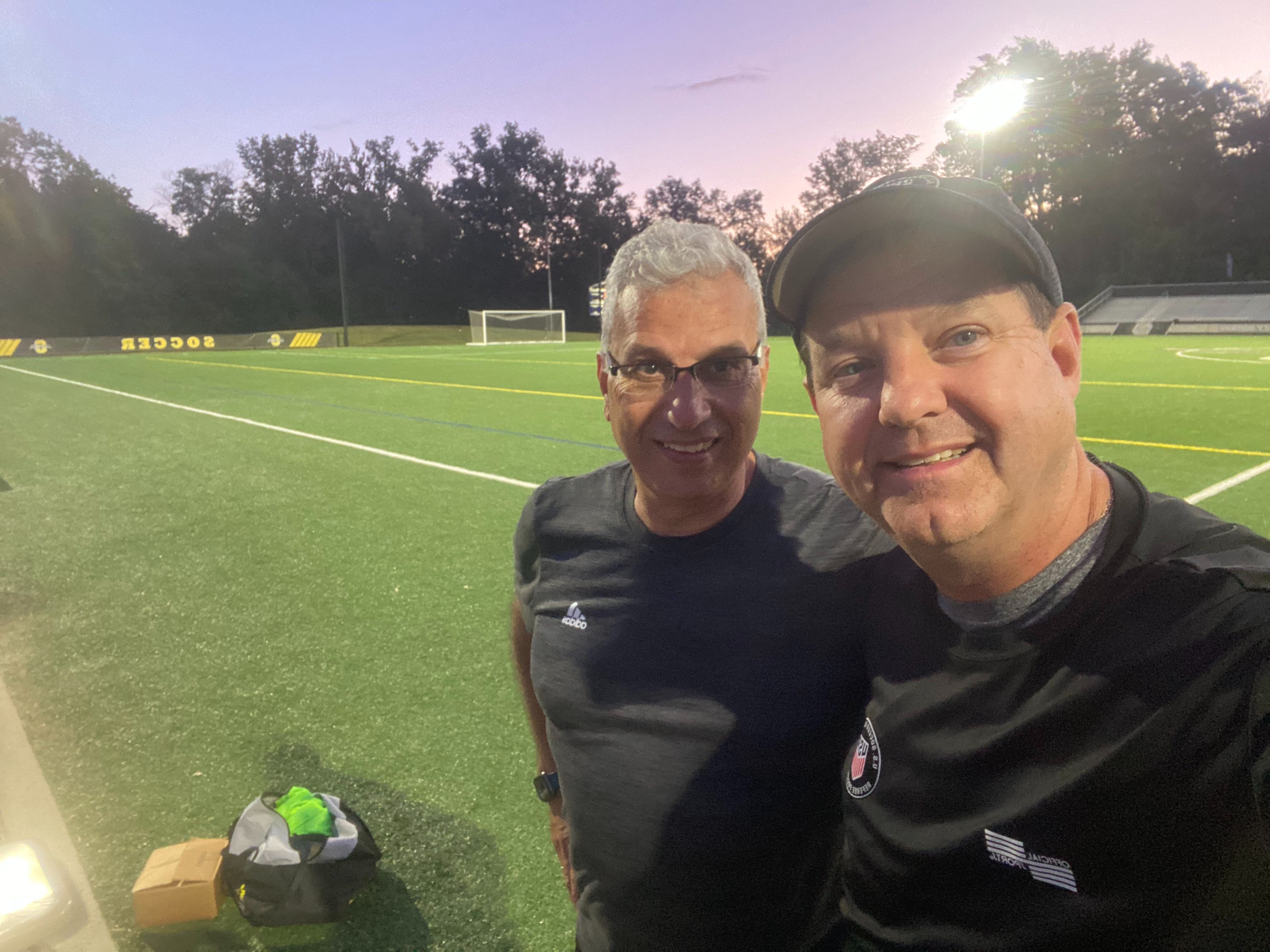
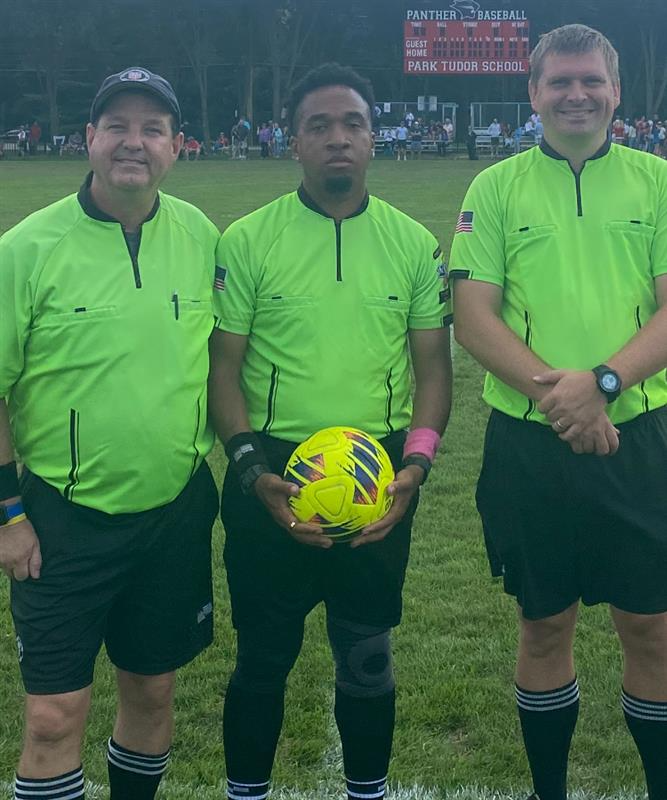


 Weston McKennie was among those left out of Mauricio Pochettino’s latest USMNT squad. (Marco Canoniero / LightRocket via Getty Images)
 Under former USMNT coach Bob Bradley, players like Charlie Davies were incentivized to prove themselves overseas. (Chris Williams /Icon SMI / Corbis / Icon Sportswire via Getty Images)
 Paxten Aaronson made a recent return to Major League Soccer from Europe. (Seth Herald / AFP via Getty Images)That is a crazy situation. But what other conclusion could we draw from the fact that a promising player like Aidan Morris, who was rightly called up due to his excellent form with the Columbus Crew, is now ignored despite being a regular in the highly competitive Championship with Middlesbrough?
 The September friendlies will mark Christian Pulisic’s return to the squad. (Logan Riely / USSF / Getty Images for USSF)

 Fulham’s Antonee Robinson was among the high-profile absentees from the USMNT squad. (Tim Nwachukwu / Getty Images)
 Pochettino (left) and captain Tim Ream (center) suffered summer disappointment with a Concacaf Gold Cup final defeat. (Chandan Khanna / AFP via Getty Images)
 USMNT midfielder Weston McKennie won’t take part in friendlies vs. South Korea and Japan (Photo by Michael Owens/Getty Images)
 Top CHAMPIONS LEAGUE Stories
 Christian Pulisic and AC Milan will be sitting out European competition this season (Photo by Marco Luzzani/Getty Images)
 Chelsea beat West Ham 5-1 away last week (Justin Setterfield/Getty Images)


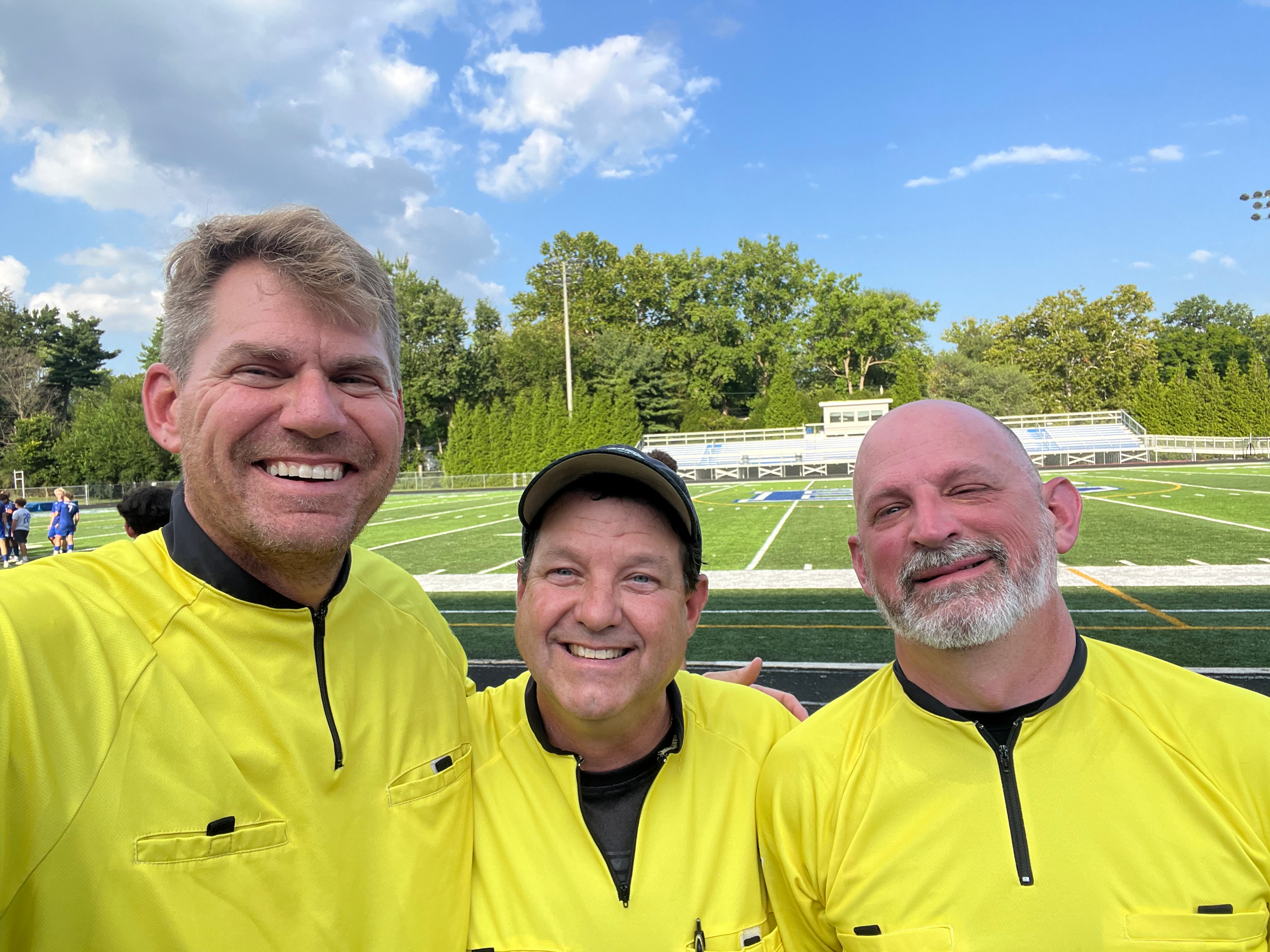
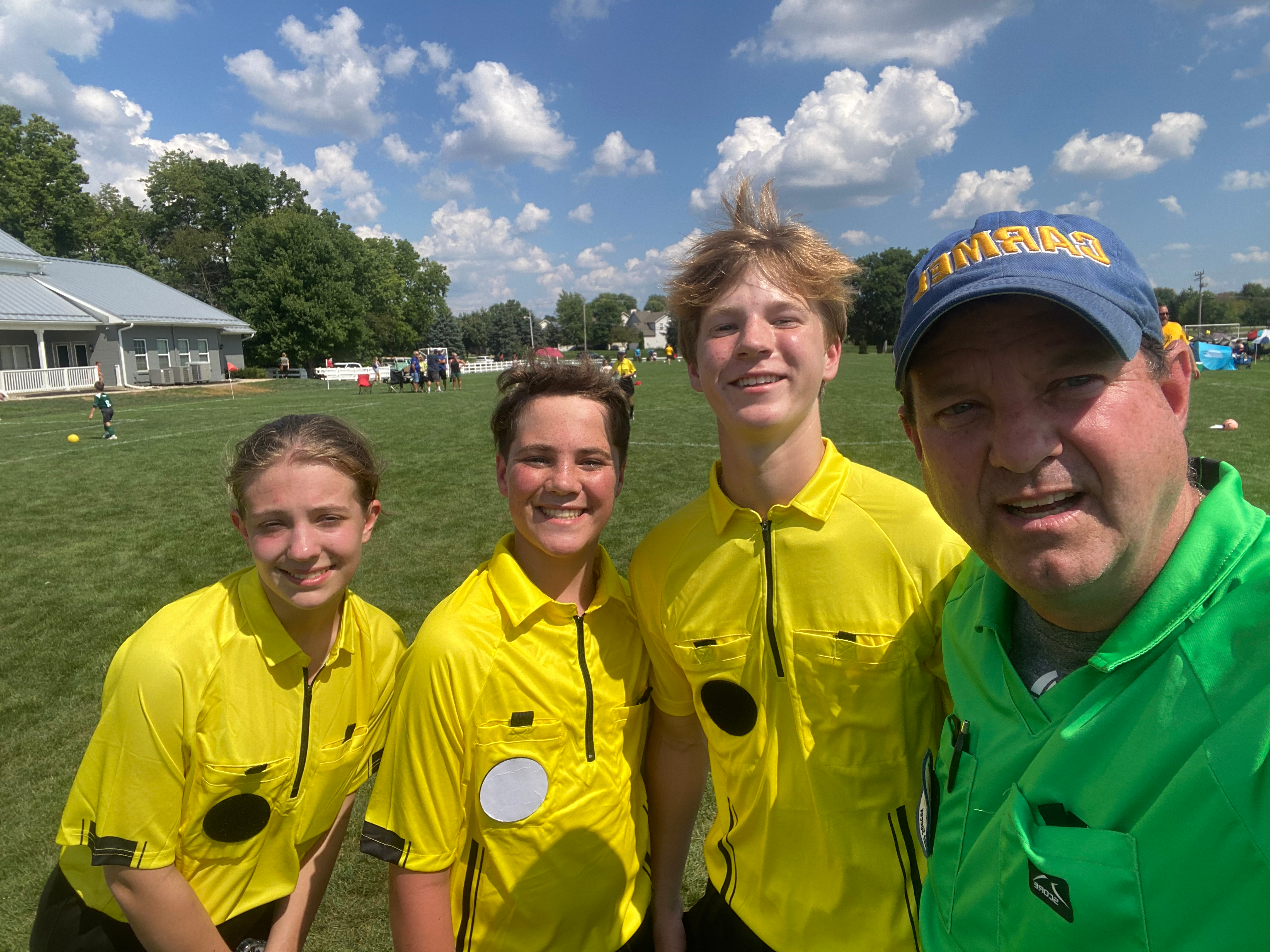
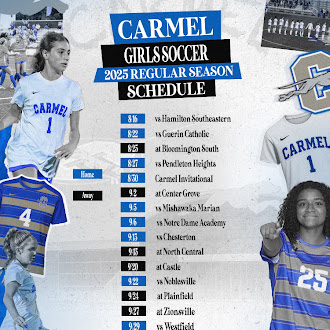
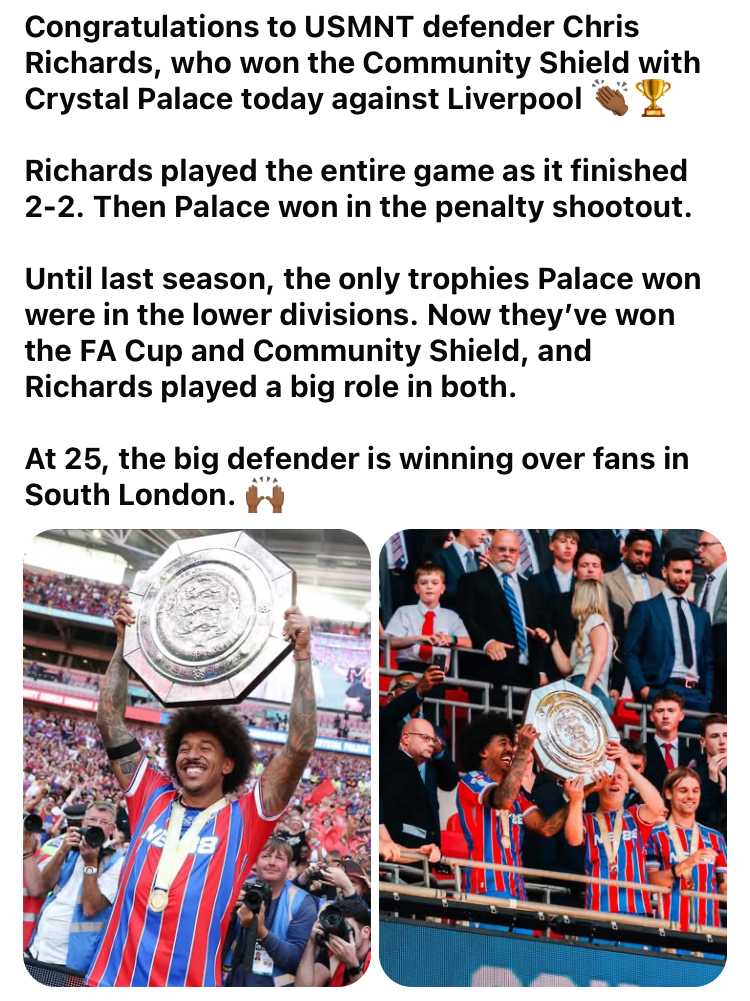



 USMNT manager Mauricio Pochettino doesn’t have many options behind Antonee Robinson at left back (Photo by Ronald Cortes/Getty Images)
 Can Flick’s Barca build further on last season’s success? (Judit Cartiel/Getty Images)
 Alonso was appointed as Madrid coach back in May (Sara Gordon/Real Madrid via Getty Images)
 Jauregizar, pictured in pre-season for Athletic (Joris Verwijst/BSR Agency/Getty Images)
 United States international Cardoso in action for Atletico in pre-season against Newcastle (Andy Buchanan/AFP via Getty Images)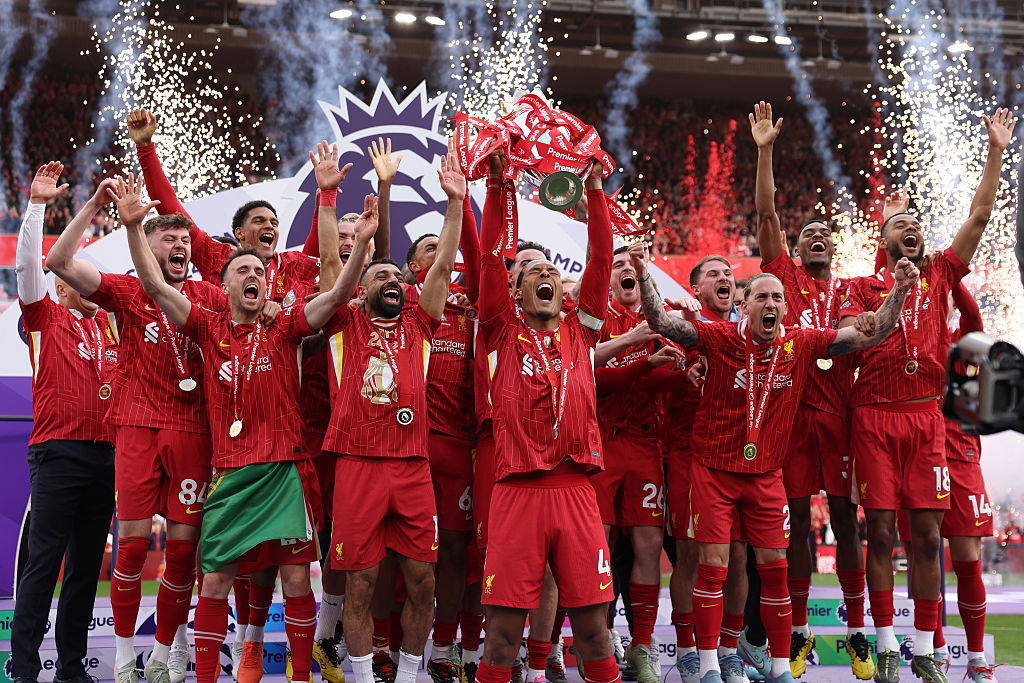
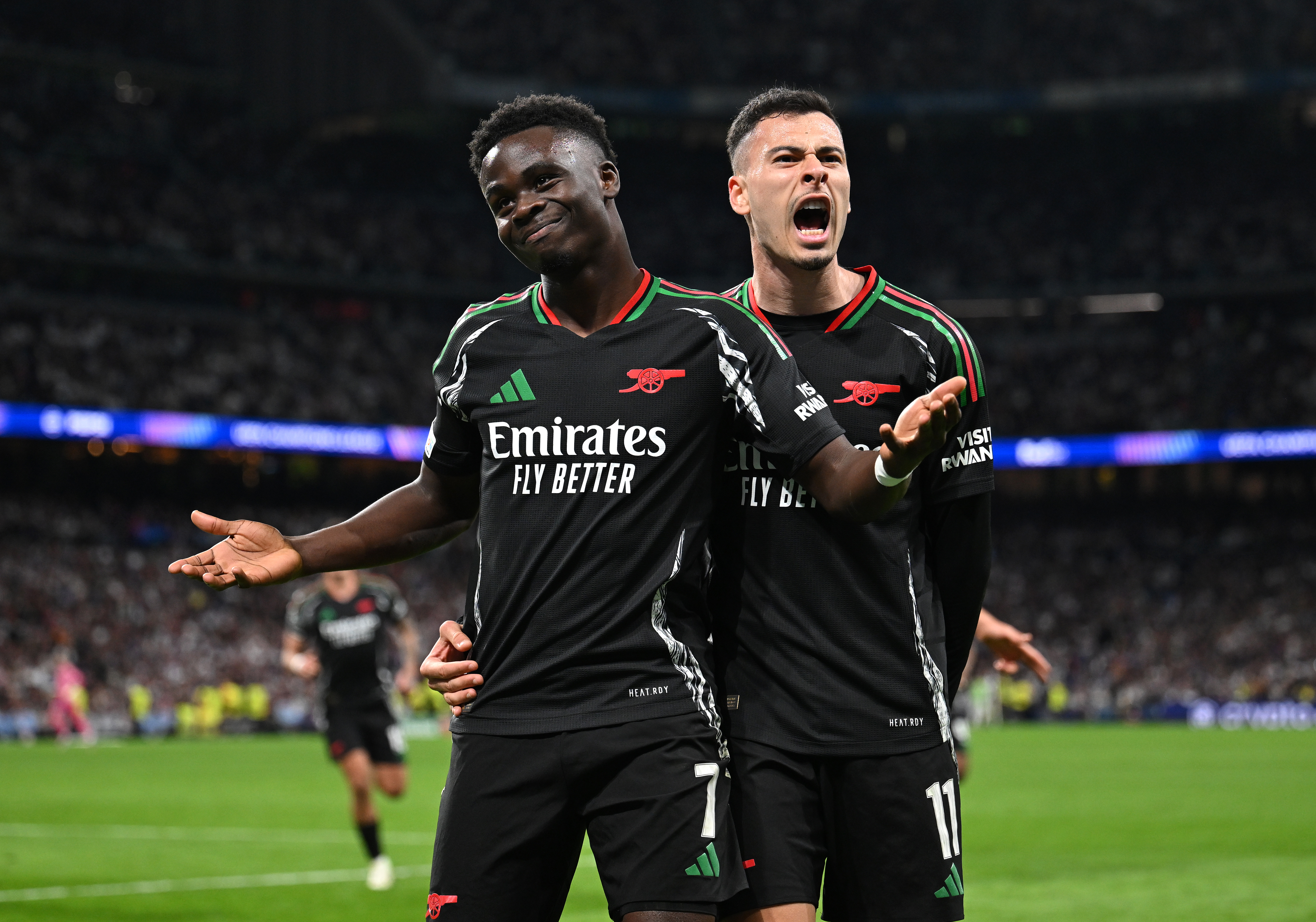
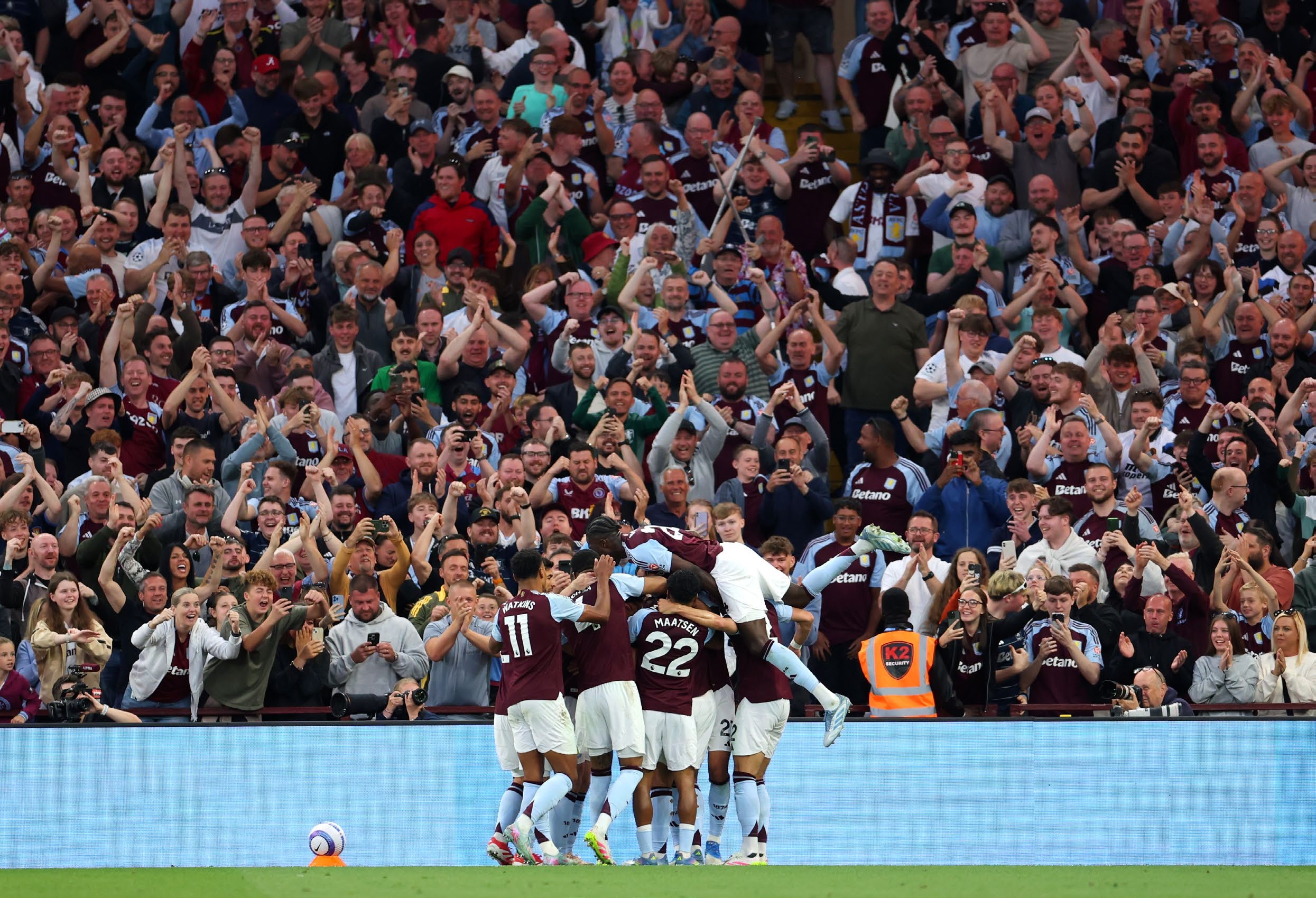
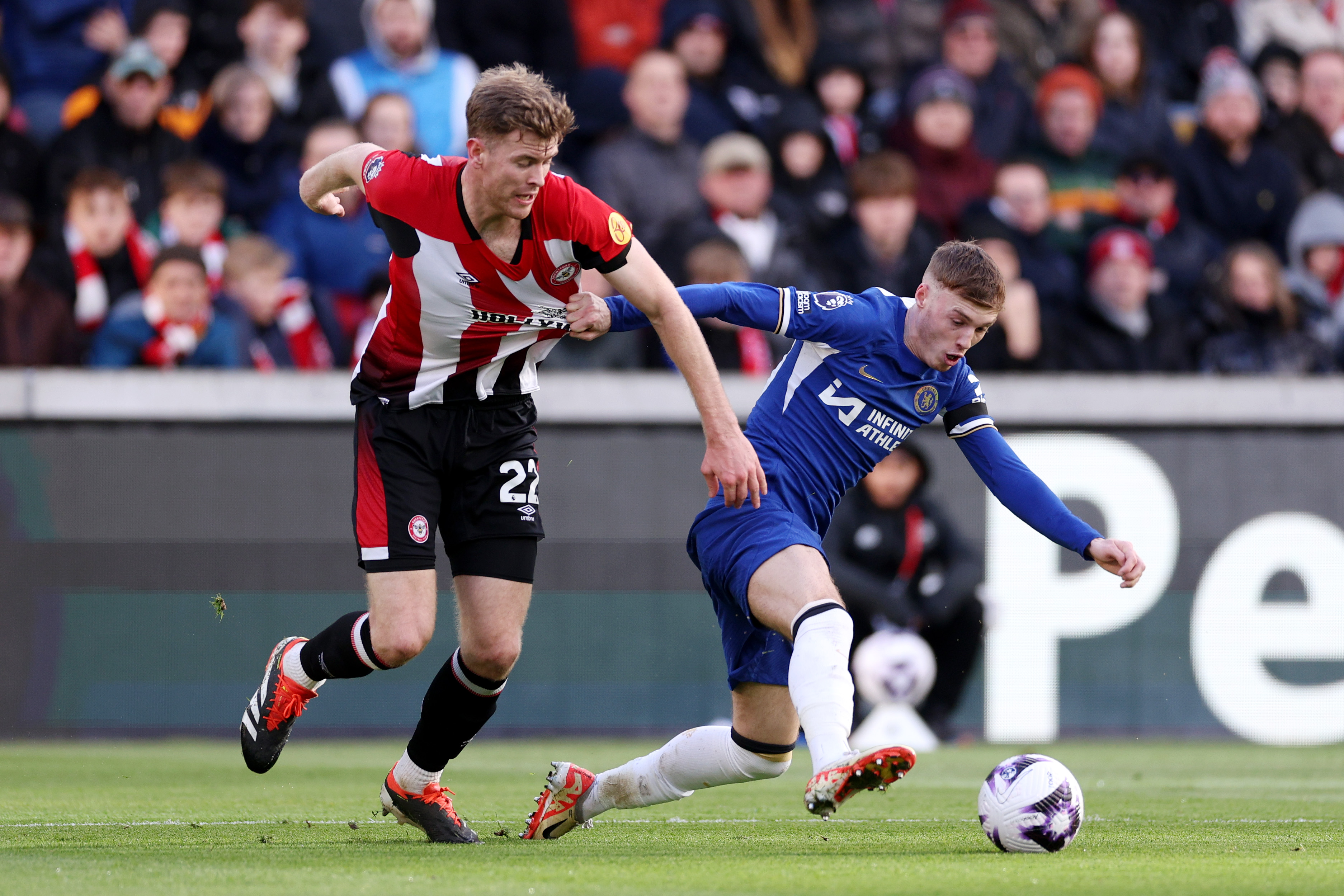
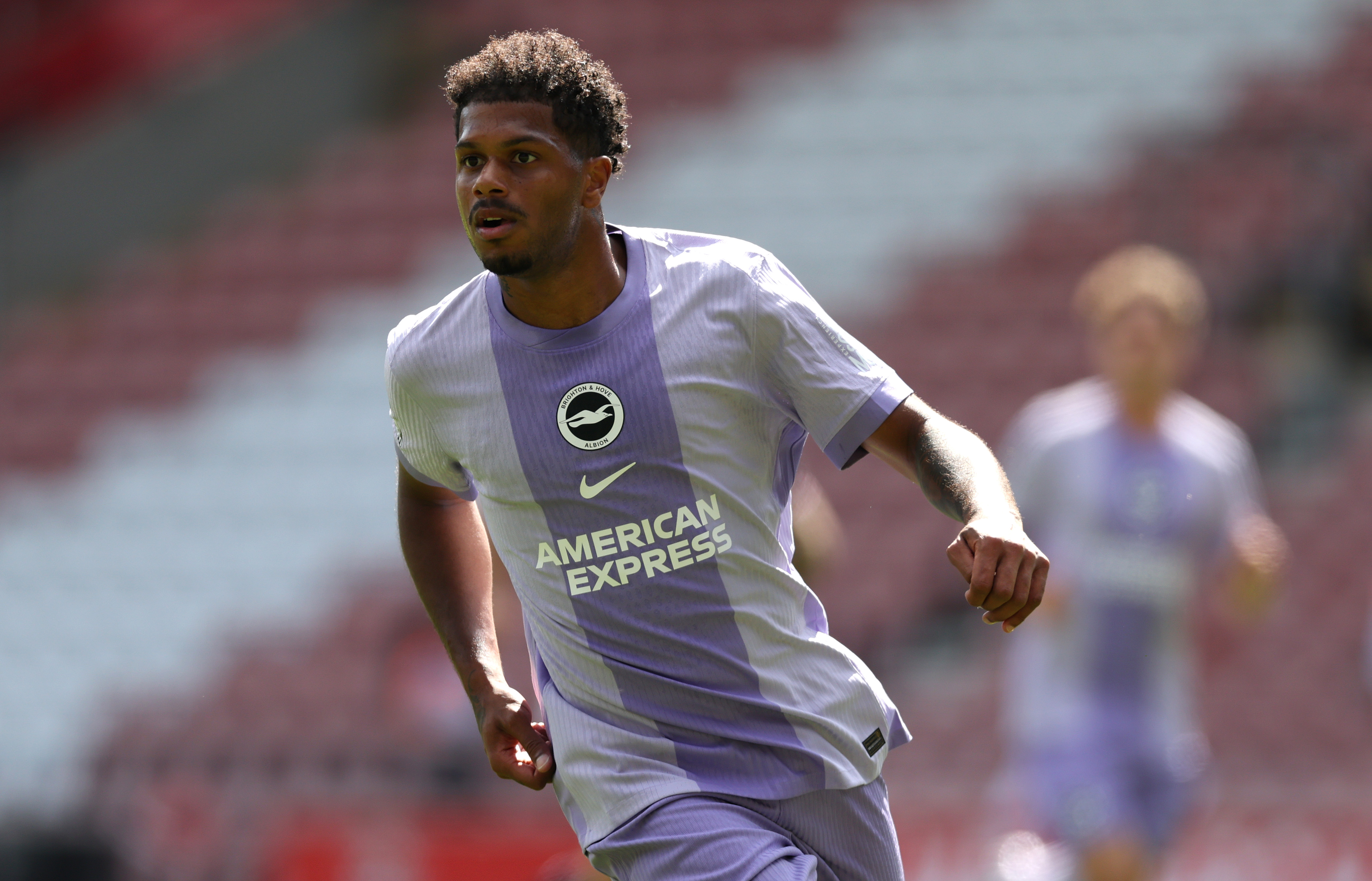
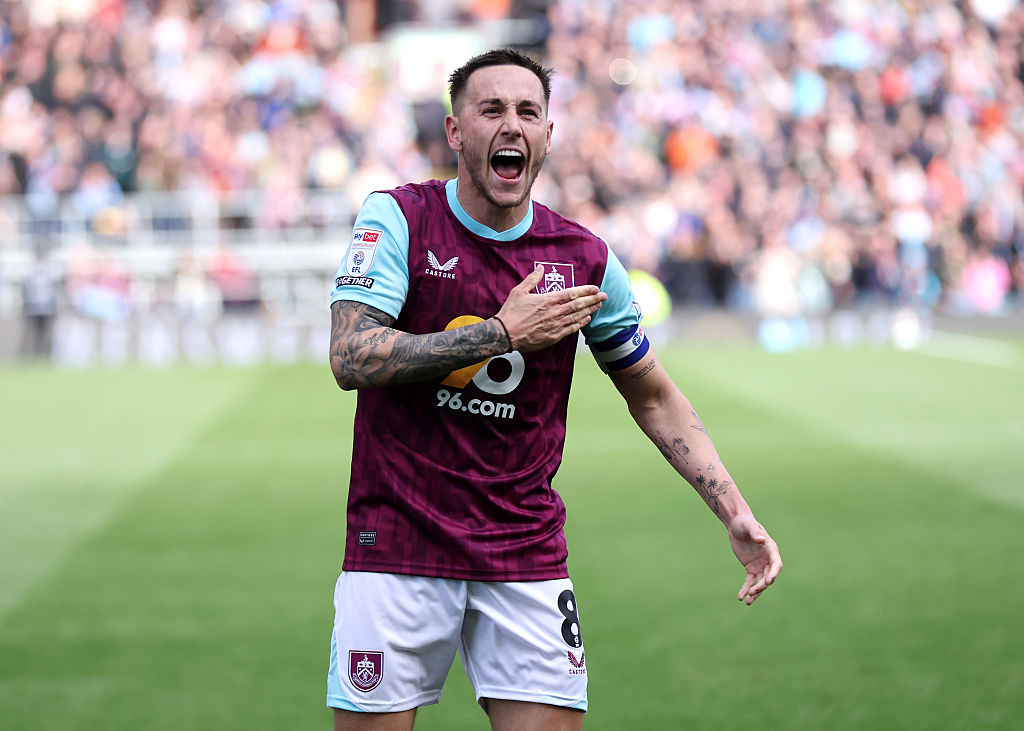
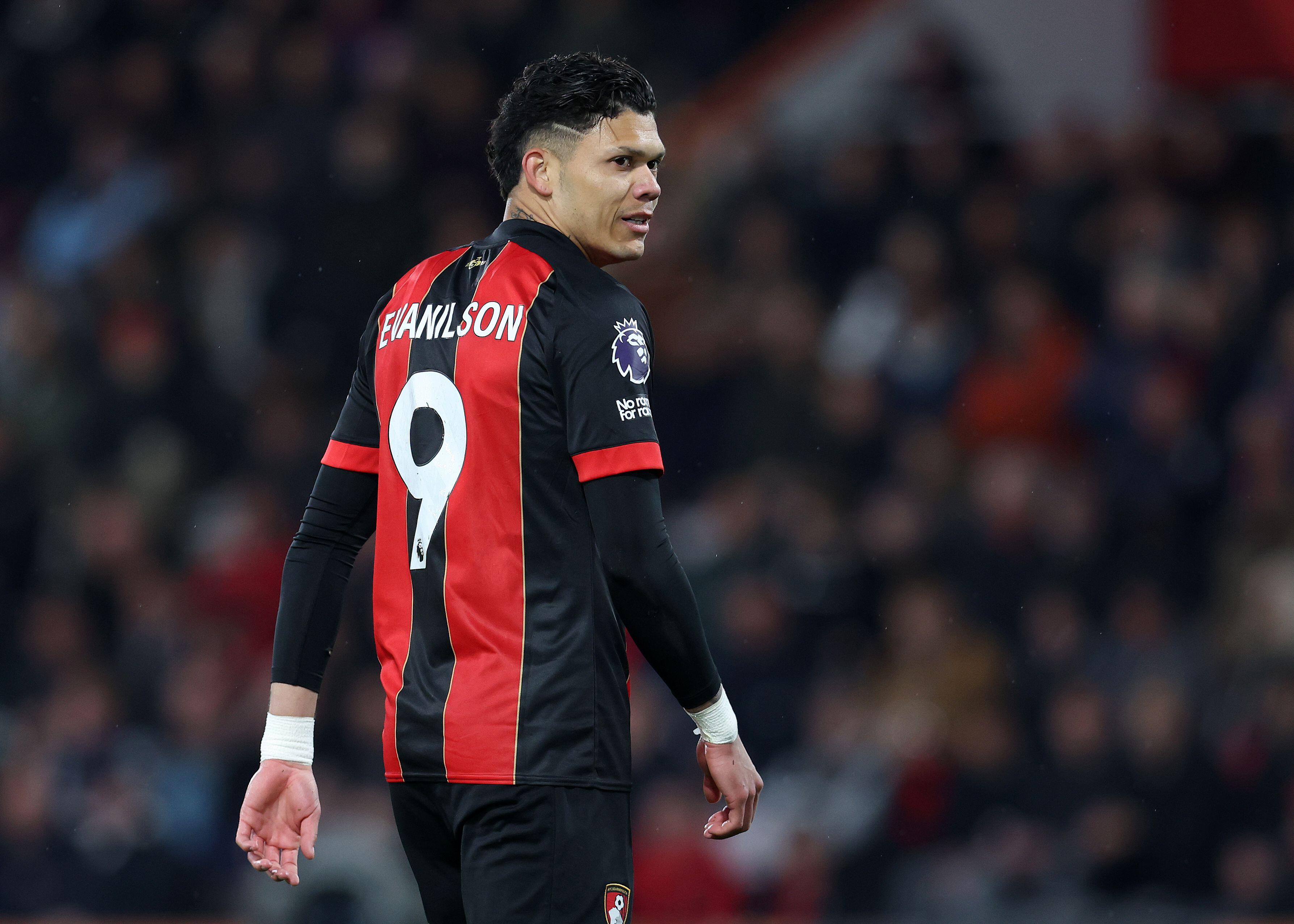
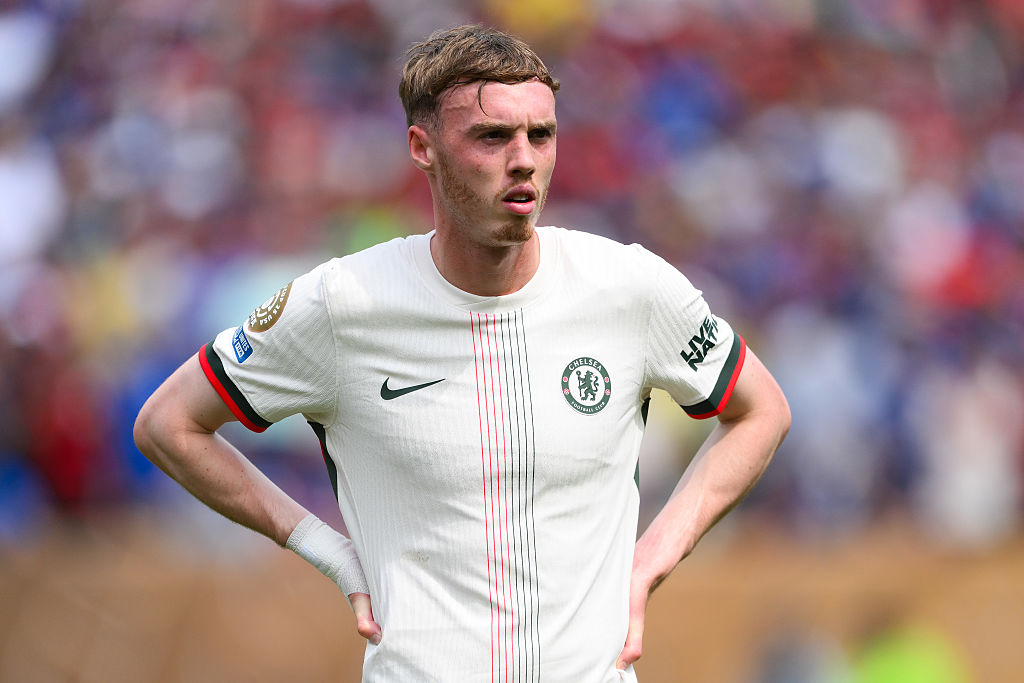

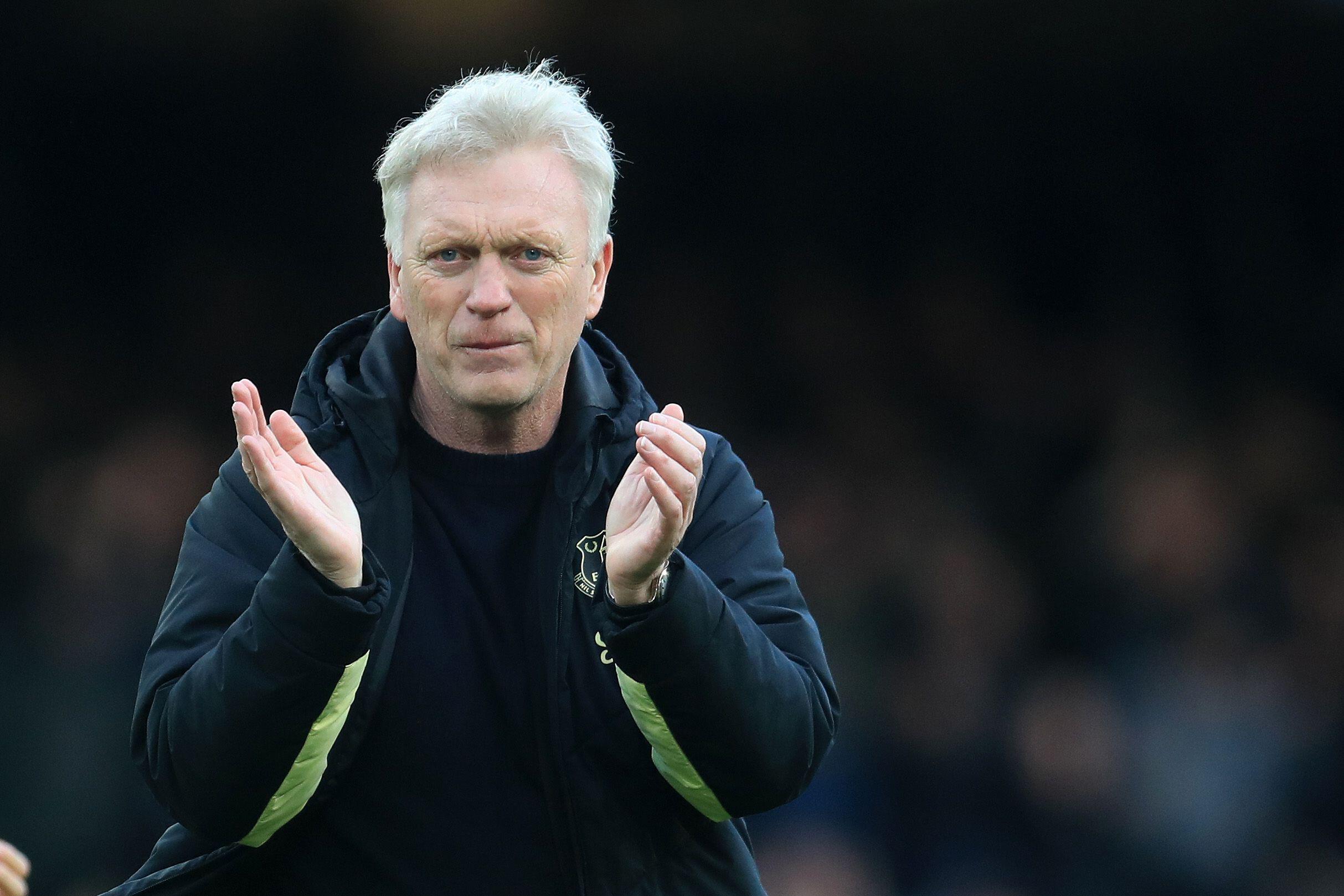
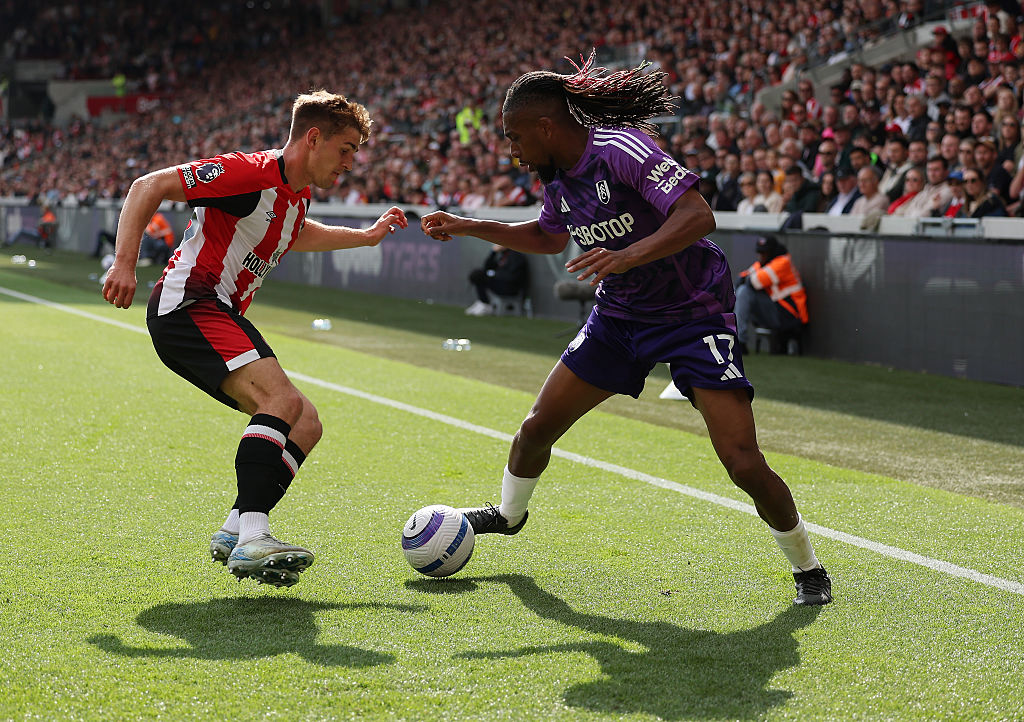
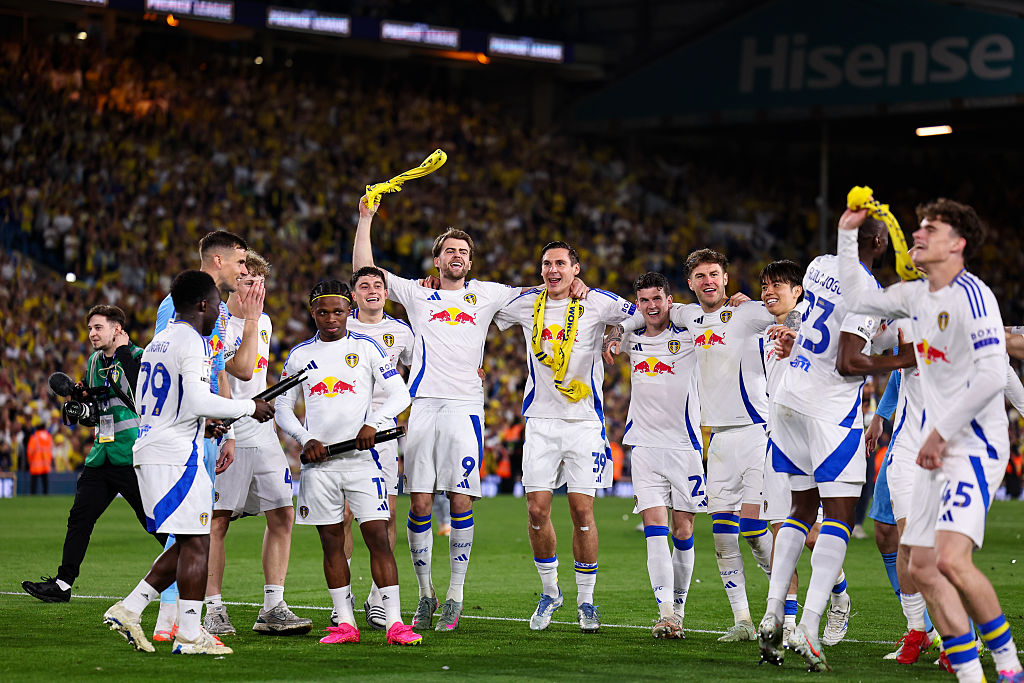
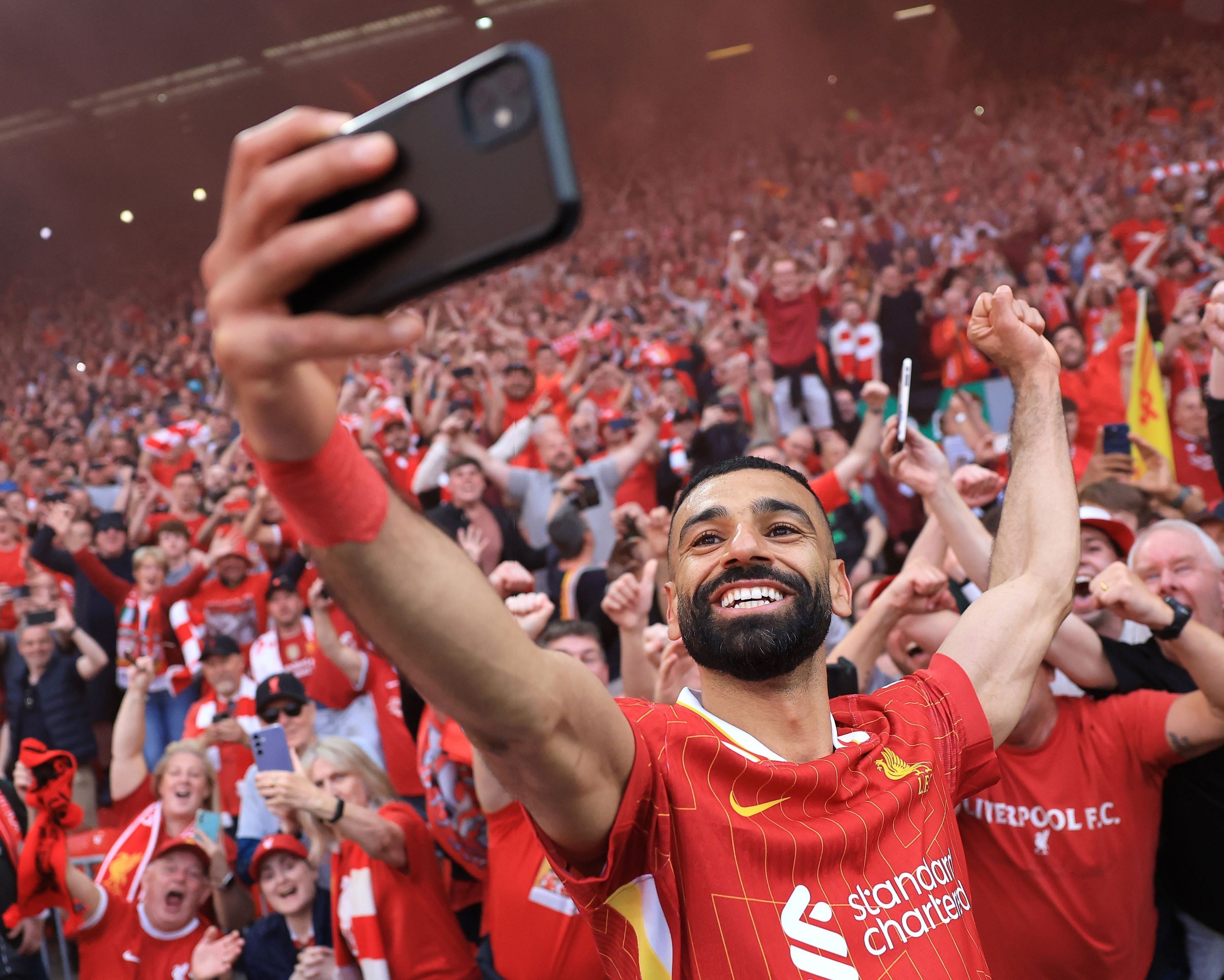
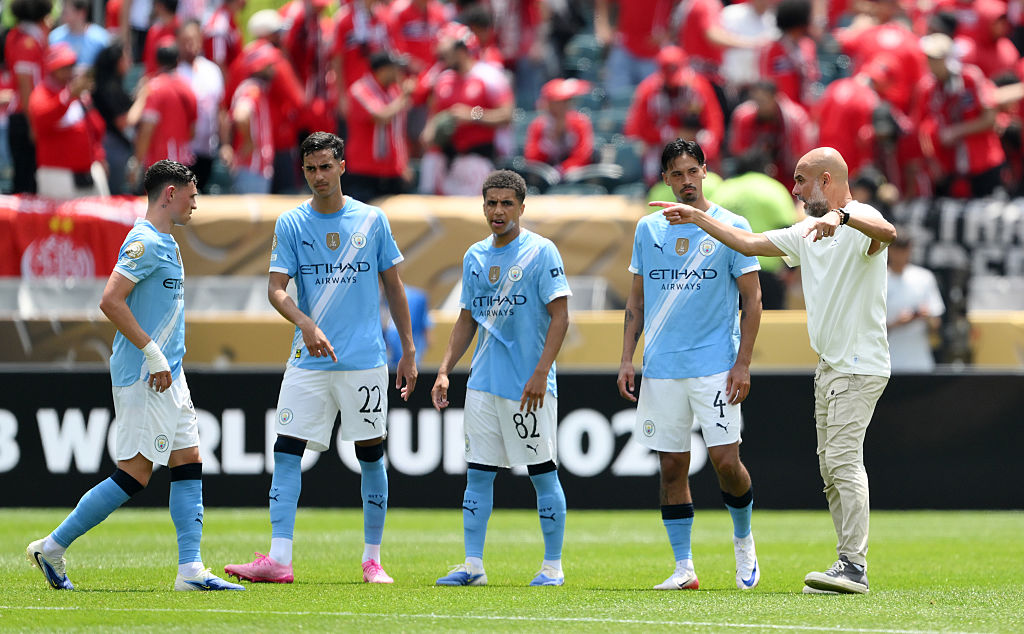
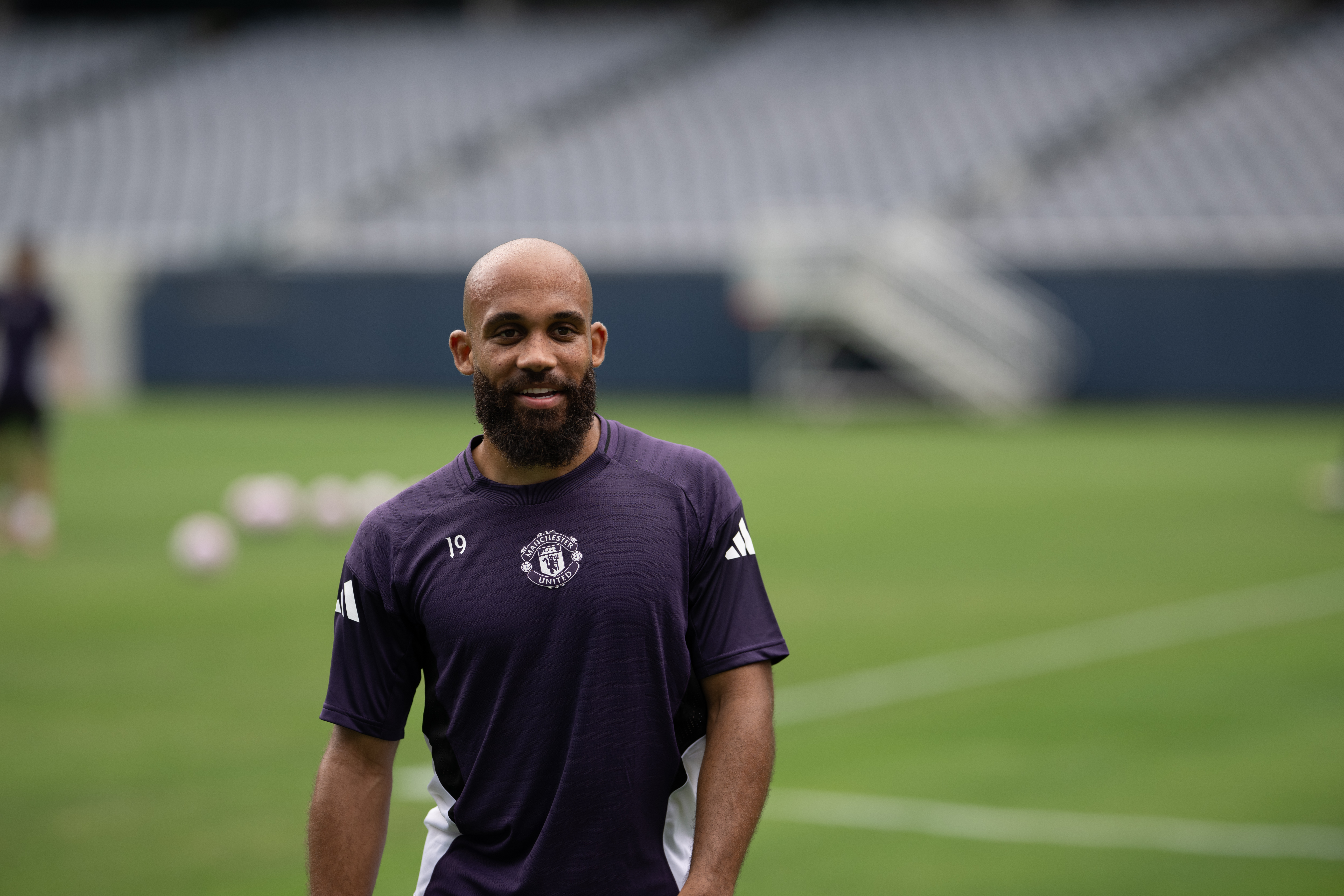
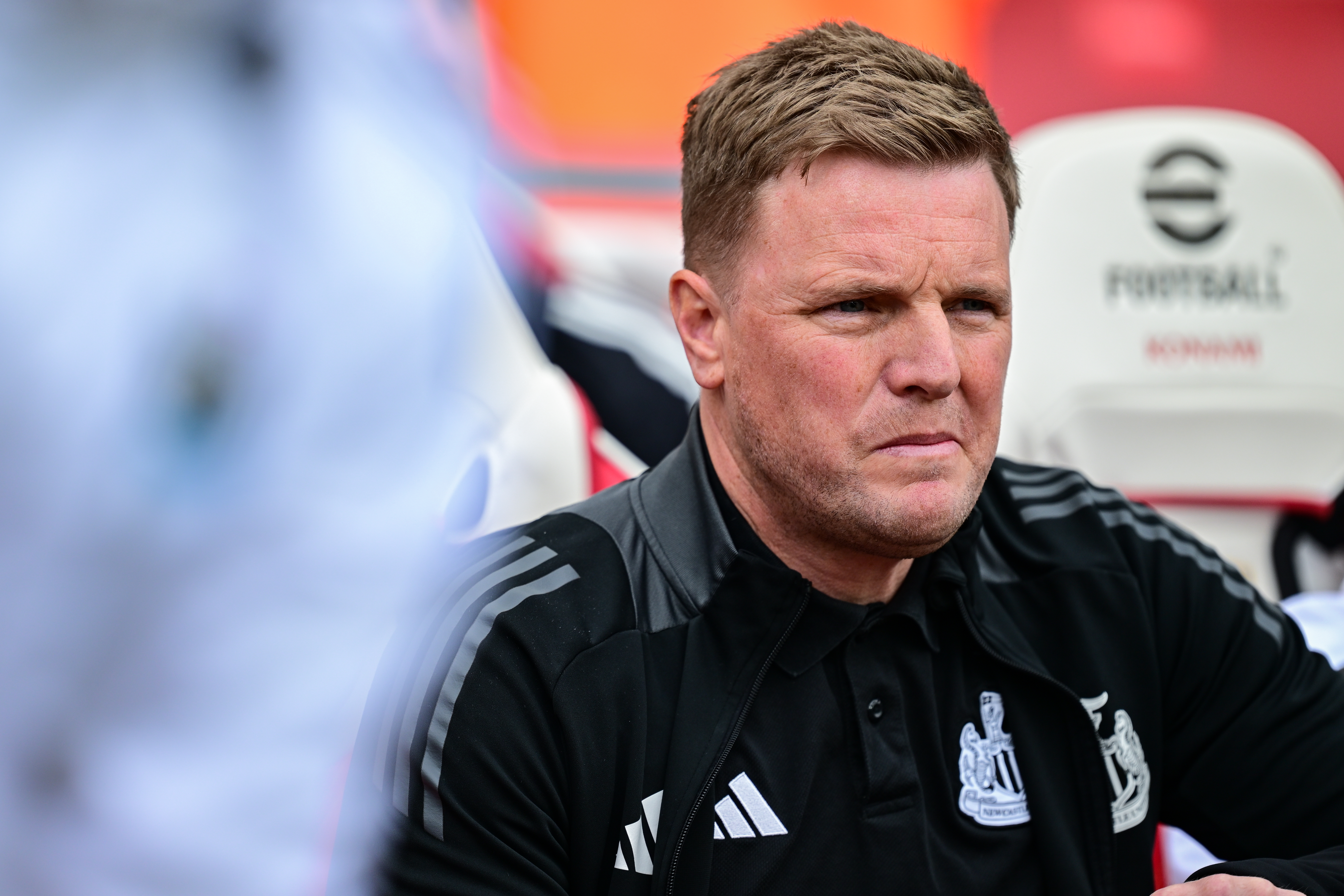
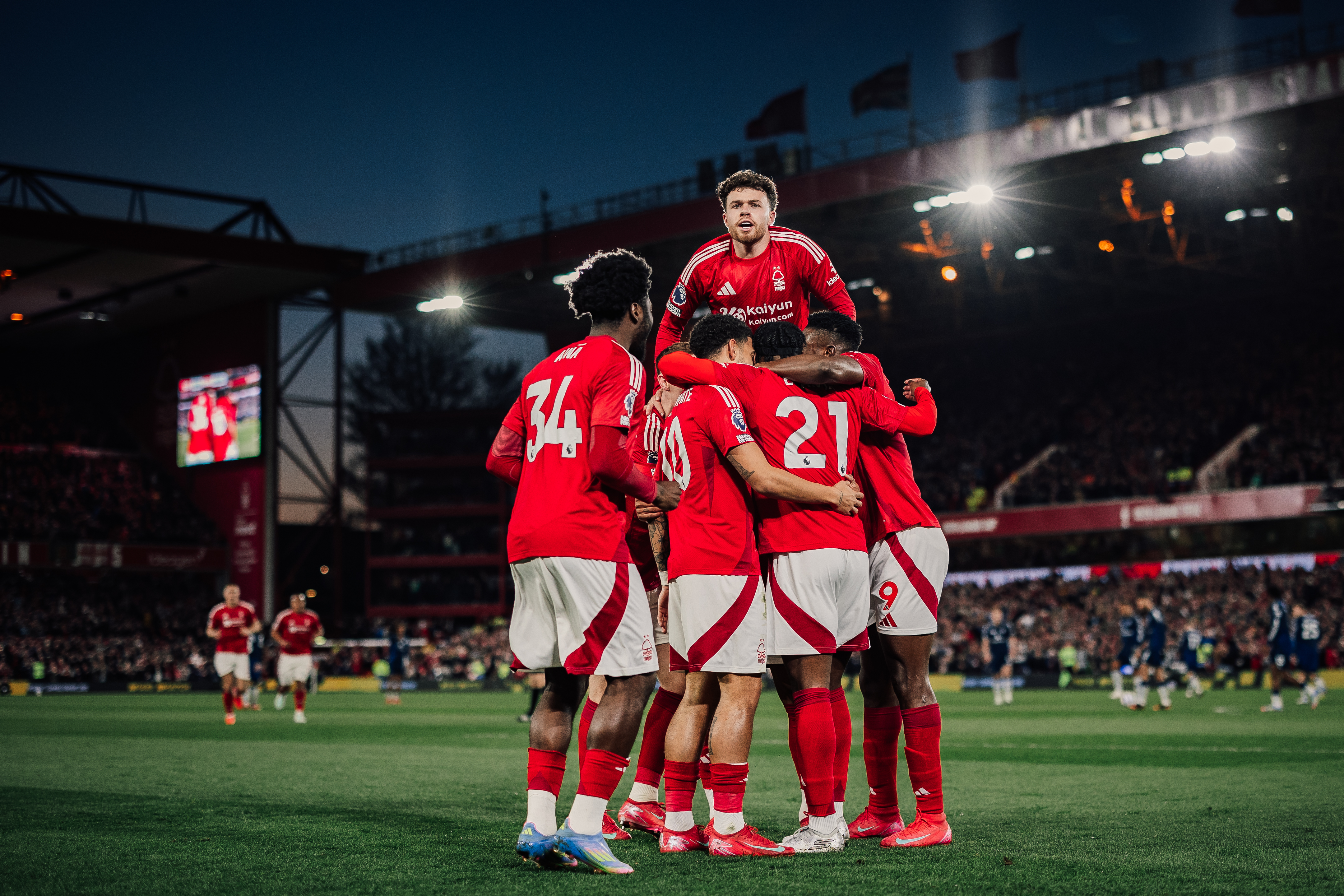

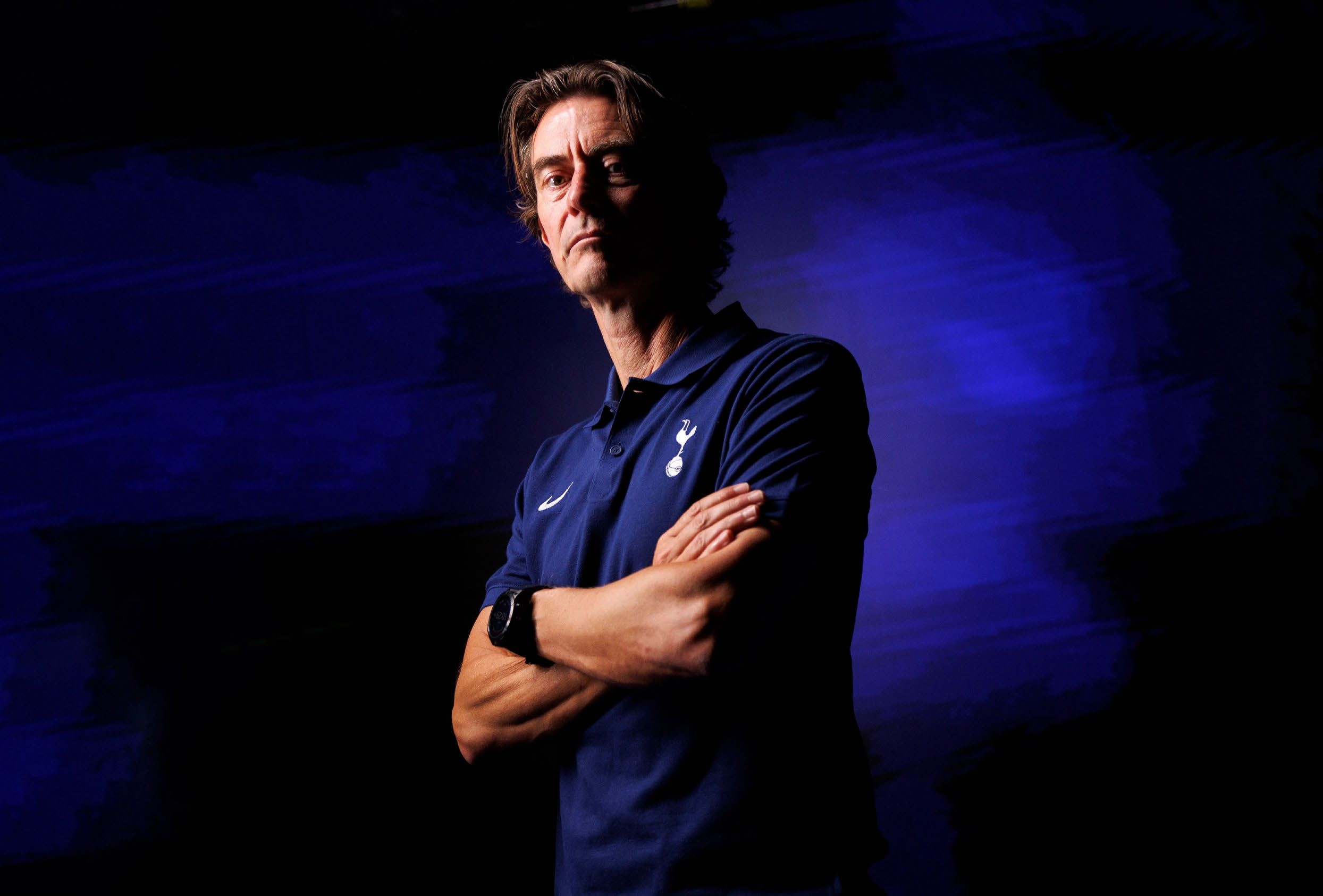

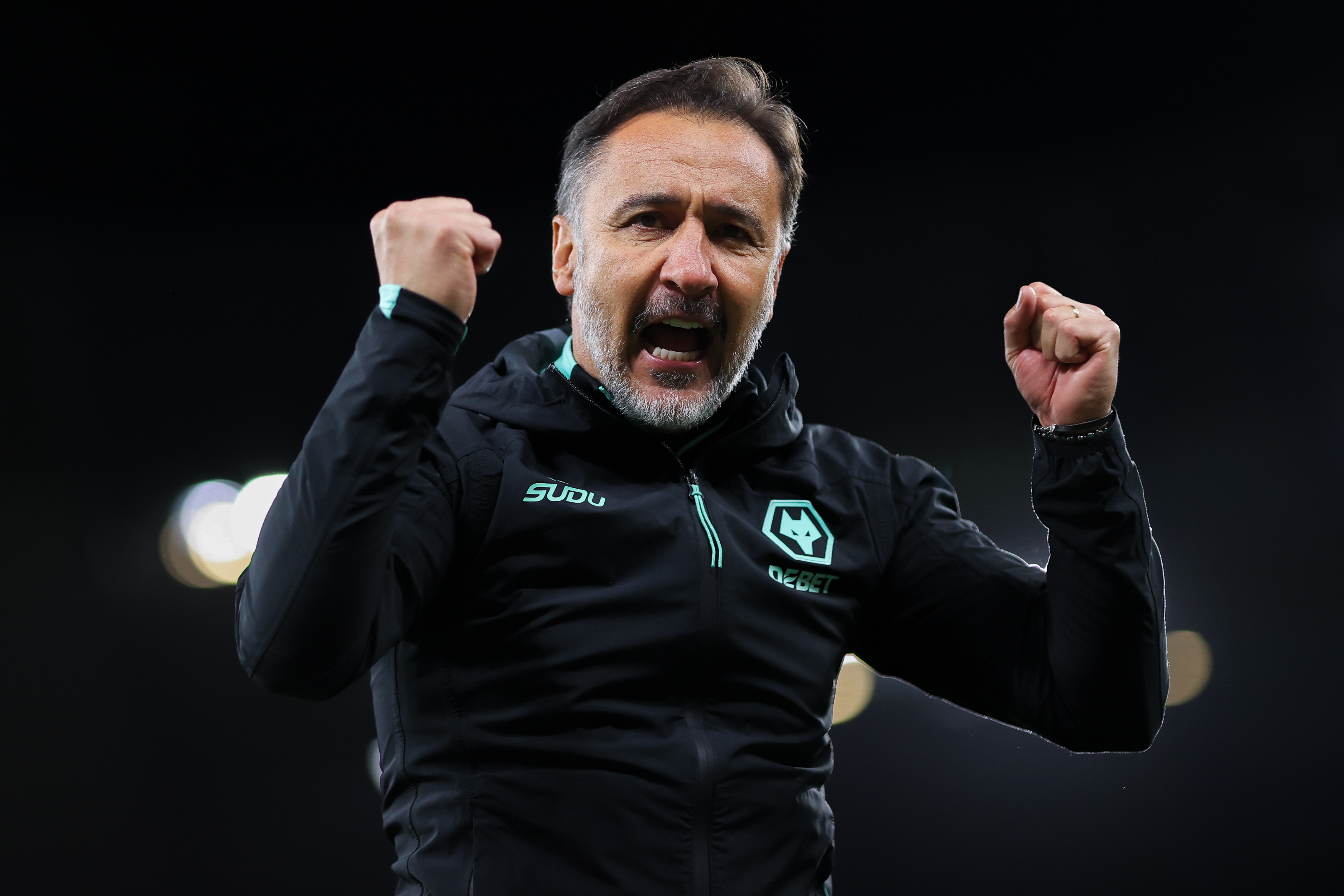

 Bryan Mbeumo (left), Benjamin Sesko (middle) and Matheus Cunha (Ash Donelon/Manchester United via Getty Images)
 Alexander Isak during pre-season training in July (Serena Taylor/Newcastle United via Getty Images)
 Christian Pulisic and Tim Weah celebrate against Germany in 2023 (Alex Grimm/Getty Images)
 TNT Sports
 ITV Sport
 X / @sportsru
 Teams will be awarded a corner if the opposition goalkeeper holds onto the ball for too long (Julian Finney/Getty Images)
 Atletico Madrid’s Julian Alvarez was involved in a double-touch penalty in last season’s Champions League (Angel Martinez/Getty Images)
 (Steve Bardens/Getty Images)
 (Naomi Baker/Getty Images)
 (Stu Forster/Getty Images)
 (Alex Pantling/Getty Images)
 Wrexham’s new pitch, as seen before their first home match of the season (Robbie Jay Barratt/Getty Images)
 The newly-installed cameras (Richard Sutcliffe/The Athletic)
 The new two-level TV gantry (Richard Sutcliffe/The Athletic)
 Barriers obscure the building of the new Kop stand (Robbie Jay Barratt/Getty Images)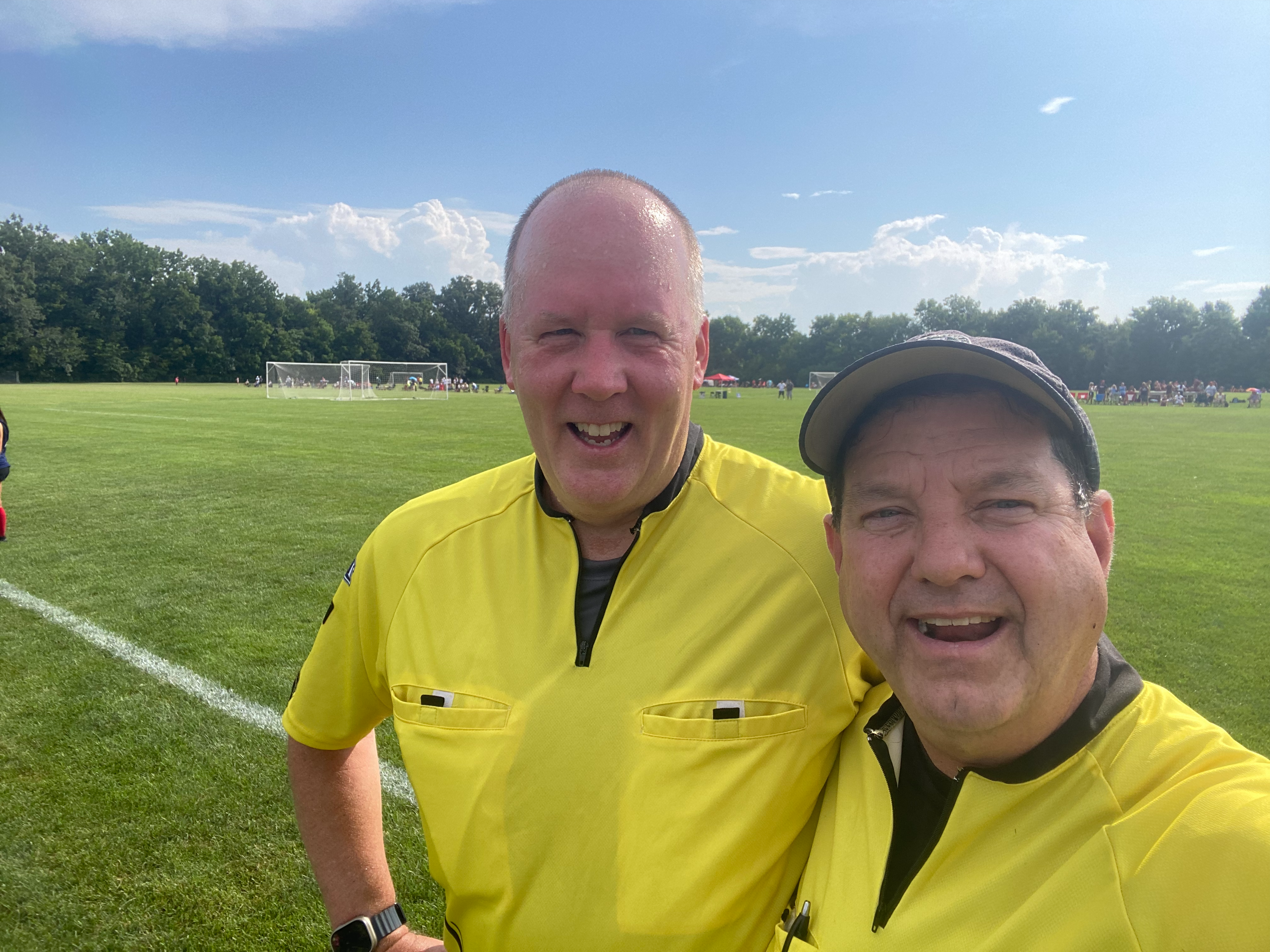


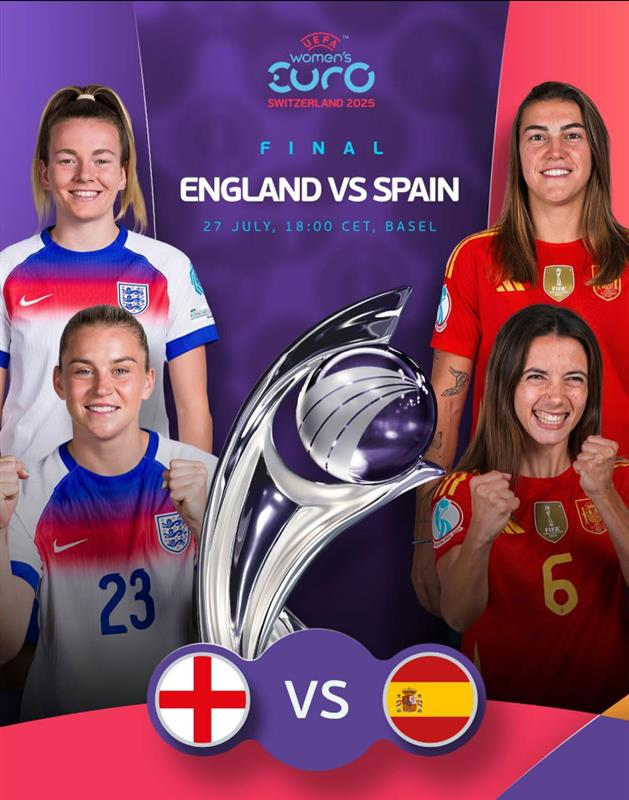



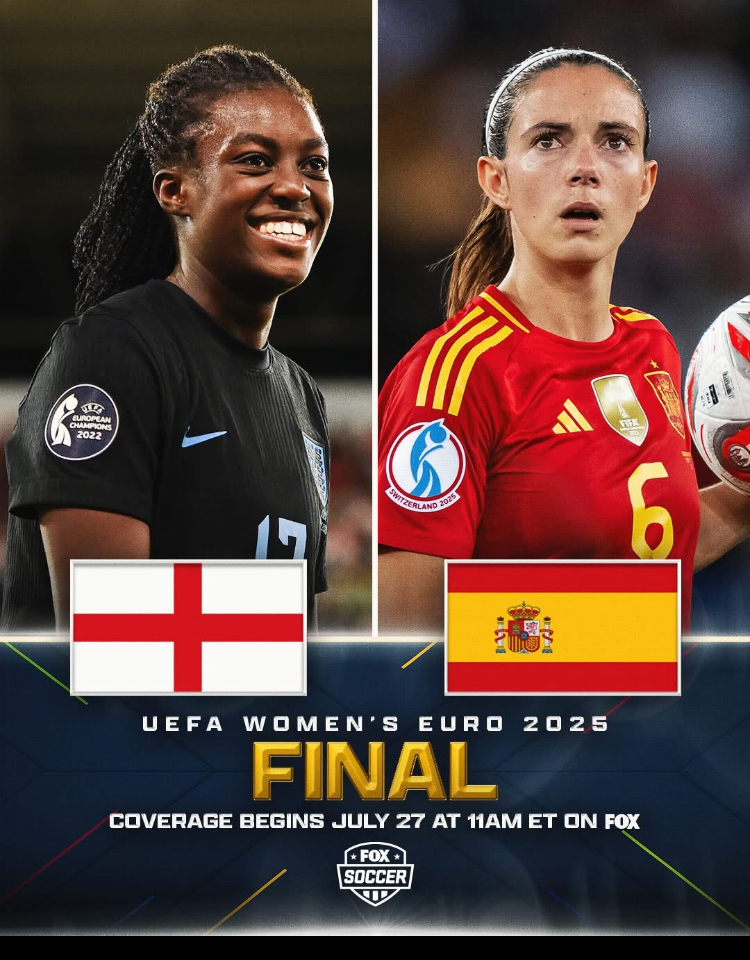


 .
.
 . With 28 goal contributions in 18 games played, he’s blowing everyone out of the water in contributions per 90’. Every other MVP candidate has played 22 games or more. If this continues, no one will be surprised if he becomes the first player ever to repeat as MVP.


 Cesar HernandezJul 24, 2025, 09:38 AM ET

 Mead was fouled for the penalty that led to England’s dramatic extra-time winner against Italy (Alexander Hassenstein/Getty Images)
 Sweden2
 England2*
 Norway1
 Italy2
 France1
 Germany1*
 Spain2
 Switzerland0
 Bonmati’s extra time goal lift Spain to the Euros final (Sebastien Bozon/AFP via Getty Images)
 Germany held Spain for more than 100 minutes (Eddie Keogh/Getty Images)
 Germany goalkeeper Ann-Katrin Berger and Spain forward Esther Gonzalez are teammates at Gotham FC in NWSL (Alexander Hassenstein/Getty Images)
 From World Cups to Nations Leagues, Spain and England know each other well (Judit Cartiel / Getty Images)
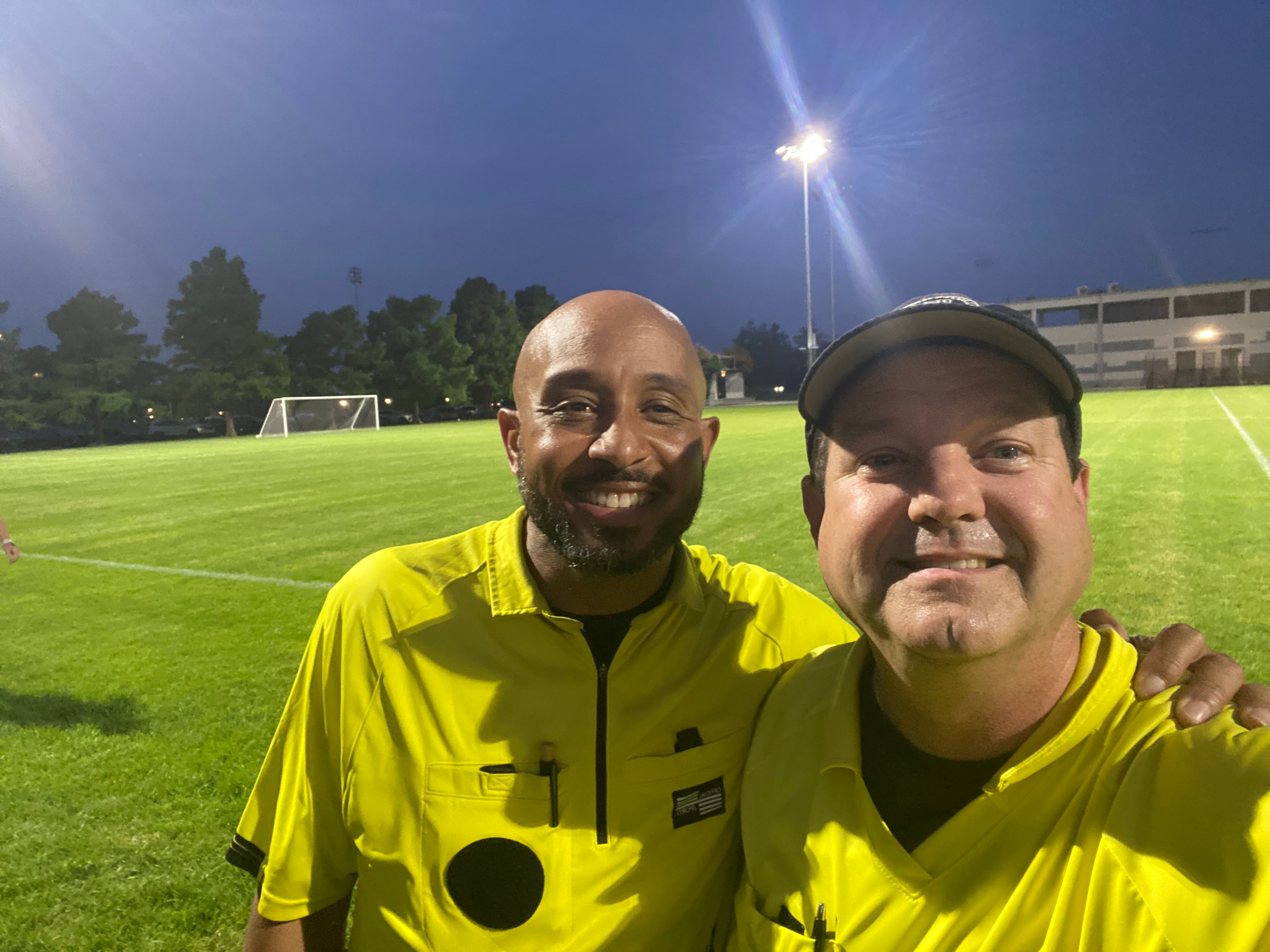



 : The U.S. make heavy weather, continuing to lack pace and sharpness in the final third, but find a way to win 1-0. I see a Berhalter goal, huge celebrations on the field, and a Pochettino grimace on the sideline.
 Matt Freese has earned four caps, all in June. (Photo: Jerome Miron-Imagn Images)

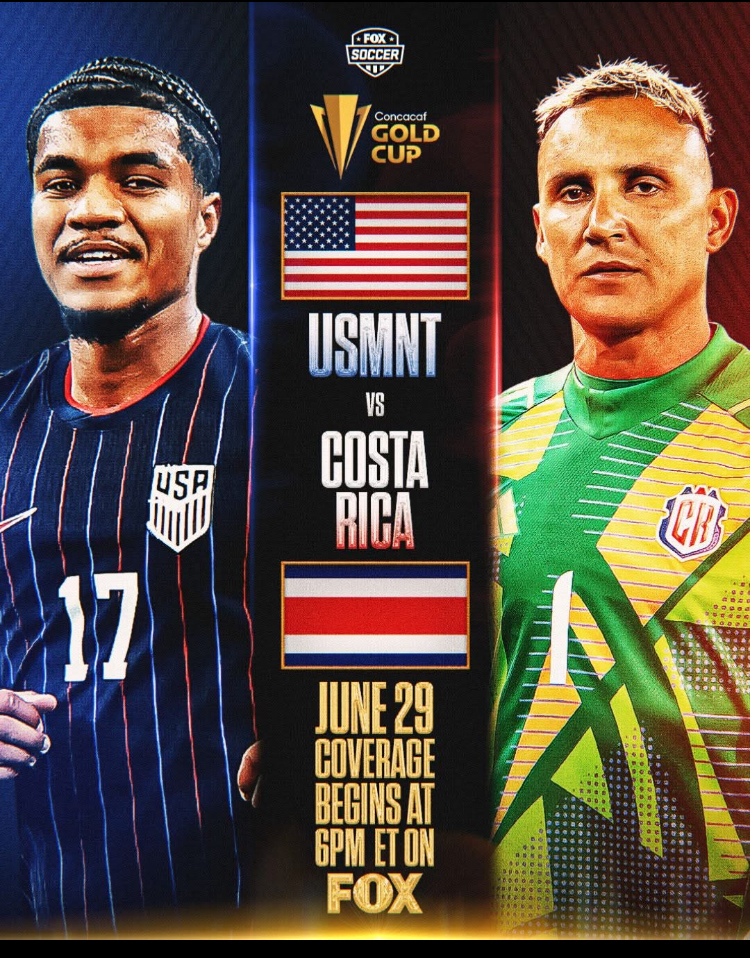


 The USMNT’s results in the Gold Cup group stage gave Mauricio Pochettino some reason to smile (Photo by Omar Vega/Getty Images “This was preparation. Now we’ll be playing a final, it’s all or nothing,” Pochettino said. “So we have to be prepared. We will be prepared, no matter the opponent we face. It’s our challenge: we have to compete well, to keep competing well and continue improving. We have a week to prepare for this game, so I have no doubt we’ll get there in the best possible way.”Pochettino has been clear that what he wants is open competition for the team he takes to the World Cup. If the players are going to make an impression, they will need to win some knockout games. It’s not unlike the challenge a similar U.S. group had at the 2021 Gold Cup. Coming off of an emotional 2021 Nations League victory over Mexico, U.S. coach Gregg Berhalter took a ‘B’ squad to the Gold Cup later that summer. Mexico, meanwhile, did not. It sparked debate about what the better plan was. On the one hand, Mexico got an extra month working together. On the other, Berhalter got a chance to look at a wider pool. What the U.S. did in that tournament ended any debate. It beat Haiti, Canada and Martinique in the group stage, advancing with a plus-seven goal differential — the same as this year’s team. Then it beat Jamaica, 1-0, in the quarterfinals and Qatar, 1-0, in the semifinals before meeting Mexico in the championship game. A 1-0 win in extra time helped to secure a second trophy that summer — and it announced the U.S. as being “back” as a top power in Concacaf.Before this camp started, U.S. goalkeeper Matt Turner talked about how that Gold Cup win helped him break through as a real option for Berhalter’s U.S. team. A year and a half later, Turner was starting in Qatar.That’s the
 USMNT concedes a goal to Haiti in the Gold Cup (Photo by Omar Vega/Getty Images)
 Ryan O’HanlonJun 26, 2025, 07:00 AM ET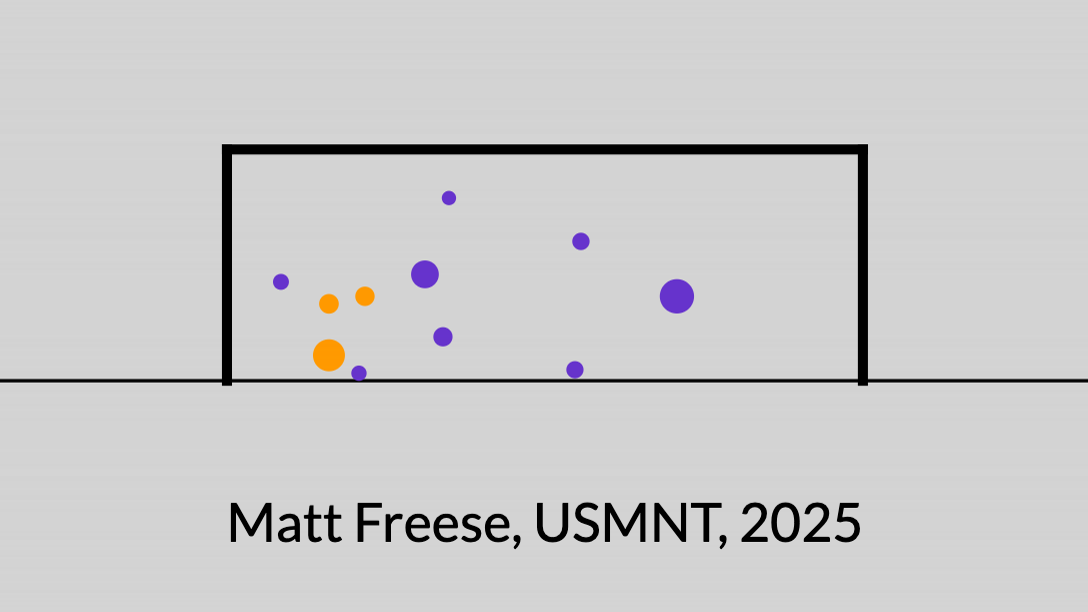
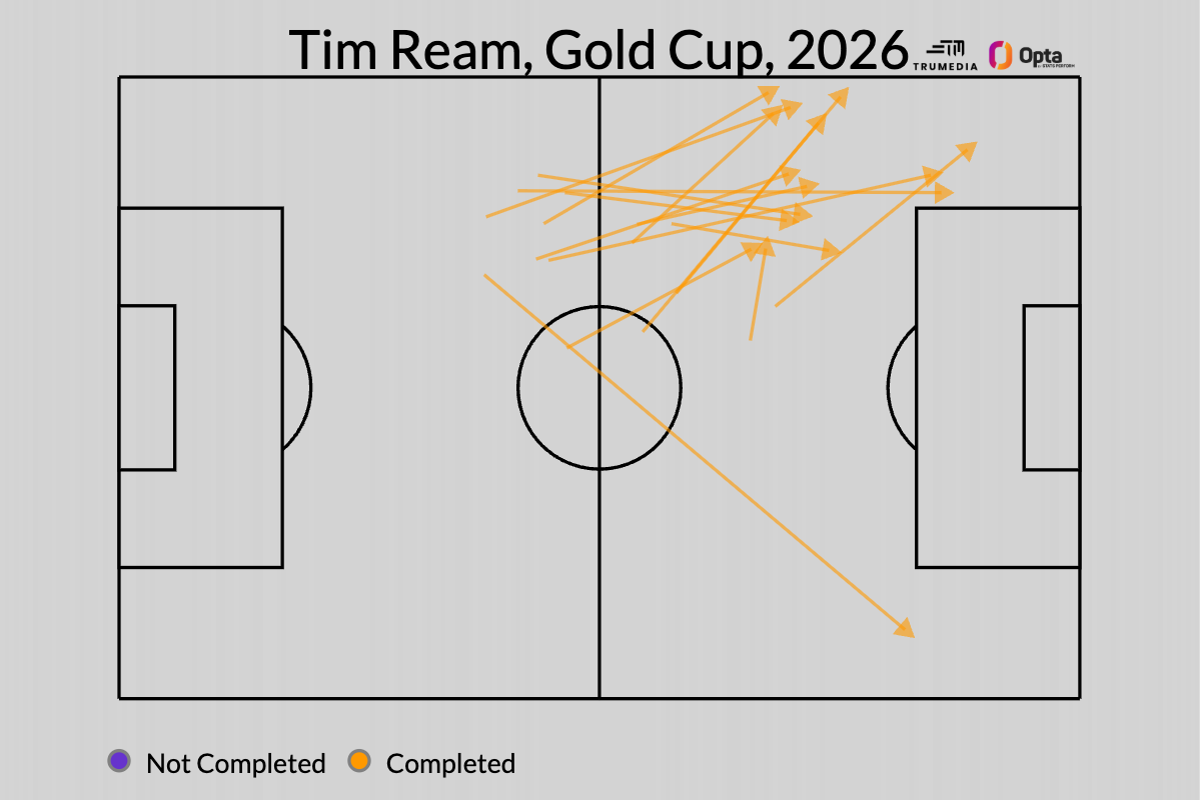
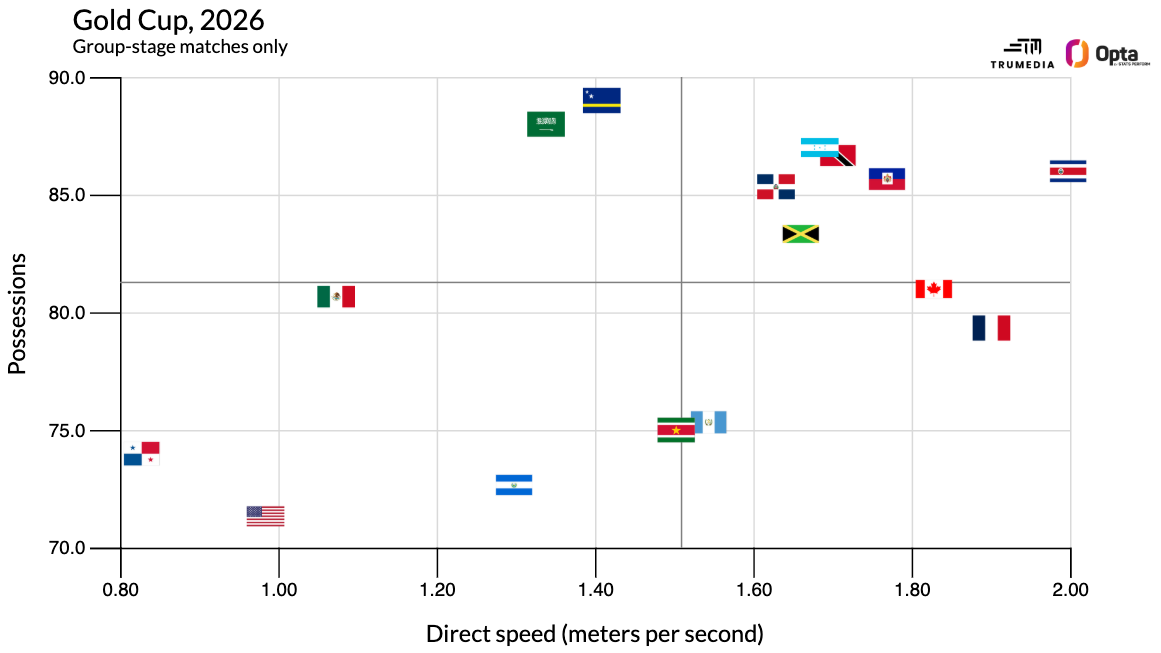

 Landon Donovan’s foray into the Christian Pulisic national team debate has been one of American soccer’s stories of the summer. (Shaun Clark / ISI Photos / Getty Images)
 Clint Dempsey and an 18-year-old Christian Pulisic celebrate a USMNT goal against Honduras in 2017. (David Madison / Getty Images)
 Clint Dempsey says the example of ex-USMNT midfielder José Francisco Torres shows the value of increased developmental opportunities. (Misael Montaño / LatinContent via Getty Images)
 Hayes and Coffey during the former’s first game in charge of the USWNT last June. (Brad Smith/ISI Photos/USSF/Getty Images)
 Morgan’s last game for the U.S. came over a year ago and is no longer part of the picture (C. Morgan Engel/Getty Images)
 Bill ConnellyJun 27, 2025, 08:31 AM ET
 Al Hilal
 Bayern Munich
 Benfica
 Borussia Dortmund
 Botafogo
 Chelsea
 Flamengo
 Fluminense
 Inter Miami
 Inter Milan
 Juventus
 Manchester City
 Monterrey
 Palmeiras
 Paris Saint-Germain
 Real Madrid
 Kane dips his head into an ice bucket and laps water over his face (DAZN)
 Manchester City’s Erling Haaland at the Club World Cup (Patricia De Melo Moreira/AFP/Getty Images)
 Lloyd Kelly playing for Juventus at the Club World Cup (Francois Nel/Getty Images)
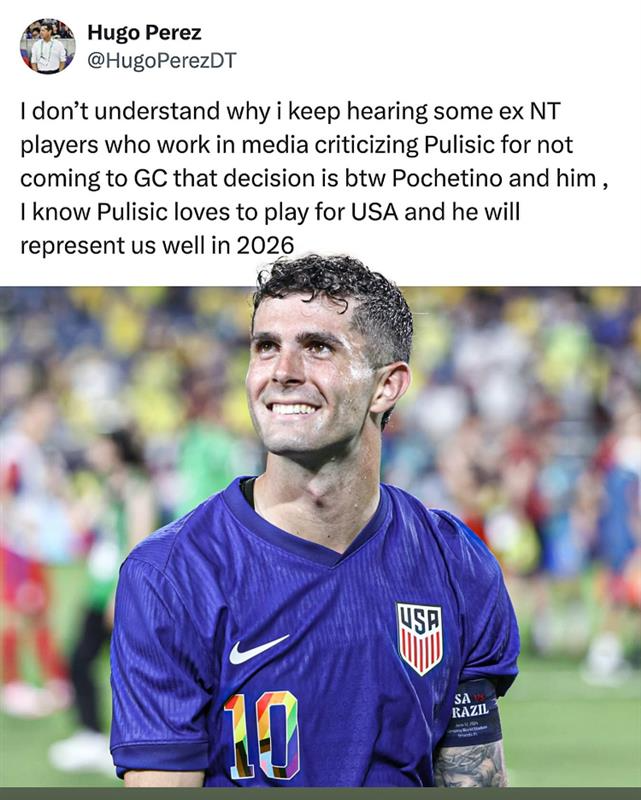
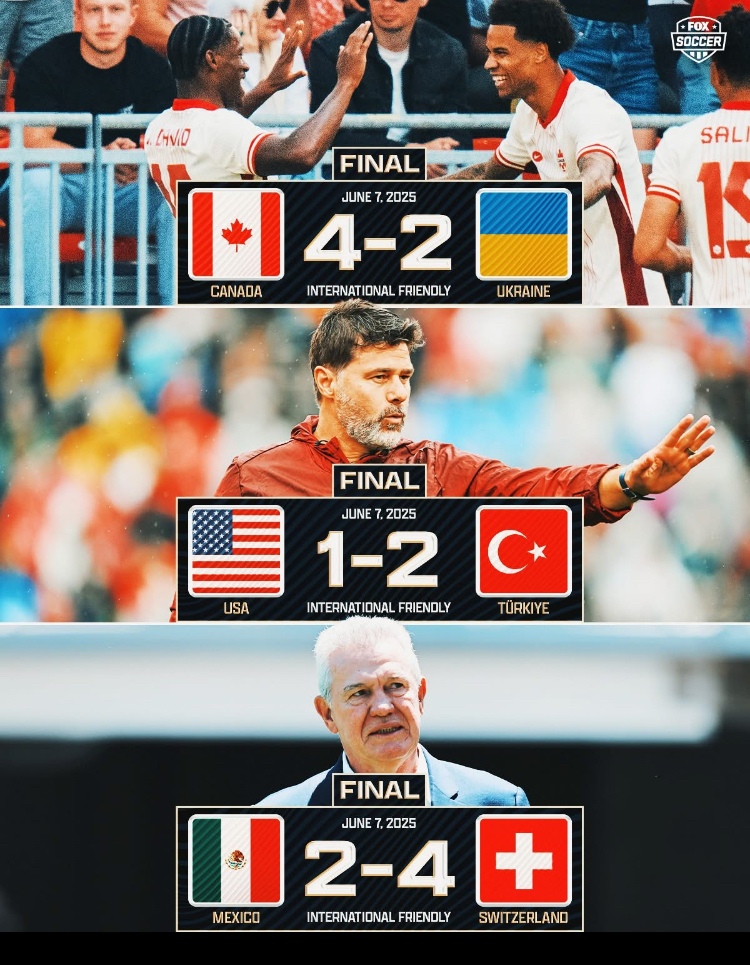
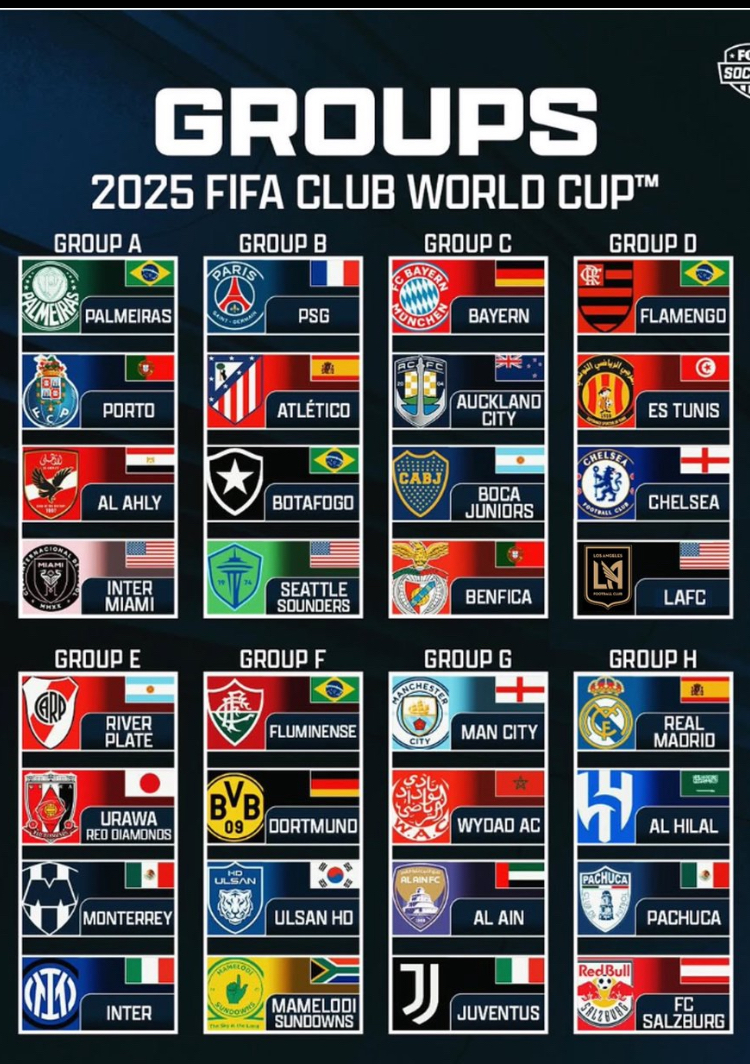

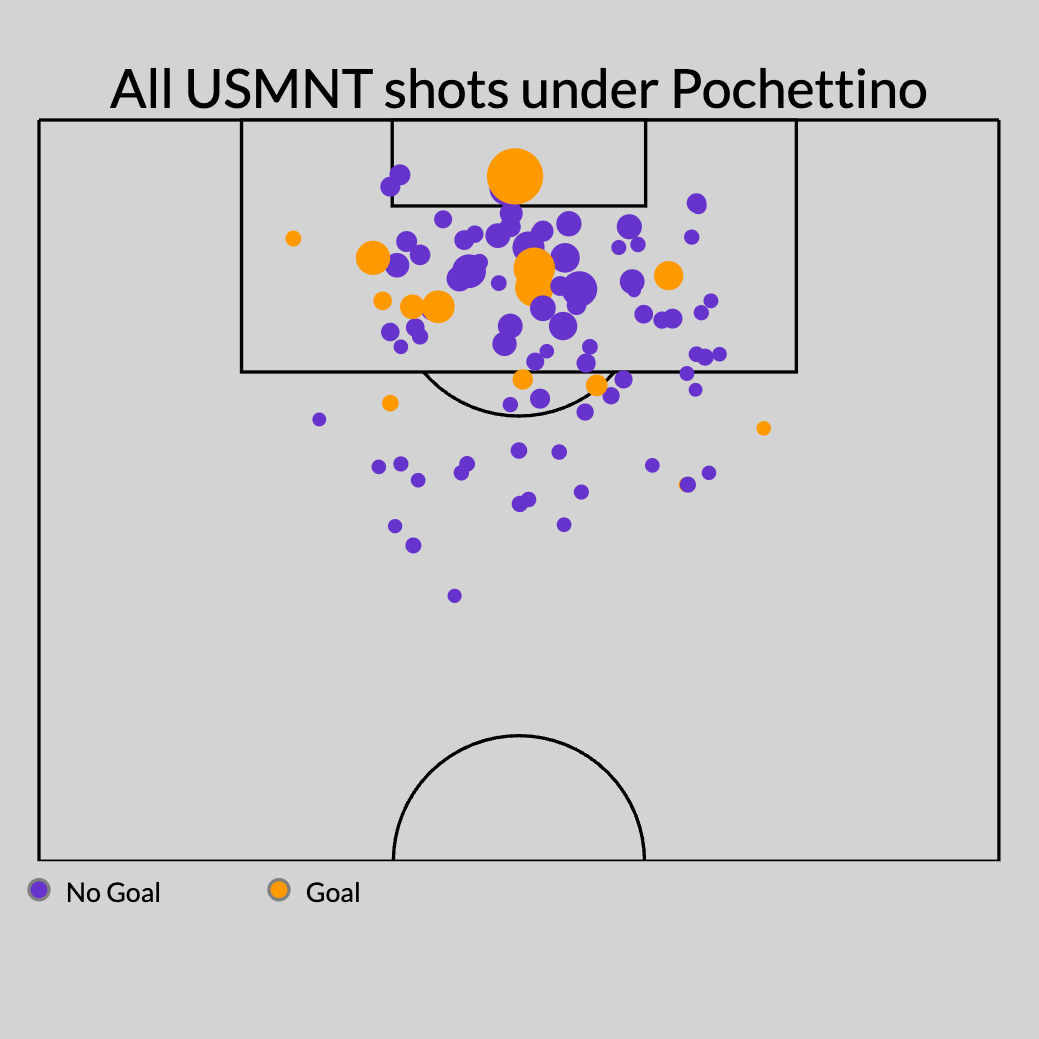

 Tyler Adams played the second half in Saturday’s loss to Turkey. (Photo by Williams Paul/Icon Sportswire/AP Images)
 Malik Tillman missed a golden opportunity to score vs. Turkey. (David Butler II/Imagn Images)
 Agyemang, who grew up miles from the Connecticut stadium, takes on Demiral. (Joe Buglewicz/Getty Images)
 Estevao Willian is a rising star and will be joining Chelsea later this summer (Daniel Duarte/AFP via Getty Images)
 Will Inter Miami’s underwhelming form carry over into the Club World Cup? (Rich Lam/Getty Images)
 (Christian Alvarenga/Getty Images)
 Martin Anselmi was only able to guide Porto to a third-place finish this season (Miguel Riopa/AFP via Getty Images)Another story is how Al Ahly will fare under manager Jose Riveiro, whose first official game in charge will be that opener against Miami. Predecessor Marcel Koller was sacked in late April following their 1-1 draw at home against Mamelodi Sundowns in the second leg of a Champions League semi-final, which led to the holders’ elimination on the away-goals rule.Despite guiding Al Ahly to two league titles (and most of a third), two Egypt Cups (the country’s domestic knockout competition) and back-to-back Champions League triumphs, Koller was under pressure during the 2024-25 season due to a reactive style of play that didn’t suit the profiles of the squad.The manager’s seat at Al Ahly is always a hot one, and Riveiro, a 49-year-old Spaniard who was previously a manager in Finland and South Africa, needs a strong start to gain the fans’ approval.



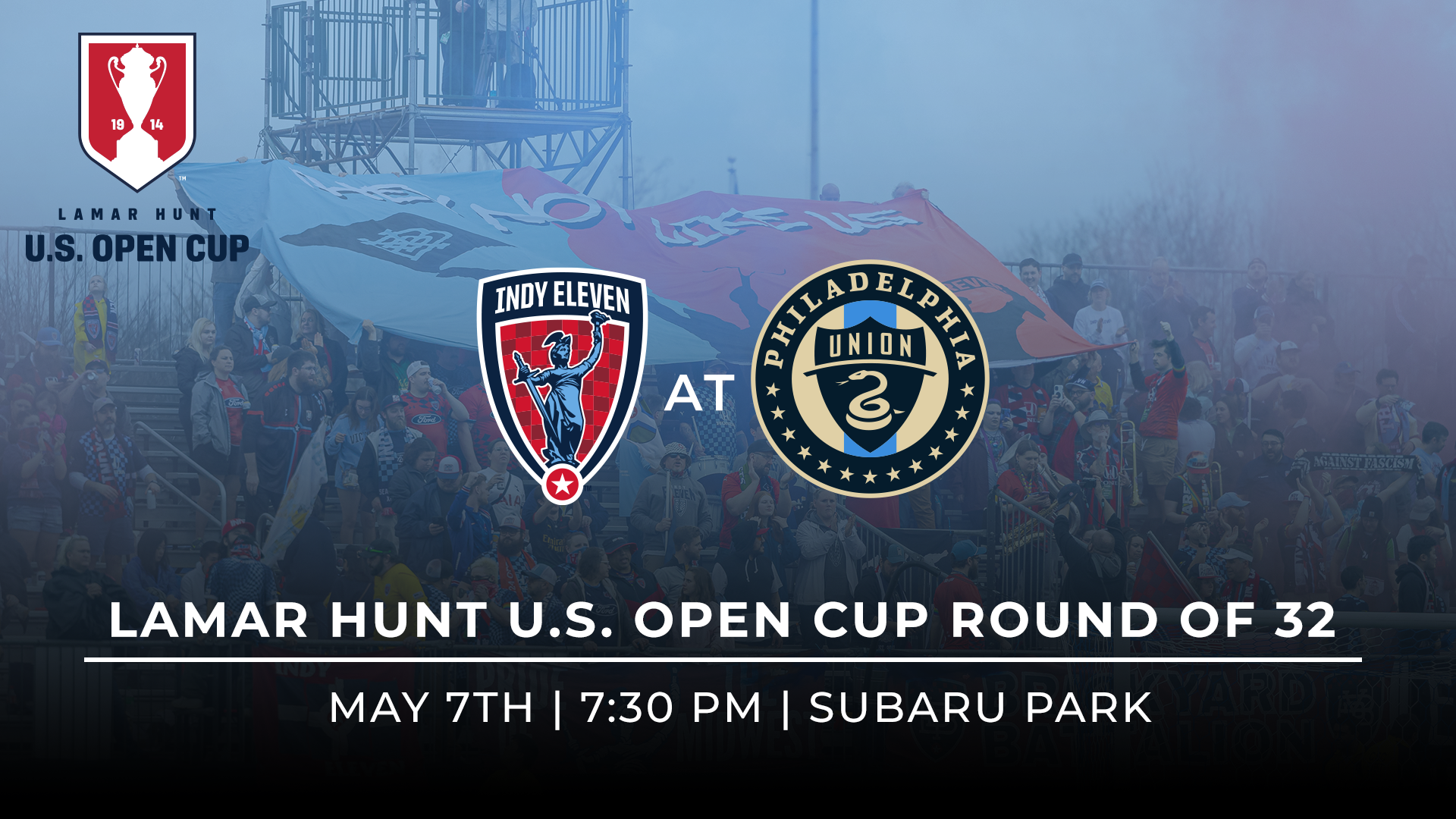


 Staff clear tangerines from the Tannardice turf (Ian MacNicol/Getty Images)
 Carter-Vickers, Trusty, Jeffrey Schlupp and Arne Engels celebrate on a fruit-free field (Ian MacNicol/Getty Images)
 Richards and Ben Chilwell helped Palace shut out Aston Villa (Shaun Botterill/Getty Images)
 Paredes grabs Freiburg’s Patrick Osterhage (Maja Hitij/Getty Images)
 Cardoso is enjoying his time with Real Betis (Alex Caparros/Getty Images)

 Yamal is a genius on the ball but offers little protection (Lluis Gene/AFP via Getty Images)
 De Jong says Barcelona will not sacrifice their principles (Carl Recine/Getty Images)

 Former USMNT manager Gregg Berhalter now runs the Chicago Fire in MLS. (Photo by Anne-Marie Sorvin/Imagn Images)
 Sebastian Berhalter has had plenty to celebrate in 2025. (Photo by Anne-Marie Sorvin/Imagn Images)
 Sebastian Berhalter marks Lionel Messi in the Concacaf Champions Cup semifinals. (Photo by Anne-Marie Sorvin/Imagn Images)

 Ruben Amorim’s domestic struggles have been forgotten in Europe (Ander Gillenea/AFP via Getty Images)
 Tottenham have a vast stadium – and resources (Ryan Pierse/Getty Images)
 Yamal bends in a beautiful Champions League goal against Inter (Joan Valls/Urbanandsport/NurPhoto via Getty Images)
 Messi and Ronaldo shifted expectations, but Yamal is doing things beyond them at 17 (Lluis Gene/AFP via Getty Images)
 Mbappe has done it on the biggest stages (David Ramos/Getty Images)
 Rodri has been absent from the pitch and maybe our minds? (Michael Regan/Getty Images)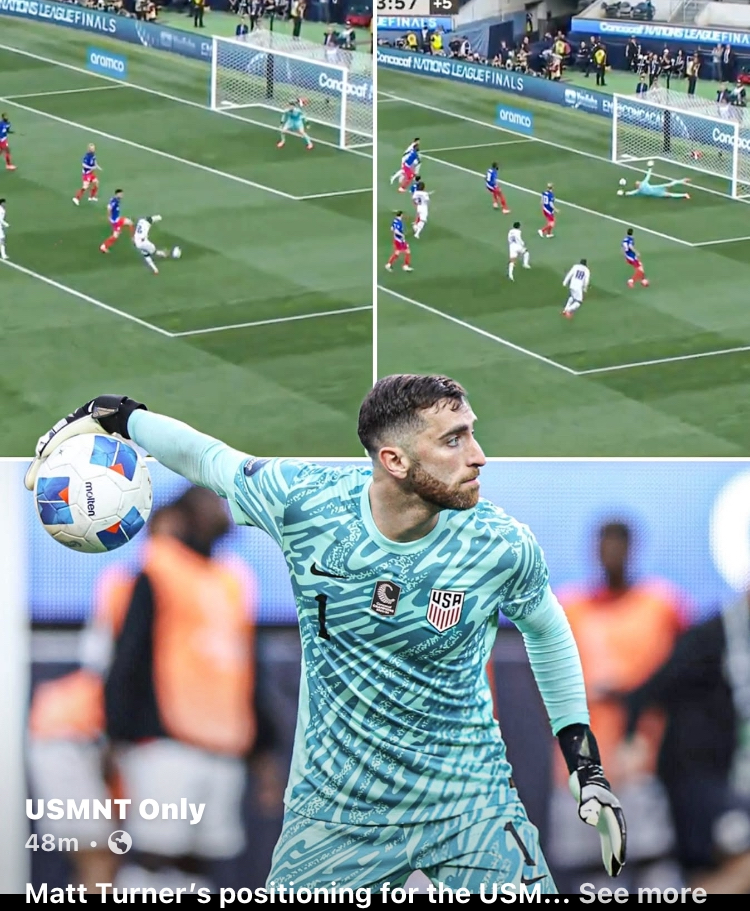


 The Nations League semifinals made for a night of long faces for Christian Pulisic and the U.S. (Jayne Kamin-Oncea/Imagn Images)
 Canada was left to grimace after a 2-0 defeat to Mexico in the Nations League semifinals. (Kevork Djansezian/Getty Images)


 USMNT manager Mauricio Pochettino endures defeat to Panama in the Concacaf Nations League. (Gary A. Vasquez/Imagn Images)


 Pochettino’s gameplan was not enough to overcome Panama’s energy and spirit. (Robin Alam / ISI Photos/Getty Images)
 Weston McKennie claimed the USMNT needed more “nastiness” against Panama. (Robin Alam / ISI Photos / Getty Images)
 Thursday’s defeat rekindled memories of the Copa América defeat to Panama that ultimately sealed Gregg Berhalter’s fate. (Hector Vivas / Getty Images)

 Jack McGlynn and Tim Ream are dejected as Panama celebrate their late winner (Robin Alam/ISI Photos/Getty Images)
 Romero reached the 2014 World Cup final despite being second-choice at his club (Mike Egerton/PA Images via Getty Images)
 Henderson, who is in the current England squad, and Turner warm up for Palace (Sebastian Frej/MB Media/Getty Images)
 Turner during Thursday’s defeat by Panama (Shaun Clark/ISI Photos/USSF/Getty Images for USSF)
 Lonergan playing for Everton against Western Sydney Wanderers in a 2022 friendly (Brett Hemmings/Getty Images for Bursty)
 Turner catches a cross during Palace’s recent FA Cup win against Millwall (Rob Newell – CameraSport via Getty Images)

 USMNT and Iran pose together at the 1998 World Cup. (Photo by Nader Davoodi ATPImages/Getty Images)
 Rafa Márquez gave Mexico its first World Cup qualifying win in Columbus in 2016. (Paul Vernon/AFP/Getty Images)


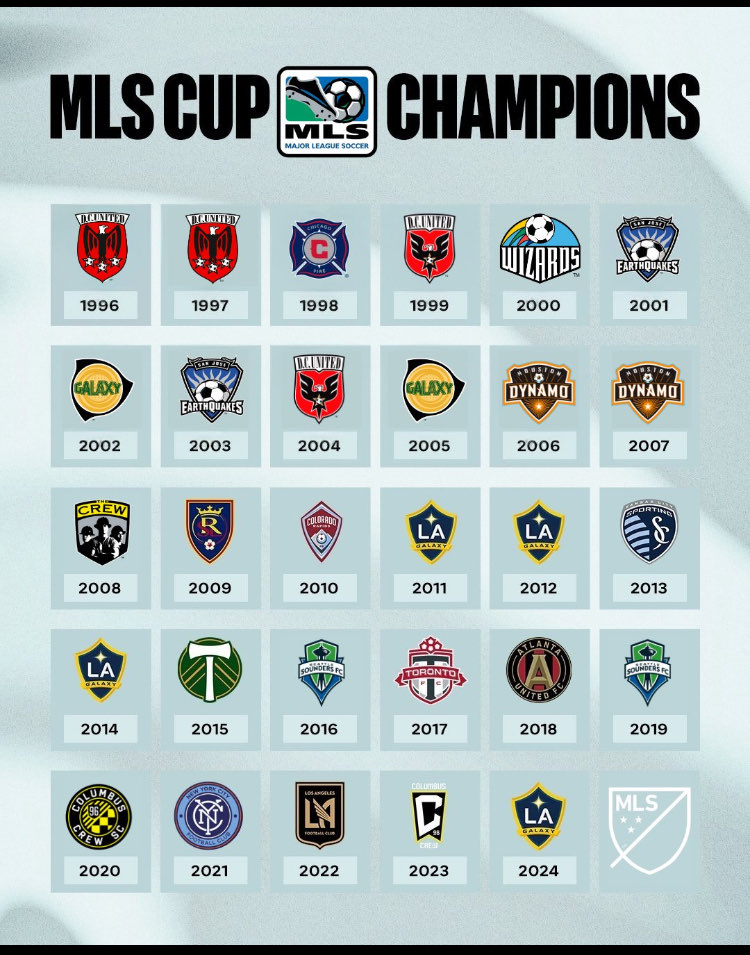
/cdn.vox-cdn.com/uploads/chorus_image/image/73919005/2200441148.0.jpg)


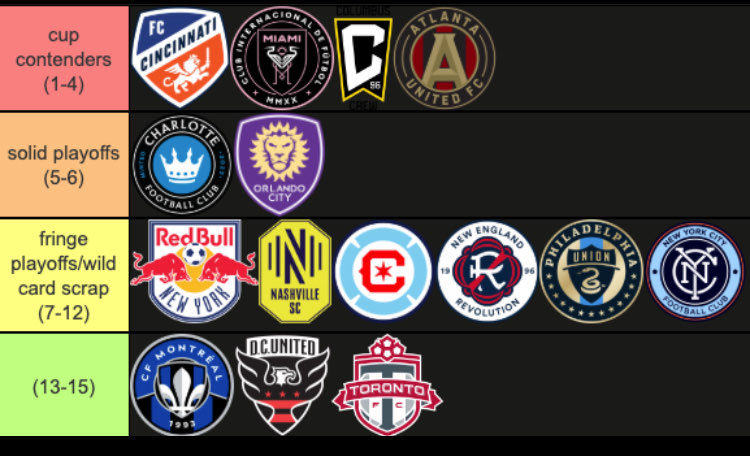


 Catarina Macario marks her return to the USWNT with a goal against Colombia. (Jack Gorman / Getty Images)
 Ally Sentnor celebrates scoring her first goal for the U.S. women’s national team. (Brad Smith / Getty Images)
 Lily Yohannes earns her first start for the U.S. against Colombia. (Alex Slitz / Getty Images)
 Tara McKeown makes her USWNT debut against Colombia in the SheBelieves Cup. (Maria Lysaker / Getty Images)
 Hayes was happy with the performance (Jack Gorman/Getty Images)
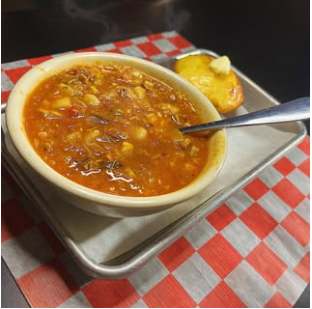


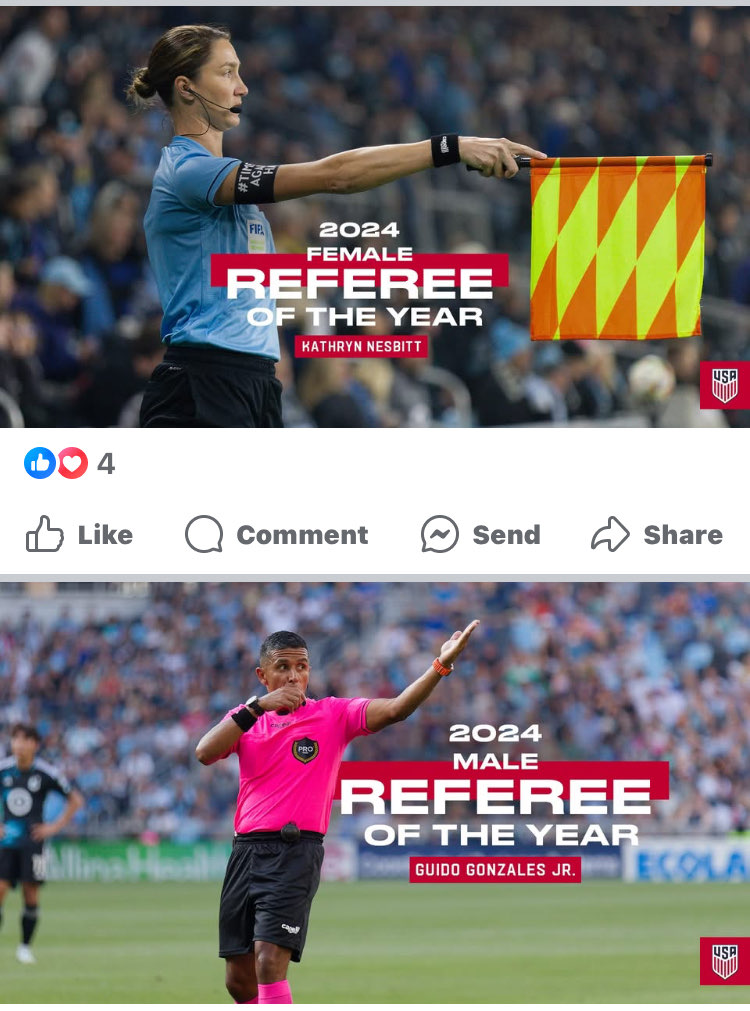


/cdn.vox-cdn.com/uploads/chorus_image/image/73852568/2193340722.0.jpg)

 Julian Green’s selection in 2014 stunned many but he scored against Belgium in the round of 16. (Kevin C. Cox/Getty Images)
 Patrick Agyemang has intriguing potential. (Jacob Kupferman/Getty Images)

 Cavan Sullivan’s youth and inexperience make him a World Cup longshot. (Caean Couto/USA Today)


 Venezuela’s Yordan Osorio celebrates victory against Jamaica at the Copa America (Aric Becker / AFP via Getty Images)
 Protesters against the Maduro regime take to the streets of Venezuelan capital Caracas in July (Jesus Vargas/Getty Images)
 Venezuela’s National Guard move in to quell protests in Caracas in July (Yuri Cortez/AFP via Getty Images)
 Jhon Chancellor (centre) warms up before the Copa America quarterfinal against Canada (Omar Vega/Getty Images)De Grazia himself was detained a day later and, after being reported missing by his family, his daughter revealed he had been taken to Venezuela’s notorious prison El Helicoide. De Grazia has not been heard from since.One Venezuela-based football reporter — who requested anonymity to protect his identity out of fear of reprisals by Maduro’s government — told The Athletic that, upon hearing of Chancellor’s arrest and disappearance, he did not post about it on social media because “doing so is like putting a knife to my throat. The police would be outside of my house 20 minutes after posting that”.Asked about the status of the elder Chancellor’s situation and the silence that followed, the same reporter said that it’s a difficult subject to broach. “That’s a question that the entire country wants answered,” the reporter said regarding Chancellor’s arrest.Venezuelan members of the press tend to avoid asking players, coaches and FVF officials questions related to Maduro to avoid any consequences.
 President Nicolas Maduro speaks to his supporters in Caracas in July (Jesus Vargas/Getty Images)
 Fernando Batista (Juan Mabromata/AFP via Getty Images)
 A man walks past a mural depicting President Nicolas Maduro in Caracas (Raul Arboleda/AFP via Getty Images)

 Orlando Ramirez / Imagn Images


 Chris Wood’s 12 Premier League goals have helped Nottingham Forest to third in the Premier League (Chris Brunskill/Fantasista/Getty Images)


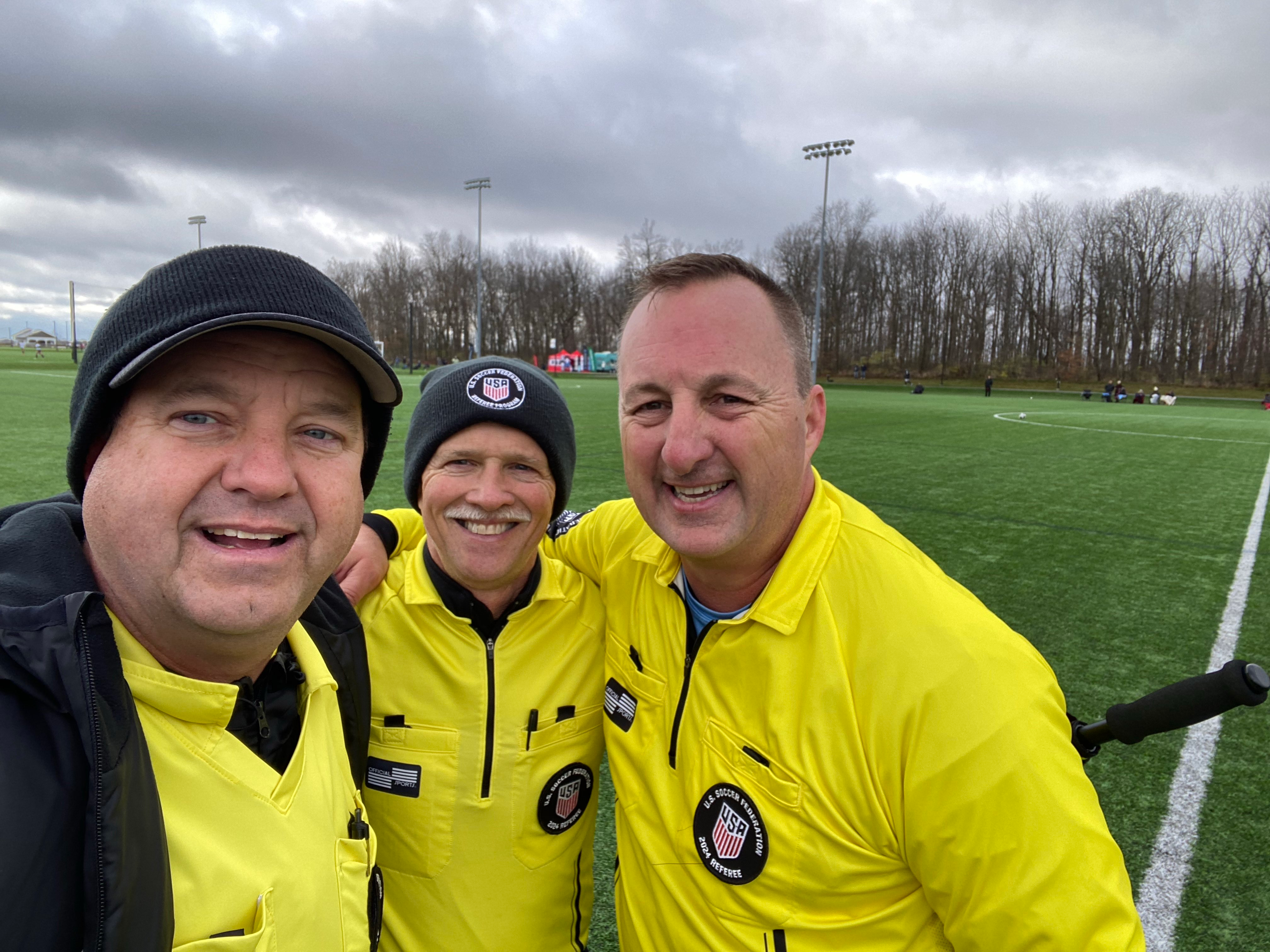

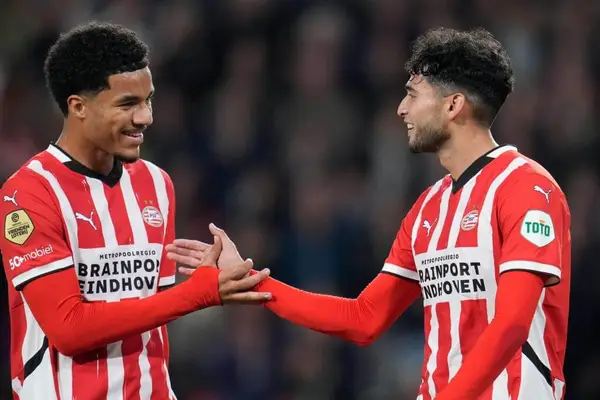


/cdn.vox-cdn.com/uploads/chorus_image/image/73753380/2181803560.0.jpg)
:no_upscale()/cdn.vox-cdn.com/uploads/chorus_asset/file/25759309/england.png)

 (U.S. Soccer/Getty Images/Brad Smith)
 Russo in action for North Carolina in 2019 (Jamie Schwaberow/NCAA Photos via Getty Images)
 Bronze in action for North Carolina in 2009 (Brett Wilhelm/NCAA Photos via Getty Images
 Moorhouse has become an influential player for Orlando (Elsa/Getty Images)
 Jess Carter, right, scored against former club Chelsea in a pre-season friendly (Ira L. Black – Corbis/Getty Images)
 Pepi celebrates after scoring his team’s fifth against Groningen (Broer van den Boom/BSR Agency/Getty Images)
 The familiar sight of Pepi replacing De Jong (Photo Prestige/Soccrates/Getty Images)
 Aaronson holds off NEC’s Rober Gonzalez (Broer van den Boom/BSR Agency/Getty Images)
 Booth replaces Miguel Rodriguez against NEC (ANP via Getty Images)
 Reyna urges his team on against Freiburg (Hesham Elsherif/NurPhoto via Getty Images)
 Tim Ream during the loss to Mexico last month. (Ulises Ruiz / AFP / Getty Images)
 Mauricio Pochettino wants his players to be more cunning. (Jamie Squire / Getty Images)
 Mauricio Pochettino was an old-school defender. (Laurence Griffiths / Getty Images)
 USMNT looked better against Jamaica. (Tim Vizer / AFP / Getty Images)
 The Ole BallCoach
