US faces Ecuador Tonight at 8:30 pm on TNT, HBO Max, Tues vs
Ah poor Potchitino may not have all of his players healthy this week as he prepares for his next to the last run out before the World Cup – Boo the Flip Hoo. Maybe you should have thought of that when we played really good teams in the last 2 camps man. Five Million Dollars completely wasted on this poor excuse for a soccer coach in my mind – but lets see if this decent club coach can pull it together despite having some of his better players in Pulisic, Zendejas and Robinson nursing injuries. Wow guys were all healthy last run out — and before the Gold Cup back in June when we played really good teams – but hey Botch was touring Europe doing nothing then – spending US money. Anyway back to this weekends games – he’s finally brought in a decent roster FINALLY. Hard to Say who will start with the injuries. I still think the 3 Centerback thing is questionable when we only have 2 decent centerbacks – but what do I know. He’ll run out 3 tonight to see what it looks like I presume – the question is — is it CCV or Miles in the middle of the three with Ream on the left and Richards on the right? Or does Richards move to the center and McKensie slide to the right? I think McKinney & Tessman play the double 6 with Pulisic & Tillman beneath Ballagon and Robinson & Weah on the outside backs. Ecuador is actually decent – has qualified for the World Cup and will give us a game – perhaps we slide thru 2-1 if Pulisic plays – 1-1 if not.
Goalkeepers(4): Chris Brady (Chicago Fire), Matt Freese (New York City FC), Patrick Schulte (Columbus Crew), Matt Turner (New England Revolution). Defenders(8): Max Arfsten (Columbus Crew), Cameron Carter-Vickers (Celtic), Alex Freeman (Orlando City), Mark McKenzie (Toulouse), Tim Ream (Charlotte FC), Chris Richards (Crystal Palace), Antonee Robinson (Fulham), Miles Robinson (FC Cincinnati). Midfielders (8): Brenden Aaronson (Leeds United), Diego Luna (Real Salt Lake), Weston McKennie (Juventus), Aidan Morris (Middlesbrough), Cristian Roldan (Seattle Sounders), James Sands (St. Pauli), Tanner Tessmann (Olympique Lyonnais), Malik Tillman (Bayer Leverkusen). Forwards(6): Patrick Agyemang (Derby County), Folarin Balogun (Monaco), Christian Pulisic (AC Milan), Tim Weah (Olympique Marseille), Haji Wright (Coventry City), Alex Zendejas (Club América).
US U20s Beat Italy 3-0 to Advance to QFs vs Morocco Sun 4 pm
Awesome to see the US U20’s pound Italy 3-0 (Highlights) just a week after pounding France in the U20 World Cup. Miami’s Ben Cremasche scored the Brace as he now has 5 goals to lead the tourney in goals. The win sends the US to the Quarterfinals where they face Morocco Sun at 4 pm on Telemundo. Not sure why this game is not on FS2 at least as Fox is covering the Tourney?
Indy 11 face Pittsburgh Riverhounds & former Carmel & Butler GK Eric Dick pm Sat 7 pm on ESPN+
The Boys in Blue travel to Pittsburgh tonight with the playoff hopes on a thin line as they face former Carmel Dad’s, Carmel High & Butler GK Eric Dick on ESPN+. They have their final regular season home game with Fan Appreciation Night on Saturday, October 18 at 7 p.m. at Carroll Stadium vs. Loudoun United FC.
A Reminder Carmel FC is Looking for High School Players to fill out some teams – including my 2010 Boys Team. Come on out Thurs Oct 16 for Supplemental Tryouts.
The U20 US Boys-are on to the QuarterFinals vs Morocco Sun 4 pm on UnivisionReffing the High School Rec Championship Game at Atleto with these guys always fun. Thanks Tori for all you do for us Carmel Dad’s Cup Refs.
====RackZ BAR BQ ====Save 20% ===
Coming home from Practice or Games at Badger Field? Try out the Best BarBQ in Town right across the street (131st) from Northview Church on the corner of Hazelldell & 131st. RackZ BBQ
Save 20% on your order
(mention the ole ballcoach)
Check out the BarBQ Ribs, pulled Pork and Chicken, Brisket and more. Sweet, Tangy or Spicy sauce. Mention you heard about it from the Ole Ballcoach — and Ryan will give you 20% off your next meal. https://www.rackzbbqindy.com/Call ahead at 317-688-7290 M-Th 11-8 pm, 11-9 Fri/Sat, 12-8 pm on Sunday. Pick some up after practice – Its good eatin! You won’t be disappointed and tell ’em the Ole Ballcoach Sent You!
Save 20% on these Succulent Ribs at Rackz BarBQ when you mention the Ole Ballcoach – Corner of 131 & Hazelldell. – Call 317-688-7290.
======================RackZ BAR BQ ====Save 20% ======================
FULL TV GAME SCHEDULE
Fri, Oct 10 2:45 pm FS2 France vs Azerbaijan 2:45 pm Prime Germany vs Luxenberg 8:30 pm TNT, Max USA Men vs Ecuador 10:45 pm Seattle Reign vs Bay FC NWSL Sat, Oct 11 9 am FS2 Latvia vs Andorra WCQ 12 noon Prime Norway vs Israel WCQ 2:45 pm FS2 Spain vs Georgia WCQ 2:45 pm Prime Portugal vs Ireland WCQ 4 pm FS2, Tele U20 World Cup Quarterfinal 7 pm FS2 U20 World Cup Quarterfinal 7 pm ESPN+ Indy 11 @ Pittsburgh (Carmel’s -Eric Dick) 7:30 pm Para+ North Carolina vs Washington Spirit NWSL 10 pm CBSSN Utah Royals vs San Diego Wave NWSL Sun, Oct 12 9 am FS2 San Marino vs Cypress 12N FS2 Netherland vs Finland WCQ 2:45 pm Lithuania vs Poland WCQ 4 pm FS2, Tele U20 World Cup QF USA vs 5 pm ESPN Angel City vs Houston NWSL 7 pm FS2 U20 World Cup Quarterfinal Mon, Oct 13 2:45pm FS2 Northern Ireland vs Germany WCQ 2:45 pm Prime Iceland vs France WCQ 8 pm PAra+ Honduras vs Haiti WCQ Tues, Oct 14 2:45pm FS2 Latvia vs England WCQ 2:45pm Prime Spain vs Bulgaria WCQ 2:45pm Prime Portugal vs Hungary WCQ 9 pm TNT, Max USA Men vs Australia 10:30 pm Prime Mexico vs Ecuador
Thurs, Oct 23 9 pm TNT, Max USA Women vs Portugal Chester PA Sun, Oct 26 4 pm TNT, Max USA Women vs Portugal Hartford CT Sat, Nov 15 5 pm TNT, Max USA Men vs Paraguay Chester PA Tues, Nov 18 7 pmTNT, Max USA Men vs Uruguay Tampa, FL
Love doing the Adult ladies games down Kuntz on Tuesday nights. Here with
USA vs. Ecuador (TONIGHT, 8:30 p.m. ET, TNT) Roger Bennett & the Boys
Brace yourself, this is going to be some stern test. Ecuador are the footballing equivalent of one of the 12 Labors of Hercules. Fresh off beating Argentina and finishing second in CONMEBOL qualifying, tonight will rank somewhere between slaying the nine-headed Lernaean Hydra and Capturing the Erymanthian Boar. Yes, La Tri will be without Chelsea’s ultimate fighter Moisés Caicedo and Arsenal defender Piero Hincapié, but this team is fast, furious and physical. Mauricio Pochettino has asked us to trust his process. Tonight should be a true test of our progress, identity and collective belief. Here are the questions I am looking forward to seeing real answers to…
i. Can We Set Up Christian Pulisic to Hurt Opponents in a U.S. Jersey as He Has Done for Milan?
Christian Pulisic has been in the form of his life for Milan with a league-leading four goals and two assists. When we spoke this week, he identified the source of his potency: the tactical freedom he’s been given by coach Max Allegri,which reminded me of what Jack Grealish said in this incredible clip about how he plays at his best. Pochettino still must crack the code within his system to set Christian up to do similarly in a U.S. lineup. He has too often cut a frustrated figure, but if we can create the freedom for Pulisic to acquire possession in space to hurt opponents with a striker running ahead of him, we can soar.
ii. To That End, Do We Play Three or Four at the Back?
In our last-game victory against a Japan XI, Poch moved Christian to play under the striker in a 3-4-2-1 lineup, and CP linked up with Balogun for his goal with a flourish. I believe it will be three at the back again. Our nation’s great tactical experiment must continue.
iii. Can Weston McKennie Assert Himself and Win a Place in Poch’s Good Book?
There is the Weston McKennie of our dreams: the Texan bowling ball capable of knocking down all-comers. There is also the McKennie of this cycle—a capricious player whom Poch does not trust to fit into the hard-grind, all-in, always-on culture he expects and demands.
It has incredibly been seven long months since Weston was last in a U.S. national team camp—since the darkness of the Nations League slumping defeats to Panama and Canada. In that spell, he somehow managed to both captain Juventus at the Club World Cup, lose his place in the team, then fight his way back in. At club level, Weston has consistently proved he is never more focussed and effective than when he is on the brink of exile—a truth which is a reflection of his mentality, rather than his potential skill, which is not in doubt. Can he do the same again for us tonight?
iv. How Long Can Antonee Robinson Go?
That electric left-back/footballing can opener Antonee Robinson is back in the squad for the first time in almost a year. The Fulham star is returning from a long-term knee injury and is yet to start a Premier League game this season. He will be on a severe time restraint, yet the U.S. are truly only a three-dimensional team when he is flying down the flank.
Also, who is on the right? Twenty-one-year-old Orlando City speed freak Alex Freeman is the only natural right-back… Does he play or does Tim Weah play wingback?
v. Who’s Up Top: Flo Balogun or Haji Wright?
I hope Haji gets some playing time, gent has been the man for Frank Lampard’s unbeaten Coventry. Here is Herc Gomez explaining what has changed for the Los Angeles striker whose confidence has gone next level.
vi. Who’s in Goal?
Harvard Donnarumma Matt Freese is the heir apparent. Matt Turner is back in the squad. Freese has the form, Matty T. the experience. Can we play them both at the same time?
vii. Where Are We Between Experiment and Reality?
This is one strange cycle. The steady diet of friendlies has offered Poch the chance to experiment and audition with no consequences. He has asked us to trust his process without truly articulating what that is. I asked both Tyler Adams and Christian Pulisic what matters in these games. As highly competitive athletes, they both had the same answer: winning and the results. At what stage will the open auditions and tactical experiments cohere? The World Cup is 244 days away. There are just a handful of games left before we play before the teams, who as in the Ryder Cup, are all going to want to do us. Close by, the train is waiting…
PS – Really lovely piece on the incredibly inspiring Diego Luna.
USMNT injuries complicate Mauricio Pochettino’s October camp and Ecuador friendly
USMNT head coach Mauricio Pochettino has injury concerns to contend with. Robin Alam / ISI Photos
AUSTIN, Texas — U.S. men’s national team coach Mauricio Pochettino indicated Thursday that Christian Pulisic, Antonee Robinson and Alex Zendejas are all doubts for Friday’s friendly against Ecuador.
Pochettino, speaking at a news conference here ahead of the match at Q2 Stadium, said that Pulisic and Robinson didn’t train Thursday, and Zendejas “(felt) something, and it’s an issue. We don’t believe that Alex will be part of the game tomorrow.”
Advertisement
Neither Pochettino nor a team spokesman would give more specifics about the “issues” hampering Pulisic and Robinson.
Robinson underwent knee surgery at the start of this past offseason and has been working to regain fitness and playing time at his club, Fulham.
“We need to assess tomorrow (if) they can be available or not,” Pochettino said.
Antonee Robinson (left) and Christian Pulisic are both in doubt for Friday’s USMNT clash.Stephen Nadler / ISI Photos / USSF / Getty Images for USSF
Their status could complicate Pochettino’s plans for this October international window, the third-to-last before he’ll pick a World Cup squad in the spring. He is already without fullback Sergiño Dest, midfielders Tyler Adams and Johnny Cardoso, and striker Ricardo Pepi. If Pulisic and Robinson are unable to play, or if they are held out of the starting lineup as precautions, the USMNT would be without roughly half of its presumed first-choice starting 11 for what would otherwise be a valuable tune-up for 2026.
Pochettino took a rosier view. The “circumstances,” he said, could “give the opportunity to different, maybe, players to play.”
Many of the players who would naturally step in for Pulisic and Zendejas, including Malik Tillman and Diego Luna, and for Robinson, such as Max Arfsten, are players Pochettino and his staff have already seen often throughout 2025.
One player he hasn’t seen often, Tanner Tessmann, could be pushed into a more advanced role in midfield.
Brenden Aaronson could also get another chance to impress Pochettino, having failed to do so at the CONCACAF Gold Cup this past summer. Haji Wright could, in theory, move up the pecking order for playing time on the wing, though a forward line of him, Tim Weah and Folarin Balogun would lack variety.
Weston McKennie, back with the squad for the first time since March, could also play higher up the field. Pochettino did not name names as potential replacements for Pulisic, Zendejas and Robinson, but later spoke about McKennie as a player who could be an “important” one for both Juventus and the national tea
“He has arrived very well, with very good energy,” Pochettino said of McKennie.
He first mentioned the injury “issues” in response to a question about the importance of these October games — first against Ecuador, then next Tuesday in Colorado against Australia.
Alex Zendejas has been in sparking form in Liga MX.Hector Vivas / Getty Images
“It’s difficult to convince you all, [but] the most important [thing], today, is not really the games,” he said. “The most important is what we are building here in the camp.”
Throughout his 30-minute news conference, he continued to speak at length about his “process.”
“Of course we need to play, and we need to perform, and we need to win, because that is going to give us the credibility in our work,” he said. But there was more value, he insisted, in the precious little time they get to spend together.
He again spoke about March, when the U.S. lost to Panama and Canada, as a “wake-up call” that compelled him to change his approach to the job.
“The moment that we identified the problems, we started to destroy the things that we need to destroy, and start to build the house from the ground up,” Pochettino said. (He did not specify what the “problems,” or the things that needed to be “destroyed,” were.)
Doing so, he continued, “takes time.” It also takes “a lot of problems, because it’s difficult for the people to understand, sometimes, that process,” Pochettino said. “But, I think we are on time.”
After the friendlies against Ecuador and Australia, the USMNT will have two more against Paraguay and Uruguay in November to close out 2025. They’re in advanced discussions to then play Portugal and Belgium in March, in the last two games before the World Cup team gathers in May and June.
“I am so happy, so positive, in the way things are going,” Pochettino said. “I am respecting the plan. It’s on time. It’s true that (there are only) a few camps until the World Cup, but the base is really strong now, after one year of working. It’s not too much time, but it’s time enough to build what we wanted to build.”
Christian Pulisic arrives in form, but status in sudden doubt for USMNT vs. Ecuador
AUSTIN, Texas – U.S. men’s national team coach Mauricio Pochettino said Christian Pulisic did not train on Thursday and is a question mark for Friday’s game against Ecuador.
“I need to communicate that we have some issues in some players, like Christian [Pulisic], who didn’t train today,” Pochettino said, not offering any other further specifics but also indicating that Alejandro Zendejas and Antonee Robinson sat out Thursday as well. “We need to assess tomorrow [if] they can be available or not.”
Advertisement
Pulisic had spoken to the media earlier in the day but did not mention any issues, injury or otherwise. Instead, he focused on the importance for the U.S. team to come out of this international window with not just good performances, but also good results. After meeting La Tri, the U.S. will host Australia, another World Cup-bound opponent, next Tuesday in Colorado.
“It’s as simple as that,” Pulisic said. “We want to kind of understand and know where our team is at and have a good feeling going forward as we get closer to the summer.”
Pulisic arrived in Austin in strong form with AC Milan. The U.S. No. 10 was named Serie A player of the month and has six goals and two assists for Milan across all competitions. Pulisic missed a penalty kick in Sunday’s draw with Juventus, but he remains one of the most important players for both club and country.
On Thursday, he made sure to point out that he didn’t just spend his summer on the beach.
“I worked really hard this summer,” Pulisic said. “It’s not like I just took a break. I wanted to make sure that my body was in the perfect spot coming into the season, and I wanted to start really strong, and I worked really hard. And it’s just been consistency and the work I’ve put in, and it’s good to see it come to fruition and (to be) playing well. But it’s just the start of the season. I have so much more I want to accomplish.”
The U.S. will need Pulisic to be at his best if it’s to advance in next summer’s World Cup.
“I think I can do well in a lot of the attacking positions, but I’ve always felt comfortable coming off the left side, but also being in sort of pockets in behind the striker,” he said. “I’ve always been pretty comfortable in that position. It allows me to use some of my strengths, get in the box, make runs in behind. So I think it’s a good spot.”
Advertisement
The key for the U.S. now isn’t just unlocking Pulisic’s club form on the international stage, but continuing to build momentum from the Japan win into this window. While friendlies are a proving ground in which the result isn’t as important, the American team is in need of some validation to the process under Pochettino.
Wins now build trust and momentum, and piling up those results is crucial as the World Cup nears.
“I think we’re settling in well,” Pulisic said. “Now it’s about building good performances one after the other. After last camp feeling good, now it’s a great opportunity.”
Your Next Read
After years of winning back his Juventus place, Weston McKennie aims to do same for USMNT
AUSTIN, Texas — It has been seven months since Weston McKennie was last here in U.S. men’s national team camp, simultaneously competing and joking, building toward a World Cup.
It has been seven months since March, since the Concacaf Nations League losses to Panama and Canada, since a week-long camp that head coach Maurico Pochettino recently described as a “wake-up call.”
Advertisement
In those seven months, McKennie has captained Juventus at the Club World Cup, then seemingly been pushed out of the Juve starting 11, only to fight his way back in. He’s been left off a USMNT roster and missed 10 national team games for multiple reasons.
So, when he spoke here Thursday, and when a TV reporter asked him, as “a key leader in this group,” what his “message for the younger players” would be, McKennie paused.
“Ah, for the young players coming into this camp?” he said. “I mean, I’ve been gone for seven months, so it feels like I’m a new player.”
He chuckled, then gave his serious answer: “I would say: just put your head down and work, and really immerse yourself into the environment, into the group, into the guys and the ideas.”
That, in a way, is what McKennie has been doing, or must do, this week. He took part in Pochettino’s first three A-team camps, but missed a summer of culture-building that Pochettino and players have hailed as a crucial part of the coach’s “process.”
Weston McKennie last played for the USMNT vs. Canada in the Concacaf Nations League third-place match in March 2025Michael Owens / Getty Images
When asked Thursday about the team’s first year under Pochettino, McKennie said: “I mean, I’ve only spent a couple camps in with the group. So, probably a better question to ask someone else.”
McKennie did start all four Nations League matches in November and March. The latter, though, convinced Pochettino that “we needed to start a different process and different approach.” It wasn’t just the losses to Panama and Canada. “All that happened helped a little bit to realize that the most important thing is the national team; it’s the federation, and [the U.S. Soccer crest,]” Pochettino later said. “This is more important than any single name.”
Over the coming months, he omitted several notable names from rosters, in an apparent attempt to create internal competition, by sending a roster-wide message that nobody’s place in the USMNT is guaranteed.
Advertisement
McKennie wasn’t one of the discretionary omissions in June; he was, rather, with Juventus at the Club World Cup and unavailable for selection. But he was then left off Pochettino’s roster for September friendlies against South Korea and Japan.
Pochettino, when asked to explain McKennie’s omission at the time, indicated that McKennie’s delayed offseason, and his precarious place in Juventus’ squad, were two factors. “We wanted to give him the possibility to be more settled in his club,” Pochettino said.
But, at the same time, he did call in Tim Weah, who had also been with Juve at the Club World Cup, then transferred to a new club, Marseille, just weeks before the roster was named.
McKennie was asked Thursday about his interpretation of and reaction to the omission. How did it hit him? Did it motivate or inspire him?
“Nah, I just stayed at my club, focused on what I had to do there,” he said. “And, yeah, just waited to have the opportunity to come back in.”
USMNT teammates Christian Pulisic and Weston McKennie vie for possession during a recent Serie A match between AC Milan and JuventusMarco Alpozzi / LaPresse / AP
At his club, meanwhile, he was once again battling to prove his worth. Offseason after offseason, he has been pushed “out of the project” at Juventus — and, on at least one occasion, stripped of a locker and parking spot. But he has always played his way back in, and 2025 felt no different.
“The summer is always a roller coaster for me. So, nothing’s really changed,” McKennie said Thursday with a smile. “I’m kind of used to it now.”
When asked about the mentality required to win back his place, again and again, he grinned and said: “It’s year after year, so it’s years of practice.”
He is, it seems, en route to doing that at Juve. After struggling for minutes over the season’s first few weeks, he has now started four games — including two in the Champions League — and played five over the past month.
Advertisement
The one difference, now, is that his place in the national team seems less secure than ever. The player pool, at least in midfield, is deeper. And the coach has been willing to call upon less-accomplished, less-heralded and arguably less-talented players ahead of established figures if the stars don’t perform.
When asked if, having been away from the team for several months, he now feels like he has to win back a starting spot here, too, McKennie said: “That’s for the outside people to think, and the coaching staff to feel like. I just come in and do my best. If the coach thinks it’s a good fit for the starting 11, it’s a good fit. If it’s not, then it’s not.”
When asked about the March “wake-up call,” and whether he saw it as such, or whether Pochettino has explained that to him, McKennie began with a “nah,” and reiterated that he hasn’t been around the group enough to “know how people are taking what they take, or how they do what they do, or what not.”
“I’m just here to do my job whenever I’m called upon,” he said. “And that’s that.”
USA U-20s book World Cup quarterfinal place, rout Italy behind Cremaschi’s double
The United States advanced to the quarterfinal round of the U-20 men’s World Cup for the fifth straight competition after a comprehensive 3-0 win over Italy on Thursday, with Benjamin Cremaschi’s double sandwiching a free kick from Niko Tsakiris in Chile. The Americans were the better side on the day and were never in any sort of danger against a poor Azzurri team, who had two late shouts for penalties go uncalled, even after VAR review.Cremaschi scored his fourth and fifth goals of the tournament on Thursday to take the competition’s scoring lead. His first came in the 15th minute following a scramble in front of goal from a U.S. corner kick, as he poked the ball into the net from close range. His second goal, in second-half stoppage time, was a lovely dink over the goalkeeper from the center of the box after receiving a cross in stride on a run down the center.
The on-loan Parma midfielder, who earlier in the tournament became the second American to score a hat trick in a U-20 World Cup (Freddy Adu did so in 2007), had his strikes complemented by Tsakiris, who curled in a wonderful free kick from just outside the Italian penalty area to put the U.S. 2-0 up in the 79th minute. Marko Mitrović’s side, which has benefited from playing every match thus far at the Estadio El Teniente in the city of Rancagua, will face Morocco in the quarterfinals on Sunday. The African side topped its group by beating Spain and Brazil before being edged 1-0 by Mexico, and it beat South Korea 2-1 in Thursday’s round finale. It’ll mark the second straight year the two sides will have met on the youth stage, with Morocco knocking the U.S. U-23s out of the 2024 Olympics with a 4-0 quarterfinal thrashing in Paris.
Stay in the know by selecting your interests on The Athletic:
These U-20 Americans will hope for a better fate and as they seek to advance to the final four of the competition for the second time in program history – and the first since 1989. Norway and France, the latter of whom the U.S. beat in group play, are in the other quarterfinal on the U.S.’s side of the bracket, while Mexico, Argentina, Spain and Colombia make up the other half.
While the football has not always been pleasing on the eye, this U-20 World Cup in Chile has had a vintage feel. At the senior men’s level, World Cups have become opulent global events. There is the rustic feel to this youth tournament that is being played at the aging concrete stadiums in cities like Santiago, Talca and Viña del Mar. Whether it’s a crisp spring night or a breezy sunny afternoon amidst the Andes Mountains, the aesthetics of the tournament lend itself to the nostalgia of past competitions. It’s fitting that the last U-20 World Cup that was played in Chile in 1987 featured Yugoslavia’s Robert Prosinecki, one of the biggest stars of the 1990s and that tournament’s Golden Ball winner that yeaThis year’s tournament has been marked by Brazil’s failure to reach the knockout stage for the first time in their nation’s history. Brazil finished at the bottom of Group C with just one point, which led to the dismissal of head coach Ramon Menezes. Chile’s footballing crisis continues, too.
Chile’s senior side finished last in the 2026 World Cup qualifying campaign, and the host nation’s U-20 squad was jeered off the pitch after losing 4-1 to Mexico in the round of 16. The Mexicans have been one of the most talked about teams. They’ve played well and have been led by young midfield prodigy Gilberto Mora, the tournament’s most highly-touted player.
Mexico’s Gilberto Mora (11) has played as advertised and is a breakout star of the FIFA U-20 World CupRaul Bravo /AFP / Getty Images
Mora, a central midfield playmaker, was part of Mexico’s Gold Cup team that defeated the U.S. in the final in July. The 16-year-old, who plays his club football with Tijuana, is expected to be part of Mexico’s 2026 World Cup squad. Mora’s agent Rafaela Pimenta told TUDN on Wednesday that top European clubs like Real Madrid and Barcelona are tracking him, and when discussing a potential transfer fee for Mora, Pimenta said that “$15 million wouldn’t buy one of Mora’s legs.”
The American squad may not have a future global star like Mora, but there is plenty of technical ability on the team. On Thursday, standout performances from Cremaschi and defensive midfielder Brooklyn Raines powered the U.S. toward a potentially historic tournament run.
While past U.S. sides at the U-20 level included future senior national team legends like Michael Bradley, DaMarcus Beasley, Carlos Bocanegra, Tim Howard, Clint Dempsey, Landon Donovan and Kasey Keller, among others — the 2025 team is an understated side that may just be gelling at the right time.
US Finally Wins a Game 2-0 in the Fortress that is Columbus, Ohio The USMNT has finally beaten a Top 25 team under Pochitino as he lined up in the same 3-4-2-1 formation he ended with against Korea that yielded so many good shots. The US dominated from the start with 65% possession and a wonder goal from Man of the Match Alex Zendejas. The America’s man hit this spectacular volley (Zendejas Volley) to give the US the 1-0 lead. Zendajas Golazo in Spanish. Later the US would add an insurance goal from Flo Balogen (Balogan Goal) on a beautiful slip pass from Pulisic. (US Highlights). All in all a nice performance as I was in attendance of course. Now this was Japan’s C team mind you. So Bochitino poking his chest out like they had accomplished something was hiliarious. It beats losing – but Japan played their stars vs Mexico and their CHUMPs vs the USA. Let that sink in a second as you realize the depths that Bochitino has taken this team to in his 1 Full year on the job and the lowest ranking in 2 decades. Yes he’s been here 1 year now and still had 5 experimental MLS players in camp against 2 top 20 teams with 8 games until the World Cup. Its like he has never watched us play or watched tape (because he hasn’t) It seems the US Soccer press is beginning to Call BS just like I have for over a month now. Anyway it sure was nice to see the US actually win a game in person – albeit against Japan’s C team. I can tell you there were less than 1000 Japanese in the stadium – if the US wants to play a home game in front of a US only crowd – the ONLY places that is guaranteed to happen is in the Midwest – Columbus or Cincy.
INDY 11 Indy Eleven concludes its season-long three-game USL Championship road trip at Eastern Conference opponent Rhode Island FC on Saturday at 7:00 pm on ESPN+. Midfielder Jack Blake and goalkeeper Hunter Sulte have earned USL Championship “Team of the Week” honors after helping the Boys in Blue to a key road victory at Hartford Athletic last week. For Blake, it is the fourth time in 2025 and the 12th time in the past two seasons that he has gotten this recognition. Sulte is a two-time “Team of the Week” selection this year and a four-time pick in his two-year Indy Eleven career.
Champions League Returns Tues/Wed/Thur next week on Paramount+, CBSSN, Prime Video Group play starts Tuesday with 12:45 and 3 pm time slots all 3 days and constant coverage starting at 12 noon everyday and lasting thru the wrap up shows after the games.
All Youth Players who wear their Jersey to the Game will get FREE ADMISSION vs #19 Columbus North
Got a chance to ref with the Vets Sat at North Central with Joe and Alex got to see HSE Girls – good team Got to run center w/Alex and Jessica on hand on a beautiful night at Lawrence Central vs Brebeuf A blast catching the US vs Japan in Columbus with my Soccer Buddy Bart Scoble – Dos a Cero Baby!
TV GAME SCHEDULE
Sat, Sept 13 7:30 am USA Arsenal vs Nottingham Forest 10 am USA Fulham (Robinson) vs Leeds United (Aaronson) 10 am Peacock Crystal Palace (Richards) vs Sunderland 12 noon Para+ Juventus vs Inter 12:30 pm NBC Westham United vs Tottenham 12:30 pm CBS NC Courage vs Angel City NWSL 12:30 pm ESPN+ Bayern Munich vs Hamburger 3 pm USA Brentford vs Chelsea 3 pm ESPN+ Atletico Madrid (Cardosa) vs Villareal 5 pm Tubi Orlando Pride vs Bay FC NWSL 7:30 pm Tubi KC City vs Washington Spirit NWSL 7:30 pm Apple DC United vs Orlando City 8:30 pm Apple Seattle Sounders vs LA Galaxy 8:30 pm Apple Dallas vs Austin Sun, Sept 14 9 am USA Burnley (Adams) vs Liverpool 11:30 am USA Man City vs Man United 11:30 am ESPN+ M’Gladbach (Reyna, Scally) vs Werder Bremen 2:45 pm Para+ AC Milan (Pulisic) vs Bologna 3 pm ESPN+ Barcelona vs Valencia 3 pm ESPN Chicago Red Stars vs Portland Thorns NWSL 6 pm Golazo, Para Utah Royals vs Houston Dash NWSL 8 pm Golazo, Para Seattle Reign vs Racing Louisville NWSL Tues, Sept 16 – Champions League 12:45 pm CBSSN PSV (Dest) vs Union SG 12:45 pm PAra+ Athletic Club vs Arsenal 3 pm Para+ Juve vs Dortmund 3 pm Para+ Real Madrid vs Olympique Marseille 3 pm Para+ Tottenham vs Villareal 3 pm Para+ Crystal Palace (Richards) vs Millwall League Cup 8 pm CBSSN Nashville SC vs Philly Union US Open Cup Semi Final Weds, Sept 17- Champions League 3 pm CBSSN Ajax vs Inter Milan 3 pm Para+ Bayern Munich vs Chelsea 3 pm PAra+ Liverpool vs Atletico Madrid (Cardoso) 3 pm Para+ PSG vs Atalanta 8 pm CBSSN Minn vs Austin US Open Cup Semi Thurs, Sept 18 – Champions League 12:45 pm CBSSN Kabenhavn vs Bayer Leverkusen (Tilman) 12;45 pm Para, Prime Club Brugge vs Monaco 3 pm CBSSN Frankfort vs Galatasaray 3 pm Para+, Uni New Castle vs Barcelona 3 pm Para, Prime Man City vs Napoli 10:30 pm CBSSN Angel City vs Washington Spirit (Rodman) Fri, Sept 19 8 pm Prime Houston Dash vs Chicago Red Stars NWSL 10 pm CBSSN, Prime Utah Royals vs Racing Louisville NWSL Sat, Sept 20 7:30 am USA Liverpool vs Everton 7:30 am CBSSN Leicester City vs Coventry City (Wright) 9:30 am ESPN+ Hoffenhiem vs Bayern Munich 10 am USA Burnley (Adams) vs Nottingham Forest 10 am Peacock West Ham vs Crystal Palace (Richards) 10 am Peacock Wolverhampton vs Leeds (Aaronson) 10 am Para, Prime Norwich City (Sargent) vs Wrexham 10:15 am ESPN+ Real Madrid vs Espanyol 12 noon Para+ Hellas Verona vs Juventus 2:45 pm Para+ Udinese vs AC Milan (Pulisic) 12:30 pm NBC Man United vs Chelsea 3 pm USA Fulham (Robinson) vs Brentford 7:30 pm TUBI KC Current vs Seattle Reign NWSL 10 pm TUBI Portland Thorns vs San Diego Wave NWSL Sun, Sept 21 9 am USA Bournmouth vs New Castle 10:15 am ESPN+ Mallorca vs Atletico Madrid (Cardosa) 11:30 am ESPN+ Bayer Leverkusen (Tillman) vs B Mgladbach (Scally, Reyna) 11:30 am USA Arsenal vs Man City 2:45 pm Para+ Inter Milan vs Sassuolo 2:45 pm beIN Sport Olympique Marseille (Weah) vs PSG 3 pm ESPN+ Barcelona vs Getafe 8:30 pm ESPN2 Bay FC vs NY/NJ Gotham FC NWSL 9 pm FS 1 LAFC (Son) vs Real Salt Lake (Luna) Fri, Oct 10 8:30 pm TNT, Max USA Men vs Ecuador Tues, Oct 14 9 pm TNT, Max USA Men vs Australia Thurs, Oct 23 9 pm TNT, Max USA Women vs Portugal Chester PA Sun, Oct 26 4 pm TNT, Max USA Women vs Portugal Hartford CT Sat, Nov 15 5 pm TNT, Max USA Men vs Paraguay Chester PA Tues, Nov 18 7 pmTNT, Max USA Men vs Uruguay Tampa, FL
=====RackZ BAR BQ ====Save 20% ===
Got some Good BarBQ for your Summer Plans ? Try out the Best BarBQ in Town right across the street (131st) from Northview Church on the corner of Hazelldell & 131st. RackZ BBQ
Save 20% on your order
(mention the ole ballcoach)
Check out the BarBQ Ribs, pulled Pork and Chicken, Brisket and more. Sweet, Tangy or Spicy sauce. Mention you heard about it from the Ole Ballcoach — and Ryan will give you 20% off your next meal. https://www.rackzbbqindy.com/Call ahead at 317-688-7290 M-Th 11-8 pm, 11-9 Fri/Sat, 12-8 pm on Sunday. Pick some up after practice – Its good eatin! You won’t be disappointed and tell ’em the Ole Ballcoach Sent You!
Save 20% on these Succulent Ribs at Rackz BarBQ when you mention the Ole Ballcoach – Corner of 131 & Hazelldell. – Call 317-688-7290.
======================RackZ BAR BQ ====Save 20% ======================
Lovely night for Soccer reffing with veteran Thomas Kelley at Noblesville. Love those grass fields.
USMNT weekend viewing guide: Back again
Some of our most watched leagues embark on a new season.
Saturday
Fulham v Leeds United – 10a on USA Network: Antonee Robinson and Fulham will face Brenden Aaronson and Leeds United on Saturday morning. Robinson came off the bench in Fulham’s two most recent matches to play 20-30 minutes, and remained with his club over the break as he continues his recovery. Aaronson has also been coming off the bench for Leeds and getting roughly the same number of minutes though it seems clear that it is in a designed role and not an effort to get his minutes up over time. Fullham fell to Chelsea 2-0 ahead of the break and are still looking for their first win on the season while Leeds have thoroughly mixed results, opening the season with a win before being thrashed 5-0 by Arsenal and then rebounding with a draw against Newcastle.
Crystal Palace v Sunderland – 10a on Peacock: Chris Richards has played every minute of the first three matches for Crystal Palace and the club picked up their first win of the season, 3-0 over Aston Villa, heading into the break. They now face a newly promoted Sunderland side that have won two of their first three matches, defeating both West Ham and Brentford in the opening weeks of the season.
Bournemouth v Brighton & Hove Albion – 10a on Peacock: Tyler Adams and Bournemouth have won their past two matches 1-0 defeating Wolverhampton and Tottenham with Adams playing nearly every minute of the match though he also received a yellow card in each match. Bournemouth bounced back well after their season opening 4-2 loss to Liverpool and currently sit in seventh place, three points back of the league leaders.
Coventry City v Norwich City – 10a on Paramount+: Haji Wright and Josh Sargent will face off in English Championship action this weekend. Wright and Coventry have won twice and drawn twice in their first four matches of the season and currently sit in fifth place with Wright scoring in each of the team’s last three matches. Meanwhile Sargent, who may be running out of chances with the USMNT, was named the Championship player of the month after scoring five goals in the teams first four matches, including both goals of Norwich’s 2-0 win over Blackburn heading into the break two weeks ago.
Juventus v Inter Milan – Noon on Paramount+: Weston McKennie has seen just a minute in each of Juventus’s first two matches of the season, wins over Parma and Genoa. It seems that he has work to do to once again work his way back into the squad, a position he is very familiar with and has been very successful at. Juve have a huge matchup this weekend with last seasons runners up, Inter Milan.
NEC v PSV – 12:45p on ESPN Select: Sergnio Dest, Ricardo Pepi, and PSV will look to bounce back from a shocking 2-0 loss to Telstar heading into the International break. Dest started the match, as he has each of PSV’s first four matches, while Pepi came on at the half for his first extended appearance of the season.
Club America v Guadalajara – 11:15p on Paramount+: Alejandro Zendejas and Club America are undefeated in their first seven matches of the Liga MX Apertura with just two draws though they are still in second place, a point back of Monterrey who have won six matches and lost once. Zendejas has appeared in every match and started all but one.
Saturday MLS Matches with USMNT flavor – the below MLS players were called into the September camp and with the exception of the backup keeper, Roman Celentano, each made at least a brief appearance in the friendlies against South Korea and Japan:
Atlanta United v Columbus Crew – 7:30p on MLS Season Pass (Apple TV): Max Arfsten and Sean Zawadski
Charlotte v Inter Miami – 7:30p on MLS Season Pass: Tim Ream
DC United v Orlando City SC – 7:30p on MLS Season Pass: Alex Freeman
Cincinnati v Nashville SC – 7:30p on MLS Season Pass: Roman Celentano
Seattle Sounders v LA Galaxy – 8:30p on MLS Season Pass: Cristian Roldan
Chicago Fire v NYCFC – 8:30p on MLS Season Pass: Matt Freese
Vancouver Whitecaps v Philadelphia Union – 9:30p on MLS Season Pass: Tristan Blackmon and Sebastian Berhalter v Nathan Harriel
Real Salt Lake v Sporting Kansas City – 9:30p on MLS Season Pass: Diego Luna
Colorado Rapids v Houston Dynamo – 9:30p on MLS Season Pass: Jack McGlynn
San Diego v Minnesota United – 9:30p on MLS Season Pass: Luca de la Torre
Sunday
Southampton v Portsmouth – 7a on CBSSN: Damion Downs did not appear against South Korea and saw just a handful of minutes off the bench in the match against Japan, a role which matches what he’s seen thus far this season with his club in the English Championship. Downs has appeared in three of four matches as a substitute for Southampton, missing one due to illness.
Atalanta v Lecce – 9a on CBSSN: Yunus Musah spent the international break joining his new club, Atalanta who finished last season in third place in Serie A though they are still looking for their first win this season. Musah’s role with his new club remains to be seen, he had started in the midfield for AC Milan just ahead of his transfer, playing the full 90’ in the teams 2-0 win.
Lille v Toulouse – 9a on beIN Sports: Mark McKenzie and Toulouse suffered a 6-3 loss to PSG heading into the international break and will look to wipe the slate clean as they face Lille on Sunday. McKenzie has played every minute thus far for Toulouse who won their first two matches, without surrendering a goal, before being crushed by PSG in their most recent match.
St. Pauli v Augsburg – 9:30a on ESPN Select: James Sands started St Pauli’s first two matches of the season, a draw with Borussia Dortmund and a win over Hamburger, playing almost every minute early for a club that is picking up points early in the season and looking to put some ground between themselves and the threat of relegation. St. Pauli face Augsburg this weekend. Augsburg is coming off a 2-3 loss to Bayern Munich, a loss in which Noahkai banks saw 1’ minute off the bench, which was one more minute than he received while on international break with the USMNT.
Borussia Monchengladbach v Werder Bremen – 11:30a on ESPN Select: Joe Scally, Gio Reyna, and Borussia Monchengladbach are looking for their first win, and first goal, of the season as they face Werder Bremen on Sunday. Gladbach opened the season with a scoreless draw against newly promoted Hamburger and fell 1-0 to Stuttgart in week two. Scally started both matches at rightback while Reyna has yet to appear for his new club. Werder Bremen also have one loss and one draw in their first two matches though they have given up seven goals in the two matches.
Rennes v Olympique Lyon – 2:45p on beIN Sports: Tanner Tessmann has started the season playing every minute for a Lyon side that have won their first three matches. Lyon are tied with PSG for the league lead with both teams also having a +5 goal differential. This weekend Lyon will face a Rennes side that are 1-1-1 to start the season and sitting in ninth place. Interestingly Rennes have played down a man in two of their three matches, the season opening win over Marseille as well as a 4-0 loss to Lorient in the second week of the season.
AC Milan v Bologna – 2:45p on Paramount+: Christian Pulisic scored his first goal of the season after coming on as a substitute late in AC Milan’s 2-0 win over Lecce just ahead of the break. Milan face a Bologna side who opened the season with a 1-0 loss to Roma before bouncing back and defeating Como 1-0. Milan will be looking to make a move up the table this season, relative to their disappointing eighth place finish last season, and a home win over a team that finished a point back of them would be the type of result they will need.
Looking to Get a Professional Company Headshot? Check out https://capturely.com/ Tell Rob The Ole Ballcoach sent you and he’ll give you a deal.
DISCOUNT SMALL ENGINE & BIG ENGINE REPAIRS IN CARMEL
Need your Riding Mower, Push Mower or any small engine or Car Engine Work Done by Carmel High Junior Mechanical Wizard for a bargain basement Price? Email my buddy Marc Sultanov at marc.sultanov@gmail.com
World Cup Onside/Offside: Good win for USMNT, Messi’s last dance?
Luis Miguel Echegaray
Sep 10, 2025, 01:10 PM ETareside! This week, Luis Miguel Echegaray recaps some of the most notable highlights from the international break. From jubilation in west Africa and the heights of El Alto in South America to a spark of encouragement in Columbus, Ohio, here is LME’s point of view as World Cup qualifiers took center stage.
ONSIDE: Finally, a spark for the U.S.
After Saturday’s uninspiring 2-0 loss to South Korea in Harrison, New Jersey, with another disjointed performance, the United States men’s national team finally gave its fans a reason to believe in Mauricio Pochettino’s project, beating Japan 2-0 at Columbus, Ohio’s Lower.com Field on Tuesday night.
Pochettino reacted to the South Korea loss by tinkering both in strategy and lineup (five changes from Saturday) so his side could better the agile, high-possession mentality of Hajime Moriyasu’s Japan, a team I think will do very well next summer. And so he went back to the playbook from his Southampton and Tottenham days, when he often employed a 3-4-3 (or 3-4-2-1) formation in order to play the role of contrarian against teams who enjoy buildup play. That’s exactly what happened Tuesday night as the U.S. pressed, attacked and exploited the massive holes that were available due to their high-press mentality.
It was classic, old-school Pochettino, and it worked.
Christian Pulisic — who was not part of the squad during the summer, which yielded plenty of criticism — was magnificent Tuesday night, finding so much freedom in possession as he constantly recovered the ball, made chances and notched an assist for Falorin Balogun. Club América’s Alex Zendejas was also excellent, capping a great performance with a lovely goal.
I also think that if there is meant to be any success in the future, it must unequivocally involve Chris Richards because I cannot overstate enough the importance of the center back from Crystal Palace. He is vital to everything the U.S. does.
Now, the actual result against Japan is neither here nor there — this was a friendly, after all, and the U.S. opponents rotated heavily after their draw with México, meaning key starters such as Liverpool‘s Wataru Endo, Takefusa Kubo from Real Sociedad didn’t play while others (Brighton’s Kaoru Mitoma, Monaco’s Takumi Minamino) entered only as substitutes. This also wasn’t the U.S. team’s “strongest” XI either, but let’s not focus on this point; instead, let’s remember the bigger takeaway. On Tuesday night in Columbus, they players — and Pochettino — were able to see the personality of a cohesive, resilient and creative side and in my opinion, it was their best performance since the Argentinian took over.
I do think, however, that playing every single friendly on American soil is not necessarily a good thing for this team because tougher challenges will come their way. Instead, I wish they tested themselves more often in hostile environments against a legitimate World Cup contender.
Now, some have argued to me that in a nation with massive support for Mexico and other nations, playing in the U.S., from the Americans’ perspective, can already seem like playing in an away environment. But that’s not the same. I am talking about a U.S. side that, for the sake of hypothetical argument, should travel to Monumental stadium and face Argentina, or head to north Africa and test itself against Moroccoin Rabat. Heck: forget major teams. Go and play a team such as Scotland or Indonesia, it doesn’t matter. The point is to face them at their house, in front of their fans, their culture and their support.
Canada, for example, did exactly that in the September window, with Jesse Marsch’s men winning 3-0 away at Romania and 1-0 against Wales in Swansea. The result is quite honestly secondary to the lessons you can learn when you play in alien territory, because this is how you learn how to get comfortable with the uncomfortable and if you want to make history at next summer’s World Cup, you have to be ready for everything. Being a host nation won’t save you.
The Americans’ remaining matches for the year are against Ecuador, Australia, Paraguay and Uruguay — all good testers for 2026, but they’re all happening in the USA. After that, there are reports of games in March against European giants such as Belgium and Cristiano Ronaldo‘s Portugal, depending on their own qualification routes. These are all very strong opponents to warm up against, but I think playing in this kind of proverbial bubble, always at home, helps no one, most notably the United States men’s national team. Being a host nation means very little once the whistle is blown and the game kicks off.
But let me finish with a positive because on Tuesday night, Pochettino’s U.S. team played a tremendous game, which is hopefully a sign of continued progress and ultimate confidence that can build toward something very special by the time June comes around.
ONSIDE: The underdogs rise up in South America and Africa
South America’s automatic places for next summer’s competition were already cemented as Argentina, Ecuador, Colombia, Uruguay, Brazil and Paraguay had booked their tickets before the final matchday. So all eyes centered on Venezuela and Bolivia, who were looking to earn that seventh spot, which would put them in the intercontinental playoff spot.
Venezuela had the upper hand heading into the evening, but a heartbreaking 6-3 defeat at the hands of Colombia meant that Bolivia had an opportunity to do something they hadn’t done since 2009 — win against Brazil, and leapfrog Venezuela for seventh place. Just like 16 years ago, La Verde had the altitude to rely on as their Municipal stadium in El Alto stands at an overwhelming 13,600 feet above sea level — 1,800 feet more than their previous stadium in La Paz. Bolivia used this to their fullest advantage, not losing a single qualifier at home. In fact, in this campaign, they broke a World Cup qualifying record for most points earned with 20 points, and their singular victory away from home was against Chile last year, which ended up being incredibly important.
Against Brazil, they grabbed a 1-0 win thanks to a questionable penalty decision — what’s CONMEBOL without a little drama, eh? — but it must also be said that this has been a campaign in which Óscar Villegas’ team has played its heart out. In the end, Bolivia earned the playoff spot and are now closer to returning to the World Cup for the first time since 1994, which was funnily enough also hosted by the United States. This would also be the second time in Bolivia’s history where they have actually qualified for the tournament: their two other previous World Cup appearances (1930 and 1950) were done through invitation.Meanwhile, in Africa, Cape Verde — with a population equivalent to the city of Atlanta — won a historic game over Cameroon 1-0, meaning that the Blue Sharks have a lead at the top of their qualification group by five points. One more victory from their final two matches and they’ll be heading to their first-ever World Cup. After the final whistle, Cape Verde fans stormed the pitch, celebrating what could be an incredible conclusion to their campaign.Now, it must be said that if you’re an avid African football fan, this is not a complete surprise as this beautiful country, which consists of 10 islands and multiple islets, have done very well in recent years, including a quarterfinal appearance at the 2023 Africa Cup of Nations, but let’s not undermine this achievement. When you’re topping your group, one that includes a powerhouse like Cameroon, it is a testament to their work.
OFFSIDE: The end is nigh as the final chapters of Lionel Messi and Cristiano Ronaldo are about to be written
Last Thursday night in Buenos Aires, Lionel Messi played his final World Cup qualifier with Argentina. The evening — a 3-0 win for the defending World Cup champions over Venezuela — also yielded a brace from Messi to make it 36 goals from 72 games in CONMEBOL qualifying, which convincingly leads the history books on the continent. On Tuesday night, La Albiceleste lost 1-0 against Ecuador, but regardless, it comfortably concluded their 2026 qualifying campaign at the top of the table.
Messi, who sealed this campaign as the top scorer in South American qualifiers with eight goals, didn’t play in Guayaquil as he returned to the U.S. in order to get ready for Inter Miami’s final run towards MLS playoff, so this essentially means that Messi’s career in World Cup qualifiers is done. His presence at next summer’s tournament is also, at this moment, not guaranteed.
“Given my age, the most logical thing is that it won’t happen,” the 38-year-old star said last week, also holding the record for most appearances at the World Cup. “I’m excited, eager, but I’m taking it day by day, match by match. … I’ll continue as I have been, taking it day by day, trying to feel good, and above all, being honest with myself. When I feel good, I enjoy it. And if I’m not good, I have a bad time and I’d rather not be there. I’ll see. … I haven’t made a decision about the World Cup.”Why is Lionel Messi not committing to the 2026 World Cup with Argentina?Kasey Keller and Alejandro Moreno discuss Lionel Messi’s future with Argentina ahead of the 2026 World Cup. Meanwhile in Europe, where UEFA qualifiers don’t finish until November, Cristiano Ronaldo also had a joyous international window. His pair of goals against Armenia in Portugal’s 5-0 rout meant that his 38 goals in World Cup qualifiers surpassed Messi and put him just one behind the recordholder, the legendary Carlos Ruíz from Guatemala. On Tuesday against Hungary, Ronaldo tied Ruíz with a penalty as Portugal won 3-2 against Hungary.Ronaldo, 40, also extended his international scoring record to 141 goals in 223 games. He will be 41 in February and his aim — just like Messi — is to play in a record sixth World Cup.So will we see a “Last Dance” next summer? Will the 2026 men’s World Cup be Messi and Ronaldo’s curtain call on the international stage?Even contemplating this feels surreal because after two decades of astonishing success and jaw-dropping memories, it’s almost unbelievable to believe that in the very near future, we will not see them play ever again, whether it’s for club or country.Years and years from now, younger generations will ask us about their incredible rivalry. They will ask about the most remarkable, inspiring and breathtaking time in the history of the sport when two superstars controlled the game in the palm of their hands and in turn, as we tell them all about it, we will als
Pulisic rates 9/10 as Japan win gets USMNT back on track
Following Saturday’s 2-0 loss to South Korea, the USMNT quickly bounced back with a more proactive attack through an experimental 3-4-3 formation. In a first half that included 63% possession, the home side created danger through high-pressing fullbacks Max Arfsten and Alex Freeman. After a clever dribble from Arfsten in the 30th minute, the 24-year-old launched a cross that found Zendejas, who impressively volleyed the ball into the back of the net.The U.S. continued its attacking influence in the second half.In 64th minute, the Americans doubled their lead after a pacey run from Christian Pulisic led to an assist for Balogun’s goal. Despite Japan shaking things up with second-half subs that wrestled back some of the momentum, the 2-0 result was cemented by the final whistle for the home team that had a late second wind in the dying minutes of the match.Looking ahead in their ongoing World Cup preparation, coach Mauricio Pochettino and his U.S. roster will take part in friendlies next month against Ecuador on Oct. 10 and Australia on Oct. 14.
Manager rating (scale of 1-10)
Mauricio Pochettino, 8 — Credit where credit is due. Pochettino took a tactical gamble after not only ringing in five different changes from his previous XI but also testing out a 3-4-3 formation. Sure, it wasn’t perfect, there were some questionable defensive moments in the new setup and goalkeeper Matt Freese was kept fairly busy by Japan’s opportunities. Nonetheless, the overall performance is a step forward after the loss to South Korea.
USMNT Player ratings (0-10; 10 = best; 5 = average)
GK Matt Freese, 9 — USA’s starting spot in net appears to be his to lose after earning a clean sheet thanks to his six saves. He fumbled the ball during one of those interventions, but it didn’t end up hurting the scoreline.
DF Tim Ream, 6 — An inconsistent but decent evening for the captain. While he was a vital distributor that was able to get forward, Ream also found himself losing aerial deals and occasionally chasing attacking players.
DF Chris Richards, 7 — Not bad from the Premier League player who added more confidence to the backline. Provided crucial interventions but also had some imprecise passes going forward.
DF Tristan Blackmon, 6 — An improvement after his shaky debut last week. Although his decision-making may not be at an elite national team level, Blackmon still dished out some important clearances.
MF Max Arfsten, 8 — Looked much more comfortable in an advanced role. Wasn’t the strongest during defensive moments, but that may not matter much when you consider his attacking presence that created the assist for the first goal.
MF Cristian Roldan, 6 — A mixed bag from the central midfielder that was able to win back possession, but also didn’t regularly win his duels in the heart of the XI.
MF Tyler Adams, 7 — It wasn’t a vintage Adams performance, but it was still a big improvement from last week. Some crucial interventions in the midfield and plenty of accurate passing.
MF Alex Freeman, 7 — Granted, Freeman wasn’t superb defensively and could have done a better job with his distribution, but he should hold his head high with the ground he covered on the right flank and his overall involvement in the attack. A promising 90+ minutes.
FW Christian Pulisic, 9 — Roamed around, created his own opportunities with recoveries, dropped deep and then clinched the well-earned assist for Balogun’s goal.
FW Folarin Balogun, 8 — A clear upgrade over Josh Sargent. Balogun linked well with the frontline and created plenty of danger with his attacking presence. Briefly went quiet before scoring the second goal of the match.
FW Alex Zendejas, 9 — Zendejas dove into a tackle that earned a yellow card early on but quickly bounced back with his goal and clever movement in the final third. A statement performance from the highly involved Club America winger.
Substitutes (players introduced after 70 minutes get no rating)
FW Diego Luna, 8 — An energetic cameo from the young player that was a focal point in the buildup and almost earned an assist in the final minutes.
MF Jack McGlynn, 8 — Nearly scored twice, with the second shot rocketing off the crossbar.
MF Sergiño Dest, 7 — Provided the pass that led to McGlynn’s shot that hit the crossbar. Another player that could benefit from Pochettino’s change in formation.
MF Luca de la Torre, 7 — Accurate with his distribution and almost secured an assist from McGlynn’s first short-range opportunity.
FW Damion Downs, N/A — Subbed on in the 79th minute.
So Bochitino want’s us to fill the stadiums but he doesn’t want us to question the players effort or his horrific tactics and player decisions. Ok Poch. Sure!!
Pochettino’s back three worked for the USMNT. What might that mean for the World Cup?
Mauricio Pochettino wasn’t hired to help the U.S. men’s national team win games against regional opponents or friendlies. Those were two areas in which predecessor Gregg Berhalter was still excelling up until the end of his tenure as coach. The perceived value of investing $6 million annually in the Argentine manager was his history of success in the club game. With his pedigree, the theory went, his fresh eyes could find diamonds in the rough of his new player pool and configure a system that would give the USMNT a better chance of making a deep run at the 2026 World Cup.A year isn’t a long time in a job, but it’s over halfway from when Pochettino assumed the role and when his ultimate performance review will commence after the World Cup comes to North America. At a certain point along the way, it’s expected there would be signs of progress.On Tuesday night, we finally saw some evidence of evolution. Pochettino seemed to adapt based on persistent issues with his base 4-2-3-1 — which he had used in all 11 games to date in 2025 — to a 3-4-2-1. By dropping a player from the attacking line beneath his striker and introducing a third center back, his team was able to play with more decisiveness in transition and more downhill intentionality.“I think we have players that play in this new formation,” Pochettino said after his team’s 2-0 win over Japan on Tuesday, listing a few defenders whose clubs play a similar system. “I think it’s good to have different plans, approach to the games, use different formations.”
It was successful, albeit in a win over a fully rotated side that qualified for the World Cup this spring. But it also led to a more entertaining performance from the USMNT than we’ve seen in some time. That latter point seems more dependably replicable in this shape, too.Throughout his first year, the U.S. player pool has been thoroughly examined as Pochettino familiarizes himself with dozens of previously unknown options. Some recurring issues were understandable consequences of his continued chopping and changing. Others suggested he just didn’t have the players available to make his ideal system sing.Often, a team that’s struggling to generate chances or results will flock to the wing for refuge. The wide areas are less congested than the central third, offering more open room for carries and give-and-go sequences that can quickly move upfield. It rewards players’ athleticism and instinct while helping advance in spite of a system that isn’t quite a well-oiled machine.One finding from the Gold Cup was that Max Arfsten was not a natural answer at left back in a 4-2-3-1. Arfsten plays as an attacking wingback with the Columbus Crew, and he didn’t have the awareness or defensive composure as the ball neared the box. The same zone was repeatedly targeted at the 2025 Concacaf Nations League, when Joe Scally started in defeats against Panama and Canada. Thus far, there’s no proven alternative to Antonee Robinson on the left in a back four.In this 3-4-2-1, Arfsten was playing a far more similar role to the one he occupies at the club level. His opposite number, Alex Freeman, plays his club soccer on the right edge of a back four. However, the 21-year-old has the mobility and positional awareness to play a more advanced role, as he often factors into the Orlando City attack.
For the first 15 minutes Tuesday, it was Freeman who was pinning Japan back with dribbles upfield. The opponent began to catch on, shifting its center a bit to its left to slow him down. Perhaps fueled by playing at the Crew’s home stadium, Arfsten had confidence and space to operate on the left, providing the game’s breakthrough with a well-looped cross.
Even at his defensive shakiest, Arfsten remained in Pochettino’s first team thanks to his attacking dynamism. He’s good value to win his attempted take-ons when dribbling, an invaluable trait to progress upfield while creating space for himself to cross. Asking him to lean into his bag of tricks is a less risky idea when there’s an extra center back to cover the defensive duties he was already struggling to handle. It also gets him into spots to make more actions like these, dribbling until he finds his crossing angle.
The use of a wingback helps solve for one of the player pool’s biggest deficiencies. While Christian Pulisic is the current generation’s greatest success and Tim Weah has forged a steady career in Europe, the U.S. pool is concerningly thin on the wings. Rather than forcing the issue, this tweak to a base 3-4-3 operates with two attackers beneath the striker in the channel — more like attacking midfielders than touchline-hugging wingers.
Advertisement
That’s great news for Pulisic, Weah and Alex Zendejas, who are each more natural goalscorer than chance-creating crosser. It’s also good news for Malik Tillman, Diego Luna and, potentially, Gio Reyna, who would still have an obvious home in the half-spaces. Pochettino could find his favored combination based on the matchup, offering simple tweaks to the format for each match.
The formation shift might also be a welcome change for his star pupil. As a left winger playing out wide, Pulisic can struggle with his decision-making in possession sequences and transition alike, needing to cut in-field and survey passing options while acknowledging his instinct to set up his own shot. In the seam, he has a bit less to mull over as he’s already at a shooting angle…
…or able to slip a ball between the marking defender and a center back being pulled out of position away from his striker, as he did here to set up Folarin Balogun for the clincher vs. Japan. Don’t underestimate the value of Arfsten’s comfort in this role, offering a needed off-ball run to put the right half of the backline in two minds and thus giving Pulisic a little more space with which to operate. That has a trickle-down effect on the striker, who could get a little extra room with two more scoring threats or creators in close proximity.
As Pulisic exited following the assist, he gave Pochettino an affirmative nod while his coach gave a wink and a nod. Seemingly, they won’t see a need to swap barbs about this change on podcasts.
Mauricio Pochettino’s changes paid off vs. Japan (Koji Watanabe / Getty Images)
After halftime, Pochettino told the TNT broadcast that he was happy to see his team getting used to “another system.” Given how it performed, we haven’t seen the last of it. So what does that change about the squad permutations heading into the 2026 World Cup?
The biggest question about how viable this 3-4-2-1 will be has to do with the position group most directly impacted: the midfield. No area of the field has been rotated more heavily and consistently under Pochettino, with the previous cycle’s set-in-stone baseline of Tyler Adams, Weston McKennie and Yunus Musah fully deconstructed to examine new options.
It goes without saying that two midfielders will have to cover more ground without a third teammate in the engine room. Sometimes, that’ll slow upfield progression until the ball sprays wide. Other times, it’ll allow opponents to take shots if they get behind the midfield and the backline is holding its ground, as Kōki Ogawa attempted in the 70th minute before seeing his chipped shot clang off the crossbar.
Advertisement
While line-breaking with dribbles and passes alike is still a major benefit, tirelessness and agility to follow a play as the ball leaves your proximity are even more mandatory in a double-pivot. It may mean more coordinated in-game rotation to keep legs fresh, or more trust in players who are used to playing in a two-man midfield (like Cristian Roldan, this camp’s late inclusion).
Playing with two midfielders is also a risk sheerly in terms of Pochettino’s personnel. The pool is pretty deep in central midfield; beyond the incumbent ‘MMA’ trio, Tanner Tessman and Aidan Morris continue to thrive since moving to Europe, while Johnny Cardoso, Sebastian Berhalter and Luca De La Torre have continued to warrant looks with the national team.
Almost certainly, two of the players named above will miss the World Cup squad; it might be three if Pochettino needs more center back depth. Considering the lack of surefire center backs who can be starters at an international level, he might want the safety of choice.
USMNT center backs Chris Richards (3) and Tim Ream (13) with goal-scoring winger Alex Zendejas (Joseph Maiorana / Imagn Images)
If the midfield represents the pool’s deep end, then center back may be its wading area. Chris Richards and Tim Ream are the only options who have continued to make the majority of Pochettino’s camps, with Ream a month shy of his 38th birthday. Mark McKenzie starts for Toulouse in Ligue 1, but was bypassed in both September friendlies for the previously uncapped Tristan Blackmon. Miles Robinson and Walker Zimmerman are holdovers from Berhalter’s core. Celtic duo Cameron Carter-Vickers and Auston Trusty both missed this camp, and with the Scottish side missing out on the Champions League, they may not get the big-game tests needed to work back into Pochettino’s plans.
Of the program’s fullbacks, most — from Arfsten and Freeman to Sergiño Dest, Scally and John Tolkin — are more comfortable going forward than doing defensive work. The only exceptions are Robinson and Freeman; both could serve as makeshift wide center backs to offer further wide options and variety in possession, or play more naturally out wide.
The story of the September window, narratively, was one of impatience: discouragement that the team didn’t look more ready for next summer’s close-up, and confusion about the continued vetting of fresh faces so close to a World Cup. To Pochettino, a career club manager, friendlies may as well be his preseason. A string of bad results will harsh the vibe, but the losses can be spun into positive if lessons were learned.
“It’s hard to be more consistent,” Pochettino said. “(This) formation is more simple to understand, for the players, than the formation that we started in (against) South Korea.” From there, he emphasized the change as a chance to “simplify things” and lean into his players’ strengths. “We have a squad that can fit very well in that formation.”
Advertisement
In that sense, the change in shape against Japan may have provided valuable validation of his trust in players like Arfsten and evidence that this new formation could fit his player pool best. There’s still a lot of work to be done, especially in midfield. But for now, the U.S. fanbase can see a sign of evolution under Pochettino — and, after such a tense aftermath to Saturday’s defeat against South Korea, that sure looks like some measure of progress.
(Top photo: Koji Watanabe/Getty Images)Your Next Read
Jeff Rueter is a senior soccer writer for The Athletic who covers the game in North America, Europe, and beyond. No matter how often he hears the Number 10 role is “dying,” he’ll always leave a light on for the next great playmaker. Follow Jeff on Twitter @jeffrueter
No doubt in my mind that Balogun is the leader for the #9 with Pepi at this point. I wish Sargent had more luck for the US but he just doesn’t score with the stars & stripes on. .
Pochettino shows signs of pointing USMNT in a positive direction
It has taken exactly one year, but at long last we have witnessed some signs of progress from Mauricio Pochettino’s U.S. men’s national team.
It’s nothing dramatic or radical, but after slumping to what has felt like the lowest levels possible, Pochettino and his players have given us a glimmer of hope. Tuesday’s 2-0 win over Japan was much-needed, but it wasn’t so much the result that pleased me, welcome as a win was after Saturday’s miserable performance against South Korea.It was the performance that cheered me the most; the ‘look and feel’ of a team that many, including me, had begun to fear was drifting aimlessly toward an inevitable disappointment in June’s World Cup. They suggested that maybe the die is not cast. That perhaps, we can still dream a little. Maybe.Collectively, Pochettino’s group, at last, looked something like a team rather than just a gathering of hopefuls thrown together for a tryout. And individually, there were some performances that reminded us that, as much as we may have despaired at recent displays, there is some talent with which the Argentine coach can work.Of course, we can’t get carried away. This was a Japan side missing many of its first-choice players, a ‘B team’ at best. But this wasn’t a full-strength USMNT either, and ultimately you can only beat what is in front of you.Crucially, for the first time in Pochettino’s tenure, there was a system change that made sense, a formation that fit the players and a collective comfort that has been sorely lacking. The manager may not overly concern himself with tactics, but he made a change and rolled out a back three with wingbacks — a shape that clearly played to the strengths of this squad. It made a real difference and allowed the U.S. to rely on the athleticism of its wide players, with Max Arfsten and Alex Freeman given license to attack.Arfsten, in particular, looked liberated, surging forward with the confidence he shows weekly for the Columbus Crew. Freeman, raw but with real potential, was less tidy on the ball but showed flashes of what he could become. Questions remain about the defensive side of his game, however. Early on he looked vulnerable, as Japan’s 23-year-old right wingback Henry Mochizuki targeted him. But he grew into the game as the U.S. took more control of possession, which allowed him to focus on his strengths going forward. That progression is encouraging.
USMNT had plenty to celebrate during its performance vs. Japan (Adam Cairns / Columbus Dispatch / USA TODAY Network / Imagn Images)
Antonee Robinson is the first choice at left back, but it is reassuring to see that Arfsten, who provided a pinpoint cross for Alex Zendejas’ opener, might have the potential to be a credible backup in a position where there is little depth, which would allow Pochettino to avoid shoehorning Tim Weah or Sergiño Dest into a left wingback role.Freeman is at an earlier stage of his development and the World Cup might come too soon for him, but he also looked more confident in a system where he didn’t have the sole responsibility of defending.The back line itself, felt settled for the first time in ages. Chris Richards is now the undisputed leader at center back, and apart from one badly misplaced pass, he exuded calm and intelligence. He plays in a back three at Crystal Palace and looked very much at home in that system.Tim Ream also looked better in a back three and at the moment he, too, looks to have a spot in the first-choice starting XI. Ream is more at ease when the defensive line is a little lower and with his experience and reading of the game, there doesn’t appear to yet be a real challenger to him on the left of the back three.Tristan Blackmon was better vs. Japan than he was against South Korea, but he is still untested at the top level, and there remains a place up for grabs. Pochettino did not get a true look at Noahkai Banks, the 18-year-old who has broken into the first team at Augsburg in the German Bundesliga. Perhaps his chance comes in the October friendlies against Ecuador and Australia.Matt Freese in goal has been solid, and at the moment the No. 1 jersey is his to lose. He may not yet look like the heir to the long list of top goalkeepers that this country has produced, but he is currently ahead of his rivals for that role.If left back has been a perennial headache, midfield is suddenly a source of abundance. The inclusion of 30-year-old MLS stalwart Cristian Roldan raised eyebrows — he’s had his chances and never quite convinced at international level — but his attitude and professionalism are beyond reproach. Roldan is the kind of player every squad needs: a glue guy, a leader in the locker room, someone who raises the standard without ever becoming a distraction. In a tournament setting, when you’re picking your final 26 and know some players might not see the field, you want a Roldan, not a malcontent, in the team camp.His performance against Japan was quietly effective, and with the likes of Weston McKennie, Johnny Cardoso, Malik Tillman, and Yunus Musah all absent, he took his chance to justify his late call-up.There is a debate over whether a solid performance against a weakened Japan justifies another call, but as Pochettino continues to learn about his squad, Roldan’s reliability and attitude may keep him in the mix, especially if injuries or club form keep others out.The formation used puts a lot of responsibility on the two central midfielders, and alongside Roldan, Tyler Adams looked to relish the responsibility and the knowledge that he had so much ground to cover, so much to take control of. It was good to see Adams looking hungry and determined to make that swath of the field his own. There is no doubt about Adams’s quality and leadership; he sets the tone for the midfield and looks ready to reclaim that role fully.
Mauricio Pochettino and Folarin Balogun share a hug after a successful showing vs. Japan (Joseph Maiorana / Imagn Images)
Up front, the most encouraging development was the chemistry between Christian Pulisic and Folarin Balogun. Pulisic, so often burdened by expectation, looked loose and liberated in this new system. Freed from the rigid demands of being “the guy,” he roamed, found space and played with a joy that’s been missing. His second half was his best in a U.S. shirt for some time, capped by an assist for Balogun.Balogun, for his part, showed why he’s now the undisputed starter at striker. His movement, hold-up play and ability to link with Pulisic were a cut above. He’s not just a poacher; he’s comfortable dropping deep, drifting wide and creating as well as finishing.His main rival for that spot is probably still Ricardo Pepi, but the two are very different kinds of strikers. Pepi is more direct, more of a pure No. 9 who plays off the shoulder and looks to get in behind. Balogun, with his Arsenal academy upbringing, is more unpredictable, more versatile and, crucially, a better passer. Having both in the squad gives Pochettino options.Zendejas not only showed his outstanding technique with the volley for his goal, but he looked much more at home in this formation as well, operating behind Balogun and in the inside channels rather than working a narrow strip out wide.Even during the slower passages of play, there was a sense of purpose and understanding. The wingbacks knew their roles. The midfield duo covered ground and protected the back three. Pulisic and Zendejas, no longer forced to play as traditional wingers, thrived in more central, creative roles. Across the team, the formation brought out better things from the players.
However Pochettino came to the conclusion that this change was worth a try, the fact is that he has uncovered something that worked. Yes, it worked against a second-choice Japan in a friendly setting, but it worked, period. Very little up until then had gone Pochettino’s way as pressure continued to build.It’s easy to forget that Pochettino had almost no time to drill this formation. There were no tactical sessions, no practice games — just a leap of faith.Sometimes, international football is about keeping it simple: give the best players a system they know, and let them play. Sometimes, progress comes not from grand plans or ideological purity, but from circumstance and necessity. Coaches stumble upon solutions, forced by injuries or form to try something new. The key is to recognize when something works and to have the humility to stick with it.This was not the finished article. Far from it. But for the first time in a long time, there’s a feeling that the USMNT has taken a step in the right direction.October presents fresh challenges: Ecuador is fresh off a World Cup qualifying win over Argentina, and Australia interestingly also plays the back-three system. Ecuador should present a bigger challenge than either South Korea or Japan, and with roster experimentation ideally behind the USMNT, improvement and consistency now become the priority.But we can now look forward to those games with anticipation. Finally – finally – there are signs of progress. And for now, that’s enough.(Top photo: Adam Cairns / Columbus Dispatch / USA TODAY Network / Imagn Images)
Former US men’s national team forward Charlie Davies is a contributor at The Athletic delivering hard-hitting opinion columns, straight-talking podcast appearances, and insightful explainer videos. Charlie made 17 appearances for the USMNT between 2007-09 and was pivotal in helping the team qualify for the 2010 World Cup, before his career was impacted by a serious car accident. He has remained firmly in the soccer spotlight with his TV contributions for CBS Sports and is one of the most prominent former USMNT voices in the country. Follow Charlie on Twitter @CharlieDavies9
USMNT after one year of Pochettino: Shake-ups, process and an unclear World Cup outlook
COLUMBUS, Ohio — One year ago, Mauricio Pochettino sat on a stage in lower Manhattan with a smile on his face, filled with optimism about the job he was taking on.“Everyone thinks that there is no time to prepare and to arrive in our best condition to the World Cup,” Pochettino said that day. “What I wanted to tell you is I am on the opposite side. I believe there is time enough. … Fútbol is like this: to touch the right buttons and we start to perform. For sure I think we have time. We have time. And we need to really believe in big things.”That time has slipped through Pochettino’s fingers faster than he might have expected.Exactly one year since Pochettino was named as head coach, the Argentine is still trying to find out exactly which buttons to press — and with whom. Tuesday night’s 2-0 win over Japan marked his only marquee win since taking the job, and it came against a heavily-rotated side in a friendly. Even so, it felt like a massive relief for a coach in need of some sort of positivity to reinforce what he insists is a carefully considered process centered around one finish line: next summer’s World Cup.Amid what has been a sometimes stormy tenure, including ugly losses at March’s Concacaf Nations League final four, poor results against World Cup-caliber opponents in pre-Gold Cup friendlies (making for the program’s first four-game losing streak in 18 years) and two defeats to rival Mexico, Pochettino has insisted that fans need only to be patient. The results would come, he said.His hope has to be that the win over Japan was the turning point in a rebuild he was paid handsomely to undertake.“Always when we talk about that sport, soccer, it is about (winning),” Pochettino said on Tuesday. “I am so pleased because I think the players deserved that result. … When you are strong in your ideas and your belief, it’s about to keep going and never give up. So (I’m) happy for that, yes.”But, he reiterated, the most important thing right now isn’t the results.“It’s the process,” he said.
It’s one that started at his introductory press conference last September 10, when the former Tottenham, Chelsea and PSG manager called his staff “winners” and talked about how they would “create the platform for (the U.S.) to perform.” A defiant Pochettino earlier this week reiterated the same idea: that his staff has a plan.“We know what we are doing,” he said. “We have experience.”Without the results, however, Pochettino was asking fans to blindly trust that his process would wind up in the right place when it counted most. U.S. Soccer sought a coach with Pochettino’s profile in part so that fans might have exactly that kind of confidence in how he built a team after taking over a side that was eliminated in the group stage of the 2024 Copa América – on home soil, no less.Pochettino was a hard pivot from Gregg Berhalter, a coach who spent almost his entire playing career in Europe but was still seen by some fans as an “MLS coach” supposedly holding back a mostly-European-based player pool. Pochettino came with a pedigree of success in European clubs — and a price tag to match. He is making a reported $6 million per year, the highest salary in the federation’s history.U.S. Soccer was willing to bet that Pochettino’s success at the club level would translate to the international stage. That hasn’t happened immediately.Still, despite some poor results, including Saturday’s 2-0 loss to South Korea, the players have been doing their best to buy in. The win over Japan was at least some validation of that faith.“(The coaches) have a plan in place, and they’re very well-versed in what they want to do,” U.S. veteran Tim Ream said on Saturday night after the Korea loss. “So for us as players, it’s all about coming in and adapting to what they want, what their instruction is, what their game plan is. … And that’s what we have to have to focus on as players. You can’t worry about, ‘Oh, we’re getting down to the wire. Oh, it’s going to be this.’ You just have to come in and adapt and adjust and do exactly what they’re asking you to do and go out and play the game.”
USMNT core figures Christian Pulisic and Tyler Adams during Tuesday’s win over Japan (Adam Cairns / Columbus Dispatch / USA Today Network / Imagn Images)
Flipping the power dynamic
Pochettino’s tenure with the national team has, so far, been defined by his willingness to mix things up, especially after the March Nations League failures, when the U.S. lost to both Panama and Canada.“You remember March?” the coach asked, sarcastically and pointedly, during his press conference on Monday. “It was a wake-up call. Because we need to start a different process and (a) different approach.”
Pochettino challenged regulars in the team to prove they belong. He leaned heavily into the MLS player pool and insisted the domestic league is every bit as strong as some of its European counterparts. (An ironic turn for a fan base who insisted it was Berhalter who would favor MLS players even as he heavily leaned on the European core.) Pochettino also didn’t back down from a public back-and-forth with star Christian Pulisic this summer.The winger asked to skip the Gold Cup so that he could get much-needed rest. But in an interview with CBS Sports defending the decision amid criticism from alumni like Landon Donovan, Pulisic mentioned that Pochettino wouldn’t allow him to play just in pre-tournament friendlies.The manager responded forcefully on the eve of the Gold Cup.“I think when I signed my contract [with] the federation [it said] I am the head coach,” Pochettino said. “I’m not a mannequin.”The interaction was a microcosm of how Pochettino has tried to alter the power dynamics within the program. His goal has been to create more competition, mine the pool for depth and solve for any complacency that crept in. But without the results to reinforce those efforts, it left the strategy wide open for criticism.Pochettino insists the payoff is coming. And he’s been fairly open that the next step in the process will start in October. Upon revealing his September camp roster, he called this month’s gathering a “last opportunity to bring some new faces that we didn’t have the possibility to bring in the past.” In theory, that should mean we should have a better idea of Pochettino’s full-strength squad next month.For now, the players who make up that group remain somewhat of a question mark.
Malik Tillman and Diego Luna helped guide the USMNT to the Gold Cup final (Jed Jacobsohn / Getty Images)
Building out depth
ochettino’s roster decisions over the last six months haven’t always been up to him. He couldn’t bring Weston McKennie, Tim Weah or Gio Reyna to the Gold Cup due to Club World Cup commitments. Sergiño Dest, Antonee Robinson, Ricardo Pepi, Folarin Balogun and Zack Steffen were out injured and couldn’t go either. Pulisic and Yunus Musah asked for time off.For these September friendlies, Pochettino said he took club form and fitness into consideration when leaving players like McKennie, Musah, Johnny Cardoso, Malik Tillman, Robinson and Matt Turner at home. Others, like Tanner Tessmann, Joe Scally and Aidan Morris seem on the outside looking in.Pochettino this week used Tillman as an example for how the roster churn shouldn’t be seen as an assessment of the best players in the pool. Tillman was a player he clearly would have called in if the U.S. was playing World Cup qualifiers. The Leverkusen midfielder was the breakout player of the Gold Cup. But with the U.S. playing two friendlies, Pochettino saw more value in letting the attacking midfielder stay at his club and work back into full fitness after missing all of preseason with an injury following the summer tournament.“You can call (him),” Pochettino said. “But if you call and you take a risk and it’s a setback and issue, and maybe it’s one, two, three months that (he doesn’t) play, it is a big risk for the World Cup.”Instead, Pochettino saw more value in bringing in other players to test them. That way, if the U.S. has to reach further into the pool for the World Cup, they know which players they can trust. So while fans (and media) groaned at some of the players called into camp, questioning whether there is an opportunity cost when minutes are spent on Tristan Blackmon or Nathan Harriel, Pochettino saw it as a necessary step in his process.“Of course I want to win,” he said. “But also we need to think in the process.”For Pochettino, the win over Japan was a level of validation. He pointed to Alejandro Zendejas’ performance as one that pushed a player into a better position for “the race for the roster for the World Cup.” Max Arfsten and others improved their standing, too.October should be an even more important gauge for this program.
It won’t be clear if Pochettino’s message and motivation have taken with this group until we see some of the players who have been at home since March’s Nations League disaster.
How can we judge whether he’s motivated the likes of Tessmann and Scally — and whether they are better options than Sean Zawadski or Harriel — unless he brings them back in October and gives them a chance? How will we know what this U.S. midfield looks like with Tyler Adams, McKennie and Tillman starting, rather than Adams, Sebastian Berhalter and Diego Luna, if we don’t see them together?
Mauricio Pochettino enjoyed a win over Japan, but successes haven’t been frequent in his time as U.S. manager (Koji Watanabe / Getty Images)
When winning matters
One year ago, Pochettino said “we are here because we want to win.” This week, he said the team didn’t have to start winning until the World Cup.
A national team coach operates on a different timeline than most any other type of coach. He’s not wrong that national teams are ultimately judged on their World Cup performances — not anything else. Gregg Berhalter used to say all the time that friendlies were times to experiment and try things, that sacrificing results in exhibitions in the name of success when the games counted made all the sense in the world. But that approach is fundamentally at odds with human nature.
Fans want to see wins. They want to see progress. Ahead of a home World Cup, that takes on even more importance. It’s part of the reason so many stadiums have been filled with fans of the opposition. It’s why a home World Cup feels so monumental. This is about building support around the national team, and in doing so to build up the sport in the country itself.
And it goes beyond just the fans. If the U.S. is going to find success at the World Cup, the players need to start to feel some level of confidence, too. So while wins won’t really matter until the World Cup, Pochettino’s process does need to account for wins before that.
“I love the feeling of winning, so I would like to win games before the World Cup,” Adams said this weekend. “I understand his thought process, and we talked about it in (the locker room). You could still have good performances and not necessarily get the result. But, yeah, I think at a certain time it’s important to have some results.”A result came Tuesday. Pochettino smiled at the end of his post-match press conference and said, “I’m looking forward to October.” It was a hugely different vibe than just a few days ago.The question will continue to come down to what Pochettino asked for: belief. Belief that there’s a plan behind some of what has felt, at times, like chaos. And belief that the plan will lead this U.S. team to something better than it was before he arrived. That, after all, is what U.S. Soccer is paying for.“It’s our responsibility to create the platform for them to perform,” Pochettino said that first day in New York last year.He will argue that the past year has been spent building that platform. Now the fruits of that work must start to yield results.he Japan win was, at least, a start.
(Illustration: Kelsea Petersen/The Athletic; Michael Owens/Getty, Catherine Ivill/Getty)
Folarin Balogun just reminded USMNT why he’s the answer to its striker problem
COLUMBUS, Ohio — In the 64th minute of a still-tight game Tuesday night in America’s heartland, Christian Pulisic skated past a Japanese midfielder, glanced up, and saw a somewhat novel sight.Over his nine-plus years with the U.S. men’s national team, Pulisic has turned and ran at countless defenders. He has spun into space countless times. He has skipped into dangerous positions game after game, and far too often, he has lacked options.But here at Lower.com Field, finally, Pulisic had the USMNT’s best option.
For the first time under head coach Mauricio Pochettino, he had Folarin Balogun.Spotting Balogun darting behind the Japanese back line, Pulisic stabbed a pass into space. Balogun surged onto it, nudged away a defender, finished with his left foot to the far post and gave the U.S. a 2-0 lead.
It was a “perfect example” of his movement, U.S. defender Tim Ream said, movement that made several teammates rave. “Even before that,” Ream continued, “he made a lot of good runs, a lot of [well]-timed runs, being able to get in behind when the pressure’s coming onto the midfielders, and onto the defenders, when we have the ball.”Balogun seemed to unlock the U.S. attack in a way that no other American striker has in years. Since Gregg Berhalter, the previous coach, took charge in 2019, 16 men have started up top for the USMNT; none has seized the position with two hands, two feet and consistent goals.Balogun, if healthy, is capable of doing that.
USMNT fans hope Christian Pulisic and Folarin Balogun can form a powerful combination. (Stephen Nadler / ISI Photos / ISI Photos via Getty Images)
“Balo is so good,” midfielder Cristian Roldan said.The Monaco forward is the most dynamic and well-rounded No. 9 that the USMNT has had this decade. And he could be a game-changer for Pochettino.He has been that, at times, since committing his international career to the U.S. over England and Nigeria in 2023. He went straight into the starting lineup, scored and won a trophy in his second match, looking like the striker the U.S. had been missing.But under Berhalter, who had built his system around a hole at striker, Balogun sometimes struggled. He scored just twice in nine appearances in 2024. Then, he battled injuries. Until last week, he still hadn’t linked up with Pochettino. As he recovered from an ankle knock last month, he was initially left off this September roster. He got an admittedly “late” call only after Vancouver Whitecaps veteran Brian White withdrew from the squad due to injury.That call, it turns out, might have changed the trajectory of the USMNT under Pochettino. The Americans created almost nothing from open play in a Gold Cup final loss to Mexico, and throughout most of Saturday’s 2-0 loss to South Korea. On Tuesday, in came Balogun, and plenty improved.“He brings that know-how, and the timing of his runs,” Ream said. “To be able to put defenders on the back foot, running back towards their goal, helps us massively.”Added Pulisic: “He gives sort of an out a lot of the times. Whether it’s coming into pockets and laying the ball off, or it’s little runs in behind, he just kind of relieves the team when we’re under pressure.”
As a winger for much of his youth, Balogun is most comfortable running towards goal, stretching an opponent. But he has worked to round out his game, and on Tuesday, that work was evident.He checked to the ball with the U.S. under pressure in its defensive half. In the 21st minute, with a defender on his butt near midfield, he seemed to cushion a careening ball to wingback Alex Freeman, then spun in behind, and ultimately created a chance for Alex Zendejas.
“It’s definitely something that I’m practicing,” Balogun said of playing with his back to goal, as a target.
“I’m more comfortable facing the goal — I think anyone is, to be honest. It’s difficult when you’re not facing the goal. You have to kind of use your perception, and use spatial awareness to try and protect the ball. But it’s part of the job of a striker.” And it’s a facet he’s improving.It’s on the run, though, where he excels. Against Japan, he was on the run as much as he’s ever been in a U.S. jersey.“When I turn, I feel like I look, and he’s making short runs across the back line,” Pulisic said.“I felt I had good connections with the other players,” Balogun said. “And yeah, I felt comfortable.”It was only his second game, and first start, under Pochettino. But already, he said, “I felt like I knew my job, and that’s a credit to what the coaches are telling us.” He was significantly more effective than the teammate he replaced, Josh Sargent. He combined with Pulisic for an early chance. His diagonal run from center to left helped spring the USMNT toward its first goal. And his second-half finish capped the victory.He could still face competition from Ricardo Pepi or others for a starting spot at the World Cup next summer. But for now, after a dreary weekend, he has injected promise and reminded U.S. fans of potential.His return and instant impact are among the biggest developments of the Pochettino era to date.The win felt “really good,” Balogun said. “After the game against South Korea, we wanted a reaction, we wanted to give the fans some good news before we split up with this camp. So, I was really happy.”(Top photo: John Dorton / ISI Photos / USSF / Getty Images)
===RackZ BAR BQ ====Save 20% ===
Got some Good BarBQ for your Summer Plans ? Try out the Best BarBQ in Town right across the street (131st) from Northview Church on the corner of Hazelldell & 131st. RackZ BBQ
Save 20% on your order
(mention the ole ballcoach)
Check out the BarBQ Ribs, pulled Pork and Chicken, Brisket and more. Sweet, Tangy or Spicy sauce. Mention you heard about it from the Ole Ballcoach — and Ryan will give you 20% off your next meal. https://www.rackzbbqindy.com/Call ahead at 317-688-7290 M-Th 11-8 pm, 11-9 Fri/Sat, 12-8 pm on Sunday. Pick some up after practice – Its good eatin! You won’t be disappointed and tell ’em the Ole Ballcoach Sent You!
Save 20% on these Succulent Ribs at Rackz BarBQ when you mention the Ole Ballcoach – Corner of 131 & Hazelldell. – Call 317-688-7290.
======================RackZ BAR BQ ====Save 20% ======================
US Men face Guatemala in Semi Finals Wed 7 pm on Fox/Univision
So the US found a way to defeat an average Costa Rica squad 2-2 (4-3) in Minneapolis Sun night at close to 2 million tuned in to the Gold Cup match in primetime Fox broadcast Highlights. The US will face surprise winner Guatemala who took out Canada and American coach Jesse Marsch in PKs. The US MOM (Man of the Match) was goal keeper Matt Freeze who may just be laying claim to the spot as he grows into this tourney. Matching up against legendary GK Keylor Navas (el Pantera) Freeze saved 3 of the 6 PKs (PK Saves) he faced out lasting Navas who only saved 2. The US showed some grit coming back from a 1-0 deficit before scoring 2 then allowing the equalizer with about 20 to go as good ole Coach Pooch again refused to send in subs when it was WAAAAAY past time to send them in. Another questionable coaching job against a horrific team Woo Hoo! Too bad we don’t get Canada in the next round – as that would have given us real competition for the 1st time in this tourney. Oh well — I see us again making it more difficult than it should be – but a 2-1 victory over frankly a worse Guatemala than the pretty bad Costa Rica we just beat. Still we make it much more exciting than it should be. Hopefully Mexico will beat Honduras so we have to beat at least one top 100 team to win this Gold Cup thing.
USMNT GOLD CUP DETAILED ROSTER BY POSITION (club/country; caps/goals):
USWNT Face Canada Wed 7:30 pm on TNT after 4-0 win over Ireland
Forwards Lynn Biyendolo, Yazmeen Ryan and Alyssa Thompson each added goals in Sunday’s victory. Biyendolo scored the opening goal 11 minutes into the match when she buried a volley into the top corner on a cross from Emma Sears. Ryan scored in the 66th minute to tally her first international goal. Thompson scored the fourth USWNT goal in the 87th minute — seven minutes after entering the match — to get on the scoresheet for the second straight game. The USWNT will finish the international window of friendlies Tuesday against Canada in Washington, D.C. at 7:30 pm on TNT and Max.
World Club Cup Getting Interesting As Quarterfinals Commence
So I have to admit I was not a fan of this tourney and I still don’t think they should be playing this instead of the Confederations Cup that used to take place the year before the World Cup in the host country. But if you haven’t watched – the games have been ok. Really cool to see the South American and some African teams beating up on the European favorites. Now that we are down to the Quarterfinals – these games are really worth watching. The games seem to be on TNT & Unimas/TUDN or Univision – of course I prefer to watch in Spanish – so much more exciting. Either way its worth the watch – see full schedule below.
Women’s European Championships Start Wed on Fox
The Women’s Euro’s take center stage in this Summer of Soccer this week on the Fox stations. Spain & France come in as the favorites but teams like England, Germany and the Netherlands may have something to say about that. In general the games will be on at 12 noon and 3 pm everyday on Fox or FS1 or FS2. Read all about below and see the full game schedule.
CARMEL FC & PALMEIRAS CAMP Palmeiras Soccer Camps for players aims to let all participants develop their full technical, tactical and physical potential no matter their skill level. Day by day they will learn to enhance their strengths and will be stimulated to understand their own weaknesses. Players participating will be coached by Palmeiras Professional Coaches and may be invited to join Palmeiras Academy in Brazil for tryout. Register now! Camp dates: July 21-25 Ages: 7-16 Location: Carmel Clay Community Soccer Complex, Home of Carmel FC: Price: $295REGISTER
TV GAME SCHEDULE
GC=Gold Cup, WCC = World Club Cup in US WE -Women’s Euros
Wed, July 2 12 noon Fox Iceland vs Finland Women Euros 3 pm Fox Switzerland vs Norway Women Euros 6:30 pm TBS US Women vs Canada 7 pm FS1 Gold Cup Semis USA vs Guatemala 10 PM FS1 Gold Cup Semi Mexico vs Honduras Thurs, Jul 3 12 noon FS1 Belgium vs Italy W Euros 3 pm Fox Spain vs Portugal W Euros Fri, July 4th 12 noon FS1 Denmark vs Sweden WE 3 pm Fox Germany vs Poland WE 3 pm TNT, Unimas Fluminense vs Al Hilal WCC 7:30 pm FS1 Dallas vs Minn MLS 9 pm TNT Chelseas vs Palmeiras WCC 10:30 pm Apple LA Galaxy vs Vancouver MLS Sat, July 5th 12 noon FS1 Wales vs Netherlands W Euros 12 noon TNT PSG vs Bayern Munich WCC 3 pm Fox France vs England WE 4 pm TNT Real Madrid vs Borrusia Dortmund WCC 7 pm FS1 Charlotte vs Orlando MLS 8:30 pm Apple Free Austin City vs LAFC MLS Sun, July 6th 12 noon FS1 Norway vs Finland W Euros 3 pm FS1 Switzerland vs Iceland WE 5 pm Apple free Seattle Sounders vs Columbus Crew MLS Mon, July 7 th 12 noon FS1 Spain vs Belgium W Euros 3 pm Fox Portugal vs Italy WE Tues, July 8th 12 noon FS1 Germany vs Denmark W Euros Wed, July 9 12 noon FS1 England vs Netherland W Euros 3 pm Fox France vs Wales WE 3 pm TBS Fifa WCC Semis 7 pm CBSSN Philly Union vs NYRB MLS
== July 4th BarBQ -RackZ BAR BQ =Save 20% ==
Looking for some solid backporch BarBQ this summer? Getting Ready for a July 4th Party or summer cookout? Try out the Best BarBQ in Town right across the street (131st) from Northview Church on the corner of Hazelldell & 131st. RackZ BBQ
Save 20% on your order
(mention the ole ballcoach)
Check out the BarBQ Ribs, pulled Pork and Chicken, Brisket and more. Sweet, Tangy or Spicy sauce. Mention you heard about it from the Ole Ballcoach — and Ryan will give you 20% off your next meal. https://www.rackzbbqindy.com/Call ahead at 317-688-7290 M-Th 11-8 pm, 11-9 Fri/Sat, 12-8 pm on Sunday. Pick some up after practice – Its good eatin! You won’t be disappointed and tell ’em the Ole Ballcoach Sent You!
Rog writes: Holy Crap. What an emotion-soaked experience it was to witness our United States G-League Boys survive and advance after a CONCACAF knife-fight quarter final fought via prison rules against Costa Rica. The 4-3 penalty shootout performance felt like a bullet dodged, yet it was also ultimately so energizing, in a style that was reminiscent of Churchill’s life-truth quote: “Nothing in life is so exhilarating as to be shot at without result.”
Clint also added something beautiful and true for all of us as long-suffering U.S. supporters which I really loved when he admitted, “For us as fans, we needed this after Copa America and Nations League. I was in my living room with my kids cheering and giving each other high fives. I want my kids to feel passionate about the U.S. and aspire to play for them one day. You need these types of moments to pass down from generation to generation. Tonight was a moment.”
Three massive, calm, calculated saves by the NYCFC goalkeeper in the 4-3 penalty shoot-out made this a moment in which Matt Freese seriously began to lay claim to the U.S. starting role. Gent came up big, and actually seemed to thrive and enjoy himself in the crucible of a do-or-die roll of the dice against the iconic Keylor Navas. “Penalties are my thing,” he said post-game, like some kind of Harvard Donnarumma. Last night he was able to scream, “How do you like them apples?” at the world. Credit Matt Turner, who cannot be enjoying his ongoing lack of minutes, but is still bringing the joy in any way he can.
Hot Tillman Summer Is Going On and On
GFOP Gil Rutledge wrote me a Raven entitled “TILLMANIA” and I love that term. That is what we are living. Last night, Malik Tillman was the heartbeat of our team. He won a penalty, missed a penalty, but was big enough to raise his game, provide roughly 87% of our forward motion, and keep his nerve when returning to the penalty spot during the shoot-out. The 23-year-old has not only earned his right to take a starting role when the full-strength squad Avenger assembles in the fall window, he will become Poch’s warning sign to the big name starters that they cannot be complacent. This morning Fabrizio Romano announced Malik’s Hot Summer continues: His $40m transfer to Bayer Leverkusen has been agreed. Here We Go.
“Oh, For a Team of 11 Diego Lunas…”
I love Diego Luna so much. I think he represents all that we yearn for from our U.S. team. Last night the 21-year-old from Sunnyvale, Calif. scored his first-ever goal for the USMNT. Again, it was another enormous deflection. Gent specializes in banging the ball home off other people’s body parts.
Alex Freeman’s Penalty Was a Massive Moment by a Cool, Cool Kid
Do not let this moment be written out of the night’s telling. Sebastian Berhalter had just Baggio’d his penalty over the bar into the Minneapolis night sky. Costa Rica felt ascendant. Up stepped the 20-year-old with all the pressure on his shoulders, and he cooly, calmly did this. Extraordinary moment of chill by a young gent with a massive future. Damion Downs’ winner was also maximally clinical. The Germans don’t miss.
GUATEMALA AWAIT IN THE SEMI FINALS!
What a moment for their fans. FIFA’s 106th-ranked nation shocked 10-man Canada on penalties and turned Minneapolis into Guatemala City North on Sunday. La Furia Azul (“The Blue Fury”) held their nerve in the shootout and reached their first Gold Cup semi-final since 1969.
The semi-final in St. Louis on Wednesday (7 p.m. ET on FS1) will be a rollicking experience. It’s been nine years since the USMNT faced Guatemala. Clint Dempsey was amongst the goals as we rolled 4-0. A 17-year-old Christian Pulisic made his debut in that game. With Honduras also clipping Panama, this Gold Cup has been filled with shocks. I long for a Gold Cup that loves itself, and has self-respect. With CONCACAF teams improving all the time, our region is becoming more and more competitive. This tournament could be, should be, so much more than it is. A true jewel lies within.
USMNT Make It to the Gold Cup Semis
Rog writes: Our U.S. men’s national team G-Leaguers keep on keeping on. The Gold Cup is all about survive and advance. It’s also about prison rules, dark arts, and occasional fleeting moments of football. And the United States lived it all in a quarter-final 4-3 penalty shootout win over a weakened but still feisty Costa Rica after a 2-2 draw in which Max Arfsten had a hand in pretty much all the goals. I am not going to lie, it felt so good.
We now plummet towards a semi-final in St. Louis tomorrow night against Guatemala (Wednesday, 7 p.m. ET, FOX Sports/FS1). What a moment for their fans. FIFA’s 106th-ranked nation shocked 10-man Canada on penalties (much more on that below) and turned Minneapolis into Guatemala City North on Sunday. La Furia Azul (“The Blue Fury”) held their nerve in the shootout and reached their first Gold Cup semi-final since 1996.
It’s been nine years since the USMNT faced Guatemala. Clint Dempsey was amongst the goals as we rolled 4-0. A 17-year-old Christian Pulisic made his debut in that game. With Honduras also clipping Panama, this Gold Cup has been filled with shocks. I long for a Gold Cup that loves itself, and has self-respect. With CONCACAF teams improving all the time, our region is becoming more and more competitive. This tournament could be, should be, so much more than it is. A true jewel lies within.
Could there be an eighth USA vs. Mexico Gold Cup final on the horizon? Or will we have Guatemala vs. Honduras? The truth is no one knows, but we’ll find out tomorrow night at Energizer Park. Regardless of the outcome, Clint Dempsey will join me on Do It Live! after the final whistle to break down all the action. Come and be with us.
The Deuce with Clint Dempsey – “This Must Be What It’s Like to Be an Everton Fan”USMNT vs Costa Rica Live Reactions with Clint Dempsey | Gold Cup Quarterfinals 6/29 9PM ETClint Dempsey on the reports that Poch recently interviewed for the Brentford manager opening“I hope it’s not a situation of where there’s smoke, there’s fire. You don’t want that a year out from a World Cup. But credit to the boys, they blocked all that out and they got the job done tonight.”Clint Dempsey likes what he saw from Malik Tillman “What I’m more impressed about is how he recovered in the game… Being able to get the assist. And then to step up and take the (shootout) penalty, going to the same side. For me that shows he’s built for these moments, and he’s growing in front of our eyes. He is someone that when I’ve watched him play, I like the style in which he plays, the skill that he shows, but also the character that he has to take on a situation of missing a penalty but bouncing back.”Clint Dempsey gives Matt Freese his flowers “The first one, I feel like he (Freese) went too early. I like that he took his time a little on the other ones. Make ’em beat you. He’s got a big frame… I just think he did a great job of being a dominant presence in there. He guessed right on a lot of occasions, got his hand to a few, but you know, some of those big saves he made, he was the man of the match for sure.”Clint Dempsey breaks down the current USMNT depth chart, based on what he’s seen so far in the Gold Cup“In terms of when we have our full team completely fit, I think Tillman gets into the lineup. I think if Freese keeps performing like he’s doing, I think he goes in there. Freeman has done a good job, but I still think it’s gonna be tough to knock out Dest, and Antonee Robinson… I don’t think anybody’s taking his spot. Chris Richards, he’s for sure the first center-back they put there. If Tim Ream can keep going, then that’s what’s up.But, I think up top. I don’t know, that depends on people’s fitness, and how healthy they are. Like I said, I’m a big Balogun fan from what I saw in Copa America, but Aygemang’s been the guy who’s been scoring goals. He’s just really raw still. I think he needs to do a little bit better job of his holdup play, bringing people in and being a little bit more clinical with his chances, but he’s definitely a handful there.”Clint Dempseyon the USA’s newfound optimism after Sunday night’s performance “We learned who’s got that mettle, to emerge when your back is against the wall… and when you come out of these moments it builds the chemistry as a team. Everyone is going to be fighting more and understanding they are just two games away from Mission Accomplished. You need these types of moments.”Clint Dempsey also added something beautiful and true for all long-suffering U.S. supporters “For us as fans, we needed this after Copa America and Nations League. I was in my living room with my kids cheering and giving each other high fives. I want my kids to feel passionate about the U.S. and aspire to play for them one day. You need these types of moments to pass down from generation to generation. Tonight was a moment.”
Watch the full episode to get all of Clint’s thoughts on the USMNT’s win against Costa Rica, and make sure to follow The Deuce on TikTok and YouTube for even more Texas-infused insight.
Enjoying USMNT Only? Check out our other newsletters covering the USWNT and Premier League here.
So, How Did Guatemala Get Here Exactly? When La Furia Azul last reached a CONCACAF Gold Cup semi-final, “Independence Day” was dominating the box office and Manchester United were one of the best teams in world football. If you’re of a certain vintage, 1996 doesn’t feel like it was 29 years ago, but for Guatemalan football fans, who cling to cult heroes like Juan Carlos Plata and Carlos Ruiz, it’s been an age. Their quarter-final win on penalties against Canada in Minneapolis on Sunday will be forever distilled as one of the greatest moments in their footballing history, not just because of the result, but the manner in which they reached it.Yes, Canada’s Jacob Shaffelburg was red-carded just before half time, but at that point, Guatemala were losing 1-0, and the cliché that it’s tough to break down a 10-man side defending a lead exists for a reason. Guatemala are FIFA’s 106th-ranked team, while Canada are 30th, so to have 58% possession and more than double the shots of Jesse Marsch’s squad, no matter the match situation, is a win in itself. To not only run the game in normal and extra time, but to then have the tenacity to prevail in a penalty shootout pressure cooker, even after captain José Pinto missed his attempt, shows that this nation is more than plucky, or even lucky; they are a unit. Penalties aside, Guatemala’s only goalscorer against Canada, with a bruising and battling header any center forward would dream of, was Rubio Rubín, who much to our chagrin doesn’t spend his evenings as a crime-fighting vigilante, despite his excellent name.Men in Blazers@MenInBlazersGUATEMALA EQUALIZE We might be 20 minutes away from penalties 9:40 PM • Jun 29, 2025 110 Likes 7 Retweets 8 RepliesUSMNT OGs may remember him, as he played seven matches for the U.S., debuting as an 18-year-old in 2014 under the stewardship of Jurgen Kilsman; he only switched to Guatemala in 2022, which has been a smart decision, scoring 13 goals in 34 games as the leader of the frontline. Another key player for them is a man that MLS heads will know as D.C. United right back and arguably the nation’s current MVP, Aaron Herrera. The 28-year-old was pivotal in both defense and attack for his country, and at one point kept his team in the game with a goal line-headed clearance in an otherwise open net for Canada. Encouragingly for Mauricio Pochettino’s side, Guatemala have lost against both Jamaica and Panama in their last five games, and in their 21-match history with the U.S., La Furia Azul have only won once. But with a trip to the Gold Cup final on the line, at this point, anything is possible.
Everyone’s favorite bounce-pass enthusiast (and former USMNT manager) Gregg Berhalter was in the crowd on Sunday night to watch his son Sebastian start for the U.S. against Costa Rica. There are varying reports that Mauricio Pochettino either did or didn’t interview for the Brentford manager opening during the Gold Cup, although he recently told a FOX Soccer host, “This club never contacted me. I never talked to them.”
Transfer Rumors
Poch’s new favorite playmaker, Mailk Tillman, is heading back to the Bundesliga as Bayer Leverkusen have made him one of the first key signings of the Erik ten Hag era, potentially to fill the Florian Wirtz-sized hole in the middle of their lineup.
Speaking of midfielders on the move, seems to only be a matter of time until Johnny Cardoso makes the 330-mile trip from Real Betis in Seville to join Atlético Madrid in the Spanish capital. The two clubs are finalizing a deal worth over $35 million.
Despite strong rumors involving a move to Nottingham Forest, Tim Weah appears to be staying at Juventus for the time being, regardless of his questionable food takes (more on that below).
Lucky No. 13 at Craven Cottage? While he’s one of the many American strikers absent from the Gold Cup, Ricardo Pepi, who’s still rehabbing from a January knee injury, is reportedly being targeted by Fulham where he’d follow a dozen other Americans who’ve previously laced ‘em up for the Lilywhites.
USMNT international, former Atlanta United player, and current Chelsea fullback Caleb Wiley is set to rejoin Watford on loan for the full 2025-26 season. The 20-year-old impressed in his half-season in the Championship last year after moving over from a loan spell at Chelsea’s French sister club, Strasbourg.
Mauricio Pochettino hails USMNT Gold Cup penalty shootout triumph as ‘priceless’
Mauricio Pochettino insisted the U.S. men’s national team’s thrilling penalty shootout victory over Costa Rica in the Concacaf Gold Cup quarterfinals on Sunday would be of “priceless” benefit as he desperately tries to instill confidence and momentum in his team after a miserable recent slump.Pochettino was delighted after the U.S. clinched a semifinal spot against Guatemala by holding its nerve in the shootout following a 2-2 draw at U.S. Bank Stadium in Minneapolis.Goalkeeper Matt Freese was the hero with a trio of critical stops, but the head coach believes his entire squad will gain confidence from having survived the gauntlet of penalties with its tournament life on the line.“I think it’s important to show control and to translate (it) to the player, relax and the confidence in them,” Pochettino told reporters. “But yes, I’m so happy, so pleased for them to show today great character. I think it’s good for this group of players to have this type of experience. This is like I always I said, this is really important, it’s priceless, because that is the reality when you have a big tournament. It’s important that they start to build the experience together.”The U.S. went behind after 12 minutes through a Francisco Calvo penalty and equalized through Diego Luna before halftime, though Malik Tillman had earlier spurned the chance to pull things level from the spot. Pochettino’s side eventually went ahead through Max Arfsten on 47 minutes, but Costa Rica closed the gap again thanks to Alonso Martinez with 20 minutes left.
Goalkeeper Matt Freese played a key role in the U.S. reaching the last four. (Carlos Gonzalez / ISI Photos / USSF / Getty Images)
Freese was calm and opportunistic in the shootout, keeping out Juan Vargas, Calvo and Andy Rojas. Tyler Adams, Tillman, Alex Freeman and, to clinch it, Damion Downs, scored for the Americans against veteran Costa Rica keeper Keylor Navas. The U.S. will be a huge favorite when it takes on Guatemala in St. Louis on Wednesday, as it bids to book a spot in the July 6 final against either Mexico or Honduras.Heading into the tournament, four straight defeats had cast gloom over the U.S. squad, but after three group stage wins this quarterfinal provided another jolt of optimism. The mood has clearly improved, and while still some disappointment and dissatisfaction lingers at the absence this summer – for various reasons – of key players such as Christian Pulisic, Weston McKennie, Tim Weah and Antonee Robinson, there is a different feel starting to develop.“We are happy with the whole team,” Pochettino added. “I am happy with the starting 11. I am happy with the impact from the bench, but I am so happy with the players on the bench that were there and they didn’t have the possibility to play. They were the first supporter, the first fans, the first people helping the teammate to achieve and to earn what we have. And that is why that make us feel very proud.”Pochettino and his side still have work to do to make the skeptics believe the USMNT is capable of making a deep World Cup run on home soil next summer, but some of the questions are starting to be answered.(Top photo: John Dorton / ISI Photos / USSF / Getty Images)
USMNT finds its fight in Gold Cup, readies for semis vs. Guatemala and its familiar faces
ST. LOUIS — The moment came right after Malik Tillman’s 37th-minute penalty caromed off the post in Sunday’s Gold Cup quarterfinal against Costa Rica.Multiple Ticos players got in Tillman’s face to mock him after the miss, and the U.S. players quickly jumped into the fray to defend their No. 10.“The keeper also, he ran 100 meters to be in the fight,” U.S. coach Mauricio Pochettino said of Matt Freese, who would become the hero of the night later in the penalty shootout to send the Americans through to the semifinals.The way the team jumped in to defend Tillman, though, is indicative of a group that has grown closer together over the last five weeks. From two friendly losses to Turkey and Switzerland to open the summer through its undefeated run through the first four games of the Gold Cup, this U.S. group — a mix of starters and players trying to fight their way into the World Cup picture — has started to find its identity.“Watching them work for each other in moments, in heated moments … having their guys coming into [Tillman’s] face and watching everybody rush in, it may sound weird, but that’s an enjoyable thing to see,” said veteran U.S. center back Tim Ream. “Because I think it shows that, OK, finally, we’re a group of guys that we’re going to push back. You’re not going to push us around. We’re not going to take that kind of sh** anymore. And we have the personalities in here, and to see them all jelling together has been nice to see.”
Ream chalked it up to a team that is understanding the different personalities within the group, and the chemistry that is forming over a summer together. “When you get a group of personalities together, guys who have maybe more of a chip on their shoulder than others, that’s something that they take with them,” Ream said. “I don’t think it’s necessarily a knock on anybody else. I just think it’s one of those things where you look at who’s on the field in that instance, and Malik is probably one of the quietest guys in our group. And to see that happen to him, it’s like, ‘No, you’re not going to pick on the quietest guy.’ And listen, I’m not one to rush in and I was like, ‘Nah, this isn’t happening.’ And I think it’s just understanding everybody’s personalities and understanding what they will take and what they will give. It’s been nice to see that guys can take some but they’re going to give it back, too.”
Veteran Tim Ream has been a leader for the USMNT throughout the Gold Cup (Photo by Brad Rempel/Imagn Images)
The U.S. went into this summer looking for exactly that: fight, desire and togetherness. It’s the base of what Pochettino believes any team needs in order to be successful. On Tuesday, ahead of the semifinal here against Guatemala, the manager insisted the football is most important to him. But he felt the intangibles must be there in order for everything else to fall into place.hat moment where the team rallied around Tillman showed the group is figuring it out.“For me, that I’m Argentino, we love to fight, that means a lot,” Pochettino said, with a slight chuckle. “Because it means that we are connected, that we care about my teammate. And that needs to be natural, in between them. And that is why they deserve the whole credit. The experienced players, but also the young players that listen to the experienced players. That is the important thing. If not, it’s impossible to grow like a team, be a team. Because we can select 26 players, but for a team to be a team is a different thing. We can have 23 players that play in an individual way, and it’s difficult to have this type of behavior. That is because they care, because they made the effort, not only on the field, but off the field to try to care.”
The U.S. will need more of it against an emotional Guatemala team that is in the Gold Cup semifinal for the first time since 1996.And looking forward, Pochettino will have to find a way to carry that spirit into the fall, when he’ll potentially reintroduce a number of players into the group, including the likes of Christian Pulisic, Weston McKennie, Tim Weah, Sergiño Dest, Folarin Balogun and Antonee Robinson.Here are a few more key elements leading into the first of two Gold Cup semifinals (Mexico-Honduras takes place in Santa Clara, Calif., later Wednesday night):
Reunion with former USMNT players
The U.S. will face off against two players who have made previous appearances not just with the U.S. youth national teams, but with the senior team, as well.Guatemala forward Rubio Rubin was named U.S. Soccer Young Male Player of the Year in 2012 after standing out for the U.S. under-17 national team. He made his senior debut under Jurgen Klinsmann in 2014, was on the bench for World Cup qualifiers in 2016 and then played in four games in 2018 under interim manager Dave Sarachan.Rubin filed for a FIFA one-time switch in May 2022 and made his Guatemala debut a month later. Rubin has 13 goals in 34 games with Los Chapines, including two goals in this tournament.Right back Aaron Herrera also featured for the U.S. youth teams, including the Olympic qualifying group in 2021, and received one senior cap under former U.S. coach Gregg Berhalter that year. Herrera debuted with Guatemala in June 2023 and has become a leader for the group.
Rubio Rubin celebrates his clutch goal vs. Canada in the Gold Cup quarterfinals (Photo by Matt Krohn/Imagn Images)
In the quarterfinal against Canada, Rubin scored while Herrera had a key header off the line in Guatemala’s upset win.U.S. midfielder Tyler Adams said he was close to Herrera in the under-20 national team.“Obviously a high-level player,” Adams said. “It’s always a little bit strange, obviously, when you play with them in the youth national team and then now they’re playing for Guatemala and you’re playing against them in a Gold Cup, but it will be a really unique experience. We know how strong Guatemala is. There’s a reason that they’re in the semifinal and playing in a semifinal, so we can’t take that for granted.
“And Rubio Rubin, obviously, was a high-level player coming up through the national team, a lot of players looked up to him growing up. He’s done really well for himself. So it’ll be exciting to play against them.”Drone issues?
When the U.S. players came out to train on Tuesday, they noticed an extra drone above the team during the open portion of training. The drone did not remain for the entirety of the training session, but Pochettino was asked about it at the press conference.He didn’t seem concerned.“We were talking [that] if someone wants some clips we can send,” Pochettino said, laughing. “It’s not a problem. We’re not going to hide [anything]. It’s not NASA here. It is the men’s national team. No problem.”
Cardoso being evaluated
Midfielder Johnny Cardoso, who looks to be headed to Atlético Madrid on a $40 million transfer, may not be available for the semifinal.Cardoso participated in someof the U.S. training on Tuesday, but still felt “problems again in his ankle,” Pochettino said.“It’s not a big issue, but it’s uncomfortable,” Pochettino added. “We will see. We have 24 hours to assess and see if he can be available to be selected or not.”The U.S. started Adams, Sebastian Berhalter and Luca de la Torre in midfield in the win over Costa Rica, and with yellow cards wiped clean before the semifinals, per Concacaf regulations, neither Adams nor Berhalter needs to be wary of missing a potential final on Sunday by getting another.
USMNT survives Costa Rica in PKs, avoids Gold Cup upset bug to reach semis
MINNEAPOLIS – Although the U.S. men’s national team blew another second-half lead and was pushed to the brink, it’s through to the semifinals of the Concacaf Gold Cup – thanks largely to the shootout heroics of Matt Freese.
Mauricio Pochettino’s side weathered a strong challenge from Costa Rica, playing the Ticos to a 2-2 draw in 90 minutes before getting past their regional rival in a six-round shootout (4-3) Sunday night at U.S. Bank Stadium in Minneapolis.Freese, who has started the entire Gold Cup over 2022 World Cup starter Matt Turner, made three saves in the shootout, while Damion Downs converted the decisive spot kick to send the U.S. to a semifinal against Guatemala Wednesday in St. Louis.Unlike Panama Saturday night and Canada earlier in the day on the very same field, the U.S. avoided falling victim to an underdog in a shootout and the ignominy of a quarterfinal defeat. That it comes on the heels of a disappointing Concacaf Nations League final four showing in March also allows the U.S. to escape – or at the very least delay – some difficult questions with the 2026 World Cup on home soil less than a year away.
Damion Downs clinches the USMNT’s win over Costa Rica. (Stephen Maturen/Getty Images)
With a crowd of balanced support for each team, Costa Rica frustrated the USMNT and weathered a couple early challenges before drawing a penalty in the 10th minute. After stopping an initial cross with his inner thigh, Max Arfsten stuck with the ball in proximity as it neared Kenneth Vargas. The winger rotated his body to shield the ball, baiting Arfsten into an ill-advised sliding challenge at the edge of the box. Without any hesitation, referee Walter López Castellanos pointed to the spot.Francisco Calvo, a defender who played for in-market Minnesota United from 2017 to 2019, converted the penalty to give the Ticos a 1-0 lead in the 12th minute.Fate seemed to provide the USMNT with a leveler in the 31st minute, as Juan Pablo Vargas clattered Malik Tillman to the ground by taking out his left leg. After play continued for a bit, Castellanos went to the monitor and awarded another penalty four minutes after the infraction.yler Adams went to Tillman, seemingly to check if the attacking midfielder in form felt up to take the ensuing spot kick. Tillman, who is generally more reserved than spotlight-chasing players in his role, strode up and shanked his attempt off the post to his left, perhaps hampered by the foul on his plant leg.Six minutes later, Pochettino’s other creative playmaker made amends. Arfsten played a ball toward the top of the box to Diego Luna, whose shot caromed off of an opponent’s torso to betray a diving Keylor Navas and bring things level in the 43rd minute. It was a just equalizer given the balance of play throughout the first half, as the U.S. had outshot Costa Rica 9-3 while dominating 71% of possession.
Two minutes after the second half kicked off, Arfsten continued making amends for conceding a penalty. The Columbus Crew defender ran onto a low cross from Tilman and struck it well, placing it beyond Navas’ diving reach and into the net.
From there, however, the U.S. failed to put the game out of reach. Patrick Agyemang got the start at striker and was able to provide good holdup play and off-ball movement, but struggled to threaten Costa Rica’s defense with scoring opportunities. Pochettino kept his starters as the game went beyond the 70th minute, at which point Miguel Herrera had already brought on three reinforcements from the bench.
The USMNT looked tired, playing sloppy passes in transition and struggling to keep up with Costa Rica’s movement going forward. It was hardly a surprise, then, when Alonso Martínez — whose crafty movement in the box came up at training the day before — found room just beyond the six-yard box in the 71st minute to bring his team level again at 2-2.
At long last, Pochettino went to his bench: first bringing on another forward (Downs) in the 78th minute, then ending Arfsten’s roller-coaster of a shift in the 84th minute. Luna exited in the 83rd minute and Agyemang followed around the 90th, removing a couple players who may have factored in the eventual shootout.
USMNT players celebrate their Gold Cup quarterfinal win over Costa Rica. (Kerem Yucel/AFP/Getty Images)
The decisive sequence started off with Martínez bearing down on Freese, his teammate at New York City FC, throwing him off with a wink before placing a cool kick as Freese dove the wrong way.
Adams placed his kick just beyond Navas to level things, before Freese stuffed Vargas to create an opening for the USMNT. Tillman made up for his earlier miss, converting a shot just inches away from where his first attempt hit the post to give the U.S. a 2-1 edge.
Advertisement
Still, Costa Rica wouldn’t go away quietly. Santiago van der Putten, brought on in the 88th minute, converted his attempt before setting the ball down for Sebastian Berhalter. With his father and former USMNT coach Gregg Berhalter watching on, the midfielder skied his attempt over the bar, giving Costa Rica a lifeline after three rounds of kicks.
Another fresh face, Alex Freeman, stepped up after Costa Rica converted its fourth attempt. The Orlando City defender took a composed run-up before placing an attempt in the upper corner above a diving Navas, keeping the sequence level at 3-3 entering the fifth round.
Next was Calvo for his second attempt of the day. This time, the defender sent his shot directly at Freese’s head, with the goalkeeper holding his ground and confidently punching the ball to his left. Left back John Tolkin stepped up and hit his shot toward the post, but Navas had one last heroic dive in him to parry the attempt away and force a sixth round.
Andy Rojas, a winger for New York Red Bulls II, stepped up and saw Freese make his third save of the shootout with another diving stop. Finally, Downs put the game to bed with a well-taken hit, sending the U.S. through, and giving Freese a strong case to stay in contention to start in goal moving forward, pulling a page from last fall’s shootout win over favored FC Cincinnati in the MLS Cup playoffs.
The Gold Cup is now down to its final four, which will take place Wednesday with the U.S. playing Guatemala at 7 p.m. ET at Energizer Park in St. Louis and Mexico facing Honduras at Levi’s Stadium in Santa Clara, Calif., at 10 p.m. ET. The winners will advance to next Sunday’s final at Houston’s NRG Stadium.
TOP TALKING POINTS
Midday Kick-Off Concerns
Football players’ union FIFPro has urged Fifa to abandon plans for midday and afternoon kick-offs at next summer’s World Cup to avoid the heat. Six of the 16 World Cup host cities next year in the U.S., Canada, and Mexico are judged by FIFPro as “extremely high risk” for heat-stress injury to players.
Experts independent from FIFPro have also argued that if conditions are similar to those of the Club World Cup, then the “best and safest” solution would be to hold kick-off exclusively in the morning. Kick-off times will be announced in December’s draw, but insiders expect matches in the Eastern Time Zone to start at 12:00, 15:00, 18:00, and 21:00 local time, taking into account European audiences as well as broadcaster, advertiser, and sponsor interests.
Additionally, FIFPro’s medical director told reporters that one proposal being trailed is the extension of half-time breaks, from 15 to 20 minutes. He also suggested shorter but more frequent in-game cooling breaks, as the two three-minute breaks used at the Club World Cup were seen as less effective.
The CWC’s Other Big Weekend Results
PSG 4-0 Inter Miami
The Lionel Messi derby didn’t go how the Argentinian GOAT would have envisioned, as he was brutally humanized by experiencing something most mortals have had to go through: encountering an ex who’s thriving without you. This was the first time in his career that he’s played a former club, and although his situationship with PSG wasn’t the long marriage he had at Barcelona, Messi was still haunted by a pivotal figure (and former manager) from that part of his past, Luis Enrique. Currently, his treble-winning side are as close to perfect as is conceivable (just ask Inter Milan and Atlético Madrid), so although Miami shouldn’t feel humiliated by this result, for Messi, it was a bit like bumping into two former flings who have now become best friends. Within five minutes in a busy Mercedes-Benz Stadium, PSG were ahead via a João Neves header from a Vitinha free kick, and their now trademark quick-fire pressing and rapid interchangeable passing, led to a brace for him in the 39th minute. That second goal initiated a pile-on, with PSG’s multi-billion-dollar pack of well-drilled dogs deciding to bury the game before halftime with a Tomás Avilés own goal and another from Achraf Hakimi. Ousmane Dembélé’s first cameo of the tournament was a welcome vision, and although Messi and Miami looked improved in the second half, PSG were already planning for their box office quarter final against Bayern Munich. Just by advancing to the second round, Inter Miami have superseded expectations for an MLS side in the Club World Cup, breaking records that could forge a path for CONCACAF teams in the future, while PSG’s futuristic football makes them a nightmare adversary for every other team in the tournament.
Flamengo 2-4 Bayern Munich
Defenses of the Club World Cup, you have been warned: Harry Kane is alive, alert and seemingly hungrier than ever. After being a passive participant at Bayern’s 10-0 party against Auckland City, he managed to net in their next game against Boca Juniors, but yesterday’s opponents, Brazilian side Flamengo, suffered at the feet of one of the world’s best strikers in clutch form. Prior to this game in Miami’s Hard Rock Stadium, Flamengo were undefeated in the Club World Cup, beating one of the tournament’s favorites, Chelsea, 3-1 in the group stage. That was before they met Bayern, who have their serious face back on after resting seven players in their 1-0 loss against Benfica, perhaps lulling future opponents into a false sense of security. They were up 2-0 within 10 minutes following an Erick Pulgar own goal from a Joshua Kimmich corner, and an unstoppable left-footed Kane piledriver from outside the box. Flamengo then took the game to the German champions with a net-breaker from Gerson, but that was nullified by Leon Goretzka producing his own wizardry just before half time, curling the ball from outside the box, as the game became a goal of the tournament competition in its own microclimate. In the second half, former Chelsea and Arsenal midfielder, Jorginho, put away a penalty with his trademark hop, skip and jump to open the game up again, but Kane was decisive in the 73rd minute, and any tantalizing chance the Brazilian side might have dreamt of was ruthlessly eliminated by the England captain.
Palmeiras 1-0 Botafogo
This was the first match at the Club World Cup between two teams from the same country, and although it’s not Brazil’s most historic rivalry, in recent years there’s been plenty of heat between them due to being the country’s most currently successful clubs. The game was long in Philadelphia’s oppressive heat, requiring extra time to decide its winner, because with so much at stake, the fear of losing loomed larger than the desire to win. Palmeiras No. 10, Paulinho, entered the tension as a substitute, slaloming through an exhausted Botafogo defense in the 100th minute of the match, to simply pass the ball into the bottom corner out of the goalkeeper’s reach. There was a silly wresting match in the twilight of extra time that culminated in Palmeiras defender, Gustavo Gómez, seeing red, but his São Paulo side won the day on the pitch and in the stands and will return to the Linc for Saturday’s quarter final against Chelsea.
See the full list of Club World Cup match results here.
Emma Hayes’ rebuild of USWNT is focused on process, not hype
By the time Emma Hayes walked into Audi Field’s windowless press conference room on this steamy Tuesday afternoon in Washington, D.C., to talk about Wednesday’s friendly against Canada, we already understood her strategy for the U.S. women’s national team pretty clearly.
Rotation? Check. Young players getting their shot? Check. Tactical clarity? Almost there.
Hayes isn’t simply constructing a roster. It’s a system, a culture and a framework designed to restore the U.S. to the top of the women’s game, one deliberate decision at a time.
“My job is to make sure that they compete for when they’re actually ready, and maybe it won’t be all at the same time for all of them,” she told reporters. “My job is to create sustained winning. It’s not my job, it’s what I live for. 2027 World Cup, 2028 Olympics, 2029 Gold Cup, 2031 regardless of how long I’m here, and that’s what my job is.”
Hayes sure takes her job seriously. In just over a year at the helm, she has turned the USWNT into a live laboratory. There are no guarantees. It does not matter where players come from. She’s not afraid to test, tweak, and teach.
The USWNT works out at Audi Field on Tuesday ahead of Wednesday’s friendly against Canada in Washington, D.C. (Asli Pelit / The Athletic)
“The exciting thing about coaching is … you have a clear model,” she said. “There’s probably some particular things I don’t want to talk about now, because I want to win the game, but we’ve really leaned into parts of our model in the last two camps and started to see a return on all of that intentional and deliberate practice.”Deliberateness is the key to Hayes’s success. Her coaching philosophy hinges on trust in the process and long-term development over short-term success. Under her reign, the team has proven successful, scoring 15 goals in four games in this last international window. When asked about individual players she is picking and choosing for key positions in the team, Hayes responded confidently. There are no guarantees. Take Sam Coffey. Hayes surprised Coffey with the captain’s armband on Sunday, a move all her players now understand will be the norm.
“She’s an impeccable learner. She’s always wanting to improve her game. It never ends. It’s never enough … and I think her game has gone to a whole new level,” said Hayes. But when listening to Hayes, it is clear that Coffey’s inclusion, like many others she decided to bring on for this camp, isn’t just about form. Every call-up is a lesson, every minute on the pitch a test of tactical understanding in order for Hayes to place them within the big picture strategy for her team. Even against Canada, arguably the USWNT’s toughest rival in the region and for this camp, Hayes is not changing her process for the opponent.
“I only focus on us,” she said with a grin. “And it’s not because it’s Canada or anyone. I only focus on that. Seventeen goal zone entries is exceptional, but still only four goals. Are we taking the right decision when we’re in the right areas? Sometimes. Are we executing at the top level in the right situations?”
Her approach is already reshaping the team’s dynamic.
In Sunday’s friendly against Ireland, Hayes rotated her entire starting XI, something that hadn’t happened with the U.S. in nearly 25 years. That kind of risk-taking only works if the system in place is sound and the players are prepped. Especially in a squad where the competition is brutal, where even star players and veterans like Rose Lavelle, Lindsey Horan and Lily Yohannes are fighting for a spot in the starting XI. But that’s Hayes’s plan for her team, and she is in it for the long run.
“Our motto is to make every second count in our interactions with them and also maximize the time we can build relationships. Because sometimes it means being with different groups at different times,” she said about her long-term plans. “I pinch myself every day that I’m in this job. This is like the biggest honor to me, maybe even more so than I thought it would be. And so often people say, be careful what you wish for, because dreams don’t necessarily match up with it. They’re right about that. This one’s better.”
(Top photo of USWNT coach Emma Hayes with Rose Lavelle: Jason Mowry / Getty Images)
Will Canada learn from a total Gold Cup failure, or just keep talking a big game?
As Jesse Marsch was questioned on whether Canada’s relentless style of play would work throughout the Gold Cup and what exactly his Plan B was if things went belly up, Canada’s head coach did as he does. He punched back.
“Plan B is a typical question from English people,” Marsch replied to the English media member. “As managers, we have Plan A, Plan B, Plan C, Plan D, all the way up to Plan double Z. So by trying to simplify us as one thing, I think it’s a little bit insulting to me and to the team.”
Marsch meant to inject his team with confidence. Seated beside him, defender Richie Laryea’s prideful smile suggested it worked.
The problem?
As the Gold Cup played out, none of Marsch’s plans worked nearly as well.
Canada crashed unceremoniously out of a second tournament in a row, this time with a humbling and embarrassing Gold Cup quarterfinal defeat to Guatemala on penalties Sunday in Minnesota. Canada has risen to 30th in the world according to FIFA’s rankings, the highest in program history. You need to open a secondary page on FIFA’s rankings site to find Guatemala, all the way down at 106.
Considering the end result – and it following a draw vs. 90th-ranked Curaçao and an unconvincing win over nine-man and 81st-ranked El Salvador – Canada’s Gold Cup was an abject failure. Outside of performances from stars such as Jonathan David and Tajon Buchanan and the development of a small handful of young players, it’s a failure that deserves to be worn by the entire organization.
Canada’s Gold Cup run ended in the quarterfinals (Photo by Matt Blewett/Imagn Images)
Last year’s Copa América run suggested Canada under Marsch was going to be different. One year later, it feels an awful lot like more of the same old Canada.
Marsch’s men remain eager to prove they can hang with the world’s best. Instead, outward displays of confidence were followed by poor game management, questionable squad use and repeated errors that would crush any tournament team. Forget the world’s best. Canada struggled to navigate through Concacaf’s middle of the pack. As a result, they raised questions about whether they’re ready to contend at the World Cup.
For all of Marsch’s unyielding public comments, the men’s national team appears to have learned little from John Herdman’s tournament-defining “We’re going to F- Croatia” remark in 2022. It’s more of the same: too much emotion, not enough results. You can’t continue to talk a game as big as the country itself, until the players show they’re ready to follow suit on the pitch.
Advertisement
Canada might be different under the current regime, but is it truly better off? Not yet. And right now, it’s in danger of losing so much of the goodwill Marsch has built up over that past year. The approach has to be adjusted.“I still felt really strongly that this was a really good group, and it was really important to develop more players with this team and see how far we can push it,” Marsch said.The justifiable expectations of this team are far too high to cite individual player development as a reason for success in a tournament. These are expectations the team has invited.“We want to win the World Cup,” Marsch said earlier in the month.You can downplay results if the performances themselves were admirable. But strip away the veneer of development and growth? Canada hasn’t put up commendable performances in games that truly matter in a year. They were lacking in cunning and experience with its game management against Mexico in the Nations League semifinals in March, going down a goal in the opening minute. Marsch made poor tactical and game-management choices against Guatemala. Individual errors from his players didn’t help matters, either.If Marsch wants to mold this team in his image, which so many coaches do, he has to understand that with relentlessness comes errors. Jacob Shaffelburg’s two yellow cards weren’t tactical in any sort. They were a byproduct of a player not knowing when to hit the gas and when to hit the brakes.
Jacob Shaffelburg is sent off vs. Guatemala, leaving Canada with 10 men for the second half (Photo by Brad Rempel/Imagn Images)
“Moments change matches, and the double yellow right before half obviously then changes the match. So it’s frustrating. I don’t think the first (yellow card) on Shaffelburg is a yellow. I agree with the second one, but not the first one,” Marsch said.Marsch has taken aim at Concacaf and its officials plenty – he was suspended for the first two games of the Gold Cup as a result – and there may be validity to claims that Canada has not been treated historically with the same reverence as the region’s two traditional powers, the U.S. and Mexico. But Concacaf alone cannot be blamed for Canada’s failure to make a final in two tournaments over the course of three months. Accountability has to play a big part, and that comes with an honest look in the mirror.How Canada’s players and coaches wear this failure will define the most important tournament in their lives next summer. Because if Marsch and Canada can’t take a step back and re-evaluate how they approach tournament play, there’s reason to suggest they might suffer an even more disappointing fate on home soil, on the biggest possible stage.One of Marsch’s priorities with this Canada team has been coaxing more braggadocio out of this team. That space, where you can only walk with your chest puffed out to the sky, is one that Marsch occupies. A 6-0 dismantling of Honduras in the opening match made it seem like they’d be able to maintain their strut throughout the Gold Cup. Yet Canada rarely looked convincing through the following three games. Marsch’s tactical plan – no variations either – never took hold.“I told the guys, we win as a team and we lose as a team, and we learn from it and we grow and we get better. And we are fixated on exactly what it’s going to take to be successful next summer,” Marsch said.
It’s the right message to deliver to the younger players in the group. But missing was Marsch’s admission that he, too, has learning to do.
Though he might want otherwise, Marsch has made himself the face of this team. He named Alphonso Davies captain before Copa América, a questionable move considering Davies hadn’t been captain for club or country since he exploded as a player in 2018. Marsch then named David, an even more reticent character, captain for the Gold Cup.
His goal was to transfer the balance of power to his players.
What was missing from the headlines were Canadian results and the admission that learning has to be done. Canada deserves credit for dismantling Ukraine in a friendly, yes. Yet all month, Marsch did nothing to extricate himself from the center of the conversation. He hoped his players would take the ball and run with it. Without results, Marsch’s efforts feel more like bluster than a damaging wind.
It’s back to the drawing board for Canada and Jesse Marsch after a humiliating Gold Cup ouster (Photo Troy Taormina/Imagn Images)
Come the World Cup, Marsch has to learn the balance between sticking up for his players in public and setting them up to do their own talking on the field.
As much as the greater Canadian public likely appreciate having a coach who can stand for his team, what will truly resonate next year is results. Canadians want to adore their national teams. The proof is in seeing local sports bars explode with joy when Canada’s hockey team toppled the U.S. in the 4 Nations Face-Off in February.
Canadians will remember that uber-likable head coach Jon Cooper didn’t utter his most famous line of the tournament and after Canada earned the gold medal.
“Canada needed a win,” Cooper said, “and the players bared that on their shoulders.”
Cooper knew enough to let the results do the talking until he could follow suit. The Gold Cup proved Marsch has to approach the World Cup differently from a messaging standpoint. Otherwise, he and the federation could risk losing a nation desperate for its defining soccer moment to a global audience.
On the field, the Gold Cup revealed where Canada needs to be better: the goalkeeping debate is not over and Canada’s center backs didn’t look capable of locking down a must-win game. Canada’s midfield duo didn’t break games wide open late in the tournament and no forward proved beyond a doubt they are ready to start beside David.
Marsch has hard questions with a deadline to answer: June 12, 2026, the date of Canada’s World Cup opener. But the questions Marsch will have to ask of himself will be the most pressing.
His game management, heavy rotation and use of substitutions at key moments in the Gold Cup all fell short. Marsch wants his players to be more crafty and in control during games. He needs to do the same.
Whether using three forwards down a man and up a goal against Guatemala was part of his Plan B, C or D, it missed the mark on what the game demanded. Turning to Daniel Jebbison and Cyle Larin, both of whom have not looked in control of recent performances for Canada, to finish off a game suggests either Marsch was either out of options or didn’t understand what the situation called for. It shouldn’t have been trying to press forward when added defenders or midfielders might have sealed the win. There needs to be more to Marsch’s team that just aggression.
Heavily rotating his team throughout the group stage was a means to better understand his depth. But it also meant very few players settled into their roles come the quarterfinal. In the end, Marsch and his depth were exposed. If that happens again in a year, nearly 10 years of gradual growth in the men’s program will be for nought.
There’s still time for change, even without a tournament between now and the World Cup. The pressure to land high-profile friendly opponents permeates throughout Canada Soccer, and facing Colombia in October fits the bill.
That’s when Plans E, F and G, as it were, should be revealed. What those plans look like will determine whether this Gold Cup was a harbinger for change or the precursor for Canada’s worst failure of all.
Marsch laments Canada’s Gold Cup collapse, cites his reasons and to-do list
MINNEAPOLIS — Throughout the past half decade, Canada’s rise to the upper echelon of teams in Concacaf has been measured more on a “feels like” index. There is, of course, undeniable evidence that it’s among the region’s best teams. Canada qualified for the 2022 World Cup — the nation’s first appearance in the tournament since 1986 — by winning Concacaf’s qualifying gauntlet via a goal difference tiebreaker, notching meaningful wins over Mexico and the United States on home soil. After appointing Jesse Marsch, it beat the U.S. in the third-place match of the 2024-25 Concacaf Nations League. However, neither achievement comes with a trophy, and the 2025 Gold Cup was eyed as the obvious (and final) chance to secure hardware before co-hosting the 2026 World Cup.Instead, Canada exits at the quarterfinal stage — not to the USMNT, Mexico or upstart Panama, but to Guatemala, which entered the tournament ranked 84th in the world according to the Elo Ratings and 106th in the FIFA rankings. Canada led at halftime thanks to a Jonathan David penalty kick, but the half ended with winger Jacob Shaffelburg being sent off for drawing a second yellow. Guatemala equalized in the second half, then outlasted Canada in a seven-round penalty shootout to reach its first Gold Cup semifinal since 1996.“This one’s really hard to swallow,” Marsch said after the defeat. “We’ve got to learn how to win the biggest moments, right? We’ve made a lot of progress since I’ve been the national team coach and I really like this group, and I really believe in them, but we have to find a way now to make sure we’re at our best in the toughest games and in the toughest moments. We’re going to figure that out, and I promise you: we will learn from this, and we will move forward.”Marsch felt that his side dictated the majority of proceedings, even after his team went down to 10 men. The underlying numbers, however, show that Guatemala really maximized its opportunity after gaining a numerical advantage. Canada had 55% of possession before halftime, then just 31% after Shaffelburg’s dismissal. Canada also had a clear 1.19-0.2 xG advantage thanks to a greater quantity and quality of chances created, but fully ceded that edge after halftime and was outshot 8-1 (0.04-0.64). After the game, Marsch said he agreed with the second yellow, but didn’t think that the first yellow shown to Shaffelburg was justified.
Canada’s Jacob Shaffelburg is red carded vs. Guatemala (Photo by Kerem Yucel/AFP/Getty Images)
The manner of Guatemala’s equalizer also showed a lack of big-game awareness from Marsch’s charges. As the underdog worked upfield in hopes of an equalizer, defender Derek Cornelius went to ground and stayed laying down for five or 10 seconds before getting up and rushing toward his spot. With him unable to establish a footing before a cross came in, Rubio Rubín had no issue weaving in front of Cornelius to power a header past Dayne St. Clair and bring Guatemala level with 20 minutes to go.“I feel bad for the group, because I know how bad they wanted it, but it’s important for us to learn from this,” Marsch said. “I think we lose because we beat ourselves. We can’t do that in important matches, and we certainly can’t do that next summer.”The premature exit also takes two meaningful games off the board, meaning Canada will only play friendlies between now and the World Cup. Marsch said his staff will do its best to figure out how to simulate big-game stakes and situations, but it’s no replacement for a lost tournament semifinal and, performance willing, a final.Marsch doled out ample praise for several younger members of his squad, adding that “we’re missing half of our group,” with key absences including star Alphonso Davies – arguably the region’s best player – midfielder Stephen Eustáquio and center back Moïse Bombito. While the “half” modifier feels a bit exaggerated when comparing this squad to his most common combinations – and it’s dropped after Marsch lauded how much commitment he had from his top players this summer – there were chances for alternatives to make their cases for further involvement. Niko Sigur, Nathan Saliba, Daniel Jebbison and Promise David all stepped into bigger roles in this tournament.
Another rising player, defender Luc de Fougerolles, played all 90 minutes and remained on the field for the shootout. Marsch said his staff had predetermined the first seven kickers, with the young center back identified for the second “extra kick” beyond the usual five. The 19-year-old ultimately hit his attempt off the bar, reopening the door for Guatemala to advance in their place.
“I feel for Luc, who’s a young player who has a big future, and obviously he harbors a lot of responsibility for missing the penalty,” Marsch said. “But I told the guys, we win as a team and we lose as a team, and we learn from it, and we grow and we get better, and we are fixated on exactly what it’s going to take to be successful next summer.”Marsch also clarified that Jonathan David’s late exit wasn’t due to any injury, praising his captain for his performances and leadership as he nears the end of his contract with Lille. After leading the team with three goals in the group stage, Tajon Buchanan also exited after halftime, with Marsch citing that the winger “felt his hamstring” and couldn’t push onwards.nd so, the 2026 World Cup feels all the more imminent in the absence of a deeper tournament run this summer. Guatemala found the narrowest of edges in what Marsch admits was “a crazy game.” It isn’t unusual for Concacaf’s top teams to fall victim to frequent upsets — just ask the USMNT and Mexico — but for a program that’s hungry to fare better than its last-place showing at the 2022 World Cup when the tournament comes, in part, to its neck of the woods, the lessons from this heartbreak and March’s defeat to Mexico in the Nations League semifinal must be learned and implemented immediately.
“I don’t see these guys for a month, a month and a half, or about two months,” Marsch said. “We’ll do some work internally until we get there. We’ll be discussing with the leaders in the team how we move forward, how we manage this.
“But they’re strong men, you know? They’re really committed to this. They’re really motivated to make sure that next summer, that we represent the country in all positive ways. As hard as it is right now to swallow, we’re going to find a way to make sure that we are better forward and that next summer we’re more prepared.”
(Top photo: Stephen Maturen/Getty Images)
Euro 2025 kicks off in Switzerland
NWSL players Jess Carter (L) and Esme Morgan (C) will represent England at this year’s European Championship. (Harriet Lander – The FA/The FA via Getty Image)
UEFA Women’s Euro 2025 touches down in Switzerland tomorrow, as 16 European nations kick off their campaign for continental dominance.
The tournament opens with four groups of four teams, before the top two finishers in each group advance to the quarterfinal knockout round — with FOX Sports bringing every match to US fans.
Teams to watch: England enters as reigning champions, though their spot in Group D’s “Group of Death” against tough French and Dutch squads plus neighboring Wales will have the Lionesses facing an uphill climb to a repeat title.
Group B’s Spain is a clear frontrunner, with their 2023 World Cup-winning roster mostly intact and a good track record against European competition. However, they’re still reeling from the federation dysfunction and can fall victim to their own style of play.Eight-time champs Germany headline Group C, but as USWNT fans know, Sweden’s stacked roster and cutthroat tournament style could see them surging out of the gate.You likely won’t find the Euros winner in Scandinavia-dominated Group A, but Norway’s talent and experience has them looking like relative underdogs.Get the full Euros breakdown on The Late Sub with Claire Watkins.
Across the pond: Stateside soccer fans will recognize some familiar faces at this year’s Euros, with 18 current NWSL players set to represent their home countries, including three members of England’s squad.
“It’s really great to see that our fans get to support us even whilst we’re not at Gotham,” Gotham FC and England defender Jess Carter told JWS ahead of the NWSL’s midseason break. “They’re invested in us as people.”
Tune in: Euro 2025 kicks off on Wednesday at 12 PM ET, live on FOX Sports.
US Ladies vs Iceland Thur 7:30 pm TBS & Sun 5:30 pm TNT
The US ladies returns for their first games since winning Olympic Gold this past summer with 2 games vs Iceland and a game vs Argentina on Wed Oct 30th.
GOALKEEPERS (3): Jane Campbell (Houston Dash), Casey Murphy (North Carolina Courage), Alyssa Naeher (Chicago Red Stars)
DEFENDERS (9): Emily Fox (Arsenal FC), Eva Gaetino (Paris Saint-Germain), Naomi Girma (San Diego Wave), Casey Krueger (Washington Spirit), Hailie Mace (Kansas City Current), Alyssa Malonson (Bay FC), Jenna Nighswonger (NJ/NY Gotham FC), Emily Sams (Orlando Pride), Emily Sonnett (NJ/NY Gotham FC)
MIDFIELDERS (7): Korbin Albert (Paris Saint-Germain), Sam Coffey (Portland Thorns FC), Hal Hershfelt (Washington Spirit), Lindsey Horan (Olympique Lyon), Rose Lavelle (NJ/NY Gotham FC), Olivia Moultrie (Portland Thorns), Ashley Sanchez (North Carolina Courage)
FORWARDS (7): Yazmeen Ryan (NJ/NY Gotham FC), Emma Sears (Racing Louisville), Jaedyn Shaw (San Diego Wave), Sophia Smith (Portland Thorns), Mallory Swanson (Chicago Red Stars), Alyssa Thompson (Angel City FC), Lynn Williams (NJ/NY Gotham FC)
Indy 11 Fan Appreciation Night on Final Game Sat 7 pm vs Birmingham
Indy Eleven hosts Fan Appreciation Night next Saturday at 7 p.m. at Carroll Stadium vs. Birmingham Legion FC in the final home match of the regular season – Fan appreciation night. Single-game tickets are available at Ticketmaster. For information on all ticket options visit the Indy Eleven Ticket Central. For questions, email tickets@indyeleven.com or call (317) 685-1100. The top eight teams in the East will compete in the playoffs the first weekend in November, with the top four teams at home. Indy is 4th.
US Men lose to Mexico Dos a Cero
So the Honeymoon is over for Coach Poch – as he took a weak team into Mexico on Tuesday night and got pounded 2-0. I was beside myself – as he sent Pulisic, McKennie and Pepi home before the game. We only have like 8 windows before the World Cup – why would you not bring your best team – to what was bound to be one of our only really tough games before the World Cup? We brought our B team – I get trying to see how the younger guys would handle it but we got pounded. Oh by the Way GB has owned Mexico of late. I won’t say too much more for now other than I am extremely disappointed in Poch’s first window of games. I completely agree with former national team players and pundits Tim Howard and Casey Keller that Poch completely dropped the ball on this!! He has a LONG way to go as does the US overall.
CHS Ladies host Regional Finals Sat at 2 pm at Murray
The 3rd ranked Carmel Girls come home to Murray Field for the Regional Finals on Saturday at 2 pm vs the winner of Franklin & East Central. Tickets are just $7 – come on out and support the Ladies! CHS Boys lose in Shootout to Lawrence North
TV SCHEDULE
(American’s in Parenthesis)
Sat, Oct 19
9:30 am ESPN+ Bayern Munich vs Stuttgart
9:30 pm ESPN+ Bayer Leverkusen vs Frankfurt
9:30 am ESPN+ Mgladbach (Scalley) vs Heidenheim
12 noon CBSSN AC Milan (Pulisic) vs Udinees
2″15 pm FS2 US women U17 vs Colombia U17 WWC
6 pm MLS Decision Day
6 pm Apple TV Inter Miami vs New England
7 pm ESPN+, TV Indy 11 vs Birmingham
7:30 pm ION TV Portland Thorns vs Racing Louisville NWSL
9 pm Apple TV Seattle Sounders vs Portland Timbers
Sun, Oct 20
9 am USA Wolverhampton vs Man City
11 am USA Liverpool vs Chelsea
2:45 pm Para+ Roma vs Inter Milan
3 pm ESPN2 Barcelona vs Sevilla
5 pm ESPN NY Gothem (Williams, Ohara, Mewis) vs Orlando Pride
7:30 pm Para+ Angel City vs Utah NWSL
Tues, Oct 22 Champions League
12:45 pm Par+ AC Milan (Pulisic) vs Club Brugge
3 pm CBSSN Aston Villa vs Bologna
3 pm Para+ Real Madrid vs Dortmund UCL
3 pm Para+ Arsenal vs Shakhtar UCL
3 pm Para+ Juveuntus vs Stuttgart UCL
3 pm Para+ PSG vs PSV (Pepi, Tllman)
4 pm FS2 US Women U17 vs Korea U17 WC
Weds, Oct 23
12:45 pm Para+ Atalanta vs Celtic (CCV) UCL
3 pm Para+ Bayern Munich vs Barcelona UCL
3 pm Para+ RB Leipzig vs Liverpool UCL
3 pm CBSSN Atletico Madrid vs Lille
4 pm FS2 Poland U17 vs Brazil U17 WWC
7 pm FS2 England U17 vs Korea U17 WWC
Thur, Oct 24
12:45 pm CBSSN Roma vs Dynamo Kiev
12:45 pm Para+ Chelsea vs Pathainaikos
3 pm CBSSN Porto vs Hoffenhiem
3 pm Para+ Fenervbahce vs Man United
3 pm Para+ Tottenham vs AZ
7:30 pm TBS/Max US Women vs Iceland in Austin
Sunday, Oct 26
5:30 pm TNT/Peacock US Women vs Iceland in Nashville
USMNT midweek viewing guide: Time to shine
Action to follow along with this week, including UEFA Champions League.
Midweek USMNT action is here. MLS games are on MLS Season Pass on Apple TV, as well as any other networks listed. Let’s get into it!
Tuesday
AC Milan vs Club Brugge, 12:45p on Paramount+, TUDN USA, UniMás, FuboTV (free trial), ViX: Christian Pulisic, Yunus Musah, and Milan host Brugge in UEFA Champions League.
AS Monaco vs Crvena Zvezda, 12:45p on Paramount+, ViX: Folarin Balogun and Monaco host Red Star Belgrade in Champions League.
Juventus vs VfB Stuttgart, 3p on Paramount+, ViX: Weston McKennie, Tim Weah, Yanus Musah and Juve host Stuttgart in Champions League.
PSG vs PSV Eindhoven, 3p on Paramount+, ViX: Malik Tillman, Ricardo Pepi, Richy Ledezma, and PSV travel to Paris for their Champions League match.
Also in action:
Leeds United vs Watford, 2:45p: Brenden Aaronson and Leeds meet Watford in the Championship.
Preston North End vs Norwich City, 2:45p: Josh Sargent and the Canaries visit Preston in the Championship.
Barnsley vs Charlton, 2:45p: Gaga Slonina, Donovan Pines, and Barnsley host Charlton Athletic in League One.
Real Madrid vs Borussia Dortmund, 3p on Paramount+, TUDN USA, UniMás, FuboTV, ViX: Gio Reyna probably won’t be available for BVB as they visit the reigning Champions League winners.
QPR vs Coventry City on Paramount+: Haji Wright and Coventry visit QPR in the Championship.
Chivas vs Necaxa, 9p on Telemundo, UNIVERSO, FuboTV, Telemundo Deportes En Vivo: Cade Cowell and Chivas de Guadalajara host Necaxa in Liga MX.
Wednesday
Atalanta vs Celtic, 12:45p on Paramount+, ViX: Cameron Carter-Vickers, Auston Trusty, and Celtic visit Atalanta in Champions League.
Also in action:
Blackburn Rovers vs West Brom, 2:45p on Paramount+: Daryl Dike (still injured?) and West Brom are on the road vs Blackburn in the Championship.
Hull City vs Burnley, 2:45p: Luca Koleosho and Burnley visit Hull in the Championship.
Middlesbrough vs Sheffield United, 3p on Paramount+: Aidan Morris and Boro host Auston Trusty’s old club in the Championship.
Monterrey vs Pumas UNAM, 9p on TUDN USA, Univision USA, FuboTV, ViX: Brandon Vázquez and Rayados host Pumas in Liga MX.
Tijuana vs Club América, 11:05p on TUDN USA, Univision USA, FuboTV, ViX: Alex Zendejas and América visit Xolos in Liga MX.
Thursday
Olympique Lyon vs Beşiktaş, 3p on Paramount+, ViX: Tanner Tessmann and Lyon welcome Beşiktaş for this Europa League match.
Real Betis vs Københaven, 3p on Paramount+, ViX: Johnny Cardoso and Betis host Copenhagen in Conference League.
Also in action:
Olimpija Ljubljana vs LASK Linz, 3p on Paramount+, ViX: George Bello and LASK visit Olimpija in Conference League.
Pafos vs Heidenheim, 3p on Paramount+, ViX: Lennard Maloney and Heidenheim visit Cypriot side Pafos in Conference League.
Friday
Mainz vs Mönchengladbach, 2:30p on ESPN+ (free trial): Joe Scally and Gladbach visit Mainz in the Bundesliga.
Puebla vs Chivas, 11p: Cade Cowell and Chivas visit Puebla in Liga MX.
Also in action:
Köln vs Paderborn, 12:30p on ESPN+: Damion Downs and Köln host Santiago Castañeda and SC Paderborn in the 2. Bundesliga.
Rennes vs Le Havre, 2:45p on beIN Sports, beIN Sports en Español, FuboTV, Sling TV, Fanatiz: Emmanuel Sabbi and Le Havre are on the road in Ligue 1.
Inter Miami vs CF Montreal *OR* Atlanta United, 8:30p (TV channels TBA): Benja Cremaschi and Miami will host either Montreal or Atlanta in the MLS playoffs.
Looking for a good summer meal? Try out the Best BarBQ in Town right across the street (131st) from Northview Church on the corner of Hazelldell & 131st. RackZ BBQ
Save 20% on your order
(mention the ole ballcoach)
Check out the BarBQ Ribs, pulled Pork and Chicken, Brisket and more. Sweet, Tangy or Spicy sauce. Mention you heard about it from the Ole Ballcoach — and Ryan will give you 20% off your next meal. https://www.rackzbbqindy.com/Call ahead at 317-688-7290 M-Th 11-8 pm, 11-9 Fri/Sat, 12-8 pm on Sunday. Pick some up after practice – Its good eatin! You won’t be disappointed and tell ’em the Ole Ballcoach Sent You!
Save 20% on these Succulent Ribs at Rackz BarBQ when you mention the Ole Ballcoach – Corner of 131 & Hazelldell. – Call 317-688-7290.
======================RackZ BAR BQ ====Save 20% ======================
Mid-table matches headline as NWSL playoffs loom
Saturday’s match between Portland and Louisville has major postseason implications. (Jaime Valdez/Imagn Images)
The NWSL’s penultimate matchday has arrived,and there’s no game with higher stakes than Saturday’s clash between seventh-place Portland and ninth-place Louisville.Both clubs sit three points from the postseason cutoff line, and while Louisville has everything to gain, the Thorns — who snapped Orlando’s unbeaten streak last weekend — have everything to lose.Elsewhere in the NWSL, eighth-place Bay FC’s Saturday test against the Courage could determine multiple postseason fates, while ACFC hosts the surging Royals in a must-win match on Sunday.Don’t miss it: Portland kicks off against Louisville on Saturday at 7:30 PM ET before Bay FC takes on North Carolina at 10 PM ET, both on ION. On Sunday, Angel City faces Utah at 7:30 PM ET, with live coverage on Paramount+.
Press scores first NWSL goal in 854 days
After four surgeries and 28 months on the sidelines, Christen Press is so back. (Jaylynn Nash/Imagn Images)
Angel City forward Christen Press solidified her return to form on Saturday, finding the back of the net for first time in more than two years to secure a 1-1 draw with North Carolina.The two-time USWNT World Cup champion’s last goal came in June 2022 — less than an hour before tearing her ACL.Describing the left-footed strike as “an out-of-body experience,” the 35-year-old became the 10th player in NWSL history to score in their 100th league appearance.”Since I got injured, people were counting the days that I didn’t play soccer, and I was counting the days that I hadn’t scored,” Press said after the match. “My true love is scoring.”
NWSL playoff picture down to two final spots
A Bay FC win on Saturday would eliminate three NWSL clubs from postseason contention. (Eakin Howard/Getty Images)
With just two regular-season games to go, six of the NWSL’s eight playoff berths are locked, while six other teams — Portland, Bay FC, Louisville, Utah, Angel City, and San Diego — are looking to punch the last two tickets. This weekend’s elimination scenarios:Seventh-place Portland can secure a berth with a win over Louisville or a draw with Louisville plus a Bay FC loss.Eighth-place Bay FC clinch with a win over North Carolina and a Louisville loss, or a draw with North Carolina plus a Louisville loss and a draw between Angel City and Utah.A Bay FC win immediately eliminates Angel City, San Diego, and Utah.To stay alive, 11th-place Angel City and 12th-place San Diego must win while 10th-place Utah must at least draw.Ninth-place Louisville can only be eliminated with a loss to Portland plus a Bay FC win or draw.
With every stadium, every match, every goal, there’s opportunity for new adventure.Offering flights to hundreds of destinations worldwide, we make it easy to connect with the people and places that matter most. Whether you’re fresh off the pitch or cheering from the stands, Delta Air Lines, the Official Airline of the NWSL, gets you there.Book your next adventure at delta.com.
Can Gotham go back-to-back?
Could 2023 champs Gotham topple Shield-winners Orlando to take a second title? (Mike Watters/Imagn Images)
In this week’s episode of The Late Sub, host Claire Watkins makes the assertion that despite not winning the 2024 Shield, 2023 champs Gotham still have a shot at a repeat title.”Gotham is in an interesting place because they were the big super team going into 2024,” Watkins says. “We all look at the ridiculous, incredible thing that Orlando did and maybe nobody can top that, but Gotham had an aggressive offseason.””I really do think they can go back to back, and it’s not just because of all the flashy attacking midfielders and attackers, it’s because of their ability to be very, very sound in the back as well.”
Mexico vs USA: El Tri inflicts ‘Dos a Cero’ on Pochettino
Cesar Hernandez Eric Gomez ESPN ct 16, 2024, 07:00 AM E
GUADALAJARA, Mexico — The first battle between Mexico manager Javier Aguirre and new United States men’s national team boss Mauricio Pochettino ended in a 2-0 victory for El Tri on Tuesday, snapping a seven-game winless streak for Mexico against their northern rivals.The USMNT, playing away from home and without a number of key figures (Weston McKennie and Christian Pulisic were sent home early), struggled against the backdrop of a hostile crowd at the Estadio Akron. By the 22nd minute, that pressure grew significantly after Fulham striker Raúl Jiménez continued his rich vein of form to put the home side up 1-0 with a mesmerizing free kick.
Advertising
Despite a couple of substitutions at halftime, the USMNT found itself in an even deeper hole shortly after the start of the second half. Thanks to a 49th-minute goal from César Huerta, which was assisted by Jiménez, the hosts doubled their lead and sent the Estadio Akron crowd into a frenzy. In response, the USMNT had little to offer. With both coaches recently kicking off tenures with their respective national teams, the result marks a step forward for Aguirre, who now has a 2W-2D-0L record in his third spell in charge. Pochettino, on the other hand, is 1W-0D-1L in his start with the USMNT. — Cesar Hernandez
Then, over the weekend, news emerged that Christian Pulisic, Ricardo Pepi, Weston McKennie, Marlon Fossey and Zack Steffen would all return to their clubs early, missing the Mexico game. While Pulisic was dealing with load management, the other four were recovering from slight injuries.
All that said, even in Mexico, the USMNT were expected to be more competitive. Throughout the match, El Tri was asking nearly all of the questions as it amped up attacking pressure and amassed 12 shots within the first half alone. As for the USMNT, its first shot on target didn’t arrive until the 64th minute.Barring the highly unlikely scenario that Pochettino will be able to consistently rely on a fully fit squad, Tuesday’s match showcased the work that’s needed to uplift and motivate a number of alternatives that were poor against Mexico. — Hernandez
Pep was right: Jiménez is back
Manchester City manager Pep Guardiola was ahead of the curve when he warned that “Raúl is back” after the recent 3-2 win over Fulham in the Premier League. His performance on Tuesday against the United States undoubtedly confirms that.The former Wolverhampton Wanderers striker guided Mexico toward its first win over its biggest rival in five years and gave Pochettino his first blemish as USMNT boss. In the process, he earned postmatch praise from Coach Aguirre for being a “leader” and “a very important player” for his team.Jiménez did a bit of everything on Tuesday. Not only did he score for the first time in over a year with El Tri, but he also showed off his entire repertoire on the Estadio Akron pitch: a bicycle-kick attempt, plenty of dribbles, flair when attempting passes and a flashy assist.It was more than enough to help Mexico defeat the United States by the most damning of scorelines within the rivalry: dos a cero. — Omar Flores
Dos a Cero strikes again
The United States continuously mocks Mexico with the “Dos a Cero” chant, referencing the various times the Stars and Stripes have triumphed over their rivals with that scoreline.The story began in 2002, when the American team famously eliminated El Tri from the FIFA World Cup in the round of 16 with a 2-0 victory. Aguirre cited that match as one of only two times he had ever cried in football, labeling it one of his worst moments in his career as a coach.Since that night, the United States has gone on to beat Mexico 2-0 on several occasions to keep the lore of the chant alive, but on Tuesday night in Guadalajara, Mexico flipped the script for the first time since 1997. — Lizzy Becherano
Guardado gets a hometown goodbye
Mexico’s legendary midfielder got a perfect night on which to say goodbye to international football in his hometown on Tuesday, exiting after 18 minutes in a clear ode to his preferred jersey number.Andrés Guardado first burst onto the scene as a lanky 19-year-old in 2005, brought on by eagle-eyed Ricardo La Volpe, Mexico’s manager at the time, as a talented wide player who famously held his own in the 2006 World Cup finals against Argentina. Over the course of two decades, Guardado has turned into the Mexican embodiment of Total Football, a multifaceted player who has taken on several roles and positions during his illustrious career.For 17 straight years, El Principito carried his country’s flag across European pitches as one of Mexican soccer’s most well-known ambassadors. A respected figure for Deportivo La Coruña, PSV Eindhoven, and Real Betis, Guardado — now with León in Liga MX — is also well-respected among Mexican fans for resisting the urge to exit Europe in favor of MLS. It was only fitting that Guardado close the book on his national career against the United States, his nation’s biggest rival and a team he helped defeat in two Gold Cup finals and the 2015 Concacaf Cup.At 38, Guardado could very well keep going at the international level, a testament to both his evergreen talent and Mexico’s fraught present as they look to remain competitive ahead of the 2026 World Cup. — Eric Gomez
Mexico’s roadshow of stadiums working a treat
The Mexican national team returned to Guadalajara for the first time in 14 years on Tuesday. El Tri usually hosts international matches at the Estadio Azteca in Mexico City, rarely exploring different parts of the country. But while the iconic Azteca undergoes refurbishments ahead of the 2026 World Cup, the Mexican Football Federation sought to play the October friendlies in Puebla and Guadalajara in hopes to reconnect with the fan base. And it worked on Tuesday night.From the opening kickoff, fans inside the Estadio Akron established a vibrant atmosphere. As the United States starting lineup echoed throughout the stadium, fans booed each passing name. But when the Mexican names rang, the cheering and chanting almost drowned out the announcer. By the initial whistle, the “Mexico, Mexico” song consumed supporters. The Mexican national team has gone through various changes since last playing in Guadalajara in September 2014, losing tournaments, failing during the 2024 Copa America and getting knocked out of multiple World Cups, yet the fans were clearly prepared to welcome the team back with open arms.
In the 22nd minute, as Jiménez’s free kick found the back of the net, the stadium exploded into a frenzy. From the criticized “silent” nights at the Estadio Azteca to Tuesday’s electric night at the Estadio Akron, it seems the fan base has not yet abandoned El Tri as many have suggested. — Becherano
Cheers (and jeers) for Mexico in Guadalajara
Pochettino and his staff were left rightfully wondering why, in the second half, there were ample boos for Mexico midfielder Alexis Vega as he entered the field of play. The crowd in Guadalajara was there for El Tri, but they definitely kept their soft spot intact for usual home team Chivas. Vega, a former Chivas player who exited the club acrimoniously, was not the only target of Estadio Akron’s ire over the course of the match.
Club América and USMNT attacker Alejandro Zendejas was targeted as he entered in the second half. The Mexican players seemed to respond in kind to Zendejas, a scuffle involving him and Tigres defender Jesús Angulo was probably the most excitement the crowd experienced during a listless latter half of the match.
The infamous anti-gay chant that has gotten Mexico in trouble over the past decade or so was also heard, though it was quickly quelled once Jiménez scored his free kick.Jiménez, once a mainstay for América during his Liga MX days, was spared by the pro-Chivas crowd, given that he also provided Huerta with an assist for Mexico’s second.
Despite all this, the crowd was subdued compared to other editions of the Mexico vs. USA rivalry — the fact that the pro-Mexican crowd experienced El Tri‘s first victory over the United States in five years definitely helped. — Gomez
How important was Mexico’s win over the USMNT?
Futbol Americas Mauricio Pedroza believes spirit and confidence were the reasons behind Mexico’s 2-0 win over the USMNT.
Malagón jumps ahead of Ochoa as Mexico’s No. 1
Who would start in goal for Mexico was perhaps Aguirre’s best-kept secret in the lead up to Tuesday’s match. El Vasco held his cards close to his chest right up until starters were announced, and eventually Luis Ángel Malagón got the nod to start against the USMNT in favor of Guillermo Ochoa — a decision that might prove key ahead of the team’s next matches.
Ochoa was absent from the September friendlies as Aguirre had requested that every single player on his radar have a club — a prerequisite the former Sevilla man did not fulfill at that particular time. Ochoa’s absence was taken advantage of by Malagón, who won over Aguirre’s trust and received the opportunity to start against the United States, a game in which he contributed with a key save.
Aguirre had said prior to Tuesday’s match that this would be the last audition for players on the Mexican national team’s radar, as November will present El Tri with the Concacaf Nations League quarterfinal matches against Honduras. Ochoa, who has since joined AVS in the Portuguese Primeira Liga, appears to have lost his starting job and must now await his turn from the bench in the beginning of the latest Aguirre era. — Flores
Early insight into how Poch’s USMNT will play
Scoreline aside, one major takeaway was what Pochettino is trying to build with his new national team.
Similar to the match against Panama, there was a clear attempt to defend in a 4-4-2 and then move forward in attack through a 3-4-3 that relied on the agile Antonee Robinson to cover an immense amount of ground on the left flank.
The attack was fluid, and yet they couldn’t break down Mexico’s backline enough. Throughout the start to the game, the USMNT were also mistiming tackles and not winning as many second balls or recovering as much as Mexico.
On the sideline, Pochettino looked quietly exasperated, trying to figure out a way to crack the code of the USMNT’s team that was missing key figures. The good news is that things did seem to improve in the second half. With some fresh faces introduced via substitutions, the passing was quicker as they made more of an effort to keep the ball more in Mexico’s half of the pitch.
It’s all still a work in progress though for Pochettino. Whether he keeps his 4-4-2 to 3-4-3 or mixes things up going forward, he’ll still need to test and tinker in the early days of his new national team role. — Hernandez
Mauricio Pochettino’s USMNT project will be judged in 2026 – ignore early stutters, for now
The project had to start somewhere for Mauricio Pochettino.
What the Argentinian hopes to achieve with the United States men’s national team is no small task. In a way, he is winding back the clock to before his brief stays at Paris Saint-Germain and Chelsea — and even beyond his Tottenham Hotspur side that was teeming with promise when he arrived in 2014.
Advertisement
Today’s USMNT appears more reminiscent of his first posts. With Espanyol and Southampton, Pochettino was tasked with creating a side that could outperform teams with a higher level of talent.
Those jobs, and the glitzier ones that followed, left more variables for him to account for and solve. He and his staff controlled the squad’s training habits. If he needed a player to refine their specific roles, he worked on it every day. If that proved an ask too far, the transfer market could provide.
Pochettino in his stint at Southampton (Chris Ison/PA Images via Getty Images)
Success can take the enjoyment out of that routine. With PSG and Chelsea, Pochettino was officially in his ‘esteemed manager’ era, residing in a realm occupied by coaches like Thomas Tuchel and Jose Mourinho. Men with their reputations are rarely entrusted to lead projects, to see out a long-term vision with the benefit of patient owners. They are hired as the final piece to turn lavish expenditure into hardware. If they can’t, the owner will find someone else.
Pochettino’s new gig is readying the USMNT for the 2026 World Cup in the U.S., Canada and Mexico. There is no transfer market to offer the international starting-caliber center-back this program desperately needs. The right-back problem can’t be solved with months of daily training for a possible stopgap. He can’t ensure goalkeeper Matt Turner starts every week for Crystal Palace.
Throughout his first international window, that reality seemed to be what Pochettino craved.
“People sometimes say, ‘That’s my philosophy, and I’m going to die with my idea,’” Pochettino told the media before his first game against Panama. “No, I want to live. Because life is amazing. I want to be clever, and I want to win. I don’t want to die.”
How’s that for a marketing slogan? The USMNT: for those who don’t want to die.
It could be the mentality that this program needs to save face. After winning hearts and minds in 2022, the past two years have seen the USMNT fail to take the next step. There was the public spat between the Reyna family and Gregg Berhalter that immediately extinguished the good vibes from the World Cup in Qatar and called into question the once-harmonious nature of Berhalter’s locker room.
Advertisement
For over half a year, the program was under interim management before deciding to retain Berhalter — a calamitous waste of a crucial year before the Copa América.
While Tim Weah did Berhalter no favors with an early and unconscionable red card against Panama, the defeat and ensuing failure to advance from their group laid bare just how bleak the team had become. A far cry from the expectations of a group of players fabled as a possible golden generation. To be this uninspiring at a time when they had a bona fide attacking superstar in Christian Pulisic was impossible to accept.
Pulisic will be key to the Pochettino era (John Dorton/ISI Photos/USSF/Getty Images)
Fourteen months after signing Berhalter to a new pact, U.S. Soccer made an ambitious pivot. It pushed hard to secure Pochettino — a coach with a pedigree the U.S. had not had before.
As several key players saw the summer window close without improving their club situations, the only way for the USMNT to get better was from the top.
It may have required a career pivot, but Pochettino is back to managing a project. He will have nearly two years to come up with the right combination of players to challenge at a World Cup on home soil.
What transpires in the summer of 2026 will be how his success in the role will be determined. Not friendly results, nor continental showings at the Gold Cup and CONCACAF Nations League. Berhalter had no issue winning those competitions, and it isn’t the point of hiring Pochettino.
There’s a crucial difference between Pochettino’s job and that of Tuchel, who was hired by England for similar reasons that brought him to PSG, Chelsea (do you see a pattern here?) and Bayern Munich: to take a talented squad and make the final push to win the highest prizes.
Tuchel will have the benefit of World Cup qualifying — that is, games with tangible stakes — to chop and change. And then, almost certainly, he’ll find a new employer in July 2026.
Advertisement
For Pochettino, those ramp-up games aren’t on the calendar. Qualification is secure as tournament co-hosts. The USMNT knows it will benefit from a more favorable draw for the competition as a result, being the Pot 1 team. Every decision between now and then comes with hopes of making that status appear deserved.
At worst, they will be grouped in friendly territory like Qatar and South Africa before them. The best-case scenario is to pull off what Russia managed in 2018, a tournament that the USMNT missed.
It’s uncomfortable to draw parallels between Russia and the U.S. in most contexts, but the lead-up to the 2018 World Cup provides a rare opportunity. In the 2016 Euros, Russia finished last in their group. They swiftly made a coaching change, replacing Leonid Slutsky with Stanislav Cherchesov, and players responded. A rough year followed in 2017, beating only Hungary and New Zealand, but it set them up for a surprising success.
This century, no nation (save, perhaps, Australia at the 2023 Women’s World Cup) has benefited more from hosting FIFA’s grandest tournament. Cherchesov’s side enjoyed a kind draw, finishing second behind Uruguay and ahead of Saudi Arabia and Egypt. From there, the home advantage came through as they upset Spain in the round of 16 before falling to Croatia in another shootout.
Cherchesov and his players surprised even their own fans in Russia in 2018 (MAXIM ZMEYEV/AFP via Getty Images)
Russia is a unique program for many reasons, but the moral of their hosting cycle remains. To have the best chance of success at a home World Cup, it’s imperative to have support on your side.
The Copa América should have been the first step toward building that, but the USMNT’s performance achieved anything but. Pochettino doesn’t seem concerned that his team will play friendlies against lower-caliber opponents.
“We are our worst enemy,” Pochettino said. “We need to challenge ourselves to be better and better and better.”
Advertisement
Like Bora Milutinovic when the U.S. hosted in 1994, he will hope to get the USMNT ready to inspire another generation of fans. Players should take motivation from how many members of that squad have enjoyed status and careers in various arenas on the back of their star-making turns three decades ago.
This is a perfect case study to examine whether coaches matter at the game’s highest levels. It’s a final and expensive push to get a group of players with years of hype to realize their potential. If they can’t under a world-class manager in a tournament at home, it will forever be stamped onto their legacies. At least we’ll know definitively how golden their sheen truly is.
There will be highs and lows. A 2-0 win over Panama months after they were shocked at the Copa América was followed by a dreadful showing in the 2-0 defeat to Mexico. Frankly, these results don’t matter in isolation. What will matter is getting Ricardo Pepi back among the goals, seeing Yunus Musah become the midfield’s centerpiece, and hoping relative newcomers like Aidan Morris, Auston Trusty and Patrick Schulte can turn this first Pochettino camp into sustained and impactful international careers.
Pochettino wants to live, because life is amazing. Perhaps the lower stakes from now until 2026 will provide opportunities for the fanbase to feel similarly upbeat about their national team.
Inside Pochettino’s first month in charge of USMNT: Mate cups, meetings and a chance encounter
Over dinner at a Mediterranean restaurant near their Central Park hotel last month, Mauricio Pochettino explained to U.S. Soccer staffers the cultural significance of mate, the herbal tea enjoyed by South American soccer players including Lionel Messi.
Among the thoughts Pochettino shared with his new colleagues that night in New York was the name of a shop back home in Argentina that makes custom mate cups. A month later in Austin, Texas, when Pochettino and his staff arrived for their first camp in charge of the USMNT, the incumbent staff had a surprise: they had called that store in Argentina and ordered cups emblazoned with a U.S. Soccer logo, which they presented to Pochettino’s coaching group.
Advertisement
The exchange was a reminder that, in his first month on the job, Pochettino and U.S. Soccer are very much still getting to know each other. They are building relationships, and the hope is that, over time, a bond will push the team to a new level.
Pochettino was hired to take a U.S. group filled with potential and turn it into something tangible. After a 2-0 win against Panama and a disappointing loss to Mexico by the same score over the past week, Pochettino has seen plenty in this first international window to understand the limitations of this pool and the amount of work he and his assistants have to do. He also started to lay the foundation for how he would take this team forward and toward a 2026 World Cup to be played mostly on United States soil.
This first camp under their new head coach was at times more intense, but in many ways also more relaxed. Pochettino introduced some tactical tweaks to the way the team would play, though players said he has hinted that much more is to come, but the point of the camp was less about the tactics. Across everything Pochettino did, from his meetings with players, to his approach in front of the microphone at press conferences, to how he set up the team, it has been about fixing expectations for how he expects the team to compete and grow.
It won’t happen overnight. Anyone hoping that hiring Pochettino was like pushing a “fix it” button will have to reset their thinking. Asked by a Mexican journalist on Tuesday night what he has seen from the U.S. that might convince him that this team can represent the CONCACAF region and ascend to a different level at that World Cup in 20 months’ time, Pochettino smiled.
“Give me time,” he said in his native Spanish, his voice echoing in a tunnel buzzing with activity at the Estadio Akron in Guadalajara, which will host a game on the first day of that World Cup, co-hosted by Mexico and Canada. “It’s only been 10 days and a few training sessions and circumstances (with players missing) that you yourself can evaluate.
“Give us time, let us evaluate all the players, get to know them, and from there I can give a better opinion, with much more foundation, on what we can find and create to be able to reach that competition, the World Cup in 2026, with the conditions to be able to compete for great things.”
In his first weeks on the job, Pochettino decided against meeting any U.S. players, not wanting anyone to keep tabs on who he sat down with and who he didn’t, or in what order he went to visit them. He didn’t want wrong messages to be sent.
The only conversation he had with one of his future players came by pure happenstance.
Advertisement
Pochettino was out to eat at Clap London, a Japanese restaurant in the affluent Knightsbridge neighborhood, near where he lives. It just so happened local Premier League side Fulham were there at the same time for a team meal. Two of Pochettino’s former players on the Fulham squad — Harrison Reed, who played for him at Southampton, and Ryan Sessegnon, who was with him at Tottenham Hotspur — stopped to say hello to their former boss. When they got into the team meal room, they told American left-back Antonee Robinson they had just walked by his new manager. Robinson headed over to introduce himself.
“I came over, said hello, and we were chatting for a little bit,” Robinson said. “I asked him if he’s excited, what the situation’s been like, whether he’d been over (to the U.S.) yet. It was casual.”
Joked Pochettino: “I said, ‘Look, you are going to be an exception, because I didn’t speak with (anyone). I think you have the privilege to be the first to talk with me’.”
Pochettino with Antonee Robinson during the match against Panama (Ronald Cortes/Getty Images)
Outside of that run-in with Robinson, Pochettino and his staff, including incumbent analysts and staffers at U.S. Soccer’s base in Chicago, stayed away from players and kept in touch with each other over Zooms and phone calls. They scouted players live — a staffer went to see Mark McKenzie and Tanner Tessmann face off with Toulouse and Lyon in France’s Ligue 1, and another saw Robinson play in a Premier League game, as two examples — and watched videos.
The plan was for Pochettino to return to the U.S. to meet staff in person and maybe do some house shopping in the Atlanta area, but storms and visa delays pushed back his trip. He did not fly to the U.S. until October 5, just two days before camp started.
Pochettino trusted existing USMNT staff to help him put together the first squad he would work with, and over the first few days of camp he pulled players aside for one-on-one meetings, some of which lasted a few minutes, others a half hour. Players heard some of his ideas, and he wanted to hear how they felt physically and mentally. Among other things, he was gauging confidence levels and trying to find out what psychological buttons he might need to push.
Advertisement
Everything in those first days, from roster selection to those individual meetings, was about figuring out how people worked.
“Our first camp is about getting to know each other,” Pochettino said at the Austin FC training facility a few days into the first camp. “Not only the players, the whole staff. We are nearly 40 people working all together, to have the capacity to organize and get to know each other and settle the way that we want to work, is the most important thing from the beginning. Of course, soccer is about competing and wanting to win, because the fans of course want to win, but our first contact with the whole organization and players, we cannot push too much.”
Usually, the first session of a camp is light. Players are arriving after long flights from Europe and usually hop on a stationary bike or do other recovery work. This time, the U.S. got straight into things with a full session. “We were kind of, ‘Right, we’re here to work’,” left-back Robinson said. “It was definitely intense from the front foot.”
The actual training sessions, usually a bit shorter in national-team camps than in the club game, lasted around two hours. That’s not unprecedented — sessions under Gregg Berhalter during the 2019 Gold Cup were similarly long. But what stood out was the intensity. Every drill, down to the rondos, called for extreme competition. “We demand a lot,” Pochettino said. “Because we really believe that if you want to compete in your best, you need to train to try to replicate the intensity that the competition is going to demand.”
Away from the field, Pochettino’s style was different. Most USMNT camps were more regimented under previous coach Berhalter. The days then were organized, with meetings and work throughout the day. The support staff would have a sort of uniformity in what they wore on the training pitch, which included no ankle socks and no sunglasses. That changed in this first camp under Pochettino. The atmosphere outside of the on-field work was a bit more relaxed, and players were given more time to themselves.
Pochettino stands for the national anthem before the Panama game (Ronald Cortes/Getty Images)
That approach might have been intentional, especially in this first camp. Pochettino noted that the mental strain on players would be bigger this time because they would want to make a good impression on the new coach, which meant they would likely over-analyze every touch and every action. Even in drills designed to be loose and have fun, Pochettino said, players might be worried a bad touch would leave a negative impression on him.
“You spend more energy here,” Pochettino said, touching his finger to his temple, “(and) that affects your body.”
Advertisement
It wasn’t the only time one of Pochettino’s answers in a press conference revealed how important that part of the game is to him, and how much of this camp was about evaluating the character and confidence of this team — and every player in the pool.
Pochettino comes across as honest, charming and down-to-earth in front of the press. He is at times philosophical, but it rarely feels like he’s lecturing or touting his expertise. One answer stood out this month because of what it revealed about his approach to his first days on the job.
Pochettino was asked about midfielder Malik Tillman, and in the question the journalist said that Tillman compared “physically and positionally” to one of his former Tottenham players, Dele Alli. Pochettino raised his eyebrows and joked that the question “put pressure on Malik, eh?”
But then Pochettino went deeper, and his response showed that in just a few days he had diagnosed some of the things that have held Tillman back with the national team compared to his success with his Dutch club PSV Eindhoven, and he used that moment to also talk about the team.
“I agree with you, because we were talking in the same way that the (physical attributes) of him is similar to Dele Alli,” Pochettino said. “Malik is an unbelievable talent. Of course, Deli Alli was an animal. Very competitive. He was unbelievable. When he arrived as a 17-year-old from (third-tier club) Milton Keynes Dons — impossible to stop him. We are not talking about playing football. We are talking about competing, killing everyone. Teammates, opponents. Sometimes we needed to stop him and say, ‘Calm (down), we need to arrive in a good condition to play’.
“And I think if we talk about talent, I think maybe they have similar talent. We need to use our experience to try to translate and to challenge him to try to compete in this way. Because if Malik competes in the way that Dele Alli used to compete, Malik for sure has the capacity, the talent, the body, the power, everything. Don’t take it in a bad way. I think he’s an amazing talent. It’s only to help (him) to be better and better.
“Because for us it’s not enough. (Whether it is USMNT star Christian) Pulisic or different players, we need to help them to be better and better. Yes, they are good players. Is it enough? No, it’s not enough. It’s not enough to play for your national team. And that is what we are going to do, is to try to push in a very good way, or in the way that we believe. Not all the players have the same character, but we are going to try to push them and to help them to find their best.”
Pochettino during USMNT’s match against Panama (Ronald Cortes/Getty Images)
It had been mostly smiles for Pochettino since his first day stepping off a plane at John F Kennedy International Airport last month in New York, but in the tunnel under the Estadio Akron, the frustration of a 2-0 loss to Mexico sullied the mood.
The Americans had looked overwhelmed that night. They lost duels in midfield, were mostly overrun by a better team and never truly looked threatening. It was the USMNT’s first loss to Mexico in five years. Even without a CVS-receipt-length list of players absent, including Pulisic, Weston McKennie, Tyler Adams, Folarin Balogun, Gio Reyna and Tim Weah, the defeat highlighted some of the pool’s shortcomings.
Advertisement
If the win over Panama a few days earlier had given a dose of optimism that a coaching change would help flip the fortunes, Tuesday was a reminder that this team would need more than just a new voice on the sidelines.
Pochettino, though not smiling, said the overall experience of the camp, and even the defeat, had plenty of positives on which the team could build. He insisted that he was pleased with this October window overall.
“With all the circumstances we are happy, we are positive, and of course we are focused on all the areas we need to improve with time,” he said. “But it’s only a matter of time.”
Just more than one month after that first dinner in Manhattan with staffers, things were still very much in that getting-to-know-you phase. That in itself provided some optimism around the team, even if the result against Mexico didn’t.
“It was a good introduction,” said center back Tim Ream, who wore the captain’s armband in the camp. “They gave just enough information to make sure that guys were all on the same page and guys understood, while hinting at, ‘There’s more to come in the camps ahead’. Guys will have a better idea coming into each and every camp now that we’re going to continue to progress and work on things and (take the) next steps.
“A lot of unknowns coming into this one. And now there’s not unknowns. We know where we’re going.”
(Top photo: Pochettino at the Mexico game; Agustin Cuevas Cornejo/USSF/Getty Images for USSF)
US Men lose 5-1 to Colombia play Brazil Wednesday night at 7 pm on TNT
Ok so I watched again before writing this. On the bright side we were down 2-1 with 75 minutes to go to a team that is unbeaten in 22 straight games in South American qualifying which included wins over Brazil, England, Germany and more. The bad news – we subbed in Cameron Carter Vickers at center back and immediately gave up 3 goals. The Celtic Man Vickers should not see the field again this summer – Miles Robinson is 5 times better than him – MLS player be damned. (Heck I would prefer Miles & Zimmerman at the centerback spots there right now – at least they will fight!) Each were dumb give-aways, but 5-1 is hard to explain when 2-1 or even 2-2 looked to be the result coming with 15 minutes left. Also on the bad side – our starting keeper Matt Turner was HORRIFIC – of the 5 goals I would say 3 of them were definitely save-able balls. I am not sure Tim Howard gives up more than 1 on the night. It’s time to give Ethan Horvath a game – Turner is proving his 4 months with no games at Nottingham Forest have cost him.
On the good side right back Joe Scally was amazing – basically keeping the electric Liverpool man Luis Diaz in check – while in for Dest. Dmid Johnny Cardosa was fantastic until the 75th minute mark when his giveaway gave up the deciding 3rd goal, he’s no Adams – but he proved the #6 should be his spot when Adams is not healthy. I thought Weah was good on the right wing, (not so good at right back) and substitute Haji Wright was electric when he checked in for Pulisic. I think Haji deserves a shot up top as the #9 – Balogen seemed disconnected like he has been for months now. Of course everyone is calling for Berhalter’s head again – and while I am not pleased with the result – GB did not give-away 3 balls inside his own half leading to 3 stupid easy goals. Now – he needs to regroup this team – get them ready for Brazil and NOT lose by more than 1 goal to Brazil. We had 0ver 60% possession on the night – which is nice but Colombia outshot us 17-5. I have always thought the US should be a counter attacking team rather than trying to control the tempo – with Pulisic and Weah on the wings – Mckinney in the midfield – and Reyna quarterbacking the middle – I just love the idea of counter attacking with a vengeance. Maybe we’ll see that vs Brazil and into the Copa America. Listen lost to Brazil by 3 goals or more – not advance past the group stages of Copa and Berhalter should be fired. We’ll finish 2nd in the group on Copa but my excitement for this team going to the Semi’s is basically dead at this point. I am hoping for a 3-2 or 2-1 loss on the night? Wouldn’t a 2-2 be nice? Listen Mexico righted the ship vs Brazil why not the US?
Here’s my starters for Wed night 7 pm on TNT vs Brazil:
Indy 11 Bring 11 game unbeaten streak home vs San Antonio this Sat Night at the Mike.
The Boys in Blue closed out a two-match road trip Sunday night with a win against Birmingham Legion FC. Indy sits at 8-4-2 in third place in the Eastern Conference and return home to host San Antonio FC this Saturday, June 15 at the Mike. Single-game tickets are available for all matches via Ticketmaster. Great Story about Carmel Dad’s Club’s own Cam Lindley and his journey back to Indy 11. The 11 Ladies will host King’s Hammer FC Wed night 7 pm at Grand Park Events Center – tix just $10.
Euro’s Start Friday
The European Championships start Friday — I have included some preview stories below – I will have my full preview and predictions Friday. Copa America of course starts the following weekend as the summer of soccer 2024 on Fox gets underway.
Carmel High Girls Soccer Camp July 22-25
2-4:30 pm @ Murray Stadium Register Here contact fdixon@ccs.k1.in.us for more info
GAMES ON TV to WATCH
Wed, June 12
7 pm TNT, Tele US Men vs Brazil
Fri, June 14 Euro 2024 Begins
3 pm Fox Germany vs Scotland
8 pm Amazon Prime KC Current vs Chicago Red Stars NWSL
Heading over to the Badger Field for Training or Games? Try out the Best BarBQ in Town right across the street (131st) from Northview Church on the corner of Hazelldell & 131st. RackZ BBQ
Save 20% on your order
(mention the ole ballcoach)
Check out the BarBQ Ribs, pulled Pork and Chicken, Brisket and more. Sweet, Tangy or Spicy sauce. Mention you heard about it from the Ole Ballcoach — and Ryan will give you 20% off your next meal. https://www.rackzbbqindy.com/Call ahead at 317-688-7290 M-Th 11-8 pm, 11-9 Fri/Sat, 12-8 pm on Sunday. Pick some up after practice – Its good eatin! You won’t be disappointed and tell ’em the Ole Ballcoach Sent You!
Save 20% on these Succulent Ribs at Rackz BarBQ when you mention the Ole Ballcoach – Corner of 131 & Hazelldell. – Call 317-688-7290.
======================RackZ BAR BQ ====Save 20% ======================
The U.S. men’s national team’s game against Colombia was always meant to be a tune-up for Copa América this summer. A pair of games, ending Wednesday in Orlando against Brazil, was the last chance for the U.S. to test options before the tournament. On Saturday in Landover, Maryland, the U.S. had plenty to take away on what not to do.They were sloppy in the back and gave Colombia several chances, and Los Cafeteros did not waste them.The result was an ugly 5-1 scoreline that leaves the U.S. knowing they have plenty of work to do before the Copa América starts — especially considering Colombia is a potential knockout round opponent if the U.S. advances from the group stage.“We’re nowhere near the level we need to play at if we want to win games coming into Copa América,” U.S. winger Christian Pulisic said. “It’s better that it happened now, but we can’t be anywhere near playing like that and expect to win games.”The concern about this U.S. team was whether they could beat big opponents on big stages. This game only enhanced those questions.“We’re not framing it as a lesson learned,” U.S. head coach Gregg Berhalter said. “We’re actually framing it as a wake-up call. Really poor performance against a top team and I think if you give, or I know if you give a team like that the opportunities that we gave them, you’re going to have no chance to win. It’s never going to happen. And that’s what’s really disappointing about the game.”
Should fans worry about the U.S. defense?
Simply put, it was one of the worst performances in recent memory we’ve seen from the U.S. backline.
Part of that might be chalked up to the level of the opponent, but there were also far too many mistakes from players who are considered some of the most reliable in this U.S. pool. The U.S. made errors that gave too many chances to Colombia, and Colombia finished those looks easily and gratefully.
The issues weren’t isolated to one or two players. Center back Tim Ream wasn’t as clean as we have come to expect in a U.S. uniform. Part of that might be because he played just one Premier League game for Fulham since February 17. If Ream is going to be the starter in Copa, getting these minutes in the friendlies is vital, but the hiccups probably aren’t unexpected.
ADVERTISEMENT
Antonee Robinson, who has been one of the highest-floor players for the U.S. in the last three years, had an off day. Cameron Carter-Vickers had a poor giveaway that led directly to a goal in the second half. Johnny Cardoso struggled in midfield starting at the No. 6 in his biggest opportunity so far in a U.S. jersey. Even goalkeeper Matt Turner, who didn’t play much this year for Nottingham Forest, looked shaky in net, giving up a couple of goals at the near post.
Colombia’s third goal saw seven U.S. defenders in the box, yet none picked up the late Colombian runners for an easy finish. It was the start of a final 15 minutes that was as ugly as you’ll see.
“From the 75th minute on, it was, I think, a lack of respect for our opponent, the game of soccer, what we were doing,” Berhalter said. “And the sad thing is it overshadows how we got back into the game, how we were aggressive, how we had them on their heels, and they were struggling for a moment when it was 2-1, and we weren’t able to capitalize that on it and then the game went to pieces late in the match.”
The attacking side for the U.S. has typically been the area we’ve spent most of our time analyzing. What can the U.S. do better to find more goals? Against Colombia, however, there were just too many bad moments that gave Los Cafeteros easy looks at goal in transition and it led to a blowout loss.
The U.S. is going to have to be much better against Brazil on Wednesday, and in the Copa after that.
Did the U.S. get a necessary ‘wake-up call’?
Multiple times during the press conference, Berhalter called the performance a “wake-up call.” It better be for the U.S.There has never been this much hype around a U.S. men’s national team. The starting lineup consisted completely of players who play overseas. There were starters from AC Milan, Juventus, Monaco, Crystal Palace and Fulham, among others, on the field. The expectations going into the Copa América are to contend for a trophy. What we saw on Saturday night was far short of that.This performance puts everyone on notice. No doubt that means Berhalter, too, as he has been entrusted with taking this team from young upstarts into a group that should be peaking when the World Cup comes to these shores in two years’ time.“We take responsibility as a coaching staff, for sure,” Berhalter said. “We can’t put this all on the players. It’s our job to prepare them with a game plan, and then it’s about execution. And I think that this game will help us understand that when we don’t do things we’re supposed to do, we’ll get hurt really quickly.”
ADVERTISEMENT
The Copa is about playing big games against big opponents. That’s what these friendlies were supposed to be, too.“It’s about understanding what it takes to beat teams like this,” Berhalter said. “And when I said a wake up call, there’s some glaring things that you have to address if you’re going to compete at this level. And so we just go back to work. Our mindset the whole time is we want to improve. We want to get better. We want to use every opportunity, every game we play to keep improving. And we’ll certainly keep the same theme in this one.”It will be difficult to know where to start. As noted above, the U.S. was sloppy and disjointed defensively, even before things got truly ugly late. The bright moments in the game were never connected enough to truly threaten Colombia for extended periods.
What were the USMNT’s early errors?
The frustration for the U.S. wasn’t just about the hole they found themselves in 20 minutes into Saturday’s game against Colombia. It was how they found themselves there.
Robinson went to the ground to prevent a ball from sliding in behind him, but there was no run coming. That led to an easy first goal. Then, Tim Ream’s mistake playing out of the back eventually led to a corner kick that wasn’t cleared and was finished by Borre at the back post. Again, a preventable goal.The U.S. was lucky to avoid a third when Antonee Robinson turned it over in the 61st minute inside his own half and the counter led to Luis Diaz’s shot hitting off the inside of the post, rolling across the face of goal and out.
The U.S. is very much still the underdog against teams like Colombia and, on Wednesday in Orlando, Brazil. The U.S. was 3-13-5 all-time vs. Colombia going into the game, their second-worst record against any opponent. The worst? Brazil. The USMNT is 1-18-0 against the Seleção all-time. Considering the records, considering the opponents, the U.S. has to play a clean game. They can’t give away easy half-chances. If they do, the result is what we saw against Colombia: Two mistakes from the back line, and two goals for Colombia.he final 15 minutes was a true lesson in the level needed to compete against good teams. There was a lot of bad and a lot of blame to go around.“You can go back and check the goals,” Berhalter said, of spreading the issues around beyond one or two individuals. “It’s midfielders not recovering, it’s guys losing the ball in positions when our fullbacks are high, they got hung out to dry a number of occasions. It’s a second phase from a set piece. It’s a miscue on a ball that’s going out of bounds in the first six minutes of the game. So, it’s a collective thing and the reason why I’m so disappointed is because guys just didn’t do their job.”
Weah was a rare bright spot for the U.S. against Colombia. (Photo by Greg Fiume/USSF/Getty Images for USSF)
When we talk about core players for the U.S. men’s national team, so often the same names come up: Pulisic, Gio Reyna, Weston McKennie and Tyler Adams. Weah, though, has been one of the most consistent starters and performers for the U.S., putting in quietly dangerous outings in qualifiers, Qatar, where he scored the first goal of the tournament for the U.S., and Nations League.
So much of the damage Weah has caused for the U.S. has been through his verticality on the wing. He takes defenders on, can beat you to the end line and is also dangerous arriving in the box to finish. On Saturday, he showed a bit more of what he can do.
Weah dropped centrally to get on the ball, turned after receiving a pass from Gio Reyna and curled a pass wide to Folarin Balogun. Weah then sprinted into the box, signaling to Balogun where he wanted to get it back, then blistered a shot to the far post when Balogun laid it out to him.
With the right back spot somewhat open, there has been talk about playing Weah there considering he has played right wingback for Juventus. His goal against Colombia showed some of the attacking edge you might lose by dropping Weah deeper on the field.
Pulisic left the game at halftime due to managing his minutes. (Photo by Tim Nwachukwu/Getty Images)
How did Christian Pulisic look in 45 minutes?
Pulisic played just 45 minutes for the U.S. on Saturday, as he was pulled at halftime in a planned substitution to manage his minutes ahead of the Copa América tournament, but there were a few important takeaways from the 45 minutes .First, Pulisic wore the armband. We’ve seen Pulisic take on more of a leadership role with this U.S. team beyond just his on-field performances. He seems willing to embrace other aspects of leadership, and though this is not the first time seeing him wearing the captain’s armband, I think it’s taking on more significance for the team’s biggest star. Secondly, Pulisic was the most dangerous player for the U.S. in the first half, and that is what the USMNT is going to need to see from the winger if they want to be successful in the Copa. Pulisic was the best-attacking player for the U.S. in Qatar and tends to step up on the biggest stages. Coming off of a career club season, the U.S. will need him to carry it over. Against Colombia, he hit the post on a header and also served in a dangerous cross in the 42nd minute. One thing we didn’t see that I wonder if we will during the Copa: Pulisic and Weah switching sides during the game to unbalance opponents, especially considering Pulisic’s success playing on the right for AC Milan.
What next for USMNT?
Wednesday, June 12: Brazil (Camping World Stadium, Orlando), friendly, 7 pm ET
USMNT goalkeeper Matt Turner apologises to fans after 5-1 defeat to Colombia
United States goalkeeper Matt Turner apologised to the national team fans after their 5-1 defeat against Colombia on Saturday.Gregg Berhalter’s side suffered a heavy defeat in Maryland in their penultimate warm-up match for this summer’s Copa America, which the U.S. is hosting.Jhon Arias, Rafael Borre, Richard Rios, Jorge Carrascal and Luis Sinisterra were all on target for Colombia, with Timothy Weah’s goal just before the hour mark proving to be just a consolation for the U.S.“We didn’t have any answers for the way Colombia changed themselves, changed the way they pressed,” Turner said after the match. “They had a different intensity about them that we didn’t have for the game. “So it’s really, really disappointing in front of such a great crowd to perform like that, so I want to apologise to the fans as well, because that’s not what we’re about and we need to bounce back in a big way.”
Weah was a rare bright spot for the U.S. against Colombia. (Greg Fiume/USSF/Getty Images for USSF)
The Nottingham Forest goalkeeper said he was “obviously disappointed” with his personal performance and added that he and his team-mates “need to look in the mirror” after the result. The U.S. play Brazil on June 12 to conclude their preparation for the Copa America. They get their campaign underway against Bolivia on June 23, before taking on Panama four days later and finalising their group stage campaign against Uruguay on July 1. (John Dorton/ISI Photos/USSF/Getty Images for USSF)
USMNT international Brenden Aaronson to stay at Leeds United
U.S. international midfielder Brenden Aaronson will stay at Leeds United this season after a positive conversation with head coach Daniel Farke, sources briefed on the situation tell The Athletic.Aaronson still had an active release clause in which he could have left on a free loan again and had interest in Germany, but opted to return to Leeds. Aaronson spent the 2023/24 season on loan at Union Berlin. The player feels he has unfinished business in England and Farke plans for the American to play a key role in their promotion push, sources say.Leeds lost in the Championship playoff final against Southampton after finishing third in the table.
Aaronson, 23, had a difficult start to life in Germany, but finished strong. He appeared in 30 of the club’s 34 league games and all six Champions League games.The Yorkshire Evening Post first reported Aaronson was likely to stay at Leeds this summer.The Athletic first revealed the relegation release clause in Aaronson’s contract last summer, which meant interested clubs needed only to cover his full salary as part of the deal. That clause remains active.Aaronson appeared in 36 of the club’s 38 Premier League games in 2022-23 as they suffered relegation. He was criticized by fans for lack of goal contributions, particularly with his hefty price tag. Leeds initially signed Aaronson in the summer of 2022 for £25million ($30m) from RB Salzburg. The U.S. international is preparing for the Copa America and already has 40 caps with the national team.
Euro 2024 Group A guide: Germany’s narrow No 10s, resolute Hungary and Scotland’s set pieces
Six groups, with 24 teams in total, playing 51 games in 31 days — Euro 2024 is going to be relentless.
To help you navigate and prepare, The Athletic has compiled guides to each of the groups. They detail each team’s tactics, key players, weaknesses, stats and quirks.
Expect screengrabs to show team shapes and tactics-board GIFs demonstrating attacking rotations and pressing structures. There will be podcast clips and videos embedded for further reading/listening.
First up, it’s… Group A, where the host nation Germany are joined by Hungary, Scotland and Switzerland. All four were at the previous European Championship three years ago, though none of them went beyond the quarter-finals. It is a group of back threes, No 10s and set pieces. Let’s go.
Had they not qualified by virtue of being the hosts, Germany might not have been at this tournament. By their standards, 2023 was disastrous — six defeats from their 11 games, including three consecutive losses for the first time since 1985.
It was their most defeats in a calendar year since 2018 and also their most goals conceded (22) since 2012. Bad records to break at any time, especially in a year without a major tournament and with evidence that the problems we saw during their 2022 World Cup group-stage exit had not been solved.
Nagelsmann became the second-youngest men’s national-team head coach in Germany’s history, replacing Hansi Flick — who was sacked after just 25 games. When asked the classic football-philosophy question in his first press conference, Nagelsmann described it as “healthy aggression towards the opponent’s goal, which doesn’t only apply when in possession. We want to cause problems for our opponents.” He alluded to principles rather than patterns in attacking, saying that “it won’t be as complex as it can be in club football. It’s about giving the players something to identify with.”
Despite the limited time he’s had in the job, Nagelsmann has trialled various systems and personnel — 31 players featured in his first six games. He started with a narrow 4-4-2, followed by a 4-2-3-1 with a pure No 9, switched to a back three with Kai Havertz at wing-back, and settled on a 4-2-3-1 with Havertz as a false nine. The Arsenal forward frequently drops in to overload midfield, while central midfielder Toni Kroos rotates out to the left frequently. This pushes the left-back, Maximilian Mittelstadt, upfield.
Boldly, the attack is structured around two 21-year-olds in Jamal Musiala and Florian Wirtz — narrow No 10s who play either side of captain Ilkay Gundogan. This trio have freedom to roam and rotate.
Build-up is patient, packed with short passes trying to shift opponents so that lanes into the No 10s are opened. Expect up-back-through patterns, centre-backs trying ambitious balls into the forwards and occasional passes in behind if the opposition play a high defensive line and do not put pressure on the ball. With three (arguably four) No 10s, Germany have plenty of midfield runners to attack that space — see their second goal away against France in a March friendly.
They press aggressively, locking on man-for-man out wide. The 4-2-3-1 tends to shift to a 4-4-2, allowing them to mark and cover opposition central midfielders before stepping out, though they take risks by pushing full-backs high to press opposition full-backs. Considering Nagelsmann hasn’t been in charge for long, it is well co-ordinated.
Germany showed against France and the Netherlands, their other opponents in March, that they can disrupt the build-up of Europe’s best sides. Equally, when played through, their back line is exposed, centre-backs are pulled wide and opposition midfielders can exploit space in behind the Germany full-backs.
High risk, high reward.
Key player(s)
Kroos came out of international retirement in February at the age of 34, after nearly three years away, and says he will hang up his boots for good whenever Germany’s tournament ends.
He is ninth on Germany’s caps list, and made his return in the impressive wins at home to the Netherlands and away to France in March. He provided assists in both games — a precise chip into midfield for Wirtz’s kick-off goal away to the French, and an inswinging corner for Niclas Fullkrug’s winner against the Dutch.
Kroos joins Bastian Schweinsteiger, Lothar Matthaus and Lukas Podolski as Germans to play in four European Championships. Nagelsmann’s play-style suits, and needs, Kroos’ distribution and line-breaking abilities.
Finishing. They were the most wasteful team at the World Cup 18 months ago, scoring six goals from chances worth over 10 expected goals. In their 25 games under Flick, no player reached double digits for goals. So this problem predates Nagelsmann, and there is no straightforward solution.
Havertz suits the passing style but has been a wasteful finisher in recent seasons, whereas Nagelsmann’s goalscoring options have box forwards and target man profiles. Borussia Dortmund’s Fullkrug is the standout, with 11 goals in 16 caps — including five in 10 substitute appearances. He came off the bench in all three World Cup games, scoring twice.
Fullkrug (12 league goals), along with Deniz Undav (18) and Maximilian Beier (16), were three of the top five German scorers in Europe’s top-five leagues in 2023-24. They all play in the Bundesliga.
German strikers currently fit one of three categories: stylistically suited (Havertz), experienced (see Thomas Muller) or goalscorers (the three above).
Kai Havertz (Ina Fassbender/AFP via Getty Images)
One thing to watch out for
Germany must fight the form books to win. They reached four semi-finals and three finals in eight major tournaments between 2002 and 2016, winning the 2014 World Cup. Since a semi-final finish at Euro 2016, however, they have not won a knockout game.
Compounding that, none of the past 10 host nations have won the European Championship — France in 1984, Italy in 1968 and Spain in 1964 are the only three countries to win the competition when staging it. England (Euro 2020), France (2016) and Portugal (2004) have all lost the final on home soil more recently.
How to follow the European Championship on The Athletic…
Steve Clarke’s contract was extended until 2026 in March. It was recognition for Scotland achieving Euros qualification, and how they did it. Clarke, Scotland’s longest-serving national team manager since Craig Brown between 1993 and 2001, has evolved a squad and implemented a clear style.
He coached Scotland to and in Euro 2020, their first major tournament in 23 years. No wins and only one goal from the three group matches made for a sobering tournament, despite an excellent defensive performance to draw 0-0 against England at Wembley.
Qualification suggests they are better this time around. Scotland won their first five group games, notably beating Spain 2-0. They play a 3-4-2-1 and defend in a 5-4-1.
It is a partial truth but really an oversimplification to see their system as a way to fit Kieran Tierney and Andy Robertson, two top-level left-backs, into the same team. Tierney plays left centre-back, as Scotland’s best forward passer and with impressive range, and underlaps in attack. It allows Robertson to play a wing-back role, perfect for his athleticism and final ball.
Clarke plays two narrow No 10s behind a target-man No 9. The first-choices for that pairing are John McGinn and Ryan Christie, who both play on the opposite side to their dominant foot. This sets them up to deliver back-post crosses and hit switches when they have their back to goal. The latter is important as they are often the out-ball when the back five win duels and launch counter-attacks.
“A few years ago, we played with that deep block against the teams seeded above us and made it difficult for them and looked to counter,” said Clarke after March’s friendly defeat against Northern Ireland. Scotland are evolving beyond just underdog football, and on their good days mix build-up between playing through the thirds and hitting the forwards directly.
They defend across the pitch more, sometimes sitting deep but pressing high specifically at opposition goal kicks. This is typically man-for-man, and they drop to a mid-block quickly if the press is broken.
Key player(s)
McGinn is Scotland’s top scorer (17) under Clarke, playing in all but three of his 55 games in charge. McGinn’s role varies, sometimes crashing the box, linking play in deeper positions, providing the final ball himself and offering a long shot.
Scotland will benefit from McGinn going into the tournament on the back of his best-ever top-flight season, one in which he helped Aston Villa to fourth place in the Premier League, and a return to the European Cup/Champions League after 42 years.
“The way we play, the way the team is structured, is for that striker to help the midfield to score goals,” said Clarke. This applies to Scott McTominay, too. The Manchester United midfielder plays deeper than McGinn in build-up but attacks the box as an auxiliary striker. He scored seven of Scotland’s 17 qualifying goals “I’d be lying if I said I’d expected it,” said Clarke. “I tweaked his position a little bit, I allowed him a little bit more freedom to get forward and suddenly he was scoring goals.”
What’s their weakness?
Scotland’s recent performances against Spain and England are exceptions to the rule. Under Clarke, they have only won once in 10 games against opponents who were in the top 20 of FIFA’s world rankings. Their starting XI, individually and collectively, is better than at the previous Euros, but Clarke partly picks a consistent team because of a lack of quality depth options — especially at right wing-back beyond Nathan Patterson and Aaron Hickey, who both miss this tournament through injury.
Scotland were excellent for 70 minutes in March against the Netherlands, mixing their attacking and defensive approaches, but eventually faded and lost 4-0.
Before beating Gibraltar 2-0 last Monday, they had gone seven games without a win (19 goals conceded) for the first time since 1997-98. That run also included friendly defeats against England and France, and draws in the final two qualification matches after sealing their place in Germany, and quite crudely suggests a glass ceiling. Scotland are not a nation with great tournament history, with group-stage exits in all 11 appearances at World Cups and European Championships.
One thing to watch out for
Austin MacPhee is Scotland’s set-piece coach, working with both them and Villa at club level since the start of the 2021-22 season. Scotland have plenty of height and in playing a back three have aerial threats aplenty for both boxes — their success or not in defending crosses often determines their results against better teams.
There were identical headed goals by Lyndon Dykes (who misses these Euros through injury) from inswinging corners in the 3-0 win against Ukraine in the 2022 Nations League. James Forrest’s deliveries to the corner of the box, at the near post, resembled typical Villa inswinging corners from the left.
McGinn, who works with MacPhee at Villa, delivers fantastic deep inswingers from the right. That delivery created goals against Austria, Denmark (both 2021), Armenia (2022) and, most significantly, the winner in their 3-2 victory at home against Israel in 2022 World Cup qualification.
Switzerland: perennially decent. They have qualified from the groups at four of the past five major tournaments but only won one knockout tie, beating France on penalties at Euro 2020.
Yakin had promised the “best World Cup ever” from “the best Switzerland national team that has ever existed”, and they fell well short. Euro 2024 qualifying then did little to vindicate him, with too many draws (five) meaning Switzerland finished second behind Romania in a favourable group. The Swiss FA have publicly backed Yakin, who said he would “try a few things” in the March internationals.
He has trialled a permanent 3-4-2-1 with and without the ball, though Switzerland have attacked in that shape previously. The team is structured around three key left-footers, who are all among the nation’s four most-capped players.
Ricardo Rodriguez plays on the left of the back three, as he does for his Italian club side Torino (who play the same shape). Central midfielder Granit Xhaka is often the deepest midfielder in build-up and sometimes a box-crashing threat. Right-winger Xherdan Shaqiri has a free role. He provides back-post inswinging crosses and picks apart defences with dribbles or long shots. Switzerland often hit big switches to him and Shaqiri is supported by an overlapping central midfielder.
Against inferior opposition, their individual quality shines and they score stylish cutback goals — see Renato Steffen’s hat-trick in their 5-0 win over Belarus, where all three goals came from cutback moves from the left. When facing a superior side, expect early crosses, as Switzerland rarely get sustained possession upfield and struggle to play through a co-ordinated high press.
They had the second-highest possession average (71 per cent) in qualifying, but this is less a reflection of controlling matches and more that they faced weaker opposition. Yakin says Switzerland want to dominate the ball but they must shore up the defensive base — 11 goals conceded was the leakiest defence of any team to qualify for these Euros.
In the March internationals, they mixed between mid-block defending in a 5-4-1 or 5-2-3, and pressing man-for-man. It worked better, keeping clean sheets against Denmark and the Republic of Ireland (who also played back threes).
Key player(s)
Other players might play bigger roles in qualifying, but Shaqiri’s finals record speaks for itself. Switzerland have scored 28 goals across their past five appearances at World Cups and Euros, and 13 were either scored or assisted by Shaqiri, an ever-present at those tournaments. He is a triple threat of dribbler, passer and finisher, takes set pieces and can play as the false nine too, which he did in March’s game in Dublin.
At the other end, Switzerland will hope goalkeeper Yann Sommer can carry his club form into the Euros. He kept 19 clean sheets and only conceded 19 goals in 34 games last season as Inter Milan won the Serie A title — his international record is 34 clean sheets in 89 caps, conceding less than a goal per game (88 in total).
What’s their weakness?
Conceding late goals. Six of the 11 scored against Switzerland in qualifying came after the 80th minute and contributed greatly to them having so many draws. These goals had no repeatable pattern but a common theme of individual errors despite sound structures: the back five losing/not tracking runners in-behind (without enough pressure on the ball) in settled defence, losing first contacts at crosses and defending set pieces badly.
Such poor game-management belies their individual experience — Sommer, 35, was in goal for all six of those concessions — and is atypical for a team defending in a back five. It needs resolving.
One thing to watch out for
Burnley’s Zeki Amdouni. Vincent Kompany, his manager last season who is now in charge at Bayern Munich, has called the 23-year-old a “natural goalscorer”. He was Switzerland’s top scorer in qualifying (six), averaging a goal every 83 minutes. He is a flexible forward, equally threatening against set defences as in transition, with the ball at his feet or attacking crosses/passes in behind. He may not start, but could prove an excellent substitute.
Hungary have grown exponentially as a footballing force in the past two years.
Questions were asked of Marco Rossi after a group-stage exit at Euro 2020 and their failure to qualify for the 2022 World Cup.
The Italian, in charge since June 2018, is their longest-serving national-team boss since Lajos Baroti in the 1950s and 1960s. Hungary’s 2022-23 Nations League performance set a marker, finishing second in a group that included Euro 2020 winners Italy and runners-up England, plus Germany.
Those games showed Hungary at their best under Rossi: defensively strong, dropping into a typically-Italian 5-4-1 in their own half. They conceded just seven big chances across the six Nations League games, half as many as they created (14). Successful and sustainable.
Rossi’s favourite game of that Nations League run was not Hungary’s first win in Germany (1-0) since 2004 or in England (4-0) since 1954, but rather the 1-1 draw at home to the Germans. His explanation: because they “could only get behind us twice or three times, it was an almost perfect 90 minutes from a professional perspective”. Germany had 67 per cent possession that day but were outshot 11-6, and only managed one big chance and one shot on target (Hungary had four big chances and seven efforts on target).
The Nations League success proved no fluke, as Hungary qualified for these Euros without losing. They only conceded seven goals in their eight matches and 2023 became their first calendar year without a defeat since 1976. Hungary defend with more aggression now than at Euro 2020, where they had the least intense defensive approach based on opposition passes allowed per defensive action (25.9).
The centre-backs, especially Adam Lang on the right side, defend touch-tight. Central midfielders mark aggressively and the No 10s stay high to press centre-backs. The No 9 drops onto either the midfield pivot or a centre-back who steps out.
Hungary often lock on man-for-man when opponents play wide. All these jumps, especially from centre-backs, can leave exploitable space in-behind if the timing is not perfect. Equally, when well co-ordinated, it forces turnovers from which they can counter.
No 9s rarely have good games against Hungary. Since Euro 2020, Aleksandar Mitrovic, Harry Kane and Timo Werner have started a combined nine games against them and only scored one goal. Three very different strikers, all of which Hungary can defend. They are adaptable.
Their biggest vulnerability in settled defending is direct balls and runs inside the wing-back, especially back-post crosses delivered from their right and targeting left wing-back Milos Kerkez. Hungary defend better than they attack, but their rotational build-up approach has caused problems when they play long.
On paper, it looks like a box midfield in a 3-4-2-1, though the left No 6 regularly rotates out to the left centre-back spot, pushing that side’s centre-back and wing-back upfield.
Here’s how that looked against Italy in September 2022, where another of their typical rotations can be seen — the wing-back and No 10 trading places (see Loic Nego out wide).
Similarly against Germany three months earlier, this time with Callum Styles, of Barnsley in League One, the third tier of English football, fulfilling Andras Schafer’s role and no wing-back/No 10 rotation on the right.
All this is designed to get more bodies on the last line, especially when they are up against a back four.
Their first pass typically is short, but under pressure Hungary’s back line play direct to the No 9 rather than through midfield. Expect wing-back to wing-back switches and runs in behind, while their build-up patterns of defender to No 9 to No 10 to release the wing-back are reminiscent of Simone Inzaghi’s Inter Milan.
Hungary are strong at seeing out leads: they are unbeaten in the last 28 games when scoring first, which includes going ahead against France (once), Germany (three times) and England (three times).
Key player(s)
Dominik Szoboszlai became captain after Adam Szalai’s international retirement in September 2022. The 3-4-2-1 structure frees the Liverpool midfielder to play No 10 and rotate, maximising his passing range. Sometimes he drops into the box at goal kicks, receives from the goalkeeper and hits long balls.
Szoboszlai is Hungary’s key man against low blocks and weaker opposition, though this owes to the No 6s too.
The first-choice pairing here are Adam Nagy and Schafer. Nagy has played 57 of Rossi’s 63 games, and is often the lone pivot when Schafer rotates to left centre-back. The pair are tough tacklers, Schafer is a comfortable dribbler from the back and Nagy likes a diagonal.
What’s their weakness?
Dominating games. After all, Hungary had the fewest open-play sequences of 10-plus passes at Euro 2020. In qualifying, their possession ranged between 36 and 72 per cent, and they only managed eight goals from open play. When they have played expansively, notably at home to Serbia in qualifying, they looked vulnerable to counter-attacks.
“It could be harder against them (group opponents Montenegro, Bulgaria and Lithuania) than it was against the classy teams in the Nations League,” said Rossi before the start of qualifying. “It will almost be a completely new situation for us to have the burden of being favourites on our shoulders.”
Rossi emphasises they are a “young, developing team,” but in the group matches against Switzerland and Scotland — both likely to go with back fives themselves — Hungary will have to play more than just underdog football if they are to qualify for the knockout phase.
One thing to watch for
Set pieces. No team bettered Hungary’s six set-piece goals in qualifying. Szoboszlai takes most of these, and is also 17 out of 18 from the penalty spot in his senior career (94 per cent).
Like Scotland, playing three centre-backs and a tall No 9 means Hungary have aerial threats aplenty, and they defend corners almost exclusively man-to-man. Here’s their national-team analyst, Istvan Beregi, examining set pieces.
How will Italy set up under Luciano Spalletti? What’s the Spanish quirk we should look out for? What can we expect from Albania?
Euro 2024 is nearly upon us and The Athletic will be running in-depth tactical group guides so you know what to expect from every nation competing in Germany.
We’ll look at each team’s playing style, strengths, weaknesses and key players, and highlight things to keep an eye on during the tournament.
Expect to see screengrabs analysing tactical moments in games, embedded videos of key clips to watch, the occasional podcast clip and data visualisation to highlight patterns and trends — think of yourself as a national team head coach and this a mini opposition dossier for you to read pre-match.
This time we’re looking at Group B, which features Spain, Italy, Croatia and Albania.
If you haven’t watched Spain for a while and have only a basic idea about how they might play, you are still probably on the right track.
Under head coach Luis de la Fuente, Spain are still looking to dominate possession in a 4-3-3 shape on the ball with a focus on combinations down the flanks between the winger, the full-back and the No 8.
The prominence of Spain’s wingers, such as Lamine Yamal, has also led to more crosses into the penalty area. In Euro 2024 qualifying matches, De la Fuente’s side had the fourth-most crosses per game (26.3) of the 53 nations competing for a place in the final tournament.
This approach tallies well with the head coach’s choices for the striker position. Morata is strong in the air and Joselu has been making a positive impact off the bench, too, scoring four goals from his nine substitute appearances.
On top of that, Mikel Merino, Fabian Ruiz or whoever is playing as a No 8 constantly makes off-ball runs into the box to provide the winger or the full-back with multiple options.
Another feature of Spain’s game in possession is Morata’s tendency to drop and offer himself as a passing option in the middle of the pitch, which makes him a viable option as a false nine if he is needed to play that role.
Off the ball, Spain defend in a 4-4-2 — like the majority of the top football teams in the world — with one of the central midfielders moving up next to Morata or Joselu. When they lose possession, they focus on winning the ball back quickly to limit the opponent’s transitions.
The level Rodri has maintained in the last couple of years positions him as one of the best midfielders in the world, if not the best. He is vital to Manchester City and Spain.
Rodri’s ability to dictate the tempo, receive the ball under pressure and split the opponent’s line is only matched by his off-ball prowess. He is always in the right position when his team have the ball, which allows him to win the ball back quickly once it is lost, and his defensive presence is complemented by his smart positioning when Spain are out of possession, too.
Great players might drop a level or two on the international stage, but Rodri elevates Spain to another dimension.
(Denis Doyle/Getty Images)
Pedri has only featured twice for Spain since the 2022 World Cup, and the recurring muscle injuries meant that he only started 21 matches for Barcelona in the 2023-24 season.
His match fitness is a concern, but he is Spain’s best No 8 and his performance against Northern Ireland on Saturday should bring back some hope regarding the levels he could reach in the tournament.
What is their weakness?
Not necessarily a weakness in their playing style, but missing Gavi, one of their best midfielders, is Spain’s biggest problem entering this tournament. Gavi was the only player to feature in all of De la Fuente’s games until his injury against Georgia. His off-ball movement and intensity were crucial in Spain’s qualifiers and those qualities will be missed.
One thing to watch out for…
If Spain’s passing combinations down one side of the pitch are halted by the opponent’s defence, they look to switch the ball quickly to the other side to try to put their winger in a one-versus-one situation or create an overload using the full-back.
Looking at the number of attempted switches of play — which is defined by Opta as any pass that travels at least 60 per cent of the width of the pitch — Spain’s 7.5 per game was the second-most of all teams competing in the Euro qualifiers after Georgia (8.1). In terms of successful switches of play, their 6.5 per game topped the charts.
These switches of play are often played by Rodri, who is instrumental to a similar attacking move at City.
One example is Ferran Torres’ goal in the 3-1 victory against Georgia last November. Here, Fabian Ruiz roams towards the right wing and combines with Oihan Sancet to find Rodri…
… who switches the play to Nico Williams and Jose Gaya before Georgia’s defensive block can shift across…
… leaving their right wing-back, Otar Kakabadze, in a one-versus-two situation. Williams finds Gaya’s overlap, while on the other side, Torres starts his run to attack the back post…
… and Spain’s left-back plays the ball towards that area, for Torres to head the ball into the net.
Until last March, Luciano Spalletti looked set on playing with a back four. However, the Italy manager said that he wanted to do “something modern” before the friendlies against Venezuela and Ecuador in March.
“There is an openness now to being footballers who know how to interpret multiple systems within the same match,” said Spalletti. “Before we had little time and we only focused on one system. Even when we lost, I said we would stay in that system, but now there is more time to do something different.”
The difference was moving to a back three instead of the back four Italy implemented in Spalletti’s games in the Euro qualifiers. In his first six games, Italy’s 4-3-3 in possession depended on wing play with flexible rotations between the full-back, No 8 and the winger to break down teams in the wide areas.
In this example, against Ukraine last September, Barella’s movement drags Taras Stepanenko and creates space in midfield, which is attacked by Italy’s full-back, Federico Dimarco, after combining with Mattia Zaccagni. Complementing that movement was Giacomo Raspadori dropping from a centre-forward position to provide a passing option, but the interesting role in Italy’s wide combinations is the opposite full-back — Giovanni Di Lorenzo in this sequence.
After Dimarco plays the ball to Raspadori, and the Napoli forward combines with Davide Frattesi (Italy’s No 8 above), he finds Di Lorenzo unmarked in a narrow position after Ukraine’s left-winger Viktor Tsygankov has dropped to protect his left-back.
The time Di Lorenzo has on the ball allows him to pick his pass, but despite the move not ending in a goal, it’s an attacking sequence that Spalletti’s team has been using regularly when Italy have played in a 4-3-3.
That move resulted in their only goal against England the following month. Here, Barella’s rotation to the left-back space forces Kalvin Phillips to press Destiny Udogie as Phil Foden focuses on the Inter Milan midfielder. Italy’s left-back then combines with Stephan El Shaarawy to exploit the space in England’s midfield, before carrying the ball forward…
… and playing it wide to the left-winger. Meanwhile, Italy’s right-back, Di Lorenzo, advances on the other side…
… and is in a position to receive the switch of play, with Marcus Rashford late to the action. El Shaarawy spots Di Lorenzo, but his pass is intercepted by Declan Rice and the ball falls to Domenico Berardi (out of shot) on the right wing.
Di Lorenzo’s narrow positioning allows him to make an underlapping run behind Kieran Trippier, which is found by Berardi, before the right-back’s low cross into the penalty box is attacked by Gianluca Scamacca to give Italy the lead.
As for the back-three scenario, Italy have used different formations in possession while maintaining a solid 5-4-1 shape without the ball. Against Venezuela, Federico Chiesa’s participation meant that Spalletti’s 3-5-2 on the ball was lopsided because the Juventus forward excels in space and one-versus-one situations down the wing rather than central areas.
The 3-2-4-1 shape used against Ecuador was more fluid, and Raspadori’s link-up play helped Italy’s passing combinations in central areas.
Despite attacking in a different shape, Spalletti’s side focused on combinations between the No 10, wing-back and No 6, allowing the wide centre-backs to exchange positions with the wing-backs.
The common theme in Italy’s attacking game is their dependence on passing combinations in wide areas and rotations between the players in those spaces, regardless of the shape.
Their key player(s)
After an impressive season with Inter, Barella is entering Euro 2024 as his country’s shining light. The midfielder’s ability to win back the ball in midfield and help the team defensively strengthens Spalletti’s side without the ball, but it’s his technical ability and the options he provides in possession that make him crucial to this side.
ADVERTISEMENT
Barella constantly drops to help Italy build up the attacks, while also supporting the passing combinations out wide with his precise passing and off-ball movement. The latter is another feature of his game that allows him to be an offensive threat in the opposition penalty area with late runs from midfield.
(Adam Hunger/Getty Images)
What is their weakness?
Once Italy lose possession, they look vulnerable on defensive transitions. They leave large spaces between their defensive line and the rest of the team. Rashford’s goal in the 3-1 loss against England last October is a scene that Spalletti would preferably avoid in the upcoming tournament.
The back-three formation has provided more central cover when Italy are transitioning from attack to defence, but it’s still an area that opponents can exploit.
One thing to watch out for…
Italy’s corner threat.
Throughout the qualifying matches and in their recent friendlies, Italy’s attacking corners have been one of their main offensive solutions. In terms of expected goals (xG) per 100 corners — which allows us to level the playing field when comparing across teams — their rate of 5.7 was the sixth-best of the 53 nations that competed for a place in this summer’s tournament.
There’s not much deviation from how Croatia have been playing under Dalic in previous tournaments.
They still set up in a 4-3-3 formation, and they are still built around the midfield trio of Marcelo Brozovic, Mateo Kovacic and Luka Modric, with flying full-backs as prominent as ever down the wings. However, matches against Armenia and Latvia showed they can mix it up by playing Andrej Kramaric as a No 10 in a 4-2-3-1.
Croatia’s possession game is mainly built on the technical abilities of Brozovic, Kovacic and Modric. The experienced trio drop deep to control the game with the ball.
Their fluid movement, passing combinations and interchanging of positions allow them to play through opponents and progress the ball into the final third. In front of them, the front three usually occupy narrow positions to present themselves as passing options to the midfielders…
… and create space for the full-backs to attack. In this example, from the 2-0 victory away to Turkey in March 2023, Borna Barisic and Josip Stanisic are high up the pitch, flanking a narrow front three of Ivan Perisic, Kramaric and Mario Pasalic.
Earlier in that game, Josip Sutalo’s long pass into the advanced right-back Stanisic had led to the opener.
Here, Pasalic’s narrow positioning occupies Turkey’s left-back, and Sutalo finds Stanisic’s run behind the defence, before the right-back plays the ball into Pasalic. Meanwhile, Kovacic is making a late run into the box and the ball falls into his path after Perisic and Pasilic fail to find a shooting angle. The City midfielder doesn’t hesitate and scores to make it 1-0.
The profiles of the players playing in Croatia’s front line complement their tactical approach. When Kramaric starts as the side’s centre-forward, his movement and link-up play allow him to drop and overload the midfield.
In addition, choosing Lovro Majer or Pasalic to play as the team’s right-sided option rather than an out-and-out winger means Croatia can overload the central areas and use Majer or Pasalic to play through their opponents.
Their key player(s)
Croatia’s midfield of Kovacic, Brozovic and Modric is a trio that most nations dream of, even if they are into their thirties. Together, they provide a balance of technical ability, press resistance, ball carrying, athleticism and defensive quality.
On top of that, their experience at the international stage will be needed. Brozovic (96 caps) and Kovacic (101) are among the wiliest players at the tournament, while Modric (175) is the country’s most-capped player of all time. After guiding their team to third and second place in the two most recent World Cups, they will be hoping to emulate that success in a European Championship.
What is their weakness?
The four goals Croatia conceded in their eight qualifying matches could had been more — their non-penalty xG conceded was 6.4. At times, their back line has been porous — defenders made mistakes and Dominik Livakovic’s saves were important.
The Fenerbahce goalkeeper registered a ‘goals prevented’ figure of 2.3 in Croatia’s qualifying campaign. There are ways past this side’s defence, but the hard part is beating Livakovic.
One thing to watch out for…
In their last six penalty shootouts, Croatia lost only once (in the 2023 Nations League final against Spain). Their shootout victories helped them progress at the 2018 and 2022 World Cups, beating Denmark and Japan in the last 16 and Russia and Brazil in the quarter-finals of the two tournaments respectively.
In the last World Cup, Livakovic saved three penalties against Japan’s Takumi Minamino, Kaoru Mitoma and Maya Yoshida, before stopping Brazil’s Rodrygo in the following round. If Croatia advance to the knockout stage in Euro 2024, their continuing record in the shootouts is something to keep an eye on.
Unlike the rest of Group B, Albania favour a more direct approach on the ball. Playing out of a 4-2-3-1 shape, Sylvinho’s team play to their centre-forward with long passes to flick on to one of the wingers and fight for second balls.
Their other option for moving the ball up the pitch are direct passes to their wide players, Jasir Asani and Taulant Seferi, which come in the form of quick deliveries from the full-backs, or diagonals from the centre-backs and midfielders.
Off the ball, Albania drop into a medium-low block in their own half, with the experience of Djimsiti and Hysaj essential to their defensive organisation. However, they are a proactive side in this situation — always on the front foot and looking to win the ball back as quickly as possible in their own half to start the counter.
Once they win possession, the pace of the wide players, Nedim Bajrami’s ball-carrying ability, and the accurate passing of Kristjan Asllani and Ylber Ramadani make Albania a threat on attacking transitions.
Asllani and Ramadani’s vision and passing ability empower the forwards’ runs behind the defence, which is a feature of how this Albania side attacks the opponents.
Their key player(s)
Ramadani and Asllani, Albania’s double pivot in midfield, are the complete package. The duo’s defensive positioning supports the defensive line and allows Sylvinho’s side to retrieve possession in the middle of the pitch. Their defensive awareness is complemented by their smart positioning when Albania are in possession of the ball — constantly adjusting their positions to provide passing options for their defensive line — and their ability to receive the ball with their back to the goal. Asllani, in particular, knows how to use his body to shield the ball, which makes him harder to dispossess.Down the right wing, 29-year-old Asani, who was called up to the national team for the first time in March 2023, was one of Albania’s most impressive players in the Euro qualifiers. The winger’s dribbling ability gives him an advantage in one-versus-one situations to use his best asset, which is ball striking. Asani finds team-mates with inch-perfect passes, and his trademark finish is cutting inside before finding the far corner.is goal against Poland last September is a glimpse of what he can do when he is allowed to shoot.Normally, players of this profile are a burden on the defensive side of things, but Asani regularly tracks back to support his right-back, Hysaj. In the two games against Czech Republic last autumn, Sylvinho used Asani as a situational wing-back when Albania were in the defensive phase to prevent Czech Republic from overloading their back four.
What is their weakness?
Despite the experience of their defensive line, Albania’s front-footed defending in their own half could be vulnerable against three sides who excel on passing combinations and off-ball movement.
Albania’s 0.78 non-penalty xG conceded per game in the Euro qualifiers will be tested against stronger opponents who have the collective and individual tools to break down defences and score from difficult situations.
One thing to watch out for…
Long-range shots.
Five of Albania’s 12 goals in the Euro qualifiers came from outside the penalty area, which partly explains their xG overperformance.
In addition to Asani’s three strikes against Moldova, Poland and Czech Republic, Asllani and Bajrami also scored important goals from distance on Albania’s road to Euro 2024.
Sylvinho’s team isn’t the most complicated attacking unit, and goals from individual moments of brilliance could get Albania in the lead and let them play a favourable game state, where they can drop deeper and attack on transitions.
Welcome to your third Euro 2024 group guide: Group C.
To help you navigate and prepare for the tournament, The Athletic have compiled group guides, containing each team’s tactics, key players, weaknesses, stats and quirks.
Expect screengrabs to show team shapes and tactics board gifs demonstrating attacking rotations and pressing structures. There will be podcast clips and videos embedded for further reading/listening.
Group C features Gareth Southgate’s England, alongside Serbia, Slovenia and Denmark — England beat Denmark in the Euro 2020 semi-final. It is a group of back fives, build-up rotations and high-scoring No 9s.
Serbia (formerly part of Yugoslavia) are at their first Euros as a nation-state, after gaining independence in 2006. Head coach Dragan Stojkovic, whose contract ends after the tournament, has said qualifying from the group “would be a success”.
Those who watched them at the 2022 World Cup can expect the same setup: a back five, wing-backs and two defensive midfielders, but either two No 10s and a lone No 9 or one No 10 behind a front two.
Their attacking style is mixed, with a 62 per cent possession average in qualifying — about the same as England and Italy. Against better opposition, though, their strengths are playing direct. Aleksandar Mitrovic is the main focal point but likes to drop in, and is paired with off-the-shoulder Dusan Vlahovic or Luka Jovic.
Crosses are Serbia’s main route to goal, especially down the left and particularly from the wing-backs. They had the most headed shots in Euros qualifying, while only Spain and Portugal (seven each) had more headed goals than Serbia’s five. Look out for up-back-through attacking combinations to find the No 10 by playing into the No 9, and then releasing the wing-back.
Against a mid-block, Serbia pull one of the defensive midfielders out to create a makeshift back four, pushing the outside centre-back to the touchline and the wing-back upfield — this allows them to overload the last line.
In attack, they can be devastating. Serbia have scored in 33 out of 39 Stojkovic’s games and have scored three or more on 13 occasions. They won their 2022 Nations League group featuring Norway, Slovenia (also in this Euros group) and Sweden, with the best attack of any League B team (13 goals in six games). No wonder Stojkovic has labelled his team a “golden generation”.
Key player(s)
Mitrovic and Dusan Tadic, even with the pair moving to relatively lower-quality leagues last summer — Mitrovic from Fulham to Saudi Arabia’s Al Hilal, and Tadic from Ajax in the Netherlands to Turkey’s Fenerbahce.
Mitrovic’s international record speaks for itself: 58 goals in 91 caps, with 12 braces and three hat-tricks. When he is on it, Mitrovic is hard to stop, especially for opponents who struggle to defend aerial balls into the box.
Tadic, now 35, still puts up outstanding creative numbers. Only four players bettered his four assists in qualifying, and Serbia’s attack — particularly from central spaces — gains another gear entirely when the No 10 is on the field. He has every final pass in the book: through balls to lock-pick defences, crosses from either side for the No 9s, cutbacks and one-twos to connect with the wing-backs.
Dusan Tadic is still a key player — even at 35 (Srdjan Stevanovic/Getty Images)
What’s their weakness?
Conceding goals. Serbia have only kept four clean sheets in 15 games since the World Cup, particularly problematic as Serbia have only played two teams ranked in FIFA’s top 20 (USA and Belgium) in that time. Impressively, Serbia have only had three losses by two or more goals under Stojkovic, but this owes more to their attack than a watertight defence.
Behind Costa Rica, Serbia had the second-worst 2022 World Cup group-stage defence. They faced 50 shots worth 7.6 expected goals and conceded eight times. It cost them qualification, drawing against Cameroon and losing against Switzerland despite leading in both matches. “At this level there are no excuses. We had the talent to score goals, but it’s often not just about talent, but about organisation,” said Tadic.
Their porousness owes to build-up errors against a high press (see their friendly against Belgium in March) but mainly aggressive use of wing-backs defensively. Rather than keeping a flat back five, Serbia jump their wing-backs to opposition No 8s/No 10s, vacating space in behind and pulling centre-backs wide to cover against wingers.
When Serbia press, they push the wing-backs up to press from a 3-4-3. It often leaves them three-v-three on halfway, reliant on their defenders to win duels.
One thing to watch for
The Tadic-Mitrovic combination. One has assisted the other 21 times (unsurprisingly, 19 have been Tadic to Mitrovic) in 76 caps together. This included three goals in Euros qualification and one against Switzerland at the World Cup. No prizes for guessing the goal method — an early, near-post cross for a glancing header.
Three major tournaments for England under Gareth Southgate: one quarter-final finish (World Cup 2022), one semi-final (World Cup 2018) and one final (Euro 2020). They have gone incredibly close and vanquished certain national demons but do not yet have silverware to show for it.
Southgate has evolved England into a style more like 2008-2012 Spain than the England teams of the same era. “We’ve been more dominant in the games we’ve played. We have had complete control in pretty much every match,” said Southgate at the end of 2023.
England turning their 4-3-3 into a 3-2-5 attacking shape is synonymous with how most top Premier League sides attack. Southgate has said they are “looking at creative solutions”, having trialled Trent Alexander-Arnold in midfield and Rico Lewis in a hybrid full-back/midfield role. Expect to see short buildup with central midfield rotations to push a full-back upfield.
Southgate and England have not got the credit they deserve for such a composed qualification campaign. They were unbeaten in their first 10 games post-World Cup, with a first win in Italy since 1961, before they lost 1-0 to Brazil at Wembley in March. It meant they went unbeaten in 2023, their first calendar year without defeat since 2011.
Southgate has stressed the importance of “adaptability”, individually and collectively. England can expect back fives and mid/low-blocks in the groups, but will need to win midfield battles and show their defensive side against better teams in the knockout stages.
While the discussion will no doubt fixate on England’s attacking options, their defensive record has been excellent up to now. At the past two tournaments, England kept more clean sheets (eight) than goals conceded (six) in 12 games, and only allowed four goals against in eight Euros qualifying matches. Only Argentina (39) bettered England’s final-third regains at the World Cup (34). Even so, the absence of Harry Maguire through injury, and the lack of clarity about when Luke Shaw will be fit, means England head into Euro 2024 with more defensive questions than many expected.
Key player(s)
Harry Kane. Responsible for 12 goals and three assists at the last three major tournaments, he has been directly involved in over 40 per cent of England’s goals. Italy’s then head coach Roberto Mancini described Kane as the “complete striker” when England won in Naples in March 2023.
His creative side has grown internationally, suited to supplying England’s plethora of dribblers out wide (Bukayo Saka, Anthony Gordon, Jarrod Bowen) or as No 10s (Jude Bellingham, Phil Foden). Kane (eight goals) was fourth top scorer in qualifying and is on his best penalty streak of his career — since missing in the quarter-finals against France, he has scored all 15, including four for England. Oh, and 2023-24 was his best-ever scoring season (36, including five penalties).
Collectively, defending counter-attacks. England’s ambition to dominate games against even the best means their counter-press has to be spot on. Southgate said it was “exceptional” in the 3-1 win away to Scotland, but it was not in the Wembley defeat against Brazil. England’s high line gave too much space for Brazil’s front three to run in behind, and they duly conceded their most big chances (seven) in any game under Southgate.
One thing to watch for
Goals in the final 15 minutes before half-time. England have shown remarkable consistency in wearing teams down with possession. They scored five without conceding between 30 and 45 minutes at the World Cup, the joint-most with Argentina. It was also England’s best 15-minute period of the game in qualification for that World Cup (nine/39 goals) and this Euros (eight/22 goals).
Euro 2022 and World Cup 2022 went entirely differently for Denmark. At the last Euros, they made the semi-finals for the first time since they won the tournament in 1992. Their cross-heavy 3-4-3 was awkward to defend against, especially right-footed left wing-back Joachim Maehle.
But they flattered to deceive in Qatar. Head coach Kasper Hjulmand was consistent in his pre-tournament message, wanting to evolve beyond “underdog” football to “be proactive, dominate as much as possible, go for goals”. Tunisia cancelled out their shape in the first game (0-0) and, after losing to France (2-1) on matchday two, they switched to a 4-3-3 for the final match versus Australia.
Denmark lacked incision. Their switches to Maehle were as predictable as defendable. Australia won 1-0 with a counter-attack goal. We “haven’t played with the tempo and the rhythm,” said Hjulmand afterwards, adding that “the structures just go out of the match”. It was the only time in Hjulmand’s tenure (50 games) that Denmark have gone three games without a win.
The numbers made for stark reading: No wins and only one goal scored, from a set piece; the only team to not complete a through ball; the most switches of play per game; the lowest dribble success rate.
Against inferior teams in Euros qualification, Denmark stuck with the 4-3-3, but played a 3-4-3 in both games against Slovenia, their strongest opposition. It gives a stronger defensive base, settling into a 5-4-1 or 5-3-2, and gets midfielders closer to support Maehle, who has played off the right too.
Christian Eriksen and Pierre-Emile Hojbjerg are the first-choice midfield partnership, balancing a passer with a ball-winner. This means Hjulmand can be creative with his front three, mixing between playing a front two with one No 10, or a lone striker and two No 10s.
Expect switches of play, especially to Maehle, from Crystal Palace’s Joachim Andersen (one of five Palace players in Group C), who plays right centre-back. There will be penetrative runs from No 8s against a low block and plenty of early crosses and cutbacks — the wing-back and midfielders like to crash the box.
Key player(s)
The quality of Eriksen and Maehle is known, with Hjulmand saying Eriksen is the “best player in Denmark”. Their success at this Euros will depend on the performances of and service to Rasmus Hojlund.
Denmark’s recent issue with No 9s has been a wild variety of profiles (Jonas Wind, Martin Braithwaite, Yussuf Poulsen) and the lack of a consistent scorer. Maehle is the only player with 10+ goals under Hjulmand, and he used a different striker in each World Cup game.
Pressure, then, on Hojlund, who only made his senior debut in late 2022 and was not part of the World Cup squad. He has settled into senior international football fantastically, with seven goals in 14 caps. All of those were in qualifying and, while he has not scored in four friendly appearances since, Hojlund’s goal-scoring variety is promising: a mix of one-touch finishes from crosses/cutbacks — which Hojlund throws himself at — and angled finishes, similar to his penalty-box-based debut season at Manchester United.
What’s their weakness?
Denmark are not a strong team from losing positions, which speaks to a lack of a plan B — they might change shape but their tactics remain the same. They have lost five of their last six when conceding first, not coming from behind since they won 2-1 in France in March 2022.
Aside from Hojlund (who is likely to start), they lack a goalscorer from the bench and Denmark have not had many tactical acid tests. They were the only top 50-ranked FIFA team in their qualifying group and Hjulmand’s side have only played one team ranked higher than them (Switzerland in a 0-0 friendly draw in March) since the 2022 World Cup.
One thing to watch for
Straight corners. They played eight of these at the World Cup (from a total of 21) and nine at Euro 2020 (of 39), the most of any team at either tournament. With Eriksen’s delivery, Hojlund’s height plus three centre-backs, Denmark are stacked with set-piece quality.
Slovenia are back, at their first major tournament since the 2010 World Cup. At a glance, not a lot looks to have changed. Matjaz Kek managed them in South Africa in 2010 and is in his second stint as national team boss, having returned in November 2018. They play a 4-4-2, as they did then, though none of the 2010 squad remain.
It is a team built on structure: “I like to give players freedom, but I demand their full responsibility,” said Kek ahead of the March friendly win (2-0) at home to Portugal. “We must be able to suffer defensively, but we must also think about when we have the ball. We cannot just wait in a block,” he added.
The switch to 4-4-2 came at the end of the 2022 Nations League, when they finished third in a group featuring Sweden, Serbia and Norway, having initially played a back three. In the 19 games since the system switch, Slovenia have 13 wins, four draws and only two defeats, outscoring opponents 34-16 and keeping seven clean sheets. That form meant 2023 was their best calendar year ever for wins (seven, from 10 games) and goals-per-game (two).
Their style is devoutly risk-averse. They set up to press high at opposition goal-kicks but quickly retreat to a 4-4-2 mid-block.
When building up, expect to see the first pass or two short, but under pressure they play long to the front two, looking for flick-ons and second balls. They like wide combinations, especially one-twos, but rotations are minimal. A central midfielder occasionally plays between the centre-backs, though a common tactic is rolling the ball-side winger infield to act as an auxiliary No 8 in support of the No 9.
Slovenia are stubborn to build up against, pressing aggressively when teams pass into midfield. Of teams to make the finals, only Georgia (109) made more tackles in qualifying (Slovenia made 91).
They force teams round and into crossing. Despite Slovenia playing a back four and theoretically being vulnerable to a front-five overload against wing-back systems, they make aggressive winger and full-back pressing jumps against a back-five. This forces the outside centre-back to pass long and pins the wing-back.
Slovenia are dangerous on counter-attacks, especially as they leave their front two up when defending deep. Expect to see launched passes or dribbles from midfielders. They have repeatedly scored from opposition goal kicks too, when they punt upfield and Slovenia win the aerial duel, then quickly play in behind the high line.
Their opener at home to Portugal was a classic counter-attack, going end-to-end in 13 seconds and five passes. Second-best was Benjamin Sesko’s second goal in the 2-0 qualifying win at home to Finland. Fittingly, they sealed their place in Germany by beating Kazakhstan at home, with the winning goal coming from a counter-attack.
Slovenia might be the weakest team in the group but they keep games tight. Sixteen of their 26 wins under Kek have been by one goal, with eight of 12 losses by a single goal. In many ways, they play an ideal, disciplined tournament style — they only received 10 yellow cards in 10 qualifying games, the fewest of any nation going to Germany, and qualified automatically for the first time ever.
Key player(s)
Goalkeeper and national team captain Jan Oblak gets his “fulfilment of a childhood dream”. He made his international debut back in late 2012 but will finally represent Slovenia in a major tournament. The Atletico Madrid goalkeeper’s shot-stopping has dipped in recent years, admittedly from one of the world’s best to closer to average, but his international record is solid: Oblak has 30 clean sheets and only 53 goals conceded in 64 caps.
At the other end, Slovenia have another match-winner in Sesko. He has just turned 21, but at 6ft 4in (193cm) provides a phenomenal profile and has had an excellent debut season at RB Leipzig. “He is physically strong, technically gifted and mature,” said Kek on Sesko in 2023. “There aren’t many strikers like this in the world. I think he has steadily improved, becoming more concrete in his decisions.”
Sesko brings a lot in build-up, able to take aerial balls and bring midfielders into play, as well as chase channels. Most importantly, though, he scores goals — every type you can imagine, and at an excellent rate.
Sesko, Slovenia’s youngest player and youngest goalscorer, has 11 goals in 29 caps. There is every chance he wins the goal of the tournament, with an eye for an outrageous finish — check his volleys against Sweden and Norway in the 2022 Nations League, one scored with either foot.
Individually, a lack of major tournament experience — none of these players have featured at a Euros or World Cup before. There is a lack of depth, with only four players in Europe’s top five leagues. Slovenia need their individuals at both ends to shine. “They have the privilege to rotate, we do not,” said Kek ahead of the Portugal friendly in March. “We must take advantage of everything we have.“
One thing to watch for
Josip Ilicic, now 36, has been recalled by Kek for the tournament despite not playing international football since November 2021. He is the joint-fifth-most capped player in Slovenia’s history (91), with Samir Handanovic, and third top-scorer. Ilicic scored Slovenia’s winner in a friendly against Armenia in early June, his first international goal since November 2021.
Ilicic was released by Atalanta at the end of 2021-22, after five seasons there, now playing for NK Maribor in Slovenia’s top flight. A versatile forward, most likely to play a wide midfield role, given the established front two of Sesko and Andraz Sporar (they started six out of 10 qualifiers together). Atalanta head coach Gianpiero Gasperini once said that Ilicic was “worthy of the Ballon d’Or”. He has a chance for a fairytale career ending.
What tactics do the Netherlands employ? What should we look out for from France? And what can we expect from Ralf Rangnick’s Austria?
The 2024 European Championship finals start on Friday and The Athletic is running in-depth tactical group guides, so you know what to expect from every nation competing in Germany over the next month or so. We will examine each team’s playing style, strengths, weaknesses and key players, and highlight things to keep an eye on during the tournament.
Expect to see screengrabs analysing tactical moments in games, embedded videos of key clips to watch, the occasional podcast clip and data visualisation to highlight patterns and trends — think of yourself as a national-team head coach and this a mini opposition dossier for you to read pre-match.
Here’s Group D, which features France, the Netherlands, Austria and Poland.
Logically, France haven’t moved away from the approach that guided them to the final of the 2022 World Cup, where they lost to Argentina on penalties.
After shifting his reigning world champions to a back four on the eve of that tournament 18 months ago, Didier Deschamps has continued with that shape since then, with Antoine Griezmann playing in a midfield three after he impressed in that role at the World Cup.
France’s main attacking threat comes from the wide areas, where the focus is on finding Kylian Mbappe and Ousmane Dembele in one-v-one situations.
Mbappe and Dembele have the upper hand over most full-backs in the game because of their quick acceleration and dribbling ability in isolated situations, but the French wingers also look to combine with advancing full-backs, especially the left-sided Theo Hernandez, who regularly occupies a higher position than Jules Kounde, the right-back. When Deschamps wants more attacking power from his full-backs, Jonathan Clauss usually starts rather than Kounde.
To balance Hernandez’s forward surges down the left, Adrien Rabiot maintains a deeper position in midfield, alongside Aurelien Tchouameni and in front of the remaining defenders.
The left-back’s advanced position on that side allows France to attack multiple lanes and support captain Mbappe in wide areas, either by allowing him to move inside, combining with him or simply creating space for him to go to work.
The biggest question entering this tournament is who will lead France’s attack.
Olivier Giroud, Marcus Thuram and Randal Kolo Muani have all started as the team’s centre-forward since the World Cup. Giroud’s link-up play has been vital to Deschamps’ team for many years, but Kolo Muani’s off-ball movement and runs in behind provide a different profile, while Thuram offers a balance between both.
Off the ball, France’s defensive shape moves to a lopsided 4-4-2 with the right-winger dropping next to the flattened midfield line. This way, Deschamps frees Mbappe of any defensive responsibilities and keeps him in an advanced position to be a threat on the transition.
France’s defensive organisation is empowered by the individual quality of their defenders. From their duelling ability to their pace, the French defensive line isn’t easy to beat, and if bypassed they are usually able to recover their positions.
Their key player(s)
There is no doubting Mbappe’s star qualities or Tchouameni’s all-round skill set, but the key player for this France side is surely Griezmann. The Atletico Madrid forward has played across the front line throughout his international career, scoring 44 goals for France since his debut 10 years ago.
That switch to a No 8 role in 2022 enhanced his importance to this side. From a deeper position, Griezmann can make late runs into the box to attack crosses, or find team-mates with accurate passes in the final third.
In addition, Griezmann is aware of his positioning when France are defending in a 4-4-2 mid-block, while having a defensive impact across the pitch with his well-timed sliding tackles.
Before that game, Gareth Southgate’s assistant Steve Holland hinted at the idea of attacking France down Mbappe’s side. “There is always a plus and a minus to everyone,” Holland said. “It’s that cat-and-mouse of, ‘Yes, we have still got to try to deal with him’ but we also have to try to exploit the weakness that his super-strength delivers. Trying to adapt your team to cover for that while still trying to create your own problems is the challenge.”
Despite losing by the odd goal that day, England’s approach worked and only small details cost them.
More often than not, the now Real Madrid winger occupies a central position rather than attacking the back post when the team is attacking the wide areas. From there, Mbappe constantly offers himself as a cutback option while the centre-forward is dragging the defensive line deeper.
In this example from a Euros qualifier last October against the Netherlands, also group opponents this summer, Mbappe is ready to attack the penalty area while Kingsley Coman finds Clauss’ overlapping run down the other side.
As the right-back approaches the ball, Mbappe adjusts his movement to present himself as a cutback option with Kolo Muani’s movement forcing defenders Virgil van Dijk and Nathan Ake deeper. Clauss spots him and plays the correct pass, but Lutsharel Geertruida manages to intercept.
In the 14-0 victory against minnows Gibraltar the following month, Mbappe managed to score from a cutback from the other side.
Here, he is in a narrow position with Theo Hernandez down the left wing. The left-back makes a run behind the defence, which is found by Youssouf Fofana’s pass, before Hernandez plays the cutback into Mbappe, who holds his run to keep a distance from the defenders and finishes into the bottom corner.
Netherlands
Manager: Ronald Koeman
Captain: Virgil van Dijk
Qualifying record: P8, W6, D0, L2, GF17, GA7
Euro 2020: Round of 16
Most caps in squad: Daley Blind (107)
Top scorer in squad: Memphis Depay (45)
How do they play?
Alternating between a back three and four, Ronald Koeman’s Netherlands continuously change their shape from game to game, or within the same match — as in this example from the 1-0 away victory against Greece last October.
Despite that, the differences between the 3-2-4-1 and 4-2-3-1 on the ball are minimal. Apart from having one centre-back fewer and a more attacking profile in the front line, the Dutch still look to find their No 10s between the lines and combine to create an advantage for their widest players — whether these are wing-backs, a wide forward or an overlapping full-back.
When attacking from a back three, Koeman’s side either try to find the wing-backs directly or play through the opposition to force them into a narrow shape, before using the wide players. In this example from last September, also against Greece, Frenkie de Jong finds Cody Gakpo in between the lines, which forces Manolis Siopis to react…
… leaving Xavi Simons in a bigger space in midfield. Once Gakpo dribbles by the Greece midfielder, the positions of Simons and right wing-back Denzel Dumfries give Kostas Tsimikas a dilemma: moving inside to limit the space for Simons provides Dumfries with an advantage, and vice versa.
Tsimikas decides to hold his position to prevent Gakpo playing the ball to Simons in a dangerous situation, but in turn it creates room out wide for Dumfries to attack and the Liverpool forward finds him with a pass through the defence…
… before Dumfries crosses the ball towards Wout Weghorst, who scores to make it 3-0.
On the other hand, the 4-2-3-1 provides a different profile in the front line; rather than having two wing-backs, it’s an overlapping full-back and a winger. Often, one of the wingers would roam inside the pitch to create space for the advancing full-back.
Here against the Republic of Ireland, also last September, Donyell Malen’s movement drags James McClean inside and creates space for Dumfries to attack. The right-back’s run is found by De Jong with a chipped pass over the defence, and Dumfries heads the ball across goal for Weghorst to score the winner.
Out of possession is where the difference between their shapes is most stark, with an additional centre-back making it a back five instead of a back four.
In addition, the Netherlands are able to press higher up the pitch if needed, with their centre-backs accustomed to aggressively marking opponents in advanced positions.
Their key player(s)
Netherlands’ spine coming into the tournament was composed of Van Dijk, De Jong and Simons — and they will be weakened significantly by De Jong’s absence because of the ankle injury that has troubled him for months.
His presence in the Netherlands’ midfield has been vital to the team, on and off the ball. His ball-carrying ability helps the team evade the press, while moving them up the thirds where his precise passes are crucial. Complementing that is his superb tackling and defensive positioning when his team is out of possession.
ADVERTISEMENT
With De Jong ruled out of the tournament on Monday, Jerdy Schouten and Joey Veerman are the likely pairing for the Netherlands’ first group stage game against Poland on Sunday. Schouten was always expected to partner De Jong, but Veerman’s promotion does at least come at a moment of career-best form, with the 25-year-old impressing during the Netherlands’ 4-0 warm-up win over Iceland on Monday evening, creating Xavi Simons’ opener beautifully. Other options in midfield include Atalanta’s Teun Koopmeiners and ex-Liverpool midfielder Gini Wijnaldum.
They have strength elsewhere. Captain Van Dijk’s defensive prowess and ability to cover space are essential to this side’s defensive phases and on transitions. Meanwhile, his diagonals to the wide players and progressive passes through the lines are the base of Koeman’s attacking ideas. The Liverpool centre-back also empowers their defensive and offensive set pieces with his aerial ability.
Koeman relies on Van Dijk’s trademark diagonals (ANP via Getty Images)
Much will be expected of Simons at this tournament.
Whether as a No 10, narrow forward or a winger, he is able to receive the ball in the tightest of spaces and dribble past opponents to create chances for his team-mates. Simons’ creativity and technical ability on the ball are the catalyst to Netherlands’ passing combinations through the centre and out wide. In 2023-24, he managed double figures for both goals (10) and assists (13) at RB Leipzig, where he was on loan from Paris Saint-Germain.
What is their weakness?
The Dutch defence was solid in most of their qualifying campaign, managing five clean sheets in six games against Greece, Gibraltar (twice each) and the Republic of Ireland. But against stronger opposition, their back line has suffered. In their two group matches against France, they conceded six times.
On top of that, they let in four against Croatia and three against Italy in the 2022-23 Nations League finals last June, and two against Germany in March.
One thing to watch out for…
As the Netherlands’ wide forwards combine with their wing-backs in the final third, one feature of this attack is the wing-backs rotating positions with the forwards to be a threat inside the penalty area.
In this example, in a 2-1 loss against France last October, left wing-back Quilindschy Hartman plays a one-two with Steven Bergwijn, which allows them to cut through the French defence, as Hartman attacks the vacant space and curls the ball into the near corner.
On other occasions, the narrow positioning of the wing-backs creates space for the Dutch forwards in wide areas.
Here, Dumfries and Simons combine down the right side, but it is Daley Blind’s movement from a narrow position that is the catalyst to the goal. The left wing-back’s positioning attracts Greece’s right-back, Lazaros Rota, and frees Gakpo towards the back post. Dumfries then finds the unmarked Gakpo, who scores to double Netherlands’ lead.
Austria’s cautious and reactive football under their previous manager, Franco Foda, is a thing of the past.
Ralf Rangnick’s arrival in summer 2022 after their failure to qualify for the World Cup has transformed the team’s playing style to an energetic and proactive one, which the players have warmed to. “Maybe we’re fed up with playing a certain kind of football, like we’ve always had in previous years,” said their currently injured captain, David Alaba, after a 1-1 draw with France two years ago.
Under Rangnick, Austria operate in a 4-2-2-2 in possession with narrow No 10s behind two forwards. One of their main attacking ideas is to find this front four with direct passes on the ground, so they can combine with each other.
They access the front four through their full-backs or directly from the centre-backs, who usually position themselves wider in the build-up phase with one member of the midfield double pivot dropping to support.
In this example, against Turkey in March, Maximilian Wober and Kevin Danso split up, with Xaver Schlager dropping in between them to provide those centre-backs with better passing angles in to the No 10s or the front men.
In another example, in the 2-0 win against Slovakia three days earlier, Wober’s wider position in the build-up phase allows him to find Marcel Sabitzer between the lines, before he passes to Romano Schmid behind the defence, and the latter plays a ball across the goal for Andreas Weimann to double the lead.
When they aren’t able to play through their opponents, Austria go direct with long passes towards Michael Gregoritsch or Marko Arnautovic and look to win the second ball, which is helped by the close proximity of their front four players when in possession.
Off the ball, the team’s high-intensity approach suits their players, with many having either played within the Red Bull club network, of which Rangnick was the tactical architect, or worked with coaches influenced by him.
This high-octane style creates numerous transitional situations, which fit the profiles of their midfielders and forwards, who are adept at winning the ball back quickly and attacking space.
In terms of the high press, Rangnick’s side start with a 4-4-2 shape…
… but then adjust by dropping a midfielder to provide a safety net or mark players moving in between the lines, and one of the wide forwards moving inside.
In this example, against Germany last November, Sabitzer moves inside to mark Ilkay Gundogan as Xaver Schlager drops deeper to protect the midfield with Nicolas Seiwald pushing forward to press Leon Goretzka. Germany’s decision to start the move down their left side means that it’s Austria’s far midfielder, Sabitzer, who moves inside the pitch, with his team-mates Konrad Laimer and Christoph Baumgartner pressing down the other side.
In case Germany build their attack down the right side, the movement of the Austria players mirrors them: Gregoritsch and Sabitzer press Mats Hummels and Jonathan Tah, Schlager marks Gundogan and Laimer moves inside to keep an eye on Goretzka, with Seiwald (out of shot) dropping deeper to zonally defend the midfield.
In that March friendly against Turkey, it only took two minutes for this pressing scheme to give Austria the lead.
Kaan Ayhan playing the ball to his left-back, Cenk Ozkacar, triggers the press, with Laimer moving towards Ozkacar, Schlager marking Hakan Calhanoglu, Seiwald (again out of shot. Nothing personal, Nicolas!) defends against Turkey’s No 10, and Schmid moves inside to press Salih Ozcan.
Under pressure, and with no passing options, Turkey’s left-back returns the ball to Ayhan…
… who tries to play through the press to Ozcan, but Schmid is in the correct position to pressure the midfielder with Austria’s forwards close by.
Baumgartner manages to win the loose ball, and though his shot is saved, Schlager scores from the rebound.
Their key player(s)
Gregoritsch has scored eight times in his past 12 matches for Austria, including a hat-trick against Turkey, but it’s not only about the goals.
The tall Freiburg centre-forward is an aerial outlet to Rangnick’s side when they can’t build up the attack, and a link-up player when they are passing through the thirds. Meanwhile, his well-timed runs behind defences provide Austria with a threat on the transition.
(Robbie Jay Barratt – AMA/Getty Images)
What is their weakness?
Two major injuries will hinder Austria’s chances this summer, because missing Alaba and Xaver Schlager is more than just playing without your best players — both of them are necessary for this style to succeed.
Real Madrid defender Alaba is the captain of this side, and Austria will miss his leadership of the back line, proactive work off the ball and prowess in terms of defending the penalty area — when they play deeper, Austria’s low block isn’t as strong as their high press.
Schlager’s anterior cruciate ligament (ACL) injury playing for RB Leipzig just over a month means that Austria’s midfield will be without one of their best ball winners, who has also been essential to their build-up and switch of play from one side of the pitch to the other.
To make things worse, their first-choice goalkeeper Alexander Schlager is also out of the tournament with a knee injury.
One thing to watch out for…
Due to Austria’s approach on the ball, their full-backs have space to attack down the wings and the No 10s complement that by positioning themselves in the half-spaces. The passing combination to look out for is the out-to-in pattern, where one of the double pivot or centre-backs plays the ball to the advancing full-back…
… who then finds the No 10 between the lines or behind the defence.
In this example, Patrick Wimmer’s narrow position allows him to attack the space behind Turkey’s right-back, who moves up to face Alexander Prass, Austria’s left-back. Prass finds Wimmer’s run…
After sacking Fernando Santos, Portugal’s Euro 2016-winning coach, last September following defeats to the Czech Republic, Moldova and Albania in three of his six matches during eight months in charge, Poland decided to promote their under-21s coach, Michal Probierz, to the top job.
Under Probierz, the senior side have maintained a back-three shape which moves to a 5-3-2 when they are defending in the middle third or deeper. Aerially, it’s hard to get the better of towering centre-backs, Jan Bednarek and Jakub Kiwior, who have featured regularly alongside a third defender in the heart of the defence.
Poland’s attacking strength lies with wing-backs Nicola Zalewski and Przemyslaw Frankowski. Probierz’s team focuses exclusively on attacking wide areas by finding their wing-backs high up the pitch, or playing long passes into the channels towards their centre-forwards.
Crosses from Zalewski and Frankowski are Poland’s main threat in the final third, with left wing-back Zalewski able to cross with both feet. This ambidexterity is a useful tool, because he can dribble with his right foot and cross with the left before the opposing defender reacts.
In this example, against Latvia in November, Zalewski dribbles towards the byline with his right foot, while Frankowski moves into the penalty box to overload the back post…
… before connecting with the left wing-back’s left-footed cross to give Poland the lead.
Their key player(s)
If you are a country’s leading appearance holder and record goalscorer, it’s hard for you not to be their key player.
Lewandowski has scored for Poland in the World Cup, the European Championship, in qualifying for both, and in the Nations League. He is also able to score every type of goal: left foot, right foot, header.
But going into the tournament there are concerns about his fitness, after the Barcelona striker had to be withdrawn after half an hour of Poland’s final warm-up match, against Turkey on Monday. It will be a massive blow to Poland if he is not fit to take part in the tournament.
Poland’s crossing-based playing style complements Lewandowski’s penalty-box presence and aerial finishing. Also, playing two strikers up front lessens the load on Lewandowski, who turns 36 in August, and allows him to drop deeper to link the attack or roam to the channel, while the other centre-forward provides a central threat.
Making plenty of the chances for Lewandowski is Zalewski, on the left wing. Since a 1-1 draw with the Czech Republic in November, Zalewski has solidified his status as this team’s main creator. The left wing-back’s dribbling ability provides him an advantage in one-v-one situations, and allows him to beat the defender in front of him before crossing into the penalty area.
(Visionhaus/Getty Images)
What is their weakness?
A lack of attacking diversity — which makes Lewandowski’s involvement so important.
Poland’s attacking approach is simple and effective. However, they are over-dependent on wing-backs Zalewski and Frankowski in terms of chance creation. Their two main options for ball progression are either long passes to the centre-forwards, or circulating the ball towards their wide areas.
Opponents analysing Poland’s games will deliver a clear plan before the match: stop the wing-backs.
One thing to watch out for…
Despite only making his international debut in October, Jakub Piotrowski’s attacking skill set perfectly fits Poland’s style of play. Featuring as a No 8 in midfield, Piotrowski’s off-ball movement complements the team’s wing play by providing passing options for the wing-backs and wide centre-backs, or making late runs into the penalty area.
Piotrowski’s runs from midfield helped him score 17 goals for Bulgarian champions Ludogorets last season. In this example, against Botev Plovdiv in March, he makes a late run into the penalty area, which is found by the right-back, Aslak Witry, before the Pole heads the ball home.
Moreover, Piotrowski’s long-range shots and threat on attacking set pieces offer Poland attacking solutions they are definitely in need of.




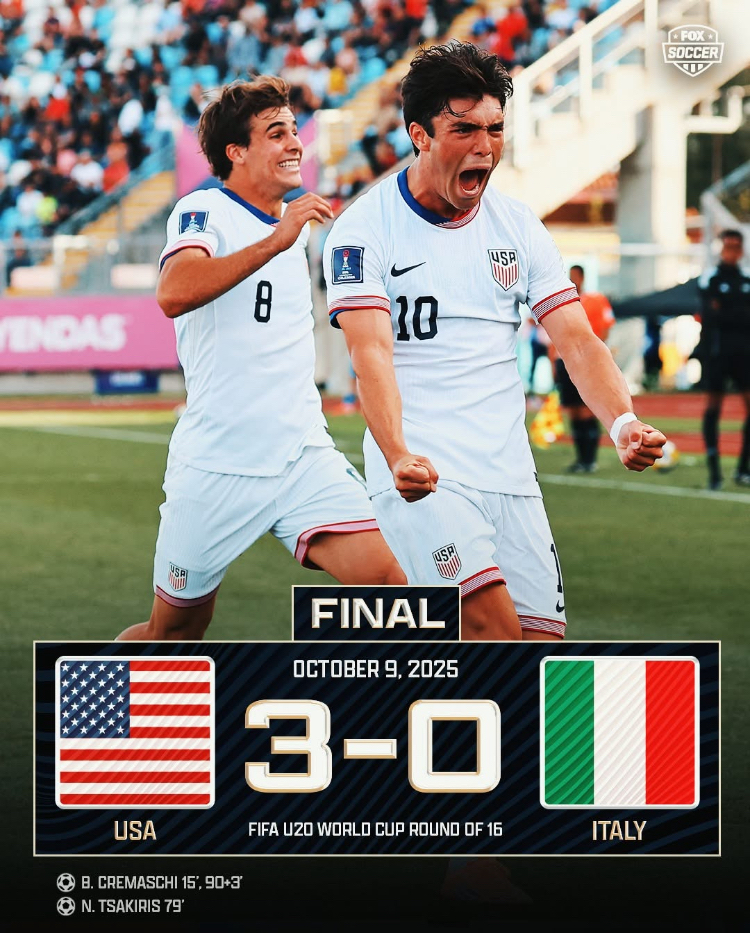
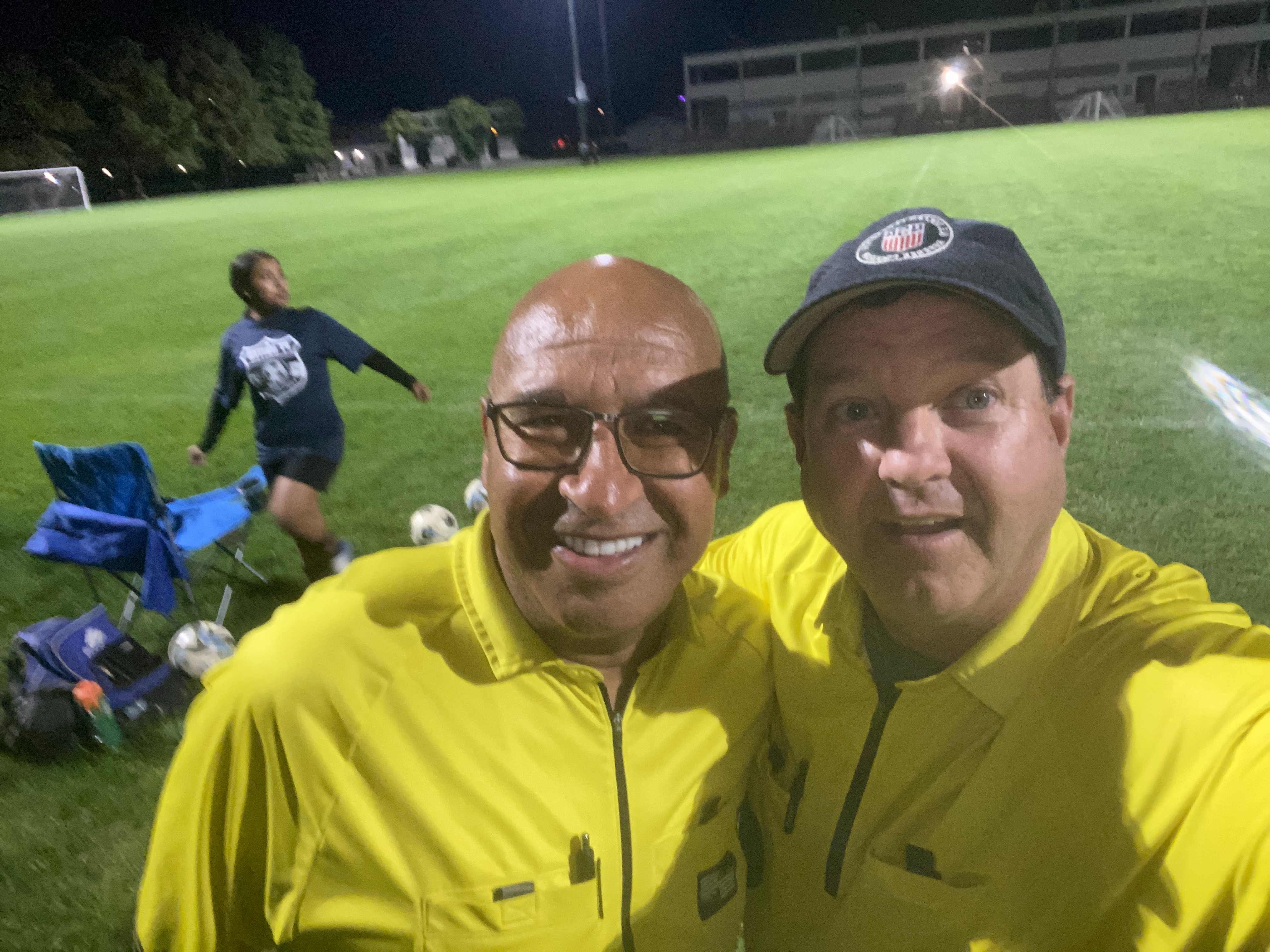

 Roger Bennett & the Boys


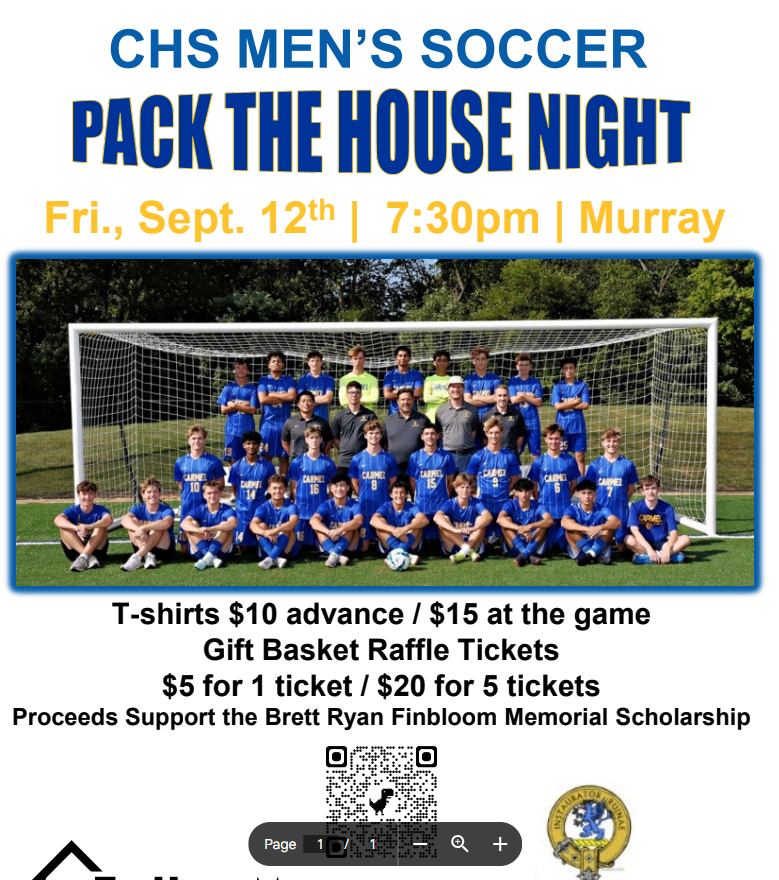

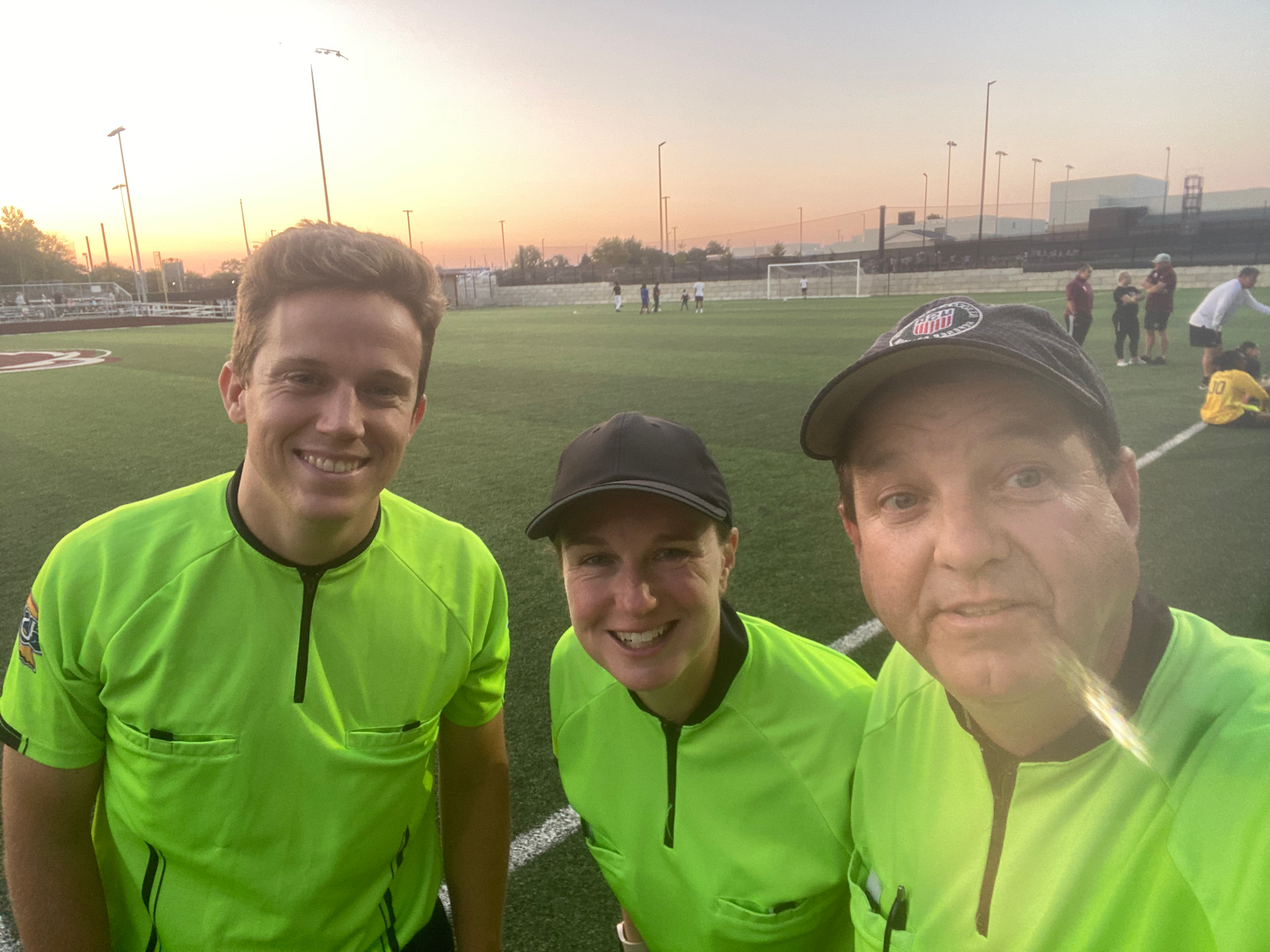

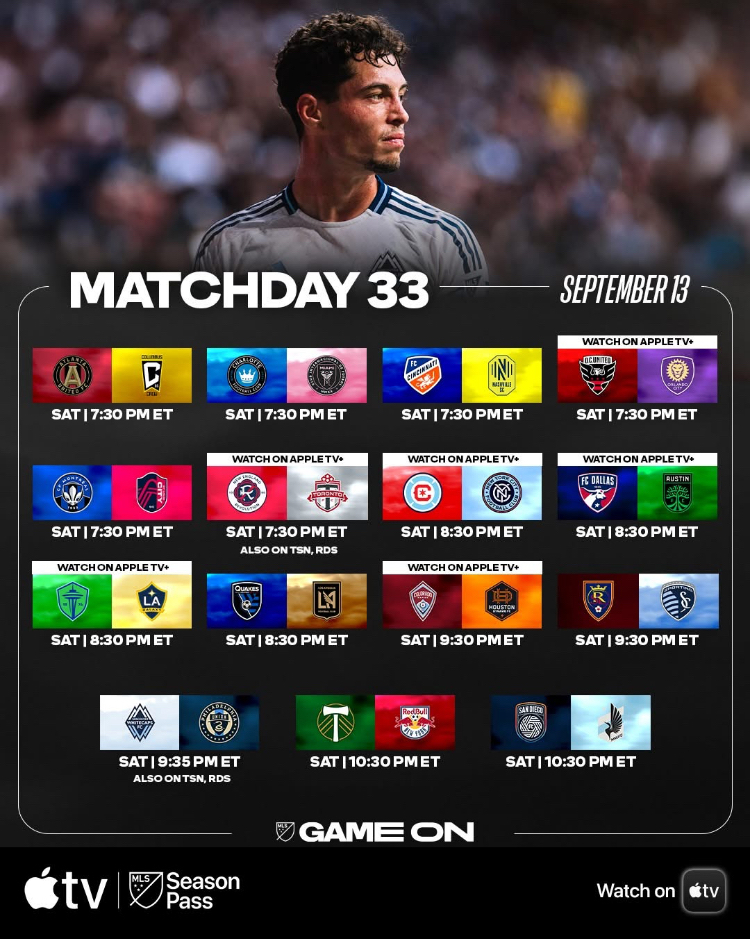
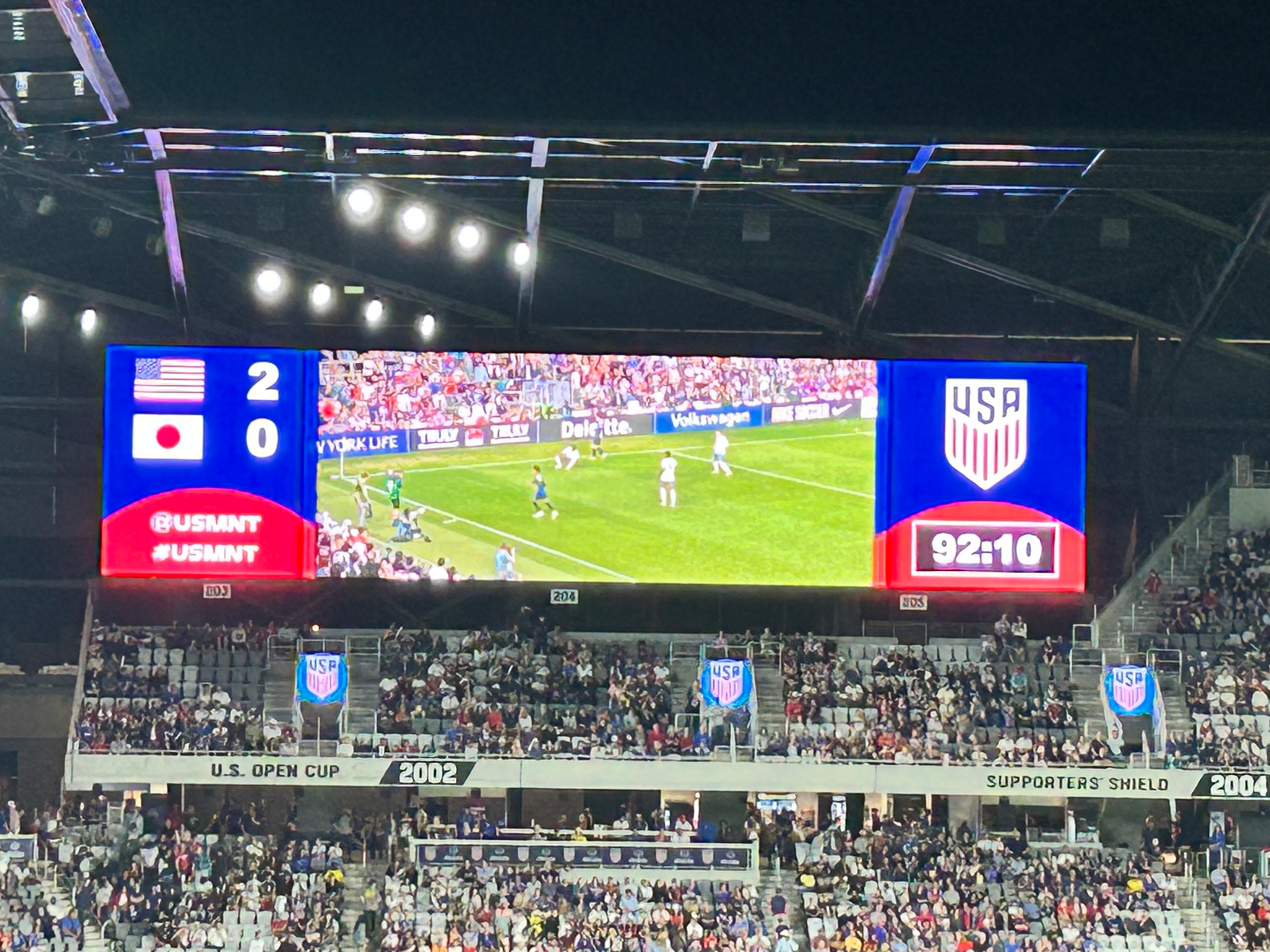


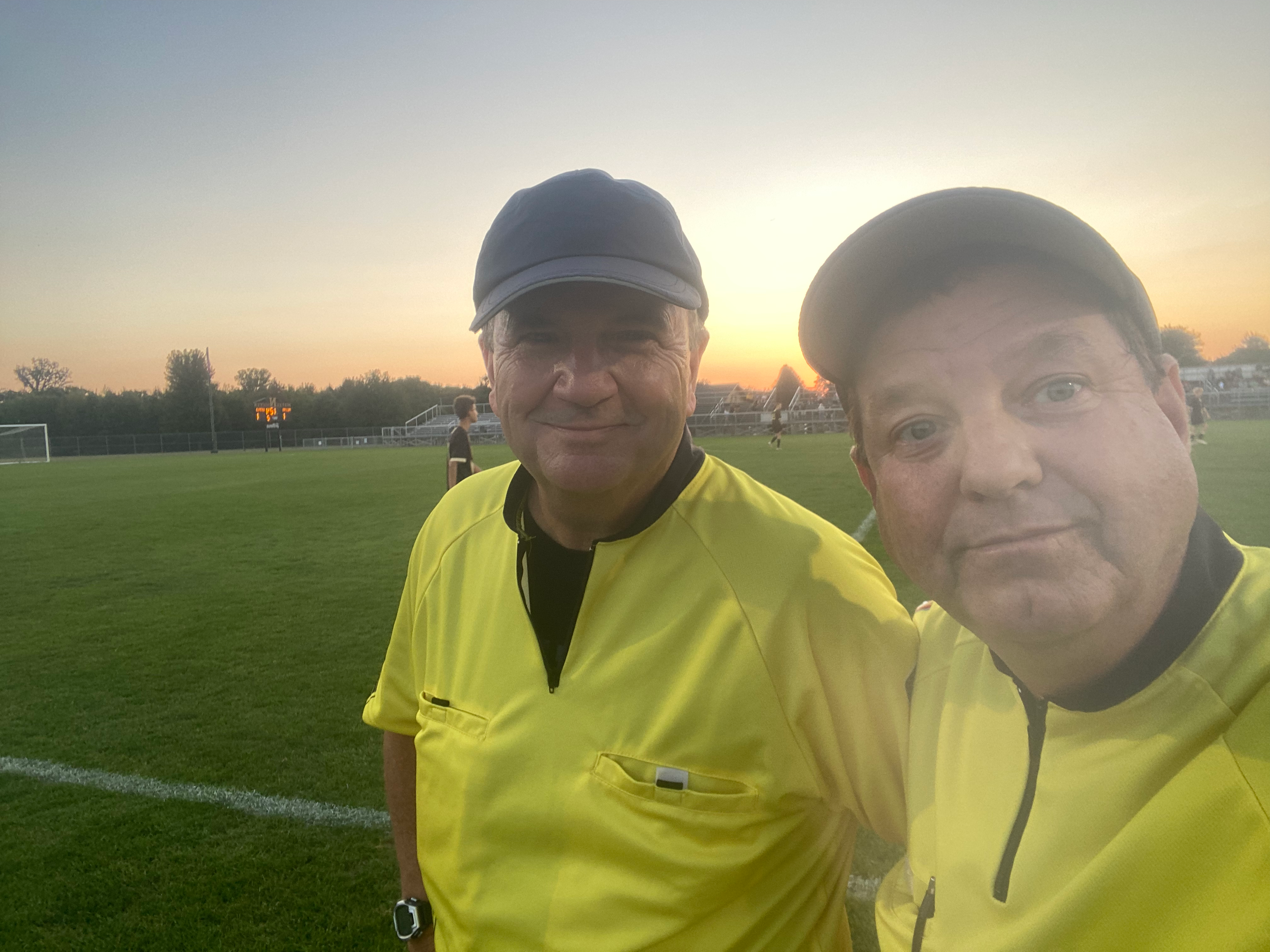




 Top MEN’S WORLD CUP Stories
 Mauricio Pochettino’s changes paid off vs. Japan (Koji Watanabe / Getty Images)
 USMNT center backs Chris Richards (3) and Tim Ream (13) with goal-scoring winger Alex Zendejas (Joseph Maiorana / Imagn Images)


 USMNT had plenty to celebrate during its performance vs. Japan (Adam Cairns / Columbus Dispatch / USA TODAY Network / Imagn Images)
 Mauricio Pochettino and Folarin Balogun share a hug after a successful showing vs. Japan (Joseph Maiorana / Imagn Images)
 USMNT core figures Christian Pulisic and Tyler Adams during Tuesday’s win over Japan (Adam Cairns / Columbus Dispatch / USA Today Network / Imagn Images)
 Malik Tillman and Diego Luna helped guide the USMNT to the Gold Cup final (Jed Jacobsohn / Getty Images)
 Mauricio Pochettino enjoyed a win over Japan, but successes haven’t been frequent in his time as U.S. manager (Koji Watanabe / Getty Images)
 USMNT fans hope Christian Pulisic and Folarin Balogun can form a powerful combination. (Stephen Nadler / ISI Photos / ISI Photos via Getty Images)


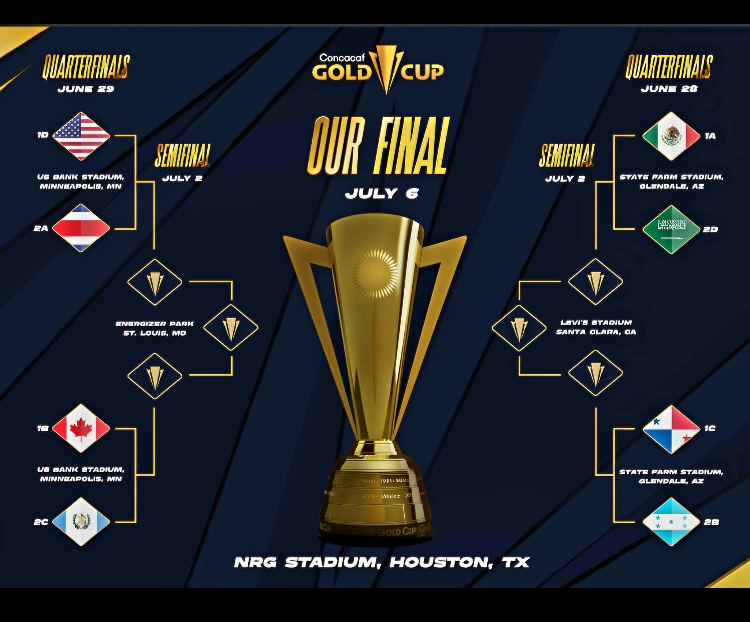





 Watch Clint Dempsey break down the exhilaration of last night’s U.S. win


 Enjoying USMNT Only? Check out our other newsletters covering the USWNT and Premier League
  When La Furia Azul last reached a CONCACAF Gold Cup semi-final, “Independence Day” was dominating the box office and Manchester United were one of the best teams in world football. If you’re of a certain vintage, 1996 doesn’t feel like it was 29 years ago, but for Guatemalan football fans, who cling to cult heroes like Juan Carlos Plata and Carlos Ruiz, it’s been an age.
 Poch’s new favorite playmaker, Mailk Tillman,
  Speaking of midfielders on the move, seems to only be a matter of time until Johnny Cardoso makes the 330-mile trip from Real Betis in Seville to join Atlético Madrid in the Spanish capital.
  Despite strong rumors involving a move to Nottingham Forest,
  Lucky No. 13 at Craven Cottage? While he’s one of the many American strikers absent from the Gold Cup, Ricardo Pepi, who’s still rehabbing from a January knee injury, is
  Meanwhile, the USMNT’s current starting striker is making the move to England: Charlotte FC’s
  Sunday night’s winning penalty taker in the shootout, 20-year-old forward
  USMNT international, former Atlanta United player, and current Chelsea fullback Caleb Wiley is
 Goalkeeper Matt Freese played a key role in the U.S. reaching the last four. (Carlos Gonzalez / ISI Photos / USSF / Getty Images)
 Veteran Tim Ream has been a leader for the USMNT throughout the Gold Cup (Photo by Brad Rempel/Imagn Images)
 Rubio Rubin celebrates his clutch goal vs. Canada in the Gold Cup quarterfinals (Photo by Matt Krohn/Imagn Images)
 Damion Downs clinches the USMNT’s win over Costa Rica. (Stephen Maturen/Getty Images)
 USMNT players celebrate their Gold Cup quarterfinal win over Costa Rica. (Kerem Yucel/AFP/Getty Images)

 See the full list of Club World Cup match results
 The USWNT works out at Audi Field on Tuesday ahead of Wednesday’s friendly against Canada in Washington, D.C. (Asli Pelit / The Athletic)
 Canada’s Gold Cup run ended in the quarterfinals (Photo by Matt Blewett/Imagn Images)
 Jacob Shaffelburg is sent off vs. Guatemala, leaving Canada with 10 men for the second half (Photo by Brad Rempel/Imagn Images)
 It’s back to the drawing board for Canada and Jesse Marsch after a humiliating Gold Cup ouster (Photo Troy Taormina/Imagn Images)
 Canada’s Jacob Shaffelburg is red carded vs. Guatemala (Photo by Kerem Yucel/AFP/Getty Images)
 NWSL players Jess Carter (L) and Esme Morgan (C) will represent England at this year’s European Championship. (Harriet Lander – The FA/The FA via Getty Image)
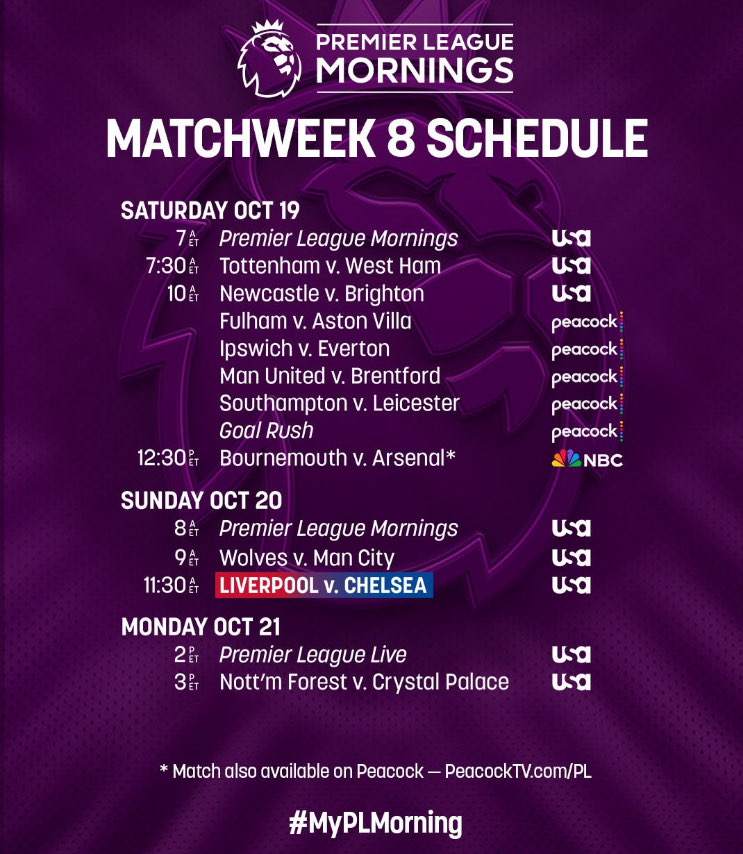
/cdn.vox-cdn.com/uploads/chorus_image/image/73670044/2178609280.0.jpg)


 Pochettino in his stint at Southampton (Chris Ison/PA Images via Getty Images)
 Pulisic will be key to the Pochettino era (John Dorton/ISI Photos/USSF/Getty Images)
 Cherchesov and his players surprised even their own fans in Russia in 2018 (MAXIM ZMEYEV/AFP via Getty Images)

 Pochettino with Antonee Robinson during the match against Panama (Ronald Cortes/Getty Images)
 Pochettino stands for the national anthem before the Panama game (Ronald Cortes/Getty Images)
 Pochettino during USMNT’s match against Panama (Ronald Cortes/Getty Images)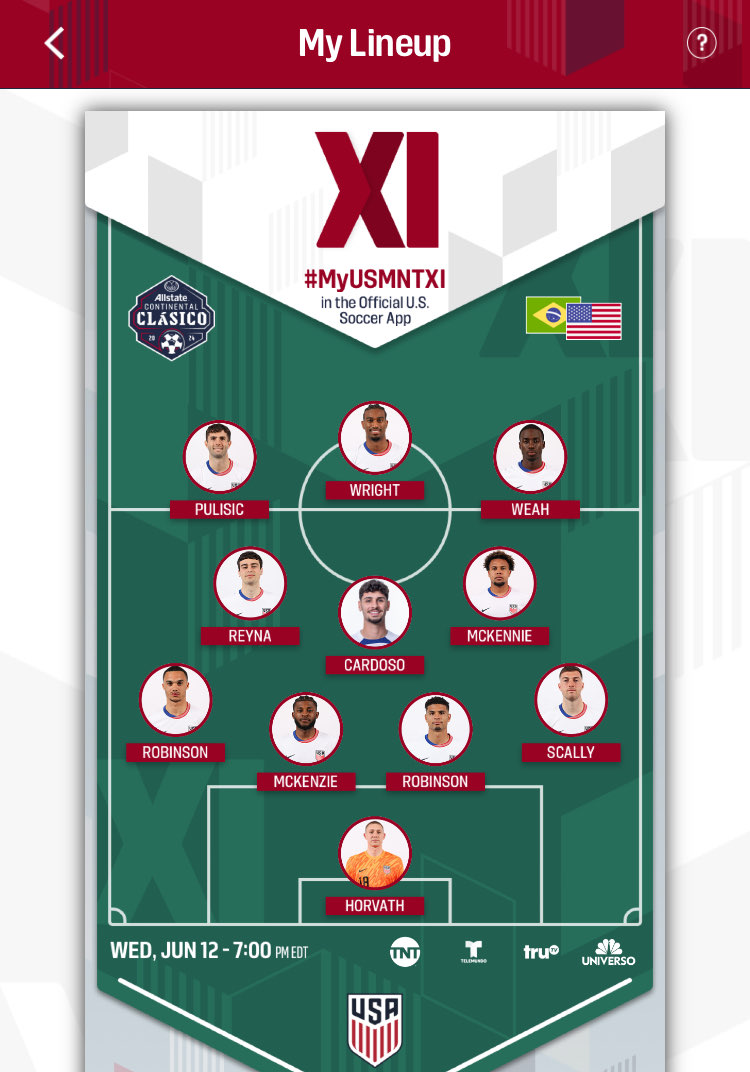


 Weah was a rare bright spot for the U.S. against Colombia. (Photo by Greg Fiume/USSF/Getty Images for USSF)
 Pulisic left the game at halftime due to managing his minutes. (Photo by Tim Nwachukwu/Getty Images)
 Weah was a rare bright spot for the U.S. against Colombia. (Greg Fiume/USSF/Getty Images for USSF)


 Kai Havertz (Ina Fassbender/AFP via Getty Images)


 (Ian MacNicol/Getty Images)


 (Denis Doyle/Getty Images)


 (Adam Hunger/Getty Images)


 Dusan Tadic is still a key player — even at 35 (Srdjan Stevanovic/Getty Images)


 (Jonathan Moscrop/Getty Images)


 Koeman relies on Van Dijk’s trademark diagonals (ANP via Getty Images)


 (Robbie Jay Barratt – AMA/Getty Images)


 (Visionhaus/Getty Images)

 The Ole BallCoach