US faces Ecuador Tonight at 8:30 pm on TNT, HBO Max, Tues vs
Ah poor Potchitino may not have all of his players healthy this week as he prepares for his next to the last run out before the World Cup – Boo the Flip Hoo. Maybe you should have thought of that when we played really good teams in the last 2 camps man. Five Million Dollars completely wasted on this poor excuse for a soccer coach in my mind – but lets see if this decent club coach can pull it together despite having some of his better players in Pulisic, Zendejas and Robinson nursing injuries. Wow guys were all healthy last run out — and before the Gold Cup back in June when we played really good teams – but hey Botch was touring Europe doing nothing then – spending US money. Anyway back to this weekends games – he’s finally brought in a decent roster FINALLY. Hard to Say who will start with the injuries. I still think the 3 Centerback thing is questionable when we only have 2 decent centerbacks – but what do I know. He’ll run out 3 tonight to see what it looks like I presume – the question is — is it CCV or Miles in the middle of the three with Ream on the left and Richards on the right? Or does Richards move to the center and McKensie slide to the right? I think McKinney & Tessman play the double 6 with Pulisic & Tillman beneath Ballagon and Robinson & Weah on the outside backs. Ecuador is actually decent – has qualified for the World Cup and will give us a game – perhaps we slide thru 2-1 if Pulisic plays – 1-1 if not.
Goalkeepers(4): Chris Brady (Chicago Fire), Matt Freese (New York City FC), Patrick Schulte (Columbus Crew), Matt Turner (New England Revolution). Defenders(8): Max Arfsten (Columbus Crew), Cameron Carter-Vickers (Celtic), Alex Freeman (Orlando City), Mark McKenzie (Toulouse), Tim Ream (Charlotte FC), Chris Richards (Crystal Palace), Antonee Robinson (Fulham), Miles Robinson (FC Cincinnati). Midfielders (8): Brenden Aaronson (Leeds United), Diego Luna (Real Salt Lake), Weston McKennie (Juventus), Aidan Morris (Middlesbrough), Cristian Roldan (Seattle Sounders), James Sands (St. Pauli), Tanner Tessmann (Olympique Lyonnais), Malik Tillman (Bayer Leverkusen). Forwards(6): Patrick Agyemang (Derby County), Folarin Balogun (Monaco), Christian Pulisic (AC Milan), Tim Weah (Olympique Marseille), Haji Wright (Coventry City), Alex Zendejas (Club América).
US U20s Beat Italy 3-0 to Advance to QFs vs Morocco Sun 4 pm
Awesome to see the US U20’s pound Italy 3-0 (Highlights) just a week after pounding France in the U20 World Cup. Miami’s Ben Cremasche scored the Brace as he now has 5 goals to lead the tourney in goals. The win sends the US to the Quarterfinals where they face Morocco Sun at 4 pm on Telemundo. Not sure why this game is not on FS2 at least as Fox is covering the Tourney?
Indy 11 face Pittsburgh Riverhounds & former Carmel & Butler GK Eric Dick pm Sat 7 pm on ESPN+
The Boys in Blue travel to Pittsburgh tonight with the playoff hopes on a thin line as they face former Carmel Dad’s, Carmel High & Butler GK Eric Dick on ESPN+. They have their final regular season home game with Fan Appreciation Night on Saturday, October 18 at 7 p.m. at Carroll Stadium vs. Loudoun United FC.
A Reminder Carmel FC is Looking for High School Players to fill out some teams – including my 2010 Boys Team. Come on out Thurs Oct 16 for Supplemental Tryouts.
The U20 US Boys-are on to the QuarterFinals vs Morocco Sun 4 pm on UnivisionReffing the High School Rec Championship Game at Atleto with these guys always fun. Thanks Tori for all you do for us Carmel Dad’s Cup Refs.
====RackZ BAR BQ ====Save 20% ===
Coming home from Practice or Games at Badger Field? Try out the Best BarBQ in Town right across the street (131st) from Northview Church on the corner of Hazelldell & 131st. RackZ BBQ
Save 20% on your order
(mention the ole ballcoach)
Check out the BarBQ Ribs, pulled Pork and Chicken, Brisket and more. Sweet, Tangy or Spicy sauce. Mention you heard about it from the Ole Ballcoach — and Ryan will give you 20% off your next meal. https://www.rackzbbqindy.com/Call ahead at 317-688-7290 M-Th 11-8 pm, 11-9 Fri/Sat, 12-8 pm on Sunday. Pick some up after practice – Its good eatin! You won’t be disappointed and tell ’em the Ole Ballcoach Sent You!
Save 20% on these Succulent Ribs at Rackz BarBQ when you mention the Ole Ballcoach – Corner of 131 & Hazelldell. – Call 317-688-7290.
======================RackZ BAR BQ ====Save 20% ======================
FULL TV GAME SCHEDULE
Fri, Oct 10 2:45 pm FS2 France vs Azerbaijan 2:45 pm Prime Germany vs Luxenberg 8:30 pm TNT, Max USA Men vs Ecuador 10:45 pm Seattle Reign vs Bay FC NWSL Sat, Oct 11 9 am FS2 Latvia vs Andorra WCQ 12 noon Prime Norway vs Israel WCQ 2:45 pm FS2 Spain vs Georgia WCQ 2:45 pm Prime Portugal vs Ireland WCQ 4 pm FS2, Tele U20 World Cup Quarterfinal 7 pm FS2 U20 World Cup Quarterfinal 7 pm ESPN+ Indy 11 @ Pittsburgh (Carmel’s -Eric Dick) 7:30 pm Para+ North Carolina vs Washington Spirit NWSL 10 pm CBSSN Utah Royals vs San Diego Wave NWSL Sun, Oct 12 9 am FS2 San Marino vs Cypress 12N FS2 Netherland vs Finland WCQ 2:45 pm Lithuania vs Poland WCQ 4 pm FS2, Tele U20 World Cup QF USA vs 5 pm ESPN Angel City vs Houston NWSL 7 pm FS2 U20 World Cup Quarterfinal Mon, Oct 13 2:45pm FS2 Northern Ireland vs Germany WCQ 2:45 pm Prime Iceland vs France WCQ 8 pm PAra+ Honduras vs Haiti WCQ Tues, Oct 14 2:45pm FS2 Latvia vs England WCQ 2:45pm Prime Spain vs Bulgaria WCQ 2:45pm Prime Portugal vs Hungary WCQ 9 pm TNT, Max USA Men vs Australia 10:30 pm Prime Mexico vs Ecuador
Thurs, Oct 23 9 pm TNT, Max USA Women vs Portugal Chester PA Sun, Oct 26 4 pm TNT, Max USA Women vs Portugal Hartford CT Sat, Nov 15 5 pm TNT, Max USA Men vs Paraguay Chester PA Tues, Nov 18 7 pmTNT, Max USA Men vs Uruguay Tampa, FL
Love doing the Adult ladies games down Kuntz on Tuesday nights. Here with
USA vs. Ecuador (TONIGHT, 8:30 p.m. ET, TNT) Roger Bennett & the Boys
Brace yourself, this is going to be some stern test. Ecuador are the footballing equivalent of one of the 12 Labors of Hercules. Fresh off beating Argentina and finishing second in CONMEBOL qualifying, tonight will rank somewhere between slaying the nine-headed Lernaean Hydra and Capturing the Erymanthian Boar. Yes, La Tri will be without Chelsea’s ultimate fighter Moisés Caicedo and Arsenal defender Piero Hincapié, but this team is fast, furious and physical. Mauricio Pochettino has asked us to trust his process. Tonight should be a true test of our progress, identity and collective belief. Here are the questions I am looking forward to seeing real answers to…
i. Can We Set Up Christian Pulisic to Hurt Opponents in a U.S. Jersey as He Has Done for Milan?
Christian Pulisic has been in the form of his life for Milan with a league-leading four goals and two assists. When we spoke this week, he identified the source of his potency: the tactical freedom he’s been given by coach Max Allegri,which reminded me of what Jack Grealish said in this incredible clip about how he plays at his best. Pochettino still must crack the code within his system to set Christian up to do similarly in a U.S. lineup. He has too often cut a frustrated figure, but if we can create the freedom for Pulisic to acquire possession in space to hurt opponents with a striker running ahead of him, we can soar.
ii. To That End, Do We Play Three or Four at the Back?
In our last-game victory against a Japan XI, Poch moved Christian to play under the striker in a 3-4-2-1 lineup, and CP linked up with Balogun for his goal with a flourish. I believe it will be three at the back again. Our nation’s great tactical experiment must continue.
iii. Can Weston McKennie Assert Himself and Win a Place in Poch’s Good Book?
There is the Weston McKennie of our dreams: the Texan bowling ball capable of knocking down all-comers. There is also the McKennie of this cycle—a capricious player whom Poch does not trust to fit into the hard-grind, all-in, always-on culture he expects and demands.
It has incredibly been seven long months since Weston was last in a U.S. national team camp—since the darkness of the Nations League slumping defeats to Panama and Canada. In that spell, he somehow managed to both captain Juventus at the Club World Cup, lose his place in the team, then fight his way back in. At club level, Weston has consistently proved he is never more focussed and effective than when he is on the brink of exile—a truth which is a reflection of his mentality, rather than his potential skill, which is not in doubt. Can he do the same again for us tonight?
iv. How Long Can Antonee Robinson Go?
That electric left-back/footballing can opener Antonee Robinson is back in the squad for the first time in almost a year. The Fulham star is returning from a long-term knee injury and is yet to start a Premier League game this season. He will be on a severe time restraint, yet the U.S. are truly only a three-dimensional team when he is flying down the flank.
Also, who is on the right? Twenty-one-year-old Orlando City speed freak Alex Freeman is the only natural right-back… Does he play or does Tim Weah play wingback?
v. Who’s Up Top: Flo Balogun or Haji Wright?
I hope Haji gets some playing time, gent has been the man for Frank Lampard’s unbeaten Coventry. Here is Herc Gomez explaining what has changed for the Los Angeles striker whose confidence has gone next level.
vi. Who’s in Goal?
Harvard Donnarumma Matt Freese is the heir apparent. Matt Turner is back in the squad. Freese has the form, Matty T. the experience. Can we play them both at the same time?
vii. Where Are We Between Experiment and Reality?
This is one strange cycle. The steady diet of friendlies has offered Poch the chance to experiment and audition with no consequences. He has asked us to trust his process without truly articulating what that is. I asked both Tyler Adams and Christian Pulisic what matters in these games. As highly competitive athletes, they both had the same answer: winning and the results. At what stage will the open auditions and tactical experiments cohere? The World Cup is 244 days away. There are just a handful of games left before we play before the teams, who as in the Ryder Cup, are all going to want to do us. Close by, the train is waiting…
PS – Really lovely piece on the incredibly inspiring Diego Luna.
USMNT injuries complicate Mauricio Pochettino’s October camp and Ecuador friendly
USMNT head coach Mauricio Pochettino has injury concerns to contend with. Robin Alam / ISI Photos
AUSTIN, Texas — U.S. men’s national team coach Mauricio Pochettino indicated Thursday that Christian Pulisic, Antonee Robinson and Alex Zendejas are all doubts for Friday’s friendly against Ecuador.
Pochettino, speaking at a news conference here ahead of the match at Q2 Stadium, said that Pulisic and Robinson didn’t train Thursday, and Zendejas “(felt) something, and it’s an issue. We don’t believe that Alex will be part of the game tomorrow.”
Advertisement
Neither Pochettino nor a team spokesman would give more specifics about the “issues” hampering Pulisic and Robinson.
Robinson underwent knee surgery at the start of this past offseason and has been working to regain fitness and playing time at his club, Fulham.
“We need to assess tomorrow (if) they can be available or not,” Pochettino said.
Antonee Robinson (left) and Christian Pulisic are both in doubt for Friday’s USMNT clash.Stephen Nadler / ISI Photos / USSF / Getty Images for USSF
Their status could complicate Pochettino’s plans for this October international window, the third-to-last before he’ll pick a World Cup squad in the spring. He is already without fullback Sergiño Dest, midfielders Tyler Adams and Johnny Cardoso, and striker Ricardo Pepi. If Pulisic and Robinson are unable to play, or if they are held out of the starting lineup as precautions, the USMNT would be without roughly half of its presumed first-choice starting 11 for what would otherwise be a valuable tune-up for 2026.
Pochettino took a rosier view. The “circumstances,” he said, could “give the opportunity to different, maybe, players to play.”
Many of the players who would naturally step in for Pulisic and Zendejas, including Malik Tillman and Diego Luna, and for Robinson, such as Max Arfsten, are players Pochettino and his staff have already seen often throughout 2025.
One player he hasn’t seen often, Tanner Tessmann, could be pushed into a more advanced role in midfield.
Brenden Aaronson could also get another chance to impress Pochettino, having failed to do so at the CONCACAF Gold Cup this past summer. Haji Wright could, in theory, move up the pecking order for playing time on the wing, though a forward line of him, Tim Weah and Folarin Balogun would lack variety.
Weston McKennie, back with the squad for the first time since March, could also play higher up the field. Pochettino did not name names as potential replacements for Pulisic, Zendejas and Robinson, but later spoke about McKennie as a player who could be an “important” one for both Juventus and the national tea
“He has arrived very well, with very good energy,” Pochettino said of McKennie.
He first mentioned the injury “issues” in response to a question about the importance of these October games — first against Ecuador, then next Tuesday in Colorado against Australia.
Alex Zendejas has been in sparking form in Liga MX.Hector Vivas / Getty Images
“It’s difficult to convince you all, [but] the most important [thing], today, is not really the games,” he said. “The most important is what we are building here in the camp.”
Throughout his 30-minute news conference, he continued to speak at length about his “process.”
“Of course we need to play, and we need to perform, and we need to win, because that is going to give us the credibility in our work,” he said. But there was more value, he insisted, in the precious little time they get to spend together.
He again spoke about March, when the U.S. lost to Panama and Canada, as a “wake-up call” that compelled him to change his approach to the job.
“The moment that we identified the problems, we started to destroy the things that we need to destroy, and start to build the house from the ground up,” Pochettino said. (He did not specify what the “problems,” or the things that needed to be “destroyed,” were.)
Doing so, he continued, “takes time.” It also takes “a lot of problems, because it’s difficult for the people to understand, sometimes, that process,” Pochettino said. “But, I think we are on time.”
After the friendlies against Ecuador and Australia, the USMNT will have two more against Paraguay and Uruguay in November to close out 2025. They’re in advanced discussions to then play Portugal and Belgium in March, in the last two games before the World Cup team gathers in May and June.
“I am so happy, so positive, in the way things are going,” Pochettino said. “I am respecting the plan. It’s on time. It’s true that (there are only) a few camps until the World Cup, but the base is really strong now, after one year of working. It’s not too much time, but it’s time enough to build what we wanted to build.”
Christian Pulisic arrives in form, but status in sudden doubt for USMNT vs. Ecuador
AUSTIN, Texas – U.S. men’s national team coach Mauricio Pochettino said Christian Pulisic did not train on Thursday and is a question mark for Friday’s game against Ecuador.
“I need to communicate that we have some issues in some players, like Christian [Pulisic], who didn’t train today,” Pochettino said, not offering any other further specifics but also indicating that Alejandro Zendejas and Antonee Robinson sat out Thursday as well. “We need to assess tomorrow [if] they can be available or not.”
Advertisement
Pulisic had spoken to the media earlier in the day but did not mention any issues, injury or otherwise. Instead, he focused on the importance for the U.S. team to come out of this international window with not just good performances, but also good results. After meeting La Tri, the U.S. will host Australia, another World Cup-bound opponent, next Tuesday in Colorado.
“It’s as simple as that,” Pulisic said. “We want to kind of understand and know where our team is at and have a good feeling going forward as we get closer to the summer.”
Pulisic arrived in Austin in strong form with AC Milan. The U.S. No. 10 was named Serie A player of the month and has six goals and two assists for Milan across all competitions. Pulisic missed a penalty kick in Sunday’s draw with Juventus, but he remains one of the most important players for both club and country.
On Thursday, he made sure to point out that he didn’t just spend his summer on the beach.
“I worked really hard this summer,” Pulisic said. “It’s not like I just took a break. I wanted to make sure that my body was in the perfect spot coming into the season, and I wanted to start really strong, and I worked really hard. And it’s just been consistency and the work I’ve put in, and it’s good to see it come to fruition and (to be) playing well. But it’s just the start of the season. I have so much more I want to accomplish.”
The U.S. will need Pulisic to be at his best if it’s to advance in next summer’s World Cup.
“I think I can do well in a lot of the attacking positions, but I’ve always felt comfortable coming off the left side, but also being in sort of pockets in behind the striker,” he said. “I’ve always been pretty comfortable in that position. It allows me to use some of my strengths, get in the box, make runs in behind. So I think it’s a good spot.”
Advertisement
The key for the U.S. now isn’t just unlocking Pulisic’s club form on the international stage, but continuing to build momentum from the Japan win into this window. While friendlies are a proving ground in which the result isn’t as important, the American team is in need of some validation to the process under Pochettino.
Wins now build trust and momentum, and piling up those results is crucial as the World Cup nears.
“I think we’re settling in well,” Pulisic said. “Now it’s about building good performances one after the other. After last camp feeling good, now it’s a great opportunity.”
Your Next Read
After years of winning back his Juventus place, Weston McKennie aims to do same for USMNT
AUSTIN, Texas — It has been seven months since Weston McKennie was last here in U.S. men’s national team camp, simultaneously competing and joking, building toward a World Cup.
It has been seven months since March, since the Concacaf Nations League losses to Panama and Canada, since a week-long camp that head coach Maurico Pochettino recently described as a “wake-up call.”
Advertisement
In those seven months, McKennie has captained Juventus at the Club World Cup, then seemingly been pushed out of the Juve starting 11, only to fight his way back in. He’s been left off a USMNT roster and missed 10 national team games for multiple reasons.
So, when he spoke here Thursday, and when a TV reporter asked him, as “a key leader in this group,” what his “message for the younger players” would be, McKennie paused.
“Ah, for the young players coming into this camp?” he said. “I mean, I’ve been gone for seven months, so it feels like I’m a new player.”
He chuckled, then gave his serious answer: “I would say: just put your head down and work, and really immerse yourself into the environment, into the group, into the guys and the ideas.”
That, in a way, is what McKennie has been doing, or must do, this week. He took part in Pochettino’s first three A-team camps, but missed a summer of culture-building that Pochettino and players have hailed as a crucial part of the coach’s “process.”
Weston McKennie last played for the USMNT vs. Canada in the Concacaf Nations League third-place match in March 2025Michael Owens / Getty Images
When asked Thursday about the team’s first year under Pochettino, McKennie said: “I mean, I’ve only spent a couple camps in with the group. So, probably a better question to ask someone else.”
McKennie did start all four Nations League matches in November and March. The latter, though, convinced Pochettino that “we needed to start a different process and different approach.” It wasn’t just the losses to Panama and Canada. “All that happened helped a little bit to realize that the most important thing is the national team; it’s the federation, and [the U.S. Soccer crest,]” Pochettino later said. “This is more important than any single name.”
Over the coming months, he omitted several notable names from rosters, in an apparent attempt to create internal competition, by sending a roster-wide message that nobody’s place in the USMNT is guaranteed.
Advertisement
McKennie wasn’t one of the discretionary omissions in June; he was, rather, with Juventus at the Club World Cup and unavailable for selection. But he was then left off Pochettino’s roster for September friendlies against South Korea and Japan.
Pochettino, when asked to explain McKennie’s omission at the time, indicated that McKennie’s delayed offseason, and his precarious place in Juventus’ squad, were two factors. “We wanted to give him the possibility to be more settled in his club,” Pochettino said.
But, at the same time, he did call in Tim Weah, who had also been with Juve at the Club World Cup, then transferred to a new club, Marseille, just weeks before the roster was named.
McKennie was asked Thursday about his interpretation of and reaction to the omission. How did it hit him? Did it motivate or inspire him?
“Nah, I just stayed at my club, focused on what I had to do there,” he said. “And, yeah, just waited to have the opportunity to come back in.”
USMNT teammates Christian Pulisic and Weston McKennie vie for possession during a recent Serie A match between AC Milan and JuventusMarco Alpozzi / LaPresse / AP
At his club, meanwhile, he was once again battling to prove his worth. Offseason after offseason, he has been pushed “out of the project” at Juventus — and, on at least one occasion, stripped of a locker and parking spot. But he has always played his way back in, and 2025 felt no different.
“The summer is always a roller coaster for me. So, nothing’s really changed,” McKennie said Thursday with a smile. “I’m kind of used to it now.”
When asked about the mentality required to win back his place, again and again, he grinned and said: “It’s year after year, so it’s years of practice.”
He is, it seems, en route to doing that at Juve. After struggling for minutes over the season’s first few weeks, he has now started four games — including two in the Champions League — and played five over the past month.
Advertisement
The one difference, now, is that his place in the national team seems less secure than ever. The player pool, at least in midfield, is deeper. And the coach has been willing to call upon less-accomplished, less-heralded and arguably less-talented players ahead of established figures if the stars don’t perform.
When asked if, having been away from the team for several months, he now feels like he has to win back a starting spot here, too, McKennie said: “That’s for the outside people to think, and the coaching staff to feel like. I just come in and do my best. If the coach thinks it’s a good fit for the starting 11, it’s a good fit. If it’s not, then it’s not.”
When asked about the March “wake-up call,” and whether he saw it as such, or whether Pochettino has explained that to him, McKennie began with a “nah,” and reiterated that he hasn’t been around the group enough to “know how people are taking what they take, or how they do what they do, or what not.”
“I’m just here to do my job whenever I’m called upon,” he said. “And that’s that.”
USA U-20s book World Cup quarterfinal place, rout Italy behind Cremaschi’s double
The United States advanced to the quarterfinal round of the U-20 men’s World Cup for the fifth straight competition after a comprehensive 3-0 win over Italy on Thursday, with Benjamin Cremaschi’s double sandwiching a free kick from Niko Tsakiris in Chile. The Americans were the better side on the day and were never in any sort of danger against a poor Azzurri team, who had two late shouts for penalties go uncalled, even after VAR review.Cremaschi scored his fourth and fifth goals of the tournament on Thursday to take the competition’s scoring lead. His first came in the 15th minute following a scramble in front of goal from a U.S. corner kick, as he poked the ball into the net from close range. His second goal, in second-half stoppage time, was a lovely dink over the goalkeeper from the center of the box after receiving a cross in stride on a run down the center.
The on-loan Parma midfielder, who earlier in the tournament became the second American to score a hat trick in a U-20 World Cup (Freddy Adu did so in 2007), had his strikes complemented by Tsakiris, who curled in a wonderful free kick from just outside the Italian penalty area to put the U.S. 2-0 up in the 79th minute. Marko Mitrović’s side, which has benefited from playing every match thus far at the Estadio El Teniente in the city of Rancagua, will face Morocco in the quarterfinals on Sunday. The African side topped its group by beating Spain and Brazil before being edged 1-0 by Mexico, and it beat South Korea 2-1 in Thursday’s round finale. It’ll mark the second straight year the two sides will have met on the youth stage, with Morocco knocking the U.S. U-23s out of the 2024 Olympics with a 4-0 quarterfinal thrashing in Paris.
Stay in the know by selecting your interests on The Athletic:
These U-20 Americans will hope for a better fate and as they seek to advance to the final four of the competition for the second time in program history – and the first since 1989. Norway and France, the latter of whom the U.S. beat in group play, are in the other quarterfinal on the U.S.’s side of the bracket, while Mexico, Argentina, Spain and Colombia make up the other half.
While the football has not always been pleasing on the eye, this U-20 World Cup in Chile has had a vintage feel. At the senior men’s level, World Cups have become opulent global events. There is the rustic feel to this youth tournament that is being played at the aging concrete stadiums in cities like Santiago, Talca and Viña del Mar. Whether it’s a crisp spring night or a breezy sunny afternoon amidst the Andes Mountains, the aesthetics of the tournament lend itself to the nostalgia of past competitions. It’s fitting that the last U-20 World Cup that was played in Chile in 1987 featured Yugoslavia’s Robert Prosinecki, one of the biggest stars of the 1990s and that tournament’s Golden Ball winner that yeaThis year’s tournament has been marked by Brazil’s failure to reach the knockout stage for the first time in their nation’s history. Brazil finished at the bottom of Group C with just one point, which led to the dismissal of head coach Ramon Menezes. Chile’s footballing crisis continues, too.
Chile’s senior side finished last in the 2026 World Cup qualifying campaign, and the host nation’s U-20 squad was jeered off the pitch after losing 4-1 to Mexico in the round of 16. The Mexicans have been one of the most talked about teams. They’ve played well and have been led by young midfield prodigy Gilberto Mora, the tournament’s most highly-touted player.
Mexico’s Gilberto Mora (11) has played as advertised and is a breakout star of the FIFA U-20 World CupRaul Bravo /AFP / Getty Images
Mora, a central midfield playmaker, was part of Mexico’s Gold Cup team that defeated the U.S. in the final in July. The 16-year-old, who plays his club football with Tijuana, is expected to be part of Mexico’s 2026 World Cup squad. Mora’s agent Rafaela Pimenta told TUDN on Wednesday that top European clubs like Real Madrid and Barcelona are tracking him, and when discussing a potential transfer fee for Mora, Pimenta said that “$15 million wouldn’t buy one of Mora’s legs.”
The American squad may not have a future global star like Mora, but there is plenty of technical ability on the team. On Thursday, standout performances from Cremaschi and defensive midfielder Brooklyn Raines powered the U.S. toward a potentially historic tournament run.
While past U.S. sides at the U-20 level included future senior national team legends like Michael Bradley, DaMarcus Beasley, Carlos Bocanegra, Tim Howard, Clint Dempsey, Landon Donovan and Kasey Keller, among others — the 2025 team is an understated side that may just be gelling at the right time.
USMNT Roster is Announced for the Oct 10 & Oct 14 games on TNT, HB0 Max
Nice to see Botchitino finally pick the a decent roster for the our games coming next week. Nice to CCV and Antonee Robinson (back from injury) back on the backline along with Mark McKenzie. Sands, Tessman and Aidan Morris in at the 6 to replace Tyler Adams who is out while his wife gives birth in the next 10 days. Also Matt Turner is back on the Goalkeeper line – hopefully he will get at least 1 start. More on this next week. The USMNT roster:
Goalkeepers(4): Chris Brady (Chicago Fire), Matt Freese (New York City FC), Patrick Schulte (Columbus Crew), Matt Turner (New England Revolution). Defenders(8): Max Arfsten (Columbus Crew), Cameron Carter-Vickers (Celtic), Alex Freeman (Orlando City), Mark McKenzie (Toulouse), Tim Ream (Charlotte FC), Chris Richards (Crystal Palace), Antonee Robinson (Fulham), Miles Robinson (FC Cincinnati). Midfielders (8): Brenden Aaronson (Leeds United), Diego Luna (Real Salt Lake), Weston McKennie (Juventus), Aidan Morris (Middlesbrough), Cristian Roldan (Seattle Sounders), James Sands (St. Pauli), Tanner Tessmann (Olympique Lyonnais), Malik Tillman (Bayer Leverkusen). Forwards(6): Patrick Agyemang (Derby County), Folarin Balogun (Monaco), Christian Pulisic (AC Milan), Tim Weah (Olympique Marseille), Haji Wright (Coventry City), Alex Zendejas (Club América).
The USMNT take on Ecuador on October 10th at Q2 Stadium in Austin. They then complete the October international window with a friendly against Australia on October 14th against Australia at Dick’s Sporting Goods Park in suburban Denver. Both Ecuador and Australia are teams that have qualified for the 2026 World Cup and will serve as tests for the United States. In U20 News – the US U20s shocked France 3-0 in game 2 of the U20s for the US – they will definitely advance to the next round where they face Italy on Thursday at 3:30 pm on FS2 and may well be a favorite to get to the Final 4. Also US refs will run Sats Spain vs Brazil game 4 pm on FS2.
High School Soccer Playoffs Start Monday this week
Indy 11 Win Again – @ Louisville on WNDY 23 7:30 pm Sat
Indy Eleven midfielder Jack Blake scored his USL Championship era (2018-) franchise record 25th Boys in Blue goal for the game-winner in a huge 2-1 victory over Western Conference leader FC Tulsa at Carroll Stadium. The win moves Indy Eleven into a playoff position one point ahead of Rhode Island FC with four games left in the regular season. Indy Eleven will take their two-game winning streak to USL Championship Eastern Conference leader Louisville City FC next Saturday at 7:30 p.m. on WNDY 23 and CBS Sports Golazo Network. The Boys in Blue have their final regular season home game with Fan Appreciation Night on Saturday, October 18 at 7 p.m. at Carroll Stadium vs. Loudoun United FC.
man look at this motley crew Wednesday night for Boys games at Guerin Catholic Robert H & Josh M for Girls JV & V at Guerin Catholic – last regular season High School games for me
====RackZ BAR BQ ====Save 20% ===
Coming home from Practice or Games at Badger Field? Try out the Best BarBQ in Town right across the street (131st) from Northview Church on the corner of Hazelldell & 131st. RackZ BBQ
Save 20% on your order
(mention the ole ballcoach)
Check out the BarBQ Ribs, pulled Pork and Chicken, Brisket and more. Sweet, Tangy or Spicy sauce. Mention you heard about it from the Ole Ballcoach — and Ryan will give you 20% off your next meal. https://www.rackzbbqindy.com/Call ahead at 317-688-7290 M-Th 11-8 pm, 11-9 Fri/Sat, 12-8 pm on Sunday. Pick some up after practice – Its good eatin! You won’t be disappointed and tell ’em the Ole Ballcoach Sent You!
Save 20% on these Succulent Ribs at Rackz BarBQ when you mention the Ole Ballcoach – Corner of 131 & Hazelldell. – Call 317-688-7290.
======================RackZ BAR BQ ====Save 20% ======================
FULL TV GAME SCHEDULE
Sat, Oct 4 7:30 am USA Leeds United (Aaronson) vs Tottenham 9:30 am ESPN+ Bayer Leverkusen (Tillman) vs Union Berlin 9:30 am ESPN+ Dortmund vs RB Leipzig 10 am USA Man United vs Sunderland 10 am Peacock Arsenal vs West Ham 12:30 pm NBC Chelsea vs Liverpool 4 pm Tele Mexico U20 vs Morocco U20 4 pm Univision Spain U20 vs Brazil U20 7 pm FS2 Argentina U20 vs Italy U20 10:30 pm Apple Seattle Sounders vs Portland Timbers Sun, Oct 6 10:15 am ESPN+ Sevilla vs Barcelona 11:30 USA Brentford vs Man City 1 pm CBS Washington Spirit (Rodman) vs San Diego NWSL 1:30 pm ESPN+ Gladbach (Scally + Reyna) vs Frieberg 2:45 pm Para+ Juventus (McKinney) vs AC Milan (Pulisic) 3 pm ESPN+ Atletico Madrid (Cardosa) vs Celta 4 pm FS2 USA U20 vs South Africa U20 4 pm Prime, Para+ Chicago Stars vs Utah Royals NWSL 7 pm FS2 Nigeria U20 vs Colombia U20 9 pm Apple LAFC vs Atlanta United MLS Mon, Oct 6 10:30 pm CBSSN Angel City 0 vs KC Current 1 NWSL Tues, Oct 7 3:30 pm FS 2 U20 World Cup Chile 1 vs Mexico 4 7 pm FS2 U20 World Cup Spain 1 vs Ukraine 0 Weds, Oct 8 3:30 pm FS 2 U20 WC Argentina 4 vs Nigeria 0 7 pm FS2 U20 World Cup Japan vs France 7 pm Univision u20 WC Paraguay vs Norway Thurs, Oct 9 2:45 pm Prime Malta vs Netherlands WCQ 2:45 pm Prime Czech Rep vs Croatia WCQ 3:30 pm FS2 U20 WC USA vs Italy 7 pm FS2 U20 WC Morocco vs South Korea 10 pm Para+ Honduras vs Costa Rica Fri, Oct 10 2:45 pm FS2 France vs Azerbaijan 2:45 pm Prime Germany vs Luxenberg 8:30 pm TNT, Max USA Men vs Ecuador 10:45 pm Seattle Reign vs Bay FC NWSL Sat, Oct 11 9 am FS2 Latvia vs Andorra WCQ 12 noon Prime Norway vs Israel WCQ 2:45 pm FS2 Spain vs Georgia WCQ 2:45 pm Prime Portugal vs Ireland WCQ 4 pm FS2, Tele U20 World Cup Quarterfinal 7 pm FS2 U20 World Cup Quarterfinal 7 pm ESPN+ Indy 11 @ Pittsburgh (Carmel’s -Eric Dick) 7:30 pm Para+ North Carolina vs Washington Spirit NWSL 10 pm CBSSN Utah Royals vs San Diego Wave NWSL Sun, Oct 12 9 am FS2 San Marino vs Cypress 12N FS2 Netherland vs Finland WCQ 2:45 pm Lithuania vs Poland WCQ 4 pm FS2, Tele U20 World Cup Quarterfinal 5 pm ESPN Angel City vs Houston NWSL 7 pm FS2 U20 World Cup Quarterfinal Mon, Oct 13 2:45pm FS2 Northern Ireland vs Germany WCQ 2:45 pm Prime Iceland vs France WCQ 8 pm PAra+ Honduras vs Haiti WCQ Tues, Oct 14 2:45pm FS2 Latvia vs England WCQ 2:45pm Prime Spain vs Bulgaria WCQ 2:45pm Prime Portugal vs Hungary WCQ 9 pm TNT, Max USA Men vs Australia 10:30 pm Prime Mexico vs Ecuador
Thurs, Oct 23 9 pm TNT, Max USA Women vs Portugal Chester PA Sun, Oct 26 4 pm TNT, Max USA Women vs Portugal Hartford CT Sat, Nov 15 5 pm TNT, Max USA Men vs Paraguay Chester PA Tues, Nov 18 7 pmTNT, Max USA Men vs Uruguay Tampa, FL
In what was true until somewhat recently, a dependable strength of the USMNT has been goalkeeper. Somewhat recently is turning into a stretch now as it’s been nearly 10 years since a netminder has locked down the no. 1 shirt for the USA. It could be said that there have been three eras where a starter nailed down the role helping the national team to some impressive victories along the way.
The Tony Meola era could be characterized as a gritty group of players who found playing time with clubs when they could but came together for the national team to achieve some impressive results. Meola nailed down the starting role and the USMNT surprised the world by qualifying for the 1990 World Cup, beat Colombia in 1994, and kept Brazil scoreless for 74 minutes while hosting the tournament.
Brad Fridel and Kasey Keller kicked off an era marked by American keepers emerging as starters in Europe, and especially the Premier League. Fridel’s time abroad paid off for the national team when he became the second ever keeper to save two penalties given in open play in a single game while helping to secure wins against Portugal and Mexico in 2002. He is the only American keeper with two wins in a single World Cup. For his part, Keller made 10 saves against Brazil as the USA upset the multi-World Cup winners 1-0. The 2006 World Cup was not as it was hoped, or hyped, but Keller kept five clean sheets in qualification helping the USA climb to no. 5 in the FIFA rankings ahead of the tournament.
Tim Howard and Brad Guzan were the last of the American keepers to have been able to help the USA punch above its weight against top international competition. Throughout their era the players were stalwarts for their clubs in the Premier League and brought that experience to the national team. Howard kept a clean sheet against Spain in the 2009 Confederations Cup and his performance in 2014 against Belgium is legendary. For his part, Guzan provided stiff competition and was in the net as the USA reached the semi-finals of the 2016 Copa America Centenario. These two would be the last keepers to feature in goal for the USA in upsets against top 10 teams.
After the USA failed to reach the 2018 World Cup a consistent starting keeper has failed to emerge. In this era, Matt Turner, Zach Steffen, Ethan Horvath, Bill Hamid, Sean Johnson, Matt Freese, David Bingham, William Yarborough, and Patrick Schulte have been in the mix for the wearing the gloves game in and game out. Turner and Steffen have been the most promising of this group but neither reached the same level of their predecessors.
Latest Video from SB Nation
View MoreView Less
Between 1990 and 2016 the USA enjoyed the reputation of a team that had its flaws but needed to be respected as it could take down a giant on its day. That time was marked by stellar goalkeeping where a strong performance against top teams kept the Americans within striking distance of top teams. The USMNT achieved impressive upsets thanks to those performances.
Looking at the growth of the national team in that time, the team features a roster of players showcasing their talents in the Champions League and in top leagues abroad. Major League Soccer has also grown more competitive as talented players look to the domestic league as a viable option to progress, or end, their careers. That rise in talent has not translated to success for the national team in the era when goalkeeper has not kept up with the rising talent across the pitch.
Chris Brady, Matt Freese, Patrick Schulte, and Matt Turner have a chance to stake the claim on what might be the most important position historically for the national team. The friendlies against Australia and Ecuador will give them a chance to do just that and it can’t happen soon enough with the World Cup approaching in less than a year.
In the wake of Christian Pulisic’s decision to skip this summer’s Gold Cup, and especially after coach Mauricio Pochettino’s tournament eve declaration: “I am not a mannequin” — there was a real concern about how the relationship between coach and star player was frayed.
More importantly, it fostered a fear of what that might mean for this U.S. team as it tried to get back on track ahead of next summer’s World Cup.
Less than four months later, the tone has shifted completely. Pochettino made clear the way he feels about the in-form Pulisic on Thursday after unveiling his 26-man roster for friendlies this month against Ecuador and Australia.
“I think we can say that he is the most important player now for the national team,” he said.
Pulisic has been, without a doubt, the most important player and best big-game player in the U.S. pool for years now. He has proved it time and again in the high-pressure moments, scoring in Nations League finals, World Cup qualifying games and, of course, the winner against Iran to send the U.S. through to the knockout stage at the 2022 World Cup in Qatar.
Christian Pulisic shined in the USMNT’s crucial 2022 World Cup clash against Iran.Brad Smith / ISI Photos / Getty Images
If the Americans are going to be successful in the World Cup next summer, it is critical they find a way to maximize Pulisic’s skillset. Amidst the debate this summer about Pulisic’s decision to skip the Gold Cup and Pochettino’s justified declaration that he was the coach in charge of picking the team, it felt like that basic point might be lost.
Everyone can now take a deep breath. Pulisic’s form with AC Milan has ensured the attention shifts back to where it should be. The U.S. star needed to back up his decision to rest this summer, and so far he has — and then some.
“This is the right decision for myself, and for the team, at the end of the day,” Pulisic said on a CBS podcast this summer. “And people will see that. You guys will see, man. I’m hungrier than ever — truly. I’m really looking forward for big things to come.”
Stay in the know by selecting your interests on The Athletic:
It’s tough to argue Pulisic wasn’t right. (And I’ll put my hand up and admit I was wrong.)
He has four goals and two assists in five Serie A games this season for a Milan team that sits atop the table. He scored another two goals in the Coppa Italia. Pulisic has been one of the best performers in Italy so far this season. His darting run and assist against Napoli, later followed by a goal, speak to that impact.
La Gazzetta dello Sport ran a full spread of Pulisic — dressed, of course, as Captain America with a “Super Pulisic headline — running through just how good he’s been in Serie A this season and comparing him to other strikers in the league.
On Sunday, he will lead Milan into a massive top-5 clash against his U.S. teammate Weston McKennie and Juventus, which sit just one point behind the Rossoneri in the table. It’s a massively important game for Milan, which missed out on European competition this season. If Pulisic can continue his sparkling form it would be yet another boost to his value at the club.
For the U.S., the task is to translate that over to the international stage.
“We are so happy when he’s scoring goals, giving assists and performing,” Pochettino said. “That is what we want. And now it is to help him to arrive to the World Cup in the best place.”
During a press conference in which the coach hammered the idea that no player’s spot was ensured, Pochettino had to crack a smile when he slipped up by talking about Pulisic arriving at next summer’s tournament in the same form.
“You say, ‘OK but Christian, you are talking about (it) is sure that (he) is going to be in the roster,” Pochettino said. “We all know that he is a player that is performing, and is a player that is really important for us. We cannot lie.”
Pulisic will meet his national team colleague Weston McKennie when Milan faces Juventus this weekend.Isabella Bonotto / AFP via Getty Images
As Pochettino’s U.S. team figures out exactly how it wants to play — whether it opts for the four-man or five-man back line — it will be vital that they find a way to put Pulisic in a place where he can thrive. Pulisic has said he prefers to play as a central playmaker, but he has not always been his most effective playing in that spot for the U.S.
To get Pulisic at his best, it’s important to find ways to get him in space, where he can use his pace and skill to run at defenders and create off the dribble. Pulisic has been effective playing on the left wing, where he can drift inside to his right foot to create goals. Pochettino has moved Pulisic to the right wing at times, preferring to play Tim Weah on the left.
When the U.S. shifted to five in the back against Japan, Pulisic came underneath the striker into the pocket in what was essentially a 3-4-2-1. It risks taking him out of his most dangerous spot, but it’s a tradeoff that might work if Antonee Robinson and Sergiño Dest provide enough of an attacking threat on either side to open space up for Pulisic to exploit.
The next three windows in October, November and March will be about figuring out the ideal squad to compete in the World Cup. A big part of that is becoming more dangerous and efficient in the final third. Pulisic is the biggest piece to that equation.
If they can get it right, Pulisic will have been proved right about more than one thing this past summer.
“Once I’m back with the national team— I hope — once I’m back with the national team and can play again, score a goal and win a game, people will forget all about this quickly,” he said.
Goals with Milan have already been enough to mostly make people forget. If he can carry over his club form in his country’s colors, the panic of this past summer will fade away completely as the outlook for next summer’s World Cup grows brighter.
Powered by three late goals, the U.S. under-20 national team pulled off a stunning 3-0 win over France at the 2025 U-20 World Cup on Thursday.
Zavier Gozo, Brooklyn Raines and Marcos Zambrano scored goals after the 85th minute to lead the Americans to the top of their group at the tournament in Chile. The U.S. won its opening match 9-1 over New Caledonia on Monday.
U.S. U-20 coach Marko Mitrovic summoned Gozo, Zambrano and Atlanta United’s Luke Brennan off the bench in the second half, and all three helped to change the match.
The U.S. and France had battled for much of the game and looked likely to settle for a scoreless draw, but the Americans broke through in the 85th minute when Real Salt Lake’s Gozo scored on a cross from Brennan to provide a 1-0 lead.
Three minutes later, Raines (Houston Dynamo) created a turnover with a press just over midfield, found Gozo and then continued his run, splitting France’s center backs and getting on to the Gozo pass to finish to the far post and double the lead. Four minutes after that, it was Zambrano (Real Salt Lake) who settled the outcome by putting home a rebound after Gozo rattled the crossbar with an attempted finish.
France had just two shots on goal on the night, a credit to the defensive effort from the U.S. that eventually allowed the Americans to break through in the late stages and get the win.
Nine different players have scored for the U.S. through two matches, setting a new team record for most at the tournament. The previous record was eight, achieved at the 2023 U-20 World Cup in Argentina.
With the win, the U.S. improved to 2-0-1 in three meetings with France at the U-20 World Cup.
The U.S. will close out the group stage against South Africa on Sunday at 4 p.m. ET and can guarantee the top spot in the group with a win or draw. The game will air on FS2 and Telemundo.
All 4 MLS teams won vs their Mexican counterparts on Wednesday night as MLS dominated this competition and will send all 4 teams to the Semi-Finals Wednesday night for the first time ever. Two of the games did go to shootouts however. I have to admit – I stayed up to 2 am to watch these games as I have been intrigued by this competition. Huge news that American Paxton Aaronson is returning to MLS with Colorado.
Italy & Germany Start European Seasons this Weekend
Exciting for Americans as Italy and Germany get underway with tons of American internationals on rosters with stars like Pulisic @ AC Milan, McKennie @ Juventus and Joe Scally at M’Gladbach & now Gio Reyna who has joined him from Dortmund on hand. Of course Inter Milan and Bayern Munich will be tough to knock of their perches as each league. Full previews for both leagues below.
Indy 11 loses in Jagermeister Cup – Hosts Miami FC Sat for All Things Indiana Night
Indianapolis – For the second time in the past three USL Jägermeister Cup matches, penalty kicks decided the outcome, but this time Indy Eleven fell to Greenville Triumph SC, 6-5, in the Quarterfinals at Carroll Stadium.The Boys in Blue scored first in the 55th minute when midfielder Bruno Rendon played a cross into that area that forward Romario Williams finished into the top right corner to give his team a 1-0 lead. Indy Eleven maintained that lead until the 90th minute when Greenville tied the match at 1-1 on an own goal. In penalty kicks, Greenville shot first, with both teams converting the first 11 tries. Greenville goalkeeper Gunther Rankeburg then made the deciding save on Oliver Brynéus’ attempt to send his team to the Jäger Cup semi-finals.The Boys in Blue resume USL Championship play vs. Miami FC on Saturday at 7 pm at Carroll Stadium on All Things Indiana Night. Single-game tickets for all matches are available via Ticketmaster.
Dan, Brent and Shane Reffing at Park Tudor Thursday night Josh, Mohamed & I at the Hamilton Heights Complex Tuesday night
TV GAME SCHEDULE
Fri, Aug 22 2:30 pm ESPN2 Bayern Munich vs RB Leipzig Germany 8 pm Amazon Prime Chicago Red Stars vs NC Courage NWSL Sat, Aug 23 7:20 am Para+ Wrexham vs West Brom 7:30 am USA Man City vs Tottenham 9:30 am ESPN+ Leverkusen (Tilman) vs Hoffenheim 9:30 am Para+ Wrexham vs Sheffield Wed 9:30 am Para+ Norwich City (Stewart) vs Middlesborough (Aidan Morris) 9:30 am Para+ Coventry City (Haji Wright) vs Queens Park Rangers (Juergan Sumners old team) 10 am USA Brentford vs Aston villa 10 am Peackcock Bournemouth (Adams) vs Wolverhampton 11 am 12:30 pm NBC Arsenal vs Leeds (Aaronson) 12:30 pm St Pauli (Sands) vs Dortmund (Reyna) 1:30 pm ESPND+ Atletico Madrid (Cardoso) vs Elche 2:45 pm Para+ AC Milan (Pulisic) vs Cremosnese 3:30 pm ESPND+ Levante vs Barcelona 4 pm CBS Bay FC vs Washington Spirit NWSL 7 pm TV6, ESPN+ Indy 11 vs Miami FC 7:30 pm Apple TV free Chicago vs Philly 7:30 pm Prime Cincy vs NYCFC 7:30 pm ION NY/NJ Gotham FC vs Utah Royals NWSL 10 pm ION Portland vs Kansas City Current NWSL Sun, Aug 24 9 am USA Everton vs Brighton (new stadium unviel) 9 am Peacock Crystal Palace (Richards) vs Nottingham Forest 11:30 am NBC Fulham (Jedi-hurt) vs Man United 11:30 pm ESPN+ M’Gladbach (Scally) vs Hamburger 2:45 pm CBSSN Juventus (McKennie) vs Parma 3:30 pm ESPNd+ Oviedo vs Real Madrid 7 pm Apple TV Charlotte vs NY Red Bulls 7 pm Para+ Houston Dash vs Seattle Reign NWSL 8 pm Para+, Prime, Golazo San Diego Wave vs Racing Louisville 9 pm FS1 Apple TV Seattle vs KC Mon, Aug, 25 1:30 pm ESPN+ Athletic Club vs Rayo Vallecano 2:45 pm CBSSN Inter Milan vs Torino 3 pm USA Newcastle vs Liverpool Tues, Aug 26 12:45 pm Para+ Kairat vs Celtic (CVB) 2:45 pm Para+ Preston North End vs Wrexham 2:45 pm Para+ Bournmouth (Adams) vs Brentford C Cup 2:45 pm Para+ Norwich (Sargent) vs Southampton C Cup Wed, Aug 30 2:$5 PM Para+ Fulham (Robinson) vs Bristol City C Cup 2:45 pm Para+ Grimbsy Town vs Man United C Cup 2:45 pm Para+ Millwall vs Coventry City (Wright) C Cup 2:50 pm Para+ Club Brugge vs Rangers Champs League Fri, Aug 29 2:45 pm Para+ Lecce vs AC Milan (Pulisic) 3 pm CBSSN Leicester City vs Birmingham City Championship 8 pm Prime Orlando Pride (Marta) vs NY/NJ Gothem NWSL 10:30 pm Para+, Prime Seattle Reign vs San Diego Wave NWSL 10:30 pm Para+, Prime, Golazo Portland Thorns vs Utah Sat, Aug 30 7:30 am USA Chelsea vs Fulham (Jedi) 12:30 pm NBC Leeds United (Aaronson) vs Newcastle United Sun Aug 31 7:30 am USA Nottingham Forest vs West Ham 11:30 am USA Liverpool vs Arsenal 12:30 pm CBSSN Genoa vs Juventus (McKennie) Sat, Sept 6 5 pm TNT, Tele, Max USA Men vs Korea Tues, Sept 9 7:30 pm TNT, Tele, Max USA Men vs Japan in Columbus, Ohio Fri, Oct 10 8:30 pm TNT, Max USA Men vs Ecuador Tues, Oct 14 9 pm TNT, Max USA Men vs Australia
=====RackZ BAR BQ ====Save 20% ===
Got some Good BarBQ for your Summer Plans ? Try out the Best BarBQ in Town right across the street (131st) from Northview Church on the corner of Hazelldell & 131st. RackZ BBQ
Save 20% on your order
(mention the ole ballcoach)
Check out the BarBQ Ribs, pulled Pork and Chicken, Brisket and more. Sweet, Tangy or Spicy sauce. Mention you heard about it from the Ole Ballcoach — and Ryan will give you 20% off your next meal. https://www.rackzbbqindy.com/Call ahead at 317-688-7290 M-Th 11-8 pm, 11-9 Fri/Sat, 12-8 pm on Sunday. Pick some up after practice – Its good eatin! You won’t be disappointed and tell ’em the Ole Ballcoach Sent You!
Save 20% on these Succulent Ribs at Rackz BarBQ when you mention the Ole Ballcoach – Corner of 131 & Hazelldell. – Call 317-688-7290.
======================RackZ BAR BQ ====Save 20% ======================
Italy and Germany join the regular season roundup this weekend for a full schedule of league action as we fully get the European calendar underway. Despite that, there is a slow start to the weekend with a lack of action on Friday. However, the combo of all leagues in play, and matches not starting up until Friday is out, gives us a load of action to follow starting Saturday morning. Let’s get to it:
Saturday
Eintracht Frankfurt v Werder Bremen – 9:30a on ESPN+: Paxten Aaronson is heading to Colorado and Timothy Chandler doesn’t actually play so Eintracht Frankfurt will be dropping off our watchlist for now, unless Nathaniel Brown decides to make a switch to the USMNT.
Bayer Leverkusen v TSG Hoffenheim – 9:30a on ESPN+: Malik Tillman missed Bayer Leverkusen’s 4-0 win over SG Sonnenhof in dfb Pokal action last weekend and will be unavailable this weekend as well as Leverkusen open their season against Hoffenheim though he has returned to training.
AFC Bournemouth v Wolverhampton Wanderers – 10a on Peacock: Tyler Adams and Bournemouth look to bounce back after their 4-2 loss to Liverpool in last weekends opener. Their opponent this weekend, the Wolverhampton Wanderers, also gave up four goals last weekend in a 4-0 loss to Manchester City.
Norwich City v Middlesbrough – 10a on Paramount+: Josh Sargent and Aidan Morris will face off in the Championship as Sargent looks to continue his hot start. The forward, who was left out of the Gold Cup squad, has scored in each of his first three matches to start the 2025 season. Meanwhile, Morris and Middlesborough haven’t conceded a goal in league play through their first two matches as they are off to a 2-0-0 start.
Coventry City v Queens Park Rangers – 10a on Paramount+: Haji Wright picked up his first goal of the season last weekend as he converted a penalty and Coventry City went on to defeat Derby 5-3 and pick up their first win of the season.
Olympique Marseille v Paris FC – 11a on beIN Sports: Tim Weah’s playing options look to be opening up as a post match dustup following last weekends opening loss between Adrien Rabiot and Jonathan Rowe that was described by the club as being “extremely violent” led to both players being transfer listed. Weah came on as a substitute at the start of the second half last weekend for centerback Geoffrey Kondogbia as the team looked to take advantage of a first half red card to Rennais. Marseille need to rebound quickly as they take on newly promoted Paris FC on Saturday.
Arsenal v Leeds United – 12:30p on NBC and Universo: Brenden Aaronson and Leeds United defeated Everton in their return to the Premier League with Aaronson seeing 23’ minutes off the bench. The difficulty level ratchets up a notch or twelve on Saturday as they face an Arsenal side coming off a 1-0 win over Manchester United and looking to make a title run this season.
St. Pauli v Borussia Dortmund – 12:30p on ESPN+: James Sands made his return from injury as St. Pauli needed penalties to defeat Eintracht Norderstedt in dfp Pokal first round action on Saturday. Sands went the full 90’ in his return playing as a center-mid. St. Pauli will now face Borussia Dortmund which also looks like they will be dropping off as a regular on the viewing guide with the likely exit of Giovanni Reyna and neither Cole Campbell nor Mathis Albert looking likely to break through in the short term.
PSV v Groningen – 12:45p on ESPN+: Sergino Dest created PSV’s opening goal with a fizzed cross that was redirected for an own goal last Sunday in PSV’s 2-0 win over Twente. Ricardo Pepi was again not included in the squad as his recovery is ongoing but Alassane Plea has picked up a long term injury so there are certainly minutes for the taking when Pepi is available. This weekend PSV face FC Groningen who are coming off a 2-1 win over Heerenveen.
Atletico Madrid v Elche – 1:30p on ESPN Deportes and ESPN+: Johnny Cardoso started Atletico Madrid’s La Liga opener and came off at the half with his club up 1-0 but the team would give up two second half goals to Espanyol to fall 2-1. Cardoso did not look out of place in the first half though he did pick up a yellow just minutes prior to the half ending. This weekends opponent, Elche, played to a 1-1 draw with Johnny’s former team, Real Betis, last weekend.
AC Milan v Cremonese – 2:45p on Paramount+: Christian Pulisic got his season started on the right foot, scoring a goal in AC Milan’s 2-0 Copa Italia win over Bari last weekend. Pulisic played the first 66’ minutes of the match before being subbed out for Club and Country teammate Yunus Musah. This weekend’s opponent Cremonese lost in penalties to Palermo after neither side was able to score a goal in regulation.
Olympique Lyon v Metz – 3p on beIN Sports: Tanner Tessmann went the full 90’ as Lyon defeated Lens 1-0 in their opener and will now face a Metz side that fell 0-1 to Strasbourg.
Sunday
Crystal Palace v Nottingham Forest – 9a on Peacock: Chris Richards and Crystal Palace played Chelsea to a scoreless draw last Sunday and will now face Nottingham Forest who finished last season just outside of the Champions League positions and started their 2025-26 campaign with a 3-1 win over Brentford.
Toulouse v Brest – 10:15a on beIN Sports: Mark McKenzie went the full 90’ last weekend as Toulouse defeated Nice 1-0 to open their season.
Fulham v Manchester United – 11:30a on USA Network: Antonee Robinson missed Fulham’s 1-1 draw with Brighton & Hove Albion last weekend but is nearing a return and may be available this weekend as Fulham face Manchester United. Manager Marco Silva said he would make a decision on Robinson’s availability for this weekend following Saturday’s training session.
Borussia Monchengladbach v Hamburg SV – 11:30a on ESPN+: Joe Scally started and went the full 90’ for Borussia Monchengladbach last weekend at RB in the team’s 3-2 win over Delmenhorst. Gladbach will face Hamburg this weekend in their Bundesliga opener. Gladbach may also be moving up the priority viewing list in the near future with rumors that Gio Reyna could be joining his BFF Joe Scally in Gladbach.
Lille v Monaco – 2:45p on beIN Sports: Folarin Balogun missed last weekend’s match as Monaco opened their season but is reportedly available this weekend as they face Lille this weekend. Monaco opened their season with a 3-1 win over Le Havre.
Juventus v Parma – 2:45p on CBSSN and Paramount+: Weston McKennie and Juventus will open their season against Parma on Sunday looking to bounce back from a dissapointing 2024-25 season that saw them finish well out of the title race though they did just sneak into fourth place and the final Champions League spot. They will face a Parma side that were just out of the relegation positions last year.
USMNT countdown to the World Cup: Does McKennie have Juve future?
Jeff CarlisleAug 21, 2025, 07:54 AM ET
The opening weeks of the European club season have seen some auspicious starts. Norwich City‘s Josh Sargent continues to bang in the goals, with his tally against Portsmouth already giving him three on the young season. Chris Richards and Crystal Palace secured an impressive road shutout at Chelsea, and Sergiño Dest continued his fine form for PSV Eindhoven.The most notable performances of the weekend came from players in Christian Pulisic and Johnny Cardoso who have had some attention around them — not all of it positive.Throughout the season, ESPN will be monitoring the progress of the U.S. men’s national team player pool, delivering insights into those whose form or fitness has made them particularly intriguing. We call it the USMNT’s Countdown to the men’s World Cup.ESPN will count down to June 11 every week so that way, when the U.S. team is announced for this highly anticipated World Cup on home soil, no names on that 26-man roster will come as a surprise.Welcome to the USMNT’s Countdown to the World Cup. Only 295 days to go.
The 66-minute performance reinforced a truism about Pulisic and his USMNT teammates: If he plays well, he’ll be praised. If he doesn’t, he’ll be criticized. Might some of that criticism be over the top? Possibly. But like it or not, this is what he signed up for, and using his docuseries as a platform to complain about said criticism won’t change that. With next summer’s World Cup now only 10 months away, the scrutiny on Pulisic and his play is only bound to increase. His start to the season is nonetheless encouraging.
There has been plenty of head-scratching when it comes to Cardoso and the USMNT. Namely, why doesn’t he replicate his club form at international level? Cardoso’s debut for Atléti on Sunday against Espanyol elicited a very different type of question. Why was he subbed out at halftime by manager Diego Simeone?
It’s a decision made all the more puzzling given how Cardoso performed. He completed 87.5% of his passes and won 71.4% of his duels. Atlético were up 1-0 when he departed, only to lose the match 3-2 when Espanyol rallied for two goals. Simeone even praised Cardoso for his play and acknowledged he needed to reexamine his decisions.
“I think I learned a lesson,” he told reporters afterward. “I’ll take something away from that. There’s a lesson for me.”
Given that Cardoso earned compliments, it’s a start that bodes well for continued playing time on a very competitive squad. Now the challenge for Pochettino is to find a way to get the best out of Cardoso when he dons a different red, white and blue jersey.
An annual tradition: Asking whether McKennie has a future at Juve
There’s always a danger in reading too much into preseason. There are youngsters to try out, fitness levels to manage, and in the case of Juventus, there’s recovery from a packed summer that included the FIFA Club World Cup. All of that said, when it comes to McKennie, how big of a role will he end up playing for Juve this season? It seems to be an annual query.
Last season, McKennie was ever-present, making a total of 48 league and cup appearances. But if the past three friendlies are anything to go by, the U.S. midfielder will be hard-pressed to repeat that level of activity. As the Serie A opener against Genoa nears this weekend, and with manager Igor Tudor opting for a 3-4-3 formation, McKennie has seen his playing time steadily decrease, with him entering last weekend’s friendly against Atalanta in second-half stoppage time. There have also been reports he might be headed to AS Roma.
If McKennie remains with Juve as a squad player, the team’s presence in the UEFA Champions League figures to result in plenty of player rotation, but it’s a less-than-ideal scenario for McKennie and the USMNT; it also might open the door for a fringe player or two. Middlesbrough‘s Aidan Morris has impressed in the opening weeks of the season.
The in-form XI
If the World Cup started tomorrow, who would make up Pochettino’s starting XI? Each week we take our best attempt to name a starting lineup based on form and fitness, which means there’s no room for injured players.
Even as Dest returns to health, a competition is brewing for the remaining outside back slots. Antonee Robinson, when healthy, is the presumed starter at left back, but he has yet to even make the gameday roster in recent weeks for Fulham as he continues to recover from offseason knee surgery. One possible option on the left side, Watford‘s Caleb Wiley, is in a similar situation with a back injury.
The hope is that both players return to the field soon, but in the meantime, Pochettino has plenty of options in an attempt to fill the void. Joe Scally has played on either flank for both club and country, and has been a steady presence on the backline for Borussia Mönchengladbach, making more than 30 appearances in each of the past four seasons. However, Pochettino has shown a clear preference for outside backs who can contribute to the attack, whereas Scally’s strengths lie more on the defensive end of the field. Last season, in 32 league appearances, he had no goals or assists, and created only 11 chances.
That has led Pochettino to look at other options. Both Max Arfsten of the Columbus Crew and Orlando City SC‘s Alex Freeman logged the majority of minutes available at outside back during the Gold Cup. Arfsten showed some vulnerabilities in his defending, but improved as the tournament progressed and chipped in with a goal in the quarterfinal win against Costa Rica. Holstein Kiel‘s John Tolkin got time in the Gold Cup as well, and started the club season in dream fashion, scoring Kiel’s opener in the 2-0 victory over Homburg in the DFB-Pokal. The sequence showed off Tolkin’s passing, mobility and finishing ability. His edge in defending means he cracks this week’s in-form XI.
That is by no means the extent of Pochettino’s options when it comes to outside backs. Tim Weah‘s debut for Marseille last weekend came as a wing back, and Yunus Musah‘s early days under new Milan manager Massimiliano Allegri have seen him play in a similar role. Weah has shown flexibility in the past at club level in terms of playing on either flank, although for the USMNT, his value lies farther upfield given his ability to stretch and get behind defenses. The September window should reveal plenty.
Big Board 1.0 update
ESPN’s USMNT Big Board 1.0 went live earlier this month, and each Big Board will provide the foundation for weekly player updates. Below are the minutes and player ratings for each of those 35 players.
Turner might get the nod in the in-form XI, but Steffen is doing all he can to push for more consideration from Pochettino. Steffen’s goals prevented mark of 6.33 is the third highest in MLS, showing a level of consistency that was absent last season. The big challenge for Steffen is simply staying healthy. If he does, he should get a chance to battle for the starting goalkeeping spot.
McKenzie remains the leading contender to push for Ream’s spot in the center of the USMNT defense, and he delivered a composed performance in Toulouse’s season-opening 1-0 win over Nice, completing 93% of his passes and winning 67% of his duels. Consistency with the USMNT has been an issue, but he’s off to the right kind of start with his club.
USMNT’s Chris Richards reacts to Community Shield win with Palace
Chris Richards speaks after Crystal Palace’s penalty shootout win over Liverpool in the Community Shield.
Luna sat out last weekend’s 1-0 defeat to Charlotte as he was suspended because of a red card he picked up against the New York Red Bulls. Luna now has seven yellow cards and two ejections on the season. He’s obviously getting more attention from opponents, but he’ll need to find a way to keep his composure as well as the edge with which he plays. Not at all easy, but a trait he’ll need to refine.
Zendejas looks to be cooling off a bit … or is he? During the two tournaments that comprised the 2024-25 Liga MX season, Zendejas had 11 goals from 7.07 xG across 40 matches. So far this season, Zendejas has one goal from 1.36 xG in five matches. So his goals/game are down, but his xG/game is up. Still early days yet, but if Zendejas continues to get chances, his goal scoring should round into form.
Looking to Get a Professional Company Headshot? Check out https://capturely.com/ Tell Rob The Ole Ballcoach sent you and he’ll give you a deal.
DISCOUNT SMALL ENGINE & BIG ENGINE REPAIRS IN CARMEL
Need your Riding Mower, Push Mower or any small engine or Car Engine Work Done by Carmel High Junior Mechanical Wizard for a bargain basement Price? Email my buddy Marc Sultanov at marc.sultanov@gmail.com
Serie A season preview: Inter Milan favourites again, challenges for Juve, Conte being Conte
One normal season of Serie A. That’s all I ask for…
If normal means more unpredictability, more infrastructure-defying competitiveness, more “only in Italy, eh?”
As we’ll discover in this preview of the upcoming season, a coach has already rescued his sporting director from a burning building, Drake has bailed a club out of bankruptcy on the condition he can design their shirts, and Antonio Conte wants more signings, more, more, more.
Just when you thought you were out, this league pulls you back in…
Who do you think will win the title and why?
No one has retained the title since Juventus at the end of their nine-year streak in 2020, but Inter Milan have been stealthily dynastic.
Think about it. They ended Juventus’ dominance in 2021, took the title to the final day in 2022, and won the league in 2024. They’ve also been to Europa League and Champions League finals and pulled off the Coppa-Super Coppa double, twice.
Advertisement
Unlike Napoli a year ago, Inter have continuity of coaching and the eviction of Suning brings stability at the ownership level.
For the first time in four summers, Inter have not sold a big name. They’ve added (Piotr Zielinski and Mehdi Taremi) without subtracting and, for that reason, appear primed to add a 21st Scudetto to their collection.
Inter celebrate their 2024 title — will they do the same in 2025? (Mattia Pistoia/Getty Images)
And who will make up the rest of the top four?
Top four is so passee. Isn’t this the league that earned five Champions League places through coefficient-leading performances in Europe? OK, I’m stalling and trying to buy myself an extra place here because, credit to Serie A, it is so tough to call.
One of the reasons for that is six of last year’s top 10 have changed their coach; seven if we include Daniele De Rossi, who is beginning his first full season at Roma. My instinct is to reward continuity and to back holders and favourites Inter, as well as Atalanta. Gian Piero Gasperini has made the top four on five occasions. If anyone slips up, Atalanta are there to take advantage.
Elsewhere, Antonio Conte is a guarantee and whether it’s Victor Osimhen or Romelu Lukaku up front, I expect Napoli to push hard. Conte’s teams in Italy always challenge for the title (unless they’re called Arezzo or Atalanta).
It’s the Bergamaschi who are the variables here.
By winning the Europa League, they showed the depth and resilience necessary to cope with eight Champions League games. But the injuries to Giorgio Scalvini and Gianluca Scamacca, and a stand-off between the club and Teun Koopmeiners, who wants to force a move to Juventus, throw a spanner in the works.
The test for Atalanta will be similar to what Napoli experienced last year: can they keep a group of players hungry, motivated and willing to stay at the club after finally winning a coveted trophy?
Advertisement
AC Milan should be fine. More than fine. They’ve beaten Manchester City, Real Madrid and Barcelona in pre-season. They’ve won the Trofeo Berlusconi. Surely an eighth Champions League will follow? Am I right?
This summer’s strategy seems to have as its working title “Sceptics Busters”. New coach Paulo Fonseca and Milan’s incoming striker Alvaro Morata will always have their doubters. But the Portuguese raises the ceiling of this current group of players while the Spaniard has the European pedigree that goes straight to the very core of Milan’s DNA. Both know the league.
Juventus, meanwhile, showed in each of the last two seasons they can underperform and still contend for the title for four- or five-month stretches. They’ve appointed the hottest coaching mind in Serie A in Thiago Motta, whose style is, in many ways, countercultural to Juventus’ traditions. If it meshes — and that’s a big if — then my top four, in no particular order, are: Inter, Napoli, Milan and Juve.
Milan’s pre-season form has been promising (Kamil Krzaczynski/Getty Images)
Which team will surprise us most?
Try not to pay too much attention to their sweaty tussle with Modena in the Coppa Italia — which was ultimately decided by a penalty shootout — Napoli will experience the biggest upswing in points. That’s a consequence and a combination of the anticipated Conte effect and the worst title defence since Torino in 1950 without the mitigating circumstances of the Superga air disaster.
Como are a top-half team disguised as a newly promoted club a la Monza two years ago. Now Cesc Fabregas has his coaching badges, it’ll be interesting to see how he performs in the dugout, where he replaces Osian Roberts. This is no longer Osian’s XI.
The arrivals of Pepe Reina, Alberto Moreno, Raphael Varane and Andrea Belotti make Como glitter like the waters of the lake.
Question is: do Napoli and Como constitute surprises in the way Bologna did last season? Probably not. I think the surprise will be Bologna again on the basis they won’t fade as badly as people expect after losing Motta, Joshua Zirkzee and Riccardo Calafiori.
This is Motta’s first big job. It’s his first time coaching in four competitions. They’re making a lot of (overdue) changes, particularly in midfield, but the squad, for now, looks incomplete. The more seasoned Juventus fans can hear echoes of 1990 when the club spent lavishly on an up-and-coming new-wave coach from Bologna, Luigi Maifredi. Juventus then finished seventh.
I don’t foresee a repeat of that. Motta theoretically has a soft start against Como and Verona and has always got his teams punching above their weight. But they have a lot of work to do this month to optimise the team and move out players such as Federico Chiesa.
League-wise, Roma have been the biggest underperformers of the past six years. It’s a big ask for De Rossi, as a young coach, to get this team out of the rut of sixth place, which is where they’ve finished three seasons in a row.
Staying in Rome, Lazio’s new boss Marco Baroni staked a claim to be considered coach of the season at Verona, but he takes over a team that has now fully transitioned away from the Ciro Immobile/Sergej Milinkovic-Savic/Luis Alberto era.
Fiorentina should give us the measure of Raffaele Palladino, too. He kept Monza up comfortably but benefited from the biggest net spend in the league in his first year. His replacement at Monza, Alessandro Nesta, needs to show he can cut it at this level and that he didn’t get the job because of his past with Adriano Galliani, his chief executive from his playing days at Milan.
Keep an eye on 777-owned Genoa. It remains to be seen if their owners’ troubles destabilise the club. Alberto Gilardino lost Radu Dragusin in January and has since bid farewell to Mateo Retegui. If Albert Gudmundsson follows, they could be in a spot of bother.
Motta, while head coach of Bologna (Giuseppe Maffia/NurPhoto via Getty Images)
How do you expect the promoted clubs to do?
All the teams graduating from Serie B are foreign-owned and should, if run correctly, be able to capitalise on the dysfunctional (Verona) or stale (Udinese) teams that have been circling the drain of relegation for some time.
Parma have settled down since owner Kyle Krause did a mini-Chelsea upon taking the keys to the Tardini three years ago. Their manager, Fabio Pecchia, is a promotion specialist, but it remains to be seen if he can keep them there.
Venezia reportedly risked going out of business until Drake got involved and joined the ownership group. No doubt, this was all part of God’s Plan. The Lagooners will be hoping their return to Serie A lasts longer than One Dance.
Last year’s top scorer in Serie B, Finnish striker Joel Pohjanpalo (22 goals), should be the player whose jersey you buy this season. Why? Venezia are Italy’s most fashion-first football team and Pohjanpalo has been known to go straight to the sideline bar for a pint after sinking four goals.
Who will be the best young player this season?
Milan copped a lot of flak for not sending any Italian players to the Euros, but the core of the Under-17 team that won the same competition over the summer is founded in their academy. Let’s see if Fonseca finds time to blood youngsters Mattia Liberali and Francesco Camarda.
In Turin, there’s already a lot of hype surrounding Vasilije Adzic at Juventus but, as with the Milan boys, it’s probably too soon for him to make a sustained impact.
The pick that immediately comes to mind is Matias Soule, now of Roma. He was a contender to win this award last year (the league gave it to Zirkzee) while on loan at Frosinone from Juventus and the prospect of him duetting with Paulo Dybala at Roma this season is too much to handle. Motta wished to keep the Argentine playmaker at Juventus. Soule’s sale was a freak in the balance sheets — heaps of pure profit — but will Juventus come to regret it on the pitch?
Which under-the-radar player have big clubs been sleeping on?
For two years, it was Monza goalkeeper Michele Di Gregorio. Then, this summer, Juventus ruthlessly demoted and released Wojciech Szczesny in order to sign him. Di Gregorio should be in the Italy setup at least as one of Gigio Donnarumma’s understudies after shining in analytics such as goals saved above average for the past two seasons.
If we rule out players who are expected to move, such as Fiorentina’s Nico Gonzalez, Udinese’s Lazar Samardzic or Genoa’s Gudmundsson, let’s settle on Morten Frendrup, a Pac-Man midfielder who gobbles up everything. Every team needs a player like the Dane.
Morten Frendrup of Genoa (Simone Arveda/Getty Images)
Which team has had the best transfer window?
At times, Italian coaches sound like accountants. You do the books at the end of the year. A fortnight of the transfer window remains, so judgements are premature. Let’s put it this way: Juventus and Bologna have been the best sellers, although Zirkzee’s buyout clause and the sell-on percentage Basel were due for Calafiori needs to be taken into consideration.
In terms of retention, for all the people who say Milan have diverged from Moneyball this summer, this disciplined approach has got the team in such a strong financial position that they can keep Mike Maignan, Theo Hernandez and Rafael Leao. In a vulnerable league where top talents tend to hang around for two years, it’s pretty cool that Hernandez and Leao are beginning their sixth seasons at San Siro.
Roma have been the most aggressive, investing almost €100million (£86m, $11om). Look out for their new centre-forward Artem Dovbyk. He was the Pichichi in Spain with Girona last season (24 goals). It’s the first time an Italian club has bought the holder of that award since Christian Vieri returned to Italy (Lazio) after one season at Atletico Madrid in 1997-98.
For all you romantics out there, Alexis Sanchez has returned to Udinese, swayed no doubt by the most random coaching appointment of the summer: Kosta Runjaic.
Which team has had the worst transfer window?
One swallow doesn’t make a summer. One bad signing doesn’t ruin a transfer window.
But Milan are paying Tottenham more for Emerson Royal than they paid Lille for Mike Maignan; €18million is a big price to keep captain Davide Calabria as first choice right-back. Milan fans must hope Royal suddenly transfigures into Cafu. He, on the other hand, has taken the No 22 jersey — a number that once belonged to Ballon d’Or winner Kaka. Whatever you make of Royal, you have to respect his confidence.
Lazio have let Ciro Immobile, Felipe Anderson and Luis Alberto go. Dainty playmaker Daichi Kamada, the replacement for Milinkovic-Savic last summer, left for Crystal Palace after a single season.
A strategy of signing players from Verona and Salernitana (who their president Claudio Lotito used to own) risks catching up with them. It’s a year since their sporting director Igli Tare departed. Angelo Fabiani has stepped into the breach, but it still doesn’t feel like Tare has been replaced.
Ciro Immobile, Felipe Anderson and Luis Alberto have all left Lazio (Elianton/Getty Images)
What did you miss most about Serie A?
Aside from Conte telling his new club they need to make more signings, it’s got to be Gottismo.
Lecce’s coach Luca Gotti already had a cult following. He looks like a matinee idol from the 1960s. He rides Ducatis, reads biographies of Ernest Shackleton and attended his daughter’s graduation in a Lecce polo. But then he saved his sporting director from a burning building. (I know, right?) Pantaleo Corvino had booked a hotel to talk about Gotti’s contract extension.
“It was owned by a friend of mine and at the time only used for weddings.”
Gotti bought Corvino dinner, but what sealed the deal was a knock on the door at 4:30 in the morning.
“It was Gotti. He’d come to warn me that a fire had broken out in the hotel.” Corvino had been fast asleep and would have slept through it. “I went outside but was hit by the fumes and smoke. In the meantime, I could no longer see Gotti, I tried to go down the stairs but was blocked by the flames.
“At that point, I returned to my room. I tore the curtain, went out onto the balcony and that’s when I found Gotti. I saw that the fire was heading in our direction and we started thinking about jumping from the first floor. Luckily, the fire brigade arrived and helped us down.
“After we got down, (and) when it was safe, I turned to Gotti and said: ‘Luca, how much did you want in your contract extension? That’s fine…’”
What’s the one match we should really look out for in the opening few weeks of the season?
Juventus-Roma on September 1. It’s an early chance for Soule (and Dybala) to show their old club what they’re missing.
Then the Milan derby on September 22. Inter have won a record six in a row. One of the criteria for judging Fonseca will be whether he can invert this trend.
Tell us one great storyline involving Serie A we might have missed over the summer…
Zlatan Ibrahimovic as Zoolander. Milan’s recruitment has been less Moneyball and more hair-brained, so to speak.
When announcing Fonseca, he said: “There’ll be a different energy on the sideline, a different face: one was bald (Stefano Pioli), the other has more hair. But still elegant.” At Morata’s unveiling, Zlatan commented on his striker’s looks. “We’re a good-looking team. Alvaro’s a handsome guy. We could do to make (Strahinja) Pavlovic (Milan’s new buzzcut centre-back) grow his hair.”
Napoli are a year removed from winning the league. Who have they lost in the meantime? Zielinski, Kim Min-jae and Hirving Lozano. They have hired Conte. Apart from Paris Saint-Germain, I don’t see anyone signing Osimhen — and if someone does cut Aurelio De Laurentiis a cheque, Napoli will buy Romelu Lukaku.
In a season in which Napoli only have Serie A and the Coppa Italia to focus on, it is not inconceivable that Conte does what Conte does and wins the league. Last of all, don’t be surprised if Vincenzo Italiano takes Bologna to the Coppa Italia final.
(Top photos: Getty Images)
Bundesliga 2022-23 season preview: Everything you need to know ahead of the new German football season
Constantin EcknerAug 3, 2022, 09:18 AM ET
On Friday, football fans around the world will hear the familiar hymn of the Bundesliga once again, when champions Bayern Munich meet Europa League winners Eintracht Frankfurt to start the 2022-23 season. Coaches have swapped dugouts, players have departed, others have arrived with much fanfare, and the question of whether Bayern can be challenged for the title this year remains controversial.
Before the action gets underway, though, let’s look back at what you might’ve missed since the 2021-22 campaign came to a close in May, and dissect some of the biggest storylines worth following as the 2022-23 season begins to unfold.
A disgruntled striker dominated the first few weeks of this summer, as Robert Lewandowski did not hide his intention to leave Bayern Munich. While Bayern and Barcelona negotiated a deal behind closed doors, fans were worried about the record champions’ prospects for the upcoming season. No glances at the history books are required to deduce how important Lewandowski had been to Bayern in recent years. He scored 98 goals in the past two seasons alone and was especially crucial as the team’s rescuing anchor if things didn’t go their way.
While Lewandowski eventually exited in July, Bayern’s hierarchy used that time to secure deals for the immediate future. With the signing of Sadio Mane, the German champions once again scored a real steal in the transfer market. Mane has been one of the Premier League‘s most exciting players for almost a decade. Without the Senegal international, Liverpool wouldn’t have been as successful as they were domestically and internationally.
While Mane is not a like-for-like replacement for Lewandowski, the 30-year-old offers Bayern boss Julian Nagelsmann the chance to execute some of the tactical ideas he has had in mind since his arrival in Munich in 2021. First glimpses of the new Bayern team were visible in the German Supercup match against RB Leipzig, which Bayern won 5-3. Mane and Serge Gnabry played together up front and were almost impossible for Leipzig’s defence to manage, considering neither acted as an obvious target player and were free to drift around the attacking third, pressing relentlessly whenever Bayern lost possession.
The Supercup game also saw Nagelsmann bring on €67 million signing Matthijs de Ligt as well as the two Ajax academy graduates in Ryan Gravenberch and Noussair Mazraoui. Oh, and 17-year-old striker Mathys Tel from Stade Rennais has also just arrived in Bavaria, with Nagelsmann predicting that the young Frenchman could one day score 40 goals in a season.
Whoever thought that Bayern might go into decline after Lewandowski’s departure will be in for a surprise, because Bayern look better than they did last season.
There’s no talent exodus this year
While Bayern are always expected to leave their mark on the transfer market due to their financial might, the other 17 Bundesliga clubs usually suffer a dip in quality during the summer transfer window. Coaches and sporting directors have become creative in finding replacements and discovering new talent to fill the voids, but the fact remains that they’re often largely powerless to keep hold of their best players.
This summer was different, though. Erling Haaland has been the only major player who left one of the 17 non-Bayern clubs, with others opting against moves to England or Spain. Surprisingly, Christopher Nkunku, the highly touted Paris Saint-Germain academy graduate who was elected the Bundesliga’s Player of the Season for 2021-22, decided to extend his contract with Leipzig until 2026. Reports suggest that no buyout clause was included in his new contract.
Florian Wirtz, the 19-year-old attacking wizard at Bayer Leverkusen, also extended his contract — his running until 2027. The Germany international is recovering from a cruciate ligament tear, which might have influenced his decision to commit to Bayer for longer than initially planned. Many expected Wirtz to follow in the footsteps of former Leverkusen wunderkindKai Havertz and go abroad rather quickly.
The extensions of Nkunku and Wirtz are a signal to the rest of the league and the continent: It’s no longer a foregone conclusion that every highly skilled player in Germany under the age of 25 has to go to Bayern, Borussia Dortmund or the biggest clubs elsewhere in Europe.
Still, some sides had to contend with the departures of key players. Union Berlin lost goal scorer Taiwo Awoniyi, and Mainz moved on from captain Moussa Niakhate. Both have joined Nottingham Forest, who seemingly have an appetite for Bundesliga players, considering the newly promoted Premier League side also signed Orel Mangala from VfB Stuttgart.
These three have been the exception rather than the rule in this summer’s transfer window, which is a welcome change for fans of German football.
The coaching carousel continues to spin
Coaches might start calling the day following the end of each Bundesliga season “Black Sunday,” because on that day (or the days immediately following), a few of them are usually shown the door. It was no different in 2022, with Markus Weinzierl (FC Augsburg), Adi Hutter (Borussia Monchengladbach) and Florian Kohfeldt (VfL Wolfsburg) being relieved of their duties soon after the campaign’s conclusion. A week later, Dortmund made it official that Marco Rose was no longer the head coach of the Black and Yellow.
Naturally, those clubs began their searches for new managers. Dortmund ended up reinstating Edin Terzic, the former assistant who acted as an interim coach before Rose was appointed in 2021. Gladbach appointed Daniel Farke, the former Norwich boss who had gone to Russian Premier League outfit Krasnodar in January and left shortly after Russia’s invasion of Ukraine began. Hertha Berlin also looked to the east and brought back Sandro Schwarz, who had stayed in Russia until the summer, reaching the national cup final with Dynamo Moscow. Wolfsburg replaced Kohfeldt with former Bayern and Frankfurt boss Niko Kovac. Augsburg chose Enrico Maassen, the former coach of Dortmund’s reserve team, to step in for Weinzierl. Schalke 04 appointed Frank Kramer following their promotion, which had been achieved under Mike Buskens, who was not too fond of the idea of remaining head coach.
This marks the second consecutive summer in which the clubs swapped coaches en masse. The year prior, practically everyone looked worse after installing their new hires. Dortmund fetched Rose away from Monchengladbach, who signed Hutter from Frankfurt, who signed Oliver Glasner from Wolfsburg, who signed Mark van Bommel. Only Frankfurt had any noticeable success with their new manager, winning the Europa League in May.
Despite it all, though, the coaching carousel keeps spinning.
Can anyone challenge Bayern?
When one club wins 10 consecutive championships, it raises the question of whether anyone will ever put an end to their dominance.
A few weeks ago, some would have comfortably picked Borussia Dortmund as a viable challenger to Bayern Munich, but their chances have dropped dramatically, though, since Haaland’s exit. Their replacement, Sebastien Haller, was signed from Ajax to fill that physical center-forward role, but he will be out for several months receiving ongoing treatment for a malignant testicular tumour. Without their Haaland successor, the Black and Yellow might struggle to generate the necessary offensive output in the early going, which could mean the gap between them and Bayern is too great to make up.
The sad truth is that the remaining teams are unlikely in a position to challenge Bayern throughout the course of 34 matchdays. RB Leipzig might have significant name value in their squad, but there are justifiably question marks behind manager Domenico Tedesco’s tactical approach, as he focuses greatly on Nkunku as his target player in the final third. Leipzig also lack stability at the back, particularly when the team are forced to track back.
Leverkusen, the other team among Germany’s top four, have caused some excitement during the summer in light of the signing of 20-year-old Czech prospect Adam Hlozek, as well as Wirtz’s contract extension. However, what Bayer 04 did not manage to do is sign a much-needed anchor player for their midfield. They have been lacking that one stabilising element between defence and attack: Robert Andrich, Charles Aranguiz and Kerem Demirbay are undoubtedly gifted, yet they are better suited as sidekicks to a dominant midfielder.
LIVE ON ESPN+ (SELECTED GAMES)
The beautiful game lives here. Stream top leagues, tournaments and teams. Sign up for ESPN+
It wouldn’t be surprising if one of these three teams could keep up with Bayern during stretches of the season, but in the end, Bayern will likely prevail given their quality and depth. The record champions simply do not face the same issues as Dortmund, Leipzig or Leverkusen.
Will we see another Cinderella story?
It has become a tradition of the Bundesliga that each season at least one underdog climbs into the top third of the table, usually qualifying for continental competition and then disappearing again the next year due to the stress of the extra games in their calendar. Mainz, Augsburg and FC Cologne all have had outstanding years in recent memory, and last season saw Union Berlin and SC Freiburg both play well beyond their market value, earning places in this season’s Europa League as a result.
This season marks Union’s second straight season in Europe, but the Cinderella story of the team from the eastern part of the capital city could come to an end soon, given the departures of Awoniyi and Grischa Promel and the fact that manager Urs Fischer might not be able to reinvent his team once again. How the Swiss coach was able to tweak things enough to prevent his side from becoming predictable for the first three years following Union’s promotion was commendable enough; to do so a fourth time is unlikely.
Moreover, Union and Freiburg’s performances might suffer from playing in three competitions simultaneously in a year with a particularly condensed schedule thanks to this winter’s World Cup in Qatar. The two sides likely won’t be in danger of relegation, but slipping back into mid-table is a realistic scenario.
This raises the question of whether any other team might be able to fit into Cinderella’s glass slippers this year. It could end up being one of the fallen giants that makes a surprising impact and returns to the sharp end of the table.
Schalke have just been promoted back to the Bundesliga. The 1997 UEFA Cup winners were part of the league’s elite for many years, but mounting debt and financial constraints caused the club’s hierarchy to offload most of the team’s best players until 2020. Coupled with a series of ill-advised managerial appointments, Schalke were doomed to experience the ultimate embarrassment: relegation to the 2. Bundesliga, where the Royal Blues spent one year.
This team is nowhere near as strong as past Schalke sides, which would make a run towards European places somewhat of a miracle, but perhaps now that there is so much less pressure on the club, they can suddenly become overachievers.
STREAM ESPN FC DAILY ON ESPN+
Dan Thomas is joined by Craig Burley, Shaka Hislop and others to bring you the latest highlights and debate the biggest storylines. Stream on ESPN+ (U.S. only).
How will everyone contend with the winter break?
Three decades ago, fans of Bundesliga clubs knew exactly what to do between the holiday season and the end of January. As the league had implemented a lengthy winter break to give everyone some rest — and to pay tribute to the fact that under-soil heating has not yet been installed in every stadium — supporters streamed into indoor arenas and watched indoor football. Later, the Bundesliga adjusted its schedule and shortened the winter break to two weeks.
As the World Cup in November will affect the schedule of practically every league in Europe, we will see another temporary alteration and Bundesliga teams in particular will have to deal with an incredibly condensed timetable. Those who are also competing in international competitions will not get any break until November. Once the World Cup is concluded on Dec. 18, the league won’t restart immediately, instead waiting until Jan. 20. This means a return to the old lengthy winter break, and traditionalists have called for the temporary reinstatement of the “Hallenmasters,” a tournament crowning Germany’s indoor champions. The German FA hosted the tournament in various iterations between 1987 and 2001, with Borussia Dortmund being the record winner with four titles. The final “Hallenmasters” was decided in a penalty shootout between SpVgg Unterhaching and Dortmund, as the small club from the Munich suburbs beat Dortmund 5-4.
If you’ve witnessed those tournaments, you probably remember them fondly. If you haven’t, let’s hope you’ll get an opportunity to watch something similar in 2023.
What are the Americans up to?
Finally, a look at the Bundesliga through the lens of the United States. This summer has seen Tyler Adams leave Leipzig and Chris Richards depart Bayern for Crystal Palace, but Germany remains home to plenty of intrigue for followers of the USMNT.
Giovanni Reyna has become something of a phantom in Dortmund. Everyone is aware of the gifted midfielder, but we have not seen him on the pitch in some time. After a promising start to the 2021-22 season, Reyna was sidelined by a muscle injury until February. He made his return, even played for the national team, but then was injured again in April. Even though Dortmund afforded him extra time to recover and return to full fitness, he still missed 34 games through injury last season, which has raised questions about Reyna’s resilience.
The 19-year-old is still not ready to be selected for the matchday squad for Dortmund’s season opener and will need more time before he can be a reliable option for Terzic. Regardless of Reyna’s injury woes, Dortmund remain convinced of his qualities. Once he returns to the pitch, he might collide with Marco Reus, as both are best suited for the No. 10 role. Reus possesses the bonus of being the team captain, but Reyna is a pillar of the future. In any case, we should see more of him at some point this season, but patience is needed.
The same can be said for Ricardo Pepi. The Texas native signed with Augsburg for a transfer fee of $20m in January, shortly before his 19th birthday. Most fans in Germany had not heard of the striker beforehand but were curious what this hyped American could bring to the table. Sadly for him, he was a non-factor during his first few months in-country. Pepi made four appearances in Augsburg’s starting XI and was brought on as a substitute seven times, scoring no goals in 475 minutes of total playing time.
Maassen, Augsburg’s new manager, also seems to view Pepi as an alternative from the bench. He brought him on after 74 minutes in the DFB-Pokal game against fourth-division side Lohne, replacing Andre Hahn. While Augsburg’s two-striker system offers Pepi the chance to earn more playing time, he has to prove he’s able to compete in Germany’s top flight.
Patience might be the key quality most American players in the Bundesliga have to show this year. Joe Scally, right-back for Borussia Monchengladbach, has found himself on the bench more often than on the pitch in preseason.
What could give him hope is that he was featured in Borussia’s starting XI against Oberachern in the Pokal. Gladbach have two right-backs in their squad: 19-year-old Scally and the much more experienced 29-year-old Stefan Lainer. Normally, Lainer should remain first choice, but if the Austrian slips, Scally should be there to take over the spot. Scally’s advantage is that there is no considerable pressure on the young American. Gladbach want to help him progress so that he becomes a long-term option.
Jordan Pefok‘s situation is quite different. When Awoniyi, who had scored 20 goals across competitions in the previous season, decided to leave Union Berlin, he left some rather large boots to fill. Union chose Washington, D.C.-born Pefoke (who’s going by Jordan Siebatcheu in Germany) as Awoniyi’s replacement.
The American, who grew up in France and possesses Cameroonian roots, had scored 22 goals for Young Boys in the Swiss league last season and put himself on the radar. Pefok and Awoniyi have similarities in stature and physicality, and it seems Union would like him to play an identical role. Pefok started the season by scoring his maiden goal for Union in their hard-fought win over Chemnitz in the first round of the DFB-Pokal. There is certainly more to come from the newcomer — who will be on the pitch Saturday, as the Bundesliga goes into its 60th season.
Indy Home Sat Night @ the Mike 7 pm Kickoff on CBS Golazo Network
The Boys in Blue lost the home opener last Saturday night and look to rebound vs the North Carolina Courage at 7 pm at Carroll Stadium in its “Kick for a Cause” match with partner Big Brothers Big Sisters of Central Indiana live on CBS Sports Golazo Network. Indy Eleven scored first and last, but came up short in a 3-2 setback to defending USLC champion Colorado Springs Switchbacks FC in front of 10,202 fans on a rainy night at Carroll Stadium. Single-game tickets for all matches are available via Ticketmaster. Season, Flex Plan, Group, and Hospitality tickets are available here. For questions, call (317) 685-1100 during business hours or email tickets@indyeleven.com. A reminder to our Carmel FC GKs Coach James Pilkington who is also the GK coach for Indy 11 – invites everyone to come early say 6:15 pm or so to watch the Indy 11 GKs warm-up.
Depleted US Women face Brazil tonight 8 pm and Tues night on TNT, Telemundo, Max -US Also Gets 2031 World Cup
The US Ladies will face Brazil tonight in LA with a depleted roster as both central defenders and 2/3 of the Trio will be missing with just Trinity Rodman returning up front. Should be interesting to see who coach rolls out and which youngsters get playing time in the this match-up against the Olympic 2nd place finishers. Huge to see the US will be getting the 2031 World Cup! More details on that below.
U.S. women’s national team roster by position (Club; Caps/Goals) – April matches vs. Brazil
7:30 am USA Everton vs Arsenal 9 am ESPN+ Freiburg vs Dortmund (Reyna) 10 am USA Ipswitch Town vs Wolverhampton 10 am Peacock Crystal Palace (Richards) vs Brighton 10:!5 am ESPN+ Real Madrid vs Valencia 12 noon CBS Parma vs Inter 12:30 USA Aston Villa vs Nottingham Forest 3 pm Para+ AC Milan (Pulisic, Musah) vs Florentina 4:30 pm Apple TV Real Salt Lake vs LA Galaxy 7 pm CBS Golazo Indy 11 vs NC 7:45 pm Apple TV Austin vs Portland Timbers 10:30 pm Apple TV San Diego vs Seattle Sounders
Sun, 4/6
9 am Peacock Fulham (robinson) vs Liverpool 9 am USA Chelsea vs Brentford 10 am ESPN+ Sevilla vs Athletico Madrid 11:30 am NBC Man United vs Man City
7 pm Apple TV Inter Miami vs Toronto FC Sunday Night Futbol
Races for more playing time next season as well as chances at promotion or avoiding relegation
Saturday
Coventry City v Burnley – 7:30a on Paramount+
Haji Wright started his third straight match last weekend as Coventry City fell to Sheffield United 3-1 but remained in fifth place, just two points ahead of West Brom, Middlesbrough, and Bristol City. They have another tough matchup this weekend as they face third place Burnley who are tied for second and automatic promotion with Leeds United.
Luton Town v Leeds United – 7:30a on Paramount+
Brenden Aaronson and Leeds drew again last weekend, this time with 16th place Swansea, and have won just once in the past five matches. With the run of results they have fallen out of the top spot and into a tie with Burnley for second place and that all important automatic promotion spot. Leeds travel to Luton Town this weekend where they face the 23rd place team that is currently in the relegation zone and three points back of safety but have managed points in each of their past three matches, including wins over fellow relegation candidates Hull City and Cardiff City.
Freiburg v Borussia Dortmund – 9:30a on ESPN+
Gio Reyna did not see the field last weekend in Borussia Dortmund’s return from the international break, the third straight league match in which he has failed to appear. Dortmund picked up the win but remain in tenth place in the Bundesliga. The team does have the first leg of their Champions League quarter-final matchup with Barcelona on Wednesday so perhaps there will be a bit of rotation this weekend to keep legs fresh.
Mainz v Holstein Kiel – 9:30a on ESPN+
John Tolkin made a brief appearance in his return from injury just ahead of the international break but did not make the field for Holstein Kiel last weekend in their 3-0 loss to Werder Bremen. Holstein Kiel are dead last in the Bundesliga table and need to make up five points on Heidenheim over the last seven matches just to make the relegation playoff and avoid direct relegation to the 2 Bundesliga.
Crystal Palace v Brighton and Hove Albion – 10a on Peacock
Chris Richards went the full 90’ last weekend in Crystal Palace’s 3-0 win over Antonee Robinson and Fulham but Matt Turner was on the bench for the FA Cup matchup and looks like he is fully out of the Palace picture and in need of a summer transfer window move. However, Richards was not included in the midweek matchday squad as Palace drew with Southampton 1-1. Palace are in 12th place in the Premier League table and will face eighth place Brighton & Hove Albion this weekend.
West Ham United v Bournemouth – 10a on Peacock
Tyler Adams and Bournemouth fell 2-1 to Manchester City in FA Cup action last weekend and lost at home to relegation candidates Ipswich Town midweek 2-1. Bournemouth are winless in their past five matches and have fallen to tenth place, eight points back of the top four.
Brest v Monaco – 1p on beIN Sports
Folarin Balogun is back for Monaco, getting 14’ minutes off the bench last weekend in the teams 2-1 win over Nice. Balo had been out since early December so it is certainly good to see him make it back on the field, even in a limited capacity. With the win Monaco moved into second place in the Ligue 1 table, well back of league leading PSG but an important position for Champions League qualification.
Groningen v PSV – 2p on ESPN+
Sergino Dest has started two straight matches for PSV Eindhoven and Malik Tillman made his return from injury as well last weekend though it was in a 2-0 loss to Ajax as the PSV rivals took a nine point lead in the title race, likely sealing their trophy this season. Richard Ledezma also appeared for PSV last weekend, seeing 13’ minutes off the bench.
AC Milan v Fiorentina – 2:45p on Paramount+
AC Milan fell to Napoli last weekend, likely sealing their Serie A fate as they are now nine points back of Champions League qualification with eight matches to play. Christian Pulisic started but was denied a goal as Santi Jimenez missed a penalty. Yunus Musah was serving a yellow card suspension and was not available.
Barcelona v Real Betis – 3p on ESPN Deportes and ESPN+
Johnny Cardoso scored his second goal in four matches as Real Betis defeated Sevilla 2-1 to remain within six points of a top four finish in La Liga. Betis have won six straight and will now face Barcelona who have a three point lead in the title race thanks to Betis’ recent win over Real Madrid.
Olympique Lyon v Lille – 3:05p on beIN Sports
Tanner Tessmann and Lyon suffered a 4-2 loss to Strassbourg to fall to seventh place in the Ligue 1 table and will now face fifth place Lille. Lyon are just five points back of a top three finish and will need some results against other top teams down the stretch to make the leap.
Sunday
Lecce v Venezia – 6:30a on Paramount+
Gianluca Busio started last weekend but Venezia fell to Bologna 1-0 and remain five points back of safety in Serie A. Venezia’s defense has been solid lately, allowing just five goals in the last seven matches but they have also found it hard to score as they have found the back of the net just once over that same period.
Fulham v Liverpool – 9a on Peacock
Antonee Robinson returned from international break healthy enough to play the 71’ minutes in Fulham’s 3-0 FA Cup loss to Crystal Palace and turn around for a full 90’ midweek in Fulham’s 2-1 loss to Arsenal. Fulham are in ninth place now, heading into their matchup this weekend with league leading Liverpool who have a twelve point lead for the league title.
St Pauli v Borussia Monchengladbach – 9:30a on ESPN+
Joe Scally started for Borussia Monchengladbach as the team defeated RB Leipzig 1-0 to move ahead of them and into fifth place in the Bundesliga table. Gladbach are now within two points of fourth place Mainz for a Champions League spot and will take on a St Pauli side that are just outside of the relegation positions.
Union Berlin v Wolfsburg – 11:30a on ESPN+
Kevin Paredes was on the bench for the first time this season but did not appear for Wolfsburg in their 1-0 loss to Heidenheim. Wolfsburg are in ninth place though just four points back of qualification for next seasons Europa Conference League.
Roma v Juventus – 2:45p on Paramount+
Weston McKennie went the full 90’ and Tim Weah came off the bench for the final eight minutes last weekend as Juventus defeated Genoa 1-0 to remain in fifth place, one point back of fourth place Bologna and three points ahead of this weekends opponent Roma. Roma defeated Lecce 1-0 last weekend, they have won seven straight league matches and haven’t suffered a defeat in league play since December 15th. The two teams played to a scoreless draw in their last meeting, back in early September.
Olympique Marseille v Toulouse – 2:45p on beIN Sports
Toulouse fell to Stade Brest 2-4 with Mark McKenzie starting and playing the full 90’. Toulouse have lost two straight and fallen to eleventh in the table. The team will now travel to face third place Olympique Marseille who are coming off back to back losses by a 3-1 score line.
======RackZ BAR BQ ====Save 20% ===
Looking for a good summer meal? Try out the Best BarBQ in Town right across the street (131st) from Northview Church on the corner of Hazelldell & 131st. RackZ BBQ
Save 20% on your order
(mention the ole ballcoach)
Check out the BarBQ Ribs, pulled Pork and Chicken, Brisket and more. Sweet, Tangy or Spicy sauce. Mention you heard about it from the Ole Ballcoach — and Ryan will give you 20% off your next meal. https://www.rackzbbqindy.com/Call ahead at 317-688-7290 M-Th 11-8 pm, 11-9 Fri/Sat, 12-8 pm on Sunday. Pick some up after practice – Its good eatin! You won’t be disappointed and tell ’em the Ole Ballcoach Sent You!
Save 20% on these Succulent Ribs at Rackz BarBQ when you mention the Ole Ballcoach – Corner of 131 & Hazelldell. – Call 317-688-7290.
======================RackZ BAR BQ ====Save 20% ======================
USWNT coach Hayes backs depleted defense for gold-medal rematch
Jeff Kassouf ESPN Apr 4, 2025, 04:22 PM ET
INGLEWOOD, Calif. — United States women’s national team coach Emma Hayes said she feels confident in her team’s defensive personnel ahead of an Olympic gold medal-game rematch against Brazil, despite the “extremely unfortunate” injury to center-back Tierna Davidson. Davidson tore her ACL last week and will miss the remainder of 2025. The USWNT was already without fellow starting center-back Naomi Girma, who is dealing with a calf injury, heading into Saturday’s game at SoFi Stadium.”Without Naomi Girma, without Tierna Davidson, this is the right time to develop individuals first,” Hayes said at a news conference Friday. “I’ve been really clear that this camp, the next two camps, there is going to be experimentation, and that means that the connections on the field might not be as strong, but we get a chance to see where the individual development is in that.”Defenders Crystal Dunn and Emily Sonnett are the most senior defenders on the current roster. They are joined by some young and less experienced players like center-back Tara McKeown, who earned her first caps in February, and fullback Avery Patterson, who is in her first camp with the USWNT.Hayes said on Friday that she would “drip-feed” young players into games alongside veterans to make sure that less experienced players are set up for success.
“What I have noticed in this camp is the gap closing across the board within the team, and that’s our first starting point,” Hayes said.The USWNT will also play Brazil on Tuesday in San Jose, California. The Americans won the 2024 Olympic final 1-0 in August to capture a fifth Olympic gold medal for the program.The USWNT is without nearly half their starters from that game. Forward Sophia Wilson (nee Smith) is on maternity leave, forward Mallory Swanson is on personal leave, and goalkeeper Alyssa Naeher recently retired from international duty. In addition to injuries to Girma and Davidson, Rose Lavelle — a longtime mainstay in midfield — is also sidelined.Forward Trinity Rodman has returned to the squad, however, for the first time since the Olympics after dealing with chronic back problems. The 22-year-old said recently that she might not ever be 100% healthy.”I think the back’s very difficult because you can’t avoid using it at every moment in a game, every moment of your day-to-day life,” Rodman said on Friday. “For me, it is about management and training my back to be in certain positions so I’m not overworking other muscles to overcompensate for it.”It’s been an interesting and hard journey, but it’s been good getting back.”Hayes said she will manage Rodman to make sure she doesn’t push her too hard too soon. Rodman made her first start of the NWSL season for the Washington Spirit last weekend.Forward Catarina Macario is expected to play a significant role for the USWNT over the next two games against Brazil, which is her birth country. Macario was born in Brazil and moved to the U.S. with her family in 2012. She acquired U.S. citizenship in 2020 and received her first call-up to the USWNT on the same day.”I haven’t thought about it too much,” she said Friday about playing Brazil. “But will obviously be very special — kind of like a full-circle moment.”Hayes expects Brazil to bring high pressure defensively, which will force her team to make quick decisions. On Friday, she cited the famous Mike Tyson quote about how everyone has a plan until they get punched in the face.”Let’s see what we’re like when we’ve been punched in the game,” Hayes said. “That’s something that I think we’re set up to do in the work that we’re doing both on the pitch and in the classroom.”
FIFA confirms U.S, UK as sole bidders for 2031, 2035 Women’s World Cups
By Matt Slater, Ali Rampling and more The Athletic April 3, 2025Updated April 4, 2025 3:00 pm EDT
FIFA president Gianni Infantino has confirmed that the United States and the United Kingdom are the sole respective bidders for the 2031 and 2035 Women’s World Cups.Infantino made the announcement on Thursday at the 49th UEFA Congress in Belgrade, Serbia. Should a compliant bid be submitted by the end of 2025, this will pave the way for the UK to host the Women’s World Cup for the first time. The U.S. last hosted in 2003, having previously done so four years earlier. The Football Associations of England, Wales, Scotland and Northern Ireland announced in March they would be submitting a collective expression of interest to host the 2035 tournament, seemingly leaving the U.S. as the sole bidder for 2031 with the potential for another Concacaf nation to join. U.S. Soccer and the Mexican Soccer Federation announced last April their intention to lodge a joint bid for the 2031 tournament. The two federations withdrew their bid for the 2027 World Cup — which will be staged in Brazil — to instead focus on 2031. Infantino did not mention Mexico but said “potentially some other Concacaf members” could be involved. At March’s FIFA council meeting, football’s international governing body had invited federations affiliated to UEFA or the Confederation of African Football (CAF) to bid for the 2035 tournament. Reports in Spain had suggested Spain, Morocco and Portugal were planning to launch a rival bid for 2035 but the UK was described as the only “valid” bid by Infantino. Spain, Morocco and Portugal will jointly host the men’s competition in 2030.
The Athletic reported in March that the U.S.-Mexico bid was exploring staging matches in Costa Rica and Jamaica. Sources familiar with discussions, speaking on the condition of anonymity, indicated early-stage conversations about hosting a limited amount of fixtures in the two Concacaf countries had taken place.
“We are honoured to be the sole bidder for the FIFA women’s World Cup 2035,” English FA CEO Mark Bullingham said. “Hosting the first FIFA World Cup since 1966 with our home nations partners will be very special. The hard work starts now, to put together the best possible bid by the end of the year
Infantio added: “Today, I can also confirm that as part of the bidding process, we received one bid for ’31 and one bid — valid bid, I should add — for ’35. The ’31 bid is from the United States of America and potentially some other Concacaf members together. And the ’35 bid is from Europe, from the home nations. Advertisement“So, the path is there for the Women’s World Cup to be taking place in ‘31 and ‘35 in some great countries, in some great nations, to boost even more the women’s football movement.” Member associations will be required to formally submit their bids to FIFA in the final quarter of this year.
2035 World Cup can build on Euros success in England
By soccer writer Jacob Whitehead
When England won their last home tournament — the 2022 European Championship — it was heralded as an opportunity to secure a lasting legacy for women’s football across the entire UK.
“We see this as only the beginning,” the squad wrote in an open letter to the then-prime minister Rishi Sunak, bolding up that phrase.
Though the Lionesses continued to be successful, reaching the final of the next year’s World Cup, questions have been subsequently raised over whether that had been reflected at lower levels.
Figures indicate a moderate uptick — there has been a 14 per cent increase in schools offering girls equal access to football, according to an FA report last September — but it would be optimistic to describe this as an explosion across the grassroots game. There are still concerns over diversity across women’s football’s community and infrastructure.
But the 2035 World Cup gives these efforts fresh impetus. Rather than relying on the diminishing ripples of past success at their backs, this is a magnet which should pull investment forward — a lodestar to build towards.Between Brazil, the United States, and the United Kingdom, FIFA are pursuing tournaments in high-interest areas for women’s football from established markets — a notable departure from their approach to the men’s World Cups over upcoming cycles.
(Daniela Porcelli/ISI Photos/Getty Images)
Emma Hayes: USWNT in ‘dreamland’ as United States set to co-host 2031 Women’s World Cup
Emma Hayes says the U.S. women’s national team is in “dreamland” following the news that the United States is set to co-host the 2031 Women’s World Cup.
FIFA confirmed on Friday that a joint bid from U.S. Soccer and other Concacaf member associations was the sole expression of interest for the 2031 tournament. Should a compliant bid be submitted by the end of 2025, this will pave the way for the U.S. to stage the Women’s World Cup for the first time since 2003.
Advertisement
Hayes would not be drawn as to whether she would still be in international management ahead of the tournaments in 2031 and 2035, which the United Kingdom is the sole bidder for, but she said she intended to attend the tournaments in a supporter capacity at the very least.
“Dreamland I think for us to know that there’ll be a World Cup coming to these shores,” Hayes said, speaking during Friday’s pre-match press conference ahead of Saturday’s friendly against Brazil.
“The infrastructure’s going to be in place from the men’s World Cup (in 2026), so how amazing that is. I don’t know what that will look like beyond what we’ll do in this country, but I think real credit goes to (U.S. Soccer CEO) JT (Batson) and (U.S. Soccer president) Cindy (Parlow Cone) for the work they’ve done on that bid.
“It’s so aligned with our strategy and how we wanted to really push as best we could. We know we can’t control that decision but we wanted to make sure the federation knew it was really important for us to host, so real credit to them.”
U.S. Soccer and the Mexican Soccer Federation announced last April that they were set to launch a joint bid for the 2031 tournament. The two federations withdrew their bid for the 2027 World Cup — which will be staged in Brazil — to pivot to 2031. The Athletic reported in March that the prospect of staging matches in Costa Rica and Jamaica was also being explored.
“U.S. Soccer Federation confirmed its interest to submit a joint bid with other Member Associations from Concacaf (to be confirmed in due course),” a FIFA statement on the 2031 expression of interest read.
World football’s governing body say the hosts for 2031 and 2035 are expected to be announced at the FIFA congress in the second quarter of 2026.
It was also confirmed by FIFA president Gianni Infantino on Thursday that a joint United Kingdom bid from the football associations of England, Scotland, Northern Ireland and Wales was the sole expression of interest for the 2035 Women’s World Cup.
Advertisement
On the prospect of the Women’s World Cup taking place in her home country, Hayes added: “And obviously for England, home of football, it’s amazing for England, especially knowing how successful the Euros (in 2022) has been for them. So I think it’s fair to say in whatever capacity, fan or coaching, I will for sure be at those World Cups.”
(Maria Lysaker/Getty Images)
After rapid rise through USWNT ranks, 17-year-old Lily Yohannes is focused on steady growth
If Lily Yohannes succumbed to the nine-hour jetlag between her home in the Netherlands and Southern California when she sat down late Tuesday afternoon for an interview onThe Athletic’s Full Time podcast, it was scarcely apparent.
The 17-year-old U.S. women’s national team midfielder selected her words just as carefully from her Los Angeles hotel as she did at the Ajax training facility the first time she spoke with The Athletic in Amsterdam just over a year ago.
Advertisement
Many things have changed since then, including Yohannes’ decision to represent the United States at the international level, and not the Netherlands. But her composed consideration is by design, a mechanism to keep her feet planted firmly in the here and now.
“I think just trying to stay as present as I can,” she says, when asked how she manages the pace of her career. “I’ve been grateful to have experienced so many great moments in such a short career so far. I think just having a great support system around me with my family, coaches, teammates, and them all just helping me to stay grounded, stay on track.”
In Los Angeles, head coach Emma Hayes has made clear that the U.S. women’s national team is in very early World Cup-building mode, a year out from even their first qualifiers of the 2027 tournament’s cycle. She is relinquishing a focus on chemistry to properly assess the players at her disposal. However, demands for excellence have always been part and parcel of this team, and Yohannes has already felt the impact of the English manager’s approach.
“I’ve already grown and learned so much from her in a year or so,” she says. “You can really feel how much she is invested in every player, every player’s development in this environment, and I think she just pushes the standard and has expectations of what she wants from us and how she wants us to play, and I think just trying to be intentional (with) every detail.”
Even as women’s soccer continues to mature, there remains a fixation on its youth, particularly in the National Women’s Soccer League (NWSL), which boasts a hyper-competitive table of teams eager to bolster their rosters with fresh talent but lacks the culture and structure of Europe’s youth academy development system. That, combined with the lucrative opportunities of the American sports and entertainment market, intensifies the impulse to catapult teenage soccer phenoms to stardom.
“I’ve gotten some advice of, ‘Don’t get too high on the highs and too low on the lows’ and just trying to stay steady through it all,” she says. “For me, I have so many more goals that I want to achieve and obviously I celebrate the great achievements, but also just know that there’s more that (I) want and more goals that (I) want to accomplish.”
Advertisement
Yohannes has already crossed some considerable goals off her list.
She signed her first professional contract with Ajax when she was 15. A Champions League run with the Dutch club followed shortly thereafter, and Yohannes became the youngest player to start a group-stage match in that European continental tournament. That year, Ajax reached the quarterfinals but was knocked out by Hayes-coached Chelsea.
Lily Yohannes celebrates scoring in her debut for the U.S. against South Korea last June. (Brad Smith / Getty Images)
Yohannes received her first invitation to the USWNT camp later that month as the team prepared for the SheBelieves Cup, an opportunity that did not tie her to the United States but provided an up-close glimpse of the national team environment while she continued to consider her commitment. Yohannes earned her first U.S. cap on June 4 in a pre-Olympics friendly against South Korea, a debut in which she scored 10 minutes after stepping onto the pitch as a 72nd-minute substitute for midfielder Korbin Albert.
Yohannes announced her commitment to play for the U.S. five months later, on Nov. 11, and featured for the national team later that month and in early December in fixtures against England and the Netherlands.
Now, with the USWNT’s Olympic gold medal run last summer in the rearview mirror and far-sighted visions set on the 2027 World Cup in Brazil, Yohannes said she can get back to another, quieter yet no less crucial goal: growth.
“In the short term, (it’s) staying present and continuing to work and grow with club and at the international level,” she says. “With the national team, just trying to take every experience that I can and learning and growing in this environment. It’s always an honor to come into camp and I just want to perform and help this team as best I can, and do the same at club (level).”
At the moment, Ajax is in a tight title race in the Dutch Eredivisie with Twente, currently at the top of the table, and PSV, who are ahead of Ajax and level with Twente on points. Just a point separates Ajax, who won the league’s cup title last year, from the other two contenders.
“I’ve been in the Netherlands since I was 10, and that’s sort of just normal for me. I think playing in the academy system with the boys and then at Ajax has helped me to develop, and I would say everybody’s path is different,” she says. “It’s just per your own personal choices, and I think it’s great to have so many great leagues all over the globe.”
Advertisement
She added that beginning her career in Europe meant focusing on the technical and tactical aspects of the game and that playing against other European teams and being exposed to a variety of playing styles has only benefited her.
“Ajax is a very possession-oriented team playing attacking football and having a sort of DNA has helped me to develop and grow qualities in my game,” she says. “I think within Europe as a whole it’s super-diverse, which is amazing, having Champions League and all those diverse teams and clubs come together and compete against each other.”
Yohannes isn’t the only player in the U.S. camp who had options as to which country she could represent, nor is she the only one who pursued opportunities in Europe at a young age.
Lily Yohannes and Catarina Macario have bonded in their short time together on the national team. (Ary Frank / Getty Images for USSF)
Although Catarina Macario’s path was markedly different from Yohannes’ — the Brazilian-American forward completed three seasons at college level with Stanford before setting off for Europe, first with Olympique Lyonnais in France and now Chelsea — the two have formed a bond after just two camps together.
“Cat’s super-cool. I think we have a great bond on and off the pitch,” Yohannes says of the 25-year-old. “I think she sort of took me under her wing when I first came into camp. Last camp was our first time playing together, so I know that’s something we were both looking forward to. Cat’s just such an amazing player with so much quality, so I’ve really enjoyed playing with her and off the field (we’re) having a good time.”
If given the chance again to partner in the U.S. attack in back-to-back friendlies against Brazil — first at SoFi Stadium in Los Angeles on Saturday and again at PayPal Park in San Jose, Calif. three days later — Yohannes and Macario’s combined creativity on the ball could prove enough to withstand the South American team’s attempt at revenge for a 1-0 defeat last August in the Olympics’ gold medal match.
Indy 11 Win 1st, Face Lexington Tonite at 7 pm on ESPN+
Miami, Fla.- Indy Eleven scored three first-half goals off set pieces on its way to a 3-1 victory at Miami in its USL Championship season opener last weekend. Six players made their debuts for the Boys in Blue—Elvis Amoh, Hogan, Kizza, James Murphy, Bruno Rendon, and Oliver Brynéus. Rendon tied for team highs with six recoveries (with Maalique Foster) and three tackles won (with Aedan Stanley). Indy Eleven travels to Lexington SC today at 7 p.m. in a game streamed on ESPN+. The Boys in Blue host 2024 Champion Colorado Springs Switchbacks FC at Carroll Stadium to open the home slate on Saturday, March 29 at 7 pm. Single-game tickets are available for all matches via Ticketmaster. Season, Flex Plan, Group, and Hospitality tickets are available here. For questions, call (317) 685-1100.
US loses to Panama 1-0 faces Canada for 3rd Sun 6 pm on Para+, Univision
I don’t even know what to say? Horrific Management, Horrific preparation, Horrific play! Those who were dogging Gregg Berhalter and begging for a foreign manager might need to rethink things. Pochettino was clueless in this game. Yes we are missing players but that was a B- team for Panama that absorbed pressure all game and countered to win 1-0. USa vs Panama Highlights The US had zero creativity in this game despite having 90% possession and 4 shots on goal. Musah at right back? Starting 2 #6s I mean — he got nothing right in this game. Yes the players were shit on this day – no spark, no aggression – only Pulisic seemed to friggin care they couldn’t score. But his subs? No Luna or Reyna at the 10 to try to find a pass on the subs. You can see now why POCH has NEVER won a trophy at any level. Sure he talks a good game working part time for 6M a year while still living in Europe. But I am not sure he has a clue. ESPN FC Questions Everything US Soccer Now for the players – this game lacked bite, lacked hard tackles, lacked what used to make the US strong – PRIDE. Not sure these millionaires playing overseas understand what US Soccer is supposed to be about. Always play like an underdog.
Sure we are missing huge players here – no Jedi Robinson was huge (the goal came from his side) and we had no movement down the left wing. No forwards up top (Pepi + Bologan are both injured) but Agyemang couldn’t hit the ocean from the pier on his 2 golden chances where was Haji Wright? I love Ream but if he starts the World Cup next summer the US will be out in 3 games. Oh and Matt Turner – its way past time for him to be replaced – I think Horvath is our best – but Matt can’t start again until he plays more in Europe. Men in Blazers Wrap Turner’s Goal I am so upset I don’t know what else to say. The US plays Canada and the man who should be our coach on Sunday at 6 pm. No one will be there again – who would pay money to watch this US team play (I was in LA last week-nothing about the game anywhere – but the Mexican’s bought all the tickets anyway). My buddy in The American Outlaws out there said they literally got no access to tickets.
DETAILED ROSTER BY POSITION (club/country; caps/goals)
DEFENDERS (8):Cameron Carter-Vickers (Celtic/SCO; 18/0), Marlon Fossey (Standard Liege/BEL; 1/0), Mark McKenzie (Toulouse/FRA; 17/0), Tim Ream (Charlotte FC; 67/1), Chris Richards (Crystal Palace/ENG; 23/1), Antonee Robinson (Fulham/ENG; 50/4), Joe Scally (Borussia Mönchengladbach/GER; 19/0), Auston Trusty (Celtic/SCO; 4/0) MIDFIELDERS (6): Tyler Adams (Bournemouth/ENG; 42/2), Johnny Cardoso (Real Betis/ESP; 18/0), Diego Luna (Real Salt Lake; 3/0), Weston McKennie (Juventus/ITA; 58/11), Gio Reyna (Borussia Dortmund/GER; 31/8), Tanner Tessmann (Olympique Lyon/FRA; 6/0) FORWARDS (6): Patrick Agyemang (Charlotte FC; 2/2), Yunus Musah (AC Milan/ITA; 45/1), Christian Pulisic (AC Milan/ITA; 76/32), Josh Sargent (Norwich City/ENG; 27/5), Timothy Weah (Juventus/ITA; 42/7), Brian White (Vancouver Whitecaps/CAN; 3/1)
Was Turner out of spot on this one? Looked like a save-able ball during the game?
TV Schedule
Sat 3/22
1 pm Fox Sp 2 Modova vs Norway 7:30 pm Ion TV Washington Spirit (Rodman) vs KC (Chawinga) 8:30 pm Apple TV Salt Lake vs Dallas 10 pm Ion TV Bay FC vs Louisville NWSL 10:30 pm Apple TV Seattle Sounders vs Houston 10:30 pm Apple TV Vancouver vs Chicago
Sunday 3/23
3:45 pm FS2 Germany vs Italy NL 3:45 PM Fubo TV Spain vs Netherlands NL 4 pm Apple TV Austin vs San Diego 5 pm ESPN2 NY/NJ Gothem vs Orlando Pride (Marta) 6 pm Univision, Para+ USA vs Canada 3rd place NL 9:30 pm Uni, Para+ Mexico vs Panama NL FINAL
Mon, 3/24 3:46 pm FS 2 England vs Latvia WCQ Tues 3/25 3:46 pm FS 2 Israel vs Norway WCQ 8 pm Telemundo Argentina vs Brazil WCQ NWSL Schedule MLS Schedule USL Schedule
Looking for a good summer meal? Try out the Best BarBQ in Town right across the street (131st) from Northview Church on the corner of Hazelldell & 131st. RackZ BBQ
Save 20% on your order
(mention the ole ballcoach)
Check out the BarBQ Ribs, pulled Pork and Chicken, Brisket and more. Sweet, Tangy or Spicy sauce. Mention you heard about it from the Ole Ballcoach — and Ryan will give you 20% off your next meal. https://www.rackzbbqindy.com/Call ahead at 317-688-7290 M-Th 11-8 pm, 11-9 Fri/Sat, 12-8 pm on Sunday. Pick some up after practice – Its good eatin! You won’t be disappointed and tell ’em the Ole Ballcoach Sent You!
Save 20% on these Succulent Ribs at Rackz BarBQ when you mention the Ole Ballcoach – Corner of 131 & Hazelldell. – Call 317-688-7290.
======================RackZ BAR BQ ====Save 20% ======================
Early blockbusters headline NWSL
Kansas City faces 2024 NWSL runners-up Washington on Saturday. (Kyle Rivas/NWSL via Getty Images)
The NWSL’s second match weekend promises some standout matchups, as last week’s winners look to build while its losers attempt to shift the energy.
Last year’s top-four finishers square off against one another this weekend, while a pair teams searching for their first points of 2025 will do the same.
What to watch: While not a carbon copy of the 2024 playoffs, these heavyweight clashes could set the early-days tone for 2025’s championship favorites.
Washington Spirit vs. KC Current, Saturday at 7:30 PM ET (ION): Each coming off big regular-season opener wins, KC travels to DC for a game with great potential for attacking fireworks.Gotham FC vs. Orlando Pride, Sunday at 5 PM ET (ESPN2): Orlando sit atop the NWSL table after battering Chicago 6-0 last weekend, but now face a pragmatic and talented Gotham side in a game with chess match written all over it.Chicago Stars vs. Houston Dash, Sunday at 3 PM ET (Paramount+): After suffering tough losses last week, both Chicago and Houston are eager to put their first points on the board with bounce-back performances.
Bottom line: With a number of teams already looking close to mid-season form, these early NWSL matchups really could have major implications down the line.
USMNT vs. Canada: A desirable matchup with undesirable third-place stakes
INGLEWOOD, Calif. – Stephen Eustáquio began to look down at the floor in frustration before stopping to consider what lies ahead. It was less just a few hours after his Canada team came into their Concacaf Nations League semifinal against Mexico riding a wave of optimism and, they believed, preparation before a must-win match. That sense of optimism began to erode just 47 seconds after kickoff when Mexico scored the opening goal. It then disappeared completely with Mexico’s second goal to send El Tri to the final. The long-time bosses of Concacaf showed the savviness and experience Canada still lack.Canada’s midfield general knows this.“It’s experience,” he said of what Mexico has that Canada doesn’t right now. “It’s something that we will get in the future, we just have to continue to work.”
And when Eustáquio considered when the next opportunity to work, as it were, would come? That’s when his demeanor flipped.
“It’s a game against the U.S., and that motivates us a lot more,” he said of Canada’s opponent in the upcoming third-place game, following the U.S.’s stunning defeat in the other semifinal to Panama. “They’re our rivals. We beat them in (a September friendly). They want to beat us, and we want to beat them again.”U.S. vs. Canada: it’s the game so many at the Nations League – the Canadians especially – wanted. It’s just happening under wholly undesirable circumstances. The next chapter in this burgeoning rivalry will be more about avoiding catastrophe and humiliation rather than competing for a trophy. Both Canada and the U.S. should have woken up Friday morning feeling incomplete. With the World Cup a little over a year away, this third-place game offers each a chance to save face, and the opportunity to do so against an opponent equally as determined to set things back on course.
Against Panama, the U.S. couldn’t display the necessary work rate and emotion to properly influence the game, in manager Mauricio Pochettino’s estimation. A lackadaisical performance made for a wholly boring affair. Coupled with a premature Copa América exit, this group of skilled American players – many plying their trade for prominent European clubs – will aim to turn its talent into a more cohesive effort against Canada.The difference was the way they fight for the game,” Pochettino said of Panama. “They were hungry for every single ball. Every ball was the last one for Panama and, from the touchline, you feel that difference.”For the U.S., facing Canada presents a second match in which it can demonstrate the requisite enthusiasm, intensity and quality that’s been lacking, arguably dating back to the 2022 World Cup.“Just as we always do after games: We have to rest a bit, we’re going to watch back the game a little bit, see what we can improve on so we can get better and just get ourselves in the best physical and mental conditions to go again in a few days,” U.S. star Christian Pulisic said.
The Nations League semifinals made for a night of long faces for Christian Pulisic and the U.S. (Jayne Kamin-Oncea/Imagn Images)
For Canada, it can probably sleep a little easier knowing the effort was front and center against Mexico. It dominated possession, tried to act as the aggressor by winning more duels and got close to goal on occasion. But once Canada got there, it faltered mightily. The questionable finishing and lack of quality final passes were once again Canada’s tactical undoing. Canada has now been shut out in half of manager Jesse Marsch’s 14 games in charge. The time to continue relying solely on his trusted forward pair of Jonathan David and Cyle Larin may have run out.
But beyond rectifying poor play in the final third, the intangibles will matter to Canada against the U.S. Canada knows its core is lacking a truly decisive win against the U.S. in tournament play. It may not be in a final, and perhaps a third-place match won’t carry the same clout, but this is an opponent the players have been eyeing, backed with supreme motivation.
“There’s no secret there’s a bit of a political issues surrounding this game more recently,” Canada’s Jonathan Osorio said. “There’s no hiding that it is the back of our mind. But at the end of the day, we are going to prepare for this game the best way possible: to go out and win.”
That’s been easier said than done for Canada. A group with talent that can stack up against the of the U.S., must show the kind of canny and game management that is necessary in pressure-filled, tournament situations. There was no doubting Canada’s intensity against Mexico. But the Canadians still lack the experience to turn intensity into quality attacking opportunities and close games out. The latter was alarmingly true earlier this summer as Canada squandered a lead in the Copa América third-place game against Uruguay.
“Now, it’s just that little bit of savviness that the best teams have and the best players have that we’re going to continue to push (for),” Marsch said.
Canada was left to grimace after a 2-0 defeat to Mexico in the Nations League semifinals. (Kevork Djansezian/Getty Images)
As Osorio alluded to, this match could garner more attention than the average third-place game because of the wider implications.
The strained political relations between the two longstanding allies – and World Cup cohosts – serves as a backdrop. How each team channels that aspect – or elects not to – will reveal plenty. The recent Canada-U.S. games at the 4 Nations Face-Off hockey tournament provided a window into what kind of intensity an inflamed political climate can create. There were three fights in nine seconds. Fans booing opposition national anthems. A final that went down as an immediate classic.
The third-place setting zaps some of the organic aura surrounding the game, but there should still be plenty of motivation considering each’s desire to respond to disappointment – and doing so amid the external factors.
Plus, outside of this summer’s Gold Cup, which will feature less-than-full strength squads given that FIFA has allowed clubs to take priority over countries for the expanded Club World Cup, this will realistically be each team’s final opportunity to play a truly competitive game before hosting World Cup games at home.
So no, there’s no trophy at stake. It’s not a final. But it’s still a matchup that both can use to apply to the games that truly matter in 15 months.
“Every game from now on,” Canada’s Jonathan David quickly and sternly answered, when asked about the third-place game, “is preparation for the World Cup.”
Yes, USMNT fans: It’s time to worry about the 2026 World Cup
Jeff Carlisle ESPN Mar 22, 2025, 08:00 AM ET
LOS ANGELES — In the wake of the U.S. men’s national team‘s 1-0 defeat to Panama in the semifinals of the Concacaf Nations League (CNL), it’s fair to say it’s time for USMNT fans to worry about the 2026 FIFA World Cup. The U.S. has shown flashes of stellar play since manager Mauricio Pochettino took over last September, especially in the CNL quarterfinal series with Jamaica. But Thursday’s semifinal exit exposed some old troubles. The USMNT’s lack of aggression to start matches, especially when the opposition cedes possession, remains a problem. That leads to an inability to break down tightly packed defenses. And though Panama has emerged in Concacaf as a tough-to-break-down unit, if the Americans can’t consistently get past the Canaleros, who have beaten the U.S. three straight times in tournament play, how can the USMNT expect to get out of a group at the World Cup? That isn’t to say that all hope is lost for the Americans — far from it. But with just 447 days between now and the start of the World Cup, Pochettino has little time and few opportunities to turn things around. This summer’s Concacaf Gold Cup — the USMNT’s only competitive games before the World Cup — has taken on increasing importance. It will allow Pochettino an extended camp to further familiarize himself with his players. The U.S. will also host friendlies against Turkey and Switzerland before Gold Cup matches to mimic the cadence of the World Cup.
The hope — which is not guaranteed based on Thursday’s performance — is that the players will get more experience in knockout games. But on this front, Pochettino’s plans are being undermined by the Club World Cup, with the Juventus duo of Weston McKennie and Timothy Weah, along with Borussia Dortmund‘s Gio Reyna, all possibly unavailable for the Gold Cup due to their respective clubs’ participation.
After that, and with no CNL scheduled for 2026, there are just four more international windows in September, October, November of 2025 and March of 2026, plus some pre-World Cup friendlies. That is a scant amount of time to further refine things.
And there is plenty this U.S. team needs to refine, especially with the ball.
To get a sense of how toothless the American attack was against Panama: The U.S. had 811 touches, the 11th time the Americans have had more than 800 touches in a game since September 2017. But they had an expected goals, or xG, of 0.68, making it the first time in that span that the U.S. had over 800 touches but an xG below 1.00. That shows the U.S. had plenty of time with the ball, but struggled to create dangerous scoring chances.
The return of several injured players would greatly help the U.S. cause. The U.S. has badly missed right-back Sergiño Dest, who has recently returned for PSV Eindhoven after suffering an ACL tear 11 months ago. Dest is the ultimate attacking wild card who can deliver the unexpected, either off the dribble or striking at goal. Left-back Antonee Robinson and his marauding runs down the flank were also missed against Panama.
The two absences have a massive effect on the way the U.S. plays. Joe Scally is a capable, defense-first option, but isn’t one to contribute much to the attack. That’s why in Dest’s absence, Scally usually stays home and allows the opposite full-back to get forward. But Yunus Musah seems miscast as a wing-back, given his distribution limitations.
The frontline has also been beset by injuries, with Folarin Balogun and Ricardo Pepi out for long stretches. Their returns would increase the competition for places in attack that have lacked a certain spark.
All these absences lead to questions about the depth of the USMNT’s player pool. But in situations like Thursday’s loss to Panama, the U.S. would also be aided by Pochettino tilting the lineup more toward attack. Against a team bunkering in, Tanner Tessmann‘s presence in the midfield seemed redundant given that the defensively dependable Tyler Adams was back in the team. That would’ve freed a spot for a more creative player such as Reyna or Diego Luna in the middle.
Herculez Gomez calls USMNT’s performance ‘pathetic’ in loss to Panama
Herculez Gomez rips Mauricio Pochettino and the United States men’s national team in their loss to Panama.
Yet the team’s mindset might be Pochettino’s most difficult challenge. The U.S. manager pointed to a “lack of aggression” in the first half, which he described as “painful” to watch.
This was illustrated by the Americans’ touches in Panama’s box. The U.S. had 32 touches in the Panamanian penalty area. That ranks 12th in the USMNT’s past 35 games. But only nine of those touches came in the first half. When Tim Weah started occupying wider positions in the second half, the U.S. made more headway.
Pochettino needs to create competitive tension for playing time. But are the players who could take on bigger roles good enough to unseat any incumbents? Solving the aggression puzzle won’t be easy. Some players are proving not as capable as their club reputations dictated at one point.
Pochettino has attempted to bring in reinforcements, mostly from MLS clubs, and has talked up how they’ll get chances to impress. But until he gives those players more prominent roles, his words will feel empty.
Still, there are limits to how much Pochettino can do as a manager. At some point, the onus is on the players to improve, and channel the aggression required.
“You always learn more from setbacks than you do from games that, say, we would’ve won, that you’re papering over the issues that I think everybody saw in terms of getting behind and aggression and all that,” U.S. defender Tim Ream said. “There’s always teaching moments, there’s always learning moments in every game, every training, every day that you step on the field and we have to look at that and make sure that we take on board exactly what he wants, take on board exactly what he needs and that starts with the duels and the aggression and the intensity.”
The USMNT will miss a chance to defend their CNL title after winning the past three, but Sunday’s third-place game against a very motivated Canada will be an opportunity to put those lessons into practice.
With Alphonso Davies, Jonathan David and Cyle Larin available, it seems likely Canada will be more adventurous than Panama in attack. But Pochettino shouldn’t change his entire starting 11. He should continue to establish chemistry. Playing time needs to be earned, as well. But there seems to be some opportunities for players.
Zack Steffen appears to be a clear choice in goal, given Matt Turner‘s suspect positioning on Cecilio Waterman‘s game winner, when he was shaded too close to his near post. Reyna or Luna in taking Tessmann’s place seems another obvious swap. Patrick Agyemang looked active in his 22 minutes against Panama.
At minimum, USMNT fans will want progress. That bar is low after the poor showing against Panama. But with just under 15 months left to the World Cup, the U.S. needs to show signs that it’s moving forward again.
Fighters wanted: USMNT effort called into question after Nations League loss to Panama
After getting easily bounced from the Copa America in the group stage, the USMNT is out of the Nations League in the semifinal with a loss to Panama. Mauricio Pochettino’s hire did not automatically reverse fortunes. Now it’s clear there is a lot of tough work to do with the team.
BY Brian SciarettaPosted March 21, 2025 12:00 PM
SHARE THIS STORY
LAST SUMMER, US Soccer hired Mauricio Pochettino as head coach and following a poor Copa America showing, it was expected that this would advance the national team to be in its best possible position to compete at the 2026 World Cup, which it will cohost. Now, after an embarrassing 1-0 loss to Panama in California in the semifinal of the Nations League, the team and Pochettino face difficult questions and potentially even more difficult answers. With two straight ugly early eliminations in tournaments it hosted inside of a year, alarm bells should be going off. There is always the temptation to be overly harsh following a loss. This is a team sport and upsets frequently happen. But the bigger problem for the USMNT wasn’t the loss. It was the effort. After the game, the comments from Pochettino were revealing because he wasn’t focused on the loss, but the fact that the U.S team was simply out-worked by a very disciplined and well-coached Panama team that deserved to win. “They were hungry for every ball like it as the last one,” Pochettino said of Panama. “You could feel the difference on the field.” He went on.
“We are the USA, but you cannot win with your shirt. You need to come here and be better and suffer and win the duels and work hard. If not, it’s not going to be enough.”“If you don’t have aggression, it’s impossible,” Pochettino said, “because the opponent knows that we are going to play into the feet. You are going to play safe. You are not going to take risk. If you want to play football, you need to take risks, you need to go forward, you need to win duels, sometimes 50-50.”It’s actually easy to envision a scenario way down the line when we look back on this loss and realize it was a good thing. For a long time, the team’s short falls have been blamed on Gregg Berhalter or the series of interim coaches the team had after the World Cup or after the Copa America. Fans and people in the Federation seem to be under the impression that a good coach was what was separating this team from greatness.But now, there is nowhere for the players to hide. The Federation broke the bank and went through extraordinary measures to hire Pochettino. Instead, we got a performance that was either equal or worse than we have gotten in the past with a number of coaches.This does not absolve Pochettino of blame. Sure, there are questions whether he needed more playmakers in the midfield to connect to the attack. Should he have started Joe Scally on the left side? Should he have started Matt Turner in goal with his lack of playing time. Those are fair questions. But they are a drop in the bucket of the real problem in as to why this team was outworked playing at home against Panama a year out from the World Cup? You can point out the talent on this US team, but talent only matters if you have desire when you step foot on the field to begin with. When you don’t, you get France at the 2010 World Cup. At least now, everyone’s eyes (players, coaches, fans, federation officials) should be wide open to the task at hand. The team is much further behind than many expected, maybe even Pochettino himself.
When he was hired, Pochettino spoke about when he played for Argentina. He emphasized that there was no difference between playing for his country in a friendly or in a World Cup – there was always maximum desperation for the shirt. He gave the impression that it was very important to him and, more importantly, it was instinctive to the Argentinian players. The loss against Panama revealed that the US team is missing some very basic requirements Pochettino demands or expects from his teams. There is a lot to break down from this game.
Specifics of the game
The specifics of this game are not nearly as significant as the big picture problems, but they are worth discussing nonetheless because there were some serious tactical problems.The most obvious tactical mistakes was that there was no link between the midfield and the offense. The from line of Christian Pulisic, Josh Sargent, and Tim Weah were all poor. Despite it having been a front line that has played together for years, including at a World Cup, there was nothing going on with them. Sargent was a bit unlucky and was starved for service (8 touches over 68 minutes and 2 completed passes) but Weah and Pulisic were very ineffective.
Weston McKennie had a decent moment when he set up Sargent in the first half for a shot off the post. Aside from that, McKinney struggled to be that link on a consistent basis.Scally and Musah were the outside backs and were tasked with pressing forward, but the opportunities with them were few and far between.There is some talk about the players who were not here or did not get off the bench. It is fair to note that the US team was missing some key players such as Sergino Dest, Ricardo Pepi, and Antonee Robinson. But any talk of them missing this game is to ignore the bigger problems. The US team had more than enough talent to win this game, and they were outworked across the board.
Now what?
After the team departs from camp next week, there is rightfully going to be a lot of talk about how this team will use this experience as a learning lesson for the future. Pochettino is going to have to strike a fine balance between not blowing everything up, but making a significant number of changes. The challenge Pochettino faces is that you cannot coach desire or passion – that needs to be instinctive for players upon arrival in camp. What is perhaps most disappointing for fans is that after the loss to Panama, Pachino said he wanted to make such passion and hard work part of the US teams DNA. But anyone who has followed this program for a long time will tell you that it used to be the team’s leading hallmark. In the years just before and just after the millennium, that was a key reason how they used to beat teams that were considered superior. It is how they advanced to the quarterfinal of the 2002 World Cup. It’s not that Pochettino has to make this part of the team’s DNA, it’s that it has been lost and he has to reinstall it.
Starting this summer, Pochettino will need to make changes and he will need to hold some of these players accountable. It begins with scouting the entire player pool, both domestically and abroad.
There needs to be fewer lock starters and more of a need for the players to feel they need to continuously prove themselves in order to justify their selection to the team. This summer will be revealing in how Pochettino, after he has time to digest the March disappointment, how he makes changes. It would be very surprising if he makes only limited changes.
The USMNT has the same problems now that it did under Gregg Berhalter and Pochettino’s mere arrival didn’t automatically improve things. He is going to have to take active measures.
Once Pochettino can find players he trusts, then he rectify the tactical shortcomings we saw against Panama – such has better fullback setups, having a true attacking midfielders to bridge the gap between possession and chance creations. But many problems needs to be addressed before he gets to that point.
Third Place Game awaits
Before the players return to their clubs, the USMNT must play the third place game against Canada. It’s a game where participation offers only insult to injury. For Pochettino, this could very well serve as an important test and evaluation tool for players?
Any player wants to get called up for big and prestigious games, but who wants to play in a game that anything but important? The players who do could be the players that Pochettino wants in the future.
Expect Pochettino to make a lot of changes to the starting XI. He should give other players the opportunity to show what they could do. Fortunately for the USMNT, they will be playing a Canadian team that should be motivated to face the USMNT. Canada sees the USMNT as an important measuring stick and there is a growing rivalry between the two neighboring nations. Canada’s American head coach Jesse Marsch would love to kick the USMNT while it is down.
The USMNT needs a test when it is at a low point. A loss to Canada with a poor effort would be a morale killer with just 15 months to go until the World Cup. It should be a gut check moment and you can learn a lot about a team and its players at its low points just as much as the high points.
Same Berhalter-era USMNT woes linger under Pochettino in Nations League debacle
INGLEWOOD, Calif. — Two hundred and sixty-two days had passed since the last time the U.S. men’s national team players walked disappointed off of the field after a premature exit from an international ournament on home soil. Four hundred and forty-nine days remain for them to figure out why — and fix it. The USMNT’s stunning 1-0 loss to Panama on Thursday night felt like familiar territory for anyone who has followed this team over the last six years. The U.S. changed coaches after falling in the group stage of the Copa América last summer. Gregg Berhalter was out. Mauricio Pochettino was in. The players, though, remained largely the same. And some of the problems this U.S. team displayed under Berhalter remained the same.It was, perhaps, the biggest benefit of hiring Pochettino, one of the highest-profile coaches in the world, who arrived in the U.S. with a reputation for winning in Europe and coaching some of the world’s biggest clubs and players. The attention, and some of the blame, would have to start shifting onto a player pool whose reputation had been built up but now had to start delivering.The loss to Panama, the same team that sent the U.S. on its way to Copa elimination in Atlanta last summer, had some of the hallmarks and warning signs we have long seen from this team. The players struggle to break down organized teams that play in a low block. They sometimes fail to meet the moment emotionally. They too often lack a killer instinct.Pochettino’s press conference after the loss hit on all of those ideas.
“Did we control the game? Yes. Did we dominate the game? Yes. Did we play in the opposition half? Yes. Did we create some strategy to move the ball quickly and (have) good positional game in the opposite half? Yes. But you need aggression,” Pochettino said. “If you don’t have aggression, it’s impossible. Because the opponent always knows we are going to play into the feet. You are going to play safe. You are not going to take risks. If you want to play football, you need to take risks. You need to go forward. You need to win duels. Sometimes, 50-50, the ball, that is my ball. ….“We need to find a way to compete better. And that’s it. I don’t (want to say) I like this (loss), no. But it’s (worth paying) attention, because, OK, we are (the) USA, but you can’t win with your shirt. Or you cannot win if you play here (at a big club), there, or, I don’t know. You need to show (it). And you need to come here and be better and suffer and win the duels and work hard. If not, it’s not going to be enough.”
It was a stern warning for players with 15 months left until the biggest possible spotlight is on them at a home World Cup. A tournament they’ll open in this same stadium.The Americans had won several trophies in Concacaf in spite of those flaws. They took home all three previous versions of this Nations League tournament. They had a Gold Cup trophy, too. But after losing to the Netherlands in the group stage in Qatar in 2022, the U.S. didn’t seem to be growing. In the end, the federation made a coaching change to address those issues. In his first true test, though, Pochettino failed to equal what his predecessor – and even an interim stopgap – had accomplished.
USMNT manager Mauricio Pochettino endures defeat to Panama in the Concacaf Nations League. (Gary A. Vasquez/Imagn Images)
If the Copa América wasn’t a wake up call on its own, then perhaps this was an even bigger warning shot. Changing the coach isn’t going to fix things on its own. Something else has to change.The U.S. started slowly in the first half. There was an overall lack of energy, and it hardly created much in the way of chances. The second half was slightly better. Second-half substitute Patrick Agyemang had two good looks at goal. But something was missing – bite and aggression. The U.S. didn’t seem ready to assert itself as the better team.“It was a perfect opportunity to start that rebuilding process right now,” U.S. midfielder Tyler Adams said. “It’s a bit disappointing in my eyes. I don’t know what we lacked exactly, whether it was that competitive nature, that mentality, but we need to look in the mirror before anything and just realize that when we have these types of games, we can’t wait for something to happen. We need to make things happen, put games on our terms.”Pochettino said this week that he preferred to learn lessons from winning games, but that sometimes the best lessons come in losses. Wins can allow you to paper over flaws. Losses fully expose those issues. They force you, as Adams said, to look in the mirror. Sometimes, they can be a turning point.This U.S. team learned a similar lesson early in the last World Cup cycle. They went on the road to Canada in a Nations League game in 2019 and lost, 2-0, in Toronto. A month later, the U.S. rocked their northern neighbor in the return leg, 4-1. They did so in part because of how they rebuilt the team’s mentality after the loss.“I think the message from that point on was intensity is the starting point,” former U.S. midfielder Sebastian Lletget said of the loss in Canada at the time. “We took a lot of pride in how we wanted to play and how we wanted to do things attacking wise — we felt like we had all the structure all down, but I think the mentality, I think that’s where we were lacking on that day. I think Canada sort of opened up our eyes to that.”Sound familiar?That loss in Toronto pushed the U.S. to a higher level. It showed that international soccer was as much about intensity as it was tactics, that talent or potential wasn’t enough on its own.On Thursday, Panama reminded the U.S. of that.Maybe, in the end, it will be a good thing. The U.S. must find a way to make it a turning point, rather than the continuation of a backslide.
Whenever you watch a game with a group and a commentator claims that a player “wanted it more,” you’re bound to hear a few scoffs.It’s a tried-and-true axiom rolled into a Bull Durham quote. In theory, every player at a sport’s highest level wants to succeed. If one player rises above an opponent to win an aerial duel, they may be able to credit their jumping reach, their strength, their reflexive timing or their raw height before even considering their intrinsic desire.And yet, rare occasions present themselves where passion and drive are at a perceived imbalance akin to a possession battle. Take, for example, Thursday night’s Concacaf Nations League semifinal between Panama and the United States men’s national team. The game was teeming with tension, as the USMNT hoped to exorcise its demons and avenge last summer’s defeat to their regional rival in the Copa América group stage.In the wake of that match, U.S. Soccer’s brass made an expensive bet that hiring Mauricio Pochettino to replace Gregg Berhalter would help get the program back on track to win such contests. The players on the field promised they’d “learn from it” and be better prepared, against Panama and other teams defending grittily in a low block.And yet, 266 days after that shocking defeat in Atlanta, the decisive moment for Panama sure seemed to embody that old cliché: Los Canaleros sure seemed to want it more.
Pochettino was the most obvious change from last summer’s sinking, but Thursday’s lineup presented a few more alterations.
First was the team’s shape, with the USMNT lining up in a 3-4-3 with a midfield box, rather than Berhalter’s preferred base 4-3-3. The emphasis was to retain possession in the middle against Panama’s usual 5-4-1 shape, ceding the wide areas as Tim Weah was asked to patrol in the left half-space.
Another was the personnel. Still without Sergiño Dest as he works back from his torn anterior cruciate ligament, the team saw its other first-choice full back — Fulham ace Antonee Robinson — exit camp before the Panama match with an undisclosed ailment. While Joe Scally struggled throughout his three Copa América games, Pochettino asked him to deputize for Robinson on the left.
It’s a spot Scally has played before, but seldom does these days; only 179 of his 2,017 Bundesliga minutes this year have come there, with the rest spent at right back. Unfortunately, the Borussia Mönchengladbach defender was exploited in the decisive sequence.
Advertisement
The sequence begins with Christian Pulisic winning a header at the edge of the midfield third, hoping to head it down to Jack McGlynn. The ball takes a hop a yard in front of the Houston Dynamo midfielder, leaving him to swing a leg at it in vain.
Instead, it trickles towards Panama forward Cecilio Waterman. Four USMNT players immediately converge, desperate to force the ball off the striker’s foot and back into their own possession. Mark McKenzie unsettles Waterman, who prods the ball back into open terrain rather than ceding to his opponent.
Waterman’s poke rolls right into a patch with an amount of weight that puts the nearby United States players in a precarious spot. Most opt not to leave their posts, watching the loose ball as they follow conservative instincts and don’t open passing lanes. Ultimately, Scally stops his run toward the box and turns, but is beaten to it by one of the game’s final inclusions. Janpol Morales, a 26-year-old winger playing in Ecuador who debuted for Panama this month, is quicker to it and scampers to collect the ball in front of Scally. With one of his mere two pass attempts on the night, Morales gets the ball to his team’s chief string-puller, Adalberto ‘Coco’ Carrasquilla.
The standstill nature of the United States’ defending doesn’t just allow Morales to make a decisive impact. It also leaves Carrasquilla with ample time to survey his options as the game enters its final minute, allowing Waterman to leave the scene of McKenzie’s convergence almost entirely undetected, especially once Scally commits to chase the ball alongside Morales.
Even after Scally has fully committed to Morales’ run, Tim Ream fails to stick with Waterman as he backsteps toward the corner of the box. Usually, this is where Ream would expect to find Robinson, his long-time starting team-mate for the USMNT and Fulham. With Scally already playing out of position and now drawn into the heart of the park, Waterman is some distance from his nearest defender with the game on the line.
Carrasquilla might be surprised by how open Waterman is, as the midfielder decides to recollect his initial windup to ensure he gets the weight right on his pass. That proved wise, as Waterman struggled to trap the ball — although it only served to give his shot some additional momentum given the total lack of defenders nearby.
Advertisement
Waterman’s shot comes in with considerable power and expert angling, spotting goalkeeper Matt Turner hugging his near post and instead opting to send it across goal. Turner’s lack of recent match involvement is perhaps relevant here, given his conservative positioning and inability to force a difficult shooting angle once Carrasquilla had readied his eventual assist.
This was just Panama’s third shot of the match, and its first on frame. Nevertheless, miscommunication, a second-rate effort to collect a loose ball and some tired legs gave Panama all it needed to beat the USMNT in another cagey matchup.
As the Panama players rushed CBS pundit Thierry Henry to celebrate, the United States was left to appreciate the scale of this fresh failure.
Throughout the broadcast, commentators Chris Wittyngham and Tony Meola highlighted this Panama squad’s lack of experience at the highest levels of club soccer. At one point, Wittyngham cited some recent history as defender César Blackman became the first Panamanian to play in a UEFA Champions League game — although it was immediately hedged that his team, Slovan Bratislava, finished second-bottom of the league-phase table.
When compared to the over half-dozen Americans whose teams advanced to the Champions League playoff round, it seemed to suggest a talent imbalance. Of course, that only gets a national team so far.
Pochettino’s gameplan was not enough to overcome Panama’s energy and spirit. (Robin Alam / ISI Photos/Getty Images)
A year ago, there were excuses: playing a man down, alleged second-cycle syndrome causing a downturn in form under Berhalter, and an uncalled foul forcing Turner to exit at halftime.
On Thursday, all three of those factors were answered in full. At few points in the preceding 93 minutes did the hosts play with the confidence and explosiveness that should accompany a tournament’s three-time defending champion. There was little evidence that taking orders from Pochettino helped them improve after the “lessons learned” under Berhalter.
Advertisement
Handed a fresh opportunity to rectify one of the program’s worst results in recent memory, the team instead one-upped that showing with an even poorer showing. Only they can know whether they had wanted to succeed enough in this window. Still in the wake of last summer’s debacle in the Copa América, however, it’s a group running out of opportunities to provide reasons for optimism heading into a World Cup on home soil.
(Top photo: Robin Alam/ISI Photos/Getty Images) USMNT coach Mauricio Pochettino not to blame for Nations League exit, Tyler Adams says
INGLEWOOD, Calif. — Tyler Adams refused to blame head coach Mauricio Pochettino for the United States’ devastating 1-0 loss to Panama on Thursday as the squad came to terms with its sudden exit from Concacaf Nations League contention.“I’ve never blamed a coach in my entire career,” midfielder Adams said emphatically after Cecilio Waterman’s injury-time winner spurred Panama to a victory at SoFi Stadium. “I mean, the losses depend on the players unless you go out and try something completely random. … There was not a lack of communication after today. We knew exactly what we needed to do. We knew we needed to be competitive. I don’t think we were as competitive as we needed to be.”The USMNT’s exit dealt a massive blow to Pochettino’s feel-good process heading toward the 2026 World Cup. It will now face Canada in Sunday’s third-place game. The Argentine manager told reporters that the Panamanians were hungrier. At the international level, the consequences are dire.“We feel very disappointed because the way we approached the game wasn’t the right way,” he said. “In the first half, we were too comfortable on the pitch. We didn’t show aggression with the ball. We also didn’t show aggression in a defensive way. The first half was very painful to see.“This is not the way that we want to build this journey together. And moving forward, with the objective to play in the World Cup, the objective is to be competitive by seeing that this — it’s a good point to pay attention to — that this is not enough.”The Americans were sleepwalking in a poorly attended semifinal. Their lack of urgency was evident from the start, and despite perking in the second half and attacking with more purpose, Pochettino’s side always looked more timid. Panama relied on hard tackling and a commitment to defending in the low block and making the field as narrow as possible.
Weston McKennie claimed the USMNT needed more “nastiness” against Panama. (Robin Alam / ISI Photos / Getty Images)
“Knowing him, he brings a bit of that South American vibe into the group and that grittiness and makes it known to us that football isn’t always about being beautiful,” midfielder Weston McKennie said of Pochettino. “It’s always also about the grit, the desire, the nastiness that you put into the game, as well. … So I think it’s about time that our team starts doing that also.”Pochettino refused to blame the tame crowd atmosphere for the lackadaisical effort by his players. For a former player who was known as a cutthroat defender, he was perplexed by his players’ disappointing effort.“(The crowd) cannot be an excuse just because you didn’t have a full stadium with your fans,” he said. “Why weren’t we more aggressive? I think the analysis is simple. If we look at the duels won, it’s clear that we lost those to Panama. When the game is played in tight spaces, when winning duels is important, where recovering possession means you’re in a one-versus-one situation and you’re disorganizing the opponent, when possession is won consistently in the final third, that’s always going to favor a team as organized as Panama. And when you don’t show the best version of yourself, things get complicated.“Every single (duel) was the last one for every single player for Panama. We felt that from the touchline. We’re the USA, but we cannot win just because of the shirt.”
Thursday’s defeat rekindled memories of the Copa América defeat to Panama that ultimately sealed Gregg Berhalter’s fate. (Hector Vivas / Getty Images)
This isn’t a new problem for the USMNT. There were multiple occasions under former head coach Gregg Berhalter when a lack of steel and grit led to subpar performances. Pochettino’s assessment now places the spotlight directly on a group of players who are less than 15 months from taking part in a home World Cup.“It’s disappointing, of course,” winger Christian Pulisic said. “We obviously had the ball most of the game, but we just couldn’t create enough. We weren’t dangerous enough. And yeah, you know, they got one shot at the end, and that was the story.”Panama defeated the U.S. in a penalty shootout in the 2023 Gold Cup semifinals. The Central Americans then recorded a shock win over Berhalter’s side at the Copa América last summer. The defeat in Los Angeles on Thursday marked the third straight loss to Panama in a competitive match. Pochettino won his debut as U.S. head coach over Panama in a friendly last October.When a reporter reminded Pulisic of those facts, the AC Milan winger responded: “What do you want me to say? It’s tough. It’s tough. We want to win.” (Top photo of Tyler Adams: Robin Alam / ISI Photos / Getty Images)
Panama deals USMNT another deflating, exposing defeat in Nations League stunner
The goal came seemingly out of nowhere.The U.S. had actually shown a bit of life in what had been a mostly lifeless Concacaf Nations League semifinal. Patrick Agyemang, the substitute forward, had a couple of good looks at goal. Weston McKennie had just unleashed a shot from the top of the box.But Panama, which had been so disciplined defensively, pushed the ball down the field in stoppage time. On the counter, the ball found its way to the right side of the box to Panamanian forward Cecilio Waterman. He took control and picked out the far post, beating the outstretched hand of Matt Turner in the 94th minute.Waterman ripped off his shirt, jumped the boards and stood in front of Thierry Henry, pointing and screaming, “Eres mi idolo,” — “You are my idol” — into the face of the legendary French forward and CBS pundit before hugging him.A few minutes later the final whistle sounded, and just like that, the three-time defending Concacaf Nations League champions were dethroned. Panama had downed the U.S., 1-0, and secured a place in Sunday’s final against either Mexico or Canada.It was a second consecutive massive disappointment in international competition for the USMNT, which was knocked out of the Copa América last year in the group stage. Once again, Panama played a feature role in the exit. After coming up empty on his first real chance at a trophy as U.S. coach, Mauricio Pochettino now will be left to figure out a tough defeat.And instead of playing for a fourth straight title, the U.S. will play in a third-place game.“This is embarrassing,” legendary U.S. forward Clint Dempsey said in his postmatch comments on CBS’s broadcast. “You look at Copa América — hosting the tournament and not getting out of the group, and now look at this situation here on home soil, have an opportunity to win your fourth Concacaf Nations League — and Panama does it again. They are our bogey team. We weren’t good enough. We had four great chances. Of those chances you think we’d score at least one or two of those. We weren’t able to get it done tonight and it’s an embarrassment.”With just over one year left until it cohosts the 2026 World Cup, the U.S. clearly has much left to sort.Beyond the defeat, here are a couple of other thoughts on the result:
Crowd disappoints
The U.S. kicked off at 4 p.m. on a Thursday in Los Angeles. It was the start of March Madness as the NCAA tournament tipped off. Tickets were sold for the doubleheader, which meant anyone coming to see Mexico-Canada didn’t need to show up for the first game.Still, it was a bit jarring to see the swaths of open seats at SoFi Stadium at kickoff for the U.S.-Panama semifinal.The U.S. will play two of its three World Cup games at the venue in Inglewood. The hope is that they will draw a huge home crowd. And while Thursday’s crowd is likely no indication of what the World Cup atmosphere will look like, the lack of noise and excitement in the stadium contributed to a game that, at times, felt more like a friendly than it did a competitive fixture.
Robinson’s importance underscored by his absence
When left back Antonee Robinson withdrew from U.S. camp earlier this week with an injury, it was immediately clear that it would have a domino effect for the Americans.Robinson is not just the best left back in the U.S. pool, he is also one of the best players on the team — and there is no clear like-for-like replacement. Pochettino acknowledged as much with his lineup choices on Thursday against Panama. Joe Scally moved from right back to left back to replace Robinson, and Yunus Musah slid from a midfield position to right back for the U.S.Beyond the shuffling that had to occur to fill the hole on the left side, the U.S. clearly lacked the verticality and service that Robinson gives them from the left side. Without his runs on the left side, Tim Weah playing inverted was less effective. The U.S. tilted the attack to the right side through Yunus Musah, but Musah’s strength is carrying the ball forward more than looking for the final pass or cross — he ranks in the 99th percentile in progressive carries per 90 minutes and just the 48th percentile in progressive passes, per FBref.As a result, the U.S. struggled to take advantage of some of the space on the wings as Panama denied space centrally to Pulisic, Weah and McKennie.The U.S. seemed to figure it out a bit more in the second half with Weah staying a bit wider on the left side, but it wasn’t enough to find a goal.(Top photo: Michael Owens/Getty Images)
Matt Turner and the challenge of being first-choice goalkeeper for the USMNT but not his club
It is so often the way with goalkeepers — 90 minutes of relative inactivity, one big moment, then a whole lot of judgement.
For Matt Turner, that’s what came deep into added time at SoFi Stadium in Los Angeles on Thursday, when Panama took their only shot on target all game — from the right side of the penalty area, drilled to the bottom left corner; Turner, who had taken position to the right of his goal, could not get his gloves to it.
Jack McGlynn and Tim Ream are dejected as Panama celebrate their late winner (Robin Alam/ISI Photos/Getty Images)
That the USMNT won’t now win a fourth consecutive Nations League final is not solely down to Turner. Thursday’s defeat was a collective failure.
And although Panama, who also beat the United States 2-1 in a pivotal Copa America group-stage meeting last summer to set up the host nation’s early exit from that tournament, have now become their bogey team, there will be tougher tests on the horizon for Mauricio Pochettino’s side as they build towards the 2026 World Cup, also largely to be played on American soil.
That is where Turner’s status as second-choice for his club — he has made only four starts this season for Crystal Palace, all in the domestic cup competitions rather than the Premier League — but the USMNT’s No 1 for their biggest games will come under further scrutiny.
It’s something he got asked about by reporters in the build-up to Thursday’s match.
“Obviously, my club situation isn’t ideal right now,” said the 30-year-old, who is on a season-long loan at Palace from rival Premier League club Nottingham Forest. “But I’m giving every opportunity that I have to play the utmost importance and trying to put good performances together, just control what I can right now and then let the chips fall where they may.”
Not ideal then, but neither is it unprecedented.
Sergio Romero was Argentina’s first-choice goalkeeper as they got to the final of the 2014 World Cup despite being second-string at Monaco of Ligue 1, the top division of French club football, and continued in his starting role for the national team despite going on to be the backup to David de Gea at Manchester United. Romero later described it as a “difficult situation”.
Former Palace goalkeeper Wayne Hennessey also had spells as No 1 for Wales, despite hardly playing in the Premier League at the back-end of his time at Selhurst Park. Hennessey was then second-choice for Burnley and Forest while still getting games for his country, including at the 2022 World Cup.
Romero reached the 2014 World Cup final despite being second-choice at his club (Mike Egerton/PA Images via Getty Images)
For the USMNT it is not a new situation, either.
One of Turner’s current understudies, Zack Steffen of MLS side Colorado Rapids, played in the 2021 Nations League finals win against Mexico and in qualifiers for the following year’s World Cup while spending most of his two complete seasons at Manchester City of the Premier League on the bench.
“It’s come full circle,” says Matt Pyzdrowski, a coach and former goalkeeper who played professionally in the U.S. and Sweden, and is now The Athletic’s goalkeeping analyst. “Matt was playing regularly in MLS (for New England Revolution, before a July 2022 move to Europe with Arsenal) and trying to get ahead of Zack, who wasn’t playing as much as he’d like in England. Now they have kind of switched places.”
For large parts of Thursday’s game, Turner was less busy than he had been when playing 45 minutes of Palace’s 1-0 win over Norwegian side Hamarkameratene in a friendly last week.
In that practice game, part of Palace’s warm-weather training camp in Marbella, Spain during a break in their domestic schedule, he made two saves in the second half after replacing first-choice Dean Henderson at the interval. He touched the ball 17 times, only seven fewer times than in the 99 minutes, including added time, against Panama (24).
The questions come from the one decisive moment that did not go his way, meaning the U.S. will not play in Sunday’s final. But despite that setback, Turner has generally played well enough for the national team to retain his place in it, keeping high-profile errors at a bare minimum.
“It’s obviously a problem but, at the moment, I don’t think it’s a big problem because Matt has always performed for the USMNT,” says Pyzdrowski. “That’s the biggest thing you need to consider. If he was making lots of errors and not performing, then of course it would be a more pressing issue. But he has always done pretty well for his country despite not playing regularly at all for his club.”
Henderson, who is in the current England squad, and Turner warm up for Palace (Sebastian Frej/MB Media/Getty Images)
It remains to be seen whether Turner stays in the team for Sunday’s third-place play-off against Canada.
Patrick Schulte of Columbus Crew was in goal the last time the countries met, a 2-1 win for the Canadians last September in a friendly while the USMNT had Mikey Varas in interim charge. Had it been an important fixture, it is likely Turner would have been in the team that day in Kansas City and not on the bench. That means his performances for the national team are generally buoyed by the feeling of being trusted as a regular, according to Pyzdrowski.
“It doesn’t matter who you are as a player, you just want to feel valued,” he says. “Then you feel more comfortable on the field and it’s important not to overlook it. Matt has built up a lot of credit with the national team.
“In a perfect world, he’d be playing every week, regardless of what that requires — if it’s going back to MLS — because he’d naturally be sharper. But at the moment it hasn’t caused him too many issues.”
Turner has largely been Palace’s cup goalkeeper this season, starting one of the three Carabao Cup matches they played following his late-August arrival and, more significantly, all three FA Cup ties to date. He will hope to retain his place in the quarter-finals on March 29 against USMNT team-mate Antonee Robinson’s Fulham.
The only potential downside to his inactivity in the Premier League, Henderson has been an ever-present for Palace to date and Turner’s last appearance in the competition was for Forest in January last year, is a potential lack of time facing key high-level-game scenarios.
“The biggest issue of not playing regularly is just rustiness,” says Pyzdrowski. “And the relationship with your back line and reading of the play — how deep the balls come, or crosses into the box.
“I wouldn’t say that saving the ball and the speed of the ball is that much of a problem, because you get a lot of that in training. You get a ton of reps (in training) even when you’re on the bench. It’s more situations that can only arise in games.”
Those daily sessions between games are also different as a club’s backup ’keeper, though. “In training, the focus is really on the No 1, so the drills you do are suited to them,” says Pyzdrowski. “A lot of the situations Matt will be in during training won’t be with the guys who play every week (other reserves), so he’s not building those relationships.
“But then that’s the important thing with the national team: that he’s familiar with the setup and the guys there. He built that up over time and really earned his spot.”
Turner during Thursday’s defeat by Panama (Shaun Clark/ISI Photos/USSF/Getty Images for USSF)
Veteran goalkeeper Andy Lonergan had spells as a backup, and even third-choice, towards the end of his career with top clubs such as Liverpool and Everton. He feels Turner’s extra physical freshness, in contrast to a ’keeper going through the grind of playing every weekend in the Premier League, should actually be a positive.
“He’s fresh for these games, raring to go and experienced,” says the 41-year-old, now a player/coach at Wigan Athletic in League One, the third tier of English football. “I know Dean Kiely, who works with him at Palace and speaks very highly of him and says how good he is in training.
“He’s got hundreds of games behind him and has been at big teams now, so I don’t think he’ll be too concerned about the situation. He has no niggles, no injuries, and he comes to these USMNT camps champing at the bit. When you’re second-choice (at a club) but have something to work towards, like the cup games and then the international games, you have a good focus.
“Ideally you want to play all the time and keep that rhythm because it isn’t easy coming in every six weeks in the cup, and his last international camp was in November. But from his point of view, I don’t think it’ll be an issue.”
Pyzdrowski points out that, in theory at least, playing a Panama team ranked 36th in the world by FIFA (20 places below the United States) can be less taxing on a goalkeeper’s reflexes than a game in the English top flight. “International football is a little different from the Premier League,” he says. “A game against Panama will be different and have perhaps less intensity than a Premier League game, so that will also help him feel his way into it.”
Lonergan playing for Everton against Western Sydney Wanderers in a 2022 friendly (Brett Hemmings/Getty Images for Bursty)
Like Pyzdrowski, Lonergan’s only concern would be whether players in Turner’s situation can stay sharp for in-game situations.
“Speaking from experience, the only fear when I wasn’t playing (regularly) but was a cup ’keeper with a game in six weeks’ time is that, in training, you’re doing small-side games so your reactions are bang-on,” he says. “But it’s your distances with the back four, balls over the top and through balls where you could be a little bit out of sync.
“That was always my concern, because training and 11-a-side on full pitches are different. In training, you’re on autopilot, flying around, but in games those decisions are vital.
“Through balls, distances and balls over the top are the hardest to practice as a ’keeper. You can do it in training but there are no consequences, whereas in a match if you decide to come (for a ball) and don’t get there, you’re in trouble. In training, you can keep doing it until you get it right.”
With the World Cup 15 months away, it could be that Turner — who made only seven appearances in his year with Arsenal before joining Forest, where he made 17 league starts last season — looks for a new team where he is more likely to be first choice. His loan at Palace expires in June and he has another two years to go on his contract with Forest, where Belgium international Matz Sels has established himself as a key player in goal as they make a surprise push for Champions League qualification.
“It’s not an unworkable situation as it is,” adds Pyzdrowski, who recently started a new role coaching the goalkeepers at Swedish top-flight side Malmo. “But the challenge it creates is because the goalkeeping position is so delicate, with so many small details. You really can only work on a lot of them in games.
“Goalkeeper training has evolved a lot in the last 10 years, in terms of the different repetitions and exercises you do compared to just lots of shots and volleys.
Turner catches a cross during Palace’s recent FA Cup win against Millwall (Rob Newell – CameraSport via Getty Images)
“Now it’s more match relevant, but even if you have one or two goalkeeper coaches and they’re taking shots at you, it’s not the same as a top-class striker coming at you, with the speed and accuracy. Yes, you’ll do some exercises with the team, but training just isn’t built around the number two or number three.
“You’re important and you have a role, but the coach needs guys on the team (the starters) working together to build those relationships.”
With the national team, those bonds seem as strong as ever. But to face the game’s very best at a World Cup just over a year away, Turner may decide he needs to increase his weekly workload.
Panama defeat conjures memories of USMNT’s most devastating losses
The U.S. men’s national team’s 1-0 loss to Panama in the Concacaf Nations League semifinals was unquestionably a humiliating one. The USMNT, replete with stars playing abroad and coached by the reputable Mauricio Pochettino, looked listless against the Panamanians. Despite the fact that Panama has now beaten the Americans three times in the last 20 months, the result still felt like a gut-punch to the U.S. – the program and its fans.
Advertisement
Not that many of them watched the match in person. Just before the anthems on Thursday, U.S. star Christian Pulisic was spotted grimacing at the large swaths of empty seats around SoFi Stadium. The dour atmosphere – it didn’t help that it was a 4 p.m. local time kickoff outside Los Angeles – only added to the heartburn surrounding the result. A significantly larger crowd turned up for the second match of the day, between Mexico and Canada.
Pochettino spent much of the run-up to the game doing media, offering bold predictions that the USMNT were real contenders to win the World Cup in 2026, which is a little over a year away. In other interviews, he spoke of returning to the EPL some day and yearned for a conversation with U.S. President Donald Trump. The Argentine is charming, for certain, but his guile will mean nothing if he can’t accomplish his stated goals. He was brought in in large part to motivate this “golden generation” of U.S. players, but very few of them looked committed or golden on Thursday night.
The loss is unquestionably the poorest result of Pochettino’s seven-match tenure to date, and the U.S. still has a chance to save a bit of face against Canada in the third-place game. A loss in that match, which certainly feels possible, would only add to the misery surrounding the USMNT’s recent performances, and with time running short when it comes to galvanizing the country around the sport and program, results like Thursday’s come with some added layers.
Perspective is important, though, and even a fourth-place finish in a Concacaf Nations League wouldn’t hold a candle to some of the U.S. men’s most devastating previous failures, ones that had massive consequences. If you’re the kind of fan that likes to lean into your grief, then keep reading.
Costa Rica 1, USMNT 0; May 31, 1985
By the time the USMNT’s final qualifier of the 1986 World Cup cycle rolled around, the whole of American soccer was in a tailspin. The North American Soccer League (NASL) — the first real, top-flight league in U.S. history — had closed up shop permanently just two months earlier. The national team was largely made up of players from the Major Indoor Soccer League, and they rarely played the outdoor game, outside of national team call-ups. Some team members even played in semi-professional leagues and held part-time jobs.
Mexico, the dominant team in the region for decades, had already qualified for the 1986 World Cup as the host nation. In an era where only two teams from Concacaf qualified, the USMNT was looked upon as a favorite to advance. It needed only a draw against Costa Rica to advance to the next round of qualifying and take a step closer to a first World Cup berth since 1950.
The NASL’s collapse and public apathy toward the sport put the U.S. Soccer Federation in a bind and made ticket sales an essential revenue stream. Consequential matches in the U.S, even World Cup qualifiers, frequently felt like away games, with crowds full of immigrants from Latin American countries. Such was the case against Costa Rica.
“There was an agent that represented some of the (Costa Rican) players,” remembered USMNT’s Perry Van der Beck. “The federation sold this game to him. The stadium was just full of Costa Ricans — the halftime show, even, was just full of Costa Rican music, all aimed at the Costa Rican fans.”
The U.S. was led by head coach Alkis Panagoulias. Born in Greece, Panagoulias was a “token offering,” remembers former USMNT defender Alan Merrick, “who truly believed that the so-called ‘American spirit’ would carry us alone.” He was short of technical acumen and long on inspirational quotes.
“In this country, somewhere out there, maybe in Harlem or Los Angeles, there is the next Pelé,” Panagoulias once said. “And not just one — maybe 20 or 30.”
None of them was present against Costa Rica. The U.S. had the lion’s share of possession that day and played a bright opening half hour, yet the Costa Ricans pulled ahead on a lucky strike. USMNT forward Ricky Davis, along with fellow upstart Hugo Pérez, had a half-dozen decent chances for the U.S., all of which missed the mark.
Then, in the 73rd minute, a ray of hope: Defender Dan Canter fired in a shot that appeared to go in. The referee signaled for a goal, which was later waved off. It had hit the side netting, and 20 minutes later, the match ended. So did the U.S.’s hopes of qualification.
“I don’t know where we go from there,” Davis told reporters after the match. “There was our best chance to make it to the World Cup. We won’t have another chance until 1990. Who knows where soccer in America will be by then?”
The defeat is among the darkest moments in U.S. soccer history, but it also marks a beginning. Panagoulias and a host of players would be shown the door, replaced by a generation of talent that would eventually lead the U.S. to its first World Cup qualification in 40 years.
Among the only players to survive that transition was Paul Caligiuri. Not only did the USMNT legend take place in one of the program’s darkest moments, he scored the famed “shot heard ‘round the world” against Trinidad and Tobago that qualified the U.S. for the 1990 World Cup in Italy.
Iran 2, USMNT 1; June 21, 1998
The USMNT entered the 1998 World Cup in France riding a wave of hype. It followed a respectable showing at the 1994 World Cup on home soil with a series of wonderful results: a shocking run to the semifinals of the 1995 Copa America, the country’s first (and still only) victory over Brazil a few years later and a host of other respectable encounters against legitimately good teams across the globe.
Under the surface, though, cracks had begun to show. Some of the squad’s veterans, many of whom were part of the ‘94 cycle, had butted heads with head coach Steve Sampson over roster decisions and their dwindling roles. Sampson added fuel to the fire when he brought in a series of foreign-born players, much to the chagrin of the team’s veterans.
And infamously, Sampson excluded U.S. legend John Harkes from the final roster after learning that Harkes had been engaged in an affair with the wife of teammate Eric Wynalda. A difficult draw made the U.S.’s task in 1998 even more difficult, and after losing the opening match to Germany and with Yugoslavia looming, the USMNT’s second match against Iran became a must-win.
The game was framed by decades-old turmoil between Iran and the United States, and as matchday approached, things grew tense. SWAT teams and snipers were present in the stadium and FIFA had mandated strict protocols for how both teams interacted before the match. The U.S. and Iran, seeking to make a statement, took a team photograph together, with the Iranians presenting the U.S. players with white flowers.
USMNT and Iran pose together at the 1998 World Cup. (Photo by Nader Davoodi ATPImages/Getty Images)
For his part, Sampson made a half-dozen changes to his starting XI from the Germany loss and altered his formation, as well. The U.S. started the game on the front foot, nearly pulling ahead on a Brian McBride header, which hit the post. But the Iranians were opportunistic, and they grabbed a pair of goals on the counterattack. The 2-1 loss, combined with other results, eliminated the USMNT from the World Cup after two games.
The writing was on the wall for Sampson, who’d be dismissed not long after the tournament’s conclusion. Many of the club’s senior players, most notably veteran defender Alexi Lalas, sealed Sampson’s fate by publicly criticizing him in the press. The 1998 debacle marked the end of an era for U.S. Soccer, with many of the team’s highest-profile players, those who’d taken part in the 1994 World Cup, moving on for good.
Czech Republic 3, USMNT 0; June 12, 2006
It’s nearly impossible to overstate the hype surrounding the USMNT in the run-up to the 2006 World Cup. The U.S. had shocked the world with a deep run in 2002 and stormed through qualifying for the ‘06 tournament, booking a ticket to Germany with three matches remaining. The U.S. roster was a who’s who of American soccer royalty, maybe the most talented collection of American players ever sent to a World Cup.
The qualifying run had pushed the U.S. up to fifth in FIFA’s (deeply flawed) world ranking, which was uncharted territory for the lowly Americans. They’d done something even more improbable — cracked the consciousness of the general public in the U.S., the most elusive of challenges in American soccer. U.S. Soccer and Nike only intensified the buzz, plastering the team all over American airwaves and even deputizing one of the team’s young stars, Clint Dempsey, as U.S. Soccer’s official rapper.
Even a truly difficult draw couldn’t dampen the spirits of the American faithful. Italy and Ghana were both respectable opponents but both seemed beatable. Rounding out the U.S. group was the Czech Republic, then one of the best teams in the world.
Any and all hype surrounding the U.S. evaporated within moments of their group stage opener against the Czechs. It was not the first time the two countries had met in a World Cup. In 1990, the U.S. played their first World Cup match in 40 years against what was then called Czechoslovakia, losing in a 5-1 bloodbath. Many considered it a miracle the U.S. had even qualified for that tournament and few paid the result any mind. Even fewer considered it any form of a humiliation.
But 2006 was a different story. The U.S. was comprehensively dismantled by a Czech side featuring names like Jan Koller, Petr Čech and Tomáš Rosický. After their showing at the ‘02 World Cup and despite the hype surrounding the squad, the USMNT managed just one shot in the drubbing.
Few words in the language of American soccer carry as much weight as “dos a cero.”
The USMNT’s rivalry with Mexico is the stuff of legend, with the Mexicans holding a historical edge on their northern neighbors. Mexico was essentially unbeatable at the Azteca in Mexico City and El Tri often got the better of the U.S. in the states, as well. It wasn’t until the USMNT started playing matches of consequence against Mexico in Columbus, Ohio, that the U.S. had a true home-field advantage.
For a 15-year stretch, the U.S. were undefeated at Crew Stadium, going 8-0-3 and compiling a 6-0-2 in World Cup qualifiers at the venue. The greatest results came against Mexico. The U.S. won every match they played against the Mexicans by that 2-0, dos-a-cero scoreline during that stretch, creating a deeply important psychological edge that grew with every successive result.
By 2016, the thought that the U.S. would lose a match to Mexico in Columbus — even allow a goal there — felt borderline unthinkable. Yet something felt different ahead of the U.S.’s qualifier against the Mexicans that November, in no small part because of the presidential election only days earlier. Trump’s dangerous rhetoric about Mexican immigrants in the United States forced both teams to put sports aside for the moment. By the time the two sides posed together for a team photo as a sign of unity just before the match, the aura surrounding the match changed. By the end of the game, the mystique of Crew Stadium was gone.
Rafa Márquez gave Mexico its first World Cup qualifying win in Columbus in 2016. (Paul Vernon/AFP/Getty Images)
Mexican defender Miguel Layún gave El Tri their first goal in Columbus 20 minutes in before the U.S. equalized early in the second half through Bobby Wood. Mexico did not let up, though, and found the winner just a minute from full time. It came courtesy of a glancing header by Rafa Márquez, perhaps the most villainous player in the history of the rivalry to U.S. fans. It felt fitting. Four days later, the U.S. lost 4-0 in Costa Rica, and five days after that, manager Jurgen Klinsmann was fired, with qualification for the 2018 World Cup put in peril.
By the time the 2022 qualification cycle rolled around, Crew Stadium had been replaced with a gleaming new venue. It probably wouldn’t have mattered anyways — the USMNT chose to play their home qualifier against Mexico in Cincinnati instead, leaving Columbus and all of its accompanying magic in the rearview.
Trinidad and Tobago 2, USMNT 1; October 10, 2017
Few U.S. fans had heard of Couva (population 45,000) before the USMNT played a decisive World Cup qualifier there in the fall of 2017. Now, the little town in Trinidad is seared into the collective consciousness of every USMNT fan. The name alone is a trigger word.
It was there that a shocking result eliminated the U.S. from qualification for the 2018 World Cup, ending a stretch during which the U.S. had played in every World Cup since 1990.
The seeds of the defeat in Couva were planted by Klinsmann, who led the USMNT through a miserable qualification cycle. After losing to Mexico and Costa Rica in the opening matches of the final stage of qualification, Klinsmann was sacked and replaced by Bruce Arena.
Arena, by most metrics the most successful coach in USMNT history, set about trying to repair the damage. The U.S. breezed through a few games but stuttered late in the qualification cycle. Even still, it seemed in excellent shape entering the match in Couva, needing just a draw to book a trip to Russia.
Trinidad and Tobago entered the match with little to play for, having already been eliminated. But games between these two opponents are always tinged with that famous 1989 win, the one where Caligiuri put a dagger in the heart of the Caribbean nation. The U.S. did little to help its cause by posting video on social media of the field conditions in Trinidad, a jab many viewed as belittling and insensitive given the resources available to the tiny nation.
In turn, the Soca Warriors came to play. They scored first through an own goal by U.S. defender Omar Gonzalez. Things went from bad to worse after T&T right back Alvin Jones ripped a 35-yard curler by U.S. goalkeeper Tim Howard. Pulisic, then 19, handed his team a lifeline with a goal early in the second half, but the U.S. never found an equalizer. Dempsey, reduced to a substitute, hit the post on the closest call.
Elsewhere in the region, other teams had pulled off their own upsets. Panama and Honduras had beaten Costa Rica and Mexico, respectively. and earned the right to advance. The unthinkable, to many, had happened: the USMNT was eliminated. To this day, the loss remains the worst loss in USMNT history, based on ELO rating.
Arena resigned almost immediately. USMNT fans, who had long grown accustomed to qualifying in every World Cup cycle, called for widespread change. The match marked the end of the line for a generation of U.S. legends — Michael Bradley, Dempsey, Howard and Jozy Altidore among them – and ushered in the new.
(Editor’s note: A portion of this piece was repurposed from a previous Athletic article from this writer detailing past significant USMNT defeats)
It’s all eyes on Kansas City, as the Orlando Pride and the Washington Spirit take the pitch one last time in Saturday’s NWSL Championship. The No. 1 Pride are staring down their first-ever title, while the No. 2 Spirit look to tack on another star after their 2021 win.
The matchup: With the head-to-head advantage between the two teams, Orlando remains the only squad to defeat Washington twice this season.The Pride’s second win over Washington also served as their 2024 Shield coronation, while the same match saw Spirit captain Andi Sullivan sidelined with a season-ending ACL tear. Vets vs. rooks: NWSL newcomers have been stepping up for the Spirit all season, most recently via Hal Hershfelt’s equalizer against Gotham last weekend — a rocket of a header that helped propel Washington into the finals.The Pride’s strength lies in Brazilian icon Marta and Zambian sharpshooter Barbra Banda, who’ve proven unstoppable in the attack throughout the postseason. Bottom line: Expect things come down to whichever team manages to score at will, with Washington finishing second in the regular-season goals scored and Orlando following closely at third.Tune in: The NWSL Championship kicks off on Saturday at 8 PM ET, with live coverage on CBS.
US Men Impressive in 4-2 Shellacking of Jamaica
The US men looked world beaters in the first half as Poch Ball showed us what that can mean for a US team looking to attack. 2 Fantastic goals by Pulisic and a goal by our new #9 showed what the US might be in for pushing forward with Pulisic at the #10 slot. Wow !!
Funny I can’t find any stories on the MLS Playoffs on the Normal Sports Media – maybe showing all your playoff games on Apple is Backfiring — NO ONE CARES MLS !!
The College Showcase Season is upon us !
TV SCHEDULE
Games with US Players
Tuesday
Slovan Bratislava vs AC Milan, 12:45p on Paramount+, FuboTV (free trial), TUDN USA, UniMás, ViX: Christian Pulisic, Yunus Musah, and Milan are on the road in UEFA Champions League matchday 5.
Also in action:
Burnley vs Coventry City, 2:45p on Paramount+: Luca Koleosho, Haji Wright injured (Champ rd 17)
Barnsley vs Reading, 2:45p: Gaga Slonina (League One rd 11)
Wednesday
Aston Villa vs Juventus, 3p on Paramount+, ViX: Weston McKennie, Tim Weah, and Juve get the Champions League party started for the day when they make the trip to Birmingham.
Celtic vs Club Brugge, 3p on Paramount+, ViX: Cameron Carter-Vickers, Auston Trusty, and Celtic host Belgian side Brugge in Champions League.
Dinamo Zagreb vs Borussia Dortmund, 3p on Paramount+, CBS Sports Network, FuboTV, ViX: Gio Reyna, Cole Campbell, and BVB visit Zagreb in Champions League.
PSV Eindhoven vs Shakhtar Donetsk, 3p on Paramount+, ViX: Ricardo Pepi, Malik Tillman, Richy Ledezma, and PSV host Shakhtar in Champions League.
Also in action:
Red Star Belgrade vs VfB Stuttgart, 12:45p on Paramount+, ViX: Anrie Chase and Stuttgart visit Crvena Zvezda in Champions League.
Leeds United vs Luton Town, 2:45p on Paramount+: Brenden Aaronson and Leeds host Luton in the Championship.
Middlesbrough vs Blackburn Rovers, 2:45p on Paramount+: Aidan Morris and Boro host Blackburn in the Championship.
América vs Toluca, 8p: Alex Zendejas and América are at home in Liga MX’s Apertura playoff quarterfinal.
Thursday
Qarabağ vs Lyon, 12:45p on Paramount+, ViX: Tanner Tessmann and Lyon are on the road in Europa League.
Midtjylland vs Eintracht Frankfurt, 3p on Paramount+, ViX: Nathaniel Brown and Frankfurt visit Midtjylland in Europa League.
Monterrey vs Pumas UNAM, 10:10p: Brandon Vázquez and Rayados host Pumas in another Liga MX Apertura playoff quarterfinal.
Also in action:
Borac Banja Luka vs LASK Linz, 12:45p on Paramount+, ViX: George Bello and LASK are on the road in Europa Conference League.
Heidenheim vs Chelsea FC, 12:45p on Paramount+, ViX: Lennard Maloney and Heidenheim host Chelsea in Conference League.
Friday
Brøndby vs AaB, 1p: Justin Che and Brøndby host Aalborg in the Danish Superliga.
Brighton vs Southampton, 3p: German-American manager Fabian Hürzeler leads Brighton in their home match against Southampton in the Premier League.
It is no longer a coincidence or a quirk. Italy’s oldest and most-played derby now has a distinct flavor to it and it’s an undeniably American one.
On Saturday, Milan host Juventus in Serie A, with an expected four United States internationals in action, three points at stake, two of the most prestigious soccer brands in the world and one common thread — they both need to win.
Before that, no top-level Italian game had featured four Americans. They were at it again in April this year — a goalless draw after Juventus’ previous win — and now this time-worn fixture, so drenched in a rivalry that’s all about prestige, not location, has its Stars and Stripes subplot once more. Milan sits uncomfortably in seventh in the table after a fitful start, six points behind sixth-placed Juventus.
The urgency of this contest will not be lost on the growing audience of U.S. soccer fans tuning into Paramount’s coverage on Saturday morning, after the quartet all started the national team’s most recent two fixtures, both CONCACAF Nations League quarter-final wins over Jamaica last week.
From a USMNT standpoint, this is an elite cast.
Pulisic has had a scintillating sophomore season in Italy. He is his team’s leading goalscorer with five in 11 league appearances (plus two in the Champions League) and is tied with team-mate Rafael Leao for league assists, with three.
He has stepped up at big moments: scoring the winner against rivals Inter in September’s Derby della Madonnina, the bright spot of their domestic campaign so far.
It was the second of a four-game spree of excellence and Pulisic netted in all of them, also scoring and assisting against Liverpool and Real Madrid respectively in Europe.
He is winning rave reviews. “The Midas of Milanello … the centerpiece … there is no AC Milan without him,” declared Italy’s most-read newspaper, La Gazzetta dello Sport, earlier this month. “(Pulisic is) undoubtedly the most technically gifted player in the Rossoneri squad.”
Olivier Giroud, who until last season led the line for Milan and benefited from Pulisic’s deliveries, is busy preparing for his own big game in MLS at the weekend, a Western Conference semifinal against the Seattle Sounders.
Advertisement
He told The Athletic he believes the U.S. playmaker has become one of Milan’s main men.
“Christian now is getting more mature in his game and getting more decisive and efficient,” he said from Los Angeles. “He is so important to that team, so I was not worried about his adaptation to Serie A.
“He just proved from the start of this season and so far that he is one of Milan’s key players. He can play different positions up front, he is very versatile, he is a key player for the team and for himself. He is doing really well and I hope he’s going to end this derby winning against his team-mate (McKennie) on the national team.”
Giroud has fond memories of facing Juventus. In May 2023, he scored the only goal as Milan beat their rivals at the Allianz Stadium.
“Scoring a winner (in that derby) is a great memory for me,” he said. “It was always nice to play in that stadium, obviously playing Juventus is always a big game. I think the team that will win that game will go forward with good momentum; both teams need consistency in their rhythm.
“It’s still the beginning of the season, but they need a big win to build on that game, to carry on good momentum. A derby is a game you need to win, no matter what. Here in LA, I could feel the enthusiasm from the fans surrounding this derby (the ‘El Trafico’ rivalry between LAFC and the LA Galaxy).
“It’s always a tough game, but you need to show the best version of yourself. If you don’t play 110 percent of your quality, you can always be disappointed. Those games (like Milan v Juventus) are special games, everybody is watching.”
For him, it is not unnatural that Saturday’s clash at the San Siro will have such an American theme.
“I am not surprised because these players have a good spirit,” Giroud added. “They listen to instructions and advice, they just have so many qualities. These are all very talented players.”
Advertisement
Alongside Pulisic for Milan is 21-year-old Musah, himself enjoying a strong season and hitting form ahead of the Juventus showdown, after creating one of the goals in the USMNT’s 4-2 victory over Jamaica on Tuesday.
The former Valencia midfielder is held in high regard by Mauricio Pochettino, having started all four of the new USMNT manager’s games in charge and won positive reviews for his expansive midfield efforts in the 3-1 Champions League victory in Madrid.
Weston McKennie and Tim Weah enjoy an April victory (Daniele Badolato – Juventus FC/Juventus FC via Getty Images)
In Turin, McKennie and Weah have had impressive campaigns. The former went from again being linked with a summer exit to signing a fresh contract under new manager Thiago Motta.
McKennie is battling hard for a regular spot and has started just four Serie A games this season, while scoring once and providing two assists in eight total appearances.
Then there is Weah. It has been an especially eventful five months for the 24-year-old in the context of an eventful two years.
In summer 2023, his potential at French club Lille was rewarded by Juventus, who signed him on a five-year contract. It was a symbolic move to Italy, the nation where his iconic father, George Weah, starred for Milan between 1995 and 2000.
He made 30 appearances in his first season and went into the Copa America high on confidence, only for his shock red card against Panama to contribute to the Americans being bounced from the tournament, an outcome that cost head coach Gregg Berhalter his job.
Weah has recovered strongly at club level, has scored four times in Serie A, and was described by McKennie after the Jamaica win as being in “flying” form.
“I’m happy for him as well because last year he was more in a defensive role,” McKennie told The Athletic. “It takes a little bit away from his characteristics because wingers aren’t normally used to running so much.
Advertisement
“But he held up his role last year and then I think this year we can see a little bit more of a true Tim in the attacking position, taking players on, getting crosses off, scoring goals, getting in the box.
“I think it’s amazing for him. It’s always good to see a fellow American on the scoresheet whenever you can, so when he scores I’m normally the first one that gets up and is like, ‘Yeah! Let’s go, Tim!’.”
For Weah himself, Saturday’s game contains added emotional resonance given it is against the club his father won two Serie A titles with and was awarded the Ballon d’Or at the height of his prowess.
“It’s amazing. It’s a dream come true,” he said of his Italian experience. “You can see the progress in the national team, not just as being four players in Italy, but pretty much everyone’s playing in Europe.
“I think it’s the only way the sport’s going to get bigger here. You just have to keep leading that way and paving the way for the younger guys.” American influence in Serie A is felt emphatically on the financial front, with eight of the league’s 20 clubs having U.S. investors, including Jerry Cardinale’s RedBird Capital in Milan. Atalanta and Fiorentina, who sit second and third consecutively in the league, have majority U.S. owners. On Saturday, however, it is the national team’s impact that will be part of the very fabric of the action, as the American footprint on a classic rivalry treads a little deeper.
USMNT advances to CONCACAF Nations League semifinals with goals from Pulisic, Pepi, Weah
ST. LOUIS — The U.S. men’s national team put on a show in a 4-2 win over Jamaica on Monday night, advancing to the CONCACAF Natins League semifinals for a fourth consecutive time.
The U.S. entered the night with a goal advantage from Thursday’s first leg but played some of its best soccer of the past year to take a three-goal lead into halftime before pulling out the win.
Advertisement
It was smooth, controlled possession through the first 45 minutes and Jamaica looked overwhelmed. Christian Pulisic opened things in the 14th minute when he finished cleanly off a long ball played in by Weston McKennie and then caused the second goal in the 33rd minute after a nice combination up the right side in which McKennie’s pass back across the middle was dummied by Tanner Tessmann and Pulisic’s shot found the far post off a deflection.
Ricardo Pepi made it 3-0 in the 42nd minute with a finish to the far post from just atop the box and Tim Weah added a fourth in the second half. Jamaica scored either side of the Weah goal, but the U.S. was largely in control of the match.
It was a resounding win in Mauricio Pochettino’s first competitive home game as national team manager.
The U.S. will play in the Nations League semifinals in March as it looks to defend a three-consecutive title run. Panama is also through, with the other two ties — Suriname-Canada and Honduras-Mexico — being decided on Tuesday.
Tim Weah celebrates scoring for the U.S. against Jamaica. (Bill Barrett / Getty Images)
USMNT stars stand out
As the U.S. prepares for the World Cup it will co-host with Canada and Mexico in 2026, its hopes will rely mostly on the biggest-name players in the team. Pulisic has been the team’s star, but McKennie has filled a critical role across several positions in the last cycle and a half, and Weah has been a quietly productive player.
Monday night against Jamaica, it was that trio of players who paced the U.S. to the win.
Pulisic scored the opener and his shot was deflected in for the second goal. He also set up the fourth goal by holding off a Jamaica defender and flicking the ball out to Yunus Musah, whose cross found Weah for the finish.
Weah, making his first appearance for the U.S. since his costly red card in the Copa America against Panama in June, was also consistently dangerous in combination play with Pulisic up the left wing.
McKennie played a higher central role in this window under Pochettino and said this week he enjoys the chance to be more dangerous. Against Jamaica on Monday, he proved that his passing can, at times, be his best quality. McKennie picked out Pulisic for the finish on the first goal and his centering cross set up the second.
Pulisic and McKennie exited together in the 69th minute to a huge ovation from the home crowd.
Among the most interesting parts of the first-half performance was how the U.S. built up in possession when it had the ball.
Left back Antonee Robinson moved centrally into an inverted role next to Tessmann, and Musah dropped from a right midfield role into a lower position. Right back Joe Scally then moved higher. On the left side, Pulisic came wide into the area vacated by Robinson with Weah staying at his left winger spot above Pulisic.
Advertisement
The rotation seemed to confuse Jamaica and created space for Pulisic and Weah, especially, to cause problems up the left side. That eventually opened up more space on the right, and McKennie took advantage to help create the second goal.
It was a new look from the U.S. under Pochettino, but one that seemed both to neutralize Jamaica’s wing play by pulling its players out of position and create more room for Pulisic to try to combine and create in dangerous spaces.
The U.S. did alter that buildup in the second half, with Pulisic staying in a more central role.
Tanner Tessman continued his strong on-field performance in the second game against Jamaica. (Bill Barrett / Getty Images)
Tessmann looks solid
Getting his second start in midfield under Pochettino, Tessmann put in a solid shift in a central role as he looks to stake his claim on a job with the U.S. team.
The U.S. has been searching for more midfield options to create competition centrally, especially with Pochettino opting to play Musah in a wide role and with Tyler Adams still working his way back to fitness. Tessmann was a late call-up into October’s camp but had a solid outing in a loss to Mexico, earning him more chances this month.
Tessmann was good starting on the road in Jamaica last week — Pochettino said one could see his huge potential — and the former FC Dallas homegrown put in another strong performance in the home leg, playing next to McKennie. He completed 73 of 74 passes, made five recoveries, won two duels and one interception and his dummy helped set up the U.S. second goal, freezing Jamaican defenders and allowing Pulisic to get his shot on net.
What’s next?
Pochettino won’t get a chance to work with his top group of players again until the semi-finals in March, but the U.S. will hold a January camp and will play friendlies as part of that, including against Venezuela on Jan. 18 in Fort Lauderdale, Fla.
Concacaf Nations League Finals matchups set as USMNT goes for 4th straight title
The United States Men’s National Team are headed back to the Concacaf Nations League Finals after taking out Jamaica 4-2 on Monday night in St. Louis. There, Canada, Mexico, and Panama await the 3-time defending Nations League champions for the right to hold a trophy that has only been touched by the United States.
The Concacaf Nations League Finals tournament will take place at SoFi Stadium in Los Angeles, with the semifinals taking place on March 20th and the final and third place match occurring on March 23rd. Following the conclusion of the quarterfinal matches, Concacaf confirmed the schedule for that tournament.The four teams were ranked based on the quarterfinal results, with points and then goal differential determining the seeds. The final standings after all the quarterfinals were played:
There have been three editions of the Concacaf Nations League, and the USMNT have won them all. They lifted the trophy in 2021, 2023, and 2024. They hope to do it again, but will have to first face a Panama team that they saw just last month in a friendly in Austin. There, the USMNT won, but in the past 2 competitions where they’ve faced each other – 2024 Copa América and 2023 Gold Cup – Panama has won. The USMNT will hope to get back on the winning track against Los Canaleros and advance to the final with a chance to hang onto the trophy.
The Concacaf Nations League Finals schedule:
Thursday, March 20, 2025 – Semifinals 7:00pm ET/4:00pm PT – USA vs Panama 10:30pm ET/7:30pm PT – Canada vs Mexico
Sunday, March 23, 2025 – Third Place Match and Final 6:00pm ET/3:00pm PT – Third Place Match (3:00 pm) Loser SF1 vs Loser SF2 9:30pm ET/6:30pm PT – Concacaf Nations League Final
Pulisic celebrates USMNT goal by copying Trump’s dance moves: ‘I just thought it was funny’
ST. LOUIS — U.S. men’s national team star Christian Pulisic became the latest professional athlete to celebrate on the field by doing the Donald Trump dance trend, moving his arms and hips similarly to the signature moves of the president-elect after scoring the opening goal in the United States’ 4-2 win over Jamaica on Monday night.
Advertisement
“Well obviously that’s the Trump dance,” Pulisic said when asked whether he intentionally celebrated with viral moves. “It was just a dance that everyone’s doing. He’s the one who created it. I just thought it was funny.”
Several other athletes across sports have done the viral dance in the last few days, including UFC fighter Jon Jones, with Trump ringside for his match, Las Vegas Raiders tight end Brock Bowers and several other college and NFL football players, including Tennessee Titans wide receivers Calvin Ridley and Nick Westbrook-Ikhine and Detroit Lions defensive players Za’Darius Smith and Malcolm Rodriguez.
“I saw everyone doing it yesterday in the NFL, I saw Jon Jones do it,” Pulisic said after the game. “We’re just having a bit of fun, so I thought it was a pretty fun dance.”
As the trend has taken off across sports, it’s unclear whether the celebration is a political endorsement or just a dance players think is amusing. Though Pulisic said he was only having a “bit of fun.” His celebration quickly gained attention on social media platforms, including from former U.S. men’s national team defender and Fox analyst Alexi Lalas, as well as Outkick founder Clay Travis, among others.
Tanner Tessmann: Lyon, the Olympics — and 3 texts that changed everything
Tanner Tessmann woke up on a Saturday morning last month to three text messages that meant his plans were changing — and maybe his life.
Tessmann and his wife intended to buy some furniture for their new place in Lyon, France. That was out the window. A few injuries had opened up spots on the U.S. men’s national team roster and Mauricio Pochettino was summoning Tessmann to be part of his first camp as U.S. coach.
“Now we’ll just have to push those plans back a few weeks,” Tessmann remembers thinking, as he read through his text messages.
It was a good problem to have.
It had been a busy summer for the 23-year-old and, at times, a tumultuous one. The midfielder knew it was time to move on from Italian club Venezia, where he had spent the previous three seasons. Tessman started 39 games as Venezia was promoted from Serie B to Serie A, but he felt ready for a change.
Tanner Tessmann had three years at Venezia (Alessandro Sabattini/Getty Images)
A move to Inter Milan almost happened, but there were complications regarding where Tessmann would play in 2024-25. Inter wanted to send him on loan, but they couldn’t reach an agreement on where Tessmann would spend the season. In the end, he decided to pause transfer talk while he went to the Olympics with the U.S. team.
The experience in Paris was invigorating. Tessmann wore the captain’s armband as the U.S. advanced out of group play before falling in the knockout stages. For Tessmann, though, it was a profound experience.
“I just really felt that with the group everybody was so dedicated to what we were trying to do,” Tessmann told The Athletic during an interview at the team hotel in Guadalajara, Mexico last month.
“When you have guys like that, it just creates something special. And win, lose or draw, we had such a good time… And then to be Team USA at the Olympics, there’s no better team to be a part of anywhere in the world. The way we got treated, to see other American athletes compete and go to some events and support them, and to be a part of that, is incredible.”
After returning from France, Tessmann finally learned his future would be in… France.
A move to Lyon was finalized, with the Ligue 1 side paying $6.7million (£5.3m) to bring him into the squad. On the field, Tessmann felt it was a different level for him to push himself. Rather than taking part in a likely relegation battle with Venezia, Tessmann was joining a team that was playing in European competition (the Europa League).
“It was a big step for me,” Tessmann said. “I mean, it’s a team that is always trying to fight for the French Cup and always trying to fight for the league, and then always trying to fight for Europa League or Champions League. In the midfield, we have World Cup winners, Champions League winners, players that have won the league in different countries. So it’s just a team full of winners. And I think the level in training and the standard is a different level.”
Quickly, he learned that the tactical game he learned in Italy was going to be supplemented by new emphases in Ligue 1. Tessmann said play is “a lot more individual, one-vs-one dribbling, one-vs-one defending, really athletic players that can really open the field quickly.” Tessmann was thrilled the move was pushing him to find a more physical part of his game.
He started a 2-1 victory against Toulouse in September that Pochettino’s staff saw live, which contributed to his call into October camp. Tessmann said he understood how fleeting these chances might be.
Tessmann playing for Lyon against Toulouse (Matthieu Rondel/AFP via Getty Images)
“No matter how I got here, we all have different paths, we’re all in different parts of our careers,” Tessmann said. “I’m here just like anybody else, and now I can make an impression.”
Tessmann made a positive impression in his first days under Pochettino and was one of few players who showed a bit of something in a 2-0 loss to Mexico on the road.
Pochettino has said he hopes that instability doesn’t alter the environment Tessmann needs to continue to grow and refine his game. Tessmann made enough of an impact that Pochettino called him back into camp this month and gave him the call to start in the 1-0 first-leg win in Jamaica.
Tessmann started against Jamaica last week (John Dorton/ISI Photos/USSF/Getty Images for USSF)
“We have really liked his quality, his ability to understand the game, everything, the balance that he brings,” Pochettino said on Sunday.
“I think that he is a player who, in my opinion, has not shown all the potential that he has. He has enormous potential. We have to help him to continue growing and let’s hope that Lyon solves all the problems… and can have stability and find that stability that will give him consistency to continue progressing.”
Tessmann acquitted himself well in midfield in Kingston, Jamaica. He completed 35 of 38 passes, won four of five duels and made three recoveries in midfield. His teammates took note — and Tessmann might get another shot to make an impression tonight in St. Louis.
“From when he first came into camp to where he is now, I’ve seen a big change in him, confidence-wise, and his quality is showing through,” left-back Antonee Robinson said. “So whenever he gets a chance, he’ll be putting everything to try and keep that place.”
If he can keep it, the hope for Tessmann is that while those texts last month may have delayed moving a couch, they also opened a path to the World Cup in 2026.
(Top photo by John Dorton/ISI Photos/USSF/Getty Images for USSF)
But the U.S. goal scorer said he wasn’t concerned with whether people on social media reacted to the dance as more than he intended.
“No, not at all,” Pulisic said. “It’s not a political dance. It was just for fun. I saw a bunch of people do it and I thought it was funny, so I enjoyed it. I hope some people did, at least.”
Emma Hayes names USWNT roster for final 2024 friendlies: No Rodman, Swanson or Smith
The U.S. women’s national team roster is set for the final two friendlies of the year against England and the Netherlands, with coach Emma Hayes naming 24 players to her training camp roster. Once again, new names and potential debuts are on the line for the national team. This time, Manchester United goalkeeper Phallon Tullis-Joyce and Utah Royals FC forward (and under-20 USYNT captain) Ally Sentnor got their first call-ups under Hayes.
Rodman might get to go home after Saturday’s final between the Spirit and the Pride, but teammates Casey Krueger and Hal Hershfelt as well as Orlando’s Emily Sams will be making the trip from Kansas City to Heathrow later this weekend to join up with the rest of the squad.
Speaking about the roster after Monday’s reveal, Hayes said the decisions regarding Rodman, Smith and Swanson were taken “in the best interest” of the players.
“Not one of these players wants to ever miss a game for playing for their country,” Hayes said. “I want to be really clear about that. But I want to make sure these players are prepared for a long time to come. When you’re in the back end of a season, you’ve played a lot. Your body’s tired, your mind’s tired. That’s where, you know, sometimes it can become risky.”
The big news ahead of the roster announcement was Ajax midfielder Lily Yohannes committing to the U.S. She’ll be the only teenager on the national team this time around, as both Alyssa Thompson and Jaedyn Shaw turn 20 years old this month.
There are already high expectations around Yohannes and what she might offer the USWNT midfield, but Hayes and her technical staff have already shown a clear pattern of patience, allowing Yohannes time and space to make a crucial decision. While Yohannes already has big game experience with Ajax and in Champions League play, there’s plenty of time between the first couple of friendlies as an official USWNT player and World Cup qualification to allow her to settle in with the team.
As much as the development of such a potential talent is crucial, there is the small matter of the final friendly of the year taking place in the Netherlands — the other nation that was vying for Yohannes. This one will feel personal for the teenager.
On Monday, Hayes didn’t hold back expressing her excitement for Yohannes’ commitment, calling it “massive for us.”
“Everybody’s showing the importance of, you’ve got to get the plan right when someone like Lily is faced with such an interesting choice, but she has been really clear with me,” Hayes said. “I had a really good chat with her this week. The camp she came into in May was such an enjoyable one for her that she’d been thinking about that ever since.
“She really wants to progress now with her international career, and she knows she has to work hard with the playing pool being as strong as it is. But I think she’s an exceptional talent, and I’m delighted that we can develop a very young Lily Yohannes over the next few years to prepare her for a future with the national team.”
Two more new faces
After Hayes gave seven uncapped players their debuts during the last international window — during the Olympics victory tour, no less — finding minutes for just two new players should probably seem a fairly simple task.
Hayes has expanded the depth chart of the goalkeeper pool once again this window, bringing in Tullis-Joyce from Manchester United (formerly of Reign FC). While Tullis-Joyce made the move to Manchester in September 2023, she only became the team’s starting goalkeeper following Mary Earps’s move to PSG but has picked up six clean sheets in her eight games played so far this season. United are currently fifth in the Women’s Super League standings but remain undefeated in league play.
Tullis-Joyce trained with the U.S. U-23s while in college, but does not have any youth national team appearances.
On the other end of the youth national team experience spectrum, Sentnor has finally earned her long-expected senior team call-up following this summer’s bronze-medal finish at the under-20 World Cup. She scored multiple goals during that run, including against the Netherlands in the third-place game.
Sentnor was also the No. 1 pick for the Royals in the 2024 NWSL draft and was a clear bright spot for the team during the rough start to the season. She is also a finalist for the NWSL rookie of the year award.
The USWNT will face England at Wembley Stadium on Nov. 30 at 12:20 p.m. ET, before traveling to the Netherlands for its final game of the year on Dec. 3 at 2:45 p.m. ET from ADO Den Haag Stadium.
Hayes highlighted the opportunities for a range of players on the latest roster with “so many different permutations within that.”
“We’re in a different stage, you know. I’m not preparing for Euros next summer, like England and (the) Netherlands are now,” she said. “I’m preparing to qualify for a World Cup in 2027, so I need to do this. And I like doing these things; I’ve developed rosters over a long period of time. (Players) don’t improve just by having them on the roster. We have to give them the opportunities to do that.”
She added she has “no fear whatsoever to be able to put out a very different team, if that’s what we choose to do, against England.”
“Look at last camp,” she said. “From Alyssa Thompson to Emma Sears, you know, to Eva Gaetano, they’re demonstrating that they deserve opportunities to be seen again. I’ve no hesitation whatsoever, including having a Lily Yohannes. If you’re good enough, you perform well enough, then you’ll always be in consideration for the roster. Very, very excited to see them.”
US Men lose 5-1 to Colombia play Brazil Wednesday night at 7 pm on TNT
Ok so I watched again before writing this. On the bright side we were down 2-1 with 75 minutes to go to a team that is unbeaten in 22 straight games in South American qualifying which included wins over Brazil, England, Germany and more. The bad news – we subbed in Cameron Carter Vickers at center back and immediately gave up 3 goals. The Celtic Man Vickers should not see the field again this summer – Miles Robinson is 5 times better than him – MLS player be damned. (Heck I would prefer Miles & Zimmerman at the centerback spots there right now – at least they will fight!) Each were dumb give-aways, but 5-1 is hard to explain when 2-1 or even 2-2 looked to be the result coming with 15 minutes left. Also on the bad side – our starting keeper Matt Turner was HORRIFIC – of the 5 goals I would say 3 of them were definitely save-able balls. I am not sure Tim Howard gives up more than 1 on the night. It’s time to give Ethan Horvath a game – Turner is proving his 4 months with no games at Nottingham Forest have cost him.
On the good side right back Joe Scally was amazing – basically keeping the electric Liverpool man Luis Diaz in check – while in for Dest. Dmid Johnny Cardosa was fantastic until the 75th minute mark when his giveaway gave up the deciding 3rd goal, he’s no Adams – but he proved the #6 should be his spot when Adams is not healthy. I thought Weah was good on the right wing, (not so good at right back) and substitute Haji Wright was electric when he checked in for Pulisic. I think Haji deserves a shot up top as the #9 – Balogen seemed disconnected like he has been for months now. Of course everyone is calling for Berhalter’s head again – and while I am not pleased with the result – GB did not give-away 3 balls inside his own half leading to 3 stupid easy goals. Now – he needs to regroup this team – get them ready for Brazil and NOT lose by more than 1 goal to Brazil. We had 0ver 60% possession on the night – which is nice but Colombia outshot us 17-5. I have always thought the US should be a counter attacking team rather than trying to control the tempo – with Pulisic and Weah on the wings – Mckinney in the midfield – and Reyna quarterbacking the middle – I just love the idea of counter attacking with a vengeance. Maybe we’ll see that vs Brazil and into the Copa America. Listen lost to Brazil by 3 goals or more – not advance past the group stages of Copa and Berhalter should be fired. We’ll finish 2nd in the group on Copa but my excitement for this team going to the Semi’s is basically dead at this point. I am hoping for a 3-2 or 2-1 loss on the night? Wouldn’t a 2-2 be nice? Listen Mexico righted the ship vs Brazil why not the US?
Here’s my starters for Wed night 7 pm on TNT vs Brazil:
Indy 11 Bring 11 game unbeaten streak home vs San Antonio this Sat Night at the Mike.
The Boys in Blue closed out a two-match road trip Sunday night with a win against Birmingham Legion FC. Indy sits at 8-4-2 in third place in the Eastern Conference and return home to host San Antonio FC this Saturday, June 15 at the Mike. Single-game tickets are available for all matches via Ticketmaster. Great Story about Carmel Dad’s Club’s own Cam Lindley and his journey back to Indy 11. The 11 Ladies will host King’s Hammer FC Wed night 7 pm at Grand Park Events Center – tix just $10.
Euro’s Start Friday
The European Championships start Friday — I have included some preview stories below – I will have my full preview and predictions Friday. Copa America of course starts the following weekend as the summer of soccer 2024 on Fox gets underway.
Carmel High Girls Soccer Camp July 22-25
2-4:30 pm @ Murray Stadium Register Here contact fdixon@ccs.k1.in.us for more info
GAMES ON TV to WATCH
Wed, June 12
7 pm TNT, Tele US Men vs Brazil
Fri, June 14 Euro 2024 Begins
3 pm Fox Germany vs Scotland
8 pm Amazon Prime KC Current vs Chicago Red Stars NWSL
Heading over to the Badger Field for Training or Games? Try out the Best BarBQ in Town right across the street (131st) from Northview Church on the corner of Hazelldell & 131st. RackZ BBQ
Save 20% on your order
(mention the ole ballcoach)
Check out the BarBQ Ribs, pulled Pork and Chicken, Brisket and more. Sweet, Tangy or Spicy sauce. Mention you heard about it from the Ole Ballcoach — and Ryan will give you 20% off your next meal. https://www.rackzbbqindy.com/Call ahead at 317-688-7290 M-Th 11-8 pm, 11-9 Fri/Sat, 12-8 pm on Sunday. Pick some up after practice – Its good eatin! You won’t be disappointed and tell ’em the Ole Ballcoach Sent You!
Save 20% on these Succulent Ribs at Rackz BarBQ when you mention the Ole Ballcoach – Corner of 131 & Hazelldell. – Call 317-688-7290.
======================RackZ BAR BQ ====Save 20% ======================
The U.S. men’s national team’s game against Colombia was always meant to be a tune-up for Copa América this summer. A pair of games, ending Wednesday in Orlando against Brazil, was the last chance for the U.S. to test options before the tournament. On Saturday in Landover, Maryland, the U.S. had plenty to take away on what not to do.They were sloppy in the back and gave Colombia several chances, and Los Cafeteros did not waste them.The result was an ugly 5-1 scoreline that leaves the U.S. knowing they have plenty of work to do before the Copa América starts — especially considering Colombia is a potential knockout round opponent if the U.S. advances from the group stage.“We’re nowhere near the level we need to play at if we want to win games coming into Copa América,” U.S. winger Christian Pulisic said. “It’s better that it happened now, but we can’t be anywhere near playing like that and expect to win games.”The concern about this U.S. team was whether they could beat big opponents on big stages. This game only enhanced those questions.“We’re not framing it as a lesson learned,” U.S. head coach Gregg Berhalter said. “We’re actually framing it as a wake-up call. Really poor performance against a top team and I think if you give, or I know if you give a team like that the opportunities that we gave them, you’re going to have no chance to win. It’s never going to happen. And that’s what’s really disappointing about the game.”
Should fans worry about the U.S. defense?
Simply put, it was one of the worst performances in recent memory we’ve seen from the U.S. backline.
Part of that might be chalked up to the level of the opponent, but there were also far too many mistakes from players who are considered some of the most reliable in this U.S. pool. The U.S. made errors that gave too many chances to Colombia, and Colombia finished those looks easily and gratefully.
The issues weren’t isolated to one or two players. Center back Tim Ream wasn’t as clean as we have come to expect in a U.S. uniform. Part of that might be because he played just one Premier League game for Fulham since February 17. If Ream is going to be the starter in Copa, getting these minutes in the friendlies is vital, but the hiccups probably aren’t unexpected.
ADVERTISEMENT
Antonee Robinson, who has been one of the highest-floor players for the U.S. in the last three years, had an off day. Cameron Carter-Vickers had a poor giveaway that led directly to a goal in the second half. Johnny Cardoso struggled in midfield starting at the No. 6 in his biggest opportunity so far in a U.S. jersey. Even goalkeeper Matt Turner, who didn’t play much this year for Nottingham Forest, looked shaky in net, giving up a couple of goals at the near post.
Colombia’s third goal saw seven U.S. defenders in the box, yet none picked up the late Colombian runners for an easy finish. It was the start of a final 15 minutes that was as ugly as you’ll see.
“From the 75th minute on, it was, I think, a lack of respect for our opponent, the game of soccer, what we were doing,” Berhalter said. “And the sad thing is it overshadows how we got back into the game, how we were aggressive, how we had them on their heels, and they were struggling for a moment when it was 2-1, and we weren’t able to capitalize that on it and then the game went to pieces late in the match.”
The attacking side for the U.S. has typically been the area we’ve spent most of our time analyzing. What can the U.S. do better to find more goals? Against Colombia, however, there were just too many bad moments that gave Los Cafeteros easy looks at goal in transition and it led to a blowout loss.
The U.S. is going to have to be much better against Brazil on Wednesday, and in the Copa after that.
Did the U.S. get a necessary ‘wake-up call’?
Multiple times during the press conference, Berhalter called the performance a “wake-up call.” It better be for the U.S.There has never been this much hype around a U.S. men’s national team. The starting lineup consisted completely of players who play overseas. There were starters from AC Milan, Juventus, Monaco, Crystal Palace and Fulham, among others, on the field. The expectations going into the Copa América are to contend for a trophy. What we saw on Saturday night was far short of that.This performance puts everyone on notice. No doubt that means Berhalter, too, as he has been entrusted with taking this team from young upstarts into a group that should be peaking when the World Cup comes to these shores in two years’ time.“We take responsibility as a coaching staff, for sure,” Berhalter said. “We can’t put this all on the players. It’s our job to prepare them with a game plan, and then it’s about execution. And I think that this game will help us understand that when we don’t do things we’re supposed to do, we’ll get hurt really quickly.”
ADVERTISEMENT
The Copa is about playing big games against big opponents. That’s what these friendlies were supposed to be, too.“It’s about understanding what it takes to beat teams like this,” Berhalter said. “And when I said a wake up call, there’s some glaring things that you have to address if you’re going to compete at this level. And so we just go back to work. Our mindset the whole time is we want to improve. We want to get better. We want to use every opportunity, every game we play to keep improving. And we’ll certainly keep the same theme in this one.”It will be difficult to know where to start. As noted above, the U.S. was sloppy and disjointed defensively, even before things got truly ugly late. The bright moments in the game were never connected enough to truly threaten Colombia for extended periods.
What were the USMNT’s early errors?
The frustration for the U.S. wasn’t just about the hole they found themselves in 20 minutes into Saturday’s game against Colombia. It was how they found themselves there.
Robinson went to the ground to prevent a ball from sliding in behind him, but there was no run coming. That led to an easy first goal. Then, Tim Ream’s mistake playing out of the back eventually led to a corner kick that wasn’t cleared and was finished by Borre at the back post. Again, a preventable goal.The U.S. was lucky to avoid a third when Antonee Robinson turned it over in the 61st minute inside his own half and the counter led to Luis Diaz’s shot hitting off the inside of the post, rolling across the face of goal and out.
The U.S. is very much still the underdog against teams like Colombia and, on Wednesday in Orlando, Brazil. The U.S. was 3-13-5 all-time vs. Colombia going into the game, their second-worst record against any opponent. The worst? Brazil. The USMNT is 1-18-0 against the Seleção all-time. Considering the records, considering the opponents, the U.S. has to play a clean game. They can’t give away easy half-chances. If they do, the result is what we saw against Colombia: Two mistakes from the back line, and two goals for Colombia.he final 15 minutes was a true lesson in the level needed to compete against good teams. There was a lot of bad and a lot of blame to go around.“You can go back and check the goals,” Berhalter said, of spreading the issues around beyond one or two individuals. “It’s midfielders not recovering, it’s guys losing the ball in positions when our fullbacks are high, they got hung out to dry a number of occasions. It’s a second phase from a set piece. It’s a miscue on a ball that’s going out of bounds in the first six minutes of the game. So, it’s a collective thing and the reason why I’m so disappointed is because guys just didn’t do their job.”
Weah was a rare bright spot for the U.S. against Colombia. (Photo by Greg Fiume/USSF/Getty Images for USSF)
When we talk about core players for the U.S. men’s national team, so often the same names come up: Pulisic, Gio Reyna, Weston McKennie and Tyler Adams. Weah, though, has been one of the most consistent starters and performers for the U.S., putting in quietly dangerous outings in qualifiers, Qatar, where he scored the first goal of the tournament for the U.S., and Nations League.
So much of the damage Weah has caused for the U.S. has been through his verticality on the wing. He takes defenders on, can beat you to the end line and is also dangerous arriving in the box to finish. On Saturday, he showed a bit more of what he can do.
Weah dropped centrally to get on the ball, turned after receiving a pass from Gio Reyna and curled a pass wide to Folarin Balogun. Weah then sprinted into the box, signaling to Balogun where he wanted to get it back, then blistered a shot to the far post when Balogun laid it out to him.
With the right back spot somewhat open, there has been talk about playing Weah there considering he has played right wingback for Juventus. His goal against Colombia showed some of the attacking edge you might lose by dropping Weah deeper on the field.
Pulisic left the game at halftime due to managing his minutes. (Photo by Tim Nwachukwu/Getty Images)
How did Christian Pulisic look in 45 minutes?
Pulisic played just 45 minutes for the U.S. on Saturday, as he was pulled at halftime in a planned substitution to manage his minutes ahead of the Copa América tournament, but there were a few important takeaways from the 45 minutes .First, Pulisic wore the armband. We’ve seen Pulisic take on more of a leadership role with this U.S. team beyond just his on-field performances. He seems willing to embrace other aspects of leadership, and though this is not the first time seeing him wearing the captain’s armband, I think it’s taking on more significance for the team’s biggest star. Secondly, Pulisic was the most dangerous player for the U.S. in the first half, and that is what the USMNT is going to need to see from the winger if they want to be successful in the Copa. Pulisic was the best-attacking player for the U.S. in Qatar and tends to step up on the biggest stages. Coming off of a career club season, the U.S. will need him to carry it over. Against Colombia, he hit the post on a header and also served in a dangerous cross in the 42nd minute. One thing we didn’t see that I wonder if we will during the Copa: Pulisic and Weah switching sides during the game to unbalance opponents, especially considering Pulisic’s success playing on the right for AC Milan.
What next for USMNT?
Wednesday, June 12: Brazil (Camping World Stadium, Orlando), friendly, 7 pm ET
USMNT goalkeeper Matt Turner apologises to fans after 5-1 defeat to Colombia
United States goalkeeper Matt Turner apologised to the national team fans after their 5-1 defeat against Colombia on Saturday.Gregg Berhalter’s side suffered a heavy defeat in Maryland in their penultimate warm-up match for this summer’s Copa America, which the U.S. is hosting.Jhon Arias, Rafael Borre, Richard Rios, Jorge Carrascal and Luis Sinisterra were all on target for Colombia, with Timothy Weah’s goal just before the hour mark proving to be just a consolation for the U.S.“We didn’t have any answers for the way Colombia changed themselves, changed the way they pressed,” Turner said after the match. “They had a different intensity about them that we didn’t have for the game. “So it’s really, really disappointing in front of such a great crowd to perform like that, so I want to apologise to the fans as well, because that’s not what we’re about and we need to bounce back in a big way.”
Weah was a rare bright spot for the U.S. against Colombia. (Greg Fiume/USSF/Getty Images for USSF)
The Nottingham Forest goalkeeper said he was “obviously disappointed” with his personal performance and added that he and his team-mates “need to look in the mirror” after the result. The U.S. play Brazil on June 12 to conclude their preparation for the Copa America. They get their campaign underway against Bolivia on June 23, before taking on Panama four days later and finalising their group stage campaign against Uruguay on July 1. (John Dorton/ISI Photos/USSF/Getty Images for USSF)
USMNT international Brenden Aaronson to stay at Leeds United
U.S. international midfielder Brenden Aaronson will stay at Leeds United this season after a positive conversation with head coach Daniel Farke, sources briefed on the situation tell The Athletic.Aaronson still had an active release clause in which he could have left on a free loan again and had interest in Germany, but opted to return to Leeds. Aaronson spent the 2023/24 season on loan at Union Berlin. The player feels he has unfinished business in England and Farke plans for the American to play a key role in their promotion push, sources say.Leeds lost in the Championship playoff final against Southampton after finishing third in the table.
Aaronson, 23, had a difficult start to life in Germany, but finished strong. He appeared in 30 of the club’s 34 league games and all six Champions League games.The Yorkshire Evening Post first reported Aaronson was likely to stay at Leeds this summer.The Athletic first revealed the relegation release clause in Aaronson’s contract last summer, which meant interested clubs needed only to cover his full salary as part of the deal. That clause remains active.Aaronson appeared in 36 of the club’s 38 Premier League games in 2022-23 as they suffered relegation. He was criticized by fans for lack of goal contributions, particularly with his hefty price tag. Leeds initially signed Aaronson in the summer of 2022 for £25million ($30m) from RB Salzburg. The U.S. international is preparing for the Copa America and already has 40 caps with the national team.
Euro 2024 Group A guide: Germany’s narrow No 10s, resolute Hungary and Scotland’s set pieces
Six groups, with 24 teams in total, playing 51 games in 31 days — Euro 2024 is going to be relentless.
To help you navigate and prepare, The Athletic has compiled guides to each of the groups. They detail each team’s tactics, key players, weaknesses, stats and quirks.
Expect screengrabs to show team shapes and tactics-board GIFs demonstrating attacking rotations and pressing structures. There will be podcast clips and videos embedded for further reading/listening.
First up, it’s… Group A, where the host nation Germany are joined by Hungary, Scotland and Switzerland. All four were at the previous European Championship three years ago, though none of them went beyond the quarter-finals. It is a group of back threes, No 10s and set pieces. Let’s go.
Had they not qualified by virtue of being the hosts, Germany might not have been at this tournament. By their standards, 2023 was disastrous — six defeats from their 11 games, including three consecutive losses for the first time since 1985.
It was their most defeats in a calendar year since 2018 and also their most goals conceded (22) since 2012. Bad records to break at any time, especially in a year without a major tournament and with evidence that the problems we saw during their 2022 World Cup group-stage exit had not been solved.
Nagelsmann became the second-youngest men’s national-team head coach in Germany’s history, replacing Hansi Flick — who was sacked after just 25 games. When asked the classic football-philosophy question in his first press conference, Nagelsmann described it as “healthy aggression towards the opponent’s goal, which doesn’t only apply when in possession. We want to cause problems for our opponents.” He alluded to principles rather than patterns in attacking, saying that “it won’t be as complex as it can be in club football. It’s about giving the players something to identify with.”
Despite the limited time he’s had in the job, Nagelsmann has trialled various systems and personnel — 31 players featured in his first six games. He started with a narrow 4-4-2, followed by a 4-2-3-1 with a pure No 9, switched to a back three with Kai Havertz at wing-back, and settled on a 4-2-3-1 with Havertz as a false nine. The Arsenal forward frequently drops in to overload midfield, while central midfielder Toni Kroos rotates out to the left frequently. This pushes the left-back, Maximilian Mittelstadt, upfield.
Boldly, the attack is structured around two 21-year-olds in Jamal Musiala and Florian Wirtz — narrow No 10s who play either side of captain Ilkay Gundogan. This trio have freedom to roam and rotate.
Build-up is patient, packed with short passes trying to shift opponents so that lanes into the No 10s are opened. Expect up-back-through patterns, centre-backs trying ambitious balls into the forwards and occasional passes in behind if the opposition play a high defensive line and do not put pressure on the ball. With three (arguably four) No 10s, Germany have plenty of midfield runners to attack that space — see their second goal away against France in a March friendly.
They press aggressively, locking on man-for-man out wide. The 4-2-3-1 tends to shift to a 4-4-2, allowing them to mark and cover opposition central midfielders before stepping out, though they take risks by pushing full-backs high to press opposition full-backs. Considering Nagelsmann hasn’t been in charge for long, it is well co-ordinated.
Germany showed against France and the Netherlands, their other opponents in March, that they can disrupt the build-up of Europe’s best sides. Equally, when played through, their back line is exposed, centre-backs are pulled wide and opposition midfielders can exploit space in behind the Germany full-backs.
High risk, high reward.
Key player(s)
Kroos came out of international retirement in February at the age of 34, after nearly three years away, and says he will hang up his boots for good whenever Germany’s tournament ends.
He is ninth on Germany’s caps list, and made his return in the impressive wins at home to the Netherlands and away to France in March. He provided assists in both games — a precise chip into midfield for Wirtz’s kick-off goal away to the French, and an inswinging corner for Niclas Fullkrug’s winner against the Dutch.
Kroos joins Bastian Schweinsteiger, Lothar Matthaus and Lukas Podolski as Germans to play in four European Championships. Nagelsmann’s play-style suits, and needs, Kroos’ distribution and line-breaking abilities.
Finishing. They were the most wasteful team at the World Cup 18 months ago, scoring six goals from chances worth over 10 expected goals. In their 25 games under Flick, no player reached double digits for goals. So this problem predates Nagelsmann, and there is no straightforward solution.
Havertz suits the passing style but has been a wasteful finisher in recent seasons, whereas Nagelsmann’s goalscoring options have box forwards and target man profiles. Borussia Dortmund’s Fullkrug is the standout, with 11 goals in 16 caps — including five in 10 substitute appearances. He came off the bench in all three World Cup games, scoring twice.
Fullkrug (12 league goals), along with Deniz Undav (18) and Maximilian Beier (16), were three of the top five German scorers in Europe’s top-five leagues in 2023-24. They all play in the Bundesliga.
German strikers currently fit one of three categories: stylistically suited (Havertz), experienced (see Thomas Muller) or goalscorers (the three above).
Kai Havertz (Ina Fassbender/AFP via Getty Images)
One thing to watch out for
Germany must fight the form books to win. They reached four semi-finals and three finals in eight major tournaments between 2002 and 2016, winning the 2014 World Cup. Since a semi-final finish at Euro 2016, however, they have not won a knockout game.
Compounding that, none of the past 10 host nations have won the European Championship — France in 1984, Italy in 1968 and Spain in 1964 are the only three countries to win the competition when staging it. England (Euro 2020), France (2016) and Portugal (2004) have all lost the final on home soil more recently.
How to follow the European Championship on The Athletic…
Steve Clarke’s contract was extended until 2026 in March. It was recognition for Scotland achieving Euros qualification, and how they did it. Clarke, Scotland’s longest-serving national team manager since Craig Brown between 1993 and 2001, has evolved a squad and implemented a clear style.
He coached Scotland to and in Euro 2020, their first major tournament in 23 years. No wins and only one goal from the three group matches made for a sobering tournament, despite an excellent defensive performance to draw 0-0 against England at Wembley.
Qualification suggests they are better this time around. Scotland won their first five group games, notably beating Spain 2-0. They play a 3-4-2-1 and defend in a 5-4-1.
It is a partial truth but really an oversimplification to see their system as a way to fit Kieran Tierney and Andy Robertson, two top-level left-backs, into the same team. Tierney plays left centre-back, as Scotland’s best forward passer and with impressive range, and underlaps in attack. It allows Robertson to play a wing-back role, perfect for his athleticism and final ball.
Clarke plays two narrow No 10s behind a target-man No 9. The first-choices for that pairing are John McGinn and Ryan Christie, who both play on the opposite side to their dominant foot. This sets them up to deliver back-post crosses and hit switches when they have their back to goal. The latter is important as they are often the out-ball when the back five win duels and launch counter-attacks.
“A few years ago, we played with that deep block against the teams seeded above us and made it difficult for them and looked to counter,” said Clarke after March’s friendly defeat against Northern Ireland. Scotland are evolving beyond just underdog football, and on their good days mix build-up between playing through the thirds and hitting the forwards directly.
They defend across the pitch more, sometimes sitting deep but pressing high specifically at opposition goal kicks. This is typically man-for-man, and they drop to a mid-block quickly if the press is broken.
Key player(s)
McGinn is Scotland’s top scorer (17) under Clarke, playing in all but three of his 55 games in charge. McGinn’s role varies, sometimes crashing the box, linking play in deeper positions, providing the final ball himself and offering a long shot.
Scotland will benefit from McGinn going into the tournament on the back of his best-ever top-flight season, one in which he helped Aston Villa to fourth place in the Premier League, and a return to the European Cup/Champions League after 42 years.
“The way we play, the way the team is structured, is for that striker to help the midfield to score goals,” said Clarke. This applies to Scott McTominay, too. The Manchester United midfielder plays deeper than McGinn in build-up but attacks the box as an auxiliary striker. He scored seven of Scotland’s 17 qualifying goals “I’d be lying if I said I’d expected it,” said Clarke. “I tweaked his position a little bit, I allowed him a little bit more freedom to get forward and suddenly he was scoring goals.”
What’s their weakness?
Scotland’s recent performances against Spain and England are exceptions to the rule. Under Clarke, they have only won once in 10 games against opponents who were in the top 20 of FIFA’s world rankings. Their starting XI, individually and collectively, is better than at the previous Euros, but Clarke partly picks a consistent team because of a lack of quality depth options — especially at right wing-back beyond Nathan Patterson and Aaron Hickey, who both miss this tournament through injury.
Scotland were excellent for 70 minutes in March against the Netherlands, mixing their attacking and defensive approaches, but eventually faded and lost 4-0.
Before beating Gibraltar 2-0 last Monday, they had gone seven games without a win (19 goals conceded) for the first time since 1997-98. That run also included friendly defeats against England and France, and draws in the final two qualification matches after sealing their place in Germany, and quite crudely suggests a glass ceiling. Scotland are not a nation with great tournament history, with group-stage exits in all 11 appearances at World Cups and European Championships.
One thing to watch out for
Austin MacPhee is Scotland’s set-piece coach, working with both them and Villa at club level since the start of the 2021-22 season. Scotland have plenty of height and in playing a back three have aerial threats aplenty for both boxes — their success or not in defending crosses often determines their results against better teams.
There were identical headed goals by Lyndon Dykes (who misses these Euros through injury) from inswinging corners in the 3-0 win against Ukraine in the 2022 Nations League. James Forrest’s deliveries to the corner of the box, at the near post, resembled typical Villa inswinging corners from the left.
McGinn, who works with MacPhee at Villa, delivers fantastic deep inswingers from the right. That delivery created goals against Austria, Denmark (both 2021), Armenia (2022) and, most significantly, the winner in their 3-2 victory at home against Israel in 2022 World Cup qualification.
Switzerland: perennially decent. They have qualified from the groups at four of the past five major tournaments but only won one knockout tie, beating France on penalties at Euro 2020.
Yakin had promised the “best World Cup ever” from “the best Switzerland national team that has ever existed”, and they fell well short. Euro 2024 qualifying then did little to vindicate him, with too many draws (five) meaning Switzerland finished second behind Romania in a favourable group. The Swiss FA have publicly backed Yakin, who said he would “try a few things” in the March internationals.
He has trialled a permanent 3-4-2-1 with and without the ball, though Switzerland have attacked in that shape previously. The team is structured around three key left-footers, who are all among the nation’s four most-capped players.
Ricardo Rodriguez plays on the left of the back three, as he does for his Italian club side Torino (who play the same shape). Central midfielder Granit Xhaka is often the deepest midfielder in build-up and sometimes a box-crashing threat. Right-winger Xherdan Shaqiri has a free role. He provides back-post inswinging crosses and picks apart defences with dribbles or long shots. Switzerland often hit big switches to him and Shaqiri is supported by an overlapping central midfielder.
Against inferior opposition, their individual quality shines and they score stylish cutback goals — see Renato Steffen’s hat-trick in their 5-0 win over Belarus, where all three goals came from cutback moves from the left. When facing a superior side, expect early crosses, as Switzerland rarely get sustained possession upfield and struggle to play through a co-ordinated high press.
They had the second-highest possession average (71 per cent) in qualifying, but this is less a reflection of controlling matches and more that they faced weaker opposition. Yakin says Switzerland want to dominate the ball but they must shore up the defensive base — 11 goals conceded was the leakiest defence of any team to qualify for these Euros.
In the March internationals, they mixed between mid-block defending in a 5-4-1 or 5-2-3, and pressing man-for-man. It worked better, keeping clean sheets against Denmark and the Republic of Ireland (who also played back threes).
Key player(s)
Other players might play bigger roles in qualifying, but Shaqiri’s finals record speaks for itself. Switzerland have scored 28 goals across their past five appearances at World Cups and Euros, and 13 were either scored or assisted by Shaqiri, an ever-present at those tournaments. He is a triple threat of dribbler, passer and finisher, takes set pieces and can play as the false nine too, which he did in March’s game in Dublin.
At the other end, Switzerland will hope goalkeeper Yann Sommer can carry his club form into the Euros. He kept 19 clean sheets and only conceded 19 goals in 34 games last season as Inter Milan won the Serie A title — his international record is 34 clean sheets in 89 caps, conceding less than a goal per game (88 in total).
What’s their weakness?
Conceding late goals. Six of the 11 scored against Switzerland in qualifying came after the 80th minute and contributed greatly to them having so many draws. These goals had no repeatable pattern but a common theme of individual errors despite sound structures: the back five losing/not tracking runners in-behind (without enough pressure on the ball) in settled defence, losing first contacts at crosses and defending set pieces badly.
Such poor game-management belies their individual experience — Sommer, 35, was in goal for all six of those concessions — and is atypical for a team defending in a back five. It needs resolving.
One thing to watch out for
Burnley’s Zeki Amdouni. Vincent Kompany, his manager last season who is now in charge at Bayern Munich, has called the 23-year-old a “natural goalscorer”. He was Switzerland’s top scorer in qualifying (six), averaging a goal every 83 minutes. He is a flexible forward, equally threatening against set defences as in transition, with the ball at his feet or attacking crosses/passes in behind. He may not start, but could prove an excellent substitute.
Hungary have grown exponentially as a footballing force in the past two years.
Questions were asked of Marco Rossi after a group-stage exit at Euro 2020 and their failure to qualify for the 2022 World Cup.
The Italian, in charge since June 2018, is their longest-serving national-team boss since Lajos Baroti in the 1950s and 1960s. Hungary’s 2022-23 Nations League performance set a marker, finishing second in a group that included Euro 2020 winners Italy and runners-up England, plus Germany.
Those games showed Hungary at their best under Rossi: defensively strong, dropping into a typically-Italian 5-4-1 in their own half. They conceded just seven big chances across the six Nations League games, half as many as they created (14). Successful and sustainable.
Rossi’s favourite game of that Nations League run was not Hungary’s first win in Germany (1-0) since 2004 or in England (4-0) since 1954, but rather the 1-1 draw at home to the Germans. His explanation: because they “could only get behind us twice or three times, it was an almost perfect 90 minutes from a professional perspective”. Germany had 67 per cent possession that day but were outshot 11-6, and only managed one big chance and one shot on target (Hungary had four big chances and seven efforts on target).
The Nations League success proved no fluke, as Hungary qualified for these Euros without losing. They only conceded seven goals in their eight matches and 2023 became their first calendar year without a defeat since 1976. Hungary defend with more aggression now than at Euro 2020, where they had the least intense defensive approach based on opposition passes allowed per defensive action (25.9).
The centre-backs, especially Adam Lang on the right side, defend touch-tight. Central midfielders mark aggressively and the No 10s stay high to press centre-backs. The No 9 drops onto either the midfield pivot or a centre-back who steps out.
Hungary often lock on man-for-man when opponents play wide. All these jumps, especially from centre-backs, can leave exploitable space in-behind if the timing is not perfect. Equally, when well co-ordinated, it forces turnovers from which they can counter.
No 9s rarely have good games against Hungary. Since Euro 2020, Aleksandar Mitrovic, Harry Kane and Timo Werner have started a combined nine games against them and only scored one goal. Three very different strikers, all of which Hungary can defend. They are adaptable.
Their biggest vulnerability in settled defending is direct balls and runs inside the wing-back, especially back-post crosses delivered from their right and targeting left wing-back Milos Kerkez. Hungary defend better than they attack, but their rotational build-up approach has caused problems when they play long.
On paper, it looks like a box midfield in a 3-4-2-1, though the left No 6 regularly rotates out to the left centre-back spot, pushing that side’s centre-back and wing-back upfield.
Here’s how that looked against Italy in September 2022, where another of their typical rotations can be seen — the wing-back and No 10 trading places (see Loic Nego out wide).
Similarly against Germany three months earlier, this time with Callum Styles, of Barnsley in League One, the third tier of English football, fulfilling Andras Schafer’s role and no wing-back/No 10 rotation on the right.
All this is designed to get more bodies on the last line, especially when they are up against a back four.
Their first pass typically is short, but under pressure Hungary’s back line play direct to the No 9 rather than through midfield. Expect wing-back to wing-back switches and runs in behind, while their build-up patterns of defender to No 9 to No 10 to release the wing-back are reminiscent of Simone Inzaghi’s Inter Milan.
Hungary are strong at seeing out leads: they are unbeaten in the last 28 games when scoring first, which includes going ahead against France (once), Germany (three times) and England (three times).
Key player(s)
Dominik Szoboszlai became captain after Adam Szalai’s international retirement in September 2022. The 3-4-2-1 structure frees the Liverpool midfielder to play No 10 and rotate, maximising his passing range. Sometimes he drops into the box at goal kicks, receives from the goalkeeper and hits long balls.
Szoboszlai is Hungary’s key man against low blocks and weaker opposition, though this owes to the No 6s too.
The first-choice pairing here are Adam Nagy and Schafer. Nagy has played 57 of Rossi’s 63 games, and is often the lone pivot when Schafer rotates to left centre-back. The pair are tough tacklers, Schafer is a comfortable dribbler from the back and Nagy likes a diagonal.
What’s their weakness?
Dominating games. After all, Hungary had the fewest open-play sequences of 10-plus passes at Euro 2020. In qualifying, their possession ranged between 36 and 72 per cent, and they only managed eight goals from open play. When they have played expansively, notably at home to Serbia in qualifying, they looked vulnerable to counter-attacks.
“It could be harder against them (group opponents Montenegro, Bulgaria and Lithuania) than it was against the classy teams in the Nations League,” said Rossi before the start of qualifying. “It will almost be a completely new situation for us to have the burden of being favourites on our shoulders.”
Rossi emphasises they are a “young, developing team,” but in the group matches against Switzerland and Scotland — both likely to go with back fives themselves — Hungary will have to play more than just underdog football if they are to qualify for the knockout phase.
One thing to watch for
Set pieces. No team bettered Hungary’s six set-piece goals in qualifying. Szoboszlai takes most of these, and is also 17 out of 18 from the penalty spot in his senior career (94 per cent).
Like Scotland, playing three centre-backs and a tall No 9 means Hungary have aerial threats aplenty, and they defend corners almost exclusively man-to-man. Here’s their national-team analyst, Istvan Beregi, examining set pieces.
How will Italy set up under Luciano Spalletti? What’s the Spanish quirk we should look out for? What can we expect from Albania?
Euro 2024 is nearly upon us and The Athletic will be running in-depth tactical group guides so you know what to expect from every nation competing in Germany.
We’ll look at each team’s playing style, strengths, weaknesses and key players, and highlight things to keep an eye on during the tournament.
Expect to see screengrabs analysing tactical moments in games, embedded videos of key clips to watch, the occasional podcast clip and data visualisation to highlight patterns and trends — think of yourself as a national team head coach and this a mini opposition dossier for you to read pre-match.
This time we’re looking at Group B, which features Spain, Italy, Croatia and Albania.
If you haven’t watched Spain for a while and have only a basic idea about how they might play, you are still probably on the right track.
Under head coach Luis de la Fuente, Spain are still looking to dominate possession in a 4-3-3 shape on the ball with a focus on combinations down the flanks between the winger, the full-back and the No 8.
The prominence of Spain’s wingers, such as Lamine Yamal, has also led to more crosses into the penalty area. In Euro 2024 qualifying matches, De la Fuente’s side had the fourth-most crosses per game (26.3) of the 53 nations competing for a place in the final tournament.
This approach tallies well with the head coach’s choices for the striker position. Morata is strong in the air and Joselu has been making a positive impact off the bench, too, scoring four goals from his nine substitute appearances.
On top of that, Mikel Merino, Fabian Ruiz or whoever is playing as a No 8 constantly makes off-ball runs into the box to provide the winger or the full-back with multiple options.
Another feature of Spain’s game in possession is Morata’s tendency to drop and offer himself as a passing option in the middle of the pitch, which makes him a viable option as a false nine if he is needed to play that role.
Off the ball, Spain defend in a 4-4-2 — like the majority of the top football teams in the world — with one of the central midfielders moving up next to Morata or Joselu. When they lose possession, they focus on winning the ball back quickly to limit the opponent’s transitions.
The level Rodri has maintained in the last couple of years positions him as one of the best midfielders in the world, if not the best. He is vital to Manchester City and Spain.
Rodri’s ability to dictate the tempo, receive the ball under pressure and split the opponent’s line is only matched by his off-ball prowess. He is always in the right position when his team have the ball, which allows him to win the ball back quickly once it is lost, and his defensive presence is complemented by his smart positioning when Spain are out of possession, too.
Great players might drop a level or two on the international stage, but Rodri elevates Spain to another dimension.
(Denis Doyle/Getty Images)
Pedri has only featured twice for Spain since the 2022 World Cup, and the recurring muscle injuries meant that he only started 21 matches for Barcelona in the 2023-24 season.
His match fitness is a concern, but he is Spain’s best No 8 and his performance against Northern Ireland on Saturday should bring back some hope regarding the levels he could reach in the tournament.
What is their weakness?
Not necessarily a weakness in their playing style, but missing Gavi, one of their best midfielders, is Spain’s biggest problem entering this tournament. Gavi was the only player to feature in all of De la Fuente’s games until his injury against Georgia. His off-ball movement and intensity were crucial in Spain’s qualifiers and those qualities will be missed.
One thing to watch out for…
If Spain’s passing combinations down one side of the pitch are halted by the opponent’s defence, they look to switch the ball quickly to the other side to try to put their winger in a one-versus-one situation or create an overload using the full-back.
Looking at the number of attempted switches of play — which is defined by Opta as any pass that travels at least 60 per cent of the width of the pitch — Spain’s 7.5 per game was the second-most of all teams competing in the Euro qualifiers after Georgia (8.1). In terms of successful switches of play, their 6.5 per game topped the charts.
These switches of play are often played by Rodri, who is instrumental to a similar attacking move at City.
One example is Ferran Torres’ goal in the 3-1 victory against Georgia last November. Here, Fabian Ruiz roams towards the right wing and combines with Oihan Sancet to find Rodri…
… who switches the play to Nico Williams and Jose Gaya before Georgia’s defensive block can shift across…
… leaving their right wing-back, Otar Kakabadze, in a one-versus-two situation. Williams finds Gaya’s overlap, while on the other side, Torres starts his run to attack the back post…
… and Spain’s left-back plays the ball towards that area, for Torres to head the ball into the net.
Until last March, Luciano Spalletti looked set on playing with a back four. However, the Italy manager said that he wanted to do “something modern” before the friendlies against Venezuela and Ecuador in March.
“There is an openness now to being footballers who know how to interpret multiple systems within the same match,” said Spalletti. “Before we had little time and we only focused on one system. Even when we lost, I said we would stay in that system, but now there is more time to do something different.”
The difference was moving to a back three instead of the back four Italy implemented in Spalletti’s games in the Euro qualifiers. In his first six games, Italy’s 4-3-3 in possession depended on wing play with flexible rotations between the full-back, No 8 and the winger to break down teams in the wide areas.
In this example, against Ukraine last September, Barella’s movement drags Taras Stepanenko and creates space in midfield, which is attacked by Italy’s full-back, Federico Dimarco, after combining with Mattia Zaccagni. Complementing that movement was Giacomo Raspadori dropping from a centre-forward position to provide a passing option, but the interesting role in Italy’s wide combinations is the opposite full-back — Giovanni Di Lorenzo in this sequence.
After Dimarco plays the ball to Raspadori, and the Napoli forward combines with Davide Frattesi (Italy’s No 8 above), he finds Di Lorenzo unmarked in a narrow position after Ukraine’s left-winger Viktor Tsygankov has dropped to protect his left-back.
The time Di Lorenzo has on the ball allows him to pick his pass, but despite the move not ending in a goal, it’s an attacking sequence that Spalletti’s team has been using regularly when Italy have played in a 4-3-3.
That move resulted in their only goal against England the following month. Here, Barella’s rotation to the left-back space forces Kalvin Phillips to press Destiny Udogie as Phil Foden focuses on the Inter Milan midfielder. Italy’s left-back then combines with Stephan El Shaarawy to exploit the space in England’s midfield, before carrying the ball forward…
… and playing it wide to the left-winger. Meanwhile, Italy’s right-back, Di Lorenzo, advances on the other side…
… and is in a position to receive the switch of play, with Marcus Rashford late to the action. El Shaarawy spots Di Lorenzo, but his pass is intercepted by Declan Rice and the ball falls to Domenico Berardi (out of shot) on the right wing.
Di Lorenzo’s narrow positioning allows him to make an underlapping run behind Kieran Trippier, which is found by Berardi, before the right-back’s low cross into the penalty box is attacked by Gianluca Scamacca to give Italy the lead.
As for the back-three scenario, Italy have used different formations in possession while maintaining a solid 5-4-1 shape without the ball. Against Venezuela, Federico Chiesa’s participation meant that Spalletti’s 3-5-2 on the ball was lopsided because the Juventus forward excels in space and one-versus-one situations down the wing rather than central areas.
The 3-2-4-1 shape used against Ecuador was more fluid, and Raspadori’s link-up play helped Italy’s passing combinations in central areas.
Despite attacking in a different shape, Spalletti’s side focused on combinations between the No 10, wing-back and No 6, allowing the wide centre-backs to exchange positions with the wing-backs.
The common theme in Italy’s attacking game is their dependence on passing combinations in wide areas and rotations between the players in those spaces, regardless of the shape.
Their key player(s)
After an impressive season with Inter, Barella is entering Euro 2024 as his country’s shining light. The midfielder’s ability to win back the ball in midfield and help the team defensively strengthens Spalletti’s side without the ball, but it’s his technical ability and the options he provides in possession that make him crucial to this side.
ADVERTISEMENT
Barella constantly drops to help Italy build up the attacks, while also supporting the passing combinations out wide with his precise passing and off-ball movement. The latter is another feature of his game that allows him to be an offensive threat in the opposition penalty area with late runs from midfield.
(Adam Hunger/Getty Images)
What is their weakness?
Once Italy lose possession, they look vulnerable on defensive transitions. They leave large spaces between their defensive line and the rest of the team. Rashford’s goal in the 3-1 loss against England last October is a scene that Spalletti would preferably avoid in the upcoming tournament.
The back-three formation has provided more central cover when Italy are transitioning from attack to defence, but it’s still an area that opponents can exploit.
One thing to watch out for…
Italy’s corner threat.
Throughout the qualifying matches and in their recent friendlies, Italy’s attacking corners have been one of their main offensive solutions. In terms of expected goals (xG) per 100 corners — which allows us to level the playing field when comparing across teams — their rate of 5.7 was the sixth-best of the 53 nations that competed for a place in this summer’s tournament.
There’s not much deviation from how Croatia have been playing under Dalic in previous tournaments.
They still set up in a 4-3-3 formation, and they are still built around the midfield trio of Marcelo Brozovic, Mateo Kovacic and Luka Modric, with flying full-backs as prominent as ever down the wings. However, matches against Armenia and Latvia showed they can mix it up by playing Andrej Kramaric as a No 10 in a 4-2-3-1.
Croatia’s possession game is mainly built on the technical abilities of Brozovic, Kovacic and Modric. The experienced trio drop deep to control the game with the ball.
Their fluid movement, passing combinations and interchanging of positions allow them to play through opponents and progress the ball into the final third. In front of them, the front three usually occupy narrow positions to present themselves as passing options to the midfielders…
… and create space for the full-backs to attack. In this example, from the 2-0 victory away to Turkey in March 2023, Borna Barisic and Josip Stanisic are high up the pitch, flanking a narrow front three of Ivan Perisic, Kramaric and Mario Pasalic.
Earlier in that game, Josip Sutalo’s long pass into the advanced right-back Stanisic had led to the opener.
Here, Pasalic’s narrow positioning occupies Turkey’s left-back, and Sutalo finds Stanisic’s run behind the defence, before the right-back plays the ball into Pasalic. Meanwhile, Kovacic is making a late run into the box and the ball falls into his path after Perisic and Pasilic fail to find a shooting angle. The City midfielder doesn’t hesitate and scores to make it 1-0.
The profiles of the players playing in Croatia’s front line complement their tactical approach. When Kramaric starts as the side’s centre-forward, his movement and link-up play allow him to drop and overload the midfield.
In addition, choosing Lovro Majer or Pasalic to play as the team’s right-sided option rather than an out-and-out winger means Croatia can overload the central areas and use Majer or Pasalic to play through their opponents.
Their key player(s)
Croatia’s midfield of Kovacic, Brozovic and Modric is a trio that most nations dream of, even if they are into their thirties. Together, they provide a balance of technical ability, press resistance, ball carrying, athleticism and defensive quality.
On top of that, their experience at the international stage will be needed. Brozovic (96 caps) and Kovacic (101) are among the wiliest players at the tournament, while Modric (175) is the country’s most-capped player of all time. After guiding their team to third and second place in the two most recent World Cups, they will be hoping to emulate that success in a European Championship.
What is their weakness?
The four goals Croatia conceded in their eight qualifying matches could had been more — their non-penalty xG conceded was 6.4. At times, their back line has been porous — defenders made mistakes and Dominik Livakovic’s saves were important.
The Fenerbahce goalkeeper registered a ‘goals prevented’ figure of 2.3 in Croatia’s qualifying campaign. There are ways past this side’s defence, but the hard part is beating Livakovic.
One thing to watch out for…
In their last six penalty shootouts, Croatia lost only once (in the 2023 Nations League final against Spain). Their shootout victories helped them progress at the 2018 and 2022 World Cups, beating Denmark and Japan in the last 16 and Russia and Brazil in the quarter-finals of the two tournaments respectively.
In the last World Cup, Livakovic saved three penalties against Japan’s Takumi Minamino, Kaoru Mitoma and Maya Yoshida, before stopping Brazil’s Rodrygo in the following round. If Croatia advance to the knockout stage in Euro 2024, their continuing record in the shootouts is something to keep an eye on.
Unlike the rest of Group B, Albania favour a more direct approach on the ball. Playing out of a 4-2-3-1 shape, Sylvinho’s team play to their centre-forward with long passes to flick on to one of the wingers and fight for second balls.
Their other option for moving the ball up the pitch are direct passes to their wide players, Jasir Asani and Taulant Seferi, which come in the form of quick deliveries from the full-backs, or diagonals from the centre-backs and midfielders.
Off the ball, Albania drop into a medium-low block in their own half, with the experience of Djimsiti and Hysaj essential to their defensive organisation. However, they are a proactive side in this situation — always on the front foot and looking to win the ball back as quickly as possible in their own half to start the counter.
Once they win possession, the pace of the wide players, Nedim Bajrami’s ball-carrying ability, and the accurate passing of Kristjan Asllani and Ylber Ramadani make Albania a threat on attacking transitions.
Asllani and Ramadani’s vision and passing ability empower the forwards’ runs behind the defence, which is a feature of how this Albania side attacks the opponents.
Their key player(s)
Ramadani and Asllani, Albania’s double pivot in midfield, are the complete package. The duo’s defensive positioning supports the defensive line and allows Sylvinho’s side to retrieve possession in the middle of the pitch. Their defensive awareness is complemented by their smart positioning when Albania are in possession of the ball — constantly adjusting their positions to provide passing options for their defensive line — and their ability to receive the ball with their back to the goal. Asllani, in particular, knows how to use his body to shield the ball, which makes him harder to dispossess.Down the right wing, 29-year-old Asani, who was called up to the national team for the first time in March 2023, was one of Albania’s most impressive players in the Euro qualifiers. The winger’s dribbling ability gives him an advantage in one-versus-one situations to use his best asset, which is ball striking. Asani finds team-mates with inch-perfect passes, and his trademark finish is cutting inside before finding the far corner.is goal against Poland last September is a glimpse of what he can do when he is allowed to shoot.Normally, players of this profile are a burden on the defensive side of things, but Asani regularly tracks back to support his right-back, Hysaj. In the two games against Czech Republic last autumn, Sylvinho used Asani as a situational wing-back when Albania were in the defensive phase to prevent Czech Republic from overloading their back four.
What is their weakness?
Despite the experience of their defensive line, Albania’s front-footed defending in their own half could be vulnerable against three sides who excel on passing combinations and off-ball movement.
Albania’s 0.78 non-penalty xG conceded per game in the Euro qualifiers will be tested against stronger opponents who have the collective and individual tools to break down defences and score from difficult situations.
One thing to watch out for…
Long-range shots.
Five of Albania’s 12 goals in the Euro qualifiers came from outside the penalty area, which partly explains their xG overperformance.
In addition to Asani’s three strikes against Moldova, Poland and Czech Republic, Asllani and Bajrami also scored important goals from distance on Albania’s road to Euro 2024.
Sylvinho’s team isn’t the most complicated attacking unit, and goals from individual moments of brilliance could get Albania in the lead and let them play a favourable game state, where they can drop deeper and attack on transitions.
Welcome to your third Euro 2024 group guide: Group C.
To help you navigate and prepare for the tournament, The Athletic have compiled group guides, containing each team’s tactics, key players, weaknesses, stats and quirks.
Expect screengrabs to show team shapes and tactics board gifs demonstrating attacking rotations and pressing structures. There will be podcast clips and videos embedded for further reading/listening.
Group C features Gareth Southgate’s England, alongside Serbia, Slovenia and Denmark — England beat Denmark in the Euro 2020 semi-final. It is a group of back fives, build-up rotations and high-scoring No 9s.
Serbia (formerly part of Yugoslavia) are at their first Euros as a nation-state, after gaining independence in 2006. Head coach Dragan Stojkovic, whose contract ends after the tournament, has said qualifying from the group “would be a success”.
Those who watched them at the 2022 World Cup can expect the same setup: a back five, wing-backs and two defensive midfielders, but either two No 10s and a lone No 9 or one No 10 behind a front two.
Their attacking style is mixed, with a 62 per cent possession average in qualifying — about the same as England and Italy. Against better opposition, though, their strengths are playing direct. Aleksandar Mitrovic is the main focal point but likes to drop in, and is paired with off-the-shoulder Dusan Vlahovic or Luka Jovic.
Crosses are Serbia’s main route to goal, especially down the left and particularly from the wing-backs. They had the most headed shots in Euros qualifying, while only Spain and Portugal (seven each) had more headed goals than Serbia’s five. Look out for up-back-through attacking combinations to find the No 10 by playing into the No 9, and then releasing the wing-back.
Against a mid-block, Serbia pull one of the defensive midfielders out to create a makeshift back four, pushing the outside centre-back to the touchline and the wing-back upfield — this allows them to overload the last line.
In attack, they can be devastating. Serbia have scored in 33 out of 39 Stojkovic’s games and have scored three or more on 13 occasions. They won their 2022 Nations League group featuring Norway, Slovenia (also in this Euros group) and Sweden, with the best attack of any League B team (13 goals in six games). No wonder Stojkovic has labelled his team a “golden generation”.
Key player(s)
Mitrovic and Dusan Tadic, even with the pair moving to relatively lower-quality leagues last summer — Mitrovic from Fulham to Saudi Arabia’s Al Hilal, and Tadic from Ajax in the Netherlands to Turkey’s Fenerbahce.
Mitrovic’s international record speaks for itself: 58 goals in 91 caps, with 12 braces and three hat-tricks. When he is on it, Mitrovic is hard to stop, especially for opponents who struggle to defend aerial balls into the box.
Tadic, now 35, still puts up outstanding creative numbers. Only four players bettered his four assists in qualifying, and Serbia’s attack — particularly from central spaces — gains another gear entirely when the No 10 is on the field. He has every final pass in the book: through balls to lock-pick defences, crosses from either side for the No 9s, cutbacks and one-twos to connect with the wing-backs.
Dusan Tadic is still a key player — even at 35 (Srdjan Stevanovic/Getty Images)
What’s their weakness?
Conceding goals. Serbia have only kept four clean sheets in 15 games since the World Cup, particularly problematic as Serbia have only played two teams ranked in FIFA’s top 20 (USA and Belgium) in that time. Impressively, Serbia have only had three losses by two or more goals under Stojkovic, but this owes more to their attack than a watertight defence.
Behind Costa Rica, Serbia had the second-worst 2022 World Cup group-stage defence. They faced 50 shots worth 7.6 expected goals and conceded eight times. It cost them qualification, drawing against Cameroon and losing against Switzerland despite leading in both matches. “At this level there are no excuses. We had the talent to score goals, but it’s often not just about talent, but about organisation,” said Tadic.
Their porousness owes to build-up errors against a high press (see their friendly against Belgium in March) but mainly aggressive use of wing-backs defensively. Rather than keeping a flat back five, Serbia jump their wing-backs to opposition No 8s/No 10s, vacating space in behind and pulling centre-backs wide to cover against wingers.
When Serbia press, they push the wing-backs up to press from a 3-4-3. It often leaves them three-v-three on halfway, reliant on their defenders to win duels.
One thing to watch for
The Tadic-Mitrovic combination. One has assisted the other 21 times (unsurprisingly, 19 have been Tadic to Mitrovic) in 76 caps together. This included three goals in Euros qualification and one against Switzerland at the World Cup. No prizes for guessing the goal method — an early, near-post cross for a glancing header.
Three major tournaments for England under Gareth Southgate: one quarter-final finish (World Cup 2022), one semi-final (World Cup 2018) and one final (Euro 2020). They have gone incredibly close and vanquished certain national demons but do not yet have silverware to show for it.
Southgate has evolved England into a style more like 2008-2012 Spain than the England teams of the same era. “We’ve been more dominant in the games we’ve played. We have had complete control in pretty much every match,” said Southgate at the end of 2023.
England turning their 4-3-3 into a 3-2-5 attacking shape is synonymous with how most top Premier League sides attack. Southgate has said they are “looking at creative solutions”, having trialled Trent Alexander-Arnold in midfield and Rico Lewis in a hybrid full-back/midfield role. Expect to see short buildup with central midfield rotations to push a full-back upfield.
Southgate and England have not got the credit they deserve for such a composed qualification campaign. They were unbeaten in their first 10 games post-World Cup, with a first win in Italy since 1961, before they lost 1-0 to Brazil at Wembley in March. It meant they went unbeaten in 2023, their first calendar year without defeat since 2011.
Southgate has stressed the importance of “adaptability”, individually and collectively. England can expect back fives and mid/low-blocks in the groups, but will need to win midfield battles and show their defensive side against better teams in the knockout stages.
While the discussion will no doubt fixate on England’s attacking options, their defensive record has been excellent up to now. At the past two tournaments, England kept more clean sheets (eight) than goals conceded (six) in 12 games, and only allowed four goals against in eight Euros qualifying matches. Only Argentina (39) bettered England’s final-third regains at the World Cup (34). Even so, the absence of Harry Maguire through injury, and the lack of clarity about when Luke Shaw will be fit, means England head into Euro 2024 with more defensive questions than many expected.
Key player(s)
Harry Kane. Responsible for 12 goals and three assists at the last three major tournaments, he has been directly involved in over 40 per cent of England’s goals. Italy’s then head coach Roberto Mancini described Kane as the “complete striker” when England won in Naples in March 2023.
His creative side has grown internationally, suited to supplying England’s plethora of dribblers out wide (Bukayo Saka, Anthony Gordon, Jarrod Bowen) or as No 10s (Jude Bellingham, Phil Foden). Kane (eight goals) was fourth top scorer in qualifying and is on his best penalty streak of his career — since missing in the quarter-finals against France, he has scored all 15, including four for England. Oh, and 2023-24 was his best-ever scoring season (36, including five penalties).
Collectively, defending counter-attacks. England’s ambition to dominate games against even the best means their counter-press has to be spot on. Southgate said it was “exceptional” in the 3-1 win away to Scotland, but it was not in the Wembley defeat against Brazil. England’s high line gave too much space for Brazil’s front three to run in behind, and they duly conceded their most big chances (seven) in any game under Southgate.
One thing to watch for
Goals in the final 15 minutes before half-time. England have shown remarkable consistency in wearing teams down with possession. They scored five without conceding between 30 and 45 minutes at the World Cup, the joint-most with Argentina. It was also England’s best 15-minute period of the game in qualification for that World Cup (nine/39 goals) and this Euros (eight/22 goals).
Euro 2022 and World Cup 2022 went entirely differently for Denmark. At the last Euros, they made the semi-finals for the first time since they won the tournament in 1992. Their cross-heavy 3-4-3 was awkward to defend against, especially right-footed left wing-back Joachim Maehle.
But they flattered to deceive in Qatar. Head coach Kasper Hjulmand was consistent in his pre-tournament message, wanting to evolve beyond “underdog” football to “be proactive, dominate as much as possible, go for goals”. Tunisia cancelled out their shape in the first game (0-0) and, after losing to France (2-1) on matchday two, they switched to a 4-3-3 for the final match versus Australia.
Denmark lacked incision. Their switches to Maehle were as predictable as defendable. Australia won 1-0 with a counter-attack goal. We “haven’t played with the tempo and the rhythm,” said Hjulmand afterwards, adding that “the structures just go out of the match”. It was the only time in Hjulmand’s tenure (50 games) that Denmark have gone three games without a win.
The numbers made for stark reading: No wins and only one goal scored, from a set piece; the only team to not complete a through ball; the most switches of play per game; the lowest dribble success rate.
Against inferior teams in Euros qualification, Denmark stuck with the 4-3-3, but played a 3-4-3 in both games against Slovenia, their strongest opposition. It gives a stronger defensive base, settling into a 5-4-1 or 5-3-2, and gets midfielders closer to support Maehle, who has played off the right too.
Christian Eriksen and Pierre-Emile Hojbjerg are the first-choice midfield partnership, balancing a passer with a ball-winner. This means Hjulmand can be creative with his front three, mixing between playing a front two with one No 10, or a lone striker and two No 10s.
Expect switches of play, especially to Maehle, from Crystal Palace’s Joachim Andersen (one of five Palace players in Group C), who plays right centre-back. There will be penetrative runs from No 8s against a low block and plenty of early crosses and cutbacks — the wing-back and midfielders like to crash the box.
Key player(s)
The quality of Eriksen and Maehle is known, with Hjulmand saying Eriksen is the “best player in Denmark”. Their success at this Euros will depend on the performances of and service to Rasmus Hojlund.
Denmark’s recent issue with No 9s has been a wild variety of profiles (Jonas Wind, Martin Braithwaite, Yussuf Poulsen) and the lack of a consistent scorer. Maehle is the only player with 10+ goals under Hjulmand, and he used a different striker in each World Cup game.
Pressure, then, on Hojlund, who only made his senior debut in late 2022 and was not part of the World Cup squad. He has settled into senior international football fantastically, with seven goals in 14 caps. All of those were in qualifying and, while he has not scored in four friendly appearances since, Hojlund’s goal-scoring variety is promising: a mix of one-touch finishes from crosses/cutbacks — which Hojlund throws himself at — and angled finishes, similar to his penalty-box-based debut season at Manchester United.
What’s their weakness?
Denmark are not a strong team from losing positions, which speaks to a lack of a plan B — they might change shape but their tactics remain the same. They have lost five of their last six when conceding first, not coming from behind since they won 2-1 in France in March 2022.
Aside from Hojlund (who is likely to start), they lack a goalscorer from the bench and Denmark have not had many tactical acid tests. They were the only top 50-ranked FIFA team in their qualifying group and Hjulmand’s side have only played one team ranked higher than them (Switzerland in a 0-0 friendly draw in March) since the 2022 World Cup.
One thing to watch for
Straight corners. They played eight of these at the World Cup (from a total of 21) and nine at Euro 2020 (of 39), the most of any team at either tournament. With Eriksen’s delivery, Hojlund’s height plus three centre-backs, Denmark are stacked with set-piece quality.
Slovenia are back, at their first major tournament since the 2010 World Cup. At a glance, not a lot looks to have changed. Matjaz Kek managed them in South Africa in 2010 and is in his second stint as national team boss, having returned in November 2018. They play a 4-4-2, as they did then, though none of the 2010 squad remain.
It is a team built on structure: “I like to give players freedom, but I demand their full responsibility,” said Kek ahead of the March friendly win (2-0) at home to Portugal. “We must be able to suffer defensively, but we must also think about when we have the ball. We cannot just wait in a block,” he added.
The switch to 4-4-2 came at the end of the 2022 Nations League, when they finished third in a group featuring Sweden, Serbia and Norway, having initially played a back three. In the 19 games since the system switch, Slovenia have 13 wins, four draws and only two defeats, outscoring opponents 34-16 and keeping seven clean sheets. That form meant 2023 was their best calendar year ever for wins (seven, from 10 games) and goals-per-game (two).
Their style is devoutly risk-averse. They set up to press high at opposition goal-kicks but quickly retreat to a 4-4-2 mid-block.
When building up, expect to see the first pass or two short, but under pressure they play long to the front two, looking for flick-ons and second balls. They like wide combinations, especially one-twos, but rotations are minimal. A central midfielder occasionally plays between the centre-backs, though a common tactic is rolling the ball-side winger infield to act as an auxiliary No 8 in support of the No 9.
Slovenia are stubborn to build up against, pressing aggressively when teams pass into midfield. Of teams to make the finals, only Georgia (109) made more tackles in qualifying (Slovenia made 91).
They force teams round and into crossing. Despite Slovenia playing a back four and theoretically being vulnerable to a front-five overload against wing-back systems, they make aggressive winger and full-back pressing jumps against a back-five. This forces the outside centre-back to pass long and pins the wing-back.
Slovenia are dangerous on counter-attacks, especially as they leave their front two up when defending deep. Expect to see launched passes or dribbles from midfielders. They have repeatedly scored from opposition goal kicks too, when they punt upfield and Slovenia win the aerial duel, then quickly play in behind the high line.
Their opener at home to Portugal was a classic counter-attack, going end-to-end in 13 seconds and five passes. Second-best was Benjamin Sesko’s second goal in the 2-0 qualifying win at home to Finland. Fittingly, they sealed their place in Germany by beating Kazakhstan at home, with the winning goal coming from a counter-attack.
Slovenia might be the weakest team in the group but they keep games tight. Sixteen of their 26 wins under Kek have been by one goal, with eight of 12 losses by a single goal. In many ways, they play an ideal, disciplined tournament style — they only received 10 yellow cards in 10 qualifying games, the fewest of any nation going to Germany, and qualified automatically for the first time ever.
Key player(s)
Goalkeeper and national team captain Jan Oblak gets his “fulfilment of a childhood dream”. He made his international debut back in late 2012 but will finally represent Slovenia in a major tournament. The Atletico Madrid goalkeeper’s shot-stopping has dipped in recent years, admittedly from one of the world’s best to closer to average, but his international record is solid: Oblak has 30 clean sheets and only 53 goals conceded in 64 caps.
At the other end, Slovenia have another match-winner in Sesko. He has just turned 21, but at 6ft 4in (193cm) provides a phenomenal profile and has had an excellent debut season at RB Leipzig. “He is physically strong, technically gifted and mature,” said Kek on Sesko in 2023. “There aren’t many strikers like this in the world. I think he has steadily improved, becoming more concrete in his decisions.”
Sesko brings a lot in build-up, able to take aerial balls and bring midfielders into play, as well as chase channels. Most importantly, though, he scores goals — every type you can imagine, and at an excellent rate.
Sesko, Slovenia’s youngest player and youngest goalscorer, has 11 goals in 29 caps. There is every chance he wins the goal of the tournament, with an eye for an outrageous finish — check his volleys against Sweden and Norway in the 2022 Nations League, one scored with either foot.
Individually, a lack of major tournament experience — none of these players have featured at a Euros or World Cup before. There is a lack of depth, with only four players in Europe’s top five leagues. Slovenia need their individuals at both ends to shine. “They have the privilege to rotate, we do not,” said Kek ahead of the Portugal friendly in March. “We must take advantage of everything we have.“
One thing to watch for
Josip Ilicic, now 36, has been recalled by Kek for the tournament despite not playing international football since November 2021. He is the joint-fifth-most capped player in Slovenia’s history (91), with Samir Handanovic, and third top-scorer. Ilicic scored Slovenia’s winner in a friendly against Armenia in early June, his first international goal since November 2021.
Ilicic was released by Atalanta at the end of 2021-22, after five seasons there, now playing for NK Maribor in Slovenia’s top flight. A versatile forward, most likely to play a wide midfield role, given the established front two of Sesko and Andraz Sporar (they started six out of 10 qualifiers together). Atalanta head coach Gianpiero Gasperini once said that Ilicic was “worthy of the Ballon d’Or”. He has a chance for a fairytale career ending.
What tactics do the Netherlands employ? What should we look out for from France? And what can we expect from Ralf Rangnick’s Austria?
The 2024 European Championship finals start on Friday and The Athletic is running in-depth tactical group guides, so you know what to expect from every nation competing in Germany over the next month or so. We will examine each team’s playing style, strengths, weaknesses and key players, and highlight things to keep an eye on during the tournament.
Expect to see screengrabs analysing tactical moments in games, embedded videos of key clips to watch, the occasional podcast clip and data visualisation to highlight patterns and trends — think of yourself as a national-team head coach and this a mini opposition dossier for you to read pre-match.
Here’s Group D, which features France, the Netherlands, Austria and Poland.
Logically, France haven’t moved away from the approach that guided them to the final of the 2022 World Cup, where they lost to Argentina on penalties.
After shifting his reigning world champions to a back four on the eve of that tournament 18 months ago, Didier Deschamps has continued with that shape since then, with Antoine Griezmann playing in a midfield three after he impressed in that role at the World Cup.
France’s main attacking threat comes from the wide areas, where the focus is on finding Kylian Mbappe and Ousmane Dembele in one-v-one situations.
Mbappe and Dembele have the upper hand over most full-backs in the game because of their quick acceleration and dribbling ability in isolated situations, but the French wingers also look to combine with advancing full-backs, especially the left-sided Theo Hernandez, who regularly occupies a higher position than Jules Kounde, the right-back. When Deschamps wants more attacking power from his full-backs, Jonathan Clauss usually starts rather than Kounde.
To balance Hernandez’s forward surges down the left, Adrien Rabiot maintains a deeper position in midfield, alongside Aurelien Tchouameni and in front of the remaining defenders.
The left-back’s advanced position on that side allows France to attack multiple lanes and support captain Mbappe in wide areas, either by allowing him to move inside, combining with him or simply creating space for him to go to work.
The biggest question entering this tournament is who will lead France’s attack.
Olivier Giroud, Marcus Thuram and Randal Kolo Muani have all started as the team’s centre-forward since the World Cup. Giroud’s link-up play has been vital to Deschamps’ team for many years, but Kolo Muani’s off-ball movement and runs in behind provide a different profile, while Thuram offers a balance between both.
Off the ball, France’s defensive shape moves to a lopsided 4-4-2 with the right-winger dropping next to the flattened midfield line. This way, Deschamps frees Mbappe of any defensive responsibilities and keeps him in an advanced position to be a threat on the transition.
France’s defensive organisation is empowered by the individual quality of their defenders. From their duelling ability to their pace, the French defensive line isn’t easy to beat, and if bypassed they are usually able to recover their positions.
Their key player(s)
There is no doubting Mbappe’s star qualities or Tchouameni’s all-round skill set, but the key player for this France side is surely Griezmann. The Atletico Madrid forward has played across the front line throughout his international career, scoring 44 goals for France since his debut 10 years ago.
That switch to a No 8 role in 2022 enhanced his importance to this side. From a deeper position, Griezmann can make late runs into the box to attack crosses, or find team-mates with accurate passes in the final third.
In addition, Griezmann is aware of his positioning when France are defending in a 4-4-2 mid-block, while having a defensive impact across the pitch with his well-timed sliding tackles.
Before that game, Gareth Southgate’s assistant Steve Holland hinted at the idea of attacking France down Mbappe’s side. “There is always a plus and a minus to everyone,” Holland said. “It’s that cat-and-mouse of, ‘Yes, we have still got to try to deal with him’ but we also have to try to exploit the weakness that his super-strength delivers. Trying to adapt your team to cover for that while still trying to create your own problems is the challenge.”
Despite losing by the odd goal that day, England’s approach worked and only small details cost them.
More often than not, the now Real Madrid winger occupies a central position rather than attacking the back post when the team is attacking the wide areas. From there, Mbappe constantly offers himself as a cutback option while the centre-forward is dragging the defensive line deeper.
In this example from a Euros qualifier last October against the Netherlands, also group opponents this summer, Mbappe is ready to attack the penalty area while Kingsley Coman finds Clauss’ overlapping run down the other side.
As the right-back approaches the ball, Mbappe adjusts his movement to present himself as a cutback option with Kolo Muani’s movement forcing defenders Virgil van Dijk and Nathan Ake deeper. Clauss spots him and plays the correct pass, but Lutsharel Geertruida manages to intercept.
In the 14-0 victory against minnows Gibraltar the following month, Mbappe managed to score from a cutback from the other side.
Here, he is in a narrow position with Theo Hernandez down the left wing. The left-back makes a run behind the defence, which is found by Youssouf Fofana’s pass, before Hernandez plays the cutback into Mbappe, who holds his run to keep a distance from the defenders and finishes into the bottom corner.
Netherlands
Manager: Ronald Koeman
Captain: Virgil van Dijk
Qualifying record: P8, W6, D0, L2, GF17, GA7
Euro 2020: Round of 16
Most caps in squad: Daley Blind (107)
Top scorer in squad: Memphis Depay (45)
How do they play?
Alternating between a back three and four, Ronald Koeman’s Netherlands continuously change their shape from game to game, or within the same match — as in this example from the 1-0 away victory against Greece last October.
Despite that, the differences between the 3-2-4-1 and 4-2-3-1 on the ball are minimal. Apart from having one centre-back fewer and a more attacking profile in the front line, the Dutch still look to find their No 10s between the lines and combine to create an advantage for their widest players — whether these are wing-backs, a wide forward or an overlapping full-back.
When attacking from a back three, Koeman’s side either try to find the wing-backs directly or play through the opposition to force them into a narrow shape, before using the wide players. In this example from last September, also against Greece, Frenkie de Jong finds Cody Gakpo in between the lines, which forces Manolis Siopis to react…
… leaving Xavi Simons in a bigger space in midfield. Once Gakpo dribbles by the Greece midfielder, the positions of Simons and right wing-back Denzel Dumfries give Kostas Tsimikas a dilemma: moving inside to limit the space for Simons provides Dumfries with an advantage, and vice versa.
Tsimikas decides to hold his position to prevent Gakpo playing the ball to Simons in a dangerous situation, but in turn it creates room out wide for Dumfries to attack and the Liverpool forward finds him with a pass through the defence…
… before Dumfries crosses the ball towards Wout Weghorst, who scores to make it 3-0.
On the other hand, the 4-2-3-1 provides a different profile in the front line; rather than having two wing-backs, it’s an overlapping full-back and a winger. Often, one of the wingers would roam inside the pitch to create space for the advancing full-back.
Here against the Republic of Ireland, also last September, Donyell Malen’s movement drags James McClean inside and creates space for Dumfries to attack. The right-back’s run is found by De Jong with a chipped pass over the defence, and Dumfries heads the ball across goal for Weghorst to score the winner.
Out of possession is where the difference between their shapes is most stark, with an additional centre-back making it a back five instead of a back four.
In addition, the Netherlands are able to press higher up the pitch if needed, with their centre-backs accustomed to aggressively marking opponents in advanced positions.
Their key player(s)
Netherlands’ spine coming into the tournament was composed of Van Dijk, De Jong and Simons — and they will be weakened significantly by De Jong’s absence because of the ankle injury that has troubled him for months.
His presence in the Netherlands’ midfield has been vital to the team, on and off the ball. His ball-carrying ability helps the team evade the press, while moving them up the thirds where his precise passes are crucial. Complementing that is his superb tackling and defensive positioning when his team is out of possession.
ADVERTISEMENT
With De Jong ruled out of the tournament on Monday, Jerdy Schouten and Joey Veerman are the likely pairing for the Netherlands’ first group stage game against Poland on Sunday. Schouten was always expected to partner De Jong, but Veerman’s promotion does at least come at a moment of career-best form, with the 25-year-old impressing during the Netherlands’ 4-0 warm-up win over Iceland on Monday evening, creating Xavi Simons’ opener beautifully. Other options in midfield include Atalanta’s Teun Koopmeiners and ex-Liverpool midfielder Gini Wijnaldum.
They have strength elsewhere. Captain Van Dijk’s defensive prowess and ability to cover space are essential to this side’s defensive phases and on transitions. Meanwhile, his diagonals to the wide players and progressive passes through the lines are the base of Koeman’s attacking ideas. The Liverpool centre-back also empowers their defensive and offensive set pieces with his aerial ability.
Koeman relies on Van Dijk’s trademark diagonals (ANP via Getty Images)
Much will be expected of Simons at this tournament.
Whether as a No 10, narrow forward or a winger, he is able to receive the ball in the tightest of spaces and dribble past opponents to create chances for his team-mates. Simons’ creativity and technical ability on the ball are the catalyst to Netherlands’ passing combinations through the centre and out wide. In 2023-24, he managed double figures for both goals (10) and assists (13) at RB Leipzig, where he was on loan from Paris Saint-Germain.
What is their weakness?
The Dutch defence was solid in most of their qualifying campaign, managing five clean sheets in six games against Greece, Gibraltar (twice each) and the Republic of Ireland. But against stronger opposition, their back line has suffered. In their two group matches against France, they conceded six times.
On top of that, they let in four against Croatia and three against Italy in the 2022-23 Nations League finals last June, and two against Germany in March.
One thing to watch out for…
As the Netherlands’ wide forwards combine with their wing-backs in the final third, one feature of this attack is the wing-backs rotating positions with the forwards to be a threat inside the penalty area.
In this example, in a 2-1 loss against France last October, left wing-back Quilindschy Hartman plays a one-two with Steven Bergwijn, which allows them to cut through the French defence, as Hartman attacks the vacant space and curls the ball into the near corner.
On other occasions, the narrow positioning of the wing-backs creates space for the Dutch forwards in wide areas.
Here, Dumfries and Simons combine down the right side, but it is Daley Blind’s movement from a narrow position that is the catalyst to the goal. The left wing-back’s positioning attracts Greece’s right-back, Lazaros Rota, and frees Gakpo towards the back post. Dumfries then finds the unmarked Gakpo, who scores to double Netherlands’ lead.
Austria’s cautious and reactive football under their previous manager, Franco Foda, is a thing of the past.
Ralf Rangnick’s arrival in summer 2022 after their failure to qualify for the World Cup has transformed the team’s playing style to an energetic and proactive one, which the players have warmed to. “Maybe we’re fed up with playing a certain kind of football, like we’ve always had in previous years,” said their currently injured captain, David Alaba, after a 1-1 draw with France two years ago.
Under Rangnick, Austria operate in a 4-2-2-2 in possession with narrow No 10s behind two forwards. One of their main attacking ideas is to find this front four with direct passes on the ground, so they can combine with each other.
They access the front four through their full-backs or directly from the centre-backs, who usually position themselves wider in the build-up phase with one member of the midfield double pivot dropping to support.
In this example, against Turkey in March, Maximilian Wober and Kevin Danso split up, with Xaver Schlager dropping in between them to provide those centre-backs with better passing angles in to the No 10s or the front men.
In another example, in the 2-0 win against Slovakia three days earlier, Wober’s wider position in the build-up phase allows him to find Marcel Sabitzer between the lines, before he passes to Romano Schmid behind the defence, and the latter plays a ball across the goal for Andreas Weimann to double the lead.
When they aren’t able to play through their opponents, Austria go direct with long passes towards Michael Gregoritsch or Marko Arnautovic and look to win the second ball, which is helped by the close proximity of their front four players when in possession.
Off the ball, the team’s high-intensity approach suits their players, with many having either played within the Red Bull club network, of which Rangnick was the tactical architect, or worked with coaches influenced by him.
This high-octane style creates numerous transitional situations, which fit the profiles of their midfielders and forwards, who are adept at winning the ball back quickly and attacking space.
In terms of the high press, Rangnick’s side start with a 4-4-2 shape…
… but then adjust by dropping a midfielder to provide a safety net or mark players moving in between the lines, and one of the wide forwards moving inside.
In this example, against Germany last November, Sabitzer moves inside to mark Ilkay Gundogan as Xaver Schlager drops deeper to protect the midfield with Nicolas Seiwald pushing forward to press Leon Goretzka. Germany’s decision to start the move down their left side means that it’s Austria’s far midfielder, Sabitzer, who moves inside the pitch, with his team-mates Konrad Laimer and Christoph Baumgartner pressing down the other side.
In case Germany build their attack down the right side, the movement of the Austria players mirrors them: Gregoritsch and Sabitzer press Mats Hummels and Jonathan Tah, Schlager marks Gundogan and Laimer moves inside to keep an eye on Goretzka, with Seiwald (out of shot) dropping deeper to zonally defend the midfield.
In that March friendly against Turkey, it only took two minutes for this pressing scheme to give Austria the lead.
Kaan Ayhan playing the ball to his left-back, Cenk Ozkacar, triggers the press, with Laimer moving towards Ozkacar, Schlager marking Hakan Calhanoglu, Seiwald (again out of shot. Nothing personal, Nicolas!) defends against Turkey’s No 10, and Schmid moves inside to press Salih Ozcan.
Under pressure, and with no passing options, Turkey’s left-back returns the ball to Ayhan…
… who tries to play through the press to Ozcan, but Schmid is in the correct position to pressure the midfielder with Austria’s forwards close by.
Baumgartner manages to win the loose ball, and though his shot is saved, Schlager scores from the rebound.
Their key player(s)
Gregoritsch has scored eight times in his past 12 matches for Austria, including a hat-trick against Turkey, but it’s not only about the goals.
The tall Freiburg centre-forward is an aerial outlet to Rangnick’s side when they can’t build up the attack, and a link-up player when they are passing through the thirds. Meanwhile, his well-timed runs behind defences provide Austria with a threat on the transition.
(Robbie Jay Barratt – AMA/Getty Images)
What is their weakness?
Two major injuries will hinder Austria’s chances this summer, because missing Alaba and Xaver Schlager is more than just playing without your best players — both of them are necessary for this style to succeed.
Real Madrid defender Alaba is the captain of this side, and Austria will miss his leadership of the back line, proactive work off the ball and prowess in terms of defending the penalty area — when they play deeper, Austria’s low block isn’t as strong as their high press.
Schlager’s anterior cruciate ligament (ACL) injury playing for RB Leipzig just over a month means that Austria’s midfield will be without one of their best ball winners, who has also been essential to their build-up and switch of play from one side of the pitch to the other.
To make things worse, their first-choice goalkeeper Alexander Schlager is also out of the tournament with a knee injury.
One thing to watch out for…
Due to Austria’s approach on the ball, their full-backs have space to attack down the wings and the No 10s complement that by positioning themselves in the half-spaces. The passing combination to look out for is the out-to-in pattern, where one of the double pivot or centre-backs plays the ball to the advancing full-back…
… who then finds the No 10 between the lines or behind the defence.
In this example, Patrick Wimmer’s narrow position allows him to attack the space behind Turkey’s right-back, who moves up to face Alexander Prass, Austria’s left-back. Prass finds Wimmer’s run…
After sacking Fernando Santos, Portugal’s Euro 2016-winning coach, last September following defeats to the Czech Republic, Moldova and Albania in three of his six matches during eight months in charge, Poland decided to promote their under-21s coach, Michal Probierz, to the top job.
Under Probierz, the senior side have maintained a back-three shape which moves to a 5-3-2 when they are defending in the middle third or deeper. Aerially, it’s hard to get the better of towering centre-backs, Jan Bednarek and Jakub Kiwior, who have featured regularly alongside a third defender in the heart of the defence.
Poland’s attacking strength lies with wing-backs Nicola Zalewski and Przemyslaw Frankowski. Probierz’s team focuses exclusively on attacking wide areas by finding their wing-backs high up the pitch, or playing long passes into the channels towards their centre-forwards.
Crosses from Zalewski and Frankowski are Poland’s main threat in the final third, with left wing-back Zalewski able to cross with both feet. This ambidexterity is a useful tool, because he can dribble with his right foot and cross with the left before the opposing defender reacts.
In this example, against Latvia in November, Zalewski dribbles towards the byline with his right foot, while Frankowski moves into the penalty box to overload the back post…
… before connecting with the left wing-back’s left-footed cross to give Poland the lead.
Their key player(s)
If you are a country’s leading appearance holder and record goalscorer, it’s hard for you not to be their key player.
Lewandowski has scored for Poland in the World Cup, the European Championship, in qualifying for both, and in the Nations League. He is also able to score every type of goal: left foot, right foot, header.
But going into the tournament there are concerns about his fitness, after the Barcelona striker had to be withdrawn after half an hour of Poland’s final warm-up match, against Turkey on Monday. It will be a massive blow to Poland if he is not fit to take part in the tournament.
Poland’s crossing-based playing style complements Lewandowski’s penalty-box presence and aerial finishing. Also, playing two strikers up front lessens the load on Lewandowski, who turns 36 in August, and allows him to drop deeper to link the attack or roam to the channel, while the other centre-forward provides a central threat.
Making plenty of the chances for Lewandowski is Zalewski, on the left wing. Since a 1-1 draw with the Czech Republic in November, Zalewski has solidified his status as this team’s main creator. The left wing-back’s dribbling ability provides him an advantage in one-v-one situations, and allows him to beat the defender in front of him before crossing into the penalty area.
(Visionhaus/Getty Images)
What is their weakness?
A lack of attacking diversity — which makes Lewandowski’s involvement so important.
Poland’s attacking approach is simple and effective. However, they are over-dependent on wing-backs Zalewski and Frankowski in terms of chance creation. Their two main options for ball progression are either long passes to the centre-forwards, or circulating the ball towards their wide areas.
Opponents analysing Poland’s games will deliver a clear plan before the match: stop the wing-backs.
One thing to watch out for…
Despite only making his international debut in October, Jakub Piotrowski’s attacking skill set perfectly fits Poland’s style of play. Featuring as a No 8 in midfield, Piotrowski’s off-ball movement complements the team’s wing play by providing passing options for the wing-backs and wide centre-backs, or making late runs into the penalty area.
Piotrowski’s runs from midfield helped him score 17 goals for Bulgarian champions Ludogorets last season. In this example, against Botev Plovdiv in March, he makes a late run into the penalty area, which is found by the right-back, Aslak Witry, before the Pole heads the ball home.
Moreover, Piotrowski’s long-range shots and threat on attacking set pieces offer Poland attacking solutions they are definitely in need of.




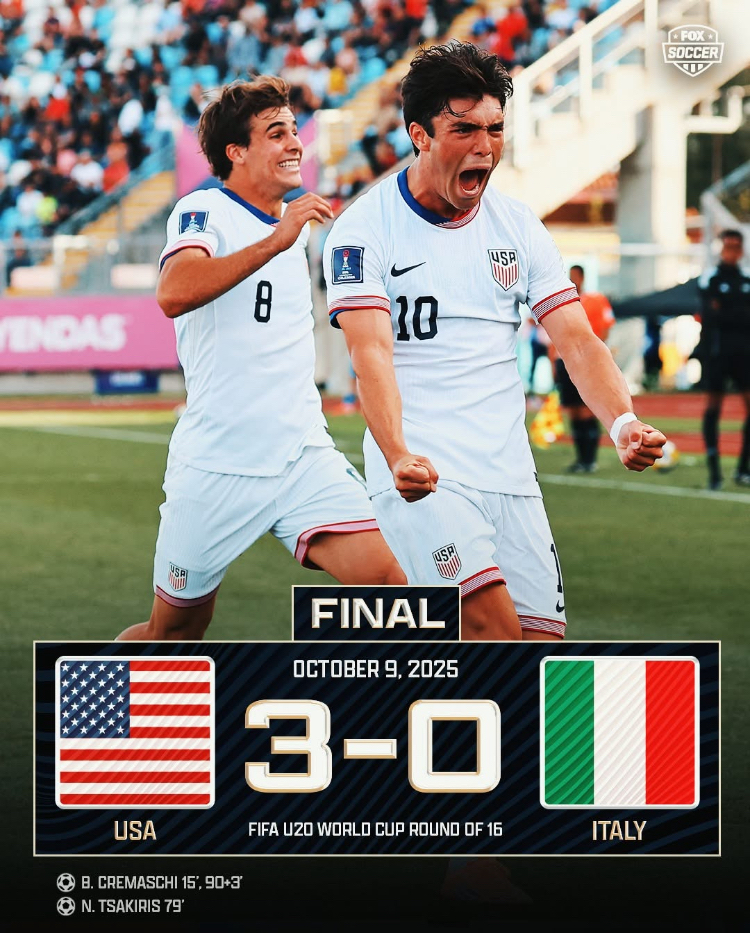
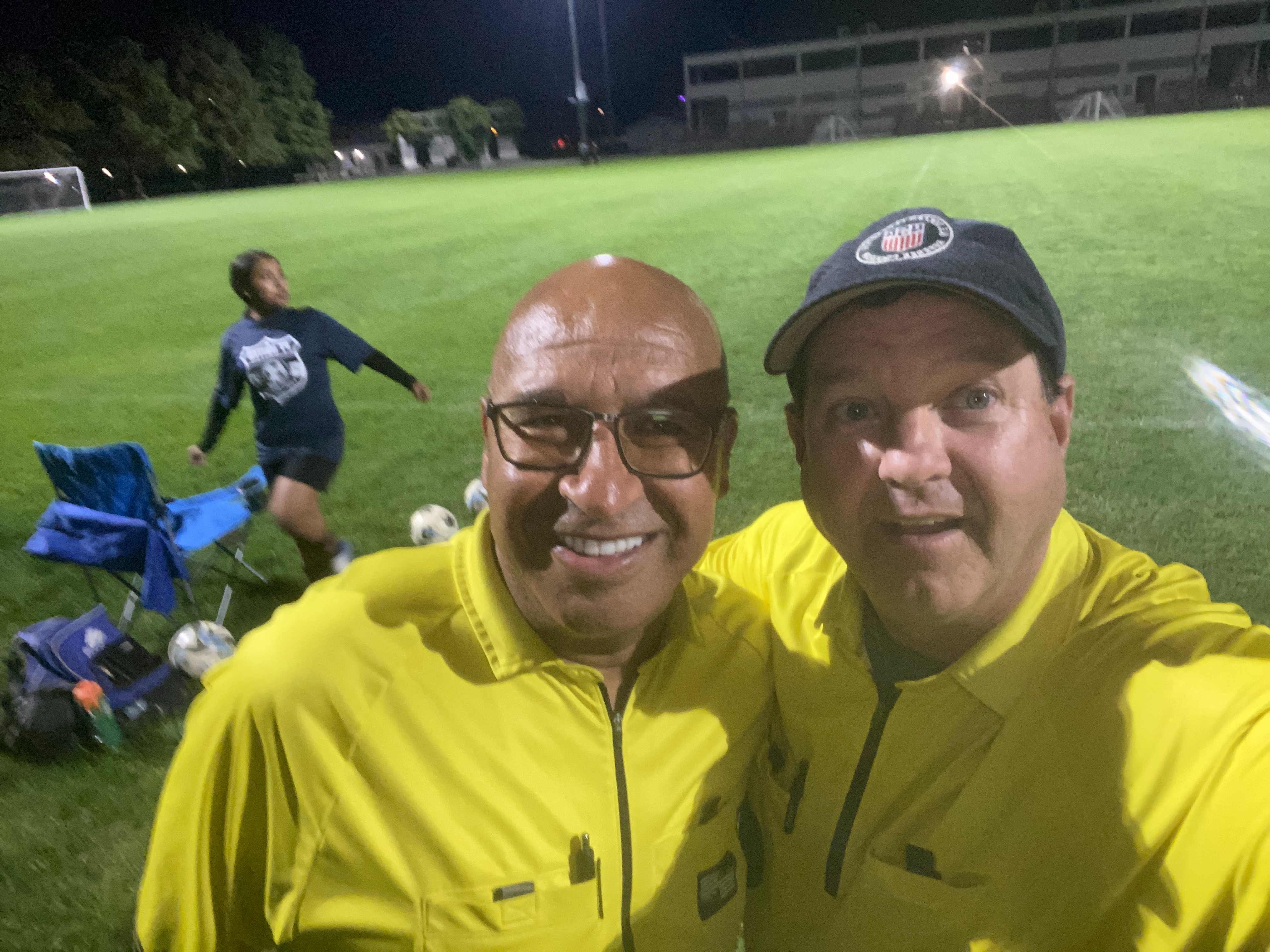

 Roger Bennett & the Boys


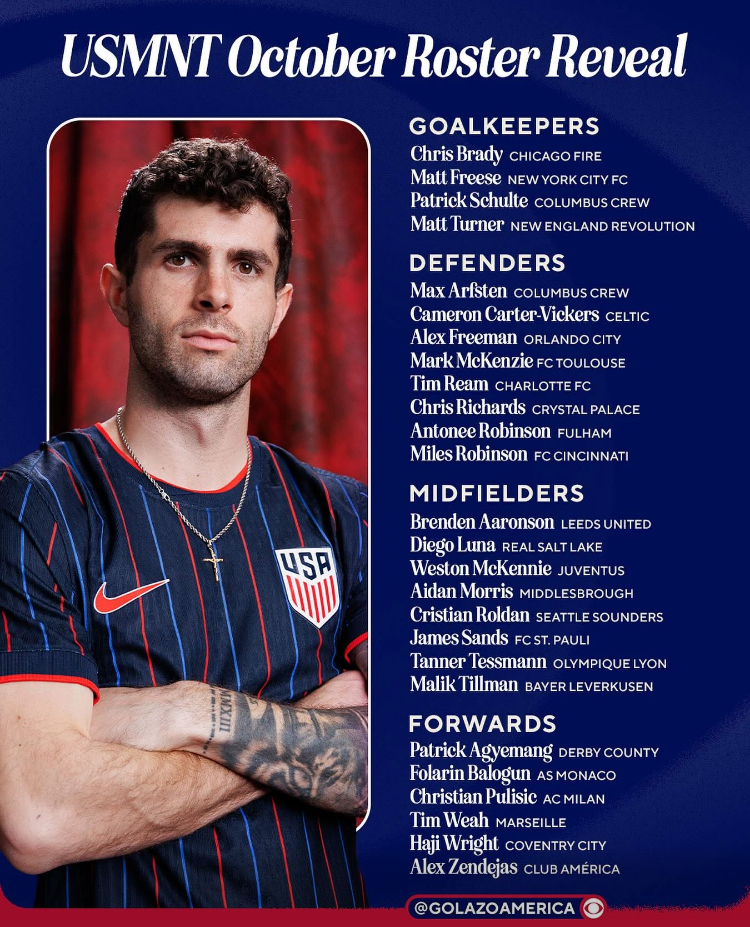


 Top SOCCER Stories
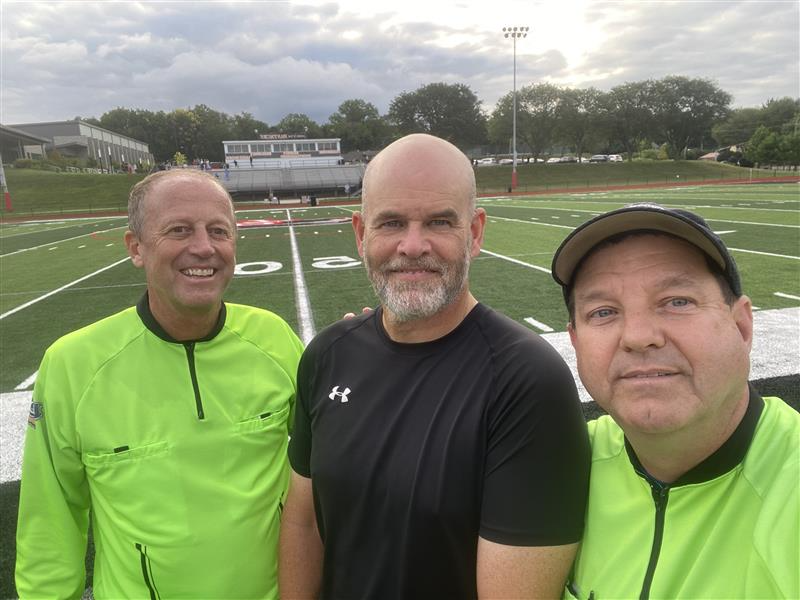


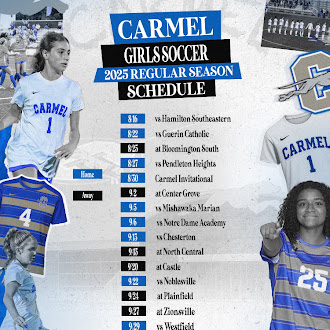
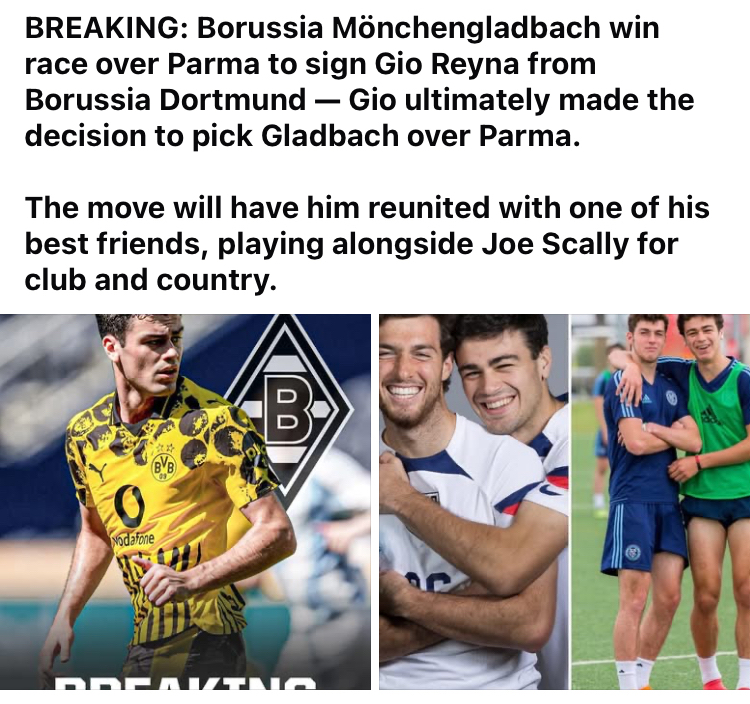


 Jeff CarlisleAug 21, 2025, 07:54 AM ET


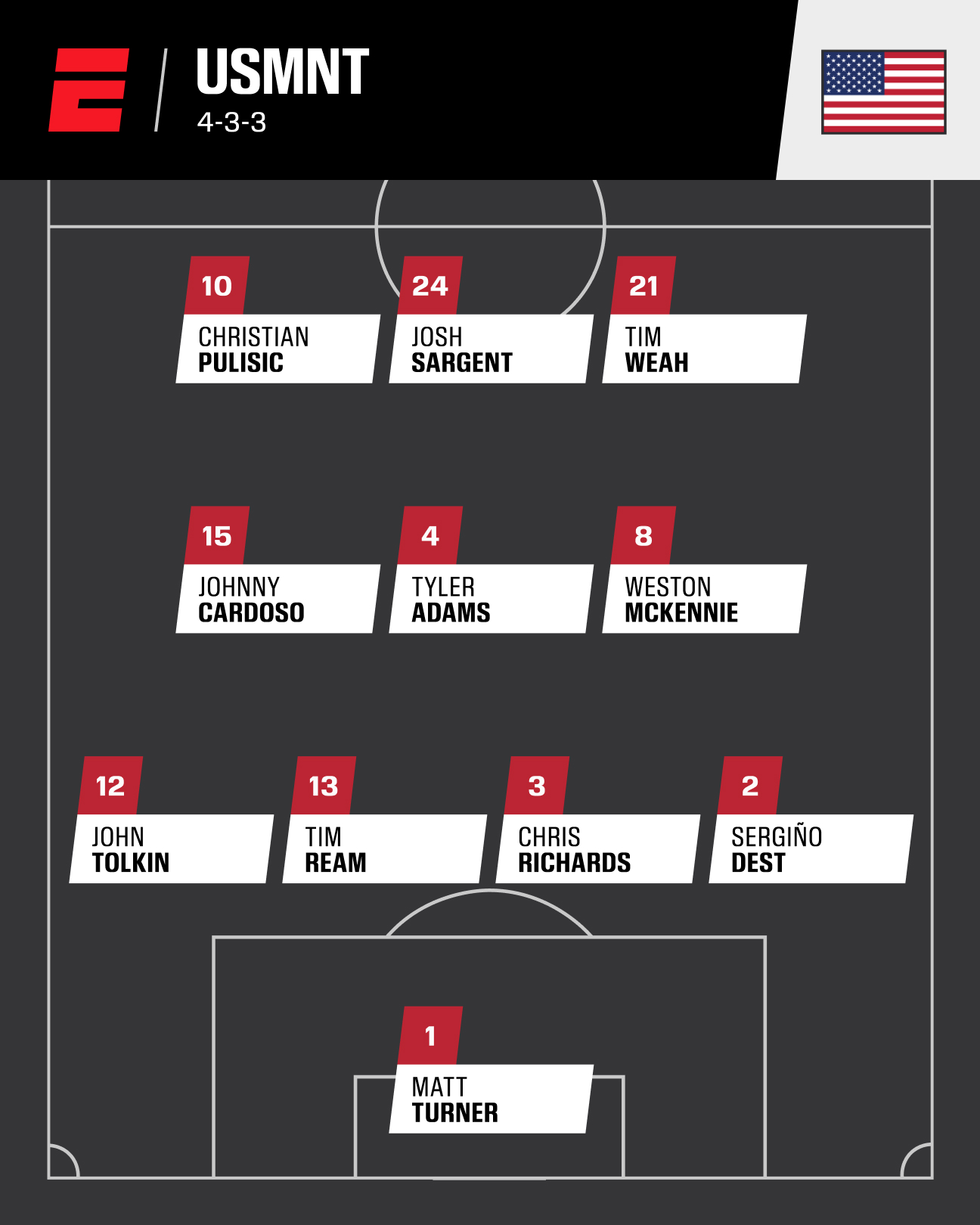



 Inter celebrate their 2024 title — will they do the same in 2025? (Mattia Pistoia/Getty Images)
 Milan’s pre-season form has been promising (Kamil Krzaczynski/Getty Images)
 Top SERIE A Stories
 Motta, while head coach of Bologna (Giuseppe Maffia/NurPhoto via Getty Images)
 Morten Frendrup of Genoa (Simone Arveda/Getty Images)
 Ciro Immobile, Felipe Anderson and Luis Alberto have all left Lazio (Elianton/Getty Images)
 Constantin EcknerAug 3, 2022, 09:18 AM ET
.jpg)


 Lily Yohannes celebrates scoring in her debut for the U.S. against South Korea last June. (Brad Smith / Getty Images)
 Lily Yohannes and Catarina Macario have bonded in their short time together on the national team. (Ary Frank / Getty Images for USSF)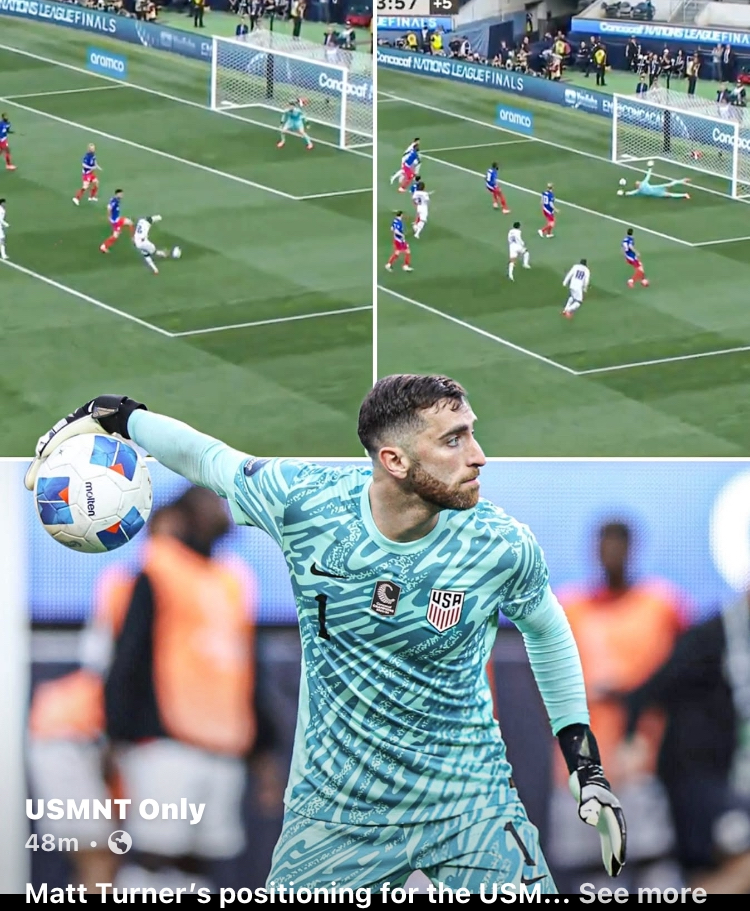


 The Nations League semifinals made for a night of long faces for Christian Pulisic and the U.S. (Jayne Kamin-Oncea/Imagn Images)
 Canada was left to grimace after a 2-0 defeat to Mexico in the Nations League semifinals. (Kevork Djansezian/Getty Images)


 USMNT manager Mauricio Pochettino endures defeat to Panama in the Concacaf Nations League. (Gary A. Vasquez/Imagn Images)


 Pochettino’s gameplan was not enough to overcome Panama’s energy and spirit. (Robin Alam / ISI Photos/Getty Images)
 Weston McKennie claimed the USMNT needed more “nastiness” against Panama. (Robin Alam / ISI Photos / Getty Images)
 Thursday’s defeat rekindled memories of the Copa América defeat to Panama that ultimately sealed Gregg Berhalter’s fate. (Hector Vivas / Getty Images)

 Jack McGlynn and Tim Ream are dejected as Panama celebrate their late winner (Robin Alam/ISI Photos/Getty Images)
 Romero reached the 2014 World Cup final despite being second-choice at his club (Mike Egerton/PA Images via Getty Images)
 Henderson, who is in the current England squad, and Turner warm up for Palace (Sebastian Frej/MB Media/Getty Images)
 Turner during Thursday’s defeat by Panama (Shaun Clark/ISI Photos/USSF/Getty Images for USSF)
 Lonergan playing for Everton against Western Sydney Wanderers in a 2022 friendly (Brett Hemmings/Getty Images for Bursty)
 Turner catches a cross during Palace’s recent FA Cup win against Millwall (Rob Newell – CameraSport via Getty Images)

 USMNT and Iran pose together at the 1998 World Cup. (Photo by Nader Davoodi ATPImages/Getty Images)
 Rafa Márquez gave Mexico its first World Cup qualifying win in Columbus in 2016. (Paul Vernon/AFP/Getty Images)
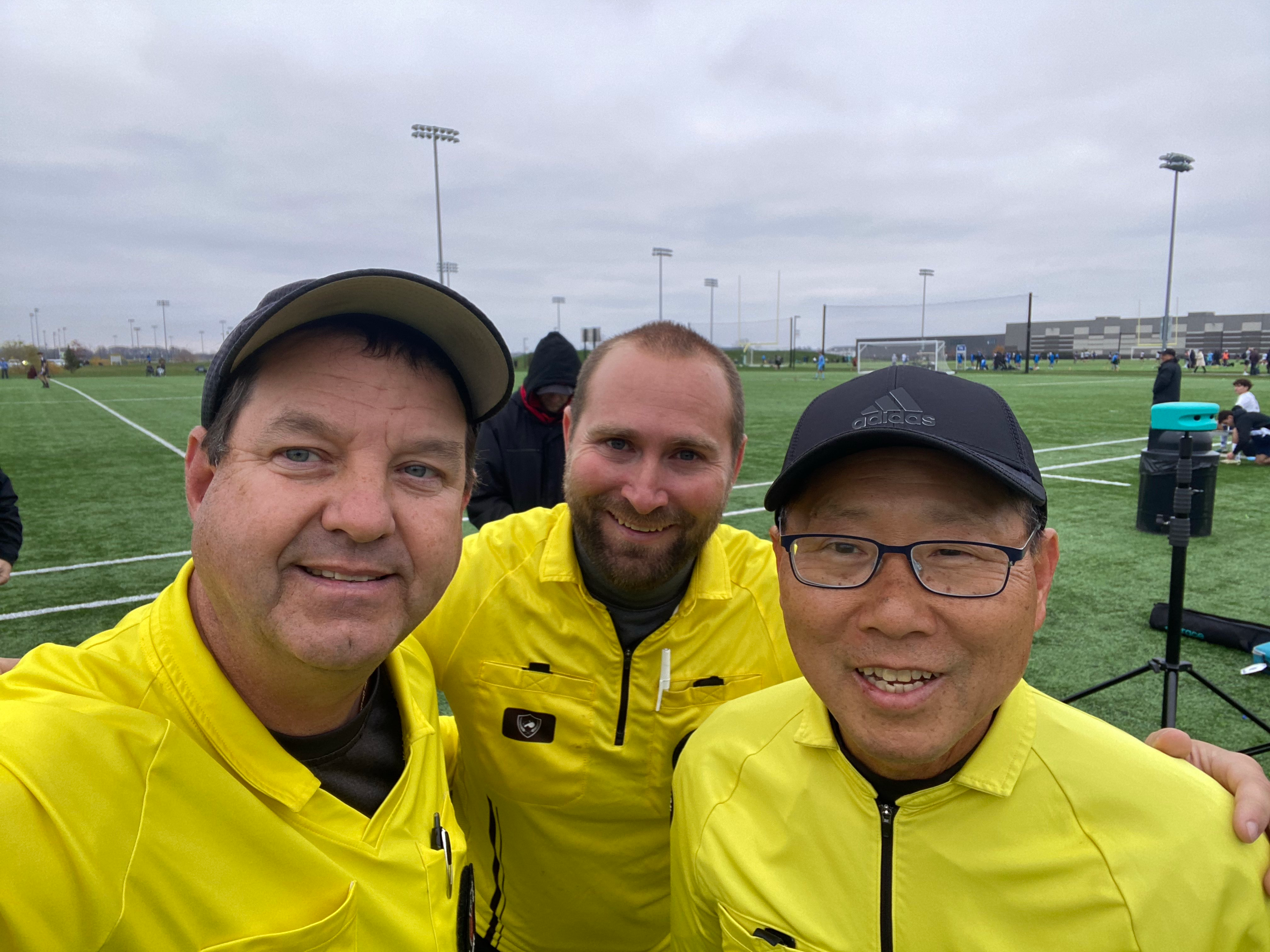

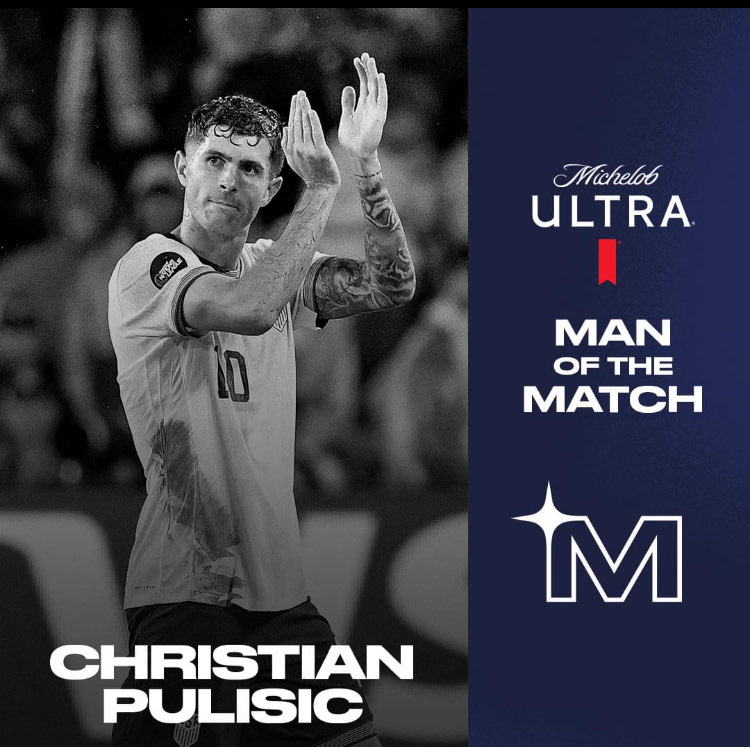


 Weston McKennie and Tim Weah enjoy an April victory (Daniele Badolato – Juventus FC/Juventus FC via Getty Images)
 Tim Weah celebrates scoring for the U.S. against Jamaica. (Bill Barrett / Getty Images)
 Tanner Tessman continued his strong on-field performance in the second game against Jamaica. (Bill Barrett / Getty Images)
/cdn.vox-cdn.com/uploads/chorus_image/image/73735831/2107849439.0.jpg)


 Tanner Tessmann had three years at Venezia (Alessandro Sabattini/Getty Images)
 Tessmann playing for Lyon against Toulouse (Matthieu Rondel/AFP via Getty Images)
 Tessmann started against Jamaica last week (John Dorton/ISI Photos/USSF/Getty Images for USSF)
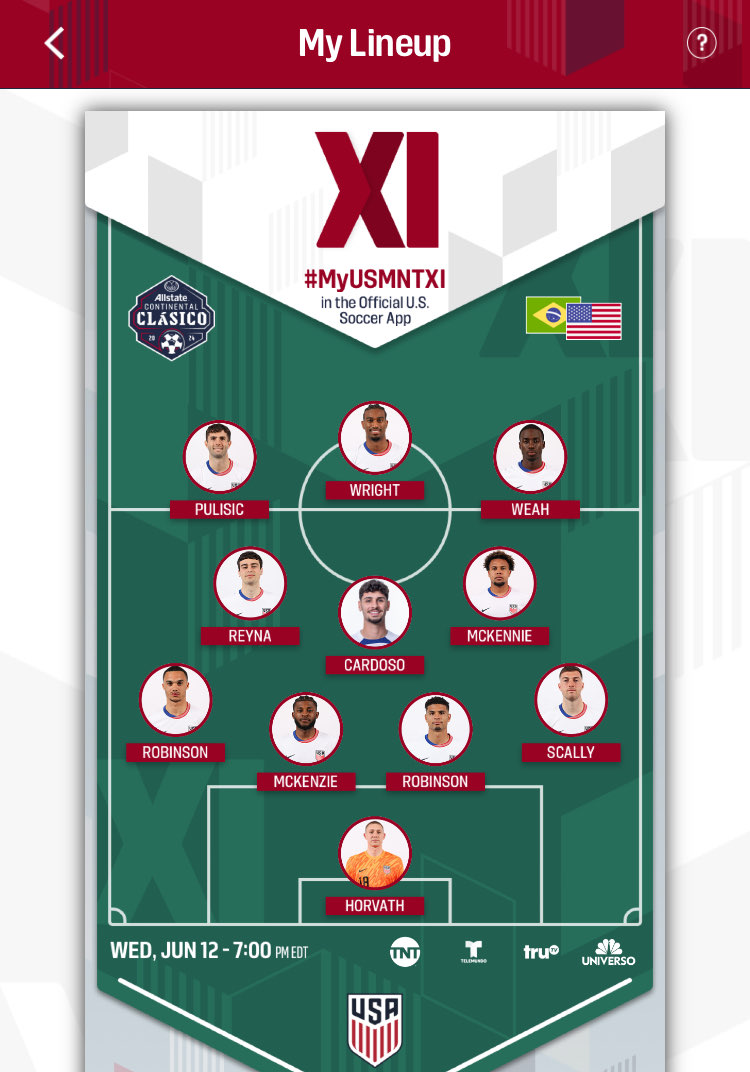


 Weah was a rare bright spot for the U.S. against Colombia. (Photo by Greg Fiume/USSF/Getty Images for USSF)
 Pulisic left the game at halftime due to managing his minutes. (Photo by Tim Nwachukwu/Getty Images)
 Weah was a rare bright spot for the U.S. against Colombia. (Greg Fiume/USSF/Getty Images for USSF)


 Kai Havertz (Ina Fassbender/AFP via Getty Images)


 (Ian MacNicol/Getty Images)


 (Denis Doyle/Getty Images)


 (Adam Hunger/Getty Images)


 Dusan Tadic is still a key player — even at 35 (Srdjan Stevanovic/Getty Images)


 (Jonathan Moscrop/Getty Images)


 Koeman relies on Van Dijk’s trademark diagonals (ANP via Getty Images)


 (Robbie Jay Barratt – AMA/Getty Images)


 (Visionhaus/Getty Images)

 The Ole BallCoach