US Women – She Believe’s Cup vs Brazil –Wed 7 pm HBO Max
Swanson scores her 6th in 4 games as Japan gave the US all it could handle on Sunday (highlights). Japan is a very organized side and we shouldn’t have too much concern that they had as much possession as they had overall. I thought GK Casey Murphy might have been player of the match with her clutch saves down the stretch preserving the clean sheet. The defense looked stagared at times especially Alana Cook as once again she gave away the ball which lead to the best shot of the game for Japan – (she simply can not be a player in central defense if the US wants to win the World Cup this summer. Its Girma and Becky in the middle PERIOD! I thought the midfield got overrun a little this game as Horan was horrific and Sanchez wasn’t much better. I thought Mewis had some good moments and should get a look instead of Horan this next game. I might even give Dunn a run at the #8 to see how she does after her complaints in GQ. If Lavelle is still hurt – sit Horan and give Dunn a run at the #8 slot dropping in some with Sullivan in a double pivot. Give Mewis a chance up top to create more maybe with Rodman along side? I would love to have the “issues” coach A has in the midfield. Tons of talent here –needs to get them to work together right however. Again you have to follow the USWNT on twitter Moms, Moms 2
Shane’s Starters vs Brazil Wed 7 pm HBO Max
Rapino, Morgan, Swanson
Mewis, Rodman
Dunn, Sullivan
Fox, Sauerbrunn, Girma, Sonnet
Franch
Champions League Tues/Wed 3 pm CBS
This week gives us Liverpool hosting Cup holders Real Madrid on Tuesday at 3 pm on CBS and Wednesday’s Man City vs RB Leipzig game on CBS Wed. Again great to see these top games on network TV while the others are on Paramount + with a full 1/2 lead in show on CBS and post game coverage on Para+. The 2-2 Barcelona vs Man United game was all you could want on Thursday setting up the return to Ole Trafford on Thursday at 3 pm on Paramount plus must watch TV – again CBSSN will have the wrap-around coverage starting at 12:30-5 pm. (lots of stories below)
MLS Starts season Sat – on Apple TV Subscription
So the MLS season starts this Saturday and I should be excited but just 2 games are on network TV – and not the good ones. Oh and if you have Apple TV already like me and was thinking cool I can watch. NOPE you have to buy the subscription. So instead of talking all about how MLS is doing things right by giving us El Traffico in The ROSE BOWL for the first time ever – a sold out game with over 85K in attendance hopefully – I will tell you tough you can’t watch it. Between US soccer putting most games on HBO Max and now MLS going to Apple TV Subscription only, along with Paramount+ for Champions League and Peacock for EPL, and ESPN+ for Bundesliga and Spain – this might just be the final straw for me. Oh and they don’t have a new playoff format yet. Mickey Mouse crap right there. Sorry MLS I don’t care enough to pay to $80 a year to watch your semi-decent games. Good luck!! Oh there are 2 games on actual TV – Sat has Nashville and NYCFC Sat at 4 pm on FOX and Sunday has Seattle hosting Colorado on Fox Sports 1. I WON’T be Watching.
GAMES ON TV
(American’s names in Parenthesis)
Tues, Feb 21Champions League
3 pm Para+ Liverpool vs Real Madrid
3 pm Para+ Frankfurt vs Napoli
5 pm FS2 U17 Mexico vs El Salvador
8 pm FS2 U17 Guautamala vs USA
Weds, Feb 22Champions League
3 pm Para+ RB Leipzig vs Man City
3 pm Para+ Inter Milan vs Porto
4 pm FS2 U17 Puerta Rico vs Canada
7 pm HBO Max USWMNT vs Brazil
8 pm FS2 U17 Panama vs Honduras
Thurs, Feb 23Europa League
12:30 pm Para+ Sevilla vs PSV
12:30 Para+ Nantes vs Juve
3 pm Para+ Man U vs Barcelona
3 pm Para+ Union Berlin (Pfuk) vs Ajax vs
3 pm Para+ Salzburg vs Roma
Fri, Feb 24
2:30 pm ESPN+ Mainz vs B Mgladbach (Scaly)
3 pm USA Fulham (Ream, Jedi) vs Wolverhampton
3 pm beIN Sport Lille (Weah) vs Brest
5pm FS2 U17 Semis
8 pm FS2 U17 Semis
8 pm FS2 Juerez vs Leon
Sat, Feb 25
7:30 am USA Aston Villa vs Arsenal
9:30 am ESPN+ Hoffenheim vs Dortmund (Reyna)
10 am USA Leeds United (Adams, Mckinney, Aaronson) vs Southampton
10 am Peacock Leicester City vs Aston Villa
12:30 pm ESPN+ Real Madrid vs Atletico MADRID DERBY
12:30 pm NBC Bournmouth vs Man City
2:45 pm ? Crystal Palace vs Liverpool
4:30 pm Fox Nashville vs NYCFC MLS
8 pm Univision Tigres vs Guadalajara
9:30 pm Apple TV LA Galaxy vs LAFC
10 pm Univision Atlas vs America
Sun, Feb 26
8:30 am USA Tottenham vs Brentford
11:30 am ESPN+ Man United vs New Castle League Cup
11:30 am ESPN+ Union Berlin (Pfuk) vs Bayern Munich
2:45 pm Para+ Milan vs Atalanta
5 pm FS2 U17 CONCACAF FINALS
8 pm Fox Sport 1 Seattle Sounders vs Colorado Rapids
Before the SheBelieves Cup, Megan Rapinoe said she hoped the U.S. women’s national team got metaphorically “punched in the face” by the competition from top-level challengers as the teams prepare for the 2023 World Cup. The tournament opener against Canada didn’t quite live up to the usual standards – understandably so, considering everything happening off the field with Canada’s dispute against its federation. But on Sunday, Japan limited the U.S. to only five shots, two of them on frame, and a single corner kick.USWNT forward Mallory Swanson, again, provided the game-winner against Japan. Teammate Alex Morgan set up the play in midfield, settling a pass with her chest before turning and sending a ball upfield. Swanson might have had the edge in speed over the sole Japanese defender trying to stop her, Shiori Miyake, but she also took two perfect touches with the ball still in the air at full speed to eventually shift to the dribble before using her right foot to shoot toward the far corner.Despite some late scares against Japan, the U.S. is heading to Texas with two wins. What lies ahead promises to be a fun, tasty match-up against Brazil for the SheBelieves Cup finale in Frisco. Before looking ahead, it’s worth digging into what head coach Vlatko Andonovski and the players said in Nashville following the most instructive look at the USWNT ahead of the World Cup yet.
Let’s keep talking about Mal
Swanson, in almost every game this calendar year, has been the main story when it comes to offensive output for the USWNT. Sunday’s goal was another display of the various tools at her disposal for striking at a moment’s notice.“Three times before that, I was offside. Vlatko told me to not be offside,” she said in the mixed zone, with a smile, waiting for a laugh. “So I was like, ‘Okay, I’m not gonna be offside on this one.’”Andonovski was all smiles when he talked about Swanson after the game.“She certainly makes my life a little easier,” he said. “It’s not just the speed. Obviously, the speed that she has helps, but she controlled the ball and took two touches on a juggle in the air (at) full speed. That’s technicality. I mean, that’s a very skillful player.”
More critically, Swanson thought the limited looks against goalkeeper Ayaka Yamashita and Japan’s backline were a good reminder for the entire team — not just the new kids — that creating chances in a World Cup will be just as tough, if not tougher. “I had one shot on goal today, and actually (Rapinoe) told me, ‘You’re only going to have so many chances in big games and you just need to put them away,’” Swanson said. “I think that is definitely a lesson that everyone needs to learn.”Before the summer tournament, the USWNT also learned it has a few more things to fine-tune, especially against a competitor like Japan.“There were a couple of times where, on throw-ins, I wasn’t in the right position,” Swanson said, “and it led us to have to defend more against a very good team that can keep the ball.”
The midfield (again) and the tactical battle against Japan
The U.S. continues to add to its toolbox with the implementation of its 4-2-3-1 formation, which at times struggled to handle Japan’s aggressive 3-4-3. “It was a tough game for the midfielders because they had to solve problems consistently,” Andonovski said. “And every time we saw the problem, there was a different challenge, different problem, and I think that Japan’s national team was superb. They’re such a good team and they’re so organized and so fluid in the way they interchange position and find the areas.”Andonovski credited forwards Ashely Sanchez and Morgan for handling a switch in formation at halftime to adjust to Japan, although he conceded that, as they added substitutes, “things started falling apart a little.”“When we started there was a slight adjustment in the build-up,” he said. “We lowered one of the fullbacks a little bit, but the main adjustment came in the second half. When we were in the mid-block in the first half we defended in 4-2-4, 4-4-2 with Sanchez and Alex (Morgan) on top. And in the second half, we defended in 4-2-3-1 with Sanchez behind.” Overall, Andonovski said the switch gave the staff a good picture of what to expect and how to adjust against opponents with similarly aggressive formations. He also recognized midfielder Kristie Mewis as one of the team’s problem solvers with how she adjusted and helped the team stay in possession (perhaps a clue to how the head coach is leaning when it comes to trimming his final World Cup roster).
“Clean, good touch on the ball,” Andonovski said of Mewis. “She connected very well with the players around and did bring a little calmness (to) the team.”
Mewis was part of a group of players that Andonovski said was an intentional construction to address Japan pressing the U.S. in specific areas. That group also included Lindsey Horan, Alana Cook, and Naomi Girma. The results were mixed.
“I don’t think that we did a good job on controlling and protecting the ball once we got a little bit higher up (the field),” Andonovski said. “But I was actually very happy with the composure of the center backs and composure of the midfielders, especially when they were under pressure.”
Clutch from Casey Murphy
Goalkeeper Casey Murphy had a much busier afternoon Sunday in Nashville than she did during the USWNT’s trip to New Zealand last month. (In the second match against the Ferns in January, Murphy was in goal for a 5-0 win and faced zero shots.) Against Japan, Murphy made two saves on two shots on target. It felt significant for preserving the win against Japan, keeping the U.S. on top of the SheBelieves table as well as a key marker for Murphy’s ongoing development ahead of the World Cup.“It’s those last 20 minutes that you’ve really got to hone in, especially when you’re holding onto a 1-0 lead. That ultra focus, making sure you’re just communicating, organizing, doing everything you can to help the team get the win,” Murphy said. The game provided meaningful minutes for Murphy to build her relationships with center back pairings she might encounter in World Cup matches. “It’s the most important thing for me,” she said. “Each game, each practice, is an opportunity to do that, so that’s always a focus of mine.” With as much rotation and movement that the U.S. played with on Sunday, none of it rattled Murphy despite her relatively recent run of appearance. “At the end of the day, we have a game plan,” she said. “The players do a really good job adapting to what’s given to us and what’s presented to us, and I’m so confident when I look up the field and see the other 10 players because they’re so good.”Murphy’s performance is also a reminder of the goalkeeping pool the U.S. has this summer. “On our team, we’re very happy we have three incredible goalkeepers who are competing for minutes on a daily basis, and we feel comfortable with all three of them,” Andonovski said. “And the fact that we can throw Alyssa (Naeher) in game one and she shows her world-class abilities, and then we have Casey in game two and then she shows that she’s capable of making big saves and being there for the team, it just shows what this team is all about.”
Rotation was the theme in Nashville. It’s important to remember that while player evaluation is still playing a role, so is a simple fact that it’s February.“We rotated a lot of players, and part of the reason was because we wanted to see certain players in the game like Kristie (Mewis) and Lynn (Williams),” Andonovski said. “But part of the reason was because of minute management. Our players are still in preseason mode, they’re not ready for three 90-minute games, and that’s why players like Alex (Morgan) or Mal (Swanson) are not finishing the games.”With a new-ish formation and players in varying states of readiness, the game against Japan was pretty clearly about continuing to answer roster questions as much as it was to prepare for the World Cup and simulate a group stage.Andonvoski seemed pleased overall with the result. The U.S. did look individually shaky in spots on the field, but even with players making mistakes, they never looked especially worried even when Japan pressured them hard in their half.
“There were moments in the game that we got exposed, and we were forced inside — not necessarily forced — but we made some changes, and adjusted the system a little bit,” Andonovski said. “The players had to adjust on the fly, and I think that was a very good learning opportunity, a very good moment for us. We were able to solve some problems. I’m sure there’s still more that we need to solve, and we’re going to look at videos and figure out how to do that as well.”
USWNT proves finishing quality, but midfield problems linger after beating Japan in SheBelieves Cup
Feb 19, 2023 ESPNFC Jeff Carlisle U.S. soccer correspondent
The U.S. women’s national team defeated Japan 1-0 to claim its second victory in as many tries at the SheBelieves Cup.Mallory Swanson — who else? — claimed the game’s only goal on a breakaway late in the first half after being released by Alex Morgan. And while the U.S. was made to sweat at times in the face of Japan‘s technical ability, the defense held firm to secure the win.Brazil plays Canada later Sunday, and that result will determine what kind of result the USWNT needs to win the tournament for the fourth time in a row in their last game of the tournament Wednesday. However, winning the SheBelieves Cup is secondary to preparation for the World Cup, which begins in five months.
Rapid reaction
1. USWNT wins a different kind of game
The USWNT’s tournament-opening 2-0 win over Canada saw the U.S. start fast and furious, creating numerous turnovers off its press on its way to a two-goal lead by halftime. Sunday’s match against Japan was completely different and the Americans were pushed way out of their comfort zone at times.While the U.S. had the edge in possession during the first half (55%-45%), the match seemed to be played on the Nadeshiko‘s terms. Japan forced numerous turnovers, and made the U.S. look disjointed in attack.
Then, in one swift move, the U.S. took the lead. Sofia Huerta hit a long ball to Alex Morgan in the center circle, and she immediately played forward to Swanson. At first it looked like Japan defender Shiori Miyake had the angle to get to the ball first. But Swanson’s speed proved decisive and she soon got herself in the clear and delivered a cool finish past Japan goalkeeper Ayaka Yamashita. Swanson’s five-game scoring streak is the longest by a USWNT player since Christen Press scored in six straight from November 2019 to February 2020, per ESPN Stats & Information.The U.S. looked a little sharper to start the second half, but Japan finished the match with flurry, and the USWNT had goalkeeper Casey Murphy to thank for preserving the win. Fuka Nagano went close in the 79th minute with a drive that went just over the bar. Yui Hasegawa then forced a sharp save from Murphy two minutes later. June Endo had another opportunity in second half stoppage time, but Murphy was on hand again to make the save.Overall, this will be precisely the kind of challenge that U.S. manager Vlatko Andonovski wanted for his players in one of their final matches before the Women’s World Cup in July. But he’ll have some questions to ponder as he goes deeper in his pre-World Cup preparations, especially with regard to his midfield.
2. Finishing makes the difference for USWNT as Japan can’t do it
Japan has long played an aesthetically pleasing style, adept at keeping the ball while staying organized in the back. It is on the back of these traits that the Nadeshiko have been among the best teams in the world, including their triumph at the 2011 World Cup.But finding a high-scoring forward has historically been a challenge. The since-retired Homare Sawa was primarily a midfielder, and remains Japan’s all-time leading scorer with 83 goals in 205 appearances.The SheBelieves Cup has highlighted once again Japan’s lack of cutting edge from its forward line. Against Brazil the Nadeshiko had the edge in expected goals 1.40-1.19. In Sunday’s match against the U.S., Japan again had the edge in xG, or expected goals, (0.94-0.70) as well as more shots (15-5), but it couldn’t convert, despite some stellar chances late.Compare that with what the U.S. is experiencing at the moment, where Swanson simply cannot stop scoring. Afterward, Swanson spoke to reporters about refocusing her approach last year to make sure she could finish the easy chances she should. And even if Swanson’s form drops off at some point, the U.S. has the kind of depth that teams would give just about anything to have.This result showed once again that while midfielder play is important, games are often won and lost in the respective penalty areas.
3. The USWNT should be worried about the midfield
After hailing the performance of his midfield against Canada, Andonovski went with a different look against Japan. Kristie Mewis was deployed as the No. 6 in her first start in nearly a year, with Ashley Sanchez as the No. 10 and Lindsey Horan positioned further forward than she was against Canada.While Mewis did her bit in terms of helping out the back line, the trio seemed less than the sum of its parts.
Horan in particular looked out of sorts, losing the ball nine times in her own half during her time on the field. Sanchez had no influence on the game and was deservedly taken off after 65 minutes. While generating chances is a team-wide responsibility, the fact that the U.S. attempted five shots Sunday — its fewest in a game since Aug. 6, 2016, vs. France in the Rio Olympics — it’s clear the midfield didn’t function as it should.
So what does Andonovski do now?
He mentioned after the Canada game that his midfield alignment oftentimes changes from game-to-game depending on the opponent. But the U.S. seems more solid when Horan drops down to form a double pivot.
What the U.S. manager does against Brazil will provide another data point as to his preferred approach as the World Cup beckons.
Best and worst performers
Best: Mallory Swanson, USWNT
What else is there to say at this point? Swanson is in the kind of form that forwards dream about, and doesn’t seem like giving up her spot in the starting XI anytime soon.
Best: Casey Murphy, USWNT
There have been plenty of questions about the goalkeeper spot behind presumed starter Alyssa Naeher. But Murphy delivered some sharp saves late to preserve the win for the USWNT.
Best: Fuka Nagano, Japan
The Japanese midfielder was at the heart of the Nadeshiko‘s best moves, was tidy on the ball and did plenty to put the U.S. midfield off its game.
Worst: Shiori Miyake, Japan
Yes, Swanson’s speed is a nightmare to deal with, but Miyake needed to do better in her duel that led to the game’s only goal.
Worst: Lindsey Horan, USWNT
Horan just didn’t look herself, as she lost the ball in uncharacteristically bad spots. Can she rebound against Brazil?
Worst: Ashley Sanchez, USWNT
Needed to get on the ball more than the 28 touches she had in 65 minutes.
Highlights and notable moments
It was a relatively lackluster first half for the USWNT as their press, which coach Vlatko Andonovski said beforehand he wanted to reach a higher level in this game, wasn’t pinning Japan back as hoped.But then the USWNT did some old-fashioned direct soccer, getting the ball upfield quickly for Mallory Swanson, who finished it well one-on-one with the goalkeeper.Japan had one of their better chances on goal in the 81st minute, but USWNT goalkeeper Casey Murphy made the block.
After the match: What the players and manager said
USWNT forward Mallory Swanson on takeaways from this game: “So, I feel like this game wasn’t the best performance, but it’s going to be like that sometimes. Japan’s a very good team, very technical, they move off the ball very well, so it’s good that we were able to play them and see that we need to be more disciplined in our defending, be patient. Also, we need to figure out, when we’re on the field, what can we do to break them down? I think we could’ve probably played a couple more balls in behind into seam three to stretch them, but I think overall it was a good test for us. Sometimes, games are just going to be like this, you’re going to have to grind them out.”Swanson on why she’s in such good form: “Honestly, this offseason I kind of reevaluated my game, and one thing was that I wasn’t finishing easy chances all of last calendar now. I just wanted to come into this year and finish easy chances and put them away.”
USWNT defender Naomi Girma on why Mallory Swanson keeps scoring when needed: “I think she’s just anticipating us winning the ball, making the run, and we’re giving her good balls in behind and when she’s out in front of a back line, we always know she’s going to finish that.”
USWNT manager Vlatko Andonovski on the result: “We knew that we were gonna see different challenges and there were moments in the game that we got exposed and we were forced — not necessarily forced, but we made some changes and or adjust our system a little bit. The players had to adjust on the fly. And I think that was a very good, learning opportunity, a very good moment for us because we were able to solve some problems. I’m sure there’s still more that we need to solve. And we’re going to look at the videos and figure out how to do that as well.”
Andonovski on the midfield and Kristie Mewis starting there in a new role: “It was a tough, tough game for the midfielders because they had to solve problems consistently, and every time we solve a problem, there was a different challenge, a different problem, and I think that Japan’s national team, they were superb. They’re such a good team, and they’re so organized and so fluid, fluent in the way they interchange positions and find the areas. So for, for Kristie to come in this game and constantly solve problems really good for us to see how she’s gonna adjust in those moments, but also in possession. I thought she was really good, clean, good touch on the ball, she connected very well with the players around and did bring a little calm on the team, which I thought was very important at different times of the game.”
Key stats (provided by ESPN Stats & Information research)
Mallory Swanson (née Pugh) scored her team-leading sixth goal of the 2023 calendar year. It’s also Swanson’s fifth straight match with a goal, and her first time scoring in five straight games for the USWNT in her career.
Swanson’s five-game scoring streak is the longest by a USWNT player since Christen Press scored in six straight from November 2019 to February 2020.
The USWNT attempted five shots in this game, the team’s fewest in a game since Aug. 6, 2016, vs. France in the Rio Olympics (also a 1-0 win). By comparison, Japan had 15 shots.
The expected goals, or xG, for this game, which is a measure of the quality of scoring games each team created: USA 0.70 xG, JPN 0.94 xG.
Kristie Mewis made her first start for the USWNT since last year’s SheBelieves Cup on Feb. 23, 2022, against Iceland. She started as a No. 6 defensive midfielder with Lindsey Horan and Ashley Sanchez in the central midfield, the trio’s first time ever starting a match together.
Up next
United States: The USWNT continues the SheBelieves Cup when the Americans face Brazil on Wednesday at 7 p.m. ET.
Japan: The Japan WNT continues the SheBelieves Cup on Wednesday when it faces Canada at 4 p.m. ET.
USWNT COACH: CRYSTAL DUNN WOULD FACE ‘STIFF COMPETITION’ IN MIDFIELD
CRYSTAL DUNN. (ION ALCOBA/QUALITY SPORT IMAGES/GETTY IMAGES)
Crystal Dunn could compete for any position she chooses on the USWNT, according to Vlatko Andonovski.On Friday, an interview with GQ was published in which Dunn discussed the emotional toll it takes on her to step into the USWNT and play as a defender.“I think it’s hard because I’m the only one who has to do it,” she said. “I step into camp, and I feel like I lose a part of myself. I no longer get to be Crystal who scores goals, assists, is this attacking player.“I step into an environment where I have to be world-class in a position that I don’t think is my best position. But I’ve owned it. I’ve made it my own, and I’ve tried to create it in my most authentic way. But I don’t love it.”But Andonovski doesn’t view Dunn that way, calling her “world class” at left back on Saturday during media availability.“As a left back she is world-class and probably one of the best left backs in the world. As a midfielder she has a pretty stiff competition in that position. So everybody has a choice. And then we make the decisions,” he said, adding that Dunn has the freedom to also go out and play on the wing.“Any player can compete at any position and I would be open to anything,” he said. “But if I was a player on the national team right now, Mallory Swanson is probably the last player that I would want to compete against.“So, we don’t exclude anything at this moment. And we see Crystal even throughout the games, she has the liberty to go forward as a left-wing. We have seen her in the middle getting the ball and doing her thing, which she’s also special at in the midfield. But if we feel like at any point in time she’s going to be better suited in those positions and give us the best chance to be successful, then we can see her there.”Andonovski added that he had not yet read the article, and wasn’t fully familiar with what exactly Dunn said. Still, the conversation has come up about her switching positions, he said. But Dunn is still making her way back from maternity leave, and he says that putting her in at defender is the best way to get her back out on the field.“I actually think her playing in the position that she’s playing for us right now is the easiest thing that we can do or easiest for her to get back out,” he said. “Because once she comes in this environment it’s almost like a switch now, without even us trying to say anything, or before she even comes in, she’s already preparing: ‘Okay, this is where I feel most comfortable. This is where I want to be. And this is what I’m good at.’”But, as she continues to make her way back to a full 90 minutes, Andonovski says Dunn is always allowed to compete for a spot in the midfield.“Dunny, obviously she’s a world-class player. But she has a choice too,” he said. “Like she can compete as a midfielder, she has to compete with Rose Lavelle, and Lindsey Horan and Catarina Macario when she comes in as well, right. So if she doesn’t feel comfortable playing left back or she doesn’t want to be left back, nobody is forced to play in any position.”Still, it isn’t the first time Andonovski has heard about Dunn’s dissatisfaction at defender, and lately she hasn’t expressed further frustrations.“Nobody’s forced to play on the national team. Nobody’s forced to play in any position,” he said. “Every time I’ve talked to Crystal, she just shares how much she enjoys being on the team, and loves helping the team being successful.“Obviously as a coach, I’m happy to hear that and I’m happy to help her in the position, or the tasks that she has to do.”Speaking to The Athletic, Dunn said that she knows what her role is on the USWNT.“I step into this environment, I know exactly what my role is. I know my strengths. And it’s not at all to say like, ‘Hey, I am not happy.’ But I think it’s more so to say like, ‘This is how I feel internally at times,’ and it’s okay to express that,” she said. “It doesn’t mean that I’m, you know, trying to cause havoc or a stir or anything like that. I think at the end of the day, it’s really just being authentic.”
Editor’s note: This piece was published in November 2022. The debate over Crystal Dunn’s best position with the U.S. women’s national team has resurfaced after she shared the difficulty of switching between midfield and defense in a profile for GQ Sports.
There’s no doubt about it: The U.S. women’s national team has missed Crystal Dunn. Off the field for most of 2022, the 30-year-old has been working her way back into soccer fitness after giving birth to her son, Marcel, in May. As Dunn gets closer to a full return, one big question has lingered: Where on the USWNT roster would she play?
Dunn began her USWNT career as a forward after winning the NWSL Golden Boot and MVP awards in 2015, but her versatility has been utilized heavily over the years. On the two U.S. rosters she’s made in 2022, she’s been listed as a defender, having carved out a role at outside back during the USWNT’s run to the 2019 World Cup title. For her club, however, she consistently plays in the midfield and has been very open about her preference to thrive in a position where she feels most comfortable.
All current signs point to Vlatko Andonovski’s intention to have Dunn return to outside back, but for the sake of the argument, let’s do a brainstorming exercise. What would it look like to play Crystal Dunn in the midfield? And could the USWNT use her there?
Let’s explore.
IT’S NOT A NEW ROLE
The idea of Dunn playing in the midfield doesn’t come out of nowhere; she’s assumed that role successfully for her club teams for years. After playing for the Washington Spirit and Chelsea as a forward early in her career, Dunn joined the North Carolina Courage’s box midfield in 2018. Paired in the attacking midfield with Debinha, and supported by defensive midfielders Sam Mewis and Denise O’Sullivan, Dunn helped North Carolina rise from a contender to a league-crushing super club.
The Courage won the NWSL Shield and Championship in 2018 and 2019, with Dunn’s playmaking ability and defensive tenacity at the heart of that success. In 2019, she won every domestic trophy possible as an attacking midfielder while also playing as a starting outside back for the USWNT in the World Cup. The toll it took on her was noticeable at the time.
“I struggled mentally. I had to take some time off from this club,” Dunn told the media in 2019. “Because I was battling, trying to be the world’s best [No.] 10, the world’s best forward on this team, and then go into national team camp.”
In 2021, Dunn joined Portland’s midfield, working in a dual-No. 8 system with Lindsey Horan. She and Horan would drift off of each other’s movements, anchored by the stellar play of Angela Salem behind them. Dunn appeared comfortable moving into wide and central areas while coordinating with Horan for pressing triggers on defense.
That Thorns team won the NWSL Shield, but the Mark Parsons-led midfield project was cut short by Dunn’s pregnancy, Horan’s subsequent loan to Olympique Lyon and Parsons’ departure for the Netherlands head coaching job. Dunn returned to Rhian Wilkinson’s Thorns in the last couple of months of the 2022 NWSL season. Coming in late to games, Dunn replaced other connecting midfielders as the No. 8 and helped seal results, including this year’s NWSL Championship.
RHIAN WILKINSON AND THE THORNS USED CRYSTAL DUNN AS A SUPER SUB ALL THE WAY THROUGH THE NWSL TITLE GAME. (CRAIG MITCHELLDYER/USA TODAY SPORTS)
A DEFENSIVE-MINDED MIDFIELDER
The world was reminded of what Dunn can bring in the attack when she smashed the semifinal game-winner that sent Portland to the 2022 NWSL title game. There’s also the argument that the USWNT doesn’t lack attacking talent, and it’s difficult to carve out Dunn’s place as a forward-hybrid when a number of other qualified players can’t break into the player pool in the same position.Dunn’s experience as a wide defender, however, shouldn’t be used against her possible inclusion in the midfield; in fact, that versatility should be considered an asset. In her short time back with Portland in 2022, Dunn’s energy as a 1v1 defender from an advanced position made closing out games very difficult for her opponents.Dunn’s recovery speed could also be a big help in the middle of the pitch. The USWNT has struggled to shore up space in front of the center-backs against top competition, employing a lone defensive midfielder despite the prolonged absence of Julie Ertz. The USWNT’s No. 6 has been caught on an island at times, leaving other players unsupported in the middle of the pitch.In recent international games, every USWNT midfielder has had to decide whether to step up defensively or fall back into an off-the-ball position. Dunn’s decisiveness as a connecting midfielder could make a huge difference as the U.S. tries to control the middle of the pitch and support the No. 6. And the fact that she can spring attacks should be considered a bonus.
MAKING ROOM
There are two key factors to moving Dunn into the USWNT’s midfield: room in the middle three and a successor at left-back.The USWNT’s commitment to a 4-3-3 formation doesn’t leave a ton of room for experimentation, with clear roles for the No. 6 (usually Andi Sullivan or Sam Coffey), a box-to-box No. 8 (Lindsey Horan) and a No. 10 who can also drift into wide spaces (Rose Lavelle). Against opponents that bunker down on defense, the U.S. will sometimes play with a more attacking-minded approach, bringing on Ashley Sanchez to connect with Lavelle.Against more possession-minded opponents, though, there’s room to give Dunn a look. She can help settle areas where the U.S. is often prone to turnovers with her dribbling, and as shown in Portland this year, teams have a hard time compensating for her as a super sub. Using Dunn as a 1-2 punch with Horan — not unlike the rotation of Horan and Sam Mewis in 2019 — could give the U.S. midfield some stability without fully overhauling the formation. As for what Dunn leaves behind her at outside back, the emergence of Emily Fox and development of Hailie Mace offer some relief to a position that was once considered a depth concern for the USWNT. Fox has struggled with injury and illness in 2022, but if she can stay healthy, the left-back rotation is more stable.There’s also the simple fact that no other current player in the USWNT pool plays such a starkly different role for country as they do for club. Sofia Huerta is the most recent example of a converted outside back, but she now plays the role consistently for OL Reign. Mace played as a wingback for the Kansas City Current this season, and Emily Sonnett is a center-back who can play wide when needed.“New coach coming in for the national team, wherever he sees me, I have to say, ‘If you want me playing in this position, I’m going to be the best in that position,’” Dunn said in 2019.Every national team manager has to give something up to get the best out of their team, but in a perfect world, the USWNT would have Crystal Dunn at her most comfortable rather than split into two positions, expending the mental energy to adapt.
Claire Watkins is a Staff Writer at Just Women’s Sports. Follow her on Twitter @ScoutRipley.
MLS may use 18-team playoffs; U.S. Soccer exploring new training center/HQ
Fewer than four weeks remain until the start of the Major League Soccer season, but the league has still not finalized its playoff format for 2023. As reported by The Athletic early last month, all signs point to the league introducing a best-of-three series for the first round and transitioning to a single-elimination format for the conference semifinals and beyond.Sources said that the motivations behind the likely change are to increase the overall number of matches to provide more inventory for MLS Season Pass on Apple TV and to create more game-related revenue for owners. The league, sources said, also wants the format change because it would ensure that every playoff participant hosts at least one postseason match.MLS used a single-elimination format from 2019-2022, in which the top seven teams from each conference qualified for the playoffs. That setup provided plenty of drama, but involved just 13 total postseason matches and didn’t guarantee that every participant would host a game.Sources provided The Athletic with an additional update this week, saying that, as part of the proposed shift to a best-of-three first-round, MLS is also considering expanding the field to include nine teams from each conference. If adopted, the eighth and ninth seeds would contest a play-in match, with the winner advancing to face the first seed from their respective conference in the best-of-three conference quarterfinals. This format would include a minimum of 25 playoff matches.Beyond increasing inventory for Apple and generating additional revenue for owners, the thrust of the idea, the sources said, is to keep more teams in contention for playoff places later in the regular season. Allowing 18 total teams into the field would also mean that 62 percent of the league’s 29 teams would qualify for the postseason, which would certainly mean more teams in the running. But it could also dilute the overall quality of the playoff tournament and further decrease the stakes around regular season matches in the early and middle portions of the year, a long-standing problem for MLS.The sources said that the MLS product strategy committee, a powerful group of owners and executives that drives most of the competitive and roster-related decisions made by the league, is set to meet in the Palm Springs, Calif. area next week, wherethe group is expected to discuss and finalize the potential playoff changes.The MLS regular season kicks off on Feb. 25.
U.S. Soccer considering building national training center
Late in 2022, U.S. Soccer sent an email to select individuals letting them know that the federation was considering a capital campaign looking to raise up to $300 million to help build a new training center, headquarters and diversity, equity, inclusion and belonging (DEIB) innovation lab.Sources familiar with the federation’s plans told The Athletic last week that Atlanta and Cary, N.C. are among the cities being considered for the training center and headquarters. The Atlanta-area site would be an entirely new development, while the site in Cary would leverage some of the existing infrastructure and facilities at WakeMed Soccer Park. In addition to being home of the NWSL team North Carolina Courage and USL League One side North Carolina FC, WakeMed Soccer Park has hosted numerous senior and youth national team matches and camps since it opened in 2002. It was also the setting for perhaps the most infamous photo shoot in team history.
According to the email, if completed, the national training center would include “14+ groomed fields” for the U.S. senior, youth and extended national teams as well as “cutting-edge training facilities, collaborative workspaces, high-tech sporting equipment (and) medical resources for injury prevention and recovery.” The site would also be a new headquarters for USSF staff, which is now housed in an office building in downtown Chicago after the federation left its longtime home in the city’s South Loop neighborhood last summer.
If constructed, the DEIB lab would serve, according to the federation’s email, “as an incubator and funder for the best and most effective diversity, equity, inclusion and belonging projects to impact lives and fuel change across the soccer landscape.”
The federation wrote that it would allocate $250 million of the potential $300 million it was considering trying to raise to the national training center; the remaining $50 million would go to the DEIB lab.
The federation laid out its rationale for wanting to construct a national training center in its email, writing that “uniting U.S. Soccer resources into one high-impact space will ensure consistent world-class environments for our athletes while streamlining operations, eliminating logistical and travel challenges and saving costs for our staff — creating greater opportunity to focus on collaboration, success and growing the game.”
Atlanta is a major international travel hub and would be a relatively straightforward destination for players, coaches and administrators traveling to a new training facility and headquarters regardless of where they’re based. Cary, which is located just outside Raleigh, would be a more difficult city to travel to, particularly from overseas. Both offer relatively mild climates mostly suitable for year-round training.
The idea of a national training center has been entertained for years by U.S. Soccer. The federation partnered with LA Galaxy and AEG in the early-2000s to create a training center at what is now Dignity Health Sports Park, but USSF doesn’t control that site. U.S. Soccer entered into a similar arrangement with Sporting Kansas City to open the $75 million Compass Minerals Performance Center in 2018. That facility is the home of the federation’s coaching education programs, but it hasn’t been used particularly often by either the men’s or women’s senior national teams.
A source with knowledge of the plans warned that while Cary and Atlanta are both being considered as sites, the federation still needs to shore up financing and clear other hurdles before finalizing plans for a national training center in any market. That source, speaking on the condition of anonymity because they were not authorized to speak about the project, also said it’s possible other sites could emerge as candidates for the training center.
U.S. Soccer aiming for friendlies against Argentina, Brazil in fall
U.S. Soccer has had discussions with the federations of Argentina and Brazil about hosting the South American powers for friendlies during international windows in the fall, according to multiple sources with knowledge of the team’s scheduling.
The U.S. men’s team has international windows in September, October and November to close out 2023. One source warned that any discussions with opponents are in early stages and, as always, have several check marks that must be ticked in order for the game to be finalized, including appearance fees, venue decisions and potential other friendlies those nations may be scheduling for the fall windows.
Both opponents would be top-level games for the U.S. as they ramp up preparation ahead of the 2024 Copa América and 2026 World Cup. Argentina is the defending World Cup champion and Brazil went into the 2022 World Cup as the favorite before eventually losing to Croatia in penalties in the quarterfinals. The U.S. men last played Argentina in the Copa América Centenario semifinals in 2016, a 4-0 loss. Its last match against Brazil was a 2-0 loss in a friendly in 2018 at MetLife Stadium.
Why Liverpool keep failing to beat Real Madrid: ‘They were almost mocking us’
“It helped that Liverpool were easier to decipher than the others, because they have a very clear identity and we could prepare.”As he basked in the glory of winning the Champions League last summer, Real Madrid manager Carlo Ancelotti’s reflections were telling. Their path to victory had included knockout ties with Paris Saint-Germain, Chelsea and Manchester City, yet the Italian deemed Jurgen Klopp’s side the easiest to prepare for tactically.Revenge had been on Liverpool’s mind after the Champions League final defeat to Madrid in 2018 but instead Vinicius Junior’s second-half goal secured a 1-0 victory and the club’s 14th Champions League trophy.The pair have faced each other four times during three Champions League campaigns between 2017-2018 and 2021-2022. On each occasion, Liverpool have been second best.If they have any hope of winning silverware this season, they need to change the narrative when the two meet in the first leg of the last 16 of the Champions League tonight.The Athletic rewatched the four previous matches to identify what’s been going wrong.
Real Madrid 3-1 Liverpool Champions League final, May 26, 2018
The final is remembered for Gareth Bale’s wondergoal and Loris Karius’ blunders. The goalkeeper was later diagnosed to have suffered a concussion, probably from a Sergio Ramos elbow before the goal.However, the game’s first momentum shift came much earlier. After 25 minutes, Ramos and Mohamed Salah tangled. The Egyptian’s shoulder was injured and he had to be substituted.Until that point, the final had been played on Liverpool’s terms. Their intense counter-pressing was effective, forcing numerous Real Madrid turnovers — within the opening 15 seconds…
… then at the edge of the Madrid box…
… and stepping up from defence.
Zinedine Zidane’s side could barely get out of their own half. When possession turned over, Liverpool’s front three ran beyond Madrid’s back line, while full-backs Andrew Robertson and Trent Alexander-Arnold pushed forward.Casemiro had been dropping deep to cut off Roberto Firmino’s influence, and a chipped pass to left-back Marcelo was Madrid’s only reliable out-ball.
After Salah went off, his replacement Adam Lallana could not provide the same attacking focal point. Liverpool had nine shots before Salah departed but failed to register another for the rest of the half.They struggled to dominate territory or sustain attacks and possession. Lallana and Sadio Mane swapped flanks, and Liverpool dropped deeper into more of a 4-5-1.
Real took control. Luka Modric and Toni Kroos dictated tempo while Marcelo and Dani Carvajal, before he was replaced by Nacho Fernandez, bombed forward.Isco’s free role allowed him to create overloads on either flank, which led to Real’s offside goal in the first half.
Then, any half-time plans were thrown out the window when Benzema’s outstretched leg blocked Karius’ throw six minutes into the second half.
Liverpool equalised five minutes later, but there was very little they could do tactically about Bale’s goal, which came three minutes after he came off the bench.
Gareth Bale leaves grass and gravity behind to score in 2018 (Photo: Shaun Botterill via Getty Images)
Liverpool tried to pick their moments to press as they searched for a second equaliser, but Modric and Kroos, flanked by Casemiro, took over, tiring their midfield counterparts in the process. They finished with 65 per cent possession and nearly twice as many passes (685 to 366).“It felt as though they were just toying with us,” Alexander-Arnold later reflected. “We couldn’t get the ball. We weren’t creating chances. They were almost mocking us, the way they were keeping the ball.”Karius’ second error, when Bale’s routine long-range effort went through his hands, summed up a horrific night for Liverpool when circumstances rather than tactics defeated them.
Real Madrid 3-1 Liverpool Champions League quarter-final first leg, April 6, 2021
A starting centre-back partnership of Nathaniel Phillips and Ozan Kabak away to Real Madrid was asking for trouble, but that was Liverpool’s best option with Virgil van Dijk, Joel Matip and Joe Gomez injured.
Madrid identified and targeted the right channel between Alexander-Arnold and Phillips, exploiting it in the first half via a Kroos passing masterclass.For the first goal, Kroos was given an abnormal amount of time to lift his head up and play the ball. The midfielder used it to his advantage, producing an inch-perfect pass to find the chest of Vinicius Jr as he darted between Liverpool’s defenders.
The Brazilian then finished past Alisson.For Madrid’s second, Kroos was again given time to get his head up and pick out a long pass behind the Liverpool defence. This time, it was Ferland Mendy who had darted beyond the back line.
Alexander-Arnold attempted to cut the pass out but headed it to Marco Asensio, who scored.
Problems stemmed much further up the pitch than the right defensive channel and Klopp pointed that out after the match. In possession, his side were sloppy and the German was increasingly animated on the touchline.When possession turned over, they were too slow to press Kroos and Modric, who dropped deeper, with Casemiro more advanced, allowing them the space to pick their passes.
It is very rare that Klopp makes a tactical change before half-time but Naby Keita was replaced by Thiago on 42 minutes to offer more security in possession.Liverpool’s first shot of the game was a blocked Diogo Jota effort, which fell perfectly for Salah to finish their second shot in the 50th minute. They had barely got near Madrid’s goal in the opening 45 minutes.Klopp’s side controlled the game better in the second half, but Liverpool’s lack of proactiveness allowed Vinicius Jr’s second goal. From there, Madrid could manage the game.
Liverpool 0-0 Real Madrid Champions League quarter-final second leg, April 14, 2021
If the first leg was about defensive lapses, the second was about composure at the other end.
Mohamed Salah reacts as he realises he forgot to bring his shooting boots (Photo: Michael Regan via Getty Images)
Tactical plans will shift in two-legged European ties based on the first result and Madrid’s was apparent quickly. They knew Liverpool would start quickly, underpinned by James Milner’s strong challenge on Benzema, so they scrapped trying to play out from the back almost immediately as Liverpool pressed well.Kroos dropped deeper alongside Casemiro when they had possession to draw Liverpool out and expose the right channel, but Liverpool managed that much better than in the first leg.Out of possession, Madrid were a solid 4-1-4-1…
… or 4-5-1 with Asensio dropping into a wing-back role on occasion to help stand-in right-back Federico Valverde and prevent Liverpool from running in behind as the game wore on.
Liverpool were on the front foot and they created chances. Courtois had to spring to his left to palm away a Milner curler during the fast start. The big chance fell to Georginio Wijnaldum, but he blazed over.
“It was uncomfortable for Madrid. We were good, aggressive, had chances. We didn’t score and then the experience of Real Madrid played the tie down,” Klopp said afterwards.
Madrid seized some control in the last 30 minutes. Liverpool changed to a 4-2-3-1 shape following the introductions of Thiago and Jota, and the game became more open.Zidane’s side defended deep, similar to how they would set up a year later. They looked to hit the flanks, with Vinicius Jr getting in behind from a long pass for virtually the first time all game on 66 minutes and forcing Alisson into action.“We were up against it and we knew we had to suffer tonight, but in the end, we got what we wanted, which was to go through. We handled the game well, we rode the storm,” Zidane said.
Firmino had the best second-half chance, saved well by Courtois, but that attacking onslaught Liverpool needed never occurred. They had just two shots in the final 20 minutes.
Real Madrid 1-0 Liverpool Champions League final, May 28, 2022
“We knew what strategy to take: don’t give them space behind the defence to run into.”
As Ancelotti went into more detail on Madrid’s plan, there were hallmarks of the previous games under Zidane. Ancelotti’s Napoli sides had also proven a tough nut for Liverpool to crack in previous Champions League campaigns when they used similar methods.
Liverpool looked to get in behind the defence early on, but instead, Madrid allowed the midfield three of Jordan Henderson, Thiago and Fabinho to have the ball while dropping deep.
There was another problem for Liverpool too. Look no further than Salah’s chance in the 82nd minute, one of the few times Madrid left themselves exposed to a ball in behind.
The Egyptian did everything right…
… but was thwarted by a stunning Courtois save.
Mane, Luis Diaz and Salah all found pockets of space in and around the Madrid area. It was the risk Madrid took…
… but they had Courtois in goal — here, he tips Mane’s shot onto the post in the 20th minute.
Courtois refused to be caught out in the final last year, including this save from Mane (Photo: Matthias Hangst via Getty Images)
Where Liverpool had lost the final via a goalkeeping disaster-class four years earlier, Madrid won it because of a masterclass.Ancelotti’s side, in an attacking sense, were essentially playing dead throughout the game. Liverpool had 10 shots in the opening 40 minutes until Madrid had their first in the 43rd minute.To prevent Liverpool’s pressing, the Spanish side opted to play long balls more frequently than usual, relying on Vinicius Jr and Benzema to produce moments of quality. Ibrahima Konate read those passes and was excellent.In the second half, as Liverpool’s press became less intense and less frequent, Madrid passed through midfield. Modric and Kroos became more involved, dropping deeper like they had the previous year, with Carvajal more advanced.They were prepared to wait for one mistake from their opponents. They got it in the 60th minute when they played through Liverpool’s press.Robertson stepped out from left-back to press but gave Modric sufficient time to play a reverse pass to Carvajal.
It left Liverpool scrambling. The right-back quickly passed it to Casemiro while drawing Fabinho and Thiago towards him.
It opened up the left channel and Madrid, with Robertson out of position, were able to create an overload with Valverde and Carvajal.
Valverde fired the ball low across the box and Vinicius Jr had a simple tap-in at the back post after peeling off Alexander-Arnold.
Once in the lead, Madrid reverted to their counter-attacking game, leaving most of their team back to retain a compact structure, crowding the box and limiting big opportunities.
After 80 minutes, Madrid had only registered two shots to Liverpool’s 19. Liverpool had switched to a 4-2-4 shape with the introduction of Jota and Firmino. Both injected energy and the Brazilian found threatening pockets of space. It proved to be in vain.This was not the perfect performance from Liverpool, but they carried a threat and largely limited Madrid, registering 23 shots to three. However, they were denied by a goalkeeper resembling a brick wall.
This week’s game will present new problems for Liverpool, but they will not have to deal with Kroos, who was not included in the Madrid squad.The two clubs are in vastly different places from where they were at the end of last season but the memory of last year, and of Ancelotti’s words about the ease of working Liverpool out, have remained.Klopp was asked yesterday what he thought about Ancelotti’s comments. He replied: “Somebody told me — I don’t know if it’s true — that after the final, Carlo said with Liverpool it’s cool because they know exactly what they will face. I watched the game back now and even knowing exactly what we will do, we have to win this game. We didn’t, for the one reason that we didn’t score and conceded, but apart from that we should have won this game.”Liverpool will be hoping that confidence from back-to-back victories over Everton and Newcastle, as well as the power of Anfield on a European night, will help them win it this time.(Top image: designed by Samuel Richardson; photos by Julian Finney and Michael Regan via Getty Images)
Liverpool-Real Madrid: Our writers debate Carlo Ancelotti’s selection headache
Real Madrid’s Champions League last-16 clash with Liverpool will go some way to deciding the Spanish champions’ season after a difficult start to 2023.
Carlo Ancelotti’s team have won their last four games in all competitions and claimed the Club World Cup earlier this month, but they are eight points behind Barcelona in La Liga and have lost several players to injury as matches come thick and fast.
With Toni Kroos and Aurelien Tchouameni both ruled out with illness for the first leg of the Liverpool tie at Anfield, how should the 14-time European champions line up? The Athletic’s Real Madrid writers, Guillermo Rai and Mario Cortegana, discuss it all below.
Mario: Tchouameni and Kroos are both big losses for Madrid in terms of their defensive system as well as their passing. The most worrying thing is that Madrid will miss the security and precise distribution Kroos brings. He is fundamental to Madrid’s style of play, but on a less tangible level, he’s used to playing in huge games like this. He has played the sixth-most minutes for Madrid this season (2,226).
Guillermo: Madrid are going to have to adapt in the absence of three of their first-choice players, including Ferland Mendy.
Mario: It has also been difficult to replace those players in previous games. In the case of Camavinga, Ancelotti has tried to deploy him as a replacement for Mendy at left-back but neither the club nor the player have much interest in the Frenchman developing in that position.
Guillermo: That’s exactly what Camavinga’s entourage said when they described it as a “waste” for the midfielder to play at left-back. But his performances there have also been poor recently — particularly in the Club World Cup final. Camavinga struggled in defence against Al Hilal, who scored three goals and caused a lot of problems down his left-hand side. So, despite Camavinga’s potential and some good performances in La Liga, Madrid know they can’t experiment at this decisive moment of the season.
Eduardo Camavinga is likely to play in midfield for Real Madrid after Carlo Ancelotti experimented by playing him at left-back (Photo: Ricardo Larreina/Europa Press via Getty Images).
Mario: In any case, it’s clear that David Alaba will play as a replacement for Mendy on the left flank.
Guillermo: There were reports Antonio Rudiger could play at left-back. But I’d be surprised if Ancelotti did that at a key time like this given he is a coach who doesn’t usually try risky experiments.
Guillermo: Madrid don’t have many alternatives in midfield tomorrow either.
Mario: Who do you think he’ll play in midfield?
Guillermo: If Ancelotti is faithful to his style, Valverde has to play along with three other midfielders; Ceballos, Camavinga and Modric.
Mario: Ancelotti could perhaps play Camavinga with Modric and Valverde and combine Rodrygo with Karim Benzema and Vinicius Junior up top, leaving Ceballos on the bench as a wild card.
Guillermo: Ancelotti has a lot of confidence in Valverde, who is in his best form.
Federico Valverde is in fine form but one of Ancelotti’s headaches is whether to play him on the wing or in midfield (Photo: Juan Manuel Serrano Arce/Getty Images).
Mario: But Ceballos would be the one to be sacrificed if Valverde played in midfield.
Guillermo: I know, but if Ancelotti wants an alternative he could move Valverde from the wing to midfield because of his ability to play the full 90 minutes. Then the Italian could take off a midfielder and bring on Rodrygo, who provides a significant threat from the bench.
Mario: And he has done it on more than one occasion. If I had to bet, I’d say Camavinga is going to play as a defensive pivot in midfield, with Modric and Ceballos either side of him and with Valverde on the wing. Valverde plays as a winger for Ancelotti in the important games and the possibility of having an all-purpose player like him gives you a lot of depth.
Guillermo: Obviously it also depends on Madrid’s opponents. Liverpool could play Cody Gakpo in attack and he could also drop back into midfield at times.
Mario: Valverde has also combined well recently with Carvajal, as we saw in the Club World Cup, where they were both involved in several goals. Valverde is the ideal wild card without having too much of an impact on the attack.
Guillermo: That’s important in defence, too. Ancelotti said in the press conference before the game against Osasuna (which Madrid won 2-0) that it was difficult for Madrid to switch from 4-3-3 to 4-4-2 because Vinicius Jr doesn’t defend. How can he try to make up for that? By having Valverde as a third forward when Madrid are attacking and having him as a midfielder when they are defending. That would work best for Ancelotti’s system in my opinion.
Mario: I think it’s going to be 4-3-3, both in attack and defence.
Guillermo: Why?
Mario: Because Valverde is very important in terms of pressing. Of course, he can play a big role in midfield when Madrid are tracking back, but Ancelotti will play with a 4-3-3 in both attack and defence.
Karim Benzema may not be at full fitness after recent injury struggles (Photo: Mateo Villalba/Quality Sport Images/Getty Images).
Guillermo: There are lots of phases in a game, so Valverde could be important as a right-winger in the first 20 minutes but then drop back into midfield if Madrid set up deeper for the rest of the match. That’s what they did last year with the same players in all the big games and they were comfortable. If that is the case, then 4-4-2 makes more sense, with Vinicius Jr and Karim Benzema given free roles up front.
Mario: Of course, but I don’t think Benzema will be at full strength. You don’t miss a game as important as the one against Osasuna if you’re not a serious risk or you’ve picked up a succession of injuries. I wouldn’t say he’s going to be at 100 per cent.
Guillermo: With Benzema, the club told us they were “not aware that he had any problems, nor that he had relapsed or had a new injury, but he knows himself better than anyone and he will decide”. I’m with you in that if it was just a rest for Benzema, he would have still travelled to Pamplona to give Madrid an option if his side had gone behind — they would have fallen 11 points behind Barcelona at the top of La Liga if they hadn’t won. Even so, I think Benzema will start and so will Vinicius Jr.
Mario: I remember the first serious warning in Europe Vinicius Jr gave of his potential was in the Champions League quarter-final first leg against Liverpool in 2021 (which Madrid won 3-1, with Vinicius Jr scoring twice). That brilliant pass from Kroos, Vinicius Jr’s spectacular control and his goal.
The Brazilian leads the way for Madrid this season with 16 goals and eight assists in all competitions — the joint-most goals along with Benzema and the most assists of any player in the team. He is Madrid’s greatest certainty but also a double-edged sword because Madrid can’t always rely on giving him the ball and letting him invent things. He can be kicked out of the game. But Liverpool’s Trent Alexander-Arnold may give him more opportunities given the right-back’s positioning is not the best.
Guillermo: Between last season and this one we’ve got used to seeing Vinicius Jr as the main man. It might not always be the best idea to go down the left given how much he is fouled, but on Tuesday It makes most sense to stick to that approach. Think back to the final in Paris nine months ago and the first thing that comes to mind is Vinicius Jr beating the right-back to score the winner.
Vinicius Jr gave Trent Alexander-Arnold a torrid time in last year’s Champions League final (Photo: Visionhaus/Getty Images).
Mario: We’re pretty clear about the starting XI then?
Guillermo: So clear that we’ve forgotten to say that Thibaut Courtois is going to play in goal after recently returning from injury. Ancelotti will play his favoured 4-3-3 formation. He’s not going to change that basic system. Apart from Courtois, I think Alaba, Rudiger, Militao and Carvajal will play in defence; Ceballos, Camavinga and Modric will be in the middle; and Ancelotti will play Vinicius Jr, Benzema and Valverde in attack. Camavinga could struggle as a defensive pivot in midfield, but I don’t see what other option there is.
Mario: Then another important point is the bench. As much as he would like a regular starting role, Rodrygo could change the game — he has scored some crucial Champions League goals, including in the semi-final comeback against Manchester City last season. There’s also Alvaro Rodriguez, the youth player who put on a show in the seven minutes he was given against Osasuna.
Mario: And Eden Hazard! It may come as a surprise to readers that we haven’t mentioned the former Chelsea forward until now, but the reality is he has barely featured for a while and that is not expected to change here.
Mario: The same as yours: Courtois; Carvajal, Militao, Rudiger, Alaba; Modric, Camavinga, Ceballos; Valverde, Benzema and Vinicius Jr in a 4-3-3 system.
Guillermo: Now we have to see if we get all of them right or none at all.
Mario: Let’s see if Ancelotti thinks the same. Readers can leave their thoughts, too, and we’ll check back when the line-ups are announced to see if we were right.
(Top photo: David Ramos – FIFA/FIFA via Getty Images)
Our Indy 11 have announced plans and renderings on their new stadium downtown due to open in 2025. Of course this season kicks off March 11 at Tampa Bay with the first home game at the Mike on April 1 vs the Las Vegas Lights FC at 7 pm. Tickets start at just $15. In US news – sad to hear US Manager Jesse Marsch didn’t finalize a deal like expected with Southampton – can’t half blame not wanting to jump back into a relegation battle that looks untenable. There were some huge saves in Champions League this week see more in the Goalkeeper section below. Unbelievable story regarding players in Turkey and their devistation around the earthquakes. Also good luck to our Carmel FC players and everyone representing Indiana at the in the ODP games in Memphis, TN this weekend especially our GKs.
US Women – She Believe’s Cup –Sun 3:30 pm TNT
So we asked are Swanson and Rodman ready to take over up top and we got our answer with 2 goals (goal 1 Rodman to Morgan to Swanson) from the magnificent Sophia Swanson/Pugh and some great play by youngster Trinity Rodman on the wings. Emily Fox slotted in nicely as coach A continues try the double #6 (Dmid) with Fox and Horan sliding backing into the pivot. I thought Fox was electric winning ball after ball while Horan is still adjusting to a more defensive role while still getting a couple of shots off. I would think perhaps Kornieck slides in for Fox today just to see how she does. Emily Fox started her first game on the right side while Dunn slide back into a starting role on the right, while Alana Cook sliding inside with Captain Sauerbrunn. Of course as always Cook gave away a bad ball leading to Canada’s best chance at goal and a great save by the ever steady Alyssa Naeher. I presume Girma will step in with Sauerbrunn and I expect back up GK Murphy might step in between the pipes as she battles Franch for that #2 spot. The US plays in Nashville for game 2 Sunday vs Japan – the view Thur from the American Outlaws its not too late to get tickets seats as low at $35 in the beautiful new Nashville Geodis Park. Otherwise its TNT coverage starting at 3 pm with a 3:30 pm kickoff and postgame after and coverage moves back to HBO Max vs Brazil on Wed at 7 pm.
Shane’s Starters vs Brazil Sun 3:30 HBO Max
Swanson, Hatch, Williams
Lavelle, Mewis
Horan, Kornieck
Fox, Sauerbrunn, Girma, Huerta
Murphy
Champions League Tues/Wed 3 pm CBS
Some fantastic games last week as Dortmund beat Chelsea at home wow what a scene in front of the Yellow Wall. Bayern stole a 1-0 win at PSG. This week gives us Liverpool hosting Cup holders Real Madrid on Tuesday at 3 pm on CBS and Wednesday’s Man City vs RB Leipzig game on CBS Wed. Again great to see these top games on network TV while the others are on Paramount +. The 2-2 Barcelona vs Man United game was all you could want on Thursday setting up the return to Ole Trafford on Thursday at 3 pm on Paramount plus must watch TV – again CBSSN will have the wrap-around coverage starting at 12:30-5 pm.
GAMES ON TV
(American’s names in Parenthesis)
Sat, Feb 18
7:30 am USA Aston Villa vs Arsenal
9:30 am ESPN+ MGladbach (Scally) vs Bayern Munich
10 am USA Nottingham Forest vs Man City
10 am Peacock Everton vs Leeds United (Adams, Mckinney, Aaronson)
JAMES WILLIAMSON/GETTY IMAGES The USWNT started the SheBelieves Cup off with a bang, defeating rivals Canada 2-0 behind two first-half goals from Mallory Swanson. Swanson scored her fourth and fifth goals of 2023 in just three games.The first goal started with a sequence by Trinity Rodman and assist by Alex Morgan, and the second came off a slow back-pass by Canada defender Vanessa Gilles. Canada looked mentally drained after spending the week in conflict with their federation. The reigning Olympic gold medalists only registered three shots on goal, forcing Alyssa Naeher into one good save in first-half stoppage time.“I think we were just exhausted,” Christine Sinclair said after the game. Ashley Sanchez got the start in the attacking midfield, replacing an unavailable Rose Lavelle. Emily Fox and Crystal Dunn started at outside back, with Fox switching to the right.Rodman got an extended look at the right wing, creating chances and switching the point of attack in the second half. Bottom line: Canada’s fatigue is understandable, but the U.S. also came into the SheBelieves Cup with an intensity that matches their ambition to win the whole thing.
2/ THE U.S. MAKES A KEY MIDFIELD TWEAK
BRAD SMITH/ISI PHOTOS As the U.S. looks increasingly assured in the attack, their biggest adjustment came in the midfield. With Andi Sullivan starting in the defensive midfield, Lindsey Horan has had a more defined role in the last few international windows. Horan is a key part of the USWNT’s defensive press, stepping toward the ball in dangerous spaces to force turnovers. The U.S.’s press resulted in both goals scored on Thursday, as balls won high up the pitch turned into quick chances at Canada’s goal. Part of refining the USWNT midfield has been making sure Horan is in a position to succeed, and in recent games she has sat further back on the field. Rather than pushing forward into the attack against Canada, Horan stayed connected to Sullivan both with and without the ball.She still got her own crack on goal, hitting the post in the first half. Horan’s stability also allowed Ashley Sanchez to push further forward. At times, Sanchez even overlapped with Alex Morgan, who drifted back as a connector from the center forward position.
Young stars took center stage for U.S. women’s national team in Thursday’s 2-0 win against Canada, as both Ashley Sanchez and Trinity Rodman were bumped up to the starting lineup.Both players had strong performances but also showed their youth with some missed opportunities.“Obviously very happy with Trinity’s performance,” USWNT coach Vlatko Andonovski said of the 20-year-old forward. “She’s a tremendous finisher. She’s shown that in different ways.”Still, Andonovski thinks Rodman must hone her killer instinct on the attack.“She needs to develop ruthlessness,” he said. “We could have easily scored another two or three goals, or created enough opportunities to score two or three goals. But again, happy with everything that we got. We’ll use those moments as learning opportunities so we can show Trin how she can be even better.”As for Sanchez, Andonovski praised the 23-year-old for her “tremendous creativity” and her similarities to fellow midfielder Rose Lavelle in the past few games.“She’s got special qualities on the ball,” he said. “It’s not easy to synchronize her movements right away because she hasn’t played much with Alex [Morgan] but when they do it, I think it worked very well. We are very happy where she’s at, positionally and happy where she’s at in the time of her stage of development.”Defensively, Andonovski said Sanchez has room to grow.“She puts much work in and effort but her timing and angle is just a little bit off. And it’s not quite synchronized with Alex’s movement when we want to shift from mid blocking to high press,” he said. “But she’s a true student of the game. I have no doubt that she’s going to get better.”Games against top-tier teams like Canada are going to speed her development, Andonovski said, as they help to expose her weaknesses.“Games like this are going to help her get better, because if we do again try certain things with her against a team that is not going to expose us, we’re probably not going to see everything that we want to see,” he continued. “Now, every little thing, if you’re not in the proper spot, if you’re one step to the left or one step to the right, you’re gonna get exposed and that’s where you learn.”
ANDI SULLIVAN HOLDS THE KEYS TO USWNT’S WORLD CUP MIDFIELD
ANDI SULLIVAN SHOWED PROGRESS IN HER MIDFIELD ROLE IN THE USWNT’S WIN OVER CANADA. (JAMES WILLIAMSON – AMA/GETTY IMAGES)
The U.S. women’s national team brought an intensity to their first SheBelieves Cup matchup against Canada that fans have seen multiple times during the Vlatko Andonovski era. On their way to a dominant 2-0 win over an admittedly fatigued Canada side, what actually made the difference was the team’s execution more than their energy.
After months of tweaks, and even with one key absence, the USWNT’s midfield is beginning to gel as the 2023 World Cup nears.
ANDI SULLIVAN IS GETTING MORE COMFORTABLE BY THE GAME
Andi Sullivan stepped into the U.S. midfield with generational shoes to fill, taking the space once held so effortlessly by Julie Ertz in the 2019 World Cup. She wasn’t aided in the transition by the team’s tactics, which for months asked her to fill the same amount of defensive space as Ertz used to. The two-time World Cup champion played the position as a physically imposing ball-winner, with a sprint speed that could cover up positional missteps.Forcing Sullivan into an Ertz role not only didn’t play to the 27-year-old’s strengths, but it also appeared to make her doubt herself when she needed to step forward to challenge for the ball. At the international level, even a split second of hesitation can be the difference between snuffing out danger and getting bypassed. All too frequently in 2022, Sullivan found herself on the wrong side of her own decision-making.But in the USWNT’s last four games, things have slowed down considerably for the midfield as Sullivan increasingly puts her own spin on the position. A tweak to the midfield’s positioning has helped her transition, with Lindsey Horan sitting slightly deeper to give Sullivan defensive support and a distribution outlet.Against Canada, the team’s off-ball approach was clear. Horan had the ability to aggressively step toward the ball with Sullivan behind her, and Sullivan likewise had time to react with Horan in front of her. There were isolated moments where both players stepped wrong, and Canada progressed the ball through the midfield. Overall, though, they played with a sense of growing stability that could make for the USWNT’s most important partnership on their way to New Zealand.THE TAYLOR KORNIECK EXPERIMENT
After Taylor Kornieck spent 45 minutes as the USWNT’s No. 6 against New Zealand, discussion raged about the U.S.’s plans for a backup defensive midfielder. Sullivan is clearly the team’s starter at the position, but the way the U.S. struggled through the Tokyo Olympics while overly relying on an injured Ertz showed the cracks at a position that suddenly has become a vulnerability.Further exacerbating the issue, Andonovski has stopped calling in players who play that role for their clubs. Jaelin Howell and Sam Coffey have both spent time with the U.S. in the last six months, but as the World Cup roster announcement gets closer, they appear more on the outside looking in. Howell and Coffey are gifted players who bring different skill sets to the table, but rather than committing to bringing them along with a chance to grow, Andonovski is converting players into hybrid roles.No one can actually agree on where Kornieck should be playing for the U.S. and with which players. Kornieck’s club coach, Casey Stoney, told reporters that she doesn’t see the 24-year-old as a lone No. 6, and that she plays better in a connecting role with the ability to get further up the pitch. Andonovski didn’t actually seem to disagree, saying that while he doesn’t see Kornieck and Sullivan playing together as dual defensive midfielders, he understands that both players need to have a more traditional No. 8 beside them to make things tick.
On Thursday, Kornieck didn’t actually come in to relieve Sullivan but instead replaced Horan, who plays in a position much closer to where Kornieck fits with her club team. After the match, Andonovski praised Kornieck’s versatility, saying that she could have subbed into any of the team’s three different midfield positions depending on Canada’s adjustments.In short, it’s possible that criticism of Andonovski playing Kornieck as a backup No. 6 would be more accurately directed at the head coach not intending to travel with a backup No. 6 at all. Kornieck has intangibles, like her prowess on set pieces, that make her a valuable late-game asset to the USWNT. That she is also learning how to assist the defensive midfield on the fly feels secondary, for better or worse.
ASHLEY SANCHEZ BRINGS A UNIQUE SKILL SET TO THE USWNT MIDFIELD. (JAMES WILLIAMSON – AMA/GETTY IMAGES)
SANCHEZ’S UPSIDE IS SKY HIGH
Rose Lavelle was unavailable against Canada due to a knock sustained in training, and Ashley Sanchez was given a chance to showcase her creativity in a starting role on Thursday. If there’s one thing Sanchez loves to do, it’s push forward against a defense, and she did so with enthusiasm.
Sanchez isn’t quite as refined as Lavelle on both sides of the ball, which isn’t surprising considering her experience at the international level, but when she has the ball at her feet, she springs the attack quickly. One of Sanchez’s greatest strengths is her willingness to try things that other players might not think of, which can also make it difficult to build chemistry in short minutes with the players around her.The player who adjusted best to Sanchez’s gusto against Canada was Alex Morgan, who often floated back into the midfield when Sanchez pushed forward against the defense. The U.S. never lost their 4-2-3-1 shape, but Morgan at times served as the connector at the top of the midfield rather than the striker closest to goal.Andonovski admitted after the match that Sanchez still has room to grow as part of the full-team defensive press and as a playmaker rather than an extra attacker, but it’s also her lack of predictability that makes her a special player.Sanchez’s desire to get forward also benefits from Horan’s discipline in sitting back. Horan never came close to sitting in a double pivot with Sullivan, but she did rule the left side of the midfield with a willingness to hold when necessary. Lavelle has developed a similar skill set, but in some ways having a No. 10 with an all-out attacking mindset could be exactly what the U.S. needs when chasing a goal against a disciplined opponent.Claire Watkins is a Staff Writer at Just Women’s Sports. Follow her on Twitter @ScoutRipley.
The U.S. women’s national team defeated Canada 2-0 on the opening night of the SheBelieves Cup at Exploria Stadium in Orlando on Thursday. Mallory Swanson scored both goals in the first half. Here’s what you need to know:
Alex Morgan was honored for her 200th cap for the USWNT before the match as well, and served as the team’s captain. She provided the assist on Swanson’s first goal for the USWNT.
Swanson has had a very strong start to 2023, already leading the national team with five goals scored through the three games played so far.
Swanson, once again, proved she’s capable of finishing in multiple ways — whether it was the volley off of Morgan’s set up, or pouncing on Vanessa Gilles’ attempted back pass to Kailen Sheridan. She’s able to read situations quickly, and her positioning has been on point so far in 2023.
Andi Sullivan got the start as the team’s No. 6, and she provided some real bite against Canada — a team the USWNT knows very well. For as much attention as the Taylor Kornieck experiment as a holding mid has gotten, Sullivan provided a reminder that right now, she should be the front runner for this role in the World Cup. Now, whether she gets more support as part of a double pivot still remains to be seen, but before Thursday’s match coach Vlatko Andonovski seemed uninterested in trying a Sullivan-Kornieck combo as part of the team’s World Cup prep. Of course, then he opted to send Kornieck in for Lindsey Horan in the closing moments of Thursday’s match, providing a few minutes of data to consider what they look like together in the midfield.
USWNT identity shines
The team has always been at its best when on the front foot, and the opening minutes of the match showed why this team remains its most dangerous version when the high press is engaged. The win against Canada wasn’t a perfect test run of the team’s strongest starting XI — Rose Lavelle’s absence due to injury meant a good test run of minutes for Ashley Sanchez in the midfield — but all that early pressure paid off.Add in Swanson’s second goal, coming off of pressure on Gilles, and the recipe that’s always worked for the USWNT is still cooking. On the flip side, Canada didn’t provide much in the way of preparation for how that high press could leave them exposed on the counter, though Janine Beckie had a very good look on goal right before the end of the first half which forced a leaping save out of Alyssa Naeher.
Brazil defeated Japan 1-0 to open up the SheBelieves Cup in the earlier match. Japan had plenty of chances but had extremely poor luck in front of goal between some near misses and hitting the woodwork. Largely this felt like two teams really pushing each other in a major test ahead of the World Cup.The major story out of Brazil’s win was Marta’s return from her ACL injury, with the hometown crowd of Orlando loudly welcoming her back to the pitch. Marta played provider on Brazil’s winning goal, making the endline run down the left wing before sending in the ball to Debinha for the finish.
When Weston McKennie finalized his move from Juventus to Leeds on an initial loan with a purchase option, it seemed like a chance for the player and his new club alike to evolve. So often, McKennie felt like he was playing under “a little bit too much” restriction in Max Allegri’s system. Among the most athletic midfielders in the world, he was an ideal player to fill roles left vacant as more specialized teammates made the lineup. So, then, one hoped that McKennie would be able to find more specialized marching orders under his new manager and compatriot Jesse Marsch.
McKennie made his Premier League debut from the bench as Marsch looked to claw back into a pivotal match with Nottingham Forest. Unfortunately, Leeds were unable to break through, falling 1-0 against a relegation-zone rival. The following day, Marsch was dismissed from the club after just under one year on the touchline, with Leeds only above the relegation places thanks to a more favourable goal difference.https://theathletic.com/report/podcast-clip/?clip_id=7106
Seemingly, a coaching dismissal would scupper much of the sales pitch which pried the midfielder from a swiftly shrinking giant of a team that is still competing in the Europa League. However, Marsch’s role in McKennie’s recruitment was far more along the lines of his job description than his nationality, briefing the United States international on his tactical vision but leaving many of the hard yards to sporting director Victor Orta and midfielder Tyler Adams.It’s worth remembering that while he left a former perennial Scudetto winner for a team in a relegation battle, McKennie has navigated hardships in his still-young career. After breaking through with Schalke under Domenico Tedesco, he continued to impress after David Wagner was appointed and earned an even greater role in the club. He navigated the pressure of playing under a loan-with-purchase arrangement at Juventus to make a temporary move from Schalke become permanent. He saw the coach who recruited him (Andrea Pirlo) dismissed as that option was sprung and re-integrated under Allegri.And, as he’s quick to remind anyone who asks, he’s an easy-going personality. We may be used to seeing clubs dreading a relegation battle shell out for hardened veterans of past scraps, proverbial hairy-arsed midfielders who can do a job for the short term. While McKennie is far more finessed than that, his swift smile and affable demeanour should help keep the locker-room mood a bit lighter during the task ahead.
Still, what can we glean from his first 208 minutes of Premier League action? There’s the instant, irresistible chemistry with Adams and, as Tyrell Malacia learned early in Sunday’s clash: McKennie’s got that dawg in him.
It’s the fifth minute of Leeds’ match against Manchester United, their second meeting in four days, and McKennie is up for it. After Leeds lose the ball in the attacking half, the U.S. international sprints back to counter-press Malacia. Okay, maybe it was less of a counter press and more of a counter (“maybe the ’90s never really ended”) crunching slide tackle.
Tyrell Malacia (L) and Weston McKennie (R) after the Leeds United midfielder’s challenge (Photo: OLI SCARFF/AFP via Getty Images)
Over the course of his career, McKennie has almost always brought energy, coverage across virtually the entire field and ball-winning to the table. In just three Premier League appearances, he’s already using those three attributes to help his new team.
Marsch may be gone, but Leeds are holding on to the high-octane, press first and ask questions later system. Their line of confrontation is a bit lower, but this team is still aggressive. With McKennie playing next to Adams in a double pivot, Leeds can have real success putting their foot on the gas and pressing, even out of a mid-block.
Here’s a look at McKennie’s positioning alongside Adams in Leeds’ 2-2 draw with Manchester United last week.
Whenever Leeds hire a new permanent manager, McKennie’s on-field responsibilities will undoubtedly change. But many of the skills he’s shown so far in England will add value to any team’s playing any style.
First, there’s his range and athleticism. Then, there’s a more underrated quality: McKennie’s understanding of space. Though he prefers to push forward as a No 8 rather than stay back as a No 6, McKennie does a good job of shifting, stepping, and blocking off passing angles when he is deeper in a defensive block.
A positive example of the U.S. midfielder nailing the small defensive positioning details came in that aforementioned draw against Manchester United. With Adams drawn to the sideline to pressure Wout Weghorst, McKennie is alone in Leeds’ midfield.
Unfazed, he sees a dangerous play unfolding and steps towards the action.
This move to the near side accomplishes a couple of things.
With McKennie breaking towards Bruno Fernandes, Marcus Rashford doesn’t want to put his teammate into a tough spot, so he decides not to force a pass into the middle. That’s a win for Leeds United. But it’s not the only win on this sequence: because Rashford doesn’t want to risk a pass into Fernandes, he decides to dribble out of pressure, splitting two opponents and breaking into midfield. However, McKennie’s decision to move towards the near side puts him in position to step in front of Rashford’s mazy dribble, while still blocking Fernandes…
…eliminating the danger and forcing a loose ball.
The whole sequence is a subtle but exceedingly clever piece of defending that shows McKennie isn’t all about thunderous tackles and yellow cards, though he does like those things quite a bit.
Looking at the attacking side of his game, McKennie has shown some real ingenuity with the ball at his feet. During his first few appearances in England, he’s roamed all over the field in possession for Leeds, dropping into the backline in some moments and pushing forward into the final third in others. Here, McKennie moves deeper and plays a lovely outside-of-the-right-foot progressive pass to Adams in his debut against Nottingham Forest.
And here, after pushing into the attack against Manchester United, McKennie pulls out a clever backheel to send Jack Harrison behind the opposing backline…
…and into the box for a cutback attempt.
McKennie can contribute on the ball, but he’s by no means perfect. Before the aforementioned tackle on Malacia, you’ll see that McKennie is only racing back to defend because he misplays a pass to Crysencio Summerville on the counterattack. McKennie’s pass forces Summerville wide, where Malacia wins the ball, instead of leading him into the box.
Later in that game, McKennie’s failure to check his shoulder…
…gave Fred the chance to pick his pocket in midfield…
…which then allowed Alejandro Garnacho to race behind the back line and score his game-sealing goal.These mistakes on the ball show that McKennie has his limits in possession. Still, we should extend at least some grace here given the lack of minutes he’s actually played in central midfield since arriving at Juventus in 2020. He’ll likely improve across the board as he continues to settle into his new environment and get reps in a full-time No 8 role.While McKennie has only played a few games for Leeds and he’s made some mistakes, it’s easy to see why the club wanted to sign him in January. His rare combination of athleticism, strength and flair makes him a valuable and exciting central midfielder.
There will be much more to uncover about McKennie’s fit in the Premier League over the coming months. How he handles neutralizing a team with Champions League ambition will represent a far greater task than the nervier moments to come, particularly in hard-fought battles against other relegation candidates where matches are won on the finest of margins.Throughout his career, McKennie has been arguably the most amorphous player among the headliners among the United States’ much ballyhooed potential golden generation. While Christian Pulisic has moonlit at wing-back and as a No 10, most assess him to be a winger through and through. Adams has cemented his place as a No 6 after years out wide, while Yunus Musah, Timothy Weah and Brenden Aaronson seemingly fit more defined playing profiles.The task may be steep for Leeds, but they aren’t operating at a talent deficiency when compared to others among the bottom rung of the table. McKennie brings Champions League and World Cup experience to Elland Road with an even-keeled personality. Helping the team stay up with his lively style of play could make him a swift favourite for years to come.Conversely, a failure to finish outside of the bottom-three places would almost certainly not be held against him individually. Even amidst the touchline turmoil, it’s a favourable situation for McKennie’s entry into English football. Now, we’ll learn just how much he’s developed over the years as Leeds sorts out its coaching situation — and, if history is any indication, McKennie should be able to adapt no matter who replaces Marsch.(Top photo: Stu Forster/Getty Images)
Get all-access to exclusive stories.
Subscribe to The Athletic for in-depth coverage of your favorite players, teams, leagues and clubs. Try a week on us. Start Free Trial
Turkey earthquake puts Canadian teammates’ brotherhood to the test
Atiba Hutchinson anxiously picked up his phone, hoping to see a message that, to his concern, wasn’t there. He put it down before picking it up again, almost instinctively.It was early in the morning for the 40-year-old Canadian and Besiktas midfielder in his Istanbul home. He was surrounded by his wife and three children. So, it wasn’t his immediate family he wanted to hear from, but a brother all the same.
ADVERTISEMENT
News spread quickly throughout Turkey on Feb. 6: a violent and potentially catastrophic 7.8 magnitude earthquake hit the southern and central part of the country as well as northern and western Syria. The death toll of which has surpassed 35,000 people.
Hutchinson was 1,000 kilometers away from the brunt of the devastation, but having spent nearly a decade playing in Turkey — where earthquakes are not uncommon — his apprehension swelled.“It makes you think twice about everything,” Hutchinson said Thursday. When he picked up his phone yet again, he sent a quick note to family back in Brampton, Ontario: “I’m fine, but I don’t know yet about Sam.”His Canada national teammate and friend, Sam Adekugbe, lived just over 200 kilometers from the epicenter of the earthquake where he plays for Hatayspor. The epicenter in Gaziantep, Turkey, received the worst of the damage from what “has become one of the deadliest natural disasters of the century,” according to the New York Times, Hutchinson knew cellular and internet service might be spotty after an earthquake. The normally calm, cool midfielder’s anxiety increased, again.
He finally exhaled hours later when he saw Adekugbe’s name pop up on his phone with a request to FaceTime. Adekugbe called Hutchinson before anyone else as he surveyed the destruction around him.“Unfathomable,” Adekugbe later told reporters, his face lacking the boisterous smile he usually wears.
Since John Herdman took over as Canada men’s national team head coach in 2018, no word has been more commonly used by the team in media appearances than “brotherhood.” It was used to define their collective approach as a team. They hoped it would rid them of the cliques that dragged their team down in past World Cup qualifying campaigns. And they hoped, by seeking to lift each other up rather than worry about who was taking whom’s spot in the lineup, team success would follow. It did in the form of qualifying for the 2022 World Cup. Yet, on a bleak and tragic February day, two members of that team faced an entirely different kind of brotherhood.
One by one, Adekugbe said good night to his teammates. A handful of them, including former Newcastle winger Christian Atsu, had congregated at Adekugbe’s home after their 1-0 win over Kasimpasa. Filled with the typical postgame adrenaline, players, some of whom live in the same complex as Adekugbe, gathered to eat and enjoy each other’s company.
ADVERTISEMENT
But finally, late into the night, Adekugbe was alone on his couch with a candle glowing on his coffee table.
When he first began shaking before 5 a.m. local time, he was convinced he was having a panic attack. He’d dealt with increased nerves that occasionally caused him to lapse into intense self-doubt in the past, though recently he began relying on meditation to steady his mind.There would be no opportunity for Adekugbe to meditate, however, as the shaking intensified. Behind him, he heard the crash of plates onto his kitchen floor. He looked around to see nearly all of his belongings including his table and his television collapse, and the candle hit the floor.Adekugbe had never experienced an earthquake before.“That’s when I realized what was going on,” he said.Adekugbe dashed up to extinguish any flame from the candle on the floor, and then continued running as the shaking continued. He ran out of his home, and on to the street in the lightning and freezing rain.The first thing Adekugbe saw was the road split in two.“Something you can’t really explain,” he said.The state of the devastation revealed itself as Adekugbe spent hours looking for teammates in darkened apartments.“It felt like a movie: collapsed buildings, fires, people yelling, people crying, people digging through the rubble, broken pieces of houses,” Adekugbe said, his voice still distant, sitting beside Hutchinson as he reflected. When he finally had a moment to himself, Adekugbe did not call his parents in Alberta, Canada first. Instead he dialed his teammate, his brother, Atiba Hutchinson.Adekugbe wanted to understand the scale of the destruction, but more importantly, he needed to hear from Hutchinson, a person that Adekugbe previously told The Athletic is “the guy (Canadian players) all look up to.”
Adekugbe turned his phone outwards to reveal a city ripped apart. As he did, Hutchinson’s normally placid appearance gave way. Adekugbe was safe, which was what mattered, but if he needed anything, Hutchinson was there for him.Once the internet service kicked in, a few of Adekugbe’s teammates agreed that with their houses “upside down,” it was best to gather at Hatayspor’s training ground. They piled into a car and made the 20-minute drive towards the center of Antakya. Adekugbe saw more roads split, bridges broken and high rise apartments and office buildings completely collapsed.
“Families looking for loved ones,” Adekugbe remembers seeing. “Something you’d never really expect.”
Once Adekugbe arrived at the training ground, he called his parents to let them know he was safe. But in the hours and days that followed, he learned not every member of Hatayspor was as fortunate: as of Monday, the team’s sporting director Taner Savut is still missing, as is Atsu, who was previously incorrectly identified as safe. Adekugbe said one member of Hatayspor’s equipment staff has been reported dead. The initial earthquake, and subsequent aftershocks, including a 7.5 magnitude event, is the deadliest in the country since 1939. According to the U.S. Geological Survey, only three earthquakes of 6.0 or larger magnitudes have occurred within 250 km of the Feb. 6 epicenter since 1970.
The tentacles of the tragedy extended into the rest of the team, as Adekugbe learned people who work in the backroom staff had either lost family members or required critical treatment from a medical infrastructure struggling to cope with the widespread damage.
That’s when Adekugbe, again, thought of Hutchinson and wanted to be near him.When Adekugbe felt adrift in his career, beset by injuries, he sought Hutchinson’s counsel. When he first received an offer from Hatayspor in 2021, he leaned on Hutchinson for advice. Hutchinson reminded Adekugbe of his capabilities, affectionately referring to his younger teammate as “Alaba” as he always did, a comparison to one of the best left backs of his generation, David Alaba.
ADVERTISEMENT
“When Atiba speaks, he’s speaking wisdom,” Adekugbe told The Athletic ahead of the World Cup.And when Adekugbe rose to prominence during the 2022 World Cup qualifying campaign, it was Hutchinson who would smile quietly to himself, knowing that the rest of the Canadian soccer world was learning what he already knew.So when Hatayspor’s manager Volkan Demirel, a famed former goalkeeper with Istanbul-based side Fenerbahce, called his former club to ask for support, Adekugbe knew there was only one place he wanted to be. Fenerbahce arranged for a private jet to take the Hatayspor players who wanted out of southern Turkey to Istanbul. Hutchinson offered up his home to Adekugbe as long as he needed it.Eyes heavy without sleep, and after stuffing everything he could into a few suitcases, Adekugbe boarded a flight on Feb. 7 to Hutchinson’s home. They hugged a little tighter than they had in the past.
Adekugbe is unsure if he’ll return to the city he called home for nearly two years.
On Feb. 9, Ali Koc, the president of the Turkish Union of Clubs, said Hatayspor had withdrawn from the Turkish Super Lig this season. While soccer is secondary in a time of tragedy, the decision throws Adekugbe’s future further up in the air.
According to a source with knowledge of Adekugbe’s situation, Hatayspor players and representatives have been told by the Turkish Football Federation that they are free to sign with any team interested in signing them to a short-term loan until the summer. Crucially, any foreign players would not count as foreign players when signing on loan deals, which would potentially increase their options.The source said Adekugbe has been in discussions with Turkey’s Istanbul-based teams about a loan deal and that it is likely he will sign with one of those teams.ADVERTISEMENT
Adekugbe’s contract with Hatayspor runs until June 30, 2024.Hatayspor players have been informed that the likelihood of the club continuing into next season will be re-evaluated in the summer, according to a source, meaning Adekugbe’s long-term future in Turkey is still to be determined.
But for the time being, Adekugbe’s focus is not on soccer: while his family is still worried about him, he has no immediate plans to leave Turkey.
Instead, his focus is on paying forward the goodwill people like Hutchinson have shown him.
According to reports, the Turkish government is struggling to assist those hardest hit. With the help of more than 238,000 relief workers, Turkey’s national emergency management agency, AFAD, has distributed a large quantity of tents, according to the New York Times. But some still lack shelter due to the massive reach of the destruction.
“It really starts to hit home,” Adekugbe said, his voice trembling, “when you see the agony and desperation on their faces.”
Hutchinson noted how the cold has gripped that part of Turkey recently. So to help, Adekugbe is working with Hutchinson and partnering with the Canadian Red Cross to raise funds for those in need.
(Top photo by Joe Klamar/Bruno Fahy/Belga Mag/Burak Kara/Getty Images; Design: Sam Richardson)
==================RackZ BAR BQ ====Save 20% ======================
AFTER YOUR PRACTICE or GAMES AT
BADGER FIELDHOUSE
Try out the Best BarBQ in Town right across the street (131st) from Northview Church & Badger Field on the corner of Hazelldell & 131st. RackZ BBQ
Save 20% on your order
(mention the ole ballcoach)
Check out the BarBQ Ribs, pulled Pork and Chicken, Brisket and more. Sweet, Tangy or Spicy sauce. Mention you heard about it from the Ole Ballcoach — and Ryan will give you 20% off your next meal. https://www.rackzbbqindy.com/Call ahead at 317-688-7290 M-Th 11-8 pm, 11-9 Fri/Sat, 12-8 pm on Sunday. Pick some up after practice – Its good eatin! You won’t be disappointed and tell ’em the Ole Ballcoach Sent You!
Save 20% on these Succulent Ribs at Rackz BarBQ when you mention the Ole Ballcoach – Corner of 131 & Hazelldell. – Call 317-688-7290.
=====================RackZ BAR BBQ ======Save 20% ======================
The Champions League is finally back and Bayern showed they are still alive – as they marched into Paris and dominated a Mbappe less PSG until he finally came on in the last 20 minutes down 1-0. PSG threatened late and should have scored with the Neymar/Messi/Mbappe trio up front – but for Bayern backup keeper Sommer’s (saves). Dortmund and the goal scoring machine American Gio Reyna will host Chelsea (without Pulisic) at 3 pm on CBS Wednesday with Benefica traveling to Belgium’s Brugge at 3 pm on Para+. Also Arsenal faces Man City in a huge mid-week battle on Peacock at 2:30 pm as the top 2 teams in the EPL battle for top spot. (why this game is not on USA or NBC I do not know!) At least CBS is giving us real soccer games on real channels this week.
Europa League on CBSSN & Paramount+ Thur
Thurs Europa League gives us Barcelona hosting Man United at 12:30 along with 5 other games including American Jordan Pfuk and Union Berlin traveling to Ajax. CBS Sportsnetwork on most carriers – will have pregame at 12 noon and whip-around game coverage until 5 pm (of course all the games are on Paramount Plus) see schedule below. It’s a 2 TV day all week for Champions and Europa League play. (See multiple stories below)
US Women – She Believe’s Cup – Thurs, Sun, Wed
The US ladies kickoff the She Believe’s Cup vs Canada this Thursday night at 7 pm on HBO Max, Universo and Peacock as the #1 team in the world will face 3 top 10 teams in Canada, Japan and Brazil over the next 2 weeks. These are huge games for the US ladies – remember we lost 3 in row vs our last real competition late last year when we lost at England, Spain and then at home to Germany. If the US is going to head into this summer’s World Cup as the favorite they need to prove it over the next 10 days. I would say these are the biggest games in US Coach Andonovski’s tenure as coach. Can he find a replacement for Julie Ertz at the #6 (DMid), is the revamped and young front line of Pugh/Swanson, Trinity Rodman or Sophia Smith, and Ashley Hatch good enough to supplant stalwarts Rapinoe, Press, Heath and Morgan? Is Morgan still the best option up top? Are Sofia Huerta and Emily Fox ready for starting roles at outside back? Can Alana Cook step in for aging Captain Becky Sauerbrunn along with Naomi Girma in the centerback slots? Should Franch or Murphy who had better NWSL seasons replace Naeher in goal? Lots of Questions need answers over the next 10 days! Its must watch TV – for true US Soccer Fans !! (tons of stories below)
Shane’s Starters vs Canada Thur Night
Swanson, Morgan, Purdge
Horan, Lavelle, Sanchez
Kornieck
Dunn, Sauerbrunn, Girma, Huerta
Naeher
U.S. women’s national team roster by position (Club; Caps/Goals) — 2023 SheBelieves Cup:
GOALKEEPERS (3): Adrianna Franch (Kansas City Current; 10), Casey Murphy (North Carolina Courage; 12), Alyssa Naeher (Chicago Red Stars; 87)
DEFENDERS (7): Alana Cook (OL Reign; 21/0), Emily Fox (North Carolina Courage; 24/0), Crystal Dunn (Portland Thorns FC; 128/24), Naomi Girma (San Diego Wave FC; 12/0), Sofia Huerta (OL Reign; 27/0), Becky Sauerbrunn (Portland Thorns FC; 212/0), Emily Sonnett (OL Reign; 70/1)
MIDFIELDERS (6): Lindsey Horan (Olympique Lyon, FRA; 123/26), Taylor Kornieck (San Diego Wave FC; 9/2), Rose Lavelle (OL Reign; 86/24), Kristie Mewis (NJ/NY Gotham FC; 47/7), Ashley Sanchez (Washington Spirit; 19/3), Andi Sullivan (Washington Spirit; 39/3)
FORWARDS (7): Ashley Hatch (Washington Spirit; 15/5), Alex Morgan (San Diego Wave FC; 201/120), Midge Purce (NJ/NY Gotham FC; 22/4), Megan Rapinoe (OL Reign; 197/63), Trinity Rodman (Washington Spirit; 12/2), Mallory Swanson (Chicago Red Stars; 84/28), Lynn Williams (NJ/NY Gotham FC; 49/15)
US Men
Huge news that Jesse Marsch is the leading contender for the Southhampton job just a week after being relieved of his duties at Leeds United. It sounds like he should be announced today in an attempt to do what he did for Leed’s last year in helping them stave off Relegation. Southhampton is last in the table so a save this year would be legendary for the American. Evidently they like his high pressing Red Bull’s system. Awesome news for American coaching! Look for Reyna to come off the bench today as Dortmund hosts Chelsea at 3 pm.
GAMES ON TV
(American’s names in Parenthesis)
Weds, Feb 15Champions League
2:30 pm Peacock Arsenal vs Man City
3 pm Para+ Club Brugge vs Benifica
3 pm Para+ Dortmund (Reyna) vs Chelsea
5 pm FS2 Mexico U17 vs Panama U17
8 pm FS2 USA U17 vs Canada U17
Thurs, Feb 16Europa League
12:30 pm Para+ Barcelona vs Man United
12:30 pm Para+ Ajax vs Union Berlin (Pfuk)
12:30 pm Para+ Salzburg vs Roma
3 pm Para+ Juve vs Nantes
3 pm Para+ Sevilla vs PSV
7 pm HBO Max USAWNT vs Canada
Fri, Feb 17
2:45 pm CBSSN Sassolo vs Napoli
8 pm FS2 Juerez vs Leon
Sat, Feb 18
7:30 am USA Aston Villa vs Arsenal
9:30 am ESPN+ MGladbach (Scally) vs Bayern Munich
10 am USA Nottingham Forest vs Man City
10 am Peacock Everton vs Leeds United (Adams, Mckinney, Aaronson)
5 questions the USWNT and coach Vlatko Andonovski must answer at the SheBelieves Cup
9:00 AM ET ESPN
The 2023 Women’s World Cup is fast approaching, and time is running out for the U.S. women’s national team to get ready for the summer tournament in Australia and New Zealand. This week the USWNT will compete in the SheBelieves Cup, which is the last good chance to identify problems (and solutions) before the World Cup.
The SheBelieves Cup features a trio of top-quality opponents in Brazil, Japan and Canada in what is the USWNT’s second-to-last international window before the World Cup. (The last pre-World Cup window takes place in April, but by then it’s probably too late to change much, and the USWNT’s final opponents before a World Cup are usually lower-ranked teams so the Americans can build confidence.)
So, answers need to come over the next week, or they probably won’t come at all before the World Cup in July. And it’s clear the Americans do need answers: The final stretch of 2022 included losses to England, Germany and Spain, with the USWNT hitting a three-game losing streak for the first time in 30 years.
So, with that in mind, ESPN’s Jeff Kassouf, Jeff Carlisle, Caitlin Murray and Sophie Lawson look at some questions the USWNT must get answered during the SheBelieves Cup, which starts on Thursday against Canada.
Is the USWNT defense (subplot: with which defenders?) ready for the world’s top teams?
It is an understatement to say that October and November did not go as planned for the USWNT after their three-game losing streak. Now, February brings another trio of top-11 world teams, each with individual attacking talent that will challenge the U.S. defensively in ways New Zealand — who combined for one shot on goal in two January friendlies — could not. Are the Americans ready?
Answering that question requires some scrutiny of Andonovski’s preferred personnel. Emily Fox has long been tabbed as a starter at full-back, but will she be on the left side with Sofia Huerta on the right, or is Crystal Dunn back to 90-minute fitness for this tournament and ready to retake her starting role? A Dunn-Fox combination offers interchangeability on each side.
Centrally, there are more questions: Becky Sauerbrunn is the team captain, on-field coach, and reliable, cerebral difference-maker. She will be 38 when the World Cup kicks off. It is still unclear which pair Andonovski prefers from Sauerbrunn, Alana Cook and Naomi Girma. Cook, by way of starting 15 of 18 games in 2022, has nearly double the caps as Girma, but the latter option gives the U.S. an ability to play out of pressure that neither of her peers do in the absence of injured Abby Dahlkemper.
At the SheBelieves Cup, the entire back line will be put through the wringer against Brazil, Canada and Japan, who offer an array of attacking talent from the highly technical to the extremely athletic. They will need to show improvement from matches against England, Spain and Germany last year. — Kassouf
Who will fill the USWNT’s all-important No. 6 defensive midfielder role?
Julie Ertz, the midfield linchpin behind the 2019 World Cup-winning side, hasn’t played a competitive match in 18 months (she gave birth to her first child last August), and the chance she will return to play in time to take part at the World Cup is rapidly reaching its vanishing point. Sam Mewis, an all-rounder who at times has played as a No. 6 in Ertz’s absence, has already been ruled out.
Now Andonovski is left still trying to find an ideal replacement. And no, playing the part of Dr. Frankenstein and fusing the best attributes of three players isn’t an option for the U.S. manager — otherwise he’d take Andi Sullivan‘s distribution, Lindsey Horan‘s mobility and Taylor Kornieck‘s defensive prowess and combine it into one player.
Though, upon reflection, moving to a double pivot might be a way to create Frankenstein’s monster for opponents. That’s what Andonovski did in the second match against New Zealand last month when Rose Lavelle dropped down beside Sullivan. Against the tougher opponents the U.S. will face at the SheBelieves Cup, it will be interesting to see which way Andonovski leans. — Carlisle
Backup goalkeepers are the ultimate insurance policies. You hardly think about them until the time comes when you need them.
Such was the case at the Tokyo Olympics, when longtime starter Alyssa Naeher left the semifinal against Canada with a knee injury. Adrianna Franch stepped in and, while she couldn’t be blamed for the 1-0 defeat, two years on she still lacks the international experience or the consistency of Naeher.
It’s not just that Naeher has 87 caps to Franch’s 10. Naeher has consistently shown she can step up in clutch moments, be it the penalty shootout against the Netherlands in Tokyo or the penalty save against England’s Steph Houghton in the semifinal of the 2019 World Cup.
The same concerns that linger over Franch as a backup apply to Casey Murphy, who has just 12 caps and looks like the USWNT’s current No. 2. While it’s impossible to make up 70-odd international appearances in one tournament, Andonovski would be well-served to spread out the playing time at the SheBelieves Cup. — Carlisle
Should Andonovski rein in plans to shift over to the next generation?
With notable exceptions of Megan Rapinoe and Becky Sauerbrunn — two players who seem to serve in almost adviser-like roles to Andonovski — the USWNT coach has been eager to move on from the old guard.
Striker Alex Morgan, 33, found herself on the outside looking in last year, despite being arguably the most consistent player the U.S. has had. In her place, Andonovski has seemed to prefer 23-year-old Catarina Macario as the USWNT’s starting striker. Macario vacated the role due to a long injury, but she’s expected to be back soon, and when she returns, it feels like that spot is Macario’s for the taking.
He has also cast aside 34-year-old Christen Press, who was on the 2019 World Cup-winning team. She was playing well for Angel City FC last season but still couldn’t get a look from Andonovski and now is returning from injury. Ahead of her on the USWNT depth chart at the wings are Sophia Smith, 22, and Mallory Swanson (née Pugh), 24 — two players who have been in the best form of their careers over the past year or so but have also tended to run hot and cold. Behind them and ahead of Press are Rapinoe, 37, and Lynn Williams, 29, who just returned from injury, too.
It seems Andonovski’s mind is set on the players he will bring to the World Cup and his starters. But remember the shock when previous USWNT coach Jill Ellis announced her final roster before the 2019 World Cup? Center-back Ali Krieger was called up after two years out of the USWNT picture, during which Ellis had seemingly moved on. When explaining her abrupt decision to bring in Krieger, Ellis said ultimately it came down to experience: she knew Krieger, a World Cup winner in 2015, could handle the “pressure-cooker” of a World Cup and the adversity of facing top teams.
Andonovski is a very different manager from Ellis and seems far less likely to spring a surprise — but if that’s going to change, it’ll change at the SheBelieves Cup. — Murray
Can Andonovski adjust tactics when the USWNT needs it?
To win a major tournament, most teams will need a stocked armory — one that boasts different types of players and plans to get the better of their varied opposition. Even for teams like the USWNT, who’ve won the World Cup four times, there needs to be an adaptability to get the better of their opposition.
Yet, too often we’ve seen the USWNT endeavour with a rigid 4-3-3, persisting with a shape that doesn’t suit the personnel available. It wasn’t until the second Germany game last year — 53 games into Andonovski’s tenure and three days after losing once already to Germany — that we saw more in the way of flexibility from the coach. Still, it was not a total departure from his favoured 4-3-3.
Coming up against Brazil, Canada and Japan, the U.S. will be given three very different types of tests. That will be key to ascertaining how flexible the coach is willing to be, with all three requiring different methods for success. Indeed, as we saw at the 2020 Olympics, long gone are the days of the USWNT simply steamrolling opponents with superior athleticism. Andonovski has yet to prove his tactical adaptability beyond a doubt. — Lawson
2023 SheBelieves Cup guide: USWNT’s World Cup tune-up, match times, how to watch
With the February FIFA window upon us, the U.S. women’s national team is in Florida preparing for the eighth edition of the SheBelieves Cup.
U.S. Soccer booked three quality teams for the international friendly tournament. Canada, Brazil and Japan should each offer a meaningful test for the USWNT as part of its World Cup preparations. All three opponents have participated in SheBelieves before, and all three will feature at this summer’s big event.
The pressure will be on the U.S. to pick up definitive wins over all three teams to settle lingering questions around its readiness for the World Cup. But this is also one of the few remaining chances for player evaluation and chemistry building. Balancing the short and long-term goals will be key for head coach Vlatko Andonovski.
This year’s SheBelieves Cup consists of three doubleheader game days at three different venues. First, teams head to Exploria Stadium in Orlando, home of the Pride. They move on to Nashville — where the USWNT makes its stadium debut at GEODIS Park — and then return, once again, to Frisco, Texas for the finale at Toyota Stadium.
Three meaningful games lie ahead, including some instructive looks at three U.S. opponents that all could advance to the knockout stages at the World Cup. In short: buckle in for what should be a very fun SheBelieves Cup. Here’s everything you need to know before the games kick off February 16.
Keeping Track
On The Athletic
Steph Yang and I will be earning frequent flier miles this month, heading to all three stadiums to bring you coverage from the entire SheBelieves Cup. Follow the USWNT here, and if you’d like to go above and beyond, you can also follow Steph’s work at her author page and my work here.
If you need to prepare and missed any of our recent stories, we’ve got a bunch for you to catch up on. The National Women’s Soccer League preseason might just be getting underway, but it’s been busy on the USWNT front since 2023 started.
Speaking of this summer, in The Journey to the Cup, The Athletic follows six players as they work towards a place in the 2023 Women’s World Cup. Follow along as we check in with them each month in the build-up to the tournament, tracking their progress as they prepare both mentally and physically for a chance to shine on the game’s biggest stage.
You can subscribe to Full Time with Meg Linehan via The Athletic site and in the app (which carries the ad-free version of the show), or via Apple, Spotify or wherever else you listen to podcasts.
On TV and streams
It’s the second round of the USWNT on Warner Bros. Discovery Sports in 2023 — and this time, we’re getting two games on TV. Compared to previous years, the three matches that don’t feature the USWNT will stream on HBO Max instead of U.S. Soccer’s YouTube channel.
2023 SheBelieves Cup Schedule
DATE
TIME (ET)
MATCH
STADIUM
CITY
HOW TO WATCH
Feb. 16
4 p.m.
Japan vs. Brazil
Exploria Stadium
Orlando
HBO Max
Feb. 16
7 p.m.
USA vs. Canada
Exploria Stadium
Orlando
HBO Max
Feb. 19
3:30 p.m.
USA vs. Japan
GEODIS Park
Nashville
TNT & HBO Max
Feb. 19
6:30 p.m.
Brazil vs. Canada
GEODIS Park
Nashville
HBO Max
Feb. 22
4 p.m.
Canada vs. Japan
Toyota Stadium
Frisco
HBO Max
Feb. 22
7 p.m.
USA vs. Brazil
Toyota Stadium
Frisco
TNT & HBO Max
There will be pregame coverage starting 30 minutes before USWNT matches. The broadcast team for U.S. games includes Luke Wileman on play-by-play, Julie Foudy as analyst and Melissa Ortiz pitch side.
USWNT matches will also be available in Spanish via Universo and Peacock.
Canadians can watch Canada’s matches via OneSoccer, but it seems you’ll be out of luck if you want to watch the entire tournament.
On social media
For our coverage, make sure you’re following @TheAthleticSCCR on Twitter, plus the main account at @TheAthletic. You can also follow @thrace and @itsmeglinehan, and I’ll be snapping photos the whole tournament — so you might see those on The Athletic handles or at my Instagram, or perhaps both!
Follow the four team/federation accounts: @USWNT, @CANWNT (the better handle to follow now, but @CanadaSoccerEn still has the general feed for Canada Soccer), @SelecaoFeminina for Brazil and @jfa_en is the spot for Japan.
There will be the usual gameday hashtags, but also expect content under the #SheBelievesCup, as well.
“An incredibly important tournament”
On USWNT
There’s no ignoring that the USWNT will be under pressure to produce three comprehensive performances during SheBelieves Cup, but Canada, Brazil and Japan will each provide their own interesting tests. As much as the national team got value out of traveling to Auckland and Wellington last month and experiencing a dry run of its World Cup group stage in New Zealand, the Ferns posed a very different opponent than what the USWNT will face in February.
After announcing the roster, Andonovski told reporters on his usual zoom that the team he has for SheBelieves Cup is not going to be the exact team that boards a plane in July.
“It will show us where the team is now, but I don’t think it will be a real parameter of where the team is going to be five-and-a-half months from now,” he said earlier this month. “I know we’re going to try different things and test different combinations of players. I’m sure that the same thing will happen with the teams that we’re going to face, so I don’t think it will show the exact level of where the teams are at.”
On Wednesday, Alex Morgan said it was “really important” for the USWNT to win the tournament — which would make it the third consecutive SheBelieves Cup trophy.
“Especially going into the World Cup, this is an incredibly important tournament because it’s the last time that we’re going to get a chance to do three games in a short period of time that sort of replicate in a way, either a group stage or a knockout stage, something where you have consecutive games,” Morgan said.
It’s another chance — as Morgan pointed out, the last one of 2023 before the big show — for less experienced players to learn how to manage travel and the fatigue of a tournament setting.
On Canada
That importance extends to the three other teams participating, too. Canada will be under more scrutiny following their Olympic success in Tokyo, and they would get a massive mental boost from grabbing a result against the U.S. — especially after dropping the final at last summer’s W Championship.
Head coach Bev Priestman is navigating the FIFA window, announcing a camp roster ahead of the actual matches and knowing that some European players will head back for the games. As she told reporters this month, the training camp and the tournament will essentially be two parts.
“It’s a balancing act of assessment, getting players ready (at camp) who can afford that time away from either not having fixtures or not having been in season,” Priestman said. “Absolutely, (the roster) will be topped up with some of the usual players that this group has been accustomed to.”
One of Priestman’s major considerations heading into this summer is navigating the demand on players brought on by constant major tournaments since the Olympics.
“We’ve seen more injuries, more burnout than we’ve ever seen before,” she said on the Player’s Own Voice podcast.
For Canada, the goal is having the “freshest” team, not just when they arrive this summer, but by the time the final rolls around too.
“In many ways that’s been the downside of Canada,” Priestman said. “We’ve been intense. We’re used to these sort of short, sharp, ‘let’s get it done,’ but when it comes to the tournament where you’ve got to be just as fresh on day 52 as you were on day one, I think that’s going to be the art.”
On Brazil
Major injuries have been a factor for many teams, including the USWNT, but Brazil might have one of the biggest projects reincorporating Marta ahead of the World Cup. She’s been dancing her way through Orlando Pride preseason, but it will be interesting to watch how Brazil manager Pia Sundhage works her back into the mix.
Overall, Sundhage’s larger project of adding defensive structure, and a little bit of a Swedish feel to Brazil, is still the main thing to keep tabs on, but the USA vs. Brazil match-up could turn into a heavyweight counter-for-counter match-up. Debinha, Kerolin, Geyse will be very, very interesting tests for a USWNT backline ahead of the World Cup.
As for Japan, there might be no better team that understands the USWNT’s fall. They also faced off against England and Spain and ended up with two losses (though theirs came in November, not October).
Japan’s going to have to worry about Spain again in a few months, thanks to their group stage assignment, but in the meantime this is still a version of the Nadeshiko that is light on combined caps. Two veterans are still at the heart of this team: Saki Kumagai (Bayern Munich) and Mana Iwabuchi (Spurs). Both of those names should definitely be familiar to USWNT fans.
Almost half of the Japanese midfield has NWSL experience. Fuka Nagano just departed the North Carolina Courage for Liverpool and has made an immediate impact for the WSL side. Hina Sugita and Jun Endo had impressive seasons for the Portland Thorns and Angel City, respectively. Japan gets plenty of credit for being clean on the ball and clinical, but this midfield is also capable of some creativity that could cause every other team at SheBelieves Cup some problems. The Nadeshiko have the lowest FIFA ranking of the four teams, but that doesn’t mean much of anything only a few months before the World Cup.
If the USWNT doesn’t play well at the SheBelieves Cup, it’s time to worry about the World Cup
Feb 13, 2023 Jeff Kassouf
Five months remain until the 2023 Women’s World Cup, and if it was not clear before, it should be now: It’s crunch time.February is a busy month internationally given that it’s the penultimate FIFA window prior to the World Cup. For the U.S. women’s national team, that means all that remains before head coach Vlatko Andonovski names his World Cup roster are games against Canada, Brazil and Japan this week in the SheBelieves Cup and a pair of friendlies in April.Thus, the 2023 SheBelieves Cup packs an extra level of importance. It is the USWNT’s final opportunity to simulate three games in a week, similar to the demand of the World Cup, and it also marks the best remaining tests for the Americans to prove they are legitimate contenders after three straight losses recently against England, Spain and Germany.”Even though it’s a friendly tournament, it’s really important for us to want to win this tournament and continue to prove to ourselves why we belong at the top and why we do have the mentality that we have,” U.S. forward Alex Morgan said last week.
In the past, Morgan’s statement would feel more like a rebuttal against narratives that the rest of the world was catching up, but much has changed even since she and the U.S. won a second straight World Cup in 2019. In several ways, the world already caught up. Combine the shifting global landscape with a generational turnover within the U.S. program — one that will see the team aim for a third straight World Cup title without most of the group that won the previous two titles — and there are legitimate doubts heading into the summer.
Recent results exacerbate those concerns. The USWNT got played off the park by England in a 2-1 loss at Wembley on Oct. 7. In particular, the European champions exposed weaknesses in the USA’s preferred starting midfield of Rose Lavelle, Lindsey Horan and Andi Sullivan, playing around them and stifling most of the Americans’ creative opportunities going forward.
Four days later came the louder alarm for the Americans, as a second-choice Spain squad pounced on defensive errors both on set pieces and from the run of play to defeat the U.S. 2-0 in Pamplona. Then came a 2-1 loss to Germany in November in Florida, marking the USWNT’s first three-game losing streak in three decades. A 2-1 comeback victory over Germany three days later prevented the first four-game skid in program history.
Now comes another trio of top-11 world opponents, each with a distinct style that will uniquely challenge the Americans.
Canada is the USWNT’s most common opponent and one whose physicality, indelible athleticism and preferred 4-3-3 formation mostly mirror the style of the Americans. A 1-0 victory over Canada at July’s World Cup and Olympics qualifying tournament, the CONCACAF W Championship, remains one of the more convincing U.S. performances from this relatively new and inexperienced squad. That was the first meeting between the teams since Canada defeated the U.S. in the Olympic semifinal en route to a gold medal in 2021, when the U.S. settled for bronze.Canada’s participation in the SheBelieves Cup became a doubt when the players announced they were going on strike over budget cuts and pay inequities. But the protest was canceled the next day after Canada’s federation threatened legal action if the players didn’t compete. While USWNT members expressed support for the Canadian players, facing a top-ranked gritty, disruptive team will be a test the Americans couldn’t afford to miss out on in preparation for the World Cup.Japan will bring a customary, organized and disciplined tactical approach with a good amount of technical ability to complement it. Andonovski said earlier this month that he expects to face “a slightly more aggressive five in the back” from Japan.Why is the Canadian women’s soccer team striking ahead of the SheBelieves Cup?
Hannah Storm explains why the Canada women’s team are striking due to budget cuts and equal pay issues.Brazil offers a blend of both styles and the most intriguing challenge for the USWNT. Led now by an in-her-prime Debinha, Brazil still possesses all the classic jogo bonito individual flair, now with a level of defensive responsibility and tactical refinement (perhaps still in the form of a classic 4-4-2 variation) under head coach Pia Sundhage. That’s former USWNT head coach Pia Sundhage, to be clear. She is a tactician and motivator who is also acutely aware of U.S. styles and tactics even to this day, as a FIFA coaching mentor to U.S. U-20 head coach Tracey Kevins.”I love that we’re playing three very different teams,” Morgan said. “These are teams that we haven’t seen all that often, especially Japan and Brazil. It is important to get teams who play different styles.”Canada is super structured and organized. Brazil, you know they’re going to be great in transition. Japan, they’re just so clean on the ball and they’re gonna break you down if you have one lapse in judgment defensively. They all kind of bring different things, so it’s important to do the fine-tuning now, to do the small things right in the games.”The USWNT opened 2023 with a pair of comfortable road victories over New Zealand at Eden Park and Sky Stadium, two venues that will host USWNT group games at this summer’s World Cup. The value of those games — and that trip — was more about simulating the World Cup experience in the cities the U.S. team will play its group-stage matches off the field. On the field, given the lower level of quality of New Zealand as an opponent, it was about executing patterns of play.The Football Ferns did not offer any real defensive test, especially without several top players because the games fell outside of FIFA windows. New Zealand put one shot on goal in the 4-0 loss and did not register a shot in the 5-0 loss three days later. Call it a soft launch to a difficult year ahead for the United States.Now, the SheBelieves Cup offers what are likely the final challenges of significant difficulty to evaluate what will or won’t work at the World Cup. Results will be important, sure, but not as important as how well the U.S. adapts to each opponent and responds to potential adversity. These games are about mirroring potential World Cup opponents and refining play to be ready for the real thing this summer.At minimum during this SheBelieves Cup, the Americans need to look the part of a team that can contend at the World Cup.
“All three [opponents] are different in terms of style of play, or even philosophy,” Andonovski said. “That’s why they are in this tournament, because we needed something different — there were different things that we needed to face before we got to the World Cup. We wanted to create all kinds of challenges that we can, so we have enough time to solve it before the World Cup.”torm explains why the Canada women’s team are striking due to budget cuts and equal pay issues.Brazil offers a blend of both styles and the most intriguing challenge for the USWNT. Led now by an in-her-prime Debinha, Brazil still possesses all the classic jogo bonito individual flair, now with a level of defensive responsibility and tactical refinement (perhaps still in the form of a classic 4-4-2 variation) under head coach Pia Sundhage. That’s former USWNT head coach Pia Sundhage, to be clear. She is a tactician and motivator who is also acutely aware of U.S. styles and tactics even to this day, as a FIFA coaching mentor to U.S. U-20 head coach Tracey Kevins.”I love that we’re playing three very different teams,” Morgan said. “These are teams that we haven’t seen all that often, especially Japan and Brazil. It is important to get teams who play different styles.”Canada is super structured and organized. Brazil, you know they’re going to be great in transition. Japan, they’re just so clean on the ball and they’re gonna break you down if you have one lapse in judgment defensively. They all kind of bring different things, so it’s important to do the fine-tuning now, to do the small things right in the games.”The USWNT opened 2023 with a pair of comfortable road victories over New Zealand at Eden Park and Sky Stadium, two venues that will host USWNT group games at this summer’s World Cup. The value of those games — and that trip — was more about simulating the World Cup experience in the cities the U.S. team will play its group-stage matches off the field. On the field, given the lower level of quality of New Zealand as an opponent, it was about executing patterns of play.The Football Ferns did not offer any real defensive test, especially without several top players because the games fell outside of FIFA windows. New Zealand put one shot on goal in the 4-0 loss and did not register a shot in the 5-0 loss three days later. Call it a soft launch to a difficult year ahead for the United States.Now, the SheBelieves Cup offers what are likely the final challenges of significant difficulty to evaluate what will or won’t work at the World Cup. Results will be important, sure, but not as important as how well the U.S. adapts to each opponent and responds to potential adversity. These games are about mirroring potential World Cup opponents and refining play to be ready for the real thing this summer.At minimum during this SheBelieves Cup, the Americans need to look the part of a team that can contend at the World Cup.”All three [opponents] are different in terms of style of play, or even philosophy,” Andonovski said. “That’s why they are in this tournament, because we needed something different — there were different things that we needed to face before we got to the World Cup. We wanted to create all kinds of challenges that we can, so we have enough time to solve it before the World Cup.”
FOUR USWNT PLAYERS WHO DESERVE MORE TIME AT SHEBELIEVES CUP
ADRIANNA FRANCH HAS NOT PLAYED IN A USWNT GAME SINCE 2021. (IRA L. BLACK – CORBIS/GETTY IMAGES)
The SheBelieves Cup has two different purposes for the U.S. women’s national team: Prepare the core group for a round-robin format against top competition and continue to hone the team’s depth.
With top women’s soccer nations Brazil, Japan and Canada taking part in this year’s tournament, the balance between building confidence and evaluating talent will be as delicate as ever. With a middling finish to 2022, the U.S. could use a few wins to go into the World Cup with the confidence that they can come out on top against the world’s best.
With a few key roster decisions looming at certain positions, there are at least four players head coach Vlatko Andonovski should consider giving more playing time this tournament.
ADRIANNA FRANCH, GOALKEEPER
To give them both tournament experience and to keep competition fresh, all three U.S. goalkeepers should see time during the SheBelieves Cup. Franch has been called into three consecutive camps off the strength of an excellent NWSL season with Kansas City, but she has yet to see the field for the USWNT for the first time since 2021.
Franch is an excellent shot-stopper at the club level and went to the Tokyo Olympics as the team’s No. 2 goalkeeper, closing out the tournament for the U.S. after Alyssa Naeher suffered a knee injury. North Carolina’s Casey Murphy has moved into a more consistent role with the team after the Olympics, and Andonovski has given very little game time to the goalkeepers pushing for the third spot. I believe Franch has the ability to compete for more than the third goalkeeping spot and should get a chance to prove what she can do against top competition in 2023.
TAYLOR KORNIECK, MIDFIELDER
Kornieck appears to have an inside lane to making the World Cup roster as defensive midfield depth and a set piece aerial specialist. The 24-year-old is getting up to speed quickly in a position she doesn’t regularly play. For her club team, the San Diego Wave, Kornieck usually plays in more of a connecting midfield role. If Andonovski is truly committed to having Kornieck prepared to step into an unfamiliar role in New Zealand, time against top competition will be crucial.
Kornieck seeing time as the No. 6 is also part of Andonovski’s plans to tweak the midfield structure since the U.S. lost three games in a row at the end of 2022 for the first time in almost 30 years. Kornieck as a defensive midfielder requires something closer to a double pivot 4-2-3-1 formation, where either Lindsey Horan or Rose Lavelle sits further back to provide defensive cover and help in distribution. Those roles are likely just as essential as whoever plays the No. 6 (Andi Sullivan is the preferred starter), and forging that midfield chemistry will be key during the SheBelieves Cup.
(ERIN CHANG/ISI PHOTOS/GETTY IMAGES)
SOFIA HUERTA, DEFENDER
The USWNT defense hasn’t felt completely settled going into 2023, with outside backs coming in and out of camp due to injury and availability. Huerta played a lion’s share of the team’s right-back minutes in 2022, but her role could become even more nuanced as other players return.
Huerta is a converted winger who is one of the best crossers in the women’s game, with an attacker’s approach to her position on defense. When the U.S. midfield tries to draw their opponents in centrally by holding the ball, Huerta is there to receive passes out wide and send the ball in quickly to set up goal-scoring opportunities.
Huerta’s progression as a 1v1 defender has been a longer process, and with Crystal Dunn back in the mix at left back, Andonovski might choose to craft his starting XI with more tactical awareness in mind. He has opted for a defensive system with Dunn at left back and Emily Fox at right back while the team awaits the return of Kelley O’Hara from injury. Huerta has the ability to hurt any team on the counter-attack and can shine when tactical priorities are clear.
ALANA COOK, DEFENDER
It’s impossible to know exactly where Cook sits on the current U.S. center-back depth chart. She played the most minutes of anyone on the USWNT in 2022, but she has rotated more with Becky Sauerbrunn and Naomi Girma since the U.S. defense struggled against top attacking teams late last year. Cook’s counterparts appear to be locks for the World Cup roster, with Sauerbrunn as the veteran presence and Girma the young natural at the position.
Cook herself frequently looks like a natural, but she isn’t immune to being a step too slow in reacting to dangerous moments, leading to goals conceded. She’s joined on the SheBelieves roster by Emily Sonnett, who has been used as a hybrid center back/outside back in the past. Tierna Davidson is likely one camp away from returning to game minutes.
The U.S. can’t bring Cook, Davidson and Sonnett to the World Cup, and these games are as much about working out defensive communication as they are about looking for individual moments of brilliance. Cook has earned Andonovski’s trust as a steady contributor and deserves a chance to solidify her place with the team this week with an all-around performance.
Claire Watkins is a Staff Writer at Just Women’s Sports. Follow her on Twitter @ScoutRipley.
CANADA VETERAN ALMOST RETIRES OVER FUNDING DISPUTE
CHRIS HYDE/GETTY IMAGESThe Canada women’s national team’s relationship with Canada Soccer is declining so rapidly over unequal treatment that we may see a stream of early retirements.Olympic gold medalist Sophie Schmidt told reporters on Tuesday that she almost retired on the spot after the federation broke the team’s SheBelieves boycott.“After a long chat with [Christine Sinclair] trying to debrief what has just transpired, she talked me off the ledge so to say, for lack of a better word,” Schmidt said.Schmidt will stay on through the 2023 World Cup, at which point she plans to retire from international soccer.While Canada’s players will participate in the SheBelieves Cup under protest, Sinclair said that a strike during the next international window is still on the table.”This could be our most important fight that we’ve ever had as national team players,” the longtime captain said. “And we are determined to win.”Janine Beckie summed it up: “It’s time, it’s 2023. We won the damn Olympic Games, and we’re about to go to the World Cup with a team who could win.”
The Champions League is back! 7 things you probably already forgot happened this season
The men’s Champions League returns this week after what feels like an extraordinarily long winter break, exacerbated by an entire World Cup taking place since the last time a ball was kicked in Europe’s top club competition.
With six rounds of matches completed in just nine weeks, all 96 group stage games were done and dusted by Nov. 2 last year as 32 teams were whittled down to 16 for the knockout phase.
The Champions League then took a back seat while the world watched Lionel Messi lead Argentina to World Cup glory in Qatar, before club football once again returned to the fore last month.
As the round of 16 gets underway, here’s a quick refresher of some notable events that unfolded in the Champions League prior to its 3½-month hiatus.
The 35-year-old scored a delightful first-time effort in a 1-1 draw against the Portuguese side in early October, less than a month after Israeli outfit Maccabi Haifa had the misfortune of becoming his 39th victims.
2. Rudiger put his head where it hurt (Oct. 11)
Things didn’t go quite so smoothly for poor old Antonio Rudiger, who finished the group stage trip to play Shakhtar Donetsk with his head in bandages despite scoring the vital goal that saw Real Madrid qualify for the knockouts.
Thankfully, the weeping cut on his forehead was mostly superficial, and Rudiger posted on Instagram soon after the game to assure fans that he was okay — despite flying home with a substantial swaddling on his forehead and eye.
3. Salah scored quickest Champions League treble (Oct. 12)
Six minutes. 12 seconds.
Salah with the fastest hat-trick in Champions League history. 🇪🇬👑
While his team are struggling domestically, Mohamed Salah has been in fine fettle for Liverpool in the Champions League so far and sits joint-top of the scoring charts with Kylian Mbappe on seven goals.
Tottenham have been muddling through a topsy turvy season, and the climax of their Champions League group campaign is the perfect encapsulation of their wildly oscillating fortunes in 2022-23.
Spurs found themselves in first, second and third place in the “as it stands” table as the group remained in flux all evening, right up until a dramatic 95th-minute winner from Pierre-Emile Hojbjerg sent the Premier League side through as group winners at Marseille’s expense.
Lewis was just 17 years and 346 days old when he found the net for City in a 3-1 win over Sevilla at the Etihad in early November, beating Benzema’s previous mark by just six days.
Thanks in large part to the 7-1 drubbing they received from Liverpool on their own turf, Rangers suffered the ignominy of finishing their Champions League campaign with the worst-ever group-stage record in the competition.
Rangers limped home with six defeats from six games, 22 goals conceded and a goal difference of -20, with their “best” result being the 2-0 loss they suffered at Anfield.
The Scottish side therefore became the new recipients of the wholly undesirable “worst team in the group stage” tag, seizing the moniker from Dinamo Zagreb, who registered zero points and a -19 goal difference in 2011-12 after coming unstuck in group that contained Real Madrid, Lyon and Ajax.
Of the many pre-match performances, the most visually impactful of them all was arguably the giant “fighting leprechaun” wielding a grenade behind the goal displayed by Celtic supporters in the terraces ahead of their match against Real Madrid.
However, we’ve also witnessed pyro madness at PSG, nostalgic banners at Anfield, loving tributes to the late Diego Maradona at Napoli and a simple yet stunningly effective club crest that took up an entire end of Tottenham’s stadium.
===================RackZ BAR BQ ====Save 20% ======================
AFTER YOUR PRACTICE or GAMES AT
BADGER FIELDHOUSE
Try out the Best BarBQ in Town right across the street (131st) from Northview Church & Badger Field on the corner of Hazelldell & 131st. RackZ BBQ
Save 20% on your order
(mention the ole ballcoach)
Check out the BarBQ Ribs, pulled Pork and Chicken, Brisket and more. Sweet, Tangy or Spicy sauce. Mention you heard about it from the Ole Ballcoach — and Ryan will give you 20% off your next meal. https://www.rackzbbqindy.com/Call ahead at 317-688-7290 M-Th 11-8 pm, 11-9 Fri/Sat, 12-8 pm on Sunday. Pick some up after practice – Its good eatin! You won’t be disappointed and tell ’em the Ole Ballcoach Sent You!
Save 20% on these Succulent Ribs at Rackz BarBQ when you mention the Ole Ballcoach – Corner of 131 & Hazelldell. – Call 317-688-7290.
=====================RackZ BAR BBQ ======Save 20% ======================
U.S. women’s national team roster by position (Club; Caps/Goals) — 2023 SheBelieves Cup:
GOALKEEPERS (3): Adrianna Franch (Kansas City Current; 10), Casey Murphy (North Carolina Courage; 12), Alyssa Naeher (Chicago Red Stars; 87)
DEFENDERS (7): Alana Cook (OL Reign; 21/0), Emily Fox (North Carolina Courage; 24/0), Crystal Dunn (Portland Thorns FC; 128/24), Naomi Girma (San Diego Wave FC; 12/0), Sofia Huerta (OL Reign; 27/0), Becky Sauerbrunn (Portland Thorns FC; 212/0), Emily Sonnett (OL Reign; 70/1)
MIDFIELDERS (6): Lindsey Horan (Olympique Lyon, FRA; 123/26), Taylor Kornieck (San Diego Wave FC; 9/2), Rose Lavelle (OL Reign; 86/24), Kristie Mewis (NJ/NY Gotham FC; 47/7), Ashley Sanchez (Washington Spirit; 19/3), Andi Sullivan (Washington Spirit; 39/3)
FORWARDS (7): Ashley Hatch (Washington Spirit; 15/5), Alex Morgan (San Diego Wave FC; 201/120), Midge Purce (NJ/NY Gotham FC; 22/4), Megan Rapinoe (OL Reign; 197/63), Trinity Rodman (Washington Spirit; 12/2), Mallory Swanson (Chicago Red Stars; 84/28), Lynn Williams (NJ/NY Gotham FC; 49/15)
Leed’s United still Leads United States of America – despite firing our American Coach
So literally 3 days after writing my column last week –Leed’s went off an fired American Coach Jesse Marsch after the relegation battle lost to Nottingham Forest. Now I think they are idiots as they didn’t give him time for his just added transfers to gel with the team. But that’s IDIOT English Owned Football teams sometimes. I certainly no longer trust the BOARD and I am not sure now that I am going to go out of my way to travel to Elland Road to see them play when I visit in late March – but still Leed’s has 3 American’s who are going to play huge roles in whether they stay up or get relegated. I just hope the new manager doesn’t punish the American’s like almost every other manager in Europe does. The addition of American midfielder Weston Mckinney joining Leeds United giving an EPL team a possible all American Midfield with Brendon Aaronson, and Adams is still pretty cool. Oh and Marsch might just be in the running for the Southhampton gig.
Champions League Sweet 16 Starts Tues/Wed
The Champions League is finally back with knock-out round games starting on Tuesday at 3 pm on Paramount plus as PSG with key injuries to Messi and Neymar hosts out of form Bayern Munich. Simultaneously AC Milan will host Spurs (maybe without Conte-recoving from Covid). Wed gives us Dortmund and the goal scoring off the bench machine American Gio Reyna hosting Chelsea (without Pulisic) at 3 pm. Also Arsenal faces Man City in a huge mid-week battle on Peacock at 2:30 pm. (why this game is not on USA or NBC I do not know!)
Thurs Europa League gives us Barcelona hosting Man United at 12:30 along with 5 other games including American Jordan Pfuk and Union Berlin traveling to Ajax. It’s a 2 TV day all week for Champions and Europa League play. (See multiple stories below)
Carmel FC Mourns the Loss of a Coach
8 Feb by Jeremy Slivinski
We are heartbroken to share that Jeff Ralston, a CFC head coach U11 White, passed away unexpectedly on Sunday. Jeff was a positive, enthusiastic member of our team and had a significant, lasting impact on the boys he coached, as well as their families. He will be greatly missed and our hearts go out to his family. https://flannerbuchanan.com/obits/jeffrey-alan-ralston
Carmel FC 2010 Boys is extending tryouts this winter for the Spring Season.
Contact the Ole Ballcoach at shanebestsoccer@gmail.com if your son was born in 2010 or 2011 and interested in working out with us.
ANY CARMEL DAD’S CLUB PLAYERS &CARMEL FC PLAYERS :Winter Players League (WPL) – Badger Indoor Fieldhouse –REGISTRATION READY for Session Two (6 weeks): Feb 17th, 24th / Mar 3rd, 10th, 17th, 24th As the fall season comes to a close over the next month, we wanted to let you know that we will be launching an indoor soccer league over two six week sessions within our new Badger Fieldhouse. Games will be played on either Friday night ( 6pm to 10pm) or Sunday afternoon (1pm-5pm) depending on age groups: U8s, U9&U10, U11&U12, U13-U15 and U16+ (Coed Teams allowed). Referees for each game, 50 minute games, 5v5, 7v7 and 9v9 matches. Learn More Register NOW, gather teammates and be ready to play! Learn More Visit: https://form.123formbuilder.com/6349623/winter-players-league-session-2-registration-form
GAMES ON TV
(American’s names in Parenthesis)
Sat, Feb 11
9:30 am ESPN+ Werder Bremen vs Dortmund (Reyna)
9:30 am ESPN+ Hoffenhiem vs Leverkusen
10 am USA Arsenal (Turner) vs Brentford
10 am Peacock Leicester City vs Tottenham
10 am Peacock Fulham (Ream, Jedi) vs Nottingham Forest
11 am beIN Sport Monaco vs PSG
12:30 pm NBC New Castle vs Bournmouth
12:30 pm ESPN+ Sevilla vs Mallorca
12:30 pm ESPN+ RB Leipzig vs Union Berlin (Pfuk)
2 pm FS2 Real Madrid vs Al Hilal World Club Cup
5 pm Fox Sport 2 Canada U17 vs T&T U17
6 pm Univision America vs NEcaxa
8 pm Fox Sport 2 USA U17 vs Barbados
8 pm Univision Tigres vs Pumas
10 pm Univision Pachuca vs Guadalajara
Sun, Feb 12
7:30 am USA Leeds United (Adams, Mckinney, Aaronson) vs Man U
9:30 am ESPN+ Hertha vs Mgladbach (Scally)
11;30 am USA Man City vs Aston Villa
10:!5 am ESPN+ Atletico Madrid vs Celta Vigo
12 noon CBSSN Juventus vs Fiorentina
2:45 pm Para+ Napoli vs Cremonese
3pm ESPN+ Villareal (Musah) vs Barcelona
Mon, Feb 13
3 pm USA Liverpool vs Everton
5 pm FS2 Barbados U17 vs Canada U17
8 pm FS2 T&T vs USA U17
Tues, Feb 14Champions League
3 pm Para+ AC Milan vs Tottenham
3 pm Para+ PSG vs Bayern Munich
3 pm ESPN2 Burnley vs Watford
Weds, Feb 15Champions League
2:30 pm Peacock Arsenal vs Man City
3 pm Para+ Club Brugge vs Benifica
3 pm Para+ Dortmund (Reyna) vs Chelsea
5 pm FS2 Mexico U17 vs Panama U17
8 pm FS2 USA U17 vs Canada U17
Thurs, Feb 16Europa League
12:30 pm Para+ Barcelona vs Man United
12:30 pm Para+ Ajax vs Union Berlin (Pfuk)
12:30 pm Para+ Salzburg vs Roma
3 pm Para+ Juve vs Nantes
3 pm Para+ Sevilla vs PSV
7 pm HBO Max USAWNT vs Canada
Fri, Feb 17
2:45 pm CBSSN Sassolo vs Napoli
8 pm FS2 Juerez vs Leon
Sat, Feb 18
7:30 am USA Aston Villa vs Arsenal
9:30 am ESPN+ MGladbach (Scally) vs Bayern Munich
10 am USA Nottingham Forest vs Man City
10 am Peacock Everton vs Leeds United (Adams, Mckinney, Aaronson)
SheBelieves Cup 2023: When is it, how to watch USWNT, host cities, name meaning, and more
11:59 AM ET
One of the final tests before the U.S. women’s national team heads off to the Women’s World Cup this summer is the SheBelieves Cup, which begins on Feb. 16.Yet, it is a set of glorified friendlies, but has grown to become one of the most prestigious annual tournaments in women’s soccer. That’s especially the case this year: with high-ranked opponents Canada, Japan and Brazil, the SheBelieves Cup could offer our best hint at how the Americans will fair in Australia and New Zealand at the World Cup.So, what exactly is this tournament, where did its unusual name come from and how can you watch the 2023 SheBelieves Cup games? We’ve got answers.
What is the SheBelieves Cup, what is the format and what’s its purpose?
The SheBelieves Cup is an annual four-team tournament hosted by the U.S. Soccer Federation for the USWNT during every February international window.The format is intentionally designed to mimic a group stage of a World Cup, where teams play three games in three different cities all within the span of roughly one week. Whoever has the most points by the end — three points for wins, one point for draws — is crowned the SheBelieves Cup champion, much the same way a team would win their group at the World Cup.
The tournament also has the added benefit of a similar feeling to the knockout stage in a World Cup, where teams have to fly to a new city and face a new opponent in only a few days’ time. As striker Alex Morgan told reporters from camp on Wednesday, this is the USWNT’s last chance to prepare for the hustle and bustle of the World Cup, which kicks off on July 20.”This is an incredibly important tournament,” Morgan said, “because it’s the last time we’re going to have a chance to play three games in a short period of time that replicates either a group stage or a knockout stage, where you have consecutive games and you’re having to manage travel and fatigue.”
When is the 2023 SheBelieves Cup, where is it hosted and how to watch?
Thurs Feb. 16, 2023 at 7 p.m. ET: USA vs. Canada
The No. 1-world ranked USWNT kicks off the tournament in Orlando, Florida at Exploria Stadium on Feb. 16 against No. 6-ranked Canada. The match will be available to stream on HBO Max in English, Universo and Peacock in Spanish. Before that, Japan face Brazil in a doubleheader at the stadium at 4 p.m. ET, which will air on HBO Max and Peacock.
Sunday Feb. 19, 2023 at 3:30 p.m. ET: USA vs. Japan
The teams travel to Nashville, Tennessee, where the USWNT will face No. 11-ranked Japan at Geodis Park. The match will be broadcast on TNT and HBO Max in English, Universo and Peacock in Spanish. Brazil faces Canada at 6:30 p.m. ET at the same venue, live on HBO Max and Peacock.
Wed Feb. 22, 2023 at 7 p.m. ET: USA vs. Brazil
The tournament closes for the USWNT against No. 9-ranked Brazil in Frisco, Texas at Toyota Stadium. It will be broadcast on TNT and HBO Max in English, Universo and Peacock in Spanish. Before that, Canada and Japan face off at 4 p.m. ET in Frisco, also on HBO Max and Peacock.
When and why did U.S. Soccer start hosting the SheBelieves Cup?
While the World Cup and the Olympics are the premiere senior competitions in women’s soccer, the USWNT’s schedule otherwise always includes smaller invitational tournaments. One of those annual tournaments is the Algarve Cup, which has been hosted in Portugal since 1994. The USWNT has competed in that tournament in most years, spending every late February and early March from 1998 to 2015 in Algarve, Portugal.But in 2016, U.S. Soccer decided a better use of that February/March window would be to launch its own tournament. There are some obvious benefits: the federation would have more control over the level of competition, it would stand to financially benefit from ticket sales, and it could sell the TV rights to the tournament as the interest in the U.S. women’s national grew to historic levels.The idea clearly seemed to work out well, inspiring similar tournaments hosted by other federations. France launched in 2020 their own four-team tournament for the February/March international window called the Tournoi de France (“the French Tournament”) and England did the same in 2022 with the Arnold Clark Cup. (U.S. Soccer even launched a second four-team invitational in 2017 called the Tournament of Nations, which was played in July of non-World Cup or non-Olympics years, but in 2021, the federation announced it would cancel it due to FIFA shortening that international window.)
What does “SheBelieves” mean and why is the tournament called that?
It’s a bit of an unusual name for a soccer tournament, and the name preceded the SheBelieves Cup tournament itself.In 2015, ahead of the USWNT’s World Cup campaign that year, U.S. Soccer launched an initiative to empower girls and young women with the hashtag #SheBelieves. It was part-marketing campaign to drum up excitement ahead of the tournament, which the USWNT later won, and part-inspirational PSA.A letter posted on U.S. Soccer’s website in May 2015 signed by the USWNT said, in part: “You support us and show us the way. Now it’s time to turn it around and let you know we have your back. … We want you to believe you can be the best.” The letter closed by asking fans share their dreams with the hashtag #SheBelieves, across social media.The campaign worked, and the hashtag became synonymous with the USWNT on social media for a while (these days fans simply stick to #USWNT). When U.S. Soccer announced they would launch the SheBelieves Cup in 2016, they said it was to continue the mission of the #SheBelieves initiative. As a press release at the time said: “The SheBelieves Cup is a showcase event for the campaign, which will continue to spread its positive message to young women and girls.”
Does Jesse Marsch’s Leeds dismissal pave the way for him to lead the U.S. men’s national team?
Feb 6, 2023 Jeff CarlisleU.S. soccer correspondent
Timing is everything in all manner of ways. That is especially true in the case of Jesse Marsch and the U.S. Soccer Federation.Marsch was fired as manager of Leeds United on Monday, following a run of just two wins in his past 18 Premier League matches. With the managerial post for the U.S. men’s national team vacant, it would seem that Marsch’s availability is coming at the right time.But while it’s perfect for Marsch, it isn’t necessarily perfect for U.S. Soccer.The USSF currently finds itself without two of its more senior sporting executives, with sporting director Earnie Stewart set to depart for a similar role at PSV Eindhoven in a little more than a week, and USMNT GM Brian McBride already gone. Sports consulting firm Sportsology has been brought in by USSF president Cindy Parlow Cone and CEO JT Batson to lead the search for both positions.While Cone said she hopes to have the sporting director position filled prior to the start of the Women’s World Cup in July, it might well be the “end of summer” before both positions are filled. That timing might not work in terms of capturing Marsch.To be clear, the USSF should cast as wide a net as possible in its search for the next USMNT manager. If it can attract a coaching whale like Jose Mourinho, then by all means it should explore that route, but at present, that is the stuff of dreams. More realistic candidates need to be identified, and that includes those born in this country.Marsch’s candidacy certainly has its pros and cons. At present, he is the most experienced U.S. candidate available, having coached with teams in Europe since 2018, the past four years of which were spent managing the likes of FC Salzburg, RB Leipzig and Leeds. That is a coaching résumé that is unmatched in U.S. soccer circles.While other managers such as Sporting Kansas City‘s Peter Vermes have been at the job longer, their tenures have been spent entirely in MLS. The same is true of LA Galaxy manager Greg Vanney and the Philadelphia Union‘s Jim Curtin.LAFC‘s Steve Cherundolo is another candidate, but he has just a solitary season managing a first-division first team — albeit a wildly successful one — under his belt. Former VfB Stuttgart manager Pellegrino Matarazzo is an interesting possibility given his American upbringing and Bundesliga experience.
But in terms of Marsch, the fact remains that his past two stints with Leipzig and Leeds ended with him not lasting even a year at either post, and while his spell in Salzburg was successful, recent results demand a closer look by those making the hiring decision. There are also questions about the methodology to which he’s wedded, one that relies heavily on creating chaos via the press. Can Marsch adapt his approach to the international game, one in which the amount of time spent on the training ground is significantly less than at club level, and the best teams are adept at overcoming such a setup?
Former U.S. midfielder Sacha Kljestan played under Marsch while with the New York Red Bulls from 2015 to 2017, and feels that Marsch is indeed committed to his beliefs.”I think Jesse is very — I think ‘determined’ is a good word — in his belief in his system,” he told ESPN. “He doesn’t change himself or what he believes in. I think that’s a very admirable quality in a coach.”But Kljestan added that this doesn’t mean Marsch can’t change on the fly.”His philosophy doesn’t change, but tactically he can change things,” he said.Kljestan recalled how New York mostly played 4-2-3-1 under Marsch, but the Red Bulls also played with three in the back at times during 2017, and with a 4-2-2-2 later in his career.St. Louis City defender Tim Parker, who also played under Marsch in New York, remembers a system that was more rigid.”There’s not a whole lot of flexibility, to be honest,” Parker told ESPN. “The whole system is kind of made so that everyone’s on the same page all the time, and is supposed to make, obviously, the machine work properly. It’s like if everyone’s thinking the same thing, and has the same mentality, and has the same kind of approach to the game, then everyone should be able to click and be on the same page.”Does that philosophy suit the U.S. corps of attacking players? Given the relative youth of the side, Kljestan believes it can.”He likes working with young guys because I think he believes he can get more out of them physically,” he said of Marsch. “So with the generation I see between the midfield of Weston McKennie, Yunus Musah and Tyler Adams, that should be there for the next four years. You got [Christian] Pulisic, [Giovanni] Reyna and [Timothy] Weah that should be there for four years, basically the whole team that I expect to be there in 2026 is between the ages of 22 and 26 right now, which is like the prime. So, yeah, I do think that group of players can fit well into his tactical ideas and philosophy.”Parker notes that if Marsch does end up with the USMNT and implementing his system, it will take intense commitment from the players.”In terms of his system and the way he wants that system to be run, I think it does require a complete buy-in mentality,” he said. “Especially when I played with him at the Red Bulls, that’s kind of how it was. It was almost like starting on a blank slate and forgetting what you knew and buying into what his methods were. But it brought us success when we were there, so when you’re able to reap the rewards of it, I think you’re able to see the success that you can have, so it makes that buying-in process much easier.”The other fallout from Marsch’s firing is what it means for Leeds’ contingent of American players, one of whom — McKennie — has been with the club only a week. That will ultimately depend on who is hired to be Marsch’s replacement.Adams has been widely hailed for his performances since arriving at Elland Road last summer, especially on the defensive side of the ball, but if the new manager opts for a more possession-based approach then Adams could find himself on the outs like he did at Leipzig. Brenden Aaronson’s lack of end product — one goal and two assists — could also put his position in the starting lineup under threat.Ironically, the versatility in McKennie’s game — his box-to-box running, his ability on set pieces and his late runs into the box — bodes well in terms of him getting more playing time. So does the fact that Leeds director of football Victor Orta has been a longtime admirer of his. Orta also negotiated the deal that brought Aaronson to West Yorkshire prior to Marsch’s arrival.With the transfer window closed, though, whoever the new manager is will have to make do with what he has. With the club’s Premier League survival at stake, that would seem to preclude making wholesale changes.As for Marsch, the coming months will determine the extent to which his respective goals will line up with those of the USSF.
Analyzing Jesse Marsch as a potential USMNT manager
Jesse Marsch is a popular pick to become the new USMNT manager, but should he be?
Jesse Marsch is out as Leeds manager which means he’s presumably looking for a new job. This so happens to be at a time when the USMNT needs a new coach. In the past Jesse Marsch has said he would like to have that job. Of course, US Soccer needs to hire the person who will hire the new manager, so at this time there are a few steps that need to be taken for him to get to the job.
Marsch has reached the highest point of any American manager with experience in the Champions League, winning a double in a European top flight, and managing two clubs in top five leagues. Additionally, he was an assistant with Bob Bradley during the 2010 World Cup so at least has experience at the highest international level.
He isn’t Zinedine Zidane, but he has the best resume of any American manager who could be a candidate for the USMNT job. Marsch’s preferred playing style may also be a good fit for the USMNT. Most notably, this style involves pressing in the ever present Red Bulls style that has seen RB Leipzig become Bundesliga contenders and brought several MLS Supporters’ Shields to the New York Red Bulls.
Success in New York and Austria
After a decent year with the Montreal Impact in their 2012 expansion year, Marsch resigned and took his talents… nowhere, he just didn’t want to manage the Impact ever again. He resurfaced replacing the abruptly fired Mike Petke with NY Red Bulls in 2015 and established himself as a top manager in MLS by winning the Supporters’ Shield that year. Through three and a half seasons in New York, Marsch implemented a fast paced, high pressing style that wasn’t too concerned with possession and focused more on creating chances in transition.
Notably, he was able to achieve this while developing youth players and sending veterans on their way without hesitation. Marsch didn’t always have the most technically gifted players, but his system was so effective at creating chaos leading to chances that it wasn’t a factor. While NYRB won the Supporters’ Shield in 2015 and then again in 2018, though after he had left to be an assistant at RB Leipzig that summer, the team never advanced past the Eastern Conference Finals under Marsch. In the playoffs, teams with more technically gifted players like Federico Higuain, Sebastian Giovinco, Michael Bradley, and Ignacio Piatti helped their clubs overcome the Red Bulls’ system.
He left NYRB after three and a half seasons to be an assistant at RB Leipzig in 2018 and the next season took over as manager of Red Bull Salzburg from 2019-2021. There he led the team to two consecutive doubles. In European competition, his club performed about as expected beating Genk twice and getting a surprise draw to Napoli away in the 2019-2020 Champions League while losing their remaining matches. After being transferred to the Europa League the team fell to Frankfurt. The following season, Salzburg won and drew against Lokomotiv Moscow, losing the rest of their matches before being transferred to the Europa League and being eliminated by Villarreal.
Failure in Germany and England
His time in Austria was impressive enough to get him a promotion to the Bundesliga for the 2021-2022 season where he took over RB Leipzig. Marsch went 7-4-6 and mutually parted ways with the club after a three game losing streak in late November-early December. Four of the losses came to teams Leipzig ultimately finished ahead of in the table. The team also went 1-1-3 in the Champions League under Marsch.
Marsch wasn’t out of work long and was hired by Leeds to replace Marcelo Bielsa in February of 2022. It was a big bucket to sit on and Marsch initially was up for the most immediate task: avoiding relegation. This wasn’t really an easy process and Leeds needed a bit of luck as the team stayed up by three points thanks to a goal in added time in the last game of the season.
The 2022-2023 season started off well with a week three victory against Chelsea. Leeds failed to win for the next eight weeks when they defeated Liverpool, followed by a win against Bournemouth. Things took a downturn again as the most recent seven games came without a win. That was enough for the Leeds brass to send Marsch packing.
Marsch’s fit with the USMNT
As a manager Marsch’s best attributes are implementing a cohesive style of soccer and motivating his players. His NSFW halftime speech in mixed German/English when he was with Salzburg against Liverpool is an example of this. He’s also been successful using what he has. NYRB never spent big while he was with the club and yet his teams were consistently among the best in the league. An aspect of his system is that it depends on athleticism, buy in, positional awareness, and the fitness needed to run and press for a full 90 minutes rather than relying on individual players with a high level of technical proficiency.
These aspects make him a good candidate for the USA job. While the American men have taken steps forward in terms of technical soccer ability, a consistently expressive style of play is not the norm for the squad. Self-belief, teamwork, and an immoderate amount of optimism are also qualities that Marsch brings as a manager.
That said, there are warning signs that Marsch might not be up to the task with his current tactical acumen. As mentioned above, NYRB had difficulty against technically talented players in elimination games, Salzburg was by far the most talented team in Austria and then performed as expected in Europe, while Leipzig struggled under Marsch and Leeds had some promising moments but largely floundered during his tenure. His time at Leipzig is fairly troublesome as he took a very talented team that finished 2nd in the Bundesliga the previous season to underperform and sit mid-table by the time he left the team.
It’s a fairly mixed bag, but the trend points to his system being flawed against higher levels of competition. A weakness Marsch seems to have as a manager is that he often doesn’t make the right adjustments and when Plan A doesn’t work Plan B seems to be Plan A But Harder. The USA showed during this most recent World Cup that tactical flexibility is important with the level of players on the roster and so far Marsch hasn’t shown an ability to make tactical adjustments very well.Perhaps, Marsch will figure out how to do this better or the USA players will be at a much higher level in 2026 to really get his pressing style to work. For now it seems like he needs to address his weaknesses before showing he can get the most out of players against better competition and the USA would be better off looking elsewhere for a new manager.
===================RackZ BAR BQ ====Save 20% ======================
AFTER YOUR PRACTICE or GAMES AT
BADGER FIELDHOUSE
Try out the Best BarBQ in Town right across the street (131st) from Northview Church & Badger Field on the corner of Hazelldell & 131st. RackZ BBQ
Save 20% on your order
(mention the ole ballcoach)
Check out the BarBQ Ribs, pulled Pork and Chicken, Brisket and more. Sweet, Tangy or Spicy sauce. Mention you heard about it from the Ole Ballcoach — and Ryan will give you 20% off your next meal. https://www.rackzbbqindy.com/Call ahead at 317-688-7290 M-Th 11-8 pm, 11-9 Fri/Sat, 12-8 pm on Sunday. Pick some up after practice – Its good eatin! You won’t be disappointed and tell ’em the Ole Ballcoach Sent You!
Save 20% on these Succulent Ribs at Rackz BarBQ when you mention the Ole Ballcoach – Corner of 131 & Hazelldell. – Call 317-688-7290.
=====================RackZ BAR BBQ ======Save 20% ======================
Leed’s United become Leads United States of America!
The addition of American midfielder Weston Mckinney joining Leeds United giving an EPL team a possible all American Midfield with Brendon Aaronson, and Adams along with a forward in Jack Harrison who played in the US for college and MLS during his formative years and of course an American coach in Jesse Marsch, Asst coach in former USMNT & NY Red Bulls alum Chris Armas and finally American partial owners in the San Fran 49’ers Enterprises who are looking to take over completely. Leeds might just be replacing Fulham America as America’s Team in the EPL. So if you are like me and considering adapting Leeds United as your new EPL favorite team- here are some things to know. Leed’s Fight Song, History, video history.
US Women – She Believe’s Cup Next Week Feb 16-22
The US ladies don’t have much time to recover from their trip down under as She Believes Cup is just over a week away and battles against 3 top 10 teams in Canada, Japan and Brazil. Expect more returnees as Megan Rapinoe is expected back by She Believe’s Cup time with no word yet on Tobin Heath or Angel City’s Christen Press and of course Sophia Smith will be missing.
U.S. women’s national team roster by position (Club; Caps/Goals) — 2023 SheBelieves Cup:
GOALKEEPERS (3): Adrianna Franch (Kansas City Current; 10), Casey Murphy (North Carolina Courage; 12), Alyssa Naeher (Chicago Red Stars; 87)
DEFENDERS (7): Alana Cook (OL Reign; 21/0), Emily Fox (North Carolina Courage; 24/0), Crystal Dunn (Portland Thorns FC; 128/24), Naomi Girma (San Diego Wave FC; 12/0), Sofia Huerta (OL Reign; 27/0), Becky Sauerbrunn (Portland Thorns FC; 212/0), Emily Sonnett (OL Reign; 70/1)
MIDFIELDERS (6): Lindsey Horan (Olympique Lyon, FRA; 123/26), Taylor Kornieck (San Diego Wave FC; 9/2), Rose Lavelle (OL Reign; 86/24), Kristie Mewis (NJ/NY Gotham FC; 47/7), Ashley Sanchez (Washington Spirit; 19/3), Andi Sullivan (Washington Spirit; 39/3)
FORWARDS (7): Ashley Hatch (Washington Spirit; 15/5), Alex Morgan (San Diego Wave FC; 201/120), Midge Purce (NJ/NY Gotham FC; 22/4), Megan Rapinoe (OL Reign; 197/63), Trinity Rodman (Washington Spirit; 12/2), Mallory Swanson (Chicago Red Stars; 84/28), Lynn Williams (NJ/NY Gotham FC; 49/15)
US Men tie Colombia in a Fierce Friendly – next up Nations League in March
Huge news that the US will host the Copa America in the summer of 2024! Turning to last week’ game the US started a much more experienced team Sat night is a fiercely played “friendly” Sat night in an outnumbered LA Galaxy stadium. Five World Cup players started including Long and Zimmerman at CBs and Sean Johnson in goal. Still it was the youngsters who impressed as Aaronson, Hoppe, John Tolkin (left back) and late sub Brandon Vazquez were the most impressive on the night along with late d subs Sam Rogers and Jalen Neal in the middle. (Full hightlights 9 min – Spanish hightlights). Each US January camp at least 1 sometimes 2 or 3 players announce themselves. I think LB Tolkin, #9 Vazquez and Mexican-American winger Alejandro Zendejas and perhaps Cade Cowell will be the FIND’s in this camp and should join the #1 team when we play Nations League play in the late March window. (What a Save by Gaga). Brandon Vasquez Cincy FC Man Scored the lone US Goal. Cowell hits post twice vs Serbia
* missing 2010 boys Ethan Horna Huge Congrats to our Carmel FC Players on the ODP Teams !!
Carmel FC 2010 Boys is extending tryouts this winter for the Spring Season.
Contact the Ole Ballcoach at shanebestsoccer@gmail.com if your son was born in 2010 or 2011 and interested in working out with us.
ANY CARMEL DAD’S CLUB PLAYERS &CARMEL FC PLAYERS :Winter Players League (WPL) – Badger Indoor Fieldhouse –REGISTRATION READY for Session Two (6 weeks): Feb 17th, 24th / Mar 3rd, 10th, 17th, 24th As the fall season comes to a close over the next month, we wanted to let you know that we will be launching an indoor soccer league over two six week sessions within our new Badger Fieldhouse. Games will be played on either Friday night ( 6pm to 10pm) or Sunday afternoon (1pm-5pm) depending on age groups: U8s, U9&U10, U11&U12, U13-U15 and U16+ (Coed Teams allowed). Referees for each game, 50 minute games, 5v5, 7v7 and 9v9 matches.
U.S. will host 2024 Copa America, a critical opportunity for USMNT and whoever the new coach is
Henry BushnellFri, January 27, 2023 at 10:51 AM ES YAHOO SOCCER
Chile won the most recent Copa America hosted by the United States in 2016. (AP Photo/Julie Jacobson)
The 2024 Copa America, arguably the most competitive international soccer tournament outside the World Cup, will be played in the United States — and the U.S. men’s national team will likely participate.CONMEBOL, the South American soccer governing body, and CONCACAF, its North and Central American equivalent, announced the plan Friday as part of a new “strategic collaboration agreement.”The men’s Copa America, which typically includes South America’s 10 national teams and two guests, will expand to 16 teams and welcome six from CONCACAF in 2024.Those six will qualify via the 2023-24 CONCACAF Nations League — meaning the U.S. is not guaranteed a place at the tournament. But the USMNT — along with Mexico and Canada — will be favored to earn a place.The tournament will likely give the three North American nations their highest-leverage games between now and the 2026 World Cup, which they will co-host — and for which they therefore won’t have to qualify.Whereas 2026 World Cup games will be shared among the three nations, 2024 Copa America games will be played exclusively in the U.S. — in many of the same cities and stadiums that will welcome the world two years later.he competition will return to the U.S. just eight summers after it last visited but on different terms. The 2016 Copa America Centenario was a one-off fiesta officially hosted by the United States. It netted the U.S. Soccer Federation some $80 million in profit.The 2024 edition, on the other hand, is a regularly scheduled Copa America that is moving north because no South American nation wanted to host it. It will be run by CONMEBOL and hosted, technically, by CONCACAF, not by U.S. Soccer — meaning the stateside windfall will be limited.Hosting duties are typically assigned on a rotating basis to one of CONMEBOL’s 10 members. It was Ecuador’s turn in 2024. But Ecuador declined a nomination, and CONMEBOL entered 2023 without an agreed-upon host.
The 2024 Copa America could be the last major tournament with Lionel Messi playing for Argentina. La Albiceleste won the tourney in 2021 in Brazil. (Photo by Gustavo Pagano/Getty Images
CONCACAF and its most powerful federations, meanwhile, were searching for meaningful games in 2024 and 2025. And “obviously,” as U.S. Soccer CEO JT Batson told a couple of reporters two weeks ago, “Copa America is a hell of a property.”Batson also mentioned that, while in Qatar for the 2022 World Cup, he heard consistently from other federations: “A lot of people want to come play soccer in our country. We have very impassioned fans, we’ve got great facilities, and of course, with the World Cup coming here, teams want to scout it out.”A North American hosting arrangement made too much sense. Discussions intensified after the 2022 World Cup, and an agreement was finalized this week.The agreement stretches beyond the Copa America and beyond men’s soccer to the women’s game and the men’s club game. CONCACAF will open its inaugural women’s championship, the W Gold Cup, to four South American teams in 2024. That tournament will also be played in the United States.CONMEBOL and CONCACAF also hope to launch a “final four”-style club competition in 2024 featuring the top two teams from each region.But the headliner is the Copa America, which could be Lionel Messi’s last major tournament with Argentina. It will, at the very least, bring the reigning world champs and a host of other stars to the U.S.It will also be a critical measuring stick for the USMNT, perhaps the first and most important under a new coach. It will be an opportunity to assess progress and personnel at the midway point between the 2022 and 2026 World Cups. It will also make U.S. Soccer’s vacant sporting director, general manager and head coach jobs more attractive to potential candidates.This was a key priority for U.S. Soccer coming out of Qatar, as part of its review of the USMNT program.”Obviously there’s a lot of focus on who men’s national team or women’s national team head coach is. But as a part of our review, we’re looking at this broadly,” Batson said Jan. 13 at the United Soccer Coaches Convention. “By virtue of hosting [in 2026], we don’t have World Cup qualification, so what does that mean for the environments our men’s national team are in, from a competitive games standpoint, over the next 3.5 years?”On Friday, they went a long way to securing one important answer.
USMNT weekend viewing guide: Familiar face, new place
Magic Wes could debut for Leads. By jcksnftsn Feb 3, 2023, 10:57am PST STars and Stripes
Saturday
Real Betis v Celta Vigo – 3p on ESPN+
Luca de la Torre got his second straight start last weekend against Athletic Club and picked up his first La Liga assist in the 1-0 victory. It was a pretty massive three points for Celta Vigo as they still sit just one point out of relegation. They’ll need to continue to scrap their way to some results and this weekend they face a sixth place Real Betis side that currently are within striking distance of Champions League qualification. It looks like de la Torre has worked his way into the starting lineup, which is a great sign for his continued growth and career trajectory.
Other notes:
Gio Reyna was an unused substitute last weekend in Borussia Dortmund’s 2-0 win over Bayer Leverkusen. Dortmund had a 2-0 lead 53 minutes into the game, so they didn’t need Reyna to come on and score a third straight match winner. BVB will face Freiburg at 9:30a on ESPN+.
Jordan Morris, Cristian Roldan, and the Seattle Sounders become the first MLS team to compete in the FIFA Club World Cup when they take on Al Ahly at 12p on FS2.
Jordan Pefok and Union Berlin face Mainz at 9:30a on ESPN+. Pefok has been used as a substitute in Union Berlin’s past two matches, and the club is on a three game winning streak, pulling them back to within a point of league-leading Bayern Munich.
John Brooks jumped right into the starting lineup for Hoffenheim, starting the club’s league match last weekend and their DFB-Pokal match midweek. Unfortunately, the club lost both matches while giving up seven goals, so there is still much work to be done. Justin Che also saw his first minutes for Hoffenheim in their Pokal loss to RB Leipzig and it would be good to see his opportunities increase. Hoffenheim face Bochum this weekend at 9:30a on ESPN+.
Chris Richards and Crystal Palace have their second matchup with Manchester United in two weeks. In the first match, Richards received his first career start for Palace and the teams played to a 1-1 draw. This weekend, the two sides will kickoff at 10a on Peacock.
Joe Scally was back to the starting lineup and Borussia Mönchengladbach were back to their winning ways after two losses that Scally did not start. Scally came off the bench in one match and didn’t appear in another after starting every match prior to the World Cup break, so his usage is a bit puzzling. ‘Gladbach face Schalke this weekend at 12:30p on ESPN+.
Erik Palmer-Brown continues to start for a Troyes side that continue to struggle defensively. The club has given up 45 goals through 21 matches and they are currently just one point out of the relegation spots. They face Lyon this weekend at 1p on beIN Sports.
Tim Weah has started three straight league matches for Lille, who face Rennes at 3p on beIN sports. Lille currently sit in sixth place, five points behind fifth place Rennes.
Sunday
Nottingham Forest v Leeds United – 9a on USA Network
Weston McKennie has joined the USMNT contingent at Leeds United and will have his first opportunity to help Tyler Adams, Brenden Aaronson, and Jesse Marsch avoid relegation when they kick off against Nottingham Forest this weekend. Leeds sit just a point out of the relegation spots, and three points back of their opponent this weekend, who are in 13th place in a crowded bottom third of the table where just six points separate the bottom eight teams. It should be quite a finish to the season as a team which already plays a high intensity style ratchets up the intensity, particularly for a USMNT fanbase looking for some of their foundational pieces to succeed on soccer’s largest stage.
Other notes:
Yunus Musah and Valencia travel to Girona at 10:15a in a match that will be shown on ESPN Deportes and ESPN+. Valencia are also just one point out of relegation and still adjusting to new management.
Kevin Paredes will get the opportunity to go up against league giants Bayern Munich when his Wolfsburg side host the league leaders at 11:30a on ESPN+. Paredes has appeared in Wolfsburg’s three matches since restarting from their winter break and picked up his first goal last weekend in a 2-1 loss to Werder Bremen.
Sergiño Dest’s AC Milan take on Inter in a Milan derby on Sunday at 2:45p on Paramount+. Dest missed last Sunday’s match due to muscular issues and was reportedly left off the upcoming Champions League squad.
Seattle Sounders carrying MLS banner at Club World Cup, eye dream clash vs. Real Madrid
3:26 PM ET Cesar Hernandez ESPNFC
12 noon on Fox Sports 1 Saturday
Long before helping the Seattle Sounders win the 2022 CONCACAF Champions League and qualifying for the current Club World Cup, forward Jordan Morris was just another local kid from the Emerald City, rooting for his favorite players.”I remember even before I was on the [Seattle] team and watching [CONCACAF] Champions League games, I wanted them to win the tournament and be the first MLS team to do it,” the 28-year-old told ESPN.Morris and the rest of the Sounders squad have accomplished at least part of that childhood aspiration, snapping a streak of 13 consecutive CCL titles for Liga MX teams. With a 5-2 aggregate victory at Lumen Field over Pumas UNAM in last May’s final, Seattle made history as the first-ever Major League Soccer side to win the North American competition in its modern era.On Saturday, that fairy tale will continue, and it could lead to a coveted clash against Real Madrid.
The Club World Cup, held this year in Morocco, brings together champions from each continent for a knockout-round tournament. The Sounders will debut against Egypt’s Al-Ahly at Ibn Batouta Stadium in Tangier. The winner then faces Madrid in the semifinal round. On the other side of the bracket, African champions Wydad Casablanca tackle Saudi Arabia’s Al-Hilal, who will then meet Brazilian outfit Flamengo.Granted, with the MLS regular season not kicking off for another three weeks, the Sounders will playing their first competitive matches of the year.”It’s definitely been more challenging in terms of building fitness and building sharpness within the group,” said Morris, who has spent a shortened four-week preseason with his teammates in the Spanish town of Marbella. “You gotta get up to fitness, speed and sharpness a lot quicker.”While other MLS sides are waiting to begin the regular season on Feb. 25, the Sounders have needed to expedite their efforts. They’ve done trainings in which players have been pushed more than normal, taken part in second sessions when needed, and played in two friendlies within a 24-hour time frame last Saturday — a 0-0 draw with Austria’s Wolfsberger AC and a 3-2 loss to Sweden’s Hammarby That said, there were few complaints about their beachside location.”Well, Marbella versus Tucson,” joked head coach Brian Schmetzr about the difference in this year’s preseason camp. “Not to put Tucson, Arizona, down, we’ve had some good days there.”It just lends a little bit more flavor, a little bit more pizzazz, a little bit more team bonding when you’re in a foreign country, it just feels different. The players are energized.”
eteran goalkeeper Stefan Frei was also content with his latest surroundings.”The weather has been good, the pitches have been fantastic, the training grounds are really close to our hotel. So it makes everything very, very convenient,” Frei said.Whether the camp location was selected simply for its proximity to Morocco or for the idyllic nature of the Marbella area, it seems like the right move for Seattle considering the immediate buildup and expectations being placed on them as the first MLS side in the Club World Cup.No longer watching from afar after Liga MX represented the CONCACAF region in every previous edition of the tournament, the Sounders will finally have a chance to boast what one of MLS’ top teams can achieve on a global stage. Looking ahead, Schmetzer was open about this weight on the shoulders of his team.”We don’t want to spend all this time and travel, and all that, to come to Morocco and not play very well, not be competitive. There is that little added bit of pressure individually and collectively, for sure,” he said.
With that pressure, there’s also an immense amount of pride for the players being part of a changing soccer landscape in America. With the 2022 World Cup over, there’s now a shifting focus toward the United States, which will co-host the 2026 World Cup with Mexico and Canada. In the early days of a new cycle, success at the Club World Cup could help kickstart even more growing interest for the sport in the country.”I think it continues to add to the excitement and add to the growth of soccer in this country,” Morris said, who was part of the USMNT’s World Cup squad in Qatar. “To be the first MLS team to play in this tournament, to be able to represent Seattle, represent MLS, is something that is a big honor. … It’s a once in a lifetime thing.”https://www.youtube.com/embed/8980x3l0GDo?wmode=transparentA highly significant and invaluable moment would also await them in the semifinals if they get that immediate win against Al-Ahly.Although the players and coach all stressed the idea of taking things game by game — Schmetzer himself said that he has been messaging his roster “that we’ll never get there unless we beat our first opponent” — there’s an undeniable thrill for all involved to possibly facing the 14-time UEFA Champions League winners.”I’ve been lucky enough to play against Real Madrid in friendlies, once with Toronto FC, once in an MLS All-Star Game, and that’s all nice and dandy, but to get to actually play in a meaningful competition in a meaningful game, that’s another level,” Frei said.No longer a kid watching CCL games and hoping for Seattle to succeed, Morris knew that he and his teammates could possibly face a top European side at the Club World Cup. “It was a cool experience, but the sentiment is that we have to get there first. We have to focus on this first game,” Morris said.In a competition as short and compressed as the Club World Cup, the measures of success and disappointment have varied wildly from CONCACAF’s previous Liga MX entrants, and often defined by just 90 minutes of play.In 2018, there was a sense of failure after Chivas arguably outplayed Japanese side Kashima Antlers before losing 3-2 in the initial round. In 2019, there was widespread praise for a Monterrey side that narrowly won their first game and then put up a fight in a narrow 2-1 loss to Liverpool in the semis. Similar accolades were given to Tigres in the 2020 edition for two close victories and then losing 1-0 to Bayern Munich in the final.Managing expectations and ambitions will be key, but then again, what has helped the Sounders reach the level that they’re currently at is through those high expectations that they put on themselves.
LIVE ON ESPN+ (SELECTED GAMES)
The beautiful game lives here. Stream top leagues, tournaments and teams. Sign up for ESPN+
“Our mantra has always been that we take every game, whether it’s a training game, anything, we want to win. We’re competitive in that way,” Schmetzer said.”All those experiences that we’ve had — winning some MLS Cups, winning [U.S.] Open Cups, winning the CCL championship — certainly will help us in that regard. The guys are super focused, they’re prepared. That’s the normal course of business for this franchise.”Seattle has been touted as one of the league’s model clubs since joining MLS in 2007 as an expansion franchise. The team has won two MLS Cup titles and four U.S. Open Cup wins while continuing to be among the top in attendance figures.”Our mentality is always to win trophies. We’ve been a club that prides ourself on that, and this is a new opportunity, a new challenge, but again, it goes back to taking it game by game,” the forward said.If Liga MX clubs have been close before, if teams from Japan, the United Arab Emirates, Morocco, Ecuador and Democratic Republic of the Congo have all had an opportunity in previous finals, then why not Seattle?As showcased in the CCL last year, Frei continues to have the reflexes to single-handedly change the outcomes of matches, attacking midfielder Nicolas Lodeiro was capable of providing crucial goals and assists, and up top, there are few players in CONCACAF club soccer that have been as clutch in big game moments as Peruvian striker Raul Ruidiaz. In support, others like Morris and Cristian Roldan were brilliant. Also, if midfielder Joao Paulo is back to full fitness this week, that’ll provide an extra boost as well.
Players like these have bought into not only striving for success with the Sounders, but also being a part of what could be a storied history.”When you go through a Bayern Munich or an AC Milan trophy room, you see the black-and-white picture of the team that won their trophies for the very first time,” Frei said.”We’ve done that in 2016 [with an MLS Cup], we’ve done that with winning CONCACAF Champions League, and now we get to represent our community, our club, Seattle as a city, our families and also the league.”Even if they don’t win it all, even if they lose that first match, there could be another young fan watching from home, wishing to one day see them lift that title.
Weston McKennie reportedly finalizes move to Leeds, a win for all parties and an American dream
Another member of the United States men’s national team, midfielder Weston McKennie, is reportedly heading to Leeds United.Leeds is finalizing a deal with Juventus to bring McKennie to the English Premier League, where he’ll join forces with USMNT captain Tyler Adams, fellow U.S. teammate Brenden Aaronson and American manager Jesse Marsch. Pending a medical, the transfer could be completed Sunday.And crucially, McKennie is making the move with little downside. It is, according to multiple reports, an initial loan deal that gives Leeds the option to buy McKennie permanently this summer.The loan fee is reportedly $1.3 million. The eventual transfer fee would be upward of $35 million, which Leeds would presumably pay if McKennie, 24, performs well and keeps them in the Premier League, but presumably wouldn’t pay if they get relegated.Leeds currently sits in 15th out of 20 teams in the Premier League, with four wins in 19 games, just one point above the relegation zone. The bottom three teams at the end of the EPL season are relegated to the second-tier Championship. The downside of McKennie’s move, if it were a simple permanent transfer, would have been that three key USMNT players were in danger of spending prime years together in a second division.The exact terms of the actual deal have not been disclosed, but Leeds’ eventual purchase is likely, either contractually or implicitly, contingent on the club staying in the top flight. And the downside is therefore limited. If Leeds go down, McKennie and Juventus could find another buyer this summer.It is also a win for cash-strapped Juventus. McKennie’s current contract runs through the end of the 2024-25 season. Juve made the move to sell him after it received a 15-point penalty over its recent transfer activity. The club was found to have made fraudulent accounting maneuvers — a result and now an aggravator of its financial struggles.McKennie has played a key role, albeit a fluctuating one, for Juventus over the past three seasons. He has made 13 Serie A starts and has a goal and an assist in 2022-23. He made 15 starts during the 2021-22 season before suffering a foot injury.Overall, McKennie has scored nine goals in his three seasons at the legendary Italian club. He joined Juve after spending four seasons with Schalke in the Bundesliga.
Leeds solidifies itself as America’s EPL team
In England, the Texas-born McKennie will reunite with Aaronson and Adams. All played key midfield roles for the U.S. in its four games at the 2022 World Cup. McKennie and Adams started all four matches while Aaronson was one of the first players off the bench throughout the tournament.Aaronson has started every EPL game for Leeds while Adams has started all but two. McKennie will likely slot into the starting lineup sooner rather than later, and could complete an all-American three-man midfield on some occasions. He’ll also strengthen an already-strong friendship with Adams. The two have known each other for over a decade, and made their USMNT debuts in November 2017. Ahead of the World Cup, at a media event in Cincinnati, McKennie crashed Adams’ session and posed as a reporter. McKennie asked him: “What position do you find yourself most comfortable in? The 6 role? The 8 role?””Which one do you think, coach?” Adams shot back with a smile.”I mean,” McKennie said, “I mean, I like when you play 6 and run for me.” Both burst into laughter. And they’ll be coached, at least for now, by Marsch, the most accomplished American coach in European soccer; and his newly hired American assistant, Chris Armas. Marsch is on an increasingly hot seat, but an FA Cup win on Saturday should keep him in the job until at least February .The club is also minority-owned by the York family and 49ers Enterprises, the owners of the NFL’s San Francisco 49ers.They are not quite Fulhamerica. Fulham will retain the record for American representation on a single Premier League roster. The London club employed Clint Dempsey, Carlos Bocanegra, Brian McBride, Kasey Keller and Edie Johnson during the 2007-08 season. Leeds now moves into joint-second place alongside 2012-13 Stoke City. But never has a single top-flight European club had three prime-age USMNT stars, and a fourth starter who went to an American high school and college (Jack Harrison), and an American head coach, and an American assistant coach, and American owners. Leeds, at this potentially fleeting moment, is America’s team.
There’s a convenient shortcut one can use to assess Weston McKennie’s fit at Leeds United: an increasingly strong connective tissue coloured red, white, and blue.
His coach at Elland Road is fellow American Jesse Marsch, who could also commiserate with McKennie about their respective stays in the German Bundesliga. He’ll join a midfield including their countryman Tyler Adams, the captain of his national team who has been a first-choice option for the USMNT alongside McKennie for years. When he looks to leave the centre of the park, he’ll do so alongside another American Brenden Aaronson, another U.S. international who became Leeds’ record signing last summer.
Scan beyond the obvious, however, and you’ll find an interesting partnership.For McKennie, this will appear to be a step down from a perennial title contender in Juventus to a side mired in a Premier League relegation scrap. Leeds’ move to sign him should not be seen as Marsch offering a life raft to a compatriot as the S.S. Old Lady appears to be taking on water. Rather, Leeds’ transition to playing in a 4-3-3 more often required someone who can do all the pressing work of a defensive-minded midfielder without forcing the coach to put another deep-lying player onto the pitch.“I thought seriously,” McKennie told The Athletic on Monday at Elland Road. “Juventus are a Champions League club, a strong club, one of the top teams in Italy and around the world. But for me, I just felt like I couldn’t express my style or play and my full potential there. Leeds are a team who I feel like I fit toe-to-toe with everything that they want to do and accomplish.“I have friends here. Obviously I think about myself first because it’s my career, but it helps. Tyler’s a similar player to me. He fits in well here, so I’ve heard only good things. That’s how I came to my decision.”For a player so often asked to do everything he can to keep an amorphous team well-calibrated, a more specialised role could be needed for his development. Conversely, Leeds have found a younger midfield replacement for Mateusz Klich, who has moved to D.C. United of MLS this winter — and McKennie won’t struggle to find friendly faces as he acclimatises.
When analysing McKennie, it is easy to prioritise the proverbial eye-test over the numbers.It is impossible to look away from the U.S. international when he is at his best. McKennie is a sharp reader of a game who loves to get into dangerous areas to give team-mates an outlet for passing — to force another Americanism into the mix, something of an ideal game-breaking wide receiver. His often eye-catching hairdos (with a patriotically colourful patch at the recent World Cup) are outshone by his work rate, which seemingly keeps him in the TV cameras’ shot no matter the vantage point. He’s also been somewhat amorphous in his young career, that less-specialised player who coaches often ask to fill gaps left open by more defined team-mates.“When I was at Schalke (from 2016-20), I was all over the place,” McKennie said yesterday. “I was playing right-back, I was playing midfield, I was playing striker, I was playing centre-back… everywhere. I learnt to play different positions.“When I came to Italy, they could see I was a bit hectic in some of my runs and pressing sometimes — running 60 yards instead of running 30 yards and doing the same thing.“I definitely learned some tactical and positional discipline. But at the same time, it became a little bit too much — where it felt like I was on a string. The string is pulled here, the string’s pulled there and I couldn’t completely have some type of freedom.“That was one of the main reasons why I came to the conclusion that I’d come to England and see how I shape up.”
McKennie holds off Borussia Dortmund’s Achraf Hakimi during his time at Schalke (Photo: Alexandre Simoes/Borussia Dortmund via Getty Images)
Like Aaronson and Adams before him, his first chance to make a strong impression on his new fanbase could come with his defensive pressing.So far in 2022-23, McKennie has averaged 4.98 ball recoveries per 90 minutes, with 41.9 per cent of these coming in the opposition’s half of the pitch. In comparison, Klich averaged 6.48 during two and a half Premier League seasons for Leeds, playing mostly under Marcelo Bielsa, including 47.4 per cent in the attacking third. Some of that was dictated by the difference in styles seen in the Bundesliga and Serie A, as McKennie averaged 8.18 recoveries per 90 with Schalke, while that rate dipped to 5.5 after moving to the fallen Serie A giant.While he filled the role assigned to him, it was never a fully compatible match between Juventus’ style and McKennie’s brand of flair.“In Italy, there’s a little bit more on the serious side — not in a bad way either,” McKennie said. “They’re very presentable. I’m very, I don’t know… outgoing. I have a really big personality and sometimes it doesn’t work out. Also, the playing style. Italian football in general is very defensive and different paced to what you get here (in England). I’m a very up and down (box to box) type of guy, so that was another reason.”
McKennie will no doubt hope that Marsch will enable him to unleash more from his game, which he had to contain at the Allianz Stadium.That box-to-box approach should serve Leeds well as it works to progress up the pitch more quickly. Currently, Leeds average 14.4 passes per minute of possession, a tick below the league average of 14.68. Leicester City lead the Premier League with a 16.2 passing rate, while Southampton operate at a more lethargic 13.1 clip.While Leeds pass close to the league average, they aim to be more progressive than most.Their 64.6 progressive passes per 90 is fractionally ahead of league leaders Arsenal, ranking sixth overall behind Liverpool, Manchester City, Brighton, Tottenham and Manchester United. While Marsch’s current midfield partnership of Adams and Marc Roca have both proven capable of spraying passes from deep, McKennie will be far from redundant.
To put it mildly, McKennie is seldom compared to Andres Iniesta.Among all midfielders in the European game’s Big Five leagues who played at least 500 minutes ahead of the recent World Cup, none had a smaller share of his team’s live (aka, open play) passes than the U.S. international. However, only six qualified midfielders had a higher share of their team’s received progressive passes, illustrating his capability of getting into promising areas down the pitch.The same point can be illustrated with a full season’s worth of play.McKennie logged 1,369 league minutes for Juventus in 2021-22, starting in 15 of his 21 appearances. In that time, Smarterscout data shows that his receptions were far more impactful for their ball progression as a team than his passes or his carries.
While it is odd to think of a first-choice midfielder being a poor passer, even in this age of role specialisation, McKennie’s strengths in receiving and ball recoveries should help round out the midfield when deployed ahead of summer signings Adams and Roca. That spatial awareness should be a welcome addition for Roca in particular, as the Spaniard can lack options to receive his line-breaking passes due to Leeds’ narrow shape.
Marsch may need to move further away from relying on a 4-2-3-1 base formation in order to accommodate a trio of midfielders who certainly did not come to Yorkshire for 25-minute shifts from the bench. Some of that work has taken place already this month: after lining up in a 4-3-3 just once before the World Cup — in October’s 1-0 defeat against Arsenal at home — Leeds have used the shape for four of their five league matches since play resumed post-Qatar, with Aaronson and Wilfried Gnonto alternating makeshift midfield responsibilities.
Although teenager Gnonto has been an electric inclusion, McKennie could offer much of the Italian’s threat to receive progressive balls while giving Leeds a more natural base shape. Marsch could then play the matchup game by game and pick between Aaronson and Gnonto to join Jack Harrison and Rodrigo in the attacking third — without giving them additional orders to track back.
Adams and McKennie, team-mates with the USMNT, reflect on the draw with Wales at the recent World Cup. Now they are club-mates at Leeds (Photo: Maja Hitij – FIFA/FIFA via Getty Images)
After so much instability on the pitch since before Bielsa was replaced by the American last February, McKennie’s signing appears to give Leeds far greater balance in midfield.Roca can stay back with greater confidence that he’ll have a target to find with a pass while Adams continues doing the metronomic work of alternating a series of short passes with his tireless efforts to disrupt opposing build-up sequences.There is also the fact that, as the squad stood previously, Marsch’s go-to midfielder after Adams and Roca has been Sam Greenwood — a raw youngster who, up to the very end of last season, was regarded as a centre-forward. Beyond that, Adam Forshaw, a 31-year-old veteran of Leeds’ days in the Championship, has lacked fitness this term and barely played, and Darko Gyabi also boasts little experience at age 18.While signing a central midfielder now was not an urgent priority, it was not difficult to make the argument that Leeds recruiting one of McKennie’s calibre in this window felt extremely prudent.https://theathletic.com/report/podcast-clip/?clip_id=7045 They can also enjoy a trial period to determine if he is the missing piece to complete Marsch’s newly preferred midfield trio before committing significant funds to making the move permanent.McKennie was brought in on loan with 24 Champions League appearances for Schalke and Juventus to his name, with Leeds holding a purchase option close to £30million ($37m). Currently a point above the relegation zone, they will have to avoid the drop back down to the Championship over the next four months if they are to trigger that option, on top of certain other conditions.But that is a question for later in the season. For now, McKennie is squarely focused on making a strong first impression for a team hoping to escape the battle at the bottom of the league far sooner than they did last season, when survival was not assured until the final match. That is very much in his character, as those close to him say he’s “too much of a fighter” to stomach being relegated.He has enough to focus on the short-term to ensure that purchase option does not loom over his Premier League debut.“I’m an in-the-moment type person — I’m coming here with how the deal is but if I love it then I don’t see why not,” added McKennie when asked about the prospect of staying. “If maybe Leeds aren’t happy with me or I’m not happy, we’ll see how that goes.“But, for now, my head is here.”
How McKennie sealed Leeds transfer following Orta’s vision and the American connection
The Athletic has live coverage of transfer deadline day. Follow along with the latest deals, news and analysis.
Weston McKennie to Leeds United is a done deal and the links between Elland Road and the United States grow stronger but Germany and Gelsenkirchen is where the roots of this transfer lie.McKennie has joined a club who are stars and stripes in so many respects: with Americans as their head coach and primary assistant, future American owners and, after McKennie’s transfer from Juventus went through, a squad with three USMNT internationals in it. But as negotiations played out last week, German Bundesliga side Schalke were referenced in dispatches as the place where Leeds’ tracking of McKennie first started, the part of his career which caught director of football Victor Orta’s eye and got him thinking.Orta has a tendency to work like that.Initial interest develops into long-term appreciation and sometimes, as with Robin Koch, a deal is done to sign a player who Orta has been monitoring in the background for years.Leeds, it transpires, first thought about buying McKennie in 2020, the summer when Juventus prised him out of Schalke, initially on loan. After that, with the move becoming permanent the following March, the idea of recruiting him was shelved but Orta has a habit of staying in touch, keeping the door open and nurturing relationships in the meantime. Communication improves the odds of a successful outcome if the opportunity presents itself again.That was where Leeds found themselves with a week of this year’s January window to go, after a call to Juventus was met with a receptive response at the other end of the line. Before last Tuesday, when an enquiry from Elland Road bloomed into active talks about the 24-year-old, it was not certain McKennie would be leaving the Italian giants this month. He was aware that Leeds admired him and there was talk about Premier League interest from Arsenal, Tottenham Hotspur and Nottingham Forest but none of it promised anything definitive.McKennie, in any case, had been a regular presence in Juventus’ team during the first half of the season and, for much of this month, Leeds spent time thinking about Azzedine Ounahi, Morocco’s World Cup star.
McKennie had been tracked by Leeds since his time at Schalke (Photo: Ronald Wittek/Pool via Getty Images)
Signing a new central midfielder was a temptation but not an outright necessity. As they came into January, Leeds’ priorities were a defender capable of playing left-back and a quality forward — bases covered by the £10million ($12.3m) arrival of Max Wober from Red Bull Salzburg and the record-breaking capture of Georginio Rutter from Hoffenheim for a fee that could rise to £35m ($43.2m) with add-onshttps://495d424347a4a7f599f26bd0c1ef6213.safeframe.googlesyndication.com/safeframe/1-0-40/html/container.html
The club had allowed Mateusz Klich to move on after more than four years in England, terminating his contract so he could join DC United ahead of the 2023 MLS season, and that slimmed down their midfield ranks, but whereas Wober and Rutter were viewed as essential additions, signing a new central midfielder was dependent on availability and price. The latter, in the end, was where Leeds’ interest in Ounahi fell down.When they asked French club Angers about Ounahi last summer, they were told he would cost between £8m and £12m ($9.9m and $14.8m).When they went back to Angers in this window, following his impressive World Cup with surprise semi-finalists Morocco, the club currently bottom of Ligue 1 were talking about a fee closer to £20m ($24.7m), if not more. Napoli, the Serie A leaders, were also quoted a high price for the 22-year-old which they declined to match. Orta told Leeds not to go overboard on him and, if it came to it, to leave Ounahi alone.By last week, Leeds were actively working on McKennie instead and Napoli had not budged either.It might have been a sign of the lack of active offers for Ounahi that on Sunday, with less than three days to go before the transfer deadline, Angers sold him to fellow French club Marseille for less than £10m ($12.3m) up front — a modest fee given his performances at the World Cup.
Leeds were told by Angers after the World Cup that Ounahi would cost around £20m ($24.7m) (Photo: Mike Hewitt – FIFA/FIFA via Getty Images)
McKennie was valued much higher, above £20m ($24.7m) by Juventus — and that price tag was considered realistic.The deal struck by Leeds, a loan for the rest of this season with an option to buy which the Yorkshire side plan to activate in the summer, will cost them closer to £30m ($37m) if they do take McKennie permanently, reflecting his Champions League experience (24 appearances) and his status as one of the leading members of the USMNT squad.
ADVERTISEMENTTriggering that option to sign him full-time will rely on Leeds avoiding relegation, and there are also other conditions attached.Based on assurances he has been given about what his role will be at Elland Road, McKennie can expect to be in the thick of Leeds’ Premier League campaign, provided he stays fit.Juventus are in crisis after an investigation into their financial management ended with a 15-point deduction in the league.Head coach Max Allegri even talked about relegation as a genuine threat for a side now 13th in Serie A after they lost 2-0 to Monza on Sunday, a match which played out as McKennie was preparing to board a flight to the UK.Nonetheless, a loan deal with an option for McKennie suits them. Even if Leeds had completed a permanent deal now, Juventus were not planning to spend money on new players in what was left of the January window.His transfer is highly likely to become permanent later this year but if for some reason that plan falls through, McKennie’s value will not diminish drastically. Where Leeds are concerned, they avoid a scenario where they take on a £30m ($37m) fee and then fall back down to the EFL in May. Contracts held by players of McKennie’s stature invariably include relegation release clauses.
USA’s McKennie takes on Virgil van Dijk of the Netherlands in the round of 16 at the 2022 World Cup (Photo: Chris Brunskill/ISI Photos/Getty Images)
After several days of discussion over the structure of the deal, a loan with an option to buy worked for everyone.There were complications on Friday night, at a point where McKennie thought the transfer was as good as wrapped up. By then, he had started saying his goodbyes to team-mates in Turin and was getting ready to travel to England. Further discussions the next morning, though, got all sides on the same page and by lunchtime, Allegri was confirming to the Italian press that McKennie would not be involved against Monza. “He is at the centre of a negotiation,” Allegri said. “I think the club have already found an agreement with his new team.” “It was stressful,” McKennie told The Athletic after officially joining Leeds tonight. He had first been told that a bid for him from Yorkshire might be on its way a fortnight ago. “I’m at home and one minute I’m chilling. The next I’m calling my agent like ‘do I need to pack, do I not need to pack, what am I doing?’ I’ve got three dogs, I’ve got everything up and running in Turin, perfected. I’m trying to figure out what I need to do because I’m not just packing one suitcase.“I’m the type of player who lives in the moment so when I heard the deal was possibly going through, going through the process and all trending well, in my head it was already ‘I’m leaving, I’m coming to Leeds.’ Then you start thinking ‘is it happening, is it not, what’s going on?’ It was a bit of a head-turner but as soon as I was told ‘you’re flying tomorrow’ — good!”Orta tracking McKennie since his Schalke days did not mean the US connection at Leeds was not important.Tyler Adams, a fellow central midfielder McKennie has grown up with internationally and will now link up with domestically, was influential in selling the move and the location. Adams was at Elland Road this evening to welcome McKennie and interview him for the club’s TV station after as he finalised his loan forms. While Juventus are in a spell of trouble, they were Italy’s dominant club for years and McKennie was accustomed to mixing in Champions League circles. Prior interest from non-Champions League sides in England had failed to attract him in the same way.Jesse Marsch, Leeds’ American head coach, spelt out McKennie’s role in his line-up, and McKennie was given an idea of how Leeds want to evolve down the line, with a takeover by minority shareholder 49ers Enterprises bubbling behind the scenes. The overall vision satisfied him enough to say yes.Though a permanent move to Leeds for McKennie would technically happen in the summer transfer window, the past month has seen the club commit to £70m ($86.4m) worth of first-team players — beyond what was widely anticipated for January.Monday also saw them put in place an agreement for Diego Llorente to go on loan to Roma, a switch which is intended to become permanent and could recoup the £18m ($22.2m) paid for a centre-back who has never managed to wholly convince in two and a half seasons in England.
It has been the most active January for years at Elland Road and a break from tradition for a club who, for so long, saw the winter window as a bad time to do business.In getting McKennie over the line the day before the deadline, they have comprehensively pushed the boat out.
Seattle Sounders carrying MLS banner at Club World Cup, eye dream clash vs. Real Madrid
Long before helping the Seattle Sounders win the 2022 CONCACAF Champions League and qualifying for the current Club World Cup, forward Jordan Morris was just another local kid from the Emerald City, rooting for his favorite players.”I remember even before I was on the [Seattle] team and watching [CONCACAF] Champions League games, I wanted them to win the tournament and be the first MLS team to do it,” the 28-year-old told ESPN.Morris and the rest of the Sounders squad have accomplished at least part of that childhood aspiration, snapping a streak of 13 consecutive CCL titles for Liga MX teams. With a 5-2 aggregate victory at Lumen Field over Pumas UNAM in last May’s final, Seattle made history as the first-ever Major League Soccer side to win the North American competition in its modern era.On Saturday, that fairy tale will continue, and it could lead to a coveted clash against Real Madrid.
The Club World Cup, held this year in Morocco, brings together champions from each continent for a knockout-round tournament. The Sounders will debut against Egypt’s Al-Ahly at Ibn Batouta Stadium in Tangier. The winner then faces Madrid in the semifinal round. On the other side of the bracket, African champions Wydad Casablanca tackle Saudi Arabia’s Al-Hilal, who will then meet Brazilian outfit Flamengo.Granted, with the MLS regular season not kicking off for another three weeks, the Sounders will playing their first competitive matches of the year.”It’s definitely been more challenging in terms of building fitness and building sharpness within the group,” said Morris, who has spent a shortened four-week preseason with his teammates in the Spanish town of Marbella. “You gotta get up to fitness, speed and sharpness a lot quicker.”While other MLS sides are waiting to begin the regular season on Feb. 25, the Sounders have needed to expedite their efforts. They’ve done trainings in which players have been pushed more than normal, taken part in second sessions when needed, and played in two friendlies within a 24-hour time frame last Saturday — a 0-0 draw with Austria’s Wolfsberger AC and a 3-2 loss to Sweden’s Hammarby That said, there were few complaints about their beachside location.”Well, Marbella versus Tucson,” joked head coach Brian Schmetzer about the difference in this year’s preseason camp. “Not to put Tucson, Arizona, down, we’ve had some good days there.”It just lends a little bit more flavor, a little bit more pizzazz, a little bit more team bonding when you’re in a foreign country, it just feels different. The players are energized.” Herculez Gomez and Sebastian Salazar debate the biggest storylines and break down the best highlights that soccer in the Americas has to offer. Stream on ESPN+ (U.S. only) Veteran goalkeeper Stefan Frei was also content with his latest surroundings.”The weather has been good, the pitches have been fantastic, the training grounds are really close to our hotel. So it makes everything very, very convenient,” Frei said. hether the camp location was selected simply for its proximity to Morocco or for the idyllic nature of the Marbella area, it seems like the right move for Seattle considering the immediate buildup and expectations being placed on them as the first MLS side in the Club World Cup.No longer watching from afar after Liga MX represented the CONCACAF region in every previous edition of the tournament, the Sounders will finally have a chance to boast what one of MLS’ top teams can achieve on a global stage. Looking ahead, Schmetzer was open about this weight on the shoulders of his team.”We don’t want to spend all this time and travel, and all that, to come to Morocco and not play very well, not be competitive. There is that little added bit of pressure individually and collectively, for sure,” he said.With that pressure, there’s also an immense amount of pride for the players being part of a changing soccer landscape in America. With the 2022 World Cup over, there’s now a shifting focus toward the United States, which will co-host the 2026 World Cup with Mexico and Canada. In the early days of a new cycle, success at the Club World Cup could help kickstart even more growing interest for the sport in the country.”I think it continues to add to the excitement and add to the growth of soccer in this country,” Morris said, who was part of the USMNT’s World Cup squad in Qatar. “To be the first MLS team to play in this tournament, to be able to represent Seattle, represent MLS, is something that is a big honor. … It’s a once in a lifetime thing.”A highly significant and invaluable moment would also await them in the semifinals if they get that immediate win against Al-Ahly.Although the players and coach all stressed the idea of taking things game by game — Schmetzer himself said that he has been messaging his roster “that we’ll never get there unless we beat our first opponent” — there’s an undeniable thrill for all involved to possibly facing the 14-time UEFA Champions League winners.”I’ve been lucky enough to play against Real Madrid in friendlies, once with Toronto FC, once in an MLS All-Star Game, and that’s all nice and dandy, but to get to actually play in a meaningful competition in a meaningful game, that’s another level,” Frei said. No longer a kid watching CCL games and hoping for Seattle to succeed, Morris knew that he and his teammates could possibly face a top European side at the Club World Cup. “It was a cool experience, but the sentiment is that we have to get there first. We have to focus on this first game,” Morris said. In a competition as short and compressed as the Club World Cup, the measures of success and disappointment have varied wildly from CONCACAF’s previous Liga MX entrants, and often defined by just 90 minutes of play. In 2018, there was a sense of failure after Chivas arguably outplayed Japanese side Kashima Antlers before losing 3-2 in the initial round. In 2019, there was widespread praise for a Monterrey side that narrowly won their first game and then put up a fight in a narrow 2-1 loss to Liverpool in the semis. Similar accolades were given to Tigres in the 2020 edition for two close victories and then losing 1-0 to Bayern Munich in the final. Managing expectations and ambitions will be key, but then again, what has helped the Sounders reach the level that they’re currently at is through those high expectations that they put on themselves.
“Our mantra has always been that we take every game, whether it’s a training game, anything, we want to win. We’re competitive in that way,” Schmetzer said. “All those experiences that we’ve had — winning some MLS Cups, winning [U.S.] Open Cups, winning the CCL championship — certainly will help us in that regard. The guys are super focused, they’re prepared. That’s the normal course of business for this franchise.” Seattle has been touted as one of the league’s model clubs since joining MLS in 2007 as an expansion franchise. The team has won two MLS Cup titles and four U.S. Open Cup wins while continuing to be among the top in attendance figures. “Our mentality is always to win trophies. We’ve been a club that prides ourself on that, and this is a new opportunity, a new challenge, but again, it goes back to taking it game by game,” the forward said. If Liga MX clubs have been close before, if teams from Japan, the United Arab Emirates, Morocco, Ecuador and Democratic Republic of the Congo have all had an opportunity in previous finals, then why not Seattle? As showcased in the CCL last year, Frei continues to have the reflexes to single-handedly change the outcomes of matches, attacking midfielder Nicolas Lodeiro was capable of providing crucial goals and assists, and up top, there are few players in CONCACAF club soccer that have been as clutch in big game moments as Peruvian striker Raul Ruidiaz. In support, others like Morris and Cristian Roldan were brilliant. Also, if midfielder Joao Paulo is back to full fitness this week, that’ll provide an extra boost as well.Players like these have bought into not only striving for success with the Sounders, but also being a part of what could be a storied history.”When you go through a Bayern Munich or an AC Milan trophy room, you see the black-and-white picture of the team that won their trophies for the very first time,” Frei said. “We’ve done that in 2016 [with an MLS Cup], we’ve done that with winning CONCACAF Champions League, and now we get to represent our community, our club, Seattle as a city, our families and also the league.” Even if they don’t win it all, even if they lose that first match, there could be another young fan watching from home, wishing to one day see them lift that title.
USMNT coach Hudson says Tolkin, Vazquez, Zendejas in the mix for Nations League
The purpose of any January U.S. men’s national team camp has always been to identify players for the future, and at least on that front, it sounds like the mission was accomplished.Following Saturday’s surprisingly intense 0-0 draw with Colombia, USMNT interim head coach Anthony Hudson didn’t eliminate anyone in this camp from future consideration, but he mentioned three players as ones to watch out for when the team reconvenes in March for Nations League matches against Grenada and El Salvador.Two won’t be a surprise: Alejandro Zendejas may have had to leave camp early — he was named to the starting lineup as Club América faced Mazatlán later on Saturday night — but Hudson still clearly rates the 24-year-old dual national.
Similarly, Brandon Vazquez has seemingly boosted his chances, with Hudson praising him after he scored against Serbia and then bringing him up again after the Colombia draw as a candidate for future call-ups.“All I can say on Brandon and Alejandro is, for me personally, I thought they were both very, very good,” Hudson told reporters in his post-match press conference. “Alejandro in the last game, I thought was excellent. He was great in training. We loved to have him in camp. Good character, enjoyed being here. And the same with Brandon. I’ve really enjoyed working with him. So they’re two players that are well and truly going to be in our conversations when we get back to Chicago.”Vazquez’s 2022 season with FC Cincinnati was impressive enough that he was seen as a potential dark horse for the final World Cup roster, only for Gregg Berhalter to tell him it was too late to integrate him before the tournament.Zendejas, meanwhile, drew raves from Hudson before he flew back to Mexico City, and has both the USMNT and Mexico making major overtures for his international future.Curiously, Vazquez — another dual national eligible for both countries — says he has not heard from El Tri. Either way, playing in a Nations League match would be far more consequential, as FIFA recognizes that as an official competition. Even subbing in for the final seconds of one match in that tournament would tie either player’s international future to the USMNT for good.
‘Big personality’ Tolkin in the frame
New York Red Bulls wingback John Tolkin also impressed Hudson, with the 20-year-old being name-checked as “someone in our group of players” for future consideration.“I love him around the place, I love him in camp,” enthused Hudson. “He’s just got such a big personality. And then you see his personality on the field: he’s incredibly brave, he’s an aggressive player, he’s a physical player. I don’t think this situation fazed him at all.”Tolkin, after coming up through the Red Bulls’ academy system and impressing as a teenager with the club’s satellite team (which at the time played in the USL Championship, but has since moved to MLS Next Pro), quickly became an MLS fixture after making his debut in the league in May 2021. Despite not turning 21 until July, he’s already racked up 59 MLS appearances.“He embraces everything. He’s a very confident kid,” added Hudson. “He’s one that we’re glad we’ve seen, because he’s impressed us before when he [was] in our pre-World Cup camp. He’s now someone that’s in our group of players.”Left back has long been a problem position for the USMNT, but Tolkin finds himself in a large group of candidates for the job.
Antonee Robinson is a locked-in starter, but after that it seems like any number of options could become more of a fixture. Joe Scally plays regularly at right back with Borussia Monchengladbach, but within the USMNT is probably more of a candidate to play on the left. Sam Vines was still in consideration for the World Cup squad well into fall of 2022 as well, while 19-year-old Jonathan Gómez started against Serbia and is already in Europe with Real Sociedad.
Reggie Cannon can play on either flank, while DeJuan Jones — who finished Saturday’s game on the left after looking strong in 80 minutes on the right — has been a first-choice left back with the New England Revolution for years. Kevin Paredes has been playing further forward with Wolfsburg, but is a left back candidate and scored his first Bundesliga goal just hours before the USMNT kicked off on Saturday. George Bello hasn’t gotten a call-up since summer of 2022, but has 14 appearances at Arminia Bielefeld at just 21 years old.
Nonetheless, Tolkin’s first call-up saw him seize his opportunity, and based on Hudson’s remarks, it seems that the competition at left back will be fierce in the coming months.
Power Rankings: Who are the favorites to be the next USMNT head coach?
With reports that José Mourinho and Zinedine Zidane have been eyed for the U.S. men’s national team coaching job, it would seem that the Gregg Berhalter era is coming to a close. And while there is nothing official yet from U.S. Soccer, there could well be a head coaching search coming for the men’s program in the not-too-distant future. Who knows, it might already be underway!It is an appealing job, given that Berhalter guided a very young group to the knockout stage of the 2022 World Cup. Now with that young group set to hit their prime and a deep talent pool coming up the ranks, this will be a job that, if it opens, will generate a lot of interest. The fact that the 2026 World Cup is mainly in the United States should make the job even more appealing.With that in mind, here are our power rankings for USMNT coaching candidates.
13Giovanni van Bronckhorst
Why it makes sense: A top-tier Dutch international, Van Bronckhorst had a recent spell at Rangers that saw them win the Scottish Cup and also reach the Champions League group stage for the first time in 12 years.He also has a close relationship with the Reyna clan, having played with Claudio Reyna at Rangers. In fact, Gio Reyna was named after Van Bronckhorst.Why it doesn’t make sense: Van Bronckhorst has never been a manager at the international level and a steady, seasoned hand is needed to guide this group. While he is available, his time at Rangers wasn’t as successful as it could have been given the resources at his disposal.
Why it makes sense: The Colorado Rapids head coach has turned a club with some major issues into a very solid team on the pitch. Given the lack of resources in Colorado, Fraser has gotten more from less than any other league head coach over the past three years. A former U.S. international, his calm and steady style would be a stark contrast to a fiery predecessor.
Why it doesn’t make sense: Fraser has yet to win a trophy with Colorado. It might be a tough sell to the federation ahead of hosting the World Cup in 2026, given that Fraser’s resume lacks any big splashes (even if he is the most under-appreciated head coach in MLS, by a mile).
Why it makes sense: Berhalter got plenty out of this young group including a Nations League win (over rival Mexico), a Gold Cup win (again, over rival Mexico) and a trip to the knockout rounds of the World Cup. Continuity does matter in international soccer and based on results alone, Berhalter may deserve another cycle.
Why it doesn’t make sense: Yeah, no. You just can’t now.
10Steve Cherundulo
Why it makes sense: A former United States international and a highly-respected player in the German Bundesliga, Cherundulo is certainly finding his footing as a head coach in MLS. He spent time in Germany as an assistant and in 2018 with the USMNT on their staff. In his first season as head coach of LAFC, Cherundulo won the Supporters’ Shield and MLS Cup last year. Additionally, he knows how to manage big-ego players and handle a locker room.
Why it doesn’t make sense: Cherundulo turns 44 years old next month and still needs some more seasoning as a head coach. He’s only been a top-flight head coach since last year. Next cycle, however, he might be the front-runner for the job.
Credit: Kirby Lee-USA TODAY Sports
9Peter Vermes
Why it makes sense: Among the most accomplished head coaches in MLS history, Vermes has turned Sporting Kansas City into a model team over the past decade. As a former MLS player and United States international, he was a model of consistency. The man is simply intensity personified when it comes to the sport in this country.
Why it doesn’t make sense: A head coach who is as fiery and passionate as Vermes might be too much for this generation of players. Sporting KC hasn’t won a trophy since 2017 (the U.S. Open Cup) and has missed the playoffs two of the past four seasons.
Why it makes sense: Probably not a name that pops off the list for many national team fans or media insiders, but a source said that Schmetzer is a name to watch for this cycle. Why? He is calm, steady and has managed big personalities in Seattle while finding success. Since taking over the Sounders in 2016, they have won MLS Cup twice (and twice were runners-up) while becoming the first MLS club to win the CONCACAF Champions League. That international success gives Schmetzer some real clout.
Why it doesn’t make sense: At 60, Schmetzer is the oldest candidate in this group. While his Champions League success with Seattle is impressive, he has never played or coached at the international level.
7Tata Martino
Why it makes sense: From his time with Atlanta United, Martino has been a favorite among national team fans for the way he built a winning culture and handled a lot of star power. He is bilingual and highly respected, with an impressive resume that includes stints in charge of Argentina and Barcelona.
Why it doesn’t make sense: Martino’s tenure with Mexico didn’t exactly see the Argentine cover himself with glory. El Tri lost two finals to the USMNT and failed to qualify out of the World Cup group stage for the first time since 1978.
Photo by Francois Nel/Getty Images
6 José Mourinho
Why it makes sense: Mourinho isn’t just a name in coaching, he may be the name. His hiring would create instant excitement in the fanbase. His resume is filled with trophies and he’s helped rebuild a slightly damaged reputation with a respectable spell at Roma thus far.
Why it doesn’t make sense: He’d demand money to leave Roma and his temperament just simply may not jive with the American mindset. It sounds exciting, but Mourinho, despite his resume and success, would still represent a huge gamble at the international level (he has never coached a national team).
Why it makes sense: The Philadelphia Union head man has become one of the top managers in MLS over the past four seasons. The Union develop young talent and are prudent in the transfer market. He is methodical and steady while maximizing the player pool at his disposal. Curtin has spent offseasons in Europe with Red Bull Salzburg, learning the style there.
Why it doesn’t make sense: Curtin has never played or coached at the international level. The American certainly has a bright future and is well-regarded, but like Cherundulo, this may not be the cycle for him (although a move abroad is likely the next step and European clubs are certainly watching).
4 Tab Ramos
Why it makes sense: One of the most accomplished United States internationals of all time, Ramos has an intriguing resume for this job and is among the top candidates. He guided the U.S. to four consecutive U-20 World Cups as well as serving as an assistant coach with the senior team. He was a tremendous player and being bilingual certainly has its perks in CONCACAF. He might make the most sense except for…
Why it doesn’t make sense: Ramos had a tough two seasons as head coach of the Houston Dynamo, a club that only committed to spending after his departure. Should that be held against him? No. In fact, he is admired as a head coach (and is currently head coach of Hartford Athletic in the USL). But will it be held against him? Sadly, yes.
Why it makes sense: The current coach of Championship club Norwich, Wagner is a former United States international who has experience in the Bundesliga and Premier League. This would be a great opportunity (and lifestyle choice) for an energetic, visionary head coach. If Wagner has an interest, he should be considered a front-runner.
Why it doesn’t make sense: Would Wagner have interest? Despite being capped eight times by the USMNT, Wagner never spent substantial time in the United States. He also may not want to leave Norwich, which he only joined this month and is currently in the thick of a promotion battle.
2 Giovanni Savarese
Why it makes sense: This one might be a surprise to many, but Savarese should be a name heavily considered for this role. He is a player’s coach who has just the right measure of feistiness mixed with a strong tactical acumen. He is loved in Portland by his players and is known as a fantastic recruiter. In MLS and prior to that with the New York Cosmos, he managed some very big personalities. He also earned 30 caps with Venezuela.
Why it doesn’t make sense: Savarese has had success in Portland but has never won a trophy. That shouldn’t take Savarese out of the mix though, as his Portland teams have consistently been among the best in the league. But he’s never been on a coaching staff at the international level, meaning his personality and vision would have to win over the federation’s brass.
1 Jesse Marsch
Why it makes sense: As the second native-born American to ever coach in the Premier League, Marsch has the credentials from his time coaching in MLS and then his stops in Europe (Austria, Germany and now Leeds United). His job keeping Leeds afloat last season was certainly impressive. He also was an assistant with the national team for the 2010 World Cup, giving him a unique perspective.
Why it doesn’t make sense: Unless he wants to move on from Leeds (or vice versa), it is hard to pull away a competitor like Marsch from the Premier League. It is, however, unclear exactly how long he’s got left as Leeds manager.
Photo by ADRIAN DENNIS/AFP via Getty Images
What’s next for USMNT after World Cup? Busy 2023 schedule on deck
March 24: Nations League @ Grenada CBS/Paramount Plus
(Photo by Ronald Cortes/Getty Images)
The USMNT will have two CONCACAF Nations League group-stage matches in March, starting with a trip to Grenada. The U.S. defeated Grenada 5-0 in the home leg last June. This will be the first FIFA window after the World Cup, meaning the USMNT should be able to call upon most of its top players including those who featured in Qatar.
March 27: Nations League vs. El Salvador – CBS/Paramount Plus
(Photo by MARVIN RECINOS/AFP via Getty Images)
The U.S. squad will return home to host El Salvador at a to-be-announced stadium three days after facing Grenada. El Salvador drew the USMNT 1-1 in San Salvador last summer.
May 20-June 11: U-20 World Cup Fox
(Photo by ORLANDO SIERRA/AFP via Getty Images)
The USMNT’s under-20 team will compete in the 2023 FIFA U-20 World Cup in Indonesia next summer. The squad includes Philadelphia’s Quinn Sullivan, who has scored nine times for the U-20 team, and Paxten Aaronson, who is set to join Eintracht Frankfurt in Germany next month.
June: Nations League Finals – CBS/Paramount +
(Isaiah J. Downing-USA TODAY Sports)
Assuming all goes well in the March group stage matches, the USMNT will advance to the Finals of the Nations League in June (the exact dates are to be announced). The USMNT defeated Mexico 3-2 in the final of the 2021 competition.
The USMNT is set to compete in the 2023 Gold Cup at to-be-announced venues against to-be-drawn competition this summer. The U.S. will be defending its title after defeating Mexico 1-0 in the 2021 Gold Cup final.
Three more windows in the fall
(Yukihito Taguchi-USA TODAY Sports)
After the summer tournaments, FIFA will have international windows again in September (4-12), October (9-17) and November (13-21), giving the USMNT opportunities to play up to six more friendlies later in the year. Those matches will be announced at later dates.
TV info: Turner Sports (TNT, TBS and HBO Max) owns the rights to U.S. Soccer’s friendlies; Fox Sports will broadcast the Gold Cup; and CBS (Paramount+) still holds the rights to Nations League matches. Exact channel information will become available closer to the match dates.
Paxten Aaronson a bright spot as USMNT plays scoreless but entertaining draw vs. Colombia
10:32 PM ET EPSNFC Jeff CarlisleU.S. soccer correspondent
CARSON, Calif. — The United States men’s national team earned a 0-0 draw with Colombia in the second of two January friendlies for the home side, as both teams fielded relatively inexperienced sides.Colombia had the edge in shots 12-5, but shots on goal were 2-1 in favor of the home side. And it was the U.S. that had the better chances with Paxten Aaronson, in his USMNT debut, going close in the first half. Sean Johnson was the slightly busier of the two keepers, but overall had little to do on the night.
Rapid reaction
1. U.S. earns draw in a very un-January friendly
Friendlies that cap off the January camp are often tepid affairs. The U.S. players are in preseason mode, and the lack of sharpness outweighs most of the positives. There is also the relative lack of experience on show. While the U.S. featured World Cup participants Walker Zimmerman, Kellyn Acosta, Jesus Ferreira and Aaron Long, as well as veteran Paul Arriola, some of the other players were making their initial forays at the international level.
That went for Colombia as well. Aside from left back Frank Fabra, no Colombian starter had more than three caps. But this encounter had some spice to it, helped in no small part by the heavily pro-Colombia crowd. There was plenty of end-to-end play and some clear looks at goal in the opening half, including a deflected effort from Paxten Aaronson in the 14th minute that grazed the post.LAFC‘s Cristian Arango had some clear opportunities as well, but failed to get a shot on target. Such was the chaotic nature of the game that the performers on show seemed to alternate good plays with poor ones, often in the same sequence. Matthew Hoppe was a case in point. The Middlesbrough winger was indefatigable in terms of his defensive pressure, and consistently put himself in good positions with his runs off the ball. But his decision-making on the ball looked rusty, a product of the lack of playing time with his club.There was some physical play as well, with a trio of first-half yellow cards dished out by referee Said Martinez, all to Colombia. Two were the result of attacking runs by Arriola that forced the Cafeteros into fouls near the box. The frenetic pace cooled a bit in the second half, with interim manager Anthony Hudson feeling confident enough to finish out the match with two young center backs in Jalen Neal and Sam Rogers. Substitute Brandon Vazquez nearly got on the end of a Kellyn Acosta free kick late, but couldn’t connect, leaving both teams to settle for a draw.
Interim manager Anthony Hudson had said he would heavily rotate his squad from the team that fell 2-1 to Serbia, and he was true to his word, making 10 changes to the lineup that started against Serbia, with Zimmerman the only holdover. That meant another pair of international debuts, this time for Paxten Aaronson — brother of Leeds United and U.S. international midfielder Brenden Aaronson — and New York Red Bulls defender John Tolkin.Aaronson — who signed with Eintracht Frankfurt from the Philadelphia Union in November — was up for the challenge and showed off many of the same qualities as his older brother. He was an absolute pest on defense, was active in seeking out the ball and showed off some lightning-quick feet. He nearly got onto the scoresheet in the 14th minute when his deflected effort grazed the post.His performance wasn’t completely free of struggle. One area where Aaronson needs to improve is simply to sense danger with his back to his opponent. He was dispossessed four times in the first half, a problem that can be solved by simply playing quicker.Fellow debutant Tolkin struggled with some physical battles as well, but adapted as the game went on. The quality of his left foot isn’t in question. But games like this are about the future. These players just starting their international careers don’t need to produce for the U.S. next week or even in March, when the first choice players will convene for the first time since the World Cup. Yet players have to start somewhere, and this was a needed first step.
3. Did anyone earn a spot for the March window?
Across the two games, 12 players made debuts (the most ever in these January camps), with Vazquez doing the most to help himself. The U.S. goal scorer against Serbia came on as a substitute in this match and while he didn’t score, the FC Cincinnati man provides a physical presence that few others in the pool can match. Combine that with his finishing touch, and he is a player who could force his way in.
Alejandro Zendejas, who returned to Club America after the Serbia match, should also get an extended look given his dynamism on the wing and his precision in terms of end product. Of course, with Zendejas the question is if he’s called up for an official competition, will he commit or file that one-time switch to Mexico? That remains to be seen.
Credit is due to Cade Cowell as well. He was an unused sub on this night, but showed plenty of potential against Serbia. The key now is can he replicate that performance at club level with the San Jose Earthquakes?
Otherwise, it feels as though the rest of the young performers in this camp are still a ways away from threatening to break through. That said, for many of them, time is on their side.
Best, worst (and mixed-bag) performers
Best: Paul Arriola, U.S.
It’s perhaps no surprise that one of the more experienced players on the field would fare well (he earned his 50th cap), but the FC Dallas man was a menacing presence on the flank and forced two different Colombian players to commit yellow card fouls.
Best: Diego Valoyes, Colombia
The Colombia attacker gave Tolkin all he could handle, especially in the first half. He also created a team-high three chances.
Best: Paxten Aaronson, U.S.
Aaronson’s had more positives than negatives in his international debut, and adjusted his game in the second half.
Worst: Frank Fabra, Colombia
The U.S. found plenty of success down his side, with Arriola forcing a yellow card foul. Fabra struggled on the ball as well, completing just 67.5% of his passes.
Mixed bag: Matthew Hoppe, U.S.
A “worst” label would have been too harsh considering the positions he put himself in, but his decision-making and touch let him down at times. He is in desperate need of games at club level.
Highlights and notable moments
Paxten Aaronson was one of the players who stood out for the USMNT, as evidenced in this early scoring chance against Colombia.With more playing time and experience, he can be expected to put these into the net.
After the match: What the managers and players said
U.S. interim coach Anthony Hudson, on Paxten Aaronson’s debut: “Paxten is a really exciting player, hugely confident. He came in a day or two late but you can see his quality. We don’t know what his level will be, but we believe in his talent and will see what he can do.”
USMNT keeper Sean Johnson, on the camp: “It’s a great group of players, and that speaks to the depth of our player group. … There’s good times ahead for us. We would have loved to win, and we had our chances, but it was solid all around. As a group, I feel like this camp was a step forward.”
Hudson, on whether he’ll continue as interim coach: “Until I’m told otherwise, I’m going to do my best for the team and the players.”
Up next
U.S.: With no games until the March matches against Grenada and El Salvador as part of their Nations League title defense, expect all the action to be off the field as the speculation mounts during the coaching and general manager search.
USWNT SCHEDULE 2023: FROM SHEBELIEVES CUP TO THE WORLD CUP
LYNN WILLIAMS AND THE USWNT ARE GEARING UP FOR THE WORLD CUP IN JULY. (BRAD SMITH/ISI PHOTOS/GETTY IMAGES)
The U.S. women’s national team is ramping up its preparation for the World Cup this summer. The reigning World Cup champions started their year with two resounding wins against New Zealand. The trip also provided a preview of the team’s World Cup base camp in Auckland and of the arenas for its group-stage matches.The SheBelieves Cup comes next in February, with matches against Brazil, Canada and Japan. February also brings FIFA’s intercontinental playoffs, which will decide the final three World Cup qualifiers — including one of the USWNT’s group-stage opponents. What do we know about the rest of the USWNT’s 2023 schedule? Very little so far, outside of the World Cup in Australia and New Zealand.
FIFA has marked two more international windows on the calendar ahead of the start of the World Cup on July 20. One runs from April 3-11, and it brings with it the possibility for two international friendlies. Another runs from July 10-18, just before the World Cup; the USWNT played a three-match Send-Off Series ahead of the 2019 tournament.
SHEBELIEVES CUP
The top team in the FIFA world ranking, the USWNT will face off against three squads in the top 11 at the SheBelieves Cup: No. 6 Canada, No. 9 Brazil and No. 11 Japan.
Thursday, Feb. 16 — 7 p.m. ET
United States vs. Canada (Exploria Stadium, Orlando)
Sunday, Feb. 19 — 3:30 p.m. ET
United States vs. Japan (Geodis Park, Nashville)
Wednesday, Feb. 22 — 7 p.m. ET
United States vs. Brazil (Toyota Stadium, Frisco, Texas)
WORLD CUP
The USWNT will play three group-stage matches at the World Cup, one against each of its opponents in Group E.
Group E includes the team the United States beat in the 2019 World Cup final, the Netherlands. Still, USWNT legend Julie Foudy said the USWNT landed a “very winnable group.”
Friday, July 21 — 9 p.m. ET
United States vs. Vietnam (Eden Park, Auckland)
Wednesday, July 26 — 9 p.m. ET
United States vs. Netherlands (Wellington Regional)
Tuesday, Aug. 1 — 3 a.m. ET
United States vs. Intercontinental playoff winner (Eden Park, Auckland)
Should the USWNT advance from the group stage, the knockout round will start Aug. 5. The round of 16 runs from Aug. 5-8, followed by the quarterfinals from Aug. 11-12 and then the semifinals from Aug. 15-16. The championship match is set for Aug. 20 in Sydney, with the third-place match one day earlier in Brisbane.
Alex Morgan, Megan Rapinoe headline USWNT SheBelieves Cup roster
12:56 PM ET ESPN FC Jeff Carlisle U.S. soccer correspondent
San Diego Wave forward Alex Morgan, OL Reign forward Megan Rapinoe and Portland Thorns defender Becky Sauerbrunn highlight the 23-player U.S. women’s national team roster for the SheBelieves Cup.The competition includes Brazil, Japan, and Olympic champions Canada in the four-team competition. All three teams qualified for the 2023 FIFA Women’s World Cup, and are ranked in the top 11 in the world.The U.S. will face Canada on Feb. 16 in Orlando, and then take on Japan three days later in Nashville. The U.S. will finish out the tournament with a match against Brazil in Frisco, Texas.”All three of these matches are great opportunities for the players and coaches as we enter the final stretch to choose the World Cup roster,” USWNT coach Vlatko Andonovski said.”To get to play three top teams, all who are in the World Cup, over seven days, will test our team mentally and physically, and that’s exactly what we need at this point in our preparations. We still have a few players in the pool recovering from injuries, but we are confident that they will be ready for selection for our April matches.”Rapinoe, who has recovered from an ankle injury, is the only addition to the roster from the group that played two matches in New Zealand earlier this year. She enters the competition with a chance to hit 200 caps during the tournament. She is currently on 197.Defender Tierna Davidson, a 2019 Women’s World Cup champion and 2020 Olympic bronze medalist, is in the final stages of her recovery from an ACL injury and will participate in the first part of the training camp in Orlando but will not be on the tournament roster.Reigning NWSL MVP Sophia Smith is the most notable omission from the roster. A U.S. Soccer spokesperson said Smith has recovered from a foot injury that prevented her from taking part in the New Zealand matches, but hasn’t regained enough fitness to participate.The U.S. is attempting to win the tournament for the fourth straight time, and sixth time overall, having prevailed in 2016, 2018, 2020, 2021 and 2022.
U.S. women’s national team roster by position (Club; Caps/Goals) — 2023 SheBelieves Cup:
GOALKEEPERS (3): Adrianna Franch (Kansas City Current; 10), Casey Murphy (North Carolina Courage; 12), Alyssa Naeher (Chicago Red Stars; 87)
DEFENDERS (7): Alana Cook (OL Reign; 21/0), Emily Fox (North Carolina Courage; 24/0), Crystal Dunn (Portland Thorns FC; 128/24), Naomi Girma (San Diego Wave FC; 12/0), Sofia Huerta (OL Reign; 27/0), Becky Sauerbrunn (Portland Thorns FC; 212/0), Emily Sonnett (OL Reign; 70/1)
MIDFIELDERS (6): Lindsey Horan (Olympique Lyon, FRA; 123/26), Taylor Kornieck (San Diego Wave FC; 9/2), Rose Lavelle (OL Reign; 86/24), Kristie Mewis (NJ/NY Gotham FC; 47/7), Ashley Sanchez (Washington Spirit; 19/3), Andi Sullivan (Washington Spirit; 39/3)
FORWARDS (7): Ashley Hatch (Washington Spirit; 15/5), Alex Morgan (San Diego Wave FC; 201/120), Midge Purce (NJ/NY Gotham FC; 22/4), Megan Rapinoe (OL Reign; 197/63), Trinity Rodman (Washington Spirit; 12/2), Mallory Swanson (Chicago Red Stars; 84/28), Lynn Williams (NJ/NY Gotham FC; 49/15)
USWNT ROSTER BUBBLE: WHAT WE LEARNED FROM NEW ZEALAND GAMES
TRINITY RODMAN NOTCHED THREE ASSISTS IN TWO GAMES DURING THE USWNT’S TRIP TO NEW ZEALAND. (HANNAH PETERS/GETTY IMAGES)
The U.S. wrapped up their January game schedule in New Zealand on Friday, kicking off 2023 with two big wins, nine goals scored and none conceded. The trip was as much about getting acclimated to long travel in the World Cup host country as it was about friendly competition, but now that we’re under six months away from the tournament, every game matters.Here are my three main takeaways from the 4-0 and 5-0 wins, which provided some insight into final roster decisions.
THE USWNT’S ATTACKING DEPTH IS RIDICULOUS
No matter who is healthy in July, the U.S. is going to have to leave multiple world-class attackers off the World Cup roster due to sheer force of numbers.
Take a look at the list of attacking players who have been in camp in the last calendar year and wonder at the potential: Sophia Smith, Trinity Rodman, Alex Morgan, Catarina Macario, Mallory Swanson, Ashley Hatch, Lynn Williams, Midge Purce, Megan Rapinoe and Alyssa Thompson have all gotten minutes with the U.S. and made an impact. The USWNT took seven forwards to the 2019 World Cup, which puts the numbers at odds with the current player pool before even considering other players who deserve looks, like Christen Press and Mia Fishel.In New Zealand, the team was without Macario, Rapinoe and Smith and still didn’t miss a beat in the attack. Midge Purce, whom coach Vlatko Andonovski placed on the bubble late in 2022, did everything but get on the scoresheet in the team’s first match. The Gotham FC forward was the biggest bright spot in the USWNT attack during a tepid first half.
If Purce came back with a vengeance, then Trinity Rodman set the whole house on fire. The 20-year-old notched three assists in two games, providing passing outlets and attacking dangerously off the dribble. Rodman has just three USWNT starts in her career thus far, but she looked calm and collected as she collaborated well with the rest of the frontline. Lynn Williams also looked sharp in her first minutes with the U.S. since last February, scoring one goal and notching one assist off the bench in two games.But perhaps the best example of Andonovski’s looming impossible attacking decisions is Ashley Hatch. Hatch has been in with the U.S. for an extended period of time dating back to December 2021, but she has struggled to get on the field as other players have risen around her. Competing positionally with both Alex Morgan and Catarina Macario, Hatch also doesn’t have the versatility to play both centrally and out wide like a number of her teammates.And yet, there she was scoring in New Zealand, making the most of the minutes granted to her. Hatch probably still has a steep climb onto the 2023 World Cup roster, but her job is to make the decision as difficult as she possibly can. That level of competition is good for the team at large, with every player making an impact in preparation even if they don’t get the call in July.
TAYLOR KORNIECK SCORED IN THE SECOND GAME AFTER A SHAKY START IN THE FIRST. (BRAD SMITH/ISI PHOTOS/GETTY IMAGES)
THE MIDFIELD STILL FEELS THIN
Andonovski made one major positional concession last week when he put Rose Lavelle and Ashley Sanchez on the field together as a No. 8 and a No. 10, superseding the stretched dual No. 10 we saw at times in 2022.
The new spacing allowed Andi Sullivan to play at her best as the team’s defensive midfielder. The Spirit captain moved confidently and passed around New Zealand’s mid-block press. It’s obvious that the team’s Plan A is to rely heavily on Sullivan, and reconfiguring the playmakers around her to provide defensive support and passing lanes paid dividends in the second half of the first match and the entirety of the second.
Plan B in midfield personnel, however, feels as thin as ever. Andonovski started Taylor Kornieck as the No. 6 in the first half of the first match, and the San Diego midfielder didn’t appear ready for the role thrust upon her in her very first USWNT start. Portland Thorns defensive midfielder Sam Coffey didn’t get time in either match, with Kornieck coming off the bench in the second match to close things out.
In general, the midfield roster as constructed feels full of too many specialists, which has resulted in only a few players getting consistent starts. Kornieck is great in the air and has strong passing vision to break lines, but she’s not a No. 6 defensively. Kristie Mewis is another reliable option as a No. 8 off the bench, and Sanchez effectively gives them another creative attacker when she’s on the pitch.But if the plan is to have Lavelle or Horan play as true No. 8s, the team appears to be relying too heavily on its specialists without giving experience to the players who could become starters with time. Sanchez proved this week that she has a unique skill set worth adjusting for, but other roles remain unclear.
THE USWNT’S CONCERNS LIE LESS IN THE ATTACK AND MORE IN THE MIDFIELD AND DEFENSE. (HANNAH PETERS/GETTY IMAGES)
THE BACKLINE IS VERY ATTACKING-MINDED
We can attribute some of this to the way the U.S. wanted to play New Zealand, who were missing a number of key players, but the USWNT defense once again shined in attacking possession rather than defensive transition.
Sofia Huerta excelled as an attacking generator in the second match, and what she brings as a crosser will likely cement her place on the 2023 World Cup roster. Crystal Dunn looked her sharpest at left back in the second match, combining in passing triangles that unlocked New Zealand’s defensive formation.
Naomi Girma started both matches and was given the freedom to push forward and find the best passing lanes through New Zealand’s defense. But in the very brief moments the U.S. had to scramble on counterattacks, the defense felt somewhat shaky.
Casey Murphy started the second match in goal. The 26-year-old had one cautious punch off a corner kick turn into a chance opportunity, upon which the USWNT benefitted from a foul call to calm the danger. Murphy has all the tools to be a great international goalkeeper, but even in limited action, her occasional hesitation in goal is obvious enough to set the defense on edge. The U.S. has struggled at times to defend set pieces over the last year, and the communication didn’t always seem crisp last week.
Overall, the team appeared collectively calm, like they had righted some structural imbalances from late in 2022 and were having fun. As the schedule turns to the SheBelieves Cup in February, these games provided several lessons the U.S. will want to carry with them.
Claire Watkins is a Staff Writer at Just Women’s Sports. Follow her on Twitter @ScoutRipley.
Five players the USWNT still has time to call up before the World Cup
The U.S. women’s national team is 179 days away from kicking off the 2023 World Cup, and the roster feels close to being settled.
USWNT head coach Vlatko Andonovski has said as much, indicating at a recent press conference that the team’s technical staff has shrunk their list of possible candidates from somewhere north of 40 down to just 32.
That follows a trend that the USWNT has seemed very intentional about, with little serious change in squad selection. Rosters have seen players come and go, but those changes are largely down to replacing injured regulars; Andonovski has kept to a smaller pool of players for some time now.
There’s merit to that approach, to be fair: players know the system, they know the culture on and off the field, no one’s coming in and having to play catch-up. However, the benefits of that approach can become a problem if players feel too comfortable. A settled team is also one with a hierarchy, and plenty of teams (including past, World Cup-winning iterations of the USWNT) have benefitted from a positive tension that comes when the competition for places is more open.
It’s late in the process, but there are a few players that the USWNT should still take a serious look at. The World Cup is going to be more competitive than ever, and there are players who either merit their first-ever call-ups, or deserve another look due to good form and how their specific skill sets dovetail with the USWNT’s needs right now.
Sam Staab
Data in soccer isn’t always perfect, but sometimes it can really tell a story. This is a graph of the top six individual NWSL center back seasons in American Soccer Analysis’ Goals Added (G+) metric since Staab entered the league in 2019, along with the most recent season for the last four players to appear at center back for the USWNT.
(Note: Emily Sonnett’s 2022 sample size, due to injury and the CONCACAF W Championship, falls below the 1,000 minute threshold, so we’re using her 2021 G+ score)
Simply put, Staab had a monster season on a team that was a mess off the field for so much of 2022. Staab’s G+ score was the best among all center backs, and was bettered by only nine players in the NWSL last season (a mix of Best XI players, USWNT starters, and legends like Debinha and Jess Fishlock).
So okay, Staab was great last year, and that comes following a championship-winning season. She’s a left-footed center back (something the USWNT does not have until Tierna Davidson returns), and she has outstanding chemistry with Vlatko Andonovski’s current first-choice defensive midfielder, Andi Sullivan. She’d also be arguably the most athletic center back on the current team, and would bring a weapon — she can launch a throw-in almost to the back post, and they’re zipping in there rather than floating slowly — that no one in the USWNT pool has shown they can match.
FBref says that in 2022, she was in the 98th percentile among NWSL center backs for expected assists. And going back to G+, that figure breaks down player actions into six categories: dribbling, fouling, interrupting, passing, receiving, and shooting. In the passing category, Staab was head and shoulders above any player at any position in the league. That’s a testament to her borderline telepathic connection with U.S. attackers Ashley Hatch and (especially) Trinity Rodman, which is the root of much of the Washington Spirit’s goal threat.
In other words, Staab has all of the tools to do things no center back in the USWNT pool can do. She’s succeeded at club level, is only getting better, and has important on-field links with existing USWNT players. That’s a recipe for a player that can succeed right away, much less someone who deserves a first call-up.
Even if Davidson is healthy and back at her best in time for the World Cup, Staab has made a case at club level that is arguably better than anyone in the pool over the last year, and as such she merits a serious look within the squad before they jet off to New Zealand.
Morgan Gautrat
One issue the USWNT has had for some time now is a lack of midfield balance, with the two more attacking players in Andonovski’s 4-3-3 jumping into the attack with aggression. When the ball turns over, it leaves the No. 6 with little support to slow transitions down. The USWNT either has to successfully counter-press, or they’re defending three-on-three or four-on-four in huge amounts of space.
Andonovski has of late begun to alter his team to deal with this. Against Germany, he asked Lindsey Horan to be less aggressive, instead playing as a more traditional No. 8. In the two friendlies against New Zealand, the USWNT played out of a 4-2-3-1 formation, with Horan and Rose Lavelle both seeing time closer to Sullivan and Taylor Kornieck, the defensive midfielders in those two wins.
Horan is a natural in this role, and plays there at the club level with Lyon. Lavelle looked very sharp, and against teams that are more likely to stand off and congest, she makes plenty of sense as an option going forward. But it just so happens that there’s a two-time World Cup-winning No. 8 who thrives at the specific tactical need the U.S. has for someone who denies passing lanes and anticipating opposing moves before the opponent can actually make them.
We’re talking about Gautrat here, who came back from a long battle with injury to be the platform for the Chicago Red Stars. Yes, Mallory Swanson had a spectacular season that got her into the MVP discussion, but the only reason Chicago were actually able to leverage that into wins is the success of their central midfield.
Danny Colaprico and Vanessa DiBernardo were both important in that regard, but Gautrat took things to another level. She was the connective tissue of the team, improving their defensive structure, possession, and overall fluency. Gautrat is off to Kansas City, which is very bad for the Red Stars, but it also means she’ll be in a better club situation in 2023.
The USWNT is — even with Sam Mewis an unknown at this point — stocked with plenty of No. 8s. However, with Kristie Mewis trying to shake off the universal difficulty anyone at NJ/NY Gotham FC had in 2022, and Taylor Kornieck shuffling between all three central midfield roles at club and national team level, the door should still be open for Gautrat.
We could not touch on this topic without talking about Fishel, who scored 33 goals in 2022 for Tigres. In soccer, it is generally good to score that often, and it also generally leads to national team call-ups.
Pro Soccer Wire already got into Fishel’s status with the USWNT this month, so we’ll be a bit more brief here. Andonovski has said his piece on this point, and in his eyes the situation boils down to the incredible depth of talent the U.S. has up front.
Fishel is dominating in a league that is not at NWSL’s level, and it is fair to wonder how many goals the other USWNT strikers would produce in the exact same situation at Tigres. Is Fishel on the level of the players getting called in? It’s hard to gauge without more direct reference points between NWSL and Liga MX Femeníl. Certainly her aerial ability looks the part, and she’s comfortable enough dropping off the front line and linking play like Alex Morgan has been doing over the past year.
However, when a player is scoring as often as Fishel is — particularly a first-round draft pick who was on numerous youth national teams and got a USWNT call-up in college — the normal thing to do is to call them up and see how they stack up within the group. Even if the idea is prepping her for the culture for the next World Cup cycle and not this one, there’s reason to call her in now.
There’s one ideal way to figure out how Fishel’s form in Mexico translates at the national team level, and it’s one the USWNT has overlooked. If she’s in camp, you get your answer. Getting Fishel into the group is the fairest way to settle whether she should be competing with Morgan and Hatch today, rather than sometime after the World Cup.
The only USWNT-eligible forward with more NWSL goals over the past three full regular seasons than Balcer (22) is Hatch (26). Balcer has been a consistently dangerous player on a successful team, and yet has just one cap in a late 2021 friendly at Australia.
There’s also a stylistic match that isn’t far off from Fishel’s. The USWNT has increasingly wanted its No. 9 to drop off and connect more, thanks in part to its evolution and the goalscoring punch they get from Swanson and Sophia Smith (not to mention the flock of players fighting for the other wide forward roles this summer).
People look at Balcer and think instinctively that she’s going to be a target forward, but she’s at her best as a second forward or as a false No. 9. If the USWNT is going to build itself around an attacking identity that fits Catarina Macario — which, by the way, we don’t actually know what Andonovski will do when he has Macario and Morgan both available — having another option that takes up similar positions has serious merit.
It’s tough to shoehorn one more forward into this team, but if having good chemistry applies for Staab, it surely applies for Balcer. With her Reign teammates Rose Lavelle, Sofia Huerta, and Megan Rapinoe all factors in the attack, it stands to reason that Balcer would be able to transition from one red, white, and blue kit to another.
Mandatory Credit: Stephen Brashear-USA TODAY Sports ORG
Re-open the goalkeeping competition
We’re cheating a bit here on this last item, but it may be the spot most likely to see a shake-up before the World Cup.
In fact, after the W Championship, Andonovski already made a shift. With AD Franch ramping her form up dramatically as the summer began, the Kansas City Current goalkeeper pushed her way back into the USWNT frame. Andonovski had a decision to make, and Franch has taken a spot that was held by Aubrey Kingsbury for a few months.
What’s curious about that is that Casey Murphy’s spot seems solid, despite club form that would point in the opposite direction. Murphy’s USWNT debut showed how high her ceiling is, but her 2022 with North Carolina was rocky at best. Murphy has the tools and has shown flashes of world-class play, and based on Andonovski’s willingness to get her minutes, he seems to see her spot as one that’s at least somewhat settled.
With the depth of talent available, it probably shouldn’t be. Franch should get a crack at climbing the depth chart, just as much as Kingsbury — admittedly coming off of a club season that was not as sharp for her as we saw in 2021 — shouldn’t necessarily be out of contention. Both of them have a strong argument that their form has been at least as good as Murphy’s over the past 12 months.
Mandatory Credit: Brad Mills-USA TODAY Sports
Bella Bixby just helped the Portland Thorns win it all, and seems to be emerging not just as a top goalkeeper, but as a leader. Jane Campbell, who was far more consistent in 2022 than in years past, brings the penalty kick-saving X factor to the table that could make her worth a place on the flight to the World Cup purely as a specialist to send on late in extra time. Phallon Tullis-Joyce offered some compelling evidence, particularly in organizing the defense in front of her, that she belongs in the conversation as well.
Andonovski, to his credit, held the door open for as many as six or seven goalkeepers for much of the last three years. It’s just that for most of that time, there wasn’t actually much competition. This may be the first moment in the entire cycle where that many candidates are actually on even terms with one another, and in that case it’s time to stoke the competition rather than turn the page. Alyssa Naeher has the No. 1 shirt on lock, but both of the other goalkeeper slots should be more up for grabs than they appear to be.
REPORT: NWSL WILL EXPAND TO SAN FRANCISCO, UTAH AND BOSTON
The league is in advanced discussions to expand with those three teams, with both Boston and San Francisco set to pay around $50 million in expansion fees. Owners in Utah will pay the agreed-upon amount from a few years ago, anywhere from $2 to $5 million.
Both San Francisco and Utah are set to begin play in 2024 while Boston will launch its team later.“We remain engaged in our expansion process and are excited about our prospects,” a league spokesperson told the WSJ and other outlets. “When we have news to share, we will do so.”Among those backing the Bay Area team are former USWNT standouts Brandi Chastain, Aly Wagner, Leslie Osborne and Danielle Slaton.Previously, NWSL commissioner Jessica Berman had said that “over 30 investor groups” were interested in joining the league, and that two teams were going to be added for the 2024 season.Both Utah and Boston have previously had professional teams. Utah Royals FC entered the NWSL in 2017 but folded and essentially transferred to Kansas City in December 2020. It was agreed upon that the franchise could be revived at a later date.Boston, meanwhile, was home to the Boston Breakers. The Breakers were part of the NWSL for five years before folding in 2018.While San Francisco has not previously had a team, both Angel City FC in Los Angeles and the San Diego Wave have experienced successes in their first seasons as expansion clubs.
Leeds United: A reshaped squad with focus on potential, resale value and first-team impact
They were no longer Marcelo Bielsa’s baby and change was coming in other respects too. Raphinha was destined for Barcelona, saying goodbye to Leeds by trekking the length of the field at Brentford on his knees. Kalvin Phillips would soon have Manchester City all over him. The signing of Brenden Aaronson from RB Salzburg fell into place immediately and a busy summer lay ahead.
Leeds did not intend to wholly abandon the promotion squad of 2020 but the passionate loyalty shown to it by Bielsa was giving way to a bigger appetite to recruit, helped by £90million ($110.7m) promised from the sales of Phillips and Raphinha. The dressing room looked different by the end of that transfer window. As January finished last night, the make-up of it had moved again, redrawn by fresh expenditure which could hit £70million if Weston McKennie becomes a permanent fixture.
Ten first-team players signed in the space of eight months, 12 counting Darko Gyabi and Sonny Perkins, which is the most sizeable overhaul of the squad at Leeds since the first transfer window on Andrea Radrizzani’s watch as chairman, back in 2017. They have remnants of the side who took the club out of the Championship two and a half years ago, some still prominently involved, but they are not far off the point of an entirely new line-up, moving away from the previous policy of gradual, incremental change. January, at Elland Road at least, has never been so active.
The sale of Phillips last summer helped fund recent transfers (Photo: Oli Scarff/AFP via Getty Images)
In reality, a shift in mindset had to happen. Leeds reached the point last season where the depth of their first-team ranks was asking for trouble. Injuries compounded the cracks but thin resources and a young core below the surface of the starting team made them easier to pick apart. It is not that the club have abandoned the recruitment of potential — in fact, the opposite is true — but the past two windows have focused on increasing the supply of players who are either proven in general or proven in the division they are arriving from.
Age is a significant factor in Leeds’ recruitment and has been for years. Victor Orta does not target outfield signings who are 30 or over. Goalkeepers are different but even there, Leeds are into their third season with Illan Meslier as first-choice, one of the youngest keepers in the Premier League. While the club, since the beginning of last summer, have worked on landing footballers with a meaningful track record, most are yet to reach their peak. Joel Robles aside, Marc Roca is the eldest of the incomings at 26. Mateusz Klich departing leaves Rodrigo as the only outfield player brought in since promotion who is in his 30s. Leeds are sticking to a model of potential and resale growth, but gambling on shorter odds at the same time.
Max Wober and Tyler Adams make that point as well as anyone else. Wober, bought from Red Bull Salzburg at the start of January, has taken no time to show leadership, the trait which earned him the armband at Salzburg. Adams, the captain of the USMNT, is considered a natural candidate for the same role at Leeds as and when the baton passes on from Liam Cooper. For all that, Wober is 24 and Adams is 23, both of them young by the standards of the modern game. But what the club’s recruitment has done, and what it had to do after last season finished, was address the scenario where inexperience on the pitch was too great and options on the bench too untested. As Bielsa’s final year in charge went on, the substitutes behind his preferred line-up grew ever more raw. Dependable choices were too few in number.
It is apparent from the Premier League table as it stands that the business done by Leeds for this season has not yet had the effect they wanted. They are 15th with four wins and just a point separating them from the bottom three, albeit while reaching the FA Cup fifth round. But after a month in which the club made successful bids for Wober, McKennie and Georginio Rutter, there is far more of a case to say Jesse Marsch has what he needs to deliver a better position, and that it should be forthcoming in the second half of the term.
By any measure, the balance of the squad at Elland Road is not completely perfect. If Wober plays as a left-sided centre-back then it remains to be seen if Leeds can shore up the troublesome left-back role, although the presence of a confident-looking Wober in the backline might serve to help with that.
Loaning Diego Llorente to Roma means right-sided central defenders are not crawling out of the woodwork either. On deadline day, Leeds looked briefly at Manchester United’s Axel Tuanzebe as additional cover after he was offered to them before deciding to remain as they were. Marsch, though, has stronger resources than Bielsa did latterly, even if selling Raphinha and Phillips stripped two of the club’s best players from the dressing room. Marsch has stronger resources than he himself had in the 12 matches he took charge of towards the end of last season. One look at Leeds’ personnel on May 22 shows how much change has occurred:
With McKennie signed on loan from Juventus and his proposed £30million transfer lined up to fall in the next window, Leeds’ net spend for this season stands at between £30million to £40million — £90million or so raised from exits, £130million or so spent on new arrivals. Recruitment at Elland Road has been maligned at points of Radrizzani’s reign as majority shareholder but the way in which that cash has been used to reshape the team looks like good and logical business.
While Raphinha and Phillips were used to fund last summer, Leeds avoided losing Jack Harrison yesterday despite concerted interest from Leicester City running right to the last hour of the deadline. More contract talks with Harrison are expected soon. Llorente’s form has been such that negotiating a loan and an option with Roma, potentially recouping money paid for him in 2020, feels like a savvy move; a proposal worth taking. One thing that cannot be said about Llorente is that he looked like the solution to the problematic rate at which Marsch’s side have been conceding goals.
McKennie is probably the best indication of how proactive Leeds were in January. A central midfielder was not essential but it made sense to find one — and to find one who offered a high chance of improving Marsch’s starting line-up quickly. Marsch has not been able to call on Adam Forshaw any more than Bielsa was and there is risk in a scenario where Sam Greenwood is routinely the first midfield change from the bench. It is no secret or surprise that many of the signings made by Leeds, McKennie included, have been identified and scouted with Marsch’s tactics in mind. Leeds have made a concerted attempt to find names who should fit. But however suited they are to Marsch’s footballers, many of them are still fundamentally good footballers. And it could not be claimed on this occasion that Leeds sat on their hands when January came:
The board at Leeds have supported Marsch through difficult periods, unmoved by dissent towards him, but this is where they will look for the surge of momentum he has been promising to manifest itself in better results. He can vary his formation readily now, with Adams, Roca and McKennie offering a strong midfield in a 4-3-3, Rutter and a returning Patrick Bamford providing more scope for two up front, and enough attacking depth to field two completely different groups of four in a 4-2-3-1. Leeds appear to have struck a better balance in finding signings who possess promise and future resale value but also the capacity to impact on the season now. Part of the reason why a change of ownership is in the pipeline at Elland Road is because Premier League clubs need continuous clout in the market — the ability to provide repeat investment at a level which keeps a team turning over.
This almost feels like the second stage of Premier League life for Leeds which is why, once again, survival is critical. They are further away from the promotion team than they have ever been. They are in the middle of boardroom transition. They are experiencing brushes with relegation, like many promoted sides do, and they are trying to bridge the gap to competent, mid-table existence. They have work to do to stay up and here and now, that work falls predominantly to Marsch. But they are stronger than they were and as the January window recedes once more, not many clubs will feel happier about the way they used it.
Why The Athletic is jumping on the Wrexham bandwagon – first stop, the Turf Hotel
So there I was, probably like countless footballers up and down the land, minding my own business as the clock ticked down towards the end of the transfer window when the gaffer asked for a quiet word.
“We’re sending you to Wrexham for the month,” he said. “This is a big opportunity. They’re a club going places, as you saw for yourself on Sunday. Get some games under your belt on loan and who knows where it might lead.”
Okay, I made that last bit up. My days of playing football ended years ago via a ruptured Achilles. Plus, I’ve known Wrexham manager Phil Parkinson long enough for him to take great delight in greeting me and a colleague from another newspaper as “the gruesome twosome” before his weekly press briefing at Bradford City. So he can rest assured the boots will not be following me to north Wales.But my laptop certainly will be making the trip as I set about the task of covering a hectic month that could go a long way towards deciding whether Wrexham will soon get that long-awaited EFL return to go with its newfound city status.Starting with Saturday’s National League trip to Altrincham, The Athletic will be joining Parkinson’s side every step of the way as they negotiate eight tasty fixtures in February, including an FA Cup fourth-round replay at Sheffield United that now has Tottenham Hotspur as the prize.I’ll also be keeping an eye on goal machine Paul Mullin as he goes toe-to-toe with Erling Haaland in the race to be the country’s top goalscorer.
Exciting times at a club reborn since the February 2021 takeover by Hollywood duo Ryan Reynolds and Rob McElhenney, as I discovered for myself last weekend. The atmosphere as the home side came from a goal down to lead 3-2 until the final seconds against Championship high-flyers United was electric, probably the best I’ve experienced all season.That was not just in terms of noise but also the passion from both sets of supporters that never once strayed towards the antagonism that can too often sour these big occasions, particularly when the kick-off is late enough to offer the opportunity for a few hours in the pub beforehand.The only regret was that the new Kop stand is yet to be built. Imagine how loud things would have been at a four-sided ground?
Wrexham fans – and the club’s owners – enjoyed a classic FA Cup tie against Sheffield United at the weekend (Photo: Michael Steele/Getty Images)
With five home games in February — including huge fixtures against Woking and Chesterfield, two clubs hoping to capitalise if Parkinson’s side and Notts County slip up — this interloper from West Yorkshire is hoping for more of the same, including plenty more airings of the ‘Always Sunny in Wrexham’ tribute to Deadpool star Reynolds and It’s Always Sunny in Philadelphia co-creator McElhenney by local band Declan Swans.
It is so catchy that two members of the Sheffield United press corp were still singing ‘Bring on the Deadpool… and Rob McElhеnney’ when getting into their cars at 8.30pm on Sunday.I can’t claim to be a lifelong Wrexham fan, as you’ve probably guessed. Before Sunday, my last visit to the Racecourse had been on Boxing Day 1986, for a 2-2 draw with Burnley.But the place did leave a lasting impression, not least how from my vantage point on the back row of what is now called the University End there seemed to be a pub to our right that was actually part of the ground, complete with balcony overlooking the pitch.
It fascinated me. Why did it have an uninterrupted view of the pitch? Did the drinkers watch for free? And would this Burnley team, comfortably the worst in the club’s history that season, look any better through the bottom of a dandelion and burdock glass? (I was 13 at the time!)On checking just now with The Football Grounds of England & Wales — a truly seminal book by Simon Inglis that sufficiently engendered a love of football grounds in a young Sutcliffe that last October I finally achieved the lifelong ambition of joining the Ninety Two Club — this is the very same Turf Hotel that viewers of the Welcome to Wrexham documentary now see as the heartbeat of the area’s football support.The Turf will be one of my first stop-offs for a pint. Then it’s down to work. And it’s here that I’d love your help, Wrexham supporters.What would you like to read about your club? Whose story — be that a lifelong fan who lives just down the Mold Road or a new devotee from overseas who fell in love with the club via the documentary — should we tell? Is there a player you really want to hear from?We spoke to Phil Parkinson at length before the Sheffield United Cup tie but is there anyone else on the coaching staff whose story you’d like told? All suggestions are welcome in the comments below.For now, though, I’m doing what all loanees sent out on deadline day have to do — I’m getting to know my new surroundings. It promises to be a lot of fun.
Da bod yma,
Sooty.
PS Don’t worry Blades fans, I won’t be neglecting the ‘day’ job. I’ll still be keeping across all things Sheffield United, especially with my gaffer insisting any loan deal didn’t include a clause precluding me from facing the club I’ve covered since The Athletic started life in the UK, way back in August 2019. So, see you all at the Lane next Tuesday.
Twelve teams reached the halfway point of the Premier League season over the weekend, while Fulham became the first to reach 20 games.
For players at those 13 clubs, the disciplinary slate has been wiped clean for now.
But there are still seven teams yet to have played 19 matches this term, leaving a handful of players treading a tightrope ahead of their fixtures over the next few days — including some hoping to be involved in Arsenal’s clash with Manchester United on Sunday.
Here, The Athletic explains the rules around suspension in the Premier League and looks at the players who could still be punished for their ill-discipline.
How many yellow cards lead to a ban in the Premier League?
Premier League players are allowed some leeway regarding yellow cards, but repeat offenders run the risk of suspension.
Any player who is shown five yellow cards inside the first 19 league games of the season will serve a one-match ban in the league. It is key to point out that yellow cards no longer carry across into either of the domestic competitions, although red cards still do.
Reaching the 19-game mark offers relative respite, but cautions from the first half of the season are not totally cleared.
Those who accumulate 10 Premier League yellow cards prior to, and including, the 32nd game of the season must serve a further two-game suspension.
Manchester United’s Brazilian midfielders will have to keep themselves in check at Selhurst Park on Wednesday. Both Casemiro and Fred have been shown four bookings this season so another caution in midweek would mean that they are suspended for the trip to Arsenal on Sunday.
Jeffrey Schlupp and Joel Ward will also have to watch out on Wednesday as the Palace pair are also treading the tightrope.
Manchester City’s 19th game sees them host Tottenham on Thursday evening but with Erling Haaland and Joao Cancelo leading the way on only three bookings, there are no suspension worries for Pep Guardiola.
The same can be said of the Liverpool players in action at Stamford Bridge in Saturday’s early kick-off, with Trent Alexander-Arnold’s three bookings keeping him in the clear.
Alexis Mac Allister will have to be mindful during Brighton’s visit to the King Power Stadium at the weekend. The World Cup winner goes into that match with four yellow cards to his name – another one would see him suspended for the subsequent visit of Bournemouth.
Jesse Marsch, whose team became the first in Premier League history to be shown 100 yellow cards in a season last term, will have to remind a few of his players to maintain their discipline. Robin Koch, Rasmus Kristensen and Marc Roca are all another caution away from suspension heading into the visit of Brentford.
Last, but certainly not least: Mikel Arteta’s title-chasing Arsenal.
Bukayo Saka is in danger of picking up a one-match ban (Photo: Steve Bardens/Getty Images)
Gabriel Jesus picked up his four yellow cards in quick time but his injury will mean he avoids any possibility of a ban. However, Gabriel, Bukayo Saka and William Saliba will all have to be on their best behaviour against Manchester United.
A booking for any of those three would see them miss the trip to Everton on Saturday, February 4.
Players at risk of suspension this week
Manchester United — Casemiro & Fred
Crystal Palace — Jeffrey Schlupp & Joel Ward
Manchester City — none
Liverpool — none
Brighton — Alexis Mac Allister
Leeds — Robin Koch, Rasmus Kristensen, Marc Roca
Arsenal — Gabriel, Bukayo Saka, William Saliba
Which players have picked up the most bookings in the Premier League this season?
Several players have already been forced to serve suspensions for their repeat offences, which leaves them at risk of further bans.
The all-important 32nd set of fixtures is currently set to be played on the weekend of April 22. Once that match round is complete, there are no more suspension risks associated with picking up individual yellow cards.
Here is the list of players that have picked up the most bookings this season.
Other than Andreas Pereira, who was shown his fifth yellow card after Fulham had already played 19 games, each of the above players have had to serve one-game suspensions this season.
Ruben Neves being shown a yellow card — a familiar Premier League sight (Photo: Laurence Griffiths/Getty Images)
Which teams have accumulated the most cards in the Premier League this season?
Fulham have been the worst offenders regarding discipline this season.
Marco Silva’s players have been shown 49 yellow cards and one red card, a record that looks set to challenge the mark set by Leeds last season (101 yellows and three reds).
At the other end of the spectrum, Manchester City have picked up the least bookings. Their tally of 17 yellows is one fewer than Liverpool — both teams have been shown one red card each.
Here is how the Premier League disciplinary table looks, in order of most yellows:
===================RackZ BAR BQ ====Save 20% ======================
AFTER YOUR PRACTICE or GAMES AT
BADGER FIELDHOUSE
Try out the Best BarBQ in Town right across the street (131st) from Northview Church & Badger Field on the corner of Hazelldell & 131st. RackZ BBQ
Save 20% on your order
(mention the ole ballcoach)
Check out the BarBQ Ribs, pulled Pork and Chicken, Brisket and more. Sweet, Tangy or Spicy sauce. Mention you heard about it from the Ole Ballcoach — and Ryan will give you 20% off your next meal. https://www.rackzbbqindy.com/Call ahead at 317-688-7290 M-Th 11-8 pm, 11-9 Fri/Sat, 12-8 pm on Sunday. Pick some up after practice – Its good eatin! You won’t be disappointed and tell ’em the Ole Ballcoach Sent You!
Save 20% on these Succulent Ribs at Rackz BarBQ when you mention the Ole Ballcoach – Corner of 131 & Hazelldell. – Call 317-688-7290.
=====================RackZ BAR BBQ ======Save 20% ======================
US Men tie Colombia in a Fierce Friendly – next up Nations League in March
So the US started a much more experienced team Sat night in a fiercely played “friendly” Sat night in an outnumbered LA Galaxy stadium. Five World Cup players started including Long and Zimmerman at CBs and Sean Johnson in goal. Still it was the youngsters who impressed as Aaronson, Hoppe, John Tolkin (left back) and late sub Brandon Vazquez were the most impressive on the night along with late d subs Sam Rogers and Jalen Neal in the middle. (Full hightlights 9 min – Spanish hightlights). Each US January camp at least 1 sometimes 2 or 3 players announce themselves. I think LB Tolkin, #9 Vazquez and Mexican-American winger Alejandro Zendejas and perhaps Cade Cowell will be the FIND’s in this camp and should join the #1 team when we play Nations League play in the late March window. (What a Save by Gaga). Brandon Vasquez Cincy FC Man Scored the lone US Goal. Cowell hits post twice vs Serbia
US Men Lose 2-1 to Serbia, Sat on TNT vs Colombia 7:30 pm
I thought the youngsters really looked good tonight. Brendon Vazquez was exquisite up top scoring the lone goal for the US, Zendejas showed why Mexico and the US are vying for his services as the Club America man had multiple opportunities up top. I thought Morris was very good at the dmid slot. Cade Cowell showed his pace and had fantastic delivery on the left wing (hitting the post twice). I thought Jones was incredibly dangerous at the right back slot when he came in providing a # of great runs and good crosses in. The US just couldn’t quite capitalize in the 2nd half but we certainly out possessed (63%), outshot (20-11) and completely dominated the 2nd half even if Serbia scored the lone 2nd half goal on stupid mistake by the 19 year Neal giving up the 2-1 loss. Great to see 18 year old GK Gaga Slonina start in the net – he made a couple of nice saves including this (What a Save by Gaga). Brandon Vasquez Cincy FC Man Scored the lone US Goal. I love that we started and played the youngsters tonight.
Goalkeepers (3): Roman Celentano (FC Cincinnati), Sean Johnson (free agent), Gaga Slonina (Chelsea)
Defenders (8): Jonathan Gómez (Real Sociedad), Julian Gressel (Vancouver Whitecaps), DeJuan Jones (New England Revolution), Aaron Long (LAFC), Jalen Neal (LA Galaxy), Sam Rogers (Rosenborg), John Tolkin (New York Red Bulls), Walker Zimmerman (Nashville)
Forwards (7): Paul Arriola (FC Dallas), Cade Cowell (San Jose Earthquakes), Jesús Ferreira (FC Dallas), Matthew Hoppe (Middlesbrough), Emmanuel Sabbi (Odense), Brandon Vazquez (FC Cincinnati), Alejandro Zendejas (Club América)
US to Host Copa America 2024
Thrilled to hear the news that the US will host Copa America 2024 – not only does this give the US a legit tourney to play in before hosting the World Cup but this should give US World Cup cities a chance to “warm-up” for the World Cup. Hopefully other cities AKA CHICAGO will be be involved in COPA so those of us in Indy don’t have to drive 8 hours to a game. Awesome news!
US Soccer Shake-up
So in the wake of the Gio Reyna – Berhalter Brew ha ha – now US Soccer GM Ernie Stewart has joined Brian McBride in leaving US Soccer. Of course Claudia Reyna was sent packing as Director of Soccer operations at Austin FC. What a crazy and disappointing commentary on US soccer. Let’s hope US soccer wipes the slate clean and finds the right people to move us forward. Perhaps stop charging $100s for tickets in small stadiums for friendlies.
It’s Official – Leeds United States of America has added American Weston McKennie! Leeds & Fulham America’s Teams!
Carmel FC 2010 Boys is extending tryouts this winter for the Spring Season.
Contact the Ole Ballcoach at shanebestsoccer@gmail.com if your son was born in 2010 or 2011 and interested in working out with us.
ANY CARMEL DAD’S CLUB PLAYERS &CARMEL FC PLAYERS :Winter Players League (WPL) – Badger Indoor Fieldhouse –REGISTRATION READY for Session Two (6 weeks): Feb 17th, 24th / Mar 3rd, 10th, 17th, 24th As the fall season comes to a close over the next month, we wanted to let you know that we will be launching an indoor soccer league over two six week sessions within our new Badger Fieldhouse. Games will be played on either Friday night ( 6pm to 10pm) or Sunday afternoon (1pm-5pm) depending on age groups: U8s, U9&U10, U11&U12, U13-U15 and U16+ (Coed Teams allowed). Referees for each game, 50 minute games, 5v5, 7v7 and 9v9 matches.
===================RackZ BAR BQ ====Save 20% ======================
AFTER YOUR PRACTICE or GAMES AT
BADGER FIELDHOUSE
Try out the Best BarBQ in Town right across the street (131st) from Northview Church & Badger Field on the corner of Hazelldell & 131st. RackZ BBQ
Save 20% on your order
(mention the ole ballcoach)
Check out the BarBQ Ribs, pulled Pork and Chicken, Brisket and more. Sweet, Tangy or Spicy sauce. Mention you heard about it from the Ole Ballcoach — and Ryan will give you 20% off your next meal. https://www.rackzbbqindy.com/Call ahead at 317-688-7290 M-Th 11-8 pm, 11-9 Fri/Sat, 12-8 pm on Sunday. Pick some up after practice – Its good eatin! You won’t be disappointed and tell ’em the Ole Ballcoach Sent You!
Save 20% on these Succulent Ribs at Rackz BarBQ when you mention the Ole Ballcoach – Corner of 131 & Hazelldell. – Call 317-688-7290.
=====================RackZ BAR BBQ ======Save 20% ======================
Copa America arrives, Earnie Stewart departs
Lots of big news affecting the USMNT over the past couple days.
Big news has dropped over the past couple days, and we discuss it on Episode 94 of the SSFC Podcast. The announcement today that the 2024 Copa América will be hosted in the United States is part of a major collaboration between Concacaf and CONMEBOL that includes joint participation in the 2024 Copa América, 2024 Concacaf W Gold Cup, and a newly created “final four” style club competition. We discuss the competitions and what it means for both confederations. After the break, U.S. Soccer is set to lose Earnie Stewart as the federation’s sporting director will depart next month. USMNT general manager Brian McBride is also out at the end of this month, and Anthony Hudson is the interim USMNT head coach for the foreseeable future. Now that we have a loaded schedule of competitive matches, the pressure is on the federation to be efficient in hiring a new sporting director and head coach, because fans are starting to have the same feeling that they had in 2018.
We will be back real soon to recap the MNT January Camp as well as the USWNT matches from earlier in the month. Episodes will be coming quickly as we determine the future of this show, so please send questions or topic suggestions to SSFC Podcast at Gmail dot com.
United States to host 2024 Copa América
It’s part of a strategic partnership between Concacaf and CONMEBOL.
South America’s tournament is returning to the United States. Today, Concacaf and CONMEBOL announced a strategic collaboration agreement where they will partner for several tournaments over the next couple of years. The big piece of this partnership includes the announcement that the 2024 Copa América will be held in the United States.The Copa América and will include all 10 national teams from CONMEBOL, with 6 teams from Concacaf competing, including the USMNT. The tournament will be co-organized by both confederations. The 2023-24 Concacaf Nations League will determine who the 6 teams will be, and despite being the hosts, the USMNT will not receive an automatic bid to the tournament.The 2024 Copa América gives the USMNT a huge opportunity to play competitive matches ahead of the 2026 World Cup. It will also give the country’s World Cup sites a chance to test logistics, security, and other details in preparation for the tournament.In addition to the Copa América, Concacaf and CONMEBOL are partnering for other tournaments. Concacaf has invited the top 4 teams from South America to compete in the 2024 Concacaf W Gold Cup. It will be the first time the tournament is held, and that will be played in the United States. The USWNT have already directly qualified for the Concacaf W Gold Cup by winning last summer’s Conacaf W Championship. Through that tournament, they also qualified for this summer’s Women’s World Cup and the 2024 Olympics. The 4 South American teams have been determined based on the results of the 2022 Women’s Copa America: Brazil (champion) Colombia (runner-up), Argentina (third place) and Paraguay (fourth place).Finally, a “final four” style club competition will be created featuring the 2 best club teams from each confederation. They hope to play the first edition of this new tournament in 2024. The last time the two confederations collaborated on a club competition was the Copa Interamericana, which featured the winner of the Copa Libertadores against the winner of the Concacaf Champions’ Cup (the precursor to today’s Concacaf Champions League). D.C. United won the final edition of the Copa Interamericana in 1998 over Vasco da Gama.
Conmebol and Concacaf has signed a strategic collaboration agreement to strengthen and develop football in both regions.
→ 2024 CONMEBOL Copa America → 2024 Concacaf W Gold Cup → New club competition
Hit the comments and discuss the Concacaf-CONMEBOL partnership, including the 2024 Copa América and the 2024 Concacaf W Gold Cup.
No coach, no sporting director and no GM: What does the future hold for the USMNT?
2:10 PM ET
Kyle BonaguraESPN Staff Writer
In one fell swoop Thursday morning, U.S. Soccer announced a reset for its men’s national team program. That’s what Earnie Stewart’s departure as sporting director represents. Stewart, a former U.S. international, accepted a similar role to return to the Netherlands with PSV Eindhoven, leaving U.S. Soccer with a void atop its technical operation.Whether that’s a good or bad thing can ultimately only be judged in time, but what it means in the short term is that the men’s national team — already without a permanent head coach — will enter its most consequential World Cup cycle of all time without a firm direction for the foreseeable future.With former coach Gregg Berhalter out of contract in the wake of an admission of a domestic violence incident involving his now-wife in 1991, the USMNT had already entered somewhat of a stationary period with interim coach Anthony Hudson. However, so long as Stewart was in place, it reasoned that the vision for how the team would play under its next coach would likely continue in a similar vein to how it did under Berhalter. Without Stewart, everything appears back on the table.”Obviously, this isn’t the process that we chose to go down,” U.S. Soccer president Cindy Parlow Cone said. “We’re hopeful that we can fill these two positions [sporting director and head coach] by the end of the summer so that the men’s team has plenty of time in preparation for the World Cup leading up to ’26.”
The circumstances are much different, but this means for the second consecutive World Cup cycle, the men’s team will be guided by an interim coach for an extended period. Parlow Cone and USSF CEO JT Batson said that while they will both be heavily involved in the process to select the next coach, that decision won’t come until after a new sporting director is hired.
With the timeline Parlow Cone laid out, Hudson is now expected to guide the team at this summer’s Gold Cup, representing a missed opportunity to have the next permanent coach lead a group of first-choice players at a major tournament. It’s not necessarily a massive problem — there are several much more important variables that will play a role in the team’s success at the 2026 World Cup — but it is a setback that guarantees a continued state of flux.
There are plenty of examples of teams that have brought on a coach later in a cycle and performed well at the World Cup — Morocco in Qatar, for example — but without a qualification process as a host nation, the U.S. was already going to be limited in how many opportunities it had in official competition. Friday’s announcement that 2024 Copa America will be held in the U.S. — bringing South America’s premier competition and big sides like Argentina and Brazil stateside — adds another a big chance to for the USMNT to prove itself, but it is still far from ideal.To be clear, there will be a new coach. That’s common sense at this point, despite Parlow Cone’s reluctance to admit so publicly. Her statement Thursday that Berhalter remains a candidate comes across as lip service at the behest of legal counsel. The idea that a new decision-maker would come in and re-hire a coach who has been out in the cold for several months after a domestic violence allegation, along with messy personal drama involving the coach and one of the team’s brightest stars is an outlandish possibility.
Brian McBride’s exit as U.S. men’s team general manager, which has previously been reported by ESPN, was also announced Thursday, but his role and influence in the decision-making hierarchy was never well explained. That it remains unclear if his job will even exist as the USSF evolves speaks to how valuable it was.
Perhaps the most interesting forward-looking part of what U.S. Soccer made public Thursday was that it retained the Sportsology Group to consult on its search for a sporting director. Sportsology’s chief executive is founder Mike Forde, who from 2007 to ’13 was the director of football operations at Chelsea and is well-connected across Europe. Sportsology has been contracted by several professional teams across various sports in the United States and Europe for strategic and operational support.
Forde was reportedly involved with Manchester United‘s process that led to the appointment of Erik ten Hag and helped connect multiple Major League Soccer teams with European executives. “We interviewed a few search firms as well as firms that do the type of work Sportsology does. We went with Sportsology because we thought they were the best group to help us navigate the situation that we’re in now,” Parlow Cone said. “We want do a full review of our sporting department, and at the same time need to work towards hiring a sporting director and, in parallel, moving the search forward on our men’s national team coach.”
If Forde and Sportsology’s track record is replicated, it seems likely that U.S. Soccer winds up with a European sporting director. Perhaps that’s exactly what U.S. Soccer needs. Not necessarily a European sporting director, but someone without a lifetime of ties to American soccer. Fresh ideas and an outsider’s perspective have the potential to unlock the incredible potential the current group of players has.
USMNT turn eye to next generation of talent as Brandon Vazquez, Cade Cowell stand out in Serbia loss
LOS ANGELES — In the team’s first game since the 2022 World Cup, the United States men’s national team got an early goal from debutant Brandon Vazquez before conceding twice in a 2-1 loss to Serbia at BMO Stadium.
All four players on the roster eligible to represent Mexico — Vazquez, Alejandro Zendejas, Cade Cowell and Jonathan Gomez — were in the starting XI. It represented a clear statement of intent from U.S. Soccer that the federation wants long-term commitments from each of them.
Vazquez, Zendejas — both making their first full national team caps — and Cowell played together in a front three that was lively and consistently dangerous. Vazquez’s goal on a cross from fellow debutant Julian Gressel was an excellent finish — redirecting the ball to the far corner — and leaves a positive first impression about his ability to play at the international level.
For all the attention Zendejas’ inclusion drew coming in midseason from Club America, he was outshined by Cowell on the opposite wing. The San Jose Earthquakes winger has been billed as a potential star for years, and while he’s still only 19 years old, this is a massive year in terms of solidifying what fair expectations for his development should be. If he’s as dangerous for the Quakes as he was against Serbia, it’s fair to reignite talks about a potential European transfer.
Gomez didn’t find the same success as the other three. His physical limitations were on display and provided important context for why he has not made a first team appearance for Real Sociedad in LaLiga since transferring from Louisville City of the USLC in 2021.
Fresh off his move from the Chicago Fire to Chelsea, Slonina made history as the youngest goalkeeper to ever appear for the United States. At 18 years, 255 days, he takes the record from Tony Meola, who debuted a few months after his 19th birthday against Ecuador in 1988.
The youngster had a few nice moments — including one sequence in which he was kicked in the head while pushing a ball off the line — and wasn’t really to blame for either of Serbia’s goals. Though he’s still a long way from seeing the field in England, Slonina certainly has the talent to someday develop into the U.S. No. 1. Is it possible by 2026? That seems like a stretch, but it’s not outside the realm of possibility.
3. Typical vibe for a January game
If U.S. Soccer was hoping the excitement from the World Cup would translate to a better-than-usual January atmosphere, it would have left disappointed. BMO Stadium — the new name for LAFC‘s home — was about half-full and had the appropriate energy level for a glorified training exercise.
The reality for this type of game is the result doesn’t matter. It’s about giving individual players opportunities to be exposed to the international level as part of their development process. There is the team aspect, of course, but as the U.S. was playing with an interim coaching staff, there was less value there Wednesday night as there might have been otherwise.
Seven starters made their national team debuts, which was the most in a single game since 1988.
Best and worst performers
Best: Aidan Morris, USA
Morris was calm on the ball and solid defensively in a position — defensive midfielder — that lacks depth in the pool. There’s a significant drop after Tyler Adams and Morris appears very much ready to compete for minutes behind him.
Best: Cade Cowell, USA
As mentioned above, Cowell was consistently impactful playing down the left wing. He didn’t have a goal or assist to show for it, but it felt inevitable every time he got the ball he was going to blow by the defender marking him and get the ball into a good spot.
Best: Veljko Simic, Serbia
Simic, who plays for Vojvodina in Serbia, scored the winner early in the second half and was influential in the Serbian attack throughout the match.
Worst: Marko Mijailovic, Serbia
Cowell had his way with Mijailovic throughout the night.
Worst: Jonathan Gomez, USA
Gomez showed he’s not ready to be considered for minutes in official competitions.
Worst: Jalen Neal, USA
Neal had some bright moments but got caught of position a few times and wasn’t strong in possession.
Highlights and notable momentsfter the match: What the managers and players said
USMNT coach Anthony Hudson on Alejandro Zendejas: “Incredible. Obviously, he has to go back to his club tonight and I was pretty much trying to beg him to stay because I thought he was outstanding. He’s been in a few days and — you saw him tonight — you see his personality on the field. He’s a really, really exciting player. Good quality. Technically really, really strong. Really attack-minded. I just love his desire just to keep going and keep going.”
Walker Zimmerman on starting in Qatar vs. this friendly: “I told the guys in the huddle before the game, anytime we put on this jersey, we don’t care if it’s a World Cup game or if it’s a January camp game. You put on that jersey, it’s the pride that you have to try to win the game. So we went out there and wanted to be competitive. It’s a little bit different when you have that preseason deal and for a lot of guys it’s a week or two into getting back into it. Whereas in normal January camp, you have a whole month to build up. So for a lot of guys, it’s really the first bit of football action that they’ve had. From that standpoint, it makes it difficult. It makes it difficult for the rotations, the fitness standpoint and then the understanding.”
Brandon Vazquez on scoring in his debut: “Making my debut tonight and scoring on my debut with my family here close to where I grew up, it’s something incredible. Seeing my family celebrate like that and it’s something amazing to see.”
Key stats (provided by ESPN Stats & Information research)
Vazquez becomes the 59th USMNT player to score in his debut
Seven starters earn their senior team debuts — the most first caps in a USMNT starting XI since nine players debuted in a friendly match against Guatemala on January 10, 1988
At 18 years, 255 days, Gaga Slonina will become the youngest goalkeeper to play for the USMNT
Up next
U.S.: The Americans have one more friendly attached this camp against Colombia on Saturday, Jan. 28 at 7:30 p.m. ET in nearby Carson, California.
Serbia: For now, Serbia’s next matches on the calendar are not until March for the qualifying tournament for the Euros, against Lithuania and Montenegro.
U.S. Soccer’s future
A look at U.S. Soccer’s future following McBride & Stewart’s pending departures
ASN’s Brian Sciaretta looks at how U.S. Soccer will navigate the months ahead with the departure of USMNT General Manager Brian McBride and Sporting Director Earnie Stewart
BY BRIAN SCIARETTAPOSTED JANUARY 27, 2023 12:55 AM
SHARE THIS STORY
U.S. SOCCER ON THURSDAY announced a major shakeup with the departures of both Sporting Director Earnie Stewart and USMNT General Manager Brian McBride along with the federation retaining Sportsology Group moving forward to help fill the vacancies and conduct a review the sporting department.
It was a lot of news to digest but here are the key points from the press release and the subsequent media call.
Sporting Director Earnie Stewart told U.S. Soccer he was leaving the federation to accept a position with PSV Eindhoven in his native Holland. U.S. Soccer asked Stewart to remain with the Federation until February 15. Stewart’s contract initially ran through 2022 but was extended, without an announcement, through 2026. U.S. Soccer agreed to release Stewart from his contract.
USMNT General Manager Brian McBride told U.S. Soccer prior to the 2022 World Cup that he would move on from U.S. Soccer upon the completion of his contract at the end of December. U.S. Soccer and McBride agreed to a one-month extension to handle the subsequent turnover.
Cindy Parlow Cone said it is not yet decided if the federation even needs a general manager for the men’s national team. That will be decided in the coming months during the review.
U.S. Soccer has retained Sportsology Group to head the search for the organization’s next Sporting Director and conduct a review of U.S. Soccer’s sporting department.
U.S Soccer staff will report to U.S. Soccer CEO JT Batson until a new Sporting Director is hired.
Once the Sporting Director is hired, that individual will oversee the process of hiring the new USMNT head coach.
Cindy Parlow Cone indicated that Gregg Berhalter is still a candidate for the head coaching job.
Anthony Hudson will serve as the interim USMNT head coach until a new head coach is hired or Berhalter is brought back.
Cindy Parlow Cone: “We would love to have the Sporting Director in place before the Women’s World Cup, but we are not going to put a definitive timeline on it.”
Cindy Parlow Cone: “We would like to have our men’s national team coach in place by the end of the summer.”
Here are some thoughts on the developments
WHAT IS CONTAINED IN THE SCOPE OF THE REVIEW?
It’s important to remember that as recently as 2018, U.S. Soccer changed its organizational chart substantially. It was the first time there was a Sporting Director and a General Manager (except briefly when Jurgen Klinsmann had the Technical Director and the head coach job at the same time). Prior to that, you had CEO Dan Flynn and President Sunil Gulati heavily involved in all areas.
But in 2018, U.S. Soccer had new roles for different people. The Sporting Director also sat over all the teams, including on the women’s side, and essentially separated the top levels of the federation (the board, the CEO, and the President) from the sporting side.
“I am extremely proud of what our sporting department has accomplished over the past four years to advance the next generation of players and increase participation in the sport across the country. “ — Earnie Stewart pic.twitter.com/mlloaqawms— U.S. Soccer (@ussoccer) January 26, 2023
This review is essentially going to evaluate the progress of that restructuring and see if there are different positions needed or are there positions that can be eliminated.
Does either the USMNT or the USWNT need general managers? What are the needs of each team? There used to be a youth technical director. Does it need to be brought back? How will the youth teams be managed?
WHAT WILL U.S. SOCCER WANT IN A NEW SPORTING DIRECTOR?
Earnie Stewart checked a lot of boxes to be the first Sporting Director. He worked extensively in the front offices in Holland and then had a similar role with the Philadelphia Union. He also played for the U.S. national team at World Cups and had a personal attachment to the program with an interest of seeing it succeed.
My guess is that U.S. Soccer and Sportsology will probably end up focusing on candidates who have at least some degree of knowledge of the American soccer landscape from higher levels. The unique nature of the sport here (from the youth levels, academy, and professional levels) is difficult to understand and is not something the federation can change.
“Brian will always be part of our family and continue to be connected to U.S. Soccer.” – Cindy Parlow Cone pic.twitter.com/QI5u5cT08V— U.S. Men’s National Soccer Team (@USMNT) January 26, 2023
But the Sporting Director will oversee the men’s and women’s national teams and the youth teams. That will entail hiring coaches, scheduling, scouting, and management etc.
U.S. Soccer is in a different place than in previous decades. More and more Americans, including many former players, are in front office positions domestically and abroad (Dane Murphy recently left Nottingham Forest but was the CEO during a time when it was promoted to the Premier League).
SPORTSOLOGY, THE BOARD, AND THE CEO/PRESIDENT
There are three parties to follow as the decisions get made in the future: Sportsology, the board, and the CEO, JT Batson, and the federation’s president, Cindy Parlow Cone.
U.S. Soccer is bringing in Sportsology for a reason and the press release says they will be heading the search and will analyzing the head coach candidates for the future Sporting Director.
“U.S. Soccer has retained Sportsology Group to head the search for the organization’s next Sporting Director… The group will also analyze head coach candidates to accelerate the Sporting Director’s hiring process.”
The questions then becomes how likely will the board and the CEO/President be scrutinizing Sportsology or be likely to override a recommendation by Sportsology?
On the positive side, it helped Atlanta United recruit Garth Lagerwey as the team’s new CEO. Also, in 2020, Feyenoord began working with Sportsology and the club currently sits atop the Eredivise table.
But the Chicago Fire’s hire of Sporting Director Georg Heitz hasn’t been as successful, and the San Jose Earthquakes haven’t yet found success either.
TIMELINE FOR THE USMNT COACH
This is going to take some time. Cindy Parlow Cone said on Thursday that she is hoping that the Sporting Director is in place before the start of the Women’s World Cup this summer – which opens on July 20 in New Zealand and Australia. She also said, she doesn’t want the process to feel rushed and if it goes longer, they will accept it.
Once the Sporting Director is hired, he/she will hire the next head coach. She indicated by late summer, the goal was to have the new coach up and running.
Cindy Parlow Cone made it clear that Gregg Berhalter remains a candidate
HUDSON’S TEAM FOR A WHILE
This summer, the USMNT will take part in the Gold Cup and the Nations League final rounds. Those are slated for June. Based on the timelines set forth by Cone, it seems very unlikely the next USMNT head coach will be hired by then.
Anthony Hudson was formally announced as the interim head coach in the press release (he had been identified as an assistant coach leading January Camp earlier in the month).
Unlike the Dave Sarachan-era, which was quite productive in bringing in a wave of new players, Hudson has a much more established team. But it will be up to him in terms of how to build rosters for two teams, whether to call in top European-based players for March or this summer, working with Mikey Varas to decide if a top teenager should be with the U-20 World Cup team or the U.S. national team this summer.
Leeds appoint ex-Manchester United coach Chris Armas to Jesse Marsch’s backroom team
Leeds United have confirmed the appointment of former Manchester United assistant coach Chris Armas to Jesse Marsch’s backroom team.
The Athletic reported last week that Leeds were close to appointing Armas, 50, after Mark Jackson’s exit to become manager at MK Dons. He will share the role of assistant head coach at Leeds with Rene Maric, who was appointed to the role last summer.
Armas previously worked with Marsch from 2015 to 2018 when the latter was head coach of New York Red Bulls. He took over at NYRB once Marsch left for RB Leipzig.
Armas worked for Manchester United last season while Ralf Ragnick was interim manager of the Old Trafford club.
On Armas’ appointment to his team, Marsch said: “I’m delighted to welcome Chris to Leeds United.
“He will be a fantastic addition to the staff, he brings a wealth of experience from across the world and having worked closely with him previously, I am sure he will help us to improve every day.”
Director of football Victor Orta added: “We always have constant ideas to improve the team around Jesse and with Chris it is a perfect fit, they have both worked together in the past and he has experience of working in the Premier League.
“Chris was one of the best ever players in the history of the United States and his determination and skills will add value to our club and we are really happy he has joined us.”
Armas is a former USMNT international and spent his playing career in MLS.
McKennie clears out locker, but destination unknown
27 Jan 2023 08:40 am, by Ellandback1
Good Morning. It’s Friday 27th January, and here are the latest headlines from Elland Road…
McKennie clears out locker, but destination unknown
Conflicting reports about Weston McKennie’s future, dominate the headlines (where it matters) this morning. The 24 year oold has been strongly linked with a £26m move to Elland Road this week. We know he has agreed personal terms and Orta has been locked in negotiations with the Juve hierarchy for several days ironing out the finer details. It would therefor come as no surprise, when waking up this morning to read that Leeds have bridged the gap with ‘the Old Lady’, McKennie has cleared out his locker, and the Elland Road medical team are on stand-by.
Things are rarely that straight forward for Leeds. Opposing the above story, several media outlets are suggesting that Arsenal are trying to hijack the deal, and have tabled a £26m bid of their own. The Gunners are an attractive proposition. They have extended their lead at the top the Premier League by five points, and have at least a game in hand over their competition. Not many players have the opportunity to win a Premier League title, and given the opportunity, McKennie would be stupid not to consider it.
Just to confuse Leeds fans even more, a third source are claiming that Leeds initial bid was lower than first claimed, and negotiations are progressing slowly. Gazzetta dello Sport now claim that Leeds have offered just £22m for McKennie, and have a way to go before reaching agreement with Juventus. Time is running out. We can understand Leeds don’t want to pay over the odds, I’m sure we all remember what happened with Cody Gakpo in the Summer.
US Men Lose 2-1 to Serbia, Sat on TNT vs Colombia 7:30 pm
I thought the youngsters really looked good tonight. Brendon Vazquez was exquisite up top scoring the lone goal for the US, Zendejas showed why Mexico and the US are vying for his services as the Club America man had multiple opportunities up top. I thought Morris was very good at the dmid slot. Cade Cowell showed his pace and had fantastic delivery on the left wing (hitting the post twice). I thought Jones was incredibly dangerous at the right back slot when he came in providing a # of great runs and good crosses in. The US just couldn’t quite capitalize in the 2nd half but we certainly out possessed (63%), outshot (20-11) and completely dominated the 2nd half even if Serbia scored the lone 2nd half goal on stupid mistake by the 19 year Neal giving up the 2-1 loss. Great to see 18 year old GK Gaga Slonina start in the net – he made a couple of nice saves including this (What a Save by Gaga). Brandon Vasquez Cincy FC Man Scored the lone US Goal. I love that we started and played the youngsters tonight.
Who was your Player of the Match? I chose Cade Cowell with 2 hit post and 2 spectacular crosses – though Vazsquez the goal scorer will win it.Man I was really impressed with how this kid played. His interview after the game was also very impressive.Grant Wahl has been named the Recipient of the 2023 Colin Jose Media Award. He dedicated his life to growing the game and left an indelible legacy on American soccer!Gaga becomes the youngest GK to start for the US at 18 Year’s old.
CFC Goalkeepers Wed night 1/25 Badger Field House Facility is Closed due to Snow.
The Women’s World Cup Down-Under is less than 6 months away. My daughter is going – I am Jealous!
LeBron James x Liverpool: LA Lakers star reveals jersey in collab with Premier League giants
A LeBron x Liverpool line was first teased in early 2020. On the same day Liverpool formally announced a major new kit deal with Nike, James posted on Instagram an image of a red embroidered Liverpool crest on the left and an enticing blank space (into which he tagged Nike) where another logo could be placed.
The prospect of a limited-edition Liverpool kit or clothing line was given added credence by James’ business partner, Maverick Carter, popping up in the comments to say: “x Reds coming soon.”
More recently, several leaked images had been circulated on social media of the custom jersey, which is expected to be officially revealed as part of a full LeBron x Liverpool collection next month.
The shirt, worn as LeBron arrived at the Crypto.com Arena for the Lakers’ 113-104 win, is predominantly black with thin red pinstripes and carries both the Liverpool club crest as well as LeBron’s own trademark “King James” logo displayed across the midriff.
The broad vertical stripes also feature a subtle repeating motif of the letters “YNWA” — shorthand for Liverpool’s famous club anthem and motto, “You’ll Never Walk Alone” — and “SFG,” representing James’ personal mantra: “Strive for greatness.”
LeBron has put his name to several Liverpool-inspired sneaker designs in recent months. The latest is the all-red LeBron 20 basketball shoes unveiled this week, which also bear the LFC crest embroidered on the heel.
James has been a minority shareholder in the Reds since 2011, when he bought a 2% stake in the club.
Since then, he has been spotted at several matches over the years, including the 2022 Champions League final, where the NBA legend watched Jurgen Klopp’s side lose to Real Madrid at the Parc des Princes in Paris — much to the joy of Dallas Mavericks star Luka Doncic.
===================RackZ BAR BQ ====Save 20% ======================
AFTER YOUR PRACTICE or GAMES AT
BADGER FIELDHOUSE
Try out the Best BarBQ in Town right across the street (131st) from Northview Church & Badger Field on the corner of Hazelldell & 131st. RackZ BBQ
Save 20% on your order
(mention the ole ballcoach)
Check out the BarBQ Ribs, pulled Pork and Chicken, Brisket and more. Sweet, Tangy or Spicy sauce. Mention you heard about it from the Ole Ballcoach — and Ryan will give you 20% off your next meal. https://www.rackzbbqindy.com/Call ahead at 317-688-7290 M-Th 11-8 pm, 11-9 Fri/Sat, 12-8 pm on Sunday. Pick some up after practice – Its good eatin! You won’t be disappointed and tell ’em the Ole Ballcoach Sent You!
Save 20% on these Succulent Ribs at Rackz BarBQ when you mention the Ole Ballcoach – Corner of 131 & Hazelldell. – Call 317-688-7290.
=====================RackZ BAR BBQ ======Save 20% ======================
US Men Lose 2-1 to Serbia, Sat on TNT vs Colombia 7:30 pm
I thought the youngsters really looked good tonight. Brendon Vazquez was exquisite up top scoring the lone goal for the US, Zendejas showed why Mexico and the US are vying for his services as the Club America man had multiple opportunities up top. I thought Morris was very good at the dmid slot. Cade Cowell showed his pace and had fantastic delivery on the left wing (hitting the post twice). I thought Jones was incredibly dangerous at the right back slot when he came in providing a # of great runs and good crosses in. The US just couldn’t quite capitalize in the 2nd half but we certainly out possessed (63%), outshot (20-11) and completely dominated the 2nd half even if Serbia scored the lone 2nd half goal on stupid mistake by the 19 year Neal giving up the 2-1 loss. Great to see 18 year old GK Gaga Slonina start in the net – he made a couple of nice saves including this (What a Save by Gaga). Brandon Vasquez Cincy FC Man Scored the lone US Goal. I love that we started and played the youngsters tonight.
Who was your Player of the Match? I chose Cade Cowell with 2 hit post and 2 spectacular crosses – though Vazsquez the goal scorer will win it. Man I was really impressed with how this kid played. His interview after the game was also very impressive. Grant Wahl has been named the Recipient of the 2023 Colin Jose Media Award. He dedicated his life to growing the game and left an indelible legacy on American soccer! Gaga becomes the youngest GK to start for the US at 18 Year’s old.
CFC Goalkeepers Wed night 1/25 Badger Field House Facility is Closed due to Snow.
US Men Tonight 10 pm vs Serbia on HBO Max, Sat on TNT 7:30 pm
The US Men will return to action tonight with a new bunch of young players on the roster. This B/C line-up will be interesting to see especially as exciting newcomers like Paxton Aaronson (Brendan’s brother) formerly from Philly Union gets a start along with Paxton Pomykal in the midfield. Mexican-American center forward Alejandro Zendejas or Cincy’s 2022 revelation Brandon Vazquez should get the start up top with either Cade Cowell, or Emmanuel Sabbi on a wing. I am hoping he goes young on the edges defensively with Gomez on the left and Vancouver’s Julian Gressel on the right side. We’ll probably have Aaron Long and Zimmerman in the middle though Sam Rogers or John Tolkin could get a start there alongside. Either way a bunch of talent here from the former U20 Men’s National Team players. Serbia is good – but like the US will not be bringing many A team starters. It all kicks off at 9 pm tonight with a solid pregame show on HBO Max, Universo & Peacock the kickoff at 10 pm from LA and the 30 plus minute post game show after. Sat night the game vs Colombia starts at 7:30 pm with a 6:30 pm pregame start. In other US news – rumors have American midfielder Aaron McKinney headed to Elland Road to join Leed’s United States of America along with fellow American’s Brendan Aaronson, Tyler Adams and coach Jesse Marsch. Also the controversial US winger Gio Reyna scored this game winner for Dortmund this past weekend and had an interesting celebration and he scored again today. I think its 1-1 tonight.
Shane’s Line-Up for Tonight
Vasquez
Cowell //Arriola
Pomkykal //Aaronson
Acosta
Tolkin, Rogers //Zimmerman //Gressel
Johnson or Gaga
The full USMNT roster
Goalkeepers (3): Roman Celentano (FC Cincinnati), Sean Johnson (free agent), Gaga Slonina (Chelsea)
Defenders (8): Jonathan Gómez (Real Sociedad), Julian Gressel (Vancouver Whitecaps), DeJuan Jones (New England Revolution), Aaron Long (LAFC), Jalen Neal (LA Galaxy), Sam Rogers (Rosenborg), John Tolkin (New York Red Bulls), Walker Zimmerman (Nashville)
Forwards (7): Paul Arriola (FC Dallas), Cade Cowell (San Jose Earthquakes), Jesús Ferreira (FC Dallas), Matthew Hoppe (Middlesbrough), Emmanuel Sabbi (Odense), Brandon Vazquez (FC Cincinnati), Alejandro Zendejas (Club América)
USWNT Wins 5-0 Down Under readies for She Believe’s Cup in 3 weeks
The US ladies dominated from start to finish on Friday night at they dominated New Zealand 5-0 in what could have been a name your score game. US youngsters like Ashley Hatch, Veteran Rose Lavelle (WoM) lead the way with a brace but US Youngsters Ashley Hatch, and Taylor Kornieck scored along with of course Mallory Pugh now Swanson. Sofia Huerta and Sanchez each added assists along with Lynn Williams and Rose Lavelle as the US completely dominated from start to finish. Casey Murphy did start and goal and had a save on the night a Girma and Cook held down the middle of defense. We’ll see who is added in Feb as the She Believe’s Cup gets underway in mid Feb. full hightlighs) ???
Games to Watch
Of course the US vs Serbia tonight at 1o pm on HBO Max or Peacock leads the way, Madrid Derby in Copa Del Rey Real Madrid vs Atletico Madrid at 3 pm on ESPN+, along with Nottingham Forest at Man United at 3 pm on ESPN+. Friday we get Man City vs Arsenal (with American Matt Turner in Goal) in league cup action at 3 pm on ESPN+. The Weekend features FA Cup action all on ESPN plus including Wrexham (TV show) vs Sheffield United on Sun at 11 am, Lufton Town (Horvath) – Coach Juergen Sommer’s old club vs Grimsby Town at 10 am on Saturday along with Leeds United @ Accrington Stanley at 7:30 am.
Carmel FC 2010 Boys is extending tryouts this winter for the Spring Season.
Contact the Ole Ballcoach at shanebestsoccer@gmail.com if your son was born in 2010 or 2011 and interested in working out with us.
ANY CARMEL DAD’S CLUB PLAYERS &CARMEL FC PLAYERS :Winter Players League (WPL) – Badger Indoor Fieldhouse –REGISTRATION READY for Session Two (6 weeks): Feb 17th, 24th / Mar 3rd, 10th, 17th, 24th As the fall season comes to a close over the next month, we wanted to let you know that we will be launching an indoor soccer league over two six week sessions within our new Badger Fieldhouse. Games will be played on either Friday night ( 6pm to 10pm) or Sunday afternoon (1pm-5pm) depending on age groups: U8s, U9&U10, U11&U12, U13-U15 and U16+ (Coed Teams allowed). Referees for each game, 50 minute games, 5v5, 7v7 and 9v9 matches.
The Women’s World Cup Down-Under is less than 6 months away. My daughter is going – I am Jealous!
===================RackZ BAR BQ ====Save 20% ======================
AFTER YOUR PRACTICE or GAMES AT
BADGER FIELDHOUSE
Try out the Best BarBQ in Town right across the street (131st) from Northview Church & Badger Field on the corner of Hazelldell & 131st. RackZ BBQ
Save 20% on your order
(mention the ole ballcoach)
Check out the BarBQ Ribs, pulled Pork and Chicken, Brisket and more. Sweet, Tangy or Spicy sauce. Mention you heard about it from the Ole Ballcoach — and Ryan will give you 20% off your next meal. https://www.rackzbbqindy.com/Call ahead at 317-688-7290 M-Th 11-8 pm, 11-9 Fri/Sat, 12-8 pm on Sunday. Pick some up after practice – Its good eatin! You won’t be disappointed and tell ’em the Ole Ballcoach Sent You!
Save 20% on these Succulent Ribs at Rackz BarBQ when you mention the Ole Ballcoach – Corner of 131 & Hazelldell. – Call 317-688-7290.
=====================RackZ BAR BBQ ======Save 20% ======================
USA vs. Serbia, 2023 friendly: What to watch for
It’s the first match of the year for the USMNT, with several fresh faces looking to shine. The United States Men’s National Team begin the calendar year when they step on the field tomorrow to take on Serbia in their first of two January Camp friendlies. The USMNT is using this camp to welcome several new players into the national team fold, with 11 players participating in their first national team camp. That includes several youngsters who could factor into the player pool for years to come. They’re taking on a Serbia team that they’ve only seen once before, which was January Camp 2017. The USMNT want to be aggressive in controlling the game and for each of these young players to show that they should be in the equation for USMNT rosters down the road. With Anthony Hudson assuming the coaching duties for this camp as U.S. Soccer evaluates its coaching candidates, we expect an intriguing matchup between these two teams.
Roster
Temporary USMNT head coach Anthony Hudson called in a 24-man roster for this camp:
GOALKEEPERS (3): Roman Celentano (FC Cincinnati), Sean Johnson (Unattached), Gaga Slonina (Chelsea FC)
FORWARDS (7): Paul Arriola (FC Dallas), Cade Cowell (San Jose Earthquakes), Jesús Ferreira (FC Dallas), Matthew Hoppe (Middlesbrough), Emmanuel Sabbi (Odense), Brandon Vazquez (FC Cincinnati), Alejandro Zendejas (Club America)
Latest Form
USA
L (1-3) – Netherlands – 2022 World Cup Round of 16
W (1-0) – Iran – 2022 World Cup Group B
D (0-0) – England – 2022 World Cup Group B
D (1-1) – Wales – 2022 World Cup Group B
D (0-0) – Saudi Arabia – Friendly
Serbia
L (2-3) – Switzerland – 2022 World Cup Group G
D (3-3) – Cameroon – 2022 World Cup Group G
L (0-2) – Brazil – 2022 World Cup Group G
W (5-1) – Bahrain – Friendly
W (2-0) – Norway – UEFA Nations League
What To Watch For
Establish possession. The midfield has consistently been the key for moving the ball forward in the USMNT’s favored 4-3-3, and a lot is asked of them. The first thing the midfield needs to do is establish possession and show they can hold it for long stretches as they slice through the Serbian defense.
Take your shot. This has a dual meaning, as the USMNT needs to put shots on frame. It’s been the biggest concern for our national team over the past year. However, for the several players who are in their first camp, it’s about using this opportunity to leave a lasting, positive impression.
The veterans need to lead. There are 5 World Cup veterans – along with Paul Arriola, who narrowly missed out on the World Cup – in this camp, and they need to be the guides for the rest of this young squad. It will only help the newcomers adjust to what’s happening on the field.
Lineup Prediction
With it being Anthony Hudson’s first match in charge of the USMNT, it’s unclear who he will be looking at or what his strategy will be. Because the team has mostly been in a 4-3-3 with 2 midfielders essentially playing as 8s, we will likely see this lineup start against Serbia:
Sean Johnson is the favorite to start in goal, with Jonathan Gomez at left back and Julian Gressel at right back. The centerback pairing that many fans are familiar with, Aaron Long and Walker Zimmerman, returns to the back line.
In the middle, Kellyn Acosta operates as defensive midfielder, while Paxten Aaronson and Paxton Pomykal (this combo may need a nickname) will try to move the ball forward into attacking positions. Up front, Paul Arriola will occupy the right side, with Cade Cowell on the left wing. Brandon Vasquez will get the opportunity to see what he can do at the 9.
Prediction
This should be an affair where both teams get on the board. Let’s call it a 1-1 draw.
5 players to watch during USMNT’s January international friendlies
Sanjesh Singh Mon, January 23, 2023 at 10:00 AM ESTIn this article:
The future is now.The United States men’s national team is gearing up for two international friendlies against Serbia and Colombia, but because it’s not recognized by FIFA on its international calendar, the Stars and Stripes’ marquee players abroad will not be involved.Instead, the USMNT will get the chance to analyze a new batch of youngsters as the 2026 FIFA World Cup cycle gets underway. Out of the 24 players called up to the roster, keep an eye on these five:
GK Gabriel Slonina
The USMNT’s No. 1 goalie has become 28-year-old Matt Turner, a former New England Revolution star who is now producing quality performances with Arsenal in a backup role. Developing young goalies has been an issue with the program, but there’s hope that Gabriel “Gaga” Slonina could be one for the future. The 18-year-old emerged for the Chicago Fire the last two seasons, leading to a $15 million transfer to Chelsea last summer (he stayed with Chicago for the remainder of the season on loan).This past season, the 6-foot-4 goalie logged 12 clean sheets in 32 games played and saved 64.6% of shots he faced, a solid rate for someone his age. He could be one to watch to make the 2026 World Cup roster.
LW Cade Cowell
You can never go wrong with deploying speedy wingers, especially those who are direct and want to take on defenders in one-on-one situations. Think Christian Pulisic, for example, the nation’s best winger. Whenever he collects the ball on the left flank, he’ll turn towards the goal and try to make a play with his right foot. That’s essentially the mold Cade Cowell has.The 19-year-old forward is starting to become a pivotal player for the San Jose Earthquakes and has been rumored for a potential move to Europe soon. What makes him enticing? He’s already six-foot tall and weighs over 170 pounds. Combine that with his blazing speed and there’s a unique profile in him that’s rare to find. It’s possible that with his build, he’ll eventually convert to a center-forward. But for now, refining his skills out wide and improving his final product is key. Anytime he has the ball, he’ll get you on your feet. January could be a crucial turning point in his development, especially considering his Mexican background could’ve seen him represent El Tri instead.
CAM Paxten Aaronson
If this last name sounds familiar, that’s because it is. Paxten Aaronson is the younger brother of Brenden Aaronson, who broke out with the USMNT last year thanks to his impressive play upon moving to Leeds United of the English Premier League.Paxten still has a long way to go to crack the main core of the U.S., but he recently moved from Philadelphia Union to Eintracht Frankfurt of the Bundesliga, a club that has a knack for polishing and growing under-the-radar youngsters.
The 19-year-old usually plays in a central attacking midfield role and is currently touted for his playmaking abilities. At 5-foot-9 and 139 pounds, Aaronson definitely has some bulking up to do, and figuring out his long-term position is another crucial step. The decline of pure No. 10s means he’ll need to sort out if he’s a winger, false nine or a box-to-box midfielder, which is a similar identity crisis Brenden is still undergoing.
#9 Brandon Vázquez
The USMNT’s striker woes going into Qatar were a hot concern, and it has stayed that way afterward following their lack of goals scored. But maybe Brandon Vázquez can break that trend. Vázquez of FC Cincinnati is coming off the season of his life. The 24-year-old bagged 18 goals and eight assists in 33 appearances last season, playing a massive role in the team’s run to the postseason. He’s a classic No. 9, a relentless finisher inside the box. He ranked in the 90th percentile in non-penalty goals and 89th in non-penalty expected goals, per Football Reference, compared to other forwards outside of the world’s top-five leagues (England, Spain, Italy, Germany, France). If his teammates can feed him in dangerous areas, the goal-assist output should follow.
LB John Tolkin
Antonee Robinson’s health status going into Qatar was a genuine worry for the USMNT because the left flank looked much less dynamic without his energetic overlapping runs to support the attack. Beyond him, the U.S. didn’t have the same level at left back. John Tolkin could change that. The 20-year-old left back with the New York Red Bulls put up another solid season under more playing time. In 31 games, he helped offensively with one goal and three assists with his runs into the final third, and ranked in the 83rd percentile in shot-creating actions, per Football Reference. Defensively, he ranked 99th in interceptions and 92nd in tackles, with his versatility allowing him to also line up as a wingback or defensive midfielder. It’s an intriguing profile if he continues his upward trajectory, and maybe we could be treated to Cowell and Tolkin both playing simultaneously on the left flank. Let’s see if any of these five players can show flashes of becoming vital international figures going forward.
U.S. could hand out 13 debuts in friendlies vs. Serbia, Colombia: The new names you need to know
4:29 PM ET
Bill ConnellyESPN Staff Writer
There’s no such thing as a meaningless, consequence-free national team match. It remains an honor for the players involved, there are a few FIFA ratings points on the line and have you seen Twitter during a U.S. men’s national team match? The existential dread gets all over the furniture even in the most mundane of settings.That said, the coming friendlies for the men’s national team — against Serbia in Los Angeles on Wednesday night, and Colombia in Carson, California, on Saturday evening — are as close to consequence-free as it gets.
It’s a long time until the next World Cup, only two players on the 24-man roster belong to a club in Europe’s major leagues (Gabriel “Gaga” Slonina and Paxten Aaronson, whose respective journeys with Chelsea and Eintracht Frankfurt are only beginning), and only five players were on the U.S. roster in the recent World Cup in Qatar. The roster is made up primarily of players with MLS and Scandinavian clubs, and neither Serbia nor Colombia are bringing their respective A-teams to town either. Oh yeah, and the U.S. doesn’t have a manager at the moment. Maybe you’ve heard?
Still, the friendlies are opportunities to watch some intriguing, younger players making their national team debuts and attempting to leave an impression for later. With respect to both veteran stalwarts like Walker Zimmerman, Kellyn Acosta and Paul Arriola, and younger players looking to make their second appearances in a U.S. shirt (Cade Cowell, Jonathan Gomez, Paxton Pomykal), let’s focus on the debutants.
Thirteen of them are seeking their first caps in the coming days; let’s welcome them to the party. (Note: Within each position group, the players have been “ranked” in order of my own personal excitement/curiosity level.)
When the camp invitations were announced last week, you could almost hear a chorus of American fans yelling “FINALLY!” in unison. Even with the U.S. struggling at the No. 9 position last year, Berhalter didn’t seem to give Vazquez, 2022’s breakout star in MLS, much of a look.
A late bloomer of sorts, the 24-year old scored 19 goals for FC Cincinnati, and while he strikes a profile similar to many American forwards — solid shot quality, iffy shot quantity, only a little involved from a passing standpoint — he’s been more proficient at that style than anyone else in the player pool of late. He’s 6-foot-2 and solid in the air (six of his 19 goals were headers, including two from set pieces), and after flirting with the idea of accepting an invitation to the Mexican national team if it came about, he finally gets his shot with the U.S.https://www.youtube.com/embed/qDeXUml-3Os?wmode=transparent
Vazquez might be too old to be considered a genuine prospect, but he’s only now entering his prime and could command both a larger role with the national team and a role with a European club in the years to come.
To date, Zendejas’ story has been punctuated by controversy. After making more than 30 appearances for U.S. junior teams, the El Paso-via-Juarez native made two appearances for Mexico in friendlies without filing for the requisite one-time switch. Mexico was recently fined and ordered to forfeit those two friendlies (no great loss, but still), and now it appears Zendejas is filing for a one-time switch back to the U.S. to make it worse.
It’s a muddy story, but Zendejas brings a bold presence to the national team. He has scored eight goals in 22 Liga MX appearances for Club America this season, and six of them have come from at least 13 meters out. He prowls the edge of the box, searches out dangerous opportunities — he’s got three assists from 27 chances created, and he’s drawn 49 fouls — and, if there’s an opening, launches one at the net.
The U.S. have loads of options on the wings, and many of them are younger than Zendejas. But he has blossomed over the past two seasons — he’s now got 19 goals and five assists since the start of 2021-22 — and he has a major opportunity to make an impression this week.
His parents are from Ghana. He was born in Italy. He grew up in Ohio. He signed a youth contract in Spain. He has made his professional mark in Denmark.
Sabbi’s backstory is dizzying, but he has slowly crafted a solid portfolio. With first Hobro and then Odense, he has scored 23 goals with nine assists over about 98 90s in Denmark. He missed quite a bit of time because of injury in 2022 but returned to score twice and record two assists in just four matches in the fall. (The Danish Superliga halts play in mid-November and resumes in late February.)
Sabbi’s a bit of a tweener; he’s strong enough to play forward even though he’s only 5-foot-10, and he’s a good enough passer to play on the wing, but he might not quite boast the speed of others in the player pool. He’s intriguing all the same. And if or when he steps onto the field in California, he would become the 10th player from the American 2017 U-20 World Cup team to earn a cap.
Midfielders
Paxten Aaronson
Position: Attacking midfielder
Club team: Eintracht Frankfurt (German Bundesliga)
Age: 19
With his combination of intensity and creativity, Brenden Aaronson, 22, earned both a steady role within Berhalter’s squad and made his Premier League and World Cup debuts over the last year. His little brother might somehow be more frantic, more bold and more creative.
In 450 minutes with the Philadelphia Union last year, mostly as a super-sub, Aaronson scored once and created five chances, but most of his work was done in pushing the ball into dangerous areas. He was a pressures machine, he completed 83% of his passes into the attacking third, and he made 63 combined progressive passes and carries — about 12.6 per 90 minutes. He’s a busybody, and he joins an Eintracht club who are both interesting and optimistic in attack.
It’s an exciting fit, but before he can make his Bundesliga debut, he will make his national team debut.
Alan Sonora
Position: Central midfield
Club team: Unattached/free agent
Age: 24
The “FINALLY!” chorus might not have been as loud about this one, but … finally! I have been personally curious about Sonora — the younger brother of another national team candidate, Joel — for a while. He might be the best free-kick taker in the U.S. player pool, and he’s a first-team member of the Try Stuff All-Stars.
Over the past two seasons with Argentina‘s Independiente, Sonora scored 10 goals with six assists from 63 chances created in league and Copa Sudamericana play. In nine shot attempts from direct free kicks, he put four on target and scored twice, from distances of 20 and 28 meters. He wasn’t asked to contribute much from the perspective of ball pressure, which makes him very much unlike the current first-choice U.S. midfielders, but he makes things happen, and he finally gets a chance to impress. (He might join an MLS team soon, too.)
Granted, he’s only 2½ years younger than Tyler Adams, but if you’re looking for a candidate to profile as the next Adams, Morris might be your guy. The Crew member turned 21 in November, and while he played an attacking role at times, he was mostly asked to cover massive ground, Adams-style, from a defensive midfield role.
He averaged about 6.0 ball recoveries and 12.3 defensive interventions per 90 in 2022 while completing 88% of his passes (89% in the attacking third) and creating 13 chances. Obviously the Adams role in the U.S. starting XI will be filled by Adams, when healthy, for the foreseeable future. However, Morris checks a lot of boxes and could end up playing a major role when Adams is unavailable.
The U.S. is loaded with exciting young fullbacks. Incumbents Antonee Robinson (25) and Sergino Dest (22) are only beginning to approach their prime, Borussia Monchengladbach‘s Joe Scally (20) should force his way into the next manager’s plans, and Arminia Bielefeld’s George Bello (21) has already made seven caps. But it might not be not too late for Tolkin to carve out a niche, too.
The Jersey-born Red Bull was a calming presence for a frantic team, averaging both 1.3 chances created and 13.3 defensive interventions per 90. He ended up with a goal and three assists, and the CIES Football Observatory just named him the most promising defensive left back in the game. Not bad.
A bit of a latecomer to the national scene, Jones has done everything he can to make up for lost time. After a full four seasons at Michigan State, he aced the MLS combine ahead of the 2019 SuperDraft and was picked 11th overall at age 21. He recorded nearly 1,400 minutes in his rookie season, and his minutes have increased every year since.
Playing mostly on the left for the Revolution, he has scored four goals with 12 assists from 81 chances created over the past two seasons, and while his defensive numbers aren’t quite as strong as some of his peers — he’s more Raphael Guerreiro than Reece James at full-back/wing-back — his speed is noteworthy. And his versatility could make him attractive to the next U.S. manager, whatever style said manager attempts to establish.https://www.youtube.com/embed/NQ0kZa7KfVI?wmode=transparent
Club team: Los Angeles Galaxy (Major League Soccer)
Age: 19
Neal’s camp invitation was perhaps a bit of a reach considering he has played only four minutes for the Galaxy’s senior team, but he has been allowed to develop slowly for the Galaxy II team in the USL Championship. Despite his age and the general maturity requirements of the position, he has thrived.
Over three seasons and nearly 4,000 minutes, he has won 59% of his duels and 62% of aerials, and his passing numbers have been strong for the position. He’s 6-foot-3 with broad shoulders, though his 170-pound frame could hold a bit more weight. Regardless, his potential is blindingly obvious, and his invitation is an acknowledgment of that.
Sam Rogers
Position: Center-back
Club team: Rosenborg (Norway’s Eliteserien)
Age: 23
Like Sabbi, Rogers is a fun addition from the Scandinavian leagues. A product of the Seattle Sounders academy and the Tacoma Defiance, the 6-foot-3 Rogers played for the U.S. in the 2018 CONCACAF U-20 Championship and ended up on loan with second-division Norwegian club HamKam in 2021. After HamKam earned promotion, manager Kjetil Rekdal took the job at Norwegian heavyweight Rosenborg and brought Rogers along.
Rogers has blossomed in Trondheim, bringing both defensive intensity and solid passing to the table. The U.S. have a lot of high-potential center-backs around Rogers’ age — among others, Cameron Carter-Vickers and Miles Robinson are both only 25 — but his development has clearly been noticed.
The German-born veteran began his youth career with Greuther Furth in the German Bundesliga, but he elected to take an American path to the pros: He came to the U.S., played for Providence in college and has now played important roles for Atlanta United (2017-19), D.C. United (2020-21) and Vancouver (2022). He earned his American citizenship in November, and though he might be running a bit late in his trajectory — he’ll be 32 at the next World Cup — he gets a chance to make an impression.
Gressel is a safe defender who can play as either a right-back or in more of a wing-back role, and he pasted together a unicorn of a stat line for Vancouver last season: He was one of only 17 MLS players to produce at least two goals, nine assists, 140 progressive passes and 140 progressive carries. Of the 17, he was the only one with more than 290 defensive interventions. He was everywhere.
The three goalkeepers Gregg Berhalter took to Qatar in November will turn 37 (Sean Johnson), 32 (Matt Turner) and 31 (Ethan Horvath) either right before or during the 2026 World Cup. Zack Steffen, with his 29 U.S. caps, will turn 31, too. Obviously goalkeepers age more gracefully than other players, but now’s a good time for the next generation of U.S. keepers to present itself.
Johnson was invited to January camp, but the two other keepers, Slonina and Celentano, are particularly intriguing. A former Indiana Hoosier, Celentano was solid for FC Cincinnati as a rookie in 2022, but Slonina, nearly four years his junior, has made more MLS appearances (34 for the Chicago Fire), earned a $10 million transfer to Chelsea and doesn’t turn 19 until May.
Slonina’s huge (6-foot-4) and aggressive, and while you don’t want your keeper having to make too many athletic, big-time saves, he’s more than capable.
He will turn 22 right before the 2026 World Cup, and one assumes that of any debutant on this list, he is the most likely to be a part of the U.S. roster when the World Cup rolls around. Matt Turner performed well in Qatar and earned his own big-club transfer (to Arsenal) recently, but Slonina will get a chance to displace him in the years to come.
United States team not in ‘nice situation’ ahead of friendlies – Anthony Hudson
6:09 PM ETKyle BonaguraESPN Staff Writer
But, Hudson said, that’s professional sports. Adversity comes with the territory and it’s up to him and the blend of mostly high-potential young players and World Cup veterans to make the most of its annual January camp and a pair of friendlies against Serbia and Colombia on Jan. 25 and 28, respectively.”it’s been a dream for so many of them — so many of us, but mainly the players,” said Hudson, who was on Berhalter’s staff as an assistant in Qatar. “They set out with a big, lofty ambition, not just to go [to the World Cup], but to go there and represent themselves in a way that people would sit up and take notice of the team.””So when all this happened, I think it was [a feeling] of shame. It’s sadness because all the attention has gone away from that. All the good work and it’s been shifted in another direction.”Until U.S. Soccer hires a permanent coach, it will be difficult for everyone to move on completely without acknowledging the state of flux. Especially with an ongoing external investigation into a 1991 domestic violence alternation involving Berhalter, which was brought to the attention of USSF general manager Earnie Stewart by Danielle Reyna, the mother of star winger Giovanni Reyna.
“I’ve said yes to doing it for now and then my next huge responsibility is to the players,” Hudson said. “Because we can’t get all our players from overseas because they’re not available, historically, this camp opens up a space for new players to come in.
“We’ve seen there’s 30-odd plus players that have made their first or second cap in this window in the past and gone on to represent [us] in the World Cup.”Among the players that could fit that profile is goalkeeper Gaga Slonina. The 18-year-old recently completely a move to Chelsea from the Chicago Fire FC and has pledged his international future to the U.S. despite being eligible for Poland, where both his parents are from.
“It’s an honor to be here,” Slonina said. “I’m using this opportunity to show what I can do as a player for the national team, I think that’s very important. The move has been great. The training and level there is something that I think every player dreams of.
“Coming out here and showing what I’ve learned out there for the short time I’ve been there, I think that’s something I can use to my advantage.”
Slonina is one of the few European-based players that received club approval to take part in this camp, which is not in a designated FIFA international window.
“[Chelsea is] super proud,” Slonina said. “A club like that, I think, gives you the most resources to be successful. When you get an opportunity like this, yeah, they’re super happy. Told me to enjoy the moment and hopefully get my first cap with the national team.”
Hudson said the group was designed to blend high-potential, Olympic-age players with dual nationals and players with World Cup experience. The idea being the Qatar veterans — Walker Zimmerman, Kellyn Acosta, DeAndre Yedlin, Aaron Long, Sean Johnson and Jesus Ferreira — would be able to take on larger leadership roles and impart the developed culture with the new faces.
“They’ve responded really, really well as I’d expect them,” Hudson said. “I mean, that’s why we chose them to come in because we know the character of these guys.”
Following the two games, Hudson doesn’t have a clear expectation for what’s next for the team or himself.
“I have no idea,” he said. “I think we play these two games and I’m going to go home and see what comes after that.”
Zendejas’s inclusion in U.S. January camp all the more reason to be excited by fresh-faced call-ups
Jan 23, 2023 ESPNFC Jeff Carlisle & Kyle Bonagura
Every January, the turn of the year ushers in immense optimism for a brighter tomorrow, that this year will be the year. That’s especially true for the U.S. men’s national team, which calls up a predominantly MLS-based squad of young players and promising prospects to get their first taste of life with the senior national team.
This year’s roster is full of fresh faces, names that will get fans and analysts alike excited about what’s to come. Monday marks the beginning of a week in which the USMNT will play a pair of friendlies — Wednesday against Serbia, Saturday against Colombia — that will allow us our first proper look at many of them.
So, without a full-time manager — assistant Anthony Hudson takes the reins with Gregg Berhalter out of contract and no decision yet made whether he’ll be offered a new deal or will be replaced on the road to the 2026 World Cup on home soil — ESPN’s Jeff Carlisle and Kyle Bonagura sat down to discuss what they’re most excited about this week in Los Angeles.
Carlisle: Invariably, at least one or two players emerge from every January camp and prove they deserve a bigger role. I was looking at Dave Sarachan’s roster in 2018, and Walker Zimmerman was in there. Tyler Adams was in there, too. Each had only one cap at the time they were brought in, so you never know which players are going to develop and make the most of their opportunity. Obviously, big things were predicted for Adams, but Zimmerman was one of a handful of defenders whose potential was really unpredictable.
Bonagura: There’s always some value in the January camps for those reasons, but the dynamics here are much different than we’ve seen in several years. When Sarachan was the interim coach, the roster was essentially in need of a complete reset, so it was helpful to hand opportunities to younger players who were in line for important roles. The competition to earn a meaningful role this cycle will be much more difficult, and without a full-time coach in place, any sort of positive impression a young player makes in the camp won’t carry over.
At the same time, though, anytime you can see these up-and-coming guys together on the same field, it’s going to carry some level of intrigue. Brandon Vazquez is a guy that many fans thought should make the World Cup team after such a good year with FC Cincinnati. So for a player like him who has a real chance to work his way into the mix as a potential contributor in this cycle, I think it’s a great opportunity to get a taste for this type of environment.
Carlisle: I would add that just as guys can rise up, guys can fall, too. When a John O’Brien comes out of a 2002 World Cup, you’re expecting him to be a mainstay for the next decade. It didn’t work out that way. Stu Holden was another such example; the injury bug just crushed his career. The team that was just at the World Cup is young and talented, and it seems like for some of them, the ceiling is really exciting, but it’s not guaranteed.
Bonagura: That’s kind of why it’s worth paying attention, right? Because the team is in a place now where it’s trying to build and establish quality depth.
The most talked-about call-up in this camp is Club America attacker and Mexican-American Alejandro Zendejas. What makes him special, and what can we expect from him when the USMNT already has so many talented attacking options?
Carlisle: For me, it’s his end product, which has been a problem for the U.S. as we saw at the World Cup. For every player that is engaged in a tug of war between the U.S. and Mexico, it doesn’t always end up being as big of a deal as it seemed at the time, but he has been a contributor for one of the biggest teams in Mexico. America is a huge club that gets a lot of attention, and with that comes a lot of pressure and expectation.
However, this whole camp is less than ideal because it’s not nearly as long as some of the other camps. Zendejas jetted in after a sensational performance in his Liga MX game against Puebla on Saturday, is expected to play against Serbia on Wednesday, and then then he’ll go back to Mexico City. So it’s going be a brief glimpse, but they wouldn’t be bringing him in, in that manner, if he wasn’t going to play. Given the attention that’s been put on Zendejas, it’ll be fascinating the extent to which he delivers on those expectations.
Could he make some headway with the full group? We’ll see how much he’s able to challenge guys for playing time, but as much as the U.S. had depth in the wing positions, at least during qualifying, they also sustained a lot of injuries. Christian Pulisic missed time. Giovanni Reyna missed time. I still think Brenden Aaronson‘s best position is still up in the air. I don’t think you can have too many options in attack.
Bonagura: You can’t have too many of those guys, especially considering the U.S. wingers don’t have a great track record with injuries. I think the other interesting part to consider here is that we don’t know how the next manager is going to want to set up the team. We’re kind of conditioned to view everything through the 4-3-3 that they’ve been using under Berhalter, but who’s to say that the next manager doesn’t change that up? And as a result, the player profiles are different and they’re slotting on the field in different ways.
Until we have an understanding of what the U.S. will look like tactically, all of these questions don’t really have firm answers.
Apart from Zendejas, which other debutantes are you most excited to see get a taste of the senior international game?
Bonagura: Vazquez and Zendejas are probably the names that have the broadest interest, but there are several players I’m looking forward to seeing.
When you look at the depth chart of the U.S., there’s not really a clear backup option for Adams at defensive midfield — he’s so clearly ahead of anyone else who plays that position. So from that standpoint, I’m curious to see if Aidan Morris can work his way into that conversation. He looked so good coming up and had the injury setback, so this will be a good opportunity for him.https://www.youtube.com/embed/Trq1Kuat-vY?wmode=transparent
Then I think Julian Gressel is an interesting name to see on this list, just because of the backstory there. The fact that the German-born wide midfielder has been one of the better players in MLS for a long time now, was able to get citizenship and is now qualified to represent the United States through that process at 29 years old makes for a cool story.
Carlisle: Another name I’d throw in there is Eryk Williamson. He’s had a few extended looks under Berhalter, but obviously an injury kind of sidetracked him a bit. Now he’s back.
There was a lot of love directed towards the midfield trio of Adams, Musah and Weston McKennie during the World Cup, but I think there’s a concern in that group that there’s not enough quality on the ball. Williamson is a guy who I think provides enough on the defensive end, and when combined with his offensive ability, is a guy to watch to see if he can move up this cycle.
And then a total flyer is Sam Rogers. This is a guy who the Seattle Sounders flat out told wasn’t tough enough, wasn’t physical enough. So he took a path through the USL, and then he landed in Norway. He logged a lot of minutes last year for Rosenborg, which is one of the biggest clubs in Norway, and scored six goals as a center-back along the way. And that’s just in 23 appearances.
It’s difficult to judge whether he’ll see the field with Zimmerman and Aaron Long in camp, but I think Rogers is an interesting prospect, and we’ll see whether he’s able to parlay his time in Norway into a move to a bigger league.
Gabriel Slonina and Paxten Aaronson are both in this team, having just joined clubs in Europe this month. Would they have been better served by remaining with Chelsea and Eintracht Frankfurt, respectively, and getting settled in to their new homes?
Carlisle: This is kind of where all January camps are not created equal. This is a much shorter timeframe. It used to be for the whole month of January whereas this year, camp started on Saturday and the final game will be seven days later. So I don’t think that it’s necessarily going to take a huge bite out of Aaronson’s time with Frankfurt.
And all of this gets done with the club’s blessing. They didn’t have to release him. If they wanted him to stay, they could have put their foot down. I think in their minds, it’s probably a situation where maybe he gets a competitive game or two that he otherwise wouldn’t have gotten with his club.
For Slonina, I think it’s a no-brainer. We’ll see if he plays because Sean Johnson is there as well, but I think for Slonina’s position and where he sits in the Chelsea hierarchy, I think it makes a ton of sense because he could get a competitive game or some competitive minutes he wouldn’t get with Chelsea.
Bonagura: In that similar vein, it’s interesting to see Matthew Hoppe‘s name on this list, too, because his career path over the past few years has been bizarre.
He kind of unexpectedly rises up in Germany, scores that hat trick with Schalke 04 that gets everyone really excited, moves to Spain, then moves to the Championship in England — where he’s played six games for the first team and five for the reserves — and now he’s in a January camp in the middle of a season. That’s not the trajectory anyone would have liked for him.
It also doesn’t feel like a great sign that that Middlesborough released him in the middle of their season — more so than the other guys that have just joined up with their clubs. And I thought he was impressive in the Gold Cup. He hasn’t been able to capitalize on that at all.
What are your expectations from these Serbia and Colombia teams, who also won’t have several of their first-team regulars?
Carlisle: These will be competitive games for this group of U.S. players. No one’s really expecting Serbia and Colombia to bring anything close to their first teams, but it’ll still be a good challenge for this group. For the players that are on the current roster, it’ll give them a different look.
Another thing I’m pleased about is that it wasn’t some run-of-the-mill CONCACAF opposition that got scheduled. Stylistically, it’s going to take these guys out of their comfort zone a little bit. I think that’s a positive.
Bonagura: I think the other positive about the January environment, generally speaking, is that because the other countries have the same scheduling issues as the U.S. team does, they also feature younger players looking to make an impression on their coach. We’ve seen full-team friendlies before where it feels like guys are going through the motions; at least here, you would expect the energy and effort level from other teams to be high. That doesn’t mean it will allow for much clean soccer, but it’s something.
USA vs. Serbia, 2023 Friendly: Scouting Serbia
The new cycle starts with a match against a European opponent.
Due to the unique schedule of the recent World Cup, the road to 2026 has an unconventional start during the traditional January camp. Temporary head coach Anthony Hudson takes charge of the somewhat inexperienced crop of players hoping to impress and get a jump ahead of a busy schedule for the United States Men’s National Team. The first opponent is Serbia, which is embarking on a mini-tour that will be capped off by a friendly against Mexico. The fixture is set for the recently renamed BMO Stadium, a 22,000-seat venue located in the Exposition Park neighborhood of Los Angeles, California.
This is the second all-time meeting between the two nations, the previous result a scoreless draw in January of 2017. Ranked 21st in the FIFA World Rankings, Serbia reached the 2022 World Cup by finishing atop UEFA’s Group A with an undefeated 6-0-2 record that included victories over Portugal and Ireland. In Qatar, the Оrlovi (Eagles) landed at the bottom of Group G with one point, losing to Brazil (2-0), drawing with Cameroon (3-3), and falling to Switzerland (3-2).
Dragan Stojković was appointed to the manager role in March of 2021, weeks ahead of the start of the previous World Cup campaign. He enjoyed a long playing career and is considered one of the top players in Red Star Belgrade’s history. Following retirement, the Niš native worked as an executive before heading into coaching, enjoying long tenures at Nagoya Grampus and Guangzhou R&F (now known as Guangzhou City F.C.). His current contract reportedly lasts through the rest of the year, with extension likely influenced by the performance in upcoming Euro 2024 qualifying.
For the friendlies scheduled outside of an international window, Stojković named a highly-inexperienced 17-player roster. With fewer than ten combined caps among the group, several young talents are expected to make their senior debuts. Six clubs from the domestic Serbian SuperLiga provide 14 call-ups, while Major League Soccer is home to the other three inclusions.
MIDFIELDERS (8): Veljko Simić (Vojvodina), Luka Ilić (TSC Bačka Topola), Mirko Topić (Vojvodina), Luka Bijelović (Spartak Subotica), Marko Ivezić (Voždovac), Vladimir Lučić (Čukarički), Miloš Pantović (Voždovac), Nikola Petković (Čukarički)
FORWARDS (2): Dejan Joveljić (LA Galaxy), Nikola Štulić (Radnički Niš)
***
Stojković typically deploys a 3-5-2 formation, although the seemingly thrown-together nature of the roster could force alterations. Serbia tends to maintain possession and play more passes than the opponent, incrementally moving the ball up the field through the wings. The team can be expected to create more opportunities and win more 50/50 battles than the opponent. Totally Football Analysis notes that “the tactics demand a certain level of consistent energy,” manifesting in forcing turnovers with interceptions.
Projected Serbia Starting XI (via BuildLineup.com)
Đorđe (Djordje) Petrović should receive the start at goalkeeper, having already enjoyed his senior debut in a friendly against the Dominican Republic. After moving over from FK Čukarički last April, the 23-year-old made 23 appearances for the New England Revolution, earning team MVP honors and signing a three-year contract extension. Standing at 6’4”, he emerged as one of MLS’ top shot-stoppers and is active when coming off his line to handle crosses. His first instinct is to throw the ball, attempting to quickly move into the counter-attack.
One of the centre-back spots is likely to be occupied by Ranko Veselinović, who is entering his fourth season with Vancouver Whitecaps FC. The 23-year-old has a natural affinity for clearing out the ball in a variety of ways while also making the correct decisions in the build-up. Nemanja Stojić of TSC Bačka Topola plays an error-free game and is a strong aerial presence. His long, driven passes, while occasionally speculative, find wingers and spark the counter-attack. Voždovac’s Marko Mijailović can play the hybrid third role, experienced on both the inside and outside of the defensive line. He does some of his best work on the ground, whether distributing tackles or throwing his body in the way of incoming shots.
Nemanja Petrović patrols the wing, providing two-way energy up and down the touch-line. He is always looking to facilitate teammates, whether aiding in possession or pushing into the final third to hit a cross. While normally on the left wing of the formation, Miloš Pantović lined up on the other side when competing with the Serbia U-21 team during Euro qualifiers. The Voždovac attacker has scored six goals this season but is still willing to track back and get involved in the defensive third.
Luka Ilić (23, CAM) with 2 goals tonight. Once upon a time signed by Man City alongside his brother, Ivan (Verona)
Had a hard fall from grace. Eredivisie, Ligue 1, back to the SuperLiga. But look at this goal. Magical touch.
At 6’3”, defensive midfielder Marko Ivezić has the size to drop deep and provide additional coverage on the back line. He plants himself ahead of the box, waiting for the right moment to step to an attacker and dispense an aggressive challenge. The other half of the deeper pairing is likely to be Mirko Topić, another tall and rangy shutdown player. His ability to cover ground is particularly useful when tracking to the side of the field to overwhelm wingers. Following moves to Manchester City and Troyes, Luka Ilić is attempting to refocus his career while on loan at TSC. The 23-year-old can put the ball on a dime and is devastatingly clever when darting his way through opponents, while also being capable of whipping in a left-footed shot from distance. One of the squad’s relative veterans, the speedy Veljko Simić, could also feature, providing a willingness to take on opponents from an advanced position. Six goals, mostly opportunistic poaches, have him atop FK Vojvodina’s scoring chart.
Dejan Joveljić, an inside-outside attacker born in Bosnia and Herzegovina, should be one of the strikers at the top of the formation. He’s spent the last two seasons with the LA Galaxy and contributed 15 goals in 38 total appearances last year. His speed is useful in disrupting opposing defense, which is balanced by strong passing. The likely partner is Nikola Štulić, who is enjoying a strong season in the domestic league with Radnički Niš, finding the back of the net 12 times. The 21-year-old target player operates centrally and buzzes around the box, looking to be played in by teammates or pounce on a rebound.
Both nations come into this friendly with inexperienced rosters, although, on paper, the USMNT has a substantially stronger squad. January friendlies are usually a bit slower and stodgier as the lack of chemistry manifests in just enough miscommunication to disrupt the fluid nature of the sport’s timing. The hosts are expected to win, but the margin of victory is difficult to predict.
The match is scheduled for Wednesday, January 25th at 10:00 p.m. Eastern, 7:00 p.m. Pacific. Viewing options include HBO Max, Peacock, Universo, and FUBO TV (free trial).
USMNT midweek viewing guide: Bundesliga bonanza
A slew of Americans with games in Germany’s top tier this midweek.
Wednesday
Mainz v Borussia Dortmund, 12:30p on ESPN+ (free trial): Gio Reyna and BVB face Mainz on the road in the Bundesliga.
Augsburg v M’gladbach, 2:30p on ESPN+: Joe Scally and Gladbach face Ricardo Pepi’s parent club in the Bundesliga.
USMNT v Serbia, 10p on Peacock, Universo, fuboTV (free trial): The January version of the USMNT plays the first game since the World Cup defeat to the Netherlands. (friendly)
Also in action:
Go Ahead Eagles v AZ Alkmaar, 12:45p on ESPN+: Djordje Mihailovic looks to continue his strong start with AZ in the Eredivisie.
Freiburg v Eintracht Frankfurt, 2:30p on ESPN+: Paxten Aaronson is with the USMNT, but fellow American Timmy Chandler is with Frankfurt for this Bundesliga game.
Werder Bremen v Union Berlin, 2:30p on ESPN+: Jordan Pefok and Union travel to meet Bremen in the Bundesliga. 19-year-old Canadian-American winger Ronan Kratt recently joined Bremen on loan, but so far has made just 1 appearance for their reserves.
Utrecht v Excelsior, 3p: Taylor Booth and Utrecht are at home in the Eredivisie.
Avenida v Internacional, 5p on SPO International: Johnny Cardoso and Internacional meet Avenida in Brazilian action.
Thursday
Groningen v Cambuur, 12:45p: Ricardo Pepi and Groningen meet Cambuur in the Eredivisie.
Valencia v Athletic Club, 2p on ESPN+: Yunus Musah and Valencia meet Bilbao in the Copa del Rey quarterfinal.
Also in action:
BK Häcken v Fredrikstad, 6a: Danish-American left back Kristoffer Lund Hansen has a friendly match with Häcken.
Paços de Ferreira v Benfica, 3:15p on GolTV, Fanatiz, fuboTV: John Brooks and Benfica are on the road in Liga Portugal.
That’s it! Did I miss anything? Let me know in the comments below. Let’s see who impresses this week!
USWNT’s New Zealand trip takeaways: Rose Lavelle, Mallory Swanson star in big wins
The USWNT is heading back home from January camp, and it will have some comfort on those long, long flights back across the international date line thanks to two wins against New Zealand.Both wins against the Football Ferns (4-0 in the first in Wellington before Friday’s 5-0 win in Auckland) set new records for attendance for women’s soccer in New Zealand, with 12,721 at Eden Park holding a mark that will surely be broken with the arrival of the World Cup in July.
ADVERTISEMENT
The U.S. outshot the Ferns 37 to two over the course of those 180 minutes; 18 of those were on target for the U.S., only one was for the Ferns, which resulted in a save from Alyssa Naeher in the first match. That lack of attacking threat means we didn’t learn all too much about the American backline, but it was encouraging to see the continued work at rotation for the goalkeepers. There was very little to judge Casey Murphy on in her appearance on Friday at Eden Park — more telling was that Naeher got the start in Wellington, the site of the USWNT’s most important group stage match against the Netherlands.
There was more to consider when it came to the midfield options, as well as the depth of the forward pool for both head coach Vlatko Andonovski and the viewers at home. But the top priority for the USWNT was always mimicking, as closely as possible, the World Cup experience they’ll look forward to this summer.Here are the takeaways from the first two matches of 2023 in New Zealand.
The World Cup experience… sort of, mostly
One thing remained consistently clear across all of the USWNT’s media availabilities: they were certainly enjoying the trip to New Zealand. Between the perfect weather and the abundant number of coffee shops, it was a match made in heaven for a team that enjoys both those things.
“I think this was a really, really good test run for us,” midfielder Rose Lavelle said after Saturday’s win at Eden Park, a sentiment that was shared by just about every single player. “It’s really valuable to be able to come here and get a feel for what we’ll experience when we come back in six months.”
Beyond knowing what to expect when it comes to logistics, the USWNT also got the relatively unfamiliar experience of not immediately being greeted by cheers upon entering the stadium. While there may have been some respect — or in some cases, the requests for USWNT jerseys — Wellington and Auckland proved overwhelmingly supportive of the Ferns. Neither 12,000+ crowd seemed all too interested in antagonizing the U.S., but instead cheered every single small play for New Zealand, from clearances to corner kicks.
“I think the atmosphere was incredible,” Lavelle continued. “Anytime you can get that experience with a crowd that’s not in your favor, it’s good. We always play a lot of home games, so usually we can feed off that energy. Having this experience too is really good for us.”The one factor the USWNT simply could not duplicate was the weather. With perfect sunny days (a blessing and a curse, considering the UV levels generally hit a 10 out of 10 every day), they’re likely to see quite a bit more rain and wind in the New Zealand winter during July and August. Temperatures, if they stay in the 40s and 50s though, could be ideal if the weather stays dry.
The midfield is Lavelle’s
If there was a standout player between the two matches, Lavelle had the best claim on it. Whether it was her positioning, her ridiculous backheel assist to Alex Morgan in the first match, or showing that she can play deeper if necessary, there are now zero questions about Lavelle’s importance on this team. That’s not a new status quo, but it was a relief to see her ease back into things so effortlessly after a long offseason.Andonovski experimented plenty in these two matches, which one could say made sense considering the scorelines, but also could be questioned considering how close it is to the World Cup. At the pre-match press conference in Auckland, Andonovski said the technical staff is still considering 32 players for the final roster, down from over 40. Based on the approach in New Zealand, they’re also exploring how versatile some of these players can be.Case in point: Taylor Kornieck, usually an attacking midfielder, got plenty of minutes as a No. 6 across the two games. While it felt disjointed in match one, by match two her distribution was better and her natural physical advantages in height (she’s listed at 6-foot-1) and sheer presence came through a bit more. The timing and willingness to try it in January was interesting, especially as Portland Thorns FC midfielder Sam Coffey, who has excelled in that role at NWSL level, didn’t earn a minute in either match.
“Obviously, (Kornieck) is a presence there,” Andonovski said in Wellington after the match. “She defended well — aerial challenges, no one had any chance around her. The challenges she had on the ball could be expected because the first time, it will take a little bit of time for her to understand the distances, especially now with Lindsey (Horan) coming just a little bit lower. Before, they were together a little bit higher. Now, they’re both lower, so we knew that Lindsey was going to need a little bit of time, Taylor was going to need a little bit of time.”Because the U.S. and Lyon agreed that Horan would return to France ahead of a league match with Lyon, Andonovski to trial something else in the second match, opting to pair Lavelle with Ashley Sanchez as the more advanced midfielders with Andi Sullivan as the No. 6. But rather than opting for dual No. 10s and letting Lavelle and Sanchez create and destroy at will, Lavelle sat deeper and kept the USWNT in a 4-2-3-1 rather than a 4-3-3.
Dual 10s might be useful for teams who defend the U.S. in low or mid blocks, but it certainly won’t work deeper into a World Cup against higher-quality teams that can provide more of an attacking threat. Lavelle’s deeper positioning didn’t feel like a waste of her talents, and the distribution from the centerbacks, especially Naomi Girma, to Lavelle consistently bypassed the New Zealand midfield. If nothing else, it’s a useful tool to have in the toolbox for the USWNT. Testing it out at SheBelieves Cup against a tougher opponent may give us more information about how well it actually works, though.
The forward depth remains ridiculous
Mallory Swanson (née Pugh) proved that a new name change didn’t impact her goal-scoring abilities. Her run of form over the last calendar year means there’s very little to worry about when it comes to her place on the team.The real battle over the next few months is how the depth on the forward line plays out. No one that watched these games will be shocked to read that Trinity Rodman was the biggest winner in making a case for that final roster, with three assists in two games — including that perfectly weighted ball to Ashley Hatch for the opening goal in Auckland.
“That (assist) was something we pointed out, because in the last game, she had an opportunity to have an almost identical assist like this one,” Andonovski said on Saturday. “I’m very proud of her that she took that, processed it well, and then assisted that way. That’s what these games are for, besides team growth, synchronizing lines, preparing the team. It’s also for individual development and players like Trinity, Sanchez, (Emily) Fox, these are games that we can see the growth.”
If you’re Rodman, that’s exactly the feedback you want to hear a couple of camps out from a World Cup roster being made.
Winger Midge Purce stood out in game one, though her substition at the half as part of the team’s rotation through field players meant her energy from that first 45 never really had a true outlet. Lynn William’s return was hugely celebrated by the team, and nabbing a goal so quickly after her introduction is going to help make Andonovski’s selection even more difficult come roster time. Andonovsi noted she missed a couple of chances in the second match, but her defensive presence on the forward line and her commitment to the high press has always been a factor for him — and he was overall favorable in his comments.At striker, Alex Morgan was supposed to get the start again on Saturday, but was a late scratch due to muscle tightness.
“We had a conversation with Alex before the game, actually during the warm-up,” Andonovski said. “She could play, but it was one of those, ‘Is it really worth risking?’ So we decided to just take it easy.”
In her place, Ashley Hatch got an unexpected, but important start. Her place in this forward pool feels tenuous, with Catarina Macario’s return expected at some point this spring. If Macario isn’t able to be at full fitness, or if anything else goes sideways, Hatch scoring goals when she gets minutes is crucial, and on Saturday she delivered the game-winner.
All in all, the USWNT will deem this trip a success on pretty much every front. From the press box, the second match in particular was a reminder that when they can balance speed of play with patience, they’re extremely dangerous and able to score at will. The team’s movement in that match was considerably better (Swanson’s goal providing a perfect example of how quickly they were reading the game and open space available to them); the chemistry felt unquestionable.The USWNT should have won both of these matches, and they did, as expected. But Saturday’s win simply felt better.“In this game, we were more consistent and more concise,” as Andonovki summed up. “From the beginning, New Zealand did well — they were organized, they were disciplined, they were trying to neutralize and eliminate those options. But we were just a little more precise this time. Even though we didn’t score more goals, I felt like we created better opportunities in this game.”
USWNT Wins 4-0 Down Under Plays Tonight 10 pm on HBO Max + Peacock
The US ladies finally came around in the 2nd half Tues night at they vanquished New Zealand 4-0 in the end. After a few frustrating misses in the first half – the addition of Trinity Rodman on the right wing really opened things up for the US in the 2nd half. Rose Lavelle had some wicked passes including this backheel beauty to set up the 2nd goal for Alex Morgan. Rodman of course provided the first assist to Mallory Swanson ( formerly Pugh) as she started married life with a Brace downunder then later this one to Williams who has recovered from a year long injury. I thought Horniack played just ok in the #6 slot – as the US continues to look for a replacement for Julie Ertz, Overall the US ladies dominated from start to finish with 83% possession and 15 shots to 2 shots (full stats) on a day when the largest ever crowd to watch a women’s game in New Zealand (13K LOL) was on hand. (full hightlighs)This series while not providing the best competition (New Zealand is ranked 24th in the world) it does serve as a test run for the US to play in 2 of the stadiums they will play in this summer during the world cup. A cup where they look to become the first team men’s or women’s to 3-Peat. The US plays NZ again on Friday night at 10 pm on HBO Max and Peacock.(tons of stories below)
HBO MAX – the Good & the Bad
So I thought the coverage from new TV/Streaming partner HBO Max was solid. They have good analyst who were free to say what they wanted to say. Julie Fowdy and Shannon Boxx were both solid in the full 1 hour pregame and post game show. I had issues with rewinding and fast forwarding the game last night which they need to fix. God forbid if you came online 20 minutes late and wanted to catch up. That’s NOT ACCEPTABLE when we have to pay $15 dang dollars a month to watch the games. I still think US Soccer is shortsighted thinking that a few million dollars is more important than having these games on Fox or ESPN. The coverage on ESPN alone is worth a few million dollars to be more included on all the sports highlights and the like. That and the fact that HBO max hasn’t even figured out how to deliver the games to Bars – so American Outlaws can host watch parties is just pathetic. Leave it to US Soccer to screw things up – what’s new.
US Men Jan Camp & 2 Friendlies Wed 10 pm vs Serbia on HBO Max, next Sat on TNT 7:30 pm
Interesting to hear both DeMarcus Beasley and Julie Fowdy say they thought US Manager Gregg Berhalter should be out based on his handling of the Gio Reyna situation. Honestly he should have kept his mouth shut about Gio – a player would have eventually spilled the beans – making Berhalter look even better. Overall I don’t know how I feel – Behalter did a great job working in all these new young players into a competitive team in the World Cup. He convinced Musah and Dest into choosing the US over other options and has lines on a center forward who has a choice to make soon. His family like atmosphere certainly seems to have worked with this young team. That being said I think we all can agree his tactics and lack of a true #9 has been perplexing. We have Center Forwards scoring goals in Germany, Turkey and England – how they don’t score for the US seems more like a Berhalter problem than the players. So who’s our next US Coach? I will have my thoughts next Week after the US men play Serbia Wed night 10 pm on HBO Max, Universo, Peacock and again Sat Night at 7:30 pm. Lots of exciting young players on this US Jan Roster as the B/C team takes center stage next week. WOW Late Breaking News that Brian McBride is out as USMNT GM. Brian McBride is out as USMNT GM.
The full USMNT roster
Goalkeepers (3): Roman Celentano (FC Cincinnati), Sean Johnson (free agent), Gaga Slonina (Chelsea)
Defenders (8): Jonathan Gómez (Real Sociedad), Julian Gressel (Vancouver Whitecaps), DeJuan Jones (New England Revolution), Aaron Long (LAFC), Jalen Neal (LA Galaxy), Sam Rogers (Rosenborg), John Tolkin (New York Red Bulls), Walker Zimmerman (Nashville)
Forwards (7): Paul Arriola (FC Dallas), Cade Cowell (San Jose Earthquakes), Jesús Ferreira (FC Dallas), Matthew Hoppe (Middlesbrough), Emmanuel Sabbi (Odense), Brandon Vazquez (FC Cincinnati), Alejandro Zendejas (Club América)
Games to Watch
Friday we get 2 of Germany’s best as RB Leipzig and American Gio Reyna host Bayern Munich. Liverpool hosts Chelsea Sat morning at 7:30 am on USA as the normally top 4 clubs try to battle their way back from 9th and 10th currently. US CB Chris Richards started last game for Crystal Palace they play New Castle at 12:30 on NBC. Sunday top seeded Arsenal hosts Man United in a top 4 showdown that could put more room between the Gunners and 2nd place Man City. This after Leed’s United State with American Coach Jesse Marsch and midfielders Adams and Aaronson try to parley their 5-1 feelgood FA Cup win this week into a needed home win vs top 10 Brentford at 9 am on Peacock. Monday Fulham America hosts Tottenham looking to flip to 5th above them with a win at 3 pm on USA Network. Next Friday Man City finally faces Arsenal albeit in League Cup play on ESPN+ at 3 pm leading into an FA Cup weekend in England. American’s Abroad
Boy the Goalkeeping was fantastic in El Classico last weekend as Courtois and Ter Stegan had some Great Saves see those saves and more in Goalkeeping below. Also my Reffing section below reviews Unusual calls by VAR in the EPL. Ronaldo & Messi may have played each other for the last time as PSG faced a Saudi Allstar team a glorious 5-4 game where Ronaldo got 2 goals and Messi 1 as PSG won it.
CARMEL FC 2 GKs make Indiana ODP Teams for Memphis
Super proud that 2 of our Carmel FC Goalkeepers Emma Bukovac (2010) and Olivia Aft (2012) have each made the Indiana ODP Red team rosters for the upcoming tournament President’s Day weekend in Memphis, Tenn. Pretty sure we have other CFC field players who also made rosters check it out . https://www.soccerindiana.org/odp/odp-news-and-events
Carmel FC Boys selected to FC Cincinnati’s Academy Program
Congratulations to coach CFC Coach Jim Ruden and his 2012 Boys Gold Team which had two players selected to FC Cincinnati’s Discovery Program, an elite player development pathway within the MLS franchise. Evan Lefort and Bennett Hendrickson have been selected to the 2023 player pool.
Carmel FC 2010 Boys is extending tryouts this winter for the Spring Season.
Contact the Ole Ballcoach at shanebestsoccer@gmail.com if your son was born in 2010 or 2011 and interested in working out with us.
CARMEL FC PLAYERS :Winter Players League (WPL) – Badger Indoor Fieldhouse As the fall season comes to a close over the next month, we wanted to let you know that we will be launching an indoor soccer league over two six week sessions within our new Badger Fieldhouse. Games will be played on either Friday night ( 6pm to 10pm) or Sunday afternoon (1pm-5pm) depending on age groups: U8s, U9&U10, U11&U12, U13-U15 and U16+ (Coed Teams allowed). Referees for each game, 50 minute games, 5v5, 7v7 and 9v9 matches. Session Two (6 weeks): Feb 17th, 24th / Mar 3rd, 10th, 17th, 24th Register NOW, gather teammates and be ready to play!
GAMES ON TV
(American’s names in Parenthesis)
Fri, Jan 20
2:30 pm ESPN2 & Des RB Liepzig vs Bayern Munich
10 pm HBO Max US Women vs New Zealand
Sat, Jan 21
7:30 am USA Liverpool vs Chelsea
9:30 am ESPN+ Union Berlin (Pfuk) vs Hoffenheim
10 am USA West Ham vs Everton
12:30 pm NBC Crystal Palace (Chris Richards)vs New Castle United
Sun, Jan 22
9 am Peacock Leeds United (Aaronson, Adams) vs Brentford
9 am USA Man City vs Wolverhampton
11:30 am NBC Arsenal vs Man United
11:30 am ESPN+ Mgladbach (Scally) vs Bayer Leverkusen
3 pm ESPN+ Athletic Club vs Real Madrid
2:45 pm CBS SN Juventus (McKinney) vs Atalanta
Mon, Jan 23
3 pm USA Fulham America (Ream & Robinson) vs Tottenham
Tues, Jan 24
2:45 pm CBS SN Lazio vs AC Milan
3 pm ESPN+ Southampton vs Newcastle League Cup
Weds, Jan 25
3 pm ESPN+ Nottingham Forest vs Man United League Cup
10 pm HBO Max, Peacock USA Men vs Serbia
Fri, Jan 27
3 pm ESPN+ Man City vs Arsenal League Cup
Sat, Jan 28
9:30 am ESPN+ Hoffenheim vs MGladbach (Scally)
9:30 am ESPN+ Hertha vs Union Berlin (Pfuk)
10 am ESPN+ Lufton Town (Horvath) vs Grimsby Town FA Cup
All ages 13-99 invited to become a new licensed referee close by course. New info: much now be 13 years old to register. It is ok to register on one’s 13th birthday for an upcoming course. NOTE: registration cut off is a week prior to the course as there are 10 hours of online work to complete.More information here.
Indy 11 Turns 10 Year’s Old this Month – lets hope we have another great decade with our Boys in Blue!
===================RackZ BAR BQ ====Save 20% ======================
AFTER YOUR PRACTICE or GAMES AT
BADGER FIELDHOUSE
Try out the Best BarBQ in Town right across the street (131st) from Northview Church & Badger Field on the corner of Hazelldell & 131st. RackZ BBQ
Save 20% on your order
(mention the ole ballcoach)
Check out the BarBQ Ribs, pulled Pork and Chicken, Brisket and more. Sweet, Tangy or Spicy sauce. Mention you heard about it from the Ole Ballcoach — and Ryan will give you 20% off your next meal. https://www.rackzbbqindy.com/Call ahead at 317-688-7290 M-Th 11-8 pm, 11-9 Fri/Sat, 12-8 pm on Sunday. Pick some up after practice – Its good eatin! You won’t be disappointed and tell ’em the Ole Ballcoach Sent You!
Save 20% on these Succulent Ribs at Rackz BarBQ when you mention the Ole Ballcoach – Corner of 131 & Hazelldell. – Call 317-688-7290.
=====================RackZ BAR BBQ ======Save 20% ======================
USWNT start slow vs. New Zealand, but improve in second half with Lynn Williams scoring on return
Jan 18, 2023 ESPNFC Jeff Kassouf
The United States women’s national team opened 2023 with a 4-0 win overNew Zealand on Wednesday in Wellington.Mallory Swanson (nee Pugh) scored the opening goal seven minutes after halftime, bringing life to a U.S. attack that looked mostly absent in the opening 45 minutes. Swanson added a second goal nine minutes later, and Alex Morgan and Lynn Williams also got on the scoreboard.– The teams will meet again on Saturday in Auckland as the Americans use the trip to prepare on and off the field for this summer’s Women’s World Cup. The U.S. will play the entire group stage of the World Cup in New Zealand and at the two venues being used this week, giving the two-time defending champions a dry run of what their tournament life will look like.
Rapid reaction
1. The U.S. still needs to put its collective foot on the gas
Urgency, urgency, urgency. Little has changed in the pattern of collective U.S. form: the Americans are best when playing at a faster pace. A major piece of success in recent years has been high press that forced opponents to turn the ball over in dangerous positions.Wednesday’s first half was a dud from the U.S., who tried to methodically break down New Zealand’s compact 4-4-2 by playing central. The result was a lot of center backs Becky Sauerbrunn and Naomi Girma playing between each other, followed by unforced turnovers in the middle of the park. The saving grace for the U.S. is that New Zealand, missing several starting players due to the games taking place outside of FIFA windows, offered nothing going forward.Superior fitness and four substitutions to start the second half was part of the reason the floodgates opened. But the general urgency from the Americans was markedly different. Swanson and Trinity Rodman attacked space on their respective flanks. Emily Fox and Sofia Huerta pushed higher from their fullback positions.The U.S. decided to take the game to New Zealand. Why it took 45 minutes to do so remains a point for improvement.
2. The No. 6 position remains an enigma
The Julie Ertz-sized hole remains in place for the United States. Wednesday brought a different attempt at a solution. Taylor Kornieck made her first start for the U.S., playing in the No. 6 role that Andi Sullivan mostly occupied in 2022.Kornieck plays higher up the field for San Diego Wave FC, so the move was a gamble to some degree. U.S. head coach Vlatko Andonovski told the HBO Max broadcast during pregame that Kornieck offered “an opportunity for us to try something different” and experiment with unpredictable movements.The latter did not really happen. Lindsey Horan often dropped deep to create a double-pivot and get on the ball, but the Kornieck-Horan combination found little room to play out in the first half, often getting pulled wide in attempts to find space. Kornieck was replaced by Sullivan at the start of the second half, when the match changed significantly.Whether Kornieck is an answer in the role or not, her very presence as a starter there on Wednesday suggests that Andonovski is yet to settle on an answer in the position. Sam Coffey is another, less experienced option, as well.
3. Lynn Williams is back at just the right time
Lynn Williams is back on the field after nearly a year away due to a hamstring injury, entering Wednesday’s match in the 67th minute. Williams last played for the U.S. in February 2022 and did not play at all during the National Women’s Soccer League regular season. She was traded from the Kansas City Current to NJ/NY Gotham FC last week, on draft day.A healthy Williams offers the best defensive presence of any forward in the U.S. pool. She changes the way the team defends from its highest point and allows for a higher, more relentless press. Williams returns at just the right time for a U.S. team in need of that spark.On Wednesday, she marked her return with a goal, too — and an impressive one. Seven minutes after checking into the match, Williams adjusted her body mid-air to get her head on Rodman’s cross and generate enough power to comfortably beat New Zealand goalkeeper Erin Nayler.The goal was an exclamation mark on Williams’ long-awaited return. Even in a crowded forward pool, Williams offers two-way play that Andonovski will need at the World Cup.
Best and worst performers
BEST:Rose Lavelle — Once again, Lavelle remains the one (healthy) U.S. player capable of breaking lines against defensively disciplined opponents. On the dribble or making a delayed run, Lavelle is the catalyst of this team. That backheel assist? Come on.
BEST: Mallory Swanson — A quiet first half gave way to a quick brace in the second half. For club or country, Swanson running at defenders in isolation is a recipe for success.
BEST:Margaret Purce — A dull first half from the Americans was highlighted by Purce’s desire to attack defenders 1-v-1. It was an encouraging return for the winger who was dropped from the roster in October and November.
WORST:Ashleigh Ward — Caught out of position on a few occasions and exposed 1-v-1, particularly in the second half.
WORST:Gabi Rennie — Even as the hosts defended well in the first half, they had no outlet going forward.
WORST:Grace Neville — The U.S. found its most joy by isolating Neville on her flank.
Highlights and notable moments
In the first half, the U.S. dominated possession, but mostly in areas that didn’t pose a threat to the New Zealand defense.
Swanson scored the first two goals of the game in quick succession.
After the match: What the players/managers said
USWNT’s Lavelle: “We had to find the ball a little more in between their seams, and give it a little in the more in the middle for them to collapse and then find our wingers. Tough first half for us, obviously some things to clean up, but a really good response.”
USWNT’s Williams: “It feels amazing, but I give it to my teammates – they’ve been there with me through the whole way and supporting me and being like, ‘You’ve got this, Lynn.’ So it feels incredible.”
Key stats
– Swanson scored her fourth brace for the U.S. national team
– Morgan scored her 120th international goal
– This was the biggest ever home crowd for a Ford Football Ferns game with 12,508 fans in attendance
Up next
United States: The U.S. face New Zealand in a friendly again on Jan. 20, before playing in their first match of the SheBelieves Cup against Canada on Feb. 16.
New Zealand: After their friendly against the U.S., New Zealand face Portugal in a friendly on Feb. 17.
NEW NAME, SAME GAME: MALLORY PUGH SWANSON KEEPS ROLLING FOR USWNT
MALLORY SWANSON IS ROLLING RIGHT INTO 2023. (BRAD SMITH/ISI PHOTOS/GETTY IMAGES)
Mallory Pugh Swanson wasted no time in finding the back of the net in the second half of the U.S. women’s national team’s 4-0 win over New Zealand.After scoring seven goals in 2022, including one in the USWNT’s last game of the year against Germany, she picked up right where she left off to start 2023.The 24-year-old forward opened the scoring with her goal in the 52nd minute, and then she found the back of the net again 12 minutes later. Her goals helped open the floodgates for the team in the victory at Wellington Regional Stadium.Swanson, who recently changed her last name from Pugh after she married Chicago Cubs shortstop Dansby Swanson in December, earned Woman of the Match honors for her effort Wednesday afternoon in New Zealand.“Ultimately, I just want to be a positive impact on this team,” Swanson said after the game. “My job is to score goals and try and set people up to score goals.”The offseason gave her some time to identify areas for improvement in her game, she said.“I think that just going over my performance from the past couple of months and reviewing it this offseason, there were some easy chances in games previous that I should have put away,” she continued.The team will now look to its second match against New Zealand, this one at Eden Park in Auckland, which will kick off at 10 p.m. ET Friday.“We just keep trying to build off of this,” Swanson said. “It was a good win.”
THESE KEY SUBS GAVE USWNT SECOND-HALF BOOST VS. NEW ZEALAND – EMMA HRUBY
ASHLEY SANCHEZ (#2) CELEBRATES WITH MALLORY SWANSON (#9) AND OTHER TEAMMATES THE USWNT’S WIN AGAINST NEW ZEALAND. (BRAD SMITH/ISI PHOTOS/GETTY IMAGES)
The U.S. women’s national team scored a 4-0 win Wednesday against New Zealand thanks in large part to several key second-half substitutes, who helped open up the team’s offense.After a shaky start, a dominant performance in the final 45 minutes secured the team its first victory to open a World Cup year since 1999.Trinity Rodman proved one of the biggest substitutions of the match. After she came on for Midge Purce to start the second half, she provided assists on the USWNT’s first goal, from Mallory Swanson, and the final goal, from Lynn Williams.The assists were the first and second of her national team career. Rodman, at 20 years and 243 days old, is the youngest player to have multiple assists in a single game for the USWNT since Swanson did so at 18 years old in 2017.Ashley Sanchez also made an assist on a Swanson goal after entering in the 61st minute for Rose Lavelle. The 23-year-old midfielder’s long pass shot through defenders and found Swanson for the team’s third goal of the night.Andi Sullivan came on in place of Taylor Kornieck at halftime, which enabled the team’s midfield to open up a bit and break down the New Zealand defenders. With Sullivan, the team could run its attack up the middle of the field, which also enabled her fellow midfielder Lindsey Horan to take a more central approach.
Lynn Williams, too, shined off the bench. In her return from injury, the 29-year-old forward entered in the 67th minute and soon after scored a header off a perfectly placed cross from Rodman.USWNT players acknowledged the importance of the second-half adjustments after the win.“We had to find the ball a little more in between their seams and get a little bit more in the middle for them to collapse and then find our wingers,” Rose Lavelle said after the game. “Tough first half for us, obviously some things to clean up, but a really good response.”
USMNT’s first post-World Cup roster includes players you’ve never heard of — and exciting ones, too
Henry Bushnell Wed, January 18, 2023 at 12:00 PM EST Yahoo Soccer
The first U.S. men’s national team roster of the 2026 World Cup cycle features 11 newbies and a few players you’ve likely never heard of.There’s a defender whose entire professional career spans the United Soccer League and the Norwegian Eliteserien. There’s a newly minted American citizen and a 25-year-old winger who plays in Denmark. There’s even a Major League Soccer teenager who has never played a first-team game in Major League Soccer.There’s the typical sprinkling of MLS veterans, of course, including a few who were in Qatar last month, but this squad, more than most, comes from everywhere and nowhere.It will play Serbia (Jan. 25) and Colombia (Jan. 28) next week in the USMNT’s first two games since the 2022 World Cup. They’ll occur amid coaching uncertainty and outside an official FIFA window, meaning clubs weren’t required to release their players to national teams. With U.S. stars increasingly populating European clubs, therefore, many were unavailable — as they are every year for this annual January camp, colloquially known as “Camp Cupcake.”
But the camp, which will be led by caretaker coach Anthony Hudson while incumbent coach Gregg Berhalter is under investigation, is an opportunity for the stars of the next generation to emerge.It will welcome Gabriel “Gaga” Slonina, the 18-year-old goalkeeper expected to someday challenge Matt Turner for the USMNT’s No. 1 gig.It could offer debuts to Paxten Aaronson, the brother of Brenden, and Alejandro Zendejas, a Mexican American dual national who has been excelling for Club América in Liga MX. Despite the Mexican league season overlapping with the USMNT’s January camp, América agreed to allow Zendejas, a regular club starter, to participate in one of the two games.There will be eight players, including Slonina, Aaronson and Cade Cowell, who’ll be eligible to represent the U.S. as under-23 participants at the 2024 Olympics, in its first men’s soccer appearance at the Games since 2008.There are 24 players in total, some of whom might never see the field for the USMNT after this month. But several surely will.
The full USMNT roster
Goalkeepers (3): Roman Celentano (FC Cincinnati), Sean Johnson (free agent), Gaga Slonina (Chelsea)
Defenders (8): Jonathan Gómez (Real Sociedad), Julian Gressel (Vancouver Whitecaps), DeJuan Jones (New England Revolution), Aaron Long (LAFC), Jalen Neal (LA Galaxy), Sam Rogers (Rosenborg), John Tolkin (New York Red Bulls), Walker Zimmerman (Nashville)
Forwards (7): Paul Arriola (FC Dallas), Cade Cowell (San Jose Earthquakes), Jesús Ferreira (FC Dallas), Matthew Hoppe (Middlesbrough), Emmanuel Sabbi (Odense), Brandon Vazquez (FC Cincinnati), Alejandro Zendejas (Club América)
The most exciting USMNT newcomers
Among the 24 players, Slonina is the biggest name. The Illinois native turned pro at age 14 and moved from the Chicago Fire to Chelsea for an eight-figure fee at age 18. He was in the mix for a 2022 World Cup roster spot. He and his former Fire teammate, 18-year-old Chris Brady, are considered the USMNT goalkeepers of the future.
The most notable inclusion in this squad, though, is Zendejas, an attacking midfielder who has been the subject of a controversial recruiting battle between the U.S. and Mexico. He was born in Ciudad Juárez, then moved to Texas as a child. He played alongside Christian Pulisic and other current USMNTers with the U.S. under-17s, including at the 2015 U-17 World Cup — but later played for Mexico U-level national teams as well.He accepted a Mexico senior-team call-up in 2021 and debuted for El Tri in a friendly, and that’s where his situation got messy. To play for Mexico, per FIFA rules, he would have needed to file a one-time switch of association away from the U.S. He apparently never did. With the 2022 World Cup approaching and Zendejas presumably a candidate for El Tri‘s roster, the Mexican soccer federation reportedly asked Zendejas to sign a document “renouncing” his affiliation with the U.S.; he reportedly declined.
Amid the confusion and controversy, he established himself as a regular at Club América. He has now accepted his first USMNT call-up — though his international soccer future won’t be tied to the U.S. until he appears in a competitive senior game, the first of which could be in March.
Hudson said in a Q&A published by U.S. Soccer that the USMNT staff “didn’t think” they’d get Zendejas for the January camp and expressed “huge appreciation” to América for allowing him to join. Hudson said Zendejas is “going to play [for América on Jan. 21], that day that camp starts but they’re going to let him fly in and play [for the U.S.] against Serbia.” He’ll then fly back to Mexico City and play for América on the 28th instead of staying with the USMNT for its second match of the week against Colombia, a team spokesperson confirmed.The other players with the brightest futures are Aaronson, a 19-year-old attacker who joined Bundesliga club Eintracht Frankfurt from the Philadelphia Union this month; John Tolkin, an adventurous 20-year-old left back for the New York Red Bulls; and Cowell, another Mexican-American dual national who has burst onto the scene with the San Jose Earthquakes as a teen. Cowell debuted for the USMNT in a December 2021 friendly.Other notable call-ups include Brandon Vazquez, a breakout MLS striker who’ll attempt to establish himself as a potential No. 9 throughout the 2026 cycle, and Alan Soñora, a New Jersey-born midfielder who has spent most of his life in Argentina. He played regularly for Independiente, a top-flight Argentine club, in 2021 and 2022, and has been linked with a move to MLS.
Then there are the out-of-nowhere inclusions: Sam Rogers is a 23-year-old Seattle Sounders youth product who started his pro career in the USL before moving to HamKam and then Rosenborg in Norway. Emmanuel Sabbi is an Italy-born product of Ohio and Chicago-area youth clubs. He then moved to Las Palmas in Spain as a teen and has spent his first-team career with Hobro and Odense in Denmark.The Danish and Norwegian leagues, like MLS, do not play through the winter months, allowing those players to join the January camp. Others, such as Slonina, Jonathan Gomez and Matthew Hoppe, meanwhile, are available because they are not regulars for their respective clubs.Many will be fringe players at best for the USMNT going forward. Of the 27 players called into 2019 January camp, only one (Walker Zimmerman) started games and two played minutes at the 2022 World Cup.The following year, though, January granted opportunity to players such as Matt Turner and Brenden Aaronson, and that, precisely, is the point. Even if just a few someday make a meaningful impact, the week in Southern California will have been worthwhile.The games will be played at the homes of MLS’ two Los Angeles clubs, Banc of California Stadium and Dignity Health Sports Park. They kick off at 10 p.m. ET Jan. 25 (HBO Max, Universo, Peacock) and at 7:30 p.m. ET Jan. 28 (TNT, Telemundo, Peacock).
USMNT, Leeds’ Tyler Adams named U.S. Soccer Male Player of the Year
By Paul Tenorio and The Athletic Staff Jan 13, 2023
U.S. men’s national team and Leeds United midfielder Tyler Adams has been voted the U.S. Soccer Male Player of the Year for 2022, the federation announced Friday. Here’s what you need to know:
Adams captained the USMNT at the 2022 World Cup in Qatar. The 23-year-old was the youngest captain at the tournament and the youngest USMNT captain at the World Cup since 1950.
He moved from Bundesliga’s RB Leipzig to the Premier League with a $24 million transfer to Leeds in July 2022. Upon completion of the move, Adams signed a five-year deal with the English club.
Of the five finalists for the Male Player of the Year Award, Adams earned 71.6 percent of the votes followed by Christian Pulisic (14.7%) and Matt Turner (8.2%).
The Athletic’s instant analysis:
How Adams distinguished himself in 2022
Adams distinguished himself as the best and most consistent U.S. player through World Cup qualifying, which wrapped in March, and again at the World Cup in Qatar. That was evident simply in how rarely he came off the field; he led the U.S. in minutes played in 2022 and played every minute at the World Cup.
Adams’ stellar play in defensive midfield in Qatar helped the U.S. control the center of the park against both Wales and England in the group stage, and he covered ground, broke up attacks and helped solidify a U.S. team defense that ended up allowing just one goal through the first three games of the tournament.
His performances with the U.S. paired with his strong first season in England with Leeds made him an easy choice for the federation’s player of the year award. It should be noted, however, that Adams’ leadership away from the field was one of the most notable aspects of the World Cup for the U.S. — Tenorio
What they’re saying
“Receiving this type of recognition is certainly special, but for me the team’s success is the most important thing,” Adams said in a statement. “Having the experience of going to the World Cup, performing well as a group and moving the sport forward in the United States was super important to me this year, and I couldn’t have done it without my teammates.”
Yunus Musah named U.S. Soccer Young Male Player of the Year
Jan 17, 2023 Jeff CarlisleU.S. soccer correspondent ESPN
Yunus Musah has been voted the 2022 U.S. Soccer Young Male Player of the Year after logging the most minutes and starts for a teenager in team history, as well as playing a vital role at the 2022 World Cup in Qatar.This was the third time Musah was nominated for the award after making his senior international debut for the U.S. in 2020, and he secured a whopping 83.9% of the overall tabulated votes, followed by Paxten Aaronson (8.8%) and Diego Kochen (3.4%).
Musah was informed of the honor through a surprise video call from four-time World Cup veteran DaMarcus Beasley, who won the award in 2001 as a 19-year-old.”It feels crazy to think out of all people that I was the one chosen to be the Young Male Player of the Year,” Musah said. “To get this award is really huge. I’ve said it many times — I’ve had the trust from the manager, the team, the U.S. to play so many games at this young age. It shows me that I just have to carry on the way I’m doing, keep being humble and keep working hard to try and be more. As a player, you just want to keep improving.”
Musah started all four matches for the United States in Qatar alongside captain Tyler Adams and Weston McKennie. The Valencia midfielder became the first teenager to start a World Cup match for the U.S., as well as the first to appear in multiple matches, as he logged 345 minutes out of a possible 360 during the tournament.Before his 20th birthday on Nov. 29, the day of the USA’s knockout round-clinching victory vs. Iran at the World Cup, Musah’s 1,578 minutes played and 20 starts set records for a teenager with the USMNT, while his 21 caps equaled the previous mark set by Jozy Altidore and Christian Pulisic.With Spanish La Liga side Valencia, Musah made 39 appearances while netting one goal and adding two assists across all competitions in 2022. He became the second U.S. international to appear in the Spanish Copa del Rey Final, coming off the bench in Valencia’s penalty shootout defeat to Real Betis.”To the fans from when they started the ‘Can’t spell Musah without USA thing’, through qualifiers and the World Cup, I feel like the fans have been behind me for so long — since before I even did anything in football,” Musah said. “As we went on playing games and they enjoyed the way I was playing and everything — I’d just like to say thank you for their unbelievable support and their trust since day one. The fans of the USMNT are great and I love them.”Votes for U.S. Soccer Male and Young Male Player of the Year Awards are collected from respective national team coaches, national team players who have earned a cap in 2021, members of the U.S. Soccer board of directors, U.S. Soccer athletes’ council, professional league (MLS and USL) head coaches, select media members and former players and administrators. For the second time, fans were able to vote for the U.S. Soccer Player and Young Player of the Year Awards with those votes weighted at 15% of the total.
USMNT weekend viewing guide: Bundesliga’s back
Giovanni Reyna and the Bundesliga crowd return to on the field action
By jcksnftsn Jan 20, 2023, 8:40am PST Stars and Stripes
The weekend schedule expands quite a bit this week with the return of the Bundesliga after an extended break following the World Cup. Gio Reyna and Joe Scally headline the list of returning athletes as the players who were with the USMNT for the World Cup, and are joined by several other Americans who will be returning to action or even looking to make a first time break through. We’re also going to take a stab at increasing our coverage to include any players who were called in to the 2022 World Cup squad, regardless of their league, if the match is available on one of the significant platforms. The increase in matches means quite a bit to cover, so let’s get right to it.
Friday
Mallorca v Celta Vigo – 3p on ESPN+
Luca de la Torre came on as a half-time substitute last Friday for Celta Vigo and helped the team turn around a 1-0 deficit and pick up the point with a 1-1 draw against Villarreal. Luca looked quite sharp in the match and is making the case for additional playing time for a Celta Vigo side that sit just one point out of relegation in a very crowded bottom half of the La Liga table. Celta’s opponent on Friday is a Mallorca side that sit in 10th place, six spots above them but with just five more points. It will likely be a tight race for the remainder of the season (which has yet to make the halfway point) and it would be good to see de la Torre work his way into that battle.
Other notes:
A little bonus Friday action as Daryl Dike and West Bromwich Albion face Burnley at 3p on ESPN+ in the English Championship.
Saturday
Union Berlin v Hoffenheim – 9:30a on ESPN+
Jordan Pefok notably did not receive a callup to the USMNT for the World Cup, so he should return to action well rested as Union Berlin resume their 2022-23 campaign. The club currently sit in 5th place as they had stumbled a bit heading into the break, loosing three of five and drawing a fourth to slip back in the standings. They’ll look to get back on track as they face a Hoffenheim side that also stumbled into the break, losing four of five and picking up just one point over that time, they currently sit in 11th place. Hoffenheim have added a fresh face to the roster, American Justin Che who seems unlikely to see significant playing time but will have us checking the lineups on a regular basis to see if the Bundesliga continues to increase their American influence.
Other notes:
Cameron Carter-Vickers and Celtic play Greenock Morton at 7:15a on ESPN+ Saturday morning in Scottish FA Cup action. Greenock Morton are a second tier club so it could be an opportunity for CCV to get some rest this weekend.
Liverpool and Chelsea face off in a matchup of two sides that expected more but need to go on a serious run to crack the EPL top four. Christian Pulisic remains out but the match is available on Peacock at 7:30a.
Josh Sargent and Norwich City face Coventry City at 7:30a on ESPN+. Norwich City won their first match under new manager (and fellow American) David Wagner but still sit two points out of the promotion playoff spots.
Timothy Chandler and Eintracht Frankfurt face Schalke at 9:30a on ESPN+. Paxten Aaronson also joined Eintracht Frankfurt over the winter break but the club released him for the USMNT January camp which would seem to indicate they have little plans or expectations for him in the near future.
Kevin Paredes received his first start for Wolfsburg in October but then missed the team’s next four matches before the World Cup break due to a calf injury. Wolfsburg return to action with a matchup against Freiburg at 9:30a on ESPN+.
Haji Wright and Antalyaspor will face league leading Galatasaray at 11a on beIN Sports. There have been rumors that Wright may be moving to another league but for now he’ll look to contribute to an upset result and pick up a precious point for his team as they try to avoid relegation.
Chris Richards received his first league start on Wednesday as Crystal Palace picked up a huge point against Manchester United. Richards played well but his spot is a bit dependent on the health of his teammates. Palace now face fourth place Newcastle United at 12:30p on NBC.
Gio Reyna will look to make some headlines on the field as Borussia Dortmund return to action on Sunday. Reyna struggled throughout the World Cup, not seeing the field as much as he would have liked, and by his own admission not responding well, and that’s just the tip of the iceberg though much of the drama was not of his doing. Regardless, there’s no better way to put all that behind him than to be able to take the field and let his play take over. Injuries have long been a concern for Reyna and BVB has been careful with him so it wouldn’t be surprising if he is in a substitute as the team returns from a long break and he is gradually worked into more action. BVB have been disappointing so far this season and currently sit in sixth place, two points back of Champions League qualification and already nine points back of league leading Bayern Munich. This weekend they will face an Augsburg side that sit just two points out of the relegation zone.
Other notes:
Tyler Adams, Brenden Aaronson and Leeds United fell to Aston Villa last weekend and Jesse Marsch’s side will look to pick up their first win in six matches when they face Brentford at 9a on Peacock. Leeds currently sit in 14th, two points out of the relegation zone though they do have a game in hand.
Joe Scally and Borussia Mönchengladbach face Bayer Leverkusen at 11:30a on ESPN+. Scally has started every match for Gladbach though he did not appear for the US at the World Cup.
Tim Weah’s Lille face Pau at 12:30p on FS2 in French Cup action. Weah is being used all over the place by Lille recently including getting the start last Sunday at left back.
Weston McKennie and Juventus will look to bounce back from an embarrassing 5-1 loss to Napoli when they face Atalanta at 2:45p on CBSSN.
Tim Ream, Antonee Robinson and Fulham look to continue their improbable run in the EPL as they take on Tottenham Hotspur at 3p on USA Network.
Yunus Musah and Valencia face Almeria at 3p on ESPN+ and ESPN Deportes. The two teams are both a part of that crowded bottom half of the LaLiga table.
Stejskal: In USMNT’s Berhalter/Reyna saga, everyone involved faces uncertain future
This should be an exciting, anticipatory moment for the U.S. men’s national team. A young core of players performed admirably at the World Cup in Qatar and could take a step forward by 2026, when the U.S. will co-host the tournament with Canada and Mexico.
But instead of looking ahead in anticipation, we’re caught up in a Shakespearean drama, and the future is uncertain.
For those who need a quick recap: At the World Cup in Qatar, talented attacker Gio Reyna showed an alarming lack of effort in training, which frustrated his teammates and coaches and contributed to his lower-than-expected playing time at the tournament. Reyna eventually apologized to the group and by all accounts, the team moved on.
A few days after the U.S.’s elimination, head coach Gregg Berhalter detailed the saga at a leadership conference in New York City. Berhalter’s comments were supposed to be off the record and he never mentioned Reyna by name, but they were nonetheless published in a newsletter after the event. And for anyone paying attention, it was clear who he was referring to.
Gio’s parents, Claudio and Danielle Reyna, upset that their son’s unprofessionalism was being aired publicly, called U.S. Soccer sporting director Earnie Stewart to voice their anger. Danielle told him about a 1991 domestic violence incident in which Gregg Berhalter kicked his now-wife, Rosalind, when they were dating while at the University of North Carolina.
“I told Earnie that I thought it was especially unfair that Gio…was still being dragged through the mud when Gregg had asked for and received forgiveness for doing something so much worse at the same age,” she said in a statement.
Stewart then took the allegation to his superiors at U.S. Soccer, who hired an outside law firm to further investigate. And before long, the whole thing became public knowledge.
Heightening all of this was how intertwined all these parties are. Gregg Berhalter and Claudio Reyna became friends playing under Claudio’s father on a youth team in northern New Jersey. They went to high school together and were teammates with the U.S. at two World Cups. Rosalind Berhalter and Danielle Reyna were good friends, roommates and soccer teammates at UNC. They kept their families close over the ensuing 30 years. Stewart, too, has a long history with both families, playing with Claudio Reyna at three World Cups and with Gregg Berhalter at one.
The lack of effort was entirely inappropriate from the 20-year-old Gio Reyna, whose protracted fit about not starting the opener against Wales was disrespectful to his teammates, coaches and the players who narrowly missed out on the final roster.
Speaking about the situation in a room full of strangers was foolish by Gregg Berhalter. No matter the ground rules of the event, a U.S. national team head coach has to know that revealing inside-the-locker-room details in any unfamiliar setting may cause a leak.
It should go without saying that Gregg Berhalter abusing Rosalind was reprehensible. She will have to always carry the trauma of the moment; he will have to live with the shame of it for the rest of his life. The knowledge of it should play a role in whether U.S. Soccer retains Berhalter, who was 18 when he abused Rosalind, as head coach. The ongoing investigation should also look into what the federation knew of the incident when Berhalter was first hired in December 2018. At that time, Berhalter’s brother Jay was a high-ranking executive at USSF, though Stewart was most directly responsible for the hire.
The elder Reynas should feel shame, as well. Claudio Reyna admitted in a statement released earlier this month that he was texting Stewart and USMNT GM Brian McBride, another former U.S. teammate of his and Berhalter, about his frustration around Gio’s lack of playing time while in Qatar. That would be inappropriate behavior for a parent of an under-12 player. For a former USMNT captain and current MLS sporting director whose son was then at the World Cup, it was extremely unbecoming.
Those kinds of actions seem to be part of a pattern for Reyna, who, as first reported by Fox Sports last Thursday and later confirmed by sources to The Athletic, previously tried to influence then-U.S. under-17 national team head coach Raphael Wicky regarding his treatment of Gio at the 2019 U-17 World Cup.
Of course, none of that is nearly as bad as Danielle Reyna detailing the incident in which Berhalter kicked Rosalind to Stewart. The issue there isn’t with the revelation of the abuse, but how Danielle Reyna revealed it: without Rosalind’s consent.
In her statement, Danielle didn’t say she told Stewart of the abuse out of any concern for Rosalind, her friend of more than 30 years. She didn’t say she told Stewart because she felt Gregg was morally incapable of coaching the USMNT. By her own admission, she naively didn’t even realize that what she said could prompt an investigation.
It didn’t seem to matter to her that it wasn’t her story to share. It didn’t matter that she was once close friends with Rosalind. It didn’t even matter that the Berhalters dealt with the incident, reconciled and appear to have had a long, happy and fruitful marriage. The only thing that seemed to matter to Danielle was that Gregg made some comments about her son’s poor behavior at the World Cup. That was enough for her to drag another family through the mud. What she did was spiteful, vindictive and entirely out of proportion.
Parts of Danielle’s statement read like she feels those in her family are the victims. That’s laughable. The only victims here are Rosalind Berhalter and her children, who have had to live through this uncomfortable experience under some incredibly bright lights.
For the others, the next period could be determinative, as the independent investigation commissioned by U.S. Soccer is still open.
Berhalter wants to stay on as U.S. head coach, and Stewart told reporters he’s still being considered, but there were legitimate questions even before this drama became public about whether he should be retained. The 2022 World Cup cycle was a solid but not overwhelming success on the field with some missteps popping up along the way.
ADVERTISEMENT
Players who have been asked about the scandal over the last couple of weeks have been generally supportive of Berhalter, but it’s possible, as U.S. legend DaMarcus Beasley mentioned on HBO Max’s post-game show following the U.S. women’s 4-0 win at New Zealand on Tuesday, that his comments at the leadership symposium hurt his standing in the locker room. U.S. Soccer may determine that bringing back Berhalter would be too problematic, especially if the federation aims to be wholly focused on building positive momentum ahead of 2026.
However, realistic alternatives to take over for Berhalter may be scarce. For one, coaching the USMNT might be a pretty dull prospect until 2026. As one of the host nations, there’s no qualifying on tap for the U.S. and no guarantee that the Americans will get into the 2024 Copa America. The only meaningful games for the U.S. men between now and the start of the next World Cup could be against regional competition in the CONCACAF Nations League and Gold Cup. For big-name, world-class managers, those tournaments probably won’t be all that attractive. And for all we know, U.S. Soccer, which has paid and continues to pay a mountain of legal fees thanks to various lawsuits and investigations, may not even be able to afford the kinds of salaries commanded by the top managers on the market.
Claudio Reyna’s future might also be affected. According to a statement issued by the federation on Jan. 3, during the course of the investigation, USSF “learned about potential inappropriate behavior towards multiple members of our staff by individuals outside of our organization. We take such behavior seriously and have expanded our investigation to include those allegations.” Given his statement about texting Stewart and McBride and the reporting about his messages about Wicky at the U-17 World Cup, that expanded scope could implicate Reyna, and may lead to repercussions by Austin FC, his employer.
Reyna said in his statement that “at no time did I ever threaten anyone, nor would I ever do so.” But if the investigation confirms instances of inappropriate behavior by Reyna, Austin should seriously consider whether they want to continue employing him as sporting director.
Befitting the rest of this story, there’s also some interpersonal awkwardness at play in Austin, which is coached by former U.S. international Josh Wolff. The two-time World Cup veteran came to the club after spending six years as Berhalter’s top lieutenant, first with Columbus, then with the USMNT. Additionally, Austin is owned by Anthony Precourt, who hired Berhalter in Columbus in November 2013. That’s a pair of individuals with deep connections to Berhalter on either side of Reyna on the Austin organizational chart.
Austin, for what it’s worth, has already put some distance between themselves and Reyna — at least temporarily. Since Jan. 5, the day after news broke that the Reynas were involved in this scandal, the club has not quoted Claudio in either of its two first-team roster-related press releases, instead including color from Wolff or director of player personnel Sean Rubio. Under normal circumstances, Reyna is quoted in announcements regarding the roster. A club spokesperson declined to comment on the reasoning behind the change when reached on Tuesday.
There are questions to be answered for Gio Reyna, too. He’s still young and can certainly grow from his poor behavior in Qatar, but not giving proper effort at the World Cup is a pretty significant red flag regardless of age. Reyna is talented, but feeling like he deserved to start for a U.S. team that he didn’t play a significant role for during qualifying because of injuries suggests a degree of entitlement incommensurate with what he’s actually done on the field. It also ignores the ability of fellow wingers Christian Pulisic and Tim Weah, who started and performed well in front of Reyna in Qatar.
His first time back in the U.S. locker room could be a bit uncomfortable, too. It may not end up being an issue, but it’s not hard to imagine some of his teammates looking at him sideways after his mom and dad escalated this drama.
If Reyna responds to this situation with humility, by putting his head down and using his substantial gifts to earn his place in the team, he’ll be fine for both club and country. If he doesn’t, it could negatively affect his career.
More than anything, this is an absurd, sad way for the U.S. men to close out one relatively successful World Cup cycle and enter into what should be an exciting moment for the entire American soccer community. We don’t know what will come of this madness, but we do know that what should’ve been a positive moment has already been indelibly tainted.
Arsenal take big step towards Premier League title, Barcelona’s statement win over Real Madrid, more
Jan 16, 2023 Gab MarcottiSenior Writer, ESPN FC
It’s back! The first Marcotti Musings of 2023 is here, and the European soccer weekend offered up plenty to talk about, from Arsenal, Barcelona and Man United getting memorable, morale-boosting wins over their rivals Tottenham, Real Madrid and Man City respectively to more pain at Liverpool.
Also, Newcastle are for real, Chelsea picked up precious points (while also signing Mykhailo Mudryk, an Arsenal target) and Atletico Madrid‘s top four hopes in LaLiga are fading fast.
It’s Monday, and Gab Marcotti reacts to the biggest moments in the world of football.
Arsenal take another big step towards the title, while Spurs have plenty to reflect on
Arsenal have been top of the Premier League table since day one, yet many of us expected them to falter at some point. Not least because, well, their pace doesn’t look sustainable: At this rate, they’ll collect 99 points, which would be the second-highest total in league history. And so you find yourself looking at the fixture list and trying to pick out games where they could drop points.Tottenham away on Sunday was one of those games. It’s the North London derby, Spurs had beaten them the previous season, Arsenal had been held at home by Newcastle in their last league outing, Eddie Nketiah was still starting up front … except it didn’t happen. On the contrary, Arsenal turned in a masterful, comprehensive performance at both ends of the pitch, winning 2-0.
It’s true that the first goal was thanks to a howler by Hugo Lloris and the second was a long-range, low-xG shot by Martin Odegaard (and one that Lloris might have done better with, too). But the attacking display in the first half left Spurs fighting shadows and frankly, they could have scored more.
Mikel Arteta’s set-up — whether you call it a 4-3-3 or 4-2-3-1 — becomes a tricky, asymmetrical unit when Oleksandr Zinchenko steps into midfield, combining with Granit Xhaka and Gabriel Martinelli down the left, while Bukayo Saka has the run of the right wing. It works because the players know their jobs and have fully bought into Arteta’s instructions and are committed to them. It also works because they’ve largely stayed fit: even Gabriel Jesus‘ absence has been successfully weathered thus far, not because Nketiah is anywhere near his level (he isn’t), but because he’s smart and can replicate much of what the Brazilian brought to the table in terms of movement, on and off the ball.
Across the way, Antonio Conte could sit back and point to the xG, individual errors, some excellent saves by Aaron Ramsdale or the absence of Rodrigo Bentancur for an alibi. But if he did, he’d be lying to himself. Tottenham were passive and entirely lacking in the intensity we usually associate with Conte-led sides during the first half. On top of that, they defended deep and narrow, and Arsenal went to town on them.
Some have criticised him for his substitutions, leaving Son Heung-Min (who was having a major off-day) on the pitch and giving Richarlison only 20 minutes to make an impact. I have less of an issue with that: replacing Son with Richarlison would have left him with no alternatives if he then wanted to send on another striker. Also, sending on Richarlison for a defender would have meant switching to a back four. Conte eventually did that, of course, but you can see how he did not want to go 4-2-4 too early.Fourth place is now five points away, and Tottenham have to continue to believe they’ll catch somebody. But if they’re going to have a prayer, they can’t put on the sort of display we saw before the break.As for Arsenal, you’re still looking at the fixture list and figuring out where they might stumble. It’s just that with every week that passes, there are fewer and fewer of those games.
WHAT DOES LYNN WILLIAMS’ TRIUMPHANT RETURN MEAN FOR THE USWNT?
LYNN WILLIAMS CELEBRATES AFTER SCORING FOR THE USWNT IN HER FIRST MATCH IN 10 MONTHS. (BRAD SMITH/ISI PHOTOS/GETTY IMAGES)
Lynn Williams made a triumphant return for the U.S. women’s national team in Wednesday’s 4-0 win against New Zealand.The 29-year-old forward had not played for the USWNT since last February, but she did not miss a step in her first game back. What does her return mean for the team as it prepares for the 2023 World Cup?
WHAT HAD KEPT HER OFF THE ROSTER?
In March 2022, Williams tore her hamstring in the Kansas City Current’s opening match of the NWSL Challenge Cup.“The [doctors] said that my tendon has probably been hanging off slightly for the past couple of years and it was too much,” she said.She spent the next 10 months working her way back from injury before she was named to the roster for the USWNT’s January trip to New Zealand.
HOW DID SHE PLAY VS. NEW ZEALAND?
While Williams started the match on the bench, she came on in the 67th minute for Mallory Swanson, who also shined in the win. Just seven minutes later, she headed a cross from Trinity Rodman past New Zealand goalkeeper Erin Nayler. The goal was the 15th of her career but her first since October 2021.“It feels amazing, but I give it to my teammates — they’ve been there with me through the whole way and supporting me and being like, ‘You’ve got this, Lynn.’ So it feels incredible,” Williams told ESPN after the match.
WHAT DOES HER RETURN MEAN FOR THE USWNT?
With Williams’ return, the USWNT’s talented forward line gets even more crowded.In 2022, Swanson, Alex Morgan and Sophia Smith featured most often in the starting lineup, with Megan Rapinoe, Trinity Rodman, Ashley Hatch, Midge Purce and Alyssa Thompson as substitutes. And Catarina Macario and Christen Press are working their way back from injury, with both expected back in the next several months.“It’s not easy to be a forward in the United States right now,” coach Vlatko Andonovski said last June. And that sentiment is only becoming truer.Still, Williams provides a defensive presence on the forward line, which could make her a valuable addition to the roster. While she did not receive a roster spot for the 2019 World Cup under coach Jill Ellis, she fit well in Andonovski’s system after he took the helm.
The VAR Review: Why Bruno Fernandes’ goal in Manchester derby stood even though United’s Marcus Rashford was offside
What happened: Manchester United equalised in the 78th minute when Marcus Rashford ran onto a ball from Casemiro down the centre, though was clearly played offside by Manuel Akanji. Rashford chased the ball but didn’t touch it, and Bruno Fernandes ran over and took the shot instead. The assistant, Darren Cann, raised his flag for offside, but referee Stuart Attwell awarded the goal after a short discussion.
VAR review: In the spirit of the game, and certainly in terms of “what football expects” (a phrase regularly used by the lawmakers), there seems little doubt that offside would have been a better decision. No one would really have argued had the goal been disallowed. But the Laws of the Game are not this straightforward, especially when it comes to subjective elements of offside.
While the assistant made the decision to flag Rashford offside, the referee remains in charge of the subjective elements and, from his viewpoint, decided at no point Rashford had impacted an opponent.
The key question for the VAR, Michael Oliver, is whether Attwell has made a clear error in law to overrule the assistant and allow the goal. And the answer under the current offside law, whether we like it or not, is undoubtedly no. Oliver would only send the referee to the monitor if he felt the decision was incorrect in law, and not just for a second look.
This doesn’t mean we won’t see similar incidents given offside, because it’s so subjective and, in most cases, officials will err on the side of caution and give the offside. Indeed, had Fernandes not scored, then it’s almost certain the game would have restarted with the offside free kick to Manchester City. Later on Saturday, Liverpool‘s Trent Alexander-Arnold was given offside when chasing a ball that went out for a throw-in, and just like in this example, he didn’t touch the ball. The Alexander-Arnold offside was certainly an incorrect flag in law, and Liverpool should have had a throw-in.
To understand why it’s not a clear and obvious error by Attwell, we need to delve into the law itself.
The moment the ball is passed sets offside position only. A player cannot be offside from where they are on the pitch, it’s about their actions in relation to the ball or an opponent.
Rashford cannot be deemed to be “interfering with play,” because this applies exclusively to “playing or touching a ball” and is an automatic offside offence. As Rashford didn’t touch the ball, he cannot be “interfering with play.”
Which leaves us with four tests for “interfering with an opponent.” Rashford has to fail one of these to be offside.
1) Preventing an opponent from playing or being able to play the ball by clearly obstructing the opponent’s line of vision
While some may argue this applies to Rashford because he is in front of Akanji, this refers to a player blocking another player’s line of vision when the ball is played. This is more applicable to a situation where a player is stood in front of the goalkeeper when a teammate shoots on goal.
2) Challenging an opponent for the ball
Akanji and Kyle Walker were never within playing distance of Rashford or the ball itself during the move so, in law, the United striker cannot be deemed to be challenging an opponent. Had Akanji got back to Rashford, it would have been a different judgement.
3) Clearly attempting to play a ball that is close when this action impacts an opponent
Again, in law Rashford doesn’t attempt to play the ball and as Akanji is a few yards behind him, he cannot be impacting on him. He cannot be offside purely by running towards the ball, he must be impacting an opposition player.
4) Making an obvious action which clearly impacts the ability of an opponent to play the ball
This is the one clause that Rashford could be deemed to break. However, this usually involves an attacking player either dummying the ball, or attempting to play it, with an opposition player directly impacted from intercepting or clearing the ball. One such example was Bryan Mbeumo‘s goal for Brentford at Newcastle, which was ruled out through VAR for offside in the buildup against Ivan Toney, who had moved his body to let the ball run through past a defender.
Rashford slows down as the ball reaches the edge of the box. It has been described by some as a “feint,” or “shaping to shoot,” but it’s very much open to interpretation; equally, you could say he is simply stopping his run. In any case, remember this action has to “clearly impact on the ability of an opponent to play the ball.” That cannot apply to Akanji, as he is never within playing distance of the ball; as Fernandes is the next player to the ball it’s difficult to say that Rashford has directly impacted Walker.
The real case for discussion is about Ederson, and whether his actions would have changed had Rashford not been there. Perhaps, but Rashford doesn’t impact the goalkeeper’s ability to come and play the ball. He may affect his choice to do so, and how he might shape for a save, but the law doesn’t discuss how a player might behave differently if the offside player isn’t present; it only discusses the ability of an opponent to play the ball.
Goals like this are rare, and in most cases the offside will be upheld. But subjectively it isn’t an incorrect decision by Attwell to allow it, and the independent assessment panel is unlikely to say this was a missed intervention.
It’s as though Akanji is penalised for playing a good offside trap, as he checks his run initially. But again, this doesn’t get taken into account in law.
The majority of referees would likely agree this is onside in law, but it wouldn’t be a universal opinion. That’s why there is a subjective argument on both sides, but most of the weight is probably on it being a goal when it’s judged after the fact.
Of course, this kind of goal is only possible in a VAR league, because ordinarily the flag would have gone up against Rashford before Fernandes hit the shot. It’s the second goal Fernandes has scored this season thanks to VAR protocol, the other coming against Tottenham in October. After a delayed flag against Harry Kane the ball fell to Luke Shaw and referee Simon Hooper played advantage, with United scoring on a fast break.
What happened: In the 64th minute,Andreas Pereira went down in the area when he appeared to be pulled back by Dan Burn, but referee Robert Jones waved away the appeals for a penalty.
VAR review: A decision which certainly wouldn’t have been overturned if the referee had awarded the penalty, and it would have been a red card for Burn too, but there isn’t quite enough in it for a VAR overturn in the Premier League.
There’s no doubt that Burn had his hand on Pereira’s arm, but was it enough to make the Fulham player go to ground in the way he did? Probably not, and that will influence the decision of the VAR.
Based upon past examples of on-field decisions supported by the independent assessment panel, it is unlikely to say this was a wrong decision.
Possible penalty: Foul by Trippier on De Cordova-Reid
What happened: Immediately after the Burn-Pereira incident, Bobby De Cordova-Reid was challenged by Kieran Trippier on the edge of the area, but again the referee wasn’t interested in a penalty.
VAR review: This was a poor VAR intervention from Mike Dean, as De Cordova-Reid appears to commit the first offence. The Fulham midfielder missed the ball and caught Trippier on the top of the foot before the Newcastle United player made contact with his opponent.
If referee Jones had given the penalty, you could probably see a subjective reason to stay with the on-field decision. But there was no clear and obvious error not to give the penalty to De Cordova-Reid, who also went to ground in an exaggerated fashion.
Jones didn’t appear to be shown the clearest angle where De Cordova-Reid steps on Trippier, and this can be one of the problems with this part of the protocol. At the monitor, the VAR shows the referee the evidence to support the overturn, rather than a more complete picture of the incident — though the referee can ask for additional replays.
There’s a high chance this will be considered an incorrect intervention.
As Mitrovic kicked the ball with his right foot onto his left foot to score the penalty, the goal has to be disallowed with play restarting with a free kick to Newcastle.
VAR review: At first, this seemed to be a good decision by referee Jarred Gillett. However, once you look at the incident more closely there is a clear case that Toney first fouls Senesi. The Brentford striker appears to lock arms with his opponent, and as they spin round Senesi brings him to the ground as he falls.
Andre Marriner, the VAR, has decided that it wasn’t a clear error by the referee to award the spot kick and not enough evidence for the decision to be overturned. After the two players have their arms locked, Senesi then brings his left arm around Toney causing both to go to ground, which can be the only reason the VAR has supported this decision.
There is very little chance the VAR would have advised a penalty had the referee not awarded it himself.
Last season, there was a missed VAR overturn when Brighton’s Neal Maupay pulled the arm of Leicester City’s Jannik Vestergaard, leading to a penalty for handball. That was more obvious than the Toney example, but it does show how officials should be looking for infringements by an attacker before any offence by a defender.
What happened: In the 24th minute, Leeds United had a free kick just outside the area which was played quickly through the centre by Brenden Aaronson. Rodrigo went down under a challenge from Douglas Luiz, who had his arm across the attacker, but referee Michael Oliver waved play on.
VAR review: Much like the penalty claim for Pereira against Newcastle, this is an incident which in the Premier League has almost always been left to the on-field official. There is clearly an arm on Rodrigo by Luiz, but it debatable whether that had enough impact on the Leeds United player to warrant a VAR penalty to be advised by Andy Madley.
Another decision which would have stayed as a penalty if given by Oliver, but is unlikely to go down as a missed VAR intervention by the independent panel.
VAR review: From the first replay on television it looked as though Johnson had to be offside, but once the technology had been applied the striker was clearly onside.
It wasn’t even close enough for Johnson to need the tolerance level applied to the tech to be given onside.
There were two other VAR overturns for offside over the weekend, both very clear decisions.
On Friday, Aston Villa were awarded a goal when Emiliano Buendia (the player who is further back on this offside image) was wrongly flagged offside — meaning two goals were added through VAR over the weekend.
Predicting the Premier League title race, battle for top four: Will Arsenal be champions? Can Liverpool save their season?
Jan 16, 2023 Mark OgdenSenior Writer, ESPN FC
The Premier League hits the halfway stage this week and the clubs chasing the title and or a top-four finish — and with it, Champions League qualification for next season — face a crucial set of fixtures in the days ahead.
Manchester City take on Tottenham Hotspur on Thursday, Liverpool play Chelsea two days later and leaders Arsenal meet a resurgent Manchester United at the Emirates on Sunday. Each of those games have become huge for different reasons for the teams involved.And with the so-called “Big Six” all facing games against each other (while Man United also play Crystal Palace on Wednesday), third-placed Newcastle United can maintain their surprise title challenge by beating Palace at St James’ Park on Saturday.The prospects of each team will become clearer at the end of this pivotal week, but what are they all chasing and how will the season pan out from this point onward?
At the start of the season, Arsenal simply wanted to finish in the top four and return to the Champions League for the first time since 2017. But the Gunners are now aiming much higher, and having opened an eight-point lead at the top of the table, Mikel Arteta’s team are now favourites to win the title for the first time since 2004.
What do they need?
Arsenal have lost just once all season in the league, against Manchester United at Old Trafford in September, and have dropped only seven points in 18 games. If they maintain that kind of form, Arsenal could hit 100 points, but with all of their rivals displaying inconsistency at some stage of this campaign, it will not take such a high total to win the title. If they win all 20 of their remaining games, Manchester City would still only amass 99 points, so Arsenal simply need to hold their nerve and make the most of their eight-point advantage.
What can go wrong?
Arteta’s team is just that: a team. They are a collective that doesn’t rely on one outstanding player, but captain Martin Odegaard, winger Bukayo Saka and goalkeeper Aaron Ramsdale have grown as the season has progressed. If Arsenal were to lose any of those players, or midfielder Thomas Partey, for a lengthy period, they would find it tough to replace them. But they have not yet been impacted by Gabriel Jesus‘ absence through injury since the World Cup. The one question to be answered is how Arsenal react to a setback or poor run of results. Do they have the squad depth and experience to stay the course? So far, they have been unfazed by the pressure of being leaders.
Where will they finish?
As champions. Sunday’s win at Tottenham was huge. Arsenal are now favourites, and rightly so.
Make no mistake, Manchester City’s objective this season is to win the Champions League, and if they do that, a barren season in the domestic competitions won’t worry anyone at the Etihad. But City are attempting to become only the fifth English club to win three successive league titles, and coach Pep Guardiola loves making history, so they will be desperate to reel Arsenal in.
What do they need?
City need to find some consistent form. They have won only four of their past eight games in all competitions and have lost their past two, so these are unusually difficult times for Guardiola’s side. Back in 2017-18, City won a record 18 successive Premier League games, and they may have to do that again to turn the screw on Arsenal. With the champions still to play the Gunners home and away this season, they can turn the situation around with wins in both fixtures.
Maybe it has already started to go wrong. City have scored just six goals in their past eight away games in all competitions, and Erling Haaland, incredibly, has scored in just two away games since September. The free-flowing attacking football that City have mastered under Guardiola brought goals galore, but they have lost that fluency with Haaland in the team. Yes, they now have a formidable goal scorer, but away from home at least, opponents have found a way to stop City. Unless they can rediscover their cutting edge, the title will slip away.
Where will they finish?
Second. City have given themselves too much to do, and their margin for error is now too thin for them to catch Arsenal.
European qualification and a first trophy since 1969 would have been a dream scenario at the start of the season and Eddie Howe’s team are on course for both. But a place in the Carabao Cup semifinals has been eclipsed by league form that sees Newcastle still in the title race and firmly in the hunt for a Champions League spot.
What do they need?
Newcastle need goals. Although they have the best defensive record in the league, the goals are beginning to dry up, with only one scored in their past three Premier League games. The return to fitness of club-record signing Alexander Isak could be crucial, however. The Sweden international scored the late winner in the 1-0 victory over Fulham on Sunday, and he now has three goals in four league appearances. If he can maintain form and fitness, Isak can be the man to score the goals to secure a top-four finish, especially if Miguel Almiron (nine in 19) continues his impressive season.
What can go wrong?
Newcastle are in unknown territory at the top end of the table having spent the best part of the past decade fighting relegation or attempting to win promotion back to the top flight. Their squad is still stocked with players who underperformed for years under previous managers, so can they sustain the team’s remarkable run that has seen them lose just once in the league all season? Howe has made some astute signings and transformed the team’s existing players, but when the heat is on, Newcastle’s lack of depth and genuine top-four quality could be their downfall.
Where will they finish?
Fifth. Newcastle have exceeded all expectations so far, but their rivals have better squads and players who are experienced in dealing with the pressure of the run-in.
Burley: Man United are in the title race after win vs. Man City
Craig Burley believes Man United are in the Premier League title race after their 2-1 win over Man City.
United’s primary goal under new manager Erik ten Hag at the start of the season was to finish in the top four and stabilise after the club’s worst-ever Premier League campaign in 2021-22. A nightmare start with two successive defeats made that target look optimistic, but United are back on course and still alive in four competitions as they attempt to end a six-year trophy drought. Saturday’s win against City has sparked talk of a title bid. That seems premature, but if they beat Palace and Arsenal this week, United will be serious contenders.
What do they need?
Ten Hag has somehow brought results, consistency, confidence and belief back to Old Trafford in less than six months, and United simply need to sustain their revival. In the top 10, only Chelsea (22) have scored fewer goals than United (29), so there is obvious room for improvement in that department, hence the loan signing of Netherlands forward Wout Weghorst from Burnley. United have climbed into the top four thanks largely to Marcus Rashford‘s recent streak of eight goals in seven games, so Weghorst’s arrival is well-timed with Ten Hag needing an extra threat up front. But this is a decisive week. United have won nine games in a row, and if they make it 10 and 11 at Selhurst Park and the Emirates, the momentum could push United very close to the title.
What can go wrong?
United have had too many false dawns to mention in the decade since legendary manager Sir Alex Ferguson retired. Louis van Gaal, Jose Mourinho and Ole Gunnar Solskjaer all saw great runs fizzle out into disappointment. While it feels different under Ten Hag, United could be knocked off course if any of Rashford, Casemiro, Bruno Fernandes or Raphael Varane were to miss a series of games. United are clearly on an upward trajectory again, but their lack of depth in key areas means they need to be lucky with injuries and suspensions.
Where will they finish?
Third. United are looking strong again, but they aren’t ready to win the title, and Arsenal and City will pull clear.
Spurs looked well-placed to comfortably finish in the top four this season, but coach Antonio Conte’s team has been affected by inconsistency and injury to key players. So Spurs are once again facing a battle in the second half of the season to finish fourth and, at the same time, do enough to convince star striker Harry Kane that he can achieve his ambitions at the club. With Kane’s contract due to expire in June 2024, this is a huge six months for the club and the England captain.
What do they need?
Spurs have won three of their past eight games in all competitions, but they now face a potentially decisive run of three games that will shape their season. Conte’s team face City home and away, on either side of a London derby against high-flying Fulham at Craven Cottage, and they realistically need at least four points from those games to keep alive their flickering hope of a top-four finish. With a five-point gap between themselves and fourth-placed United, Spurs are already losing ground, and banking four points from their next three games looks a tall order considering their recent form.
What can go wrong?
The nightmare scenario is an injury to Kane, and the 29-year-old has had bad luck with injuries in the past, so his fitness will always be a worry. But even if Kane stays fit, Spurs have a mountain to climb to finish in the top four, and there is a risk that their form deteriorates further and they end up in a battle for Europa League qualification. And then there is Conte’s combustible personality. Right now, results and performances suggest a meltdown might not be far away.
Where will they finish?
Seventh. Spurs are drifting and they are not only at risk of being caught by Liverpool and Chelsea, but also by Fulham, Brentford and Brighton & Hove Albion.
Was Liverpool’s loss to Brighton their worst performance under Klopp?
Steve Nicol struggles to remember a worse Liverpool performance since Jurgen Klopp took over in 2015.
Liverpool were expected to challenge for the title at the start of the season. It seems a lifetime ago now, but don’t forget that they were just two results away from achieving the Quadruple last season. Their title hopes evaporated months ago, but Jurgen Klopp’s team are targeting a top-four finish and, optimistically, Champions League glory.
What do they need?
A period of calm and stability, which can only come about with victories and key players returning from injury. Virgil van Dijk, Diogo Jota, Roberto Firmino and Luis Diaz are all sidelined right now, and the team has suffered badly as a result of their absences. Liverpool also need to find some consistency in midfield. But although they are now 10 points adrift of fourth, Liverpool still possess the goal threat to turn the situation around. Two years ago, they overturned a 10-point deficit with nine games to go to finish in the top four, so they know what it takes and can still come good.
What can go wrong?
Klopp would probably say that everything that could possibly go wrong has already happened this season. Injuries to Mohamed Salah or goalkeeper Alisson would probably be the final blow to Liverpool’s top-four hopes, but the injured players are now on their way back to fitness. Maybe Liverpool have hit rock-bottom already, and the time has now come for a revival.
Where will they finish?
Fourth. Newcastle’s inexperience and the inconsistency of the other Champions League challengers is Liverpool’s way back into the top four, and they are the only team in the race who can go on a winning run to get there.
Can beating Crystal Palace kickstart Chelsea’s season?
Tom Hamilton reports on the mood from Chelsea after they beat Crystal Palace and unveil new man Mykhailo Mudryk.
Chelsea had a summer of turmoil due to a change of ownership, but they still had ambitions to challenge for the title, with a top-four finish the bare minimum. But after sacking Thomas Tuchel as manager in September and replacing him with Graham Potter, the bottom has fallen out of Chelsea’s season, so fourth spot is now the only objective, aside from unlikely Champions League success.
What do they need?
Some kind of stability. Potter has yet to settle into the job — poor results means he might not get the chance — while the conveyor belt of new signings needs to stop at some point to allow them all to integrate and enable the manager to find a way to fit them into a functioning team. Chelsea have also had significant injuries to key players, including Reece James and N’Golo Kante, so Potter has been unfortunate, but there is too much noise on and off the pitch right now. Sunday’s win against Crystal Palace was much-needed as it ended a woeful run of seven defeats in 10 games. But if Chelsea are to finish in the top four, they have to start a winning run of a similar length to get back in the race.
What can go wrong?
Potter has the backing of the Chelsea owners, but the former Brighton manager is walking a tightrope after such a dismal run. If Chelsea go out of the Champions League against Borussia Dortmund in the round of 16 and fail to close the gap on the top four, Potter might find that the support of the hierarchy ebbs away. But not much more can go wrong for Chelsea. They are probably one defeat away from being knocked out of the race for the top four, and if that happens, a huge squad of overpriced players could become unmanageable.
Where will they finish?
Sixth. Chelsea still have quality players, so at some point they will find some form. But it won’t be enough to finish in the top four.
Real Madrid 1-3 Barcelona: Xavi’s first trophy, brilliant Gavi and lacklustre Real
Barcelona won their first piece of silverware under Xavi as they comfortably beat Real Madrid 3-1 in the Supercopa de Espana final in Riyadh, Saudi Arabia.
Gavi put Barca ahead in the 33rd minute after a slide-rule pass from Robert Lewandowski before returning the favour for the striker, who put his side in full control when he scored himself in the 45th minute.edri put the finishing touches on the rout when he turned home another fine pass from Gavi in the 69th minute. Karim Benzema scored a consolation goal in stoppage time, but it was nowhere near enough for Carlo Ancelotti’s side.
Here’s The Athletic’s analysis of a big Clasico win for Barcelona against their fiercest rivals.
Who won the battle for midfield?
The two Clasico coaches often set up their teams in a 4-3-3 shape, but Xavi and Carlo Ancelotti added a fourth midfielder to their XIs for this Supercopa final — and it was Barca who were on top in the battle for possession and territory from the start. Their midfield seemed more compact than in recent Clasicos, helped by Frenkie de Jong and Sergio Busquets working together at the base.
Pedri was also extremely influential from a No 10 position, with Gavi coming in from the left to excellent effect. Meanwhile, Luka Modric struggled to get involved, while Eduardo Camavinga and Federico Valverde were physically imposing but did not retain possession effectively.
The opening goal soon came when Busquets chose his moment to push right up the pitch and take advantage of Antonio Rudiger’s poor pass to rob Camavinga, with Pedri close by to help out, and Gavi over on the left to score.
Barca’s better midfield shape was also clear in the second half, with supposed ‘holder’ Toni Kroos caught out of position and De Jong and Gavi combining to give Lewandowski a relatively simple finish.
Both goals came directly from how Xavi’s team had won the tactical battle. Ancelotti sending on Rodrygo for Camavinga at half-time was both an admission that he got his XI wrong, and that Madrid needed something very different at 0-2 down. They did not find it.
Dermot Corrigan
How did Real’s poor defending lead to Barca’s fast start?
Real Madrid’s defensive instability was evident in the first half. Only Thibaut Courtois and his saves prevented Xavi’s team from scoring more, and they took full advantage of the fact that Rudiger was still dizzy after a knock. The centre-back gave up possession in his own half — perhaps even to Barcelona’s surprise — before Lewandowski coolly set up Gavi for the opening goal.
But Madrid’s mistakes didn’t stop there. Their press was too uneven, Modric failed to cover Andreas Christensen’s pass out from the back and Kroos also failed to stop Busquets’ pass.
Dani Carvajal lost his duel with De Jong, who delivered a crucial pass into the heart of the box, and Rudiger was left alone to cover another onslaught from Gavi and Lewandowski. The Barcelona duo swapped roles and Courtois could do little to stop Gavi’s pass to Lewandowski, who virtually turned home into an empty net to make it 2-0. Their defence was also cut apart with ease for Pedri’s effort.
Guillermo Rai
Where has Madrid’s spark gone?
Ancelotti was asked on Saturday whether his players would have 100 per cent motivation for this Supercopa, given how much they have previously won, and everything else they have to play for this season.
“This club is very demanding, these players’ bellies are never full,” the Italian replied, adding that they were fully focused on winning another Supercopa as part of a step-by-step process towards a possible haul of six trophies across 2022-23.
Madrid’s performance did not suggest his players’ focus was complete. Not for the first time recently, their key players looked to be below their top competitive level.
Throughout the game, Barca were just sharper both mentally and physically, winning their individual battles. The difference between the performances of thirtysomethings Kroos and Modric and youngsters Gavi and Pedri was striking, with the latter two teaming up for Barca’s third goal.
ADVERTISEMENT
Madrid’s last complete team performance was the 3-1 La Liga Clasico win over Barcelona at the Bernabeu in mid-October. They had 14 wins and two draws in their first 16 games in all competitions. But then the focus seemed to switch slightly to the World Cup, and they have lost four of their last 10 either side of many of their players’ trip to Qatar.
All the disruption to the season is not helping, and on Thursday they have a very tricky Copa del Rey last-16 tie at Villarreal (where they lost in La Liga last weekend). Next month, they have to travel again to Morocco for the Club World Cup, just before their Champions League round-of-16 tie with Liverpool.
Though Benzema contributed a late effort, Ancelotti has a job to do to get his team’s focus back, rapido.
Dermot Corrigan
How impressive was Gavi?
There are not many players who can say they have played five Clasicos at just 18 years of age, but Gavi showed once again he is more than capable on this stage. He was the standout player.
Gavi took full control of the spaces Real Madrid left in behind, he linked up wonderfully with Pedri and Lewandowski and also showed that he can play as a left-winger.
He played a part in all three Barca goals. He scored the first goal after a great link-up with Lewandowski and became the youngest scorer in the Supercopa de Espana’s history, in the process surpassing his own coach Xavi.
He also became the youngest player to score in a Clasico (at 18 years and 163 days old) since Ansu Fati in 2020. He assisted Lewandowski’s second goal and Pedri’s third.
The teenager showed a technical flair and a mentality that belied his young age in a game like this, with a trophy at stake and against Barca’s eternal rivals.
Between Carvajal’s poor form and the lack of reliable alternatives at right-back, Real Madrid are having a torrid time this season, and that continued in this Clasico.
Alvaro Odriozola does not figure in Ancelotti’s plans, centre-back Eder Militao did not work out in that position when he played there in the 2-1 defeat to Villarreal and, despite Carvajal still not being at his best, he had no choice but to play.
In other circumstances, Nacho would have played as a starter, but his involvement in the team this year is practically non-existent (he has only played 140 minutes in La Liga).
With all that in mind, and despite the fact that Ousmane Dembele was on the pitch, those who benefitted most were actually midfielders Gavi and Pedri, who had plenty of space to run into. And for Barca’s second and third goals, Xavi’s side could raid Madrid’s right flank to ensure the Supercopa was theirs.
Guillermo Rai
How big a boost is this win for Xavi?
This win was huge for Xavi — for lots of reasons.
Most obviously, the former playmaker now has his first trophy as Barca coach. His first 12 months in charge had brought disappointments: last year’s Supercopa semi-final defeat to Madrid, a Copa del Rey exit to Athletic Bilbao, a Europa League defeat to Eintracht Frankfurt, and last autumn’s inability to progress through their Champions League group.
But now Xavi can point to a big win, and one in which his own tactical acumen was crucial. Doubts about his game plans, team selections and substitutions had been getting louder around Camp Nou, where some were wondering if the he had the experience and nouse to get the most out of the squad that Barca president Joan Laporta and his board had pulled so many financial levers to assemble.
This is extra important given the club’s still perilous financial position, which means that more difficult transfer decisions will have to be taken, both during this month’s transfer window and in the summer.
A trophy victory, in a Clasico against Madrid, will significantly strengthen Xavi’s position everywhere — with his players, with his president and with the fans. The Supercopa may not be the most important competition there is, but the manner of the victory makes it more likely that Xavi will be able to follow it with bigger trophies over the months and years to come.
Crucially, the legendary midfielder has put a smile back on the face of even the most sceptical Cule. He has returned Barca to winning ways after a period of change at the club and has enhanced his credibility as coach with this Supercopa victory.
USWNT thinking about the past, preparing for the future in New Zealand
The USWNT’s first “business trip” is fully underway in New Zealand, with the team now a few days into January camp in Auckland. On Tuesday, they’ll take the short trip down to Wellington for their first friendly against the Football Ferns, before returning to Auckland for the rematch.
As part of the test run for this summer’s World Cup, eight players got their first taste of the local interest as part of an event set up by U.S. Soccer to provide access for New Zealand media.
Alex Morgan, Crystal Dunn, Becky Sauerbrunn, Naomi Girma, Sofia Huerta, Mal Swanson, Lindsey Horan and Rose Lavelle all took their 10-minute turns at each of the media stations in The Cloud, at the end of Queen’s Wharf overlooking the Auckland harbor. On the pier below, a few fishermen tended to a number of rods as ferries passed back and forth out in the water.
Compared to other USWNT media events, it felt relatively calm — for as many cameras that were packed into the room and on the balcony overlooking the water, it was considerably less chaotic than other media days the team has experienced ahead of major tournaments.
But before the first batch of four players arrived, the FIFA Women’s World Cup mascot, Tazuni, waited at the top of the stairs. Everyone wanted a photo with Tazuni (myself included). As Morgan, Dunn, Sauerbrunn and Girma climbed the stairs, Tazuni was waiting, all six feet-plus of penguin mascot topped with blue hair, waving, fully in character. The slightly surreal media grind ahead of a World Cup had officially begun.
Lindsey Horan meets Tazuni, the 2023 World Cup mascot. (Photo: Hannah Peters/Getty Images)
As the only American reporter in the room, it was fascinating to see the team and its players through the eyes of the New Zealand writers I was seated with. Everyone else at the table remarked how impressed they were with the set-up — from the written bios and photos of players the U.S. Soccer communications staff had sent out in advance, to the fact that pretty much any topic was on the table. These are all things any U.S. reporter would not only expect, but take for granted.
At our table, some themes started to emerge: The local press was just as captivated by the pressure surrounding the USWNT on their quest to win a third consecutive World Cup and the dynamics of the team. There wasn’t much new ground in this line of questioning, but maybe it was something about the distance, or the fact that it’s finally a World Cup year, or that every session was less about the specifics of the team now and more about the big picture, but there was a reflective nature to each of these 10-minute sessions.
“That’s an expectation that this team has carried for many years, almost since the existence of this team, or a few years after starting with the ‘91 World Cup,” Alex Morgan said. But like every other player, she was ready to also look beyond the USWNT.
“It’s a mentality that has been passed down, but at the same time, there are so many amazing teams in this sport now, countries that are putting so much more effort into their women’s side. You’re seeing that with the expansion of the World Cup to 32 teams, the domestic leagues doing so well around the world, the NWSL going through its 10th season, knowing that there are so many leagues supporting women’s football players around the world. It’s been a really exciting journey to go through this and just know what we’ve fought for and where we are now — and just how incredibly important it is for us to continue to push, raise the bar a little bit on the national team level because every single match is incredibly competitive now, and it wasn’t like that 10 years ago.”
The expanded tournament was a recurring topic, but it also invited questions about competitive balance. As exciting as the debuts of multiple countries in this tournament will be, it could reopen the same conversation from 2019 if there are lopsided results.
“There was so much commotion and talk about the Thailand game (at the 2019 World Cup),” Crystal Dunn said, “but at the end of the day, a team like Thailand is in a World Cup for the very first time, people know about that team now. That’s the biggest takeaway from that moment.”
For Dunn, the expansion to 32 teams was crucial for global exposure and awareness, something the women’s game still needs.
Becky Sauerbrunn echoed those exact sentiments.
“With that Thailand game, we have to remember that Thailand tied Australia in the qualifiers for that tournament,” she said “On any given day, a team can beat another team.”
Sauerbrunn also brought up the additional eyeballs a World Cup draws, but continued, “Now you’ve got money from FIFA being earmarked to these teams that will hopefully go into the infrastructure of the system, potentially creating a domestic league.”
More attention, more investment, more infrastructure are all wins, even if they may not be perfect at this moment in time.
And there is something very specific to the World Cup bump.
“These tournaments are what changes everything people see,” said Lindsey Horan. “Some of the best players, some of the best players on the Ferns,” she added, nodding at the table, “people go and Google, look it up. This is what these World Cups are meant for. It puts these players on a stage that they’ve waited to be on for four years. I really hope that (level of awareness) changes for certain teams, and for teams that have never been in a World Cup, as well.”
Whether it was reflecting on Thailand, or these two upcoming friendlies against the Ferns — which could have some lopsided results of their own, with many key New Zealand players not released by their clubs due to these two games taking place outside a FIFA window — or the USWNT’s group-stage opponents aside from The Netherlands, there was a clear ethos and respect: No opponent is taken lightly, no matter what the expectations are for the USWNT.
“We always think teams are going to put their best performance out against us,” Dunn said. “We’ve seen it before where we’re expected to always win, we’re expected to dominate games, and we don’t take our foot off the pedal. It doesn’t matter who we’re playing against. It’s always about us, it’s about our preparation, it’s about us fine-tuning things and getting better and better. It can’t be about the outside noise of what people think and expect us to do. It’s about who we are as a team, and who we want to be. And we’re always striving to be the best versions of ourselves as players.”
Outside noise always seems to be a topic that comes up for the USWNT in a World Cup year (nothing might beat the 2019 World Cup, considering the number of off-the-field narratives swirling about the team, from the fight for equal pay to the Thailand game to Twitter beef with the then-President to the completely absurd Hotelgate), but in this particular case, there’s still some fresh memories from how the fall went sideways for the team with their three-game losing streak.
“We had some highs (in 2022), and we had some really low lows,” Rose Lavelle said. “I’ve always felt this personally, and I think on a team level too, you learn the most about yourself in those moments. Obviously, when we lose three in a row, there’s always going to be a lot around it. Nobody has higher expectations for us than us, so it was a tough period.”
As uncomfortable as that three-game stretch was, as much as they didn’t want to go through it, Lavelle firmly believed it will benefit the team heading into 2023.
“You see everything on social media saying it’s the first time we’ve lost three games in a row since 1993, and when you’re seeing that as a player, it’s hard not to let it get to you,” said Sofia Huerta. “During that time, we addressed that in the locker room. We all talked about how people are going to say what they’re going to say, but we know what we’re capable of, which is what you saw in that last game versus Germany.”
Huerta pointed to the team’s resiliency as a factor for the USWNT’s current and historical success. The break between those fall friendlies and the World Cup year allowed a re-focusing, though she noted the team is still watching film from the final Germany game. “There are things we can get better at,” she said.
January camp has always had its own tradition in the USWNT year — the new start, a chance to settle back in — and once again the team is taking the opportunity to head to the World Cup host country just like they did in 2019. Still, as Dunn pointed out, “It’s the first camp of the year. It’s a great time for people to come back in and reset after spending some time off in the offseason.”
Naomi Girma, coming off her rookie and defender of the year performance in the NWSL, already seemed a seasoned pro at the particular challenge of a media day. “Rosters change for most camps,” she noted, when asked about the number of players returning from injury between this camp and potentially over the next two FIFA windows.
“Change is normal, and something that’s expected on a team like this one,” Girma continued. “It’s great to have (Emily Sonnett and Lynn Williams) back, I’m excited that they’re both back. But each roster, each camp, our goal is always to focus on the group that we have there, and then move on from there.”
There are specific benefits to being here in Auckland, followed by the pair of friendlies at Sky Stadium and Eden Park. Sauerbrunn pointed out that FIFA is mandating the team travels from their Auckland base camp to their tournament matches on matchday minus-one; the USWNT is replicating that travel to and from Wellington during this trip as they’ve never done it before as a team. There’s also benefits to getting in some time at all the various sites ahead of the summer (technically winter here, which caused multiple players to turn the tables on the local media to try to get a better sense of what weather to expect for matches).
“Getting a feel for even the grass of the stadiums, the little things that maybe to an outsider don’t seem so important, but for us, it’s the difference between an own goal or not,” Sauerbrunn said.
“You also get a sense of the people in the country, and the culture. That’s really important, to be respectful as Americans coming in here, and you’re doing the right thing and you’re representing the USA really well. But you’re also representing New Zealand well, in that you’re bringing eyes to this country, and so you want to do it as well as possible.”
NWSL DRAFT GRADES: KANSAS CITY, ORLANDO PRIDE AMONG BIG WINNERS
PRIDE HEAD COACH SEB HINES POSES WITH NO. 3 PICK EMILY MADRIL AT THE NWSL DRAFT ON JAN. 12. (TIM NWACHUKWU/GETTY IMAGES)
It’s rare for any NWSL team to come out of draft day without improving, but the questions following the chaos remain the same: Who got better immediately, who opted for slow, high-value growth, and who took too many risks?
Drafts are best analyzed at least a year after they occur, and hindsight is 20/20. But with one of the strongest draft classes in years, each team carved out a path for the 2023 season. Armed with picks, trades and team quotes, let’s evaluate how they did.
Traded forward Lynn Williams to Gotham FC for the No. 2 overall pick
In both volume and impact, the Current cleaned up. Kansas City made a steep choice in sending Williams to Gotham to pick up Michelle Cooper, but general manager Cami Levin Ashton and head coach Matt Potter were adamant that they wanted Cooper as their cornerstone going forward.
Selecting Spaanstra at No. 10 was perhaps the team’s biggest steal. It was a bit of a surprise that she was still on the board at that point, and the winger is going to bring dynamism to the team’s wide attack. From there, the Current drafted solid players in positions of need, particularly at defense and goalkeeper. With eight total picks entering training camp, competition for contracts is going to be fierce in Kansas City in February.
Team says:“Michelle is somebody that we’ve obviously watched over the course of the last couple of years. And she’s somebody that we really wanted to be part of this organization. She’s an incredible talent and has showcased that at the collegiate level, and we’re very excited to have her with us in Kansas City.” — GM Cami Levin Ashton
Orlando Pride – A
No. 3 Emily Madril, D; No. 21 Messiah Bright, F; No. 25 Tori Hansen, D; No. 39 Summer Yates, M; No. 41 Kristen Scott, F
Traded the No. 24 and No. 34 picks to Washington Spirit for $75,000 in allocation money
The Pride made the right strategic pick at pretty much every point in the draft. Madril already has professional experience in Sweden and will be a crucial piece to Orlando’s backline rebuild. Messiah Bright is a fantastic pick-up at No. 21, since many (myself included) thought she’d be off the board by the middle of the second round.
Hansen and Yates were two other players projected to go higher than they ultimately landed. The Pride had the benefit of selecting not only the best players available, but also players at positions where they could use good, young talent. Yates is a little less proven against strong competition, and Hansen likely suffered positionally with few teams going all-in on defense, but both can make an impact in Orlando.
Team says: “[We gained] variety. We highlighted key players in key positions and you look at the picks that we got, they can come in and make an immediate impact to the team. I spoke about having a competitive environment in our training, and I think we have that in our draft picks.” — head coach Seb Hines
Gotham FC – A-
No. 4 Jenna Nighswonger, M; No. 44 Iliana Hocking, M
Traded the No. 2 pick for forward Lynn Williams; traded forward Paige Monaghan, an international slot and $150,000 to Racing Louisville for the No. 4 pick; also traded the No. 13 pick to the San Diego Wave for $100,000
It almost feels like you have to take a deep breath before even coming close to analyzing Gotham’s furious amount of activity this offseason, but with the dust mostly settled, things are looking good in New Jersey. Williams should be back to full fitness, and the cost of selecting Nighswonger seems reasonable considering the talent Gotham has picked up in other trades. Nighswonger has the ability to be the creative playmaker in the attacking midfield that Gotham has long wanted.
The only questions remaining from Gotham’s draft day are mostly in the “what if” category. What if Gotham had held onto the No. 1 pick? What if they had selected Michelle Cooper at No. 2? How do young players fit into the team’s vision, with the choice of a proven forward in Williams over the potential of a rookie? We’ll see how it plays out over time, but for now general manager Yael Averbuch West should be proud of her work.
Team says:“All of today was the culmination of thousands of conversations, and every decision we made was not taken in a vacuum. It’s part of a holistic look at how we, from yesterday to now, become a significantly better team.” — GM Yael Averbuch West
Traded No. 36 pick and $20,000 to Houston for the No. 32 pick, as well as the No. 48 pick for Houston’s 2024 third-round pick and $10,000
The Thorns didn’t need much, and yet the players they picked up could have a lasting impact on the club. Reyes can play outside back as well as midfield, and D’Aquila is an excellent addition to the team’s attacking depth, especially with a number of players likely out for the World Cup this summer. The only question mark following the Thorns’ draft is what the long-term plan is at center back, but that’s simply now a position to watch for other moves.
Anytime Thorns goalkeeper coach and former Germany international Nadine Angerer selects a goalkeeper, you can feel good about that player not only having an impact in Portland but also on the league at large in a few years’ time. Angerer has developed a number of players who currently start at other NWSL clubs, and if she thinks Lauren Kozal has what it takes, expect big things.
Team says: “For us, we wanted to keep our group together. As you’ve seen we haven’t had too much turnover in the offseason, and we wanted to know where can we add to our roster to make us better” — GM Karina Leblanc
DIANA ORDOÑEZ SET AN NWSL ROOKIE GOAL-SCORING RECORD WITH THE COURAGE LAST SEASON. (ANDY MEAD/ISI PHOTOS/GETTY IMAGES)
Houston Dash – A-
No. 20 Sophie Hirst, M; No. 22 Jylissa Harris, D; No. 36 Lindsi Jennings, D; No. 48 Madelyn Desiano, D
Traded the No. 8 pick, their 2024 first-round pick, an international slot and $100,000 to North Carolina for forward Diana Ordoñez; sent the No. 30 pick to Washington for the No. 32 pick and $30,000; sent the No. 32 pick to Portland for No. 36 and $20,000, and their 2024 third-round pick and $10,000 to the Thorns for the No. 48 pick.
The Dash benefited from player wishes and a North Carolina team in flux with their trade for Ordoñez, who set a rookie goal-scoring record last year with 11 goals. They will pay for the opportunity next year, trading out of the 2024 first round, but when a player of Ordoñez’s caliber becomes available, you jump at the chance to take her.
The Dash’s other picks fill positional needs, with Harvard product Hirst giving cover in the midfield and arguably the second-best center back on the board in Harris. Houston has to feel like they can get more out of the players they currently have while the additions give the whole team balance.
Team says:“One of the reasons to bring Ordoñez in was to get more out of María Sánchez, because she’s going to beat the player 1v1 on the dribble, she’s got an incredible delivery in the box, and one of the assessments that I had was that we need to get on the end of those deliveries.” — head coach Sam Laity
PERFECTLY GOOD DRAFT DAYS
Chicago Red Stars – B+
No. 7 Penelope Hocking, F; No. 14 Grace Yochum, M; No. 23 Allison Schlegel, F; No. 43 Sophie Jones, M
Traded No. 19 to OL Reign for No. 23, an international spot, and a 2024 third round pick
This was a sneaky good draft from the Red Stars, a team where this year’s rookies will have the opportunity for a lot of playing time. Hocking was one of the best players still available at No. 7. The Penn State grad will be a good center-point to combine with Mallory Swanson up top and pick up attacking steam while the USWNT forward is away at the World Cup.
Fear of positional imbalances also fell away with Chicago’s selections of Yochum and Jones, both of whom have a chance for serious playing time in the midfield. Questions about Jones’ defensive capabilities were likely the reason she fell to the fourth round, but she is a first-round level passer. If the Red Stars can stay patient and give her support, she might be the steal of the draft.
Team says: “I think that you’d be a little bit naive to think that we don’t have good players, because we do have some very good players. We got some building blocks that we’ll build around, and we’ve got some players that I think a lot of people would like to have. So we’re not walking around with our tail between our legs. We do feel like we’re gonna have a good team.” — head coach Chris Petrucelli
ANGEL CITY TRADED UP TO SELECT ALYSSA THOMPSON WITH THE NO. 1 PICK. (COURTESY OF ANGEL CITY FOOTBALL CLUB)
Angel City had the most significant selection of the night, picking up the youngest draft pick in NWSL history in 18-year-old Alyssa Thompson. Thompson already has experience with the USWNT first team, and her potential to be L.A.’s next superstar is sky high. The team went all-in on an expensive top choice, and it could pay off for years to come.
When looking at the draft holistically, however, the $450,000 ACFC spent to select Thompson was noticeable. Angel City has worked with a deficit of assets in both of the drafts they’ve participated in so far. On Thursday, they had only one other pick after Thompson, which they used on goalkeeping depth. They’re going to have to use other transfer opportunities to fill positions of need, and it will be interesting to see how they move money around to have the depth they need to make it through the season.
Team says:“I think it shows a massive intent by the club, in terms of being aggressive to trade up and get the No. 1 pick. And we couldn’t be happier with getting a talented player who’s got a massive ceiling and who’s going to be able to make a difference. And then obviously getting someone so young and then being able to develop the person is huge.” — head coach Freya Coombe
Washington Spirit – B
No. 26 Nicole Douglas F; No. 28 Lyza Bosselman, GK; No. 30 Riley Tanner, F; No. 34 Lena Silano, F; No. 37 Civana Kuhlmann, F; No. 40 Delaney Graham, D
Traded defender Emily Sonnett to OL Reign for No. 32 and a 2024 first-round pick; sent No. 32 and $30,000 to the Dash in exchange for No. 30; sent $75,000 to Orlando for No. 29 and No. 34; sent No. 29 and a total of $55,000 to Racing Louisville for No. 28 and No. 40
The Spirit came into the draft with only two picks and came out with six, wheeling and dealing in the later rounds to buy in. Head coach Mark Parsons said at the draft that he had 2024 league expansion in mind with the moves the team made, and their late-round picks could pay dividends in the future.
Washington’s biggest move was the trade that sent Emily Sonnett to Seattle, marking the second time Parsons has traded the defender in their careers. The Spirit’s decision not to carry as many national players in order to maintain roster consistency has some logic to it, but Sonnett has been very good for Washington and was a big part of their 2021 championship season.
Team says:“We have a structural problem that we had to rebalance. If five players go to the World Cup, if five players — with expansion potentially coming — and also looking at how many of those players are going to play consistent minutes in the World Cup and how they will return, we’ve been open about the direction we feel that we’re gonna have to go.” — head coach Mark Parsons
San Diego Wave – B
No. 13 Sierra Enge, F; No. 33 Lauren Brzykcy, GK; No. 45: Giovanna DeMarco, M
Traded $100,000 to Gotham FC for the No. 13 pick
The Wave went with known properties over positions of need after making some strong free-agency moves. Enge, out of Stanford, should provide depth to the attacking line, as San Diego looks for consistent scorers outside of 2022 Golden Boot winner Alex Morgan.
The Wave will also need another backup keeper when Kailen Sheridan is out for the World Cup, and Brzykcy is fresh off a national championship with UCLA. Overall, San Diego has set itself up well through strong drafts last year and smart transfer pick-ups. Their rookies are coming into a good situation without a ton of pressure to carry the load.
Team says:“Sierra was a big target for us, we’re really pleased we got her. The fact that she can play multiple positions gives us a bit of versatility. Lauren has been in training with us anyway, so we know her character and we know what she’s like. And then Giovanna, I can’t believe she dropped so low down the order, because that is one really talented player. So we’re really, really happy with our picks.” — head coach Casey Stoney
OL Reign – B
No. 19 Shae Holmes, D; No. 46 Natalie Viggiano, M
Traded No. 32 and their 2024 first-round pick for defender Emily Sonnett; sent the No. 23 pick, a 2023 international spot and a 2024 third-round pick to Chicago for the No. 19 pick
Laura Harvey has never been a manager who prefers to build through the draft, and her team got better mostly through other moves this week. The Reign picked up Elyse Bennett from Kansas City on Wednesday, acquired Emily Sonnett in a late-round trade with the Spirit and re-signed Megan Rapinoe to a one-year deal.
Bennett and Sonnett will both have to compete for playing time, but the Reign’s strength has long been their level of depth. In a World Cup year, they’ve set themselves up to make another run at the NWSL Shield and maybe even the elusive NWSL championship.
Team says: “I think we all knew that there wasn’t going to be a ton of business this offseason for our team with where we’re at … I think that might be something that happens throughout the year is we we tend to do a little bit of business here and there just to tweak and make our team as good as it possibly can be to get over the hump at the end of the season, and try and get what our ultimate goal is, which is to win a championship” — head coach Laura Harvey
LINGERING QUESTION MARKS
North Carolina Courage – B-
No. 6 Olivia Wingate, F; No. 8 Sydney Collins, D; No. 9 Clara Robbins, M; No. 11 Haley Hopkins, F
Traded forward Diana Ordoñez and the No. 30 pick to Houston for the No. 8 pick, Houston’s 2024 first-round pick and $100,000
North Carolina’s draft night felt somewhat odd to the outside viewer, and not for the first time. The unexpected trade of Diana Ordoñez set the tone early, though it was later explained that the forward had requested a trade.
From there, the Courage seemed to get more value out of their late-round picks than the swings they took on their early selections. Robbins is ready for pro-level games, having anchored a strong Florida State midfield for five years, and head coach Sean Nahas said he sees Hopkins as a possible replacement for Ordoñez up top.
Team says:“I think the realistic situation is that players are in a situation now where they want to make decisions that best suit them as well. And from the business side of things, you have to make sure you’re doing the right thing for your business. I think at the end of the day, we wanted to make sure [Ordoñez] was happy.” — head coach Sean Nahas
Traded the No. 4 pick for forward Paige Monaghan, $150,000 and an international slot; traded No. 28 and No. 40 to Washington for No. 29 and a total of $55,000
Racing Louisville’s draft day started with a player they weren’t going to get rather than one they were. Emily Madril is a player Louisville knows well, and it seems that when they heard Orlando was picking her at No. 3, they started looking for exit strategies out of the first round.
Monaghan is a hard-working winger who can get in behind a defense and will do the defensive work from an attacking position that Louisville can use. Martinez will likely start at right back, opposite Emily Fox on the left, and Mattingly Parker is a great pick-up late in the draft. The biggest mark against Louisville’s draft is that they missed out on a key center back, which is a huge area of need for the club.
Team says:“In our preparation leading up to today, there was only one center back we wanted, but on draft day it became clear we weren’t going to have that chance at No. 4. We sought the best value for our pick, and we moved for a player in Paige Monaghan who has league experience, a great personality and positional versatility. She will be a great addition to our team.” — head coach Kim Bjorkegren
Claire Watkins is a Staff Writer at Just Women’s Sports. Follow her on Twitter @ScoutRipley.
===================RackZ BAR BQ ====Save 20% ======================
AFTER YOUR PRACTICE or GAMES AT
BADGER FIELDHOUSE
Try out the Best BarBQ in Town right across the street (131st) from Northview Church & Badger Field on the corner of Hazelldell & 131st. RackZ BBQ
Save 20% on your order
(mention the ole ballcoach)
Check out the BarBQ Ribs, pulled Pork and Chicken, Brisket and more. Sweet, Tangy or Spicy sauce. Mention you heard about it from the Ole Ballcoach — and Ryan will give you 20% off your next meal. https://www.rackzbbqindy.com/Call ahead at 317-688-7290 M-Th 11-8 pm, 11-9 Fri/Sat, 12-8 pm on Sunday. Pick some up after practice – Its good eatin! You won’t be disappointed and tell ’em the Ole Ballcoach Sent You!
Save 20% on these Succulent Ribs at Rackz BarBQ when you mention the Ole Ballcoach – Corner of 131 & Hazelldell. – Call 317-688-7290.
=====================RackZ BAR BBQ ======Save 20% ======================
US Women Face New Zealand in WC Warm-Up Tues/Fri 10 pm HBO Max, Telemundo and Peacock in Spanish
With less than 6 months to the World Cup the US Ladies start the 2023 be playing down under in the stadiums they will play In for the World Cup vs the Kiwis on Tuesday and Friday at 10 pm on HBO Max. Yes HBO Max and Turner Sports outbid Fox and ESPN and everyone else to become the new station for the US National Team games. Julie Fowdy has left ESPN and will join Shannon Boxx, DaMarcus Beasley, Kyle Martino and broadcaster Luke Wileman with reporters Sara Walsh and Melissa Ortiz. It will be interesting to see which games are on cable -TBS and TNT and which games are streaming only HBO Max. Fortunately I already have HBO Max – still it seems wrong to have our US National Team Men’s and Women’s Games not be on Free/Cable TV. US Soccer is just showing THEY ARE STUPID Again. This should not be about a few extra dollars on the TV Contract – but rather about trying to get Soccer in front of as many people as possible before our watershed hosting of the 2026 World Cup. Once again our US Soccer Leadership shows just how INEPT they are. From this whole Berhalter vs Reyna situation to the TV contracts – US Soccer is Clueless.
Some huge Derby’s on the docket this week as Man United hosts Man City Sat at 7:30 am on USA leads things off with a battle between the 2nd and 4th ranked teams in the EPL. Sunday we get top of the table Arsenal traveling to 5th place Tottenham on Peacock at 11:30 am. Followed by El Classico – Real Madrid hosting Barcelona on ABC TV at 2 pm. This all after 6th place Fulham and Americans Tim Ream and Jedi Robinson travel to 4th place New Castle United at 9 am on Peacock. Wednesday gives us AC Milan vs Inter Milan in Italy’s Super Cup on CBS Sports Network at 2 pm, while Thursday features Man City hosting Tottenham at 3 pm on Peacock. Friday we get 2 of Germany’s best as RB Leipzig and American Gio Reyna host Bayern Munich. Hugely disappointing week for Leeds United States at they tied in FA Cup play last weekend and lost on the road to Aston Villa despite outshooting them today today (highlights). Fulham America however continues to thrive with US Center Back Tim Ream captaining them to a huge win over Chelsea Thursday (highlights) and top 6 in the table for the first time in decades. For all the US Men on TV this Weekend.
CARMEL FC GK — 2 GKs make ODP Teams for Memphis
Super proud that 2 of our Carmel FC Goalkeepers Emma Bukovac (2010) and Olivia Aft (2012) have each made the Indiana ODP Red team rosters for the upcoming tournament President’s Day weekend in Memphis, Tenn. Pretty sure we have other CFC field players who also made rosters . https://www.soccerindiana.org/odp/odp-news-and-events
GAMES ON TV
Sat, Jan 14
7:30 am USA Man United vs Man City
8 am ESPN+ Barcelona vs Espanoyl.
10 am Peacock Brighton vs Liverpool
10 amUSA Everoton vs Southampton
12:30 pm NBC Brentford vs Bournmouth
Sun, Jan 15
7 am CBSSN Arsenal vs Chelsea FC Ladies
9 am Peacock Newcastle United vs Fulham (Ream, Jedi)
9 am USA Chelsea vs Cyrstal Palace9
11:30 am Peacock Tottenham vs Arsenal
2 pm ABC Real Madrid vs Barcelona
2:45 pm beIN Sport Rennes vs PSG
Tues, Jan 17
2:45 pm ESPN+ Wolverhampton vs Liverpool FA Cup
2:$5 pm ESPN+ Wigan vs Luton Town (US GK Horvath) FA Cup
10 pm HBO Max US Women vs New Zealand
Wed, Jan 18
2:45 pm ESPN+ Leeds United (Aaronson, Adams) vs Cardiff City FA Cup
===================RackZ BAR BQ ====Save 20% ======================
AFTER YOUR PRACTICE or GAMES AT
BADGER FIELDHOUSE
Try out the Best BarBQ in Town right across the street (131st) from Northview Church & Badger Field on the corner of Hazelldell & 131st. RackZ BBQ
Save 20% on your order
(mention the ole ballcoach)
Check out the BarBQ Ribs, pulled Pork and Chicken, Brisket and more. Sweet, Tangy or Spicy sauce. Mention you heard about it from the Ole Ballcoach — and Ryan will give you 20% off your next meal. https://www.rackzbbqindy.com/Call ahead at 317-688-7290 M-Th 11-8 pm, 11-9 Fri/Sat, 12-8 pm on Sunday. Pick some up after practice – Its good eatin! You won’t be disappointed and tell ’em the Ole Ballcoach Sent You!
Save 20% on these Succulent Ribs at Rackz BarBQ when you mention the Ole Ballcoach – Corner of 131 & Hazelldell. – Call 317-688-7290.
=====================RackZ BAR BBQ ======Save 20% ======================
United States begins Women’s World Cup warmup with ‘important’ friendlies against New Zealand
Jan 16, 2023 ESPN
The United States women are beginning the run-in to this summer’s World Cup with a pair of friendlies against New Zealand — one of the host countries along with Australia for the 2023 showpiece event.And, according to veteran Becky Sauerbrunn, the Jan. 18 and 21 matches aren’t just warmup games, they are “really important” as the U.S. looks to defend its 2019 title.”It is extremely important,” Sauerbrunn said on Monday. “I think it’s really difficult to replicate what you are going to see at a World Cup. So, to be able to come here six months prior and to play in the stadiums, to get a feel for the town and cities that you are going to play in, it’s really important and super helpful for us.”
The U.S. beat the Netherlands in the final in France in 2019 to win its fourth World Cup crown and now faces a field loaded with top teams — like Germany, Brazil and 2022 Women’s Euro champions England — as it looks to lift a third-consecutive trophy.
Vlatko Andonovski’s team has been training Down Under for the last 12 days and is taking on a New Zealand side its faced regularly in recent years, but knowing two of its first three group matches will be played in the same stadiums this summer adds an extra level of significance to the preparations.”Hopefully we’ll see a great turnout at the games,” Sauerbrunn said. “I know the Kiwis have just continued to just do so well. Over the last five or 10 years that we’ve played them quite a few times, and I know a lot of the players on the team as well.
“But having a World Cup here on home soil, it just puts a lot more excitement but also pressure on them as well just to make things even better, to take it a few more notches up.
“So, for us to be here, I hope that it continues to create buzz and excitement for the World Cup and for women’s football. And I think that we are doing that, but we are here for one thing and that’s to get preparation in for the World Cup and to have two games that help us take two steps forward as we inch closer.”
The U.S. have been drawn in Group E with the Netherlands, Vietnam and the winner of a playoff that has yet to be determined. World Cup play begins on July 20 and concludes with the final on Aug. 20 at Stadium Australia in Sydney.
The USWNT squad has rarely looked so uncertain ahead of a World Cup. Which players must step up?
Jan 16, 2023 ESPN Sophie Lawson
It’s January of a World Cup year, and the U.S. women’s national team is about to kick off the first of a series of friendly games that will take the Americans to the start of the quadrennial tournament.
Ahead of the 2019 and 2015 Women’s World Cups, it was trips to France for the U.S., both resulting with losses to Les Bleues, whereas in 2011 it was a flight to China, where that year started with a loss to Sweden. This time, however, the Americans are heading to the Southern Hemisphere for a doubleheader against New Zealand that will see them play in the two group-stage venues they’ll compete in at the World Cup this summer.
Indeed, the USWNT tends to break out of its normal routine of playing games domestically and go abroad to kick off a World Cup year — but there is one big difference for the U.S. now compared to previous cycles: possibly more than ever before, there are endless question marks around the U.S. team. The pair of games in New Zealand on Tuesday and Friday will offer two chances to find answers.While there is always some degree of fan anxiety around the USWNT when a new tournament year rolls around, the pedigree of the squad remains tangibly high, as does the tacit understanding that the team will always be one of the strongest at the tournament. Despite the many questions during the era of previous coach Jill Ellis, the team still usually managed to deliver at the key moments and won back-to-back World Cups. However, during current coach Vlatko Andonovski’s tenure, such assurances have been absent.When Ellis assembled the players to take to pre-World Cup friendlies in Europe in 2015 and 2019, it was with the view to test them, highlight the shortcomings of the team and fix them ahead of the long summers — but there was already a somewhat clear picture of who had done enough to earn their spot at the World Cup. This time, however, that particular clarity is missing, and players are vying for a slew of spots that appear to be up for grabs.
Can anyone replace Julie Ertz in midfield?
In the U.S. job for more than three years, Andonovski has almost exclusively trotted out a 4-3-3 formation that rarely failed with defensive midfielder Julie Ertz playing at the base of the midfield diamond — yet without a fit Ertz to call upon, things have often fallen apart.
In her place, the coach has opted for Lindsey Horan or Andi Sullivan, and neither has commanded the role as Ertz did. Indeed there is arguably no one person in the U.S. player pool who can fulfill that role anymore — not even Ertz herself, who has been on leave since having her first child in August.
While it’s likely that Horan will be on the plane this summer, the role she plays for the U.S. is still open for interpretation as the midfielder is one you’d ideally want higher up the pitch, creating rather than nullifying — or attempting to nullify — the opposition.
With just four caps to her name, Sam Coffey could stamp her authority on the defensive midfielder role this camp as she is far more suited to the bullish defensive role in midfield than Sullivan. Returning from injury, Emily Sonnett, who has typically played as a right-back or center-back for the U.S., could arguably throw her own hat into the ring as she has the aptitude as well as versatile experience for the role.
Should the coach persist with this approach, fans can expect to see more pressure on both his attack and defense as the team continues to be more rushed in its play, rather than allowing the vast talents of the players available to shine.
Crystal Dunn, Emily Fox and Hailie Mace are all capable of playing the role, even though Fox is the only one of the trio who plays the role for her club team, Racing Louisville. While all three are also capable of getting forward and aiding the attack, they all have different abilities when it comes to the defensive duties that would be tested during the latter stages of a World Cup. In this respect, facing a youthful New Zealand team ranked 24th in the world — who will likely be fielding a lot of inexperience in attack — might not be the best test of the USWNT’s defensive strengths.
Further back, Casey Murphy could make a case for herself to be the starting goalkeeper for the team with the coach shuffling between her and regular starter Alyssa Naeher over the past year or so. Similarly, if she is given the nod, Adrianna Franch could force herself back into consideration, having been the coach’s choice during the 2021 Olympics when Naeher was forced off injured in their penultimate game in Japan — but she has clearly fallen out of favor since then.
As players return from injury, attack gets crowded
For the sheer depth of talent available to Andonovski, or any coach who has ever led the U.S. national team, there is no area where the Americans are more spoiled than in attack.
Out injured since March 2022, Lynn Williams is making a welcome return to the team and has proved herself to be a favorite of her coach, with her selfless off-the-ball work and incisive runs a notable highlight of the Andonovski years. But Williams finds herself coming into a team in which Mallory Swanson (née Pugh), Trinity Rodman and Sophia Smith (not included in this roster due to a foot injury) have become regular contributors.
With both Smith and veteran Megan Rapinoe absent, Williams has the best chance of demonstrating her worth and consideration to her coach. But following such a lengthy layoff, it could be her work on the training pitch during camp that will prove to be more important.
Foudy: USWNT’s World Cup draw very favourable
Julie Foudy reacts to the USWNT’s group opponents for the 2023 World Cup.
The wider question isn’t whether Andonovski takes Williams or Smith to the World Cup but rather which players constitute his best attacking unit, and who can benefit more from the creativity coming out of a midfield that could feature any mixture of Rose Lavelle, Horan, Ashley Sanchez, Taylor Kornieck, Kristie Mewis, Sullivan and Coffey.
Indeed, there are very few players who seem to have firmly locked themselves into Andonovski’s plans for this summer, and with a potential return for Catarina Macario, who continues to work back to fitness following an ACL injury, roster spots are at a premium and strong national team performances leading up to the World Cup could be the difference for many called up.
In cycles past, the final World Cup rosters often had an air of inevitability to them, even as coaches tinkered and tested players all the way up until the tournament, but Andonovski has some genuine questions with no clear-cut answers — and only six months to sort them until the World Cup begins.
USWNT’s Williams, Sonnett return for New Zealand friendlies: How the trip can prepare U.S. for World Cup
On Thursday, U.S. women’s national team coach Vlatko Andonovski announced the 24-player roster heading to New Zealand next week. The senior team will hold a six-day camp before a pair of friendlies against New Zealand in Wellington/Te Whanganui-a-Tara and Auckland/Tāmaki Makaurau. Here’s what you need to know:
Defender Emily Sonnett and forward Lynn Williams make their return after injuries. Sonnett featured in last summer’s World Cup qualifiers, but Williams missed most of 2022 with a major hamstring injury.
Sophia Smith, the reigning NWSL MVP and championship winner with the Portland Thorns, is out with a foot injury. Also missing from this roster is Megan Rapinoe with an ankle injury.
Andonovski is scheduled to speak on Thursday at 11:30 a.m. ET and may provide more details on a timeline for both Smith and Rapinoe, as well as the number of other players still working on various injury recoveries.
The roster
The 24-player roster doesn’t feature any major surprises, as the team begins the work of reincorporating players returning from injury. With Adrianna Franch earning back a spot in the goalkeeping pool following an excellent 2022 NWSL season, the three picks remain steady with her, Casey Murphy (North Carolina Courage) and Alyssa Naeher (Chicago Red Stars).
No defenders have been dropped from the final roster of 2022 for the two friendlies against Germany; only Sonnett has been added. Alana Cook (OL Reign), Emily Fox (Racing Louisville FC), Crystal Dunn (Portland Thorns FC), Naomi Girma (San Diego Wave FC), Sofia Huerta (Reign), Hailie Mace (Current) and Becky Sauerbrunn (Thorns) are all back for the trip to New Zealand.
There are no changes in the midfield either. Sam Coffey (Thorns), Lindsey Horan (Lyon), Taylor Kornieck (Wave), Rose Lavelle (Reign), Kristie Mewis (NJ/NY Gotham FC), Ashley Sanchez (Washington Spirit) and Andi Sullivan (Spirit) were all called up once again.
Midge Purce makes her return to the forward pool for the first time since last September’s friendlies, and Williams is also back in the mix. Mallory Pugh has changed her name following her marriage to Chicago Cubs shortstop Dansby Swanson and will start 2023 on the field as Mallory Swanson. Ashley Hatch (Spirit), Alex Morgan (Wave) and Trinity Rodman (Spirit) are all back for 2023 as well.
The matches
The Ferns are a familiar matchup for the USWNT, but the U.S. has never played in New Zealand before. The two friendlies will also take place in the two stadiums where the team will play their group stage matches in this summer’s World Cup, providing a chance to mimic tournament conditions (though they won’t be able to replicate the weather conditions since it will be winter in New Zealand during the tournament).
After the six-day training camp, they’ll head to Wellington/Te Whanganui-a-Tara for the first friendly, set for 4 p.m. local time on Jan. 18 (10 p.m. ET on Jan. 17 with the time difference) at Sky Stadium. The two teams will face off again at Eden Park in Auckland/Tāmaki Makaurau on Jan. 21 at 4 p.m. local (10 p.m. ET, Jan. 20) — the first time the Ferns will ever play at their home national stadium.
Both matches will air on HBO Max, as part of U.S. Soccer’s new media rights deal.
What they’re saying
Andonovski said in the release: “We’ve been thinking about and planning for the World Cup for a long time, but when the calendar turns to the World Cup year, for sure it brings some renewed focus and energy as the tournament starts in less than 200 days. To get to bring the team to New Zealand in January and play in our World Cup venues has so many benefits so we are going to make sure we maximize our time together, make this trip as productive as possible and enjoy a unique experience as many of our players have never been to New Zealand before.”
Midfielder Sam Coffey: “Especially for us as young players, (the upcoming World Cup) is an incredibly overwhelming thing — in the best way — looming in the distance, so to have some sort of familiarity going into it, I think, will serve us greatly.”
Injury updates
Andonovski provided injury updates on Smith, Cat Macario and more while speaking on a conference call following the roster reveal.
“We have some back already, like Lynn Williams and Emily Sonnett. Tierna (Davidson) and Kelley (O’Hara) are also very close, the other ones may take a couple more months before we see them back,” Andonovski said.
On Macario: “Cat is doing very good, she’s progressing very well. She’s in line to be on the field, or in contact play, probably in about four to five weeks.”
On Smith: “It’s not a serious injury. In fact, it’s something that has been bothering (Sophia) for a longer time, and we felt this is the time that we wanted to fix this and not have any problems going forward. In fact, she’s back to training, light training, and because of the treatment she received in December, she wasn’t able to train and get up to speed or necessary fitness in order to be in the January camp. Hopefully, she’ll be able to regain fitness for SheBelieves Cup (in February).”
USWNT, Thorns’ Sophia Smith wins U.S. Soccer Female Player of the Year
U.S. women’s national team and Portland Thorns FC forward Sophia Smith has been voted the U.S. Soccer Female Player of the Year for 2022, the federation announced Friday. Additionally, San Diego Wave midfielder/forward Jaedyn Shaw has been voted the U.S. Soccer Young Female Player of the Year. Here’s what you need to know:
Smith’s win, with over 50 percent of the vote, is the first time a woman of color has won the award in the 38-year history of the U.S. Soccer female player of the year award (since 1985).
Smith was the leading scorer for both the USWNT and the Thorns during 2022, won the NWSL MVP award and was named MVP of the NWSL Championship match.
Shaw made her professional debut with the Wave last July and scored in her first appearance. She tallied three goals for the Wave as they earned a playoff spot in their first season as an NWSL expansion team.
The Athletic’s instant analysis:
The obvious and correct choice
Smith had a stellar 2022 with both the national team and the Thorns. She scored 11 goals for the USWNT, and 14 for Portland, making her only the fourth player to ever score 10+ goals for both NWSL club and country in a calendar year (Abby Wambach in 2013, Sydney Leroux in 2013 and Christen Press in 2015 are the only other players to ever do it).
Only 22 years old, she was the youngest player to lead scoring on the national team since 1993, and the youngest player to win the NWSL MVP award. Smith has cemented herself on the forward line for the USWNT head of this summer’s World Cup, though she’s missing out on the January trip to New Zealand for a pair of friendlies due to injury.
As a reminder, her first cap for the senior national team only came in November 2020, and effectively, 2022 was her second full season with the Thorns. After winning the NWSL MVP award in October, she told reporters: “My first season, it was just a matter of me getting a feel for the league. Obviously, it’s a very different environment, so I felt like I couldn’t fully find my place my first year. This year, everything just came together. I felt like I could just be Soph, play exactly how I wanted to play, and I had the most support around me. So it just feels like everything clicked this season.”
Smith’s trophy cabinet already has a decent head start thanks to the NWSL — and she’s also a previous winner of the U.S. Soccer Young Female Player of the Year award in 2017. On Friday, she’s adding another major one celebrating her individual accomplishments.
What they’re saying
Smith: “Obviously this is surreal, and I’m super humbled. It’s been a very exciting year, and certainly there’s been some challenges, but just being able to grow and develop in the environments with the National Team and the Thorns, and being surrounded by such amazing players, players that I have looked up to for so long, has pushed me to become a better player and person.
“I’ve said many times, if you embrace these environments, you have no choice but to get better and grow, and that’s a testament to the players, coaches and all of the staff. I appreciate everyone holding me to such high standards day in and day out. This award wouldn’t be possible without all those people, and the best thing about it, is that it’s fun too. The journey is so much better when you are doing something so fun and something you love.”
Shaw: “It means everything to me to be a part of the list of players who have won this award, but it also tells me I have so much work to do to keep improving and growing. I just feel super honored and blessed and it’s an amazing way to start the year. I want to say thank you to everyone who voted for me and to all the National Team coaches I’ve worked with since the U-14 level and to my coaches on the Wave. Thanks also to all my teammates who have pushed me and will continue to push me. All of this makes me even more excited to get going with this NWSL season and to get back into camps with the Youth National Teams. I’m just excited for what’s to come and I wouldn’t be where I am today without God’s grace and favor over my life.”
Required reading
Foudy, Beasley, Martino, Wileman to lead U.S. Soccer coverage on HBO Max, TNT
By Joshua Kloke and The Athletic StaffJan 10, 2023
Julie Foudy, DaMarcus Beasley, Shannon Boxx and Kyle Martino will feature as analysts and Luke Wileman will serve as lead play-by-play announcer for U.S. women’s and men’s national team coverage under the new deal with HBO Max and TNT, Warner Media announced Tuesday. Here’s what you need to know:
Foudy, a former USWNT captain, helped lead the U.S. to two World Cup titles and a pair of Olympic gold medals during her 17-year career. She is currently an analyst with ESPN.
Beasley and Boxx were both inducted into the National Soccer Hall of Fame in 2022. Beasley recorded 126 caps in his 16-year USMNT career, while Boxx appeared in 195 games for the USWNT from 2003-15.
Martino, a former MLS Rookie of the Year with eight international caps, served as a studio and game analyst for NBC’s coverage of the English Premier League from 2013-20.
Wileman has served as TSN’s lead MLS broadcaster for years and called games for multiple women’s World Cups and the Olympics. He’ll continue to call MLS games for TSN, according to a report by The Philadelphia Inquirer.
Backstory
Last March, U.S. Soccer announced an eight-year deal with Turner Sports and HBO for its English-language media rights that begins this year. The federation will receive between $25 million and $27 million annually for the English-language rights, The Athletic reported when the deal was announced.
Under the new agreement, “high-profile matches” will air on TNT or TBS and more than 20 matches in total (approximately half of which will also be on TV) will live stream on HBO Max each year. Bleacher Report, owned by Turner, has digital and highlight rights. Both Turner and HBO are under the Warner Media umbrella.
The World Cup is not included in the U.S. media rights package. Those rights are held by Fox Sports for the 2023 women’s and 2026 men’s World Cups. Turner has the rights to U.S. Soccer properties, which include men’s and women’s national team friendlies, the SheBelieves Cup and U.S. men’s and women’s national team World Cup qualifiers.
U.S. Soccer’s previous contract was with ESPN and Fox Sports.
USMNT names Anthony Hudson head coach for January camp: What does it mean for Gregg Berhalter?
Anthony Hudson, assistant coach for the U.S. men’s national team at the 2022 World Cup, will serve as the team’s head coach for its January training camp in Carson, Calif., sporting director Earnie Stewart announced Wednesday. Here’s what you need to know:
The news comes one day after Gregg Berhalter, whose contract as head coach was up at the end of 2022, issued a lengthy statement alleging an individual tried to end his relationship with the team by telling U.S. Soccer about a 1991 domestic violence incident between him and his now-wife. The Athletic reported Wednesday the individual was Danielle Reyna, mother of USMNT forward Gio Reyna and a former USWNT player. The USSF is investigating the situation.
Hudson, who has been with the U.S. squad since 2021, will be joined by fellow World Cup assistant coach B.J. Callaghan and Under-20 men’s youth national team head coach Mikey Varas in “selecting and managing” the camp roster.
Hudson’s appointment is not expected to impact whether Berhalter is re-signed. Stewart said in a news conference later Wednesday that Berhalter remains “under consideration” for the full-time head-coaching job.
The Americans are scheduled to play two matches in Southern California: one against Serbia on Jan. 15 and one against Colombia on Jan. 29.
What U.S. Soccer said
The federation addressed Berhalter’s status in its announcement about Hudson, saying that the timing of the World Cup impacted its ability to assess his contract.
“In the past, the customary review of the past four years of the entire program following a World Cup would begin in the summer, well ahead of any year-end contract expiration,” the announcement said. “The unique November-December timing of the 2022 FIFA World Cup in Qatar significantly reduced the amount of time that the Federation would have to conduct a proper assessment prior to the end of the head coach’s contract.”
Stewart later added: “When it comes to our head-coaching position that we have right now, Gregg Berhalter — until the investigation and the review takes place — is still under consideration for the head coach job of our U.S. men’s national team.”
Why Hudson?
There’s some precedent to having a recent assistant lead the camp immediately following a World Cup cycle. When Bruce Arena stepped aside after the U.S. missed the 2018 World Cup, assistant Dave Sarachan served as interim head coach for over a year before Berhalter’s appointment. Even if Hudson’s CV doesn’t suggest he’s a serious contender to inherit the post, he’s familiar with the current player pool and a good option to carry momentum from a solid World Cup showing while also knowing the “B-team” from the pool, which fared well in the 2021 Gold Cup. — Rueter
What to expect
Ideally, Hudson will serve as a surrogate in terms of the approach and tactics the player pool has become familiar with during the Berhalter era. It would be worrying to see too far of a deviation, as Hudson’s uninspiring tenure with the Colorado Rapids ended in spectacular fashion after he called his team “a bottom group of players.” That team included World Cup veteran Kellyn Acosta, who almost certainly won’t have forgotten Hudson’s parting remarks. In short: the less of that ideology brought to the table, the better. — Rueter
What does this mean for Berhalter?
While the Berhalter family has plenty to navigate in the coming weeks, Hudson’s assignment will be the least of those worries. Hudson getting the temporary post suggests that the program is happy with many of the tactical developments under Berhalter. Still, it’s a pick made out of familiarity if not outright convenience, and there’s little to glean from this part of today’s news in terms of Berhalter’s future with U.S. Soccer. — Rueter
USMNT weekend viewing guide: A mixed bag
The schedule is light, but there is meaningful action across the weekend.
Saturday
Lecce v AC Milan – Noon on Paramount+
The situation around Sergiño Dest may be one to continue to monitor, as he has been used sparingly for AC Milan with just five minutes in their two league matches since the break. He did start the team’s Coppa Italia match on Wednesday but his side gave up the loan goal of the match in extra time, shortly after Dest was subbed off. Furthermore, Dest was deployed on the left side as a left wing back in the loss. It may be hard for Dest to find minutes moving forward and it will be interesting to see if he decides a move elsewhere would be best in the near future. For now, Milan will look to improve on their third place position in Serie A when they face Lecce at noon Saturday.
Other notes:
With the slow day on Saturday, perhaps there’s some time to check out a little Eredivisie action as Djordje Mihailovic looks for his second straight start for AZ Alkmaar when they travel to Heerenveen at 12:45p on ESPN+.
Tim Ream, Antonee Robinson and Fulham continued their unexpected run with a victory over 10-man Chelsea on Thursday. Fulham were level with Chelsea in the 58th minute when Chelsea’s new signee Joao Felix was sent off in his club debut after drawing a red card on a dangerous challenge. Fulham would go on to score another and move into sixth place with the win. Somehow, the side is just two points back of Tottenham for Europa League qualification and four points back of Manchester United for fourth place and Champions League play.
Fulham go right into another tough match, as they face a Newcastle side on Sunday that currently sit in third place having lost just once this season. Newcastle have drawn their past two league matches, first against Leeds and more recently against league-leading Arsenal FC. They are a tough matchup and any points at St. James’ Park would be another huge pickup for Fulham.
Other notes:
Timothy Weah should probably also be looking for a move as he can’t seem to stake a claim to serious minutes, even in a cup match. He saw just 12 minutes off the bench last weekend in French Cup play and has been deployed as a right back as well. Lille’s opponent this weekend should look familiar, as it is the Troyes team they just defeated in cup play last weekend. Erik Palmer-Brown was not included in the squad for Troyes last weekend, which was the first match he has failed to play a significant role in this season.
Reports out of Chelsea are that Christian Pulisic will miss two months due to a knee injury he picked up in Chelsea’s loss to Manchester City a little over a week ago. Pulisic may have a new boss to impress by the time he returns as the seat is likely getting toasty for Graham Potter with his Chelsea side dropping to 10th place following their loss to Fulham on Thursday. Chelsea face Chris Richards’ Crystal Palace side on Sunday at 9a on USA Network and 12th place Palace would draw level with a win. Richards has yet to break through for Palace, with just 30 minutes across all competitions since his return from injury.
Hit the comments below to let us know what else we should be keeping an eye on this weekend or if you see anything noteworthy from USMNT-eligible players as the matches progress.
Berhalter vs. Reyna explained: Does the drama trace its roots to overbearing parents in the U.S.?
John Hackworth remembers the incident with instant clarity.
It was the spring of 2012, and he was an assistant with the Philadelphia Union in MLS, but he was also taking time out to coach his son’s youth team. It was a typical weekend youth tournament, with two games on a Saturday, another on Sunday morning and possibly a final that afternoon. As such, he decided to spread out the playing time on Saturday and make sure every kid started at least one game. That didn’t sit well with one parent.
“In between games, I had a mom go ballistic on me because her son didn’t start in the game,” said Hackworth, now the director of coaching with MLS expansion side St. Louis City SC. “Another kid, who she didn’t feel was as good as her kid, started on that first game on that Saturday morning.”
All of this happened at the under-11 level, but Hackworth encountered similar behavior at even younger age groups.
“You would think that I had no clue what I was doing, and all these people wanted me to coach because they knew I [coached professionally]. And yet at the same time, whatever it was that I did, that they didn’t agree with … some of the communication was just outrageous. So I do think it’s commonplace in this country, and the reality is that it is problematic.”
Former United States U17 national team manager John Ellinger recalls how one father informed him that his son “only plays forward,” to which Ellinger responded, “Uh, that’s not going to work. He’s entered this program, and we’ll play him wherever he seems to help the team.” He added, “If it’s an easy thing, yeah, it might work, but most of the times you can’t really give in because then it just opens the barn doors for more of it.”
Overbearing parents have been a staple of youth sports for as long as such leagues have been around, but the topic has been thrust back into the limelight in the wake of the dynamic that emerged at the 2022 World Cup between U.S. men’s national team manager Gregg Berhalter and the family of U.S. forward Giovanni Reyna.
Claudio Reyna, a former U.S. international and current sporting director for MLS side Austin FC, has been friends with Berhalter for decades and was the best man at Berhalter’s wedding. Their respective wives were teammates at the University of North Carolina from 1991 to ’94 and spent some of that time as roommates, and the two families remained close. Yet when the younger Reyna’s playing time in Qatar was significantly less than expected, that was the catalyst for the unraveling of a relationship in full view of the public.
There is an impulse to think that the Berhalter/Reyna scenario, and others like it, is unique to U.S. culture, or to American youth soccer in general. The reality is there are examples in other countries of heavy parental involvement, whether it’s Veronique Rabiot, the mother and agent of Juventus midfielder Adrien Rabiot, or Neymar Santos Sr., the father and agent of Brazil star Neymar. Other sports in the U.S. also aren’t immune.
“I think if you talk to coaches and organizational leaders, they will say our biggest issue is parents. I think if you look at youth baseball, youth basketball, it’s happening in every sport,” said Jason Sacks, president of the Positive Coaching Alliance, a nonprofit dedicated to cultivating a positive youth sports culture. “Then it’s also happening at the high school level within high school athletic departments and high school sports. And that’s across, whether it’s individual sports like running or something like that, or team sports. It’s happening everywhere.”
But there are some cultural aspects to life in the U.S. that make it fertile ground for such behavior. Dutch social psychologist Geert Hofstede accumulated data for more than 40 years as a means of discerning cultural differences among countries. Among the areas he researched are how countries stack up in terms of individualism vs. collectivism and long-term orientation.
Hofstede’s research found that the U.S. is highly individualistic, scoring 91 out of 100, while also scoring just 26 in terms of long-term orientation. By contrast, China scored 20 and 87, respectively, while Germany scored 67 and 83.
“It is very hard to get Americans to accept suppressing, even temporarily, their individual desires in favor of group goals and endeavors,” said Doug Lemov, who is the author of “Teach Like a Champion” and is the chief knowledge officer and founder of the teaching education company of the same name. “And every ‘institution’ — every school, every club, every team — lives or dies on collective action problems. Can I get the individual members to make small temporary sacrifices that will bring us all immense long-term benefit if we all make them?
“Increasingly, clubs are finding that no, they can’t cause people to engage in these behaviors like they used to.”
What happens next for Berhalter, Reyna and U.S. Soccer?
Kyle Bonagura explains potential outcomes for Gregg Berhalter and U.S. Soccer after Danielle and Claudio Reyna threatened to reveal sensitive information about the USMNT coach.
One label affixed to the overbearing parent is that of the “helicopter parent” constantly hovering in the background, but Sacks prefers the “snowplow” metaphor, one where obstacles the child might encounter are cleared by the parent. It might make things easier in the short term but tougher to deal with later on.
“It’s the old saying, ‘Prepare the child for the path; don’t prepare the path for the child,'” Sacks said.
Other factors come into play as well. Soccer is often the first youth sport to which parents get exposed. The pay-to-play model — in which parents in the U.S. have to pay thousands of dollars per year for their child to play on competitive teams — can have the effect of providing a sense of entitlement for having a say on team matters. That wasn’t present in the Reyna case, but any time money or possible advancement to the pro ranks is involved, that can lead to poor behavior. The parent community is also becoming increasingly filled with people who have some kind of background in the game of soccer, giving rise to the feeling that their opinions, no matter how unreasonable, must be listened to.
For Lesle Gallimore, head coach of the University of Washington women’s team from 1994 to 2019 and current commissioner of the Girls Academy, a national player development platform for more than 13,000 girls nationwide, the pandemic hasn’t helped. She said in the past couple of years she has witnessed “way more aggression” from parents, even as the vast majority succeed in staying in their lane.
“I don’t know if people were locked up for too long and just lost their way a little bit in isolation, but I’ve seen threatening language, poor language, fights, fights between parents on the same team, parents entering the field, aggression towards referees, you name it,” she said. “For me, it’s not the bulk of what happens, but when it happens one time, it’s so alarming that it’s too much. It shouldn’t happen at all, ever, and those types of behaviors are the ones that I think, as leaders, we need to continue to address and educate around.”
STREAM FUTBOL AMERICAS ON ESPN+
Herculez Gomez and Sebastian Salazar debate the biggest storylines and break down the best highlights that soccer in the Americas has to offer. Stream on ESPN+ (U.S. only)
When you add in the increasing professionalization and early specialization of youth sports, be it in soccer with MLS Next, or shoe company-sponsored club teams in basketball, you have a recipe for parents engaging in behavior that they shouldn’t. The damage can be intense for all involved, for coaches and for players, leading members of both constituencies to leave the game.
However, there are some steps clubs and organizations can take to lower the collective temperature. Having a buffer between coach and parent can help, be it a team administrator or a director of coaching. But Gallimore said she has seen this cut both ways. Given how the coach needs to control the “performance environment,” as she put it, another layer of management can create complications.
“That buffer better be on the same page as you want them to be, or it can have the exact opposite effect,” she said. “I’ve seen it both ways, so it becomes a management issue.”
A steady, proactive flow of communication throughout the season is also vital. It can serve to communicate the club’s overall culture in terms of player development and results, as well as spell out some parameters for how playing time — probably the biggest potential source of conflict between coaches and parents — is to be doled out. It also helps ensure that the first interaction between parents and coach isn’t when something has gone wrong. Yet it’s not as easy as it sounds.
“I think that a lot of clubs operate in fear,” Lemov said. “I don’t think you can be great at what you’re trying to do when your primary goal is to avoid difficult situations when you’re operating out of fear and anxiety.”
Communication can also help set boundaries. Hackworth recalled getting pushback when he told parents they couldn’t set up lawn chairs right next to the field to watch practice but had to watch behind a fence. He insisted, however, that the parents needed to let their kids practice without the kind of immediate parental feedback that could be a distraction. His approach ended up carrying the day.
That isn’t to say parents shouldn’t have any input. For Gallimore, if the family is paying, parents should be heard, especially if the child in question is, say, 10 years old and isn’t quite ready to have conversations where they have to stick up for themselves to an adult. But clear parameters should be set in terms of what is an acceptable discussion topic. It shouldn’t be a one-way street either, and the Girls Academy is notable for having a player advisory panel to raise concerns.
Boundaries also need to be communicated and set in terms of personal relationships. Gallimore noted that at youth level, parents and coaches often socialize with each other, stay in the same hotels and even drink together. She recalled that there were some instances when parents expected that dynamic to continue at the collegiate level, although by that stage, the switch had flipped. The parents are no longer paying. The college or professional club is now the one paying, shifting the power dynamic.
“These parents have this expectation that they’re like, going to hang out with the coaching staff, and that’s just not the gig,” Gallimore said. “And as coaches in college, you have to explain to them, ‘Listen, I am here for your daughter. I want her to have a great experience. I want this to be a place where she feels valued. I will be upfront about everything and fair.’ And there’s no perfection to that in coaching.”
The impact of personal relationships proved to be a problem in the Reyna situation in that not only were the Berhalters and Reynas friends, but Stewart and McBride were also former international teammates of Claudio Reyna’s. That dynamic extends throughout much of the U.S. soccer landscape. The roots don’t just run deep; they are tangled, especially on the men’s side, given the pervasiveness of the Bob Bradley and Bruce Arena coaching trees. Only once in the past 25 years has the USMNT been managed by someone who didn’t hail from the New York/New Jersey area.
“In soccer in particular, there’s a pretty small group of people that know a lot about each other, is what I’d say,” Gallimore said. “So it wouldn’t take [more than] one little thing going sideways for something like this to happen, and it’s just a shame, to be honest.”
Hackworth added that how coaches treat their players can go a long way toward mitigating any angst that might arise in the coach/player/parent relationship. There are certainly instances when coaches have to be firm, but kindness counts too.
“If there’s a silver bullet that I could give most coaches at any sport, or any activity, it’s that if you treat your students, your athletes well, if you treat them with respect, if you treat them with empathy and kindness, if you treat them with care, it will alleviate so many of these emotional issues that happen in sports,” he said. “So when things like playing time become an issue, you have a little equity in the bank because you treat them well.
“It sounds easy coming out of my mouth. That sounds like anybody in the world could do it. It’s amazing to me how at every level — professional, college, amateur — that doesn’t happen.”
That goes for parents too. Later, Gallimore forwarded a text from a parent who had just received the league’s newsletter and thanked the league profusely for sending it out.
“[It] made me smile,” she wrote.
‘Fulham are the poor cousins, beating Chelsea means everything’
Craven Cottage erupts. Referee David Coote has blown the final whistle and with it an end to almost 16 years of purgatory. Fulham supporters have waited so long to beat Chelsea again that initially it is bewildering. Not only have Fulham defeated their disliked local rivals, but they are six points clear of them in the Premier League table.
It is the stuff of dreams but that is what Marco Silva has taught Fulham to do over the past 18 months. From storming to the Championship title to record-breaking scorelines and goalscorers, Fulham’s success has felt like a whirlwind.
Yet for all the milestones ticked off, this result carries greater significance — Fulham served up the result their supporters craved the most.
“It was a great night for our fans,” said Silva. “Chelsea’s superiority has been huge in these games. They are a massive club. Their budget is completely different, we can’t compare. But we knew that with our work, with our strategy, our identity, we can balance things.
“And we did it.”
Fulham’s record against Chelsea has been nothing short of abysmal. Heading into the game, no fixture played more than 50 times in the English Football League has seen a worse win rate than that of Fulham against Chelsea.
The last time Fulham won, substitute Luke Harris had not celebrated his first birthday. Since that day, when Silva’s assistant Luis Boa Morte scored the only goal in a 1-0 win on March 19, 2006, Fulham have tried and failed 21 times.
That solitary success is the only win in all competitions from 40 matches since 1979, when both teams were in the old Division Two. At the same time, Fulham have watched Chelsea win every trophy available, ascending to greater heights and drifting further away.
For supporters, then, while Brentford may have muscled into the top-flight conversation and QPR pop up from time to time, it is this frustrating fixture, against the team who are based a miledown the road and who share the same postcode, that matters most.
A belated victory tastes all the sweeter.
Sat outside The Boathouse pub in Putney, the Ventoms are nursing a drink and calming the nerves.
It is 90 minutes before kick-off and the family are mulling over the possible teamsheet. There is Caroline, 58, and Mark, 61, and their children, Michael, 25, Liam, 23, and Laura, 22, as well as Mark’s brother Gerard, known as Tigs, 59, and his daughter Becky, 23. They are all Fulham fans and are all decked out in the colours. Caroline has her scarf on. Mark has his up-to-date training jacket. Liam is wearing the Puma shirt worn between 2003 and 2005 and Laura has the 1997-98 edition.
They all have season tickets in the Hammersmith End, where they sit in a row together, with Laura on a seat behind and Michael on one in front. Going to Fulham allows them to meet up each week and share a common passion.
“This game feels like we could actually win,” says Michael.
“You’re jinxing it!” interjects Liam.
Mark and Tigs first started going to matches in the 1960s. They lived in Barnes and could see the floodlights across the river from the end of the street. Sometimes, you could hear the crowd from Craven Cottage from the garden.
Tigs on his way to Craven Cottage for the Chelsea match
“My first game was in 1968,” says Mark, who is retired and works part-time as a tour guide at Craven Cottage. “I was 7. It was a pre-season friendly against Manchester United. They had just won the European Cup. It was Bobby Charlton and Dennis Law. My dad took me. I think he thought I’d fall in love with Man United. I’ve been a Fulham fan since.”
The rest of the family were drawn to Craven Cottage more regularly at different stages. Liam’s first memories are of Steed Malbranque, while Becky’s first match was the Europa League semi-final against Hamburg in 2010. The family live in Motspur Park, near the club’s training ground, and sometimes attend under-21 matches. Liam used to play alongside former academy player Jerome Opoku at school.
When it comes to the rivalry with Chelsea, they offer different perspectives. Tigs was there when Fulham last beat Chelsea at Stamford Bridge in October 1979, with Gordon Davies and John Beck on the scoresheet. “I was in the Shed End for my own safety!” he says.
The rivalry is not a mutual affliction. Historically, Chelsea’s formation is said to have begun when Gus Mears approached Fulham about playing at the Stamford Bridge Athletics Ground on Fulham Road. They declined, so he decided to form his own team. Chelsea was born.
The teams competed regularly with each other in the interwar years but between 1968 and 2001, they were only in the same division five times and they did not play each other between 1986 and 2001. Rarely have they competed for similar honours and the rivalry lacked that edge. “There is a rivalry, but it’s not United-City, or that we are a divided borough,” says Mark. “We are the poorer cousins. But when people ask who Fulham’s biggest rivals are, I will say Chelsea.”
Tigs agrees. “Fulham see it more as a rivalry than Chelsea fans do. They don’t see it as a rivalry at all.”
“It’s little brother and big brother,” says Caroline.
There was a time when fans would attend the other’s game if one was not playing. “In the early 1970s I went to see Fulham play Oldham and Chelsea were due to play United,” says Mark. “The Chelsea game was called off so the United fans went to the Putney End to support Oldham, and the Chelsea fans came and stood in the Hammy End. There were massive amounts of them.”
The modern era feels different, though. Fulham returned to the top flight in 1997 and the two sides have locked horns frequently. But with one-sided outcomes.
“It was always Chelsea,” says Liam. “It’s the game I would look out for in the fixtures, the first one we’d try to get tickets for the away game. It’s the biggest one.”
“I knew about the rivalry but I hadn’t been to Fulham-Chelsea,” says Laura. “But the first games I went to, fans would sing about Chelsea. Even if we weren’t playing them. It came up every game. It stuck.”
The thought of predictions for the game evokes a sharp intake of breath and leaves Tigs with his head in his hands. With Chelsea in crisis mode, opportunity knocks and Fulham fans know it.
“I’m really nervous. It’s like going to watch your children play,” says Caroline.
“All my Chelsea friends are saying we are going to do it,” says Liam. “They are not confident. This is the chance.”
Without Aleksandar Mitrovic, the stage was set for Carlos Vinicius. And, with one twist of his neck muscles, he etched his name into Fulham folklore.
His winning goal, from an inch-perfect Andreas Pereira cross, secures a victory that has felt intangible for so long. The celebrations match the achievement. Vinicius is swamped by his team-mates and coaching staff, not least Boa Morte who embraces him; two Fulham heroes of this fixture.
In the stands, the scenes are joyous.
“Pereira was man of the match,” says Caroline at full-time. “We’re so pleased for Vinicius. Leno was amazing.”
“The fans were so up for it from minute one,” says Liam. “Every tackle, every loose ball was cheered.”
For Chelsea supporters filtering out onto Stevenage Road, the thought of losing to Fulham will not carry much significance in comparison to their anxieties about a season of struggle.
But for Fulham, who are now sixth, this all feels unprecedented. They have broken the hoodoo and bloodied the noses of their so-called big brother. They have also now won four games in succession for the first time since April 1966 and are the first newly promoted team to achieve 31 points at this stage since Wigan Athletic in 2005-06.
Avoiding relegation remains the key target, but if they keep setting standards like this, they may even finish above Chelsea.
And for those unaccustomed to this fixture, that conveys the most un-Fulham reality.
“Becky and Laura have never been to a Fulham vs Chelsea game before,” says Mark. “They now think we win it all the time!”
===================RackZ BAR BQ ====Save 20% ======================
AFTER YOUR PRACTICE AT BADGER FIELDHOUSE
Try out the Best BarBQ in Town right across the street (131st) from Northview Church & Badger Field on the corner of Hazelldell & 131st. RackZ BBQ
Save 20% on your order
(mention the ole ballcoach)
Check out the BarBQ Ribs, pulled Pork and Chicken, Brisket and more. Sweet, Tangy or Spicy sauce. Mention you heard about it from the Ole Ballcoach — and Ryan will give you 20% off your next meal. https://www.rackzbbqindy.com/Call ahead at 317-688-7290 M-Th 11-8 pm, 11-9 Fri/Sat, 12-8 pm on Sunday. Pick some up after practice – Its good eatin! You won’t be disappointed and tell ’em the Ole Ballcoach Sent You!
Save 20% on these Succulent Ribs at Rackz BarBQ when you mention the Ole Ballcoach – Corner of 131 & Hazelldell. – Call 317-688-7290.
=====================RackZ BAR BBQ ======Save 20% ======================
Interesting as all the talk after the Magnificent World Cup win by Messi and Argentina was about Messi being the GOAT. But Pele’s death happening yesterday reminded us who the GOAT really was the Man who Coined Soccer – the Beautiful Game- King PELE. Pele was before my time – I simply was not a soccer guy until the 1982 World Cup – so I just didn’t experience the PELE phenomenon first hand. But looking back now – there isn’t really any question. Pele scored a record 1283 goals in 1367 – that’s almost 1 goal a game average. He is also the ONLY player to EVER win 3 World Cups (1958, 1962, 1970). Much like Muhammed Ali, Pele transcended from Sport – he was perhaps THE BEST Known athlete of his day. Sad that back then Brazilian players did not play in European leagues – so Pele (who played professionally for Santos in Brazil) never got to play in the well known European Competitions – for this reason he never won the Baloon D’Or or Player of the Year honors – no doubt he would have won it 10 plus times if he had. Santos would travel the world and play Exhibition games around Europe and the World beating the likes of Real Madrid, Barcelona, Bayern Munich, Milan, Paris, Juventus, Liverpool, Man United and many more– but since they weren’t in the league European competition didn’t lead to Champions League or Europa League trophies like it does now. Love this Pele did it first comparison . (Pele the Birth of a Legend Movie) Of course Pele did come out of retirement to thrill US crowds as part of the New York Cosmos in the NASL in the late 1970s and scored the greatest goal in NASL history. (Once in a Lifetimee- the NY Cosmos Story). He played himself in 1 of the Best Soccer movies ever – Victory, he wins it with the Bike. Messi or Pele?Pele & the USMNT video
Games to Watch
American’s in the EPL take the field Sat AM as Leeds United States of America look to stay above the relegation zone as they travel to New Castle United at 10 am on USA. Meanwhile Fulham (in 8th overall) with Jedi and team Captain Tim Ream (who just signed a 1 yr extension after scoring his first EPL goal this week) will host Southampton at 10 am on Peacock. Sunday Tottenham faces Aston Villa at 9 am on Peacock before Chelsea and Puliisic (who started and played 70 min last game) travel to Nottingham Forest at 11:30 am on Peacock. It’s a busy week of soccer as EPL, La Liga and Italy all have games on the docket. Mckinney and Juve play Cremonese on Wed at 12:30 pm on Paramount+, while Leeds United hosts West Ham at 2:45 pm on Peacock while Inter Milan and Napoli square off same time on Paramount+. Thurs we get Chelsea and Pulisic hosting Man City again on Peacock, while Friday gives us Man United hosting Everton in FA Cup play on ESPN+ at 3 pm. FA Cup Dominates the schedule next weekend along with Athletico Madrid vs Barelona and AC Milan vs Roma on Sunday.
CARMEL FC GOALKEEPERS: TRAINING NEXT WEEK – Wednesday Night Trainings Jan-Mar – Badger Indoor Fieldhouse 5:30 pm U12//6:30 pm U13-U14//6:30 pm HS U15+.
The King Pele – the GOAT dies this week. The Only 3 Time World Cup Winner – dubbed The Beautiful Game!
GAMES ON TV
Fri, Dec 29
2:45 pm USA West Ham vs Brentford
3 pm Peacock Liverpool vs Leicester City
3:30 pm ESPND, + Real Valladolid vs Real Madrid
Sat, Dec 31
7:30 am USA Wolverhampton vs Man United
8 am ESPN+ Barcelona vs Espanoyl.
10 am USA New Castle United vsLeeds United (Adams, Aaronson)
10 am Peacock Fulham (Ream, Jedi) vs Southampton
10 am Peacock Man City vs Everton
10:15 am ESPN+ Villarreal vs Valencia
12:30 pm NBC Brighton vs Arsenal (Turner)
Sun, Jan 1
9 am Peacock Tottenham vs Aston Villa
11:30 am Peacock Notingham Forest vs Chelsea (Pulisic)
2:45 pm beIN Sport Lens vs PSG
Mon, Jan 2
12:30 pm USA Brentford vs Liverpool
11 am bein sport Lille (Weah) vs Reims
Tues, Jan 3
2:45 pm USA Arsenal vs New Castle United
2:45 pm Peacock Leicester City vs Fulham (Ream, Jedi)
3 pm Peacock Man United vs Bournmouth
Weds, Jan 4
12:30 pm Paramount+ Cremonese vs Juventus (McKinney)
2:45 pm PeacockLeeds United (Adams, Aaronson) vs West Ham
2:45 pm Para+ Inter Milan vs Napoli
3 pm USA Crystal Palace vs Tottenham
3 pm ESPN+ Intercity vs Barcelona
Thu, Jan 5
3 pm Peacock Chelsea (Pulisic) vs Man City
Fri, Jan 6
3 pm ESPN+ Man United vs Everton FA Cup
Sat, Jan 7
7:30 am ESPN+ Tottenham vs Portsmouth FA CUP
10 am ESPN+ Hull City vs Fulham (Ream, Jedi) FA CUP
10:15 am ESPN+ Villareal vs Real Madrid
10 am ESPN+ Coventry vs Wrexham FA Cup
12 noon Para+ Juventus vs Udinese
12:30 pm Luton Town (Horvath) vs Wigan FA Cup
3 pm ESPN+ Liverpool vs Wolverhampton
Sun, Jan 8
10 am ESPN+ Cardiff vs Leeds United (Adams, Aaronson) FA CUP
10:15 am ESPN+ Villareal vs Real Madrid
11:30 am ESPN+ Man City vs Chelsea (Pulisic) FA Cup
11:30 am ESPN+ Aston Villa vs Stevenage FA Cup
2:45 pm Para+ Milan vs Roma
3 pm ESPN+ Athletico Madrid vs Barcelona
Mon, Jan 9
3 pm ESPN+ Oxford United vs Arsenal (Turner) FA CUP
Tues, Jan 10
3 pm ESPN+ Man United vs Charlton Athletic League Cup
3 pm Para+ Inter Milan vs Parma Copa Italia
Weds, Jan 11
3 pm ESPN+ Man Coty vs SouthamptonLeague Cup
3 pm Para+ Milan vs Torino Copa Italia
3 pm ESPN+ Real Madrid vs Valencia Supercopa
Thu, Jan 12
3 pm USA? Fulham (Ream, Jedi) vs Chelsea (Pulisic)
Fri, Jan 13
3 pm USA? Aston Villa cs Leeds United (Adams, Aaronson)
CARMEL FC PLAYERS :Winter Players League (WPL) – Badger Indoor Fieldhouse As the fall season comes to a close over the next month, we wanted to let you know that we will be launching an indoor soccer league over two six week sessions within our new Badger Fieldhouse. Games will be played on either Friday night ( 6pm to 10pm) or Sunday afternoon (1pm-5pm) depending on age groups: U8s, U9&U10, U11&U12, U13-U15 and U16+ (Coed Teams allowed). Referees for each game, 50 minute games, 5v5, 7v7 and 9v9 matches. Session One (6 weeks): Jan 6th, 13th, 20th, 27th / Feb: 3rd, 10th Session Two (6 weeks): Feb 17th, 24th / Mar 3rd, 10th, 17th, 24th Gather teammates and be ready to play!
We mark the passing of the legendary Pelé, known to many as the king of the “beautiful game.” This image of a spiral galaxy in the constellation Sculptor shows the colors of Brazil.
===================RackZ BAR BQ ====Save 20% ======================
AFTER YOUR PRACTICE AT BADGER FIELDHOUSE
Try out the Best BarBQ in Town right across the street (131st) from Northview Church & Badger Field on the corner of Hazelldell & 131st. RackZ BBQ
Save 20% on your order
(mention the ole ballcoach)
Check out the BarBQ Ribs, pulled Pork and Chicken, Brisket and more. Sweet, Tangy or Spicy sauce. Mention you heard about it from the Ole Ballcoach — and Ryan will give you 20% off your next meal. https://www.rackzbbqindy.com/Call ahead at 317-688-7290 M-Th 11-8 pm, 11-9 Fri/Sat, 12-8 pm on Sunday. Pick some up after practice – Its good eatin! You won’t be disappointed and tell ’em the Ole Ballcoach Sent You!
Save 20% on these Succulent Ribs at Rackz BarBQ when you mention the Ole Ballcoach – Corner of 131 & Hazelldell. – Call 317-688-7290.
=====================RackZ BAR BBQ ======Save 20% ======================
USMNT’s Tim Ream signs new one-year deal with Fulham
U.S. men’s national team and Fulham centre-back Tim Ream has signed a new one-year deal with the west London club.Ream, 35, impressed at the 2022 World Cup and scored the first Premier League goal of his career during Fulham’s 3-0 win against Crystal Palace on Boxing Day.The veteran defender has started all 16 of Fulham’s league matches this season, helping Marco Silva’s side to eighth place in the table. And after the victory over Palace, Silva hailed Ream’s, saying, “(He has had) a brilliant year. Collectively for us but as an individual, he has been fantastic.
“No one believed (he would play) the way he’s been performing right now. No one believed before that probably he would be involved in World Cup, playing all the games 90 minutes, in the way he played.
“I think coming back in very good shape like he showed this afternoon, it shows how is a great professional, a very good player.
“He is a really important player for me, that is leading by example.”
Speaking on the deal, which will see him remain at Fulham until the summer of 2024, Ream told Fulham’s club website: “I’m still not retiring! I’m going to be here for year number nine, and I’m excited.
“I feel the best I’ve ever felt, as confident as I’ve ever been. To extend it another 12 months into 2024 is a proud moment for myself and my family.”
It caps a memorable year for Ream, who was recalled to the USMNT for the World Cup, having previously not played since October 2021. He went on to play 90 minutes in all four of his country’s World Cup matches as they reached the last-16, ultimately losing 3-1 to the Netherlands.
On club level, a new deal culminates an impressive ascent, as the USMNT international started all 46 matches in Fulham’s title-winning Championship season, which earned them promotion back to the Premier League.
It also extends the west London club’s deep links with the USA. For example, Fulham have seen 91 goals scored by American players in the Premier League (excluding own-goals) — the same number as scored by every other team in the competition combined.
Pele: Brazil football legend dies aged 82
By The Athletic Staff 5h ago
Pele, one of the greatest footballers of all time, has died at the age of 82.The former Brazil, Santos and New York Cosmos striker died after being hospitalised at the Albert Einstein Hospital in Sao Paulo since November 29 due to his battle with colon cancer.Pele is Brazil’s joint all-time leading goalscorer, with 77 goals in 92 internationals. He is the only player to win three FIFA World Cups, in 1958, 1962 and 1970.A tribute to Pele on his official Instagram page read: “Inspiration and love marked the journey of King Pele, who peacefully passed away today.“In his journey, Edson charmed everyone with his brilliance in sport, stopped a war, performed social work around the world, and spread what he most believed to be the cure to all our problems: love.
“Your message in life will become a legacy for generations to come. Love love and love forever. Inspiration and love marked the journey of King Pele, who peacefully passed away today.“On his journey, Edson enchanted the world with his genius in sport, stopped a war, carried out social works all over the world and spread what he most believed to be the cure for all our problems: love. His message today becomes a legacy for future generations. Love, love and love, forever.”Pele’s daughter — Kely Nascimento — shared a picture of several hands touching the Brazil legend along with the caption: “Everything we are is thanks to you. We love you infinitely. Rest in peaceTributes have poured in since Pele’s death was confirmed.Neymar, who is Brazil’s joint top scorer alongside Pele, said: “Before Pele, 10 was just a number. I’ve read this phrase somewhere, at some point in my life. But this sentence, beautiful, is incomplete. I would say before Pele, football was just a sport. Pele has changed it all.“He turned football into art, into entertainment He gave voice to the poor, to the blacks and especially: He gave visibility to Brazil. Soccer and Brazil have raised their status thanks to the King! He’s gone but his magic remains. Pele is FOREVER!!”
Kylian Mbappe tweeted: “The king of football has left us but his legacy will never be forgotten. RIP KING.”
Santos, the Brazilian club he represented from 1956 to 1974, paid tribute to Pele by changing their Twitter display picture to a crown.In 1999, he was named Athlete of the Century by the International Olympic Committee and one year later he was voted World Player of the Century by the International Federation of Football History & Statistics.
FIFA, world football’s governing body, refers to him as ‘the Greatest’.
Pele was born in 1940 in the municipality of Tres Coracoes, the son of Fluminense footballer Dondinho and Celeste Arantes.
He made his debut for Santos aged just 15 and was handed his first full Brazil cap at 16. He scored on his debut for his nation, and remains the youngest-ever scorer for Brazil 65 years later.
Pele is Santos’ all-time top goalscorer with 643 goals from 659 games and helped the Brazilian side to win multiple trophies, including six league titles, the 1962 and 1963 Copa Libertadores and also 1962 and 1963 Intercontinental Cup.
Later in his career, he moved to the New York Cosmos. Pele became one of the stars of the North American Soccer League. He scored 37 goals in 64 games for the club, and in 2010 he was named their honorary president.
But it is for his feats in the famous yellow shirt of Brazil that Pele will be best remembered.
He became one of the world’s first truly global black sports stars at the 1958 World Cup and is the only player in history to win that tournament three times.
Pele was admired by his peers. Three-time Ballon d’Or winner Michel Platini compared him to “a God” while in 2015 Cristiano Ronaldo said: “Pele is the greatest player in football history, and there will only be one Pele.”
Ronaldo’s future, Haaland’s record goals chase, Women’s World Cup: What to watch for in 2023
1:09 PM ET Mark OgdenSenior Writer, ESPN FC
Cristiano Ronaldo, Lionel Messi, Kylian Mbappe and Erling Haaland all made the headlines in 2022, while Argentina and Real Madrid claimed football’s biggest trophies by winning the World Cup and Champions League, respectively, but there are already big storylines brewing for 2023. Some of the game’s biggest players will move to new teams, and there’s likely to be a change of ownership at two of football’s most high-profile clubs.
And although 2023 will be a quiet year on the international front in the men’s game — with the Asian Cup, to be staged in Qatar, the only major tournament on the calendar — the FIFA Women’s World Cup will see its champion crowned in Australia and New Zealand in July and August.
There are some big issues to be resolved in the months ahead, so how will they all play out?
Where now for Cristiano Ronaldo?
Ronaldo has been a free agent since Manchester United cancelled his contract during the World Cup, so there has been nothing to stop the 37-year-old from already finding a new club. But although the Portugal forward has been training with former team Real Madrid to stay in shape, Ronaldo has yet to announce his next destination.
The most likely outcome for Ronaldo is a move to Saudi Arabia, with Riyadh-based team Al Nassr having made a hugely lucrative offer for the player. Sources have told ESPN that Al Nassr are prepared to pay Ronaldo £175 million a year to join the club.
EDITOR’S PICKS
Ronaldo cited a desire to play in the Champions League when he attempted to force a move from United during the summer, but a move to Saudi Arabia would end his prospects of a Champions League swansong. Yet as it stands, any hope of a major European team making a move for him now seems unlikely to come to fruition.
A move to MLS is another possibility, but not even the glamour teams in Los Angeles or Miami could come close to competing with the money on offer in the Middle East.
Haaland on course for Premier League history
Predictions are always a risky business in football, but if you want a safe bet for 2023, there’s probably nothing safer than tipping Haaland to smash the Premier League record for goals in a single season.
Andy Cole (Newcastle 1993-94) and Alan Shearer (Blackburn 1994-95) jointly hold the record of scoring 34 goals in a Premier League season, but those two recorded their goal tally when there were 22 teams in the top division and 42 games a season, rather than today’s 20-team / 38-game Premier League season. Meanwhile, Manchester City forward Haaland took his Premier League goal haul to 20 during the 3-1 win at Leeds on Wednesday. He also became the quickest player ever to reach that figure, doing so in just 14 appearances.
It seems inevitable that Cole and Shearer will be erased from the record books in the weeks ahead, with the only real question surrounding how many goals Haaland will score. The last player to break the 40-goal barrier in England‘s top division was Chelsea‘s Jimmy Greaves, who scored 41 in the 1960-61 season. The Norway international is almost certain to be the next.
Can Erling Haaland score 50 goals this season?
Shaka Hislop and Julien Laurens discuss Erling Haaland’s performance vs. Leeds and whether it’s possible for him to reach 50 goals on the season.
New owners at Manchester United and Liverpool
Manchester United and Liverpool are the Premier League’s two biggest and most historic clubs, and both are on the market to be sold.
With Chelsea sold by former owner Roman Abramovich to an American consortium led by Los Angeles Dodgers co-owner Todd Boehly for £2.5 billion in May — with another £1.75 billion committed to future investment — it is expected that United and Liverpool will be sold for figures much higher than the Chelsea sale price. Sources have told ESPN that United’s owners, the Glazer family, believe they can raise over £6 billion for the club, while Fenway Sports Group, Liverpool’s owners, are expected to command a figure in excess of £4 billion for the six-time Champions League winners.
The rarity value of two such historic and globally renowned clubs being on the market is likely to inflate the sale price of both United and Liverpool, but sources have said that the Glazers’ asking price is optimistically high. With champions Manchester City (United Arab Emirates) and an emerging Newcastle (Saudi Arabia) owned by oil-rich states, United and Liverpool risk falling behind in the race for honours unless they can find new owners capable of matching the incredible financial power of two of their Premier League competitors.
Laurens impressed by Mbappe’s response to Argentina celebrations
Julien Laurens praises Kylian Mbappe for his mature response to France’s defeat in the World Cup final.
Will Kylian Mbappe stay at PSG or go?
Every transfer window brings a Kylian Mbappe saga about whether he will stay at Paris Saint-Germain or move to Real Madrid.
During the past two summer windows, PSG fended off strong interest from Real to keep Mbappe at Parc des Princes, and the Qatari-owned French champions were able to persuade the 24-year-old to sign a three-year contract when his existing deal expired this summer. But Mbappe has cut a frustrated figure at PSG at times this season, with constant reports of his unhappiness at the club and ongoing desire to move to Madrid.
Mbappe’s PSG contract is reportedly worth more than £540 million over three years, so the financial cost of doing a deal to take him from Paris would be huge for Real. But having missed out on Mbappe and Haaland last summer when they wanted both, Real will push hard again for Mbappe this time around. In short, expect another big transfer showdown this summer.
A three-peat for USWNT or England’s first time?
The 2023 FIFA Women’s World Cup promises to be the most competitive ever, with reigning champions the United States facing a real challenge from European champions England in Australia and New Zealand.
A 2-1 England win against the USWNT in a friendly at Wembley Stadium in October has given the Lionesses an early psychological advantage over their big rivals, but the Americans remain the team to beat in July and August. After all, Vlatko Andonovski’s team will be attempting to win their fifth World Cup and third in a row — something that has never been achieved in the women’s or men’s World Cup — while England head Down Under in pursuit of their first world title.
Although Sweden, Germany, France and Spain will also expect to challenge for the title, England and the USA are the outstanding teams in the tournament, and with those two on alternate routes to the final, it is already set up for them to meet in the World Cup final in Sydney on Aug 20.
Marcotti: No need for Messi to rush PSG contract extension
Gab Marcotti believes it makes sense for Lionel Messi to extend his PSG contract, but feels there is no need to rush a new deal.
What will Lionel Messi do next?
Messi’s Paris Saint-Germain contract runs out on June 30, so the 35-year-old can start to negotiate in January with clubs over a free transfer move at the end of the season.
Both Messi and PSG have the option to extend his contract in Paris for a further 12 months, and sources have said that is the most likely outcome, with PSG determined to hold on to the player who inspired Argentina to World Cup glory in Qatar. But Barcelona president Joan Laporta has spoken publicly in recent days about his desire for Messi to return to Camp Nou and see out his playing days at the club where he enjoyed such incredible success.
Sources have told ESPN that Inter Miami have spoken to the Messi camp about a move to MLS, in 2023 or 2024. Right now, a move to MLS seems unlikely in the coming year with Messi still having unfinished business in the European club game, although that could change if he helps PSG win their first Champions League this season.
Ultimately, nobody can compete with PSG’s financial might, which means a return to Barcelona or a move to MLS seem to be at least 18 months away.
Who’ll win the race to sign Jude Bellingham?
Borussia Dortmund will be at the centre of the biggest transfer chase of the summer for the second successive year, with Jude Bellingham set to be the 2023 version of Haaland.
Every major club in Europe tried to sign Haaland from Dortmund last year before Manchester City won the race for the striker by triggering his £51 million release clause at the German team. The same clubs are already vying for position to sign Bellingham, who emerged from the 2022 World Cup as one of the stars of the tournament with England, despite being just 19 years old during Qatar 2022.
Sources have told ESPN that Liverpool, Manchester City and Real Madrid are leading the chase to sign the midfielder, with Manchester United accepting that they cannot compete for a player they came close to signing as a 17-year-old when he left Birmingham City for Dortmund in 2020.
Liverpool have spent more than 12 months attempting to put themselves in pole position for Bellingham, and sources have said they remain a strong contender, but with the player not having an escape clause like Haaland had in his contract, Dortmund will expect a transfer fee in excess of £120 million — a sum that could price Liverpool out.
If it comes down to which club can pay the biggest fee, City and Real will be the final two again, just as they were with Haaland. But don’t rule Liverpool out. They have done so much groundwork on Bellingham that it might yet prove decisive.
Celebrating Pele, the greatest player in World Cup history
It is a matter of opinion whether Edson Arantes do Nascimento was the greatest footballer in the history of the world, but there’s little doubt he was the greatest footballer in the history of the World Cup. One simple fact concisely demonstrates that: Pele won it three times. No one else in history, man or woman, can match that.
ADVERTISEMENT
Pele was nine years old when Brazil suffered a shock loss to Uruguay at the Maracana in the 1950 final, surely the most devastating defeat any nation has suffered in a World Cup. In the days before television, Pele’s family listened to the game on the radio, while Pele ran in and out of the house, playing football while periodically checking the scoreline.
At full-time, Pele saw his father — himself a renowned footballer — cry for the first time. He says he promised he would bring the Jules Rimet trophy back to Brazil one day.
But even Pele himself couldn’t have imagined it would be only eight years before he fulfilled his promise — and he remains the youngest ever World Cup winner, at 17 years and 249 days. When the Brazil side departed for Sweden, it was the first time Pele had been on a plane.
He nearly didn’t make it. The 17-year-old, who only had a year’s experience of professional football, was a highly controversial pick ahead of Corinthians legend Luizinho. Before departing for Sweden, one of Brazil’s warm-up matches was against Corinthians — and, with tremendous predictability, Pele was hacked to the ground by a defender, which threatened his participation in the tournament — and briefly re-opened the door for Luizinho.
Pele missed Brazil’s subsequent warm-up games and the first two games of the tournament, before making his World Cup debut, still far from 100% fit, in a comfortable 2-0 win over USSR. Pele didn’t score, although he was confident enough to try an audacious chip over Lev Yashin, still widely regarded as the greatest goalkeeper ever.
Pele scored six goals at his first World Cup, and all came in the knockout stage. His first came in a 1-0 victory over Wales, a tight game settled by a moment of brilliance that was typical Pele. It consisted of three touches, all of which would become familiar across subsequent tournaments.
The first touch was with his chest, which Pele used more successfully than any player in football history.
The second touch allowed him to turn past the defender in a typically smooth way. This was Pele’s real speciality, his ability to beat players on the spin. “[You have to] know how to receive a pass, to touch the ball onto wherever you want it to go,” he later explained. “Many of my team-mates could run well with the ball, tackle well and perform tricks, but not all of them knew how to receive the ball. They didn’t have this extra vision that I seemed to have. Maybe it’s something you can’t teach.”
The third touch was also classic Pele — although two-footed, he would shoot with his right foot when possible, even if the ball was slightly awkward to reach. He always got his head over a bouncing ball, keeping the shot down.
Pele’s only World Cup hat-trick came in the semi-final, a 5-2 win over France. The first was an open goal after the goalkeeper had spilled it into his path.
The second came when Pele produced another of his signature moves, receiving the ball and trying to tee himself up for a mid-air shot. However, he then selflessly attempted to pass to Vava, and when the shot was blocked, he pounced. Again, Pele decided to shoot with his right foot, cutting across the ball with the outside of his boot, when others might have swung their left leg at it.
The third, once again, came when Pele received a bouncing ball and set himself for a mid-air shot — this time, a dipping effort dispatched perfectly.
A freeze frame just before he takes the shot shows what a beautifully elegant player Pele was. This feels almost like a cartoon, a textbook diagram of a perfect volleyed effort.
The final pitched Brazil against hosts Sweden, who took an early 1-0 lead. But Brazil stormed back with two goals from Pele’s strike partner Vava, both close-range finishes after the sublime Garrincha had made inroads down the right.
In between, Vava set up Pele for what was nearly his greatest moment. Brazil’s No 10 received the ball 25 yards out with his left foot, did his usual thing of knocking it up for a mid-air smash with his right, but then touched the ball back onto his left foot, let it drop, and crashed a remarkable half-volley against the top of the far post. It would have been the greatest World Cup final goal of all time.
Pele shakes hands with Gustaf VI Adolf, king of Sweden, before the final (Photo: Keystone/Getty Images)
But Pele still earned that honour later in the same game.
Towards the end of the first half, he received a long cross from left-back Nilton Santos with his chest, controlled with his thigh, then knocked the ball past a defender and, with everyone waiting to see the net ripple… he scuffed a shot wide with his left foot.
That was a warning sign. Ten minutes into the second half, he again received a deep cross from Santos, again controlled the ball with his chest, again flicked the ball over a defender — who desperately tried to bring him down…
After Mario Zagallo added the fourth and Sweden got one back, Pele completed the scoring in stoppage time with a header.
Pele was outstanding in the air, primarily because he boasted such an impressive leap. He was only 5ft 8in, yet would score a huge number of headers throughout his career, particularly for someone who played as a No 10 rather than a No 9. Almost all his headed contributions came when hanging wide at the far post on the right and receiving a cross from the left.
(Photo: Getty Images)
But footage from the final often only shows the finish itself. That, sadly, omits what Pele did beforehand. Yet again he received the ball with his chest, glanced over his shoulder to check the position of the defender, before bringing his right foot in front of his left and backheeling the ball through to Zagallo, who provided the cross.
That backheel was, in the context of 1950s football, in the context of a World Cup final, a wondrous piece of skill that even Pele often forgot about when later recalling the goal.
Sigge Parling, the defender who had marked Pele in the final, said, “After the fifth goal, even I wanted to cheer for him.” The Brazilian side lifted the trophy and then conducted a lap of honour — not with their own flag, but with that of the host nation, thanking the Swedes for their generosity and sportsmanship.
This was a marked contrast to the scenes after the previous two finals. The 1950 final was treated as a national disaster in Brazil, while the 1954 final, an ugly game where West Germany defeated Hungary in atrocious weather conditions, was dominated by controversy about refereeing decisions, and the fact Ferenc Puskas was still suffering from an ankle injury sustained by a German defender earlier in the competition.
In 1958, though, the world fell in love with Pele.
An unknown in 1958, by the 1962 World Cup he was a global superstar. That status wasn’t enough to get him out of doing military service, however, and therefore in a period of a few months Pele represented five teams: Brazil, Santos, a representative state side, the army national team and his barracks team. Unsurprisingly, this caused physical issues, and Pele developed a persistent groin strain that he attributed to playing too many games.
Brazil started the 1962 World Cup with a battling 2-0 win over Mexico, with Pele assisting Mario Zagallo for a headed opener and then scoring his most underrated World Cup goal, when he essentially outwitted five opponents.
Receiving the ball on the right flank, he knocked the ball past one defender and ran around a second to reach the ball before a third defender, before simply surging past another opponent and belting the ball home with his left foot before a fifth defender could intervene.
It’s a clip barely ever shown on television, which only underlines quite how many remarkable World Cup moments Pele contributed.
In Brazil’s second game, a 0-0 draw with Czechoslovakia, Pele struck a dipping left-footed strike from range, which the goalkeeper parried — and as Pele attempted to get on the end of the rebound, he pulled his groin. With no substitutes allowed in those days, he was forced to soldier on.
At this point, the standard procedure in 1960s football would be for the opposition to kick Pele out of the game. Notably, they didn’t — and in much the same manner that modern-day defenders seem genuinely apologetic when fouling Lionel Messi, the Czechs didn’t go in for the kill.
“I felt as though I was handed a lifeline by the generosity and spirit of the Czech players,” Pele later said. “They could see I was suffering, but rather than exploiting that weakness and seeing me off the pitch for the rest of the game, perhaps even permanently, they chose to gently neutralise me. That’s the definition of fair play… that experience with the Czech players was really moving.”
But that was the end of Pele’s tournament. He sat out the next three games, intending to return for the final, before pulling up in a training session just beforehand. A distraught Pele wanted to return to Brazil, but the management convinced him to stay to make Brazil’s starting XI less predictable for their opponents — who, once again, were Czechoslovakia.
Brazil retained the World Cup, with Amarildo as Pele’s replacement, Vava becoming the first man to score in two World Cup finals, but right-winger Garrincha the true star. Pele had earned a second World Cup winners’ medal.
Pele hugs a team-mate after missing the final through injury (Photo: Central Press/Hulton Archive/Getty Images)
Despite two World Cup successes, in some ways Pele’s life had barely changed — he still lived with his brother, briefly of Santos, and several other team-mates in a shared house in Sao Paulo.
Brazil went into the 1966 World Cup in England as overwhelming favourites, but complacency and poor preparation hampered their performance and they dramatically exited in the group stage.
Brazil arrived in England as the favourites (Photo: Len Trievnor/Daily Express/Hulton Archive/Getty Images)
Pele did score in their opener against Bulgaria, a blasted free-kick — although it wasn’t even the best Brazilian free-kick of that game, as the wonderful Garrincha scored a memorable outside-of-the-boot swerving effort into the top corner. It was the last time the two legendary attackers would play together.
Pele’s World Cup, though, is remembered primarily for the physical treatment he suffered, and Bulgarian defender Dobromir Zhechev was particularly aggressive. “He seemed to mistake my ankles for the ball,” Pele wryly observed.
Pele after being fouled by Bulgaria (Photo: PA Images via Getty Images)
But this was relatively common practice. “I think every team will take care of him in the same manner,” offered Hungary boss Lajos Baroti by way of defence. That proved prescient.
A hobbling Pele was rested for the second group game against Hungary. Brazil lost — and then, in the final group game against a Portugal side coached by the legendary Brazilian Otto Gloria, Brazil lost again. Pele was back in the side but clearly well short of full fitness, exacerbated by the fact that he was again kicked out of the game, particularly by Joao Morais, who hacked him down twice in one move.
Pele had to be carried from the pitch — again, no substitutes were permitted — and returned to limp around for the final hour, still surprisingly effective despite his obvious limitations.
(Photo: PA Images via Getty Images)
Brazil were eliminated and Pele was so furious by the failure of referees to penalise foul play that he announced his international retirement. “The games were a revelation to me in their unsportsmanlike conduct and weak refereeing,” he later explained. He suggested there was a conspiracy from FIFA president Stanley Rous to have Brazil eliminated from the tournament, to the benefit of Rous’ home country, England.
It was certainly true that the 1966 World Cup was dominated by physicality and strength rather than finesse and technique. That wasn’t for Pele.
For two years Pele kept his word and stayed away from the national side. He focused on Santos, whom he believes peaked in 1968 — they were renowned for their attacking football and their spirit of fair play, in stark contrast with the physical football which was increasingly dominating both the club and international game.
But then Pele had a change of heart, frustrated he’d played in three World Cups without being able to complete them because of physical issues. He’d missed the first two matches in 1958 through injury, the final four matches in 1962 because of injury, and was kicked out of the game in both matches he played in 1966. He’d won two winners’ medals and had scored in all three tournaments. But he was determined to truly dominate a World Cup.
So in 1970, that’s what he did.
Brazil’s preparation for the tournament was, by 1970 standards, extremely advanced. They stayed in Mexico for three weeks before the tournament to adjust to the altitude and manufactured revolutionary kits that didn’t accumulate sweat. Mario Zagallo, with whom Pele had combined excellently in his first two World Cups, was now the manager.
And Pele’s opening goal of the tournament against Czechoslovakia was a throwback to the legendary one Zagallo had assisted for him in the 1958 final — a deep left-footed cross towards the right of the box, which Pele typically brought down with an outstanding leap and perfect chest control, before lashing it home.
(Photo: Allan Olley & Monte Fresco/Mirrorpix/Getty Images)
He had now scored in four World Cups, a feat that West Germany’s Uwe Seeler also achieved on the same day when he scored against Morocco.
But Pele’s historic goal was actually overshadowed by one he didn’t score — when he famously shot from inside his own half, only for the ball to drop inches wide of the goal.
This was not an entirely improvised move — Pele had previously noticed that Ivo Viktor, the impressive goalkeeper who would later finish third in the Ballon d’Or voting in 1976, had a tendency to position himself a long way off his line. Pele had looked up and checked his positioning a couple of times beforehand and turned down the opportunity to shoot.
This time he went for it and was inches away from the most famous World Cup goal of all. In a post-Beckham world, and with the internet offering us thousands of goals every weekend, we’ve become a little blase about goals from the halfway line.
But this would have been the first time anyone watching had ever seen anything like this, which is why that near-miss remained such a major part of Pele’s legacy.
Amazingly, it arguably wasn’t even Pele’s most famous near-miss of the tournament. And that’s not even a reference to Gordon Banks’ famous save from Pele’s header in the next group game — another reminder of how Pele was such a tremendous aerial force despite his slight stature. Brazil defeated England, the world champions, 1-0.
Brazil then confidently defeated Romania 3-2 to top the group with eight goals. Pele scored twice in that game, in completely different situations. The first was another blasted free-kick, reminiscent of his sole goal from the 1966 tournament, and the second a good poacher’s effort.
Next came two knockout victories over fellow South American opponents, 4-2 against Peru and then 3-1 against Uruguay. They couldn’t have been more different in style: the quarter-final was a thrilling end-to-end contest. Pele didn’t score, but he hit the post twice (the first time after having yet again brought down a long pass with wonderful chest control) and later produced a wonderful side-footed chip that dropped just wide. He also created a goal for Tostao.
The semi-final was as expected: Brazilian flair against Uruguayan physicality, with the favourites running out 3-1 winners. Pele played a lovely disguised backheel in the build-up to the second, scored by Jairzinho, and then assisted Rivelino for the third.
Then came Pele’s second — or third, if you count the Banks save — legendary miss of this tournament.
As the game went into stoppage time, Brazil charged forward and Tostao played the ball in behind for Pele — perhaps slightly overhit — which invited Pele to throw an outrageous dummy to take Ladislao Mazurkiewicz out of the equation, before running past him, putting the brakes on and turning to collect the ball, before dragging a shot just wide of the far post, with the goal gaping.
“I sometimes dream about both of them hitting the net,” Pele later admitted. “I didn’t attempt those shots thinking about how they would look, though.” Like all the greats, Pele’s trickery was for a purpose.
Speaking to The Athletic last year, the former Brazil centre-back Roque Junior said: “He scored so many goals, but I will always remember that famous one he didn’t score, when he let the ball run past the goalkeeper (against Czechoslovakia in 1970 World Cup.) That was emblematic of his genius. He’s the best player in the history of football. He set a standard that no one has matched since. The fact he was Brazilian was just a bonus.”
And then came the 1970 final for Pele and Brazil, surely still the most celebrated team display of all time. Brazil destroyed a defensive, physical Italian side, with Pele at the heart of everything.
Rosana, a left-back who made 112 appearances for Brazil women’s team, told The Athletic: “I always think about his goal against Italy in 1970, when a cross came in and he jumped up to an absurd height to head it. It was fantastic, so athletic, and the technique was perfect. That was Pele.”
Pele beat the same defender Burgnich to put the ball in the net a second time, although the referee had adjudged him to have fouled Burgnich. Considering how often the reverse was true throughout this game, it felt somewhat ironic.
(Photo: Mario De Biasi/Mondadori via Getty Images)
After Italy equalized, Gerson scored a long-range thunderbolt to restore Brazil’s lead. Then Pele rounded things off with two assists. The second is more famous, but the first was arguably more stereotypical — yet again, it came from a high ball to the far post, where Pele had pulled off Burgnich to nod the ball across for Jairzinho to bundle the ball home.
Then came the crowning glory, a goal that looks — in isolation — like a fairly standard team move played at walking pace, but in the context of the match overall is the epitome of icing on the cake. Brazil played wonderful football throughout that final, their elegant passing leaving Italy exhausted in the Mexico City heat — the game, incredibly, kicked off at midday. It was, as Brian Glanville wrote, “a marvellous affirmation of what could still be done with attacking football, a splendid reassurance that cynicism, caution and negativity had not, after all, gained a stranglehold on football”.
The fourth goal, like much of Brazil’s fantastic football at this World Cup, wasn’t based upon spontaneity but upon a pre-decided tactical plan. Brazil knew that Italy captain Giacinto Facchetti, the outstanding left-back of his generation, would man-mark right-winger Jairzinho, and therefore tasked him with drifting inside and opening up space on the outside for the onrushing Carlos Alberto. Brazil would switch the play to him making late runs.
In fact, go back to the quarter-final and Brazil nearly scored the same goal against Peru. On that occasion, the shot was blocked.
This time around it worked perfectly. Note that when Pele receives the ball, Tostao, the centre-forward, is directing the play and pointing to the space Alberto is about to sprint into.
(Photo: Peter Robinson/EMPICS via Getty Images)
In truth, Pele probably knew what to do anyway. Not that anyone officially recorded assists back in 1970 but that was Pele’s sixth of the tournament — a record that stands today.
More importantly, in terms of the record books, Brazil became the first nation to win the tournament for a third time — and therefore they were allowed to keep the original Jules Rimet trophy forever, as had been stipulated in 1930 by Rimet, the competition’s originator. A new trophy was commissioned by FIFA ahead of the 1974 World Cup.
If the nation that won the World Cup three times were allowed to keep the trophy, surely the only man to have won the World Cup three times deserves something comparable. The new trophy remains known as the rather bland “FIFA World Cup Trophy”. It wouldn’t be unreasonable to rename it after the greatest World Cup player of all, Pele.
Ream’s Big Day, Mixed Championship performances, Cremaschi to Argentina?
Tim Ream’s great year just keeps getting better with a goal and a new contract. Also, Americans abroad had a very mixed Boxing Day. Finally, U.S. Soccer seems set to lose a top prospect to Argentina. ASN’s Brian Sciaretta offers up his thoughts on the news.
BY BRIAN SCIARETTAPOSTEDDECEMBER 27, 20223:50 AM
CHRISTMAS IS OVER, the World Cup is over, and American soccer is set to return to normal. European leagues are gradually coming back with England resuming on Boxing Day. MLS preseason is set to open at the end of next week. The transfer window will also soon open, and the normal course of events will resume.
With the start of the first week after Christmas, here is a brief rundown of the news.
REAM’S BIG DAY
Tim Ream, 35, is a finalist for U.S. Soccer’s Player of the Year on the men’s side. The evidence continues to mount that he should win it. On Monday, Ream helped deliver Fulham a 3-0 Boxing Day win on the road over Crystal Palace in a London Derby.With Fulham up 1-0 and Crystal Palace reduced to nine players after two defenders were sent off, Ream got on the end of a scramble following a corner kick to send home a classy finish for a 2-0 lead. It was his first Premier League goal.Fulham’s comfortable win saw it move to eighth in the Premier League table (at least for now, they have played more games than most teams).But for Ream, the news got even better as it was announced after the game that he had signed a new deal with Fulham to remain at the club through the end of the 2023/24 season. He was set to be a free agent after this season but he is playing the best soccer of his career despite now being 35.
There has always been speculation that Ream would be a target for St. Louis SC which will mark its inaugural season in MLS in 2023. Ream told ASN in November that he felt he could play another three seasons. Ending his career in his hometown in St. Louis makes sense, but he is well settled in London and is well loved in Craven Cottage. Why change a good thing?
But Ream should win U.S. Soccer’s Player of the Year. His 2022 resume is stellar.
Guided Fulham to promotion in May
Will finish 2022 with Fulham top 10 in the Premier League
Has captained most of Fulham’s games
Has played 99% of Fulham’s minutes in 2022
Had a terrific World Cup for the United States where he played every minute over four games. Led the U.S. to advancing from the group stage.
Tyler Adams and Christian Pulisic both had great moments in 2022, but Ream has the most complete resume.
ROBINSON & RICHARDS
Ream was not the only American to play in Fulham’s 3-0 win over Crystal Palace. The game also featured Antonee Robinson and Chris Richards.
For Robinson, it was his usual steady self although Fulham was not tested much defensively after Palace went down to 10 men. He continues to be a dangerous attacking left back who has the athleticism and the speed to be a valuable asset in the Premier League.
It’s obvious that the plan wasn’t for Richards to play in this game. He didn’t play much in recent friendlies since teams returned to camp from the World Cup break. Usual starter Marc Guéhi was suspended for Palace against Fulham. But Palace boss Patrick Vieira went with James Tompkins instead of Richards. Tompkins was eventually sent off.
Richards, 22, has had a tough year. He made just six appearances for Hoffenheim in the second half of last season. Now he’s made just three for Palace (for a total of 44 minutes). He’s barely played 600 minutes of league soccer this year. Injuries have set him back this year.
The problem for Richards is knowing where the minutes will come from in 2023. He will have to seize any opportunity he gets. If suspensions and injuries allow him to play on Saturday vs. Bournemouth, he must seize the opportunity.
YANKS IN THE CHAMPIONSHIP/LEAGUE 1
A busy slate of Boxing Day games in the Championship didn’t yield anything particularly positive.
The best news came from the goalkeepers. Zack Steffen made four saves and allowed one goal for Middlesbrough in a 4-1 win over Wigan Athletic.
Boro was once sitting in the relegation zone but now has five wins in its last six games to move all the way into 10th place. The club is surging, and Steffen has been part of that.
Meanwhile, Ethan Horvath also made four saves from five shots in a big 2-1 win over Norwich City. The win lifted Luton Town into 12th place.
Those games also brough news for other Americans. Matthew Hoppe, 21, played the final six minutes for Middlesbrough and his club situation is concerning as he sparsely plays for Boro (54 minutes all season) and is limited to mop-up time.
In my opinion, Hoppe doesn’t need a move. He doesn’t need to join his fourth club in under two years (none of which were loans). He hasn’t gained traction under two managers at Mallorca and now two at Middlesbrough. He needs to fix the reason why that’s the case.
Josh Sargent, 22, meanwhile went the distance for Norwich in a very ugly loss. The U.S. national team attacker played mostly on the wing. But Luton Town’s winning goal came in stoppage time after Luton Town was reduced to 10 men in the 80th minute. Sargent fought hard, won his duels, but was limited to just one shot (which was blocked). He is handling the physical side of the game in the Championship very well, but his production on the wing hasn’t been great.
But changes are coming for Sargent and Norwich as head coach Dean Smith was fired on Tuesday. We have no idea how this will affect Sargent until we know the new manager.
Lynden Gooch has been converted into a right back this season at Sunderland and is doing well. The Santa Cruz native went the distance on Monday in a 2-1 win over Blackburn. His attacking nature and his physical strength have seen him fit well into the position.What is most impressive is that he’s been a key part of Sunderland’s strong start to the season. Fresh off earning promotion to the Championship, Sunderland is currently sitting in eighth place. The club clearly looks to be relevant again and Gooch has been a part of that (after being affiliated with the club since he was 10).
Daryl Dike started and played 64 minutes for West Brom in a 2-0 win away at Bristol City. Dike, 22, was quiet and managed just three shots. He is still getting his rhythm back as he missed most of the first half of the season due to injury. This was his fourth appearance since play resumed since the World Cup. He had one great outing off the bench against Sunderland with a goal and an assist but has been quiet in the other games.
For Dike, he needs to return to the level where he is always dangerous and can impact games by his presence – even if he doesn’t score. He isn’t there yet, but it should come with time.
Duane Holmes started for Huddersfield and played very well in a 2-1 win over Preston North End. It was a much needed win because while Huddersfield remains in last place of the Championship, the gap for clawing out of the basement is now down to two points.
Finally, in League One, Hartford-born Alex Mighten started and went the distance for Sheffield Wednesday in a 2-1 win over Fleetwood Town. Mighten, 20, has been playing as a right wingback in a 3-5-2 formation. On loan from Nottingham Forest, Mighten is gradually playing more in the third tier and has Sheffield Wednesday in third place as they contend for promotion.
Mighten’s agent has said that he is in the process of switching his international representation from England to the United States. He could be a factor for the U.S. U-23 team in 2023 as it prepares for the 2024 Olympics.
MCKENZIE AND GENK LOSE
In what was very surprising news on Monday, Genk lost to Kortrijk 1-0 on Monday. It was a big upset and Genk’s first loss of the season. In its last 16 games before the World Cup break, Genk won 15 games a drew one. With the loss, Genk’s lead atop Belgium’s First Division shrunk from 10 to seven points.
Mark McKenzie, 23, went the distance for Genk. The former Philadelphia Union product is looking to build up his case to be a regular on the national team and winning the Belgian league will only help that case. A loss was always going to happen for Genk, but the concern is that the World Cup break really hurt the team’s momentum.
WRIGHT AND ANTALYASPOR STRUGGLE
Turkey’s Super Lig has resumed from World Cup break and Haji Wright hasn’t had a great time. On Tuesday, Antalyaspor dropped a 2-0 decision to Istanbul Basaksehir and that comes off a 2-0 loss to Ankaragucu at home on December 23rd.
Wright has had a big year in 2022 where he scored 19 goals in the Super Lig and then a World Cup goal (albeit with a bit of luck). But the year will conclude with two tough outings where he really struggled to get involved.
CREMASCHI CONTINUES ARGENTINA’S PUSH
Argentina’s U-20 team will take part next month in the CONMEBOL U-20 Championships. Inter Miami homegrown signing Ben Cremaschi is on the verge of making Argentina’s U-20 team as he was named to the final 28 player list by head coach Javier Mascherano.
That in and of itself is a massive accomplishment as Cremaschi is the only 2005-born player on the roster and is actually playing up a U-20 cycle.
Cremaschi was born and raised in Florida and has represented the United States youth national teams. This year a lone he has played with the U-19 team twice and the U.S. U-20 team in October when it worked with the domestic-based full national team players ahead of the World Cup.
Cremaschi has not made Argentina’s U-20 Championship team yet but he has an excellent chance as Argentina clearly rates him and surely understands U.S. Soccer will put him on their U-20 World Cup team if Argentina does not. If Cremaschi plays for Argentina in the CONMEBOL tournament or the U-20 World Cup, he could then only return to the United States via a one-time switch.
Should Cremaschi bolt for Argentina and make their team, it would be a significant loss for U.S. Soccer as Cremaschi is one of the country’s best 2005-born prospects. At this point, U.S. Soccer cannot afford to lose top prospects.
Regardless of what country he chooses, Cremaschi is in a great position – as is Inter Miami. Having the youngest player on Argentina’s U-20 team and one of their top 2005-born prospects as well is a big deal. His value will surge as a result. It will also be very interesting to see how Cremaschi plays this season for Inter Miami as he is likely to break into the first team.
The loss of a top prospect would sting for U.S. Soccer and if Argentina wants Cremaschi and Cremaschi wants to play for Argentina, there isn’t much that can be done to stop it. Free will always wins. But the fact that top programs like Argentina are looking here for talent is encouraging and as more MLS teams become invested in youth development, more prospects like Cremaschi will emerge. The U.S. U-20 team remains very good and the 2005-born class is still strong, although it would be much stronger with Cremaschi.
USWNT WILL FACE TWO TOP-10 TEAMS AT 2023 SHEBELIEVES CUP
MALLORY PUGH AND THE USWNT WILL FACE BRAZIL, CANADA AND JAPAN AT THE FEBRUARY TOURNAMENT. (BRAD SMITH/ISI PHOTOS/GETTY IMAGES)
The U.S. women’s national team will face off against two of the top 10 teams in the world as part of the 2023 SheBelieves Cup.Canada (No. 6) and Brazil (No. 9) will feature in the February tournament alongside Japan, which sits just outside of the top 10 in the FIFA women’s ranking at No. 11.USWNT maintained its hold on the No. 1 spot in the final ranking of 2022, released Friday, despite losing three straight games for the first time since 1993.Canada features in the tournament for the second time after first appearing in 2021. Both Brazil and Japan have played in the tournament twice, with Japan’s last appearance coming in 2020 and Brazil’s in 2021.n last year’s SheBelieves Cup, the USWNT won for the third straight time, beating out the Czech Republic, Iceland and New Zealand.The 2023 SheBelieves Cup will be held in Orlando, Nashville and Frisco, Texas. The three-city showcase will be the first tournament of the year for the USWNT, which will make a run at a third consecutive World Cup title starting in July.The tournament will begin on Feb. 16, with the USWNT facing off against Canada at 7 p.m. ET. Japan will play Brazil at 4 p.m. ET.From there, the teams will play again Feb. 19 and 22.
SHEBELIEVES CUP SCHEDULE
Thursday, Feb. 16, in Orlando:
Japan vs. Brazil @ 4 p.m.
USWNT vs. Canada @ 7 p.m.
Sunday, Feb. 19, in Nashville:
USWNT vs. Japan @ 3:30 p.m.
Brazil vs. Canada @ 6:30 p.m.
Wednesday, Feb. 22, in Frisco, Texas:
Canada vs. Japan @ 4 p.m.
USWNT vs. Brazil @ 7 p.m.
WOMEN’S WORLD CUP 2023: WHAT YOU NEED TO KNOW ABOUT THE TOURNAMENT
SOPHIA SMITH LEADS THE USWNT ONTO THE FIELD FOR THEIR OCTOBER GAME AGAINST SPAIN. (BRAD SMITH/ISI PHOTOS/GETTY IMAGES)
The start of 2023 is fast approaching. And with it comes a World Cup year for all women’s soccer fans.Here’s everything you need to know about the tournament, which is set to kick off in less than seven months.
WHEN IS IT?
The tournament is set to kick off on July 20 and will run through August 20. The co-hosting countries will play in the opening matches: New Zealand will face Norway to start the festivities, and Australia will begin its run a few hours later against Ireland.
WHERE IS IT?
Matches will be split between Australia and New Zealand, with four sites in New Zealand and five sites in Australia.
Adelaide, AU – Hindmarsh Stadium
Auckland, NZ – Eden Park
Brisbane, AU – Brisbane Stadium
Dunedin, NZ – Dunedin Stadium
Hamilton, NZ – Waikato Stadium
Melbourne, AU – Melbourne Rectangular Stadium
Perth, AU – Perth Rectangular Stadium
Sydney, AU – Stadium Australia and Sydney Football Stadium
Wellington, NZ – Wellington Stadium
WHAT IS THE DRAW?
The 32 teams at the tournament are divided into eight groups of four countries. In each group, the two highest-finishing teams will advance to the knockout rounds.
Group A: New Zealand, Norway, Philippines, Switzerland
Group B: Australia, Canada, Nigeria, Republic of Ireland
Group C: Costa Rica, Japan, Spain, Zambia
Group D: China, Denmark, England, Playoff Group B winners
Group E: Netherlands, United States, Vietnam, Playoff Group A winners
Group F: Brazil, France, Jamaica, Playoff Group C winners
Group G: Argentina, Italy, South Africa, Sweden
Group H: Colombia, Germany, Morocco, South Korea
To view the full schedule for the entire World Cup group stage, click here.
WHAT IS THE USWNT’S SCHEDULE?
The USWNT will play three games during the group stage, beginning July 22.
Group E includes the team the United States beat in the 2019 World Cup final, the Netherlands. Still, USWNT legend Julie Foudy said the squad landed a “very winnable group” — one that became even more winnable with Dutch star Vivianne Miedema’s recent ACL injury.
Saturday, July 22
United States vs. Vietnam (Eden Park, Auckland)
Thursday, July 27
United States vs. Netherlands (Wellington Regional)
Tuesday, Aug. 1
United States vs. Intercontinental playoff winner (Eden Park, Auckland)
Ten teams from the six continental confederations have been split into three groups, and the winner of each group will stamp their tickets to the World Cup.
Group A
Feb. 18 – Cameroon vs. Thailand (Semifinal)
Feb. 22 – Portugal vs. Semifinal winner (Final)
The winner of the final will join Group E at the World Cup.
Group B
Feb. 19 – Senegal vs. Haiti (Semifinal)
Feb. 22 – Chile vs. Semifinal winner (Final)
The winner of the final will join Group D at the World Cup.
Group C:
Feb. 19 – Chinese Taipei vs. Paraguay (Semifinal #1)
Feb. 19 – Papua New Guinea vs. Panama (Semifinal #2)
Feb. 23 – Winner of SF1 vs. Winner of SF2 (Final)
The winner of the final will join Group F at the World Cup.
CONCERNS AND HOPE FOR A NEW ERA: BIGGEST USWNT STORIES OF 2022
CATARINA MACARIO, SOPHIA SMITH AND MALLORY PUGH REPRESENTED THE USWNT’S FUTURE IN 2022. (BRAD SMITH/ISI PHOTOS/GETTY IMAGES)
If you do it right, the best kind of World Cup preparation years eventually render themselves irrelevant. No one will remember the growing pains of roster reconstruction or the dropped friendly results if you are the last team standing in 2023.
We don’t know if that will come to fruition for the USWNT in the new year, but let’s revisit the moments we will look back on when we remember the team’s 2022.
THE YEAR OF PLAYER TURNOVER
This year will likely be remembered forever as the one where the U.S. turned back the clock, dealing with growing pains as the team got young fast. The USWNT started 13 players with five or fewer caps this year as a result of both circumstances and a philosophical shift.
Major injuries rocked the women’s game in 2022, and the USWNT was not immune to the developments. Catarina Macario, Lynn Williams, Abby Dahlkemper, Sam Mewis, Julie Ertz, Tierna Davidson, Emily Sonnett, Kelley O’Hara, and Crystal Dunn all missed significant time due to absences or injuries, though Dunn had begun to make her return by the end of the calendar year. Players like Christen Press and Tobin Heath also dealt with injuries before they could make their cases for their own USWNT returns.
The U.S. has long been criticized for relying on certain players with too much consistency, but Vlatko Andonovski was forced to change that philosophy and give a number of new players more experience in big games. Ertz’s absence loomed over the midfield in particular, and Macario’s ACL tear disrupted momentum on the team’s new-look front line. But some of the choices were more intentional and not just byproducts of injury rotation.
Mallory Pugh and Sophia Smith etched their names into the starting XI with strong performances in 2022, and more young players meshed with big personalities as the second half of the year wore on. Alex Morgan made her return to center forward in July, and Megan Rapinoe continued her role as a locker-room leader and super substitute. Getting that mix exactly right will be key for the USWNT to make 2023 a success.
BIG JOB DONE
The U.S. had their struggles in 2022, but when they had an important job to do, they pulled it off. The Concacaf W Championship doesn’t have the same parity as other confederation tournaments, but the USWNT that walked into World Cup qualifying in July didn’t have the experience of its predecessors and still came out on top.
Qualifying for the 2023 World Cup is a basic expectation for the U.S., and despite starting players with very little big-game experience, the reigning champions made it through to the semifinals without conceding a single goal. They were put to the test against Costa Rica in the semifinal and managed to make the championship game against Canada, the reigning Olympic gold medalists, that most had expected when the tournament began.
With an Olympic spot on the line, the U.S. had a chance to regain the upper hand over their regional rival, and they stepped up to the challenge. While a few missed chances kept the game close into the second half, the USWNT came out in the Concacaf W final looking confident and unfazed by Canada’s ascension to the higher tier of international soccer. The breakthrough in the run of play never quite presented itself, but Alex Morgan gave the U.S. a 1-0 victory with a goal from the penalty spot.
Canada now has to play one more game against Costa Rica to qualify for Paris 2024. The fact that the U.S. avoided the same fate is a commendable feat as they prepare for a crucial 2023.
THE USWNT CELEBRATES ALEX MORGAN’S GAME-WINNING GOAL IN THE CONCACAF W CHAMPIONSHIP FINAL. (BRAD SMITH/ISI PHOTOS/GETTY IMAGES)
MARGINS SLIMMING
The USWNT’s last four friendlies of the year — which resulted in three losses and a win — will be remembered either as the iron that sharpened the group going into a World Cup or as a sign of trouble to come. The trip to Europe to play England and Spain (without Morgan or Pugh) culminated in a decent performance against the Lionesses and another performance against Spain that was incredibly troubling.
In the following two games against Germany at home, the team appeared to be in a holding pattern, waiting for player returns in 2023 that will propel the group toward New Zealand. But the world of football has changed, and the U.S. can’t afford to take it slow when other national teams are completing their own preparation cycles. Any one of England, Germany, and Spain could end up World Champions next year due to a combination of player development and a sense of cohesion that the U.S. has not achieved this year despite their Concacaf success.
The final win against Germany did showcase the fight fans have been looking for, and that could be the biggest difference-maker as the international competition stiffens. Pugh and Sophia Smith carried the team on their shoulders, Naomi Girma became the steadiest presence along the backline, and suddenly the newer faces were the backbone the team needed in the moment.
HEAD COACH VLATKO ANDONOVSKI FACED CRITICISM FOR A STRING OF POOR RESULTS IN 2022. (BRAD SMITH/ISI PHOTOS/GETTY IMAGES)
THE VLATKO QUESTION
It’s possible that the greatest decision made in 2022 came at the coaching level. Even as the results began to waver, U.S. Soccer appeared committed to granting Vlatko Andonovski a full cycle to see his vision for the team through.
Andonovski’s 2022 could end up being the beginning of a new and exciting era for the USWNT, when new players finally got their chance to show what they can do as the future of the team. Roster rotation can be thankless work, and it’s difficult to know whether mistakes are being made or if it’s better to stay the course.
Still, the struggles that led to listless performances in 2021 seemed to linger even with new players on the pitch. The USWNT always looked somewhat constricted, overthinking their formation to the point of ineffectiveness. The rigidity of Andonovski’s 4-3-3 formation doesn’t always give players the room to be their best creative selves, and disjointedness in the midfield often gave opponents the opportunity to flip a match. It’s possible that 2023 yields the effortless football the team is looking for, but it’s also possible that the principles aren’t sticking with the players and they will be exposed again against top competition.
All too often, the U.S. came out looking like a team overly focused on improving vulnerabilities rather than just playing in a style that suits them. The U.S. needs a short project, not a long one, and Andonvoski is now moving into the definitive year of his tenure.
Claire Watkins is a Staff Writer at Just Women’s Sports. Follow her on Twitter @ScoutRipley.
DECEMBER 25, 2022 – EMMA HRUBY
5 THINGS ON THE USWNT’S TO-DO LIST BEFORE THE 2023 WORLD CUP
The United States women’s national team have just months left before the start of the 2023 World Cup
Here’s what Vlatko Andonovski and Co. need to accomplish before that tournament kicks off
While the United States women’s national team still sits in the number one spot in the latest FIFA rankings, their recent performances and results have raised some questions. The USWNT lost three games in 2022 – all of them came in the last few months in matches against England, Spain, and Germany.What does the USWNT have to do to get back to their winning ways ahead of the 2023 World Cup? Let’s run through their checklist for the start of 2023.
1. GET HEALTHY
This is the most obvious item on this list, but that doesn’t make it any less important. The USWNT’s injury list neared double digits for most of 2022 and impacted the defense, midfield, and attack. Some of these players, like Tierna Davison (ACL), Catarina Macario (ACL), and Lynn Williams (hamstring), are set to return early in 2023, per head coach Vlatko Andonovski. Others have a longer – and less certain – recovery timeline, like Abby Dahlkemper (back) and Sam Mewis (knee).
Once these players return, Andonovski will have to figure out how and where they fit into his system, and do so rather quickly. He mentioned back in November that “no matter what, we have to get better, but there are some things that may change by changing the personnel.” It’s clear the USWNT will look a little different next year as injured players return to strength.
2. IRON OUT AN ATTACKING GAMEPLAN
There is no shortage of starpower in the United States’ attack.
With Sophia Smith, Mallory Pugh, and Alex Morgan in the lineup, the U.S. should be scoring a lot of goals. However, they’re averaging one goal-per-game in their last four outings, games against England, Spain, and two against Germany. That’s not terrible, but it’s not great, either.
The USWNT have been inconsistent in the final third. They’ve been playing a heavy crossing game for most of 2022. For reference, in one of their matches against Germany, the USWNT registered 3.5 times more crosses than their opponent (StatsPerform).
Crosses aren’t always bad, but the attack looks best when the USWNT build up play and finds runners darting through their opponents’ backlines. Coincidentally, that’s also when the national team’s leading scorer in 2022, Sophia Smith, excels both for club and country. Smith scored the eventual game-winning goal in the NWSL Championship earlier this fall after receiving a ball through Kansas City’s backline.
this in a U.S. uniform!
While the U.S. would benefit from limiting aimless crossing, it would be unfair to say that the USWNT attack has been awful. They’ve been doing a decent job at creating chances, even if they’re not finding the back of the net.
Regardless, expected goals can’t win trophies – and some of the team’s inconsistency is troubling. The USWNT will have to figure out ways to convert these chances into goals and put themselves on the scoreboard more often.3.
3 (FINALLY) FIGURE OUT THE NO. 6 POSITION
I have been beating the “USWNT needs a No. 6” drum all year. I’m just not convinced that Andi Sullivan – who has gotten the most defensive-midfield minutes in 2022 – is the right pick for this position.Don’t get me wrong, Sullivan is a good player. She can see the field well and excels at connecting the backline to the attack, but she’s only done that in flashes for the national team. One such flash of brilliance was in the USWNT’s last game of the year.z
So, who should slot in for Sullivan? It’s worth seeing what Sam Coffey can do with extended minutes in the USWNT midfield since she was lights out in Portland last season. She made four international appearances in 2022, and I’m hoping we see her on the field more often next year.
4. CHOOSE A STARTING GOALKEEPER
While Alyssa Naeher has been a mainstay in the USWNT defense for the last several years, Andonovski has been exploring his options. Of the 17 games the USWNT played in 2022, Casey Murphy was tabbed nine times, Naeher seven times, and Aubrey Kingsbury once.It’s interesting to see this goalkeeping swap from Naeher to Murphy (and back), since neither player had the best club season this year. Of goalkeepers that recorded at least half of their team’s regular-season minutes, Murphy and Naeher ranked in the bottom five in goals minus expected goals and goals added per 96’ (American Soccer Analysis). Though these stats don’t paint either player in the best light, they should be considered with North Carolina’s defensive struggles and Chicago’s defensive injuries in mind. Recent NWSL stats aside, I doubt Andonovski’s starting goalkeeper next year will be anyone other than Murphy or Naeher. Either way, though, he needs to make that decision soon. It’s obviously important for a goalkeeper to get game reps, but it’s also important for them to gel with their backline, which brings me to my last point…
5. PIN DOWN A CENTER BACK PAIRING
Andonovski rotated his starting lineup a ton this year, and that certainly includes his backline.There were many combinations of players at the center back position, but Alana Cook, Becky Sauerbrunn, and Naomi Girma made the most center back starts in 2022. Cook started the most consistently, making the lineup 15 times. She was paired with Sauerbrunn six times, and Girma five. It’s likely that Tierna Davidson would have gotten significant minutes this year, too, if she hadn’t torn her ACL at the start of the NWSL season. Though signs are pointing to some combination of these four players, it’s hard to tell which will be called on. Sauerbrunn has been a staple in the U.S.’s backline for the last two World Cups, but she’ll be 38 by the time the next one kicks off. Davidson has World Cup experience, and she has the most international experience of defenders not named Becky Sauerbrunn (48 appearances). Cook and Girma have fewer than 20 international appearances each, but Girma especially has begun to make her case as a USWNT-caliber defender, having won Rookie of the Year and Defender of the Year in the NWSL last season. All this is to say that Andonovski probably can’t go wrong with any pairing of Sauerbrunn, Davidson, Cook, and Girma. The winning pair will undoubtedly need game minutes in front of the USWNT’s starting goalkeeper ahead of the World Cup, though.Much of the USWNT’s success next year will hinge on Andonovski’s – and the team’s – ability to complete this checklist as soon as possible. And whether they’re ready or not, the World Cup is set to kick off in just seven months.
USWNT and NWSL players associations, achieving generational change: Our U.S. Women’s Soccer Persons of the Year
In December, The Athletic will be highlighting the coaches, athletes and other figures who made the biggest impact in the U.S. sports we cover, as well as in the fields of sports business, media and culture. Next up in the series is our honoree in U.S. women’s soccer: the U.S. women’s national team and National Women’s Soccer League players associations, who fought for groundbreaking CBAs to improve pay and other conditions. The full schedule is here.
There were many significant accomplishments that occurred on the field in American women’s soccer in 2022, but this was a year defined by the strength and importance of players associations. Both the U.S. women’s national team PA and the National Women’s Soccer League PA successfully negotiated historic collective bargaining agreements that will have larger impacts than any goal scored or championship won this year.
After a three-year legal battle, the USWNT PA found a compromise with the U.S. Soccer Federation to reach a proposed settlement for their equal pay lawsuit via their new CBA that brings not only wage equality, but equal working conditions and equal World Cup prize money with the men’s national team, as well.
At the league level, 35 NWSL players served on the bargaining committee that finally achieved the first CBA in the 10-year history of the league. It was an agreement that, amongst other victories for the players, won a 160 percent increase to the league’s minimum salary. That number is still only $35,000 for the 2022 season, set for an increase to $36,400 next year.
The players did more than just solidify their own financial security, though. These two documents, now ratified and in effect, serve as tangible accomplishments in the wake of the tremendous upheaval in American women’s soccer over the past two years. There are improved protections for players’ health and safety, more control over their own names and likenesses, and more control over their own careers via the introduction of free agency in the NWSL.
These accomplishments — the two CBAs, the work ahead to fix the NWSL in the wake of numerous accusations of misconduct against coaches and executives, and the challenge to FIFA to make a greater investment in the women’s game — all are deeply intertwined. In 2022, the two players associations achieved the beginning of generational change, making them The Athletic’s U.S. Women’s Soccer Persons of the Year.
“What hill are you willing to die on?”
For the players of the NWSL, those eight words were the foundation they rallied around as they negotiated their first CBA. What were the non-negotiables? What did they not just want to fight for, but need to fight for? The talks between the two sides began in 2020, and by January 2022, the players were ready to refuse to report to their clubs if a CBA wasn’t in place for the start of preseason on Feb. 1.
“If that means we don’t go into preseason, then we’ll do whatever it takes, because the CBA is historical and the first of its kind,” Angel City FC forward Simone Charley, who served on the bargaining committee, told The Athletic in February after the agreement was reached. “But it’s also setting a standard, not just for us, but for the future of women’s soccer. I think that was in the back of everyone’s mind. It’s not just about us and what we’re doing now. It’s about the next generation. That’s what brought everything into focus.”
The PA had already launched two campaigns in 2021, both addressing the realities of life as NWSL players, though the first was more geared toward rallying public support of the union and its players. “No More Side Hustles” highlighted the reality that players were working multiple jobs in order to survive as professional athletes, and provided the PA with a catchphrase for social media and merchandise. In December, the PA launched a support fund to directly benefit current and former players by addressing their financial needs for any number of reasons, whether it was mental health support or covering the expenses of a move following an unexpected trade to another team.
The completion of the NWSL CBA came down to the wire — it was announced the night before preseason was due to start. The two sides avoided the work stoppage with the NWSL board of governors ratifying the agreement on Feb. 1. The document was signed in person by NWSLPA executive director Meghann Burke and incoming NWSL commissioner Jessica Berman ahead of Angel City’s inaugural regular-season home game on Apr. 29.
Defender Addisyn Merrick, now with the Kansas City Current, was playing for Racing Louisville FC and served as a player rep for the team during negotiations. As one of the younger players working on the CBA, she said the project as a whole was exhausting, but rewarding and instructive at the same time.
“There were so many times, on really important topics, that we would have over 100 players on a call,” she said. “I feel like it was a huge movement. We truly were all together.”
With so much at stake in the first CBA, many players had their own topics of focus. For Merrick, that focus was guided by her experience of getting a second opinion on a medical issue — a second opinion that helped her avoid what she called a “life-altering” surgery she did not actually need. She pushed for higher standards for medical staff at NWSL clubs.
North Carolina Courage defender Merritt Mathias’ non-negotiable was playing surfaces. She recalled a time where former NWSL commissioner Lisa Baird asked the players why playing on baseball fields wasn’t OK. “I think my head rolled off my shoulders,” she said. The players weren’t asking for every team to go out and build multi-million dollar, soccer-specific stadiums, after all. “We’re just asking to play on safe grass or turf that has regulations to it.”
In the end, there were compromises on both sides, but also a better sense of a shared destiny. There’s a provision to potentially get a 10 percent cut of media/broadcast revenue if the league becomes profitable over the final three years of the CBA. There’s fun stuff too, like an article overseeing a potential all-star game for the league.
But for the next five years, the NWSL and the players have an agreement in place that will ensure teams aren’t skating by on the bare minimum, even as the sport enjoys a huge wave of greater attention and investment, that player safety won’t be the first thing cut on the way to profit for owners.
As former Houston Dash player Bri Visalli put it, there’s a roadmap. For a league with so much potential yet so many struggles, the gift of a concrete plan cannot be overstated.
“The Players Association agrees that, beginning with compensation and benefits provided by the Federation to Players after the CBA Implementation Date, the compensation structure in the CBAs is identical and does not discriminate in favor of or against either the MNT or WNT or either team’s players individually.”
The language in section B of Article 7 “Equal Pay Acknowledgement” in the USWNT CBA with the federation is fairly dry, despite how monumental the accomplishment is. The first piece of that equalized prize money is already known: the 23 players (maybe 26, depending on FIFA squad-size regulations) heading to New Zealand for the 2023 World Cup will split their share of the men’s national team’s prize money for reaching the round of 16 in the 2022 World Cup, a pool of $5,850,000 for the WNT.
6 – The US men’s prize figure, divided in half, means the US women will get $5,850,000 of the men’s prize split. More precisely, the 23-26 players who make the 2023 Women’s World Cup roster will get that money.
The women will get their chance to add their own contribution to the shared pool next summer; with the final number only limited by FIFA’s imbalanced approach to Women’s World Cup prize money compared to that for the men’s World Cup.
Much like the NWSL CBA, the USWNT’s document has a sense of shared destiny — not just with the men, but with the federation itself. Both national teams are on agreements that run through 2028; both national teams are incentivized not just to maximize their own performances to ensure a maximum payout, but to work with the federation to grow the sport so all may benefit via revenue sharing.
The history behind the U.S. national team CBA is vastly different for the women, though, even beyond the players filing a lawsuit against their own federation to force the issue of equal pay. The context of the USWNT CBA can’t entirely be divorced from the history of the NWSL, considering how the majority of the players have spent most of their time as pros playing stateside.
USWNT players were able to accept more risk with the national team CBA as the security of the NWSL increased, player salaries rose, and that CBA was also implemented. The USWNT PA’s bargaining committee reflected multiple experiences with the league, from players like Midge Purce, Tierna Davidson and Lynn Williams, who were all top draft picks, to Alex Morgan and Kelley O’Hara, who had also played in a previous American pro league.
NWSL and USWNT rookie Sam Coffey was all smiles in the mixed zone this summer, following a USWNT win at Audi Field and a ceremony held to celebrate the new CBA. She’s one of the players who’s only stepped foot on the field with both the NWSL and USWNT CBA in place. She called the money at stake “life-changing,” but also didn’t take for granted the long fight that had taken place before she got to this stage.
“You hear so many horror stories about players ice-bathing in trash cans, living in homes that have broken doors and windows,” she said. “So many of those things are still happening, but maybe don’t get the spotlight. This is unbelievably deserved and long overdue.”
The power of the players and of their unions doesn’t end with the CBAs, though. As we’ve seen revealed through investigative reporting and independent investigations, there has been a painful cost to the growth of women’s soccer in this country. As the sport still grapples with the full accounting of the systemic abuse across the professional game (and beyond), the players are still demanding better of the leaders who have previously failed them — and in some cases, outright calling for the ouster of people in power who failed to protect players from harm.
Megan Rapinoe: “I don’t think Merritt Paulson is fit to be the owner in Portland. I don’t think Arnim is fit to be the owner in Chicago.” #NWSLpic.twitter.com/pRSi8LgOYD
Sometimes it’s been through team statements, shared by a unified group of players on social media. It’s not a new trick for female athletes, or even NWSL players, but it’s still an effective way to make a point as a collective unit.
The players, with support from fans and sponsors, are reshaping the sport and the league. As of December, both Portland Thorns owner Merritt Paulson and Red Stars owner Arnim Whisler have announced their intention to sell their respective clubs following public pressure related to their handling of accusations of misconduct within their respective organizations.
On Wednesday, the NWSL and NWSLPA joint investigation team released their final report, which once again showed that widespread misconduct occurred throughout the league.
“From the early days of the league, they were told to be grateful, loyal, and acquiescent, even as they were not afforded the resources or respect due to professional athletes,” the report states.
But those days are now hopefully over; instead, the players have shown their willingness and desire to not just demand better, but lead the way themselves.
There’s still much work ahead off the field. There’s plenty of work on the field, too. The USWNT are looking to threepeat at next summer’s World Cup in New Zealand and Australia; the players of the 12 NWSL clubs are all looking to lift a trophy come next November. Thanks to their own work and the power of their unions, they’ll all be a little more secure as they push to keep this momentum going into 2023 and across generations to come.
The USWNT star and Champions League winner, who finished No. 9 in the Ballon d’Or voting, has been in Doha rehabbing an ACL injury for the last two months.
DOHA, Qatar — It was an absolute pleasure to meet up again a few days ago with Catarina Macario, the USWNT and Lyon star who has been in Doha for the past two months rehabbing after an ACL injury in June. She had a breakout season in 2021-22, winning the Champions League and French league titles with Lyon and finishing No. 9 in the Ballon d’Or voting. We caught up just before the USA-Netherlands game on Saturday at the World Cup.
The entirety of the written interview below is reserved for paid subscribers. As always, you can still get the entire free audio version of my podcast when it publishes Thursday on Apple Podcasts, Spotify or wherever you like to go for your pods.
Grant Wahl:
Big thanks to Adidas for helping set up today’s interview. We’ve got a good one today. Our guest is with me here in Doha, and she has been rehabbing here for a little while now. Catarina Macario is working her way back to the U.S. women’s national team and her club Lyon after suffering an ACL injury in June. She’s also attending some of the World Cup games, and we’re recording this on Saturday, just a couple hours before the U.S.A-Netherlands game. Cat, it is great to see you again. Thanks for coming on the show.
Catarina Macario:
Thanks, Grant. Thanks for having me.
Grant Wahl:
First question, how are you?
Catarina Macario:
I’m doing well. Yeah. Thank you. Just rehabbing away, so yeah, just hoping to get back on the field as soon as possible.
Grant Wahl:
And what led to you coming to Doha for your rehab, and how much time have you spent here?
Catarina Macario:
I’ve been here for about two months now, and I’m here because I’m doing rehabilitation at Aspetar, which is one of the best rehab centers in the world, actually. And I just wanted to be treated by the best. And I have my goals of going to the World Cup. And just want to make sure that I’m a hundred percent. And so I just figured that here would be the best place to get back to the best version of myself.
Grant Wahl:
I mean, the facilities here are incredible. I’ve taken a tour of them before, so I totally understand why you’re here doing this. How many World Cup games have you attended? What’s it been like?
Catarina Macario:
That’s a good question. Thankfully, Adidas has been very kind to me since they know that I was already here. So I’ve just been going to about one game per day or so. I’ve never been to a World Cup before, and this was a very once in a lifetime opportunity, obviously, because I’m supposed to be playing instead of being injured and being here. But it just happened that the World Cup was here, so we’re able to make it happen.
Grant Wahl:
How many U.S. games? How many Brazil games?
Catarina Macario:
All the U.S. games, and all the Brazil games except one.
Grant Wahl:
So, this time off from playing for the U.S. national team and Lyon. I know it’s not what you wanted, but how have you tried to approach these last six months?
GrantWahl.com is reader-supported. Free and paid subscriptions are available. This is how I make a living, and quality journalism and traveling to Qatar require resources. The best way to support me and my work is by taking out a paid subscription now.
It’s been five months since my surgery actually. But like you said, it’s definitely not what I wanted. But things happen. Injuries are part of football, and I’m just kind of taking it one day at a time and just knowing that this would make me a better player and this would make me a better person. And I feel like injuries really help you almost get grounded in a way. And just knowing that’s like, okay, I’m not just a football player, and I have way more to life than just football. And so it’s been very eye-opening, actually, and I honestly wouldn’t have it any other way.
Grant Wahl:
Are there any human things that you’re doing during this period that maybe you weren’t doing as much of before?
Catarina Macario:
I’ve honestly never been really able to travel, and this has been a really cool period just to do that, a few weekends here and there, just because when you’re playing, even if you have one or two days off, you have to think about the next week and recovery and things like that. But this time, I was like, you know what? I’m going to treat myself, and I’m going to go on a trip. I’ve been able to spend more time with my dad, which has been cool. Just reading more books and just really practicing more mindfulness. And it’s been really cool, yeah, just getting more in touch with myself, and obviously connecting more with my friends, which sometimes I don’t necessarily get the opportunity to. And just getting to know the world a little bit better.
Grant Wahl:
That’s really interesting. That’s cool. Thanks for sharing. When are you hoping to be back on the field?
Catarina Macario:
That’s a good question. I would love to be back around March. Yeah, we’ll see. March, April. Obviously, it depends. There’s no set timeline. Sometimes, unfortunately with injuries, you have some good days, you have some off days, good weeks, off weeks, so it just kind of depends. And again, I’m thankful that I’m here at the best place in the world, and so I know that I’m in good hands. I’m itching to be back with a team again, but I just want to do it as safely as possible, so taking my time.
Grant Wahl:
It makes sense. The U.S. women’s team, they won their last game. They’ve had an extremely rare, epically rare three-game losing streak recently against top European teams, England, Spain, Germany. What was it like for you watching those games?
Catarina Macario:
I mean, it was I think kind of what every fan was feeling. I was like, whoa, what’s going on? But I feel like the one thing that you get with the U.S. is that they have a crazy mentality, and they’ll always bounce back. And I was so thankful to be able to see that in the fourth match. I think the team lacks experience right now. Obviously we have a lot of young players. And first and foremost, I wish that I was there to be getting that experience and obviously be with the team and help them as much as I can.
But also, I think it’s a good thing. It’s a good wake-up call. It’s a good experience to have, and it’s better to happen now than later. And so you have to make the adjustments and just get back to the winning ways and the standard that the U.S. team has. And sometimes that takes a couple losses, but after all, I think this will set us up in a good path for 2023.
Grant Wahl:
The first U.S. game at the Women’s World Cup is July 22. Not that many months away, actually.
Catarina Macario:
I know, yeah.
Grant Wahl:
Seven months from now. Are you still hoping to make a big impact with the U.S. at the World Cup?
Catarina Macario:
Yeah, of course. I mean, I think not just individually but collectively. You’d say, of course we want to win again. Not just that, but we want to win and play well. And whether it be against Vietnam, Netherlands, whatever, just the whole tournament, it’s a great opportunity to show who we are, not only individually but also collectively. And I think it’s been really cool just to see the different nations stepping up in their investments, just stepping up in how they’re growing the women’s game, and it’s been really cool and exciting to be a part of. So I’m super excited for Australia and New Zealand.
Grant Wahl:
I mean, when you go to these U.S. games and you feel the tension in the stands, does it make you think about what it might be like to experience? Obviously you wouldn’t be a fan at the women’s World Cup, you would be on the field.
Catarina Macario:
No, a hundred percent, a hundred percent. Honestly, there are times when I hear the anthem and I almost feel like crying, just because I get a little bit emotional. It’s the fact that you get to represent your country on such a big stage, and that’s so special. And so it’s going to be different for sure walking onto the field hopefully in 2023, but it’s something that I’ve been looking forward to my whole life. And I hope to do it whenever I’m feeling at my best possible self.
Grant Wahl:
What sort of conversations have you had with the U.S. coach, Vlatko Andonovski?
Catarina Macario:
He’s here actually.
Grant Wahl:
I’ll track him down. I didn’t know that.
Catarina Macario:
Yeah. Yeah, he’s here. He’s doing some scouting to help with the men’s team, obviously.
Grant Wahl:
Oh, okay.
Catarina Macario:
But we just catch up here and there, obviously keeping him updated on my injuries and whatnot. But yeah, kind of just talking. We talked a little bit about the games and things like that, the games that the U.S. has had recently. He’s just a great guy, honestly. Overall, we just talk kind of human to human, and he makes you feel comfortable, which is something that you don’t find in every coach, honestly, and it’s something that I really appreciate, just because he trusts you. No matter what, he tries to get the best out of his players. It’s been good to see him here. And obviously we’re supporting the U.S. and hoping that they go as far as possible, but also in the back of our minds, we both know, okay, we enjoy watching football, but also we have work to do for 2023.
Grant Wahl:
We have seen superstars in the women’s game have ACL injuries in the last year. It’s an experience I can only imagine, but you, Alexia Putellas, Beth Mead recently with England. Do you ever wonder what’s going on with that, why it’s happening?
Catarina Macario:
Yeah. I mean, I’m no scientific expert or anything like that, but I think first of all women are already more predisposed to having ACL injuries. I think something with the hips or whatnot. Again, I’m not an expert.
Grant Wahl:
No, I understand. I put you in a tough spot.
Catarina Macario:
And also we have periods and things like that, just different things that can increase your rate of injury, your likelihood to get injured. And I just think that there’s a big, big lack of research right now in the women’s field, just really focusing on women’s players. And everything that’s done is generally concentrated on males. And it’s like, okay, but we’re completely different people. And so I think now that we’re playing more intense games, obviously the demand is higher, and I think that maybe the research has not followed. And same with the medical field. I don’t think that some clubs are necessarily doing everything that they can to help with the prevention side of injuries and whatnot. And unfortunately, we are seeing this a lot right now. It’s just really unfortunate, but I hope that we’ll come to a day that’s like, we’ll put this behind us.
Grant Wahl:
I hope sports science hears this and makes some progress-
Catarina Macario:
I hope so too. Yeah. Yeah.
Grant Wahl:
… on this, because I think it’s important for the growth of women’s sports.
Catarina Macario:
For sure.
Grant Wahl:
And until your injury happened in June, it had been really a dream season for you with Lyon. You took back the Champions League title from Barcelona, the league title from PSG. You personally were number nine and the highest American in the voting for the Ballon d’Or Award. It’s funny because the story I wrote about you in January, we had an artist do a picture of you at the start of it, and we had in the artwork holding up a shirt that said, “Ballon d’Or ‘24?” And it made me think we were too conservative in saying ‘24. Congratulations on that.
Catarina Macario:
Thank you. Thank you so much.
Grant Wahl:
When you look back on that season, how would you describe it?
Catarina Macario:
Yeah, I mean, it was a tremendous, tremendous season. It kind of went by in a blink of an eye, I’m not going to lie. Obviously, it was like my first professional season, my first full season, and I’m just so glad that we were able to just get the Champions League and get back the trophy as well. And obviously individually, it wasn’t bad. So I am very, very thrilled just, because in the beginning, it was definitely tough making the transition to professional football.
So I’m very happy. Obviously at the end I had my injury, but it was a tremendous year. I wouldn’t change anything about it. And I just hope that this is only the beginning that will keep getting better and better. And obviously I have my eye set for the World Cup.
Grant Wahl:
We are only 28 days away from New Year’s Eve parties. It’s weird to be at a World Cup in December. I’m wrapping my mind around it still.
Catarina Macario:
I know. It doesn’t even feel like December.
Grant Wahl:
That’s a time when people think about the year ahead. What will you be thinking about when the clock hits midnight on New Year’s Eve?
Catarina Macario:
Well, I will be thinking about just getting as healthy as possible as quick as possible, but as safe as possible, and just doing absolutely everything I can in order to help the United States win another World Cup.
Grant Wahl:
Catarina Macario is hard at work to get back on the field for the U.S. women’s national team and Lyon. Cat, thanks for coming on the show.
Catarina Macario:
Yeah. Thank you. Always a pleasure, Grant.
USWNT 2022 PLAYER GRADES: ALYSSA NAEHER STILL NO. 1 GOALKEEPER
ALYSSA NAEHER PLAYED FEWER MINUTES THAN CASEY MURPHY IN 2022 BUT REMAINS THE FAVORITE HEADING INTO 2023. (HOWARD SMITH/ISI PHOTOS/GETTY IMAGES)
It’s the end of the calendar year for the U.S. women’s national team, with 2022 performances all wrapped up in a bow. Naturally, that also means it’s time for end-of-year report cards to evaluate how each player did in the run-up to the 2023 World Cup.First, a quick set of criteria: Despite the team’s first three-game losing streak in decades, the U.S. lost only three games total in 2022. A failing grade would indicate a player is wildly unprepared for the game at this level, which is not something we saw from the group playing the lion’s share of minutes this year. Likewise, an A+ indicates a player with all-star, team-on-their-back, best-in-the-world status.Throughout this series, which will grade players by position, I’m going to avoid those who didn’t get minutes in 2022 and those who have missed significant time due to injury.Today, let’s take a look at the goalkeeping pool.
ALYSSA NAEHER – B+
Naeher started all eight matches she played in 2022, conceding only four goals over the course of the year. After returning from a hyper-extension in her knee that kept her sidelined for the USWNT’s post-Olympics stretch in 2021, she looked especially sharp coming off her line. Her kick-save in the final match of the year against Germany, which was essentially a must-win game, swung momentum back in favor of the U.S. and spurred their 2-1 comeback victory.Naeher is 34 and appears to have her successor developing closely behind her. But in the minutes she did get in 2022, she gave no clear reason to think that now is the time to shake up the USWNT’s hierarchy at the top. Naeher’s wealth of experience in big moments has led to discipline and calm control of a rotating defense in front of her, and she’s still the keeper I’d call upon in a high-profile matchup.
CASEY MURPHY RECEIVED PLENTY OF OPPORTUNITIES THIS YEAR TO STEAL THE TOP GOALKEEPER SPOT. (JAIME LOPEZ/JAM MEDIA/GETTY IMAGES)
CASEY MURPHY – B
When evaluating a new USWNT goalkeeper, it can be important sometimes to grade on a curve. The point of getting Casey Murphy as many minutes as possible in 2022 was to prepare her for 2023 should she find herself in the same situation as AD Franch at last year’s Olympics, when Naeher hurt her knee and Franch was thrust into the lineup. Murphy’s caps jumped from four to 12 in 2022, and the USWNT newcomer did show some nerves in high-pressure moments.
The 26-year-old clearly has the mechanics to be a great USWNT goalkeeper, but hesitation at the back stopped her from becoming the team’s obvious No. 1 when presented with the opportunity. Murphy played very well against Australia last December but looked less comfortable in Concacaf W competition, including the team’s semifinal against Costa Rica. She actually played her best game of the year in the USWNT’s loss to Germany in November, perhaps setting the stage for steps forward in 2023.
AUBREY KINGSBURY – B-
Kingsbury performed perfectly well in her first and only USWNT cap of the year, a 9-0 blowout win over Uzbekistan. But her inability to break into the team’s current two-player rotation makes her spot on the 2023 World Cup roster far from a guarantee. Kingsbury is one of the best American goalkeepers in the NWSL, but her consistent call-ups came in the wake of the Washington Spirit’s championship win in 2021.
In 2022, Washington struggled and Kingsbury eventually found herself on the outside looking in of the USWNT as AD Franch made her return to camp at the end of the year. Franch herself never saw the field for the USWNT this year, but the choices made in January camp will indicate where Kingsbury currently stands on the depth chart and whether she needs different results in the NWSL to move back up.
AD FRANCH HAD A STANDOUT NWSL SEASON FOR KANSAS CITY IN 2022. (BRAD SMITH/ISI PHOTOS/GETTY IMAGES)
ADRIANNA FRANCH – INCOMPLETE
I’m already breaking my own rules here, but Franch deserves a mention because she probably should have had USWNT minutes in 2022. Franch held her own in the midst of a difficult situation at the Tokyo Olympics, and she certainly was not the reason Canada advanced over the U.S. and to the gold-medal match off a penalty. She led her NWSL club, the Kansas City Current, all the way to the 2022 Championship and received a USWNT call-up in November. Naeher and Murphy split the two games, leaving Franch without an opportunity to prove herself.
It’s possible that Franch has played herself back into the conversation for the USWNT’s third goalkeeper spot, but she should also be in consideration for on-field time. As a pure shot-stopper, Franch continues to excel above the competition.
Claire Watkins is a Staff Writer at Just Women’s Sports. Follow her on Twitter @ScoutRipley.
Tyler Adams, leader on and off the pitch: Our U.S. Men’s Soccer Person of the Year
In December, The Athletic will be highlighting the coaches, athletes and other figures who made the biggest impact in the U.S. sports we cover, as well as in the fields of sports business, media and culture. Next up in the series is our honoree in U.S. men’s soccer: Tyler Adams, who won a trophy in Germany, found a home in the Premier League and met the moment on the pitch and off it as the captain of the U.S. men’s national team at the World Cup. The full schedule is here.
It was less than a month into 2022, and Tyler Adams was already facing a setback.
After injuries slowed his initial involvement with RB Leipzig following his January 2019 transfer from his boyhood New York Red Bulls, Adams spent the next two years securing a place in the Bundesliga side’s rotation. But in January, he headed into the USMNT’s fourth World Cup qualifying window primed to do what he’d done all cycle long: playing every minute possible at the base of Gregg Berhalter’s midfield.
Following a frigid 1-0 win over El Salvador in Columbus, Adams was set for a pivotal match at Canada. Cyle Larin opened the scoring at Tim Hortons Field in Hamilton, Ontario, for the hosts within seven minutes, when a quick deflection off of Jonathan Osorio caught Adams out of position and rendered him unable to slow the sequence, as he listlessly tried to keep a read on the ball while Canada snatched a decisive goal.
Adams’ day hardly improved. In the 65th minute, he picked up a hamstring injury that would require him to come off four minutes later. The following day brought news that fans dreaded: Adams, the tireless midfield linchpin, would miss a must-win match against Honduras in Saint Paul.
Although the U.S. won that game without Adams, it was a frustrating sequence just two weeks before his 23rd birthday. When Adams left New York, it seemed that he and fellow MLS prospect Alphonso Davies would lead a new era of league-developed exports to become regulars with prominent European clubs.
As Davies quickly helped Bayern Munich to a Champions League title, Adams was still struggling to become a regular starter with Leipzig, who had employed four managers in Adams’ three years with the club.
With all of this fluctuation, it was almost inevitable that Adams would be linked with moves away from Leipzig. And yet, the January window closed with Adams still in Germany.
What transpired in the 11 months following his hamstring pull has radically altered the course of Adams’ career. Despite a rough first month, Adams closes 2022 having won his first trophy since leaving MLS. He earned a move to ensure first-choice status with a familiar voice barking instructions from the touchline. He ended a years-long captain’s vacancy for the United States men, donning the armband throughout their four World Cup matches. And, after perhaps being overshadowed by many of his fellow precocious compatriots, he’s become a highly respected midfield general. For all this, Adams is The Athletic’s U.S. Men’s Soccer Person of the Year.
Germany has rostered players from U.S. shores for decades. In total, 67 U.S.-eligible players have competed in the Bundesliga, but only those three had ever won the DFB-Pokal, Germany’s preeminent cup competition, heading into the 2021-22 season.
After finishing as runners-up the year before, Adams and Leipzig again made a run for their first German cup this season. Adams was an unused substitute in Leipzig’s quarterfinal and semifinal victories and was again listed as a substitute for the final between Leipzig and SC Freiburg. At last, nine minutes into extra time, Adams threw his jersey on. Playing with 10 men since a 57th-minute red card, Leipzig desperately needed fresh legs to keep an inspired Freiburg at bay.
In the ensuing shootout, Freiburg missed twice, as Leipzig made all four of their shots, giving them the historic victory. It wasn’t a full shift for Adams, nor was it a particularly glamorous one. Nevertheless, it was a reinforcement of why Leipzig brought Adams over from New York less than three years earlier.
Leeds United had just narrowly avoided relegation in the Premier League, and they needed to replace starting midfielder Kalvin Phillips, giving Adams a potential outlet for more consistent match action than he’d found with Leipzig. The club also made fellow U.S. international Brenden Aaronson its record signing upon avoiding the drop, ensuring a friendly face would be making a similar adjustment to life in West Yorkshire.
And, as if all of that wasn’t enough, their survival was secured after hiring Adams’ two-time coach, and one of his staunchest supporters, as their manager: Jesse Marsch.
On July 6, a day before Leeds played their first preseason match, they announced they had secured their man, bringing Adams in just two days after selling Phillips to Manchester City. Adams relished the chance to not only re-reunite with Marsch, but to help a storied club find more stable footing.
“When Leeds came calling, I knew a lot about the club through the (Amazon) documentary (about the club from 2019), and the history of the club,” Adams said in November. “I didn’t completely understand the (magnitude) of how big the club is. The fans, the culture is a completely different level.”
Sure enough, Adams has been given ample opportunities to make a strong first impression on his new fan base as he became an instant starter in Phillips’ stead. He hasn’t looked like a player who’s only there because of a relationship with the coach, either. Adams has been a standout in his first Premier League season, making a smoother transition from Germany to England than many manage — it’s a perk to know your new coach’s system better than most of the locker room before even signing a contract.
STATISTIC PER 90
DATA
PERCENTILE*
Passes attempted
60.16
74
Pass completion %
84.7
68
Progressive passes
4.23
66
Tackles
3.17
92
Interceptions
1.25
65
Blocks
1.92
97
*Percentiles (via fbref dot com) compared to positional peers in men’s top five European leagues, Champions League, Europa League since Dec. 20, 2021. Based on a minimum of 1,350 minutes played (Adams has played 1,873 minutes).
Christian Pulisic, Tyler Adams and Brendan Aaronson — USMNT teammates in Qatar — talk during the Premier League match between Leeds United and Chelsea on Aug. 21. (Photo: Robbie Jay Barratt / AMA / Getty Images)
Adams started all but one of Leeds’ 14 league matches before the World Cup break, missing their clash with Fulham with a minor muscle issue. He would’ve had a perfect record by turning in a full 90 minutes for each shift if it weren’t for the final game before the tournament, when he was shown a second yellow card in the 87th minute against Tottenham.
It’s a far cry from rotating in and out of Leipzig’s lineup, to say the least. The move to Leeds provided him with a perfect lead-in to the World Cup. He was getting consistent starts against some of the game’s best midfielders playing a style that’s comparable to Berhalter’s system.
The near-inevitable was confirmed as Adams was among the marquee names when Berhalter finalized his World Cup roster on Nov. 9. Adams would be adding to his 32 senior caps on the world’s biggest stage. Ready or not, here it was.
As a student from the school of Red Bull Football, Adams knows a thing or two about pressure.
In his installment of The Athletic’s “My Game in My Words” series, Adams discussed the nuance of both applying pressure on opponents with the ball as well as anticipating their own pressing when he’s about to collect it. With a more holistic approach to retaining the ball rather than relying on heroic dribbling tricks, Adams sees the latter circumstance as a time to recirculate.
“You want to create numerical advantages in soccer, so I think if I’m getting pressure right now from any player, I’m switching the ball immediately.”
That mental balance served Adams well in the U.S.’s first two group contests in Qatar. He was a vital presence to keep Wales at bay in the Americans’ opening draw. In the Black Friday blockbuster against England, Adams covered a bit more ground as midfield partner Weston McKennie was shunted wide to create numerical advantages on the right flank. All the same, Adams was impactful, marking Jude Bellingham into his worst game of the tournament while seeing out a scoreless draw.
To play so consistently in his first two World Cup matches was achievement enough, but Adams’ calm presence extended beyond the pitch, as well. After taking a rotational approach to the captain’s armband throughout qualifying, Berhalter named Adams the indisputable skipper in the days before the Wales match. It was an obvious pick: a player whose leadership chops extend far beyond his youthfulness.
“We used to have conversations in New York about whether we make Tyler the captain at 17, 18 years old,” Marsch said in an interview with The Athletic last year. “Everyone talked about his potential as a leader.”
On the field, the responsibility never appeared to burden Adams. In press conferences, however, he had to navigate a different kind of pressure on his own — particularly before the United States’ game against Iran.
Factors from both the U.S. Soccer camp and beyond raised the tension for that final group-stage match beyond the usual anxiety which comes with win-or-go-home stakes. Within Iran’s borders, anti-government protests have been staged since 22-year-old Mahsa Amini died in police custody just three days after being arrested for not covering her hair while visiting her brother in Tehran. Days before the match, U.S. Soccer tweeted out a graphic that erased the Islamic Republic iconography on the Iranian flag.
Also, Iran coach Carlos Quieroz had fielded several questions about the country’s restrictions on women’s rights. Quieroz repeatedly asked reporters why coaches like Gareth Southgate of England and Berhalter don’t face similar lines of questioning about their own country’s policies and actions. With Berhalter and Adams taking their coach and captain responsibilities to field questions on the eve of the match, Iranian reporters took the opportunity to take a similar approach to questioning.
Berhalter was asked to explain U.S. Soccer’s decision to omit the Islamic Republic symbol on social media, the presence of an American fleet in the Persian Gulf and high national inflation rates. Another writer directly asked Adams, who is Black, how it feels to represent a country with “so much discrimination against Black people” immediately after scolding the midfielder for mispronouncing “Iran” in his previous answer.
In response, Adams showed his level-headedness and maturity in the moment.
“There’s discrimination everywhere you go,” Adams said. “One thing that I’ve learned, especially from living abroad in the past years and having to fit into different cultures and kind of assimilate into different cultures, is that in the U.S., we’re continuing to make progress every single day. Growing up for me, I grew up in a White family with obviously an African-American heritage and background, as well.
“So I had a little bit of different cultures and I was very, very easily able to assimilate in different cultures. Not everyone has that ease and the ability to do that, and obviously, it takes longer for some to understand. Through education, I think it’s super important. Like you just educated me now on the pronunciation of your country. So yeah, it’s a process. I think, as long as you see progress, that’s the most important thing.”
For all of his skill on the field, it was in this press conference that Adams became the USMNT’s indisputable captain. Now, all that was left was the easy part: A game against a fired-up and well-organized opponent where anything less than a win would send the United States home sooner than they would’ve liked.
No pressure.
It’s easier to find areas in which Adams didn’t make his presence known in the match against Iran than those which he impacted. From box to box, he put in a shift worthy of his now-burgeoning reputation. He completed 62 of his 69 pass attempts, with 11 directed into the final third to facilitate attacking opportunities. He was 3-for-3 in tackling, won six of his nine ground duals, completed seven of his eight long passes, and made a staggering 12 ball recoveries.
And yet, the U.S. still narrowly clung to a 1-0 lead entering nine minutes of agonizing stoppage time. After some conservative substitutions by Berhalter, Iran would be the aggressors for the duration. Less than two minutes in, center back Morteza Pouraliganji got on the end of a free kick for a diving header which narrowly went wide of goal. U.S. goalkeeper Matt Turner collected himself and prepared to take a goal kick. Crisis averted thanks to a slightly misplaced attempt, right?
As ever, Adams was there to quietly play the hero once more. In the commotion around the defender’s attempt, the officiating crew missed a slight deflection from Adams which nudged the ball just off frame from Turner’s goal. While the ensuing seven minutes were no less stressful, Iran didn’t manage another attempt with the same level of promise as Pouraliganji’s dive. The final whistle mercifully blew after nine minutes and 53 seconds.
Going into the tournament, the U.S. was optimistic about getting out of the group stage. Even after the draw handed the young side one of the toughest groups among the field, a generation with so many promising players doesn’t expect to just play the minimum of three matches at a World Cup. Ahead of a 2026 tournament which will feature Adams and his peers in their projected prime years playing on home soil in North America, achieving success in Qatar was earmarked as a necessary step ahead of a competitive run in four years’ time.
While the U.S. lost to the Netherlands in the round of 16, the tournament gave a foundation for what’s to come. It’s a back-handed sort of compliment to Adams, but the fact that a rare mistake from him (failing to mark Memphis Depay after a turnover) led to the opening goal highlights just how consistent the midfielder had been throughout the previous three matches. Without Adams, it’s hard to imagine they would have fared as well in Group B.
“In the past three games, I’d say we defended the moments really, really well,” Adams said after the defeat. “And today the three goals come from moments where we’re probably sleeping a little bit.”
The strong tournament showing has once again put Adams into the conversation ahead of a transfer window. Thanks to the bizarre reality of a non-summer World Cup, the breakthrough comes just as teams on the fringes of contention for the Champions League are looking for sure-thing reinforcements to push them into the qualifying places. Manchester United and Inter Milan have reportedly been among the marquee early inquirers, although it’s hard to imagine Leeds will be in any rush to move such a vital part of a team they hope will grow together under Marsch’s leadership after a rocky start to the season.
With the first month of the year leaving his club status in a state of flux as an injury kept him from a must-win qualifier, 2022 was shaping up to be a pivotal year for Adams. Not only did he navigate it well, but he launched himself into a new plane of respect in the face of adversity. While it’s unclear what this bright young generation of U.S. men will accomplish both independently and as a collective, one thing is undeniable: Adams will play a massive role in that assessment, both now and likely for years to come.
Andres Cantor’s emotional Argentina World Cup victory call was 36 years in the making
The voice on the other line answered at 4:50 a.m. local time. It’s a famous voice, but a tad raspier than its typical eloquent baseline. Of course it was. It had to be. Imagine the demented multiverse we’d exist in without Sunday’s World Cup final, without the greatest and circuitous two hours the sport has potentially ever allotted to us, without Telemundo’s Buenos Aires-born play-by-play announcer Andrés Cantor belting out the most appropriate signature phrase in the sport.
In the way-too-early hours in Doha, nearly eight hours after Gonzalo Montiel went left with his winning spot kick to secure Argentina’s first men’s World Cup crown since 1986, Cantor, the emphatic voice who never fails to rise to the vital moments, is still searching for the words.
“Aye…” he says, scrolling through the Rolodex of his mind, before arriving at his destination: a 30-second clip from 1978, the intro to ABC’s “Wide World of Sports”.
“The ecstasy of victory and the agony of defeat,” Cantor said.
In his Doha dwelling on Monday morning, with his voice bouncing off the walls, Cantor recalled experiencing both the ecstasy and the agony within those irreplaceable two hours that Argentina and France provided. Sunday was Cantor’s ninth World Cup final either on television or radio.
“I don’t remember, out of all the World Cup finals I’ve been to, a more dominant final like Argentina dominated — until the 76th minute of this match,” he said. “But, I know this is soccer. This is football.”
Nonetheless, in the 74th minute, Cantor turned to his broadcast partner, 1986 World Cup champion Claudio Borghi, and asked without any sarcasm: “Is this real?”.
“Argentina was playing so well and we were just 14 minutes away,” Cantor explained. “I regret saying that because I know from experience. This is football. When France tied the match, obviously I had the responsibility of calling the World Cup final match and the tying goal.”
A double dose of Kylian Mbappe in the 80th and 81st minute immediately evaporated the elation that Argentines worldwide possessed. You can risk sounding hyperbolic by just claiming that this final had it all, but it did. It went from one-sided to all-out chaos, which Cantor was still laughing about over the phone eight hours later. Messi poking the ball over the line in the 108th minute, Mbappe cooly equalizing again 10 minutes later, and the moment Cantor kept mentioning: Emiliano Martinez’s otherworldly save in the 123rd minute, keeping Argentina very much alive at the death: “I get goosebumps. I get chills,” said Cantor of the decisive moment. All of it was a ridiculously entertaining, gut-churning precursor to penalty kicks. Martinez showed up again when the lights burned brightest and shimmied with unbridled arrogance. Eventually, it was up to Montiel, a 25-year-old full-back, to restore Argentina’s place as a soccer power. hat came out was love. “What came out were my true emotions,” Cantor said. “I said from the very first interview in 1990 that I would be a hypocrite if I said I don’t want Argentina to win the World Cup. But I had the composure and professionalism when France scored the tying goal and then almost went ahead and won the World Cup.”ADVERTISEMENT
What poured out of the sport’s venerated voice was a joy that hadn’t coarse through his veins in 36 years. “I showed I was human after all when Montiel hit the winning PK,” he said. Cantor grabbed hold of Borghi’s white dress shirt as he screamed and screamed and his voice cracked and he said the words five decades in the making.“I shortened the ‘GOOOOOOOL!’ because the scream every Argentine wanted to hear was ‘Argentina Campeon!’ I repeated it and repeated it,” Cantor said. “I remembered not only (Diego) Maradona, but the great world champions that have also passed away like (Jose Luis) Cuciuffo, (Jose Luis) Brown, (Leopoldo) Luque. I just remembered everyone who had so much to do in the history of Argentine football for these kids to be crowned champions today.”Cantor covered his first World Cup in 1986 aged 23 as a media member working for Argentine magazine El Grafico. He’d been to two previous tournaments as a fan, but the tournament in Mexico was his first doing his best to pry apart love for his national team and the objectivity required by the job. He watched Maradona and La Albiceleste lift their second World Cup trophy in three attempts (Argentina won as the host nation in 1978). In the four-year cycles since, there had been a frustrating mixture of sorrow and pitfalls and debacles — there were group-stage exits, title-caliber teams who never got going at a tournament, and a 113th-minute heartbreak in the 2014 World Cup final at the hands of Germany. “It’s been such a long wait,” Cantor said.Like everything, Cantor said he will have to let the adrenaline smooth itself out in the coming days before he is back on the headset on Boxing Day for the return of the Premier League. When asked if the final was the best match he’s called in his illustrious career, Cantor said he was still overwhelmed and will be overwhelmed for a while.
“I don’t know if it was the best game I’ve called in my career because it was kind of one-sided,” he said. “I was really, really controlling my emotions through the 75th minute. Then we had a game and then talk about a rollercoaster of emotions. The last 15 minutes, the extra 30 and then PKs? Oh, my God. That was the most intense game of my life for sure. I don’t know if it was the best play-by-play. The public will be there to judge. But for me, it was the most intense moment of my career, for sure.”
As if the jubilation wasn’t tangible enough, Cantor had the unique pleasure of soaking in the triumph with his kids in attendance. His son Nico was working pitchside for radio network Futbol de Primera, and daughter Andrea was in the stands in a No. 9 Argentina shirt. Nico had the luxury of traveling to the last four World Cups, either as a fan or, like his father, as a media member.
“This year he told me, ‘You know, you’re so lucky you got to see Argentina lift the World Cup twice. I’m heartbroken every time I go to the World Cup and Argentina can’t lift it’,” Andres said.
When Montiel’s penalty made the back of the net flutter, Nico cried on air, too. In the same stadium as his dad. In the same stadium as his sister. In the same stadium as thousands of exalted Argentines having experienced the ecstasy and the agony.
“If I was crying pitchside, I couldn’t imagine what my dad was going through live on air,” Nico said. “It’s part of my blood. It’s how I identify. I didn’t even need to see the video because I knew my dad was going to break down crying the way he did. I knew it. We’ve been waiting for this my entire life.”
After 36 years of waiting, Andres Cantor let it all out. The wait was over. Finally.
===================RackZ BAR BQ ====Save 20% ======================
AFTER YOUR PRACTICE AT BADGER FIELDHOUSE
Try out the Best BarBQ in Town right across the street (131st) from Northview Church & Badger Field on the corner of Hazelldell & 131st. RackZ BBQ
Save 20% on your order
(mention the ole ballcoach)
Check out the BarBQ Ribs, pulled Pork and Chicken, Brisket and more. Sweet, Tangy or Spicy sauce. Mention you heard about it from the Ole Ballcoach — and Ryan will give you 20% off your next meal. https://www.rackzbbqindy.com/Call ahead at 317-688-7290 M-Th 11-8 pm, 11-9 Fri/Sat, 12-8 pm on Sunday. Pick some up after practice – Its good eatin! You won’t be disappointed and tell ’em the Ole Ballcoach Sent You!
Save 20% on these Succulent Ribs at Rackz BarBQ when you mention the Ole Ballcoach – Corner of 131 & Hazelldell. – Call 317-688-7290.
=====================RackZ BAR BBQ ======Save 20% ======================


 Gareth Bale leaves grass and gravity behind to score in 2018 (Photo: Shaun Botterill via Getty Images)


 Mohamed Salah reacts as he realises he forgot to bring his shooting boots (Photo: Michael Regan via Getty Images)


 Courtois refused to be caught out in the final last year, including this save from Mane (Photo: Matthias Hangst via Getty Images)


 Karim Benzema may not be at full fitness after recent injury struggles (Photo: Mateo Villalba/Quality Sport Images/Getty Images).
 Vinicius Jr gave Trent Alexander-Arnold a torrid time in last year’s Champions League final (Photo: Visionhaus/Getty Images).


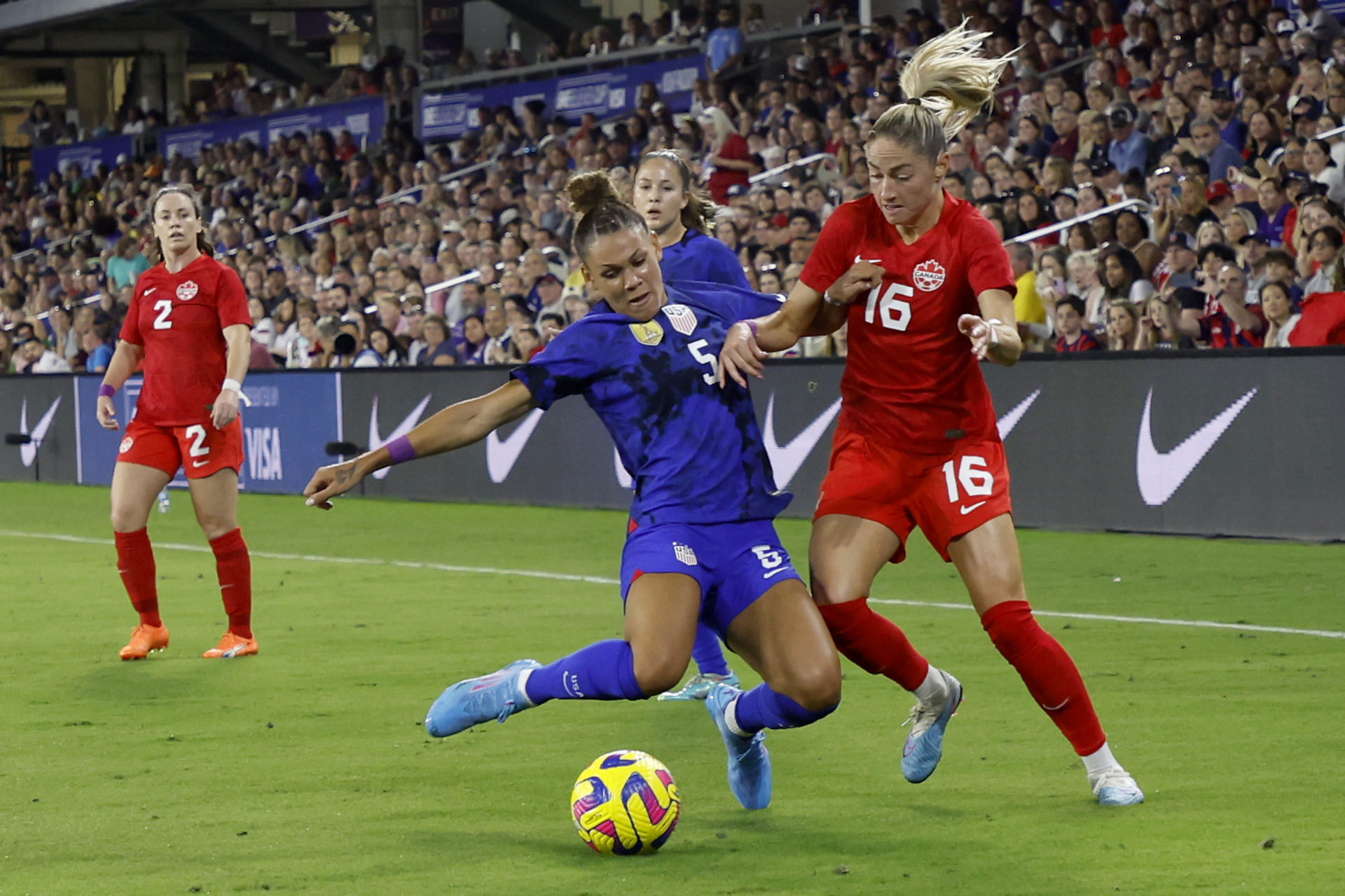




 Tyrell Malacia (L) and Weston McKennie (R) after the Leeds United midfielder’s challenge (Photo: OLI SCARFF/AFP via Getty Images)


 Chris WrightToe Poke writer

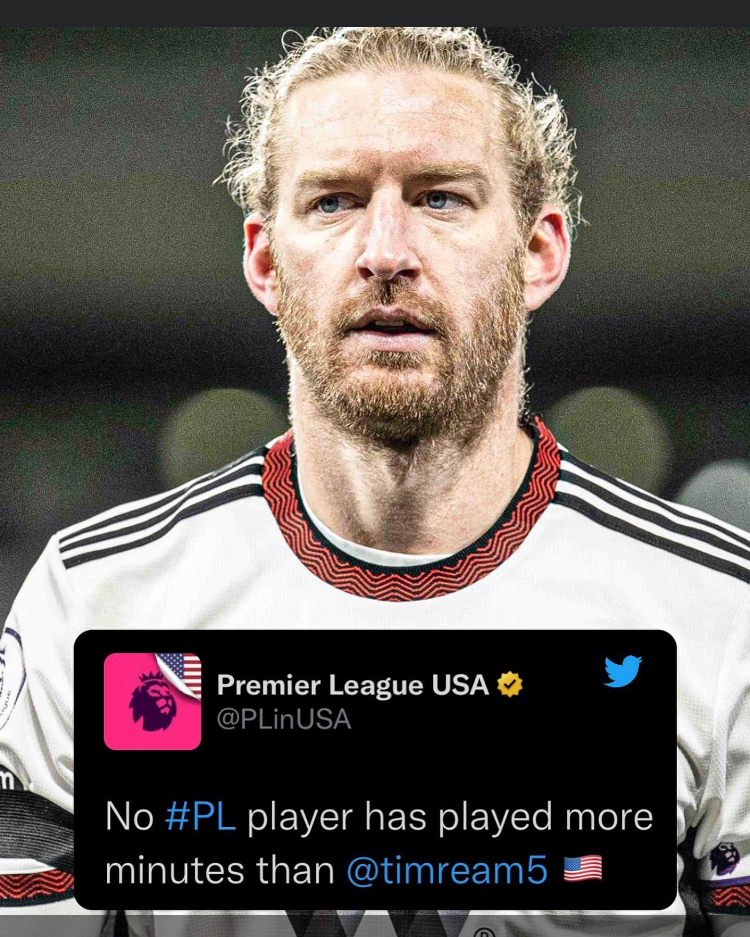


/cdn.vox-cdn.com/uploads/chorus_image/image/71953092/1460256923.0.jpg)
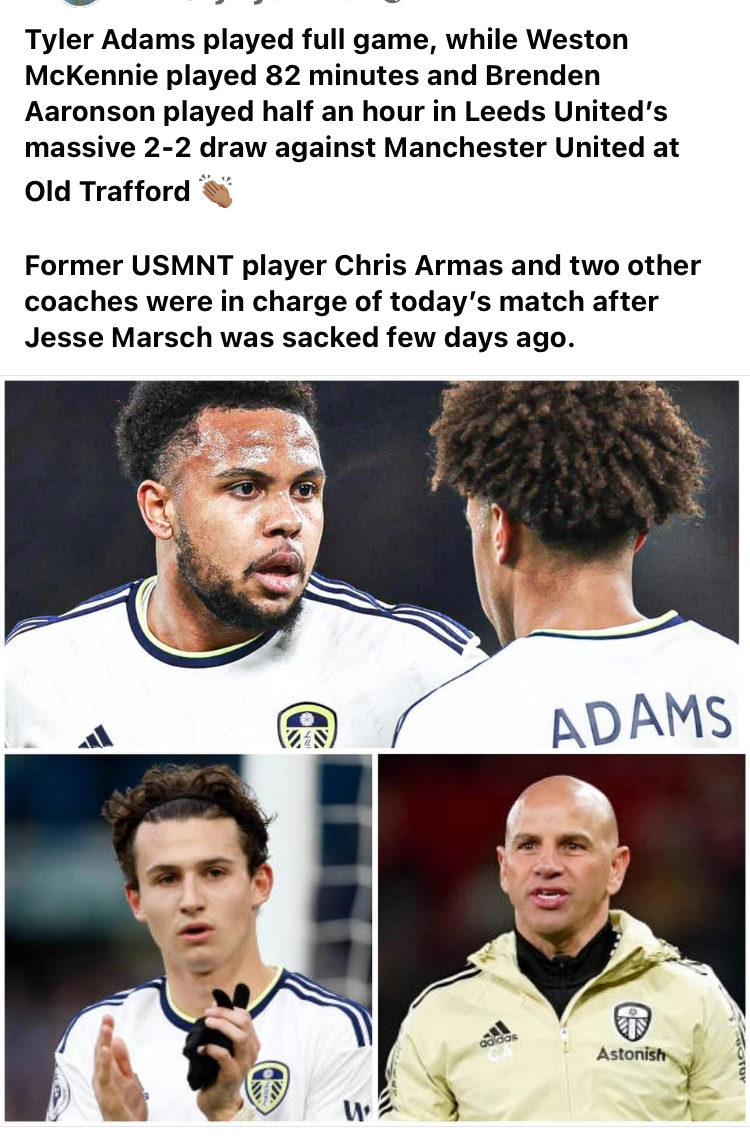


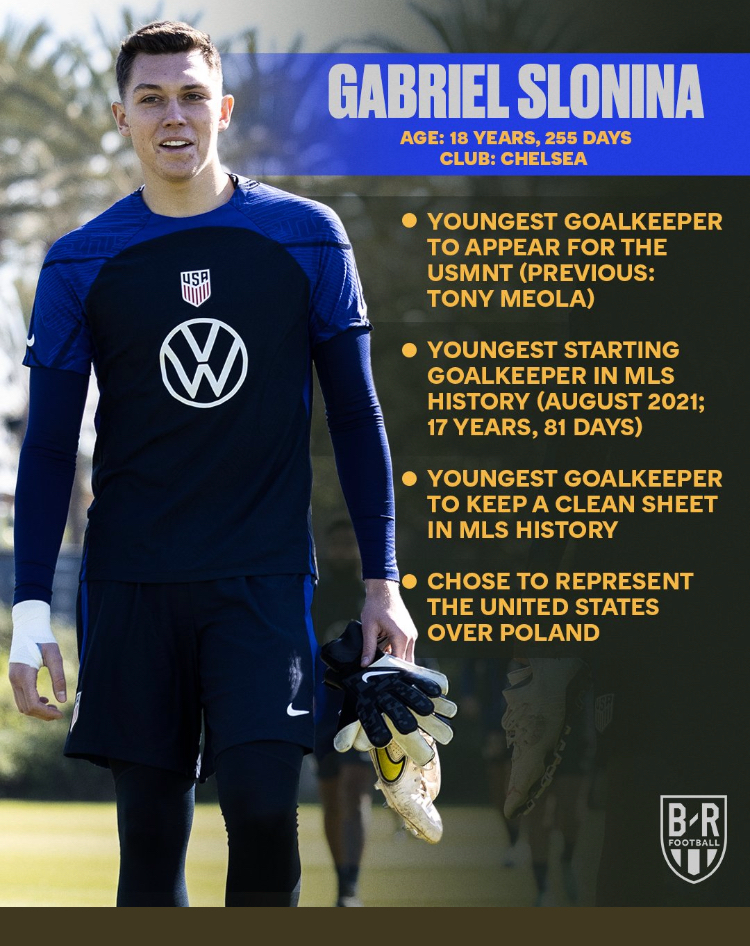


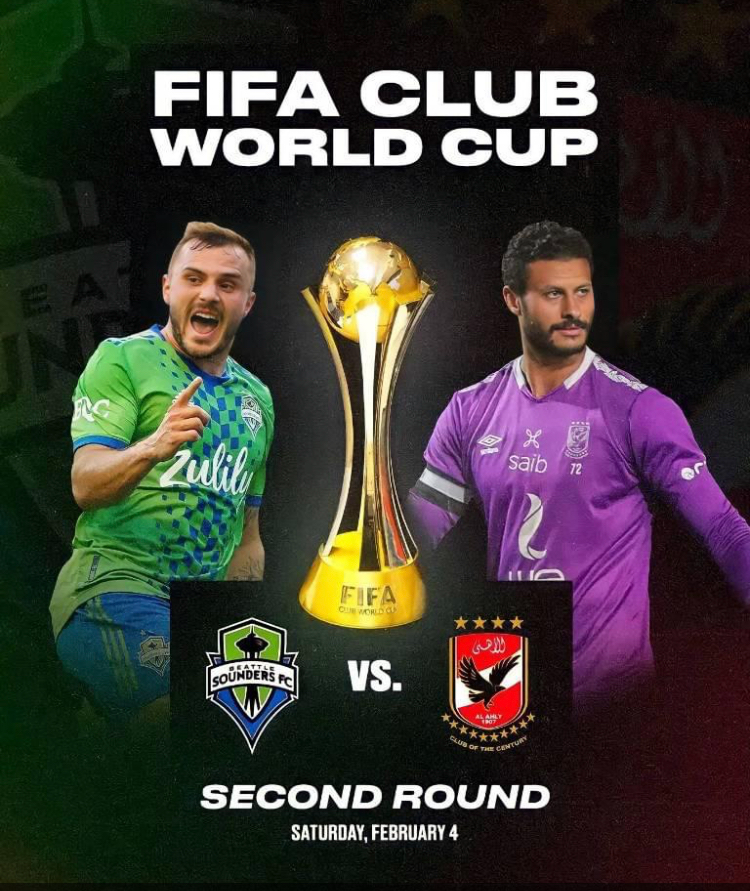


 McKennie holds off Borussia Dortmund’s Achraf Hakimi during his time at Schalke (Photo: Alexandre Simoes/Borussia Dortmund via Getty Images)

 Adams and McKennie, team-mates with the USMNT, reflect on the draw with Wales at the recent World Cup. Now they are club-mates at Leeds (Photo: Maja Hitij – FIFA/FIFA via Getty Images)
 McKennie had been tracked by Leeds since his time at Schalke (Photo: Ronald Wittek/Pool via Getty Images)
 Leeds were told by Angers after the World Cup that Ounahi would cost around £20m ($24.7m) (Photo: Mike Hewitt – FIFA/FIFA via Getty Images)
 USA’s McKennie takes on Virgil van Dijk of the Netherlands in the round of 16 at the 2022 World Cup (Photo: Chris Brunskill/ISI Photos/Getty Images)


 The sale of Phillips last summer helped fund recent transfers (Photo: Oli Scarff/AFP via Getty Images)


 Wrexham fans – and the club’s owners – enjoyed a classic FA Cup tie against Sheffield United at the weekend (Photo: Michael Steele/Getty Images)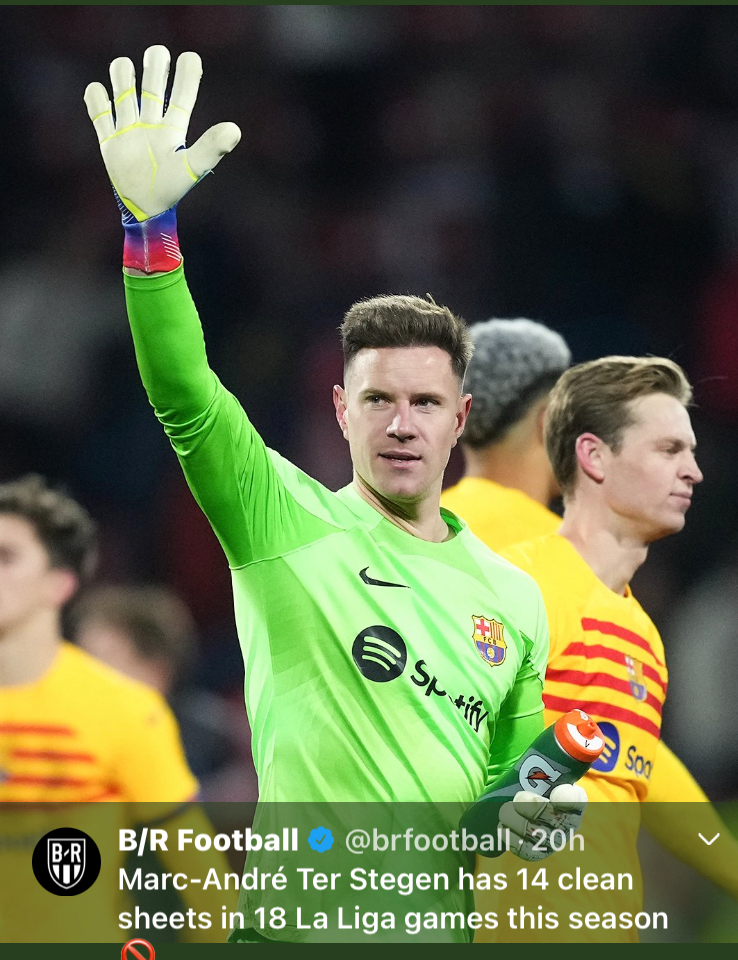
 Ruben Neves being shown a yellow card — a familiar Premier League sight (Photo: Laurence Griffiths/Getty Images)
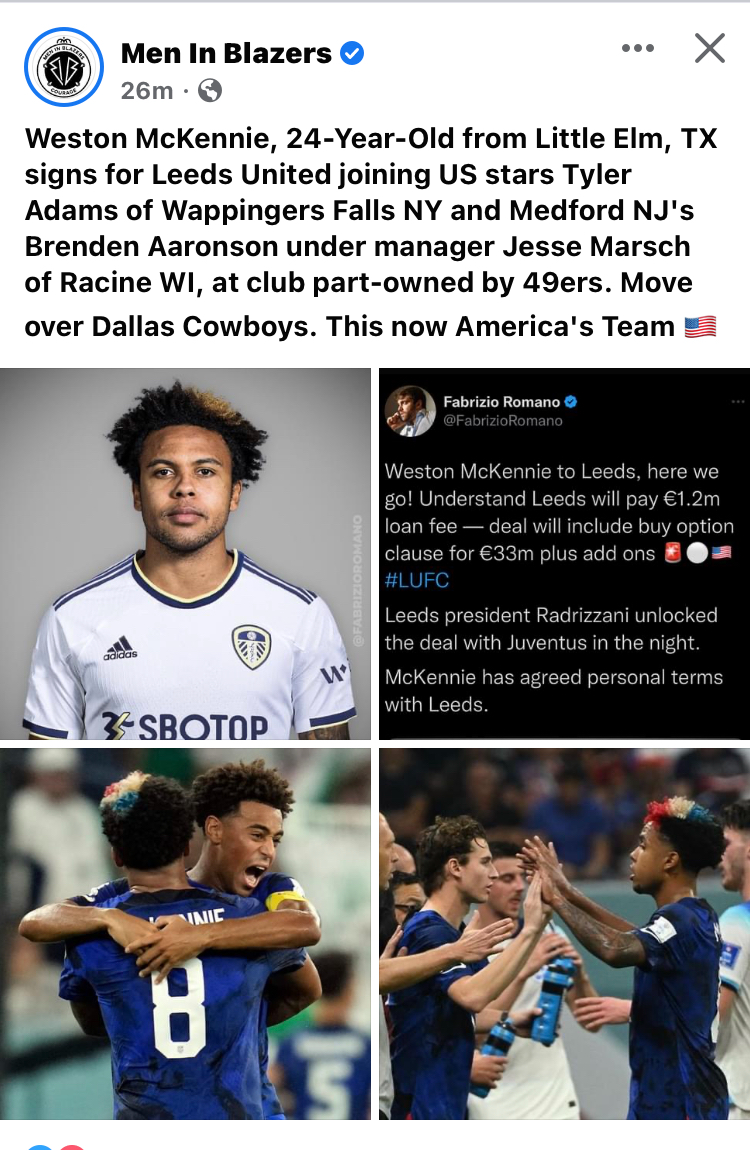


/cdn.vox-cdn.com/uploads/chorus_image/image/71913017/1445764273.0.jpg)
/cdn.vox-cdn.com/uploads/chorus_image/image/71912454/1368116993.0.jpg)
 Kyle BonaguraESPN Staff Writer


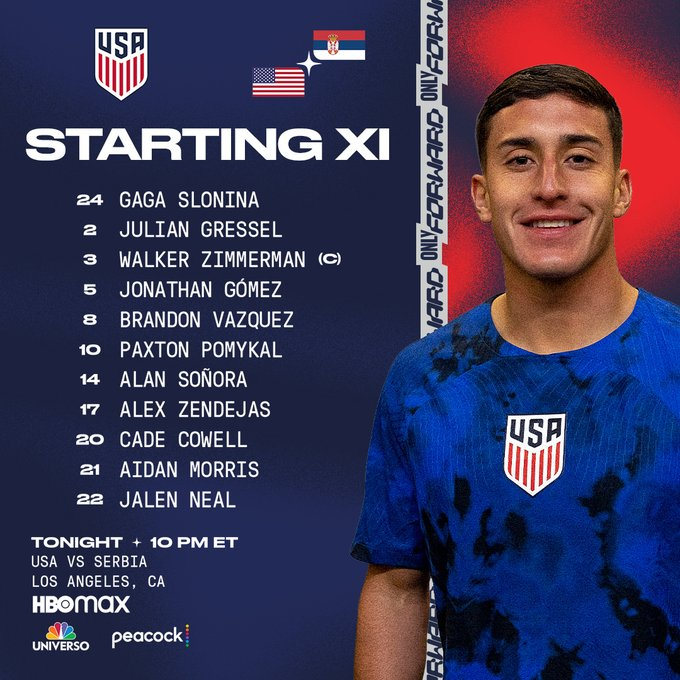
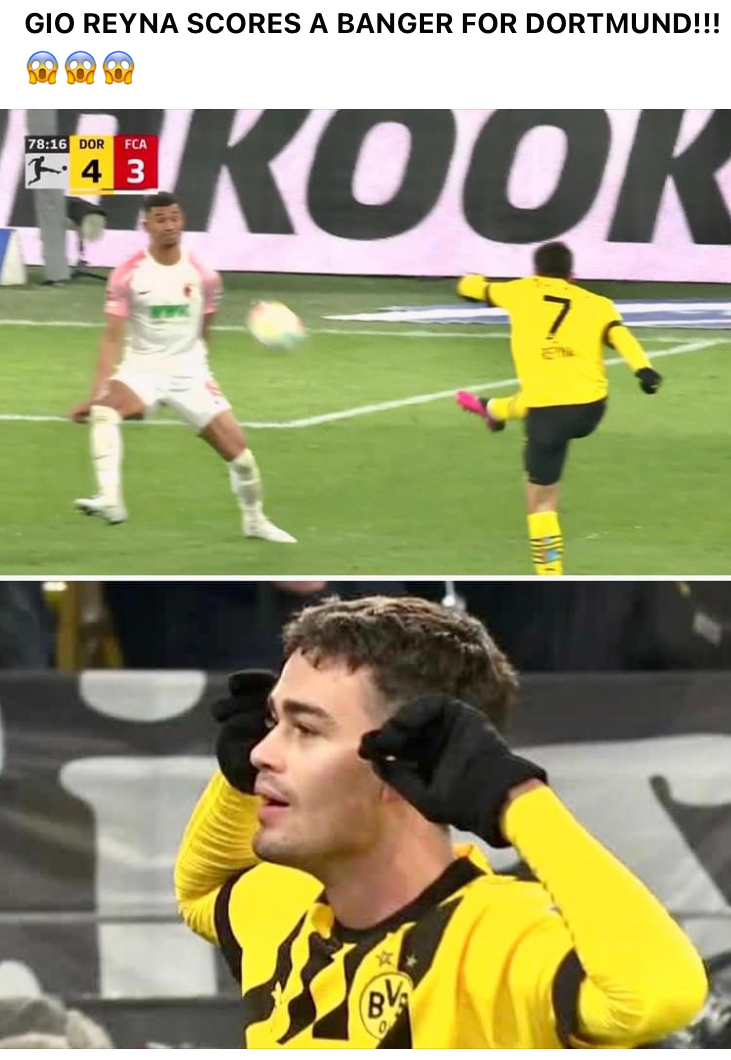
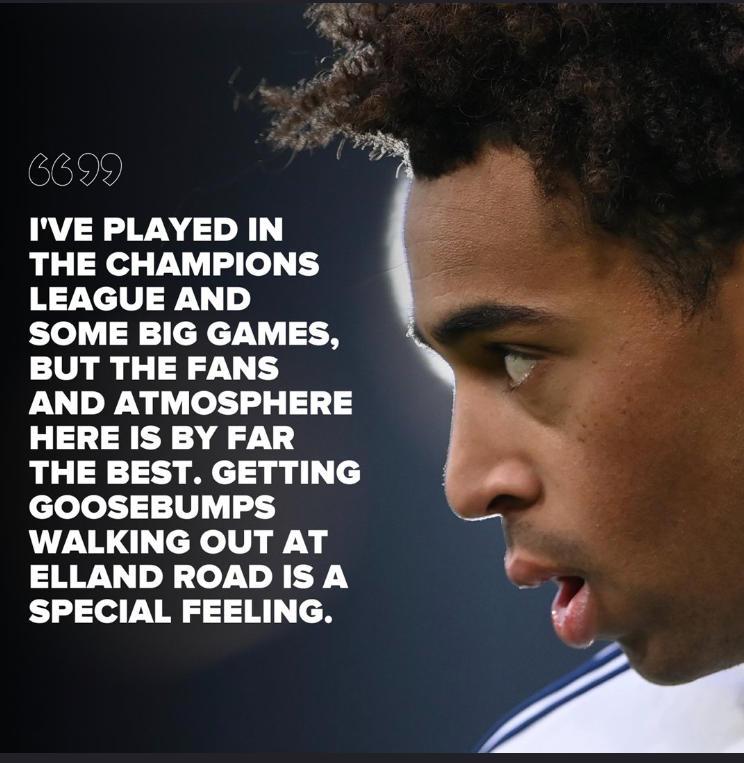
:no_upscale()/cdn.vox-cdn.com/uploads/chorus_asset/file/24381125/lineup.png)


/cdn.vox-cdn.com/uploads/chorus_image/image/71896200/usa_today_18959636.0.jpg)
:no_upscale()/cdn.vox-cdn.com/uploads/chorus_asset/file/24377872/serbia_national_team_lineup.png)


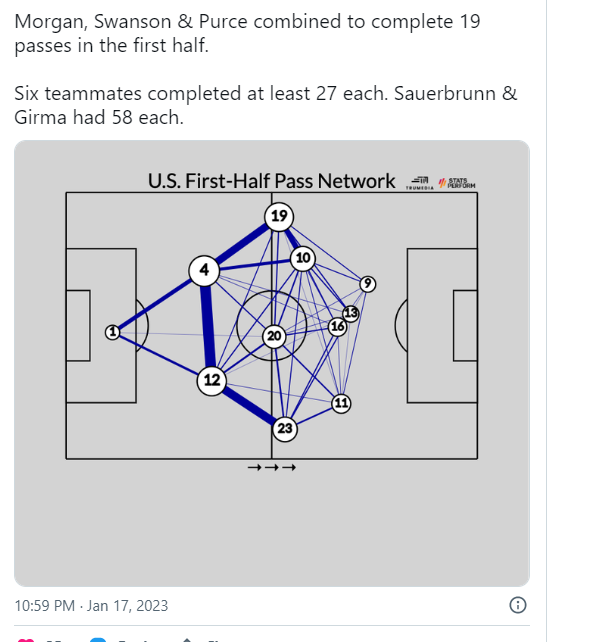


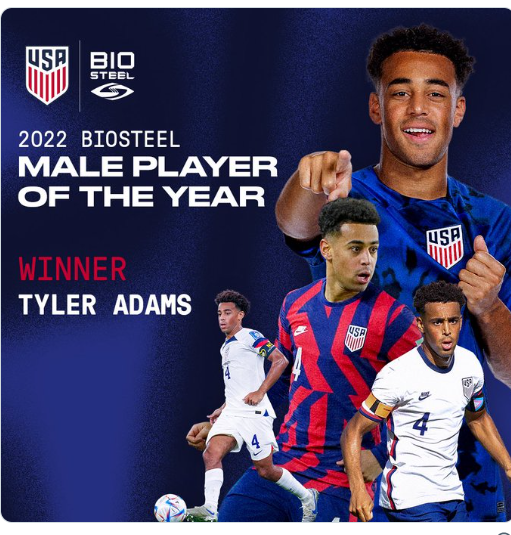
/cdn.vox-cdn.com/uploads/chorus_image/image/71887748/1246149777.0.jpg)


 Arsenal take another big step towards the title, while Spurs have plenty to reflect on
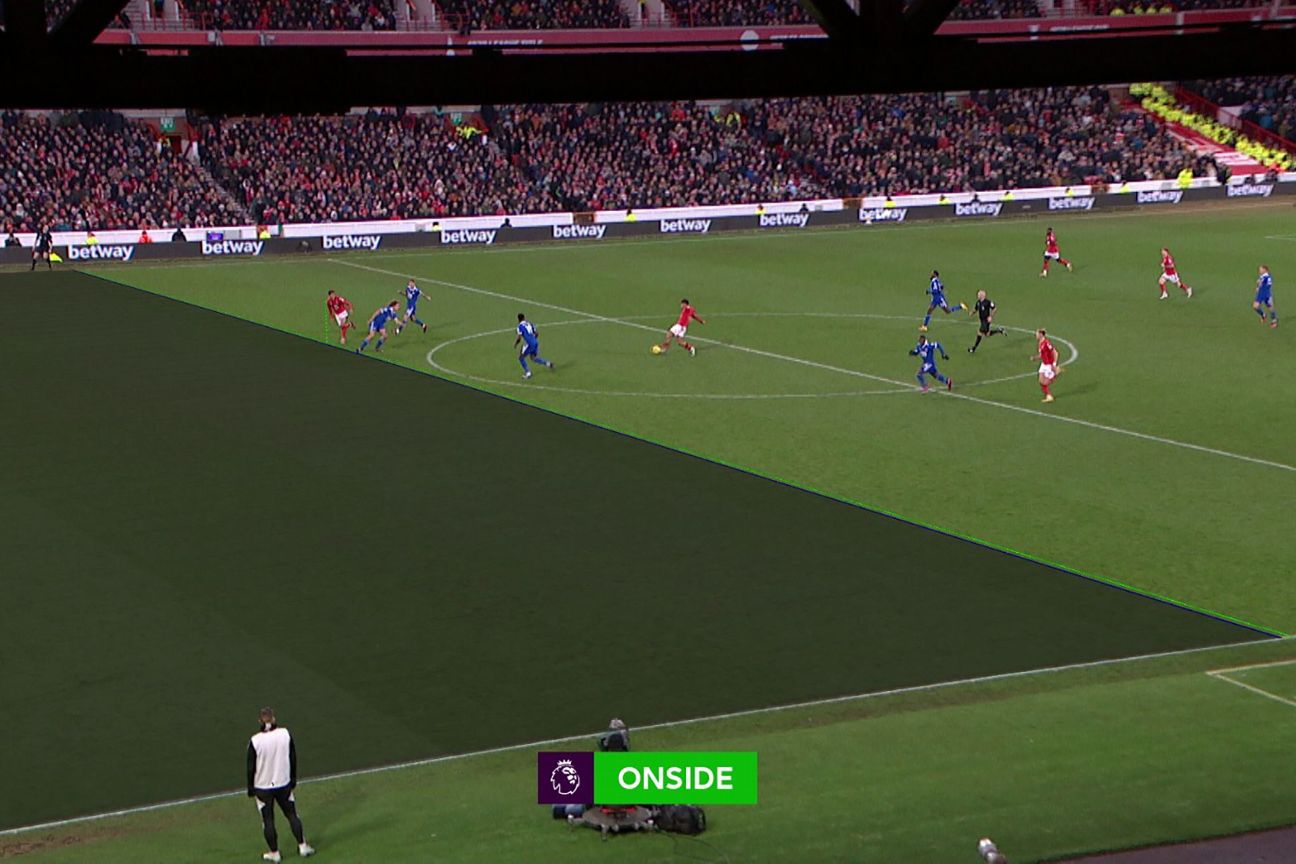
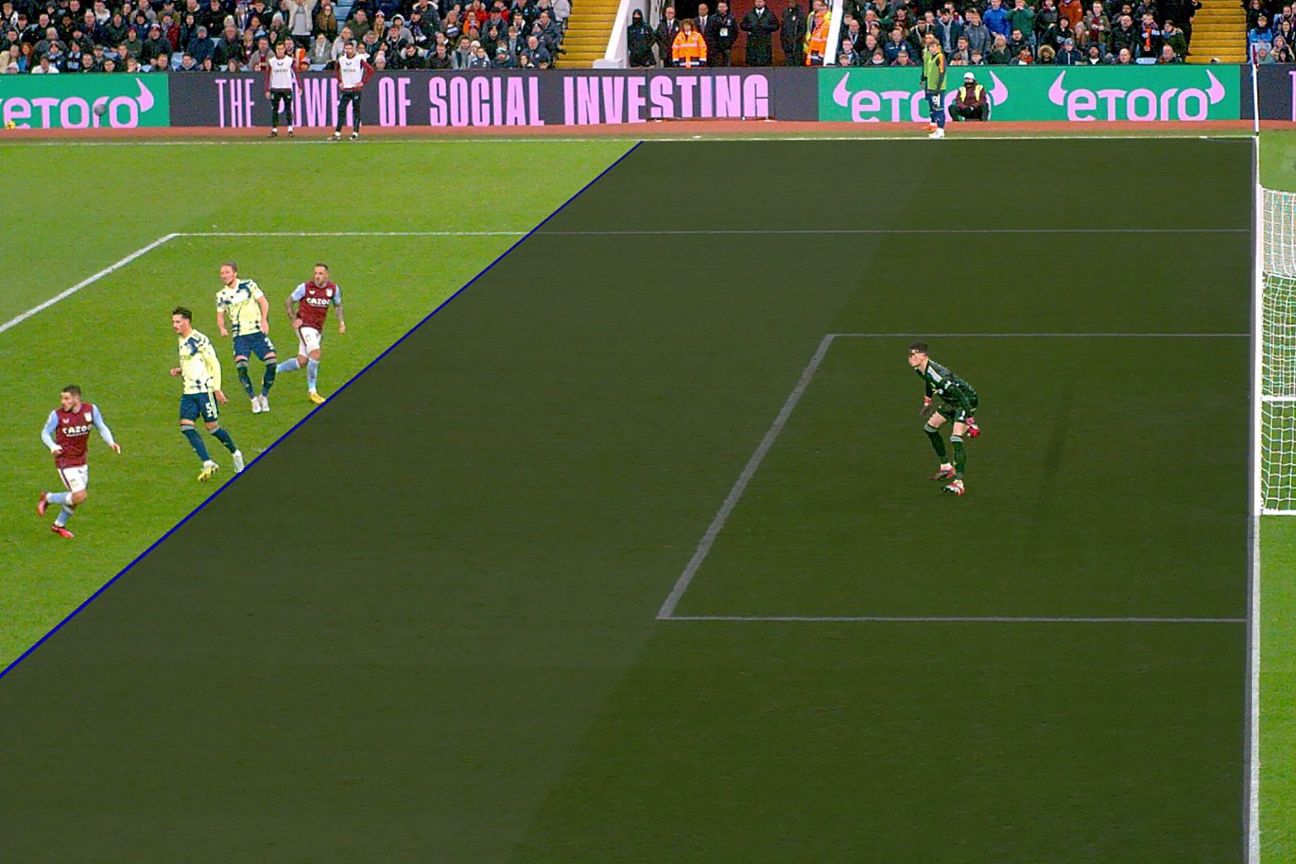









 Lindsey Horan meets Tazuni, the 2023 World Cup mascot. (Photo: Hannah Peters/Getty Images)


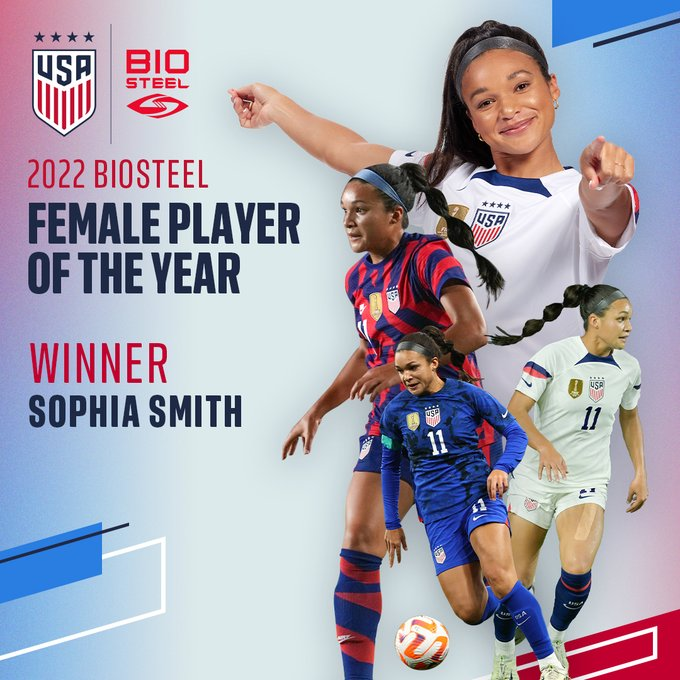


 Jeff CarlisleU.S. soccer correspondent
 Tigs on his way to Craven Cottage for the Chelsea match



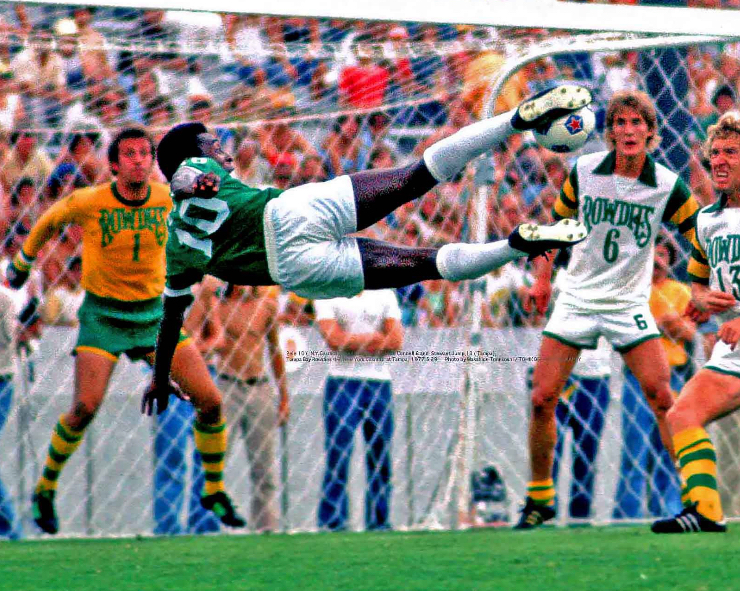


 Mark OgdenSenior Writer, ESPN FC


 Pele shakes hands with Gustaf VI Adolf, king of Sweden, before the final (Photo: Keystone/Getty Images)


 (Photo: Getty Images)
 Pele hugs a team-mate after missing the final through injury (Photo: Central Press/Hulton Archive/Getty Images)
 Brazil arrived in England as the favourites (Photo: Len Trievnor/Daily Express/Hulton Archive/Getty Images)
 Pele after being fouled by Bulgaria (Photo: PA Images via Getty Images)
 (Photo: PA Images via Getty Images)
 (Photo: Allan Olley & Monte Fresco/Mirrorpix/Getty Images)


 (Photo: Mario De Biasi/Mondadori via Getty Images)
 (Photo: Peter Robinson/EMPICS via Getty Images)


 Christian Pulisic, Tyler Adams and Brendan Aaronson — USMNT teammates in Qatar — talk during the Premier League match between Leeds United and Chelsea on Aug. 21. (Photo: Robbie Jay Barratt / AMA / Getty Images)
 The Ole BallCoach


